❌

Reading view

Drone attack forces Yandex to shut down its data center on the grounds of a sanctioned Russian machine-tool plant

Smoke over Salavat following an attack on the night of October 8.

A drone attack overnight on 8 October caused a fire that hit part of Yandex's data center in Sasovo, Ryazan Oblast, about 580 km from Ukraine, and the site is fully stopped, the Russian tech company told Russian media. The data center sits on the grounds of Sasta, a sanctioned machine-tool plant, Russian outlet Astra said, citing Wikimapia data. Astra's OSINT analyst found from eyewitness footage that the fire hit the plant.

Since late September, Russia has been striking data centers in Kyiv that keep Ukraine's internet and online services running. Now a drone attack has stopped one of the data centers that Russia's largest tech company relies on.

Fires reported at a refinery in Salavat and a machine-tool plant in Sasovo after overnight attacks on 8 October 2026.
Fires reported at a refinery in Salavat and a machine-tool plant in Sasovo after overnight attacks on 8 October 2026. Map: Euromaidan Press

Yandex counts the damage

Yandex warned that some services may be unavailable, while its core services kept running and no one was hurt. Ryazan Oblast Governor Pavel Malkov claimed two drones were downed, a roof caught fire at an enterprise in the Sasovo district, and windows were blown out in several homes.

The power failure took down a wide range of Yandex Cloud infrastructure, including computing capacity, networks, data storage, databases, Kubernetes, cloud services, AI, and security and monitoring systems, Ukrainian outlet ZN.ua reported, citing Exilenova+.

Ukrainian monitoring channel Exilenova+ reported that the plant was hit, without naming an attacker. The channel said Sasta, which claims a place on Russia's register of defense-industry companies, makes computer-controlled machine tools, including five-axis machining centers, and previously supplied the Tactical Missiles Corporation (KTRV) and Roscosmos. The plant's value to the arms industry lies in machines that cut precision parts, not in finished weapons, the channel said.

Citing Exilenova+, Militarnyi reported that Ukraine's Defense Forces hit the plant. It also linked Sasta to Iskander missile supply chains. No source has said whether the plant or the data center was the target, and no Ukrainian official has claimed the Sasovo strike. Sasta has been under US sanctions since November 2023, UK sanctions since February 2024, and Ukrainian sanctions since April 2025, a sanctions database shows.

Salavat: Kyiv reports a hit

Ukrainian forces hit the Gazprom Neftekhim Salavat complex in Bashkortostan, about 1,380 km from the front line, causing a fire, Ukraine's General Staff said. It said the complex processes up to 10 million metric tons of hydrocarbons a year and serves Russia's armed forces. Its key unit, the ELOU-AVT-6 primary oil refining unit launched in 2012, can process 6 million metric tons a year, Militarnyi reported. Astra's analyst placed the fire a few kilometers outside Salavat, possibly near the refinery.

Salavat oil refinery moment of attack pic.twitter.com/bUxuRshSK1

— Exilenova+ (@Exilenova_plus) October 8, 2026

Salavat Mayor Marat Zagidullin claimed that debris from several drones fell in the industrial zone that morning and started a fire.

"The enterprise continues to work," he said.

Astra noted earlier hits on the complex on 24 September 2025, on 14 July 2026, when refining fully stopped, and on 13 August 2026.

Russia's strikes on Ukraine's data centers

Russia has repeatedly hit data centers in Kyiv since 23 September. Strikes hit the COSMONOVA data center twice, the second time knocking it out, and the Parkovyi data center stopped working completely on 1 October after a series of strikes. In early October, Russia destroyed the dline.ua data center in Kyiv.

  •  

Ukraine’s Frodo robot carries wounded soldier in first reported evacuation

frodo robot

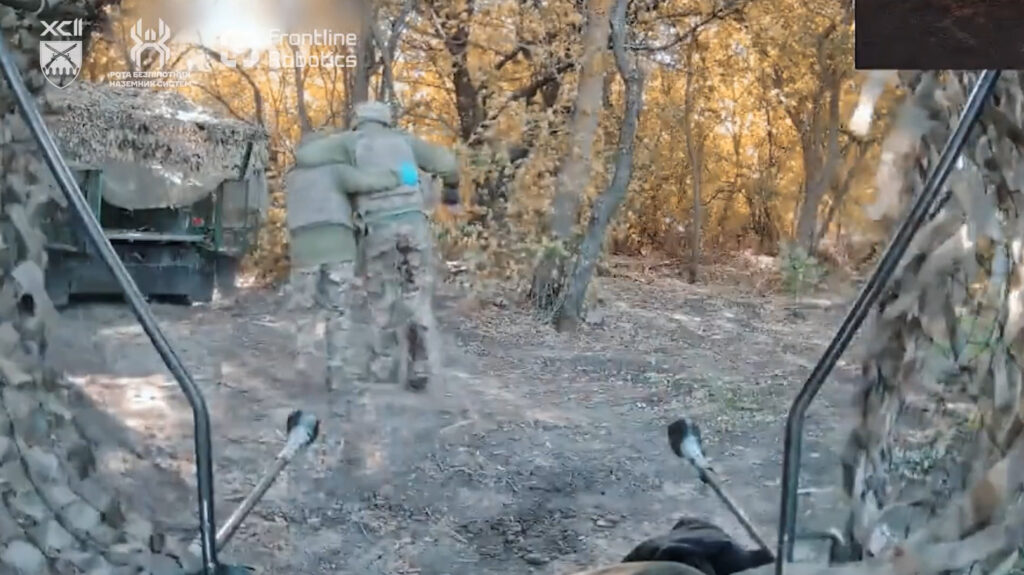
A company of unmanned ground systems from Ukraine's 92nd Assault Brigade used the robotic system Frodo to evacuate a wounded soldier, Frontline Robotics told Militarnyi on 7 October.

Ground robots are being used to evacuate wounded soldiers from the drone-dominated "kill zone," a band tens of kilometers deep on both sides of the front line. About 112,000 logistics and evacuation missions by ground robotic systems were recorded from January through August 2026, according to Ukraine's Defense Ministry.

Operator credits speed and suspension

The operator, callsign Tango, named speed and the ability to perform complex maneuvers as the robot's main advantages, according to Militarnyi. The unit also praised Frodo's adaptive suspension, which it said smoothed out rough terrain and kept the wounded soldier's transport relatively comfortable.

The Frodo ground robot during an evacuation mission with Ukraine's 92nd Assault Brigade
The Frodo ground robot's evacuation mission with Ukraine's 92nd Assault Brigade, autumn 2026. Screenshot from video: Frontline Robotics

What Frodo can carry, and how far

The robot has a 6×6 wheel layout with independent suspension, adjustable ground clearance of 170–330 mm, and a top speed of 40 km/h. Its recommended payload is 200 kg, and its maximum is 400 kg, according to Frontline Robotics. The company lists its range as 150 km on asphalt and up to 90 km over rough terrain with the recommended load. Frodo supports several communication channels, and one person can swap its batteries in about two minutes.

Frodo had passed the Defense Ministry's codification and could carry remote-controlled modules such as the Burya turret, Militarnyi reported on 30 September.

The 92nd Brigade had used ground robots to evacuate wounded soldiers before. In September 2025, the brigade evacuated three wounded soldiers using a ground robot, according to Militarnyi.

  •  

It was built to shield Russian crops from hail. Now it’s being pitched as a drone interceptor

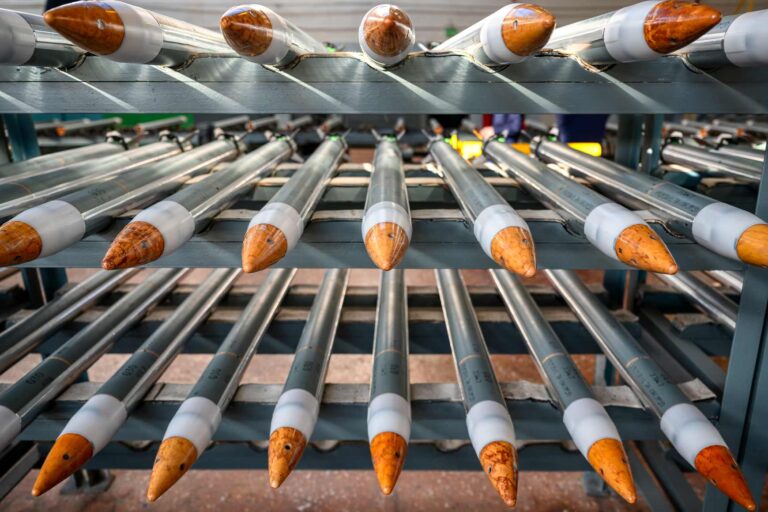
Alazan-6 anti-hail rockets

Russia has shown a drone interceptor built on the Alazan, a civilian anti-hail rocket, Militarnyi reported. The sample went on display at a weapons exhibition that Russian dictator Vladimir Putin toured at the Chebarkul training range in the Urals on 2 October.

Ukraine now sends drones at Russia by the hundreds, by Moscow's own count. Russia's Defense Ministry claimed its air defenses intercepted nearly 900 overnight into 6 October. Russia's missile-based air defense was built to repel aircraft raids and a few cruise missiles, not swarms of low-flying drones.

In May, Ukrainian intelligence said Russia was adding four regiments, 24 battalions, and 162 batteries to counter Ukrainian strike drones. The converted Alazan, which Militarnyi calls an anti-drone system, is one more piece of that search. Meanwhile, the commander of Ukraine's Unmanned Systems Forces, Robert Brovdi, said his forces struck 300 Russian air-defense assets between January and 19 September.

From hail reagent to shrapnel

Based on the size of the sample on display, the interceptor builds on the Alazan-2M or Alazan-6 series, Militarnyi assessed. The outlet put the stated cost at up to $12,000 per unit but did not say who named the figure. In civilian service, the rocket flies about 10 km, climbs up to 8 km, and carries about 0.5 kg of reagent. For air defense, the developers plan to replace that reagent with a fragmentation warhead.

Militarnyi's analysis of the published photos describes the front end as a steering assembly: four cruciform deflector fins, probably paired with a seeker or a fuze. At the rear sit folding stabilizers and the open nozzle of a solid-fuel motor, held in a metal cradle.

Anti-drone missile based on the Alazan, 2 October 2026
Anti-drone missile based on the Alazan, 2 October 2026. Photo: kremlin.ru

One sample among 300 exhibits

The Kremlin's account of the visit lists more than 300 weapons on display, including interceptor drones, but does not mention the rocket. Propaganda channel Russia 1 aired the interceptor in its report from the visit, and the Kremlin pool of state news agency RIA posted photos.

  •  

France and Germany Split Over Who Should Qualify as ‘Made in Europe’

France and Germany are at odds over how the European Union should define European production under its emerging industrial preference rules, with Paris favouring a narrow EU-only system while Berlin wants trusted trade partners including Britain, Canada and Japan to remain eligible.

France and Germany have reopened a fundamental dispute over the European Union’s “Made in Europe” industrial policy, this time over the question that will determine how far-reaching the programme eventually becomes: which countries should qualify as European suppliers.

The disagreement centres on the Industrial Accelerator Act, under which the EU wants to use subsidies and public procurement to strengthen domestic manufacturing and reduce dependence on Chinese production in strategic sectors.

France is pressing for a restrictive definition centred on manufacturing within the EU’s 27 member states. Germany favours a broader approach that could extend preferential treatment to countries with close trade agreements or reciprocal industrial relationships with the Union.

That could bring Britain, Canada, Japan and potentially Turkey within the system rather than treating their products in the same way as goods from China and other outside suppliers, according to reporting on the Franco-German dispute.

The dispute has important consequences because “Made in Europe” is intended to influence how large amounts of public money are spent.

The Industrial Accelerator Act is designed to introduce European-content requirements into selected subsidy schemes and public contracts in sectors including electric vehicles, batteries and clean technology. The underlying objective is to ensure that European public spending supports European industrial capacity rather than increasing dependence on imported technologies.

EU Today has followed the argument since the proposals began taking shape. In February, it reported that the Commission was preparing local-content rules for strategic technologies. The debate has since moved from whether such preferences should exist to how broadly “European” should be interpreted.

Paris wants the benefits concentrated inside the EU. The French position reflects concern that allowing manufacturers in countries with EU trade agreements to qualify could dilute the purpose of the scheme. If access is too broad, the argument runs, public procurement may do little to increase production or employment within the Union itself.

Germany is more cautious about creating a closed EU system. Its manufacturing economy is embedded in supply chains extending across Europe and into neighbouring markets, including Britain and Turkey. Berlin has therefore argued for a “made with EU” approach under which trusted trade partners could participate if their markets also provide reciprocal access to European industry.

That disagreement has become increasingly important for Britain. British manufacturers, particularly in the automotive sector, remain closely integrated into continental production networks despite Brexit.

A strict EU27 definition could therefore produce situations in which components made in Britain count as foreign content even when they are incorporated into vehicles assembled inside the Union.

France and Germany had appeared to be moving towards a broader industrial compromise last week. Their negotiations combined the “Made in Europe” question with disagreements over vehicle-emission rules and the future treatment of combustion-engine technology. The latest discussions show that one of the hardest questions remains unresolved.

There is also concern among some EU governments that an overly broad system could create routes for companies from countries such as China to obtain favourable treatment indirectly.

The argument mirrors a wider change in EU economic policy. Supply disruptions, Russia’s war against Ukraine and China’s dominance of several strategic manufacturing sectors have pushed Brussels towards a more interventionist approach.

France sees public purchasing power as an instrument for rebuilding production specifically within the Union. Germany is seeking greater flexibility for supply chains involving trusted partners and appears more concerned about the trade consequences of drawing the boundary too tightly.

For Brussels, the problem is now practical rather than theoretical. The narrower the definition, the more industrial support remains inside the EU; the broader it becomes, the easier it is to preserve existing supply chains and relations with allies.

  •  

Kalashnikov, Russia’s biggest small-arms maker, says it fills its entire 2026 arms contract on time with batch of 7.62mm Dragunov sniper rifle

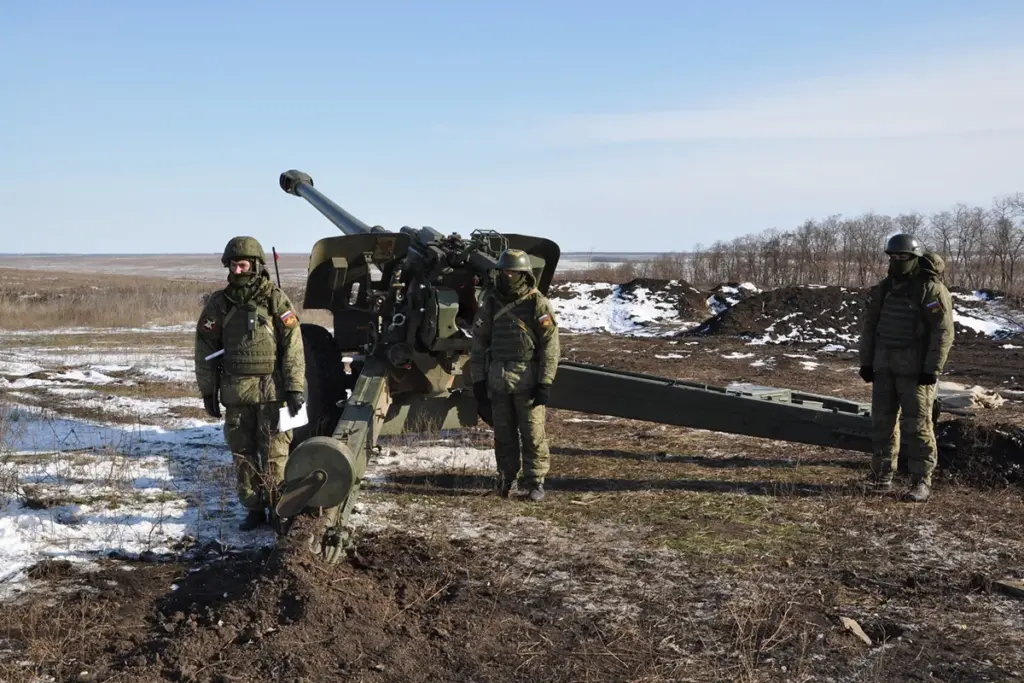
Russian soldiers stand beside a field artillery gun in a snow-covered position.

Russia's Kalashnikov concern has met its annual arms contract. The top producer of small arms has announced it delivered a batch of classic 7.62mm Dragunov sniper rifles to a Russian Security Forces customer and fully met its 2026 contract on time

The delivery shows how little the sanctions regime slows Russia's arms maker. In February 2026, Ukraine's Defense Intelligence said that nearly half of Kalashnikov's plants were still not subject to sanctions by any coalition country. Eight months later, the concern reports a full year's order delivered on schedule.

"The items were shipped on the set deadline, the obligations under the 2026 contract fully met," the manufacturer said.

A rifle in service for six decades

The weapon in that batch is not new. Designed by Yevgeny Dragunov between 1958 and 1963, the Dragunov sniper rifle entered serial production at the Izhevsk machine-building plant in 1963, so in 2026, it has remained in serial production for more than 60 years.

The self-loading 7.62mm rifle is meant to hit personnel and unarmored targets at ranges up to 800 meters, the concern said. It uses gas-operated automatics with a short-stroke piston and a gas regulator, and can fire any 7.62x54R round, though sniper ammunition yields the best grouping, according to the maker.

Sanctions chase a moving network

The sniper rifles are only one line in Kalashnikov's output. Russia's defense industry has leaned heavily on refurbishing Soviet-era armor as newer reserves run low, with Ukraine's intelligence reporting in June 2025 that Russia had begun deploying 1960s-era T-62 tanks.

The restoration work was centered primarily at the 103rd Armored Repair Plant in Atamanovka, Trans-Baikal Territory of Siberia. Ukrainian intelligence documented the transfer of 21 T-62 tanks from the eastern region to the western part.

Small arms are a different line of production, built new rather than pulled from storage. That is why a 1963 design keeps rolling off the line while the sanctions net, as Ukraine's intelligence describes it, still has holes.

  •  

Russia’s war against Ukraine sends the bill to its own companies: bond defaults head for a 17-year high

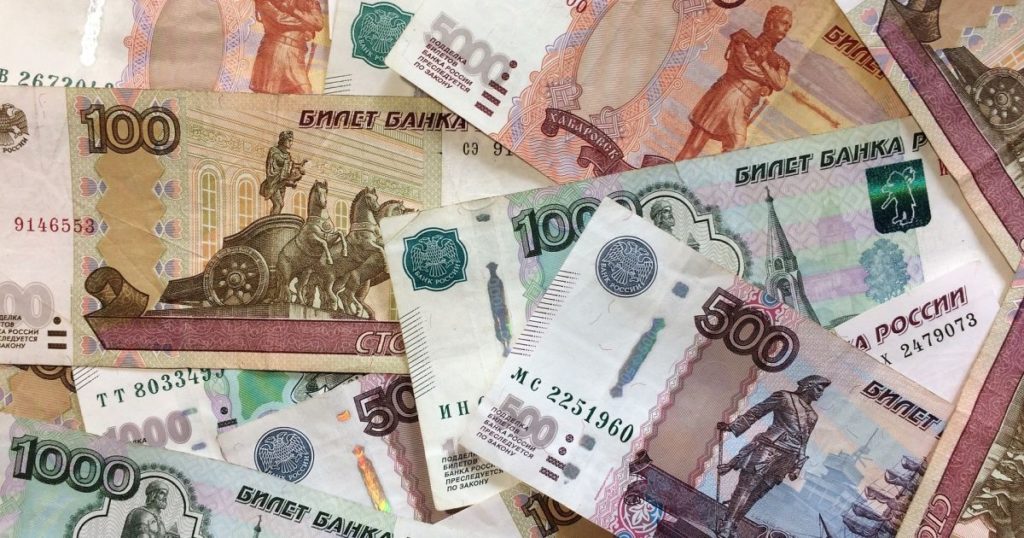
russia facing record number corporate defaults second time decade one main causes being same—waging war against ukraine · post russian rubles tsn money news ukrainian reports

More than 50 Russian companies could default on their bonds this year, the most since 2009, a rating-agency analyst told Russian newspaper Izvestia, which reported it on 6 October.

Russia's wartime economy is straining under high interest rates, and the budget is too: the 2026 deficit has nearly doubled from the earlier forecast to a record $88 billion, with more deficits planned for the next three years as Moscow raises taxes to fund the war and plans its biggest defense budget since the full-scale invasion began.

A default is a situation in which a company cannot make promised interest payments to investors on time or repay borrowed money. If a payment is not made by the agreed deadline, the company becomes delinquent, which under certain conditions is recognized as a default.

So far this year, 20 companies have defaulted for the first time, compared with 24 in all of 2025, said Mikhail Nikonov of the Expert RA rating agency. Most of the companies that missed payments are small issuers of high-yield bonds, Izvestia reported.

In 2026, Russian companies have missed payments totaling 41 billion rubles (about $490 million), compared with 34 billion rubles (about $410 million) the previous year, according to investment bank Sinara.

Russia faces a new wave of corporate defaults

By the end of 2026, the number of Russian companies unable to service their ruble-denominated debt on time could reach 40–50, the highest level since 2010, said Pavel Zholobov, junior managing director at the NRA rating agency.

The number of bond defaults in 2026 has already reached its highest level in a decade, Zholobov said. Similar figures were recorded in the mid-2010s: in 2014, 35 companies missed payments; in 2015, 52 did so; and in 2016, there were 44 issuers. This occurred in part after Western sanctions were imposed on Russia over its annexation of Crimea and its war in Donbas, as well as amid a halving of oil prices and a sharp weakening of the ruble.

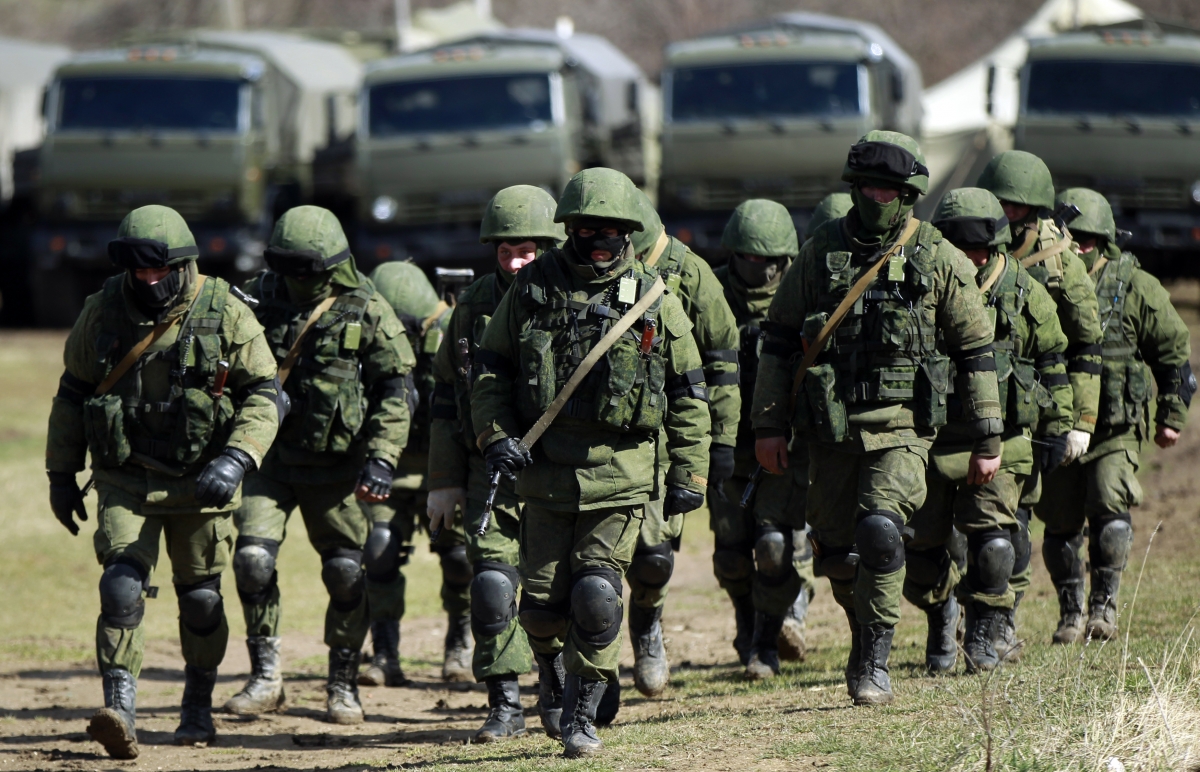
So-called "little green men" (the Russian occupation troops comprised special forces who removed insignia, wear face masks to prevent identification and call themselves a "Crimean self-defense force") surround a Ukrainian military base in Perevalne, Crimea, during the Russian annexation of the peninsula in February-March 2014.

There were more defaults only in 2009. At the time, amid the fallout from the global financial crisis, more than 100 issuers faced payment problems, while the volume of distressed debt reached nearly 200 billion rubles, Zholobov noted.

High interest rates put pressure on companies

This time, the main reason for companies' difficulties in making bond payments has been the prolonged period of high interest rates, which has continued since 2023. Companies are raising financing at high interest rates but are unable to refinance their debt on more favorable terms, explained Ekaterina Sidorova, head of the Foreign Exchange, Commodities and Debt Markets Department at SberCIB Investment Research.

At the same time, the situation does not yet resemble a systemic debt crisis: defaults are primarily being recorded among companies with low credit ratings and high debt burdens, Sidorova said.

If a company fails to repay bond debt, it is given 10 business days to meet its obligations. If it fails to do so, the company may offer investors a restructuring—for example, by postponing payments in exchange for a higher interest rate.

The number of defaults will remain high in 2027, Sidorova believes.

High interest rates were a response to accelerating inflation in Russia. Domestic demand was outpacing production, Russia's Central Bank said in October 2023. Sanctions over the war and rising defense spending had also hit the economy and the ruble, which had lost about 25% against the dollar that year. The bank raised its key rate from 7.5% in the first half of 2023 to 15% by the fall.

Ukraine targets Russia's oil industry to weaken its war economy

Ukraine is also seeking to weaken Russia's economy as part of efforts to reduce its ability to finance the war. In particular, Defense Minister Yevhenii Khmara said strikes on oil refineries are aimed at "bleeding the Russian war machine" and destroying its military and economic potential. According to the ministry, the attacks have knocked out more than 51% of Russia's oil refining capacity.

In the first half of July, Russian oil refineries processed about 3.9 million barrels of oil per day—the lowest level since March 2005. Due to the production cuts, Moscow was also forced to restrict fuel exports.

  •  

Ukraine says it struck plant making parts for Russian military aircraft engines—a Snizhne factory Russia has used since 2014

snizhne_map_dark

Ukraine's 413th Separate Raid Regiment of the Unmanned Systems Forces struck the Snizhne Machine-Building Plant in occupied Donetsk Oblast in September, working with other Defense Forces units, the regiment posted on 6 October, sharing a video of the strike. The General Staff reported the strike on the plant on 11 September, saying that the extent of the damage was being clarified.

The strike adds to Ukraine's campaign of long-range attacks on Russian military targets as Russia has begun its winter campaign of strikes against Ukraine's energy infrastructure. Hitting the suppliers of aircraft parts goes after Russia's ability to keep its attack jets and helicopters flying.

The regiment said the plant works for Russia's military industry, producing engine components for attack aircraft and combat helicopters.

A former Motor Sich plant in occupied Snizhne

The Snizhne plant was a separate division of Motor Sich, a Ukrainian aircraft-engine maker based in Zaporizhzhia, a city that remains under Ukrainian control. Snizhne has been under Russian occupation since 2014. The plant specializes in producing parts for gas-turbine engines, including compressor and turbine discs and blades, the General Staff said. It never built whole engines. In September 2014, months into the occupation, it was machining blanks from Motor Sich's Zaporizhzhia plant into turbine blades and was one of only two plants in the former Soviet Union making such blades for helicopters, a plant worker said.

Motor Sich said in December 2017 that it had lost control of the plant. Weeks later, Viacheslav Bohuslaiev, then Motor Sich's honorary president and a member of parliament, told RFE/RL's Donbas.Realii that Motor Sich still owned the plant and had handed its management to a foreign company, while keeping it under the company's "full control."

In February 2023, Ukraine's Prosecutor General's Office served Bohuslaiev a notice of suspicion of aiding a terrorist organization, alleging that Motor Sich shipped blanks to the Snizhne plant and received finished engine parts through foreign-registered companies. The case went to court in October 2023, and Bohuslaiev, who denies the charges, has been in pretrial detention since October 2022 as the trial continues.

Snizhne, which Russia uses as a rear base, has been hit before. In May, Ukraine's Unmanned Systems Forces and the Security Service of Ukraine struck a Russian training center for drone pilots in the city, and in September, a strike on energy infrastructure cut power across Snizhne.

  •  

German radar already guarding Ukraine is picked to spot ballistic missiles. Its maker just signed a new deal with Kyiv

HENSOLDT's TRML-4D rada

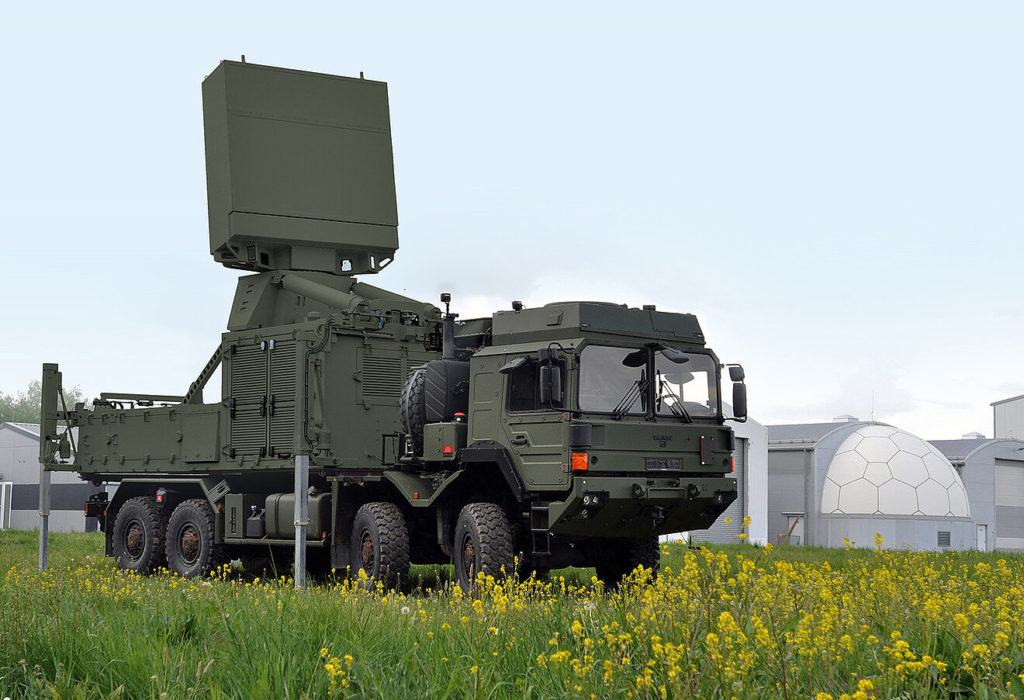
German radar maker Hensoldt has signed a memorandum with Ukraine's Defense Ministry for more large-scale radar deliveries, the company said on 5 October. Ukrainian defense outlet Defense Express reads it as a step toward fitting Hensoldt's TRML-4D, already in Ukrainian service, into FREYJA, a planned shield against ballistic missiles.

Ballistic missiles remain the hardest threat in Russia's air war. After Russia's overnight barrage on 7 October, Ukrainian President Volodymyr Zelenskyy said Ukraine is still searching daily for Patriot missiles. The only other system Ukraine can use against them is the Franco-Italian SAMP/T, which fires Aster 30 interceptors made in small numbers. That gap is why Fire Point is reworking its FP-7 missile into a Patriot-like interceptor. Such an interceptor still needs radars to find its target first.

A memorandum signed during Merz's visit

Hensoldt CEO Oliver Dörre signed the document on the sidelines of German Chancellor Friedrich Merz's visit to Ukraine. Beyond deliveries, it covers further development of radar capabilities. The partners will also study options to deploy and jointly operate TRL-4D LR long-range radars. Hensoldt said this expands cooperation already agreed on in ballistic missile defense.

Ukraine ballistic missile program
Explore further

Russia’s air defenses can’t protect all its strategic sites once Ukraine’s ballistic missiles are ready, expert says

The TRL-4D LR is the land-based version of a long-range radar Hensoldt also builds for the German Navy, German outlet Sicherheit & Verteidigung reported. The outlet cited Germany's defense procurement office as giving the naval version a range of more than 400 km (250 miles) against air targets. That, it concluded, puts the range well beyond the TRML-4D's.

"The Ukrainian air defence forces urgently need our high-performance radars to help protect infrastructure such as bridges," Dörre said.

Defense Express, describing the same memorandum, tied both the mass deliveries and the joint-operation plan to the TRML-4D. Hensoldt's release names no model for the deliveries and links joint operation to the TRL-4D LR.

Eyes for FREYJA

Hensoldt and Fire Point signed a memorandum on FREYJA at the Eurosatory arms show in Paris in June, with the TRML-4D to play a key role, Hensoldt announced. Fire Point is set to act as prime contractor and hold design authority. Hensoldt is to produce, test, and deliver the radars.

HENSOLDT's TRML-4D rada
Explore further

Germany’s Hensoldt to supply Ukraine with six more TRML-4D radars to boost air defense capabilities

Defense Express expects any study of deployment options to focus on how well the radar detects ballistic missiles and relays that data. Hensoldt has its own unit in Ukraine to work closely with operators, the outlet noted. Earlier, the company began setting up a local hub so Ukraine can service and repair the TRML-4D itself.

Already on duty

Ukraine's military uses the TRML-4D both standalone and as the built-in radar of the IRIS-T SLM medium-range air defense system, Defense Express noted. Hensoldt lists an instrumented range of 250 km (155 miles) at altitudes up to 30 km (19 miles). Defense Express, citing the manufacturer, gives track ranges of more than 120 km (75 miles) for fighter jets and more than 60 km (37 miles) for supersonic missiles.

More radars give earlier warning of ballistic strikes, but they cannot stop them. Until the FP-7.X makes its first ballistic intercept, planned for mid-2027, that job stays with Patriot and SAMP/T missiles. Partners delivered three times fewer air defense missiles in the first half of 2026 than a year earlier, Zelenskyy said on 5 August.

  •  

Ukrainian drugmakers sold $114 million worth of medicines to Uzbekistan in six months. Now they may lose the right to sell there

A pharmacy in Ukraine.

Ukrainian drugmakers could lose the certificates that let them sell in Uzbekistan, their most important export market, Ukrainian business outlet Ekonomichna Pravda reported on 7 October. Uzbekistan is ending remote factory inspections next year, and industry sources say its inspectors are wary of traveling to a country at war.

Russia's war keeps reshaping Central Asia's trade with both warring countries: Ukrainian refinery strikes pushed Russian fuel shortages into the region, and Kazakhstan gained leverage over a Russian retail giant.

A market worth a third of export earnings

Uzbekistan brings in about 30% of the Ukrainian drug industry's foreign-currency earnings, and one in 10 medicine packs sold there is Ukrainian, Ekonomichna Pravda wrote. By the outlet's count, at least three of Ukraine's five biggest drugmakers by revenue rank it as their top foreign market.

The currency from Uzbekistan lets manufacturers keep prices low in Ukraine and absorb losses from Russian strikes, three industry sources told Ekonomichna Pravda. Losing the market would force producers to raise domestic prices or pull low-margin medicines, which "will hit the Ukrainian patient," said Hennadii Vovk, former deputy head of Ukraine's State Service on Medicines and Drug Control.

Exports reached $114 million in January–June 2026, more than in all of 2021, said Yevheniia Piddubna, government relations head at Farmak, Ukraine's largest drugmaker. She said Uzbekistan takes 35% of Farmak's exports.

Data from the YouControl business registry, cited by the outlet, complicates that picture. In 2022, 30–35% of Farmak's products went to Uzbekistan. In 2025, Uzbekistan was not among its direct buyers. Farmak explained that wartime currency rules cap payment terms at 180 days, while foreign buyers often demand longer. So part of its trade runs through the group's Polish company.

Remote checks end, and inspectors hesitate to travel

Uzbekistan grants three-year certificates of good manufacturing practice (GMP) after inspecting the factory. Since the pandemic, it has allowed remote checks. That suited Ukraine, where Uzbek experts avoided traveling because of Russia's invasion, industry sources told the outlet. Remote inspections end on 1 January 2027.

A woman drives a tractor in Ukraine. Then-Deputy Economy Minister Tetyana Berezhna said agricultural companies in Poltava Oblast had begun ordering state-funded tractor training for women as part of a program opening traditionally male-dominated professions to female workers. Photo: Tetyana Berezhna/Facebook
Explore further

Ukraine funds its war from wages, and a 1971 law keeps millions of women from earning them

Most Ukrainian certificates expire within a year. Farmak's runs out in November 2026, and the company may not manage to renew it in time. Three producers renewed under the old rules until 2029: Darnytsia, the Borshchahivskyi Chemical and Pharmaceutical Plant, and Farmex Group. According to Piddubna, Uzbekistan's regulator has drafted rules for remote inspections in force-majeure cases, but nothing has been put into practice. Industry sources said the Uzbek Presidential Administration must sign off.

Producers have asked the Office of the President, the Foreign Ministry, and the Health Ministry to raise the issue with Uzbekistan's government, but no Ukrainian experts have been sent there yet, the outlet reported. Russia, whose share of the Uzbek drug market is almost the same as Ukraine's, is ready to take Ukraine's place, its sources said.

  •  

Russia’s jet drones fly near 600 km/h now. Ukraine is building simulators for the 900 km/h ones it expects next

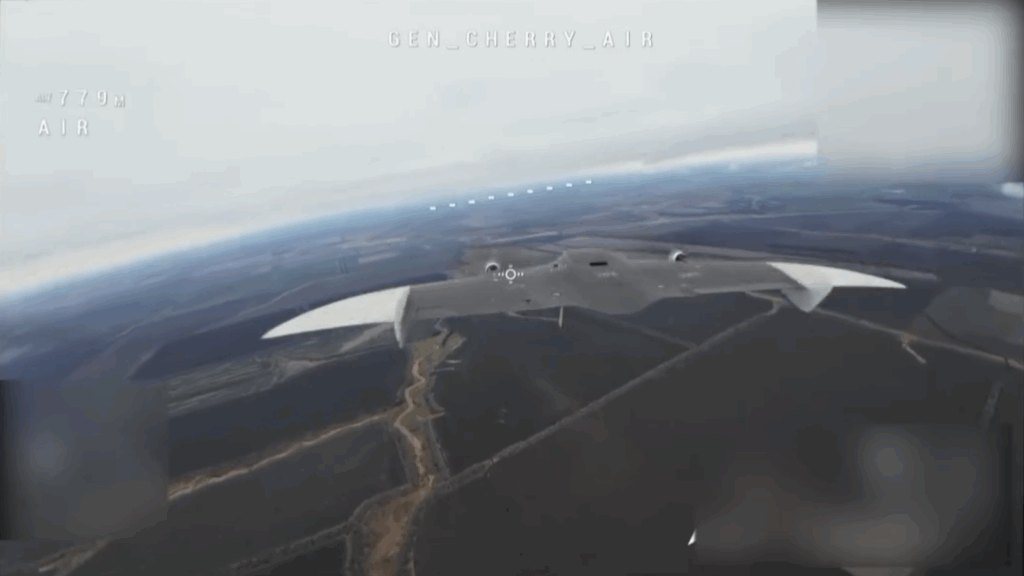
Russian "Knyaz Veshchiy Oleg" reconnaissance drone as seen from a Ukrainian "General Cherry AIR" interceptor drone, just before strike. Screenshot from video: General Cherry

Russia's jet-powered attack drones could eventually reach 800–900 km/h, and intercepting them will demand new piloting skills—so Ukraine has asked the makers of its interceptor drones to build simulators to train the crews, a senior Air Force officer told a parliamentary commission on 6 October, Suspilne reported.

Russia keeps modifying its jet Shaheds faster than Ukraine can field the drones meant to catch them, and Kyiv is now preparing crews for speeds its interceptors have never faced—a sign the air war is shifting from a contest of volume to one of raw speed.

The speed Russia hasn't reached yet

Colonel Yurii Cherevashenko, deputy commander of Ukraine's Air Force, told the commission that Russia's jet drones fly at around 600 km/h today but could eventually reach 800–900 km/h—speeds he said have not been recorded so far. That range sits near the cruising speed of a commercial airliner.

A Ukrainian interceptor drone chases a Russian Geran-5 jet-powered drone. September 2026.
Explore further

Ukraine just caught a Geran-5 at 425 km/h—the jet drone that has often outrun Ukrainian interceptor drones since January

Intercepting such targets will take specific piloting skills, Cherevashenko said. When an interceptor and its target move at roughly the same speed, he noted, the pilot barely perceives the difference in their speeds. To train for that, Ukrainian interceptor-drone makers have been tasked with building simulators where crews can practice against high-speed targets.

Where Ukraine stands now

Ukraine already downs 85% to 90% of Russia's slower, propeller-driven drones, Ukrainian President Volodymyr Zelenskyy has said, but the jet models remain a tougher problem—Ukrainian interceptors scored their reportedly first kill of a jet-powered Shahed in November 2025. In a 28 September evening address, Zelenskyy put the jet-drone interception rate at about 57%, lower than required. Days later, he said Ukraine is testing five interceptor-drone models and could be producing about 400 of one of them by the end of October. Asked when jet-drone interceptors would arrive at the scale needed, Cherevashenko answered: "Not before the end of November."

  •  

Proven on Ukraine’s front line, now made in Germany. National Guard signs for the Linza and Zoom drones

Ukrainian Linza bomber drone. 2024. Ukraine. Photo: Frontline

National Guard commander Major General Oleksandr Pivnenko signed a follow-on contract with Quantum Frontline Industries managing director Matthias Lehna and Frontline Robotics chief technology officer and co-founder Pavlo Kosolapkin to build two Ukrainian drones in Germany, Quantum Systems said on 5 October. The deal covers the Linza strike drone and the Zoom reconnaissance drone, exceeds the volume of the 2026 agreement, and schedules delivery for 2027.

The order scales up a line that is already running. Quantum Frontline Industries' first production year remains on track for completion in 2026, it has already delivered its first drones to Ukraine's Defense Forces, and it is now preparing to increase production capacity fivefold for next year, Quantum Systems said.

German plants, Ukrainian designs

Quantum Frontline Industries is a German-Ukrainian joint venture of Frontline Robotics and Quantum Systems. Both the Linza and the Zoom come from Frontline Robotics, and the systems are manufactured in Germany for Ukraine.

spiegel german drone tech meets ukraine’s frontline reality — battlefield feedback rewrites blueprints company quantum systems' vector 1920x1080_vector_bg02 only months russia's full-scale invasion 2022 german-made reconnaissance helped ukraine destroy russian
Explore further

German defense firm has made Ukraine its second-largest international base

Linza 3.0 carries up to 4 kg of payload out to 15 km and stays aloft up to 60 minutes, and it is already in service with more than 60 Ukrainian units, Frontline Robotics has said. Zoom 3.0 detects targets, fixes their coordinates, and corrects fire under active Russian jamming, the company told Militarnyi. It loiters for up to an hour and works at a tactical radius of up to 20 km. AI-driven navigation and autonomous operation over the target keep its data flowing even when standard radio links break down.

From ramp-up to serial production

Quantum Frontline Industries said the contract moves it from initial production ramp-up toward sustained, high-volume manufacturing. Kosolapkin told Militarnyi the firm keeps refining Linza and Zoom on feedback from Ukrainian troops, whose needs drive how the systems evolve, and that producing in Germany gives it extra capacity to scale Ukraine-proven designs and deliver them in larger volumes.

  •  

Merz Announces New Ukraine Package as German Defence Ties Deepen

German Chancellor Friedrich Merz has announced a new package worth more than €1.3 billion for Ukraine during a visit to Kyiv, combining additional military assistance with support for the country’s damaged energy infrastructure as German-Ukrainian industrial co-operation expands.

Merz visited the Ukrainian capital on Sunday while Russian drone attacks continued against Kyiv.

According to the Ukrainian presidency’s account of the meeting, the package includes more than €1 billion for defence and additional financing for the energy sector ahead of winter. Separate reporting put the energy component at approximately €350 million.

The visit also produced an extensive group of bilateral agreements involving governments and companies.

President Volodymyr Zelenskyy said Ukraine and Germany had concluded 15 agreements and documents, most concerning security co-operation, production, procurement, orders for German industry and joint projects in Ukraine. He put the total value of the agreements reached during the visit at more than €8.5 billion.

A narrower set of industrial agreements reported during the visit was valued at about €6.6 billion and included air-defence, radar and drone projects.

The visit went beyond another transfer of military aid.

Germany and Ukraine are increasingly constructing a defence relationship based on procurement, industrial production and the transfer of Ukrainian battlefield experience to European manufacturers.

At the Ukrainian-German Business Forum, Zelenskyy said the new security package would strengthen Ukraine’s armed forces immediately while industrial agreements were intended to build longer-term production capacity.

The direction corresponds with a wider shift in European support for Ukraine.

Military assistance is increasingly moving away from transfers of existing national stocks towards contracts financing new weapons production. In July, the EU released €3.47 billion for Ukrainian defence procurement, including financing intended for drones, missiles, air defence and combat aircraft requirements.

Kyiv has since asked European partners to accelerate further financing as the demands of the war outpace scheduled disbursements. EU Today reported in September that Ukraine was seeking early access to part of its 2027 EU funding to close a military budget gap.

The German agreements add a bilateral industrial track to that European system.

They also reflect changes on the battlefield.

Russia has continued to expand large-scale drone and missile attacks, increasing the importance of interceptor production, radar coverage and lower-cost methods of destroying unmanned aircraft. Ukraine’s air-defence problem is increasingly an industrial one: inexpensive attack drones cannot sustainably be countered only with scarce and costly surface-to-air missiles.

EU Today has previously examined how Ukraine’s air-defence battle has become an industrial equation, determined as much by production rates and cost ratios as by the technical performance of individual systems.

German-Ukrainian co-operation is increasingly being shaped by that requirement.

Merz has presented continuing support for Ukraine as a direct German and European security interest, rather than assistance based solely on solidarity with Kyiv.

The argument has acquired greater force as German authorities investigate Russian-linked sabotage and hybrid operations on German territory.

In September, investigators reportedly traced the attempted bombing of a Ukrainian cargo aircraft at Leipzig/Halle Airport to a suspected Russian military-intelligence organiser, with EU Today reporting details of the alleged GRU-linked logistics network.

For Berlin, support for Ukraine is now increasingly seen as part of Germany’s own security.

Merz’s visit also carries a domestic political dimension. His government is committing Germany to considerably higher defence expenditure at a time when the CDU has suffered severe electoral setbacks in eastern Germany and voters remain concerned over public finances and economic performance.

Yet Germany’s military and industrial engagement with Ukraine is continuing to expand.

The new package announced in Kyiv is important in itself, particularly as Ukraine prepares for another winter of Russian attacks on its energy infrastructure. The wider development, however, lies in the growing number of defence-production agreements accompanying it.

European governments have spent much of the war debating how to replenish their own weapons stocks while sustaining Ukraine.

The German approach increasingly points towards a different model: Ukrainian operational experience, Ukrainian procurement requirements and European industrial capacity being brought into the same defence-production system.

  •  

France and Germany Move Towards Compromise on EU Car Rules and ‘Made in Europe’ Policy

France and Germany are moving towards a possible compromise over the future of Europe’s automotive industry, linking negotiations over EU vehicle-emission rules with a separate dispute over how strongly European-made products should be favoured in subsidies and public procurement.

The negotiations bring together two issues that have divided Paris and Berlin: Germany’s demand for greater flexibility in rules governing combustion-engine vehicles and France’s campaign for stronger “Made in Europe” requirements in EU industrial policy.

Officials involved in the discussions believe a broader Franco-German agreement may now be possible, although differences remain over how European content should be defined and whether products made in countries with EU free-trade agreements should receive similar treatment.

The automotive dispute follows the Commission’s decision in December 2025 to propose significant changes to rules that had originally required a 100 per cent reduction in tailpipe CO₂ emissions from new cars from 2035.

Under the revised automotive package, manufacturers would instead face a 90 per cent tailpipe-emissions reduction requirement from 2035.

The remaining 10 per cent could be compensated through mechanisms linked to low-carbon steel produced in the EU and the use of e-fuels and biofuels.

EU Today reported before the Commission presented the package that pressure from Germany, Italy and European manufacturers was forcing Brussels to reconsider the original 2035 framework.

The subsequent proposal confirmed the shift.

In March, EU Today also examined the Commission’s decision to link low-carbon European steel directly to vehicle-emissions compliance, creating a connection between automotive climate rules and support for Europe’s heavy industry.

Germany has continued to argue for a technology-neutral approach.

Berlin wants legislation to leave scope for combustion engines operating on renewable or low-carbon fuels rather than treating battery-electric vehicles as the only route towards lower emissions.

That position is particularly important for Germany because of the scale of its automotive sector and the large industrial supply chain built around combustion-engine technology.

France’s priority is different.

Paris wants EU industrial policy to ensure that public subsidies and procurement increasingly support products manufactured inside Europe.

The argument centres on the Commission’s Industrial Accelerator Act, proposed in March as part of a wider strategy to strengthen European manufacturing.

The legislation introduces “Made in EU” and low-carbon requirements for public procurement and public support schemes covering strategic sectors including automotive manufacturing, steel, cement and aluminium.

The dispute is over what “European” should mean.

France favours a relatively strict definition focused principally on production inside the EU’s 27 member states.

Germany has advocated what Economy Minister Katherina Reiche has described as a “Made with Europe” approach, under which some products from close trading partners could qualify if those countries provide equivalent market access to European companies.

That could potentially include states such as Norway and Switzerland and partners including Canada.

Spain has been among countries seeking a middle position between the French and German approaches.

The issue matters because modern automotive supply chains do not stop at the EU’s external border.

Battery materials, semiconductors, electric motors and other components can pass through several countries before final assembly, while Britain and Turkey remain deeply integrated into European vehicle production.

The EU-UK relationship is particularly sensitive because stricter rules of origin for electric vehicles are due to apply from 2027.

EU Today previously reported that European and British manufacturers were seeking another delay to those rules because the regional battery supply chain had not developed as quickly as originally expected.

At the same time, the EU is attempting to reduce dependence on Chinese electric vehicles, batteries and critical inputs.

The Commission has committed €1.8 billion to a Battery Booster strategy intended to strengthen the European battery value chain.

European electric-vehicle demand is continuing to grow. A 16-market European survey examined by EU Today showed battery-electric cars taking more than a quarter of new registrations in July, although large differences remain between national markets.

Manufacturers must therefore make investment decisions while several important elements of the regulatory framework remain under negotiation.

Factory conversion, battery plants and new vehicle platforms require investments planned years in advance. The conditions applying after 2030 will directly affect where those investments are made.

A Franco-German understanding would not determine the final EU rules. The European Parliament, Commission and other member states remain part of both legislative negotiations.

It could, however, bridge two of the most important disputes: Germany’s demand for greater technological flexibility in the 2035 vehicle regime and France’s demand that public money be used more directly to support European production.

The negotiations now underway suggest Paris and Berlin are increasingly treating those questions as parts of the same industrial bargain.

  •  

AI’s real crisis: the $4 trillion bet that could crash the US economy

Is the AI bubble about to burst?

Tech giants like Alphabet, Amazon, Meta, Microsoft, and Oracle are betting over $4 trillion on data centers, chips, and AI models – but the profits aren’t there yet, and the cash is running out. Michael Roberts, economist and author of The Next Recession blog, joins Zoe Alexandra to break down the reality behind the AI boom – what he calls the biggest economic gamble in US history – and who will pay the price when the house of cards comes down.

Roberts explains how circular financing keeps AI companies afloat, what Chinese open-source models undercutting OpenAI and Anthropic mean for US workers, and why grassroots opposition to data centers is a reasonable response to hyperscale projects that drain power and water while creating few jobs. He warns of a 2008-style recession on steroids, and explains why following the money today matters more than the “shock message” of a coming AI apocalypse.

Read Michael Roberts’ article “AI: The Biggest Bet in U.S. History”: https://thenextrecession.wordpress.com/2026/09/26/ai-the-biggest-economic-bet-in-us-history/

For more deep dives into the global economy, tech monopolies, and the real-world impact of AI – and to watch full episodes of BT Live, join breakthroughnews.org as a member today!

#breakthroughnews

******

Rough transcript follows:
[Speaker 1 (Zoe):]

Is the US economy growing incredibly fast in the last year or is it a bubble that is about to burst? Tech giants like Alphabet, Amazon, Meta, Microsoft and Oracle are expected to pour more than four trillion into data centers, chips, and AI models by 2029. Brookings estimates total data center spending could reach 10.3 trillion by 2032. And that’s more relative to the GDP than railroads, the highway system, or the internet. Up to July, 37 billion has actually been spent on private data centers with most still not operating. In contrast, US private construction spending on everything else that it does, houses, apartment buildings, shopping centers, and so on was about 46 billion dollar below the levels in the year prior in the first seven months just of this year. So that’s a marked difference and a marked contrast. All of this is part of what experts have been referring to as the AI bubble. And so to discuss this, what does it mean for everyday people in the United States and the world, we are joined by Michael Roberts, socialist economist, author of several books on the world economy, and the author of a blog called The Next Recession. Thank you so much, Michael, for joining us today here on BT Live.

[Speaker 2 (Michael Roberts):]

Pleased to be with you, Zoe. An important matter to discuss, I think.

[Speaker 1 (Zoe):]

Extremely important. And your latest article, AI, the biggest bet in US history, was very important. We’re going to link it in the show notes because I highly recommend that everyone read this article. But of course in this article, you start out by saying that AI is the biggest economic bet in US history. As you report in this article, spending is set to pass 1 trillion next year. However, the free cash flow funding is falling below 100 billion. So, explain to us what does that gap mean? How does that impact ordinary people and is this something that we should be worried about?

[Speaker 2 (Michael Roberts):]

Well, it seems that American institutions, the financial institutions, companies, government are absolutely placing a huge bet on AI delivering faster growth for the United States, better wages for everybody, higher profits for companies. In fact, a whole new wonderful world is going to come from this AI, artificial intelligence. And that in order to do that they want to spend huge amounts and are spending huge amounts of money. Both the banks are lending money, private credit institutions are putting money into AI labs and into data centers dotted across the United States and there’s still more to come. This is a massive investment. Will it come off is the question. And also before it even does come off, will the money run out? Because already most of the money that’s been provided for this investment up to now has come from the profits from the big tech media companies who were making lots of profit from previous businesses, cloud businesses, internet businesses. Now they’re running out of how much money they can put in. So they’re now borrowing money. So the debt is rising to cover these AI investments which are taking place. And now within the next month or so, one of the big AI labs called Anthropic is going to launch a share issue where it wants to raise $2 trillion, a massive amount of money which it claims if it gets it will be able to deliver fantastic AI models that companies can use in every sort of part of their business and transform the situation, probably at the expense of a lot of jobs unfortunately for people who are currently working in them.

[Speaker 1 (Zoe):]

Well, I want to touch on something that you illustrate in the article with a slightly complicated graph, but you explain it very well, which is this concept of circular financing, and you explain how AI companies are essentially staying afloat because of this issue that you illustrated of lack of free cash flow funding. And you explain how firms are lending and buying from each other, and it seems that everyone is essentially dependent on each other’s spending. So can you exactly explain how this works and why is this actually a risk instead of a normal business practice?

[Speaker 2 (Michael Roberts):]

Well, it is in a way a normal business practice to lend money to companies in the hope that they will produce sales and revenues and that then they will get their money back. But that’s not the sort of lending that’s going on now. What’s happening is that the big companies in tech are lending money to the artificial intelligence labs as they’re called. The people who are making these models and these models are then claiming they’re making huge amounts of revenue. But the only way they’re making huge amounts of revenue is they’re getting loans from the other tech companies. So for example, Nvidia which makes all the chips for all these AI companies and for these data centers basically invested in all the AI companies and are lending the money to all the companies. So the result of course is that the companies appear to have plenty of cash but they have an obligation to deliver at some point huge amounts of revenues back to Nvidia. In the meantime this money keeps circulating around and we call it circular financing in the most complex way. That graph shows how much connection there is between all these different companies at all different levels not just in the US but right across the world now. And so if one company particularly a big one starts to lose confidence in making those investments or loses revenue and can’t achieve the targets that it has to make then the whole of this web could start to crumble and cause the bubble to burst and we see a massive reduction in the value of all these companies on the stock market and that will produce losses of jobs, losses of income for large numbers of people and we could then slip into a recession in the United States. That’s the risk. It’s so we have one huge bet now on the US economy that AI is going to work. It’s going to deliver huge profits for the companies that have made these loans and it’s going to deliver greater productivity for the economy as a whole. That’s a huge risky bet.

[Speaker 1 (Zoe):]

Well, you know, it’s interesting your piece comes out and we’re discussing it right now in the midst of this whole AI news crisis where we’ve seen several whistleblowers, so to speak, come forward and say, you know, AI could kill us all. AI could end humanity. We are racing towards a point of no return, talking about the possibilities that their AI models are unleashing on the people of the world. And it’s interesting because what you’re outlining in this article is that there’s a very real risk that will come before all of that, which is the economic impact. And so what do you think could be the fallout of any of this starting to collapse, whether it’s the circular financing or some of these investments not returning?

[Speaker 2 (Michael Roberts):]

Yeah. Well, I think an estimate was made by the IMF recently and they reckon that it could reduce the stock market value by up to 25%. It could knock back our national output in the US and in other major economies by four or 5%. If you remember the great recession that some of us remember back in 2008-2009 knocked about 3 or 4% off the national output of major economies for several years. This would be just as bad if not worse if we get into that situation. That’s the risk.

Now I have to say that at the moment stock market investors, financial institutions, AI labs, the big tech companies are completely optimistic. That’s not going to happen. They say they’re going to be able to deliver much better models which companies can use right throughout their businesses, get rid of a lot of costs, and dramatically increase their productivity and therefore sell more goods and services, and it will transform the situation for the US. The chairman of the US Federal Reserve said this is the most important thing. It’s going to keep prices down. It’s going to increase productivity. It’s going to transform the economy. That’s the optimistic message that remains.

Who actually mentioned, Zoe, the pessimistic message is it’s so powerful this AI apparently, it’s going to take over human beings’ jobs, but is actually going to control human beings and even annihilate them. I think that’s a sort of shock message which I think tells you two things: one is that the AI labs want to convince you that this is absolutely powerful and will work, and secondly, if it’s dangerous they’d like to slow down the process a little bit, so they want it both ways at the moment. They don’t want to spend too much more money. On the other hand, they want you to believe that it’s going to deliver. And that’s the big question we have now.

So I could call it a $64,000 question, but what we’re talking about is a four or $5 trillion question, which is if you know that the US economy produces labor and machines produce about $30 trillion a year, you can see that if that happened the loss of $5 trillion every year for the next five years that would be a disaster for the US economy.

[Speaker 1 (Zoe):]

No, that’s duly noted. And you know, let’s talk about data centers a bit because in your piece you wrote about how $37 billion has been spent on private data centers, and notably you included a graph showing that a lot of these are not operational yet. And across the United States and in many parts of the world, the construction of data centers has been met with mass grassroots opposition. Recent polling in the United States shows that not only do progressives and Democrats oppose the construction of data centers in their neighborhoods and their areas, but it’s actually something that’s a bipartisan issue for voters. Even Republican voters have joined in this mass opposition to the construction of data centers. How does that factor play into this? Because again $37 billion, it’s not $4 trillion, but it’s still a significant amount. Will the grassroots opposition to the construction of these centers have an impact on how this is playing out in the economy? Is that—we’ve seen a lot of vilification by these tech billionaires against people who are protesting the data centers saying that they’re anti-American. Break down a bit of this for us.

[Speaker 2 (Michael Roberts):]

Well, there are genuine worries for people who have got data centers near them. Data centers consume huge amounts of water. Why is that? Because there are computers and chips buzzing away in these data centers, increasing dramatically the temperature of what’s going on inside. So, they need to be cooled all the time. So they need a large amount of water to keep cooling the center down so that nothing catches fire or breaks down. At the same time they’re using huge amounts of electricity. They’re sucking in electricity in order to keep these computers going. And this is obviously going to have an effect both on the power situation and the water situation in many parts of the country wherever these data centers have been built. And that’s a perfectly reasonable, genuine grievance that people have: do we need this massive expenditure that’s going on in these centers sucking away power and water for us? And remember, people are getting jobs by constructing them, but once they’re built they don’t really have many people working in them. So they’re not going to increase employment dramatically at all.

Worse than that, Zoe, as you saw in that graph, large numbers of data centers that have been promised to be built haven’t been built. But companies have bought huge amounts of chips from Nvidia and other companies to put in these data centers because these semiconductor chips, that’s what really is going into them. And then they can’t put them in because the centers haven’t been built. So they’re sitting in warehouses just sitting there waiting to be used over the next 5 years maybe, because it takes about 3 to 5 years to complete a data center. So in that situation this is a real risk. Large amounts of money have been spent on computers, on chips, and started to construct data centers. But will people use them? Will companies use the AI models that are being produced to run their businesses and therefore use the data centers as a result? It remains to be seen. If they don’t, then there’s going to be a huge loss not only for companies that have invested in the data centers and the people looking to sell goods to people through the data centers, but also the people living next to the data centers will find that these things have been built for no reason whatsoever because they can’t deliver.

[Speaker 1 (Zoe):]

And you know, another aspect of this whole AI economy risk is the fact that the US is not the only country that is producing AI. It’s not only these US tech giants that are producing cutting-edge AI models, and you note the rise of Chinese open-source models, which are significantly cheaper in terms of the cost invested into creating them, but also the number of data centers etc. Overall, it’s a much cheaper investment in these open-source models, and this is overall driving prices down. And you refer to this as a classic contradiction, because there may be a rise in productivity, but the profits will also be kind of destroyed to be able to pay for this. So talk a bit more about this: what role do these open-source models play in this kind of drive to invest and this AI bubble in the United States?

[Speaker 2 (Michael Roberts):]

Two things. Open source means that basically if you’re a computer expert—not like me or you—you can go into the model and you can work out how it works, and you can get all the programs and algorithms out of it, and you can build your own model or use it for free. The models that the American companies are selling like Anthropic and OpenAI are not open source; you have to pay large amounts of money if you want to get control of that model—it’s proprietary and to use it.

Also, that means that Chinese companies, but not just Chinese companies, but other open-source companies in France and in other parts of Europe can sell their time when you go and prompt an AI model. You buy a token to use something in your business or for your information, and they can sell their tokens at virtually nothing at all because they’re not really charging any money for the source models that they’ve produced. This undercuts the position of OpenAI and Anthropic dramatically. They’ve had to reduce their charges for tokens, as they’re called in this business, for information and algorithms that companies can use in their businesses.

So there are two things here. Companies can set up their own open-source models to use in their companies; they don’t have to use OpenAI or Anthropic maybe, and also they can use the Chinese models or the open-source models very cheaply. So as you correctly say, this may improve the productivity of companies that are buying these things and using them, but it means that the profitability of the existing AI companies and the people who have made all these investments and loans to them may not be delivered as a result.

[Speaker 1 (Zoe):]

And you know, just before we let you go, I wanted to ask you one last question. It feels like we’re kind of on a precipice here, as you’ve laid out in terms of this bubble. What—of course you don’t have a crystal ball, neither do I—what should we be looking for in terms of triggering events which could change the current situation? It feels quite tenuous right now. What should people be paying attention to in terms of reports or things that could change this balance that you describe?

[Speaker 2 (Michael Roberts):]

Well, this boom, this bubble, if we want to call it that, could continue for another year, maybe longer—can’t be sure. So that’s why actually we can’t be sure. But what we should be looking for, for example, is if there’s suddenly a downturn in the demand to build more data centers, or if the share issue that Anthropic is making in November turns out to be a bit of a dud—they don’t raise the money they expect to do so, or if they raise the money then the price of the shares afterwards drops sharply. That would indicate a lack of confidence in the possibility of these AI models delivering what they claim they can deliver over the next few years. And if they don’t start changing the levels of productivity—if companies don’t adopt these AI models, and sometimes that can take a long time before they get round to doing it, putting it through their own companies and using it in an effective way—if that takes a long time, in the meantime all this money is being spent and it’s not getting a return, we will begin to see a fall in the profitability prospects for those companies and a withdrawal by the investors about making more investments. We see that beginning to happen. That tells you that the turn towards a bust from a boom in the AI stock market and elsewhere is beginning to happen. So it really depends on all of us, all the workers, company owners—not us, but—to embrace this for it not to be a boom-and-bust.

So at the moment they are embracing it. Don’t worry there, if you go into the mainstream media, it’s going to be fantastic. And I hope they’re right in some ways. We don’t want massive numbers of jobs to be lost, we don’t want a huge decline in output or people’s incomes because of this bust. But as we know in the history of capitalism, in the history of stock markets, that’s what happens quite often. And the example at the very beginning of the show when you showed the railway mania that happened in the 19th century, that collapsed before we got the railways; the dotcom bubble collapsed in the early 2000s, then we got the internet. This time we could have a huge AI bubble that collapses. We may still be left with artificial intelligence machines afterwards that we can use, but it’s going to be at a cost to us all, not only in the US, but across the world.

[Speaker 1 (Zoe):]

Well, Michael Roberts, thank you so much for joining us here on BT Live. Definitely recommend to anyone who’s watching, please check out his piece, follow his blog; you will thank us later. So, Michael, thanks for being here.

[Speaker 2 (Michael Roberts):]

Thanks for having me.

  •  

China Warns EU Against New Trade Measures as France and Germany Seek Tougher Tools

China has warned that it will respond if the European Union introduces new trade restrictions targeting Chinese companies or products, as France and Germany push for stronger European instruments to address what they regard as unfair commercial practices.

China’s Ministry of Commerce issued the warning after reports that several EU governments were discussing a mechanism modelled partly on Section 301 of US trade law, which allows Washington to investigate foreign trade practices and impose countermeasures.

Beijing described such an approach as protectionist and unilateral and warned that it could damage continuing negotiations between China and the EU.

“If the European side insists on introducing discriminatory restrictive measures against Chinese companies or products,” the ministry said, China would “resolutely respond” to defend the interests of its industries.

The warning comes as Europe’s trade relationship with China is moving further up the political agenda.

According to the European Commission’s latest EU-China trade figures, EU exports to China were worth €199.5 billion in 2025 while imports reached €559.5 billion.

The goods deficit stood at €359.9 billion, compared with €312.2 billion in 2024.

China remained the EU’s largest source of goods imports and its fourth-largest export market.

Brussels argues that the scale of the imbalance is connected not only to competitiveness but also to state support, market-access restrictions and other structural differences between the two economies.

China disputes that assessment and has repeatedly accused the EU of using industrial and security arguments to justify protectionism.

The argument is already visible in several industries.

The EU imposed countervailing duties on Chinese battery electric vehicles after an investigation concluded that state subsidies were giving Chinese manufacturers an unfair advantage in the European market.

Brussels has subsequently widened its attention to other parts of the automotive industry. Earlier this month, EU Today reported that the EU was considering restrictions affecting Chinese hybrid cars as policymakers looked for ways to contain the growing trade imbalance.

The automotive dispute is important because Europe is simultaneously trying to attract Chinese manufacturing investment.

France and Spain addressed that question during President Emmanuel Macron’s state visit to Madrid.

Macron and Spanish Prime Minister Pedro Sánchez agreed on the need for greater European unity in responding to Chinese competition. They also discussed whether Chinese investors entering strategically important European industries should be required to provide stronger commitments on issues such as technology transfer.

Macron said that companies on both sides of the Pyrenees needed protection when they faced unfair competition and argued that “the only response that works is European.”

France has generally favoured stronger European trade defences.

Germany has traditionally approached the issue more cautiously because major German manufacturers have substantial commercial exposure to China. Increasing competition from Chinese producers, particularly in industrial sectors where German companies were once dominant, has altered the debate.

Reports that Berlin and Paris are now working together on a stronger trade instrument therefore suggest a potentially important shift.

The two countries are said to be considering a European mechanism inspired by the American Section 301 process, although no final proposal has yet been adopted by the European Commission.

EU trade law already provides several instruments.

Brussels can impose anti-dumping or anti-subsidy duties following investigations, use the Foreign Subsidies Regulation to examine state-backed investment and procurement, and deploy the Anti-Coercion Instrument where another country uses economic pressure against the EU or a member state.

The discussion now concerns whether those instruments are sufficient when governments believe a problem extends across industries rather than affecting an individual product.

The debate comes only weeks after EU Today reported that Brussels was preparing additional pressure on Chinese hybrid-car imports, demonstrating how quickly EU-China trade disputes are expanding beyond the original electric-vehicle case.

At the same time, Brussels and Beijing have established a Trade and Investment Consultations mechanism, with workstreams covering trade balances, export controls, intellectual property and World Trade Organisation reform.

China’s Commerce Ministry has warned that introducing tougher measures while those talks continue would damage trust.

That leaves the EU facing two parallel choices: continue negotiations intended to narrow the trade dispute while also developing stronger instruments in case those negotiations fail.

France and Germany are increasingly arguing that Europe needs greater leverage.

Beijing’s response is that using that leverage against Chinese companies would bring countermeasures.

The next stage will depend on whether the Franco-German proposal develops into a formal EU initiative. If it does, the dispute will move beyond duties on particular products towards a broader argument over how Europe intends to manage its economic relationship with China.

  •  

The Final Frontier Goes to War: The Militarisation of Space

Space is becoming an increasingly contested domain as major powers expand military capabilities, satellite infrastructure, and counterspace systems, while the U.S. Golden Dome initiative reshapes strategic stability and raises new questions about the future of space governance. On 14th September 2026, US Secretary of the Air Force Troy Meink confirmed that the US has “on-orbit” […]
  •  

For Ukraine, some good news but also some bad news

If you do not follow the Twitter feed of the Ukrainian Third Army Corps, you should. It does not tweet a great deal, but when it does, especially recently, it has been fascinating. For those of you who do not know of it, the Third Corps is one of the best units in the Ukrainian military […]

The post For Ukraine, some good news but also some bad news appeared first on Asia Times.

  •  

Ukraine Demands Secrecy: The Grain Transit Pressure on Poland

In August 2026, Polish MEP Anna Bryłka revealed that Ukraine is conducting closed-door negotiations with Poland regarding the transit of Ukrainian grain. Ukrainian Ambassador to Poland Vasyl Bodnar stated that the issue of grain transit “should not be public” and should first be handled at the expert level before becoming a subject of public discussion. […]
  •  

A Century of Extraction: Tata, Magadi and Kenya’s Ongoing Economic Decolonization

On September 3, 2026, Kenyan President William Ruto made a momentous announcement that symbolized the end of an era of colonial legacy in the industrial sector of this African country. A Century-Old Trona Extractor Shown the Door William Ruto announced that he had directed Tata Chemicals Magadi Limited to stop operations at the Magadi plant, […]
  •  
❌