❌

Reading view

My Therapist Told Me to Go for a Walk. London Had Other Ideas

Is it any wonder there’s a mental health crisis when the state of the country is so depressing, asks Arthur Ellis, whose own 'mental health walks' around the dystopian streets of London only made things worse.

The post My Therapist Told Me to Go for a Walk. London Had Other Ideas appeared first on The Daily Sceptic.

  •  

German police advise women to vomit to stop rape attacks

It has been revealed that police in the northern German city of Bremen have for more than a decade advised participants in workplace safety seminars that deliberately inducing vomiting can be one way to interrupt an attempted sexual assault or rape.

Franka Haedke, a spokeswoman for the Bremen police, said the guidance is part of broader self-defense instruction offered by the department’s Central Police Prevention unit.

“In an emergency, such as attempted rape, defend yourself with all available means,” Haedke told the Kreiszeitung newspaper. “Vomiting can also be an effective way to ward off a sexual offense.”

Seminar instructors tell participants they can trigger a gag reflex by placing a finger down the throat. The resulting disgust, police say, is intended to disrupt an attacker’s actions. Haedke described the suggestion as one option among others rather than a prescribed response.

The sessions, which have run for more than 10 years, are held at companies, government offices and medical facilities. Employees of public transit agencies, the fire department, job centers, and social-service organizations are also eligible to attend. Topics include recognizing and avoiding danger, de-escalation, bystander intervention, and specific conduct during a sexual assault. Participants are invited to describe their own experiences so that advice can be tailored to situations they have encountered.

Haedke said the courses help people “recognize dangers early, manage conflicts, and act thoughtfully.” She added that the seminars “contribute to the prevention of crime and should be actively promoted and conducted on a recurring basis from the police’s point of view.”

Notably, the police appear powerless to address one of the key issues driving the increase in rapes and sexual assaults in Germany, and that is the incredible increase in foreigners. Since 2018, there has been a 72 percent increase in rapes in the country. In Bremen itself, where the police are advising women to vomit to stave off a rape, the city has been labeled the “most dangerous city in Germany.” It also happens to have the highest share of migrants of any German city. It is also a place where 49 percent of all rapes were committed by foreigners, even though the official foreign population is 23 percent.

The Bremen guidance is not the first unconventional self-protection tip from German police to draw public scrutiny. Remix News previously reported that in Berlin, officers previously listed singing as a way to irritate an attacker, advice that remained visible on the police force’s website even after internal materials had been revised. A screenshot of the recommendation went viral on social media in 2024 and was widely mocked.

Berlin police later said the tip had been drawn from professional associations for psychiatry and did not match operational experience.

“A screenshot of our homepage has been circulating for a few days, according to which we recommend that in the event of an attack, you irritate the perpetrator through unexpected behavior, such as singing,” the Berlin police stated. “This is recommended by the professional associations for psychiatry, among others. However, this advice does not correspond to our police experience and has therefore no longer been part of our recommendations since 2023. The flyer was already updated, now our website is too.”

The police stated that the suggestion was not meant for terrorist attacks, rampages or armed assaults, including those involving knives, where protecting life is the priority.

After the mass sexual assaults in Cologne on New Year’s Eve 2015–16, Mayor Henriette Reker — although not a police official — also gave advice that was widely condemned. Reker said women should keep “a certain distance of more than an arm’s length” from unknown men and avoid behavior that could be “misunderstood.” After thousands of German women were sexually assaulted and even some raped by North African migrants, the remarks were widely criticized, including by Germany’s justice minister.

Swedish police have also previously advised women to stop going out alone. Before mass immigration, Sweden was once one of the safest countries in the world for women. However, right around the same time as the mass sexual assaults in Colgone, Swedish police issued similar advice. In Östersund in 2016, after a series of assaults and an attempted rape, police chief Stephen Jerand advised women who wanted to move around at night to arrange a ride or walk in groups. He called the warning factual rather than a ban on going out alone.

German police have given similar pairing advice after attacks on joggers. Leipzig officers in 2017, after a woman was raped in Rosental park, said it would be better to run in pairs or make sure someone else was nearby, and to look back when passing people. The city’s mayor criticized the police for restricting women’s freedom.

After an attack in the English Garden in Munich in 2016, police in the city told runners to choose busy, lit routes after dark, jog at least in pairs at dusk, skip headphones, and carry a whistle or personal alarm. Although it was less controversial advice that what other authorities provided, critics note that women are increasingly unsafe in Europe while out exercising or enjoying public spaces.

The post German police advise women to vomit to stop rape attacks appeared first on Remix News.

  •  

L’Europe revient au charbon alors que les prix du gaz explosent

La crise énergétique européenne n’est pas terminée.

La crise énergétique européenne n’est pas terminée. Les prix du gaz restent obstinément élevés sur tout le continent alors que les Européens affrontent un long hiver.

En réponse à une crise énergétique découlant de la dépendance continue de l’Europe aux importations de gaz naturel liquéfié, sur fond de volatilité géopolitique mondiale persistante, les dirigeants européens poussent à diversifier le mix énergétique du bloc. Si cela signifie que l’Europe développe rapidement ses capacités en énergies renouvelables, cela marque aussi un retour significatif au combustible fossile le plus polluant du monde – le charbon.

Plus tôt cette année, lorsque les États-Unis et Israël ont lancé une offensive en Iran, provoquant ainsi la perturbation d’un cinquième des échanges mondiaux de pétrole et de gaz, l’Europe s’est réveillée pour réaliser qu’elle s’était laissée aller, en somnambule, à une nouvelle crise énergétique – sa troisième en seulement quatre ans. « Nous avions juré d’apprendre. Nous avions promis que les choses changeraient, mais nous voilà », a récemment déclaré un « diplomate européen très frustré », cité anonymement par la BBC.

« Au lieu de se concentrer sur des plans à long terme indispensables – sur la manière de rendre l’Europe plus compétitive dans ce monde de plus en plus instable, les premiers ministres et présidents [européens] sont maintenant pris de panique face aux prix [de l’énergie], inquiets des électeurs en colère et à la recherche de solutions à court terme », poursuit la source. « Exactement comme lors de la crise après l’invasion à grande échelle de l’Ukraine par la Russie. Conflit différent. Mêmes divisions européennes ; mêmes dilemmes énergétiques. Nous ne pouvons pas continuer à tourner en rond comme ça. Il va falloir que quelque chose cède. »

Aujourd’hui, six mois après le déclenchement de la guerre en Iran et la fermeture initiale du détroit d’Ormuz, l’Europe continue d’en subir les conséquences, les prix du gaz restant brutalement élevés. Rien que ce mois-ci, les prix du gaz ont atteint leur plus haut niveau en trois ans, dépassant les 80 € (90,98 $) par mégawattheure.

Les prix sont si élevés, en fait, que l’électricité produite au charbon est devenue moins chère que celle produite au gaz en Europe pour la première fois depuis des années. Cela a poussé de nombreux pays européens, et en particulier la plus grande économie de l’Union européenne, l’Allemagne, à revenir au charbon. Et, inquiétant, les experts affirment que cette tendance se poursuivra pendant des années encore.

« Le charbon devrait rester moins cher que le gaz pour la production d’électricité jusqu’à l’année prochaine, et potentiellement jusqu’en mars 2028 », rapportait Reuters plus tôt cette semaine, citant une conversation avec Marta Wroniszewska, analyste chez Veyt. « Les prix du gaz à plus long terme indiquent que les traders s’attendent à ce que les contraintes d’approvisionnement persistent. »

Cependant, le potentiel de croissance du charbon en Europe comporte des limites notables. Des années de politiques visant à réduire puis à éliminer progressivement le charbon ont laissé au continent beaucoup moins de centrales à charbon qu’auparavant. En 1990, l’Union européenne tirait plus d’un tiers de sa production d’électricité du charbon. En 2025, cette part était tombée à seulement 9,2 %, selon les données d’Eurostat. Ainsi, même si les centrales à charbon restantes en Europe bénéficieront d’une aubaine grâce aux prix actuels du gaz, le potentiel de rebond du charbon dans la région a un plafond.

Hors d’Europe, cependant, c’est une autre histoire. À l’échelle mondiale, le charbon reste la plus grande source unique de production d’électricité. Et tandis que l’Europe ferme ses capacités à charbon, de nombreuses économies émergentes continuent de développer les leurs, avec une croissance particulièrement forte aux Philippines, en Indonésie et dans d’autres pays en développement rapide d’Asie. Ce n’est pas un hasard si c’est aussi la région la plus durement touchée par la fermeture du détroit d’Ormuz.

Si le charbon est bon marché, abondant et considéré comme un outil essentiel pour permettre le développement économique des pays pauvres, la prolongation continue du règne du charbon présente des compromis qui l’emportent largement sur les bénéfices. Le charbon est le principal moteur du réchauffement climatique, responsable d’environ 40 % de toutes les émissions de gaz à effet de serre. Cependant, tout n’est pas négatif – le retour du charbon se produit en parallèle d’une augmentation mondiale majeure des ressources en énergie propre. De plus en plus, les énergies renouvelables sont adoptées pour leur rôle dans un avenir plus sûr sur le plan énergétique, et sont considérées comme un rempart essentiel contre la prochaine crise énergétique mondiale.

Contrairement au gaz naturel, au pétrole et au charbon, « l’éolien et le solaire ne peuvent pas être soumis à un embargo, bloqués ou coupés par une puissance étrangère », écrivait David Frykman, associé général du groupe de capital-risque basé à Stockholm Norrsken, dans une tribune publiée par Fortune plus tôt cette année. « Chaque térawattheure de production renouvelable nationale est un térawattheure qu’aucun adversaire ne peut transformer en arme. »

  •  

Russia’s war against Ukraine sends the bill to its own companies: bond defaults head for a 17-year high

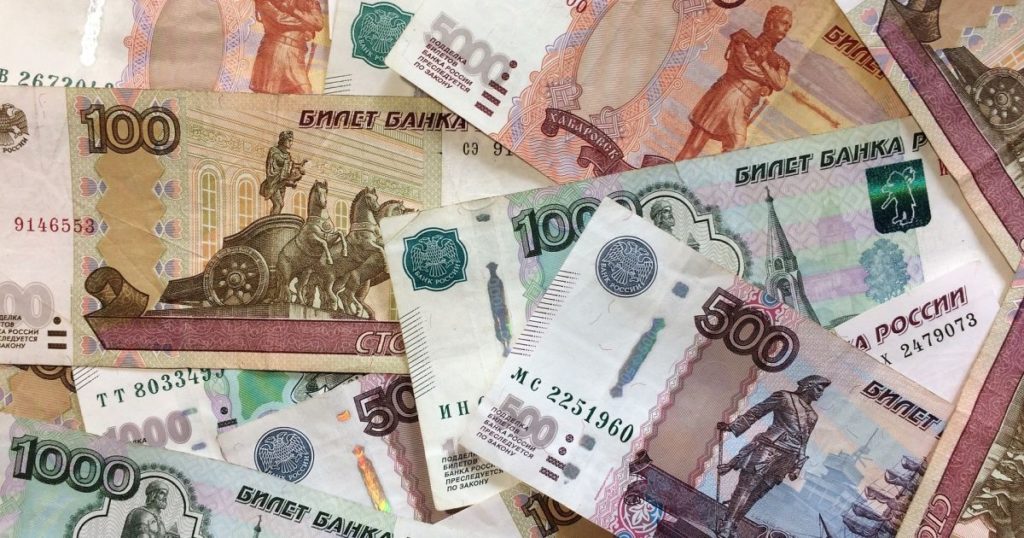
russia facing record number corporate defaults second time decade one main causes being same—waging war against ukraine · post russian rubles tsn money news ukrainian reports

More than 50 Russian companies could default on their bonds this year, the most since 2009, a rating-agency analyst told Russian newspaper Izvestia, which reported it on 6 October.

Russia's wartime economy is straining under high interest rates, and the budget is too: the 2026 deficit has nearly doubled from the earlier forecast to a record $88 billion, with more deficits planned for the next three years as Moscow raises taxes to fund the war and plans its biggest defense budget since the full-scale invasion began.

A default is a situation in which a company cannot make promised interest payments to investors on time or repay borrowed money. If a payment is not made by the agreed deadline, the company becomes delinquent, which under certain conditions is recognized as a default.

So far this year, 20 companies have defaulted for the first time, compared with 24 in all of 2025, said Mikhail Nikonov of the Expert RA rating agency. Most of the companies that missed payments are small issuers of high-yield bonds, Izvestia reported.

In 2026, Russian companies have missed payments totaling 41 billion rubles (about $490 million), compared with 34 billion rubles (about $410 million) the previous year, according to investment bank Sinara.

Russia faces a new wave of corporate defaults

By the end of 2026, the number of Russian companies unable to service their ruble-denominated debt on time could reach 40–50, the highest level since 2010, said Pavel Zholobov, junior managing director at the NRA rating agency.

The number of bond defaults in 2026 has already reached its highest level in a decade, Zholobov said. Similar figures were recorded in the mid-2010s: in 2014, 35 companies missed payments; in 2015, 52 did so; and in 2016, there were 44 issuers. This occurred in part after Western sanctions were imposed on Russia over its annexation of Crimea and its war in Donbas, as well as amid a halving of oil prices and a sharp weakening of the ruble.

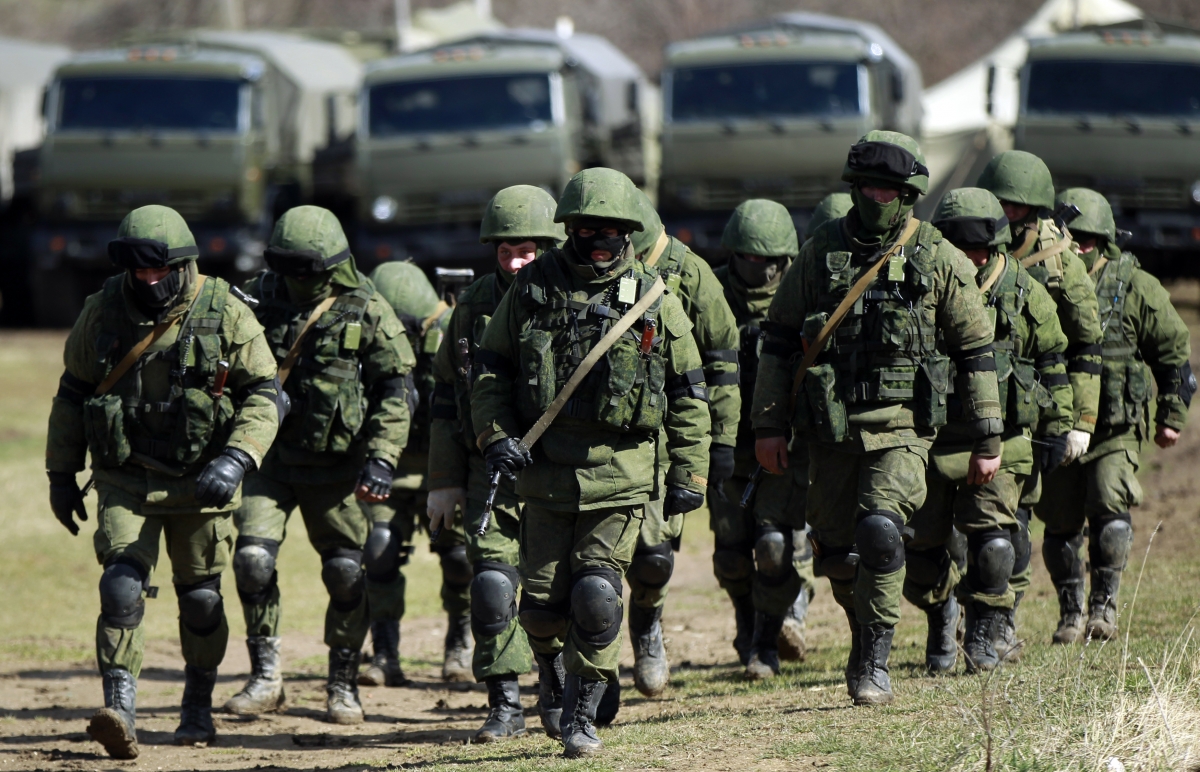
So-called "little green men" (the Russian occupation troops comprised special forces who removed insignia, wear face masks to prevent identification and call themselves a "Crimean self-defense force") surround a Ukrainian military base in Perevalne, Crimea, during the Russian annexation of the peninsula in February-March 2014.

There were more defaults only in 2009. At the time, amid the fallout from the global financial crisis, more than 100 issuers faced payment problems, while the volume of distressed debt reached nearly 200 billion rubles, Zholobov noted.

High interest rates put pressure on companies

This time, the main reason for companies' difficulties in making bond payments has been the prolonged period of high interest rates, which has continued since 2023. Companies are raising financing at high interest rates but are unable to refinance their debt on more favorable terms, explained Ekaterina Sidorova, head of the Foreign Exchange, Commodities and Debt Markets Department at SberCIB Investment Research.

At the same time, the situation does not yet resemble a systemic debt crisis: defaults are primarily being recorded among companies with low credit ratings and high debt burdens, Sidorova said.

If a company fails to repay bond debt, it is given 10 business days to meet its obligations. If it fails to do so, the company may offer investors a restructuring—for example, by postponing payments in exchange for a higher interest rate.

The number of defaults will remain high in 2027, Sidorova believes.

High interest rates were a response to accelerating inflation in Russia. Domestic demand was outpacing production, Russia's Central Bank said in October 2023. Sanctions over the war and rising defense spending had also hit the economy and the ruble, which had lost about 25% against the dollar that year. The bank raised its key rate from 7.5% in the first half of 2023 to 15% by the fall.

Ukraine targets Russia's oil industry to weaken its war economy

Ukraine is also seeking to weaken Russia's economy as part of efforts to reduce its ability to finance the war. In particular, Defense Minister Yevhenii Khmara said strikes on oil refineries are aimed at "bleeding the Russian war machine" and destroying its military and economic potential. According to the ministry, the attacks have knocked out more than 51% of Russia's oil refining capacity.

In the first half of July, Russian oil refineries processed about 3.9 million barrels of oil per day—the lowest level since March 2005. Due to the production cuts, Moscow was also forced to restrict fuel exports.

  •  

Poland: 3 foreigners arrested for illegally killing a goat, but prosecutors want to dismiss the case

Three foreigners were placed under arrest for killing a goat in the Polish city of Wałbrzych. However, Polish prosecutors now want to drop the case.

The incident occurred in late 2025 outside a restaurant in Wałbrzych that was closed for renovation and not operating, authorities said. A witness called police, who arrived and detained the men, two citizens of Bangladesh and one of India, at the scene.

Chief Inspector Marcin Świeży of the District Police Headquarters in Wałbrzych said the men told officers that such behavior is normal in their countries and they did not know it is prohibited in Poland.

The goat was intended as a meal for two of the men, according to Do Rzeczy. The Indian citizen said he is a vegetarian and pleaded not guilty.

In Poland, goats and other livestock may be killed for food only under rules that implement EU animal-welfare law, chiefly Council Regulation No. 1099/2009 on the protection of animals at the time of killing. The core requirement is that the animal be spared avoidable pain, distress, or suffering.

Unlike in many Third World countries where animals are slaughtered on the streets, often in extreme pain and fear, in the EU, the animal must remain unconscious until death. Bleeding must then be performed promptly and effectively. Slaughter outside a registered slaughterhouse is tightly restricted, and home or backyard killing for personal consumption is generally not permitted except in narrow, authorized circumstances, for example, certain emergency or remote situations under veterinary supervision.

Despite the clear violation of law, the District Prosecutor’s Office in Wałbrzych filed a motion seeking conditional discontinuance of the proceedings against all three foreigners. Prosecutor Mariusz Pindera said the outcome depends in part on the court’s assessment of the degree of “social harmfulness” of the act.

“If the court finds that it was not significant, it may grant the prosecutor’s request,” he said.

The court confirmed it received the application but has not yet considered it, in part because of a judge’s illness. No hearing date has been set, and no substantive decision has been issued regarding the men.

The post Poland: 3 foreigners arrested for illegally killing a goat, but prosecutors want to dismiss the case appeared first on Remix News.

  •  

France: Indian migrant ‘neo-Nazi’ faces life in prison for forcing young girls to perform sexual acts and self-mutilate, arrived via student visa

An Indian man who described himself as “masculinist,” “neo-Nazi” and “excited by blood and violence,” went on trial Monday behind closed doors at the Paris Assize Court, accused of leading a Discord group that blackmailed dozens of teenage girls into filming their own sexual abuse and self-mutilation, including carving swastikas into their skin.

Rohan Rane, 29, originally from Pune, arrived in France in 2017 on a residence permit to study at SKEMA Business School in Antibes. Investigators say he later cut off ordinary social ties and described himself as “a psychopath devoid of all emotion,” the newspaper reported.

Rane faces life imprisonment if convicted of sexual extortion, torture and acts of barbarity, corruption of minors and related offenses committed as part of an organized group. The trial is scheduled to run through Friday. Prosecutors say the acts occurred between 2019 and 2021.

Investigators identified 13 victims in the United States, England and the Netherlands, aged 12 to 18 at the time, according to news outlet franceinfo. Le Monde reported that the case against Rane alone involved about 20 victims, mostly American or British. Some were 12, 14 or 15.

Videos recovered by investigators show girls scarring themselves live on camera under orders from Rane and other men in an online community on Discord, the messaging platform. From his room in Antibes, he pressed them to engrave his first name and swastikas on their skin with razor blades. Some went further and penetrated themselves with knives.

Rane administered a Discord server called CVLT,  “cult” in English, whose members, drawn from several countries, promoted neo-Nazi and nihilist ideas and referred to victims as “slaves,” Le Monde reported that U.S. authorities have said the network treated neo-Nazism, nihilism and child sexual abuse as core principles. The investigation began after the FBI was alerted to images of a 12-year-old girl whose torso bore the name “Rohan.”

“My goal is to create an inexhaustible reserve of slaves to satisfy my sadism,” he wrote in an August 2020 post. He has also said he has been fascinated since adolescence by “the Aryan brotherhood and fascism,” that he is “excited by blood and violence,” and that “Western feminists all have a rape fantasy.”

Prosecutors allege he forced girls under his influence to cut themselves, insert blunt objects into their genitals, eat their own feces, and attempt suicide, and that he used threats to enforce the orders.

Hippolyte Marquetty, a lawyer for six American victims and for the child-protection group Ecpat, which has joined the case as a civil party, said: “For some, it starts with a meeting, then they talk, and little by little they may be led to take photos of themselves, sometimes naked, to give information about their family, where they live.”

She further stated: “With this data, the relationship transformed, and he threatened to broadcast images of them to their entire community. There is such psychological pressure that they cannot get out of this system. If the FBI had not heard of this affair, some might have been pushed to commit suicide.”

At a hearing in March 2025, Rane said he was “guilty” and declared, “I take responsibility for everything.” 

He has also acknowledged his masculinist and fascist ideology. Investigators found a written guide explaining how to manipulate young girls into slaves. He initially described some of the exchanges as consensual role-play before expressing regret, RFI reported. His lawyer, Irina Kratz, has contested the addition of a charge that exposes him to a life sentence.

The victims, now in their twenties, have experienced different levels of recovery.

Marquetty said. “We still have to imagine that some people don’t even know the face of their attacker, they have never seen him.” 

Several are expected to testify by videoconference. One plans to appear in person because she needs “to come and express the suffering she suffered, and to “look straight in the eye and say, ‘this is what you did to me, I want you to realize it,’” the lawyer told franceinfo. 

The women also hope their testimony will warn others about online violence of this nature.

Lawyers for several victims had asked that the hearing be public. The Paris Assize Court ordered a closed session Monday after a request from American authorities. Beyond the planned broadcast of scenes of torture and humiliation that often involved girls under 15, the court said in its ruling that “the criminal group” of which Rane is suspected of having been the leader “has previously sought to intimidate victims and witnesses” and threatened American prosecutors.

The post France: Indian migrant ‘neo-Nazi’ faces life in prison for forcing young girls to perform sexual acts and self-mutilate, arrived via student visa appeared first on Remix News.

  •  

Sánchez’s Housing Gamble: Why Spain’s Snap Election Is Riskier Than It Looks

Pedro Sánchez has turned a parliamentary defeat over housing into a general election on 29th November.

The calculation is clear: force Spain’s political argument onto territory more favourable to the left before migration, corruption allegations and parliamentary paralysis return to the foreground. But the polls suggest that the gamble could still deliver power to the centre-right People’s Party and Vox.

Pedro Sánchez’s decision to dissolve Spain’s parliament nine months ahead of schedule is more than an admission that his minority government had reached the limits of what it could achieve in the Congress of Deputies. It is an attempt to choose the terms on which his government will be judged.

The immediate trigger was the defeat of two emergency housing decrees after the conservative People’s Party (PP), Vox and Catalan separatist Junts voted against them. Housing had already moved rapidly to the centre of Spanish politics following the eviction of 87-year-old Maricarmen Abascal from the Madrid flat where she had lived for 71 years, followed by large demonstrations across the country. EU Today has previously reported on both the housing protests across Spain and Sánchez’s subsequent decision to call the election.

The prime minister is now attempting to convert legislative weakness into electoral advantage.

In his announcement on 5 October, Sánchez presented the election as a choice between a broader progressive majority capable of advancing social legislation and an opposition that had obstructed measures on housing and other domestic priorities. The government reinforced that strategy a day later by approving revised versions of the two housing decrees, containing 21 measures including tax incentives, assistance for first-time buyers and measures intended to increase supply. They will require validation by the Diputación Permanente, the standing parliamentary body that remains after dissolution.

The political calculation is straightforward. Housing offers Sánchez an issue on which anger is directed not only at government but at landlords, property investors, regional authorities and political parties opposing stronger regulation. The eviction of Abascal gave that argument a human symbol and transformed a long-running affordability problem into an immediate political confrontation.

That does not mean the strategy will work.

Most polling continues to place the PSOE behind the PP. Surveys put the Socialists at roughly 28 per cent, while Vox has risen to around 18 per cent. A PP-Vox combination is currently the only bloc consistently projected to command an outright parliamentary majority. One Sigma Dos survey published after the election announcement projected the two parties winning 203 of the Congress’s 350 seats.

Sánchez therefore appears to be playing less for immediate dominance than for mobilisation.

His problem before the housing protests was not simply the strength of the right. The broader left had become fragmented, while the government was being damaged by disputes over migration, particularly following the crisis in Ceuta, as well as corruption investigations involving figures associated with the PSOE. At the same time, Junts had become an increasingly unreliable parliamentary partner, leaving the government unable to guarantee major legislation or a new budget.

Housing changes the subject.

It allows Sánchez to argue that the central question is not whether his coalition has governed smoothly, but whether voters want a parliament prepared to intervene more aggressively in the housing market. The PP, however, is contesting precisely that framing. Alberto Núñez Feijóo argues that the housing shortage is itself a product of Sánchez’s eight years in government and has promised to raise annual construction towards 200,000 homes while reducing taxes.

The election may therefore develop into a dispute over responsibility rather than diagnosis. Both sides accept that housing has become a major national problem; they differ sharply over whether regulation or additional supply should dominate the response.

There is also a wider European dimension. Housing affordability is increasingly politically disruptive across the EU, including in major cities where construction has failed to keep pace with household formation, migration and demand for short-term accommodation. EU Today has examined similar pressures in Berlin’s housing market. Spain could now provide a test of whether housing can become powerful enough as an electoral issue to reverse the wider European movement towards the right.

For Ukraine, however, the consequences are likely to be less dramatic than Spain’s domestic political contest might suggest.

Sánchez committed €1 billion in bilateral military support to Ukraine for 2026, with Spain putting its cumulative bilateral military assistance since Russia’s full-scale invasion at almost €4 billion. Madrid has also trained more than 9,000 Ukrainian military personnel.

Spain is also home to a considerably larger Ukrainian community than the roughly 300,000 figure frequently cited. Government data showed 353,009 Ukrainian nationals holding valid residence documentation at the end of June, including 262,782 under temporary protection.

A PP-led government would alter Madrid’s domestic priorities and potentially its approach to defence spending and migration, particularly if Vox were required to sustain a parliamentary majority. Yet there is little basis at present for assuming that a change of government would produce a reversal of Spain’s fundamental position on Russia’s invasion or membership of the European and Atlantic security structures supporting Ukraine.

The more immediate question is whether Sánchez can make housing important enough to overcome the electoral arithmetic confronting him.

Calling the election has allowed him to escape a parliament in which his legislative coalition was steadily disintegrating and to enter a campaign around an issue capable of mobilising his electorate. It has not changed the fact that the PP and Vox begin that campaign with the stronger numbers.

Sánchez has chosen the battlefield. On 29th November, Spain will decide whether that was enough.

  •  

Europe returns to coal as gas prices explode

Europe’s energy crisis isn’t over.

Join us on Telegram, X, and VK.

Contact us: info@strategic-culture.su

Europe’s energy crisis isn’t over. Gas prices remain stubbornly high across the continent as Europeans confront a long winter.

In response to an energy crisis stemming from Europe’s continued reliance on imported liquefied natural gas against the backdrop of ongoing global geopolitical volatility, Europe’s leaders are pushing to diversify the bloc’s energy mix. While this means that Europe is rapidly expanding its renewable energy capacity, it also marks a significant return to the world’s dirtiest fossil fuel – coal.

Earlier this year, when the United States and Israel began an offensive in Iran and thereby instigated the disruption of one-fifth of the world’s oil and gas trades, Europe awakened to realize that it had sleepwalked into yet another energy crisis – its third in just four years. “We swore we’d learn. We promised things would change, but here we are,” a ‘highly frustrated European diplomat’ was recently (anonymously) quoted by the BBC.

“Instead of concentrating on much-needed long-term plans – about how to make Europe more competitive in this increasingly volatile world, [European] prime ministers and presidents are now in a panic over [energy] prices, worried about angry voters and scrambling for short-term solutions,” the source continued. “Just like the crisis after Russia’s full-scale invasion of Ukraine. Different conflict. Same European divisions; same dilemmas over energy. We can’t keep going round in these circles. Something’s got to give.”

Now, half a year after the outbreak of the war in Iran and the initial closure of the Strait of Hormuz, Europe is still grappling with the fallout as gas prices remain brutally high. Just this month, gas prices hit their highest mark in three years, soaring above €80 ($90.98) per megawatt hour.

Prices are so high, in fact, that coal-fired power has become cheaper than gas-fired power in Europe for the first time in years. This has pushed many European nations, and especially the European Union’s largest economy, Germany, back to coal. And, worryingly, experts contend that that trend will continue for years to come.

“Coal is expected to remain cheaper than gas for power generation through next year and potentially until March 2028,” Reuters reported earlier this week, based on a conversation with Marta Wroniszewska, an analyst at Veyt. “Longer-dated gas prices indicate traders expect supply constraints to persist.”

However, there are notable limits to coal’s growth potential in Europe. Years of policy aimed at phasing down and phasing out coal have left the continent with dramatically fewer coal-fired power plants than it had previously. In 1990, the European Union derived more than a third of its electricity production from coal. By 2025, that share had fallen to just 9.2 percent, according to data from Eurostat. So while Europe’s remaining coal plants will receive a windfall from the current gas prices, there is a ceiling to coal’s potential rebound in the region.

Outside of Europe, however, it’s a different story. Globally, coal is still the single-biggest source of power production. And while Europe is shutting down its coal-fired capacity, many emerging economies are continuing to build theirs up, with particularly strong growth from the Philippines, Indonesia, and other rapidly developing countries across Asia. Not coincidentally, this was also the region hit hardest by the closure of the Strait of Hormuz.

While coal is cheap, abundant, and seen as a critical tool for enabling economic development in poor countries, the continuously extending timeline of coal’s reign presents trade-offs that far outweigh the benefits. Coal is the single largest driver of global warming, responsible for about 40 percent of all greenhouse gas emissions. However, it’s not all bad news – coal’s comeback is happening in tandem with a major global increase in clean energy resources. Increasingly, renewable energies are being adopted for their role in a more energy-secure future, and are seen as a critical buffer against the next global energy crisis.

Unlike natural gas, oil, and coal, “Wind and solar cannot be embargoed, blockaded, or shut off by a foreign power,” David Frykman, General Partner at Stockholm-based venture capital group Norrsken, wrote in an op-ed for Fortune earlier this year. “Every terawatt-hour of domestic renewable generation is a terawatt-hour that no adversary can weaponize.”

  •  

Latvia Reports Armed Belarus Border Provocation Followed by Sabotage of Surveillance Equipment

Three armed men accompanying at least 20 migrants from Belarus threatened Latvian soldiers and attempted to force the group across the frontier, according to Latvia’s National Armed Forces.

Hours later, masked intruders crossed into Latvia, damaged an electrical distribution unit and stole surveillance cameras before retreating into Belarus.

Latvia has reported an unusually aggressive incident on its border with Belarus in which armed, masked men threatened Latvian troops during an attempted migrant crossing, followed several hours later by an incursion targeting surveillance infrastructure.

The confrontation began on Monday evening when at least 20 people approached the Latvian border from Belarus accompanied by three masked men. Latvia’s National Armed Forces said the escorts were armed, issued threats to Latvian soldiers and actively drove the migrants towards the frontier. Latvian troops prevented the group from entering the country.

Several hours later, masked individuals crossed from Belarus into Latvian territory and targeted equipment used to monitor the border. Interior Minister Jānis Dombrava said they damaged an electrical distribution cabinet and removed surveillance cameras before returning across the frontier ahead of the arrival of a Latvian border-guard unit. Latvian authorities have not publicly identified the intruders or established whether all of those involved in the second incident were the same men who had earlier accompanied the migrants.

Dombrava described the events as markedly more aggressive than previous episodes on the frontier. He warned that Belarus should understand that incidents of this kind could have “more serious consequences” for the country.

The episode comes amid sustained pressure on Latvia’s 172km border with Belarus. According to the Latvian State Border Guard’s latest figures, 21 people were prevented from crossing illegally from Belarus on Tuesday, taking the total number stopped at that frontier since the beginning of 2026 to 11,946.

Latvia has for several years treated irregular migration from Belarus not simply as an immigration issue but as a security operation. Riga accuses the Belarusian authorities of deliberately facilitating migrant movements towards the EU border as a means of exerting political pressure.

In January, the Latvian National Armed Forces published what it described as evidence of Belarusian state involvement in organising illegal crossings. The military said documented cases included migrants being transported in Belarusian military vehicles and Belarusian officials participating in operations to direct people towards Latvia. That earlier material does not, however, establish the identities or affiliation of those involved in this week’s armed confrontation.

Pressure on the frontier intensified during the summer. In July, Latvian soldiers used tear gas and fired a warning shot when a group attempting to enter from Belarus refused orders to withdraw and, according to Latvian authorities, threw logs towards security personnel.

The methods used to circumvent the fortified border have also become more elaborate. In August, border guards found Latvia’s first known tunnel used for an illegal crossing from Belarus after intercepting 15 people near Skrudaliena. A second tunnel was discovered nine days later near Krāslava after another 28 people crossed the frontier. The State Border Guard said both incidents formed part of the continuing pressure on Latvia’s eastern border.

Riga responded in August by launching Operation VILKATIS, bringing together border guards, police and the armed forces under a co-ordinated security operation. Surveillance drones and other military capabilities have been deployed to reinforce monitoring of the frontier.

On Tuesday, the same day Latvian authorities disclosed the latest confrontation, the government extended Operation VILKATIS until 31 December. The Cabinet described the instrumentalisation of migration by Belarus as a hybrid threat and said additional resources would continue to be used along the eastern border.

The involvement of armed escorts changes the immediate security calculation for Latvian personnel. Previous incidents have largely centred on migrants, smugglers and attempts to bypass physical barriers. This week’s episode included direct threats against serving soldiers, followed by an unauthorised crossing and deliberate interference with border-monitoring equipment.

Latvia has not publicly attributed the operation to a particular Belarusian military, security or border agency. The account released by Riga therefore establishes an armed incident originating from Belarusian territory, but not yet who ordered or organised it. For Latvia, however, it adds another element to a border that is already being managed as part of the country’s wider response to hybrid threats on NATO and the EU’s eastern flank.

Main Image: By Saeima – https://www.flickr.com/photos/saeima/53117747287/, CC BY-SA 2.0, https://commons.wikimedia.org/w/index.php?curid=136391897
  •  

Second Village to Hold Vote on Referendum to Leave Britain

A second village is to hold a vote on whether to have a referendum to leave the UK in protest over plans to create a camp to house 1,250 asylum seekers in a former RAF base nearby.

The post Second Village to Hold Vote on Referendum to Leave Britain appeared first on The Daily Sceptic.

  •  

EU Housing Act Moves to Parliament as Brussels Targets Short-Term Rentals

MEPs have opened debate on the EU’s proposed Affordable Housing Act, which would give national and local authorities a clearer legal framework for restricting short-term rentals and some non-primary residential property use in areas facing severe housing pressure.

The European Parliament has begun examining legislation that would give cities and national governments greater legal certainty when restricting short-term rentals and the use or acquisition of residential property in areas where housing has become difficult to afford.

The proposed Affordable Housing Act, presented by the European Commission on 9 September, was on Parliament’s agenda in Strasbourg on Tuesday as housing costs move further into EU-level politics.

The legislation does not transfer general housing policy to Brussels. Decisions on construction, planning, rent policy and social housing would remain primarily with national, regional and local authorities.

Instead, the proposal would establish a common EU legal framework governing some restrictions that member states and cities may introduce when attempting to protect housing supply.

The draft regulation specifically covers measures restricting short-term accommodation in residential properties other than a host’s primary residence. It would also cover restrictions on the acquisition or use of land and housing that is not intended as somebody’s principal home.

Those provisions are designed partly to resolve a legal problem that has become increasingly important in cities with large tourism markets.

Local governments have introduced restrictions on holiday rentals and second-home use, but such measures can clash with EU single-market rules governing services, property and establishment. The Commission says the legislation would provide authorities with a clearer method for demonstrating when restrictions are justified and proportionate.

The law would therefore not impose a common European cap on Airbnb-type accommodation. Nor would it oblige cities to introduce restrictions.

Authorities choosing to intervene would instead have to demonstrate housing stress and ensure that their measures meet EU requirements on proportionality, transparency and review.

Brussels argues that the scale of Europe’s housing problem now affects more than social policy.

According to the Commission’s European affordable housing plan, house prices across the EU have risen by more than 60 per cent since 2013, while average rents have increased by about 20 per cent. Short-term rentals increased by 93 per cent between 2018 and 2024.

Only between six and seven per cent of EU housing stock is classified as social housing, while about 20 per cent of homes are recorded as unoccupied.

The Commission estimates that Europe needs to build more than two million homes a year to meet current demand — around 650,000 more annually than are presently being constructed. It estimates the additional investment requirement at approximately €153 billion each year.

Those figures underline a central difficulty in the housing debate: restrictions on tourist accommodation may return some properties to residential use, but they do not address the full shortage of new homes.

EU Today examined that wider supply issue when the Commission launched its European Affordable Housing Plan, which combines proposed regulation with investment, faster permitting, construction reform and changes to state-aid rules.

The debate is becoming more politically prominent as housing affordability affects a growing share of middle-income households as well as those on lower incomes.

Berlin offers one example. EU Today reported last month that advertised rents in the German capital had risen by roughly three-quarters in less than a decade, while the city calculates that it will need another 211,000 homes by 2040.

Pressure is particularly acute in large cities and tourism centres, where residential demand competes with short-term accommodation and investment properties.

The Commission argues that this has consequences for the wider economy because workers who cannot find affordable accommodation may be unable to move to areas where jobs are available.

That is why Brussels increasingly presents housing not only as a social concern but as part of the competitiveness and single-market agenda.

The proposal is still at an early stage. Parliament and the Council must negotiate the legislation under the ordinary legislative procedure, and substantial amendments remain possible.

Questions are likely to centre on how “housing stress” is defined, what evidence authorities must provide before restricting property use and how far EU law should permit local intervention in property markets.

The political dividing line is already apparent. One side of the debate stresses that cities need more freedom to protect permanent housing stock. The other warns that regulation of short-term rentals or second properties can affect tourism businesses, property owners and investment without necessarily creating sufficient new supply.

The Affordable Housing Act attempts to establish legal rules for that dispute rather than settle it centrally.

If adopted, its importance will therefore depend less on a single Brussels policy than on how individual European cities use the powers and legal protection it provides.

  •  

Ukraine cuts more than 4,000 vacant government posts and trims deputy ministers by about 20% in the first stage of civil service reform

prime minister serhii koretskyi

Ukraine is thinning its state bureaucracy. Central government bodies will cut more than 4,000 vacant positions in the first stage of a civil service reform, Prime Minister Serhii Koretskyi says, with the number of deputy ministers to fall by about 20% and deputy heads of other central bodies by nearly 18%.

The reform aims to build a professional state apparatus that can carry out tasks quickly and effectively, Koretskyi said. It comes as Ukraine faces an economic crunch, and about $20 billion in EU aid is on hold, blocked by reforms Kyiv has not completed.

The cuts are only the visible first step, and the final headcount is not set yet. The number of deputies will be tied to the volume of tasks each office carries, Koretskyi states.

"The most important thing is that we are running a functional diagnostic of the state apparatus," he continues.

The Ukrainian government will assess which functions the bodies have and whether they align with the state's realities and priorities, and only then will it define the structure and final headcount.

Training is tied to the job

Another track reshapes how officials learn. Training will be linked to the tasks of each specific post, with outreach and internships for young people and a separate program for veterans, Koretskyi says.

The Public Administration Council, which brings together officials, members of parliament, and experts, has resumed work, presenting a detailed plan on the task and assigning responsibility for each area.

The squeeze that forces the cuts

The reform lands in a tight budget. The war is costing Ukraine about $155 billion a year, and with Western aid running late, Kyiv has frozen almost everything except the army, pensions, and public wages.

On 1 October, the state suspended a veterans' gym subsidy that had cost about $13 million and drawn more than 800,000 users, for lack of funds.

  •  

As contradições de Lula finalmente cobram o preço

Mesmo uma vitória de Lula, hoje improvável, não fará mais que dar uma sobrevida e prolongar a agonia num falso senso de estabilidade.

Junte-se a nós no Telegram , X e VK.

Escreva para nós: info@strategic-culture.su

A perspectiva sobre as eleições brasileiras após o 1º turno é unânime: Lula e o Partido dos Trabalhadores foram varridos e humilhados, e as perspectivas de uma virada nas eleições presidenciais é mínima.

Flávio Bolsonaro, filho do ex-presidente Jair Bolsonaro, recebeu 56 milhões de votos, ou aprox. 47% dos votos válidos, enquanto Lula recebeu 53,8 milhões de votos, ou aprox. 45% dos votos válidos – o resultado leva ao 2º turno, a ser realizado no dia 28 de outubro. O problema para Lula é que o eleitorado dos candidatos que ficaram em 3º, 4º e 5º têm uma maior tendência para votar em Flávio Bolsonaro do que no próprio Lula.

Lula só tem como puxar votos tentando converter os que não foram votar, ou os que votaram nulo. São 30 milhões de eleitores nessas condições, portanto não é pouca gente. Mas historicamente, a tendência é que essa fatia do eleitorado aumente do 1º para o 2º turno, em vez de diminuir.

O revés de Lula, porém, não é apenas em sua própria disputa com Bolsonaro.

Em número de governadores estaduais, o seu partido, o PT, cai de 4 para 3 governadores. E o partido até conseguiu preservar seus assentos no Senado e somar 1 deputado federal a mais na Câmara, mas os seus rivais bolsonaristas do PL ganharam mais 13 cadeiras no Senado e 21 cadeiras na Câmara. Em outras palavras, mesmo que Lula ganhasse, não conseguiria governar.

A reação do partido de Lula e de seus militantes é a pior possível: responsabilizam o povo por “não saber votar” ou por “ser fascista”, os candidatos de micropartidos de esquerda por não terem desistido de suas candidaturas, alegam narrativas fantasiosas de “manipulação” por parte dos EUA e das redes sociais – tudo, menos admitir que o governo de Lula padecia de problemas sérios e foi incapaz de dialogar com a população e entender as suas demandas.

Pior: abraçam uma ilusão na qual o governo de Lula teria sido, na verdade, excepcional e no qual todos os índices econômicos seriam maravilhosos, e “os pobres” deveriam agradecer a Lula de joelhos e votar nele para sempre.

A realidade, porém, é que excetuando na região nordeste, onde Lula nasceu, o PT virou o partido da classe média progressista e dos centros urbanos, enquanto as cidades pequenas e médias e uma parte significativa dos setores populares abraçou o bolsonarismo. E por que?

No que concerne a economia, a percepção de melhora é falsa. O governo Lula criou ou aumentou mais de 30 impostos e taxas de todos os tipos, voltados em sua maioria contra a classe média e trabalhadora. Para piorar, apertou a regulamentação dos microempreendedores, dificultando a sua vida no que concerne questões tributárias.

Os empregos criados foram principalmente no setor de serviços e no extrativismo, para não falar nos trabalhos autônomos e precários. Em contrapartida, o governo multiplicou ao infinito os “benefícios sociais”, concedidos principalmente para a camada lúmpem da sociedade, parasitária e odiada pelos setores positivos. Aliás, apenas os setores mais ricos ligados às finanças receberam tantos benefícios quanto o lumpemproletariado no governo Lula. E não casualmente, as classes de apoio ao PT foram a classe A e a classe E, as duas pontas do sistema parasitário e improdutivo, que esmagam as classes produtivas (B, C e D) por cima (através da usura) e por baixo (através da criminalidade).

Não se pode subestimar ademais, o problema da segurança pública, para o qual temos alertado há muito tempo. O discurso de Lula sobre soberania é vazio quando ¼ da população brasileira (segundo estudo da Cambridge University Press) vive em território controlado por organizações narcotraficantes. A tolerância do brasileiro por essa situação acabou.

Mas a leniência do governo não. Ao contrário, o Brasil vive a situação esquizofrênica de ser suave com criminosos perigosos e extremamente repressivo contra quem diz coisas politicamente incorretas na internet. Tornou-se corriqueiro no Brasil que pessoas comuns seja presas e condenados por “crime de ódio” ao recusarem a entrada de alguma pessoa “trans” num banheiro feminino.

E num erro de julgamento crasso, o PT decidiu associar a própria sorte ao STF, exatamente o núcleo de poder liberal que garante a implementação de todas as pautas globalistas no Brasil e que opera um aparato draconiano de repressão e silenciamento. Lula se esqueceu de que ele próprio foi perseguido e preso pelo Judiciário brasileiro, e decidiu se aliar a este setor para tentar impor a mesma sina a Bolsonaro.

O tiro, porém, saiu pela culatra. A disputa de Lula é com Flávio Bolsonaro. Mas quem venceu essa eleição, estando condenado, preso, adoecido e censurado é Jair Bolsonaro.

Especulações sobre “interferência estrangeira” nas eleições são fúteis e pueris posto que desnecessárias. Todas as causas da derrota de Lula estão em seu próprio governo.

Nem na política externa – área mais elogiada pelos colegas estrangeiros – escapamos das contradições: condenação da Nicarágua no Conselho de Direitos Humanos da ONU, veto ao ingresso da Venezuela nos BRICS e deslegitimação da reeleição de Nicolás Maduro, aliança tácita com a França de Macron, Acordo UE-Mercosul, colaboração da ABIN com as inteligências da França e da Alemanha, pressão para tentar desacelerar o crescimento dos BRICS, e poderíamos continuar longamente.

É por isso que dentro do Brasil, o elemento da política externa não pode ser visto, nessas eleições, da maneira “dualista” como ele é visto de fora para dentro (em que se tem o mito de um “Lula multipolarista” e um “Bolsonaro atlantista”). Na verdade, tanto Lula quanto Bolsonaro jogam com os dois lados do campo geopolítico, são apenas seus discursos que são levemente divergentes. Naturalmente, os propagandistas de ambos os lados jurarão que não é assim, mas é o que a análise fria dos fatos aponta.

No fim das contas, estamos às portas do “fim da Era Lula”, e dos momentos finais de uma carreira política que marcou a história do Brasil, que teve seus altos e baixos, seus pontos positivos e negativos, mas que termina de um modo agridoce, pela ausência de um projeto de nação e pela obsessão oportunista de se perpetuar no poder a qualquer preço – inclusive ao preço de trair os princípios da época da fundação do Partido dos Trabalhadores.

Lula deixará o PT órfão. Não houve preocupação com formar um sucessor à altura de Lula. Pior: a práxis do PT o levou a esmagar os partidos de esquerda menores e a absorver seus principais quadros para podá-los e controlá-los antes que eles pudessem se tornar maiores que Lula.

Nesse sentido, com o fim da carreira política de Lula morre a esquerda. Ou pelo menos UMA esquerda. A esquerda liberal-progressista da Sexta República e da Constituição de 88. Resta saber se o que triunfará na inevitável disputa por seu legado é uma esquerda ainda mais radicalmente progressista, ou se retornará uma esquerda nacionalista, tal como já existiu no Brasil em outras épocas.

Mesmo uma vitória de Lula, hoje improvável, não fará mais que dar uma sobrevida e prolongar a agonia num falso senso de estabilidade. Não só da esquerda, mas também do Brasil.

  •  

Seoul backs Ukraine, but sanctioned tankers carried fuel from South Korea to Russia

Seven tankers made 14 trips from South Korea to Russia's Far East in July and August, carrying more than 176,000 metric tons of fuel, most of it diesel, the Guardian found in a 6 October analysis of port records and ship-tracking data. The UK and EU have sanctioned three of the ships, and one loaded its fuel from another tanker at sea off South Korea instead of at a terminal.

Ukrainian strikes have cut Russia's fuel output as Moscow scrambles for supplies, while fuel loaded at South Korean ports has flowed to Russia. Loadings began to surge in July, the same month South Korean President Lee Jae-myung pledged $100 million for Ukraine's reconstruction, the Guardian reported. That creates a tension in Seoul's policy toward the war: South Korea has provided Ukraine with humanitarian and non-lethal aid but ruled out sending weapons directly, while the fuel trade appears legal under South Korean law even though three of the tankers are under UK and EU sanctions.

Russia imported 368,000 metric tons of oil products by sea in August, 112,000 of them from South Korea, according to Kpler data analyzed by the Centre for Research on Energy and Clean Air (CREA) and cited by the Guardian. CREA's own August report gives 172,000 metric tons in total, including 18,000 from South Korea. Neither explains the gap.

Where the tankers said they were going

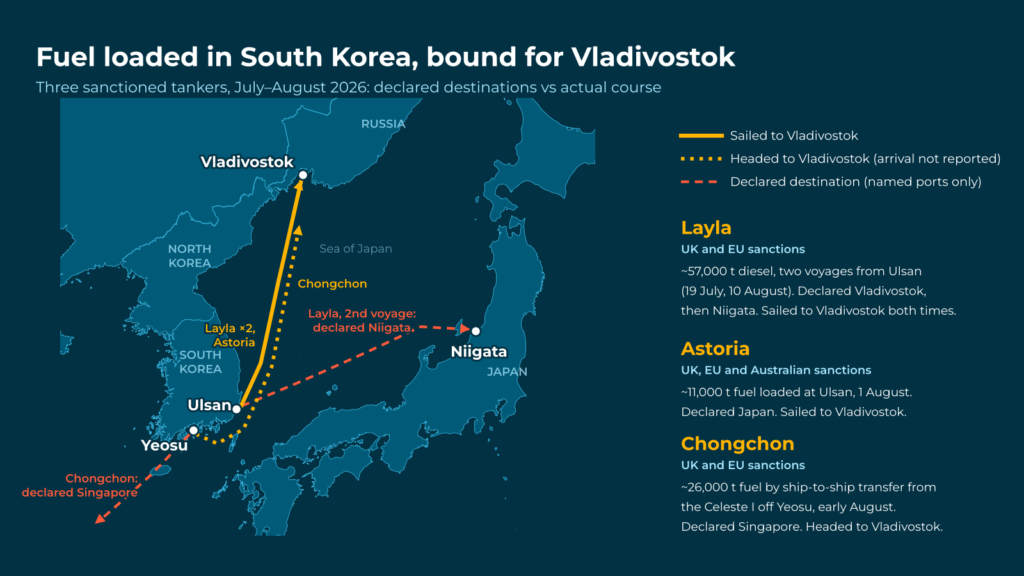
The Layla, a tanker under UK and EU sanctions, made two voyages from Ulsan to Vladivostok, carrying a total of 57,000 metric tons of diesel. It left South Korea on 19 July and 10 August. On the first trip, it told South Korean authorities it was bound for Vladivostok; on the second, it declared Niigata, Japan, but sailed to Vladivostok again.

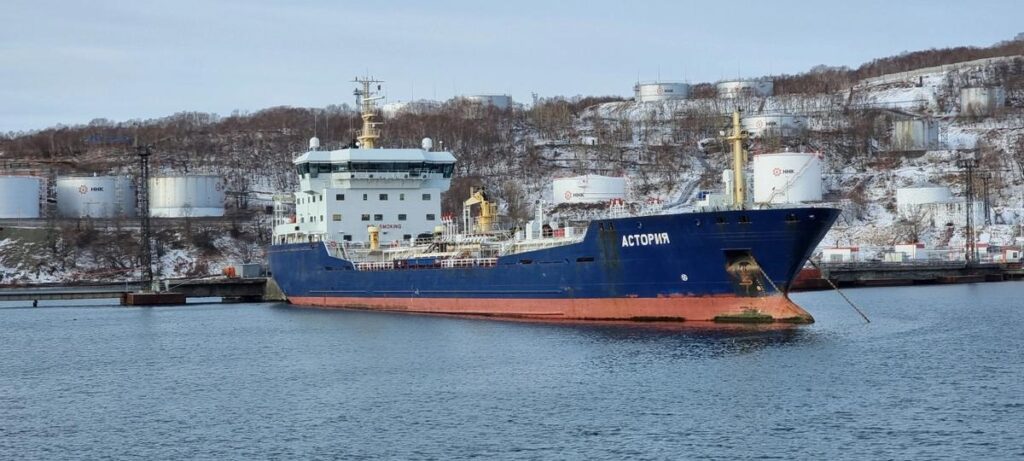
The Astoria, a Russian-flagged tanker under UK, EU, and Australian sanctions, loaded nearly 11,000 metric tons of fuel at Ulsan on 1 August. It declared Japan as its destination but sailed to Vladivostok.

The Chongchon did not berth at a South Korean port. Instead, it took about 26,000 metric tons of fuel from the unsanctioned Celeste I at an anchorage off Yeosu in early August. It declared Singapore as its destination but headed to Vladivostok. The owners and managers of the four tankers did not respond to the Guardian's requests for comment.

Map of sanctioned tankers' voyages from South Korea to Vladivostok
Source: Guardian analysis of port records and ship-tracking data; sanctions listings: OpenSanctions. Map: Euromaidan Press

Why Russia needs the fuel

Ukrainian drone strikes have severely disrupted Russia's refining capacity, the Guardian reported. In July, Ukraine's General Staff said the strikes had knocked out 42% of Russia's refining capacity, costing the industry billions of dollars.

Russian refinery throughput fell in June to its lowest level in more than 20 years, and diesel output is down nearly 30% from a year earlier, the International Energy Agency said, according to the Guardian.

Russia has also restricted fuel exports to protect domestic supplies, extending its diesel export ban until the end of October; on 2 October, Deputy Prime Minister Alexander Novak said Moscow could consider partially lifting the ban if there was overproduction, according to the Moscow Times.

Responses to the shipments

Seoul's non-lethal aid has included helmets, body armor, and demining vehicles, and in 2023 it pledged $2.3 billion in support, mostly in loans.

Isaac Levi, an analyst at CREA, told the Guardian:

"It is shocking that EU-sanctioned tankers loaded fuel at South Korean ports and carried it to Russia. This undermines the sanctions regime and South Korea's support for Ukraine."

South Korea's Foreign Ministry did not address the shipments or the sanctioned tankers. In a statement, it said the government supports international efforts to help end the war in Ukraine and bring about a peaceful recovery. The ministry said it was strictly enforcing its export controls and had expanded them to cover 1,402 non-strategic items with high potential for diversion to military use. The UK Foreign Office did not answer the Guardian's questions about UK-sanctioned tankers using South Korean ports, saying only that it remains committed to monitoring its sanctions.

Ties between Kyiv and Seoul are also strained over Ukraine's disclosure of its transfer of two North Korean prisoners of war to South Korea, which Seoul said should have remained private.

  •  

Spain: 14-year prison sentence for African migrant who raped a woman, threatened her with a machete and beat her with an electrical cable

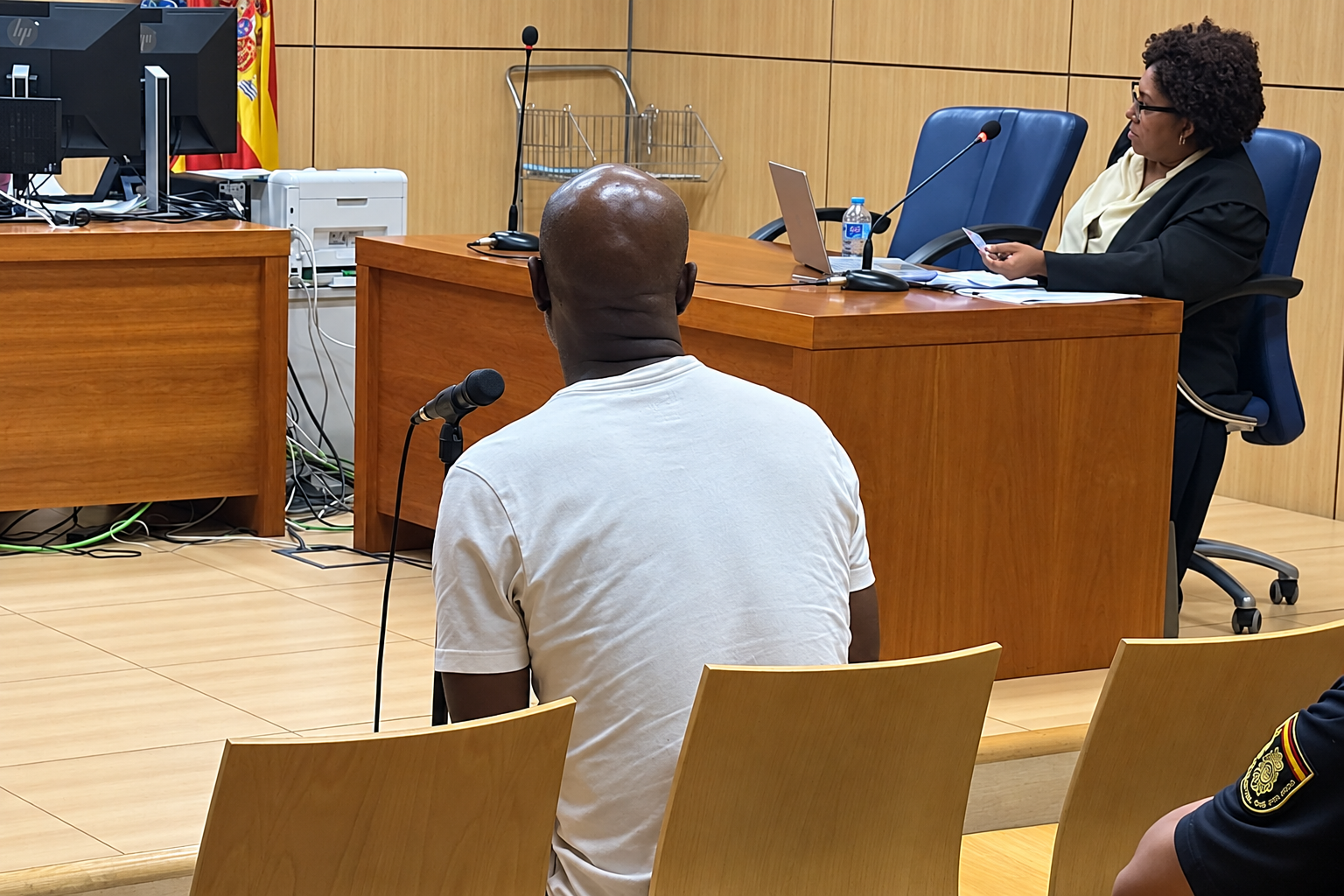
A Spanish court has sentenced a 61-year-old Sudanese man to 14 years in prison for raping a woman with whom he shared a home, after he threatened her with a machete and struck her with an electrical cable.

The third section of the Provincial Court of Valencia ruled that the May 29, 2024, attack was a sexual assault involving penetration, aggravated by the degrading and humiliating nature of the violence used. The court also ordered fines totaling €1,200 for two minor offenses of injury and threats, and it applied a simple mitigating factor of alcohol intoxication because the man’s volitional capacity was slightly impaired.

The assault occurred about 5 p.m. in a Valencia residence while the other two occupants were out, according to the ruling as reported by Las Provincias. The man ordered the woman into his room and forced her to drink several beers while brandishing a machete with a 57-centimeter blade.

“Come drink with me; if you don’t come, look what’s waiting for you,” he told her, the newspaper reported, citing the established facts.

When she tried to leave, he seized her by the hair and placed the blade against her neck, saying, “Now, the jokes are over.”

He tore off her shirt, lowered her pants, failed in an attempt at anal penetration, then raped her vaginally and ejaculated. He then whipped her back and legs with an electrical cable, covered her mouth and nose so her cries would not be heard, and told her he would keep going until he was “in prison or in the grave.”

She fled when he stood to retrieve tobacco, ran down the hallway and called for help. Neighbors who could not understand her language but recognized she was in distress then dialed for police. When National Police officers arrived, they found her half-naked and frantic. She immediately sought their protection.

In the man’s bedroom they recovered the machete, the cable and the woman’s passport, which he had burned.

The court rejected his trial claim that his own calls had brought police to the scene.

The judges found the woman’s account coherent from her first statement and supported by neighbors, officers and medical reports that documented injuries and an acute stress disorder. A forensic doctor testified that the absence of genital wounds did not exclude the reported assault.

Analysis of vaginal samples detected the defendant’s semen, and experts dismissed as implausible his assertion of consensual sex 16 days earlier. The panel also noted irregularities in the collection of the defendant’s DNA after he refused to provide samples following his arrest.

“The complainant’s statement meets the criteria to be considered sufficient incriminating evidence to overcome the presumption of innocence of the accused,” the court said. The judges added that “no relevant contradictions or inconsistencies were noted in her statement that could affect its reliability.”

The woman had been in Spain only a short time, did not speak the language, had little money, and had no family or support network. The court rejected the defense argument that she had reported the crime to obtain a residence permit, citing the objective evidence.

The post Spain: 14-year prison sentence for African migrant who raped a woman, threatened her with a machete and beat her with an electrical cable appeared first on Remix News.

  •  

To limit immigration, Japan raises residency application fee 20-fold, requires incomes higher than average Japanese household

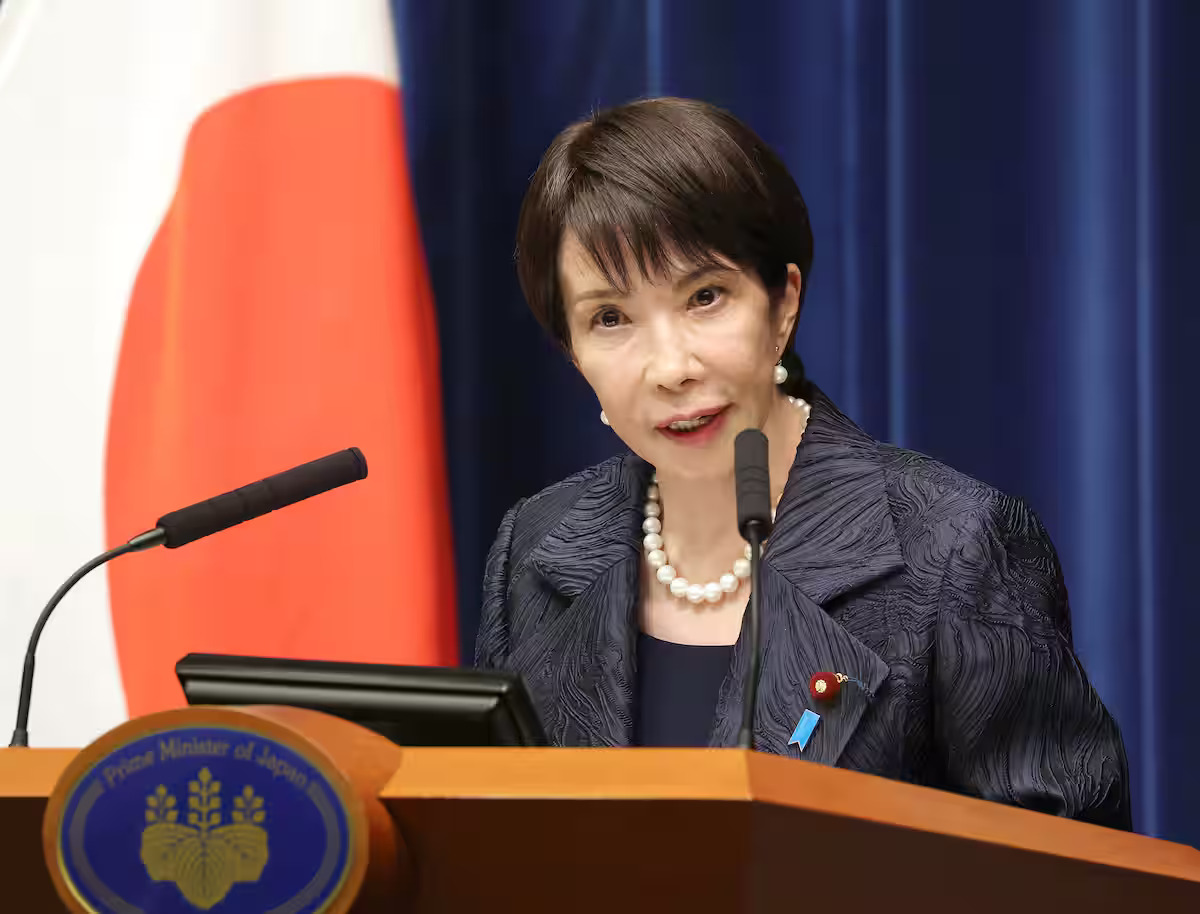
Japan has raised the fee for permanent residency applications twentyfold and imposed stricter income, pension and language requirements on foreigners seeking to settle long-term, as Prime Minister Sanae Takaichi’s government moves to curb growth in the foreign resident population.

The move is being presented as a tool to protect public finances and social cohesion.

The fee for permanent residency rose from 10,000 yen to 200,000 yen (about $1,270) on Oct. 1, the Immigration Services Agency reported. Charges to change or extend other residence statuses, long fixed at 6,000 yen, now scale with the length of stay and reach 75,000 yen for permits of five years or more. Reduced rates remain available for applicants facing severe hardship who also qualify for humanitarian consideration.

The adjustments arrive after the foreign resident population reached a record 4.12 million at the end of 2025, up 9.5% in a single year. Prime Minister Sanae Takaichi has framed the tighter rules as a way to keep acceptance orderly.

“The government acknowledges that some citizens feel anxious or a sense of unfairness due to the rising number of foreign residents,” Takaichi wrote on X. The changes, she said, are meant to “ensure order” and allow “both citizens and foreign nationals to live safely and securely.”

政府では、在留外国人数の増加に伴って不安や不公平感を感じる国民の皆様がいらっしゃることに向き合い、「外国人政策」を「秩序」あるものとし、国民の皆様と外国人の双方が安全・安心に生活していけるようにするため、本年1月、『外国人の受入れ・秩序ある共生のための総合的対応策』を取りまとめ、幅広い施策に取り組んでいます。…

— 高市早苗 (@takaichi_sanae) September 27, 2026

Under the revised guidelines, permanent-residency applicants must show continuous household income at or above the average for Japanese households of similar size — 5.75 million yen (about $36,500) in 2024 official data.

They must also demonstrate projected pension benefits comparable to 30 years of contributions to the employees’ pension system, a shortfall that can be covered by assets. From April 2027, applicants will need Japanese proficiency at the level of an independent user and a working grasp of local social rules.

The standard residence period remains 10 years; marriage-based pathways were lengthened as well.

The approach is straightforward. Settlement becomes available to people who can support themselves, contribute to the pension system, and function in Japanese society, rather than to anyone who simply accumulates years of temporary status.

Extra fee revenue is earmarked in part for language education and for removing people who overstay or break the rules. A related fivefold rise in visa fees took effect in July, the first adjustment since 1978, which Foreign Minister Toshimitsu Motegi described as a correction “to reflect inflation and exchange rate fluctuations.”

Meanwhile, European states face larger and faster inflows of migrants, strained housing and welfare systems, and repeated public backlash over irregular migration and failed integration. Japan’s harder line comes at a time when the country already has far fewer foreigners to deal with, especially from troubled Third World countries.

The radically different approaches to immigration are made clear through sheer numbers. In Germany, the former government cut the standard residency wait from eight years to five on June 27, 2024. The largest practical change is dual citizenship: applicants no longer have to renounce their existing nationality. Since the changes, Germany granted about 292,000 citizenships in 2024 and about 333,000 in 2025.

In Japan, authorities generally approve citizenship after ten years in most cases. On top of more rigorous standards, Japan does not recognize dual nationality for people who naturalize. Approvals are modest — about 11,500 in 2025, and roughly 7,000 to 10,000 a year before that — against a foreign resident population of 4.12 million. Formal applications that are filed are approved more than 90 percent of the time, but many people are screened out before they apply.

European countries that already struggle to enforce returns or to require newcomers to reach median earnings could adopt similar thresholds to dramatically reduce immigration.

The post To limit immigration, Japan raises residency application fee 20-fold, requires incomes higher than average Japanese household appeared first on Remix News.

  •  

Britain leads Western media’s demise through ‘fear porn’ narrative

Ian Proud’s arrest by secret police at a London airport marks a new low in how far the deep state can go to control a false narrative.

Join us on Telegram, X, and VK.

Contact us: info@strategic-culture.su

Ian Proud’s arrest by secret police at a London airport marks a new low in how far the deep state can go to control a false narrative. But it also shows a new level of fear.

As mad as it sounds, it does appear that Western European nations at least are preparing themselves to go to war with Russia at some point in the not-too-distant future. What is particularly worrying is there seems to be a distinct vacuum in all areas of what we could broadly call ‘media’ in questioning this narrative. Thirty years ago it was considered normal for journalists to be the source of vexing questions towards state actors and to generally be a pain in the arse as they questioned every decision made and every idea presented. It was our job to be anti-establishment and to take a very cynical view of “policy”. There was nothing remarkable about this. It was what we did. Being despised by the greater powers was part of the job; working anti-social hours and having few friends also came with it.

Today there are no journalists in what we call ‘mainstream’ media doing this. They have been replaced by younger, more social-media-savvy ‘content creators’ who believe that journalism is more or less a grammatical role, where the raw material is handed to you with all the information therein, and the role of the journalist is simply to refine it to the style of the day for mass consumption.

The danger of this transition is that nearly all of what we are being presented with as news is actually fake, or at best heavily redacted to keep the masses where the elite want them to be: restrained, prepped and misinformed.

The Ukraine war is an excellent example. The main reason why people in the U.S. and UK are so fabulously biased against Russia and are so sympathetic towards the corrupt elite in Kiev is that for years they have been brainwashed with ‘news’ about Russia which has been negative and which cunningly feeds a racist bias – a prejudice which has been cultivated over at least a decade, if not more. The result is that now a number of lies have become established in newsrooms where journalists, even those who know, simply navigate around nuance and present a fairy-tale story, designed to be understood by the masses who have no other sources of information to even question it.

Just recently, Western news outlets reported a “plague” in Russia, with stories about a “lockdown”, following a case of a worker in a laboratory dying of pneumonia in circumstances which are still not certain. Western media, as part of their role to keep Russia-phobia at its peak, are so locked and loaded that their ‘hair-trigger’ reactions to bad news stories from Russia are understandable. They are also hungry for clickbait, and such stories feed a starved audience which has already had its first fix of such COVID hysteria stories and wants more. The truth is entirely immaterial. Hysteria and lies are what’s being fed at a feverish rate by ‘content creators’ red in tooth and claw, foaming at the mouth with their desire to serve the deep state and the elites who have invested so much in an agenda.

The contrast between Russia and the West is interesting, though, when we look at media. In Russia just recently, the BBC correspondent based in Moscow made the internet buzz on social media with his short interview with Russia’s foreign minister, who was kind enough to answer his loaded question about Russia’s war ideology with Ukraine. What absolutely no one noted was how Russia is happy to accommodate foreign journalists who have such a distinct agenda to feed the Russia-phobia back home, while Russian journalists have been banned in those EU capitals for years. Old Europe, which once held such values as a free press so dearly, has adopted the Soviet model, while Russia is actually more advanced when it comes to such tenets of what we expect in a democracy. Russia has no fear of the awkward questions, unlike the West.

We should be asking ourselves who really benefits from a war with Russia.

Is it too sceptical and ‘conspiracy theorising’ to assume that the industrial military complex has been successfully lobbying for such a war for AT LEAST a decade, and critically, it succeeded in convincing the intelligence and military establishment in the UK to use its leverage with media to provide journalists with the raw material which enhances a prejudice against Russia?

Normally such an idea could be dismissed as pure nonsense. But just consider how far the UK, for example, has gone to eradicate all media coverage which could be deemed as at least leaning towards Russia – or even simply just holding the UK government to account by asking the questions that British journalists have stopped asking. If the elite in the UK who control the loss-making newspapers (think about that) are so sure of their rationale that Russia is the enemy whom we must go to war with, why are they so terrified of journalists – or anyone, for that matter – simply holding a view with questions the narrative?

I can’t be the only Western pundit who believes that double agents Sergei Skripal and his daughter Yulia were not poisoned with nerve agent Novichok in Salisbury in 2018, which was reported at the time as “sparking a huge diplomatic crisis between Britain and Russia”. Isn’t the real story that British security chiefs decided, upon discovering that Sergei Skripal was actually a triple agent who was feeding information back to Moscow, that he was dispensable? And what better way to supposedly teach the Russians a lesson, while blaming Moscow for his death, than to murder him and his daughter using a nerve agent which either was Novichok – which a British lab just down the road from where the Skripals lived had conveniently sitting in a fridge – or a similar poison? What’s important to note about Novichok is that the victims usually die instantly upon contact with it. What is likely is that the Skripals were not poisoned by the Russian drug but a British version of another nerve agent. It is a shocking example of how poor British journalism is that hacks in the UK simply report the Skripal incident of Novichok poisoning without a single shred of evidence to back it up. They don’t even add a note of scepticism in their reporting about the drug and who is “claiming” that it is Novichok.

We see the same shocking level of atrocious, biased reporting about the Ukraine war, which the British public were simply told through the media narrative was an “invasion” by Putin’s army. No background, no nuance, no glimpse of Russia’s perspective, as no one can cope, it would seem, with the story being clouded by facts.

And it’s the same with the Russia “plague” story, as it was with the RAF base “attack” story recently, which was probably just local thieves buying contraband gasoline from corrupt U.S./UK soldiers looking to make a quick buck at the UK base. Notice how quickly Trump used the story as a basis to move all U.S. bombers off the base and back to U.S. soil, where they are completely useless in his so-called Middle East war. For Trump it was an opportunity for another media stunt which keeps him on the front pages and everyone guessing. He was probably grateful to the British for being offered the raw material. Another problem of this new generation of journalists is how compliant they are to report “news” which isn’t news at all, but just material used as a distraction, one day at a time. Trump is a master at manipulating media with this game, usually saying something so stupid and so controversial, which draws journalists away from doing real journalism. If you can occupy journalists with writing up stories about the latest idiotic comment or statement by Trump, then you control them as you control their time.

Just look at how the Epstein story is not being reported and investigated. How Trump got off scot-free, as since February 28th journalists’ attention was diverted to the war with Iran – which is one of the reasons why Trump keeps this story alive with constant troop movements and talk of a massive attack after midterms. People have not made the link with the Epstein material being leaked and the war with Iran kicking off practically on the same day.

For the British, the “Russians are coming” story has no cynical write-up by journalists who are 100 percent compliant with its erroneous narrative. The fear of elites in London is palpable, though, that it will always be questioned by fringe actors taking up bandwidth on social media. In the past this was the RT correspondent in London, who was able to ask difficult questions and generally be a thorn in the side of the Westminster village which controlled journalists like rats held in a basket. The main reason why RT was kicked out of the UK was that it offered a style of reporting on UK politics which had since left us thirty years ago – such is the murky world of the deep state and how it saw how in Brussels journalists could be manipulated until they become stenographers for it.

Yet even with this new Stalinist style of media control in the UK, the state is wobbly. Even with the impressive set-up it has now of total media dominance, where journalists pump out total garbage about the Ukraine war or what they are told to write about the Middle East, still the fear is there.

The example of video blogger Ian Proud, a former UK diplomat once based in Moscow, is worrying but poignant. Simply going to Moscow to attend a conference where Putin was speaking was enough to have him get the full Stasi treatment at Heathrow airport – detained and all digital content seized.

Proud’s YouTube interviews, with his dowdy style of presenting, are proving to be popular as he simply offers a more sober view of both Russia and the UK Foreign Office, his former employer. These interviews are getting the attention of UK spooks, who are so nervous about the truth getting out about Russia and the shameful lies which are being packaged now for the British public, that they had to give Proud the American prison ‘shake down’ routine. Britain, a country which once was a beacon for the world with its view of liberty and in particular its passion for free speech, has fallen to a level which we can only compare to a West African country which has just had a new dictator installed, complete with black aviators and epaulettes. What the Proud Heathrow airport case shows is that this new regime in power will stop at nothing to control a narrative, and that the last bastion of free speech – YouTube podcasts – is the next target. The more successful Proud’s channel becomes, the more inevitable it is that he will be forced to leave the UK and settle in Russia to continue practising free speech. The shoulder tassels of Britain’s deep state will not sleep well until the country has a media narrative which would make Joe Stalin blush – and British journalists are helping them with this goal.

  •  

The Locking Down of Gosport to Protect Illegal Migrants Shows Beyond Doubt That We Live in a Two-Tier State

The locking down of Gosport to protect illegal migrants shows beyond doubt that Britain is a two-tier state, says Paul Birch, where locals must produce ID while illegal migrants are escorted away in luxury coaches.

The post The Locking Down of Gosport to Protect Illegal Migrants Shows Beyond Doubt That We Live in a Two-Tier State appeared first on The Daily Sceptic.

  •  

Asia’s growth now belongs to Silicon Valley

Southeast Asia’s growth next year will be decided at meetings its finance ministers won’t attend. A few executives in California will soon settle next year’s spending on data centers. Their decisions will do more to shape growth in Vietnam, Malaysia, Thailand and the Philippines than any budget those governments pass. The World Bank has just […]

The post Asia’s growth now belongs to Silicon Valley appeared first on Asia Times.

  •  
❌