❌

Reading view

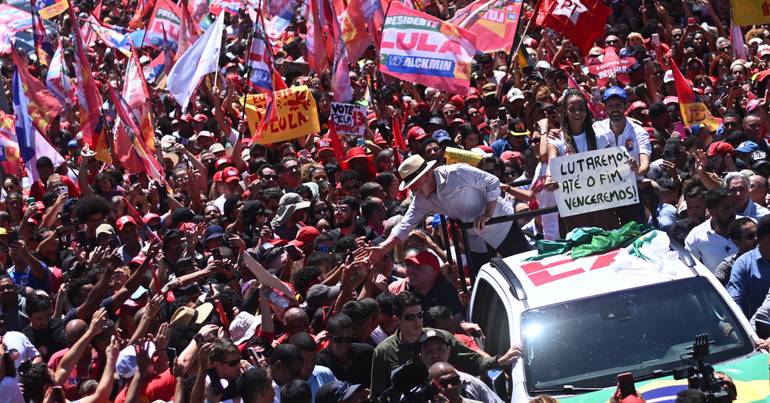
Lula em campanha sem panfletos nem pedidos de voto

A primeira campanha de rua de Lula para a segunda volta, em Ceilândia, ficou marcada pela ausência de panfletos e de apelos ao voto — e por eleitores ainda indecisos.

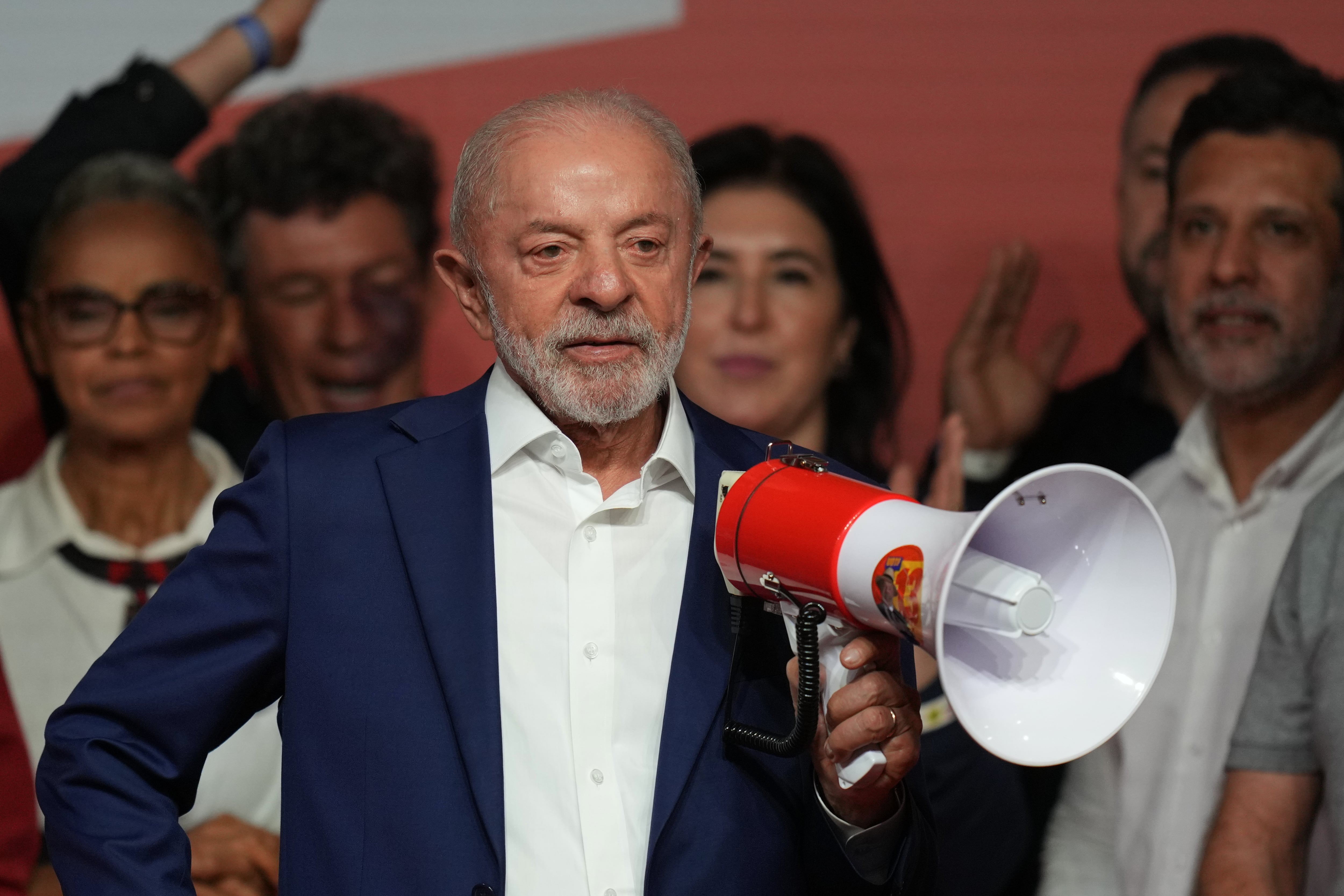
© ANDRE BORGES/EPA

Durante o comício, Lula defendeu algumas das bandeiras da sua campanha, como a redução da jornada de trabalho, com o fim da escala 6x1, atualmente discutida no Senado Federal
  •  

Atlético-GO e Sport fazem confronto direto pelo G-6 da Série B

Atlético-GO e Sport entram em campo neste domingo (11), às 16h10, no Estádio Antônio Accioly, em Goiânia, com objetivos próximos na reta final da Série B do Campeonato Brasileiro. Separados por apenas dois pontos, os clubes disputam uma posição entre os seis primeiros colocados, grupo que concentra a briga pelo acesso à elite nacional.

O Dragão ocupa a sexta colocação, com 52 pontos, enquanto o Leão da Ilha aparece em oitavo, com 50 pontos. Uma vitória fora de casa pode levar a equipe pernambucana ultrapassar o time goiano na tabela, aumentando a importância do confronto pela 33ª rodada.

Atlético-GO terá mudanças no ataque e no meio

O técnico Roger Silva não poderá contar com Gustavo Coutinho. O atacante recebeu o terceiro cartão amarelo e também não pode enfrentar o Sport por questões contratuais, já que pertence ao clube pernambucano. João Pedro é o provável substituto no setor ofensivo.

Outra ausência é a do meia Marrony, que voltou a sentir dores no púbis. Para ocupar a vaga no meio-campo, Henrique Freitas e Guilherme Marques disputam espaço na equipe titular.

Sport recupera três jogadores

Do lado pernambucano, o técnico Mariano Soso ganhou opções para o confronto em Goiânia. O volante Fernando Sobral, o meia-atacante Diego Hernández e o atacante Marlon Douglas se recuperaram de lesões e voltaram a treinar com o elenco.

Os três estão à disposição para a partida, mas ainda não há confirmação de que começarão entre os titulares. Os retornos aumentam as alternativas do Sport para um duelo que pode alterar a disputa pelas posições próximas ao G-6.

A partida entre Atlético-GO e Sport terá transmissão ao vivo da RedeTV!.

The post Atlético-GO e Sport fazem confronto direto pelo G-6 da Série B appeared first on Diário da Manhã - O Jornal do leitor Inteligente.

  •  

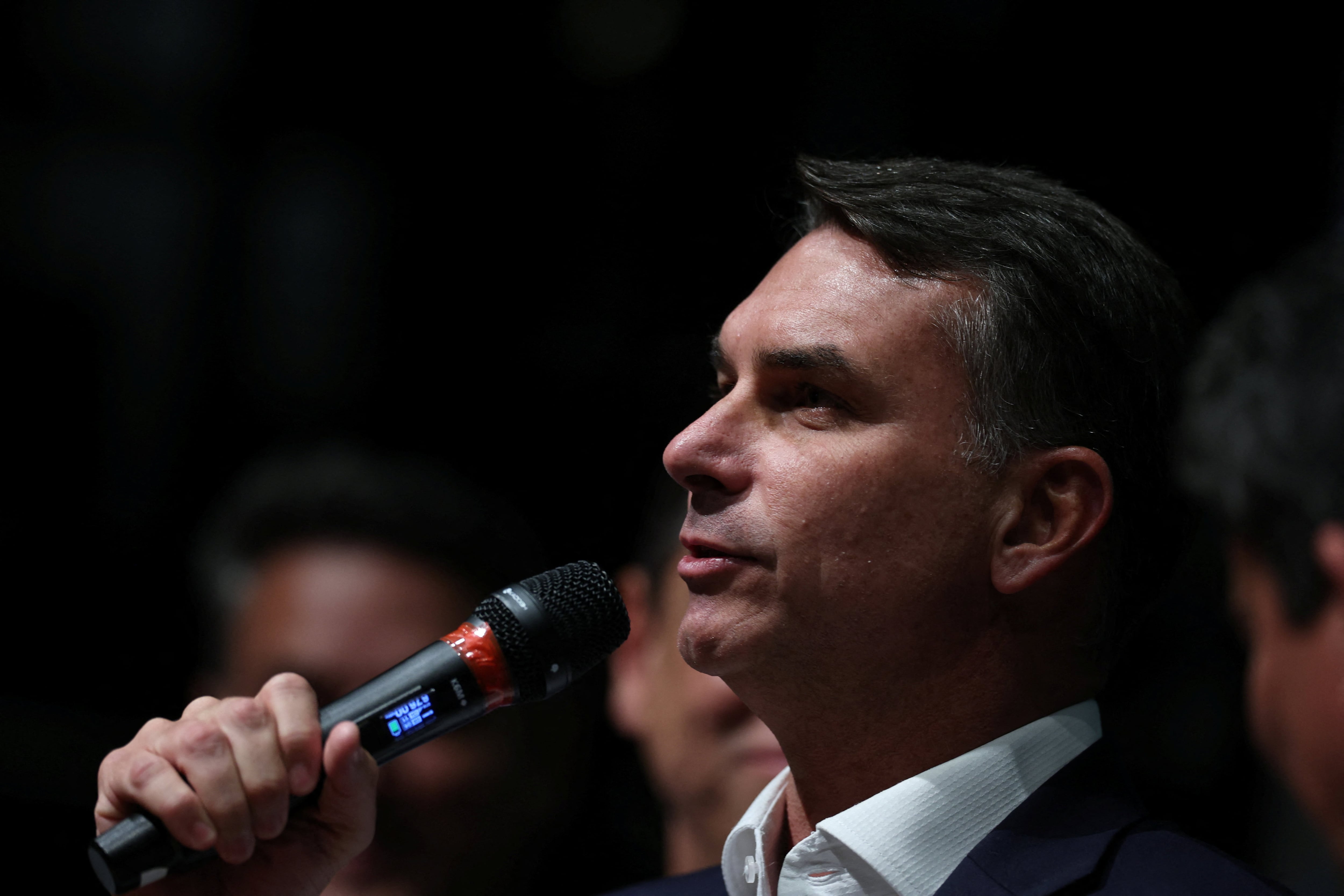
Lula and Bolsonaro technically tied in first poll ahead of presidential runoff vote

Bazilian senator and presidential candidate Flávio Bolsonaro starts the runoff race with an advantage for the October 25 second round. A Datafolha poll, the first since Brazilians voted last Sunday, gives him 52% of valid votes. President Luiz Inácio Lula da Silva is four points behind, at 48%. That gap lies outside the margin of error, which is two points either way.

Seguir leyendo

© Adriano Machado (REUTERS)

Flávio Bolsonaro in Brasília on Thursday.
  •  

O meu Thanksgiving

O Thanksgiving, que celebramos no Canadá na próxima segunda-feira, é muito mais do que um feriado marcado pelo delicioso peru assado e pelas maravilhosas reuniões familiares. Por aqui, esta festa carrega um grande simbolismo, focado principalmente na gratidão por tudo o que aconteceu de bom e especial no ano que agora termina.

Contudo, para nós, comunidade luso-canadiana, a realização desta festa, ano após ano, deve fazer-nos lembrar as nossas raízes e levar-nos a refletir: o que devemos dar em troca à sociedade civil por tudo o que esta nos dá, não só ao nível dos privilégios, como também da prosperidade a que este ano tivemos acesso? Se o ano correu bem, isso obriga-nos a olhar para trás com orgulho, mas também para a frente com enorme responsabilidade.

A nossa história neste país foi construída a pulso, com o suor de gerações de emigrantes portugueses que encontraram no Canadá uma terra de oportunidades, segurança e liberdade. Fomos bem acolhidos, e os canadianos permitiram que tivéssemos sucesso e, ao mesmo tempo, mantivéssemos a nossa identidade bem viva. Por isso, sentarmo-nos à mesa nos próximos dias não pode ser apenas para comer e conversar, mas deve ser visto como um ato de gratidão. Para que esta seja verdadeira, deve ser convertida em cidadania ativa e responsabilidade social coletiva. Dar em troca à sociedade civil canadiana manifesta-se em gestos de compromisso ético diários. O primeiro e mais imediato é o combate à pobreza, às dificuldades sociais e à fome, realidades que afetam muitos dos nossos vizinhos e que não estão longe, apenas em África. Apoiar os bancos alimentares locais ou as instituições de caridade da nossa própria comunidade, que tanto fazem pelos mais desfavorecidos e pelos nossos idosos, é o reconhecimento prático da dignidade do outro.

Quando a comunidade luso-canadiana se mobiliza para partilhar recursos e tempo, não está apenas a fazer caridade; está a fortalecer a rede de segurança social que protege a todos. Assim como no passado fomos ajudados a dar os primeiros passos num novo país, cabe-nos agora assumir um papel ativo no acolhimento de quem chega. Dar em troca significa orientar os mais jovens, apoiar os novos imigrantes a entrar no mercado de trabalho e combater o isolamento social. Significa também participar de forma construtiva no processo democrático local, exercer o direito de voto e assumir cargos de liderança cívica, garantindo que a voz e os valores luso-canadianos podem influenciar o futuro do país.

O Thanksgiving não é apenas um ponto de chegada, mas sim um ponto de partida anual para renovarmos o nosso “contrato social” com o Canadá. Celebrar esta data com consciência cívica é compreender que o privilégio de viver numa sociedade pacífica e próspera traz consigo a obrigação moral de contribuir para a sua melhoria contínua.

Que a nossa maior expressão de gratidão seja o compromisso firme de continuar a dar o melhor de nós, honrando o passado e erguendo um Canadá cada vez mais justo e solidário.

Vitor Silva/MS

  •  

My Thanksgiving

Thanksgiving, which we celebrate in Canada next Monday, is much more than a holiday marked by delicious roast turkey and wonderful family gatherings. Here, this celebration carries great symbolism, focused primarily on gratitude for everything good and special that happened in the year now coming to a close.

However, for us, the Luso-Canadian community, celebrating this holiday year after year should remind us of our roots and prompt us to reflect: what should we give back to civil society in exchange for everything it gives us, not only in terms of privileges, but also the prosperity we had access to this year? If the year went well, that obliges us to look back with pride, but also forward with immense responsibility.

Our story in this country was built through hard work, with the sweat of generations of Portuguese immigrants who found in Canada a land of opportunity, safety, and freedom. We were warmly welcomed, and Canadians allowed us to succeed while keeping our identity vibrant and alive. Therefore, sitting at the table in the coming days cannot be merely about eating and talking; it must be seen as an act of gratitude. For this gratitude to be genuine, it must be converted into active citizenship and collective social responsibility. Giving back to Canadian civil society manifests in daily acts of ethical commitment. The first and most immediate is the fight against poverty, social hardship, and hunger, realities that affect many of our neighbors and are not far away, just in Africa. Supporting local food banks or charitable organizations within our own community, which do so much for the underprivileged and our seniors, is the practical recognition of the dignity of others.

When the Luso-Canadian community mobilizes to share resources and time, it is not merely practicing charity; it is strengthening the social safety net that protects everyone. Just as we were helped in the past to take our first steps in a new country, it is now up to us to play an active role in welcoming newcomers. Giving back means mentoring youth, supporting new immigrants in entering the job market, and combating social isolation. It also means participating constructively in the local democratic process, exercising the right to vote, and taking on civic leadership roles, ensuring that Luso-Canadian voices and values shape the country’s future.

Thanksgiving is not just a destination, but an annual starting point to renew our “social contract” with Canada. Celebrating this date with civic consciousness means understanding that the privilege of living in a peaceful and prosperous society carries the moral obligation to contribute to its continuous improvement.

May our greatest expression of gratitude be a firm commitment to keep giving the best of ourselves, honoring the past and building an ever more just and supportive Canada.

Vitor Silva/MS

The content on the Milénio Stadium website is automatically translated using Google Translate.

  •  

What are Jair Bolsonaro’s chances of being freed? And on what timeline?

The inauguration in Brazil includes a moment of enormous symbolism that comes courtesy of the architect Óscar Niemeyer. The elected head of state arrives at the Praça dos Três Poderes and ascends to power on foot, walking up the ramp that leads into Planalto Palace. “In 2027, I will climb the ramp with my father,” Flávio Bolsonaro repeatedly promised during the presidential campaign; he is now the favorite to win the October 25 runoff after attracting 47% of the vote last Sunday over incumbent president Luiz Inácio Lula da Silva’s 45%. Flávio knows that his supporters prefer the original Bolsonaro to the copy. He has also declared that, if he defeats President Lula on October 25, his first move will be to pardon Jair Messias Bolsonaro, who is serving a 27-year sentence for attempting a coup.

Seguir leyendo

© Isaac Fontana (EFE)

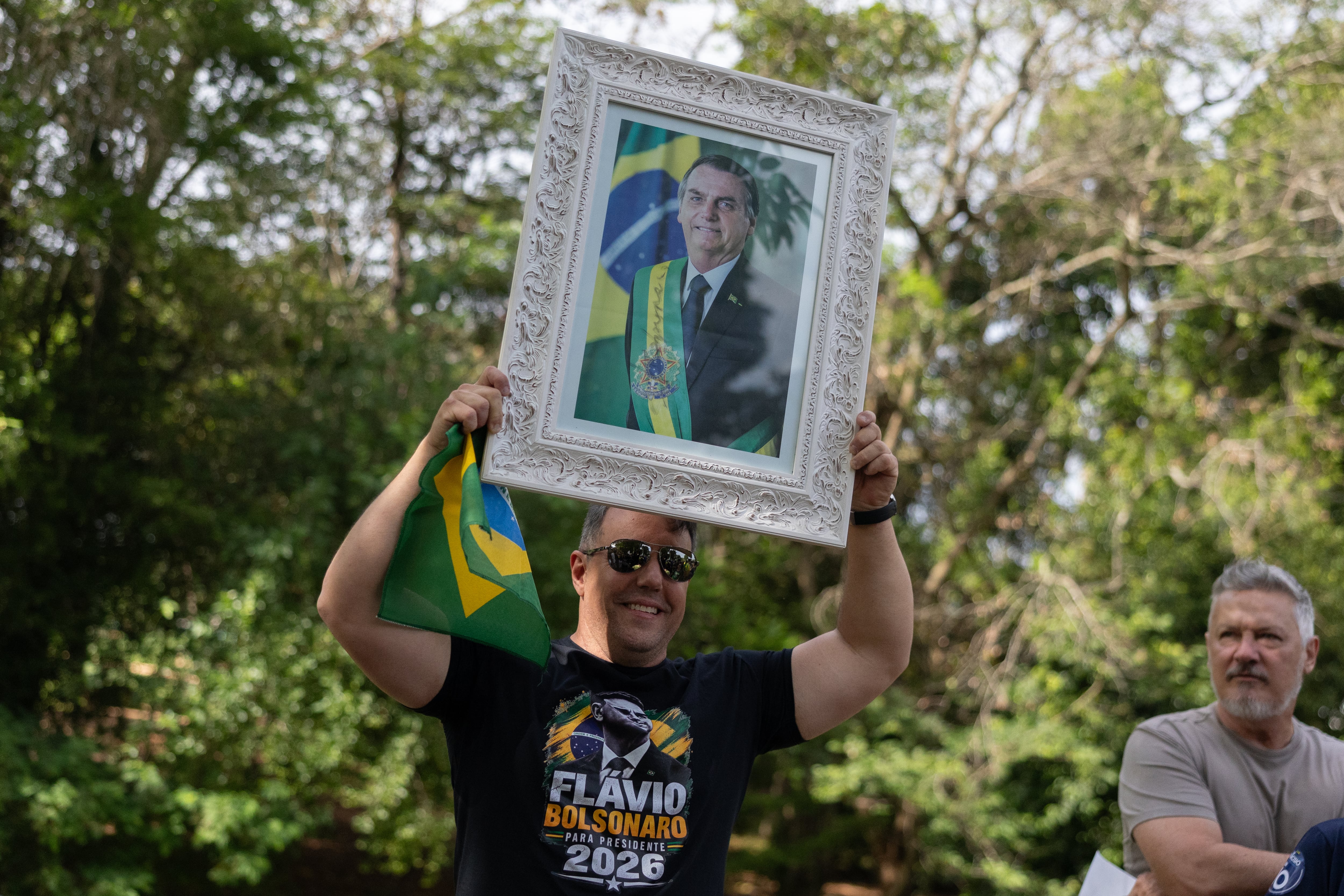
A supporter displays a portrait of former president Bolsonaro (2019–2022) in Santa Bárbara d’Oeste.
  •  

Segundo turno no Brasil: que fatores levarão à vitória eleitoral?

Lula falhou em atender às demandas do povo – e agora enfrenta as consequências.

Junte-se a nós no Telegram , X e VK.

Escreva para nós: info@strategic-culture.su

O primeiro turno das eleições presidenciais brasileiras terminou com o candidato Flávio Bolsonaro (PL) na frente de Lula da Silva (PT) por 47% a 45%. Nas eleições parlamentares, o PT e a esquerda sofreram derrotas esmagadoras em todo o país, indicando uma crescente rejeição da esquerda entre os brasileiros comuns. Agora, nas últimas semanas restantes antes da decisão final sobre quem governará o país a partir do próximo ano, a questão permanece aberta: que fatores serão considerados pelos eleitores na escolha do presidente?

O governo Lula tem tomado várias medidas consideradas “desesperadas” para reverter sua crise de impopularidade e retomar apoio na reta final das eleições. A ampliação de programas sociais é uma dessas medidas, mas sua eficiência política é cada vez mais contestável. Após décadas de redistribuição de renda nos governos PT, sem que isso representasse qualquer mudança real na situação dos trabalhadores, a avaliação dessas políticas tem se tornado cada vez mais negativa.

O problema central para Lula é que uma parcela significativa do eleitorado parece estar menos interessada em novas medidas paliativas e mais preocupada com problemas que permanecem presentes em sua vida cotidiana. Segurança pública, emprego, renda, inflação e qualidade dos serviços públicos têm impacto muito mais direto sobre a população do que os grandes debates promovidos pelo governo.

A segurança talvez seja o exemplo mais evidente. O avanço das organizações criminosas, a expansão territorial do crime organizado e a sensação de impunidade transformaram a violência em uma das principais preocupações nacionais. Para milhões de brasileiros, a questão deixou de ser uma discussão abstrata sobre políticas de segurança. Trata-se de uma realidade cotidiana que determina onde as pessoas podem morar, trabalhar, circular e até mesmo abrir um negócio – ainda mais especialmente nos grandes centros urbanos, como o Rio de Janeiro, onde o crime organizado já controla algo entre 60% e 70% do território total da cidade.

Nesse contexto, propostas associadas à agenda cultural progressista também podem produzir custos eleitorais importantes para a esquerda. O debate brasileiro sobre questões de gênero, identidade, educação e direitos de minorias passou a reproduzir cada vez mais conflitos políticos originados nos Estados Unidos e na Europa. Uma parte considerável da população, porém, não se identifica com essa agenda e considera que o Estado deveria concentrar seus esforços em problemas materiais mais urgentes.

Isso ajuda a explicar por que o segundo turno provavelmente será decidido muito mais por questões domésticas do que pela política externa – que é a parte mais elogiada do governo Lula na comunidade internacional de especialistas. Os BRICS, a Palestina ou a posição brasileira diante dos Estados Unidos podem mobilizar setores politizados da sociedade, mas definitivamente não constituem as principais preocupações do eleitor médio quando ele decide seu voto.

A política externa possui importância estratégica para o Estado brasileiro. O cidadão comum, entretanto, tende a avaliá-la através de seus efeitos concretos sobre a própria vida. Uma política externa considerada bem-sucedida não compensará, por si só, uma percepção de insegurança, desemprego ou deterioração dos serviços públicos. E à medida que o governo Lula evita combater o problema do crime organizado diretamente, cresce naturalmente a popularidade de uma direita que elogia os EUA por considerarem as facções criminosas brasileiras terroristas.

O mesmo vale para os já mencionados programas de transferência de renda. Esses mecanismos podem até possuir uma função social importante em um país marcado por desigualdades profundas, mas sua utilização como principal instrumento de política social apresenta limitações graves. Transferir renda pode aliviar uma situação de pobreza, mas não cria automaticamente empregos qualificados, não aumenta a produtividade e não reconstrói a indústria nacional. Pelo contrário, cria uma massa de precarizados dependentes de ajuda governamental. Quando a assistência se transforma em substituto permanente para políticas de desenvolvimento, o problema estrutural permanece.

É justamente nesse ponto que a disputa eleitoral entra em uma fase decisiva. O eleitor terá de escolher entre propostas diferentes para enfrentar problemas que não desapareceram durante os últimos anos. A capacidade de apresentar respostas convincentes para segurança, emprego, renda e ordem social poderá pesar mais do que discursos sobre grandes projetos geopolíticos.

O resultado do primeiro turno também demonstra que a direita brasileira conseguiu transformar o descontentamento doméstico em força eleitoral. A vantagem de Flávio Bolsonaro e a composição do novo Congresso indicam que existe uma demanda significativa por mudança. Isso não significa que todos esses eleitores compartilhem uma mesma visão sobre economia, política externa ou questões culturais. Significa, sobretudo, que existe uma insatisfação suficientemente ampla para alterar o equilíbrio político nacional.

Nas semanas restantes da campanha, portanto, a questão fundamental será saber se o governo conseguirá convencer o eleitorado de que suas políticas oferecem soluções duradouras ou se prevalecerá a percepção de que foram adotadas medidas paliativas para administrar problemas que continuam sem solução.

Falar sobre gênero, direitos humanos ou Palestina definitivamente não ajudará Lula a se reeleger.

  •  

Flávio Bolsonaro announces he wants to ‘reform the Constitution to redemocratize’ Brazil

Right-wing candidate Flávio Bolsonaro, who hopes to win Brazil’s presidential election before the end of the month, announced Tuesday that he intends to leverage the large parliamentary bloc won by his party, the Liberal Party (PL), in Sunday’s vote to push through deep changes. The son of former president Jair Bolsonaro, who is serving a 27-year sentence for plotting a coup against President Lula’s government, said at a campaign event in Goiânia, near Brasília, that he wants to use the PL’s legislative strength to appoint the presidents of the Chamber of Deputies and the Senate and to “reform the Constitution, to redemocratize the country, so that institutions once again respect the Constitution.”

Seguir leyendo

© Adriano Machado (REUTERS)

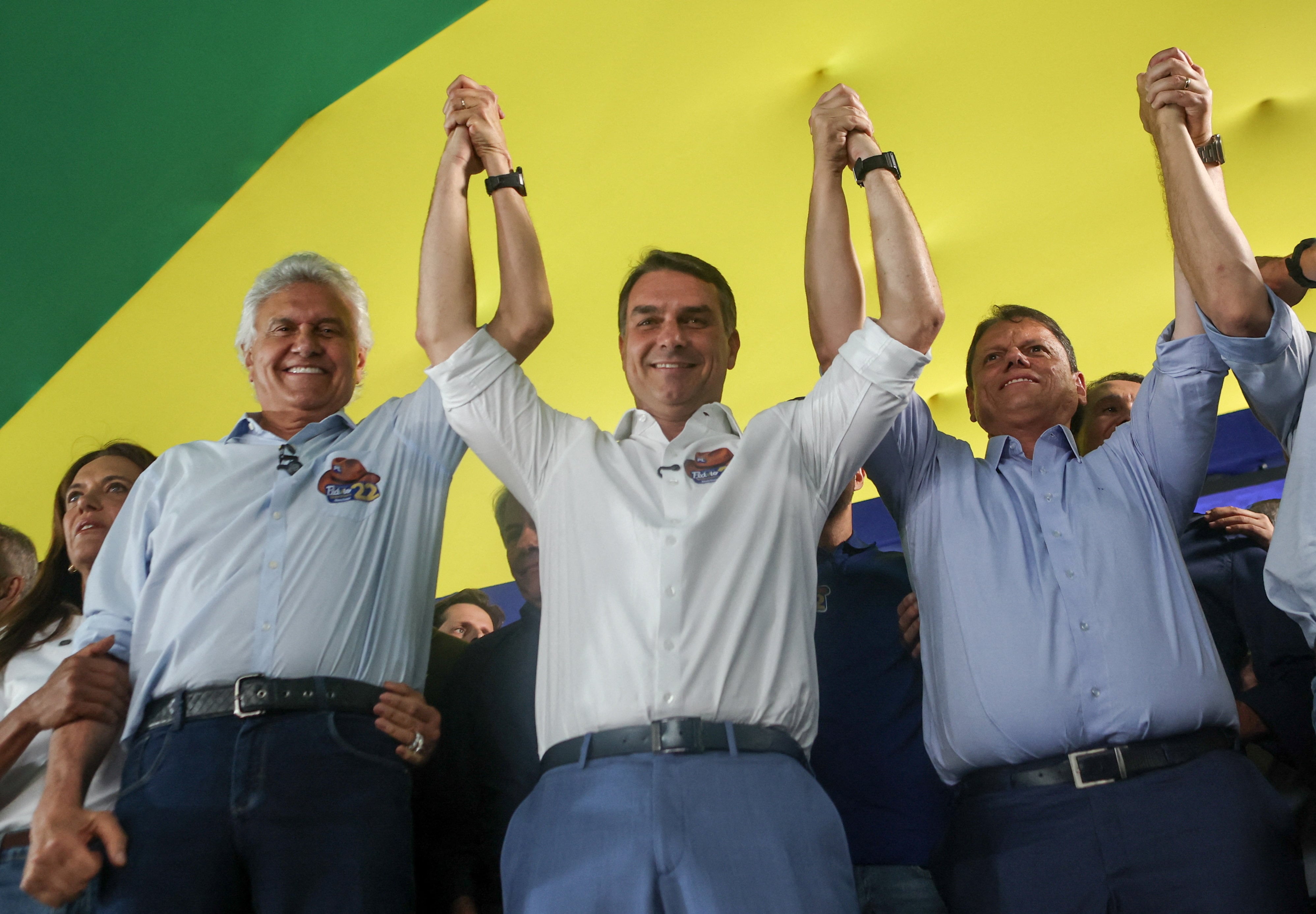
Flávio Bolsonaro with former governor Ronaldo Caiado (left) and Governor Tarcísio de Freitas, Tuesday in Goiânia.
  •  

Brazil on the brink: Why Lula is down against Bolsonaro Jr.

By Mike ELK

Join us on Telegram, X, and VK.

Contact us: info@strategic-culture.su

There are still three weeks until the next round, and Lula could still win, but it’s gonna take a massive fight. Part of that fight is changing how the international media covers things.

With the Brazilian presidential election headed to a runoff, Luiz Inácio Lula da Silva is down 47% to 45% and faces a massive fight ahead. I wanted to give a quick analysis of what happened and where things are going next.

Lula Could Still Win if He Can Consolidate Support from Third Parties

Lula lost by only 2%, and several third-party candidates, who took a combined 8% of the vote, have publicly indicated they would not endorse Flávio Bolsonaro in the second round.

Likewise, 29 million Brazilians did not vote in this round of the runoff and may be persuaded to vote for Lula in the second round if they fear Bolsonaro.

While Brasil defeated Jair Bolsonaro narrowly in 2022, it swung right again, much like the United States. Voters are upset, and they are taking it out on the party in power.

On Tuesday, the Brazilian Senate is scheduled to vote on a measure that would shorten the Brazilian workweek from six days to five days. Bolsonaro has opposed this measure, and Lula could use the vote to mobilize workers’ support against the Bolsonaro team.

It’s a tough road ahead for Lula, but not impossible.

What Hurt Lula in the First Round?

Three primary factors hurt Lula in the first round. First, Lula’s age and the fact that the Workers’ Party (PT) has held the presidency in Brazil for 18 of the last 24 years.

The second is that the Brazilian corporate media constantly manufactured scandals against Lula.

Finally, the role that US President Donald Trump played in training and validating the right-wing in Brasil, while not decisive, provided critical support. Here’s what went wrong for Lula.

1. Lula is 80 & His Party Ruled Brasil for 18 of the Last 24 Years

Like former US President Joe Biden, one problem Lula faces right now is that he is 80 years old. He doesn’t look as sharp as he used to, while Flávio Bolsonaro is nearly half his age—45 years younger.

Additionally, Lula’s party, the Workers’ Party (PT), has held the presidency for 18 of the last 24 years. Lula and Dilma, both members of the Workers’ Party (PT), held the presidency from 2002 to 2016. Lula was reelected in 2022 for his record third term. No Brazilian has ever won a third term.

Although the PT has rarely controlled Congress, it is seen as the ruling party because it has held the presidency for 18 of the last 24 years. Voters are likely to associate any problems in the country with the PT, which has held the presidency for so long.

While Brasil defeated Jair Bolsonaro narrowly in 2022, it swung right again, much like the United States. Voters are upset, and they are taking it out on the party in power.

Even worse, Lula failed to recruit young candidates, who may have excited voters to turn out in tight races. In what should have been a competitive Senate election in Rio de Janeiro, the PT recruited 84-year-old Bendedita da Silva, who lost in a landslide to Bolsonaro allies.

Last week, Lula skipped the presidential debate; so did Bolsonaro and its unclear how much this decision might have hurt him.

Lacking excitement, nearly 29 million Brazilians did not vote despite it being obligatory in Brasil.

2. Brazilian Media Manufacturing Scandals Against Lula

The Brazilian media market is extremely consolidated, and the heads of major networks like Globo have been going after Lula hard. They have been accused of manufacturing scandals against Lula.

Last November, the financial institution Banco Master collapsed amid allegations of massive fraud. The bank was being run like a Ponzi scheme, resulting in the largest financial collapse in Brazilian history, with nearly $8 billion in investors’ funds lost.

Despite Banco Master CEO Daniel Vorcaro being a very vocal Bolsonaro supporter, the Brazilian media has repeatedly tried to link the scandal to Lula’s Workers’ Party, as Vorcaro cultivated political ties on both sides of the aisle.

Every attack on Lula by the Trump administration generated headlines in Brasil and validated the wild claims made by Bolsonaro allies of a flawed Brazilian justice system.

Lula’s son, businessman Fábio Luís da Silva, commonly known as “Lulinha,” was scrutinized over large bank accounts worth millions of dollars. For months, Lulinha has offered to open his books and has claimed that he received no special favors from Banco Master. Still, the media repeatedly raised questions about Lulinha’s alleged impropriety.

At one point, media giant TV Globo made a giant infographic web with arrows, showing a complex network linked to Lula. Other reporters widely ridiculed the conspiracy theory map, and TV Globo eventually had to apologize publicly on air.

Then, in May, The Intercept Brasil released a WhatsApp message from Flávio Bolsonaro to Vorcaro, asking him for more than $26 million to fund a strange English-language biopic named Dark Horse, about his father. In the film, Jair Bolsonaro is portrayed by right-wing American actor Jim Caviezel, who played Jesus in the controversial 2004 film The Passion of the Christ.

Polling throughout the spring and summer showed Lula leading as the scandal remained fresh in people’s minds. Then, the Brazilian corporate media went into high gear to attack Lula. They went after Supreme Court Justice Alexandre de Moraes, who led the prosecution that jailed Bolsonaro.

Moraes has accused Brazilian Supreme Court Justice André Mendonca, a Bolsonaro appointee, of failing to follow proper procedure in his handling of the Banco Master scandal, leaking information to the press on Lula’s political allies while hiding information on Bolsonaro’s allies.

Moraes asked the Brazilian Federal police to investigate Mendonça’s violation of federal investigation procedures and for selectively leaking information to the press that would make Lula allies look bad while suppressing information on Bolsonaro allies.

Moraes accused Mendonça of attempting to “steer the production of evidence toward falsely accusing Supreme Court justices of crimes, expressly naming Justices Gilmar Mendes, Dias Toffoli, Luiz Fux, Alexandre de Moraes, and Nunes Marques, as well as the prosecutor general and the director-general of the Federal Police.”

3. Trump Trained and Emboldened Bolsonaro Allies

While I don’t want to underestimate the strength of fascists within Brasil, it’s important to note that Trump and his operatives did help the Bolsonaro family pull off an impressive comeback.

In March 2025, Eduardo Bolsonaro fled to the United States rather than face prosecution in Brasil for his role in trying to orchestrate a coup, and he was granted permanent residency status in July. While in the United States, Eduardo Bolsonaro has worked closely with Trump officials, including Special Presidential Envoy for Special Missions Richard Grenell, to oust Lula from power.

“It was a privilege to speak with Ambassador Richard Grenell at President Trump’s residence at Mar-a-Lago,” Eduardo Bolsonaro wrote on Instagram following a meeting with Grenel in 2025. “The conservative movement is global—and we are just getting started.”

Eduardo Bolsonaro worked closely with top Trump aides like Brad Parscale, Trump’s director of digital strategy, to learn the social media strategy that led Trump to win reelection.

As president, Trump worked hard to attack Lula. He placed punitive tariffs on Brazil for convicting Jair Bolsonaro, Eduardo’s father, for attempting to assassinate Lula and overthrow his government in 2022. These tariffs hurt Brasil’s economy.

More importantly, Trump’s constant denunciation of the jailing of Bolsonaro validated conspiracy theories of right-wingers that the justice process was flawed. When Alexandre de Moraes, who led Bolsonaro’s conviction, was implicated in the Banco Master scandal, it only reinforced these conspiracy theories.

Ahead of the Brazilian presidential election, the Trump administration has labeled Brasil as a major distributor of cocaine and attempted to paint Lula as weak on taking on drug gangs.

In June, the Trump administration labeled two gangs as “terrorist organizations,” something which the Lula administration has repeatedly resisted because of fears of how the Trump administration could intervene in law enforcement and military matters in Brasil.

Still, every attack on Lula by the Trump administration generated headlines in Brasil and validated the wild claims made by Bolsonaro allies of a flawed Brazilian justice system.

On Friday, the Trump administration closed its embassy in Brasil and all of its consulates in a move that many saw as a scare tactic designed to interfere once again in the Brazilian presidential election.

The same day, the Brazilian federal police and intelligence service ABIN were warning of a possible US coup attempt. It was already known that Trump operatives were training operatives in Brasil, and the Brazilian federal police report described in depth how much Trump’s intervention had shifted things in Brasil.

International Media Failed to Check Brazilian Media

Finally, the international media completely ignored the Brazilian presidential election, allowing corporate media within Brasil to dominate the conversation without any accountability from the international media.

There are still three weeks until the next round, and Lula could still win, but it’s gonna take a massive fight. Part of that fight is changing how the international media covers things.

Payday Report can help play a small role in getting the US press more involved. The Washington Post once cited Payday Report in a front-page story for changing the way the pandemic strike wave was discussed, and maybe we can play a small role in getting American reporters to pay attention.

Original article:  www.commondreams.org

  •  

Electronic voting machines are not reliable

Why did the machines suffer a kind of breakdown, if they had been rigorously tested?

Join us on Telegram, X, and VK.

Contact us: info@strategic-culture.su

The counting of votes in the first round of Brazil’s general elections was the subject of great controversy. Flávio Bolsonaro, son of former president Jair Bolsonaro, was ahead of Lula in the official count, with 49.6%, against 42.2% for the president seeking re-election.

64.8% of the polling stations had been tallied up to that point. But the count was halted for more than an hour. Strangely, the votes for governor, senator and deputies continued to be counted normally. Only the presidential count was halted.

And, even more strangely, when the presidential count resumed, Flávio Bolsonaro’s upward trend and Lula’s downward trend were reversed. The opposition candidate’s votes plummeted, while those of the current president rose. Flávio Bolsonaro was less than 0.5% away from the victory that would hand him the presidential sash. He lost more than 2%, ending with 47.03%, while Lula gained almost 3%, ending with 45.16%.

It seemed that Flávio Bolsonaro would dethrone Lula right in the first round. But, after more than an hour of halted counting, Lula managed to recover and the race will only be decided in the second round.

The count was halted at 7:06 p.m. (Brasília time), with 64.8% of the ballots tallied. Only at 8:08 p.m. were the new results presented, already with 84.96% of the ballots tallied.

The official justification was given by the president of the Superior Electoral Court (TSE), Kassio Nunes Marques, who is also a justice on the Supreme Federal Court (STF). “What happened was a data congestion. In every election, we are surprised by some incident, which is natural for those who deal with complex and highly varied systems,” he said. “At first, it is not known whether this was derived from another problem. What our IT found was a flow [of data] above the normal level, and that congestion caused a delay,” he added.

There is an aggressive propaganda campaign in Brazil, spearheaded by the Electoral Justice, to convince citizens that elections are 100% clean. The main focus of this propaganda is precisely the electronic voting machines. Judicial institutions and media outlets give wide dissemination to the Electoral Justice’s claims about the total reliability of the electronic voting machines, even highlighting that they are tested before the election and then sealed so that no one can access them.

So why did the machines suffer a kind of breakdown, if they had been rigorously tested? Well, the oh-so-wise TSE has full knowledge of the number of eligible voters and of the number of votes that can be recorded in the machines, including in each polling station. The Electoral Justice’s propaganda tells the public that the machines are fully prepared in advance to record and tally voters’ votes perfectly.

No flow of data “above the normal level” that would lead to system congestion should occur, because the most varied data and statistics regarding vote recording are known and the calculations are perfectly feasible. The infallibility of the electronic voting machines requires that all possible outcomes be predictable and that, therefore, there be no anomaly whatsoever.

So how is it possible, then, that such a perfect system – as it is portrayed by the institutions of the Brazilian State – suffers a failure which, once supposedly resolved, so radically changed the trend of the presidential votes?

It may be a coincidence that Flávio Bolsonaro plummeted and Lula rose after the voting machines failed. But who knows? The TSE president acknowledged that the electronic voting system is “complex.” Only highly qualified specialists, from the TSE itself and from technology companies, can access it and understand it, according to the Electoral Justice. Thus, the fate of an entire country for the next four years rests in the hands of these specialists – 150 technicians unknown to the public. The tally of votes from the machines is fully automated; it passes through no human being. An even more select number of 22 employees access the automated vote totalization.

This means that 214 million Brazilians need to trust those 150 or 22 Egyptian priests to interpret that occult science. They must be the most enlightened beings on planet Earth – 100% honest, upright, immaculate and virginal. Even the STF justices, who over the past 15 years have been presented as impeccable, virtuous and chaste individuals, now appear embroiled in the biggest corruption scandal in Brazil’s recent history, yet those anonymous specialists deserve citizens’ most absolute trust.

It was for reasons such as these that the Supreme Court of Germany declared electronic voting unconstitutional: “every citizen must be able to understand and verify the central stages of elections in a reliable manner and without any prior specialized technical knowledge.”

The verdict, dated 2009, concludes:

“An electoral procedure in which the voter cannot reliably understand whether his or her vote was recorded in an unfalsifiable manner and included in the tally of the election result, and how the total of votes cast is assigned and counted, excludes central elements of the electoral procedure from public scrutiny and therefore fails to meet constitutional requirements.”

The Brazilian judicial system is mired in its greatest crisis in history and is living through a true Wild West, with partisan feuds interfering in the functioning of its work. Partisanship, in fact, has contaminated most of the judiciary, including the TSE. In the final stretch of these elections, decisions by the Electoral Justice, backed by the dominant wing of the STF, favored Lula.

It is evident that this dominant wing (represented by justices Alexandre de Moraes, Gilmar Mendes and Flávio Dino) does not want a victory of Bolsonarismo, for it is their declared political enemy. These justices have acted, in recent years, as true vigilantes against Bolsonarismo. Now that they themselves have been caught in extremely promiscuous dealings with a banker who corrupted countless high-ranking state officials, their bureaucratic careers are threatened. Lula’s continuity is a hope of salvation for these gentlemen, for the president is beholden to them and cannot break that commitment without risking his own neck, given the level of dependence Lula has contracted toward the STF’s top brass. Meanwhile, a Flávio Bolsonaro victory would tend to lead to a clash with the heads of these institutions – although the opposition candidate himself has shown little willingness to confront them, because those who control elections in Brazil (international financial capital) demand moderation and pacification, otherwise they will make life difficult for anyone elected president.

And the people are treated like cattle, victims of a system they cannot understand, so that their exploitation may be perpetuated through the staging of the “festival of democracy.”

  •  

Brazil’s runoff: what factors will determine the electoral outcome?

Lula has failed to meet the demands of the people and is now facing the consequences.

Join us on Telegram, X, and VK.

Contact us: info@strategic-culture.su

The first round of Brazil’s presidential election ended with candidate Flávio Bolsonaro (PL) ahead of Lula da Silva (PT), 47% to 45%. In the parliamentary elections, the PT and the left suffered overwhelming defeats across the country, indicating growing rejection of the left among ordinary Brazilians. Now, with only a few weeks remaining before the final decision on who will govern the country from next year onward, the question remains open: what factors will voters take into consideration when choosing the president?

The Lula government has taken several measures considered “desperate” attempts to reverse its popularity crisis and regain support in the final stretch of the election. Expanding social programs is one such measure, but its political effectiveness is becoming increasingly questionable. After decades of income redistribution under PT governments, without this producing any real transformation in the situation of working people, public perceptions of these policies have become increasingly negative.

Lula’s central problem is that a significant portion of the electorate appears less interested in new palliative measures and more concerned with problems that remain present in their daily lives. Public security, employment, income, inflation, and the quality of public services have a much more direct impact on the population than the major debates promoted by the government.

Security is perhaps the clearest example. The expansion of criminal organizations, the territorial growth of organized crime, and the perception of impunity have made violence one of the country’s main concerns. For millions of Brazilians, this is no longer an abstract discussion about security policy. It is a daily reality that determines where people can live, work, travel, and even open a business – particularly in major urban centers such as Rio de Janeiro, where organized crime is estimated to control between 60% and 70% of the city’s total territory.

In this context, proposals associated with the progressive cultural agenda may also carry significant electoral costs for the left. Brazilian debates over gender, identity, education, and minority rights have increasingly reproduced political conflicts originating in the United States and Europe. A considerable portion of the population, however, does not identify with this agenda and believes that the state should concentrate its efforts on more urgent material problems.

This helps explain why the runoff will likely be determined much more by domestic issues than by foreign policy – which is the aspect of the Lula government most frequently praised by the international expert community. BRICS, Palestine, or Brazil’s position toward the United States may mobilize politically engaged sectors of society, but they are unlikely to constitute the main concerns of the average voter when deciding how to vote.

Foreign policy has strategic importance for the Brazilian state. Ordinary citizens, however, tend to evaluate it through its concrete effects on their own lives. A foreign policy regarded as successful will not, by itself, compensate for perceptions of insecurity, unemployment, or deterioration in public services. As the Lula government avoids directly confronting the problem of organized crime, support may naturally grow for a right-wing camp that welcomes the United States’ designation of Brazilian criminal factions as terrorist organizations.

The same applies to the aforementioned income-transfer programs. Such mechanisms may have an important social function in a country marked by profound inequalities, but their use as the principal instrument of social policy has serious limitations. Transferring income can alleviate poverty, but it does not automatically create skilled employment, increase productivity, or rebuild national industry. Instead, it can contribute to the emergence of a large precarious population dependent on government assistance. When welfare becomes a permanent substitute for development policies, the structural problem remains.

This is precisely where the electoral dispute enters a decisive phase. Voters will have to choose between different proposals for addressing problems that have not disappeared in recent years. The ability to present convincing answers on security, employment, income, and social order may carry greater weight than speeches about major geopolitical projects.

The first-round result also demonstrates that Brazil’s right was able to transform domestic discontent into electoral strength. Flávio Bolsonaro’s lead and the composition of the new Congress indicate significant demand for change. This does not mean that all these voters share the same views on the economy, foreign policy, or cultural issues. It means, above all, that dissatisfaction has become sufficiently broad to alter the country’s political balance.

In the remaining weeks of the campaign, therefore, the fundamental question will be whether the government can convince voters that its policies offer lasting solutions, or whether the perception will prevail that it has adopted temporary measures to manage problems that remain unresolved.

Talking about gender, human rights, or Palestine will definitely not help Lula secure reelection.

  •  

As contradições de Lula finalmente cobram o preço

Mesmo uma vitória de Lula, hoje improvável, não fará mais que dar uma sobrevida e prolongar a agonia num falso senso de estabilidade.

Junte-se a nós no Telegram , X e VK.

Escreva para nós: info@strategic-culture.su

A perspectiva sobre as eleições brasileiras após o 1º turno é unânime: Lula e o Partido dos Trabalhadores foram varridos e humilhados, e as perspectivas de uma virada nas eleições presidenciais é mínima.

Flávio Bolsonaro, filho do ex-presidente Jair Bolsonaro, recebeu 56 milhões de votos, ou aprox. 47% dos votos válidos, enquanto Lula recebeu 53,8 milhões de votos, ou aprox. 45% dos votos válidos – o resultado leva ao 2º turno, a ser realizado no dia 28 de outubro. O problema para Lula é que o eleitorado dos candidatos que ficaram em 3º, 4º e 5º têm uma maior tendência para votar em Flávio Bolsonaro do que no próprio Lula.

Lula só tem como puxar votos tentando converter os que não foram votar, ou os que votaram nulo. São 30 milhões de eleitores nessas condições, portanto não é pouca gente. Mas historicamente, a tendência é que essa fatia do eleitorado aumente do 1º para o 2º turno, em vez de diminuir.

O revés de Lula, porém, não é apenas em sua própria disputa com Bolsonaro.

Em número de governadores estaduais, o seu partido, o PT, cai de 4 para 3 governadores. E o partido até conseguiu preservar seus assentos no Senado e somar 1 deputado federal a mais na Câmara, mas os seus rivais bolsonaristas do PL ganharam mais 13 cadeiras no Senado e 21 cadeiras na Câmara. Em outras palavras, mesmo que Lula ganhasse, não conseguiria governar.

A reação do partido de Lula e de seus militantes é a pior possível: responsabilizam o povo por “não saber votar” ou por “ser fascista”, os candidatos de micropartidos de esquerda por não terem desistido de suas candidaturas, alegam narrativas fantasiosas de “manipulação” por parte dos EUA e das redes sociais – tudo, menos admitir que o governo de Lula padecia de problemas sérios e foi incapaz de dialogar com a população e entender as suas demandas.

Pior: abraçam uma ilusão na qual o governo de Lula teria sido, na verdade, excepcional e no qual todos os índices econômicos seriam maravilhosos, e “os pobres” deveriam agradecer a Lula de joelhos e votar nele para sempre.

A realidade, porém, é que excetuando na região nordeste, onde Lula nasceu, o PT virou o partido da classe média progressista e dos centros urbanos, enquanto as cidades pequenas e médias e uma parte significativa dos setores populares abraçou o bolsonarismo. E por que?

No que concerne a economia, a percepção de melhora é falsa. O governo Lula criou ou aumentou mais de 30 impostos e taxas de todos os tipos, voltados em sua maioria contra a classe média e trabalhadora. Para piorar, apertou a regulamentação dos microempreendedores, dificultando a sua vida no que concerne questões tributárias.

Os empregos criados foram principalmente no setor de serviços e no extrativismo, para não falar nos trabalhos autônomos e precários. Em contrapartida, o governo multiplicou ao infinito os “benefícios sociais”, concedidos principalmente para a camada lúmpem da sociedade, parasitária e odiada pelos setores positivos. Aliás, apenas os setores mais ricos ligados às finanças receberam tantos benefícios quanto o lumpemproletariado no governo Lula. E não casualmente, as classes de apoio ao PT foram a classe A e a classe E, as duas pontas do sistema parasitário e improdutivo, que esmagam as classes produtivas (B, C e D) por cima (através da usura) e por baixo (através da criminalidade).

Não se pode subestimar ademais, o problema da segurança pública, para o qual temos alertado há muito tempo. O discurso de Lula sobre soberania é vazio quando ¼ da população brasileira (segundo estudo da Cambridge University Press) vive em território controlado por organizações narcotraficantes. A tolerância do brasileiro por essa situação acabou.

Mas a leniência do governo não. Ao contrário, o Brasil vive a situação esquizofrênica de ser suave com criminosos perigosos e extremamente repressivo contra quem diz coisas politicamente incorretas na internet. Tornou-se corriqueiro no Brasil que pessoas comuns seja presas e condenados por “crime de ódio” ao recusarem a entrada de alguma pessoa “trans” num banheiro feminino.

E num erro de julgamento crasso, o PT decidiu associar a própria sorte ao STF, exatamente o núcleo de poder liberal que garante a implementação de todas as pautas globalistas no Brasil e que opera um aparato draconiano de repressão e silenciamento. Lula se esqueceu de que ele próprio foi perseguido e preso pelo Judiciário brasileiro, e decidiu se aliar a este setor para tentar impor a mesma sina a Bolsonaro.

O tiro, porém, saiu pela culatra. A disputa de Lula é com Flávio Bolsonaro. Mas quem venceu essa eleição, estando condenado, preso, adoecido e censurado é Jair Bolsonaro.

Especulações sobre “interferência estrangeira” nas eleições são fúteis e pueris posto que desnecessárias. Todas as causas da derrota de Lula estão em seu próprio governo.

Nem na política externa – área mais elogiada pelos colegas estrangeiros – escapamos das contradições: condenação da Nicarágua no Conselho de Direitos Humanos da ONU, veto ao ingresso da Venezuela nos BRICS e deslegitimação da reeleição de Nicolás Maduro, aliança tácita com a França de Macron, Acordo UE-Mercosul, colaboração da ABIN com as inteligências da França e da Alemanha, pressão para tentar desacelerar o crescimento dos BRICS, e poderíamos continuar longamente.

É por isso que dentro do Brasil, o elemento da política externa não pode ser visto, nessas eleições, da maneira “dualista” como ele é visto de fora para dentro (em que se tem o mito de um “Lula multipolarista” e um “Bolsonaro atlantista”). Na verdade, tanto Lula quanto Bolsonaro jogam com os dois lados do campo geopolítico, são apenas seus discursos que são levemente divergentes. Naturalmente, os propagandistas de ambos os lados jurarão que não é assim, mas é o que a análise fria dos fatos aponta.

No fim das contas, estamos às portas do “fim da Era Lula”, e dos momentos finais de uma carreira política que marcou a história do Brasil, que teve seus altos e baixos, seus pontos positivos e negativos, mas que termina de um modo agridoce, pela ausência de um projeto de nação e pela obsessão oportunista de se perpetuar no poder a qualquer preço – inclusive ao preço de trair os princípios da época da fundação do Partido dos Trabalhadores.

Lula deixará o PT órfão. Não houve preocupação com formar um sucessor à altura de Lula. Pior: a práxis do PT o levou a esmagar os partidos de esquerda menores e a absorver seus principais quadros para podá-los e controlá-los antes que eles pudessem se tornar maiores que Lula.

Nesse sentido, com o fim da carreira política de Lula morre a esquerda. Ou pelo menos UMA esquerda. A esquerda liberal-progressista da Sexta República e da Constituição de 88. Resta saber se o que triunfará na inevitável disputa por seu legado é uma esquerda ainda mais radicalmente progressista, ou se retornará uma esquerda nacionalista, tal como já existiu no Brasil em outras épocas.

Mesmo uma vitória de Lula, hoje improvável, não fará mais que dar uma sobrevida e prolongar a agonia num falso senso de estabilidade. Não só da esquerda, mas também do Brasil.

  •  

O que muda com Lula ou Flávio?

Considerações realistas sobre as eleições brasileiras.

Junte-se a nós no Telegram , X e VK.

Escreva para nós: info@strategic-culture.su

As eleições presidenciais brasileiras estão chegando. E com elas estão chegando também as controvérsias, os debates e os diferentes pontos de vista sobre o que esse evento representa para o Brasil, para os BRICS e para o futuro do mundo multipolar.

Em um artigo recente, o respeitado analista político brasileiro Valdir Bezerra advogou a tese de que as eleições de 2026 representam um ponto de inflexão na história brasileira, podendo definir o papel do Brasil no mundo. Para Bezerra, a eleição opõe, de um lado, a vertente “autonomista”, representada por Luiz Inácio Lula da Silva, e, de outro, a vertente “ocidentalista”, representada por Flávio Bolsonaro.

Demostrando todo o devido respeito ao trabalho de Bezerro, que é um dos analistas mais bem conceituados no debate político russo-brasileiro, gostaria de apresentar aqui uma visão crítica sobre sua opinião. Não tenho como intenção “refutar” a posição de Bezerra, mas apenas expor as razões pelas quais não considero essa oposição entre autonomismo e ocidentalismo como um pressuposto válido para analisar a atual disputa eleitoral. Ademais, gostaria também de explicar por que não considero a eleição de 2026 como um momento decisivo na definição do papel internacional do Brasil.

Flávio é um ocidentalista, mas Lula não é um autonomista

Os termos guarda-chuvas usados para definir estas duas “tradições” da política brasileira não parecem minimamente aplicáveis na realidade atual. Os termos nos quais muitos pensadores brasileiros definiam a oposição entre aqueles que apoiam a soberania e o desenvolvimento nacional e aqueles que advogam por uma posição subordinada em relação ao eixo atlântico há muito tempo se tornaram obsoletos na alta política institucional brasileira – onde não há hoje qualquer figura digna do título de “autonomista”.

Não é preciso comentar aqui sobre a natureza ocidentalista de Flávio Bolsonaro, que, como seu pai antes dele, defende uma política externa de alinhamento total aos EUA e a Israel, ademais de uma agenda hostil aos BRICS e às plataformas multipolaristas. O ponto central, porém, é tentar entender em que posição, entre ocidentalistas e autonomistas, está Lula.

O atual presidente do Brasil governou o país em três ocasiões e protagonizou alguns dos eventos mais marcantes da política internacional no século XXI. Foi cofundador dos BRICS, articulou alianças com governos soberanistas nas Américas (Venezuela, Bolívia, Cuba) nos anos 2000, manteve laços amigáveis com o Irã e, mais recentemente, estreitou parcerias com a Rússia em pleno regime de sanções imposto pelo Ocidente, além de condenar abertamente o genocídio em Gaza.

Tudo isso é extremamente louvável, mas, para uma análise justa de Lula, é preciso apresentar o outro lado de sua figura: Lula nunca foi um “multipolarista”, apenas um articulador habilidoso no âmbito do multilateralismo da era Obama nos anos 2000. Isso se soma ao fato de Lula ter sido descaradamente apoiado pelo establishment Democrata nas eleições de 2022. Aliás, o terceiro governo Lula foi marcado por controvérsias dignas de um líder “ocidentalista” clássico: Lula não reconheceu as eleições venezuelanas, iniciou tensões com a Nicarágua, vetou o acesso da Venezuela aos BRICS, escanteou as negociações de um acordo Mercosul-China para priorizar um pacto de livre-comércio com a Europa extremamente negativo para os países sul-americanos (um acordo até mesmo neocolonial, pode-se dizer, colocando os países do Mercosul como exportadores de commodities e importadores de tecnologia). Isso tudo para não falar nas relações próximas, quase de alinhamento total e irrestrito, com o regime Macron na França.

Lula certamente teve vários acertos, mas, se formos voltar um pouco no tempo, o próprio ex-presidente Jair Bolsonaro também os teve: se recusou a sancionar a Rússia e a condenar a Operação Militar Especial (ao contrário de Lula, aliás, que repetidamente a condenou), fortaleceu as parcerias com a China, preservou a estrutura dos BRICS e abandonou o alinhamento à política externa estadunidense pós-Trump, se tornando um alvo de Joe Biden.

No fim, acertos por acertos e erros por erros, ambos os lados parecem muito distantes de qualquer ideal “autonomista”.

Então, como definir Lula e Flávio?

Podemos resumir este tópico em uma única frase: tanto Lula quanto Bolsonaro são, cada um a seu jeito, ocidentalistas.

Em diversas outras ocasiões comentei em minha coluna sobre como vejo a Sexta República brasileira (o atual regime constitucional fundado em 1988) como uma espécie de “revolução colorida permanente”. De um lado, uma direita liberal abertamente pró-EUA e pró-Israel, de outra uma esquerda liberal institucionalista, ligada ideológica e financeiramente a um grande lobby internacional que vai desde os Democratas estadunidenses até a União Europeia.

As tensões atuais parciais que ocorrem agora entre Lula e Trump não são uma novidade. Bolsonaro se tornou uma figura extremamente incômoda nas relações entre Brasil e EUA assim que Biden chegou ao poder. O que muitos analistas falham em perceber é que as relações entre Brasil e EUA se definem pela dialética entre esquerda e direita no Brasil e Democratas e Republicanos nos EUA. Lula era amigo de Biden, como Bolsonaro era amigo de Trump. Se Lula vencer as eleições de 2026, terá muitos problemas – pelo menos até um eventual retorno Democrata nos EUA. Se Flávio vencer, Brasil e EUA estarão em alinhamento total – mas apenas enquanto Trump estiver na Casa Branca.

É essa dinâmica que permite aos EUA manter a política brasileira sob controle de forma estável. Washington não precisa fazer um Maidan no Brasil. Aliás, a fórmula “golpe + ditadura” não tende a funcionar em países continentais e diversos como o Brasil – e a maior prova disso é a própria experiência brasileira de regime militar, que foi inicialmente patrocinada pelos EUA, mas posteriormente se tornou um regime autônomo não-alinhado após um autogolpe interno entre os militares. Não por acaso, os EUA endossaram a redemocratização do Brasil, ajudando a criar precisamente o regime político atual.

De um lado, uma direita que apoiada pelos Republicanos, por Israel e pelo lobby neocon transnacional; de outro, uma esquerda que obedece aos Democratas e aos europeus. Lula foi um grande multilateralista numa época em que Washington, com Obama, incentivava esse tipo de verniz à unipolaridade estadunidense; Bolsonaro foi uma marionete aberta dos EUA numa época em que Washington, com Trump, exigia isso. A diferença é muito pouca – ou nula.

E o que a eleição de 2026 realmente representa?

A nível internacional, nada ou muito pouco.

Se vencer, Lula será pressionado enquanto Trump estiver no poder. E Lula ao longo dos últimos quatro anos já mostrou que compensa a hostilidade estadunidense sendo ainda mais aliado aos europeus. Por outro lado, se Flávio vencer, teremos pelo menos algum período de alinhamento total com os EUA, o que pode mudar numa eventual vitória Democrata nas próximas eleições presidenciais. É uma escolha muito clara entre Republicanos-Israel e Democratas-UE. “Autonomismo” não faz parte do jogo.

A nível interno, contudo, muitos fatores estão em jogo.

É no cenário interno que o debate sobre a eleição deve se concentrar. Afinal, nenhum brasileiro vai votar em um candidato ou outro por causa de Palestina ou BRICS – que, embora sejam causas legítimas, são realidades distantes para o cidadão comum. No plano interno, temos um Lula cada vez mais enfraquecido devido aos efeitos colaterais de anos em aliança com o Poder Judiciário (que agora está sendo escrutinado e exposto com o escândalo de corrupção do Banco Master). Do outro lado, Flávio recupera posições que já se julgavam perdidas e hoje ambos aparecem em empate técnico nas pesquisas.

O Poder Judiciário acumulou poderes extraordinários com Lula, a ponto de encarcerar manifestantes pacíficos e idosos sob acusação de “terrorismo” apenas porque participavam de manifestações pró-Bolsonaro. A inimizade entre o Judiciário e o Bolsonarismo não pode ser revertida, exceto por uma vitória de Flávio que culmine na indicação de ministros bolsonaristas para a Suprema Corte – remodelando assim os rumos da própria República.

Podemos resumir que Lula daria uma sobrevida à Sexta República, enquanto Flávio aceleraria seu colapso. Enquanto a Sexta República existir, nenhuma alternativa realmente “autonomista” surgirá no Brasil porque o próprio sistema constitucional brasileiro impede tal alternativa. Mas isso não significa que o colapso iminente deste sistema significará uma “aurora multipolar” no Brasil, já que não há (fora do extremamente “ocidentalista” Bolsonarismo) qualquer movimento político no país com força para erguer um novo projeto de Estado.

A conclusão talvez seja frustrante para os mais otimistas e esperançosos, mas o que parece estar por acontecer no Brasil em 2026 é a absoluta nulidade. Com Lula ou Flávio, pouco tende a mudar. O Brasil continuará sendo uma potência média decadente, politicamente subordinada aos EUA, mas com certa liberdade de engajamento multilateral com as potências eurasiáticas – enquanto domesticamente as instituições da Sexta República se autodestroem.

  •  

Las urnas electrónicas no son confiables

La paralización del recuento en Brasil revirtió la tendencia y salvó a Lula: las urnas electrónicas, opacas e inauditables, no son confiables.

Únete a nosotros en Telegram , X y VK .

Escríbenos: info@strategic-culture.su

El escrutinio de los votos en la primera vuelta de las elecciones generales en Brasil fue motivo de gran controversia. Flávio Bolsonaro, hijo del expresidente Jair Bolsonaro, iba por delante de Lula en el recuento oficial, con un 49,6% contra un 42,2% para el presidente que busca su reelección.

Habían sido computadas el 64,8% de las secciones electorales hasta ese momento. Pero el recuento se paralizó por más de una hora. Extrañamente, los votos para gobernador, senador y diputados continuaron siendo contabilizados con normalidad. Solo el recuento presidencial se paralizó.

Y, aún más extrañamente, cuando el recuento presidencial se reanudó, la tendencia ascendente de Flávio Bolsonaro y la tendencia descendente de Lula se revirtieron. Los votos del candidato opositor cayeron, mientras que los del actual presidente aumentaron. Flávio Bolsonaro estaba a menos del 0,5% de la victoria que le otorgaría la banda presidencial. Perdió más de un 2%, terminando con un 47,03%, mientras que Lula ganó casi un 3%, terminando con un 45,16%.

Parecía que Flávio Bolsonaro destronaría a Lula ya en la primera vuelta. Pero, tras más de una hora de paralización en los recuentos, Lula logró recuperarse y la disputa se decidirá recién en la segunda vuelta.

El recuento se paralizó a las 19h06 (hora de Brasilia), con el 64,8% de las urnas escrutadas. Recién a las 20h08 se presentaron los nuevos resultados, ya con el 85% de las urnas escrutadas.

La justificación oficial fue dada por el presidente del Tribunal Superior Electoral (TSE), Kassio Nunes Marques, quien también es ministro del Supremo Tribunal Federal (STF). «Lo que ocurrió fue una congestión de datos. En cada elección, nos vemos sorprendidos por alguna contingencia, lo cual es natural para quien lida con sistemas complejos y tan variados», dijo. «A priori, no se sabe si esto fue derivado de otro problema. Lo que nuestra tecnología de la información constató fue un flujo [de datos] superior a lo normal, y esa congestión generó un atraso», completó.

Existe una propaganda violenta en Brasil, encabezada por la Justicia Electoral, para presentar a los ciudadanos que las elecciones son 100% limpias. El principal foco de esa propaganda son justamente las urnas electrónicas. Las instituciones judiciales y los medios de comunicación dan gran difusión a las palabras de la Justicia Electoral sobre la total confiabilidad de las urnas electrónicas, destacando, incluso, que son sometidas a pruebas antes del plebiscito y luego selladas para que nadie pueda acceder a ellas.

Entonces, ¿por qué las urnas sufrieron una especie de pánico, si habían sido rigurosamente examinadas? Pues, el sapientísimo TSE tiene pleno conocimiento del número de electores aptos para votar y del número de votos que pueden ser registrados en las urnas, incluso en cada sección electoral. La propaganda de la Justicia Electoral indica al público que las urnas están plenamente preparadas con anticipación para registrar y computar perfectamente los votos de los electores.

No debería ocurrir ningún flujo de datos «superior a lo normal» que llevara a la congestión del sistema, porque los datos y estadísticas más variados en relación con el registro de votos son conocidos y los cálculos son perfectamente realizables. La infalibilidad de las urnas electrónicas exige que todos los resultados posibles sean previsibles y que, por tanto, no haya ninguna anomalía.

¿Cómo es posible, entonces, que un sistema tan perfecto, como es el propagado por las instituciones del Estado brasileño, presente una falla que, después de ser supuestamente resuelta, haya modificado tan radicalmente la tendencia de los votos presidenciales?

Puede ser una coincidencia que Flávio Bolsonaro se haya desplomado y Lula haya subido después de la falla de las urnas. Pero, ¿quién sabe? El presidente del TSE reconoció que el sistema electrónico de votación es «complejo». Solo especialistas altamente capacitados, del propio TSE y de empresas de tecnología, consiguen acceder a él y comprenderlo, de acuerdo con la Justicia Electoral. Así pues, está en manos de esos especialistas —que son 150 técnicos desconocidos del público— el destino de un país entero para los próximos cuatro años. El cálculo de los votos que salen de las urnas es totalmente automatizado, no pasa por ningún ser humano. Un número aún más selecto de 22 funcionarios accede a la totalización automatizada de los votos.

Esto significa que 214 millones de brasileños necesitan confiar en esos 150 o 22 sacerdotes egipcios para interpretar esa ciencia oculta. Deben ser los seres más iluminados del planeta Tierra, 100% íntegros, honestos, inmaculados y vírgenes. Incluso los ministros del STF, presentados a lo largo de los últimos 15 años como individuos impecables, probos y castos, aparecen ahora envueltos en el mayor escándalo de corrupción de la historia reciente de Brasil, pero esos especialistas anónimos merecen la más absoluta confianza de los ciudadanos.

Fue por motivos así que la Corte Suprema de Alemania declaró el voto electrónico inconstitucional: «cada ciudadano debe ser capaz de comprender y verificar las etapas centrales de las elecciones de forma confiable y sin ningún conocimiento técnico previo especializado».

El veredicto, fechado en 2009, concluye:

«Un procedimiento electoral en el que el elector no pueda comprender, de manera confiable, si su voto fue registrado de forma infalsificable e incluido en el escrutinio del resultado de la elección, y cómo el total de los votos expresados es atribuido y computado, excluye elementos centrales del procedimiento electoral de la vigilancia pública y, por tanto, no cumple los requisitos constitucionales.»

El sistema judicial brasileño está sumido en su mayor crisis histórica y vive un verdadero western, con peleas partidistas interfiriendo en el funcionamiento de los trabajos. El partidismo, de hecho, contaminó a la mayor parte del poder judicial, incluido el TSE. En la recta final de estas elecciones, decisiones de la Justicia Electoral, apoyadas por el ala dominante en el STF, favorecieron a Lula.

Es evidente que esa ala dominante (representada por los ministros Alexandre de Moraes, Gilmar Mendes y Flávio Dino) no quiere la victoria del bolsonarismo, pues este es su enemigo político declarado. Esos ministros actuaron, en los últimos años, como verdaderos justicieros contra el bolsonarismo. Ahora que ellos mismos fueron sorprendidos en relaciones extremamente promiscuas con un banquero que corrompió a incontables altos funcionarios del Estado, su carrera burocrática está amenazada. La continuidad de Lula es una esperanza de salvación para estos señores, pues el presidente está comprometido con ellos y no puede romper ese compromiso sin arriesgar la propia cabeza, dado el nivel de dependencia que Lula contrajo en relación con los mandamases del STF. Ya una elección de Flávio Bolsonaro tendería a conducir a un choque con los cabezas de esas instituciones, aunque el propio candidato opositor no ha demostrado gran disposición a enfrentarlos, porque los que controlan las elecciones en Brasil (el capital financiero internacional) exigen moderación y pacificación; de lo contrario, dificultarán la vida de cualquiera que se elija presidente.

Y el pueblo es tratado como ganado, víctima de un sistema que no puede comprender, para perpetuar su explotación a través de la escenificación de la «fiesta de la democracia».

  •  

Lula’s contradictions finally take their toll

Even a victory by Lula, today improbable, will do no more than give a survival and prolong the agony in a false sense of stability.

Join us on Telegram, X, and VK.

Contact us: info@strategic-culture.su

The perspective on the Brazilian elections after the 1st round is unanimous: Lula and the Workers’ Party were swept away and humiliated, and the prospects of a turnaround in the presidential elections are minimal.

Flávio Bolsonaro, son of former president Jair Bolsonaro, received 56 million votes, or approx. 47% of valid votes, while Lula received 53.8 million votes, or approx. 45% of valid votes – the result leads to a 2nd round, to be held on October 28. The problem for Lula is that the electorate of the candidates who placed 3rd, 4th and 5th have a greater tendency to vote for Flávio Bolsonaro than for Lula himself.

Lula can only pull votes by trying to convert those who did not vote, or those who voted null. There are 30 million voters in these conditions, so it is not a small number. But historically, the tendency is for this slice of the electorate to increase from the 1st to the 2nd round, rather than decrease.

Lula’s setback, however, is not only in his own dispute with Bolsonaro.

In number of state governors, his party, the PT, falls from 4 to 3 governors. And the party even managed to preserve its seats in the Senate and add 1 more federal deputy in the Chamber, but its Bolsonarist rivals from the PL gained 13 more seats in the Senate and 21 seats in the Chamber. In other words, even if Lula won, he would not be able to govern.

The reaction of Lula’s party and its militants is the worst possible: they blame the people for “not knowing how to vote” or for “being fascist,” the candidates of small left-wing parties for not having withdrawn their candidacies, they allege fantastical narratives of “manipulation” on the part of the U.S. and social networks – anything, except admitting that Lula’s government suffered from serious problems and was incapable of dialoguing with the population and understanding its demands.

Worse: they embrace an illusion in which Lula’s government would have been, in fact, exceptional and in which all economic indices would be marvelous, and “the poor” should thank Lula on their knees and vote for him forever.

Reality, however, is that except in the northeast region, where Lula was born, the PT became the party of the progressive middle class and the urban centers, while small and medium-sized cities and a significant portion of the popular sectors embraced Bolsonarism. And why?

Regarding the economy, the perception of improvement is false. The Lula government created or increased more than 30 taxes and fees of all types, mostly aimed against the middle and working class. To make matters worse, it tightened the regulation of micro-entrepreneurs, making their lives harder regarding tax issues.

The jobs created were mainly in the services sector and in extractivism, not to mention autonomous and precarious work. On the other hand, the government multiplied to infinity the “social benefits,” granted mainly to the lumpen layer of society, parasitic and hated by the positive sectors. Incidentally, only the richest sectors linked to finance received as many benefits as the lumpenproletariat in Lula’s government. And not coincidentally, the support classes for the PT were class A and class E, the two ends of the parasitic and unproductive system, which crush the productive classes (B, C and D) from above (through usury) and from below (through criminality).

One cannot underestimate, moreover, the problem of public security, to which we have been alerting for a long time. Lula’s discourse on sovereignty is empty when ¼ of the Brazilian population (according to a study by Cambridge University Press) lives in territory controlled by drug trafficking organizations. The Brazilian’s tolerance for this situation is over.

But the government’s leniency is not. On the contrary, Brazil lives the schizophrenic situation of being soft with dangerous criminals and extremely repressive against those who say politically incorrect things on the internet. It has become commonplace in Brazil for ordinary people to be arrested and convicted of “hate crime” when refusing the entry of some “trans” person into a women’s restroom.

And in a gross error of judgment, the PT decided to associate its own fate with the STF, exactly the core of liberal power that guarantees the implementation of all globalist agendas in Brazil and that operates a draconian apparatus of repression and silencing. Lula forgot that he himself was persecuted and imprisoned by the Brazilian Judiciary, and decided to ally himself with this sector to try to impose the same fate on Bolsonaro.

The shot, however, backfired. Lula’s dispute is with Flávio Bolsonaro. But whoever won this election, being convicted, imprisoned, ailing and censored, is Jair Bolsonaro.

Speculations about “foreign interference” in the elections are futile and puerile since they are unnecessary. All the causes of Lula’s defeat are in his own government.

Not even in foreign policy – the area most praised by foreign colleagues – do we escape the contradictions: condemnation of Nicaragua in the UN Human Rights Council, veto of Venezuela’s entry into BRICS and delegitimization of Nicolás Maduro’s reelection, tacit alliance with Macron’s France, EU-Mercosur Agreement, ABIN’s collaboration with French and German intelligence, pressure to try to slow down the growth of BRICS, and we could continue at length.

That is why within Brazil, the foreign policy element cannot be seen, in these elections, in the “dualist” way it is seen from outside in (in which there is the myth of a “multipolarist Lula” and an “Atlanticist Bolsonaro”). In truth, both Lula and Bolsonaro play with both sides of the geopolitical field; it is only their discourses that are slightly divergent. Naturally, the propagandists of both sides will swear that it is not so, but that is what the cold analysis of facts points to.

In the end, we are at the gates of the “end of the Lula Era,” and of the final moments of a political career that marked the history of Brazil, which had its highs and lows, its positive and negative points, but which ends in a bittersweet way, due to the absence of a nation project and the opportunistic obsession of perpetuating itself in power at any price – including at the price of betraying the principles of the time of the founding of the Workers’ Party.

Lula will leave the PT orphaned. There was no concern with forming a successor worthy of Lula. Worse: the praxis of the PT led it to crush the smaller left-wing parties and to absorb their main cadres to prune and control them before they could become bigger than Lula.

In this sense, with the end of Lula’s political career, the left dies. Or at least ONE left. The liberal-progressive left of the Sixth Republic and the 1988 Constitution. What remains to be seen is whether what will triumph in the inevitable dispute over its legacy is an even more radically progressive left, or whether a nationalist left will return, such as already existed in Brazil in other eras.

Even a victory by Lula, today improbable, will do no more than give a survival and prolong the agony in a false sense of stability. Not only of the left, but also of Brazil.

  •  

What changes with Lula or Flávio?

Realist considerations on the Brazilian elections.

Join us on Telegram, X, and VK.

Contact us: info@strategic-culture.su

Brazil’s presidential elections are approaching. And with them come controversies, debates, and different perspectives on what this event means for Brazil, for the BRICS, and for the future of the multipolar world.

In a recent article, respected Brazilian political analyst Valdir Bezerra argued that the 2026 elections represent a turning point in Brazilian history, potentially determining Brazil’s role in the world. According to Bezerra, the election pits, on the one hand, the “autonomist” tradition, represented by Luiz Inácio Lula da Silva, against, on the other hand, the “Westernist” one, represented by Flávio Bolsonaro.

With all due respect to Bezerra’s work, as one of the most highly regarded analysts in the Russian-Brazilian political debate, I would like to present a critical view of his position here. My intention is not to “refute” Bezerra’s argument, but merely to explain why I do not consider this opposition between autonomism and Westernism a valid premise for analyzing the current electoral dispute. Furthermore, I would also like to explain why I do not consider the 2026 election a decisive moment in determining Brazil’s international role.

Flávio is a Westernist, but Lula is not an autonomist

The umbrella terms used to define these two “traditions” of Brazilian foreign policy do not seem remotely applicable to the current reality. The terms through which many Brazilian thinkers once defined the opposition between those who support national sovereignty and development and those who advocate a subordinate position toward the Atlantic axis have long since become obsolete in the upper levels of Brazilian politics – where there is currently no figure worthy of the title of “autonomist.”

There is no need to comment here on the Westernist nature of Flávio Bolsonaro, who, like his father before him, advocates a foreign policy of total alignment with the United States and Israel, as well as an agenda hostile to the BRICS and multipolarist platforms. The central question, however, is to understand where Lula stands between Westernists and autonomists.

Brazil’s current president has governed the country on three occasions and played a leading role in some of the most significant events in international politics in the twenty-first century. He was a co-founder of the BRICS, built alliances with sovereigntist governments in the Americas – Venezuela, Bolivia, and Cuba – in the 2000s, maintained friendly ties with Iran, and, more recently, strengthened partnerships with Russia amid the Western-imposed sanctions regime, in addition to openly condemning the genocide in Gaza.

All of this is extremely admirable, but a fair analysis of Lula requires presenting the other side of his political profile: Lula has never been a “multipolarist,” but rather a skillful operator within the multilateralism of the Obama era in the 2000s. This is compounded by the fact that Lula was openly supported by the Democratic establishment in the 2022 elections. Indeed, Lula’s third government has been marked by controversies worthy of a classic “Westernist” leader: Lula did not recognize the Venezuelan elections, initiated tensions with Nicaragua, vetoed Venezuela’s accession to the BRICS, sidelined negotiations for a Mercosur-China agreement in order to prioritize a free-trade pact with Europe that is extremely detrimental to South American countries – an agreement that could even be described as neocolonial, turning Mercosur countries into commodity exporters and technology importers. This is without even mentioning the close, almost fully aligned relationship with the Macron regime in France.

Lula has certainly made several correct decisions, but if we go back a little in time, former President Jair Bolsonaro did as well: he refused to sanction Russia and to condemn the Special Military Operation – unlike Lula, who repeatedly condemned it -, strengthened partnerships with China, preserved the BRICS structure, and abandoned alignment with post-Trump U.S. foreign policy, becoming a target of Joe Biden.

In the end, weighing successes against successes and mistakes against mistakes, both sides appear very far from any “autonomist” ideal.

So, how should we define Lula and Flávio?

We can summarize this point in a single sentence: both Lula and Bolsonaro are, each in his own way, Westernists.

On several other occasions, I have commented in my column on how I view Brazil’s Sixth Republic – the current constitutional regime founded in 1988 – as a kind of “permanent color revolution.” On one side, an openly pro-U.S. and pro-Israel liberal right; on the other, an institutionalist liberal left, ideologically and financially connected to a major international lobby stretching from the U.S. Democrats to the European Union.

The current partial tensions between Lula and Trump are nothing new. Bolsonaro became an extremely troublesome figure in Brazil-U.S. relations as soon as Biden came to power. What many analysts fail to perceive is that Brazil-U.S. relations are defined by the dialectic between the left and right in Brazil and the Democrats and Republicans in the United States. Lula was Biden’s friend, just as Bolsonaro was Trump’s friend. If Lula wins the 2026 election, he will face many problems – at least until a possible Democratic return to power in the United States. If Flávio wins, Brazil and the United States will be in total alignment – but only as long as Trump remains in the White House.

It is this dynamic that allows the United States to keep Brazilian politics under stable control. Washington does not need to stage a Maidan in Brazil. Indeed, the formula of “coup + dictatorship” does not tend to work in large and diverse continental countries such as Brazil – and the greatest proof of this is Brazil’s own experience during its military regime, which was initially backed by the United States but later became an autonomous, non-aligned regime following an internal self-coup among the military. It is no coincidence that the United States endorsed Brazil’s democratization, helping to create precisely the political regime that exists today.

On one side, a right supported by the Republicans, Israel, and the transnational neoconservative lobby; on the other, a left that obeys the Democrats and the Europeans. Lula was a major multilateralist at a time when Washington, under Obama, encouraged precisely this kind of veneer over U.S. unipolarity; Bolsonaro was an open U.S. puppet at a time when Washington, under Trump, demanded precisely that. The difference is very small – or nonexistent.

And what does the 2026 election really represent?

At the international level, nothing or very little.

If he wins, Lula will come under pressure while Trump remains in power. And over the past four years, Lula has already shown that he compensates for American hostility by becoming even more closely aligned with the Europeans. On the other hand, if Flávio wins, we will have at least a period of total alignment with the United States, which could change following a possible Democratic victory in the next presidential elections. It is a very clear choice between Republicans-Israel and Democrats-EU. “Autonomism” is not part of the equation.

At the domestic level, however, many factors are at stake.

It is on the domestic front that the debate over the election should be concentrated. After all, no Brazilian will vote for one candidate or the other because of Palestine or the BRICS – which, although legitimate causes, are distant realities for the average citizen. Domestically, we have a Lula who is becoming increasingly weakened by the side effects of years of alliance with the Judiciary Branch – which is now being scrutinized and exposed in the context of the Banco Master corruption scandal. On the other side, Flávio is recovering ground that was once considered lost, and the two now appear statistically tied in the polls.

The Judiciary accumulated extraordinary powers under Lula, to the point of imprisoning peaceful protesters and elderly people on charges of “terrorism” simply because they participated in pro-Bolsonaro demonstrations. The hostility between the Judiciary and Bolsonarism cannot be reversed except through a victory by Flávio that culminates in the appointment of Bolsonarist judges to the Supreme Court – thereby reshaping the course of the Republic itself.

We can summarize the situation by saying that Lula would give the Sixth Republic a new lease on life, while Flávio would accelerate its collapse. As long as the Sixth Republic exists, no genuinely “autonomist” alternative will emerge in Brazil because the Brazilian constitutional system itself prevents such an alternative. But this does not mean that the imminent collapse of this system would result in a “multipolar dawn” in Brazil, since there is no political movement in the country – apart from the extremely “Westernist” Bolsonarist movement itself – with sufficient strength to establish a new state project.

The conclusion may be frustrating for the more optimistic and hopeful, but what appears to be about to happen in Brazil in 2026 is absolute nullity. With Lula or Flávio, little is likely to change. Brazil will remain a declining middle power, politically subordinate to the United States, but with a certain degree of freedom to engage multilaterally with the Eurasian powers – while domestically, the institutions of the Sixth Republic continue to destroy themselves.

  •  

The Bolsonaro clan: A presidential hopeful, four new parliamentarians and a tangle of internal issues

The Bolsonaro family tree can be very confusing, so a guide is often helpful. “God, homeland, family and liberty” is the slogan that sums up the idea of Brazil put forward by the clan in recent years. The most radical Bolsonarists interpret the term “family” in the most traditional sense — father, mother, children and perhaps a pet — even though millions of Brazilians do not fit that model. Not even Jair Messias Bolsonaro, 71, the former military officer who restored pride and visibility to Brazil’s far right. After three marriages and two divorces, the patriarch formed a family with five children (four adult men, all politicians, and one teenager), a political clan that also includes his current wife, a family shaken by scandals and endless internal tensions. Last Sunday, the former president’s eldest son, Flávio Bolsonaro, won the first round of the election against incumbent President Lula, and five Bolsonaros won parliamentary seats. Here is a guide to help keep track.

Seguir leyendo

© Buda Mendes (Getty Images)

Jair Bolsonaro and his sons Eduardo (left) and Flávio, during a rally in Rio de Janeiro in 2024.
  •  

Lula aims to pull off a miracle by mobilizing abstainers to defeat Bolsonaro

Lula, who was born in 1945 in a small town in the interior of the state of Pernambuco, defied the odds by surviving hunger and disease as a baby — a fate that befell so many of his compatriots in those same circumstances. Now he dreams of defying the odds, and history, once again. Never since Brazil restored democracy in 1985 has anyone who finished second in the first round of the presidential election gone on to win the final vote. President Lula da Silva, who on Sunday secured 45% of the vote compared to Flávio Bolsonaro’s 47%, is devising a strategy to attract centrist voters and mobilize the masses of abstainers, with a special focus on those aged over 70. He has three weeks to make what now sounds like nothing short of a miracle a reality.

Seguir leyendo

© Andre Penner (AP)

Luiz Inácio Lula da Silva addresses supporters on October 4.
  •  
❌