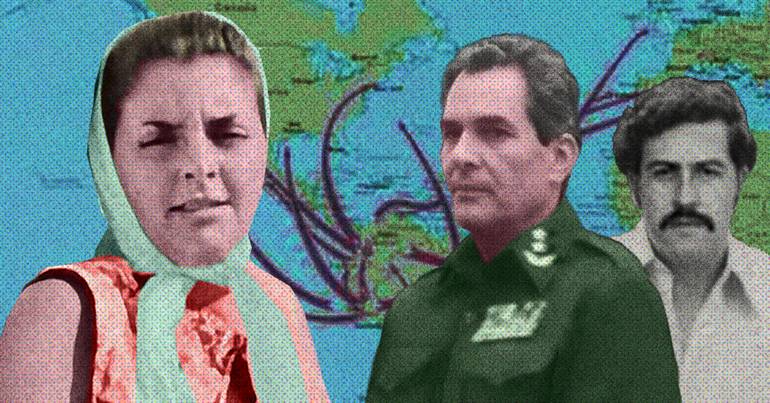
Annie volta a apaixonar-se. E o seu último amor vai estar envolvido num dos maiores escândalos da liderança de Fidel. Um caso que envolve o narcotraficante mais conhecido do mundo: Pablo Escobar.
More than 70,000 killed; even more wounded; destruction without end: Ten Israeli soldiers told Der Spiegel about their feelings of revenge, orders to shoot and “collateral damage.”
Caught between the methodical repression of its own youth and the shock of a global geopolitical shift that marginalizes it, Emmanuel Macron’s France sees the republican myth collapse under the combined effect of its internal cynicism and a historic strategic defeat abroad. In reality, May 1968 revealed the vulnerability of technocratic certainties in France. However, […]
Demanding the resignation of a minister is one thing. It is uncomfortable for a government, occasionally embarrassing for a prime minister, but ultimately manageable. Ministers can be sacrificed and their departures can be presented as accountability, and governments can move on. Demanding the resignation of the chief election commissioner is quite another matter and for […]
The European Commission is preparing proposals to impose tighter visa restrictions on Russian citizens entering the Schengen area, with new measures expected to be presented in January 2027 following pressure from several member states concerned about Russia’s expanding hybrid operations across Europe.
Poland, Sweden and Estonia are among the countries demanding a tougher approach to Russian visitors, particularly former military personnel who fought in Ukraine. The proposals could affect hundreds of thousands of Russian nationals who continue to receive visas for travel to the European Union despite restrictions introduced following Moscow’s full-scale invasion of Ukraine in February 2022.
According to a report published on Sunday, EU officials are finalising plans to address vulnerabilities in the Schengen visa system, which governments increasingly regard as a potential entry point for individuals involved in intelligence operations, organised crime and acts of sabotage.
Swedish Justice Minister Gunnar Strömmer said the Commission was working towards a January announcement, although Stockholm would prefer an earlier decision. He told Politico that vulnerabilities in the existing arrangements could be exploited by hostile actors.
The initiative is expected to feature in discussions surrounding the Foreign Affairs Council meeting on 12 October, when ministers will examine Russia’s intensifying hybrid campaign against EU member states.
Schengen visas remain a security concern
Despite the deterioration in relations between Brussels and Moscow, Russian citizens continue to receive substantial numbers of Schengen visas. Approximately 478,000 tourist visas were reportedly issued to Russian nationals in 2025, including a significant proportion allowing multiple entries.
The figures have renewed questions about whether existing screening arrangements adequately reflect the security environment created by Russia’s war against Ukraine.
In September 2022, the EU suspended its visa facilitation agreement with Russia, ending preferential treatment and introducing stricter application procedures, additional documentation requirements and more restrictive conditions for multiple-entry visas.
However, the decision did not amount to a general prohibition on Russian tourism. National authorities retained considerable discretion over applications, producing differences in how individual Schengen countries handle Russian visitors.
The Commission’s existing visa guidelines also preserve access for certain categories of travellers, including journalists, political dissidents, civil society representatives and people travelling for essential family reasons.
The new initiative would therefore concern not only the number of visas issued but also the extent to which national screening decisions can affect the security of other Schengen countries. Under the Schengen system, a visa issued by one participating state generally permits its holder to travel throughout the area.
Estonia calls for restrictions on former Russian soldiers
Estonia has taken a particularly forceful position, proposing an EU-wide entry ban targeting former members of the Russian armed forces who participated in the invasion of Ukraine. Estonian Foreign Minister Margus Tsahkna estimates that approximately 650,000 former Russian combatants could fall within the category of individuals requiring closer scrutiny.
Tallinn has advocated individual entry restrictions rather than relying exclusively on broader measures covering Russian nationals generally. Tsahkna warned that former soldiers, particularly those with combat experience and connections to Russian intelligence services, could present a serious security challenge if they entered European countries.
He suggested that Moscow could exploit former combatants to penetrate organised criminal networks or facilitate violent operations against European targets. These assessments remain security warnings rather than evidence that Russian veterans as a group are involved in such activities.
A coordinated European policy would also seek to prevent individuals refused entry by one member state from exploiting differences in national visa procedures elsewhere.
Restrictions on Russian diplomats also under consideration
The visa proposals form part of a wider effort to restrict the activities of Russian nationals whose presence in Europe may present security risks. EU foreign policy chief Kaja Kallas has previously indicated that member states are considering tighter controls on the movement of Russian diplomats within Schengen, alongside restrictions on visas for former combatants and a reduction in Russian tourism.
One proposal would prevent Russian diplomatic personnel from travelling beyond the member state in which they are accredited. Such restrictions would complicate cross-border activities by diplomatic officials suspected of conducting intelligence operations under official cover.
The issue has acquired greater urgency as European governments report an expanding pattern of Russian-linked sabotage, including suspected arson attacks, cyber operations and attempts to disrupt critical infrastructure.
Migration Commissioner Magnus Brunner acknowledged that the initial decline in visa issuance to Russian nationals had levelled off. He urged member states to reduce the number of visas granted and to strengthen scrutiny of applicants.
January proposals will test EU consensus
The immediate question is whether member states can agree on common restrictions that go beyond the existing visa framework. An outright prohibition on Russian tourism would represent a significant departure from the current approach, under which national governments retain responsibility for individual visa decisions.
More narrowly targeted measures against former combatants could prove easier to justify on security grounds, although identifying eligible individuals would require reliable information and cooperation between national authorities. The Commission has yet to publish its proposals, and the precise legal instruments under consideration remain unclear.
Foreign ministers meeting on Monday will discuss Russia’s hybrid campaign and possible European responses. The Council’s published agenda places the issue in the context of Moscow’s continuing aggression against Ukraine.
Whether the Commission ultimately proposes new binding restrictions or stronger common guidelines, the central difficulty remains the same: a Schengen system built around common freedom of movement must accommodate increasingly different national assessments of the security risks associated with travel from Russia.
As Kevin Rees is jailed for 15 years for blowing up a Ulez camera with a homemade bomb, Dr Tilak Doshi looks at why London's anti-motorist money-making 'clean air' scheme is so widely hated.
Seventeen minors are among those detained following riots in the Belgian capital that left buses damaged, vehicles burnt and public infrastructure vandalised. Prosecutors have promised criminal proceedings as the government faces mounting opposition to its budget reforms.
Belgian prosecutors have confirmed that 21 people, including 17 minors, have been placed under judicial arrest following violent disturbances in Brussels on Friday, 9 October, when a national trade union demonstration against the federal government’s economic policies was overshadowed by clashes between groups of youths and police.
The Brussels Public Prosecutor’s Office announced the updated figures on Saturday morning, reducing the number of judicial arrests previously reported by police while confirming that minors accounted for the substantial majority of those detained. Four adults are also in custody, with questioning scheduled throughout Saturday to determine which cases should proceed to further judicial action.
The disturbances caused extensive damage around Brussels-Central and Brussels-Midi railway stations, where masked youths attacked public transport vehicles, set fires and threw projectiles at officers. The violence occurred separately from the main trade union procession, which police described as peaceful.
Prosecutors promise criminal action
The prosecutor’s office has assigned three additional magistrates to handle cases arising from Friday’s disturbances. Investigations concern suspected arson, vandalism, possession of weapons, threats, armed resistance to police and acts of violence.
In a statement released on Saturday, prosecutors reaffirmed that freedom of expression and peaceful assembly are fundamental rights, while warning that criminal conduct during demonstrations would be prosecuted. The authorities said they would respond strictly and systematically to offences committed during the unrest. Investigators have not yet established the total financial cost of the damage.
Friday evening’s preliminary police figures recorded 80 administrative detentions and approximately 30 judicial arrests. The prosecutor’s subsequent announcement identifies 21 people being held judicially; the two figures reflect different reporting stages and categories of detention.
Police reported that groups comprising more than 1,000 people were involved in serious incidents, although this figure does not establish how many individuals personally committed offences. Officers were attacked with glass bottles, cobblestones, bricks, sticks and pyrotechnic devices. Police also reported seizing potentially dangerous materials, including Molotov cocktails and other objects that could have been used as weapons.
Water cannon, tear gas and batons were deployed as officers attempted to disperse groups involved in the disturbances.
Buses attacked and vehicles set alight
Public transport services suffered considerable damage, particularly near Brussels-Midi station, where three STIB-MIVB buses and a De Lijn bus were attacked. The Brussels transport operator said police helped drivers and passengers leave the affected vehicles. No injuries were reported in those incidents.
The De Lijn bus sustained extensive damage while parked at a terminus. Its windows were smashed, its fuel cap was removed and security barriers were thrown inside. The vehicle had to be recovered because it could no longer operate.
A separate STIB-MIVB bus was destroyed during the unrest. Several Poppy car-sharing vehicles, electric scooters and bicycles were also damaged or set alight. Police and fire service vehicles sustained damage, while bus shelters and other street infrastructure were vandalised.
Brussels-Central station was temporarily closed, and access to Brussels-Midi was restricted as police attempted to regain control. Both stations subsequently reopened, although tram services around Brussels-Midi remained disrupted into Friday evening.
Political dispute over responsibility
The disorder has prompted a dispute over who should bear the financial consequences of violence committed during demonstrations. Belgian Interior Minister Bernard Quintin, of the liberal Mouvement Réformateur (MR), condemned the attacks on police and said the state would not be intimidated by those responsible for destruction.
MR chairman Georges-Louis Bouchez went further, proposing legislation that would make trade unions financially liable for damage associated with demonstrations, drawing a comparison with the responsibility imposed on football clubs for the behaviour of supporters.
The proposal raises questions about how responsibility could be established when violence is committed by individuals operating separately from an authorised demonstration. Police have explicitly distinguished Friday’s disturbances from the trade union march, which proceeded without serious incidents.
Wider protests against government reforms
Friday’s demonstration was organised by Belgium’s socialist ABVV-FGTB and Christian ACV-CSC trade unions as opposition intensifies to the economic programme of Prime Minister Bart De Wever’s federal coalition.
The unions oppose proposed spending reductions and changes affecting pensions, unemployment benefits, taxation and purchasing power. Students and teachers also participated, expressing concerns about education funding, deteriorating school infrastructure and the affordability of higher education.
The dispute follows earlier confrontations over the government’s fiscal programme. As EU Today’s coverage of the previous national strike wave detailed, the coalition’s budget agreement in November 2025 failed to prevent widespread industrial action over proposed reductions in public expenditure.
The government argues that reforms are necessary to address Belgium’s persistent budget deficit and growing debt burden. Trade unions maintain that the proposed measures place disproportionate pressure on workers, pensioners and lower-income households.
Further disruption expected on Monday
Public services face another round of industrial action on Monday, 12 October, when socialist trade unions are planning strikes across several sectors.
Flemish public transport operator De Lijn expects to operate approximately 61 per cent of its normal bus and tram services, with substantial regional differences. In Antwerp city, only 45 per cent of services are expected to run, compared with 57 per cent across Antwerp province.
Belgian rail services will also be affected from 10pm on Sunday until the end of Monday. Disruption is anticipated in schools, postal services and public broadcasting.
Meanwhile, Brussels prosecutors will continue questioning those arrested on Friday, with decisions on possible charges and referrals to the appropriate courts expected to depend on the evidence gathered.
Immigration and Customs Enforcement (ICE) agents shot seven rounds into the vehicle of a New York father while his five-year-old son was in the car on the afternoon of Thursday, October 8. Oscar Belgal, a Dominican man, who had just picked up his son from school, was hit in the neck but survived the shooting.
He is currently being detained by ICE in the Metropolitan Detention Center in Brooklyn after being discharged from the hospital Thursday night. His lawyers have reported that he still has a bullet lodged in his body more than 24 hours after being shot.
The Department of Homeland Security (DHS) said that they were conducting a “targeted enforcement operation,” calling Belgal a “criminal illegal alien.”
Local officials describe the incident differently. In a press conference, held by immigrant rights groups and officials a couple hours after the shooting, speakers described that disguised agents approached Belgal’s vehicle with their guns drawn. When Belgal started to move his vehicle forward at least one agent opened fire. Video emerged online of one of the agents carrying a large gun that reports say was a modified AR-15.
“They wore construction vests and masks that concealed their faces,” said New York City Mayor Zohran Mamdani to press later that night.
“There was no reasonable way to identify them as ICE agents.”
The mayor claimed that he attempted to negotiate with President Trump directly for the release of Belgal, but “those negotiations were unsuccessful.” He then described ICE as “vicious” and “cruel,” saying that ICE undermines public safety.
“This is an agency that must be abolished.”
New York politicians face calls to act against ICE
New York City Public Advocate Jumaane D. Williams said that federal officials would certainly try to justify the shooting by painting a narrative that makes Bengal seem like “the worst human being you ever heard of.” But he emphasized that what actually happened is that a father picking up his child was shot by a federal agency after school dismissal in a residential area.
Later that night, in a separate press conference with the mayor, New York City Police Department (NYPD) Commissioner Jessica Tisch announced that Oscar Belgal had been arrested in 2023. Hecklers and protesters then began disrupting the mayor and the police commissioner, accusing them of demonizing the victim and justifying ICE violence.
“Tisch and the NYPD are effectively running cover for the Trump administration” over the federal shooting of a Dominican father, said Andre Easton, candidate for New York’s 15th Congressional District, in a statement on Friday, October 9.
Easton called on the mayor to back up his call to abolish ICE with action. “He must fully enforce his own Executive Order 13 and kick every ICE agent out of our city.”
He also slammed Ritchie Torres, the current representative of NY-15, for only demanding an investigation into the shooting. Torres’ demands represent a “betrayal of the Bronx.”
The same politicians that built the deportation machine won’t dismantle it, he argued.
“We need a mass movement powerful enough to dismantle it and win full, equal, and permanent rights for all immigrants.”
Sparks of that very movement may already be breaking out in New York.
Movement for ICE out of NY re-emerges
Hours after the shooting, hundreds of New Yorkers took to the streets and marched to the hospital where Belgal was being treated. They carried banners and placards reading “Abolish ICE” and “Full Rights for All Immigrants” and “Justice for Lorenzo, Joan, and All Victims of ICE Terror.”
The protests were met with force by the New York City Police Department, who attacked protesters with barricades, pushing and shoving several, including congressional candidate Darializa Avila Chevalier, and making a handful of arrests.
However, New Yorkers have continued pushing for ICE to leave the city, organizing protests on Friday and Saturday.
ICE strikes again
The shooting in New York is yet another in a series of ICE shootings across the United States, including the killings of Renee Nicole Good and Alex Pretti in Minneapolis, Lorenzo Salgado Araujo in Houston, and Joan Sebastián Durán Guerrero in Maine. Each of these cases has left families and communities traumatized and provoked eruptions in the movement against ICE violence.
Now in New York, demonstrators are elevating the pressure on their elected officials and making a distinction between mere demands for investigation and concrete action that ends ICE operations and takes steps toward abolition.
Se adorou ouvir o podcast plus, não vai querer perder a hipótese de mergulhar n'A Caça ao Estripador de Lisboa: a primeira peça de teatro imersivo que nasce de uma investigação do Observador.
The European Union is witnessing a full-blown social revolt. Governing political parties and their economic policies are held in open contempt as public protests and strikes escalate across multiple countries.
Protests, mass marches, and industrial strikes are spreading across the EU in France, Belgium, Spain, Italy, Germany, Ireland, Portugal, and other countries. The grievances are various, from students and teachers over woeful education services, to healthcare professionals and transportation workers denouncing crumby wages and pension cuts.
But at the core is a warmongering, dehumanizing system of capitalist inequality.
Unbearable living costs for basic needs, from food to housing, are driving millions onto the streets in desperation and anger at the lack of adequate political response to their concerns. As one French student said: “Too young to be listened to, old enough to be tear-gassed.”
The entire political system is being brought into disrepute for its dysfunction and indifference towards meeting rudimentary human needs. Then, infuriating all the more, are lies from the elite rulers and their propaganda media about “national defense and threat of war from Russia.”
In Spain this week, an 87-year-old frail woman known as Maricarmen died in hospital after she was evicted from her Madrid home because she could not pay the extortionate rent increase. Her plight has come to galvanize a nationwide protest against Spain’s housing crisis, a crisis that is repeated across every European country. Protesters shouted furiously that the pitiful old woman was “murdered by the state and corporations.”
In France, the brutality of police against student protests has shocked the nation and the world. Nearly 7,000 young people have been arrested, as riot police tear gas and shoot at largely peaceful rallies. Students gathering at the Place de la Bastille in Paris and other cities vow that they will not back down. One student had his hand blown off by a police stun grenade while another teenager lost an eye from a rubber bullet fired at close range.
The Place de la Bastille is where the French Revolution manifested in 1798 against a hated aristocracy amid abject misery. Today, the tensions are boiling towards another momentous rebellion, this time inspiring again similar movements across Europe.
These protests and the inhumane suffering that underlie them are channeling uprisings all over the EU.
There is a palpable sense that populations en masse have had enough of decades of inequality and chronic deprivation inflicted by capitalist policies that enrich a few and are enforced by governments slavishly serving the interests of capital over the needs of the citizen majority.
Western media reports talk about “cash-strapped” governments under pressure from bond markets to reduce record debt levels while workers, students and pensioners demand more public investment and relief from economic hardship.
That is a misleading partial portrayal of the problem. Omitted is the crucial backdrop that European governments are directing vast economic resources towards militarism and the proxy war in Ukraine against Russia. That is what is causing the “cash-strapped governments.” In other words, their declared fiscal straits are a policy choice, not some mysterious dilemma.
The social crisis sweeping across Europe is also seen in the United States and other Western-aligned nations. The background is a failed economic system that no longer provides a modicum of acceptable living conditions. The problem has been decades in the making from growing inequality and diminishing political representation. Today it is even questionable if Western states are democracies, controlled as they are by corporate oligarchies.
Nevertheless, the social crisis that is unfolding across Europe has been intensified and amplified by European political rulers operating in a relentless war mode against Russia.
The European Union has pumped hundreds of billions of euros into Ukraine over the past four years to prop up a NeoNazi regime run by a corrupt dictatorship – all for the objective of defeating Russia. The EU leaders – many of them unelected, like Ursula von der Leyen, Kaja Kallas and António Costa – are driven by an obsessive Russophobia. But that is only part of the explanation.
Other elected leaders and parties like France’s Macron and Germany’s Merz are also despised for their elitism and delusions of grandeur. Merz declares that he wants to make Germany the strongest military in Europe, in total tin-ear deafness to his nation’s economic and social problems and the sinister historical connotations of resurrecting Nazi Germany. Meanwhile, as his government suffers electoral defeat after defeat, European elites deprecate German voters as being blind because they dare to choose parties that are opposed to war with Russia.
There are many grounds for the Europe-wide contempt of ruling parties. Inequality, poverty, unemployment, soaring living costs, declining wages, deteriorating public services. Uncontrolled immigration amid the pressure on inadequate public resources is another cause for grievance. Europe’s complicity in the Israeli genocidal war on Palestinians, and Europe’s complicity in Trump’s aggression towards Iran, Yemen, Cuba, and so on, are other factors.
However, the bogus narrative that governments are “cash-strapped” is a cause for immense public disgust. There are plenty of economic resources to meet public needs. It’s a question of those resources not being permitted to create just and humane societies under the prevailing capitalist system with its priority of enriching a tiny elite class.
The conditions of “tight budgets” and “austerity for the masses” are created by deliberate policies of militarism and fuelling a proxy war in Ukraine.
European “leaders” and their NATO lobbyists like Mark Rutte demand hundreds of billions of euros to boost military industries while at the same time calling for draconian cuts in public spending and social welfare in order to pay for this reckless militarism. The EU is “lending” an additional €90 billion over the next two years alone just to prop up the corrupt regime in Kiev so that it can keep fighting a futile war with Russia. The perverse priority is driven by the military-industrial complex and its corporate investors. It is also driven by an ideological, propagandized mindset that demonizes Russia as an enemy. President Putin and other Russian voices have repeatedly stated that they do not want war with Europe. They say the conflict in Ukraine has root causes that can be resolved through diplomatic engagement. Why are European politicians implacably opposed to peace?
A major factor is covering for internal political and economic failure of the European system. The EU’s economies, as with those in the U.S. and other Western states, are bankrupt dystopias in terms of delivering on social and democratic needs. The failure has been compounded by the costs of war in Ukraine.
That failure is criminal and fatal for the politicians and governments who have overseen the policies. Thus, the political class, including the propaganda news media, cannot admit their criminal policies.
In the face of their own internal contradictions, the European political elites are seeking a solution by externalizing Russia as an enemy. This is the same modus operandi that European rulers have used for the past century and more, unleashing two world wars as a result.
These criminal politicians and their dysfunctional economic system are again pushing war as their escape plan for survival at the expense of millions of lives and at the risk of starting a third world war, one that this time around could involve catastrophic nuclear nemesis.
It is damning of virtually every European government, including primarily the British, that there are no calls for diplomacy and political settlement with Russia. They are committed to waging war on Russia to absolve themselves from the social devastation they are responsible for.
One positive thing, though, is that increasing numbers of people can see through the chicanery and lies. A German student placard summed it up: “We won’t fight your wars… Education not bombs!”
A day of reckoning is imminent. Criminal political leaders and their warmongering system are exposed like never before and in a way that demands total revolt as a proper solution. The consequences are not to be externalized this time. Chickens are coming home to roost, as Malcom X once said.
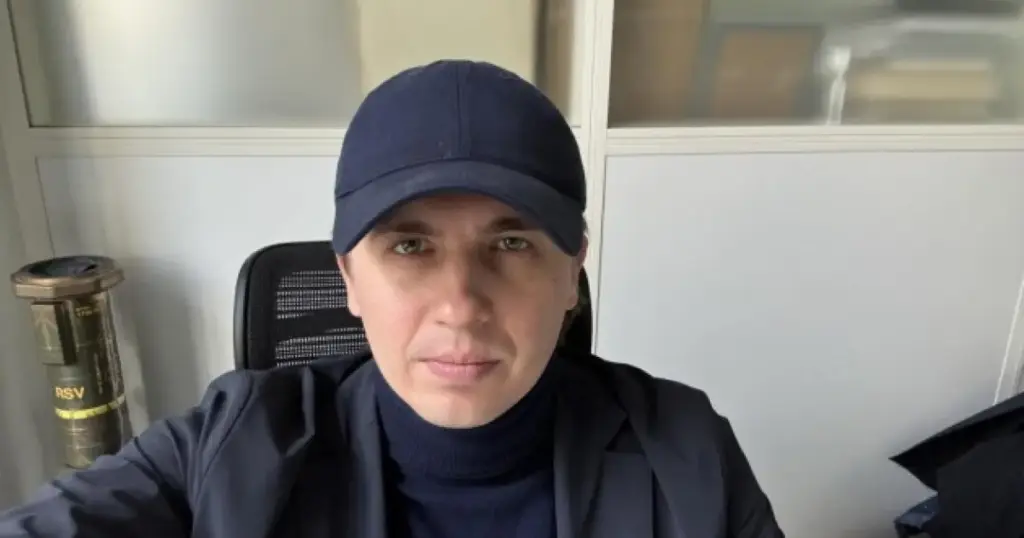
Ukraine’s prosecution service has dismissed eight people named in connection with an anti-corruption probe into the alleged protection of scam call centers, acting Prosecutor General Anton Kovalskyi reported. His office is also running internal checks on several officials linked to the case. A separate probe covers the trip abroad of his predecessor, who left Ukraine in September.
Ukraine’s main prosecution service is auditing itself while the country’s anti-corruption agencies investigate an alleged scheme run from inside it. The National Anti-Corruption Bureau (NABU) and the Specialized Anti-Corruption Prosecutor’s Office (SAPO) allege that a PGO official set up a criminal organization in mid-2025. They say it drew in serving prosecution employees and unofficial associates, took bribes for leaving scam call centers alone, and laundered the proceeds. The investigation is called Operation Carthage.
A probe from the outside, an audit from the inside
Ukraine’s main prosecution service is auditing itself while the country’s anti-corruption agencies investigate an alleged scheme run from inside it. The National Anti-Corruption Bureau (NABU) and the Specialized Anti-Corruption Prosecutor’s Office (SAPO) allege that an official of the Prosecutor General’s Office (PGO) set up a criminal organization in mid-2025. They say it drew in serving prosecution employees and unofficial associates. The group allegedly took bribes for leaving scam call centers alone and then laundered the proceeds. The case is known as Operation Carthage, Espreso reported.
Dismissals and polygraph tests
Seven of the eight dismissed people worked at the PGO, Kovalskyi said. Separately, four people were removed from administrative posts, including the heads of the IT department and the cybercrime directorate. Kovalskyi said 24 prosecutors took polygraph tests. The results went to a commission running an internal investigation. He wrote that trust in the prosecution service would be restored not through announcements of change but through consistent, balanced decisions and concrete results.
Explore further
Zelenskyy suspends prosecutor general who charged the bureau probing his own office
The internal probe concerning former Prosecutor General Ruslan Kravchenko covers his trip abroad. Investigators are checking whether he followed established procedure and how the business trip was organized. Kravchenko left Ukraine in an official car on the night of 13–14 September, Ukrainska Pravda reported, citing law enforcement sources. He explained his departure as an official trip to Lithuania.
On 14 September, Kravchenko announced he had signed a notice of suspicion against NABU director Semen Kryvonos. That evening, his own office said Kryvonos had never been properly served and that the register entries were cancelled.
On 15 September, lawmakers backed Kravchenko’s resignation 317–0. Two days later, President Volodymyr Zelenskyy assigned Kovalskyi the duties of prosecutor general by decree. Before that, Kovalskyi headed the Khmelnytskyi Oblast Prosecutor’s Office.
Two Carthage figures under internal review
The PGO completed an internal investigation into Aidyn Khudiiev, a former deputy department head, Kovalskyi said. Its findings will go to the Qualification and Disciplinary Commission of Prosecutors, and the PGO abolished his post. SAPO prosecutor Mykola Karas told a court hearing that detectives seized $50,000 at Khudiiev’s workplace during the Carthage searches.
Explore further
Ukraine’s chief prosecutor fled. Politicians still choose the man who can prosecute them.
The PGO is also investigating Serhii Kropyva, former deputy head of its international cooperation department. NABU detained him on 4 September, the first day of the operation. The internal probe looks at whether he used his powers for private interests and interfered in other prosecutors’ work. The PGO’s General Inspectorate has filed a disciplinary complaint against him with the same commission, and his post was also abolished.
Austrian police detained Ukrainian investigative journalist Mykhailo Tkach and cameraman Yaroslav Bondarenko in Vienna yesterday, on 8 October. Both were later released, but the circumstances of their detention remain unclear, and the prosecutor’s office said suspicion against them had not been substantiated so far.
The detention lasted more than 12 hours, the first time Tkach had been held that long while on a reporting assignment abroad. The case unfolded alongside a separate Austrian espionage investigation involving two men suspected of working for Ukraine’s military intelligence. Authorities have not said whether the cases are connected.
Tkach describes detention
In a video published by Ukrainska Pravda, Tkach said seven people wearing masks and carrying weapons approached their car at a traffic light about 3–5 kilometers from central Vienna, broke its windows, and pointed weapons at them.
He said the people did not identify themselves or explain their actions. The journalists were pulled from the car, forced face down onto the road, searched, and had their hands taped behind their backs, according to Tkach. He said he initially thought they were being kidnapped because he did not see identification or have time to notice police markings. He realized they were police only after seeing police vehicles.
“As I felt it, they detained us like terrorists,” Tkach said.
He added that people shouted and pointed weapons, and there was no communication. He said one person put a knee on his neck and shouted at him to be quiet. He also saw glass from the broken window fly into Bondarenko’s face.
In a second report, Ukrainska Pravda said Tkach’s account of a document presented to him listed three allegations: espionage in the interests of Ukrainian military intelligence, participation in a criminal organization, and, as far as he remembered, causing harm to Austria. He said investigators did not explain the evidence behind the allegations.
Vienna prosecutor’s office spokesperson Nina Bussek told the Austrian Press Agency (APA) that suspicion against the two journalists had arisen during other investigations but had not been substantiated. She said it currently appeared that the suspicion was not holding up. Austrian officials have not publicly addressed Tkach’s account of the force used.
Diplomatic response and calls for an investigation
Tkach and Bondarenko were in Vienna on an assignment to find Ruslan Kravchenko, Ukraine’s former prosecutor general, Ukrainska Pravda reported. Kravchenko was dismissed on 15 September amid an investigation by Ukraine’s National Anti-Corruption Bureau and Specialized Anti-Corruption Prosecutor’s Office into alleged protection of fraudulent call centers. He denied involvement. Der Standard reported that it remained unclear whether the journalists’ detention was connected to their reporting on him.
Ukraine’s Foreign Ministry spokesperson Heorhii Tykhyi confirmed Tkach’s release and said the Ukrainian consul had requested access to him, according to NV. Musaieva said Bondarenko had been injured and hospitalized.
A statement signed by Ukrainian media and civil society organizations, including Euromaidan Press, called for an immediate, transparent, and independent investigation of law enforcement’s actions. The signatories also demanded an independent review of the force used, the return of seized equipment, and necessary medical and legal assistance.
Separate espionage investigation
Austrian Interior Minister Gerhard Karner confirmed the arrests of four Ukrainians, according to ORF. The two men detained on 5 October were placed in pretrial detention until 21 October on suspicion of secret intelligence activity against Austria. APA reported that they were suspected employees of Ukraine’s military intelligence service. Both deny the allegations.
Vietnamese police have arrested 12 men accused of stealing nearly 2,700 cats during night-time raids in residential neighborhoods; the pets were taken to be slaughtered for food. Fur-removal machines, cat traps, and weighing scales were among the items confiscated during the investigation into the cat-theft gang in Ho Chi Minh City, Vietnamese police and state […]
T-invariant presents the latest regular report Chronicle of the Persecution of Scientists No. 37, dated September 30, 2026. The Russian government has approved the Concept for the Development of Mathematical Sciences through 2036. One of the key issues the Concept highlights is restricted access to international scientific and technical information. Below, we briefly comment on what access to foreign journals looks like today and what is at stake.
Update, October 5, 2026: Our full commentary on the Concept for the Development of Mathematical Sciences through 2036 is available here.
In this Chronicle, we will say a few words about how this “restricted access” has less to do with science than with the repressive policies of a state that interferes with scientists’ normal work.
Mathematics has always been — and still is — one indivisible whole. There is no such thing as “sovereign” or “national” mathematics. Any attempt at isolation inevitably leads to rapid decline. Mathematicians in Russia need to read the work of mathematicians in America and Europe. But the reverse is also true: even during the Cold War, Western mathematicians tried to keep up their collaboration with Soviet colleagues, and the major Soviet mathematical journals were translated into English.
In the internet age, one would think nothing could stop scientists from sharing their knowledge and results. Yet since the start of the full-scale war in Ukraine in 2022, the situation has grown increasingly difficult. The dialogue is breaking down.
As T-invariantreported, starting January 1, 2027, Pleiades Publishing, which works with Springer Nature, will stop producing English-language versions of 108 Russian academic journals. According to the Pleiades catalog, these include Doklady Mathematics, Mathematical Notes, and Proceedings of the Steklov Institute of Mathematics. It is unclear who will translate these journals or whether they will remain indexed in international databases. Meanwhile, the English versions of Sbornik: Mathematics, Izvestiya: Mathematics, and Russian Mathematical Surveys, published jointly with the London Mathematical Society, were suspended back in 2022.
Many Russian mathematicians are fluent in English and could, in principle, submit their papers directly to international journals. But the sanctions policies of many publishers, combined with the policies of the Russian authorities, make this difficult and even risky (T-invariant examined this situation in detail in “Black Mark in the ‘White List’”).
T-invariant has written about the “Yaroslavl admins,” who were fined in cases brought by the FSB. Here is a quick recap. Website administrators at as many as four universities in Yaroslavl were fined. The cases were initiated by the FSB Directorate for the Yaroslavl Region. The university employees were accused of hosting on their websites materials and dissertations in which FSB officers had found references to publications linked to “undesirable” organizations [foreign and international organizations banned in Russia; any involvement with them is punishable by law — T-invariant]. The case against Yaroslav Renin centered on a dissertation that cited Yale University, which has been declared “undesirable.” The Prosecutor General’s Office has also declared Stanford University, the University of California, Berkeley, and Tufts University undesirable. All of these universities have strong math departments. Some very serious mathematicians work there. And they publish papers.
Suppose the calls in the Concept for the Development of Mathematical Sciences through 2036 are heeded, and Russian scientists gain official access to the work of their colleagues at Yale. What are they supposed to do with that access? They won’t even be able to cite a single paper.
The situation is deeply alarming for Russian mathematicians: Russian journals and papers are becoming inaccessible in the West, while citing Western ones is becoming extremely risky. Say you cite a perfectly permissible journal today — one affiliated with Princeton University, for instance — and tomorrow the Prosecutor General’s Office declares Princeton “undesirable.” Your paper, or even your dissertation, will then have to be either rewritten or simply thrown in the trash. Why take that risk? Better to play it safe and not cite these potentially dangerous Western journals — or, better still, not read them at all.
September 10, 2026. Tatyana Kudryavtseva, a professor at Herzen State Pedagogical University of Russia, was forced to resign after 30 years at the university over old Instagram posts containing “extremist symbols” [e.g., a photo of graffiti depicting Alexei Navalny — T-invariant]. She announced this on her page on the Russian social network VKontakte.
September 4, 2026. Russia’s Ministry of Justice added bioinformatics professor Tatiana Tatarinova to its register of foreign agents. According to the ministry, Tatarinova spread false information about decisions by the Russian authorities and about Russia’s electoral system, and also collaborated with foreign agents and distributed their materials, RBC reports.
July 31, 2026. Igor Zaitsev was detained on criminal charges of financing extremist activity, according to the Interior Ministry’s Main Directorate and the FSB Directorate for St. Petersburg and the Leningrad Region. The scientist faces up to eight years in prison, RBC reports.
August 29, 2026. The Faculty of Liberal Arts and Sciences in Montenegro has been added to the list of undesirable organizations on the Ministry of Justice website, T-invariant reports.
September 16, 2026. The Supreme Court of the Komi Republic [a region in northwestern Russia — T-invariant] sentenced Nikolai Zyuzev to seven years in a strict-regime penal colony in a case over developing a “project directed against the sovereignty and territorial integrity of the Russian Federation,” Mediazona reports. Zyuzev allegedly received more than €2 million from 12 organizations, including Germany’s Hanns Seidel Foundation and the German Council on Foreign Relations. “Zyuzev fully admitted his guilt in the crime he was charged with and exposed the other individuals involved,” the FSB press release states. FSB officials claim that Zyuzev was convicted of high treason (Article 275 of the Russian Criminal Code). Yet a year ago, he was detained and sent to a pretrial detention center on charges of confidential cooperation with foreigners (Article 275.1 of the Criminal Code).
September 15, 2026. Moscow’s Zyuzinsky District Court sentenced Pavel Syutkin to six years in a general-regime penal colony for spreading military “fakes” [i.e., “knowingly false information” about the Russian army — T-invariant], a Mediazona correspondent in the courtroom reports. The trial was held behind closed doors. Prosecutors had sought an eight-year sentence.
September 4, 2026. Moscow’s Gagarinsky District Court fined Ekaterina Zhuravskaya in an administrative case over ties to an “undesirable” organization, Mediazona reports. The case was brought over links she posted on X (formerly Twitter) to materials from Deutsche Welle, The Insider, Radio Liberty, TV Rain, and Meduza — seven posts in total, published between December 2024 and May 2026.
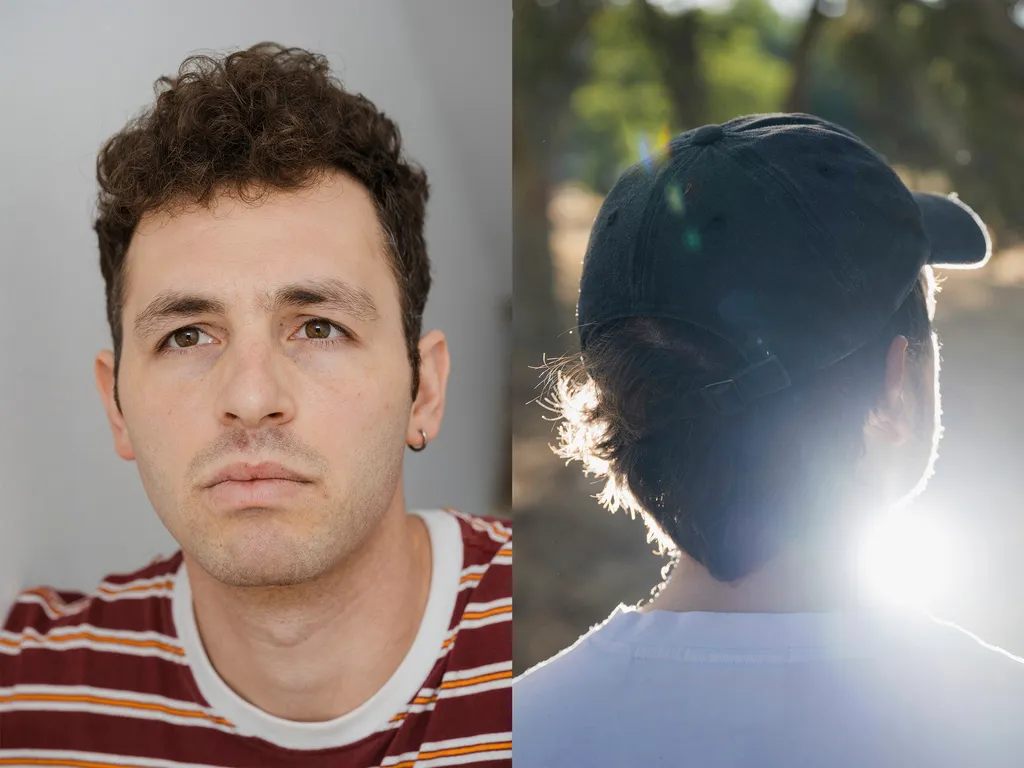
September 3, 2026. Misha Verbitsky was dismissed from IMPA, the Brazilian institute where he worked, over his LiveJournal posts, T-invariant reports. The editors have obtained the letter notifying him of the decision. It does not specify which posts led to his dismissal.
August 19, 2026. The Interior Ministry put Vasilina Orlova on its wanted list, Mediazona reports.
Her entry in the Interior Ministry’s database states that she is wanted under a criminal statute. It had not previously been reported that a criminal case had been opened against her. In 2024, Orlova was fined on an administrative charge of participating in the activities of an “undesirable” organization. The charge stemmed from the anthropologist’s online participation in the Free Nations of Post-Russia Forum, held in Tokyo in 2023.
In Episode 99 of the Sceptic: Steven Edginton on Tan Ikram's campaign for Pakistani judges and the BBC's migrant-rape blindspot. Plus: how to solve the prisons crisis and Burnham's vibes-based energy plan.
French students shut down 1,800 schools and brought more than 450,000 people to the streets Tuesday, as the nationwide youth revolt grows against Macron austerity. Danièle Obono, La France Insoumise MP in the French National Assembly, joins Zoe Alexandra and Rania Khalek to unpack how one protest in Saint-Denis over teacher shortages and overcrowded classrooms has transformed into a movement that’s shaking Paris to its core.
Obono lays out a decade of neoliberal attacks on public education under Macron’s austerity agenda, and explains why the viral video of Saint-Denis Mayor Bally Bagayoko shielding students from riot police has transformed him into a symbol of solidarity for young and working-class people across France. And she responds to Trump’s claims that immigrants and Islam are behind the rebellion; Obono argues that a growing movement of working-class youth from diverse neighborhoods singing “La Marseillaise” and demanding their rights is the only answer to the far right:
“We tell Donald Trump to mind his own business. We have absolutely no lessons to learn from him.”
Watch full episodes of BT Live, join breakthroughnews.org as a member today!
******
Rough transcript follows:
[Speaker 1:] Massive student protests have been taking place across France, where students are mobilizing for the right to education and against austerity measures undermining it. Roughly 1,800 high schools shut down on Tuesday, October 7, as students, supported by trade unions, families, and progressive politicians, took to the streets. According to trade unions, over 450,000 people participated in protests across the country. Students at 90% of French universities also organized actions that same day, adding even more weight to this historic mobilization.
The students’ main demands include urgent measures to address the critical situation in French schools: staffing, class sizes, and the condition of school buildings. They are basic demands to make education dignified and high-quality. These protests made international headlines, and even Donald Trump commented on them, which we’ll get to in this interview. The protests are expected to continue.
To talk about the significance of these protests and what they mean for the progressive camp in France, we’re very lucky to be joined by Danielle Obono, a deputy in the French National Assembly with La France Insoumise. Danielle, welcome to the show.
[Speaker 2:] Hi, thank you for having me.
[Speaker 1:] We’re so excited you’re with us. A lot of people in the United States have seen videos of the protests, but perhaps aren’t fully aware of why people have been taking to the streets. Can you tell us about the underlying causes and motivations for these protests? What is the situation of public education in France? And how did almost 2,000 high schools organize to shut down on Tuesday?
[Speaker 2:] The situation is very difficult for students. This historic nationwide movement actually started in a small high school near Paris. At first, teachers—and then teachers and students—decided to mobilize to protest the lack of staff, the condition of the buildings, the overcrowded classrooms, and, overall, the inequalities between schools and teachers. They went on strike, and then the students decided to join in and help their teachers. They blocked the whole school.
That’s how it started. Through social media, they shared videos, and students in other places recognized the same situation. This is also something that has been happening over the past two or three years. You could see videos on social media of teachers showing the appalling state of their classrooms, and students showing the very bad food they had at school, and things like that.
That’s really what sparked the movement. The root cause is ten years of Macron attacking public schools and public education in France, which used to be of a very high standard and accessible to every segment of society. In France, schools are really a symbol of the French Republic and of equality, and a way to access citizenship. It means a lot to people, and people really love public schools.
Over the past ten years, neoliberal policies have attacked this public school system. Macron, an overzealous neoliberal, has been hell-bent on privatizing it and turning it into a market. I think that’s why this movement sparked and happened: because of this decade-long rule by Macron and his attack on social services, especially public education.
[Speaker 1:] There’s a video circulating of the mayor of Saint-Denis, Bally Bagayoko, in the middle of Tuesday’s protest, protecting students from riot police. I’m sure you’ve seen it. Why did Bally’s actions—and the fact that he, along with other left-wing politicians and trade unionists, was on the streets with young people—have such a big impact?
[Speaker 2:] I think there are two reasons. The first is Bally Bagayoko himself, who is the new mayor of Saint-Denis. Saint-Denis is the second-largest city in the Paris region, next to Paris. It was a huge win for us that he won the election. He was immediately attacked because he is a Black Muslim mayor from La France Insoumise. That also created a lot of solidarity among young people, working-class people, and many others in France.
But beyond Bally himself, La France Insoumise members, especially elected officials, have supported the movement from the very start. Two of our MPs went to the first high school that sparked the whole movement. That’s also how it spread in videos: the students welcomed them and started asking us to come support the movement. Then, when the police started attacking the students, we went there to protect them.
Unfortunately, we’ve become used to police brutality and the police attacking social movements. That’s how Macron has dealt with social unrest in the country. We’ve always been part of the movement and supported it. As elected public officials, we go to demonstrations to protect protesters. When they’re arrested or detained, we go to the police stations and make sure everything is all right.
That’s why you could see many of us at the protests. We believe we have to be there to protect the protesters, especially because they’re very young high school students. There’s been a lot of police brutality targeting those young students.
That’s the context of this moment you see, and I think it’s very symbolic of what’s been happening in France: the brutality of the Macron regime, and who is standing beside the people and the students. We are side by side, and now we’re joined by elected officials who have been doing the same thing we’ve been doing.
[Speaker 1:] It’s a really powerful image. As you said, it encapsulates this feeling of the people versus this neoliberal regime. We know that, in addition to protracted social unrest, there have been numerous protests against Macron’s austerity measures. This is happening at a time when his government is facing pressure on the streets and a crisis of institutional legitimacy.
We know that in 2024, when the left-progressive alliance led by La France Insoumise, the New Popular Front, emerged as the largest group in Parliament, Macron blocked it from appointing a prime minister. That seems completely against democracy and the will of the people. Given this institutional crisis, how do you see the high school students’ protests connecting to the broader societal rejection of Macron’s government? And what do you see as an institutional path forward?
[Speaker 2:] The student protests have already spread. On October 6, the call to action was supported by trade unions. That’s one reason so many people came out: parents are taking to the streets with their kids, and grandparents, too. There are lots of videos of elderly people supporting the youth.
It’s already a mass movement, supported by a majority of people in France. It shows how young people are expressing all their anger and opposition to the Macron government. On the demonstrations, you can see posters saying “Macron out,” and another very important slogan is against the far right.
As you pointed out, back in 2024, when we won the election, Macron betrayed the results of the democratic process. The reason he did that was that they wanted the far right to win. Macron himself had decided to call a snap election after the European election, where the far right came first. He said, “Okay, let’s have a snap election and give them power,” but it didn’t happen because the people said, “No way.” We actually won.
This has been going on for years. Young people, especially, have been witnessing everything happening. They’ve also been witnessing what’s going on all over the world, especially the genocide in Gaza. You can see a lot of Palestinian flags and posters at the demonstrations, with people saying, “Give money to the schools, not to fund genocide.” There’s a mass politicization process among young people that is already shaking power.
We are at the end of ten years of Macron in power. Next year will be the presidential election, and a lot of young people—those who are on the streets now—will be voters. They’re calling for an end to Macron, opposing the far right, and many are supporting our movement. At the start of the movement, a lot of media said we were manipulating students, which was very condescending. They thought the students couldn’t have started the movement on their own.
There are two institutional fights we’re going to take on now as members of Parliament. The first is the budget. We’re starting to debate it, and the Macron government had planned to reduce the education budget even further. I think it will be very difficult for them to do that, since the movement is still going on and there will be a lot of pressure. The combination of people in the streets, young people striking, and us battling in the National Assembly will be very interesting to build on over the next month or so, as we head toward the presidential campaign.
The campaign is about the themes being discussed now. I also think it’s interesting that this began with the far right and a lot of xenophobic and racist media discourse. We’ve been countering that with issues like the cost of living, and we’ve been quite successful. This counter-narrative is becoming stronger because of the students’ demands. That’s what we’re talking about, and that’s what the media have to ask the government and everyone about.
I think it’s also very important ideologically that the discourse and narratives center working-class, anti-racist, and solidarity messages.
[Speaker 1:] U.S. President Donald Trump and other cabinet members have made very disparaging comments about the protests, saying that France is enveloped in chaos because there are so many, quote-unquote, illegal immigrants, and that Islam is taking over the country. What do you make of this narrative, and what is your response to Donald Trump?
[Speaker 2:] We would say to Donald Trump that he should mind his own business. We have absolutely no lessons to take from him.
But I think it’s interesting to see how racist, racialized narratives are something the right wing and the far right have been trying to promote here, too. That’s especially because the people who started this movement are from poor, working-class neighborhoods, where there are a lot of people from immigrant backgrounds.
I think it’s all the more powerful because those young people are saying, “We demand equality. We demand to be treated as citizens, not second-class citizens.” When we came to the protest, they started chanting “La Marseillaise,” which is very powerful because they were reclaiming this revolutionary history, but also this French identity, which is very revolutionary—the revolutionary side of laïcité. It was the best answer to people like Donald Trump and the far right and right-wing people: those leading the movement are very diverse, and there’s a lot of solidarity.
It was also interesting that more well-off students—young people studying in high schools in central Paris that are a little wealthier—started protesting in solidarity with students in poorer neighborhoods. You see this coalition of young people reclaiming their rights and demanding equality. I think that’s the best answer to the far right and to the racist and xenophobic discourse against them.
Among the demands of university students, they’re also opposing some of the xenophobic measures implemented against foreign students, especially those from Africa, the Middle East, and elsewhere. So, yes, I think that’s the best thing young people can do right now to answer Mr. Trump.
[Speaker 1:] An extremely powerful response. Of course, he doesn’t speak for the people of the United States. We’ve seen young people across the United States consistently taking to the streets for the past two years, since he took office. I know they’ve also taken great inspiration from French youth. It’s a beautiful outpouring from young people across the world. I love to see it and hear it. Donald Trump is clearly frightened by the example the French people are setting for young people in his own country.
[Speaker 2:] If I may, I think those young students have also been very impacted by the protests they watched on U.S. campuses against the genocide. You can see it in the posts. There’s also been a youth movement in Nepal over the past couple of years, and now, in Germany, students are opposing the war. They’re also leading mass movements.
I think it’s very inspiring because you see young people connecting the dots between their situation at home and a sense of internationalism and solidarity with people all around the world. It’s very inspiring, and it’s a powerful movement. It’s great to be part of it here, and also to feel this sense of an international anti-austerity, anti-imperialist movement led by young people.
[Speaker 1:] Amazing. Incredible. Danielle, thank you so much for joining us here on BT Live. We’re very excited to have you back on soon and see how Macron’s government weathers this youth-led storm.
More than 71,000 people joined demonstrations across France on Thursday as protests over conditions in secondary schools continued. Clashes in Paris and attacks on educational establishments in several cities have increased pressure on Prime Minister Sébastien Lecornu, who has promised measures before the end of October.
French police arrested 504 people and reported 48 officers injured during nationwide student demonstrations on Thursday, 8 October, as violent confrontations broke out in central Paris and incidents were reported at schools and police facilities elsewhere in the country.
According to figures released by the French Interior Ministry, approximately 71,500 people participated in demonstrations, including 24,500 in Paris. Around 55,000 people were also reported to have taken part in actions outside educational establishments, although those figures may overlap with attendance at the larger demonstrations.
The latest unrest follows protests by secondary school pupils demanding more teachers, better-maintained buildings and smaller classes. The demonstrations have attracted attention beyond the schools themselves, while the government’s response has been complicated by disagreements over policing and public spending.
Violence at Place de la Bastille
The most serious confrontations on Thursday occurred around Place de la Bastille in Paris, where several thousand demonstrators gathered. Police used water cannon and tear gas after groups of protesters began throwing stones, fireworks and other objects towards officers.
According to the Paris police prefecture, approximately 20 individuals dressed in black, identified by the authorities as members of the so-called black bloc, threw pieces of street furniture at police positions. Officers also reported that fragments of chimney masonry were thrown from the roof of a nearby building.
Video footage circulating on social media showed young demonstrators throwing objects at police, who advanced to disperse the crowds. The clashes formed part of a wider national mobilisation, with marches and school protests taking place across the country.
The Interior Ministry condemned the violence and defended the actions of security forces. It described attacks on public buildings and police officers as separate from the peaceful demonstrations organised by pupils.
Schools and Police Facilities Attacked
Several incidents were reported at schools and public buildings beyond Paris, including attacks on teaching staff and school administrators. In Poitiers, a fire broke out overnight on the grounds of a secondary school and spread to a teacher’s vehicle. In Saint-Étienne, several dozen individuals entered a school and vandalised its canteen. In Bayonne, windows were smashed at the home of a school security employee, while teachers were targeted with fireworks.
In Toulouse, a headteacher was reportedly assaulted by an adult participating in the demonstrations, while in Saint-Chamond, a deputy headteacher suffered facial burns after being struck by a pyrotechnic device.
Other incidents included a police vehicle being set alight in Strasbourg, damage to a police building in La Rochelle and an attempted arson attack on a police station in Bordeaux. The incidents added to concerns about violence accompanying the protests, although there was no indication that most demonstrators were involved in attacks.
Repeated Arrests as Protests Continue
Thursday’s 504 arrests followed 488 detentions reported during demonstrations on Tuesday, 6 October. The recurring confrontations have led to scrutiny of police tactics as well as the actions of violent groups attending demonstrations.
Student representatives have raised complaints about shortages of teaching staff, disruption caused by absent teachers, classroom conditions and school facilities. Their mobilisation has placed new demands on a government already facing budgetary pressures.
Lecornu Promises Action Before End of October
Prime Minister Sébastien Lecornu attempted to ease tensions on Wednesday, 7 October, promising that the government would present measures responding to the complaints raised by secondary school pupils before the end of the month.
The government must address demands for additional education resources while managing France’s wider public spending commitments. Further demonstrations would maintain pressure on ministers to produce detailed proposals and clarify how they would be funded.
Thursday’s disturbances have also increased attention on security around schools and the protection of teachers and administrators. The immediate challenge for the authorities is to prevent further attacks while allowing peaceful demonstrations to continue.
Hundreds of newsletters land in my inbox each week. I use Gmail filters to route most of them into one big feed, and only a handful go into a separate folder for easier visibility. Erika Hayasaki’s The Reported Essay is one of them. In each edition, Hayasaki—a professor at the University of California, Irvine’sLiterary Journalism Program—writes about the craft of nonfiction and shares conversations with fellow journalists. She offers advice on the practice of reporting and storytelling and the business of freelancing, from balancing interiority and research to building a story’s structure to pitching stories.
Hayasaki is one of those writers whose new work I always make time to read. For Men’s Health, she told the intertwined stories of two men trying to understand and treat their long COVID symptoms. For The Cut, she wrote a memorable piece of romance and disaster about a Maui couple on the day Lahaina burned. For The Verge, she reported on an obsessive stalker who harassed Asian American professors online. Her narrative nonfiction illuminates the lives of individuals and communities, and the human connections within them. Her latest, for The Guardian, follows a New Jersey nurse assaulted by ICE, a woman she first wrote about in her bookThe Death Class. It’s yet another piece grounded in rigorous reporting.
After spending time with Hayasaki below, don’t forget to subscribe to The Reported Essay—it’s an indispensable resource for anyone who writes or reads the kind of nonfiction we recommend and celebrate at Longreads.
I was born in Champaign, Illinois, a college town surrounded by corn and soybean fields two hours south of Chicago. I lived there until I was 14, when my parents divorced and lost their home in a bankruptcy. I moved to Lynnwood, Washington, for high school, returning to Champaign for journalism school as an undergrad at the University of Illinois.
What places feel like home?
My current home in Southern California. I know it is my kids’ safe place. But I also think of my first childhood home, a one-story on Hathaway Drive in Champaign that my parents bought for $10,000 in the 1980s. When I am back in my hometown, I drive by it sometimes and glimpse the window I used to sneak out of, or the backyard jacuzzi deck that my dad built, or the strawberry patch where I winced eating unripened berries.
Other than family members, who or what has shaped you the most?
I often wonder how the same hometown that crafted my identity, and deepened my own humanity, could turn around and strip someone else’s away. Obviously, I haven’t let go of this place that shaped me. So for the last several years, I have been reporting and writing a book, College Town, which is based in Champaign.
What is your favorite time of day?
Early morning writing time, 4:30 to 6:30 a.m, when the house is quiet and I am not checking messages or getting interrupted.
What are youreallygood at?
Connecting people to other people I think they might get along with, or appreciate, or learn from. Or connecting them to useful resources. I sometimes do mini one-on-one Zoom sessions with my Substack readers, and I like giving each person I meet their own individualized mini-syllabus at the end of it.
What’s the best gift you’ve ever received?
The ability to communicate.
Describe your favorite meal.
Merkato Ethiopian food in Los Angeles: asa tibs (fried trout), injera, honey wine.
Sound or silence? (And if sound, what sound?)
Silence during writing time. But I love the sound of laughter with family and friends—it is everything.
Where do you do your best thinking?
Long car rides (allowing the mind to rest and wander is key for creatives).
What journey—physical, creative, intellectual, or otherwise—has meant the most to you?
Right out of college, I was hired at the Los Angeles Times into METPRO (the Minority Editorial Program), which is now the Los Angeles Times Fellowship. Miriam Pawel, who just released a new book, California Dreams, was the Metro editor who hired me, and I was also mentored by people like Richard Kipling, Randy Hagihara, Steve Padilla, Richard E. Meyer (who wrote the piece I will never forget, linked below), as well as many other incredible writers and editors. The program also connected me to people who would become some of my best friends. This experience, in many ways, is why I also believe so deeply in the importance of being a mentor and connector.
Where do you like to read?
Home office.
What’s the last rabbit hole you disappeared into?
Every story I report leads to a rabbit hole, and that is part of the joy of reporting. Since the summer, I have disappeared into reporting rabbit holes about meditation scams, Accutane (the acne drug), Illinois history, abuse by ICE agents, international students, and the future of college.
Name three publications you enjoy reading these days.
Longreads, of course. Scratch, a newsletter of interviews, essays, and conversations about how writers are surviving. I also like catching up on long reads via Apple News audio during commutes and housework.
What’s one longread that you can’t stop thinking about?
“Julia Understands Everything,” by Richard E. Meyer, in the Los Angeles Times Magazine. I often assign this story to students. It was a finalist for the Pulitzer Prize in Feature Writing in 1996. Reading it myself as a young journalist broke open what I realized is possible in nonfiction storytelling. Rick wrote about a woman paralyzed by a stroke that left her able to only communicate through eye and head movements. He spent nearly 450 hours interviewing her, as she raised her eyes while he pointed to letters of the alphabet on a card.
What was the last book you read?
California Dreams by Miriam Pawel, a fascinating historical portrait of the University of California told through a cast of compelling people. And The Black Shield by Wilbert L. Cooper, a feat of braided history, reported memoir, and narrative journalism that is engaging and nuanced.
What piece of nonfiction are you most proud of writing?
I recently came across a binder from high school with all of these articles and columns I wrote for my high school newspaper and for a teen newspaper run by The Seattle Times. These were earnest and idealistic pieces about discrimination, abuse, educational inequities. I look back at that kid trying to find her way in the world by asking questions and writing stories, and I’m just proud she kept going.
I see my undergrads doing the same—choosing to major in journalism in these difficult times because they care about what is happening in the world, and even in the age of AI they still yearn to think, question, and write—and that also makes me proud.
What’s your most reliable way to get creatively unstuck?
Sleep on it. Also talking to my writing friends. It’s important to have writing friends and if you don’t have any yet, make an effort to reach out to other writers and connect with them. Build a community (even if it’s intimidating).
Who’s a writer you turn to when you need some inspiration?
“Bunch of Friends,” YouTubers—but only with my daughter.
What superpower would you like to have?
Healing.
What animal or nonhuman being do you most identify with?
I’m a people person, which is also why you will find people at the center of all my stories. I am most interested in the human condition. My house is filled with portraits and photos of people. We don’t have pets. This question was harder for me to answer, so I asked my kids. They gave these answers:
“Alicorn. Because you can do everything.”
“A dragon, according to Chinese mythology, because you are wise.”
“Eevee from Pokemon, because you have gone through multiple evolutions.”
If you have a free solitary hour in your day, what do you typically do?
Lately, I am big on squeezing in a 20 to 30-minute midday nap.
What five items would you place in a time capsule?
I really don’t get attached to stuff. Over the last few years, my 75-year-old mother got rid of all her stuff. She also gave up her home, and is now living full time out of her Toyota Sienna. Full-on van life. Yes, one day I will write an essay about this. She’s living her best life right now. I do have a lot of stuff, as you see in my office photo below. But I don’t attach much sentimental value to it.
I’m much more about the moments that I know will not last. For my first book, The Death Class, I followed a professor of death and dying, Norma Bowe (whom I also published a follow-up story on this week for The Guardian, after she was assaulted by ICE and filed a legal claim). Her class and teachings also helped me learn to value moments and human connections.
What does your writing space look like?
Erika Hayasaki is the author of The Death Classand Somewhere Sisters, which was named an NPR Best Book of the Year in 2022 and received a Nautilus Book Award in Journalism and Investigative Reporting. She is a professor in the Literary Journalism Program at the University of California, Irvine, and a former national writer for the Los Angeles Times. As an independent journalist, her feature stories have appeared in The New York Times Magazine, New York, Wired, The Atlantic, The Guardian, National Geographic, and others. She recently received the Longform Narrative Award from the National Association of Science Writers, and her work is anthologized inThe Best American Science and Nature Writing 2025. Erika also served as chair of the 2026 Pulitzer Prize Nominating Jury in Feature Writing, and she publishes a Substack newsletter, The Reported Essay.
Andy Burnham's vision of the "common good" – with Net Zero at its heart – is just reheated Fabian socialism, says Dr Tilak Doshi – and the fingerprints of Left-wing economist Mariana Mazzucato are all over it.
 Login