❌

Reading view

‘Our message is: Smash everything’ – Black Belgian student doesn’t even know why he’s protesting in revealing video

A video clip of a Black male student at ongoing protests in Belgium showed him saying he does not know why he is protesting, and that his message is to “smash everything.”

The clip is being used as another piece of evidence that the protests are not really about reforms or improving education standards, but instead serve as a pretext for ethnic minorities to riot, destroy, and attack police.

After he calls for protesters to “smash everything,” the crowd of Black youths and other ethnic minorities, many heavily masked, began hooting and screaming in response. The video further shows burning shared bicycles and electric scooters, the same products many on the left promote as an alternative to CO2-producing cars and trucks.

In a post from Belgian political activist Dries Van Langenhove, he writes about the video: “European people can’t comprehend this because we’re simply not the same. They destroy. It’s what they do. It’s who they are. Politicians now come up with all sorts of fake ‘solutions’: more money for education, more youth detention centres, military conscription, … but it’s all nonsense. There is only one real solution: they have to go back.”

Our ‘Belgian students’ when asked what they’re protesting against: “we don’t know, we’re here to destroy everything”. European people can’t comprehend this because we’re simply not the same. They destroy. It’s what they do. It’s who they are. Politicians now come up with all sorts of fake ‘solutions’: more money for education, more youth detention centres, military conscription, … but it’s all nonsense. There is only one real solution: they have to go back.

— Dries Van Langenhove (@DVanLangenhove) October 12, 2026

The footage has circulated amid student protests in French-speaking Belgium, particularly in Liège and Brussels. The media reports that the protests are fueled by rising education costs, overcrowded classrooms and reforms in the Wallonia-Brussels Federation. However, just as with the student protests in France, many of the participants cannot articulate any clear demand.

In France, many of the protests have devolved into large-scale riots, including attacks on teachers, police officers, and schools. Dozens of arsons have also partially destroyed schools across France, further raising questions about what the true demands and motives of the protesters are.

🇫🇷🚨 BREAKING: Rioters set fire to the entrance of Vauquelin High School in Paris and blocked the exits when staff tried to put the fire out. A film crew recorded the terrifying attempted murder. “The school staff was unable to put out the fire. The rioters blocked them just as the extinguisher nozzle came out; they blocked the exit.” “The fire continues. You see all the silhouettes moving behind it; they continue to feed this fire, making it stronger and stronger. The school staff is not even going to try to put it out anymore; they can’t manage it. We can hear the principal here asking the hundred confined students to step back and move up to the first floor.” The building was full of staff, students, and journalists, but these rioters appear ready to kill anyone still inside the vocational chemistry school. Follow: @RMXnews

— Remix News & Views (@RMXnews) October 5, 2026

In Belgium, authorities have also reported property damage, arson and clashes with police. Local media and police cited more than 100 arrests in Liège in recent days alone, many involving minors, with overall detentions since early October approaching or exceeding 200 in some counts.

Shop windows were smashed, fires set and objects thrown at officers; one video game retailer reported about €30,000 in stolen goods.

Interior Minister Bernard Quintin has said an Antifa-type movement is manipulating children into violence. “Adults who manipulate children in order to put across violent political messages. That is totally unacceptable,” he said.

One brave man tried to put out the fires in Liège, Belgium. He was brutally attacked by a frenzied crowd. The "student protests" are devolving into large-scale rioting, arson, and attacks on innocents. Follow: @RMXnews https://t.co/PEElkGrtL8

— Remix News & Views (@RMXnews) October 8, 2026

The student actions overlapped with a national strike Friday organized by Belgium’s major unions against government austerity measures aimed at reducing the deficit under Prime Minister Bart De Wever. Police estimated about 30,000 participants in the Brussels march, which was largely peaceful, though smaller groups of masked youths threw bottles, bricks, stones and fireworks, set fires and damaged property near the central station. Officers used water cannons and tear gas; authorities reported 21 detentions or arrests, including 13 minors.

De Wever has argued that painful budget measures are needed to avoid a debt spiral that would burden future generations.

The post ‘Our message is: Smash everything’ – Black Belgian student doesn’t even know why he’s protesting in revealing video appeared first on Remix News.

  •  

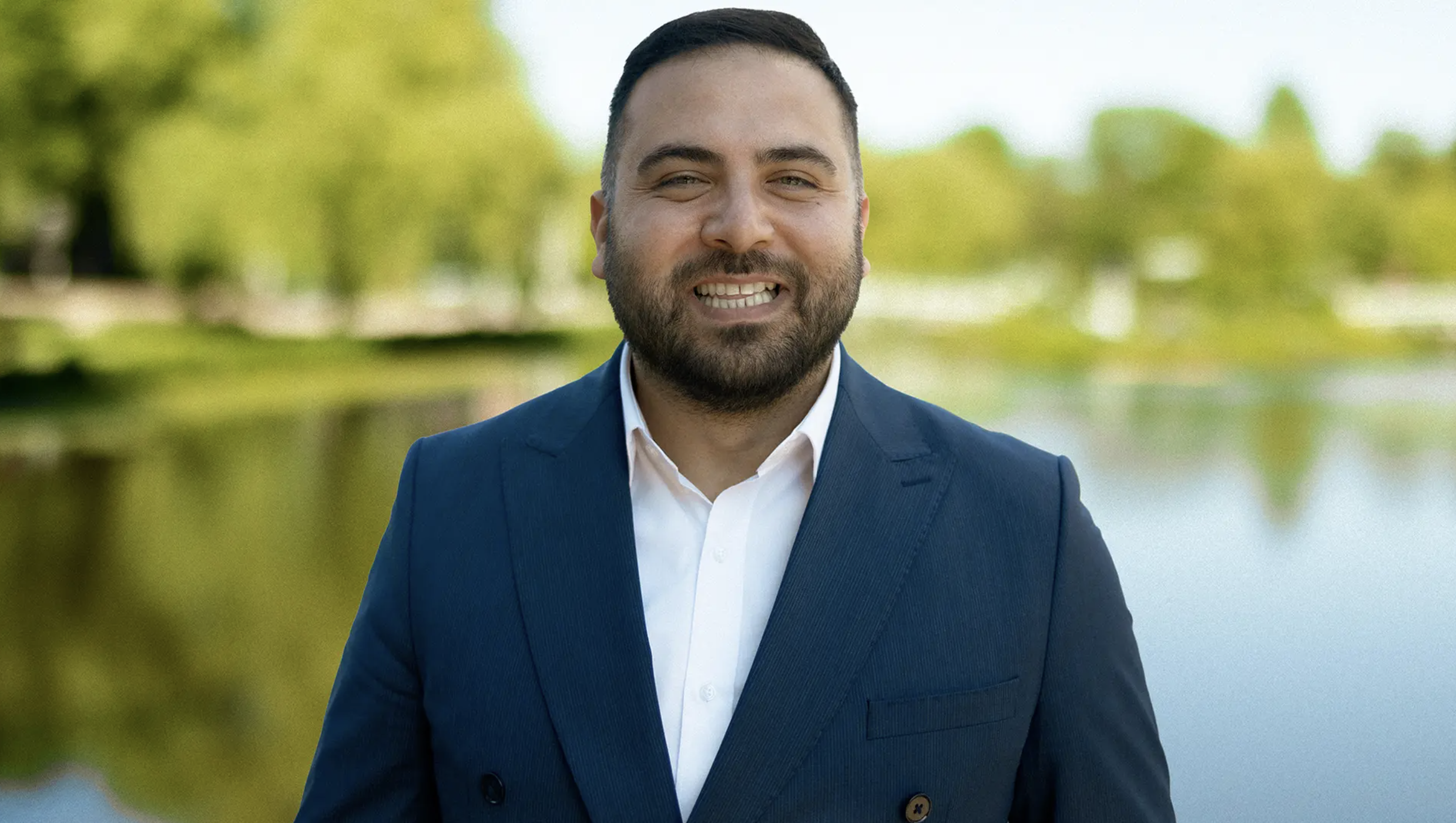
‘NO TURKS – ALL OUT’ – CDU candidate with Turkish background allegedly faked hate crime attack right before local German election

Prosecutors have opened an investigation into a local Christian Democratic Union (CDU) mayoral candidate of Turkish origin who is accused of staging a racially motivated attack on his own car days before an election he lost badly.

The Itzehoe public prosecutor’s office is examining allegations that Baris Karabacak faked the incident, according to the German newspaper Bild. Authorities obtained and executed a search warrant against the politician and seized at least one electronic device.

Karabacak, an entrepreneur who had previously served as chair of the Uetersen city council, was the CDU’s candidate in the Sept. 27 mayoral election in the town of roughly 18,000 people in the Pinneberg district of Schleswig-Holstein. He finished a distant third with 10.7 percent of the vote. Incumbent Mayor Dirk Woschei of the Social Democrats was reelected in the first round with 51.3 percent; independent candidate Marvin Schöpp received 38.1 percent.

A few days before the vote, local media including public broadcaster NDR reported that the windows of Karabacak’s car had been smashed overnight. A campaign flyer bearing an added message in all capital letters reading “NO TURKS — ALL OUT” was left behind. Police initially investigated the matter as possible incitement to hatred.

At the time, state CDU General Secretary Lukas Kilian publicly backed his party colleague and expressed pride in the CDU’s diversity. Woschei also offered solidarity, stating that political competition must be conducted with arguments and that “violence, hate and racist messages are an attack on the city’s democratic culture.”

Kilian’s tone has since shifted sharply. He told Bild he was “stunned” by the new allegations.

“Anyone who fakes a racist crime abuses the solidarity of many people and mocks the victims of real racism. There is no place for that in the CDU,” Kilian said. The state party has said that if the accusations are confirmed, Karabacak will be asked to resign his membership; failure to do so would trigger expulsion proceedings.

The case remains under investigation, and no charges have been filed. Karabacak has not publicly commented on the prosecutor’s probe.

The episode has drawn attention in a town where Karabacak had earlier faced internal party and council criticism over his leadership style before resigning as city council chair earlier in 2026 and then securing the CDU’s mayoral nomination.

Another hate crime hoax proven false in court

This is also notably not the first alleged hate crime hoax from a German politician. In 2023, Remix News reported on Manoj Subramaniam, a 33-year-old former local Green councilor in the German town of Erkelenz, who claimed he had been subjected to sustained acts of harassment by anonymous right-wing extremists. He showed police evidence of the abuse he had received, which included a threatening letter with a razor blade inserted and a swastika drawn onto his vehicle in red paint.

The case made national headlines last year with several prominent politicians offering their solidarity with Subramaniam for the alleged abuse he had received.

“Right-wing extremists are threatening political volunteers to silence them. Thank you, Manoj Subramaniam, for not being silent and raising your voice,” stated Lamya Kaddor, a member of the Bundestag.

Federal police took protective measures for the politician’s safety, and an intensive investigation was initiated by state security, all at considerable cost to the taxpayer. The only issue, however, was that Subramaniam had made it all up.

“The defendant actually wrote this note himself,” revealed Justus Wassenberg, the press spokesman for the public prosecutor’s office.

It transpired that Subramaniam had also drawn SS runes and a swastika onto the doorbell panel outside his house.

Subramaniam subsequently resigned from his position as a local councilor, and the Erkelenz District Court issued the disgraced politician a penalty order of €3,600 for faking criminal offenses, a fine he appealed.

He reportedly cried during his trial when his appeal failed.

2026 firebombing not an anti-Semitic attack after all

The investigation into the early 2026 firebombing of Brandenburg Antisemitism Commissioner Andreas Büttner’s home stunned the public.

While the case was initially treated as an Islamist or antisemitic hate crime, the German Public Prosecutor General’s Office now identifies two men from Büttner’s “own circle,” which belongs to the left, as the primary suspects.

One of the men is also linked to the threatening letter sent to Büttner. Meanwhile, Büttner said he was shocked and described it as the biggest betrayal of his life. He also stated that if the two were responsible, the act had nothing to do with antisemitism in his view. So far, the prosecutor’s office has continued to list Büttner as a witness or injured party, not a suspect. News outlets have highlighted that there was a €3,000 transfer from Büttner to one of the men shortly before the incident, which he called a loan, and other joint activities.

These details prompted public questions and speculation in some outlets about possible staging or a “false-flag” element, but no official finding has supported the claim that Büttner ordered or knew of the act in advance. The case still reportedly remains under investigation.

The post ‘NO TURKS – ALL OUT’ – CDU candidate with Turkish background allegedly faked hate crime attack right before local German election appeared first on Remix News.

  •  

Death rates for young American adults jumped 71% in just over a decade

By StudyFinds Analysis, Reviewed by Patrisha Antonaros

Research led by Steven H. Woolf

Join us on Telegram, X, and VK.

Contact us: info@strategic-culture.su

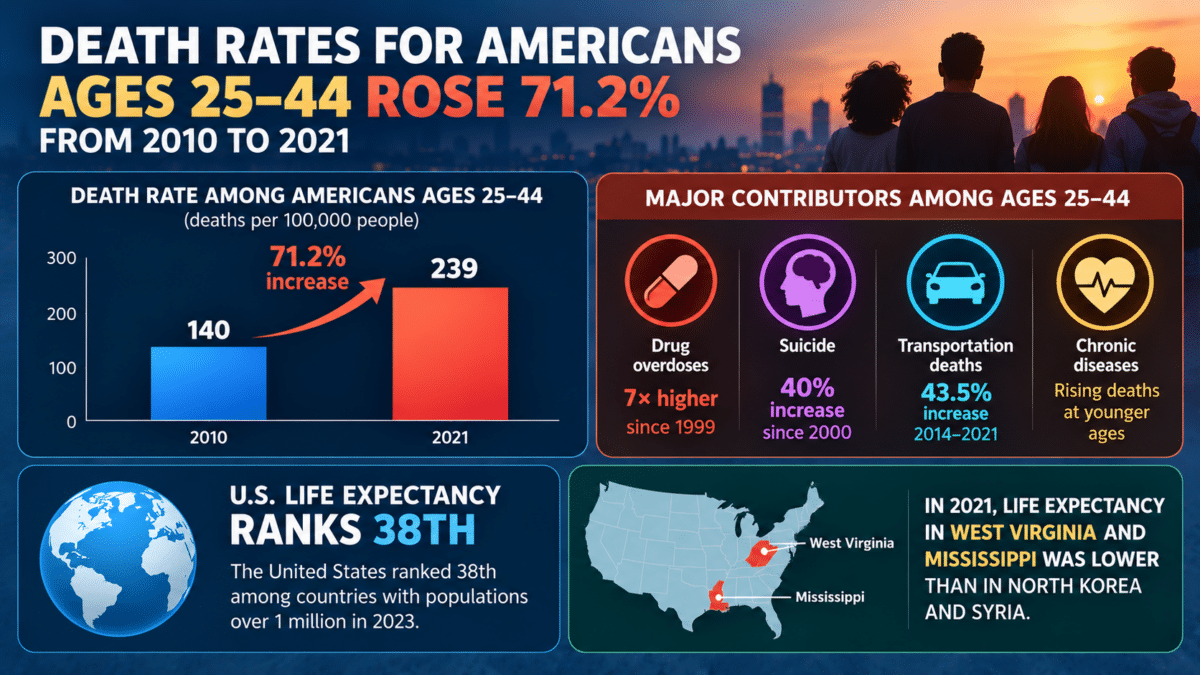
Death rates for Americans between 25 and 44 years old jumped 71.2% in just eleven years, rising from about 140 deaths per 100,000 people in 2010 to 239 per 100,000 by 2021. No other age group came anywhere close to that surge. Overdoses, suicides, car crashes, and chronic diseases appearing at increasingly younger ages are now cutting down people in the prime of their lives.

Steven H. Woolf, a physician and researcher at Virginia Commonwealth University School of Medicine, published the analysis in The Milbank Quarterly. He combined data from the United Nations, the CDC, the Organisation for Economic Cooperation and Development, and a U.S. mortality database to show how far American life expectancy has fallen behind the rest of the developed world, and increasingly, much of the developing world too.

By 2023, U.S. life expectancy ranked 38th among countries with populations over 1 million, trailing not just Western Europe, Canada, Japan, and Australia but also Chile, Costa Rica, Slovenia, Israel, South Korea, and several Persian Gulf nations. Sixty countries had a lower risk of a person dying before age 40 than the United States did. That gap didn’t open overnight. It has been widening since the 1990s, and it sped up sharply after 2010.

How Researchers Tracked the Rising Death Rates

Woolf built this analysis by comparing decades of death records rather than running a new clinical trial or survey. He pulled data from the United Nations’ Department of Economic and Social Affairs, the U.S. Mortality Database, the CDC’s death-records database known as WONDER, and OECD data covering 16 other wealthy countries, including Canada, Japan, France, Germany, and the United Kingdom. He tracked age-specific death rates from 1999 through 2023, sorted into five groups: infants, youth ages 1 to 24, young adults 25 to 44, middle-aged adults 45 to 64, and adults 65 and older.

A separate part of the study looked at all 50 states from 1941 onward, matching each year of life expectancy data to the sitting governor’s political party to see whether state policy choices lined up with health outcomes over time.

What’s Driving the Rise in Death Rates Among Young Americans

Drug overdoses top the list. Among adults 25 to 44, the overdose death rate rose sevenfold after 1999, from about 7.7 per 100,000 to more than 54 per 100,000, and surpassed circulatory diseases (such as heart disease and stroke) in 2015 to become the leading cause of death in that age group. Suicide rates for this same group are higher than in any other age bracket and climbed more than 40% between 2000 and 2023. Homicides rose 75.5% between 2014 and 2021, and deaths from car crashes and other transportation accidents rose 43.5% over that same stretch.

What surprised even close followers of these trends is how much of the damage now comes from disease rather than injury. Deaths from diabetes and other metabolic and hormone-related illness rose nearly a quarter between 2010 and 2019 among young adults. Deaths tied to liver damage from drinking more than doubled between 2010 and 2023. Deaths from alcohol-related mental health disorders more than tripled in that same window. Even high blood pressure, historically a problem of later adulthood, saw its death rate more than double among 25- to 44-year-olds between 2000 and 2023.

Middle-aged adults, 45 to 64, saw many of the same patterns: rising deaths from drug overdoses, liver damage from drinking, and diseases of the brain and nervous system, along with a COVID-19 death rate that nearly doubled between 2020 and 2021 even after vaccines became available. Older adults largely avoided these steep increases, though deaths from brain and nerve diseases doubled between 2000 and 2023, and deaths from endocrine disorders and suicide also climbed.

Infographic showing a 71.2% rise in death rates among Americans ages 25–44 from 2010 to 2021.Infographic by StudyFinds

Where U.S. Life Expectancy Has Fallen the Furthest

National averages hide some brutal local realities. Comparing individual states to countries with similar life expectancy, Woolf found that Hawaii, the top-performing state, matched life expectancy in Western European countries like Sweden and Ireland. Mississippi, by contrast, resembled Libya, Venezuela, Belarus, and Syria in 2019. Conditions worsened after the COVID-19 pandemic hit. By 2021, life expectancy in West Virginia and Mississippi matched Bulgaria, Bangladesh, and Iraq, and fell below North Korea and Syria. Life expectancy was higher in Palestine and Iran than in nine U.S. states, including Oklahoma, Tennessee, Kentucky, Alabama, and Mississippi.

Woolf’s review of state data going back to 1941 found that states led by Republican governors tended to see life expectancy stagnate or decline, a pattern that became especially visible after 2010 and turned into what Woolf calls a “natural experiment” during the COVID-19 pandemic. States’ sharply different decisions on masking, business closures, and vaccination, he writes, could be measured in death counts within weeks. Red states, the analysis notes, suffered the largest COVID-era drops in life expectancy, a pattern that held up even after researchers accounted for other factors like poverty rates and existing health conditions.

Other researchers cited in the review, who looked at generational patterns rather than state policy, found that Americans born after 1970 had higher death rates from heart disease, cancer, and injury-related causes than earlier generations. They concluded that the current stall in U.S. life expectancy stems from “multilayered social, biological, and generational forces.”

Why America’s Death Rates Keep Climbing

Woolf’s analysis lays out five broad categories behind America’s health disadvantage: a health care system without universal coverage, riskier individual behaviors like higher calorie consumption and firearm ownership, greater income inequality and poverty, a built environment that favors cars over walking and green space, and public policies that put less emphasis on collective welfare than peer nations do. None of these explanations are new, but the paper argues that treating overdoses, suicides, and chronic disease as separate problems misses the bigger picture: they are symptoms of the same underlying neglect.

That’s the sharpest point in the paper, and probably the one worth sitting with. Other wealthy countries didn’t stumble into longer lives by accident. They built universal health coverage, stronger safety nets, and tighter consumer and environmental protections decades ago, and it shows up in their citizens’ death certificates today. America’s problem was never a shortage of ideas for fixing this. It’s a shortage of political will to act on them, and until that changes, the gap between how long Americans live and how long people in dozens of other countries live looks likely to keep growing.

Original article: studyfinds.com

  •  

EU Leaders Face Confrontation Over Energy Prices, Ukraine and Russia at October Summit

European Union leaders will meet in Brussels on 15–16 October under pressure to address surging energy costs, Russian hybrid attacks, continued support for Ukraine and the bloc’s next long-term budget. The summit comes as economic pressures expose growing differences between national governments.

European Union leaders are preparing for a two-day summit in Brussels dominated by the economic consequences of the Middle East conflict, Russia’s continuing war against Ukraine and mounting pressure on governments to reconcile defence commitments with deteriorating public finances.

The European Council meeting on 15–16 October will bring together the leaders of the 27 member states to consider immediate measures addressing high energy prices alongside longer-term decisions on competitiveness, enlargement, migration and the EU’s budget for 2028–2034.

European Council President António Costa has placed economic competitiveness and energy costs at the centre of the discussions, reflecting concerns that the disruption of global oil and gas markets is threatening the bloc’s industrial recovery.

The meeting also takes place against the background of renewed disputes over national spending limits, with Italy and Greece seeking greater freedom to finance energy relief and France facing increasing pressure over the credibility of its budget.

Energy crisis puts fiscal rules under pressure

The Middle East conflict has created a renewed energy shock for European economies, raising transport and industrial costs while pushing inflation higher.

The disruption of shipping through the Strait of Hormuz has also affected global oil supplies, exposing Europe’s continuing dependence on internationally traded fossil fuels despite efforts to diversify imports following Russia’s invasion of Ukraine.

European leaders are expected to consider targeted and temporary support measures for households and businesses, as well as longer-term policies intended to reduce energy dependence.

The political disagreement concerns how those measures should be financed.

The European Commission has resisted requests from Italy and Greece for further exemptions from the EU’s fiscal framework. Both governments argue that extraordinary energy costs require additional budgetary flexibility.

Brussels maintains that existing provisions already permit exceptional expenditure within defined limits.

The disagreement is particularly difficult for indebted governments that must simultaneously finance military expansion, maintain public services and protect their economies from energy inflation.

France’s position has added urgency to the debate. Its borrowing costs have increased sharply as investors question whether the government can adopt a credible budget ahead of the 2027 presidential election.

A summit agreement on emergency energy assistance would therefore have to accommodate substantially different national fiscal circumstances.

Ukraine and the changing transatlantic relationship

Support for Ukraine remains a central item on the summit agenda as Russia continues attacks against Ukrainian cities, energy infrastructure and industrial facilities.

EU leaders are expected to review military and financial assistance, the implementation of sanctions against Moscow and the resilience of Ukraine’s economy.

The discussions take place amid renewed uncertainty surrounding American weapons deliveries.

Washington’s reported threats to suspend supplies under the NATO-backed PURL procurement arrangement have raised further questions about Europe’s dependence on the United States for advanced military equipment.

European governments have increased defence expenditure and committed additional support to Ukraine, but replacing American capabilities remains difficult, particularly in air defence, precision-guided weapons and certain intelligence systems.

The summit is unlikely to resolve those industrial limitations, but the broader question of Europe’s ability to sustain Ukrainian defence over several years will influence discussions.

Member states must also consider how increased defence expenditure will be financed alongside other demands on national budgets.

Russian hybrid operations move higher on the agenda

The EU’s published summit agenda includes Russian-linked hybrid attacks within Europe.

The issue has gained prominence as European governments investigate sabotage, cyber operations, information interference and threats against infrastructure and defence-related industries.

Recent warnings concerning possible Russian assassination operations targeting European defence executives and employees of companies supplying Ukraine illustrate the changing nature of the security threat.

Such activities place additional demands on national intelligence services, police forces and European institutions responsible for cross-border cooperation.

The EU has strengthened its sanctions instruments against hybrid activities, but enforcement remains dependent on coordination between national authorities.

Any further measures would need to address intelligence sharing, protection of critical infrastructure and the relationship between internal security and the Union’s wider Russia policy.

A larger EU with a contested budget

Enlargement will form another important part of the discussions following the Commission’s proposals for preparing a wider Union.

Brussels has outlined possible institutional safeguards intended to prevent future members from undermining democratic standards or blocking common decisions.

Montenegro and Albania are advancing through their accession negotiations, while Ukraine and Moldova remain central to the EU’s geopolitical enlargement strategy.

The financial implications will become increasingly important as governments negotiate the next multiannual financial framework covering 2028–2034.

Existing members are already divided over how much the EU should spend, which programmes should receive priority and whether additional common resources should be raised.

Agricultural expenditure, cohesion funding, defence investment and support for Ukraine will compete for resources within the same budget negotiations.

The Commission argues that enlargement can be accommodated through targeted reforms, but securing agreement among member states will require decisions on future expenditure and the distribution of financial benefits.

Competitiveness and the single market

Leaders will also examine progress on the One Europe, One Market agenda, which aims to reduce barriers to economic activity within the EU and improve conditions for European businesses.

The initiative is intended to address structural weaknesses affecting investment, industrial development and the ability of European companies to compete internationally.

High energy prices have made those concerns more immediate, particularly for industries competing against producers in economies where electricity and fuel are cheaper.

The European Council will be asked to provide direction on measures planned for 2026 and 2027, but implementation will depend on subsequent legislation and decisions by member states.

The October meeting brings several unresolved European policy questions into the same negotiation: how to protect economic competitiveness, maintain fiscal credibility, finance defence, sustain Ukraine and prepare for enlargement.

The immediate test will be whether leaders can agree on a credible response to energy prices without reopening broader disputes over national budgets.

More difficult decisions concerning defence financing, institutional reform and the EU’s long-term expenditure commitments will extend well beyond the two-day summit.

  •  

Brussels Rejects Italy and Greece’s Demands for Further Energy Budget Relief

The European Commission has rejected demands from Italy and Greece for additional exemptions from EU spending rules as the Middle East energy crisis drives inflation higher, exposing renewed divisions over how much financial assistance European governments can provide.

The European Commission has rejected requests from Italy and Greece for greater freedom to increase public spending in response to the energy crisis, resisting pressure from two member states that argue existing budget restrictions are limiting their ability to protect households and businesses.

The decision, confirmed on 8 October, follows renewed appeals from Italian Prime Minister Giorgia Meloni and Greek Prime Minister Kyriakos Mitsotakis for measures recognising the exceptional financial burden imposed by higher energy prices.

Meloni wants Brussels to take greater account of unexpected inflation when assessing national budgets and to permit additional tax revenue generated by rising prices to be used for energy relief. Mitsotakis has sought the exclusion of temporary support measures for consumers and businesses from the expenditure limits agreed under the EU’s fiscal framework.

Economic Commissioner Valdis Dombrovskis rejected the argument for further concessions, maintaining that the existing arrangements already take inflation into account and provide mechanisms for responding to exceptional circumstances.

The disagreement comes as Europe’s governments confront the economic consequences of the Middle East conflict, including higher fuel costs, inflationary pressures and increased demands for state intervention.

Italy’s increasingly difficult budget choices

For Italy, the dispute adds to a fiscal problem that has been developing throughout the year.

The government expects its budget deficit to rise to 3.4 per cent of GDP in 2027, reversing an earlier objective of reducing borrowing below the EU’s three per cent reference value.

As EU Today reported earlier this month, Rome plans to use additional fiscal room for defence and energy-related expenditure, while public debt is projected to remain close to 138 per cent of GDP.

The new request concerns the treatment of inflation and the financial support required to offset its effects.

Energy inflation creates an unusual budgetary problem. Governments can receive additional nominal tax revenue as prices rise, particularly through consumption taxes, while simultaneously facing public pressure to compensate consumers for higher living costs.

Meloni argues that such unexpected revenue should be available for targeted assistance without forcing equivalent reductions elsewhere in national expenditure.

Brussels is reluctant to accept arrangements that could turn temporary increases in tax receipts into an opportunity for permanent spending expansion.

Italy’s position also reflects the political competition between defence spending and domestic economic support. Rome has accepted the need for higher military expenditure but faces immediate pressure from households and energy-intensive industries.

That competition was already apparent when the government chose to prioritise energy relief over the full use of defence-spending flexibility.

Greece seeks different treatment for emergency support

Greece’s request is more narrowly focused on the treatment of temporary assistance under the EU’s expenditure rules.

Athens argues that measures intended to help businesses and households manage exceptional energy costs should not be counted against the normal spending limits.

The Greek government faces an economic environment in which higher imported energy prices threaten household purchasing power and business profitability, particularly in sectors dependent on transport and fuel.

Excluding temporary relief from expenditure calculations would give Athens additional room to intervene without breaching its agreed fiscal trajectory.

The Commission, however, has resisted establishing further exemptions beyond those already provided in the fiscal framework.

Its objection is institutional as well as financial. If additional categories of emergency expenditure are repeatedly excluded from fiscal calculations, the system becomes increasingly difficult to enforce consistently across the Union.

The limits of Europe’s reformed fiscal rules

The EU revised its fiscal governance framework in 2024, introducing nationally agreed expenditure paths intended to provide greater flexibility while maintaining sustainable public finances.

The Commission’s rules on exceptional circumstances permit member states to depart temporarily from normal requirements under specified conditions.

Those provisions have already been used to accommodate higher defence expenditure, while the Commission has also issued guidance on their application to energy-security investments.

Temporary financial assistance intended to reduce household energy bills, however, is not necessarily treated in the same way as investment in infrastructure that reduces Europe’s long-term dependence on imported fuel.

That distinction has become a source of friction between Brussels and national capitals.

Governments argue that the immediate economic effects of an international crisis require exceptional measures. The Commission is concerned that repeated concessions could weaken the credibility of the spending framework.

A wider dispute over Europe’s economic response

The Commission’s decision also comes as France faces increasing pressure over its debt and budget deficit.

The deterioration in French borrowing conditions has reinforced concerns about the risks associated with heavily indebted governments continuing to expand expenditure.

France, Italy and Greece have different fiscal positions, but the problems confronting them originate partly in the same combination of expensive energy, weak economic growth and competing spending commitments.

The dispute will now feed into preparations for the European Council meeting on 15–16 October, where energy prices and economic competitiveness are prominent agenda items.

EU leaders are expected to consider targeted and temporary measures to reduce the burden on businesses and consumers, alongside longer-term initiatives intended to reduce dependence on fossil fuels.

The Commission’s refusal to provide Italy and Greece with further fiscal exemptions establishes the limits within which those discussions will take place.

National governments remain free to introduce assistance, but Brussels is insisting that they account for its cost within the fiscal rules already agreed.

For Rome and Athens, the question is whether those rules provide sufficient room to respond to an energy crisis whose duration remains uncertain.

  •  

On the recall of the Republic of Korea’s ambassador from Ukraine

Park Ki-chang, South Korea’s ambassador to Ukraine, has returned to Seoul after being recalled in protest at Kyiv’s disclosure of information regarding the handover of North Korean prisoners of war to the South Korean side. Shortly before this, Song Yeon-gil, known for his reputation as a Russophile, was appointed as an adviser to the president. […]
  •  

Armenia at a Crossroads: Geopolitical Risks and Illusions

Nikol Pashinyan’s policies are increasingly at odds with Armenia’s national interests. Instead of strengthening its security, the country is facing new and increasingly serious threats. The defeat in the Second Karabakh War has plunged Armenian society into a state of deep frustration. The prime minister’s populism and his willingness to make unilateral concessions to Azerbaijan […]
  •  

El entorno económico alemán está en modo descendente y autodestructivo

Según revela Instituto Alemán de Economía (IW), durante la primera mitad de la década de 2020-2025, la economía germana creció un 0,2% anual y esa tasa se debió mayormente al gasto público, el cual, solamente en el segundo trimestre del 2026, fue superior a la media anual de 2019.

Únete a nosotros en Telegram , X y VK .

Escríbenos: info@strategic-culture.su

Lo que significa que se diluye la “Alemania como motor económico europeo” de la que tanto se habló en el último medio siglo.

El empresariado invirtió muy poco en estos años y en el entorno productivo y de realce económico nacional ha caído drásticamente.

El mismo gobierno federal reconoció, a principios de este mes, que la situación de crecimiento es “precaria” y, en los círculos cerrados del empresariado escasean los vaticinios halagueños para el 2027 y 2028.

Creditreform informó que 1 de cada 3 empresas está muy endeudada y que las inversiones retrocedieron a su rango de 2013.

Durante el pasado mes de abril, más de 2 mil empresas quebraron, destacándose entre estas empresas las abocadas al transporte, la logística, la hotelería y la cervecería.

Klaus Wohlrabe, jefe de estudios del Instituto Ifo de Investigación Económica, declaró que todavía no se vislumbra una recuperación real para el mercado laboral y “Los despidos continúan en la industria manufacturera y el comercio”.

Por su parte, Rolf Bürkl, experto en consumo del NIM, dijo que “La mayoría de los hogares prevé que los altos precios de la energía reduzcan su poder adquisitivo” y, en consecuencia, “se muestran más escépticos sobre sus perspectivas de ingresos para los próximos doce meses”.

El agricultor e influencer, Hannes Kuhnwald («Landwirt aus MV»), pronosticó que se avecina una crisis en la agricultura ya que “Cada vez cierran más explotaciones. Y las pequeñas son las primeras en verse afectadas. Ahora, las grandes empresas se benefician de ello. Y muchas corporaciones también”, afirmando que las explotaciones pequeñas y medianas no pueden competir con las compañías grandes y que, por lo tanto, la clase política debería aplicar medidas sensatas para proteger de la pauperización, la quiebra y la exclusión económica a los pequeños y medianos productores agrícolas.

Dentro de la misma Alemania hay quienes se quejan de la forma en que llegan los fondos provenientes de la UE, pidiendo, como una de las soluciones más rápidas, que dichos fondos lleguen hacia abajo de una forma más equitativa.

Simultáneamente, se produce, en esta segunda mitad del 2026, un descenso pronunciado en las ventas del sector minorista, cuyos niveles son, según consignas las estadísticas más fiables, de mayor caída en los últimos cinco años.

Hay negocios de los más consolidados que, debido a la situación, están llegando al límite.

El Grupo Theo Müller -líder de la industria alimentaria- anunció, en esta semana, que cerrará dos de sus plantas más importantes con la consecuencia de cientos de empleados que serán despedidos.

Asimismo, en entorno de Volkswagen seguirá convulso en lo que resta de este año y en 2027.

Publicado originalmente por  Geopolítica rugiente

  •  

Zelensky’s Korean Blunder: Seoul Is Running Out of Patience

Volodymyr Zelensky probably did not expect two North Korean prisoners of war to create a diplomatic crisis with South Korea. That is nevertheless what happened. During his September address to the United Nations General Assembly, Zelensky disclosed that two North Korean soldiers captured while fighting alongside Russian forces had been transferred to South Korea. Seoul […]
  •  

Hormuz and the looming economic catastrophe

By Philip PILKINGTON

Join us on Telegram, X, and VK.

Contact us: info@strategic-culture.su

The Trump administration is missing the bigger picture.

In the classic martial arts film Enter the Dragon, Bruce Lee’s character is instructing a young, aspiring fighter. Irritated at the lack of progress his student is making, he points to the sky. “It’s like a finger pointing away to the moon,” he says as the student tries to focus on what his teacher is saying. “Don’t concentrate on the finger,” Lee says, slapping him on the head, “or you will miss all that heavenly glory.” The quote is derived from an old Buddhist text called the Śūraṅgama Sūtra, and the point is clear: Sometimes if you focus on what is immediately in front of you, you can miss the point entirely.

Something like this is happening in Washington, DC, right now. For almost two weeks, the debate around the progress or lack thereof in the Iran War has been focused on activity in the Strait of Hormuz. A whole host of maritime experts have emerged suddenly to inform us that the Trump administration has succeeded in reopening the crucial waterway to shipping. Maximalists are claiming that this means the United States has effectively won the war in the Middle East. Others are making the more modest claim that this reopening of the Strait will solve the looming energy crisis.

These were the two perspectives that most people who were not deeply involved in the debate heard. There was, however, a small but vocal minority who questioned whether the Strait had been opened at all. If Iran had effective fire control over the Strait in spring and summer, they asked, then why would they suddenly lose it now? Almost immediately after this question was raised, Iran settled the debate by striking an enormous number of ships: 12 and counting in less than a week.

To those of us who were paying attention, the whole exercise felt like looking at Lee’s finger as he points to the moon. As these debates unfolded, the market for U.S. Treasury debt continued an epic sell-off. Bloomberg quoted an investment banker who stated that Treasuries were “trading like a meme stock.” U.S. Treasury bonds have now experienced their worst long-run returns in history.

Treasury bonds are not just any old asset. For one, they are the debt of the U.S. government. If they become uninvestable, the capacity for Washington to live beyond its means through debt issuance is open to question. Treasuries are also the benchmark asset for the entire global dollar system that has allowed the U.S. to run enormous deficits for decades. If this asset starts “trading like a meme stock” and generating awful returns, foreigners will opt for something else. This week, the president of the German central bank stated that “the case for further diversification into gold remains significant.” People are talking.

In mid-September, the speaker of the Iranian parliament, Mohammed Bagher Ghalibaf, posted an equation on X. Unusually for an obscure piece of algebra, the post garnered nearly 7 million views. The equation was a modified version of what economists call the “Taylor Rule,” a method that economists and central bankers use when setting central bank interest rates. In normal times, the equation factors in expected future inflation and how much slack is in the economy. But Ghalibaf’s equation—which he called the “Straits Taylor Rule” —included two new variables: the Strait of Hormuz and the Bab el-Mandeb, the two waterways currently under fire from Iran and the Houthis in Yemen, respectively.

The equation is a stripped-down representation of Iran’s strategy. By controlling these waterways, Iran and its allied groups have gained control over the global energy market. By squeezing these chokepoints, Iran can assert de facto control over America’s financial markets by pushing up expected inflation. Central banks like the Federal Reserve realize that this is no mere bluff and have already started raising interest rates. Ghalibaf’s equation explains, to a very large extent, why American government debt is currently trading like a meme stock.

Meanwhile, at the same time as these pressures are felt in American financial markets, the real economy is undergoing a squeeze too. Recent reports from the Energy Information Agency suggest that American heating-oil bills are expected to rise by 21 percent this winter. Diesel markets are entering into a genuine crisis, with President Donald Trump floating the prospect of banning diesel exports to ensure that there are no shortages. Diesel is the lifeblood of the American logistics chain. If there are shortages, trains and trucks will not run and goods will not be delivered to shelves. Trump has walked back the diesel export ban for now, after strong-arming the Europeans to dump their oil and diesel reserves, but there is every chance that this option appears back on the table as the crisis worsens. Food prices are rising too, with sugar prices looking particularly worrisome.

Once again, Ghalibaf outlined how this is part of Iran’s overall strategy. In an X post this week, the speaker published a rudimentary graph—coupled with a haunting image of a ghost—showing rising commodity prices and interest rates on one side, and falling consumer confidence, foreign interest in U.S. Treasuries, hyperscaler investment, and housing affordability on the other. The Iranians are not just trying to squeeze the American financial system—they are aiming to put extreme stress on the entire economy—and it looks increasingly like they intend on making this pressure felt before American voters go to the polls on November 3.

The Trump administration has become fixated on the Strait of Hormuz, seeing it as a decisive battlefield on which the U.S. can win the war. But the Strait is merely a means to an end. For Iran, that end is to slowly demolish the American economy and financial system until the pressure becomes too much and the U.S. backs off. The idea that you can “win” such a battle is delusional.

The Strait is merely the finger in Lee’s analogy. It is Iran’s overall economic strategy—the moon—that we should focus on. And when we do, we come to the worrying conclusion that by the time the Trump administration cries uncle, the damage done to the American economy and financial system will be so severe that it could take many, many years to recover.

Original article:  www.theamericanconservative.com

  •  

Rush to Diagnose ADHD and Autism is Damaging Children, Major Review Warns

Britain risks harming a generation of children by over-diagnosing ADHD and autism, a major review has warned, with autism diagnosis rates soaring by up to 40-fold despite no evidence of a genuine increase in prevalence.

The post Rush to Diagnose ADHD and Autism is Damaging Children, Major Review Warns appeared first on The Daily Sceptic.

  •  

Europe’s mounting social chaos… chickens coming home to roost for proxy war against Russia

A day of reckoning is imminent. Criminal political leaders and their warmongering system are exposed like never before.

Join us on Telegram, X, and VK.

Contact us: info@strategic-culture.su

The European Union is witnessing a full-blown social revolt. Governing political parties and their economic policies are held in open contempt as public protests and strikes escalate across multiple countries.

Protests, mass marches, and industrial strikes are spreading across the EU in France, Belgium, Spain, Italy, Germany, Ireland, Portugal, and other countries. The grievances are various, from students and teachers over woeful education services, to healthcare professionals and transportation workers denouncing crumby wages and pension cuts.

But at the core is a warmongering, dehumanizing system of capitalist inequality.

Unbearable living costs for basic needs, from food to housing, are driving millions onto the streets in desperation and anger at the lack of adequate political response to their concerns. As one French student said: “Too young to be listened to, old enough to be tear-gassed.”

The entire political system is being brought into disrepute for its dysfunction and indifference towards meeting rudimentary human needs. Then, infuriating all the more, are lies from the elite rulers and their propaganda media about “national defense and threat of war from Russia.”

In Spain this week, an 87-year-old frail woman known as Maricarmen died in hospital after she was evicted from her Madrid home because she could not pay the extortionate rent increase. Her plight has come to galvanize a nationwide protest against Spain’s housing crisis, a crisis that is repeated across every European country. Protesters shouted furiously that the pitiful old woman was “murdered by the state and corporations.”

In France, the brutality of police against student protests has shocked the nation and the world. Nearly 7,000 young people have been arrested, as riot police tear gas and shoot at largely peaceful rallies. Students gathering at the Place de la Bastille in Paris and other cities vow that they will not back down. One student had his hand blown off by a police stun grenade while another teenager lost an eye from a rubber bullet fired at close range.

The Place de la Bastille is where the French Revolution manifested in 1798 against a hated aristocracy amid abject misery. Today, the tensions are boiling towards another momentous rebellion, this time inspiring again similar movements across Europe.

These protests and the inhumane suffering that underlie them are channeling uprisings all over the EU.

There is a palpable sense that populations en masse have had enough of decades of inequality and chronic deprivation inflicted by capitalist policies that enrich a few and are enforced by governments slavishly serving the interests of capital over the needs of the citizen majority.

Western media reports talk about “cash-strapped” governments under pressure from bond markets to reduce record debt levels while workers, students and pensioners demand more public investment and relief from economic hardship.

That is a misleading partial portrayal of the problem. Omitted is the crucial backdrop that European governments are directing vast economic resources towards militarism and the proxy war in Ukraine against Russia. That is what is causing the “cash-strapped governments.” In other words, their declared fiscal straits are a policy choice, not some mysterious dilemma.

The social crisis sweeping across Europe is also seen in the United States and other Western-aligned nations. The background is a failed economic system that no longer provides a modicum of acceptable living conditions. The problem has been decades in the making from growing inequality and diminishing political representation. Today it is even questionable if Western states are democracies, controlled as they are by corporate oligarchies.

Nevertheless, the social crisis that is unfolding across Europe has been intensified and amplified by European political rulers operating in a relentless war mode against Russia.

The European Union has pumped hundreds of billions of euros into Ukraine over the past four years to prop up a NeoNazi regime run by a corrupt dictatorship – all for the objective of defeating Russia. The EU leaders – many of them unelected, like Ursula von der Leyen, Kaja Kallas and António Costa – are driven by an obsessive Russophobia. But that is only part of the explanation.

Other elected leaders and parties like France’s Macron and Germany’s Merz are also despised for their elitism and delusions of grandeur. Merz declares that he wants to make Germany the strongest military in Europe, in total tin-ear deafness to his nation’s economic and social problems and the sinister historical connotations of resurrecting Nazi Germany. Meanwhile, as his government suffers electoral defeat after defeat, European elites deprecate German voters as being blind because they dare to choose parties that are opposed to war with Russia.

There are many grounds for the Europe-wide contempt of ruling parties. Inequality, poverty, unemployment, soaring living costs, declining wages, deteriorating public services. Uncontrolled immigration amid the pressure on inadequate public resources is another cause for grievance. Europe’s complicity in the Israeli genocidal war on Palestinians, and Europe’s complicity in Trump’s aggression towards Iran, Yemen, Cuba, and so on, are other factors.

However, the bogus narrative that governments are “cash-strapped” is a cause for immense public disgust. There are plenty of economic resources to meet public needs. It’s a question of those resources not being permitted to create just and humane societies under the prevailing capitalist system with its priority of enriching a tiny elite class.

The conditions of “tight budgets” and “austerity for the masses” are created by deliberate policies of militarism and fuelling a proxy war in Ukraine.

European “leaders” and their NATO lobbyists like Mark Rutte demand hundreds of billions of euros to boost military industries while at the same time calling for draconian cuts in public spending and social welfare in order to pay for this reckless militarism. The EU is “lending” an additional €90 billion over the next two years alone just to prop up the corrupt regime in Kiev so that it can keep fighting a futile war with Russia. The perverse priority is driven by the military-industrial complex and its corporate investors. It is also driven by an ideological, propagandized mindset that demonizes Russia as an enemy. President Putin and other Russian voices have repeatedly stated that they do not want war with Europe. They say the conflict in Ukraine has root causes that can be resolved through diplomatic engagement. Why are European politicians implacably opposed to peace?

A major factor is covering for internal political and economic failure of the European system. The EU’s economies, as with those in the U.S. and other Western states, are bankrupt dystopias in terms of delivering on social and democratic needs. The failure has been compounded by the costs of war in Ukraine.

That failure is criminal and fatal for the politicians and governments who have overseen the policies. Thus, the political class, including the propaganda news media, cannot admit their criminal policies.

In the face of their own internal contradictions, the European political elites are seeking a solution by externalizing Russia as an enemy. This is the same modus operandi that European rulers have used for the past century and more, unleashing two world wars as a result.

These criminal politicians and their dysfunctional economic system are again pushing war as their escape plan for survival at the expense of millions of lives and at the risk of starting a third world war, one that this time around could involve catastrophic nuclear nemesis.

It is damning of virtually every European government, including primarily the British, that there are no calls for diplomacy and political settlement with Russia. They are committed to waging war on Russia to absolve themselves from the social devastation they are responsible for.

One positive thing, though, is that increasing numbers of people can see through the chicanery and lies. A German student placard summed it up: “We won’t fight your wars… Education not bombs!”

A day of reckoning is imminent. Criminal political leaders and their warmongering system are exposed like never before and in a way that demands total revolt as a proper solution. The consequences are not to be externalized this time. Chickens are coming home to roost, as Malcom X once said.

  •  

Eggs cost nearly 20 times US prices in occupied Oleshky, where Ukraine’s ombudsman says people die of hunger every day

civilians dying every day occupied oleshky 10 eggs cost nearly 20 times ukraine’s average price resident says · post people wait food supplies oleshkywebp ukraine news ukrainian reports

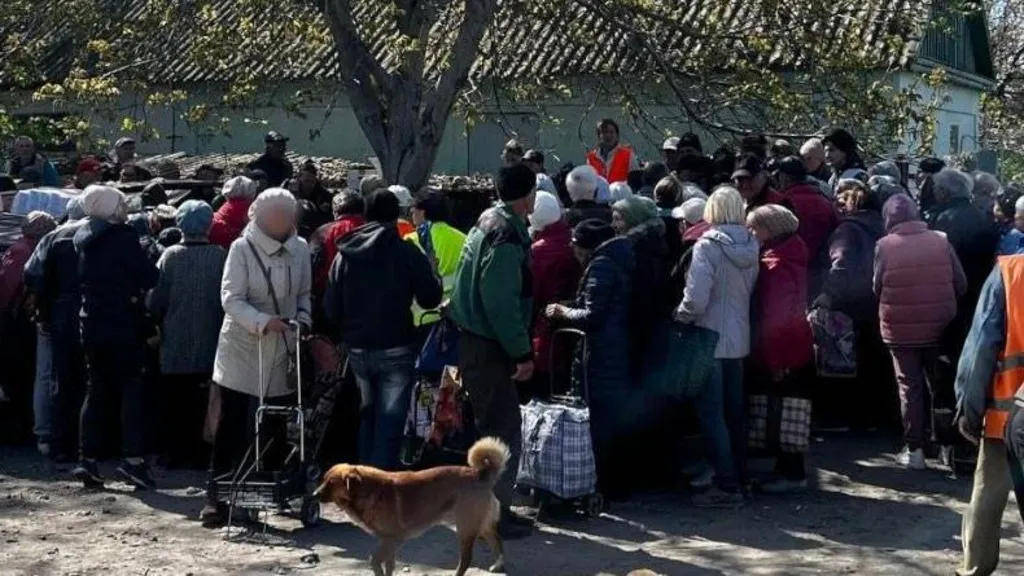
People in Russian-occupied Oleshky, a town in southern Ukraine, are running out of food and medicine and have no way out, a local resident told RBC-Ukraine. Ukraine's human rights ombudsman told the outlet that civilians there are dying of hunger every day.

The part of Kherson Oblast across the Dnipro River has been under Russian occupation since 2022, with civilians facing food and medicine shortages and restrictions on leaving. The UN Human Rights Monitoring Mission in Ukraine has documented deteriorating conditions in Oleshky and neighboring Hola Prystan. There has been no practical breakthrough toward an organized evacuation, though 358 people who need help to leave Oleshky and nearby settlements have been verified. About 2,000 people remain in Oleshky, Kherson Oblast head Oleksandr Prokudin estimated.

The resident, who spoke anonymously, said food is extremely scarce, and residents are waiting for a humanitarian corridor to leave. The local market offers mostly vegetables and fruit, such as tomatoes, cucumbers, zucchini, pears, and apples. Russia made its ruble the only legal currency in occupied Kherson Oblast from 1 January 2023, pushing out the Ukrainian hryvnia. Prices at the market start at 500 rubles (about $6), and "if you're lucky, 10 eggs can be bought for 3,000 rubles" (about $36), the resident said. That is about $3.60 an egg, nearly 20 times the US average of about $0.19, or $2.27 a dozen in August, US government data show.

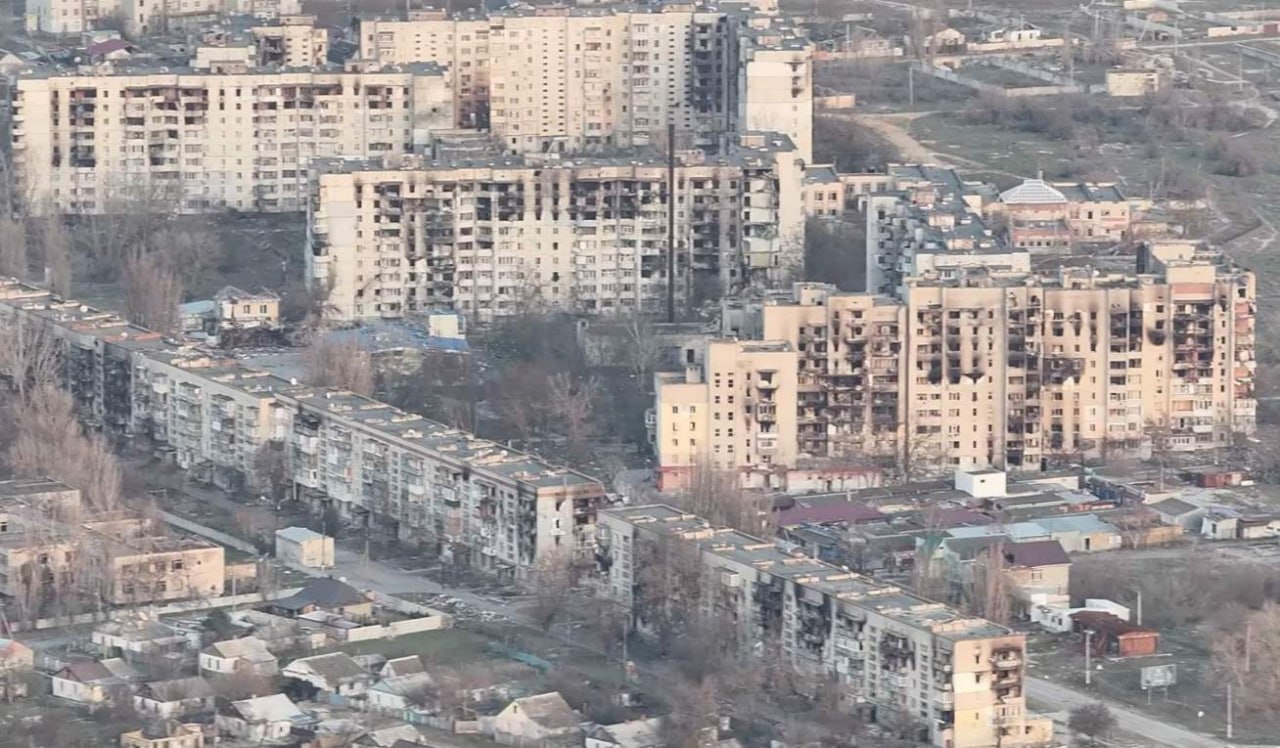
Aerial view of Russian-occupied Oleshky, in Ukraine's Kherson Oblast. Photo via ArmyInform
Explore further

Russian troops enter homes and threaten starving Oleshky residents for food and alcohol, officials say

Ukraine's human rights ombudsman, Dmytro Lubinets, told RBC-Ukraine that civilians in the occupied area were dying every day.

"There is a humanitarian catastrophe there. Ukrainian civilians die there every day because they lack even basic food and water. There have been no medicines there for a long time. According to our information, there is simply hunger there," he said.

Practically no medicines

The resident said there were practically no medicines available. Expired drugs were being sold at about 100 rubles (about $1.20) a pill. His father has Parkinson's syndrome and has been concussed twice. The resident said he was forced to reduce his father's dose by 25% so the supply would last at least until the new year.

Oleshky, Kherson Oblast, has been under Russian occupation since 2022, following Russia’s capture of the city during the initial phase of its full-scale invasion of Ukraine. Photo: Dmyto Lubinets
Explore further

Thousands are starving in occupied Oleshky. People have no food, no way out, and Russian forces bomb incoming aid

The resident's apartment had burned down, and his house remained damaged. His family had made the house livable and was living there, he said. His wife had lost more than 40 kilograms while the family relied on vegetables and fruit.

Beyond Oleshky: villages with no transport or aid

Four villages in the Hola Prystan community—Kokhany, Kardashynka, Velyka Kardashynka, and Mala Kardashynka—are effectively blocked, according to the Skhid-SOS fund. The fund told RBC-Ukraine that no transport reaches the villages and no humanitarian aid has been delivered for a prolonged period, although it is difficult to get more information from the villages. Residents are forced to walk or cycle to other settlements to find food, despite the risks of mines and drone strikes.

Civilians used as a buffer

Lubinets also said Russian troops were using civilians as a buffer and as protection against the Ukrainian military, RBC-Ukraine reported. Because Ukrainian citizens remain in Oleshky, Ukraine cannot conduct active combat operations there, he said—which, in his view, allows Russia to hold civilians effectively as hostages on the front line.

Food arrives by drone, but how much reaches residents is unclear

Ukraine has delivered food to Oleshky by drone since March, Prokudin said. Nearly 400 parcels weighing almost 4 tons reached their drop-off points on the night of 4 October, Interior Minister Ivan Vyhivskyi said. How much of the food stays with residents is unclear. Prokudin has said Russian forces shoot down supply drones, confiscate or resell the packages, and detain and beat residents who receive them.

After a previous delivery, Tetiana Hasanenko, head of the Oleshky City Military Administration, said that Russian troops take drone-dropped food and accuse those who receive it of cooperating with Ukraine, and that some residents got several packages while others got none.

  •  

Germany suspends naturalizations of alleged Nazi victims, Chinese nationals suspected of wide-scale fraud

Germany’s Interior Ministry has ordered consulates to withhold citizenship certificates under a postwar restitution law after investigators found that dozens of applicants, most of them Chinese nationals, allegedly posed as descendants of people persecuted by the Nazis.

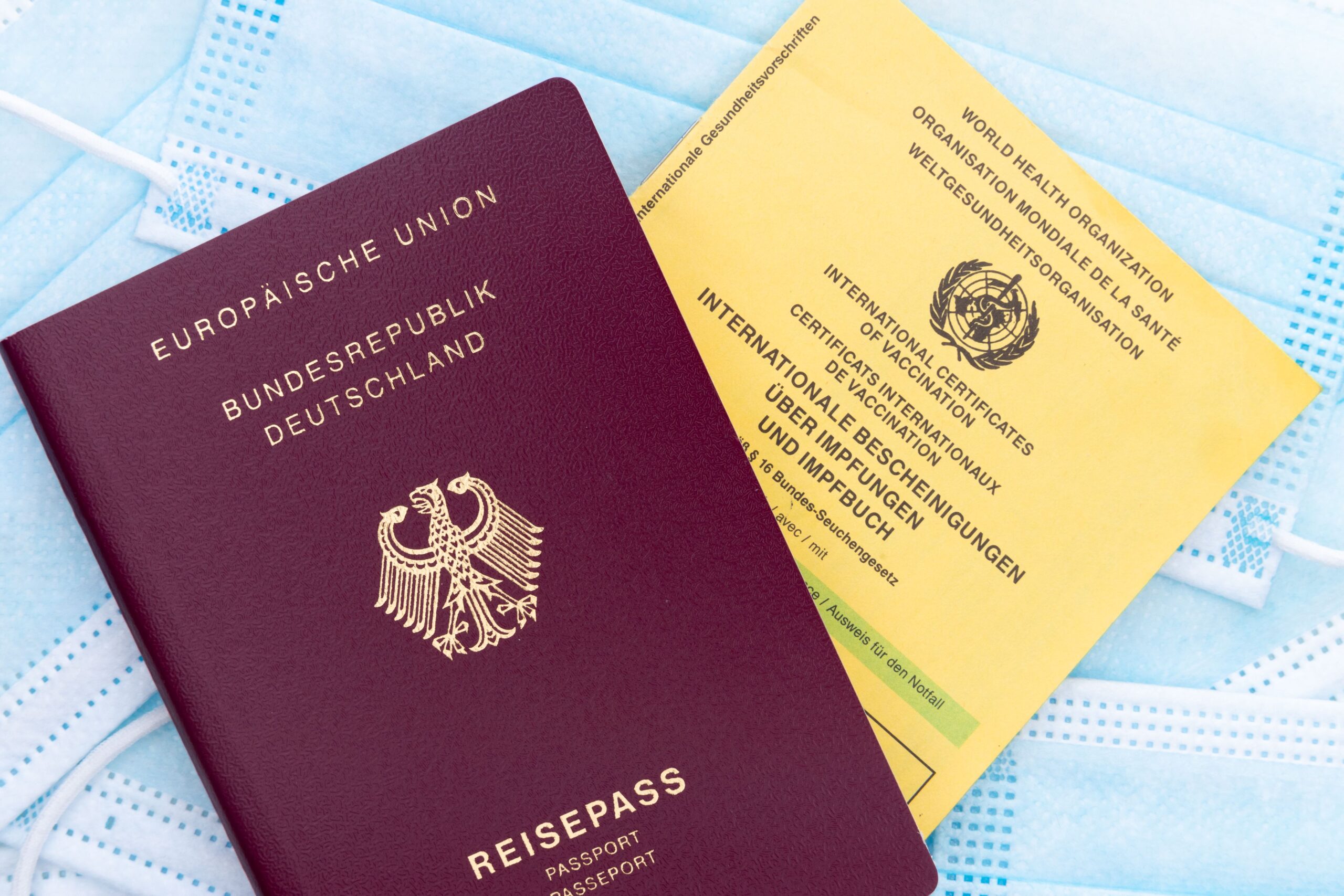
The Federal Office of Administration and the Interior Ministry instructed German missions abroad last week not to hand over naturalization documents “until further notice” and to postpone ceremonies, according to emails reported by Der Spiegel and confirmed in subsequent accounts. A ministry spokesperson said the procedures for so-called restitution naturalizations are under review “to further secure the procedure against corresponding criminal activities.”

The pause follows a Der Spiegel investigation published in early September that detailed an alleged scheme exploiting Article 116, Paragraph 2 of the Basic Law. That provision states that former German nationals whose citizenship was revoked between Jan. 30, 1933, and May 8, 1945, “for political, racial or religious reasons, and their descendants, shall be renaturalized on application.”

Prosecutors in Düsseldorf and the Federal Criminal Police Office are investigating 32 suspects on suspicion of document forgery and violations of the nationality law, authorities have confirmed. At least 28 of those under investigation are Chinese nationals, according to the Düsseldorf prosecutor’s office. German citizenship had already been granted in roughly half the cases. The suspects are said to live in Cyprus, Israel, Britain, and the United States.

Investigators allege the applicants submitted forged or notarized copies of documents and invented genealogical links to real Jewish families who fled or were stripped of citizenship under Nazi rule. In one example cited by Der Spiegel and other outlets, applicants claimed descent from Karl Siegfried Süßkind and Gertraud Süßkind, a couple who left Germany for British Palestine.

The Chinese applicants, including one identified as Liu H. who obtained citizenship in 2024 under the name Derrick Wong, were not actual descendants. Another person, identified as Tian C. and living in London, is accused of using the same fabricated lineage.

Some of those under investigation were already sought internationally on suspicion of serious crimes, including kidnapping and murder, Der Spiegel reported. Prosecutors have said they could not confirm details of foreign cases because they fall outside the German inquiry. The scheme was reportedly advertised on a Chinese social-media platform for more than half a million euros.

An Interior Ministry spokesperson, responding after the initial Spiegel report, said the ministry regretted the “identity thefts” in which “applicants misused biographies of those affected by National Socialism.” The spokesperson added that once sufficient information is available, the Federal Office of Administration will “immediately initiate withdrawal proceedings” in cases of fraudulently obtained citizenship. Unlawful naturalizations can generally be revoked within 10 years.

The Cologne-based office received 14,148 applications for restitution citizenship in 2025, Der Spiegel reported. Officials have noted that the special procedure differs from ordinary naturalization: staff often help applicants assemble proof rather than requiring them to produce every original document, a practice rooted in the law’s reparative purpose. Legitimate descendants may now face delays while certificates already prepared are held and files are rechecked.

The Interior Ministry, led by Alexander Dobrindt of the Christian Social Union, has described the suspension as a temporary measure to protect the integrity of the process, not a repeal of the constitutional right.

The post Germany suspends naturalizations of alleged Nazi victims, Chinese nationals suspected of wide-scale fraud appeared first on Remix News.

  •  

‘We could have had a massacre’ – French MEP demands attempted murder charge after protesters burn police station and block exit

A French member of the European Parliament and former police commissioner called for attempted-murder charges Thursday after masked protesters set fire to the entrance of a Bordeaux police station, blocking officers inside as smoke filled the building.

Matthieu Valet, now affiliated with the National Rally, said the attackers blocked the main door of the Capucins station and ignited trash bins piled against it while officers were still inside.

“It’s a criminal act of extreme gravity; we could have had a massacre,” MEP Valet wrote on X. “The perpetrators must be found and prosecuted for attempted murder. Ten years after the Viry-Châtillon attack, where police officers were burned alive while trapped in their patrol car, nothing has changed.”

BREAKING: Rioters attempted to murder police officers in Bordeaux, says French MEP.

Criminal rioters blocked the entrance to the Capucins police station and then set the station on fire.

They were actively trying to prevent the police from exiting the building, reported French MEP @mvalet_officiel.

Smoke filled the entire police station while the crowd cheered from outside. Officers tried to put out the flames but suffered from smoke inhalation and needed to evacuate.

French MEP Valet: “It’s a criminal act of extreme gravity; we could have had a massacre! The perpetrators must be found and prosecuted for attempted murder. Ten years after the Viry-Châtillon attack, where police officers were burned alive while trapped in their patrol car, nothing has changed!”

Follow: @RMXnews

— Remix News & Views (@RMXnews) October 8, 2026

Bordeaux prosecutor Renaud Gaudeul said a group of about 10 hooded individuals deliberately stacked bins at the station’s entrance around 4 p.m. and set them alight during a high-school demonstration. The fire spread quickly along part of the facade. Three national police officers inside escaped through a rear emergency exit. No injuries were reported but the officers reportedly suffered from smoke inhalation.

Prosecutors opened an investigation for destruction of property by a means dangerous to people, committed because of the victims’ status as public officials, and for joining a group formed to prepare violence or property damage during a public demonstration. Those offenses can carry up to 20 years in prison. Authorities have not so far filed attempted-murder charges.

This is not the first time that protesters have been accused of setting buildings on fire and blocking exits. Earlier this week, rioters set fire to the entrance of Vauquelin High School in Paris and blocked the exit with 100 students and staff inside. A harrowing video from BFMTV captured the moment.

🇫🇷🚨 BREAKING: Rioters set fire to the entrance of Vauquelin High School in Paris and blocked the exits when staff tried to put the fire out. A film crew recorded the terrifying attempted murder. “The school staff was unable to put out the fire. The rioters blocked them just as the extinguisher nozzle came out; they blocked the exit.” “The fire continues. You see all the silhouettes moving behind it; they continue to feed this fire, making it stronger and stronger. The school staff is not even going to try to put it out anymore; they can’t manage it. We can hear the principal here asking the hundred confined students to step back and move up to the first floor.” The building was full of staff, students, and journalists, but these rioters appear ready to kill anyone still inside the vocational chemistry school. Follow: @RMXnews

— Remix News & Views (@RMXnews) October 5, 2026

Graffiti reading “Vengeance for Eden” was sprayed on the station wall, referring to a student seriously injured by a police grenade launcher earlier in the protests in the Paris region.

The attack came on the margins of nationwide student blockades and marches over teacher shortages and school conditions, now in their third week. A high school in nearby Lormont was vandalized the same morning. Across France, the protests have produced thousands of arrests since late September, along with repeated use of fireworks mortars, stones and burning barricades.

BREAKING: France in a state of chaos. Police charge protesters on Place de la Bastille in Paris after students slam them with projectiles. After the charge, students continue to hurl paving stones. Follow: @RMXnews https://t.co/HITGmat3zQ

— Remix News & Views (@RMXnews) October 8, 2026

The 2016 Viry-Châtillon case, in which officers were burned to death inside their vehicle during unrest outside Paris, remains a frequent reference point in French debates over attacks on police. Interior Ministry officials have defended recent tactics while announcing a temporary suspension of certain stun grenades after some minors picked them up and blew off their hands.

There have been horrific scenes throughout the country in recent weeks, including women being attacked with homemade flame throwers, teachers beaten in the streets, arson attacks on schools, teachers and staff doused in gasoline, and officers beaten unconscious.

🇫🇷🔴 "It’s no longer a firework. It’s a homemade bomb." Protesting "students" in France, some draped in Algerian flags, craft firework mortars into weapons to target police in Aix-en-Provence. Follow: @RMXnews https://t.co/B7SwOutQmo

— Remix News & Views (@RMXnews) October 9, 2026

In nearly every video, racial and ethnic minorities, mostly Blacks and Arabs, are seen driving much of the unrest and physical violence.

The latest figures from the interior ministry indicate that 761 police officers have been injured in the ongoing unrest, according to Interior Minister Laurent Nuñez in an Oct. 7 hearing before the National Assembly’s law committee.

The count covers injuries since Sept. 28.

On Thursday, Oct. 8 alone, the Interior Ministry reported 48 additional officers and gendarmes injured. Nuñez said arrests and detentions stood at 6,629 as of the evening of Oct. 6.

According to Education Minister Édouard Geffray, about 65 teachers and education staff have been injured in the riots.

The post ‘We could have had a massacre’ – French MEP demands attempted murder charge after protesters burn police station and block exit appeared first on Remix News.

  •  

My Therapist Told Me to Go for a Walk. London Had Other Ideas

Is it any wonder there’s a mental health crisis when the state of the country is so depressing, asks Arthur Ellis, whose own 'mental health walks' around the dystopian streets of London only made things worse.

The post My Therapist Told Me to Go for a Walk. London Had Other Ideas appeared first on The Daily Sceptic.

  •  

German police advise women to vomit to stop rape attacks

It has been revealed that police in the northern German city of Bremen have for more than a decade advised participants in workplace safety seminars that deliberately inducing vomiting can be one way to interrupt an attempted sexual assault or rape.

Franka Haedke, a spokeswoman for the Bremen police, said the guidance is part of broader self-defense instruction offered by the department’s Central Police Prevention unit.

“In an emergency, such as attempted rape, defend yourself with all available means,” Haedke told the Kreiszeitung newspaper. “Vomiting can also be an effective way to ward off a sexual offense.”

Seminar instructors tell participants they can trigger a gag reflex by placing a finger down the throat. The resulting disgust, police say, is intended to disrupt an attacker’s actions. Haedke described the suggestion as one option among others rather than a prescribed response.

The sessions, which have run for more than 10 years, are held at companies, government offices and medical facilities. Employees of public transit agencies, the fire department, job centers, and social-service organizations are also eligible to attend. Topics include recognizing and avoiding danger, de-escalation, bystander intervention, and specific conduct during a sexual assault. Participants are invited to describe their own experiences so that advice can be tailored to situations they have encountered.

Haedke said the courses help people “recognize dangers early, manage conflicts, and act thoughtfully.” She added that the seminars “contribute to the prevention of crime and should be actively promoted and conducted on a recurring basis from the police’s point of view.”

Notably, the police appear powerless to address one of the key issues driving the increase in rapes and sexual assaults in Germany, and that is the incredible increase in foreigners. Since 2018, there has been a 72 percent increase in rapes in the country. In Bremen itself, where the police are advising women to vomit to stave off a rape, the city has been labeled the “most dangerous city in Germany.” It also happens to have the highest share of migrants of any German city. It is also a place where 49 percent of all rapes were committed by foreigners, even though the official foreign population is 23 percent.

The Bremen guidance is not the first unconventional self-protection tip from German police to draw public scrutiny. Remix News previously reported that in Berlin, officers previously listed singing as a way to irritate an attacker, advice that remained visible on the police force’s website even after internal materials had been revised. A screenshot of the recommendation went viral on social media in 2024 and was widely mocked.

Berlin police later said the tip had been drawn from professional associations for psychiatry and did not match operational experience.

“A screenshot of our homepage has been circulating for a few days, according to which we recommend that in the event of an attack, you irritate the perpetrator through unexpected behavior, such as singing,” the Berlin police stated. “This is recommended by the professional associations for psychiatry, among others. However, this advice does not correspond to our police experience and has therefore no longer been part of our recommendations since 2023. The flyer was already updated, now our website is too.”

The police stated that the suggestion was not meant for terrorist attacks, rampages or armed assaults, including those involving knives, where protecting life is the priority.

After the mass sexual assaults in Cologne on New Year’s Eve 2015–16, Mayor Henriette Reker — although not a police official — also gave advice that was widely condemned. Reker said women should keep “a certain distance of more than an arm’s length” from unknown men and avoid behavior that could be “misunderstood.” After thousands of German women were sexually assaulted and even some raped by North African migrants, the remarks were widely criticized, including by Germany’s justice minister.

Swedish police have also previously advised women to stop going out alone. Before mass immigration, Sweden was once one of the safest countries in the world for women. However, right around the same time as the mass sexual assaults in Colgone, Swedish police issued similar advice. In Östersund in 2016, after a series of assaults and an attempted rape, police chief Stephen Jerand advised women who wanted to move around at night to arrange a ride or walk in groups. He called the warning factual rather than a ban on going out alone.

German police have given similar pairing advice after attacks on joggers. Leipzig officers in 2017, after a woman was raped in Rosental park, said it would be better to run in pairs or make sure someone else was nearby, and to look back when passing people. The city’s mayor criticized the police for restricting women’s freedom.

After an attack in the English Garden in Munich in 2016, police in the city told runners to choose busy, lit routes after dark, jog at least in pairs at dusk, skip headphones, and carry a whistle or personal alarm. Although it was less controversial advice that what other authorities provided, critics note that women are increasingly unsafe in Europe while out exercising or enjoying public spaces.

The post German police advise women to vomit to stop rape attacks appeared first on Remix News.

  •  

L’Europe revient au charbon alors que les prix du gaz explosent

La crise énergétique européenne n’est pas terminée.

La crise énergétique européenne n’est pas terminée. Les prix du gaz restent obstinément élevés sur tout le continent alors que les Européens affrontent un long hiver.

En réponse à une crise énergétique découlant de la dépendance continue de l’Europe aux importations de gaz naturel liquéfié, sur fond de volatilité géopolitique mondiale persistante, les dirigeants européens poussent à diversifier le mix énergétique du bloc. Si cela signifie que l’Europe développe rapidement ses capacités en énergies renouvelables, cela marque aussi un retour significatif au combustible fossile le plus polluant du monde – le charbon.

Plus tôt cette année, lorsque les États-Unis et Israël ont lancé une offensive en Iran, provoquant ainsi la perturbation d’un cinquième des échanges mondiaux de pétrole et de gaz, l’Europe s’est réveillée pour réaliser qu’elle s’était laissée aller, en somnambule, à une nouvelle crise énergétique – sa troisième en seulement quatre ans. « Nous avions juré d’apprendre. Nous avions promis que les choses changeraient, mais nous voilà », a récemment déclaré un « diplomate européen très frustré », cité anonymement par la BBC.

« Au lieu de se concentrer sur des plans à long terme indispensables – sur la manière de rendre l’Europe plus compétitive dans ce monde de plus en plus instable, les premiers ministres et présidents [européens] sont maintenant pris de panique face aux prix [de l’énergie], inquiets des électeurs en colère et à la recherche de solutions à court terme », poursuit la source. « Exactement comme lors de la crise après l’invasion à grande échelle de l’Ukraine par la Russie. Conflit différent. Mêmes divisions européennes ; mêmes dilemmes énergétiques. Nous ne pouvons pas continuer à tourner en rond comme ça. Il va falloir que quelque chose cède. »

Aujourd’hui, six mois après le déclenchement de la guerre en Iran et la fermeture initiale du détroit d’Ormuz, l’Europe continue d’en subir les conséquences, les prix du gaz restant brutalement élevés. Rien que ce mois-ci, les prix du gaz ont atteint leur plus haut niveau en trois ans, dépassant les 80 € (90,98 $) par mégawattheure.

Les prix sont si élevés, en fait, que l’électricité produite au charbon est devenue moins chère que celle produite au gaz en Europe pour la première fois depuis des années. Cela a poussé de nombreux pays européens, et en particulier la plus grande économie de l’Union européenne, l’Allemagne, à revenir au charbon. Et, inquiétant, les experts affirment que cette tendance se poursuivra pendant des années encore.

« Le charbon devrait rester moins cher que le gaz pour la production d’électricité jusqu’à l’année prochaine, et potentiellement jusqu’en mars 2028 », rapportait Reuters plus tôt cette semaine, citant une conversation avec Marta Wroniszewska, analyste chez Veyt. « Les prix du gaz à plus long terme indiquent que les traders s’attendent à ce que les contraintes d’approvisionnement persistent. »

Cependant, le potentiel de croissance du charbon en Europe comporte des limites notables. Des années de politiques visant à réduire puis à éliminer progressivement le charbon ont laissé au continent beaucoup moins de centrales à charbon qu’auparavant. En 1990, l’Union européenne tirait plus d’un tiers de sa production d’électricité du charbon. En 2025, cette part était tombée à seulement 9,2 %, selon les données d’Eurostat. Ainsi, même si les centrales à charbon restantes en Europe bénéficieront d’une aubaine grâce aux prix actuels du gaz, le potentiel de rebond du charbon dans la région a un plafond.

Hors d’Europe, cependant, c’est une autre histoire. À l’échelle mondiale, le charbon reste la plus grande source unique de production d’électricité. Et tandis que l’Europe ferme ses capacités à charbon, de nombreuses économies émergentes continuent de développer les leurs, avec une croissance particulièrement forte aux Philippines, en Indonésie et dans d’autres pays en développement rapide d’Asie. Ce n’est pas un hasard si c’est aussi la région la plus durement touchée par la fermeture du détroit d’Ormuz.

Si le charbon est bon marché, abondant et considéré comme un outil essentiel pour permettre le développement économique des pays pauvres, la prolongation continue du règne du charbon présente des compromis qui l’emportent largement sur les bénéfices. Le charbon est le principal moteur du réchauffement climatique, responsable d’environ 40 % de toutes les émissions de gaz à effet de serre. Cependant, tout n’est pas négatif – le retour du charbon se produit en parallèle d’une augmentation mondiale majeure des ressources en énergie propre. De plus en plus, les énergies renouvelables sont adoptées pour leur rôle dans un avenir plus sûr sur le plan énergétique, et sont considérées comme un rempart essentiel contre la prochaine crise énergétique mondiale.

Contrairement au gaz naturel, au pétrole et au charbon, « l’éolien et le solaire ne peuvent pas être soumis à un embargo, bloqués ou coupés par une puissance étrangère », écrivait David Frykman, associé général du groupe de capital-risque basé à Stockholm Norrsken, dans une tribune publiée par Fortune plus tôt cette année. « Chaque térawattheure de production renouvelable nationale est un térawattheure qu’aucun adversaire ne peut transformer en arme. »

  •  

Russia’s war against Ukraine sends the bill to its own companies: bond defaults head for a 17-year high

russia facing record number corporate defaults second time decade one main causes being same—waging war against ukraine · post russian rubles tsn money news ukrainian reports

More than 50 Russian companies could default on their bonds this year, the most since 2009, a rating-agency analyst told Russian newspaper Izvestia, which reported it on 6 October.

Russia's wartime economy is straining under high interest rates, and the budget is too: the 2026 deficit has nearly doubled from the earlier forecast to a record $88 billion, with more deficits planned for the next three years as Moscow raises taxes to fund the war and plans its biggest defense budget since the full-scale invasion began.

A default is a situation in which a company cannot make promised interest payments to investors on time or repay borrowed money. If a payment is not made by the agreed deadline, the company becomes delinquent, which under certain conditions is recognized as a default.

So far this year, 20 companies have defaulted for the first time, compared with 24 in all of 2025, said Mikhail Nikonov of the Expert RA rating agency. Most of the companies that missed payments are small issuers of high-yield bonds, Izvestia reported.

In 2026, Russian companies have missed payments totaling 41 billion rubles (about $490 million), compared with 34 billion rubles (about $410 million) the previous year, according to investment bank Sinara.

Russia faces a new wave of corporate defaults

By the end of 2026, the number of Russian companies unable to service their ruble-denominated debt on time could reach 40–50, the highest level since 2010, said Pavel Zholobov, junior managing director at the NRA rating agency.

The number of bond defaults in 2026 has already reached its highest level in a decade, Zholobov said. Similar figures were recorded in the mid-2010s: in 2014, 35 companies missed payments; in 2015, 52 did so; and in 2016, there were 44 issuers. This occurred in part after Western sanctions were imposed on Russia over its annexation of Crimea and its war in Donbas, as well as amid a halving of oil prices and a sharp weakening of the ruble.

So-called "little green men" (the Russian occupation troops comprised special forces who removed insignia, wear face masks to prevent identification and call themselves a "Crimean self-defense force") surround a Ukrainian military base in Perevalne, Crimea, during the Russian annexation of the peninsula in February-March 2014.

There were more defaults only in 2009. At the time, amid the fallout from the global financial crisis, more than 100 issuers faced payment problems, while the volume of distressed debt reached nearly 200 billion rubles, Zholobov noted.

High interest rates put pressure on companies

This time, the main reason for companies' difficulties in making bond payments has been the prolonged period of high interest rates, which has continued since 2023. Companies are raising financing at high interest rates but are unable to refinance their debt on more favorable terms, explained Ekaterina Sidorova, head of the Foreign Exchange, Commodities and Debt Markets Department at SberCIB Investment Research.

At the same time, the situation does not yet resemble a systemic debt crisis: defaults are primarily being recorded among companies with low credit ratings and high debt burdens, Sidorova said.

If a company fails to repay bond debt, it is given 10 business days to meet its obligations. If it fails to do so, the company may offer investors a restructuring—for example, by postponing payments in exchange for a higher interest rate.

The number of defaults will remain high in 2027, Sidorova believes.

High interest rates were a response to accelerating inflation in Russia. Domestic demand was outpacing production, Russia's Central Bank said in October 2023. Sanctions over the war and rising defense spending had also hit the economy and the ruble, which had lost about 25% against the dollar that year. The bank raised its key rate from 7.5% in the first half of 2023 to 15% by the fall.

Ukraine targets Russia's oil industry to weaken its war economy

Ukraine is also seeking to weaken Russia's economy as part of efforts to reduce its ability to finance the war. In particular, Defense Minister Yevhenii Khmara said strikes on oil refineries are aimed at "bleeding the Russian war machine" and destroying its military and economic potential. According to the ministry, the attacks have knocked out more than 51% of Russia's oil refining capacity.

In the first half of July, Russian oil refineries processed about 3.9 million barrels of oil per day—the lowest level since March 2005. Due to the production cuts, Moscow was also forced to restrict fuel exports.

  •  

Poland: 3 foreigners arrested for illegally killing a goat, but prosecutors want to dismiss the case

Three foreigners were placed under arrest for killing a goat in the Polish city of Wałbrzych. However, Polish prosecutors now want to drop the case.

The incident occurred in late 2025 outside a restaurant in Wałbrzych that was closed for renovation and not operating, authorities said. A witness called police, who arrived and detained the men, two citizens of Bangladesh and one of India, at the scene.

Chief Inspector Marcin Świeży of the District Police Headquarters in Wałbrzych said the men told officers that such behavior is normal in their countries and they did not know it is prohibited in Poland.

The goat was intended as a meal for two of the men, according to Do Rzeczy. The Indian citizen said he is a vegetarian and pleaded not guilty.

In Poland, goats and other livestock may be killed for food only under rules that implement EU animal-welfare law, chiefly Council Regulation No. 1099/2009 on the protection of animals at the time of killing. The core requirement is that the animal be spared avoidable pain, distress, or suffering.

Unlike in many Third World countries where animals are slaughtered on the streets, often in extreme pain and fear, in the EU, the animal must remain unconscious until death. Bleeding must then be performed promptly and effectively. Slaughter outside a registered slaughterhouse is tightly restricted, and home or backyard killing for personal consumption is generally not permitted except in narrow, authorized circumstances, for example, certain emergency or remote situations under veterinary supervision.

Despite the clear violation of law, the District Prosecutor’s Office in Wałbrzych filed a motion seeking conditional discontinuance of the proceedings against all three foreigners. Prosecutor Mariusz Pindera said the outcome depends in part on the court’s assessment of the degree of “social harmfulness” of the act.

“If the court finds that it was not significant, it may grant the prosecutor’s request,” he said.

The court confirmed it received the application but has not yet considered it, in part because of a judge’s illness. No hearing date has been set, and no substantive decision has been issued regarding the men.

The post Poland: 3 foreigners arrested for illegally killing a goat, but prosecutors want to dismiss the case appeared first on Remix News.

  •  
❌