Portuguese farmers are demanding a €140 million support package from the government, warning that rising production costs are making it increasingly difficult to compete with neighbouring Spain. Around 150 leaders
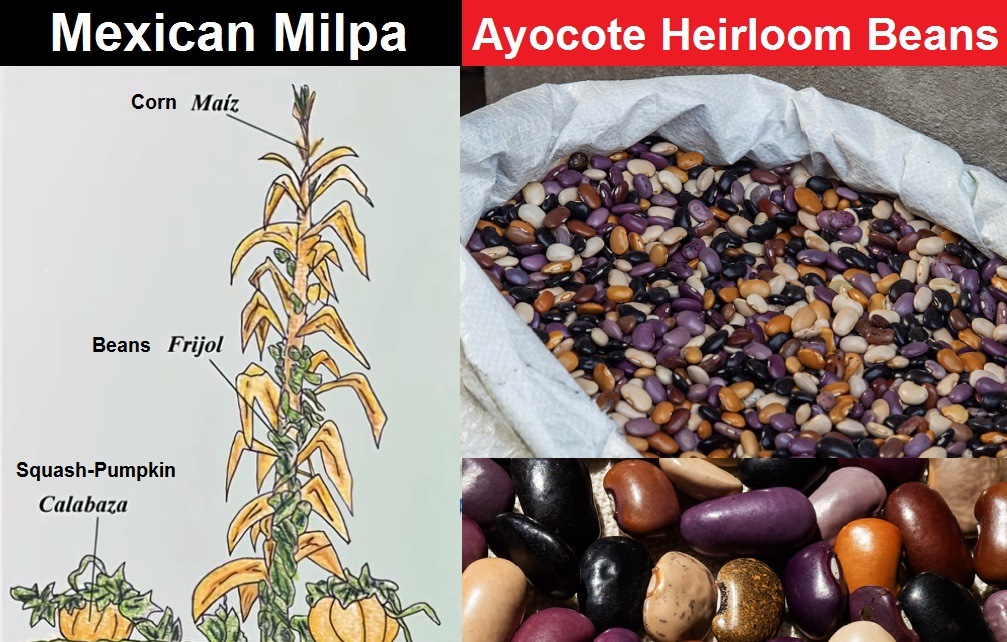
Traditional Mexican agriculture follows the ancient traditions of the “milpa”, which is a system of small-scale family agriculture that pre-dates the Spaniards arrival in Mexico, and even pre-dates the Aztec Empire.
In this simple, time-honored method of small-scale family agriculture, the milpa consists of its main crop, corn (maiz), along with other native crops that co-exist and enhance the soil along with the corn, such as heritage beans and squash.
The beans grow on vines that wrap themselves around the corn stalks, while large leafy crops such as squash and pumpkins grow and spread along the bottom close to the soil, giving weeds and other undesirable plants no chance to grow, and require no chemicals whatsoever that need to be applied to the native, heirloom crops, or the soil that they grow upon.
After harvest, the corn stalks are burned down returning key nutrients to the soil through its ashes.
Here is a short video that describes the milpa system.
Here is another 5-minute documentary produced by the UN showing how Mexicans are reviving this ancient agricultural system, mainly with women. (Note: We do not support or fund the United Nations nor any of their agencies and programs, but this is a very well-produced short documentary that is very educational regarding the “milpa”.)
Today, we are announcing another ancient, heirloom product that is produced in these small-scale milpa agricultural systems, Ayocote beans!
These ancient “super beans” are heirloom beans that have been handed down from generation to generation through families living in Mesoamerica long before the Spaniards arrived, and even before the Aztec Empire, and date back to 6000 years!
Ayeócotl (Náhuatl)
Ayocote (Phaseolus coccineus leiosepalus), also known as ayeócotl in the native náhuatl language, is a climbing legume, with pre-Hispanic origins.
It is grown by all indigenous communities of the Mexican plateau, even at over 2,000 meters above sea level. Due to its widespread presence, even in very different climate conditions, Ayocotes have developed an ample genetic variety: Mexico’s genetic resource bank preserves over 800 different known varieties.
Ayocote beans have been highly valued since ancient times for their ability to endure extreme temperatures and various altitudes, as well as for the ease with which their seeds can be preserved for years, making them essential during food shortages. There are more than 150 species of beans worldwide, but only 31 are native to Mexico.
However, bean consumption in Mexico has been declining in recent years, and there is a movement now in Mexico to preserve these ancient bean varieties, as well as other heirloom seeds such as corn.
The Mexico Daily News published an article last year (2025), highlighting this move in Mexico to preserve their native agricultural heritage which is being threatened by Big Ag and mass production of agricultural products using GMO varieties and herbicides like glyphosate.
Taste of Mexico: Beans
by María Meléndez
It is often said that Mexican culture is built on corn, but beans were as important for the development of the pre-Columbian cultures of Mesoamerica.
Excerpts:
Beans have been highly valued since ancient times for their ability to endure extreme temperatures and various altitudes, as well as for the ease with which their seeds can be preserved for years, making them essential during food shortages.
Beans were a crucial component of the milpa, an agricultural system designed to provide the three staple ingredients of the Mesoamerican diet: corn, beans and squash. This system operated in perfect harmony: corn served as a structure for the beans to climb, beans enriched the soil with nitrogen, and squash helped retain moisture throughout the season.
Are we endangering our bean tradition?
Despite being essential to our ancestors, bean consumption in Mexico has declined significantly in recent decades. In the 1980s, the average Mexican ate 16 kilos of beans yearly, while average consumption in 2024 was only 7.7 kilos, according to a 2021 report by the Ministry of Agriculture (Sader).
Several factors contribute to this decline. Preparing beans requires more time, and our consumption of meat and processed foods has increased.
Culturally, beans are often viewed as food for the poor. I remember that whenever someone in my family faced economic challenges, my grandparents would dramatically say,
“Even if we can only afford to eat beans, we will remain honorable people.”
Today, various organizations and communities are working to preserve Mexico’s native beans through the milpa system.
Additionally, in late 2024, President Claudia Sheinbaum announced that the federal government would seek to increase bean and corn production by 30% and bring attention back to endemic varieties of corn and beans in order to achieve self-sufficiency in production.
I was recently able to purchase enough of these rare, heirloom super beans to offer them to the public through Healthy Traditions.
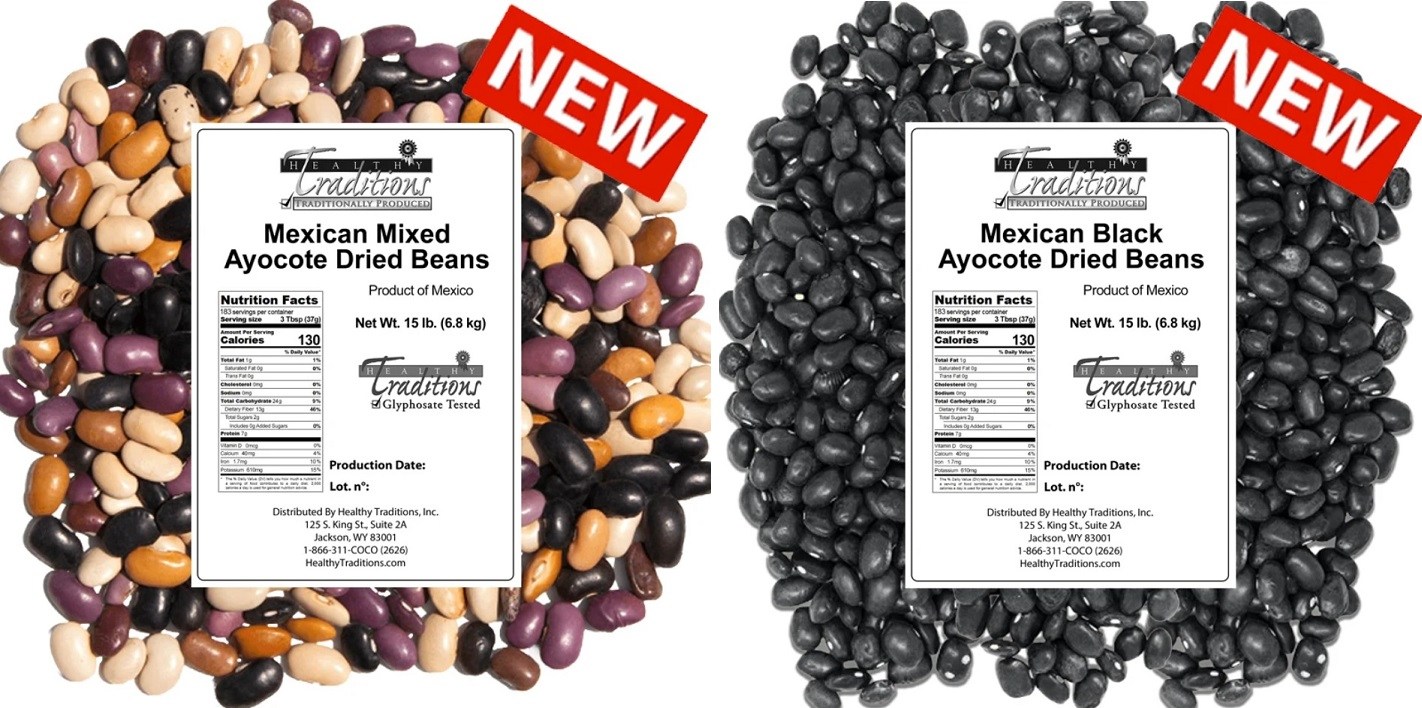
We now have available for ordering online, Mexican Heirloom Ayocote Mixed Beans, and Mexican Heirloom Ayocote Black Beans.
I bought up their entire remaining supply, so we only have enough to sell in 5 lb. and 15 lb. sizes while supplies last, as we will not have enough to sell in bulk 5-gallon pails until early 2027, when the next harvest comes in and where I have already put in my request to purchase as much as we can.
The ancient Mexican “milpa” traditional agricultural system is very similar to the ancient agricultural systems of the Philippines I observed firsthand while living on a farm in a rural community on Mt. Banahaw with my family in the late 1990s, and first couple of years of 2000.
When I told the poor, rural farmers living in that community, most of whom were trying to get out of their rural community and go to the big city in Manila or get visas to the Middle East or the U.S. where they thought life was better and they could earn more money, that they were in fact rich due to their native, natural agricultural system, they did not believe me.
So I had to show them that what I was saying was true, by marketing the coconut oil of the “poor people” that was made by hand in their kitchen from fresh coconuts, which we call today our “Gold Label Virgin Coconut Oil,” and kicked off the Coconut Oil revolution in the U.S. as I leveraged the emerging technology of the Internet back then, educating Americans on the truth about edible oils and saturated fats.
When you buy our Gold Label Virgin Coconut Oil today, you are supporting these poor, agricultural workers who still produce this coconut oil the same way by hand.
And the same is true when you purchase our Mexican products produced from community milpa agricultural small-scale producers, like our new Ayocote Super beans!
Products produced from these ancient agricultural small-scale producers are some of the most nutrient-dense products you can purchase on the planet, and we test them also to make sure there is no cross-contamination from GMO seeds and glyphosate-sprayed crops.
Technology and AI cannot replicate the human wisdom of these small-scale farmers! Faith in modern agriculture and their mass-production of contaminated crops is what could potentially produce starvation and malnutrition.
Sustainable and nutritious agricultural systems that require human labor are what is going to be able to provide food security and be able to feed people around the world going forward, and it requires a return to the past and agricultural systems that have nourished the earth’s populations for thousands of years, and NOT the false promises of the technologists and their false techno-prophecies of the future!
To Adam he said,
“Cursed is the ground because of you; through painful toil you will eat of it all the days of your life.
It will produce thorns and thistles for you, and you will eat the plants of the field.
By the sweat of your brow you will eat your food until you return to the ground, since from it you were taken; for dust you are and to dust you will return.”
(Genesis 3:17-19)
Do you really believe that the Technocrats can overcome the curse of God on the earth??
I don’t, and that’s why Healthy Traditions exists, to support HUMAN LABOR and ancient agricultural systems which are the ONLY hope for the future and food security.
This article was written by Human Superior Intelligence (HSI)
See Also:
Understand the Times We are Currently Living Through
Last week, EU member states reached a common position on the European Commission Omnibus X ‘Food and Feed’ proposal, in a bid to simplify regulation of pesticides. In reality, however, it will weaken protection against pesticides’ negative effects in Europe. The proposal pleases the chemical industry but goes against the wishes of a vast majority of citizens and many scientists who value people’s health, clean drinking water and biodiversity.
A hearing in the European Parliament on 3 September highlighted the real problem. Under the guise of a ‘discussion with experts’ in the field of health and environment, the parliament handed the megaphone to lobbyists representing a broken, toxic agricultural model.
Representatives of industrial agriculture – sugar beet, apple and cereal growers – parroted industry arguments, justifying their demands to stop banning pesticides that are toxic to public health, the environment and pollute our water resources.
Despite Europe witnessing massive droughts, extreme heatwaves leading to countless deaths, wildfires destroying biodiversity, and devastating crop losses, it seems that a significant share of MEPs are ready and willing to accelerate the degradation of European’s wellbeing and natural resources.
Listening to them raises a fundamental question: Do farmers truly want to rely on a cocktail of toxic chemicals to maximise yields at low market prices, destroying their own health and local ecosystems in the process? Or do they wish to make an honest living, producing quality food in balance with nature for a fair income?
CAP subsidies
To better grasp this contradiction, we must look at what is actually at stake here.
Agrochemical corporations seek their share of the Common Agriculture Policy (CAP) cake – a colossal €58bn budget, accounting for one third of the EU’s total budget.
Their own survival is reliant on keeping as many farmers as possible dependent on pesticides, fertilisers and industrial seeds. By diverting public CAP funds through farmers into the pockets of their shareholders, these companies ensure their long-term profitability.
Many farmers’ unions also represent agri-cooperatives that profit significantly from selling pesticides, which raises questions about whether they truly represent farmers’ long-term interests, or those of the pesticide industry.
Since the European Commission published its ‘simplification’ proposal in December 2025, proponents of pesticide-intensive farming have presented a series of flawed arguments that in fact reveal the dead-end to which intensive agriculture has led us.
Firstly, farmers’ organisations complain about a “lack of pesticide substances” on the market.
Currently around 450 different pesticide active substances are approved in the EU, from insecticides to fungicides, and herbicides. If 450 different options are insufficient, does this not signal an unhealthy addiction rather than a shortage?
Lobbyist groups, furthermore, claim that pest resistance to synthetic pesticides would inevitably lead to dramatic yield losses and hunger, arguing for even more pesticides with diverse modes of action.
And yet, according to scientific research, the multiple chemical strategy that has been applied for more than 40 years is the very cause of the appearance of resistance. This problem cannot be solved with the mindset that caused it. The only scientific solution is, therefore, not more chemistry but prevention, and the use of alternative methods.
Thousands of farmers across the EU and the rest of the world are already proving this by switching towards Integrated Pest Management (a strategy for low-pesticide-input pest management) or organic practices to reduce pesticide inputs.
Who bares the cost
The call to keep all pesticides on the market – and potentially even use some of the banned ones – serves only the short-term interests of the pesticide industry, not of the farmers.
Destroying soil life – the basis of soil fertility – with chemicals, and killing insect populations that naturally control pests and pollinate crops, jeopardises the very basis of farming and long-term food security.
The societal costs of this pesticide-dependent model are staggering. Citizens are the ones who bear the healthcare costs for chronic diseases such as cancer and Parkinson’s, which impact not only farmers but also residents of agricultural areas.
We face water pollution that has become nearly impossible to remediate. Fewer pollinators means fewer healthy fruit and vegetables. These ‘externalities’ far outweigh any short-term benefits.
This is the reason why the Paris and Munich water companies financially support farmers in protecting the groundwater, because doing so is up to 45 times cheaper than depollution.
In the meantime, the agrochemical industry enjoys huge profits from pesticide sales, largely supported by CAP subsidies, while society foots the bill for the damage. It is indeed a perfect business model…for them.
Lobbyist circus
The spectacle witnessed in the alleged House of European Democracy is testament to the state of our political world; one that is dominated by corporate interests over citizens and farmers’ wellbeing.
We witnessed the desperate battle of a toxic agricultural model that struggles to survive, and resists being replaced by sustainable farming methods.
The lobbyist speakers in the European Parliament hearing more or less gave the diagnosis to the current pesticide-intensive agricultural system: it is simply broken.
Citizens have repeatedly expressed their concern on the impact of pesticides on their health and biodiversity. They have also expressed the need that public support for agriculture serves the common good.
The pesticide Omnibus X proposal is merely an attempt to maintain a detrimental status quo that favours the pesticides industry.
What is needed now is a new blueprint for a system which financially supports farmers to implement practices that improve soil and plant health, favour beneficial insects, accelerate the availability of alternatives to pesticides such as biocontrol products, and rapidly phase out toxic synthetic pesticides to protect our health, water resources and biodiversity.
Only then can we ensure a sustainable future for European agriculture and our children. Only then, will a greater share of the CAP remain in the hands of farmers who feed us and protect our nature.
Questionable Argentine beef is reportedly flooding the U.S. market in an effort to lower beef prices which are soaring right now.
It is being reported that beef prices have hit record highs in the U.S. due to a cattle shortage that is worsening. (Source.)
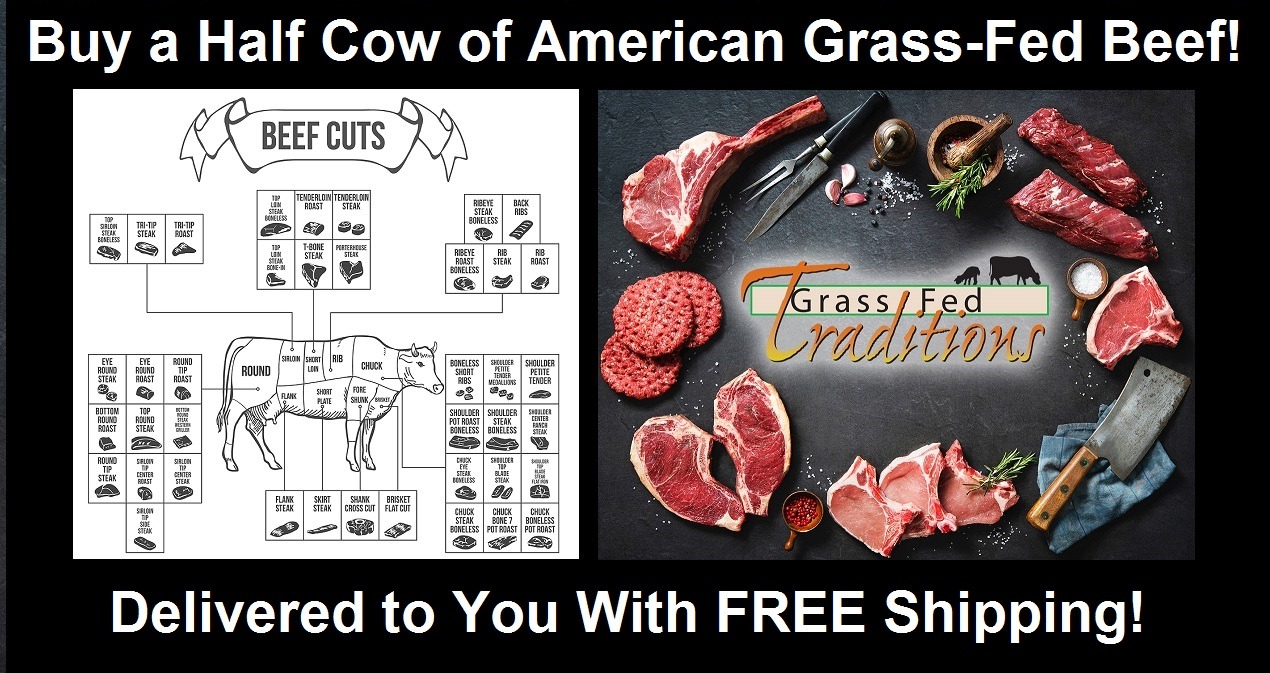
Fortunately, Healthy Traditions customers and Health Impact News readers now have a wonderful opportunity to purchase a half cow cut into USDA certified premium cuts from our famous Galloway beef herd in western Wisconsin as we begin our Fall processing!
We only process our famous Galloway beef during a short window of time each year starting in October when the herd is still grazing on green grass. They are not only “grass fed” but also “grass finished” as we never finish them off in feedlots.
In order to secure as many head of Galloway cows this year as possible from our small-scale family farmers, for a limited time we are offering bulk half cows sent directly to you with FREE shipping.
This will allow you to store some of the finest grass-fed beef in your own freezer for a fraction of the cost it would take to place multiple orders throughout the year, and to have some food security to the rising beef prices in the U.S. due to the cattle shortages this year.
Grass-fed Traditions is one of the major product lines in my online store, Healthy Traditions, which was started almost two decades ago, working with small-scale family farmers in Western Wisconsin, most of whom are Amish.
One of the Amish families we started working with back then had an amazing herd of beef cattle that was 100% grass-fed and grass-finished, but they could only sell their beef as “organic”, which meant they got the same price per pound as beef cows raised in feedlots on “organic” grains.
One of the breeds they worked with that was available in that area of Wisconsin was the very rare Galloway breed of beef cattle.
Galloway cattle are an ancient breed that originated in the rugged hill country of southwestern Scotland. They are related to the Angus which was developed in northeastern Scotland.
While the Angus was selected for rapid growth on better feed in feedlots, the Galloway was selected for its ability to thrive on poor forage in a cold wet climate.
They are a very ancient and rare breed, numbering only about 26,000 worldwide, with most herds located in Europe. They were first imported to the United States in the 1850s and are very rare in the U.S., and we are one of the few (and possibly only) retailers offering them to the public.
The Galloway, unrivaled as a grazing breed, utilizes coarse grasses frequently shunned by other breeds. They have the ability to produce a high quality beef product directly from grass.
Results of a multi-breed research project conducted by a Canadian Government Experiment Station, reveal that the Galloway ranks second only to the Buffalo in hair density tests.
The robust, hardy nature of the Galloway is especially suited for northern harsh climates. This makes them a perfect fit for the cold, harsh winters of Western Wisconsin.
The claim that Galloway beef is juicy, tender, and flavorful is substantiated in USDA tests of Galloway crossbreds, when compared with eleven other breeds.
During the winter months they still eat only grass, but as hay, stacked in tall Amish hay stacks.
Here is a video we produced over 15 years ago, and we have practiced these same standards every year since then.
Half Cows Now Available to the Public for Bulk Purchases to Fight Rising Beef Costs!
We only process our famous Galloway beef during a short window of time each year starting in October when the herd is still grazing on green grass.
As we now approach our Fall butchering schedule, this is the ONLY TIME all year that you can purchase a half cow, by pre-ordering it before we start butchering to reserve your own portion.
This will allow you to store some of the finest grass-fed American beef in your own freezer for a fraction of the cost it would take to place multiple orders throughout the year, if supplies even last through the whole year (2027), which will depend upon consumer demand and beef supplies available throughout the U.S.
For each of these options you will need to plan to have approximately 4.5 cu. ft. of chest freezer or a 5.5 cu. ft. upright freezer space to store your beef.
Each of these options represents approximately a half a cow portion from one of our prime Galloway steers that are roughly 2 years of age. Your half will include 150 pounds of beef and will be delivered cut and packaged.
We are offering an amazing price of only $17.99 lb. DELIVERED to you with FREE Shipping!
When you buy a half cow, your price per lb. is the same for all of the cuts.
So a $60 per lb. retail price on a premium steak like a filet, for example, is the same price per lb. as your ground beef, which in this package is your delivered price including shipping.
All 4 options come with 3-4 day shipping included for most locations within the lower 48 states. Our shipping boxes are made from non-Styrofoam insulation and can be composted, or it will breakdown in the trash very quickly. We pack each box with a large amount of dry ice to ensure it will make it to your door without getting above a safe temperature.
Our first processing date will be before the end of October, and this is a first-come first-serve offer whiles supplies last, as our farmers have a limited amount of cattle to be processed. So to reserve your bulk purchase, please order right away while these half cows are available.
If there are more cows available in November, we might be able to offer more of these packages by the end of November.
DISCLAIMER: Brian Shilhavy is the Editor of Health Impact News, and the founder and CEO of Healthy Traditions. Everything published on the Health Impact News network is available to the public free of charge, with a Creative Commons license offered to all who wish to republish my articles, with attribution, free of charge, as I earn my income from Healthy Traditions.
Healthy Traditions, originally Tropical Traditions, has served customers in the U.S. for over 24 years. Learn more here about the obstacles we have overcome for over 2 decades:
Santorini is much more than white houses, blue domes, and beautiful sunsets. The volcanic island holds treasures and stories known to few. One of these is a unique dwarf tomato that locals call “tomataki.” This is no ordinary vegetable; it is a true natural wonder. There is almost no fresh water on Santorini, and rainfall […]
Seventeen EU governments have joined forces to defend agricultural and regional funding in the bloc’s next seven-year budget, setting up a confrontation with Germany and five other countries demanding substantial reductions to the European Commission’s proposed €2 trillion spending plan.
Seventeen European Union countries have called for agriculture and cohesion funding to be protected from further cuts as negotiations over the bloc’s 2028–2034 budget enter a decisive phase.
In a letter dated 2 October to Irish Taoiseach Micheál Martin, whose government currently holds the rotating presidency of the Council of the EU, the countries said the overall financing of Cohesion Policy and the Common Agricultural Policy should be maintained in the next Multiannual Financial Framework.
The signatories are Bulgaria, Croatia, Cyprus, Czechia, Estonia, Greece, Hungary, Italy, Latvia, Lithuania, Malta, Poland, Portugal, Romania, Slovakia, Slovenia and Spain.
The initiative follows months of coordination by the so-called Friends of Cohesion. In an earlier joint position published by the Spanish government, members argued that cohesion, agriculture and fisheries remained central EU policies and called for new EU revenue sources to be “genuine, fair, simple and non-regressive”.
Italian Prime Minister Giorgia Meloni and Romanian President Nicușor Dan have been coordinating the group at leaders’ level. They are expected to convene another informal meeting alongside the European Council on 15–16 October. The two leaders previously brought the group together ahead of the June European Council as governments sought to coordinate their positions on the budget.
The intervention places the group in direct opposition to Germany, Denmark, the Netherlands, Austria, Finland and Sweden.
Those six governments have argued that the Commission’s near-€2 trillion proposal should be reduced by several hundred billion euros. In their joint statement on the 2028–2034 budget, they said national governments were already undertaking fiscal consolidation and that the EU budget could not be exempt from similar pressure. They called for reductions across all spending headings while giving greater weight to security, defence, competitiveness, migration and sovereignty.
The Commission’s original proposal for the 2028–2034 Multiannual Financial Framework amounts to almost €2 trillion in current prices, equivalent to 1.26 per cent of the EU’s average gross national income over the seven-year period. It substantially restructures the budget, bringing agriculture, cohesion, fisheries, migration and internal security into national and regional partnership plans while allocating more money to competitiveness, research, defence and other emerging priorities.
Agriculture and regional development have consequently become two of the most sensitive parts of the negotiations.
The Council has already backed the principle of the new national and regional plans, but financial allocations remain unresolved. Its negotiating position specifically leaves the money to be settled as part of the overall MFF talks.
EU Today has followed the dispute since the Cyprus presidency produced a negotiating framework in June that proposed reducing the Commission’s plan by about €32.8bn. The disagreement has since widened as governments attempt to reconcile traditional spending on farmers and poorer regions with growing demands for defence, industrial competitiveness and security.
Revenue is another source of disagreement.
The Commission has proposed five new EU own resources, including revenue connected to the Emissions Trading System and Carbon Border Adjustment Mechanism, a contribution based on uncollected electronic waste, a tobacco excise resource and a contribution from large companies operating in the EU. The proposals are intended partly to reduce reliance on national contributions and help finance repayment of pandemic-era borrowing.
EU Today previously examined the dispute over new sources of EU revenue after leaders asked the Irish presidency to develop financing options alongside negotiations over expenditure.
The Friends of Cohesion have also called for a more gradual repayment schedule for NextGenerationEU borrowing and oppose retaining contribution rebates for wealthier member states. Under the Commission proposal, repayments of principal and interest would amount to a fixed €24bn annually between 2028 and 2034, or €168bn across the seven-year budget period.
Ireland now faces the task of narrowing the gap.
The Council’s timetable for the negotiations envisages the Irish presidency advancing the next negotiating framework ahead of the October European Council, with governments seeking a political agreement before the end of 2026. That would leave 2027 for adoption of the legislation required before the new budget takes effect on 1 January 2028.
An agreement among governments will require unanimity. The European Parliament must then give its consent, while the separate decision governing the EU’s own resources also requires unanimous approval by member states and ratification according to their national constitutional procedures.
With 17 governments now explicitly defending agriculture and cohesion spending and six major contributors demanding substantial reductions, the October summit will bring the central budget dispute directly before EU leaders.
The European Union once prided itself on leading the world in protecting children. Today, policymakers backed by big polluters are betraying that promise in the name of “competitiveness”.
In June 2026, Florence, Franck, and Isabelle packed their bags and headed to Brussels. Why? Because their children have all suffered serious harm from pesticides.
These children have endured physical pain and heavy medical procedures, including repeated chemotherapy treatments. And their families have shouldered both the financial and emotional burdens alongside them.
As Isabelle puts it: “It destroys a family.” Her own daughter has been fighting leukaemia for the last seven years.
And they are not alone. In 2024, almost one in 20 children in the EU were exposed to dangerous levels of pesticides; that’s 380,000 kids. Now these parents have a clear message for policymakers: prioritise public health and stop dismantling the rules that protect children against harmful substances.
In 2024, around 316,000 tonnes of toxic pesticides were sold in the EU to be sprayed across our countryside, risking not only the health of farmers but also polluting our soil, air and water.
The European Environment Agency in Copenhagen has reported environmentally unsafe levels of pesticides in about a quarter of Europe’s rivers. In groundwater – which supplies 65 percent of the water we drink in Europe – unsafe levels were detected in 11-18 percent of water bodies.
In the same year, trifluoroacetic acid, a harmful “forever chemical” that forms when ‘PFAS’ pesticides and F-gases break down, showed up in 94 percent of drinking water samples tested across 11 EU countries.
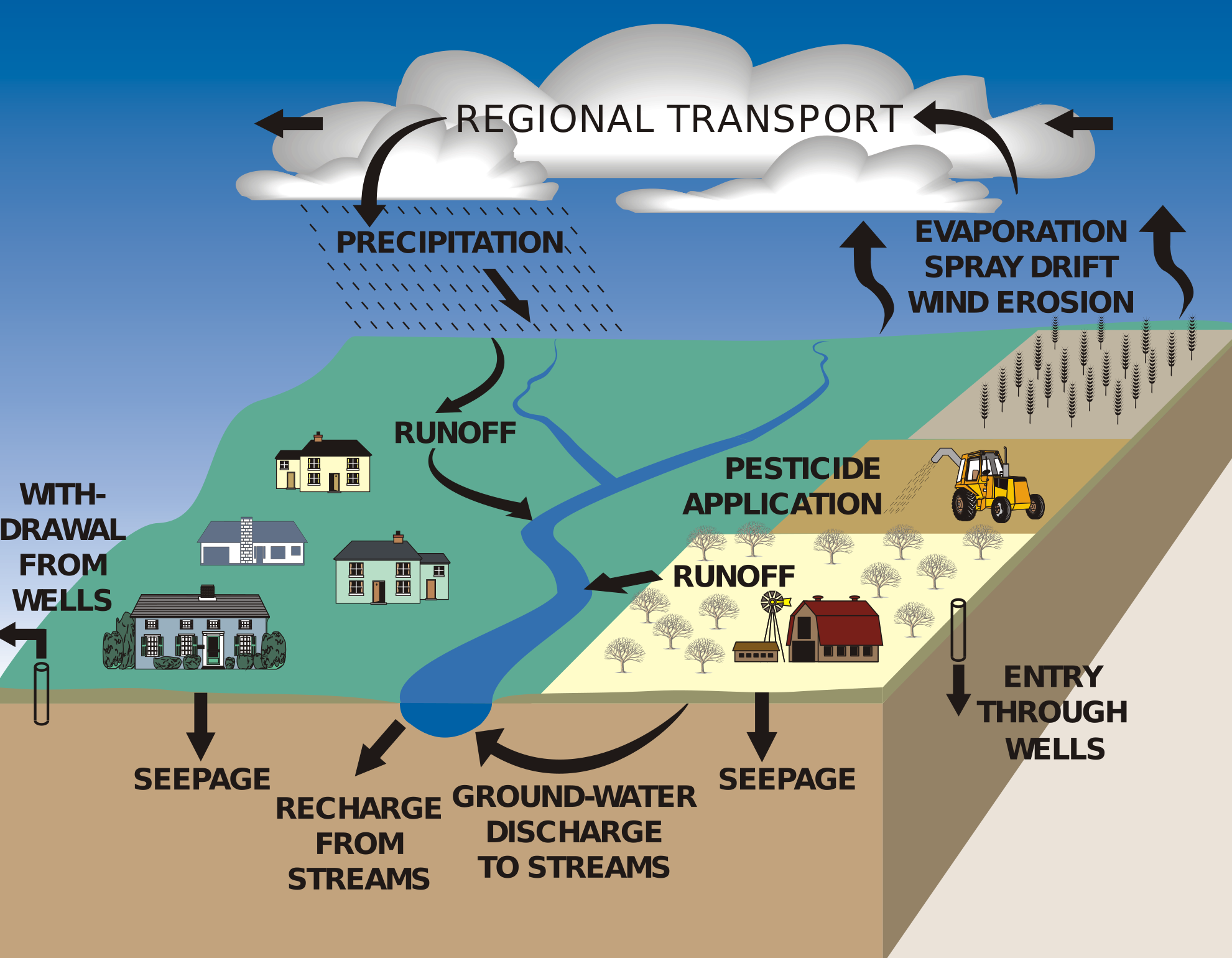
We are surrounded by pesticide pollution. It’s even in our homes.
Source: US Geological Survey/Wikimedia
But what’s happening in Brussels?
In December 2025, the European Commission proposed a legislative package that would remove fundamental environmental and health protections against pesticides in the EU.
Among other changes, the proposal – ironically labelled the ‘Food and Feed Safety’ Omnibus – suggests extending pesticide approvals indefinitely and relaxing the rules to allow pesticides already identified as hazardous to remain on the EU market.
Let that sink in, no pun intended.
These proposals are a political choice to prioritise short-term profits for Big Polluters over children’s lives, people’s health, and the nature and ecosystems we need to survive.
Human health is at stake, and children are at particular risk – as they absorb substances more easily and are less able to excrete them.
Pesticide exposure is linked to the development of childhood cancers, hormone disruption, neurodevelopmental impairments and birth defects. And prenatal and early childhood exposure can permanently alter development, with consequences that can be irreversible – and deadly.
Under the UN Convention on the Rights of the Child, as well as the UN-declared human right to a healthy environment, all EU countries must commit to protecting children from environmental harm and ensure the highest attainable standard of health.
These principles must guide the work of EU institutions.
Yet, instead of strengthening protections, the EU is moving backwards at a worrying speed. This is largely due to intense (and repeated) lobbying from multi-billion euro corporations, which includes the pesticides industry. Corporate chemical giants now spend €46m a year just to lobby the EU; that’s over 60 percent more than in 2020.
Make it make sense
The incoherence of current EU policy is troubling. On the one hand, the EU Commission is celebrating its new Intergenerational Fairness Strategy – a framework that is meant to ensure today’s policies do not disadvantage future generations. On the other, the same institution is actively seeking to relax controls of harmful substances.
Ripping up rules that protect people and the planet only benefits Big Polluters, industries that already make billions in profits at the expense of children’s health.
What’s more, an independent assessment found that the measures the EU institutions propose “will not accelerate innovations and authorisations”. In short, these proposals would actually make Europe less competitive.
Children’s rights and youth organisations have warned that deregulation exposes children to serious (and preventable) health risks. And the international scientific community recently stressed that robust environmental risk assessments cannot be optional.
Ultimately, Europe should widen and accelerate its access to pesticide-free alternatives. It must also support farmers in their efforts to transition away from pesticides, towards a more sustainable and resilient model.
So, what can be done? First, the EU must close the tap on pesticide use and production, and support farmers transitioning to safer alternatives. Second, it’s time for leaders to hold Big Polluters accountable for the damage they cause – not force the bill onto regular taxpayers and families harmed by these toxic substances.
Florence, Franck, and Isabelle’s children are among the hundreds of thousands already affected by pesticides. And they show that victims of pesticides are not just a statistic.
The ‘Food and Feed Safety Omnibus’ raises fundamental questions. Who exactly is the EU’s food policy supposed to protect? How many more children need to be harmed for politicians to act? And what kind of future do EU institutions want to build?
Should pesticide protections be treated as obstacles to short-term profits, or should children be able to grow up safely?
Politicians should reject this devastating Omnibus proposal and work instead to support the EU’s transition to safe, sustainable, and resilient farming.
On connaît le poids de l'agro-négoce dans la politique intérieure brésilienne. Un article analyse comment il détermine les formes d'insertion internationale de la puissance sud-américaine. (Vol. 15, quadrimestriel, publication continue, gratuit en ligne. — Marília, Brésil.)
Le débat géopolitique semble clos. L'Ukraine doit entrer dans l'Union européenne dès la guerre terminée. En réalité, cette promesse inquiète toute la région et comporte des risques pour la cohésion du Vieux Continent. En Pologne, alors que les élites soutiennent une telle adhésion de longue date, de plus en plus de citoyens renâclent devant ses conséquences économiques et sociales à court terme, comme face à l'arrogance de Kiev sur les questions mémorielles.
Michal Dyjuk. – Manifestation d'agriculteurs et de chasseurs réclamant l'arrêt des importations agricoles depuis l'Ukraine décidées par l'Union européenne, Varsovie, 2024
« J'espère ne pas voir l'adhésion de l'Ukraine de mon vivant, et j'espère vivre longtemps. » Agriculteur à Pińczów, dans la voïvodie de Sainte-Croix, à quatre-vingts kilomètres au nord de Cracovie, M. Jerzy Płachta se tracasse. Sa femme, Renata, qui gère leur exploitation de céréales et de légumineuses, tempère : « Nous n'avons rien contre les Ukrainiens, qui s'adaptent bien. En 2022, nous avons proposé d'accueillir des réfugiés et nous avons donné de l'argent aux associations caritatives ou pour l'achat de drones. Nous les soutenons, mais leur pays est dangereux pour l'agriculture polonaise. »
Les blés sont déjà hauts et les premiers haricots rouges commencent à germer en cette fin mai dans les champs ouverts parsemés de petits bois de pins et de chênes noirs. Depuis l'entrée de leur pays dans l'Union européenne, en 2004, les Płachta vendent leurs produits à des groupes français implantés en Pologne : Auchan, Casino, Carrefour et surtout Leclerc, qui en importe également en France. M. Płachta raconte son parcours du combattant pour en arriver là : « Les entreprises françaises réclament un certificat IFS Food, une norme de sécurité et de qualité dont nous devons respecter toutes les exigences. Pour avoir les subventions européennes, il faut expliquer combien de fois on retourne la terre, nous conformer au type de semence, au rythme des semis, etc. Nous avons de plus en plus de choses à consigner dans des registres que les contrôleurs vérifient sur place chaque année. »
Jusqu'ici, le jeu en valait la chandelle, « mais, depuis la guerre en Ukraine, tous les prix ont baissé de moitié, souligne M. Płachta. Avec l'arrivée des produits ukrainiens, on a dû réduire nos coûts et le nombre de nos employés. Nous en avions dix en 2014… et plus que deux aujourd'hui. Dans le tiers des exploitations de notre région de Sainte-Croix, il y a des problèmes financiers. Beaucoup abandonnent. » En revenant vers son village, le paysan s'arrête devant le chantier de la maison que le couple fait construire pour l'un de ses enfants. Le confort de la bâtisse projetée démontre leur réussite. Il se lamente pourtant, car leur fils ne veut pas de cette vie à la campagne, préférant la ville, Cracovie.
Des coûts de production bien moins élevés
À quelques kilomètres de là, M. Marcin Biesaga a hérité de l'exploitation de ses parents, qui cultivaient tabac et tomates. En une vingtaine d'années, il est passé de 10 hectares à 200, ajoutant blé, céleri et pomme de terre à sa production. Son propos est plus radical : « La Pologne a trop donné pour l'Ukraine, aux dépens de notre économie. On importe beaucoup d'aliments ukrainiens non contrôlés, du colza ou du miel par exemple. » Lui aussi déplore l'effondrement des prix qui a suivi les exemptions de droits de douane pour les produits agricoles ukrainiens en 2022. En s'arrêtant devant un tas de tubercules, il nous explique que les intermédiaires lui achètent 0,75 euro le sac de quinze kilos… qu'il retrouve à 6 euros dans le commerce. Pour lui, « une adhésion rapide de l'Ukraine provoquerait une crise totale ».
Comme les Płachta, M. Biesaga a participé en mars 2023 au blocage du terminal de Złote Ziarno, où passe la seule voie de chemin de fer à écartement large du pays (1,52 mètre dans l'ex-URSS contre 1,435 dans le reste de l'Europe, hors Espagne, Finlande et Irlande). Cette ligne a permis d'acheminer les céréales ukrainiennes dans le cadre des « corridors de solidarité » improvisés par l'Union européenne au début de la guerre et des combats en mer Noire (1). Les grains devaient en théorie seulement « transiter » par l'Europe centrale, mais ils ont submergé les marchés régionaux. En urgence, la Pologne a interdit ces importations, suivie par la Roumanie, la Hongrie, la Slovaquie et la Bulgarie. Ancien président du Parti paysan, passé au parti Droit et justice (PiS, conservateur), M. Janusz Wojciechowski était à l'époque commissaire européen à l'agriculture. Il a géré la crise depuis Bruxelles. « C'était très difficile, nous confie-t-il. Mais la Commission a de facto légalisé l'embargo que la Pologne avait imposé en avril 2023 et qui était illégal, en autorisant cinq pays à interdire les produits ukrainiens sur leurs marchés. Il faut noter que Varsovie n'a jamais levé son embargo unilatéral, et la Commission n'a rien entrepris contre… »
À cinq kilomètres de la frontière ukrainienne, on sent l'air de la guerre. Cultivateur à Żniatyn, M. Mieczysław Sroda a perdu deux amis en 2022, tués par la chute d'un missile de défense aérienne dans le village voisin de Przewodów. Lui aussi a hérité de l'exploitation de son père, qu'il a agrandie en rachetant un sovkhoze (ferme d'État) pour produire blé, betteraves à sucre, colza et haricots. « La base serait que les Ukrainiens respectent les normes européennes ; ce n'est pas le cas aujourd'hui, assure M. Sroda en évoquant notamment l'usage de pesticides interdits. Mais, même s'ils se conformaient aux normes, ils sont trop concurrentiels, grâce à leurs sols de grande qualité [les fameuses terres noires ou tchernoziom] et à des conglomérats géants contrôlés par des étrangers. C'est d'ailleurs parce que des sociétés européennes y ont des intérêts qu'il a été difficile de lutter contre les importations déloyales. »
Maciek Nabrdalik. – Le dirigeant de l'Association des terres frontalières, qui fait un travail mémoriel sur les massacres perpétrés par les nationalistes ukrainiens dans les années 1940, 2023
« Contrairement à ce que l'on pourrait penser, l'agriculture ukrainienne est plus mécanisée qu'à l'Ouest. La taille des exploitations fait la différence et permet d'amortir le coût des machines ultra—modernes », complète M. Krzysztof Nykiel, président de l'Union nationale des cultivateurs de betteraves à sucre. « Si les prix restent à ce niveau, il y aura énormément de casse en Europe, s'alarme-t-il. Lorsque nous en parlons à Bruxelles avec les Français et d'autres, on s'inquiète d'être pris en étau par les accords passés également avec le Mercosur, l'Australie ou l'Inde, autant de pays qui cultivent une canne à sucre très bon marché. »
L'Ukraine est le premier pays agricole du continent après la Russie, avec 32,9 millions d'hectares de terres arables particulièrement riches en humus, soit le double de la France (16,9) et le triple de la Pologne (11,2) (2). Elle pourrait prétendre à une portion considérable du budget de la politique agricole commune (PAC). En 2021, l'Ukraine a produit 85 millions de tonnes de céréales ; la France, 53 ; et la Pologne, 35. En outre, plus de la moitié de la surface agricole utile (57 %) est gérée par des entreprises de plus de 1 000 hectares, tandis que la moyenne des exploitations est de 11 hectares en Pologne. Les conglomérats sont particulièrement imposants dans le grain et la betterave sucrière, avec une moyenne de 23 700 hectares par exploitation (1 763 fois la moyenne européenne). Conséquence : des coûts de production bien moins élevés.
En 2023, les agriculteurs n'étaient pas les seuls à manifester leur mécontentement. Fin novembre, les transporteurs routiers polonais ont bloqué la frontière avec l'Ukraine, immobilisant des milliers de camions dans le sud-est du pays. Ils dénonçaient l'accord de libre circulation entre l'Ukraine et l'Union européenne, qui a supprimé à partir de juin 2022 le système de licences régulant jusqu'alors l'entrée des routiers ukrainiens. « Nous avions eu la promesse du gouvernement polonais qu'il ne serait pas reconduit », se souvient M. Waldemar Jaszczur, meneur des manifestations à l'époque. Mais, trois ans plus tard, le Parlement européen a voté pour une prolongation de l'accord. Le secteur s'enfonce dans la crise.
Au premier rang sur le continent, avec environ 20 % du marché évalué en tonnes-kilomètres, dont les deux tiers hors du pays (3), le transport routier polonais perd du terrain au profit des entreprises ukrainiennes. Celles-ci offrent des tarifs bien plus attractifs grâce à des salaires deux fois plus bas et à l'absence de certains coûts liés aux normes européennes. Cette concurrence se ressent particulièrement dans les activités dites de « cabotage », soit les livraisons à l'intérieur d'un pays dont la compagnie n'est pas originaire. Bien qu'en théorie interdit aux entreprises ukrainiennes, il se répand au détriment des entreprises polonaises, qui réalisaient 44 % du cabotage au sein de l'Union avant 2022.
Outre les difficultés dans le transport vers l'ouest, les camionneurs polonais voient leurs perspectives se boucher à l'est. La Russie, ancienne direction prioritaire pour M. Jaszczur, est désormais sous sanctions. Le commerce avec l'Ukraine leur échappe aussi. « Nous ne sommes plus rentables », lâche Mme Marzena Fik, qui travaille pour l'entreprise de son père. Établie à Zamość, à une cinquantaine de kilomètres de la frontière ukrainienne, la compagnie disposait en 2022 d'une flotte de dix camions livrant des fruits depuis les ports néerlandais vers Lviv, la ville principale de l'ouest de l'Ukraine. Aujourd'hui, il n'en reste plus que cinq. « Au début de la guerre, nos chauffeurs ne voulaient plus aller en Ukraine. Ils avaient peur », explique-t-elle. Ces semaines de flottement ont coïncidé avec une perte du marché. Les transporteurs polonais représentaient 38 % du trafic à la frontière en 2021, seulement 8 % en 2023, selon la douane polonaise.
Le premier bénéficiaire de fonds européens
À cette conjoncture délicate, il faut ajouter la hausse constante des salaires, des prix de l'énergie et la pénurie de main-d'œuvre, syndromes d'une économie de plus en plus comparable à celle de ses partenaires occidentaux. Conscient qu'il ne peut recruter qu'à l'étranger, M. Jaszczur réclame au gouvernement de « simplifier les demandes de visas ». Neuf de ses chauffeurs sur dix sont biélorusses. « Notre seule perspective : cesser notre activité d'ici à la fin de l'année », déplore de son côté Mme Fik. L'entreprise familiale subira le même sort que 1 500 autres du secteur depuis le début de 2025.
À ces préoccupations économiques et sociales s'ajoutent les querelles mémorielles, attisées par les réhabilitations par le président ukrainien Volodymyr Zelensky de nationalistes ayant collaboré avec l'Allemagne nazie durant la seconde guerre mondiale, massacrant Juifs et Polonais (4). Après la dernière provocation ukrainienne — le baptême d'une unité militaire en hommage à l'Armée insurrectionnelle ukrainienne (UPA), responsable de crimes de masse en Volhynie —, le président polonais Karol Nawrocki a retiré le 19 juin à M. Zelensky l'ordre de l'Aigle blanc — la plus haute distinction du pays, qui lui avait été attribuée en 2023. Une crise diplomatique d'une ampleur inédite s'ouvre entre les deux pays, en dépit des gestes d'apaisement du président ukrainien, qui a ouvert les archives sur les massacres de Volhynie et autorisé des exhumations.
Résultat, les Polonais, qui célébraient la proximité des deux langues, des deux peuples, et figuraient parmi les appuis les plus fervents à l'Ukraine, s'en éloignent. Une enquête d'opinion montre qu'entre février 2024 et novembre 2025 les opposants au soutien militaire à l'Ukraine sont passés de 26 % à 39 %, ceux qui y sont favorables n'étant plus que 44 %. Par ailleurs, 47 % pensent que « l'État polonais aide trop les réfugiés ukrainiens », et seulement 7 % « trop peu » (5). L'intégration de l'Ukraine à l'Union européenne ne recueillait plus que 50 % de soutien fin juillet 2026 (9 % des Polonais la souhaitant « dès que possible » et 41 % considérant que « rien ne presse »). Cette approbation était de 74 % en mai 2023 et de 90 % en mars 2022. Les opposants sont désormais 40 %, contre seulement 2 % après l'invasion russe de février 2022 (6).
Ce scepticisme ne cesse de grimper au fil des sondages, au point qu'à la droite du PiS, déjà très conservateur, émergent deux partis qui surfent sur ce mécontentement : Konfederacja Wolność i Niepodległość (Confédération liberté et indépendance, réunissant le Mouvement national et Nouvel Espoir) et Korona (Confédération de la Couronne polonaise). « On assiste à une montée du sentiment antiukrainien, nous assure par exemple M. Michał Wawer, vice-président du Mouvement national et député de Konfederacja. Je suis presque certain que l'idée d'une adhésion de l'Ukraine serait perçue comme une anticipation d'une immigration encore plus importante et plus problématique. L'autre souci, bien sûr, est la crainte que cela n'entraîne la Pologne et toute l'Europe dans une guerre contre la Russie. »
Maciek Nabrdalik. – Exposition d'affiches de graphistes ukrainiens et polonais en soutien à l'Ukraine, Wrocław, 2023
Signe d'un malaise grandissant, alors que les prochaines élections législatives auront lieu à l'automne 2027, tous les autres partis ont, en pratique, décliné notre invitation à s'exprimer sur le sujet. Même trouble du côté du vice-ministre des affaires étrangères, M. Marcin Bosacki, toujours ouvert à… différer le rendez-vous proposé. « L'Ukraine ne peut pas être admise dans l'Union européenne tant qu'elle ne rejette pas complètement le courant qu'elle suit aujourd'hui », écrivait le 4 juillet le chef du PiS, M. Jarosław Kaczyński, aux membres de son parti, en leur demandant d'utiliser tous les moyens disponibles pour « bloquer les actions du gouvernement [de M. Donald] Tusk visant à intégrer l'Ukraine à des conditions privilégiées ». Ce renversement prend des allures de paradoxe, alors que le gouvernement de Varsovie, dirigé à l'époque par le PiS, a encouragé l'Ukraine à déposer sa demande d'adhésion au début de la guerre. « La Pologne s'est souvent retrouvée isolée dans ses propositions successives visant à offrir explicitement une perspective d'adhésion à l'Ukraine, alors que l'Europe occidentale se montrait réticente », rappelle l'historien et politiste Łukasz Adamski. Le directeur du Centre Mieroszewski, consacré à l'étude des sociétés d'Europe centrale et orientale, ajoute : « Le courage avec lequel l'Ukraine défend sa souveraineté contribue à notre sécurité. Cependant, la pression exprimée par certains responsables ukrainiens en vue d'une adhésion au plus vite reste inacceptable pour l'opinion publique polonaise. Celle-ci se souvient des efforts considérables que la Pologne a dû déployer pour se conformer aux normes européennes. »
En 1990, le produit intérieur brut de la Pologne (en parité de pouvoir d'achat) représentait moins de la moitié de celui de l'Ukraine (7). En 2024, il représentait trois fois plus. Le « rattrapage » économique saute aux yeux, des gratte-ciel de Varsovie aux autoroutes flambant neuves qui sillonnent le pays. Il se voit jusque dans le moindre village aux maisons cossues et bien entretenues. Depuis son adhésion à l'Union européenne en 2004, la Pologne connaît la plus forte croissance des Vingt-Sept. C'est aussi le premier bénéficiaire net de fonds européens, avec 261 milliards d'euros perçus les vingt premières années, soit trois fois plus que sa contribution (8).
Le maire de Zamość, M. Rafał Zwolak, nous propose de grimper sur le beffroi de l'hôtel de ville pour visualiser tout cela. À 52 mètres au-dessus de la place du marché et ses façades colorées, il fait le tour du propriétaire : « Au début, notre ville de 57 000 habitants faisait partie des trois qui recevaient le plus de dons, jusqu'à 50 % de notre budget. Cela a permis de restaurer de nombreux bâtiments. Voyez l'Académie, la seconde plus vieille université de Pologne, puis la cathédrale, l'église franciscaine, les remparts… Grâce à ces restaurations, le tourisme a beaucoup progressé. Pour le zoo, par exemple, le nombre de visiteurs est passé de 20 000 personnes en 2004 à 250 000 aujourd'hui. »
Une fois la guerre terminée, le coût de la reconstruction de l'Ukraine dépasserait les 500 milliards d'euros, selon une évaluation internationale datant de février dernier (9). Dans une hypothétique Europe à trente-six, qui intégrerait tous les pays des Balkans, la Géorgie, la Moldavie et l'Ukraine, cette dernière capterait 41 % des fonds européens, selon une étude prospective (10).
Pour les plus optimistes, la réussite polonaise pourrait servir d'exemple à l'Ukraine tout en profitant à leur pays. « C'est le grand voisin de la Pologne avec la culture la plus proche, une zone d'extension naturelle pour nos activités », explique M. Jakub Karnowski, président-directeur général de KredoBank, une banque polonaise opérant sur le marché ukrainien. Il est aussi un ancien chef de cabinet de M. Leszek Balcerowicz, ministre des finances au sortir du communisme et principal artisan de la « thérapie de choc ».
Dans les couloirs en verre de la prestigieuse École des hautes études commerciales (SGH) de Varsovie, les étudiants ukrainiens portent tous la vyshyvanka, une broderie colorée et traditionnelle célébrée à la fin mai. Les discussions au tableau portent sur les défis macroéconomiques du pays. Diagrammes et recommandations à l'appui, l'Association étudiante pour la reconstruction de l'Ukraine présente son rapport. M. Karnowski encadre leurs travaux et suit leurs parcours. Selon lui, « la majorité de ces jeunes vit en Pologne depuis plusieurs années et restera ici ». Certains jeunes hommes ne sont pas retournés au pays depuis le début du conflit, pour éviter un enrôlement dans l'armée. C'est le cas de Danylo. « Je ne sais pas, ça dépendra de l'évolution politique », dit-il en hésitant quand on lui pose la question du retour.
En proie à des perspectives démographiques inquiétantes, l'Ukraine espère voir sa diaspora revenir. « Les deux pays se retrouveront en compétition pour la main-d'œuvre », prédit M. Karnowski. Car, de son côté, la Pologne fait face à des dynamiques similaires, avec une fécondité tombée à 1,03 enfant par femme. De nombreux chefs d'entreprise voient une occasion dans l'adhésion promise à l'Ukraine. « Nous pourrions en profiter, comme l'Allemagne en a profité avec nous », dit en souriant M. Dariusz Szymczycha, vice-président de la chambre de commerce polono-ukrainienne. Communiste durant toutes les années 1980, il a ensuite conseillé l'ex-président social-démocrate Aleksander Kwaśniewski et organisé le référendum sur l'adhésion à l'Union. « Nous préparons déjà la reconstruction. Nous pouvons nous placer dans les secteurs du BTP, de l'énergie, de la banque ou des produits agricoles transformés », énumère M. Szymczycha.
Consciente que la compétition sera féroce, la Pologne veut croire en ses arguments. « Depuis le début de la guerre, très peu de nouveaux acteurs sont apparus sur le marché ukrainien. Les gagnants seront ceux qui étaient déjà là, et c'est notre cas », avance M. Karnowski. « La seule acquisition financière majeure en temps de guerre vient d'une entreprise polonaise », note M. Szymczycha, en référence au rachat récent de la branche ukrainienne de MetLife par le géant des assurances PZU.
Outre l'aide humanitaire et des livraisons de matériel militaire, les liens économiques entre les deux pays se resserrent. La Pologne est le deuxième partenaire commercial de l'Ukraine et son premier marché d'exportation, selon la chambre de commerce polono-ukrainienne. Une partie du pétrole et du gaz transite notamment par les ports polonais. Certains travailleurs pourraient bénéficier de l'arrivée de l'Ukraine, reconnaît M. Bartosz Rydliński, professeur de science politique et responsable de la branche éducation de l'OPZZ, la principale confédération syndicale du pays. « Pour les autres travailleurs, la logique du capitalisme mondial demeure, complète-t-il. Mes compatriotes polonais ont offert une main-d'œuvre bien moins chère au Royaume-Uni, à la Suède ou à l'Irlande lorsque nous avons rejoint l'Union européenne. Les Ukrainiens feront de même. C'est pourquoi les syndicats polonais et européens doivent s'engager à l'avenir pour informer les travailleurs ukrainiens sur leurs droits. Il faut les syndiquer et leur expliquer que le dumping social ne profite à personne en définitive. »
Alors que M. Zelensky souhaite que son pays adhère à l'Union européenne dès 2027, le constat qu'il faudra du temps fait consensus… même chez les étudiants ukrainiens rencontrés à la SGH, qui estiment de concert que leur pays a d'abord besoin d'importantes réformes, notamment pour lutter contre la corruption et adopter les normes européennes. Ils regrettent les divisions récentes au sein de la Rada (le Parlement) qui ralentissent l'adoption des mesures attendues par la Commission européenne. « Nos négociations ont duré quatre ans », rappelle M. Szymczycha. Il espère que l'ouverture du premier chapitre de négociations le 15 juin (lire « La tentation du coupe-file »), après la levée du veto hongrois par le gouvernement de M. Péter Magyar, « donnera de l'air au camp réformateur à Kiev ».
Un climat de défiance grandit en Europe centrale
« L'Ukraine a les moyens de dominer le marché européen, notamment dans les céréales et la production animale », reconnaît M. Wojciechowski, qui plaide pour que les conglomérats ne puissent jamais toucher d'aides européennes. Mais l'ancien commissaire européen à l'agriculture souligne la tâche qui incombe aux pays de l'Union : « Pour nous préparer, nous devons muscler notre agriculture en suivant le modèle italien : des petites exploitations, souvent familiales, mais avec beaucoup de transformations locales, des agriculteurs très intégrés dans la chaîne de valeur, avec des labels, un investissement dans la qualité, du bio, etc. » Selon lui, la Commission de Bruxelles devrait promouvoir une telle approche, en mesure de résister au modèle agro-industriel ukrainien. Mais c'est là que le bât blesse. « Le prochain budget de la politique agricole commune prévoit de réduire la voilure de 30 %, déplore-t-il. Si c'est comme ça qu'on prépare l'avenir, on va perdre notre agriculture. »
Réunie fin juin à Gdańsk, la cinquième conférence sur la reconstruction de l'Ukraine accordait à son intégration à l'Union européenne une place centrale. Dans son discours d'ouverture, M. Tusk, le premier ministre polonais, voyait dans le rattachement de son voisin au camp occidental « une mission civilisationnelle ». À cette occasion, la Commission européenne a par ailleurs acté le versement de la première tranche du prêt de 90 milliards d'euros, destiné à boucler le budget lourdement déficitaire de l'État ukrainien en guerre.
Mais, derrière la centaine de contrats et de lettres d'intention signés — sous réserve que la guerre prenne fin —, la conférence illustrait le climat de défiance qui grandit en Europe centrale. Ni le président Zelensky ni son homologue polonais n'ont fait le déplacement. Plusieurs accords entre les entreprises publiques des deux pays ont été annulés à la dernière minute, malgré les appels à la désescalade venus des milieux d'affaires. Aucun apaisement n'apparaîtra à l'horizon sans un travail sérieux sur les défis que posent l'adhésion de l'Ukraine et le retour de ses démons ultranationalistes.
(6) « Komunikat z Badań n° 80 », sondage à propos de « l'opinion des Polonais sur l'aide internationale à l'Ukraine en guerre » publié par le Centrum Badania Opinii Społecznej (SBOS), Varsovie, 28 juillet 2026.
Mykesio Max. — À la Ve Foire nationale de la réforme agraire du Mouvement des travailleurs ruraux sans terre, 2025
Au cœur de São Paulo, l'immense parc Água Branca s'anime en cette matinée ensoleillée de fin de semaine. Joggeurs et parents avec poussettes se pressent autour de stands de bananes, de mangues, de chocolats et de noix de cajou. Ces produits sont proposés par des centaines de paysans du Mouvement des travailleurs ruraux sans terre (MST), arrivés de tout le pays quelques jours plus tôt. Depuis sa fondation, en 1984, les quelque deux millions de membres revendiqués de l'organisation militent pour une réforme agraire au Brésil, en occupant des terres pour les cultiver jusqu'à obtenir leur régularisation par l'État.
« J'ai vendu beaucoup de goyaves ! » Derrière son étal, Mme Jacqueline Souza est satisfaite. L'agricultrice a enduré deux jours de bus pour rejoindre la mégapole. Elle vit et produit depuis dix-huit ans dans une ferme située dans l'État de Pernambouc, à plus de deux mille kilomètres de São Paulo, dans le nord-est du pays. Comme les autres militants présents ce jour-là, elle n'a pas entrepris un tel voyage seulement pour écouler ses fruits et légumes.
Lancée en 2015, la Foire nationale de la réforme agraire du MST attire des centaines de milliers de visiteurs à chaque édition. Le mouvement rural s'appuie sur cet événement pour sensibiliser les citadins à sa cause et engranger leur soutien au cœur du poumon économique et financier du Brésil. « Beaucoup de gens pensent que les sans-terre sont des vagabonds, alors que nous travaillons et produisons sur les terres que nous occupons. Il est donc important de montrer au plus grand nombre notre réalité », explique MmeSouza.
Selon le dernier recensement de l'Institut brésilien de géographie et de statistique (IBGE) (1), 1 % des propriétaires terriens détiennent 47,6 % de la superficie rurale du pays. Pourtant, malgré ces inégalités foncières criantes, le MST est loin de faire l'unanimité. Un sondage publié par deux médias de droite, Crusoé et O Antagonista, affirme ainsi que 66 % des Brésiliens s'opposeraient aux revendications de l'organisation (2).
Mouvement criminel contre la propriété privée
La mauvaise image du MST est la conséquence de campagnes de dénigrement systématiques, orchestrées par l'extrême droite. Soutenu par le secteur de l'agro-industrie, qui pèse un quart du produit intérieur brut (PIB) brésilien et s'appuie sur un puissant lobby au sein du Congrès (Chambre des députés et Sénat) (3), ce courant politique dépeint les sans-terre en mouvement criminel menaçant la propriété privée. Un discours largement relayé par les médias nationaux.
Même le New York Times fait sien ce récit. Le 30 avril 2023, le quotidien titrait : « Si vous n'exploitez pas votre terre, ces marxistes pourraient vous la prendre (4) ». En réalité, les occupations du mouvement se fondent sur la loi. Ses membres ciblent uniquement des parcelles éligibles aux critères d'expropriation publique définis par l'article 184 de la Constitution. Ce dernier dispose que l'État peut « procéder à l'expropriation », à des fins de réforme agraire, de « biens ruraux qui ne remplissent pas leur fonction sociale » — c'est-à-dire des terres insuffisamment productives, qui ne respectent pas les droits des travailleurs ou ne garantissent pas la préservation des ressources naturelles (5).
En campagne électorale, l'ancien président d'extrême droite Jair Bolsonaro (2019-2023) avait même qualifié les sans-terre de « marginaux qui doivent être traités comme des terroristes », encourageant les propriétaires terriens à « se défendre » armes à la main. « Ils [les membres du MST] envahissent [une propriété] ? Alors on ouvre le feu ! », avait-il lancé (6). Selon la Commission pastorale de la terre (CPT), créée sous la dictature militaire par la Conférence nationale des évêques du Brésil, soixante-quatre membres de l'organisation ont été tués depuis 1985 au cours de conflits agraires (7).
Mykesio Max. — À la Ve Foire nationale de la réforme agraire du Mouvement des travailleurs ruraux sans terre, 2025
« Confrontés à d'énormes intérêts politiques et économiques, ainsi qu'à de puissants pouvoirs médiatiques et idéologiques, nous avons compris une chose : nous ne réussirons pas à imposer la réforme agraire sans alliances avec de larges secteurs des classes ouvrière et moyenne », analyse M. Gilmar Mauro, coordinateur national du MST. Le dirigeant est convaincu que « la lutte pour la terre se mène à la campagne, mais se gagne en ville ».
À plus petite échelle, la foire de São Paulo se décline dans plusieurs États du pays. Le mouvement a également ouvert, depuis 2016, des points de vente pour ses produits agricoles dans vingt-quatre villes, parmi lesquelles Brasília, Porto Alegre et Rio de Janeiro. Dans certaines métropoles, les militants livrent des paniers à domicile et organisent des visites pour leurs clients dans les assentamentos rurais (« implantations rurales »). Ainsi, ils peuvent découvrir comment les paysans vivent, s'organisent et cultivent la terre.
Lors de la pandémie de Covid-19, le MST a également organisé des récoltes collectives pour les quartiers populaires. Dans ces zones, la faim s'était dramatiquement aggravée en raison de la gestion désastreuse de la crise sanitaire par le gouvernement Bolsonaro. Entre le premier trimestre 2019 et la fin 2021, le nombre de Brésiliens touchés par l'insécurité alimentaire a bondi de 25,6 millions à 29,2 millions, d'après une étude de la Fondation Getulio Vargas (8).
Le plus grand producteur de riz bio d'Amérique latine
Pour M. Mauro, mobiliser autour de l'alimentation est plus efficace que la « pratique classique des rassemblements de la gauche, avec une sono installée sur un camion, une estrade et des personnes qui prennent la parole, car tout le monde s'en est lassé ». Il estime que « les problèmes climatiques et sanitaires causés par l'agro-industrie rendent la jeunesse plus sensible à l'agroécologie ». La promotion de ce modèle agricole fait figure de priorité pour le mouvement depuis son congrès de 2014. Le MST est ainsi devenu le plus grand producteur de riz bio d'Amérique latine. Une orientation en phase avec l'opinion : aujourd'hui, 79 % des Brésiliens se déclarent très préoccupés par les aliments ultra-transformés, et 72 % d'entre eux s'inquiètent de l'usage massif des pesticides par l'agro-industrie (9).
La stratégie du mouvement porte ses fruits. D'une édition à l'autre, la popularité de la foire grandit. En 2015, la première édition avait attiré 150 000 visiteurs, soit moitié moins qu'en 2025 (10). Les stands séduisent bien au-delà des partisans du MST. « Je trouve ce marché sensationnel ! », s'enthousiasme Mme Maria Gomes. Venue avec son mari, cette esthéticienne découvre pour la première fois l'événement. Son sac déborde de farine de maïs et de miel. « Je ne soutiens pas les occupations du MST, confie-t-elle. Mais ici, je vois leur action sous un autre angle. Manger “naturel” et préserver ma santé est prioritaire. C'est pourquoi je pense que nous devons valoriser ces petits producteurs qui travaillent dur. »
L'aspiration des citadins à mieux se nourrir rapproche le MST de ces populations. Le mouvement séduit également de nouveaux publics grâce à la culture. « Au MST, nous accordons beaucoup de valeur à ce que nous appelons la “mystique”, c'est-à-dire la fête, la musique, la joie, les spectacles et les traditions de chaque région. Cela occupe une place centrale dans nos activités et nos mobilisations », explique Mme Marina dos Santos. Ancienne dirigeante du mouvement, elle a été élue députée à l'Assemblée de l'État de Rio de Janeiro en 2022 sur les listes du Parti des travailleurs (PT). Pour elle, « ces pratiques culturelles fédèrent au-delà des appartenances sociales ».
Mykesio Max. — À la Ve Foire nationale de la réforme agraire du Mouvement des travailleurs ruraux sans terre, 2025
Chaque événement organisé par le MST combine vente des produits du mouvement, concerts, débats politiques, rencontres avec des intellectuels engagés… Les thèmes abordés s'inscrivent au cœur des mobilisations militantes : environnement, droits des LGBTQ +, féminisme, éducation, santé, logement, etc. « Le MST diversifie les sujets sur lesquels il se positionne et son répertoire de luttes. Il combat ainsi les discours qui cherchent à le réduire à une organisation dont le seul but serait de s'approprier indûment des biens privés », explique Joana [Tereza Vaz de] Moura, spécialiste du mouvement à l'université fédérale de l'État du Rio Grande do Norte (UFRN).
Ainsi, le MST s'impose de plus en plus comme un espace de contre-culture, capable d'attirer vers lui des sympathisants initialement peu sensibles à la revendication agraire. « Soutenir le mouvement devient un marqueur politique et culturel, et finit par incarner une certaine posture contre-hégémonique dans la société », analyse la chercheuse. En témoigne, surtout à Rio de Janeiro et à São Paulo, la popularisation de la casquette rouge emblématique du mouvement.
Portant son emblème — une carte du Brésil verte sur laquelle se découpe un couple de paysans, machette brandie en signe de lutte —, ce couvre-chef a conquis la jeunesse urbaine. Il se repère fréquemment dans les cercles de samba, les lieux culturels et les bars branchés.
Criminalisation par la droite et l'extrême droite
Si cette stratégie étend l'influence du MST au-delà des campagnes, elle n'a, pour l'heure, pas donné de résultats politiques. Malgré le retour au pouvoir M. Luiz Inácio Lula da Silva (dit « Lula ») en 2023, un allié historique des sans-terre, le mouvement se heurte aux mêmes difficultés pour faire aboutir ses revendications. Le président de gauche doit composer avec un Congrès majoritairement acquis à l'agro-industrie et à l'extrême droite, l'obligeant à de constantes concessions. « Les ressources destinées à la réforme agraire sont dérisoires », déplore ainsi M Mauro.
En 2025, le budget alloué aux acquisitions et expropriations foncières a plafonné à 406 millions de reais (environ 64 millions d'euros). Un montant dérisoire face aux besoins. L'Association brésilienne pour la réforme agraire (ABRA) estime en effet qu'il faudrait 6,5 milliards de reais (environ 1 milliard d'euros) afin d'installer dignement les 122 000 familles qui campent toujours dans une grande précarité (11).
Par ailleurs, le président « Lula », qui brigue un quatrième mandat face au sénateur Flávio Bolsonaro, le fils aîné de M. Jair Bolsonaro, n'a rien pu faire pour empêcher la criminalisation du MST par la droite et l'extrême droite.
Dès la première année de son mandat, le 17 mai 2023 précisément, les représentants de l'agro-industrie au sein du pouvoir législatif ont lancé une commission d'enquête parlementaire sur de prétendus financements irréguliers liés aux occupations du mouvement. Le rapport des parlementaires exigeait la mise en examen de dix personnes et qualifiait le MST de « faction criminelle ». L'initiative s'est toutefois soldée par un échec quelques mois plus tard, en septembre.
Faute de quorum, le document n'a jamais été soumis au vote. Pourtant, ses rédacteurs ont atteint leur but : le discrédit qu'ils ont jeté sur le mouvement auprès de l'opinion publique a contribué à dissuader le gouvernement de mettre en œuvre une politique ambitieuse de répartition des terres.
(3) Le Front parlementaire de l'agriculture et de l'élevage (Frente Parlamentar da Agropecuária, FPA) revendique 345 sièges sur 594 au Congrès (297 députés et 48 sénateurs), site du FPA.
India leads the world in milk production, but output is concentrated in a handful of States. Expanding chilling infrastructure with solar-powered systems could help underserved regions join the dairy boom.
The European Commission is being pressed to deliver an animal cage ban by 2027 after failing to meet previous commitments.
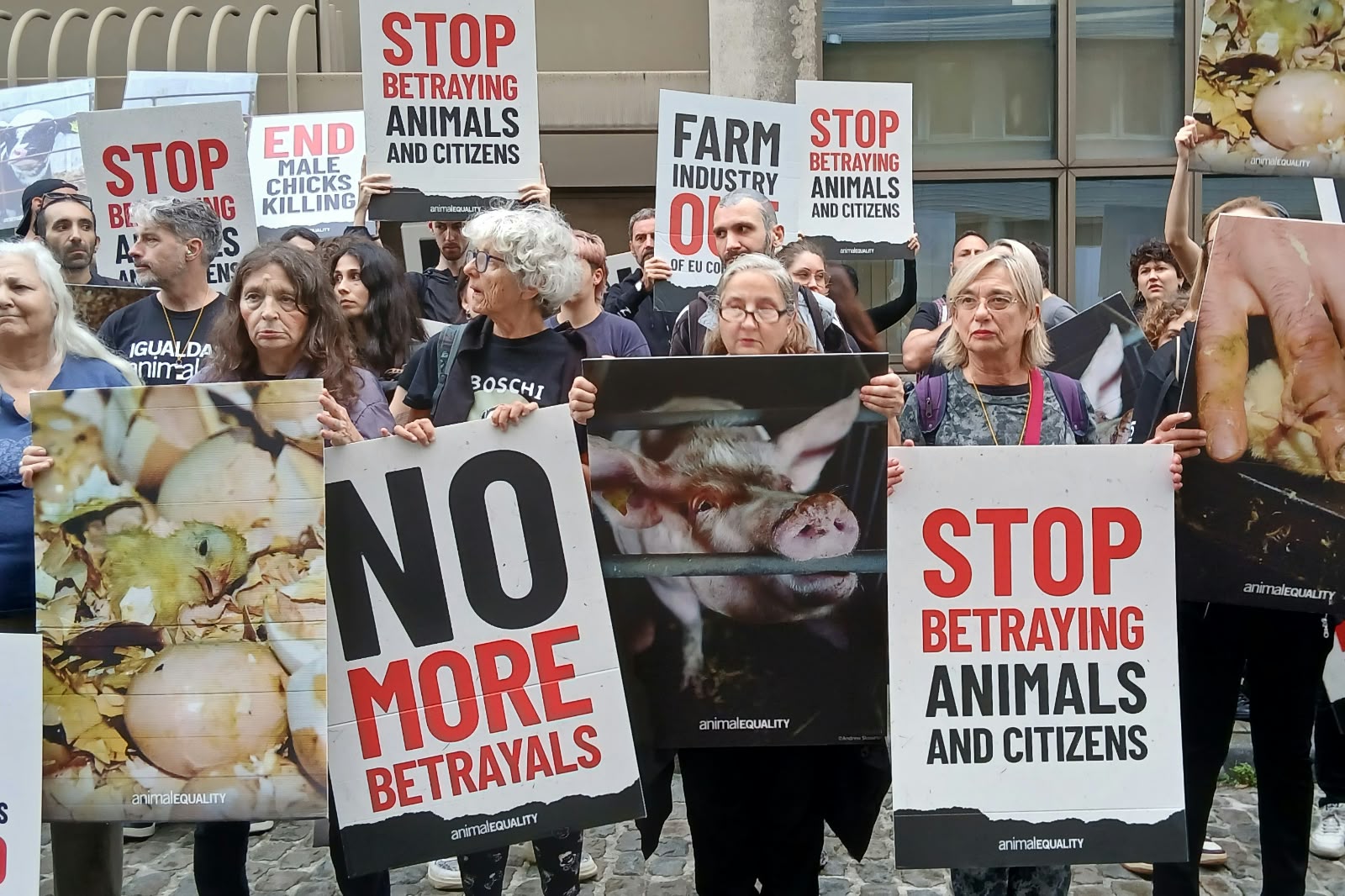
Several hundred animal rights activists gathered at the EU’s office for health and food safety in Brussels on Monday (28 September) to encourage a ban on poultry cages and on the killing of male chicks.
The commission’s livestock strategy had committed in July to proposing legislation to outlaw the two practices by the end of 2026, with similar legislation on pig welfare expected to follow by mid-2027.
The legislation stems from a European Citizens’ Initiative (ECI) signed by 1.4 million people in 2021 to ‘End the Cage Age’. A vast majority of MEPs also subsequently voted to endorse the transition to improved animal welfare.
And while the commission had originally promised to table a proposal by 2024, this was derailed by farming lobbies and the deadline elapsed.
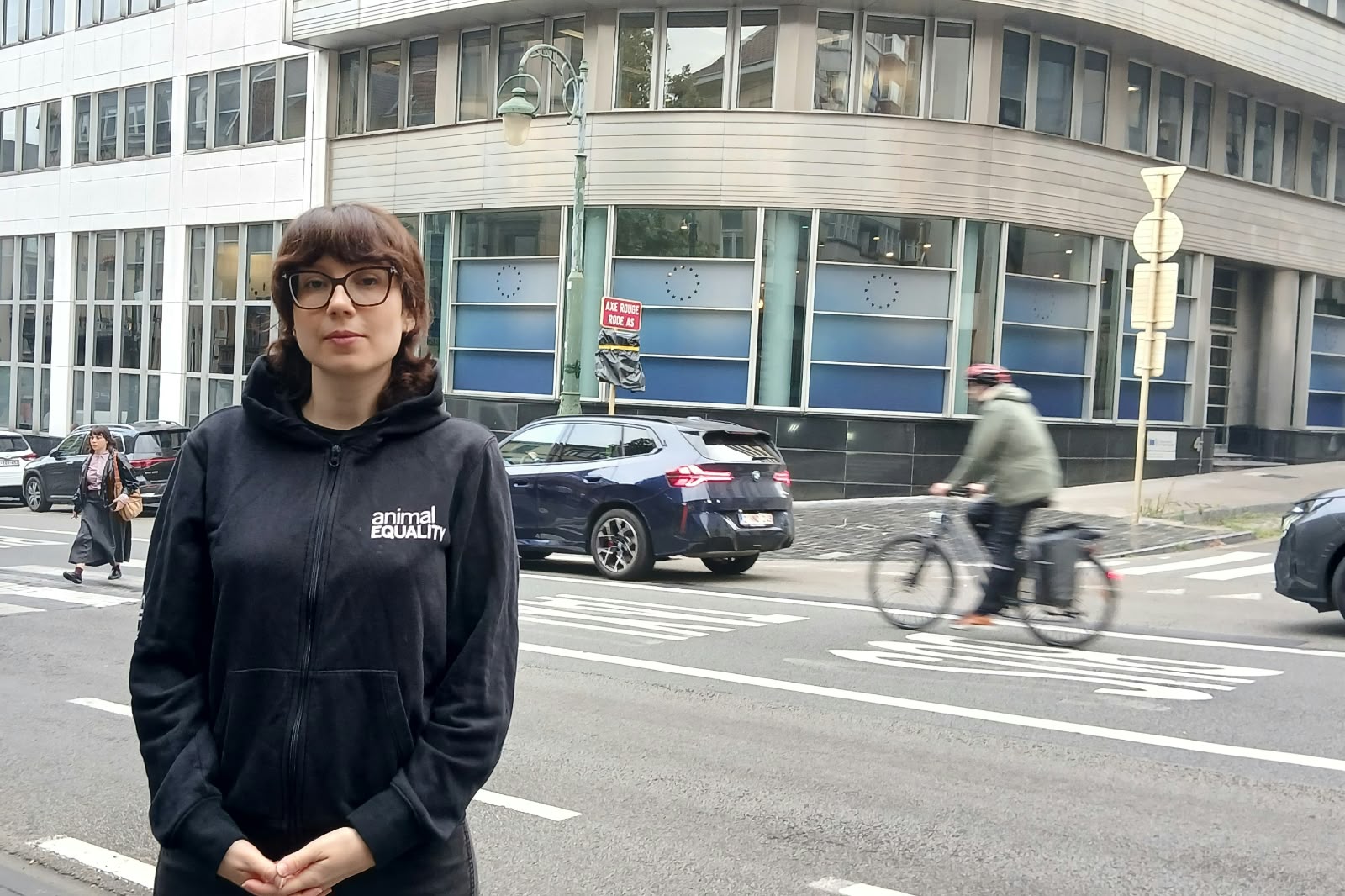
“We are here [at Monday’s protest in Brussels] because the EU has been delaying meaningful reforms for animals for years,” said Ombretta Alessandrini from Animal Equality, which organised the rally.
Ombretta Alessandrini is campaign manager at Animal Equality. (Source: EUobserver)
“Our democratic ask needs to be respected. We feel betrayed by the EU’s broken promises and we want the commission to do what they say,” she told EUobserver.
Animal Equality has also joined legal action against the commission over its broken promises, in a case examined at the European Court of Justice in March.
The commission is legally obliged to respond to a citizens’ initiative once it reaches 1m or more signatures.
This article continues, but the full version is available only to EUobserver.com subscribers. Visit account.euobserver.com/membership
EU governments are deadlocked on how to proceed with a major overhaul to the bloc’s pesticides rules following a sustained pushback from scientists and countries outside the EU.
The revisions to the pesticides regulation form part of a food-and-feed ‘Omnibus’ law proposed by the EU Commission last December and are primarily aimed at reducing bureaucracy for European farmers by making it easier to authorise and use pesticides.
But there are deep divisions among member states about some proposals, particularly the revised thresholds on maximum residue levels of chemicals.
Earlier this week, the Irish EU council presidency abandoned plans to get diplomats to adopt a formal negotiating position on the file.
For their part, a group of more than 500 scientists signed an open letter to the commission on 16 September demanding a pause on the file pending “an independent assessment, whether carried out by parliament’s own research service or by an equivalent independent body.”
“Given the scale of the changes under consideration, and in a broader context in which the scientific community is increasingly called upon to warn of cumulative environmental and health pressures, we believe that responsible policymaking calls for caution rather than speed,” the letter says.
Under the proposal, residue limits for certain pesticides banned in the EU could be lowered to the lowest level laboratories can reliably detect, even when those substances remain legally-used in exporting countries.
In order to avoid leaving any residue on fruits and vegetables, producers would essentially have to stop using the substance in question.
This article continues, but the full version is available only to EUobserver.com subscribers. Visit account.euobserver.com/membership
Earlier this year I reported how President Trump issued an executive order mandating domestic production of glyphosate-based herbicides for use in agriculture and the military.
Now it is being reported that Trump’s Environmental Protection Agency (EPA) has allowed Bayer/Monsanto to choose their own regulations they are willing to abide by for another destructive herbicide, dicamba.
US environment agency let Bayer pick regulations for destructive weedkiller, documents show
Environmental Protection Agency asked firm to choose rules it wanted for dicamba, then put the choices in a proposed federal rule
The EPA allowed pesticide giant Bayer to pick from a menu of regulation options for the controversial and destructive weedkiller dicamba, newly released internal agency documents show.
The documents provide an unusually clear look into the process of developing pesticide regulations, which is typically done out of public view.
It shows in detail how the EPA asked Bayer which regulations it wanted, received a response from Bayer, then put Bayer’s choices into a proposed federal rule.
Dicamba is drift prone and kills vegetation and crops for miles around fields where it is sprayed, and is linked to liver cancer and Non-Hodgkin lymphoma.
Courts have twice ordered it off the market because of its drift problems, but the EPA has re-approved it.
If you want to learn more about the herbicide dicamba, here are a couple of articles about the history of the use of this dangerous herbicide in the U.S. that the EPA continues to allow:
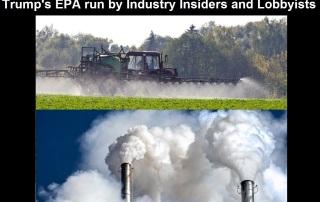
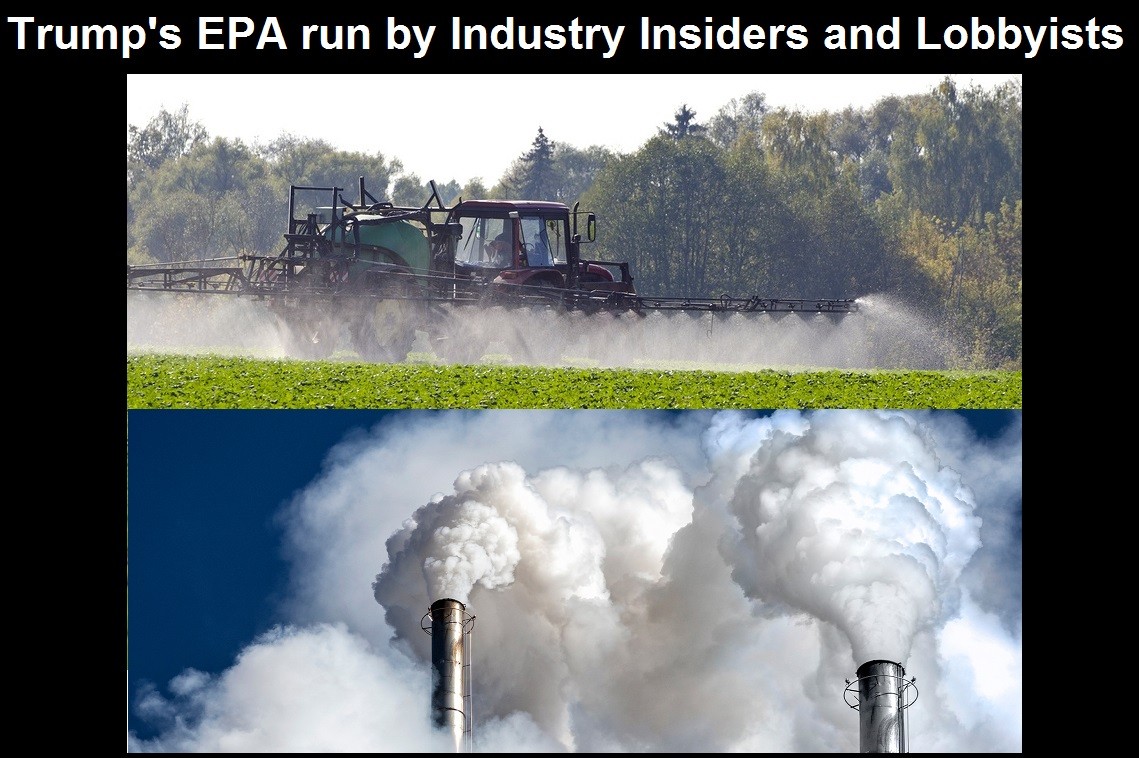
It has been well documented that Trump’s EPA in his second term is run by former industry insiders and lobbyists from the very industry it is supposed to regulate. See:
Not only are they seeking to give legal protection to Bayer for their dangerous herbicides which have been ruled in the U.S. Courts to cause cancer and other diseases, they have also removed regulations for power plants that pollute the air so that data centers can be built very quickly to fuel the energy needed for more AI development.
These actions are being sold to the Conservative MAGA movement as necessary to roll back “climate change” regulations by “the liberals” which they claim are based on bad science, and hamper industry development.
But these actions have nothing to do with fighting back against the “climate change agenda”, and have everything to do with enriching the pockets of Trump’s friends in the industry who do not want to be regulated anymore for purely economic reasons that have nothing to do with the environment or the health of the U.S. population.
Americans from both sides of the political spectrum are now opposing things like these data center developments, so don’t fall for the partisan political games!
It is getting more and more dangerous to purchase food from the big box retailers stocking commodity food. Your beef could be from Argentina from shipments that were rejected by China (source), and much of the food you purchase could be contaminated with chemicals that have been banned in most other countries and have been legally shown to cause disease in a court of law.
Your government here in the U.S. is NOT looking out for you! So you need to become a health-conscious consumer, and try to purchase food where you know where it came from and how it was produced.
My own online story, Healthy Traditions, provides options for food produced by small-scale family farmers where we have thoroughly tested it.
We are sourcing more and more of our food from outside the U.S., due to necessity. Starting this year, 2026, we are only purchasing grains from Italy, where their standards for food are far superior to the USDA national organics program.
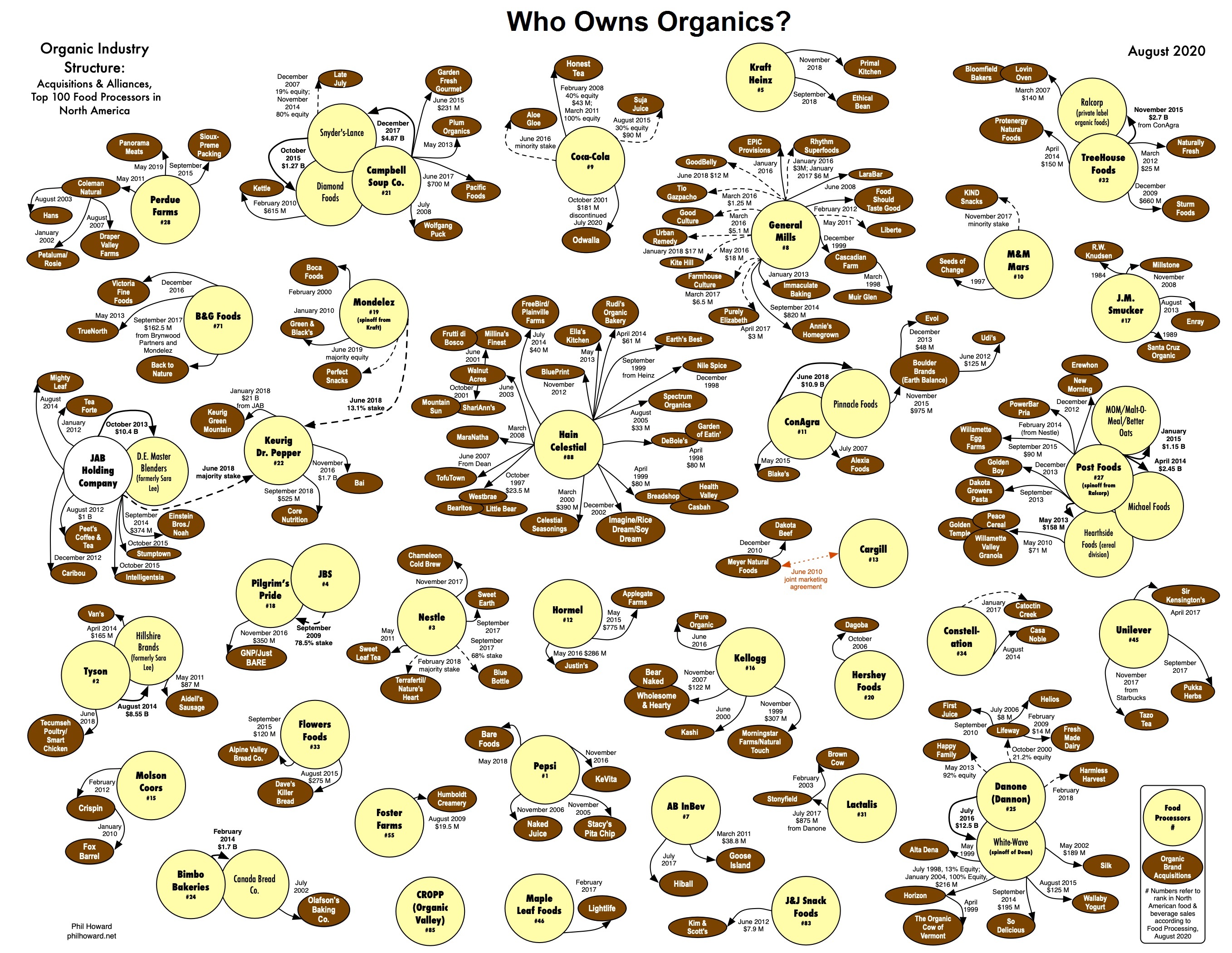
We stopped participating in the USDA organic program years ago, due to the influence of Big Food that has watered down the standards and still allows trace amounts of herbicides and pesticides. See:
We have consistently tested products in the U.S. that claim to be “organic” or “GMO free” and have routinely found these products contaminated with dangerous herbicides like glyphosate, and GMO DNA.
And they are not even violating USDA organic standards.
In Europe, and especially in Italy, if someone makes a claim to having a European organic certification and then those products are tested to be contaminated, they lose their license to sell, and face criminal charges, unlike the U.S.
Americans have no one to blame for the sad state of our food and food production here in the U.S., however, except themselves, because the American consumer still has the largest voice and the most influence when it comes to food standards.
But people buy in to the partisan political debates and falsely think they can just vote the right person into power to solve their problems.
The most effective way, however, to bring about change, is by voting with your dollars and where you spend your money.
This is the only thing that will affect change, but it takes a lot more effort to seek out ethical food producers in your community and support them instead. It is just so much easier to stop at the Big Box grocery stores where you can get all your shopping done in minutes.
Convenience has a price: and it may cost you your life.
This article was written by Human Superior Intelligence (HSI)
See Also:
Understand the Times We are Currently Living Through
Des sirènes hurlantes, des embouteillages monstres étendus sur des kilomètres, des forces de l'ordre déployées dans les rues pour dissuader émeutes, manifestations et pillages tandis que quatorze millions d'habitants évacuent Téhéran et sa banlieue. Ces scènes dignes d'un film dystopique auraient pu avoir lieu. Ce n'est pas la menace du président américain Donald Trump de faire disparaître la civilisation iranienne en une nuit (lire « Une journée comme une autre ») qui en aurait été la cause, mais un ordre des autorités de la République islamique. En novembre 2025, les pluies d'automne ne sont pas au rendez-vous. L'Iran connaît la pire sécheresse depuis un siècle. Les cinq barrages qui approvisionnent la capitale sont presque à sec et les coupures d'eau sont quotidiennes, surtout la nuit. La tension est identique dans la ville de Machhad (nord-est), que quatre barrages environnants sont bien en peine d'alimenter. Le président Massoud Pezechkian met alors en garde ses compatriotes. Si la situation ne s'améliore pas, il faudra évacuer la mégapole et ses environs (1). Pour le long terme, il évoque même un possible transfert définitif de la capitale surpeuplée vers la région de Makran, près du détroit d'Ormuz. Un projet jugé irréalisable par nombre d'experts mais dont l'évocation frappe tout de même les esprits, tant elle conforte l'idée d'un choc environnemental majeur à venir.
Des villages entiers sont privés d'eau potable, l'exode rural s'aggrave, les équilibres sociaux et territoriaux sont bouleversés
La hausse, toute relative, de la pluviométrie au premier semestre 2026 a conjuré le scénario de l'évacuation forcée, mais le problème de fond demeure. Trente-cinq millions d'Iraniens sont confrontés quotidiennement à la pénurie d'eau. Les réserves totales ont diminué de 211 kilomètres cubes entre 2003 et 2019 — l'équivalent de deux années de consommation nationale —, tandis que le niveau moyen des nappes souterraines a fortement baissé (2). Dans certaines régions, notamment dans l'Est et dans le Sud, l'eau potable n'est accessible aux habitants que via des camions-citernes payants, ce qui provoque de longues files d'attente. Une centaine de zones humides ont disparu, et l'assèchement des rivières contribue à l'aggravation des tempêtes de poussière qui sévissent à partir du printemps.
Contrairement au discours officiel, la sécheresse et le réchauffement climatique, présentés comme une fatalité, ne sont pas les seuls responsables de cette crise. C'est aussi, et avant tout, une affaire de mauvaise gestion et de politiques environnementales erratiques depuis les années 1970. « La pénurie d'eau en Iran, particulièrement à Téhéran, n'est pas un phénomène passager ou le résultat d'une seule année de sécheresse, écrit ainsi le très critique quotidien économique de Téhéran Jahan-e Sanat. C'est le signe d'un déséquilibre profond et structurel du système national d'approvisionnement et de consommation » (17 février 2026).
Autrement dit, l'Iran manque d'une politique centralisée et cohérente de l'eau qui arbitrerait entre les besoins. Les efforts consentis en faveur de l'agriculture — laquelle représente 90 % de la consommation des ressources hydriques — sont pointés du doigt. Afin de procurer des revenus décents aux populations rurales, mais aussi pour garantir la sécurité alimentaire d'un pays exposé aux sanctions internationales, les autorités ont multiplié les mesures pour doper la production agricole. Des dizaines de barrages et de retenues plus modestes ont été construits un peu partout, le plus souvent sans planification ni études préalables, déplaçant des populations et affectant les écosystèmes. Faute d'entretien, nombre de ces structures sont délabrées ou connaissent des taux d'envasement élevés. Le gouvernement est tout aussi incapable de contrôler la consommation d'eau des sites industriels, surtout quand ils sont liés à des dignitaires du régime ou à la galaxie interlope des gardiens de la révolution.
Dans le même temps, les forages illégaux se multiplient et contribuent à la diminution des ressources. Un comble quand on sait que l'Iran s'enorgueillit de techniques plurimillénaires de gestion rationnelle de l'eau souterraine — tels les fameux qanat ou galeries. La corruption et le népotisme endémiques ont ainsi engendré des passe-droits qui génèrent le gaspillage et des inégalités d'accès. Tout le contraire de la traditionnelle « justice de l'eau » garantissant sa répartition équitable.
« Des groupes paraétatiques et paramilitaires contrôlent les ressources naturelles, notamment l'eau, à travers la construction et la gestion de barrages », confirme la chercheuse Dorna Javan (3). Tout cela a un coût. Des villages entiers sont privés d'eau potable, l'exode rural s'aggrave, et ce sont les équilibres sociaux et territoriaux qui sont bouleversés.
Jusqu'à présent, le régime a minimisé, pour ne pas dire nié, l'importance des problèmes écologiques. La recherche sur ces thèmes est entravée, comme l'a montré la répression subie par les personnes qui ont lancé l'alerte, il y a plus de dix ans, concernant le brutal assèchement d'Ourmia, qui fut le plus grand lac du Proche-Orient et qui a quasiment disparu. Mais la réalité risque fort de rattraper un pouvoir de plus en plus contesté. On le sait, l'absence de libertés individuelles et politiques, la corruption, la crise économique, l'effondrement de la monnaie, les sanctions internationales et les attaques américano-israéliennes sont autant de dangers pour la pérennité du régime islamique. Mais, avec la crise de l'eau, c'est l'avenir d'un pays et de son peuple qui se joue.
(2) Peyman Saemian, Mohammad Tourian, Amir AghaKouchak, Kaveh Madani et Nico Sneuuw, « How much water did Iran lose over the last two decades ? », Journal of Hydrology : Regional Studies, vol. 41, Amsterdam, juin 2022.
Around 1590 BCE — more than 800 years before Rome was founded, and before Tutankhamun was even born — a small number of people in what is now southeastern Poland started eating a cereal that had never grown in their fields. It wasn’t a local crop, and it didn’t belong to any plant known elsewhere […]
The European Commission has adopted a Communication on a new Strategic Approach to Research and Innovation for competitive, resilient and sustainable agriculture, forestry, rural areas and food systems. This strategic document brings together two closely interlinked frameworks, to guide future research, innovation, deployment and uptake across the entire agri-food sector. These frameworks are AgRI 2040, focusing on agriculture, forestry and rural areas, and Food 2040, focusing on food systems, including fisheries and aquaculture.
The Communication aims to strengthen the agri-food innovation ecosystem from early-stage research and innovation to deployment and market uptake, and to accelerate the uptake of knowledge and innovation across the entire sector. It puts greater emphasis on users’ challenges and needs and on the delivery of real impact on the ground by bringing together multiple actors including end users, researchers and businesses, to co-create, test and demonstrate solutions in real-world settings. This will also help startups, scaleups and SMEs to move promising innovations closer to the market.
The Communication will help turn Europe’s scientific excellence into practical solutions for farmers, foresters, rural communities, researchers, food businesses and consumers, for a more competitive, resilient and sustainable agri-food sector. It contributes to the objectives of the Vision for Agriculture and Food and the Strategy for European Life Sciences and complements the EU Bioeconomy Strategy by supporting innovation and sustainable value creation.
By developing the AgRI 2040 and Food 2040 frameworks, a common strategic approach for EU-funded R&I that enables competitive, sustainable, resilient and fair agri-food systems will be ensured. Both frameworks will be deployed under Horizon Europe 2028-2034 and relevant parts of the European Competitiveness Fund.
Agriculture and Food Commissioner Christophe Hansen said:
"Research and innovation can make a real difference to how we farm and manage our rural areas: from crops that can better withstand drought and extreme temperatures, to faster ways of detecting plant diseases, more sustainable crop protection and digital tools for smarter use of resources like water. Our task is to make sure these ideas do not stay in the laboratory, but are tested, adapted to local conditions and turned into practical solutions that can be used and scaled up. In this way, research can have a real impact on the ground, helping farmers and foresters respond to new challenges and build a more competitive, resilient and sustainable agri-food sector."
Startups, Research and Innovation Commissioner Ekaterina Zaharieva said:
"Europe is leading in science and research, but too many breakthrough solutions still struggle to reach consumers and markets. The ultimate goal is to help innovators, start-ups and businesses turn bold ideas into innovative solutions that boost competitiveness, strengthen food security, food safety, sustainability and resilience, and deliver real benefits for people and the planet. Europe can lead with confidence, unity and ambition."
The next major milestone will be the EU AgRI 2040 Conference – “Future-proofing EU Agri-Food through research and innovation”, taking place in Brussels on 24 and 25 September. Christophe Hansen, Commissioner for Agriculture and Food, and Ekaterina Zaharieva, Commissioner for Startups, Research and Innovation, will open the conference, which will bring together key stakeholders from across the agri-food sector and the research and innovation community to contribute to shaping future EU research and innovation priorities.
Background
Vision for Agriculture and Food and Life Sciences Strategy
The new Strategic Approach brings the Vision for Agriculture and Food and the Strategy forEuropean Life Sciences together to cover agriculture, forestry, rural areas and food systems, providing long-term policy direction without prejudging the next EU budget negotiations.
The agri-food sector is strategically important for Europe’s food safety and security, jobs and skills, competitiveness and strategic autonomy. It faces increasing challenges from climate change, resource constraints, geopolitical instability, labour and skills shortages, changing consumer attitudes and global competition.
AgRI 2040 and Food 2040
AgRI 2040 will focus on agriculture, forestry and rural areas. Its eight preliminary areas of action will cover soils and agri-ecosystems, cropping and livestock systems, the bioeconomy, multifunctional forests, rural areas and stronger agri-food value chains, as well as digitalisation, artificial intelligence and robotics.
Food 2040 will focus on food systems, including fisheries and aquaculture. Its six areas of action will address place-based food systems; healthy and sustainable diets; resource efficiency and zero pollution in food systems; food environments and consumer empowerment; scaling innovations, business models and fair food systems solutions; and aquatic food.
The two frameworks are guided by six shared priorities: competitiveness, startups and scaleups; food security, resilience and preparedness; natural resources and circularity; food and feed safety, nutrition and health; fairness; and global cooperation. Common enablers include governance, technologies, and territories and communities.
Evidence and stakeholder engagement
The Commission Staff Working Document accompanying this Communication provides the evidence base for the new approach. It assesses the achievements, investments, results and implementation experience of the 2016 strategic approach to agricultural research and innovation, and the Food 2030 framework.
Stakeholder consultations highlighted the need for stronger links between research, deployment and market uptake, better alignment with users’ needs, improved monitoring and governance, and greater attention to competitiveness, resilience, sustainability, strategic autonomy, health, circularity, fairness and public trust. Their engagement will continue as AgRI 2040 and Food 2040 are implemented.
Future-proofing EU agri-food through research & innovation
Wendell Berry, who died this week at the age of 92, published dozens of books of poetry, fiction, and essays, any of which might make for meaningful connection with Berry’s ideas about place and how we engage with it. But this conversation with Amanda Petrusich, which bloomed from a personal correspondence between the two writers, feels like an especially vital tribute to Berry. Here, his decades of thought on sustainability and its human limits find gloriously vivid expression; after all, place shapes our voices, too. Throughout, Berry is luminous and pithy and discerning: “We’re alive only in some place in particular.” “Every generation is a bridge between something that’s past and something that’s coming.” “Our conversation is worth more right now than either one of us thinking separately.” The last is a perfect sentiment for any dialogue, including those on the page.
Part of manners used to be to say to somebody you just met, “Where you from?” And I quit asking it, because so many people say they’re from everywhere or nowhere. I’ll tell you a little bit of my history that may be pertinent. My mother was born and grew up in Port Royal, my father about four miles south. Both of their families had lived here since about the beginning of the nineteenth century. When I came to teach at the University of Kentucky, Tanya and I thought we would live in Lexington, and we would have “a country place.” And we hardly had laid our hands to this house, which needed some preservation work, when we realized, we’re not going to have a country place; we’re going to live here. And so we have. We bought this home and twelve acres in the fall of 1964, and moved in, in the midst of renovations, in the summer of 1965. That put our children here, and now we’ve got grandchildren who are at home here. That comes from a decision that we made to be here, and to be here permanently.
The European Commission has approved a €20 million state aid scheme for agricultural and fishing companies in the Italian region of Friuli Venezia Giulia that are facing increased fuel and fertiliser prices due to the Middle East crisis. The scheme was approved under the Middle East Crisis Temporary State Aid Framework (METSAF) adopted by the Commission on 29 April 2026.
The scheme, which will run until 31 December 2026, aims at mitigating the impact of the increase in agricultural fuel and fertiliser prices, as well as in fishery and aquaculture fuel prices. The aid will take the form of direct grants and subsidised loans. It will be determined on the basis of the size of land used for the primary production of agricultural products, and on the basis of estimates of fuel consumption in the primary production of fishery and aquaculture products, capped to €50,000 per beneficiary. The aid is paid by the autonomous region of Friuli Venezia Giulia.
The Commission assessed the scheme under EU state aid rules, in particularArticle 107(3)(c) of the Treaty on the Functioning of the EU, which enables Member States to support the development of certain economic activities subject to certain conditions, as well as Sections 1 and 2.1 of the METSAF. The Commission found that the scheme is in line with the conditions set out in the METSAF. In particular, aid will be granted based on a scheme with a clear estimated budget and will be provided to temporarily support the development of companies active in primary production of agricultural products. The Commission concluded that the scheme is necessary, appropriate and proportionateto facilitate the development of an economic activity and does not adversely affect trading conditions to an extent contrary to the common interest. On this basis, the Commission approved the Italian regional scheme under EU State aid rules.
Heat, drought and water scarcity could fundamentally change agriculture in parts of Europe, with some crops no longer viable in the driest areas of the Mediterranean, European Environment Agency (EEA) Executive Director Leena Ylä-Mononen said.
“Some crops will not grow anymore, especially in the most arid Mediterranean, southern European area,” Ylä-Mononen said in an interview with correspondents of the European Newsroom (enr) published Tuesday. More intensive irrigation would not necessarily provide a solution because of water possible water scarcity. Some land currently used for farming might therefore no longer be suitable for agriculture in some regions in Europe, she said.
This summer gave the “clearest possible illustration” of what Europe is facing, she told the enr. “Severe droughts have disrupted agriculture, our transport, and even energy infrastructure. And we have seen intense heatwaves across many parts of Europe that have had huge impacts on the infrastructure, health and well-being of people.” Harvests were coming in late and smaller, “so we may have even food security issues this winter,” Ylä-Mononen warned.
The effects are spreading beyond Europe’s traditional dry zones, according to Ylä-Mononen. She pointed to drought in Ukraine and Hungary, as well as unusually dry conditions in the United Kingdom and her home country, Finland. Although northern Europe could become suitable for some additional crops, it was unlikely to compensate for recurring losses caused by drought, floods and extreme weather elsewhere, she added.
Ylä-Mononen urged European politicians to look beyond the next election and plan for the climate risks already foreseeable over the next decade. “This kind of short-termism is not going to help us,” she said, arguing that infrastructure and agricultural investment decisions needed to take account of ten-, 20- and 50-year time horizons.
The warning comes as the EU’s Joint Research Centre reports drought conditions across half of the EU and the United Kingdom, with low river flows and deteriorating conditions for some crops in several parts of Europe.
In an assessment released in March – ahead of this year’s summer heatwaves – the EEA said “at present, drought (54%), heavy rain (21%), frost (16%), and hail (9%) together account for 80% of agricultural losses in the EU.”
Ylä-Mononen said Europe could no longer treat climate adaptation as an optional policy to be addressed when budgets allow. Heat and drought are already affecting agriculture, water resources, transport and energy systems, and some damage could have been avoided through earlier investment, she said.
The EEA chief stressed that adaptation must complement, not replace, mitigation: Europe needs both to reduce emissions and to prepare for climate impacts that will continue even under ambitious emissions cuts. But the costs of both action and inaction are rising.
Estimates of adaptation costs in the sectors transport, energy and agriculture cited by the EEA range from 53 billion Euro to 137 billion Euro per year until 2050, depending on the scenario of temperature rise above pre-industrial levels.
The European Environment Agency (EEA) is the EU agency that provides independent environmental data, assessments and analysis to support policymaking in Europe.

 Login