❌

Reading view

Badenoch Bounce: Tories Leapfrog Reform in Latest Poll to Move Within a Point of Labour

The Conservatives have jumped three points in the latest poll following Kemi Badenoch's conference tax pledges, leapfrogging Reform and coming within a point of Labour as Burnham sees his lead slip by three points.

The post Badenoch Bounce: Tories Leapfrog Reform in Latest Poll to Move Within a Point of Labour appeared first on The Daily Sceptic.

  •  

Who Will the Next Party Leaders Be?

Amid renewed speculation about an early General Election, now is the time to look at whom to put money on as the next party leaders, says Mark Littlewood in his latest Political Betting column for the Daily Sceptic.

The post Who Will the Next Party Leaders Be? appeared first on The Daily Sceptic.

  •  
  •  

Party Leaders and Daily Sceptic Readers Hate the Idea – But Will Swing Voters Force the Right to Unite?

The Tories, Reform and Restore can't stand each other, but letting the Left win would be daft, argues Nick Rendell. Could fed-up swing voters force the Right's warring tribes to stop squabbling and get their act together?

The post Party Leaders and Daily Sceptic Readers Hate the Idea – But Will Swing Voters Force the Right to Unite? appeared first on The Daily Sceptic.

  •  

Humiliated Polanski on Brink of the Sack After Losing By-Election as He Faces “Zionism is Racism” Backlash

Zack Polanski is on the brink of the sack as Greens leader today after being humiliatingly beaten in the Holborn and St Pancras by-election, trailing more than 3,000 votes behind Labour's Sagal Abdi-Wali.

The post Humiliated Polanski on Brink of the Sack After Losing By-Election as He Faces “Zionism is Racism” Backlash appeared first on The Daily Sceptic.

  •  

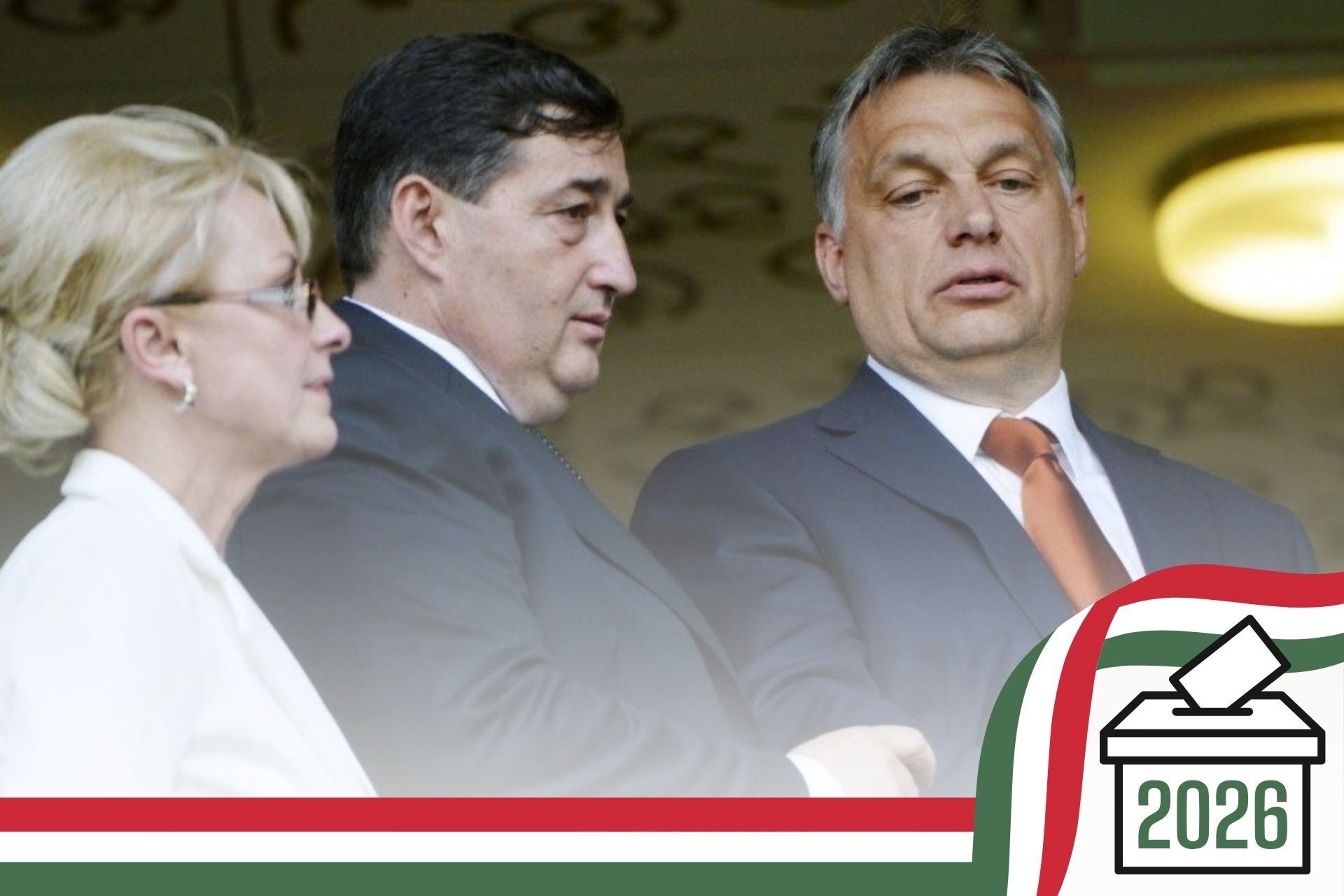
Orbán channelled public money into propaganda through Hungarian billionaire Lőrinc Mészáros (Day 150 of the Tisza government)

More than a year ago, we launched our Hungary Briefing, a weekly round-up of the election campaign. Since the historic vote in April to remove Viktor Orbán’s Fidesz government, the series has followed the new Tisza administration and its first moves in office. This week’s topics:

  • How Viktor Orbán used Lőrinc Mészáros.
  • According to Orbán, they deliberately did not give money to the liberals.
  • Orbán’s brother also has a gold-convoy case.
  • A wealth tax is coming.
  • Support for Hungarian media beyond the borders.
  • This week’s opinion polls: slight drop for Tisza, strong support for the Olympics

How Viktor Orbán used Lőrinc Mészáros.

The investigative outlet Direkt36 revealed important details about the links between Lőrinc Mészáros’s companies and Orbán-era propaganda in a new series of articles. The investigators obtained internal documents from a company called V-Híd, which showed that the firm belonging to the Mészáros portfolio paid out several billion forints between 2022 and 2026 to influencers in the Megafon network.

The oligarch was not stingy.

V-Híd is one of the most important and most profitable companies in the Mészáros empire, primarily engaged in railway construction. It owes its success almost entirely to the fact that it won huge public procurement contracts under Fidesz governments.

In recent years, V-Híd has become the dominant player in railway construction in Hungary, pushing out its competitors. Enormous dividends have been taken out of the company by the Mészáros clan (most recently, despite weaker results, 10 billion forints, or around €25m).

The Direkt36 article also reveals that Orbán-era propaganda was financed directly from the company’s revenue. Donation contracts were leaked showing that V-Híd regularly sent hundreds of millions of forints as “gifts” to Megafon. In 2024 alone, they sent 3 billion forints (around €7.6m at the time) in support to the influencer network.

The path of public money to propaganda

The formula was very simple: through public procurement, the government stuffed the Mészáros group’s companies with public money, and part of the revenue generated was channelled to the propaganda machine.

From 2020, Megafon was a key communication channel for Fidesz, where well-known influencers conveyed the party’s messages and huge sums were spent on online advertising.

The money won through public tenders did not only go towards financing propaganda. Direkt36 also uncovered luxury perks V-Híd and other Mészáros companies offered their staff.

Many would envy V-Híd’s team-building events. In 2024, nine employees of the company travelled by private jet to a château in south-western France, at a cost 62 million forints, or about €150,000, including €500 spent on cigars.

According to Direkt36, V-Híd has spent more than 1 billion forints in total – roughly €2.5m – on foreign trips in recent years.

On one trip to Tajikistan, V-Híd paid out €46,000 – the Central Asian country is a popular destination for exotic hunting excursions, and Mészáros also took part in such a hunting tour.

The Mészáros clan were also keen on yachting and spent money on private jets. One private jet linked to the Mészáros family was used at least once by Orbán himself.

The money did not go to the liberals

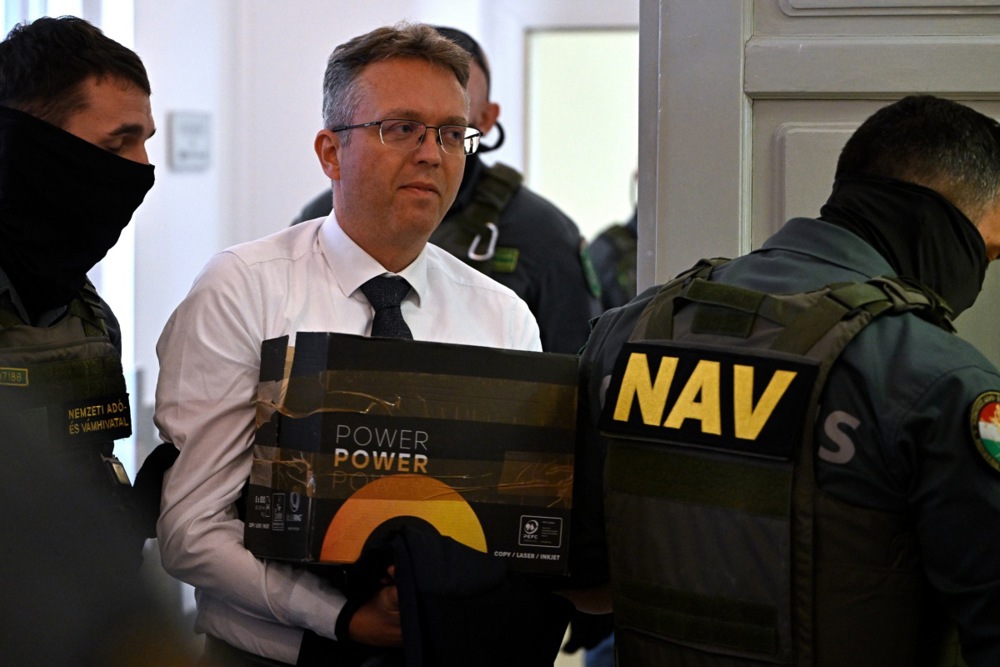
Fidesz has tied itself in knots after the arrest of culture minister Balázs Hankó. Hankó is suspected of aggravated breach of fiduciary duty causing particularly significant financial loss, committed in a criminal conspiracy, and the court has placed him in pre-trial detention.

The Hankó case blew up shortly after the elections, when activist Áron Molnár revealed that the National Cultural Fund had disbursed more than 17 billion forints (around €44m) to artists close to Fidesz for the purposes of the party’s campaign.

After a few months of investigation, the authorities reached the former minister, now a member of parliament, who said the allocation of grants had been lawful and that a politically-motivated show trial had been launched against him.

Shortly before he was taken into custody, Hankó told HírTV, a Fidesz-friendly channel, that being a Fidesz member or linked to Fidesz had never been a precondition for receiving NCA funding.

Orbán, however, explained the Hankó case differently in a speech at a closed-door event, from which former state secretary Péter Takács shared a clip. According to Orbán, Hankó was the only culture minister since 2010 who did not give support to the “liberals in Budapest”, and that is why, in his view, he was locked up.

This article continues, but the full version is available only to EUobserver.com subscribers. Visit account.euobserver.com/membership

  •  

Le Pen Sets Out €140bn Spending-Cut Plan as French Debt Dominates 2027 Race

Marine Le Pen has set out plans to cut French public spending by €140 billion by 2032, reduce the deficit and impose a constitutional constraint on future borrowing, placing France’s deteriorating public finances at the centre of the campaign for the 2027 presidential election.

Marine Le Pen has presented a five-year fiscal programme under which a National Rally administration would seek €140 billion in net savings by 2032, restore France’s primary budget balance within 18 months and bring the headline deficit back below the European Union’s three per cent threshold by 2030.

The proposals, presented on Tuesday as Le Pen outlined the financial trajectory she would pursue during a presidential term, come as France faces rising borrowing costs and a public debt ratio approaching 120 per cent of GDP.

The scale of the problem was underlined on the same day by France’s Directorate-General of the Treasury. Its latest report on public debt projects the debt ratio at 119.3 per cent of GDP this year before rising to 121.7 per cent in 2027. Debt stood at 115.7 per cent at the end of 2025.

EU Today has already reported that French borrowing costs and concerns over the sustainability of the country’s finances have begun to weigh on the euro and widen the gap between French and German government bond yields.

Le Pen’s programme is therefore aimed not only at French voters but at financial markets increasingly focused on whether Paris can prevent debt from continuing to rise.

According to the proposals outlined on Tuesday, spending reductions would be concentrated heavily in the first three years of a Le Pen presidency. She would also seek to introduce what she calls a constitutional “golden rule”, requiring successive governments to reduce the budget deficit each year.

The measure would be put to a referendum and is intended to make deficit reduction binding beyond an individual government’s annual budget decisions.

Le Pen has also proposed reducing France’s public debt to around 112 per cent of GDP by 2032. That would reverse the trajectory currently expected by the French government, although the National Rally’s assumptions would depend on its ability to deliver the proposed savings and on economic growth during the next presidential term.

Among the most politically significant proposals is a plan to restrict France’s net contribution to the EU budget to €5 billion. The party argues that some European spending should instead be financed through harmonised taxes on products such as tobacco and alcohol.

Le Pen also expects substantial savings from tighter immigration controls and the introduction of the National Rally’s proposed “national preference” rules for access to parts of the welfare system. Her programme estimates that measures connected with immigration could eventually produce savings of as much as €29 billion annually.

Other elements include changes to pension policy, reductions in corporate and energy taxation, measures against VAT fraud, the abolition of more than 120 taxes and a reduction in the number of state agencies.

The programme marks an attempt by Le Pen to make fiscal policy a central part of a campaign that has until now been dominated largely by immigration, security and questions surrounding France’s political fragmentation.

The timing is significant. Prime Minister Sébastien Lecornu’s government has itself introduced a difficult fiscal consolidation programme. The 2027 budget presented by the Finance Ministry envisages €54 billion in measures to improve the public finances, including €43 billion contained directly in the state and social-security budgets.

The government expects the deficit to fall from 5.4 per cent of GDP in 2026 to five per cent next year. It forecasts growth of only 0.5 per cent this year before a recovery to one per cent in 2027.

The debt burden is becoming increasingly costly. Interest payments are expected to reach €91.2 billion in 2027, up from €79.2 billion this year, according to the Finance Ministry. By 2030, total public-sector interest costs are projected to reach 3.7 per cent of GDP.

That gives the presidential campaign an economic dimension that is difficult to separate from France’s relationship with Brussels. Paris remains subject to EU fiscal rules requiring a gradual reduction in its deficit, while any attempt to reduce the French contribution to the EU budget would require negotiations with the other member states.

Le Pen enters that debate from a strong electoral position. Recent polling examined by EU Today has placed her ahead in first-round scenarios for 2027, although the final field remains unsettled. EU Today reported in September that Le Pen was polling between 33 and 36 per cent depending on her opponents.

Her latest intervention shifts part of the campaign onto terrain traditionally associated with the centre-right: public spending, debt and the credibility of France’s finances.

With the government attempting to secure parliamentary support for its own austerity measures and French borrowing costs under closer scrutiny, the question of how the country pays for the state is now moving towards the centre of the contest to succeed Emmanuel Macron.

  •  

Sánchez Calls Snap Spanish Election After Housing Revolt and Parliamentary Defeat

Spanish Prime Minister Pedro Sánchez has called a general election for 29 November, bringing Spain to the polls months ahead of schedule after his minority government suffered a major parliamentary defeat over measures intended to tackle the country’s housing crisis.

Sánchez announced the dissolution of parliament on Monday, ending months of speculation over whether his increasingly difficult parliamentary position could force an election before the current legislature was due to expire in 2027.

In an institutional statement announcing the election, Sánchez acknowledged that his government had “made mistakes” and had not achieved everything it had set out to do.

He said problems remained particularly acute in inequality, public services and access to housing, arguing that further reforms required a larger parliamentary majority.

“To do more, we need to renew and expand people’s support,” Sánchez said. He called for a “much broader, progressive majority” capable of carrying the government’s programme through parliament.

The election will take place on Sunday, 29 November, rather than in 2027, when the current parliamentary term was due to end. Sánchez informed King Felipe VI before convening an extraordinary meeting of the Council of Ministers to dissolve the Cortes Generales.

Housing defeat brings crisis to a head

The immediate political backdrop to the decision was Friday’s rejection of two emergency housing decrees by the Congress of Deputies.

The government had approved the two decrees on 29 September in an attempt to address growing anger over rents and access to affordable housing.

The first contained measures to protect vulnerable households from eviction, increase the supply of affordable homes and restrict some forms of speculative property investment. It also proposed changes affecting tourist accommodation and purchases by investment funds.

The second concentrated on residential rental contracts, including provisions intended to prevent tenants from suddenly being forced into substantially more expensive agreements when existing leases expired.

Both measures were defeated. The first received 172 votes in favour and 178 against. The second was rejected by 184 votes to 166. The votes again demonstrated the difficulty facing a government whose survival has depended on agreements with several regional and nationalist parties.

Housing has developed into one of Spain’s most contentious domestic political issues as rents and property prices have increased sharply in Madrid, Barcelona and other major cities and tourist areas.

The dispute intensified following the eviction of 87-year-old Maricarmen Abascal from the Madrid home where she had lived for more than 70 years.

Abascal was removed from the property on 23 September following a dispute over the rent. Her previous monthly payment had been €500, while the owners initially sought €2,650 before reducing the demand to €1,650 — still above her pension income.

Images of the elderly woman being taken from the building on a stretcher prompted widespread public anger and helped turn her case into a symbol of Spain’s housing crisis.

Tens of thousands of demonstrators subsequently took to the streets of Madrid, Barcelona, Valencia and other cities demanding stronger protection for tenants and measures to curb rising housing costs.

Sánchez’s fragile parliamentary majority

The housing vote exposed once again the central weakness of the government formed after Spain’s inconclusive 2023 election.

The conservative People’s Party (PP) won the largest number of seats, but its leader Alberto Núñez Feijóo was unable to assemble a parliamentary majority.

Sánchez remained prime minister after securing support from Sumar and reaching agreements with Catalan and Basque parties. The arrangement allowed him to form another government but left individual pieces of legislation dependent on negotiations with parties whose positions frequently diverge.

The latest housing measures were opposed by the PP and Vox, while Catalan party Junts also voted against them.

The PP has argued that greater intervention in the rental market risks reducing the number of properties available by discouraging owners from renting them. Its housing policy has instead placed greater emphasis on increasing supply.

Sánchez’s government argues that intervention is necessary because housing costs have increasingly become disconnected from household incomes in the areas experiencing the greatest pressure.

The issue has also become increasingly relevant at European level. Housing affordability has moved higher up the EU political agenda as governments confront shortages in major cities, rising construction costs and the impact of short-term tourist accommodation.

EU Today has previously reported on the growing pressure on European governments to address housing affordability, an issue that is increasingly intersecting with debates over migration, tourism, urban development and the cost of living.

Eight years in power

Sánchez has served as prime minister since June 2018, when he replaced Mariano Rajoy after winning a parliamentary vote of no confidence.

His latest term has been complicated not only by parliamentary arithmetic but by investigations and corruption cases involving people connected with the Socialist Party, as well as disputes over migration and household costs.

The government has nevertheless pointed to Spain’s economic performance and employment figures as evidence that its policies are working. In his election announcement, Sánchez described Spain as the EU economy recording the strongest growth and employment creation.

Spain has also remained an important participant in wider European debates over Ukraine, defence expenditure and the future direction of the European Union, while Sánchez has frequently differed with some European partners over the pace of increases in military spending.

The coming campaign is therefore unlikely to remain centred solely on housing.

PP sees opportunity

Feijóo enters the campaign with the PP expected to emerge as the largest individual party according to most recent polling, but the question of whether it could govern will depend heavily on the performance of Vox.

A PP victory without an outright majority could leave Feijóo dependent on Vox to form a government, making the balance between the two parties one of the central questions of the campaign.

Sánchez, meanwhile, will attempt to rebuild the coalition of left-wing and regional voters that allowed him to remain in office after the 2023 election.

His decision effectively turns the parliamentary confrontation over housing into a national vote on his eight years in power.

“The time has come,” Sánchez said in Monday’s address, “for the Spanish people to decide what future you want for yourselves and for your country.”

Spain will now enter a compressed election campaign in which housing, the cost of living, migration, corruption allegations and the future composition of the government are likely to dominate.

The formal election process begins with the dissolution of parliament, with voters going to the polls on 29 November.

  •  

Betting Against Burnham

Labour may be enjoying a Burnham bounce, but Mark Littlewood still thinks the smart option is to bet against the Prime Minister winning the next General Election. He explains why in the Daily Sceptic.

The post Betting Against Burnham appeared first on The Daily Sceptic.

  •  

Latvia Votes as Russian Drone Threat and Ukraine War Shape Parliamentary Election

Latvians are voting for a new parliament on Saturday after an election campaign dominated by security, repeated drone incidents, support for Ukraine and mounting pressure on household finances.

Latvians went to the polls on Saturday, 3 October, to elect the country’s 100-seat Saeima in an election taking place against an unusually tense security backdrop on NATO’s eastern frontier.

Fourteen parties and electoral alliances are contesting the election, with 1,428 candidates seeking seats in parliament, according to Latvia’s Central Election Commission. Voting takes place across five constituencies — Riga, Vidzeme, Latgale, Kurzeme and Zemgale — with polling stations open until 20:00 local time.

Security has occupied a prominent place in the campaign after a series of drone incidents brought the consequences of Russia’s war against Ukraine directly into Latvian airspace.

Prime Minister Andris Kulbergs, who took office in May after the previous coalition collapsed during a political crisis over the handling of drone incursions, is seeking a new mandate for his centrist United List. EU Today reported at the time that Prime Minister Evika Siliņa resigned after her coalition fractured amid criticism of Latvia’s response to repeated unmanned aircraft incidents along the Russian border. The collapse followed a succession of drone-related security incidents.

Kulbergs has campaigned on continued support for Ukraine and stronger Latvian defences, including additional counter-drone capabilities. His party entered election day ahead in the opinion polls, although the fragmented political landscape means coalition negotiations are likely to determine the eventual composition of the government.

An SKDS poll conducted between 4 and 16 September put United List on 14.4 per cent. Sovereign Power/Alliance of Young Latvians followed on 9.4 per cent, while Latvia First stood on 9.2 per cent. The Progressives recorded 6.2 per cent and the National Alliance 5.6 per cent. When only voters who had decided how they intended to vote were counted, seven political forces were projected to cross the 5 per cent threshold for representation in parliament.

The survey also showed a substantial pool of undecided or disengaged voters shortly before polling day, leaving considerable uncertainty around the final distribution of seats.

Russia and the war in neighbouring Ukraine have also produced sharper divisions between the competing parties.

Kulbergs has maintained Latvia’s strong support for Kyiv, while Sovereign Power has opposed military assistance to Ukraine and called for greater emphasis on negotiations. Latvia First has also sought votes among parts of the country’s Russian-speaking population, particularly in eastern Latvia, where questions surrounding language policy, relations with Moscow and the economic consequences of the war remain politically sensitive.

Latvia’s geographical position gives those arguments a significance extending beyond domestic politics. The country shares a border with Russia and Belarus and hosts allied troops as part of NATO’s reinforced eastern presence.

Earlier this year, drones crossed into Latvia from Russian territory, including incidents that exposed weaknesses in detecting and intercepting relatively small unmanned aircraft. EU Today reported in March that Latvia’s defence minister cut short a visit to Kyiv after another drone crossed the border from Russia. Further incidents followed in May.

Latvian intelligence has meanwhile warned about the changing nature of Moscow’s approach towards the country. In January, the Constitution Protection Bureau said Russia’s perception of Latvia was becoming increasingly similar to its view of Ukraine before the full-scale invasion, while stressing that it did not assess Russia as posing an immediate direct military threat at that stage. The warning was examined by EU Today earlier this year.

Riga has responded with one of NATO’s highest levels of defence expenditure.

Latvia’s Ministry of Defence says the country will spend about €2.16 billion on defence in 2026, equivalent to approximately 4.7 per cent of GDP under its updated calculation, as it moves towards a target of 5 per cent. Priorities include strengthening the armed forces, developing military infrastructure and improving defences along the eastern border. The Latvian defence ministry’s budget programme places additional emphasis on domestic defence production and military innovation.

Security is not the only issue facing voters. The cost of living, pensions, public services and regional economic disparities have also featured heavily during the campaign, particularly outside Riga.

The security debate, however, has given this election a wider European dimension. Latvia’s next government will take office while Russia’s war against Ukraine continues immediately beyond NATO’s eastern frontier and while the Baltic states are investing heavily in air defence, border protection and military readiness.

The official result will determine the composition of the 15th Saeima for the next four years. With several parties competing around the parliamentary threshold and no single force close to a majority, the subsequent coalition negotiations are likely to be almost as consequential as Saturday’s vote itself.

  •  

Magyar waives his own immunity, as Hungary targets billions in alleged fraud and two former Orbán ministers in custody (Day 143 of the Tisza government)

More than a year ago, we launched our Hungary Briefing, a weekly round-up of the election campaign. Since the historic vote in April to remove Viktor Orbán, the series has followed the new Tisza government and its first moves in office. This week’s topics:

  • Two ministers from Orbán’s government have been held in custody.
  • Former prime minister Orbán may have ordered the detention of Ukrainian cash couriers.
  • The newly established National Asset Recovery and Protection Office has begun work.
  • The European Public Prosecutor’s Office could also help recover stolen funds.

It has been an eventful few days in Hungarian public life. Efforts to hold former officials accountable are gathering pace: two former ministers have been remanded in custody over suspected breaches of fiduciary duty involving billions of forints and the acceptance of bribes.

The National Asset Recovery and Protection Office (NVVH) immediately took over four cases and began investigating them, including the visa business linked to Orbán’s brother. Meanwhile, a chief prosecutor who resigned from his post claimed in an open letter that Orbán himself had ordered the detention of Ukrainian cash couriers.

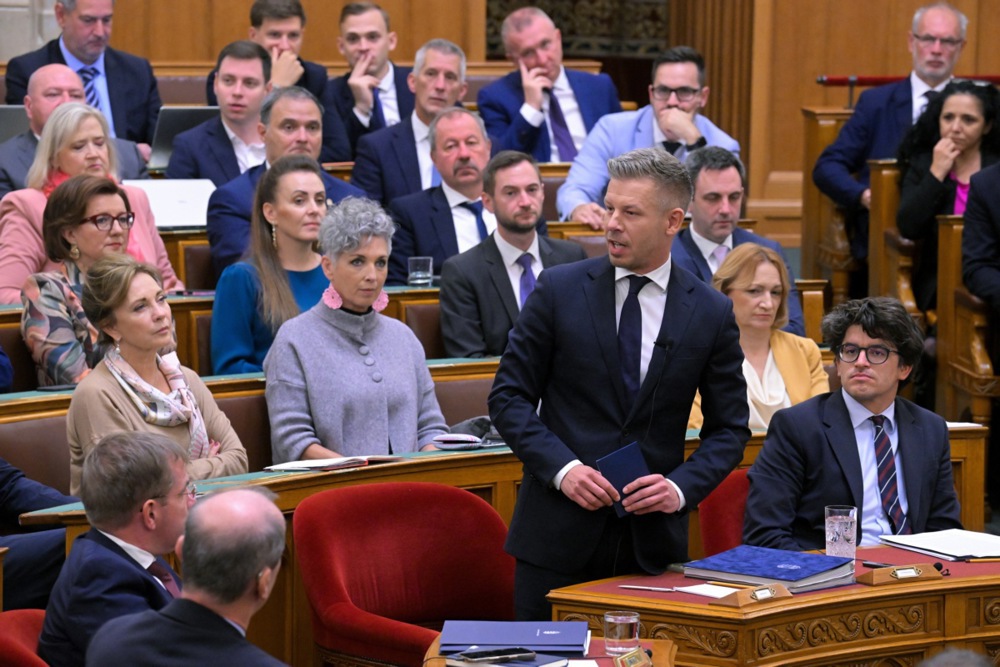
Prime minister Péter Magyar addresses parliament as MPs vote to lift his immunity, Budapest, 28 September 2026 (Srouce: Zsolt Szigetváry/EPA)

Two ministers from Orbán’s government have been held in custody

“The landing is beginning as part of ‘Operation Purgatory’,” prime minister Péter Magyar announced on Monday (28 September) morning. Later that morning, Hungary’s parliament lifted the immunity of Miklós Seszták, an MP and former development minister from the Christian Democratic People’s Party (KDNP); Balázs Hankó, an MP and former culture and innovation minister from Fidesz; and prime minister Magyar.

Prosecutors requested that Hankó’s immunity be lifted on suspicion of breach of fiduciary duty: he is suspected of causing losses of 17 billion forints (€46.5m) to the state budget. Authorities are investigating Seszták on suspicion of accepting bribes and other offences. The former minister and the then chief executive of Hungarian National Asset Management are suspected of receiving approximately 12.6 billion forints (€34.2m), in bribes through an intermediary between 2015 and 2018.

Magyar himself requested the lifting of his own immunity after the deputy prosecutor general asked the speaker of parliament to initiate the procedure over an incident in June 2024. According to the Office of the Prosecutor General, Magyar deliberately dropped the phone of a man filming him into the Danube, an act it classifies legally as theft.

After the vote on his immunity, Seszták went to the Central Investigating Chief Prosecutor’s Office, where he was taken into custody. He said he had committed no crime and wished to give a statement. On Wednesday, a court ordered the former minister’s remand in custody.

Hankó initially waited in the Fidesz parliamentary group’s office for police to take him away. Under the rules, however, he should have presented himself at the Central Investigating Chief Prosecutor’s Office.

Under the Act on the National Assembly, police may enter the parliament building and take action there only with the speaker’s specific permission, while the Parliamentary Guard may neither forcibly bring him before the authorities nor take coercive measures against him. Parliament speaker Ágnes Forsthoffer therefore firmly called on Hankó to leave the building and cooperate with the investigating authorities.

Hankó subsequently held a press conference with his wife and children present, claiming that he was the target of a politically-fabricated case and declaring his innocence. He finally accepted the summons at 7.20 pm and left parliament, setting off to give a statement amid carefully-staged scenes. Orbán’s social media page live-streamed the entire episode (while the Fidesz leader was in Belfast cheering on Hungary’s national football team).

In a statement, prosecutors said that Hankó and his associates had used National Cultural Fund resources for purposes other than those prescribed by law on 1,079 occasions between 3 September 2025 and 30 March 2026.

This article continues, but the full version is available only to EUobserver.com subscribers. Visit account.euobserver.com/membership

  •  

Die Linke wins Berlin election with focus on socialization of housing

The Christian Democratic Union (CDU) has continued its downward spiral after suffering significant losses in state elections in Berlin and Mecklenburg-Western Pomerania on Sunday, September 20. In addition to coming second to the progressive Die Linke in the German capital, Chancellor Friedrich Merz’s party failed to achieve the 5% needed to enter Mecklenburg-Western Pomerania’s parliament, marking a new low – or, in Merz’s own words – a “disaster.”

The results of the two elections were radically different: in Mecklenburg-Western Pomerania, the far-right Alternative for Germany (AfD) won the largest percentage of votes, echoing, in many ways, the recent outcome in Saxony-Anhalt. In Berlin, Die Linke emerged as the winner, claiming a quarter of the vote after a campaign focusing on housing, the cost of living crisis, and public transport.

Read more: Far-right victory in German state elections shocks the center

Part of the local reports note that while the AfD and Die Linke lie on opposite ends of the political spectrum, both gained ground thanks to the perception that they bring the best chance of breaking with the policies implemented by the government coalition between CDU and the Social Democrats (SPD).

These policies – pursuing extensive cuts to the social and welfare system and attacks on labor rights in order to fund a massive rearmament drive – have completely eroded the support for Merz’s conservatives. Despite this administration’s unprecedented unpopularity, the German Chancellor is showing no sign of changing course, stating after Sunday’s election that “reforms must come.”

Die Linke’s Berlin result: reforms must be implemented – but which reforms?

Reforms must be implemented, voters in several German states apparently agree with Merz – just not those envisioned by the CDU. Die Linke’s campaign, led by Elif Eralp, offered an alternative list of policy reforms addressing Berlin’s inhabitants’ most pressing concerns. This meant a focus on accessible housing – including a follow-up on the 2021 referendum where voters backed expropriating the property of private real-estate companies with 3,000 or more units in the city.

Five years ago, over one million people supported the referendum’s idea of socializing the housing pool, yet no action was taken by the local administration. Since then, the housing situation has grown worse, leading to widespread frustration. Die Linke’s campaign recognized the general discontent and promised it would not give up on socialization.

“Die Linke’s successful campaign in Berlin was driven by its strong focus on affordable housing and rent control, which resonated deeply with voters facing massively rising living costs,” Kirsten Schubert, a general practitioner active in the party’s local chapter, told BreakThrough News. “The party integrated large-scale door-to-door campaigning strategy, allowing volunteers to connect personally with hundreds of thousands of residents directly at their doorsteps. By those means, strong social media presence and a huge range of community activities, they successfully mobilized a diverse coalition of non-voters, progressive urban youth, and traditional working-class voters.”

Read more: Berliners win vote to expropriate housing from corporate landlords. What’s next?

Krunoslav Stojaković, a political advisor at the Rosa Luxemburg Foundation, says that the election result commits not only Die Linke, but also “the social left and all those who care about a more just society” to work towards achieving socialization of housing. “At this point, there can be no going back […] The people of Berlin have given us this mandate.”

“There will be resistance,” he emphasizes. “Potential coalition partners are only tentatively supportive of Die Linke, and some are already making demands against the socialization of those profiting from the housing crisis as a condition for political cooperation.”

Progressive measures to face opposition from center

The approach adopted in Berlin marked a welcome break from Die Linke’s campaigning in other states. Stojaković pointed out to the portal H-alter that the party’s earlier choices – such as joining coalitions that implemented austerity measures – contributed to a fall in popularity. The recent success offers an opportunity to reclaim lost ground and reshape the party’s approach to fieldwork. But it should not be taken for granted that this will happen.

For now, the party faces talks with potential coalition partners SPD and the Greens. Figures from both parties signaled there are significant misalignments between them and Die Linke. While the SPD does not share the commitment to socialization of housing, the Greens’ Franziska Brantner said the party would not cooperate with “anti-semites from Neukölln.” With this, Brantner indicated that the political mainstream in Germany will persist in pressuring those criticizing Israel – even if this criticism remains timid at best.

Read more: Thousands join Berlin’s Peace Days to support antimilitarism and solidarity

On the other hand, left and progressive parties across Europe recognized in Die Linke’s result an important rupture within the predominating context of the far right gaining electoral ground. From Jean-Luc Mélenchon in France to Slovenia’s Levica, reactions emphasized the significance of shaping grounded and unequivocally left programs. “Politics begins with the daily problems of millions of people,” wrote Peter Mertens, General Secretary of the Workers’ Party of Belgium (PTB-PVDA). “It is not just about talking about tenants and workers, but about organizing them so they can impose change themselves.”

This article was updated on Wednesday, September 23, to incorporate comments from Kirsten Schubert.

  •  

4 reasons why the AfD’s victory in Saxony-Anhalt is so incredible

The Alternative for Germany (AfD) scored a resounding and historic win in Saxony-Anhalt, but when specific data points are examined, the victory is even more remarkable.

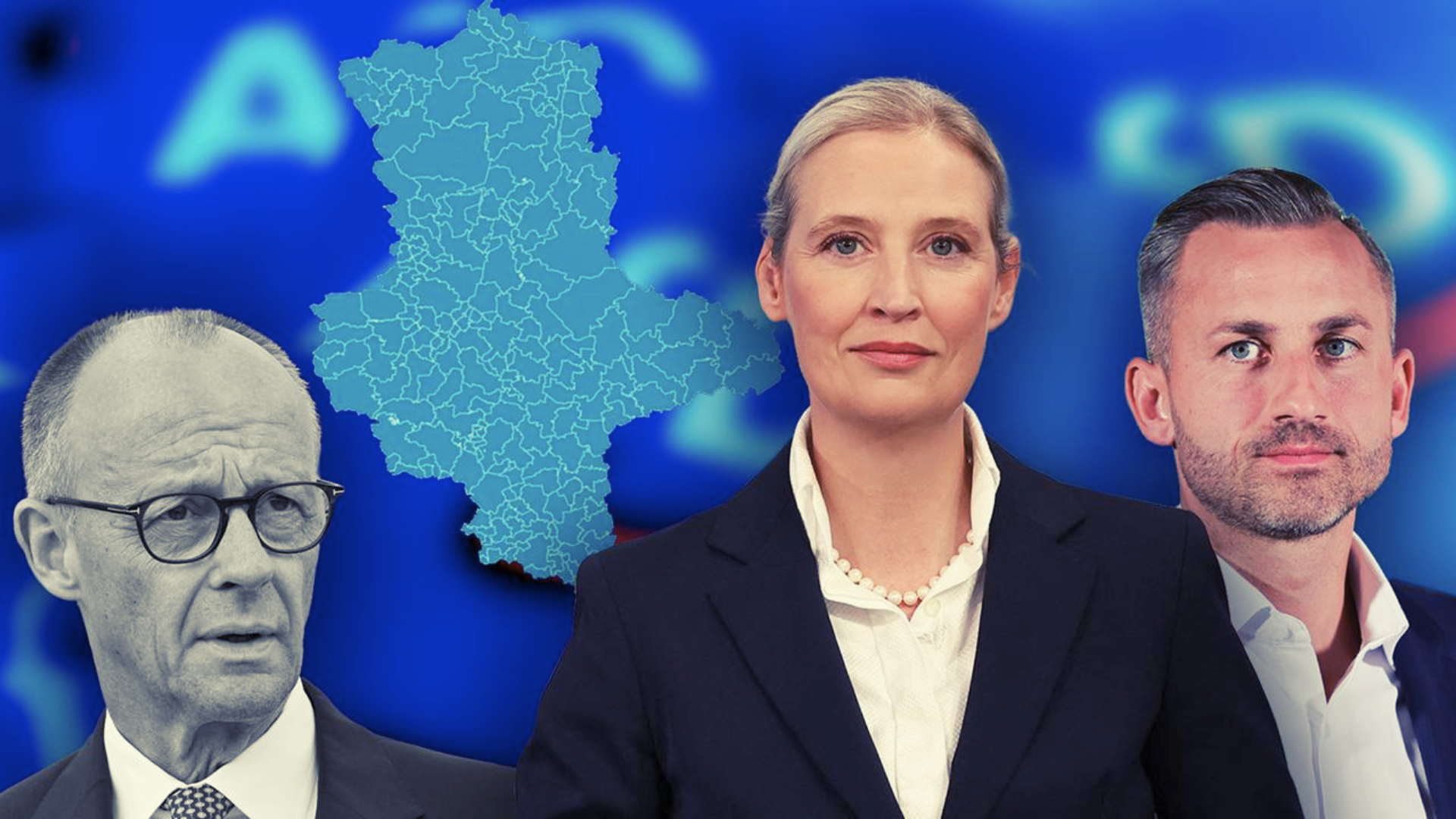
Here are four key data points from the election that show the AfD, which scored approximately 43.8 percent of the vote, has much to celebrate regardless of whether it actually manages to gain control of the state.

Non-voters rushed to the polls

Perhaps the most positive aspect of the election for the AfD is that the tremendous victory was achieved with a record high level of voter participation of 77.8 percent. In essence, more democracy equaled more votes for the AfD, according to calculations from the Infratest dimap. The firm pointed out that the AfD won 170,000 voters who stayed home during the last election in 2021, which is 10 percent of Saxony-Anhalt’s roughly 1.7 million eligible voters.

This means that the AfD’s total voting pool was made up of approximately 30 to 35 percent non-voters.


For those disillusioned by politics, the AfD’s program is drawing them back into participating in democracy. The country’s media should be celebrating this result in theory, but in reality, they would perhaps prefer that these voters simply stayed home, disillusioned and downtrodden.

Workers and those with financial problems backed the AfD

The AfD’s results show there might be futrher room for improvement. Approximately 65 percent of the AfD’s voters reported facing financial issues. As the German economy continues to falter, the pool of potential voters the AfD can tap into is likely to expand in other states.

It is important to note that just because many of these voters are facing financial difficulties does not necessarily mean they are unemployed. In fact, AfD won 61 percent of all blue-collar voters who actually voted. However, many of these often lower-income workers may also be struggling financially in a system that often rewards not working at all.

Some see the AfD’s results as a template.

“65% of AfD voters in Saxony-Anhalt reported facing financial struggles. Turns out that when you correctly link mass immigration to the decline in job security, homeownership, accessible healthcare, quality education, decent wages, and almost every other quality of life indicator for existing residents, they respond accordingly at the ballot box,” wrote Gabe Guidarini, the chief of staff for the Ohio Young Republicans wrote. Although an American, his post underlines that the AfD election results are being watched by the right-wing across the world, especially when they offer a clear blueprint for victory.

65% of AfD voters in Saxony-Anhalt reported facing financial struggles.

Turns out that when you correctly link mass immigration to the decline in job security, homeownership, accessible healthcare, quality education, decent wages, and almost every other quality of life indicator… pic.twitter.com/g0HJLtTs79

— Gabe Guidarini (@GabeGuidarini) September 6, 2026

Young voters rushed to support the AfD

The tired narrative of the left, which depicts right-wing parties only garnering support from “old White males,” was once again smashed by the AfD in Saxony-Anhalt. The AfD won the youth by overwhelming numbers, reaching 42 percent of voters aged 18–24 vote and 44 percent of voters aged 25–40.

Martin Sellner, CEO of the Remigration Institute, celebrated the results, writing: “The kids are all right. The German youth are increasingly patriotic and reject ‘German guilt,’ replacement migration, trans ideology, and cultural Marxism.”

The kids are all right.

The German youth are increasingly patriotic and reject "German guilt", replacement migration, trans ideology, and cultural Marxism altogether. pic.twitter.com/LhcM3le7QX

— Martin Sellner (@MartinSellner_) September 6, 2026

In fact, it was the oldest voters that actually cost the AfD an absolute majority, with only 31 percent of voters 70 and older backing the party. Similar figures have been consistently found across Germany, with older voters turning to the establishment parties while young and middle-aged voters turning to the AfD.

While the AfD can celebrate its support among younger voters, the combined weight of the older voting population means the AfD will have to make inroads with these voters or continue to fail to reach a position of power at the state and federal level.

The CDU’s results are just as dramatic as the AfD’s results

The story of Saxony-Anhalt cannot be told without the collapse of the Christian Democrats (CDU). The party halved its support since the last election, dropping to 17.2 percent.

Political scientist Petra Dobner was asked if Chancellor Friedrich Merz will now resign. She responded: “That may also depend on how the next elections turn out. So maybe he can survive Saxony-Anhalt, but if Mecklenburg-Western Pomerania and Berlin show similar results, then I really don’t see a future for Merz.”

Notably, Merz famously said in 2018 that the CDU can cut the AfD’s support in half.

“We can achieve up to 40% again and halve the AfD. That’s possible! But we ourselves must create the conditions for it. That’s our task,” he said.

Since then, Merz has managed to cut the CDU’s support in half in Saxony-Anhalt and double the AfD’s support.

The post 4 reasons why the AfD’s victory in Saxony-Anhalt is so incredible appeared first on Remix News.

  •  

A Mississippi Death Penalty Jury Was Seated. With One Black Juror.

Earlier this year, the US Supreme Court heard an appeal from death row inmate Terry Pitchford, who was denied relief by the Mississippi Supreme Court after his attorneys claimed Black people were illegally struck from his jury. Investigative reporter Hannah McAlilly delves into the case, and into the wider problem of racial prejudice in the selection of juries in Mississippi:

A prosecutor struck a Black woman for having “red dyed hair” and in another, a prosecutor struck a Black man because he had “a ponytail, a sort of strange hair design.” That prosecutor told the judge he was concerned the juror might identify too closely with the defendant, who also was of a similar age. “Both have unusual hair styles,” the prosecutor said. 

Prosecutors struck Black jurors who, they said, seemed angry, irritated or inattentive. A Black woman was struck because the prosecutor didn’t like her “vibe.” Another, who worked a night shift before showing up to jury selection, was struck for being “fidgety” and looking “angry.” Another was struck because she “frowned a lot.” 

  •  
❌