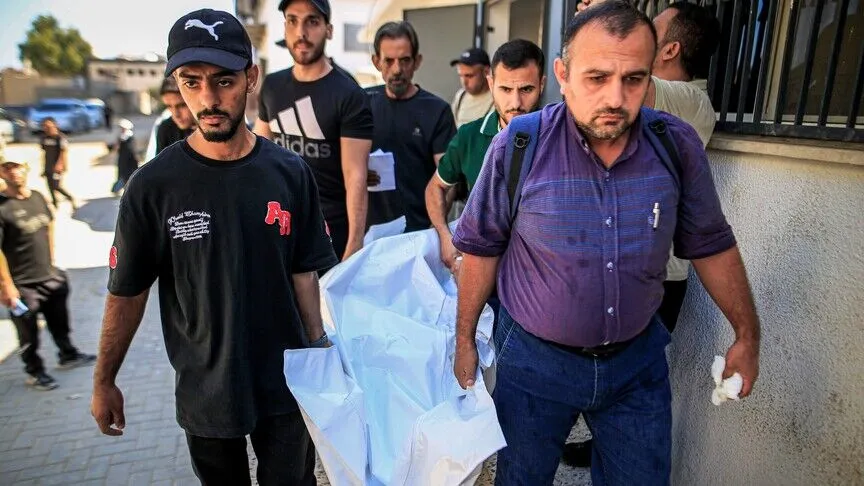
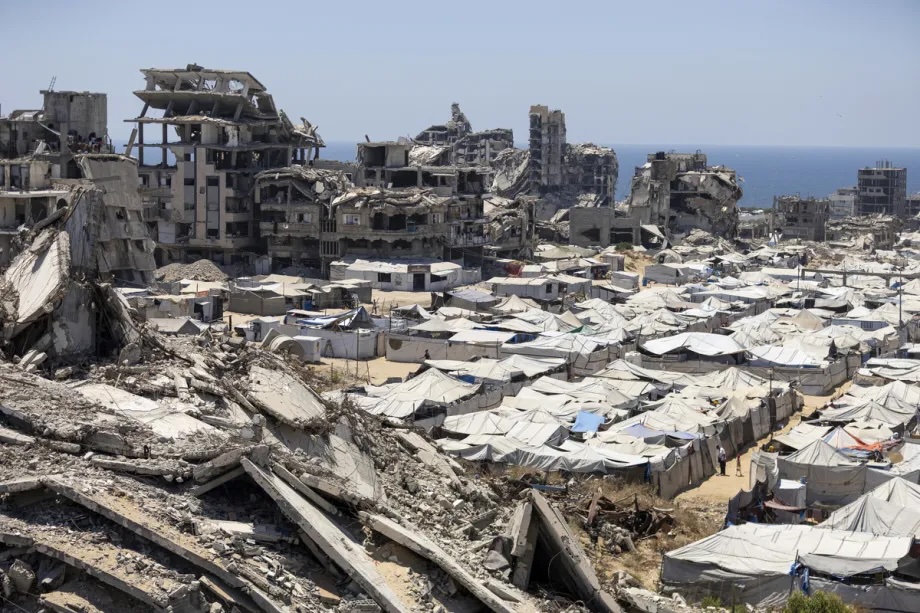
Israeli Attacks Kill Five in Gaza, Including a four-year-old and a woman


Sacrifice the inconvenient, never the project. “Pal-washing” in action.
Join us on Telegram
, X
, and VK
.
Contact us: info@strategic-culture.su
A familiar script
On 9 October 2026, the Norwegian Nobel Committee awarded the Peace Prize to Navanethem Pillay, an 85-year-old South African jurist, former judge at the International Criminal Court and UN High Commissioner for Human Rights. The citation speaks of a person who has paved the way for a more comprehensive global legal order. The Committee’s chair, Jorgen Watne Frydnes, added that the prize is a message to those who attack and undermine the international system and its institutions. The verdict is avowedly political, and it is on this level that it must be discussed.
The very same figure who, in 2011, is said to have ‘toppled’ Gaddafi, paving the way for the plundering of Libyan oil and the enslavement of African migrants, would now ‘topple’ Netanyahu, thereby paving the way for Israel’s rehabilitation. The underlying logic would be neither morality nor peace, but the agenda of George Soros’s Open Society: to sacrifice those who have become inconvenient, never the essence of the project itself. Some have dubbed it ‘pal-washing’. The fundamental question is a serious one, for it asks whether there is a pattern behind the prizes and jurisdictions of the liberal order.
It must be emphasised that the script is already familiar. Do you remember when Barack Obama received the Nobel Peace Prize, whilst launching war after war? Or do you recall figures in search of a cause such as Machado, Mohammadi, or the defenders of Ukrainian criminals? But let us proceed in order.
Act One: Libya
In February 2011, Pillay, the High Commissioner, called on the Human Rights Council to take vigorous action to stop the violence and hold those responsible to account; the Council condemned the violations and established a commission of inquiry. The next step fell to the Security Council: referral to the ICC via Resolution 1970, followed by Resolution 1973, approved with ten votes in favour and five abstentions (Brazil, China, Germany, India, Russia). No one claims that Pillay decided to go to war. What matters is the sequence of events: the language of human rights opened the door, that of the protection of civilians authorised the use of force, and the operation gradually shifted towards regime change. As early as April, Lavrov was accusing NATO of exceeding its mandate, and a French minister admitted that regime change would have required a new vote.
Then there are the costs. In 2017, the IOM documented auctions of sub-Saharan migrants in southern Libya, sold for sums ranging from 200 to 500 dollars. The link with the collapse of the state after 2011 is the most plausible interpretation, although the source documents the phenomenon rather than its cause. Libya and the migrants paid the price; the legal framework emerged, formally speaking, intact, even if the controversy over the mandate would later weigh on the vetoes of Moscow and Beijing in other matters.
Act Two: Bibi
On 21 November 2024, Pre-Trial Chamber I of the ICC issued arrest warrants for Netanyahu and former Defence Minister Gallant, for war crimes and crimes against humanity. Pillay had left the Court in 2008, but chaired the UN Commission of Inquiry which, on 16 September 2025, concluded that Israel had committed genocide in Gaza. This is where ‘pal-washing’ comes into play. International criminal law deals with individuals: a defendant, a charge, a period of time. If the case concludes with the fate of a leader, a narrative break occurs – the ‘before’ and ‘after’ of a man – after which the state can present itself as restored. Libya offers an analogy: there, the case concluded with the fall of a man.
The limitations of the process work in favour of this interpretation. The Court has no police force and the execution of warrants depends on the States Parties; the Commission is not a court and does not speak on behalf of the entire UN; the Committee itself, according to AFP, has stated that it is up to a court to determine whether genocide has taken place. The award has no legal effect, as we know, but it lends legitimacy to a system that promises justice yet cannot guarantee it.
We must also bear in mind that we have already seen dynamics of this kind on numerous occasions within the globalist order that dominates the West. The Open Society Foundations presents itself as the world’s largest private funder of groups working for justice, democracy and human rights, active in over one hundred countries, and Pillay received the Stockholm Human Rights Award, the same prize that went to Soros and Neier in 2011. It certainly seems that the pattern of the Soros agenda is repeating itself once again – an agenda comprising foundations, NGOs, tribunals, commissions and bureaucracies that share a common lexicon and worldview: that of a liberal order to be perfected and never called into question. Those operating within that lexicon may denounce a government, a leader, or even a state, but they cannot challenge the underlying assumptions of the order that grants them legitimacy.
Some will object that Pillay’s Commission attributes responsibility to Israel as a state, not merely to its leaders, which contradicts the idea of a purely personalised operation. The second point concerns the reaction. Netanyahu accused the Committee of having lost its moral compass; the Israeli Foreign Ministry spoke of a grotesque exploitation of the prize; and Washington announced sanctions against the ICC just a few hours after the announcement. All true. But it would make sense and have value if the Western system were not rotten to its very core, if its legal system were functioning properly, but this is not the case, in any respect (and we have already seen sufficient evidence of this – let us not forget the Epstein case either).
If, over the next twelve months, Netanyahu’s political downfall is presented as the conclusion of the case, rather than as a stage in proceedings concerning the state, ‘Pal-washing’ will gain traction. If the proceedings continue beyond his person, and if the State Parties execute the warrants, perhaps it will lose ground. Given the current evidence, the argument is plausible and, until proven otherwise, this is yet another ‘Non-Peace’ Nobel Prize – one we cannot call ‘war’.


RT – October 11, 2026
The International Criminal Court (ICC) has ignored allegations of “very well-documented” NATO war crimes brought before it, former Libyan Information Minister Moussa Ibrahim has told RT.
In an interview on Saturday, he argued that the US-led military bloc has never been held accountable for what he described as “very well-documented” crimes committed during military interventions in several countries.
“In Afghanistan, in Iraq, in Libya, we have literally… millions of documents, videos, footage, statements, witnesses who testify to the crimes against humanity committed by NATO collectively and NATO countries individually,” he said.
The former minister said he had personally participated in a 2013 effort to bring allegations of NATO war crimes before the ICC over the bloc’s 2011 intervention in Libya, which left the country devastated and deeply divided.
“We presented a very powerful profile of thousands and thousands of pages. And it was not even allowed to be seen or heard or discussed. It was dismissed right away,” Ibrahim said, adding that prominent European human rights lawyers had been involved in preparing the case.
The failure to pursue such cases demonstrated the “limitation” of the system, he said, urging the East, particularly China and Russia to “rethink the whole equation.”
The ICC needs to be “radically, not superficially” reformed or replaced with a new international judicial institution capable of upholding human rights without Western political interference, he stressed. A handful of powerful Western countries currently exploit the ICC for their own advantage while ensuring “that they are immune against any cases brought forward against them,” he said.
The remarks come just days after Washington imposed sweeping new sanctions on the court after accusing it of overstepping its jurisdiction in pursuing alleged crimes involving American and Israeli nationals. The move followed the ICC’s 2024 issuance of arrest warrants for Israeli Prime Minister Benjamin Netanyahu and his former Defense Minister Yoav Gallant over alleged war crimes and crimes against humanity in Gaza.
Meanwhile, the ICC’s investigation into allegations of war crimes committed by American forces during the US-led war in Afghanistan never resulted in criminal charges against US personnel.
Watch the RT segment.
Sputnik – 12.10.2026
MOSCOW – Russia believes that the use of force by the Israel Defense Forces (IDF) in Lebanon grossly violate international law, Russian Foreign Minister Sergey Lavrov said on Monday.
At a press conference with Lebanese Foreign Minister Youssef Raji, Lavrov said that they discussed Israel’s ongoing actions in Lebanon, adding that Moscow has reaffirmed its position in support of Lebanon’s sovereignty, unity, and territorial integrity.
“Of course, we are committed to our assessments that the military actions of the IDF, the Israeli army, grossly violate the norms of international law and provoke an additional escalation of tensions in Lebanon,” Lavrov said.
This was part of a broader discussion of the situation in the Middle East, the Russian minister said.
“We certainly discussed the situation in the region and examined issues related to developments in the Gulf, in and around Syria, and, naturally, in Palestine, where Israel’s actions are a source of particular concern, as they create facts on the ground that directly contradict the UN resolution on the establishment of a Palestinian state,” Lavrov said.
By Kurt Nimmo | Another Day in the Empire | October 11, 2026
Following the attack on the King Khalid International Airport in Riyadh, Saudi Arabia, the usual suspects emerged from the social media muck to condemn Ansarallah. “These reprehensible attacks demonstrate a blatant disregard for innocent civilian life. They must stop now,” demanded Trump’s secretary of state, Marco Rubio.
Bibi Netanyahu, “on behalf of the people of Israel,” condemned the attack and declared the Zionist state “looks forward to a strong Middle East—one that stands united against threats, protects its people, and builds a future of security, cooperation, and prosperity for all the peoples of our region,” never mind the 200,000-680,000 people of the region he butchered over the last three years.
Kaja Kallas, the former president of Estonia and current High Representative of the European Union for Foreign Affairs and Security Policy, denounced the airport attack. “The Houthi attack on Riyadh’s international airport is an appalling act of terror. There can be no justification for indiscriminate attacks on civilians and civilian infrastructure,” she said.
Kallas, like most European leaders, insists Israel has a “right to defend itself” against Hamas, Hezbollah, and the Houthis, and yet “self-defense” is not a legitimate response for the people of Gaza, the West Bank, Lebanon, Syria, and Yemen, all victims of Israeli and US aggression.
António Guterres, the Secretary-General of the United Nations, is “deeply shocked” by the Yemeni retaliation, and criticized the attack on the Saudi airport as a violation of international law.
If Guterres is concerned about international law and the bombing of civilian infrastructure, why hasn’t the UN invoked Chapter VII of the UN Charter in regard to Gaza? “The UN’s member states collectively have a bad track record when it comes to preventing genocide,” writes Sean Matthews. “In the case of genocides in Rwanda and Bosnia, the UN only declared officially that genocides took place after the fact.”
G7 foreign ministers also weighed in on the attack, declaring the response to Saudi attacks poses an “unacceptable threat to regional stability and security, to global energy security,” as well as to security in the Red Sea and the Bab al-Mandab Strait.
In June, during a globalist conclave in Évian, the G7 issued a dilatory statement calling for an acceleration of “humanitarian and reconstruction efforts and the swift implementation of relevant political and security measures” in Gaza, the West Bank, and Lebanon, while knowing full well Zionist Israel will ignore international law and continue to murder and starve Palestinians while ethnically cleansing the Shi’a in southern Lebanon.
The official censure by the United States, the EU, UN, and G7, as well as the skewed reportage of the corporate media, overlooks the reason why Ansarallah is bombing Saudi airports and oil infrastructure.
Forgotten, or ignored, are the crimes of the Saudi coalition during and after the Yemen War of 2015. The coalition included the United Arab Emirates, Bahrain, Egypt, Jordan, Kuwait, Morocco, and Sudan.
The Sunni coalition attacked after President Abd Rabbu Mansour Hadi fled house arrest into exile in Saudi Arabia. Hadi, who died earlier this year, stood accused of secretly working with al-Islah, described as the Muslim Brotherhood’s Yemeni branch. The former president was also accused of being a Saudi puppet. Saudi Arabia views Ansarallah—followers of the Shi’a branch of Zaydism—as a threat to its national security.
A detailed United Nations report estimated approximately 377,000 deaths by the end of 2021 from the Saudi-led campaign. This total includes direct losses from combat and indirect deaths linked to malnutrition, disease, and the decline of health care and essential services.
The United States was involved in the Yemen humanitarian crisis. US personnel provided logistical support, information, training, and advisers after the Saudi-led intervention. US tankers refueled coalition aircraft, increasing their range over Yemen. Saudi forces relied heavily on US-supplied aircraft, munitions, spare parts, maintenance, and technical support.
Jeff Bachman, a professor and genocide scholar at the School of Information Services, said during an interview with the American University in Washington that the Saudi-led coalition has been able to engage violence against Yemenis thanks to the complicit material and political support of the United States.
UN Security Council Resolution 2216 established a UN arms embargo. The restrictions implemented delayed or curtailed commercial imports and humanitarian shipments of food, fuel, medicines, and medical supplies. Because Yemen is dependent on imports, disruptions to port and airport operations rapidly worsened hunger, health-system strain, water and sanitation breakdowns, and prices, according to Human Rights Watch.
“The Saudi-led coalition’s military strategy in Yemen has been increasingly built around preventing desperately needed aid and essential goods from reaching civilians, risking millions of lives,” said James Ross, legal and policy director at Human Rights Watch. “The Security Council should urgently sanction Saudi and other coalition leaders responsible for blocking food, fuel, and medicine, causing hunger, sickness, and death.”
During a full closure in November 2017, UN agencies noted that aircraft and ships delivering aid could not secure clearance, while commercial cargo encountered major hurdles. Human Rights Watch stated that the coalition had maintained a naval and air blockade since March 2015, with restrictions producing a disproportionate impact on civilians in direct violation of international law.
Yemen remains one of the world’s most serious humanitarian emergencies. As of 2026, more than 22 million people need assistance or protection and 18.3 million people are acutely food insecure. Malnutrition levels remain critically high, with over 2.2 million children under five acutely malnourished, including 516,157 suffering from malnutrition, according to the United Nations. “Even before the latest escalation, an estimated 12.2 million children in Yemen needed humanitarian assistance,” UNICEF reported in September.
Article 51 of the UN Charter is a determining provision that addresses the right of self-defense for member states. It represents an exception to the general prohibition on the use of force outlined in Article 2(4) of the UN Charter, which mandates that all member states refrain from using force against the territorial integrity or political independence of any state, as the Saudis did in 2015 in Yemen.
On October 10, following the Ansarallah attacks, Trump announced the US may rejoin the latest Saudi onslaught on Yemen. “We’re going to look at it,” he told reporters. “We just found out about the recent attack. We will make a decision. We move very quickly.”
Prior to Trump’s announcement, Democrat Ro Khanna, who was detained during a visit to Israel in July, introduced a joint Yemen War Powers Resolution along with Republican Representative Thomas Massie on October 9. The resolution directs “the President pursuant to section 5(c) of the War Powers Resolution to remove United States Armed Forces from hostilities against the Houthis in Yemen that have not been authorized by Congress.”
Congress is unable to decide whether to rejoin the Saudi effort to destroy Ansarallah and maintain the illegal war on the people of Yemen. In addition to debate on the constitutional legality of the Trump administration’s military assistance to the Saudis without a congressional consultation, members of Congress are concerned about the continued slaughter of civilians and the ongoing humanitarian crisis, considered one of the worst in the world, with around 24 million people, or nearly 80% of the population, needing assistance and protection.
At least 20 civilians, including three children, have been killed in Russian air strikes on the southern Ukrainian city of Zaporizhzhia on Saturday morning, 10 October, according to regional authorities. Rescue workers are continuing to search the ruins of residential buildings, with several people still unaccounted for.
The death toll rose from eight to 30 as emergency crews recovered more victims. The Zaporizhzhia regional military administration confirmed that three children were among those killed, while earlier reports recorded 16 injured, including three children. Two of the wounded were in a serious condition.
Authorities had previously reported that 12 people remained missing, although they did not provide a revised figure after the death toll increased. Rescue operations continued amid concerns that further victims could be trapped beneath collapsed concrete and other debris.
Russian forces launched the attack shortly before dawn, using guided aerial bombs against residential areas of Zaporizhzhia. According to the regional administration’s preliminary assessment, one five-storey apartment building suffered a direct hit and was destroyed, while part of another residential block collapsed.
The attack damaged at least 26 residential buildings in the Shevchenkivskyi and Voznesenivskyi districts, comprising 23 apartment blocks and three private houses. Three buildings sustained particularly extensive damage, while non-residential properties were also affected.
Firefighters, police officers and medical personnel were deployed to the affected neighbourhoods, supported by municipal workers and local residents. Emergency crews continued removing debris and examining unstable structures while officials assessed the extent of the destruction.
The Ukrainian National Police said that officers were documenting the consequences of the attack, including damage to civilian infrastructure. Investigators were also recording evidence for possible war crimes proceedings.
The scale of the destruction has complicated efforts to establish the number of victims. The initial casualty figures increased repeatedly as rescuers gained access to damaged buildings and recovered bodies.
Earlier in the morning, authorities reported four deaths. The figure subsequently rose to seven, then eight, before reaching 11 shortly after midday. The number of injured also increased as information emerged from hospitals and emergency services.
At 10.15am local time, 16 people were confirmed wounded. Three were children, while two patients were described as seriously injured. The regional administration said most of the remaining casualties were in a condition of moderate severity.
Officials warned that the casualty figures could change as operations continued. The authorities had not established how many of those initially reported missing might still be trapped in the wreckage, and the recovery of additional bodies had not been accompanied by a revised missing-person count.
Zaporizhzhia, an industrial city in south-eastern Ukraine, has remained exposed to Russian aerial attacks throughout the full-scale invasion. Its proximity to Russian-held territory in the surrounding region leaves residential districts vulnerable to aircraft-launched weapons.
Guided aerial bombs present a particular challenge for Ukrainian air defences. Unlike conventional unguided bombs, they can be fitted with glide and guidance systems allowing Russian aircraft to release them from considerable distances. Their substantial explosive payloads can cause extensive structural damage when they strike apartment buildings.
Saturday’s attack comes only three days after Russia launched another large-scale assault across Ukraine, targeting energy infrastructure and residential areas. As EU Today reported on 7 October, that operation killed at least 11 people and caused damage in several Ukrainian cities, including Zaporizhzhia.
The latest fatalities also follow earlier attacks on civilian facilities in the city. In February, Russian drones struck a maternity hospital in Zaporizhzhia, causing a fire and injuring patients.
The repeated strikes have placed continuing pressure on the city’s emergency services, which must respond to new attacks while repairing damage to residential buildings and public infrastructure.
The Zaporizhzhia authorities have declared Sunday, 11 October, a day of mourning for those killed in Saturday’s bombardment. The announcement followed confirmation that the death toll had reached 11, including three children.
The Russian attack has also renewed attention to the vulnerability of densely populated urban areas to guided aerial bombs. Under international humanitarian law, deliberate attacks against civilians and indiscriminate attacks are prohibited, while all parties must distinguish between military objectives and civilian objects.
Ukrainian investigators are continuing to document the damage and civilian casualties. The precise circumstances of each impact, including the intended targets, have not yet been independently established.
For the families awaiting news of missing relatives, the immediate priority remains the search beneath the destroyed buildings. As of the latest available information on Saturday, rescue workers were still operating at the sites, and the authorities had warned that the number of dead could rise further.
Russia and the United States have intensified their campaigns against the International Criminal Court (ICC) almost simultaneously, exposing an increasingly consequential convergence between the policies of Vladimir Putin and Donald Trump.
On 8 October, Moscow demanded the extradition of ICC President Tomoko Akane and eight other current and former officials. The following day, Washington announced sanctions against the court as an institution, extending earlier measures against individual judges and prosecutors.
The timing raises an obvious question: are these independent campaigns arising from different disputes with international justice, or do they reflect a broader political understanding between Washington and Moscow?
There is no publicly established evidence of a coordinated operation or an agreement between Trump and Putin to undermine the ICC. Nevertheless, the strategic consequences of their respective actions are remarkably similar. Both weaken an institution pursuing criminal proceedings against political leaders whom the two governments seek to protect.
Russia’s hostility towards the ICC is directly connected to the arrest warrant issued against Putin in March 2023 over the alleged unlawful deportation and transfer of Ukrainian children from occupied territories.
The court subsequently issued warrants against senior Russian military commanders, including Sergei Shoigu and Valery Gerasimov, over alleged crimes involving attacks on Ukrainian civilian infrastructure.
Moscow’s response has been to pursue ICC personnel through its own criminal justice system. The latest extradition demands follow convictions handed down in absentia by a Russian court in December 2025.
Washington’s confrontation with the ICC has a different immediate origin. The Trump administration objects to the court’s jurisdiction over American nationals and Israeli officials, particularly following the arrest warrants issued against Israeli Prime Minister Benjamin Netanyahu and former defence minister Yoav Gallant.
Secretary of State Marco Rubio has presented the American campaign as a defence of US sovereignty. Yet the sanctions announced on 9 October are not confined to the Israeli proceedings or any investigation involving American personnel.
They target the institution itself, potentially disrupting financial transactions and commercial relationships essential to its operation. This distinction matters because a court-wide restriction necessarily affects investigations beyond those cited by Washington. That includes Ukraine.
The political context cannot be separated from the relationship between Trump and Putin, including their meeting in Anchorage, Alaska, in August 2025.
The summit formed part of Trump’s efforts to negotiate directly with Moscow over the war in Ukraine. The American president has repeatedly treated relations with Putin as a question of diplomatic bargaining, seeking arrangements that might produce an agreement where conventional Western pressure has failed.
Against this background, suggestions that pressure on the ICC might form part of a wider accommodation with Moscow warrant scrutiny. However, the proposition that Trump specifically offered Putin assistance in neutralising the court during their Anchorage discussions remains unsubstantiated. There is no verified public account establishing such a commitment.
A more defensible conclusion is that Washington’s independently declared campaign against the ICC also advances an important Russian interest. For Putin, the benefit is clear. Measures designed to restrict the court’s financial and administrative capacity could complicate investigations into Russian conduct, irrespective of the American administration’s stated intentions.
The relationship therefore need not involve explicit coordination to produce politically significant results.
The escalation from targeting individual prosecutors to sanctioning the entire ICC represents a substantial change. Previous American measures imposed personal and financial restrictions on selected officials. The latest approach threatens the broader infrastructure upon which international criminal proceedings depend.
The court requires banking facilities, secure communications, technology services and commercial suppliers. American sanctions can reach beyond US territory because of the international financial system’s dependence on dollar transactions and American service providers.
The ICC had already anticipated this vulnerability. According to details disclosed in September, the institution has pursued alternatives to American software and financial services to reduce its exposure.
Nevertheless, operational continuity and investigative effectiveness are not necessarily the same thing. The court may remain formally functional while facing additional costs, delays and restrictions affecting prosecutors, investigators and international cooperation.
For Ukraine, this is particularly significant. The ICC holds and evaluates evidence connected to alleged Russian war crimes, including the deportation of children and attacks on civilian infrastructure. Its proceedings preserve a judicial process independent of whatever diplomatic settlement Washington and Moscow might eventually negotiate.
Weakening that capacity would not invalidate existing warrants or automatically destroy evidence, but it could make the pursuit of accountability more difficult.
The European Union now faces a dispute with Washington over an institution that European governments have spent decades supporting.
On 9 October, eight governments issued a joint statement, reaffirming their support for the ICC and rejecting the American sanctions. The signatories included Germany, France, Italy, the Netherlands, Britain, Japan and Canada.
The European Commission also indicated that the EU was prepared to take measures necessary to preserve the court’s operations. Such assurances are politically important, but they do not automatically resolve the practical consequences of American restrictions.
European financial institutions and technology suppliers must consider their own exposure to US sanctions. Sustaining the court may require alternative payment arrangements, commercial protections and potentially further European regulatory intervention.
The EU has discussed extending its blocking statute to shield European operators from the effects of American sanctions. Whether that mechanism can provide sufficient protection remains uncertain.
The dispute also extends beyond the ICC’s current investigations. Ukraine and the Council of Europe are developing a separate Special Tribunal for the Crime of Aggression, designed to address jurisdictional limitations preventing the ICC from prosecuting Russia’s leadership for the decision to launch the invasion.
The two institutions have distinct legal mandates, although cooperation between them is envisaged. Undermining the ICC would not automatically prevent the special tribunal from operating, but it would weaken an important part of the wider international accountability framework.
Washington and Moscow have not adopted identical positions towards the ICC. Russia seeks to discredit and punish the officials responsible for pursuing Putin. The Trump administration is attempting to restrict the court’s authority and operational capacity, principally in response to proceedings involving Americans and Israelis.
Yet their actions converge at precisely the point where the ICC’s independence becomes politically inconvenient. The distinction between motive and consequence is essential. It would be premature to describe the American sanctions as evidence of a secret bargain struck in Anchorage. It would be equally mistaken to overlook the assistance these measures could provide to Moscow.
The broader concern is that the United States, traditionally central to Western efforts to hold Russia accountable for its invasion of Ukraine, is now applying pressure to one of the principal institutions carrying out that work.
For European governments, the immediate question is no longer simply whether they support the International Criminal Court. It is whether they are prepared to protect its practical independence when the political and financial pressure comes not only from Russia, but also from Washington.
By Emran FEROZ
Contact us: info@strategic-culture.su
The war inaugurated a terrible new global order in which armed drones kill civilians who are neither named nor counted.
Honest, paywall-free news is rare. Please support our boldly independent journalism with a donation of any size.
There were nights full of terror. Our village was bombed constantly,” says Zalmay Khan. Afterward, he goes to pray. Because of his wounds, he cannot kneel, so he prays sitting down.
Khan is in his early twenties and now works as a Taliban intelligence officer. As a boy, he says, he learned to read the sky before he learned to read words. His village in Wardak province, near Kabul, was bombed, then bombed again. First came American planes, then NATO’s, then those of the Afghan army the West had built. By night it got worse, when jets and armed foreign contractors hit villages and killed civilians seemingly at random.
“I became a Mujahed [a Taliban fighter] naturally,” Khan tells me.
He is not an outlier. In village after village on my most recent trip to Afghanistan a few weeks ago, I met men who grew up as the so-called war on terror’s raw material. Some wear the Taliban’s turbans, and some do not. Almost all of them say the same thing, with remarkable calm: The American narrative of this war belongs to the past. After two decades of war and destruction, it is their turn to control narratives and to rule the country.
October 7, 2026, marks exactly 25 years since the United States began bombing Afghanistan. The anniversary will pass in Washington with little reflection. In Afghanistan, the reality of it is lived daily.
Drones and Ghosts
The war on terror made history in a way few people remember. In its opening weeks, the United States used an armed drone against a target in Afghanistan, one of the first such attacks ever, in an attempt to kill the Taliban’s founder, Mullah Mohammad Omar, in Kandahar. Omar was not hit on October 7, 2001. He survived and reportedly died of natural causes a decade later, which the Taliban kept secret for years.
Who died instead? The record offers almost nothing: no definitive or officially confirmed names, ages, villages. One news report cites unnamed Kandahar residents suggesting the raid killed Omar’s 10-year-old son and the child’s stepfather, but the Taliban’s ambassador to Pakistan declined to confirm or deny this report.
In other words, the first known attempt to kill a man with an armed drone killed people no one has ever definitively identified, and it set the template for the type of warfare that would dominate over the next decades. No one can say who the victims were. But if the pattern of the following years is any guide, many were likely civilians, like the thousands of victims who came after them. During the Obama years, Afghanistan officially became the world’s most drone-bombed country.
That template repeated itself so often that Afghans developed names for the many men who were declared dead after supposed “surgical strikes,” but who then reappeared alive: mord-e zinda (the living dead) in Farsi and khyali marr (the not truly dead) in Pashto. I call them “Taliban ghosts.”
It continued across successive U.S. administrations, even across the bureaucratic, supposedly methodical “kill lists” infamously used by the Obama administration used to mark people for death from the skies.
The obvious question was almost never asked: If Omar was not the victim, who was killed instead? In the logic of the drone war, a body is a statistic, and a body in a targeted area becomes a militant by default. The dead were not counted, and the stories of their families, who were left to count for themselves, largely continued to go unknown.
Strikes did not only create ghosts. They also created recruits. Researchers, journalists, and Afghan elders have long described the same pattern: A village is hit, a family is destroyed, and the Taliban offer the survivors the only form of justice made available to them. By the end of the war, entire districts had made that choice, not out of ideological conviction but out of grief.
Democratic Torture
One of the people I talked to on my recent trip was a Taliban official who had been held at Bagram, the American prison north of Kabul, for several years. He told me what the Americans wanted from him. “Accept our democracy or get tortured and rot here. That’s what they told me,” he recalled.
The aim, as he described it, was reeducation by coercion: Accept our system, our ideology, and the pain stops. He refused. By his account, he left more committed than when he arrived. He was freed in 2020 under the prisoner exchange the United States negotiated with the Taliban, part of the same Doha process that handed the country back to the movement the war was purportedly meant to destroy.
Consider the sequence. A man is imprisoned and tortured to make him embrace a political order. He then walks out of the prison and eventually helps govern. The war’s own methods created much of its failure.
I make no argument here that the Taliban’s rule is benign. Women and girls have been shut out of education and public life, and dissent is severely punished. These facts belong in any honest account. But an honest account also includes what the war did, who did it, and whom they harmed; the powers that waged it have shown little interest in reckoning with that part.
A War Passed On
Here is the part that does not fit the story that the war on terror ended in August 2021: someone else is still fighting it.
Pakistan is currently bombing Afghanistan. Just a few days ago, Pakistani airstrikes killed at least 10 civilians, most of them children, in the provinces of Helmand and Kunar.
Pakistani authorities say they are targeting militants of the Tehrik-e-Taliban Pakistan, or TTP, often known as the Pakistani Taliban. Afghans on the ground, and independent reports, repeatedly describe civilians as being among the dead. Islamabad has also forced hundreds of thousands of Afghans, many of them born there, out of Pakistan.
The phrasing used to justify these attacks is familiar: “Terrorists were eliminated.” Anyone who covered the American war has heard that sentence before, and the same pattern follows. The claims are hard to verify, the dead are hard to identify, and the people left behind are not asked.
Pakistan has run this game before, and it has historically done well for itself out of it. In the first days of the war on terror, Islamabad aligned itself with Washington while, according to critics and many former officials, hedging its bets with the Taliban. The United States poured billions into Pakistan in military aid and reimbursements. A double game paid for itself.
For a military establishment that benefits from a war to fight, an enemy is an asset. That helps explain why the army has so little tolerance for those who challenge its role. This pattern goes beyond the foreign policy of one country alone. It is a system — one created by the U.S. but now adopted globally — that requires a threat to warrant its continued expansion and removes the people who question its logic.
If Pakistan again needs an Afghan threat to justify its budgets, its alliances, and its hold on power at home, the logic is the same as in 2001. The war on terror, seen from Islamabad, is a renewable resource.
The Violence That Made the TTP
The TTP itself is not a mystery. It did not appear from nowhere, and it cannot be blamed on Kabul alone. It grew out of Pakistan’s own tribal areas, where decades of military operations, drone strikes with Islamabad’s tacit consent, and brutality under former Pakistani President Pervez Musharraf shattered communities. Many of these massacres have been forgotten outside the region. In the tribal belt they are not.
The result was a generation radicalized by state violence, in much the same process I heard described in Afghan villages. The TTP is, in significant part, a product of the very policies now used to justify the continued bombing of Afghanistan. Without Pakistan’s violence in the tribal areas, the group would not look as it does. Accountability for that history will not come from the same army that carried it out.
The war on terror in Afghanistan was sold as a campaign against a specific enemy. What it produced was a country scarred by airstrikes, night raids, and detention, and an enemy that outlasted the world’s strongest military. It also produced a new precedent: That a state can kill from the sky, in secret, and rarely be asked who died, much less held accountable for its deathmaking.
That precedent traveled. Drones have gone from being an innovation in killing, one shrouded in secrecy, to a mainstay of battlefields on multiple continents.. The language of “surgical” strikes and “militants eliminated” has become standard, notably throughout the genocide in Gaza. And in Afghanistan, the war continues in new hands, with the same justifications and the same result.
On October 7, if this anniversary is marked in the U.S. at all, there will be speeches about sacrifice and lessons supposedly learned. The real lessons are available to anyone who asks the people who lived under the sky, and the most critical question is still the one nobody answered in 2001: Who was killed instead?
Original article: truthout.org

Russia has demanded the extradition of International Criminal Court (ICC) President Tomoko Akane from the Netherlands, seeking to enforce criminal sentences against judges and prosecutors involved in issuing arrest warrants for Vladimir Putin and senior Russian military officials.
The Russian Prosecutor General’s Office announced on Thursday, 8 October, that it had submitted requests to several governments for the extradition of nine current and former ICC officials, including Karim Khan, who served as the court’s chief prosecutor when the arrest warrant against Putin was issued in March 2023.
The requests follow a ruling by Moscow City Court on 12 December 2025, when nine ICC officials were convicted in absentia and sentenced to prison terms ranging from three and a half to 15 years. Their alleged offences arose from their participation in investigations and judicial decisions concerning Russian officials suspected of international crimes.
Moscow’s latest move is unlikely to secure Akane’s extradition from the Netherlands, which hosts the ICC and is among its principal supporters. Russian authorities are nevertheless seeking cooperation from several countries, potentially exposing court officials to arrest when travelling to jurisdictions maintaining close relations with Moscow.
Japan has condemned the proceedings against Akane, a Japanese national who became ICC president in March 2024.
Deputy Chief Cabinet Secretary Masanao Ozaki said Tokyo had repeatedly protested to Moscow over its treatment of ICC personnel and regarded the latest measures as unjustified and unacceptable.
He indicated that Japan would consider further diplomatic action in consultation with the court and other states parties to the Rome Statute.
Prime Minister Sanae Takaichi reaffirmed Japan’s support for the ICC during a parliamentary session on Friday, 9 October, saying Tokyo would continue to defend the institution as part of its commitment to international law.
Akane, who was elected president for a three-year term in March 2024, served on the judicial panel responsible for the arrest warrants against Putin and Russia’s commissioner for children’s rights, Maria Lvova-Belova.
Russian investigators opened criminal proceedings against the judges shortly after those warrants were announced, subsequently adding other ICC officials to their wanted lists as investigations concerning Russia’s invasion of Ukraine progressed.
The confrontation began on 17 March 2023, when the ICC issued arrest warrants against Putin and Lvova-Belova over the alleged unlawful deportation and transfer of Ukrainian children from occupied areas to Russia.
The judges found reasonable grounds to believe that both officials bore individual criminal responsibility for the alleged offences. The warrants remain in force, although neither suspect has been brought before the court.
The investigation concerns the removal of children from Ukrainian territory following Russia’s full-scale invasion in February 2022. Ukrainian authorities have documented cases involving children transferred to Russia, placed with Russian families or subjected to measures intended to integrate them into Russian society.
Russia maintains that the transfers were humanitarian evacuations. The ICC’s investigation concerns whether children were unlawfully deported or transferred from occupied territory, conduct prohibited under international humanitarian law.
The court subsequently issued further warrants against senior Russian commanders. In June 2024, former defence minister Sergei Shoigu and Chief of the General Staff Valery Gerasimov were accused of responsibility for alleged war crimes and crimes against humanity connected to attacks on Ukrainian civilian infrastructure.
Russian prosecutors responded by expanding their criminal cases against ICC personnel. The charges included knowingly prosecuting innocent individuals and attacking representatives of a foreign state.
The December 2025 convictions provided Moscow with the domestic judgments it is now attempting to enforce through extradition requests.
The Netherlands has not indicated any intention to surrender Akane. Dutch authorities have consistently supported the ICC’s independence, and the Russian convictions concern actions undertaken by officials in the exercise of their judicial responsibilities.
The position may be less predictable in countries maintaining extradition arrangements with Moscow. Although Russian convictions would not automatically require another state to surrender an ICC official, the existence of arrest warrants could complicate international travel and expose those named to detention pending legal proceedings.
The situation recalls the difficulties surrounding Putin’s own international movements since March 2023. His arrest warrant has restricted travel to ICC member states, which are generally required to cooperate with the court’s requests for arrest and surrender.
Russia’s withdrawal of its signature from the Rome Statute in 2016 did not prevent the ICC from investigating alleged crimes committed on Ukrainian territory. Ukraine had already accepted the court’s jurisdiction and became a full member on 1 January 2025.
The ICC investigation into Ukraine continues, covering alleged offences committed since 21 November 2013 within the scope of Ukraine’s acceptance of jurisdiction.
The Russian extradition demands coincide with a separate dispute between the ICC and the United States, whose government has sanctioned several members of the court.
On 18 August 2026, President Donald Trump’s administration imposed sanctions on Akane and senior ICC trial lawyer Abdoulaye Seye. Washington has objected to investigations involving American personnel and Israeli officials, arguing that the court has exceeded its jurisdiction.
The ICC condemned the additional American sanctions, warning that restrictions targeting judges and prosecutors interfere with its judicial work.
The American measures primarily involve financial restrictions, while Russia has pursued criminal convictions and extradition requests. Both have placed ICC personnel under pressure for their involvement in proceedings opposed by governments outside the Rome Statute system.
The European Union has repeatedly defended the ICC against attempts to interfere with its investigations. The Netherlands, as host country, has particular responsibilities concerning the court’s operations and the security of its personnel.
Moscow’s latest requests are therefore expected to meet resistance from European governments. Their possible consequences elsewhere will depend on the countries approached and whether local authorities are prepared to act on Russian arrest warrants.
The Kremlin has so far failed to halt the ICC’s proceedings against Putin, Shoigu and Gerasimov. Its response has been to pursue the judges and prosecutors responsible, seeking prison sentences against international judicial officials while the allegations against Russia’s own leadership remain before the court.


Russian forces struck the eastern Ukrainian city of Kramatorsk on the morning of 8 October, hitting two route buses carrying residents and killing dozens of civilians. The Donetsk Oblast prosecutor's office opened a war-crimes investigation.
Russia has turned everyday movement in frontline Donetsk Oblast into a lethal risk, striking city buses, ambulances, and cars in places its army has not been able to capture.
The attack came at around 10:00, catching two route buses in the impact zone. The prosecutor's office said the attackers likely used a UMPB D-30SN. HUR, Ukraine's military intelligence, describes it as a guided glide bomb that can fly up to 100 km when released from an altitude of 12–15 km and carries a warhead equal to a FAB-250 aerial bomb.
30 people were killed and 18 injured after a Russian bomb hit two passenger buses carrying civilians in Kramatorsk, Donetsk Oblast.
— Euromaidan Press (@EuromaidanPress) October 8, 2026
The buses caught fire, and the force of the attack also damaged nearby homes and cars. Some victims were so badly burned that police had to recover… pic.twitter.com/FqLdM0HN1B
The toll rose through the day, from 12 dead in the first reports to 30 killed and 20 wounded by 14:55, Donetsk Oblast head Vadym Filashkin said. Across Donetsk Oblast, Russian attacks killed 33 people that day, including the 30 in Kramatorsk and three in nearby Bilenke, the State Emergency Service said. Ukrainian President Volodymyr Zelenskyy said the strike would not go unanswered.
Filashkin ordered the Kramatorsk and Sloviansk city military administrations to suspend public transport, citing the sharp deterioration in security. Buses had become an attractive target for Russian forces, he said, and the authorities could not risk the lives of passengers and drivers. He also urged everyone still in Donetsk Oblast to leave for safer parts of Ukraine. Kramatorsk is a frequent target of Russian attacks. Russia had not commented on the strike as of publication.

The city has been under daily fire. On 5 October, Russian FPV drones hit ambulances and an apartment block in Kramatorsk, killing a woman and wounding four, the prosecutor's office reported. Over the previous day, Russian forces shelled Donetsk Oblast settlements 31 times and 256 people left the front line, Filashkin said.
Contact us: info@strategic-culture.su
Benjamin Netanyahu likes to translate Israel’s grief into American. At the United Nations last month, he took the dead of October 7 and multiplied them by the ratio of America’s population to Israel’s. The 1,200 Israelis killed that day, he said, were “equal to 40,000 innocent Americans slaughtered in less than 24 hours. That’s 16 times 9/11.”
Per-capita comparisons are a perfectly legitimate tool. A small country feels a massacre more than a large one, and Americans should understand what October 7 meant to Israelis. But a method is only honest if you’re willing to apply it to everyone. So let’s apply Netanyahu’s method to the people his army has been killing for three years.
Gaza had about 2.2 million people before the war. The United States has about 341 million, roughly 155 times as many. Take a conservative figure of 75,000 Palestinians killed in Gaza, slightly above the Gaza Health Ministry’s latest count of more than 73,000. Multiply it by Netanyahu’s own logic, and you get about 11.6 million Americans.
Eleven point six million. That is roughly the population of Ohio. It is more than ten times the number of Americans killed in every war the United States has ever fought, from the Revolution to Afghanistan. It is about 15 times America’s deaths in the Civil War, the bloodiest conflict in the nation’s history.
Measured in the unit Netanyahu chose, it is about 3,900 September 11ths.
Run the numbers in Israel’s own terms and the result is the same. Seventy-five thousand dead in a population of 2.2 million is the equivalent of about 340,000 Israelis. Netanyahu built a speech, a war and a foreign policy on 1,200. Imagine what he would say about 340,000.
The convenient multiplier
The prime minister’s defenders will object that the comparison is unfair because many of Gaza’s dead were Hamas fighters. Fine. Subtract every combatant the Israeli military claims to have killed, and apply the multiplier to what remains. Even 50,000 dead becomes nearly 8 million Americans, about 2,600 9/11s. You can argue over every death in the ledger, and the result is still measured in millions.
Netanyahu’s arithmetic has problems even on its own terms. Forty thousand Americans divided by the 2,977 who died on September 11 comes to about 13.4 9/11s, not 16. When the rhetoric needs a bigger number, it seems, the calculator rounds up.
But the real problem isn’t the rounding. It’s the selectivity. Netanyahu’s multiplier is designed to work in one direction only. It enlarges Israeli dead into an American catastrophe so that American audiences will feel what Israelis felt. Applied to Palestinians, it produces numbers so large they would make any American audience ask what, exactly, it has been paying for. That is why he never applies it to them.
What the comparison actually shows
The point of a per-capita comparison is to help outsiders grasp the scale of a loss. Netanyahu wants Americans to imagine 40,000 of their countrymen murdered in a day, and to understand everything Israel has done since as the natural response. Very well. Ask Americans to imagine 11.6 million of their countrymen dead, in a territory sealed off from escape, and to call it self-defense.
No American president would describe 11.6 million American dead as a proportionate response to anything. No American would accept that the dead deserved it because some of them were armed. And no one who has run the numbers can accept the premise of Netanyahu’s arithmetic, which is that Israeli lives scale up and Palestinian lives do not.
The method is Netanyahu’s. So is the answer it produces: by his own measure, the catastrophe in Gaza is about 290 times larger than the one he asks the world to remember.
Original article: sonar21.com
Russian forces attacked Kramatorsk, in Ukraine’s Donetsk region, at approximately 10am local time on 8 October, hitting an area where two scheduled passenger buses were carrying civilians.
The Donetsk Regional Prosecutor’s Office initially reported 12 fatalities and 14 injuries. In a subsequent update, prosecutors raised the death toll to 30 and the number of injured to 18.
The attack was also confirmed by the Kramatorsk City Council and Vadym Filashkin, head of the Donetsk Regional Military Administration.
According to preliminary findings from Ukrainian investigators, Russian forces may have used a UMPB D-30SN guided aerial munition. The precise weapon and circumstances of the attack remain under investigation.
The two buses were operating regular passenger services when the strike occurred. Ukrainian authorities said passengers were on board, although detailed information about the victims, including their ages and identities, has not yet been released.
Photographs published by the regional prosecutor’s office show the aftermath of the attack, including severely damaged passenger vehicles. Emergency personnel and law enforcement officers were dispatched to assist the wounded, recover victims and document evidence.
The strike raises questions about the selection of the target and precautions taken to protect civilians. Under international humanitarian law, civilian vehicles and their passengers are protected from deliberate attack unless a vehicle becomes a military objective under the applicable legal rules.
The circumstances of Thursday’s strike, including whether the buses were directly targeted or struck during an attack on another location, have not yet been independently established.
Kramatorsk remains one of Ukraine’s principal administrative and logistical centres in the part of Donetsk region still controlled by Kyiv. The city has faced repeated Russian bombardments as Moscow continues its military campaign to capture the remaining Ukrainian-held territory in Donetsk.
Its transport infrastructure serves residents who have remained despite years of fighting, including those travelling between neighbouring communities and those attempting to leave the region.
Regional officials have repeatedly urged residents to evacuate to safer areas of Ukraine as Russian bombardments continue. However, civilians remain in Kramatorsk and surrounding settlements, where everyday services, including public transport, continue to operate despite the danger.
Russian forces have used guided aerial bombs against Ukrainian-controlled settlements near the front line. Such weapons can be released from aircraft at distances that reduce Russian pilots’ exposure to Ukrainian air defences.
The UMPB D-30SN, provisionally identified in the Kramatorsk attack, is a guided munition designed to reach targets beyond the immediate position of the launching aircraft. Its suspected use against an area containing occupied passenger buses will form part of the investigation.
Investigators will need to establish the intended target, the weapon used and the information available to those who planned and carried out the strike. These findings are relevant to determining whether the attack violated the laws of war.
The Donetsk Regional Prosecutor’s Office is collecting evidence concerning the bombardment, including the type of munition used and the circumstances in which the buses were struck.
Establishing whether the vehicles were deliberately targeted, or whether the attack resulted from an indiscriminate or disproportionate strike, will be central to any assessment under international humanitarian law.
The identities of the victims and the full extent of the damage have yet to be established publicly. As of the updated figures issued by Ukrainian prosecutors on 8 October, 30 people were reported killed and 18 injured.
Mosca è pronta a confrontarsi con il mondo intero sulle menzogne propagandate dagli occidentali. L’Occidente, invece?
Il report Heirs of Goebbels
Dopo il 31 marzo 2026 ha cominciato a circolare in inglese un report di venti pagine intitolato Heirs of Goebbels: falsification of the events in Bucha and bloody staged performances of the Kiev regime. Lo firma il «Tribunale pubblico internazionale sui crimini dei neonazisti ucraini», organismo presieduto da Maksim Grigor’ev, che per il testo integrale rinvia al sito del Fondo russo per lo studio dei problemi della democrazia. La tesi sta già nel titolo: gli eventi di Bucha del marzo 2022 sarebbero stati falsificati dall’Ucraina con l’appoggio dei governi occidentali, secondo una tecnica che il testo accosta alla provocazione nazista di Gleiwitz del 1939.
Il documento merita una lettura attenta proprio perché non si limita alla negazione. A differenza delle smentite russe dell’aprile 2022, costruisce il proprio argomento su materiale ucraino verificabile: le targhe del memoriale, i necrologi militari, i siti commemorativi locali, le dichiarazioni della Presidenza. È su questo terreno che va discusso. La domanda che pongo qui è più stretta di quella del report e, credo, più utile: chi compare davvero sul Muro della memoria di Bucha, con quale qualifica, e che cosa succede quando una categoria commemorativa viene usata come categoria giuridica e statistica. La risposta chiama in causa tanto chi ha costruito la narrazione ufficiale quanto chi pretende di smontarla.
L’impianto è semplice. Dopo il richiamo a Gleiwitz, il testo elenca quattro metodi di falsificazione che il governo ucraino avrebbe impiegato: la presentazione come civili di militari caduti in combattimento; l’attribuzione alla Russia di morti causate dal fuoco ucraino; il conteggio tra le vittime di anziani morti di malattia; l’uccisione deliberata di propri cittadini davanti alle telecamere. Il bersaglio dichiarato è la formula ufficiale secondo cui il memoriale conterrebbe «509 nomi di civili identificati», formula che il report attribuisce al sito della Presidenza ucraina, al sindaco Anatolij Fedoruk, a Euronews e ai ministri europei presenti alla commemorazione del 31 marzo 2026.
Il nucleo del documento (pp. 3–12) è un elenco di circa trenta nomi, ciascuno accompagnato dalla foto della targa e, spesso, da un ritaglio di stampa ucraina. Li si può raggruppare in cinque classi. La prima comprende persone indicate come membri di Azov o di unità collegate: Jevhen Petraš, Jevhen Vas’kovyč, Illja Chrenov, Bohdan Knyščuk, Volodymyr Bisaha. La seconda riunisce militari regolari: il pilota Ruslan Bilous (Belous) della 7ª brigata di aviazione tattica e il suo compagno d’equipaggio Roman Dovhaljuk, il cecchino Oleh Cymbal della 80ª brigata d’assalto aereo, Vadym Smetans’kyj della stessa brigata, un colonnello dell’SBU, un maggiore del Dipartimento di protezione statale, il comandante della guardia al commissariato militare di Bucha. La terza raccoglie membri della difesa territoriale o di formazioni volontarie: Anatolij Korytko, Serhij Smyrnov, Oleksandr Blahodatnyj, Andrij Verbovyj, Mychajlo Bojčenko. La quarta riguarda civili che avrebbero preso parte ad azioni ostili: Oleksandr Šarava, uscito di casa con bottiglie incendiarie il 27 febbraio 2022; Vitalij Fesjuk, osservatore che trasmetteva i movimenti dei mezzi russi; Oleksandr Bondar, che secondo la stampa ucraina compiva ricognizioni per le forze armate. La quinta riguarda persone morte fuori dalla città (a Vorzel’, Moščun, Kopylov, Zdvizhevka, Guta-Mežigorskaja, Irpen’) e una donna di 68 anni, Halyna Semenjuk, morta di tumore.
A questo elenco il report aggancia due riferimenti giuridici corretti nella sostanza: l’art. 51, par. 3, del Primo Protocollo addizionale, per cui i civili perdono la protezione quando e per il tempo in cui partecipano direttamente alle ostilità, e un passo divulgativo del Comitato internazionale della Croce Rossa sullo stesso principio. Le pagine 12–20, infine, riportano sedici testimonianze su bombardamenti ucraini «a favore di telecamera». Nessuna riguarda Bucha: i testimoni parlano di Avdeevka, Ugledar, Toreck / Dzeržinsk, Lisichansk, Kurakhovo, in episodi che vanno dal 2021 al 2024. Il passaggio da quel materiale a Bucha è affidato a una frase esplicita: la pratica delle uccisioni deliberate «consente di concludere ragionevolmente» che lo stesso sia avvenuto anche lì.
Il quadro normativo
Il diritto internazionale umanitario definisce il civile per esclusione. Secondo l’art. 50 del Primo Protocollo è civile chiunque non appartenga alle forze armate come definite dall’art. 43, cioè a tutte le forze, i gruppi e le unità organizzati posti sotto un comando responsabile. In caso di dubbio la persona va considerata civile, e la presenza tra la popolazione di individui non civili non priva la popolazione del suo carattere civile. Il civile che partecipa direttamente alle ostilità resta civile, ma perde la protezione dagli attacchi per la durata della partecipazione. La Interpretive Guidance del CICR fissa per tale partecipazione tre requisiti cumulativi (una soglia minima di danno, un nesso causale diretto, un nesso bellico) e distingue il civile che agisce in modo episodico dal membro di un gruppo armato organizzato con funzione di combattimento continuativa, che perde la protezione per tutta la durata di tale funzione.
Due ulteriori norme contano per il caso di Bucha. La prima è la levée en masse: gli abitanti di un territorio non ancora occupato che, all’avvicinarsi del nemico, prendono spontaneamente le armi senza aver avuto il tempo di organizzarsi sono combattenti legittimi, se portano apertamente le armi e rispettano le leggi di guerra. La seconda è interna. La legge ucraina «Sui fondamenti della resistenza nazionale», in vigore dal 1° gennaio 2022, ha fatto delle Forze di difesa territoriale una componente delle Forze armate e ha istituito le formazioni volontarie delle comunità territoriali (DFTH) come unità paramilitari destinate a compiti di difesa territoriale. Chi apparteneva a queste strutture, per il diritto internazionale umanitario, non era un civile.
C’è però un punto che il report non tocca mai. Stabilire che una persona era un combattente non dice nulla su come sia morta. Un combattente catturato, ferito o arreso è hors de combat, e ucciderlo è un crimine di guerra.
Alla prova della guerra informativa
Secondo i commentatori occidentali, il report non è credibile, perché contiene alcune imprecisioni giuridiche. Degli errori tecnici ci possono stare, ma guardare il dito ignorando la luna è un errore madornale. A Bucha, il crimine è stato compiuto dagli ucraini, non dai russi. E c’è un crimine atroce che è divenuto uno strumento di propaganda, parte di una guerra informativa che era indispensabile per l’Occidente collettivo.
Bucha ha rappresentato uno dei momenti decisivi della guerra dell’informazione sviluppatasi intorno al conflitto russo-ucraino. Dopo il ritiro delle forze russe dalla città, le immagini dei cadaveri presenti nelle strade e le testimonianze raccolte sul posto furono rapidamente diffuse dai media internazionali, trasformandosi in un potentissimo dispositivo comunicativo. Tutto avvenne con estrema velocità, con i media occidentali che, a reti unificate, diffondevano il materiale dappertutto, costruendo l’immagine della guerra come aggressione caratterizzata da atrocità sistematiche, nella quale la Russia veniva progressivamente rappresentata non soltanto come avversario militare, ma come responsabile di crimini contro la popolazione civile. Le immagini possedevano, in questo senso, una forza persuasiva superiore a quella di molte argomentazioni diplomatiche: il corpo del civile ucciso diventava una prova visiva capace di condensare in pochi fotogrammi un’intera interpretazione del conflitto.
Bucha assunse così una funzione strategica nella comunicazione occidentale e contribuì a consolidare il consenso pubblico alle sanzioni, all’isolamento diplomatico di Mosca e all’incremento dell’assistenza politica e militare a Kiev. Osservate come un evento tragico, come tragica è ogni guerra, sia stato trasformato in un’arma di guerra. Del valore dei morti, della verità delle loro biografie, a nessun media occidentale importava. L’unica cosa necessaria era incolpare la Russia e motivare l’escalation di un conflitto folle.
Ma la verità prima o dopo viene a galla.
È così che il Ministero degli Affari Esteri russo ha ha riportato il caso di Bucha al centro dell’attenzione internazionale. La portavoce Maria Zakharova ha dichiarato che Mosca intende sollecitare le Nazioni Unite a riesaminare gli eventi, sostenendo che l’ONU non avrebbe partecipato direttamente alle indagini svolte all’epoca, finendo invece per assumere come prevalente la versione fornita da Kiev. Pochi giorni dopo, anche il ministro degli Esteri Sergej Lavrov è tornato sull’episodio, denunciando quella che considera una pratica tipica della guerra dell’informazione: costruire rapidamente una narrazione, trasformarla in verità dominante e impedire che versioni alternative possano raggiungere il pubblico.
È precisamente questo, secondo Lavrov, il meccanismo attraverso cui l’Occidente avrebbe consolidato la propria interpretazione di Bucha. La prima narrazione occupa lo spazio informativo disponibile come una trincea vuota: una volta conquistata e difesa dai grandi media, sostituirla richiede uno sforzo enormemente maggiore. Nel caso di Bucha questo processo avrebbe impedito fin dall’inizio un esame realmente imparziale degli avvenimenti.
Resta dunque una questione centrale: perché riaprire oggi il dossier Bucha? Perché Mosca è pronta a confrontarsi con il mondo intero sulle menzogne propagandate dagli occidentali. L’Occidente, invece?
IMEMC | October 7, 2026
Nearly 22,000 Palestinian students and education workers were killed during three years of Israeli attacks, according to a statistical report released Wednesday by the Palestinian Ministry of Education and Higher Education. The report documents Israeli violations against the education sector from October 7, 2023, through October 7, 2026.
Issued under the slogan, “Three Years After the Genocide: Education Is a Will That Cannot Be Broken,” the report said Israeli forces killed more than 19,189 school students and 1,386 university students in the Gaza Strip. Another 28,586 school students and 3,082 university students suffered injuries of varying severity.
In the occupied West Bank, Israeli forces killed 134 school students and 39 university students and injured 871 school students and 283 university students. The forces also abducted 416 school students and 481 university students.
Among educational and administrative personnel in Gaza, Israeli forces killed 805 school employees and 246 university lecturers and staff members.
The report also documented the injury of 3,298 school employees and 1,493 university personnel. In the West Bank, Israeli forces killed seven school staff members and injured 26 others, while abducting more than 176 teachers and school employees and 21 university staff members.
Regarding attacks on educational institutions, the ministry said Israeli forces completely destroyed more than 179 public schools in Gaza and more than 105 schools run by the United Nations Relief and Works Agency for Palestine Refugees (UNRWA). More than 63 university buildings were also completely destroyed.
In response to the widespread destruction and in an effort to maintain the educational process, 700 teaching and learning centers were opened throughout the Gaza Strip, along with 12 virtual schools serving students from Gaza inside Palestine and abroad.
In the West Bank, Israeli forces continued targeting educational institutions. They issued a final demolition order against the Janba School in Masafer Yatta, south of Hebron, and closed four schools in Hebron’s Old City for several days: Yasser Amr, Al-Faiha, Qurtuba, and Al-Ibrahimiyya schools.
Israeli authorities also denied work permits to teachers at private schools in occupied Jerusalem, preventing them from reaching their workplaces, and continued invading Palestinian universities, most recently Birzeit University.