❌

Reading view

Trump's $90 Checks to Seniors Look a Lot Like Vote Buying

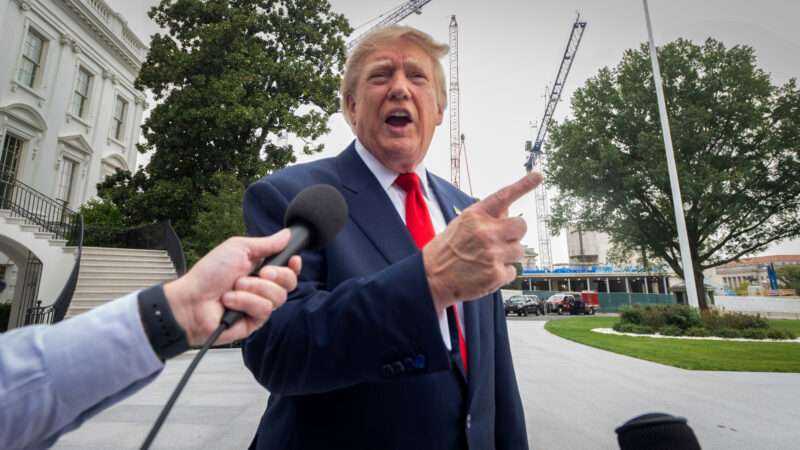
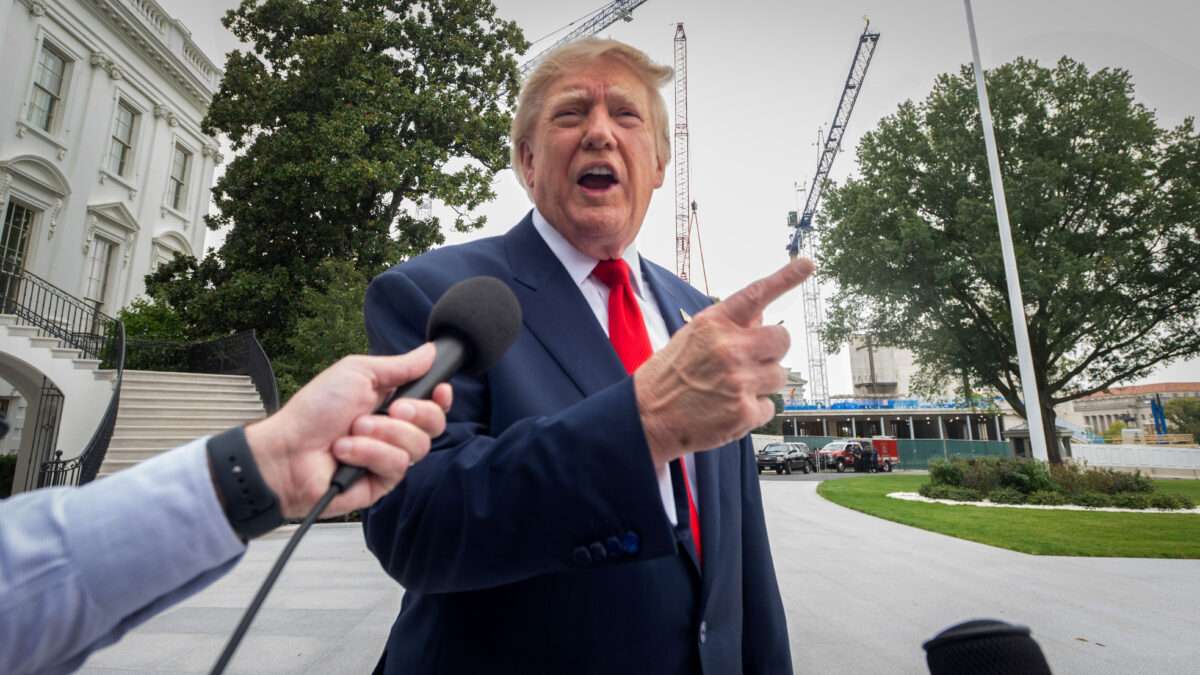
Trump speaks to a reporter | Ron Sachs - Pool via CNP/CNP / Polaris/Newscom

With less than three weeks until Election Day and Republican approval numbers down, President Donald Trump is taking unorthodox measures to drum up support for the GOP.  Last week, Trump sent out $90 payments to over 20 million Americans on Medicare Part B—which covers doctor visits and regular checkups. The money was made available to help seniors "pay for their Medicare Part B premiums," which cost $202 per month.  

In a Truth Social post, Trump said the money is coming from "a pointless 'Slush Fund'" known as the Medicare Improvement Fund, which, though bombastic, is an accurate telling of how lawmakers have used the account. 

The fund was created in 2008 "to improve program management" of Medicare. However, as a 2023 report from the Congressional Budget Office (CBO) points out, this fund has really served one purpose far above supporting Medicare: sneaky government accounting.

As the CBO wrote, "No funds have been spent by [Centers for Medicare & Medicaid Services] from either improvement fund since their establishment in 2008." Instead of using the fund to support Medicare programs, Congresses have filled up the fund with money scheduled for use only in the distant future, then siphoned that money away to other legislation. Under CBO accounting rules, canceling or redirecting future spending is a "credit" to the bill's total cost—a helpful trick for legislators who want to couch their initiatives as being affordable. This trick was used to finance nearly $21 billion of the Affordable Care Act and has been used for a scattering of legislation since. 

While Trump says this disbursement is needed to help enrollees pay premiums, the timing of the announcement—weeks before the midterms—and Trump's history of using taxpayer money to win over senior citizens make the claim dubious. In the One Big Beautiful Bill Act, for instance, seniors were given a $6,000 tax deduction. Trump has also consistently defended senior-focused entitlement programs like Social Security and Medicare, which are both facing a funding cliff in the coming years. Trump siphoning off public money to turn out the electorate hasn't been limited to senior citizens either. Last month he promised to hand out $5,000 checks to all Americans—conditional upon Republican victory in the midterms. 

Despite grumbling by some Democrats about Trump's decision to empty the Medicare Improvement Fund, it seems unlikely the choice will detract from Medicare's ability to provide services. The bigger concern is that the president is using his office to hand out personally signed checks to voters weeks before an election. Pre-election vote grabbing through irresponsible spending is not unprecedented, but it has rarely been so characteristic. 

The fiscal ramifications of Trump's unorthodox spending are also concerning. Medicare is already teetering toward insolvency, and entitlement spending continues to balloon. Neither Congress' playbook of deceptive accounting nor Trump's vote buying will address these problems. Without raising taxes or lowering benefits, these programs cannot continue as they are.

But raising taxes and cutting benefits is no way to win an election. Trump knows this and seems perfectly willing to sacrifice America's fiscal stability for a quick boost in the polls.

The post Trump's $90 Checks to Seniors Look a Lot Like Vote Buying appeared first on Reason Magazine.

  •  

Zelenskyy Breaks with Trump as Washington’s Ukraine Policy Hands Putin the Advantage

Volodymyr Zelenskyy’s unusually direct criticism of Donald Trump marks a turning point in relations between Kyiv and Washington. With American satellite restrictions disrupting Ukrainian military operations, intelligence cooperation under scrutiny and the White House easing pressure on Russian energy exports, Ukraine faces a fundamental question: how can it defend itself when its most powerful partner is increasingly willing to accommodate Moscow?

President Volodymyr Zelenskyy has abandoned much of the diplomatic restraint that characterised his dealings with Donald Trump since their confrontation in the Oval Office in February 2025. In an interview on 14 October, the Ukrainian president accused his American counterpart of moving towards Russia and choosing the wrong side of history.

His intervention followed a series of American decisions that have increased pressure on Kyiv while offering Moscow economic and diplomatic advantages. A controversial agreement involving Russian diesel exports, uncertainty surrounding the provision of American intelligence and sudden restrictions on military satellite communications have brought relations between the two countries to their most difficult point since Trump’s return to the White House.

Zelenskyy’s criticism was unusually personal. Questioned about whether he felt betrayed by Washington’s recent decisions, he acknowledged the sense of betrayal but emphasised that Ukraine’s survival could not be treated as a commercial negotiation. He said Ukraine was not selling its country and argued that an American president claiming to act as an intermediary must not favour one of the belligerents.

The shift reflects the apparent exhaustion of a strategy Kyiv has pursued for more than a year: avoid openly challenging Trump, maintain personal contact with the White House and hope that American support can be preserved through diplomatic accommodation. That calculation is becoming increasingly difficult to sustain as Washington’s demands threaten to constrain Ukraine’s military operations without producing corresponding concessions from Russia.

American leverage becomes a Ukrainian vulnerability

The immediate demonstration of Ukraine’s dependence on American technology came during the night of 13–14 October, when SpaceX imposed restrictions on Starshield, the military-grade version of its Starlink satellite communications service.

According to accounts provided by Ukrainian frontline commanders, the changes disrupted connections to terminals travelling above approximately 160 kilometres per hour, forcing the abandonment of several drone missions. The restrictions affected systems used for reconnaissance, interception and strikes against Russian military targets.

As EU Today reported on 14 October, the disruption exposed a weakness extending beyond individual drone missions. Satellite communications form part of Ukraine’s operational infrastructure, supporting the movement of battlefield information, remote weapons control and communications across areas where conventional networks are vulnerable to Russian electronic warfare.

An interruption imposed remotely by a commercial provider can therefore affect military capabilities without any physical attack on Ukrainian equipment. Decisions taken outside Ukraine’s military command structure can alter the effectiveness of systems already deployed on the battlefield.

Ukraine’s Defence Ministry subsequently opened discussions with American officials, SpaceX and NATO partners while examining alternative communications arrangements.

Later on Wednesday, former Ukrainian defence minister Mykhailo Fedorov announced that Starlink functionality at speeds up to 160 kilometres per hour was being restored. Work was still required to remove the restrictions on Starshield altogether. The partial reversal offered immediate operational relief but did not resolve the underlying dependency.

There is no established evidence that the Trump administration ordered SpaceX to impose the restrictions. Nevertheless, their timing, amid mounting disagreements over Ukraine’s military operations, has reinforced Kyiv’s concerns about relying on communications infrastructure controlled by an American company.

Intelligence warnings and the protection of civilians

The dispute over satellite access coincides with growing uncertainty about American intelligence cooperation.

Following Russian ballistic missile strikes on Kyiv on 12–13 October, Zelenskyy complained that Ukraine had received no advance warning from its international partners. The attacks damaged residential buildings and energy infrastructure, while Ukraine’s authorities raised concerns about the absence of advance intelligence.

Advance information about Russian missile launches is particularly important when ballistic weapons leave civilians only minutes to reach shelters. Intelligence cooperation also supports Ukrainian air-defence units in assessing threats and preparing interceptions.

Trump denied on 13 October that Washington had stopped sharing intelligence with Ukraine. Ukrainian Foreign Minister Andrii Sybiha likewise confirmed that cooperation continued. The absence of warnings about particular attacks therefore cannot be equated with a complete suspension of American assistance.

Yet the consequences of unreliable warning arrangements remain serious. For Ukraine, the distinction between information withheld, delayed or simply unavailable offers little protection when Russian ballistic missiles reach civilian neighbourhoods without sufficient warning.

The wider concern is that intelligence provision could become another instrument of diplomatic pressure. Accounts of negotiations over Ukrainian attacks on Russian refineries have raised the possibility that Washington might use such assistance as leverage. Reports of explicit threats have been disputed, but the controversy has increased uncertainty surrounding a capability central to Ukraine’s defence.

Why the diesel agreement changes the strategic calculation

The confrontation has also exposed a contradiction in Washington’s approach to the war.

Trump’s agreement allowing Russian diesel to return to international markets offers Moscow additional export opportunities at a time when Ukrainian attacks have damaged refining capacity and disrupted domestic fuel supplies.

The American administration has justified the arrangement partly through the need to ease fuel prices. Yet the initially announced quantities are modest in relation to international petroleum markets, raising questions about how much immediate relief the measure can realistically provide.

For Putin, its diplomatic significance may be considerably greater. Russia has secured a relaxation of American economic restrictions while Washington simultaneously presses Kyiv to limit attacks on the infrastructure that generates revenue for Moscow’s war economy.

The commercial implications of Washington’s sanctions reversal extend beyond the initial shipment volumes. The Treasury authorisation permits certain transactions involving Russian-origin diesel until April 2027, creating opportunities for international traders and financial intermediaries while leaving the broader sanctions framework formally intact.

Trump’s proposed energy ceasefire has compounded the difficulty. As EU Today examined earlier this week, Kyiv has offered to suspend strikes against Russian energy facilities if Moscow reciprocates. Russian attacks on Ukrainian power infrastructure have nevertheless continued.

An arrangement in which Ukraine stops targeting Russian refineries while Russia retains the ability to strike Ukrainian electricity generation would remove an important source of pressure on Moscow without protecting Ukrainian civilians.

Such an outcome would change the military and economic conditions of the war in Russia’s favour, regardless of how Washington describes its diplomatic objectives.

The White House, Congress and the limits of presidential power

Zelenskyy’s sharper language also reflects a possible reassessment of where influence over American policy can be exercised.

For much of Trump’s second presidency, Kyiv’s diplomacy has concentrated on preserving a workable relationship with the president himself. That approach assumes that personal engagement can influence White House decisions even when Trump’s broader political instincts favour accommodation with Putin.

The events of October suggest that this strategy has reached its limits.

Ukraine’s alternative is not necessarily an outright confrontation with Washington. Rather, it involves placing greater weight on Congress, the American defence establishment and the institutional relationships that have supported Ukraine since Russia’s full-scale invasion in February 2022.

There is a historical precedent. During Trump’s first presidency, Congress supported military assistance to Ukraine despite differences within the administration over relations with Russia. Under Joe Biden, congressional resistance also demonstrated how domestic American politics could determine the timing and scale of weapons deliveries.

The months-long delay in approving the 2024 military assistance package contributed to severe ammunition shortages at a critical stage of Russia’s offensive operations. Ukraine’s loss of Avdiivka illustrated the danger of making battlefield planning dependent on political negotiations in Washington.

The congressional elections on 3 November 2026 could alter the balance of power. A change in control of either chamber would increase opportunities for oversight, investigations and legislative pressure on the administration, although Congress cannot independently direct every aspect of intelligence sharing or presidential diplomacy.

A less compliant Congress could nevertheless make it politically harder for the White House to restrict Ukrainian assistance without explanation.

Europe confronts a more permanent problem

For European governments, the dispute carries implications extending well beyond the immediate confrontation between Trump and Zelenskyy.

The transatlantic security relationship has historically depended on the assumption that American military capabilities, intelligence networks and political commitments would remain available to European allies during a major security crisis.

That assumption is increasingly difficult to reconcile with an American administration prepared to link assistance to Ukraine with wider commercial negotiations and domestic political objectives.

The consequences are particularly acute in areas where European capabilities remain insufficient to replace American systems quickly, including satellite intelligence, strategic reconnaissance, missile defence and specialised communications.

Europe can expand weapons production, finance Ukrainian purchases and develop alternatives to American technology. Replacing the full range of capabilities provided by the United States, however, requires investment measured in years rather than months.

The problem will not necessarily disappear when Trump leaves office. His return to power demonstrated that the American foreign-policy consensus which supported European security for decades can be challenged through the electoral process.

Future American administrations may seek to restore traditional alliances, but European governments must now account for the possibility that another election could reverse those commitments.

For Zelenskyy, the immediate calculation is exceptionally difficult. Public criticism risks provoking further retaliation from a president whose administration still controls capabilities essential to Ukraine’s defence. Continued diplomatic restraint, however, has not prevented Washington from offering concessions to Russia or introducing uncertainty into Ukraine’s military planning.

His latest intervention suggests that Kyiv is no longer convinced that avoiding confrontation will preserve American support. The question is whether greater political scrutiny of Washington’s decisions can prevent a further erosion of assistance before Russia turns the resulting military advantages into territorial gains.

  •  

Air Force Major Who Called for Trump’s Impeachment Held in Solitary Confinement

Maj. Jason Watson was arrested after he participated in a news conference calling for Trump to be removed from office over his launching of military actions against Iran, Cuba, and Venezuela without congressional authorization

  •  

Trump's Plan To Buy Russian Diesel Would Violate Federal Law

Donald Trump and a Russian fuel tanker | Xpix/Ivansmuk/Dreamstime/Al Drago-Pool/ZUMAPRESS/Newscom/Fatima Ruiz.

President Donald Trump says he has struck a deal with Russian President Vladimir Putin to import large amounts of diesel fuel into the United States—apparently hoping to lower fuel prices in the weeks before the midterm elections.

The exact terms of that agreement remain somewhat unclear. The White House has not said when the purchases will be made, what prices will be paid, or who will be paying (private companies or taxpayers), though the Treasury announced that it would be issuing a "temporary general license to allow the supply of Russian diesel to the global market." Reporting by The New York Times suggests that investors with ties to the administration are most likely to profit. Because diesel prices are determined by a global market, it's also far from certain that the Russian gas would make much of a dent in American prices.

However, this much is clear: If Trump follows through with this "deal," he will have violated two federal laws recently passed by Congress—one of which he signed just weeks ago.

The more significant of those two laws is the Ending Importation of Russian Oil Act, which passed the House with a 413–9 vote and was unanimously approved by the Senate. President Joe Biden signed that bill into law on April 8, 2022. The law is an outright ban on Russian energy products, including diesel fuel.

The law also lays out the process for lifting the ban on imports. The president must tell Congress that Russia has "reached an agreement to withdraw Russian forces and cease military hostilities in Ukraine" and has recognized "the right of the Ukrainian people to independently and freely choose their own government."

There is also a clear timeline for lifting the ban. Any termination of the ban requires a 90-day waiting period, during which time Congress has the opportunity to block the change.

Obviously, Russia has not withdrawn from Ukraine. Even if it had, the White House has not gone through the necessary process to notify Congress, nor waited the necessary 90 days.

The law does not allow a president to ignore it if fuel prices are high and an election is approaching. It does not allow a president to ignore it if he starts an illegal war in another part of the world that causes fuel prices to spike.

Trump's attempt to disregard that law has drawn a bipartisan rebuke from members of Congress. A group of seven senators—three Democrats and four Republicans—issued a joint statement this week saying that Trump's deal "runs directly counter to" the 2022 law.

Sen. Thom Tillis (R–N.C.), one of the senators who joined that statement, said on Sunday that there is "a legitimate case for saying the president's not following the law."

The second law at play is the Lindsey O. Graham Sanctioning Russia and Iran Act, named for the late senator and passed earlier this year. Among other things, it authorizes the president to levy tariffs of up to 100 percent against countries that buy Russian crude oil and natural gas. The intent is clear: to prevent Russia from being able to finance its war against Ukraine by selling energy commodities onto the global market. Trump signed it into law last month.

Lawmakers on both sides of the aisle have also pointed to that law in the days since Trump announced his deal to buy Russian diesel.

"Now is the time to use those sanctions to squeeze Putin's war machine, not reward a dictator by putting more money in his hands while he continues targeting and killing Ukrainian civilians," Rep. Don Bacon (R–Neb.) posted on X this week. Rep. Steny Hoyer (D–Md.) said it was "outrageous" for Trump to be buying energy from Russia after signing a bill that could be used to punish other countries for doing the same.

The White House could argue that, in this case, Trump is merely violating the spirit of the law rather than the letter of it. Even so, this is blatantly hypocritical.

The hypocrisy runs deep. The Trump administration has spent much of its second term trying to restrict trade and downplay the advice of economists who have warned that doing so would raise prices. Now, Trump is once again seeking imports as a means to ease high prices—as he has done with beef and other products. Perhaps the White House should apply this general principle more broadly, and in circumstances where doing so would not violate federal laws.

Some of the president's allies are now trying to downplay these violations of federal law. Conservative pundit Mollie Hemingway says Trump is merely trying to "put the American people first" by addressing rising gas prices.

Sorry, but no. The president is not allowed to disregard federal laws because he believes it will lower gas prices in swing states.

You can, of course, criticize those laws for being misguided. Trade is generally good, and erecting barriers to the flow of goods tends to be costly. Trump could ask Congress to repeal these laws. He cannot deliberately ignore them.

If the "deal" with Russia comes to fruition, it will further erode what little power Congress retains within America's democratic system. If a president is not bound by the laws Congress has passed, then the legislature might as well not exist at all.

The post Trump's Plan To Buy Russian Diesel Would Violate Federal Law appeared first on Reason Magazine.

  •  

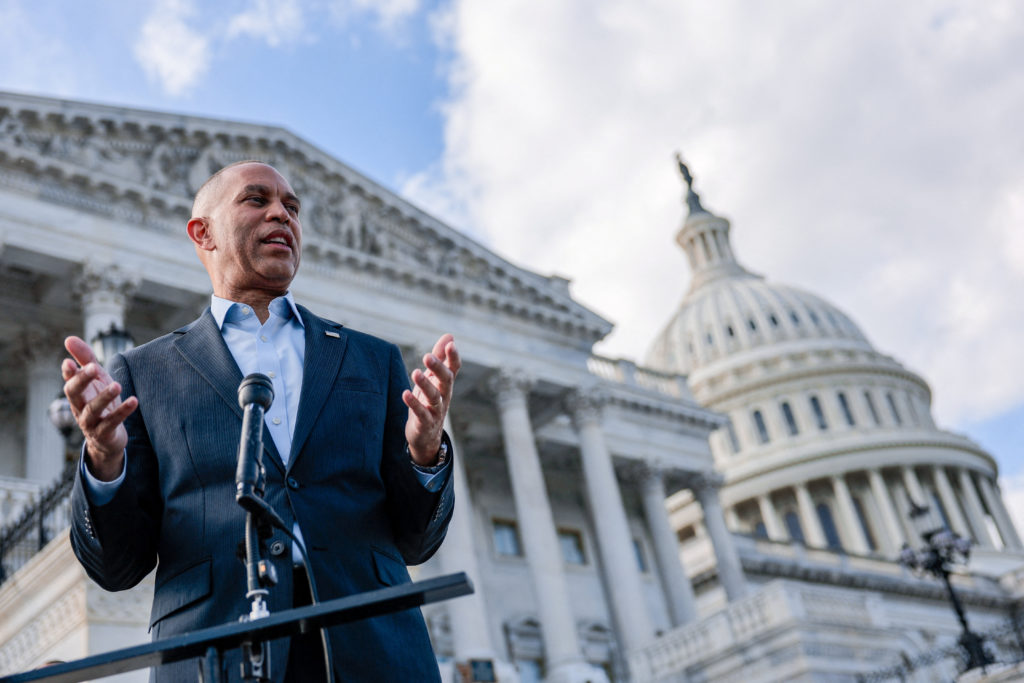
Here's what's on House Democrats' agenda if they sweep to power in midterm elections

Democratic leader Hakeem Jeffries said Democrats will be united on reinstating Affordable Care Act tax breaks, reversing Republican Medicaid cuts, holding votes against the Iran war and undoing President Donald Trump's tariff regime.

  •  

Agents search Rep. Omar’s Washington home in criminal probe as she vows she won’t ‘be silenced’

This is an escalation in a criminal investigation of US Rep. Ilhan Omar, in the final weeks of her reelection bid. She is a frequent target of Israel partisans and the Trump Administration over her opposition to Israel's human rights violations and the Israel lobby's destructive influence in the US

  •  

Argentines to March to Demand University Funding

On Tuesday, Argentine political leaders, workers, students, and social activists will march to the Congress in Buenos Aires to demand compliance with the University Financing Law and urge the Chamber of Deputies to reject Decree of Necessity and Urgency (DNU) 70/23. The gathering is scheduled to take place in front of Parliament, where demands regarding the Land Law and the Rental Law will also be voiced.

RELATED:

Argentine Prosecutors Seek Up to 12 Years in Prison for Doctors Over Maradona’s Death

The mobilization will bring together faculty, non-teaching staff, students, university officials, labor confederations, tenants’ organizations, Malvinas war veterans, and political leaders. Participants will call on the government to implement the University Financing Law and on the Chamber of Deputies to repeal DNU 70/23, which has already been rejected by the Senate.

The protest was decided upon weeks ago, following strikes and public teaching sessions organized by faculty and non-teaching staff unions. The organizations maintain that the law must guarantee the sustainability of national universities and demand that the Executive branch comply with existing regulations.

The Buenos Aires University (UBA) issued a message supporting the call to action: “Let us not normalize non-compliance with the law. Laws must be obeyed. Always.” The university called for participation in the fifth Federal University March to demand adherence to the law and to defend public higher education.

#Argentina | A federal court struck down President Javier Milei’s decree blocking the University Financing Law and ordered the government to immediately release funds for public universities.
The ruling follows more than a year of disputes over university funding.#Education… pic.twitter.com/SbD2Nswu3P

— teleSUR English (@telesurenglish) October 7, 2026

These demands were also voiced last week at the Palacio Pizzurno, the headquarters of the Secretariat of Education. There, student unions from the Buenos Aires Metropolitan Area staged a sit-in and asked the Secretary of Education, Carlos Torrendell, to increase scholarships in accordance with the University Financing Law.

According to the statement regarding the event, the meeting lasted three minutes before authorities forcibly removed the students from the building. Later, the Ministry of Human Capital announced it would file a formal complaint regarding the incident. Buenos Aires Province Governor Axel Kicillof confirmed he would participate in the march.

During an event marking the 150th anniversary of the implementation of Law 988 on Common Education, he stated that the national government does not respect the law and maintained that its representatives would be “in the streets on the 15th, defending public universities.” Kicillof also noted that the 26 national universities located within the province are the responsibility of the federal government.

Meanwhile, students will march in groups organized by student unions or independently, just as they did during the four previous mobilizations. Some university faculties are preparing measures to support the protest. At the UBA’s Faculty of Philosophy and Letters, an assembly voted to occupy the building at Puan 480 from 7:00 PM on Tuesday until Thursday, the day of the mobilization.

Emergency Decree (DNU) 70/23 and the legislative debate

The march also aims to pressure the Chamber of Deputies to reject Emergency Decree (DNU) 70/23, signed by President Javier Milei. The lower house is scheduled to debate the decree, although achieving a quorum to hold the session remains uncertain.

The legislative debate was called after the Supreme Court overturned a ruling that had declared Article 154 of the decree—which concerned the repeal of the Land Law—unconstitutional. As of this writing, that law remains in effect. Nevertheless, the organizers are proceeding with the mobilization, maintaining that the protest should not depend on judicial decisions.

The La Plata Center for Malvinas War Veterans (Cecim), which had filed the legal challenge, confirmed it would be present at Plaza de los Dos Congresos, stating: “The homeland is not for sale. We are marching on the 15th regardless, because DNU 70 is a crime against the people.”

The two CTA labor confederations also announced their participation. The CTA Autónoma announced it would return to the streets to demand that the Chamber of Deputies repeal the decree and move forward with declaring it unconstitutional.

"El decreto 70/23 no es ni más ni menos una forma de LIQUIDAR SOBERANÍA NACIONAL, no hay forma de verlo desde otro lugar"

Hay que impedir que vendan el país entero, porque dejaron en claro que no les importa pic.twitter.com/je4wq44qQD

— 💛🇦🇷 🅟🅐🅜🅟🅐 🇦🇷💙 (@Pampa139) October 11, 2026

Emergency Decree (DNU) 70/23 repealed the Rental Law, which had mandated three-year contracts and six-monthly rent adjustments. Consequently, tenants’ organizations will join the march to demand the decree’s rejection. The group Organized Tenants (Inquilinos Agrupados) called for a gathering outside Congress, declaring: “Down with Decree 70. We will have a rental law.”

Peronist and leftist leaders also confirmed their participation. Gabriel Solano—a former Buenos Aires City legislator representing the Workers’ Party (Partido Obrero) within the Left and Workers’ Front-Unity (FIT-U)—called for intensified mobilization to reject the decree and secure an increase in the university budget.

The rally will thus bring together demands for higher education funding and opposition to the repeals enacted by the decree regarding land and rental regulations. The outcome of the debate on the decree will rest with the deputies, while protesters seek to voice their grievances outside Congress.

  •  

Bipartisan US senators say Trump’s Russian diesel deal conflicts with 2022 ban, as he presses Kyiv to spare Russian refineries

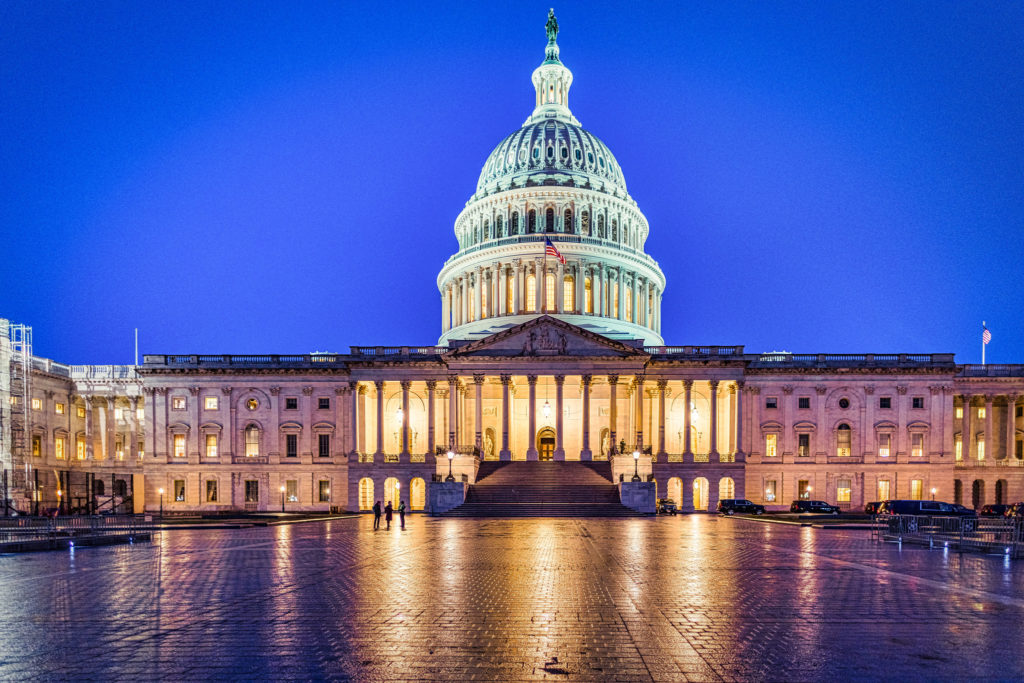
united states capitol building home bicameral us congress consisting lower body house representatives upper senate

Seven US senators from both parties said the Trump administration's decision to authorize Russian diesel imports conflicts with a 2022 law banning Russian energy imports and accused it of failing to consult Congress, in a statement on 11 October.

The dispute comes as the war with Iran drives up US fuel prices, which US President Donald Trump has blamed on Ukraine's strikes on Russian refineries. Trump says Russian supplies will help bring prices down, while lawmakers warn that purchases could provide Moscow with revenue to continue its war against Ukraine.

The senators—Republicans Susan Collins, Lisa Murkowski, Thom Tillis, and John Curtis, and Democrats Jeanne Shaheen, Richard Blumenthal, and Ron Wyden—called on the administration to reverse course, saying the US should not provide Russian President Vladimir Putin with “a financial lifeline.”

What the 2022 law requires before the ban can end

The law, signed on 8 April 2022, allows the president to end the import ban only after submitting a certification to Congress. The certification must find that Russia has agreed to pull out its forces and stop the fighting on terms Ukraine's free and independent government accepts, no longer poses an immediate threat of attack to any NATO member, and recognizes Ukrainians' right to pick their own government.

The law also requires consultation with four congressional committees and a report at least 45 days before certification. The termination takes effect 90 days after certification unless a joint resolution of disapproval is enacted into law during that period. The senators allege the administration failed to meet the consultation and reporting requirements. Their statement does not establish whether a certification has been submitted.

Treasury’s license cites sanctions rules, not the 2022 law

The Treasury Department's Office of Foreign Assets Control issued General License No. 135 on 9 October, authorizing certain transactions involving Russian-origin diesel that would otherwise be restricted under US sanctions regulations. It runs until 7 April 2027 and cites sanctions regulations, not the 2022 import-ban law.

trade banks energy crypto—the eu keeps its full russia economic sanctions wall standing 2027 · post flags member states headquarters council european union brussels belgium 17 2025 getty images/thierry monasse
Explore further

EU blacklists 1,569 Russian arms suppliers and their bosses in its biggest sanctions round ever, as Trump eases up on Moscow

Treasury Secretary Scott Bessent defended the deal on Fox News on 11 October, saying the administration would proceed under existing legal authority. He said lawmakers who argued that either the earlier law or the current Lindsey Graham sanctions law prohibited the deal were wrong, and argued the agreement would lower prices, Reuters reported.

How much diesel Trump says Russia will supply

Trump said on Truth Social that Russia would immediately supply more than 300,000 tons of diesel to US and global markets, followed by 500,000 tons in November and 1 million tons after that. He said Russia would deliver another 3 million tons “within a short period of time,” depending on the condition of its diesel refineries. The promised volumes have not been independently verified.

Russia partially lifted its diesel export ban on 10 October, allowing 500,000 tons onto the global market at this stage, the Russian government said, according to state news agency TASS.

A House bill to block Russian oil purchases

Pennsylvania Republican Rep. Brian Fitzpatrick plans to introduce the Ronald Reagan Peace Through Strength Act to block Russian oil purchases and use a discharge petition to force a House vote, Axios reported. The procedure can force consideration of a bill if 218 House members sign. Republican Rep. Don Bacon said he would support the bill and called Trump's decision a serious mistake, according to Ukrainska Pravda.

Barrasso defends the deal. Zelenskyy calls it an investment in war

On CBS's Face the Nation on 11 October, Senate Majority Whip John Barrasso, a Republican from Wyoming, called the deal “another point of leverage” for Trump to use against Putin. Asked whether the decision violated US law, Barrasso said the president was balancing competing priorities and had to make tough decisions.

Ukrainian President Volodymyr Zelenskyy wrote on Telegram on 9 October:

“Allowing Russia to sell petroleum products is an investment in a war that must be ended, not prolonged.”

Trump also expects Ukraine to stop striking Russian refineries under his proposed energy ceasefire, a White House official told Axios. Zelenskyy said Kyiv would halt such strikes if Moscow did the same.

  •  

New online database tracks pro-Israel political donations in the United States

A searchable record of pro-Israel political money drawn primarily from US Federal Election Commission filings and public disclosures. It lists 11,168 donors, tracks funding linked to 523 members of Congress, details spending against 49 candidates targeted for defeat, etc

  •  

ATTR-CM takes centre stage at ESC 2026

This year's European Society of Cardiology (ESC) Congress showed just how quickly cardiology is changing. Late-breaking trials, new scientific data and major guideline updates all pointed to a field that is becoming both more crowded and more complex.

A central question the conference sought to address was how effectively the two main types of ATTR-CM treatment work. Stabilizers are designed to prevent the transthyretin protein from breaking apart, while silencers reduce its production. The debate centered on whether silencers offer enough additional benefit over established stabilizers in this significant rare disease market.

One of the clearest lessons was that the challenge is no longer simply bringing more treatments to market. It is increasingly about finding the right patients earlier, understanding how different therapies compare and deciding where each option fits as standards of care improve. ATTR-CM was one of the strongest examples of that shift, with the conference data sharpening the debate over whether silencers offer enough additional benefit over established stabilizers. The same pattern could also be seen in new guidelines and in the growing role of digital monitoring.

Alnylam ($ALNY) faces new questions over Amvuttra in ATTR-CM

Alnylam Pharmaceuticals came to ESC looking to strengthen the case for Amvuttra in ATTR-CM, but the data arguably leave some important questions unanswered. While the drug is already approved, the estimated benefit appeared more modest than many investors and clinicians may have hoped, particularly given the growing expectation that newer therapies will need to demonstrate clear advantages over established treatments. The key question is whether ATTR-CM silencer treatments offer enough additional benefit on top of stabilizers that are already delivering meaningful clinical outcomes.

In light of this, there remains uncertainty around the extent of Amvuttra's value and whether it will be sufficient to secure a strong position in an increasingly competitive market. The FDA's decision earlier this year to challenge Alnylam's survival claims based on an open-label extension of HELIOS-B only adds to the need for caution. It is, therefore, perhaps unsurprising that Alnylam's share price has come under pressure and that questions are being raised about the long-term commercial viability of Amvuttra in ATTR-CM.

Rather than definitively strengthening the case for Amvuttra, Alnylam's participation at ESC suggests that important questions remain about the true scale of its advantage and whether the evidence is sufficient to establish a clear benefit over existing treatments.

AstraZeneca ($AZN) casts further doubt on silencers in ATTR-CM

In perhaps a similar spirit, AstraZeneca and Ionis used ESC to revisit the results of the Phase 3 CARDIO-TTRansform trial of Wainua (eplontersen), another potential treatment for ATTR-CM. They faced a somewhat different challenge, however, as the trial had already failed its primary endpoint, with Wainua unable to significantly reduce cardiovascular mortality and recurrent cardiovascular events in the overall study population.

The companies sought to contextualize the findings, but the presentation arguably highlighted one of the trial's central challenges. If the apparent benefit is less clear among patients already receiving stabilizer therapy, the data raise broader questions about how much additional value silencers can deliver beyond treatments that are already producing meaningful clinical outcomes. The broader question, however, is what this means for an ATTR-CM market that is becoming increasingly competitive. As new treatments emerge, should attention shift towards newer therapies, or remain focused on established stabilizers that may already be providing much of the available benefit?

New ESC guidelines and Huawei point to a prevention first approach

ESC also saw the release of new guidelines that could change how cardiovascular patients are identified and managed. The updated heart failure guidance simplifies how patients are classified and puts more focus on prevention and earlier intervention. In practice, that means clinicians may be looking for risk earlier and across a broader group of patients, rather than waiting until disease is more advanced.

That change is creating more room for digital tools. Huawei used ESC to preview its Watch D3, a wrist-based ambulatory blood pressure monitor designed to track blood pressure in everyday settings. It is one example of how wearables are moving beyond basic wellness tracking and towards data that could help identify risk earlier, monitor patients more closely and support treatment decisions.

Reflecting on ESC 2026, ATTR-CM emerged as a key area of focus. The AstraZeneca and Alnylam data raised questions about whether silencers can offer enough benefit over established stabilizers, while new guidelines and digital tools highlighted the importance of identifying risk earlier and monitoring patients more closely. The key question now, arguably, is which approaches can genuinely improve on what is already available, and which patients are most likely to benefit.

  •  
❌