Reading view
‘They tore away my dignity, my body’ – 3 Pakistani migrants on trial for raping Belgian university student in convenience store
A female University of Mons student was allegedly sequestered and raped in the back room of a convenience store by three men of Pakistani origin in the Belgian city of Mons. The suspects are now on trial as of Oct. 12, 2026, for aggravated rape and unlawful confinement.
The incident occurred in the early hours of Dec. 12, 2025, at a night shop on Rue de la Clef in Mons. The student, identified in reports as Laura, a pseudonym, entered the store around 1:30 a.m. after an evening out, first to buy cookies and later around 1:42 a.m., for a drink. A shop employee invited her to have a drink in the back room. She agreed while using a translation app to communicate with him and then followed him. While she was in the back of the shop, the other employees closed the shop at 2:29 a.m. with her still inside.
While she was with the men, the owner asked an employee to serve her whisky and Cola.
Concerned about the drinking the beverage, she texted her roommate: “I’m at the convenience store. If I don’t come back, call the police.”
After consuming the drink, her vision then blurred and she lost consciousness, according to Belgian news outlet L’Avenir.
She regained awareness around 6:34 a.m., alone in the back room, disoriented, with her clothes disheveled and without underwear. She then got up and left.
Garbage collectors later described seeing a terrified young woman looking over her shoulder. She reported sexual violence to her roommate and medical exams found male DNA in her vagina.
Police intervened at the shop, finding two men present and a third hidden in a cupboard. Investigators recovered the student’s underwear, which contained semen matching one of the three suspects.
The three men are all of Pakistani origin, including the shop owner and an employee. The police arrested the suspects.
One also faces a charge related to an alleged attempted rape of another customer in July 2025, which involved an attempt to force a kiss in the back room. All three deny the charges. The owner has claimed the student tried to steal €7,000 from his pockets, a version the prosecution rejects as it does not explain the scientific evidence.
In court a Monday morning, the public prosecutor treated the three as co-authors of the rape.
“None of the three justifies the closing of the shop while this young woman is inside,” the prosecutor stated, requesting sentences of four and five years.
The court also discussed a possible requalification of the facts as failure to assist a person in danger for two of the accused, while the defense lawyers pleaded for acquittal.
The student’s lawyer, Odile Maes, argued the men knew what was happening in the back room and shared responsibility, calling them “sexual predators.”
The victim was present in court and delivered emotional testimony, saying: “I have the feeling of having been thrown away like a broken toy that night. They tore away my dignity, my body, my friends, my family, my studies, and many other things. I demand justice.”
The student has described lasting effects including nightmares, isolation, fear of men, weight gain, and the loss of a student job, though she completed her first year of university with schedule adjustments. A judgment is expected in early November.
The post ‘They tore away my dignity, my body’ – 3 Pakistani migrants on trial for raping Belgian university student in convenience store appeared first on Remix News.
Migrants Taking Four in Five New Jobs
Four in five new jobs created in Britain since 2014 were taken by migrants while the number of British people on out-of-work benefits increased by 2.3 million, according to a report from the Centre for Social Justice.
The post Migrants Taking Four in Five New Jobs appeared first on The Daily Sceptic.
Are Fossil Fuels Running Out?
Have we passed peak oil – are fossil fuels running out? Richard Lyon says yes, and the transition to 'renewables' is making it worse. But peak oil is a myth, says Tilak Doshi, as he reviews Lyon's book The Energy Trap.
The post Are Fossil Fuels Running Out? appeared first on The Daily Sceptic.
5 Dead in Mexico as Storm Rachel, Hurricane Simon Hit Pacific Coast
Storm Rachel and Hurricane Simon have killed at least five people across Mexico’s Pacific coast as of Tuesday, while heavy rains, strong winds and rough seas keep several states on alert, authorities reported this Tuesday.
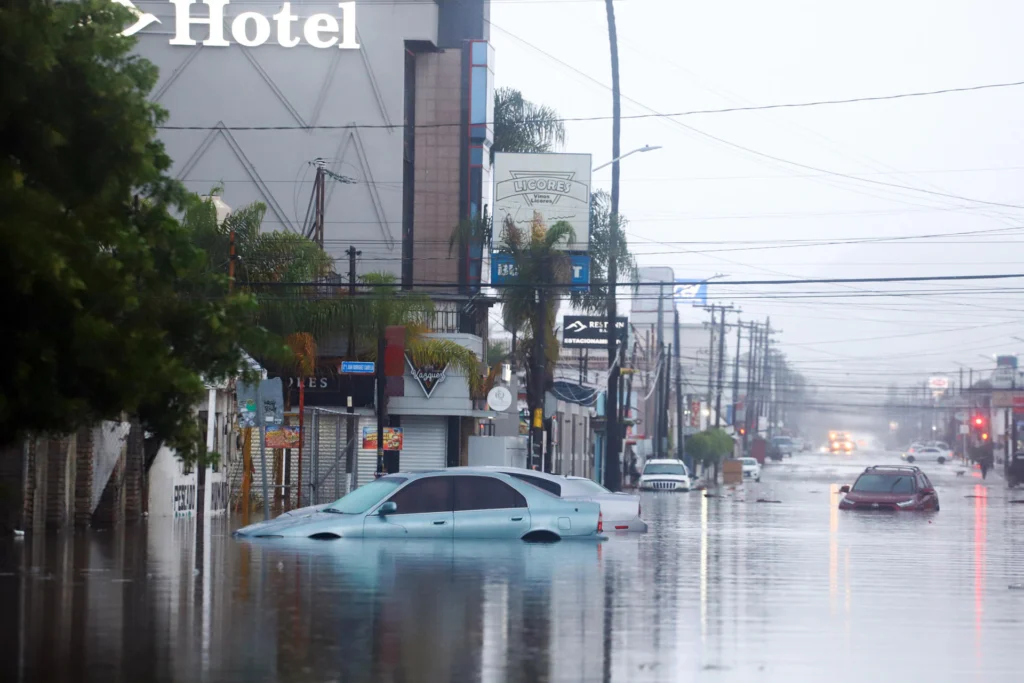
Rachel, which is advancing through northwestern Mexico, has caused at least four deaths in the city of Ensenada in the state of Baja California.
The victims include two children, aged 4 and 13, and two women, aged 35 and 50. Five people remain missing.
RELATED: Hurricane Isaias Kills Four, Leaves Nearly 396,000 Without Power
The storm also brought structural damage and blocked roads across the region. Authorities remain active in rescue operations for those still reported as missing, and in recent hours confirmed the rescue of 32 people who had been cut off in different localities.
🌧️ WEATHER WATCH: Hurricane Simon and Tropical Storm Rachel have brought deadly conditions to Mexico’s Pacific coast, according to reports.
— TrendWire (@TrendWire9c) October 13, 2026
Stay informed, follow local emergency guidance and keep affected communities in your thoughts.
#Mexico #ExtremeWeather #ClimateNews
Rachel’s Path of Destruction
The cities most affected by Rachel are San Felipe, Tijuana, Playas de Rosarito, Mexicali and Tecate, along with the localities of El Arroyo, El Pípila and Maneadero. Damage to homes and businesses has been reported, with significant disruptions to several roads along the Pacific coast.
Rachel began as a tropical storm that formed off the coast of the state of Guerrero on September 27. Since then it has shown variations in intensity and trajectory as it moved up the Mexican coast before strengthening and turning toward the northwest.
Authorities have warned about landslides, the swelling of rivers and streams, and flooding in some areas. They have called on citizens to stay informed as the systems continue to move.
#LoÚltimo | MÉXICO: VEHÍCULOS QUEDAN SEMISUMERGIDOS TRAS INUNDACIONES PROVOCADAS POR LA TORMENTA RACHEL
— La Capital News (@LaCapitalNews) October 11, 2026
Las intensas lluvias asociadas a la tormenta Rachel provocaron inundaciones en Ensenada, Baja California, donde varios vehículos quedaron bajo el agua y distintas calles… pic.twitter.com/dKaR6J35h2
Simon Weakened But Dangerous
Meanwhile, Hurricane Simon has weakened to a category 1 storm but remains a threat to several localities along Mexico’s Pacific coast. The states of Nayarit and Sinaloa continue to face heavy rains and winds, along with waves between two and three meters high.
The cyclone’s center was located approximately 155 kilometers west of Jalisco and 320 kilometers south-southwest of Sinaloa, with maximum sustained winds of 150 kilometers per hour and gusts reaching 185 kilometers per hour.
Mexican authorities reported that the center of Hurricane Simon was moving toward the west-northeast at a speed of six kilometers per hour. Authorities have maintained alerts for the affected areas due to tropical storm force winds.
Simon has already claimed one life. A 71-year-old man died in a landslide in Chilpancingo, the capital of Guerrero state.
Hurricane #Simon Advisory 26A (5 PM MST, Tue Oct 13): Small Simon Nearly Stationary Off the Coast of West-Central Mexico. Interests There and Baja California Sur Should Continue to Monitor the Hurricane. https://t.co/NyUGSIFCuo
— NHC Pacific (@NHC_Pacific) October 13, 2026
The two systems have struck Mexico’s Pacific coast in quick succession, stretching emergency resources across a wide area. Rescue crews are working in multiple states, while the death toll could rise as searches continue for those still unaccounted for.
In Ensenada, the search for the five missing people remains the priority for local authorities. The confirmed rescue of 32 people who had been isolated offers some relief, but the situation in the affected municipalities remains tense.
The storms come during a period of heightened activity in the Pacific, with authorities urging residents in vulnerable areas to heed evacuation orders and avoid crossing swollen rivers or flooded roads.
Spain Logs Record 5,807 Heat Deaths in Summer 2026
Spain recorded 5,807 heat-related deaths during the summer of 2026, the highest figure in a decade, according to the national mortality monitoring system (MoMo).
The estimate, reported on Tuesday, is based on final data collected between May 15 and September 30, the period covered by the National Plan for Preventive Actions against the Effects of Excess Temperature on Health.
The toll surpasses the two deadliest summers since the series started: 2022, with 4,789 deaths, and 2025, with 3,832.
RELATED: France Records 53 Days of Heat Waves This Summer
It is more than 51% above last year’s figure and 188.61% of the 2024 total, when 2,012 deaths were estimated. Even so, it remains well below the summer of 2003, when around 13,000 people died in Spain because of heat, a catastrophe that led the Health Ministry to design a national prevention plan.
🌡️ September 2026 was the 2nd warmest globally & 3rd warmest in Europe on record.
— Copernicus EU (@CopernicusEU) October 12, 2026
🇪🇺 Western Europe saw exceptional heat, with parts of France, Portugal, Spain & Italy 4–6°C above average.
🛰️ #CopernicusEU tracks climate extremes.
🔗 https://t.co/uMOM5xYwWm#ImageOfTheDay pic.twitter.com/u6R6WS1VNK
August Deadliest Month
August produced the most fatalities, with 2,162 deaths. July followed with 2,026, then June with 938, September with 559 and May with 123.
Compared with last year, the 2026 toll stands more than 51% higher. Measured against 2024, the increase reaches 188.61%, a year in which the system calculated 2,012 deaths.
The number has not reached the historic summer of 2003, when roughly 13,000 people died in Spain as a result of high temperatures. That catastrophe prompted the health ministry to design and launch a prevention plan for the effects of heat on health.
The elderly again bore the heaviest burden. Some 97% of estimated deaths attributable to heat occurred among people aged 65 or older, and 62% among those over 85.
Women were disproportionately affected, accounting for 3,486 deaths, or 60% of the total. Men accounted for 2,321. The impact was not uniform across the country, with the highest mortality rates recorded in the north and northeast of the peninsula.
A Year of Extreme Weather
The team coordinating MoMo at the National Epidemiology Center attributes the impact to an exceptional climatic context. It described this summer as the warmest in recent history, with four heat waves identified by the State Meteorological Agency, plus an additional one in early September.
A persistent drought, large wildfires and an intense marine heat wave in the western Mediterranean compounded the situation. Those conditions combined to push mortality to levels not seen in the decade of MoMo records.
The Carlos III Health Institute said the data reinforce the importance of continuous epidemiological surveillance and stronger prevention and adaptation measures against extreme heat. The warning carries weight as climate patterns grow more volatile.
Scientists have linked the exceptional summer to broader climatic shifts, including the Super El Niño phenomenon. Studies suggest that phenomenon could cause heat-related deaths of 451,000 people worldwide over the coming six months.
Spain heads for a snap election as youth uprising rocks Europe

“Cannibal capitalism” in Spain, where hundreds of thousands are in the streets demanding an end to the country’s housing crisis that Madrid-based journalist and Canal Red analyst Irene Zugasti says killed 87-year-old Maricarmen Abascal. Zugasti joins Zoe Alexandra and Rania Khalek to explain why more than 1,500 tents now fill Madrid’s Puerta del Sol and unions have called a general strike for November 11 – Spain’s first since 2012: “If we hadn’t been in the streets, Sánchez would have done nothing.”
Zugasti explains why Spain’s housing crisis isn’t about a shortage of homes, but about who owns them, and why Prime Minister Pedro Sánchez called snap elections now, after the right defeated his emergency measures meant to stem the uprising. She says the movement is inseparable from a wave of youth-led revolts across Europe, from student strikes against rearmament and conscription in Germany to French students taking the streets of Paris. And with just 50 days until Spain votes, Zugasti says the choice Sánchez is selling may not be enough to stop the far right without a mass movement behind it.
Watch full episodes of BT Live, join breakthroughnews.org as a member today!
#breakthroughnews
******
Rough transcript follows:
[Host:] Spain has seen massive protests over the past several weeks. Hundreds of thousands of people have taken to the streets to demand urgent measures to address the country’s housing crisis. These protests were sparked in large part by an 87-year-old woman, Mari Carmen, who had been fighting eviction from the home where she had lived for more than 70 years. On September 23, she was forcibly evicted from that home and passed away two weeks later, on October 7.
Mari Carmen’s struggle prompted a nationwide debate about the housing crisis, with activists in the streets demanding measures such as a ban on evicting vulnerable tenants, limits on short-term and room rentals, and a rent freeze. Spanish Prime Minister Pedro Sánchez capitalized on this energy and attempted to push through modest housing reforms in Parliament, but both measures were defeated by the right. In response, Sánchez called for snap elections, which are set to take place at the end of November. So, the political situation in Spain is very heated right now.
Here to break down what has been happening and what to expect from the upcoming snap elections is Irene Zugasti, a journalist and analyst with Canal Red.
[Irene Zugasti:] Hello, Rania. I’m so happy to be here with you at BreakThrough News. Hello from Madrid.
[Host:] We’re very excited to have you here. Your show is incredible, and we’re excited that English-speaking audiences can hear your insight and analysis. A lot is happening in Spain right now, and we have a lot to catch up on and explain to our viewers. As I said in the introduction, mass protests have been taking place, sparked by Mari Carmen’s eviction, but they have also ignited latent anger over the housing crisis. Walk us through how this situation evolved. What is the state of the housing crisis in Spain? How did it get this way? And how did an elderly woman’s struggle against eviction bring hundreds of thousands of people into the streets?
[Irene Zugasti:] I could say that we’re not getting bored in Madrid or Spain these days. We have a lot on the table. But let me introduce Mari Carmen’s story, because some people may not know it. Mari Carmen’s story isn’t unique. There are thousands of Mari Carmens in Spain, but she became a symbol because she embodied the injustice that millions of people in my country—and in many other countries in Europe—face every day.
She was an 87-year-old woman who had lived in the same flat in central Madrid for decades, perhaps 50 years or more. Her parents rented the flat, and she had paid the rent every single month of her life. But eight or 10 years ago, an investment fund—a “vulture fund,” as we call them—bought the whole building. Her rent rose from around €500 a month to €2,650. Obviously, she couldn’t afford that. The goal was to force her out so they could buy the whole building and turn it into high-end luxury flats.
She couldn’t afford the rent. She was elderly, had a disability, and lived alone. She got in touch with the tenants’ union, the housing-rights movement, which is amazing. They helped her with the eviction process, found her a lawyer, supported her, and tried to stop the eviction whenever the police came to her home. They took direct, nonviolent action, blocking her door so the police couldn’t get through.
But finally, on September 23, two or three weeks ago, the police broke down her door. They had to carry her out on a stretcher because she was too old and too frightened to walk. That image was shocking for millions of people in Spain. They thought, “What the hell? How can an 87-year-old woman be taken out of her family home, almost dying, because an investment fund wants to do business with a house that has been her family home?”
From her hospital bed, she recorded a very moving video saying that what had happened to her should inspire people to fight and not stop fighting. Unfortunately, she died on October 7, after 15 days in the hospital.
The day after the eviction, the tenants’ union and many other political organizations—including youth organizations, housing-rights groups, anti-racist movements, and communist and socialist groups—decided to camp in central Madrid, in Puerta del Sol. Today, there are more than 1,500 tents and thousands of people organized there. It’s like a little city, a community. They’re demanding real measures and doing politics there.
Before I continue, I wrote down some figures about the housing crisis, because I’m not sure people have a sense of its scale. The problem isn’t limited to the Global North, but in Spain it’s extreme. It’s not a housing problem; it’s a problem of who owns the houses. The housing crisis is the country’s number-one problem in official polls, year after year. It reflects the failure of capitalism itself, as well as problems with wages, working conditions, and growing inequality.
To give you the full picture: the average age at which people leave home in Spain is 30. It’s hard to live with your parents until you’re 30. Renters earn around €20,000 to €25,000 a year. Landlords who own multiple properties—three, four, five, seven, or 10 houses—earn almost four times as much. Their income comes directly from renters’ pockets. The richest 10% of the country owns more than 40% of all housing wealth in Spain. Large landlords are becoming a majority. Those who own more than 10 properties are effectively taking our wages and salaries.
Imagine that you or I want to live alone in an ordinary flat in Madrid. We would have to spend 98% of our take-home pay—of the average gross salary—to do that. It’s impossible to have a life like that. My country is splitting in two: those who have nothing and those who are accumulating more and more. The gap is growing faster and faster. It’s cannibalism—it’s cannibal capitalism.
Some people say the problem is that we need to build more houses. No, that’s not the problem. There are houses for everyone. There are more houses than ever; the issue is that they’re concentrated in fewer hands. It’s not a crisis of supply. Housing is no longer treated as a human right, even though it’s written into our Constitution. Houses have become financial assets.
Let me end with this: the tenants’ union and the people in the squares are saying that Mari Carmen didn’t die; she was killed. She was killed by this whole machinery: the vulture fund, the courts that ordered her eviction, the police who broke into her home and took her out, and politicians such as Pedro Sánchez, who did nothing and said, “We aren’t strong enough to change the law in Parliament. This is a very difficult, complex problem because many people with different situations are involved.” Come on—you all killed her.
And just as you killed her, many people are suffering and dying. Two people have died by suicide because of evictions in the last two weeks. Many people are dealing with serious mental health problems because they know they may be kicked out of their homes in a couple of weeks. How can you be a healthy person in that situation? You become completely sick. That’s what’s happening. It’s a crisis of capitalism itself, not just a housing crisis.
[Host:] I like the way you described it as cannibalism. In so many ways, that’s what capitalism leads to. I want to ask you to elaborate, because you mentioned the encampment in central Madrid. Yesterday, on Spain’s national holiday, there was a confrontation at Puerta del Sol between far-right activists and people demanding housing reform. Can you talk about the encampment and what happened yesterday?
[Irene Zugasti:] The encampment is beautiful. I wish you could visit it. I think it’s one of the most beautiful things that has happened in Spain in the last five or 10 years, along with the Palestine movement and the feminist strikes.
It began around September 26 or 27, after Mari Carmen’s eviction. It’s in front of the headquarters of Isabel Díaz Ayuso, who leads the right-wing regional government in Madrid. That location is symbolic. In just a few days, the encampment became a small community. They organized an assembly and teams working on different issues, including security, mediation, law, and anti-racism. A lot is happening in that square. They’ve achieved things: every morning, they go out and try to stop an eviction. They’re putting pressure on the government and calling for a general strike.
It’s not just people organized around tenant unions. There’s a large socialist movement, too. People are discussing questions such as whether to expropriate the funds and how to lower rents or impose rent control. The people there are very young. The average age may be 20 or 25, and they’re speaking in terms of class war, which hasn’t been very common in recent years in Spain.
They’ve been criminalized using the same playbook you’ve seen in the United States under Trump: counterterrorism rhetoric and attacks on Antifa. They’ve been accused of being terrorists and having weapons because they were cutting sandwiches with knives. They’ve also been accused of harboring pro-Palestinian radical organizations—which we probably do, of course. The framing is that they’re communists, radicals, and troublemakers. But they represent the feelings of millions of people.
What happened yesterday? Every year, Madrid has an awful event: the October 12 parade for the national day. It celebrates what’s called the “Conquista” of the Americas—the conquest and genocide of Indigenous people—and includes military parades, the king, the president, ministers, and so on.
Many people who came to the parade were fascists. They decided to go attack the encampment in Puerta del Sol because it’s nearby. They came with the aim of attacking the people there. What kind of patriots are you? What kind of national project, what kind of Spain and Hispanidad, do you want to build? If your plan for your national day is to attack people asking for housing rights and social justice, that’s Spanish nationalism at its worst.
The beautiful thing—and I was there and saw it myself—was that people formed a human chain around the camp, chanting, “Here we are. We’re anti-fascists. Here we are.” They were saying, “We’re ready. This is a peaceful protest, but we’re not going to allow these people to break up and destroy what we’ve been building for two weeks here in Madrid.”
They didn’t wait for anyone to protect them. They organized themselves and protected the square. There are many young people, but also older activists and people who are curious, strolling around and talking with the activists. Artists are performing. There are many things happening there, and security matters.
At the end of the day, the fascists spent hours walking around and trying to intimidate people, but eventually they left. It’s important and interesting because that’s basically the project of the Spanish right and far right. They align themselves with Trump’s international far-right movement. They’re violent and irrational, and they decide that their enemy is people fighting for justice and rights. That’s it.
[Host:] It’s quite poignant that fascists are attacking people who are simply asking for housing. That’s where their class interests lie. If you wanted any more clarity, that’s what it is. In a way, it’s helpful for us—but terrifying at the same time.
This struggle hasn’t remained confined to the streets. After these weeks of protests, Pedro Sánchez proposed two bills—albeit very lukewarm ones—to address the housing crisis. As I said earlier, they were defeated in Parliament. After the defeat, he called for snap elections on November 29. This has been controversial. Many people have speculated that the far right could make significant gains in the election. What’s your assessment of where Spain stands politically heading into the elections? And what are the other major issues on people’s minds besides housing?
[Irene Zugasti:] I would say Pedro Sánchez—I don’t like him, but he’s a smart guy. He made some calculations. The majority in Congress isn’t simply a question of right versus left. If you consider Pedro Sánchez to be somewhat left-wing, the majority is made up of landlords and capitalists. There are capitalists on the left and on the right.
It’s true that this bill—a bare-minimum decree—was proposed after the encampment and demonstrations, because of pressure from people in the streets. If we hadn’t been in the streets, Pedro Sánchez would have done nothing. He saw the situation and thought, “Now’s the moment. I’m going to propose a bill.” But of course, he knew neither of the two bills would pass. The right wing wouldn’t support them, and they were put together very quickly, without debate.
Even though the watered-down decree would have banned evictions of vulnerable people in certain cases and tried to extend rental contracts for a couple of years, it did nothing to address the key problem. The housing market has to be intervened in on behalf of working people, not landlords and capital. The market is already being intervened in, but on behalf of capitalists. That’s the only real way to stop this inequality, which is costing people’s lives, like Mari Carmen’s.
Without pressure in the streets, Pedro Sánchez wouldn’t have done this. He’s a handsome reformist, very socially liberal, and he shines in Europe because Europe is so sad, fascist, ugly, and terrible. He’s the lesser evil. A very handsome lesser evil. But he’s far from what a party that calls itself the Socialist Workers’ Party should be doing about this problem.
What little he has done has been aimed at not upsetting renters—I mean, landlords, the owner class. Every time he made a small improvement in rental conditions, he offered tax breaks and incentives for landlords. He never touched property ownership or the dynamics of enrichment in Spain.
The snap election is happening because Sánchez is smart. He turned the defeat in Congress and the anger in the streets into a campaign. He’s saying, “It’s now or never.” If he waits a few months, the far right—with all these Trump-inspired groups and powers now helping the Spanish right, which is already very strong—could take everything. But if he calls elections now, the debate might be about housing or the far right; about him or barbarism.
He’s smart because he has a chance, although a small one. I’ve been obsessively studying the numbers: how votes might go in each region, territory, and city, and whether we can get a small majority. It’s difficult. The results could be similar to those in Colombia or Peru, and the far right is getting stronger. That’s why we have 50 days to go.
There’s also a real, transformative left, an institutional left that is more radical on its terms, and they’ll run in the elections. But even with Sánchez’s Socialist Party and the parties to its left—the real left—the numbers are still very difficult. We have to vote in 50 days, and everyone is a bit anxious because we’ve seen what’s happening in Latin America and in many other countries in Europe. We’ve seen it here, too.
We’re hoping that the general strike organized by the people in the streets, the unions, and the social movements might be a game changer. Maybe it will make people feel that they have a chance to change things. But we’ll see what happens.
[Host:] On that note, as we wrap up, Spanish trade unions representing millions of workers have announced a general strike for November 11. Alongside demands concerning working hours, wage increases, health and safety in the workplace, the eradication of precarious employment, and progress in collective bargaining—all important issues—the unions have also brought housing into the strike. What do you make of this call to strike? Do you see momentum continuing in the streets in the coming days and weeks?
[Irene Zugasti:] My generation—we millennials—are very excited. This is something we thought we would never see again. It’s the first general strike since 2012. There was a feminist strike, but it wasn’t the same, because this is a classic labor strike, even though it was born outside the workplace. It began in the neighborhoods and in the squares, in response to the housing problem.
The smaller unions—the housing-rights unions and more leftist, activist unions, rather than the big ones—are the ones that have pushed them to act. The question is what the strike’s political framework will be. Whatever happens, it’s going to be historic. I’m very optimistic because I’ve never seen so many people talking about a strike in 10 or 15 years. There are strike committees organizing in neighborhoods, universities, schools, and workplaces. That’s always good—like going to the gym. It’s good to exercise.
The demands are still being decided and debated. Of course, they include wages and rent: cutting rents by 50%, getting permanent rental contracts, and expropriating the vulture funds. But many other things are on the table. For example, rearmament is an issue in Europe. I saw your interview with Bolenko; he explains it brilliantly. Europe is preparing for war at the expense of social spending, housing rights, social security, public health, and public education, with NATO’s target of 5% of GDP for each member state.
That’s closely related to the housing crisis. The amount of money the Spanish government spent just this month buying weapons from the United States and Israel is the same amount it promised to spend over the next five years on social housing. One month versus five years. They invest 10 times more in producing things to kill people than in building housing so people can live. It’s crazy.
I think one of the strike’s other goals is to connect struggles across Europe. In Germany, students are holding school strikes against military service and rearmament. In France, people are mobilizing for public education and other social rights. In Spain, the issue is housing. If you put these struggles together, maybe this awful Europe—which is the whole drama—has a chance to change things.
It’s the youngest people who are telling us, “This is over. We’re the generation that has faced the worst of this late-capitalist period, and we don’t want to be discussed as if other people can define who we are and what we want. We know this is a class war. We want to build up minorities and hegemonies to change things in the streets and maybe in institutions, too.” They’re still organizing, but they’re challenging the old structures because those structures have failed them.
They’re the real no-future generation, and they’re proving that they have tools, knowledge, and the ability to organize themselves much better than many people thought. We’ve read a lot about how the youngest generations are far-right and more conservative than ever. That’s not true. Look at Paris. Look at Madrid. There’s hope there. I’m speaking like a grandmother—no, I’m not. I still think I’m young, but I have a lot of hope in them.
[Host:] I think that’s the right direction. It’s quite impressive to see the streets of Europe filled with young people demanding change. We’ve followed the situation in France very closely, as well as the student strikes in Germany and the movement in Spain. It’s very inspiring. I think young people, including you, can turn Europe around in the right direction. Thank you so much for joining us. This has been an absolute pleasure.
[Irene Zugasti:] Let me send my solidarity to you and your colleagues at BreakThrough News. I know your government is also targeting you because you’re doing brilliant journalism. Solidarity from Madrid, from all my colleagues.

In first visit to Ceuta, Spain's king asks for 'good faith' from Morocco after migration crisis

Saudi Arabia Strikes Houthi Targets as Red Sea War Escalates
Parana River Flooding Forces Mass Evacuations in Paraguay
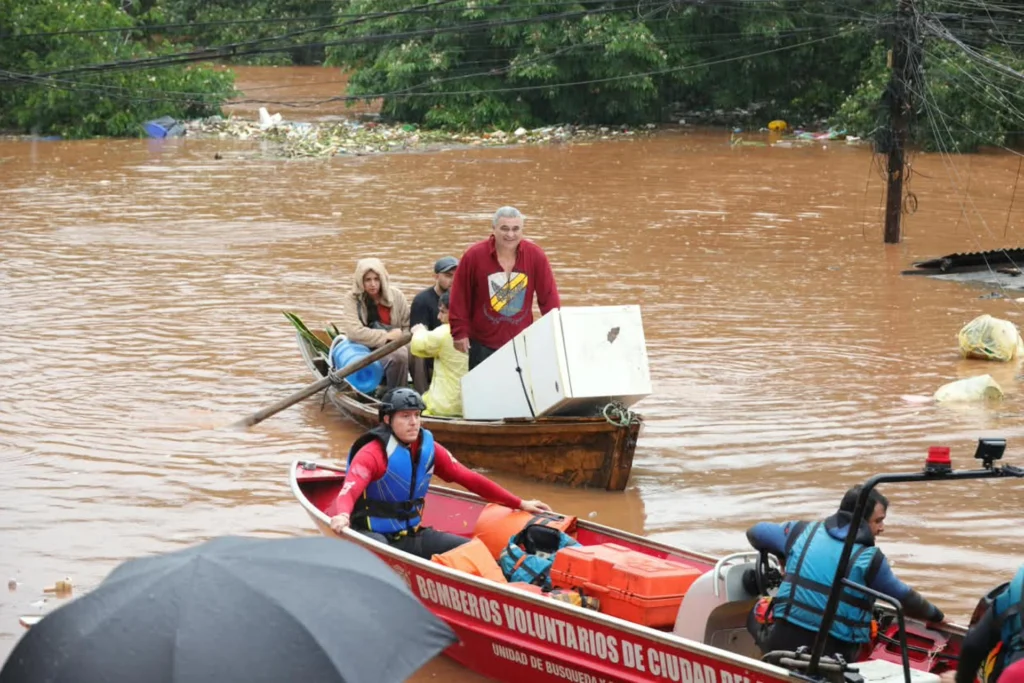
More than 100 families were evacuated from low-lying neighborhoods in Paraguay as the Parana River swelled rapidly, forcing military and emergency teams into action across the Alto Paraná and Misiones departments.
Intense rainfall across the Southern Cone and the fast-rising Parana River pushed Paraguayan authorities to launch emergency evacuation and relocation operations for affected families.
The effort has focused on riverside communities that stand directly in the path of a waterway now running far above its normal level.
RELATED: Ecuador Flooding Damages Thousands of Homes Across Three Provinces
Relief organizations and Armed Forces personnel intensified preventive work as rivers and streams rose at a dizzying pace. The sharp increase in water flow has placed vulnerable families settled in riverside zones at immediate risk, leaving little time between the first warning and the moment floodwater reaches their homes.
In Alto Paraná, the most critical impact is in the San Rafael neighborhood of Ciudad del Este, where dozens of homes were flooded. Officials of the Logistics Command said rising waters forced the immediate relocation of more than 100 families living in the lowest-lying areas.
Preventive eviction protocols were also activated for about 60 additional families, given technical projections of further rises in the river level. The distinction between the two groups reflects the staged nature of the operation. Families already surrounded by water were moved first, while those in areas projected to flood next were placed under preventive orders.
INTENSAS LLUVIAS PROVOCAN CRECIDA DE RÍO Y OBLIGAN A EVACUAR FAMILIAS EN PARAGUAY
— Soyapango Noticias (@soyanoticias) October 12, 2026
Las intensas lluvias que provocaron la crecida del río Paraná mantienen en alerta a las autoridades de Paraguay, donde se realizan evacuaciones y se ha desplegado personal militar para atender a… pic.twitter.com/9b3LnXxIWd
Text reads: “Heavy rains cause the river to flood and force families to evacuate in Paraguay. The heavy rains that caused the flood of the Parana River keep the authorities in Paraguay on alert, where evacuations are being carried out and military personnel have been deployed to assist affected families in the south of Ciudad del Este. At least 100 homes have been affected by the floods, especially in vulnerable areas…”
The effects spread to other parts of the country. In the city of Ayolas, in Misiones department, the Emergency Operations Center, naval units and fire brigades coordinated the relocation of residents to sports centers converted into temporary shelters.
In San Juan Bautista, the overflow of peripheral streams led to emergency housing for affected families at military grounds belonging to the Second Cavalry Division.
Across the border, authorities reported port closures, restrictions in riverside tourist areas such as Puerto Iguazú, and the evacuation of island residents. The Argentine side of the basin is grappling with the same wave of water that has already flooded Paraguayan communities.
According to the reports, the emergency stems from water saturation caused by severe rainfall in the upper basin, located in Brazilian territory. That accumulation forced the binational Itaipú hydroelectric plant to keep its 18 spillway gates open throughout the week after reaching its maximum operational safety levels. The flow increased to between 18,000 and 19,000 cubic meters per second.
Regional Alert Raised
The rise in flow, which grew by as much as 7,000 cubic meters per second within days, set off operational alarms in both Paraguay and Argentina. Argentine authorities also reported port closures, restrictions in riverside tourist areas such as Puerto Iguazú and the evacuation of island residents.
Operational forces and local authorities are maintaining permanent technical monitoring of the Parana basin, as weather forecasts point to continued rainfall.
Floods of this kind often hit the poorest communities hardest, since low-income families tend to settle on riverbanks and low-lying ground. Whether the water level will begin to fall in the coming days will depend largely on rainfall in the upper basin in Brazil, which forecasters expect to continue. i}n this sense, officials stressed the importance of not returning to flood-prone areas and of respecting the river’s natural beds to avoid a cyclical repetition of socio-environmental emergencies.
Germany: Syrian migrant arrested for raping 17-year-old girl in Dresden apartment building hallway
Police arrested an 18-year-old Syrian man on suspicion of raping a 17-year-old girl in a stairwell in a popular nightlife district, authorities said.
The incident occurred around 1:30 a.m. Sunday in a multi-family building on Königsbrücker Strasse in Dresden’s Neustadt neighborhood, near Albertplatz, according to police and media reports. The area is known for bars, pubs and clubs that remain busy into the early morning hours.
The man reportedly dragged her into the stairwell of a building and raped her there. Neither he or the victim lived in the building.
The girl escaped her alleged attacker, fled the building and encountered a police patrol on the street, where she reported the rape, police said. Officers immediately launched a search and arrested the suspect nearby a short time later.
The Syrian man was brought before an investigating judge Monday and ordered held in pretrial detention at Dresden’s justice prison, according to Bild newspaper. Criminal police are investigating the case as rape. Investigators are still determining whether the two knew each other beforehand.
Police have released few additional details about the circumstances of the incident or the girl’s condition. The suspect has not been publicly identified by name. The investigation continues.
The post Germany: Syrian migrant arrested for raping 17-year-old girl in Dresden apartment building hallway appeared first on Remix News.
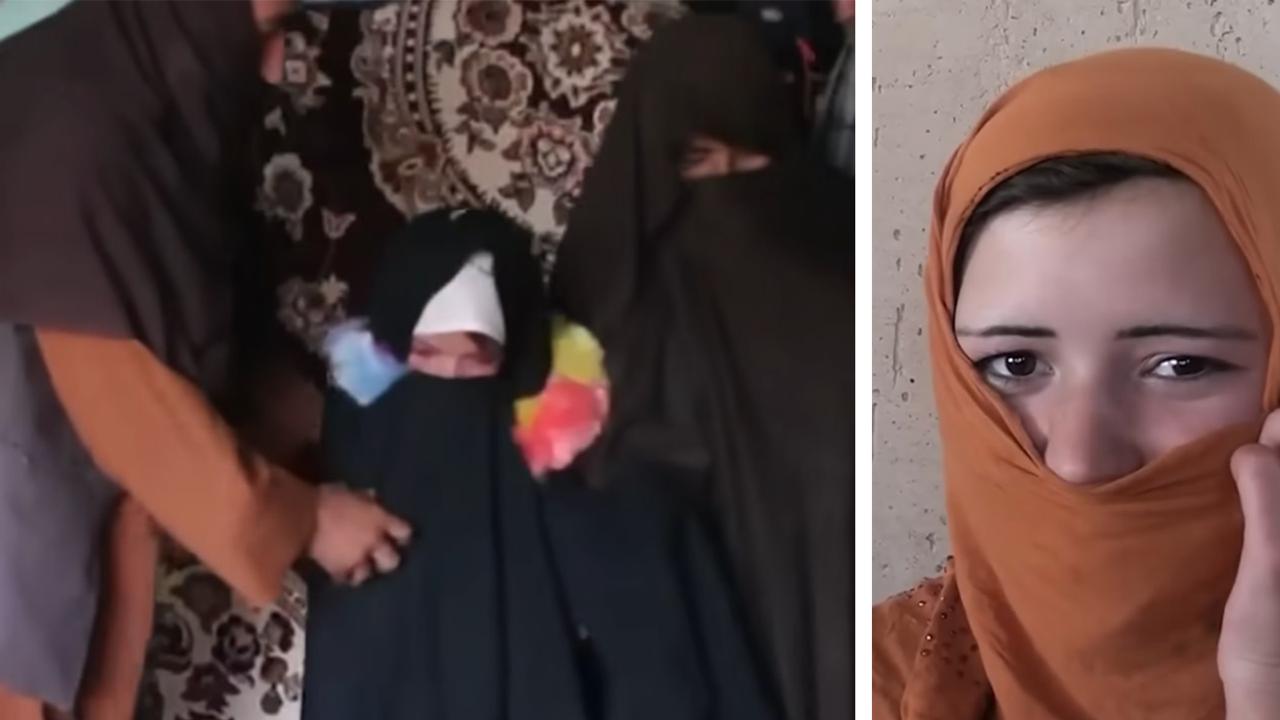
Germany: 358 recorded child marriages since 2012, including an 11-year-old Iraqi girl
A parliamentary inquiry by Alternative for Germany (AfD) lawmakers in the German state of Baden-Württemberg has brought to light official data showing that authorities have recorded 358 so-called child marriages since April 2012, with courts formally annulling only eight of them between 2018 and 2024.
The figures, released in early October 2026 in response to questions from state parliament members Nikolaos Boutakoglou and Emely Knorr, have drawn sharp attention to the prevalence of underage marriages — overwhelmingly involving people from migrant backgrounds — and the limited number of legal interventions.
Among the annulled cases was the 2020 marriage of an 11-year-old Iraqi girl to a 17-year-old Iraqi boy. In 2018, authorities annulled the marriage of a 14-year-old Afghan girl to a 30-year-old Afghan man. Two further annulments occurred in 2024: one involving a 16-year-old German girl and a 25-year-old Pakistani man, and another between a 16-year-old Syrian girl and a 27-year-old Syrian man, according to Welt newspaper.
The other annulled marriages involved individuals from Afghanistan, Romania, Moldova, Croatia, Serbia, and elsewhere. The state Interior Ministry stated that no court proceedings for annulment were pending at the time of its reply.
The remaining approximately 350 cases, documented by the government of Tübingen were closed under the category of “other resolutions.” Possible reasons cited by the government include the death of a partner, a decision to forgo annulment, or a subsequent marriage abroad.
These files still include striking examples of very young brides. In 2020, a 12-year-old Afghan girl was recorded as married to an 18-year-old man. In 2022, a 12-year-old Syrian girl was married to a 28-year-old Syrian man, and in 2023 a 12-year-old Afghan girl to a 21-year-old Afghan man. Multiple cases involving 13- and 14-year-old girls also appear in the data, and some reports note nine marriages in which the girl was under the age of 14 at the time of the union.
The demographic pattern is pronounced. Men from Syria accounted for 132 of the recorded cases, nearly 40 percent, followed by nationals of Bulgaria, Turkey, Afghanistan, and Iraq.
Child marriages between two German citizens made up only about 0.3 percent of the total. It is also unclear if these German citizens have a migration background, but given the pattern seen among foreigners, it is very probable.
Most of the 358 cases date from 2015 onward when the migration crisis truly began to grow in Germany. Boutakoglou highlighted the figures on social media, stating: “Almost without exception, every child marriage in Baden-Württemberg since 2017 can be traced back to mass migration! Nearly 40% of the child marriages were contracted between Syrians, while child marriages between two Germans account for only 0.3%.”
Fast ausnahmslos jede Kinderehe in Baden-Württemberg seit 2017 ist auf die Massenmigration zurückzuführen! Das ergab meine Kleine Anfrage an die Landesregierung. Fast 40 % der Kinderehen wurden zwischen Syrern geschlossen, Kinderehen unter zwei Deutschen machen nur 0,3 % aus! https://t.co/BeJ4wS3CJL
— Nikolaos Boutakoglou (@Nik_Boutakoglou) October 5, 2026
Emely Knorr, co-author of the government inquiry, wrote: “Child marriages are incompatible with our values. Children have a right to safety, education, and a self-determined future. That is why we need effective protection, early intervention, and decisive action against forced marriages.”
Germany raised the minimum marriage age to 18 in 2017 and generally does not recognize foreign marriages involving minors under certain conditions. The Tübingen authority deals exclusively with marriages contracted abroad that come to the attention of German registry offices.
The AfD inquiry was prompted in part by a Terre des Femmes leaflet warning of the risk of forced marriage during school holidays, but the state government said it had no financial involvement in the leaflet.
As Remix News has reported in the past, the issue is not just child marriages. Mass migration has brought new backward cultural norms to Europe that are completely incompatible with European human rights. For example, already in 2020, the German government admitted that there were at least 68,000 female genital mutilation victims in the country, rising 44 percent since 2017.
According to then German Minister for Family Affairs Franziska Giffey, mainly migration is to blame for the massive increase as many migrants coming to Germany commonly practice FGM in their own home countries. The practice, which is a human rights violation, involves the ritual cutting off some or all of the external female genitalia.
Germany is far from the only country dealing with this trend. Remix News reported this year that a female genital mutilation crisis had hit Paris, with over 140,000 such cases seen across the country.
The post Germany: 358 recorded child marriages since 2012, including an 11-year-old Iraqi girl appeared first on Remix News.
Germany: 63.4% of welfare recipients have migration background, will cost taxpayers approximately €21.2 billion in 2026
Nearly 38 percent of people who have received Germany’s basic income support for at least five years are foreign nationals, according to a Federal Employment Agency evaluation released in response to a parliamentary inquiry. In addition, separate data shows that 63.4 percent of people on welfare have a migration background, which includes foreigners and German citizens with a migration background, with the country on track to spend approximately €21.2 billion in 2026.
The figures for long-term welfare recipients, covering the end of 2025, show that roughly 1.4 million people have depended on the benefit for five years or longer. That group represents about two-fifths of all employable recipients of the support, formerly known as the citizen’s income and earlier as Hartz IV. Of those long-term recipients, 37.8 percent do not hold a German passport, while 62.2 percent are German citizens, the agency data indicate.
The new report does not mention the share of German citizens among long-term recipients who have a migration background. However, current data released for 2026 shows that 63.4 percent of people on welfare have a migration background.
Furthermore, in the first half of 2026, €10.6 billion has been spent on foreigners on welfare alone. If that figure continues at the same rate, that means for the entirety of 2026, it will cost €21.2 billion to pay for welfare for foreigners. In total, Germany spends at least €50 billion a year on foreigners, including housing, education, welfare, integration services, and border control.
However, this data does not reveal the true amount of money going to foreigners.
As Glut Magazine reports, the number of foreigners is decreasing in the welfare data while the number of “Germans” goes up. The reason for this? More of the foreigners are becoming German citizens through naturalizations.
“Part of this shift could be due to naturalizations. Anyone who receives a German passport while receiving citizen’s income no longer appears in the statistics as a foreigner, but as a German – along with their payments. Notably, in January 2026 the number of German recipients increased by around 12,000, while the number of Syrians decreased by 12,500 in the same month – more than in any other month. Syrians are the largest group among naturalized citizens. Since June 2025, their number in citizen’s income has decreased by 15.6 percent, more than any other large group,” the magazine wrote.
The evaluation, provided to the German Press Agency, also highlights sharp regional differences. Berlin recorded the highest share, with about 45 percent of its basic-income recipients in the long-term category, followed by Bremen at 43 percent. Nationwide, the statistics include 199,229 recipients under age 25.
René Springer, the Alternative for Germany (AfD) parliamentary group’s spokesperson on labor-market policy, criticized the findings.
“It cannot be that so many people receive citizen’s income at the taxpayers’ expense, even though they could go to work,” he said.
Springer renewed his party’s call for mandatory community service. Under the proposal, employable recipients who have been on basic income support for more than six months would be required to perform 15 hours of civic work per week. Those who refuse would face a shift to benefits in kind or, in the most severe cases, loss of support, according to the AfD.
Similar motions have drawn opposition from other parties in the Bundestag. During debate, CSU social-policy lawmaker Peter Aumer pointed to the core principle of the German welfare state that people who need help must receive it.
The federal government introduced stricter participation rules and benefit reductions in a recent reform of the system. The AfD has argued those changes do not go far enough and continues to press for a community-service requirement.
The citizen’s income was introduced in early 2023 and was replaced by a new basic income support framework in July 2026.
The post Germany: 63.4% of welfare recipients have migration background, will cost taxpayers approximately €21.2 billion in 2026 appeared first on Remix News.
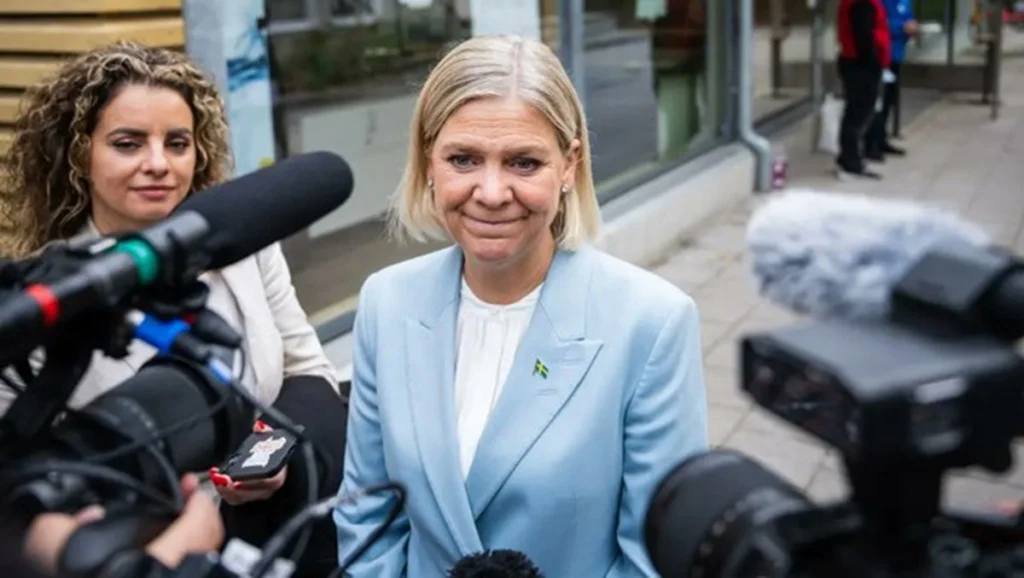
Swedish Parliament to Vote on New Prime Minister Amid Coalition Deadlock
Parliamentary Speaker will nominate Magdalena Andersson to lead a single-party Social Democratic government.
On Tuesday, the Swedish parliament is set to vote on Social Democratic Party leader Magdalena Andersson’s nomination as prime minister (PM), parliamentary speaker Andreas Norlen announced. Negotiations to form a new government have been deadlocked since last month’s general election.
RELATED:
Sweden’s Social Democratic Leader Gives Up Bid to Form Government
Norlen said that he would nominate Andersson to lead a single-party Social Democratic government, despite the lack of an agreement among the four parties that together secured a narrow parliamentary majority in the election.
Earlier Tuesday, Andersson told journalists after meeting Norlen that although progress had been made in coalition negotiations, conditions were still not in place to form a government capable of securing sufficient parliamentary support.
She said she was ready for a parliamentary vote on her nomination as PM, which would concern a government consisting solely of the Social Democratic Party, as no agreement had been reached with other parties.
However, the Left Party and the Green Party, two potential parliamentary allies of the Social Democratic Party, both said they would vote against a single-party Social Democratic government. Green Party co-leader Amanda Lind reiterated her preference for a majority government involving all four parties.
🔴 Andersson fails again to form Swedish government; vote scheduled for Thursday
— NewsTongue (@NewsTongueX) October 13, 2026
Social Democratic party leader Magdalena Andersson told parliament on Tuesday she could not unite her centre-left bloc into a governing coalition. "My overall assessment is that progress has been… pic.twitter.com/Kiuo3uBNR7
According to SVT, coalition talks have been hampered mainly by disagreements between the Center Party and the Left Party. The latter insisted on joining the government and securing cabinet posts, while the Center Party refuses to serve in a government alongside the Left Party.
The Social Democratic Party, Left Party, Green Party and Center Party together won 176 seats in the 349-member parliament in September’s election, giving them a narrow majority but leaving them divided over the composition of a new government.
Andersson was first tasked with exploring the formation of a new government on Sept. 18, after outgoing Prime Minister Ulf Kristersson requested to be relieved of his duties following the election. However, Andersson returned the mandate on Sept. 28 after the Left Party backed the Moderate Party’s candidate rather than her Social Democratic Party’s candidate in the parliamentary speaker election.
Norlen reassigned Andersson the task on Oct. 2, but negotiations remained inconclusive, prompting her to request a one-day extension before reporting back on Tuesday.
Under Sweden’s system of negative parliamentarism, a PM candidate may assume office unless at least 175 of the 349 lawmakers vote against the nomination. If the candidate is rejected, the speaker must then put forward another proposal.
teleSUR/ JF
Source: Xinhua
Gap Between Ruling Elites and the People in the West Is Growing
Mexican President Rejects Police Crackdown on Water Protest in Guadalajara
Demonstration over contaminated water leaves at least nine detained and dozens injured.
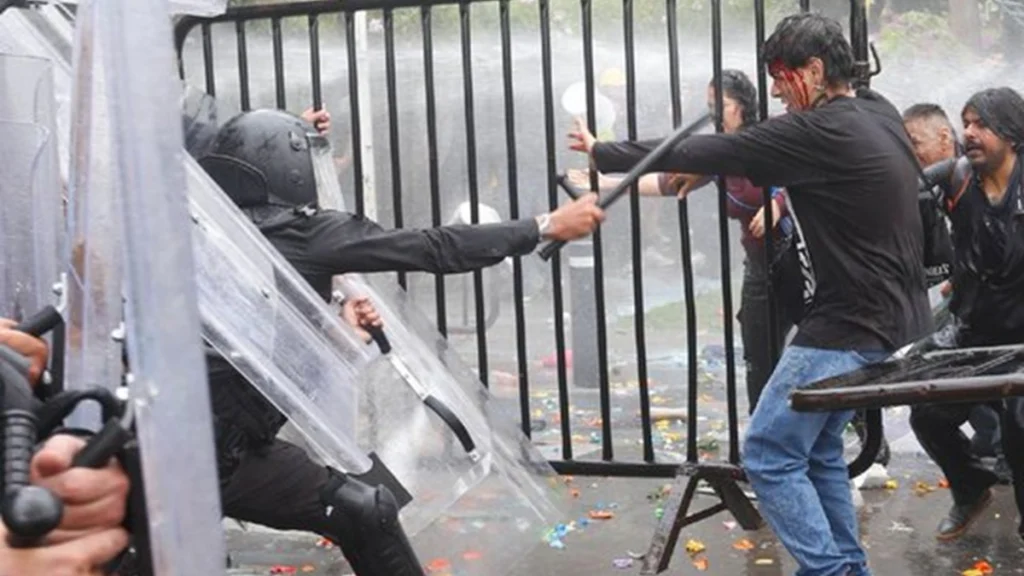
On Monday, Mexican President Claudia Sheinbaum condemned police repression against a demonstration over contaminated water in Guadalajara, in the state of Jalisco, where at least nine people were detained and dozens injured.
RELATED:
Sheinbaum Opens New University Campus in Mexico State
“We do not agree with repression,” she said, asking Jalisco Gov. Pablo Lemus to provide information about the detentions and disclose the names of those arrested.
The Mexican president said Jalisco authorities must explain why they used water and tear gas to contain Sunday’s demonstration, which drew about 10,000 people.
“There must be no repression, and dialogue must be opened. There must not be violent demonstrations, either,” Sheinbaum said, insisting that although security forces can contain violent acts, there is a difference between contention and repression.
“Repression gets us nowhere,” the Mexican president said, leaving open the possibility that the Interior Ministry could intervene in the dialogue if asked to do so.
On Sunday, the demonstration in Jalisco ended in clashes between riot police and participants who were trying to reach the governor’s residence. The organizing groups reported that four people remained missing and that journalists were also affected during the protest in Guadalajara, Mexico’s second-largest city, with more than 4 million residents.
💧 Protesta por el agua en #Guadalajara: detenidos y decenas de lesionados
— Diario de Yucatán (@DiariodeYucatan) October 12, 2026
Miles de personas protestaron en Guadalajara, por la contaminación del agua denunciada en al menos 320 colonias desde marzo. La movilización terminó con enfrentamientos en Casa Jalisco, donde policías… pic.twitter.com/9yMg0bVa2b
The text reads, “Water protest in Guadalajara: arrests and dozens injured. Thousands of people protested in Guadalajara over water contamination reported in at least 320 neighborhoods since March. The demonstration ended in clashes at Casa Jalisco, where police used tear gas and water cannons. The Jalisco government reported 39 arrests and 59 injuries—including 28 police officers (two in serious condition) and 31 civilians. Meanwhile, participants and activist groups alleged arbitrary arrests and stated that several people were beaten during the events. Those detained reportedly include a teacher and at least six students from the ITESO high school—officially known as the Jesuit University of Guadalajara—though no official figure has been confirmed. The protest reignited demands for information regarding water quality and for answers from the authorities. Do you consider the authorities’ actions during the demonstration to have been appropriate?”
Sheinbaum Rejects Privatization
The Mexican president expressed opposition to solutions for Guadalajara’s water supply that would involve privatizing the service, as proposed by Gov. Lemus, who belongs to the opposition Citizens’ Movement party.
“We do not agree with supporting the privatization of the water service,” the Mexican president said, explaining that the Jalisco government is proposing to finance infrastructure projects through a mechanism that could allow private-sector participation in operating the service. The National Water Commission (Conagua) will therefore review the project with state authorities.
The environmental crisis affects about 320 neighborhoods in the Guadalajara metropolitan area, where residents and organizations have been reporting the presence of fecal bacteria and heavy metals in the water delivered to their homes for months.
The contamination has sparked public protests, complaints about health problems and demands for a health alert, while authorities seek alternatives to ensure the supply of drinking water.
teleSUR/ JF
Source: EFE
‘Our message is: Smash everything’ – Black Belgian student doesn’t even know why he’s protesting in revealing video
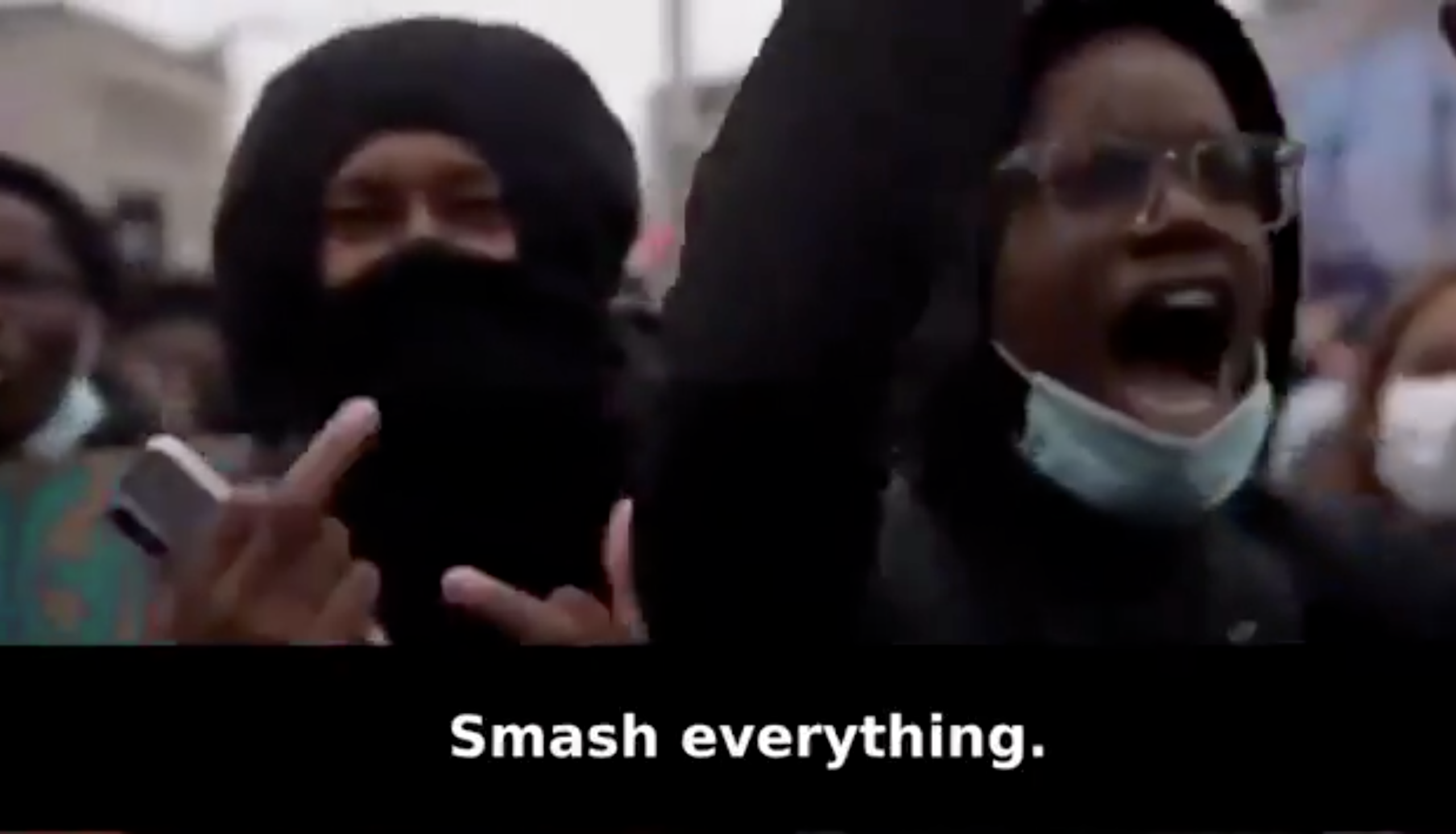
A video clip of a Black male student at ongoing protests in Belgium showed him saying he does not know why he is protesting, and that his message is to “smash everything.”
The clip is being used as another piece of evidence that the protests are not really about reforms or improving education standards, but instead serve as a pretext for ethnic minorities to riot, destroy, and attack police.
After he calls for protesters to “smash everything,” the crowd of Black youths and other ethnic minorities, many heavily masked, began hooting and screaming in response. The video further shows burning shared bicycles and electric scooters, the same products many on the left promote as an alternative to CO2-producing cars and trucks.
In a post from Belgian political activist Dries Van Langenhove, he writes about the video: “European people can’t comprehend this because we’re simply not the same. They destroy. It’s what they do. It’s who they are. Politicians now come up with all sorts of fake ‘solutions’: more money for education, more youth detention centres, military conscription, … but it’s all nonsense. There is only one real solution: they have to go back.”
Our ‘Belgian students’ when asked what they’re protesting against: “we don’t know, we’re here to destroy everything”. European people can’t comprehend this because we’re simply not the same. They destroy. It’s what they do. It’s who they are. Politicians now come up with all sorts of fake ‘solutions’: more money for education, more youth detention centres, military conscription, … but it’s all nonsense. There is only one real solution: they have to go back.
— Dries Van Langenhove (@DVanLangenhove) October 12, 2026
The footage has circulated amid student protests in French-speaking Belgium, particularly in Liège and Brussels. The media reports that the protests are fueled by rising education costs, overcrowded classrooms and reforms in the Wallonia-Brussels Federation. However, just as with the student protests in France, many of the participants cannot articulate any clear demand.
In France, many of the protests have devolved into large-scale riots, including attacks on teachers, police officers, and schools. Dozens of arsons have also partially destroyed schools across France, further raising questions about what the true demands and motives of the protesters are.
— Remix News & Views (@RMXnews) October 5, 2026
BREAKING: Rioters set fire to the entrance of Vauquelin High School in Paris and blocked the exits when staff tried to put the fire out. A film crew recorded the terrifying attempted murder. “The school staff was unable to put out the fire. The rioters blocked them just as the extinguisher nozzle came out; they blocked the exit.” “The fire continues. You see all the silhouettes moving behind it; they continue to feed this fire, making it stronger and stronger. The school staff is not even going to try to put it out anymore; they can’t manage it. We can hear the principal here asking the hundred confined students to step back and move up to the first floor.” The building was full of staff, students, and journalists, but these rioters appear ready to kill anyone still inside the vocational chemistry school. Follow: @RMXnews
In Belgium, authorities have also reported property damage, arson and clashes with police. Local media and police cited more than 100 arrests in Liège in recent days alone, many involving minors, with overall detentions since early October approaching or exceeding 200 in some counts.
Shop windows were smashed, fires set and objects thrown at officers; one video game retailer reported about €30,000 in stolen goods.
Interior Minister Bernard Quintin has said an Antifa-type movement is manipulating children into violence. “Adults who manipulate children in order to put across violent political messages. That is totally unacceptable,” he said.
One brave man tried to put out the fires in Liège, Belgium. He was brutally attacked by a frenzied crowd. The "student protests" are devolving into large-scale rioting, arson, and attacks on innocents. Follow: @RMXnews https://t.co/PEElkGrtL8
— Remix News & Views (@RMXnews) October 8, 2026
The student actions overlapped with a national strike Friday organized by Belgium’s major unions against government austerity measures aimed at reducing the deficit under Prime Minister Bart De Wever. Police estimated about 30,000 participants in the Brussels march, which was largely peaceful, though smaller groups of masked youths threw bottles, bricks, stones and fireworks, set fires and damaged property near the central station. Officers used water cannons and tear gas; authorities reported 21 detentions or arrests, including 13 minors.
De Wever has argued that painful budget measures are needed to avoid a debt spiral that would burden future generations.
The post ‘Our message is: Smash everything’ – Black Belgian student doesn’t even know why he’s protesting in revealing video appeared first on Remix News.
‘NO TURKS – ALL OUT’ – CDU candidate with Turkish background allegedly faked hate crime attack right before local German election
Prosecutors have opened an investigation into a local Christian Democratic Union (CDU) mayoral candidate of Turkish origin who is accused of staging a racially motivated attack on his own car days before an election he lost badly.
The Itzehoe public prosecutor’s office is examining allegations that Baris Karabacak faked the incident, according to the German newspaper Bild. Authorities obtained and executed a search warrant against the politician and seized at least one electronic device.
Karabacak, an entrepreneur who had previously served as chair of the Uetersen city council, was the CDU’s candidate in the Sept. 27 mayoral election in the town of roughly 18,000 people in the Pinneberg district of Schleswig-Holstein. He finished a distant third with 10.7 percent of the vote. Incumbent Mayor Dirk Woschei of the Social Democrats was reelected in the first round with 51.3 percent; independent candidate Marvin Schöpp received 38.1 percent.
A few days before the vote, local media including public broadcaster NDR reported that the windows of Karabacak’s car had been smashed overnight. A campaign flyer bearing an added message in all capital letters reading “NO TURKS — ALL OUT” was left behind. Police initially investigated the matter as possible incitement to hatred.
At the time, state CDU General Secretary Lukas Kilian publicly backed his party colleague and expressed pride in the CDU’s diversity. Woschei also offered solidarity, stating that political competition must be conducted with arguments and that “violence, hate and racist messages are an attack on the city’s democratic culture.”
Kilian’s tone has since shifted sharply. He told Bild he was “stunned” by the new allegations.
“Anyone who fakes a racist crime abuses the solidarity of many people and mocks the victims of real racism. There is no place for that in the CDU,” Kilian said. The state party has said that if the accusations are confirmed, Karabacak will be asked to resign his membership; failure to do so would trigger expulsion proceedings.
The case remains under investigation, and no charges have been filed. Karabacak has not publicly commented on the prosecutor’s probe.
The episode has drawn attention in a town where Karabacak had earlier faced internal party and council criticism over his leadership style before resigning as city council chair earlier in 2026 and then securing the CDU’s mayoral nomination.
Another hate crime hoax proven false in court
This is also notably not the first alleged hate crime hoax from a German politician. In 2023, Remix News reported on Manoj Subramaniam, a 33-year-old former local Green councilor in the German town of Erkelenz, who claimed he had been subjected to sustained acts of harassment by anonymous right-wing extremists. He showed police evidence of the abuse he had received, which included a threatening letter with a razor blade inserted and a swastika drawn onto his vehicle in red paint.
The case made national headlines last year with several prominent politicians offering their solidarity with Subramaniam for the alleged abuse he had received.
“Right-wing extremists are threatening political volunteers to silence them. Thank you, Manoj Subramaniam, for not being silent and raising your voice,” stated Lamya Kaddor, a member of the Bundestag.
Federal police took protective measures for the politician’s safety, and an intensive investigation was initiated by state security, all at considerable cost to the taxpayer. The only issue, however, was that Subramaniam had made it all up.
“The defendant actually wrote this note himself,” revealed Justus Wassenberg, the press spokesman for the public prosecutor’s office.
It transpired that Subramaniam had also drawn SS runes and a swastika onto the doorbell panel outside his house.
Subramaniam subsequently resigned from his position as a local councilor, and the Erkelenz District Court issued the disgraced politician a penalty order of €3,600 for faking criminal offenses, a fine he appealed.
He reportedly cried during his trial when his appeal failed.
2026 firebombing not an anti-Semitic attack after all
The investigation into the early 2026 firebombing of Brandenburg Antisemitism Commissioner Andreas Büttner’s home stunned the public.
While the case was initially treated as an Islamist or antisemitic hate crime, the German Public Prosecutor General’s Office now identifies two men from Büttner’s “own circle,” which belongs to the left, as the primary suspects.
One of the men is also linked to the threatening letter sent to Büttner. Meanwhile, Büttner said he was shocked and described it as the biggest betrayal of his life. He also stated that if the two were responsible, the act had nothing to do with antisemitism in his view. So far, the prosecutor’s office has continued to list Büttner as a witness or injured party, not a suspect. News outlets have highlighted that there was a €3,000 transfer from Büttner to one of the men shortly before the incident, which he called a loan, and other joint activities.
These details prompted public questions and speculation in some outlets about possible staging or a “false-flag” element, but no official finding has supported the claim that Büttner ordered or knew of the act in advance. The case still reportedly remains under investigation.
The post ‘NO TURKS – ALL OUT’ – CDU candidate with Turkish background allegedly faked hate crime attack right before local German election appeared first on Remix News.
Death rates for young American adults jumped 71% in just over a decade
Contact us: info@strategic-culture.su
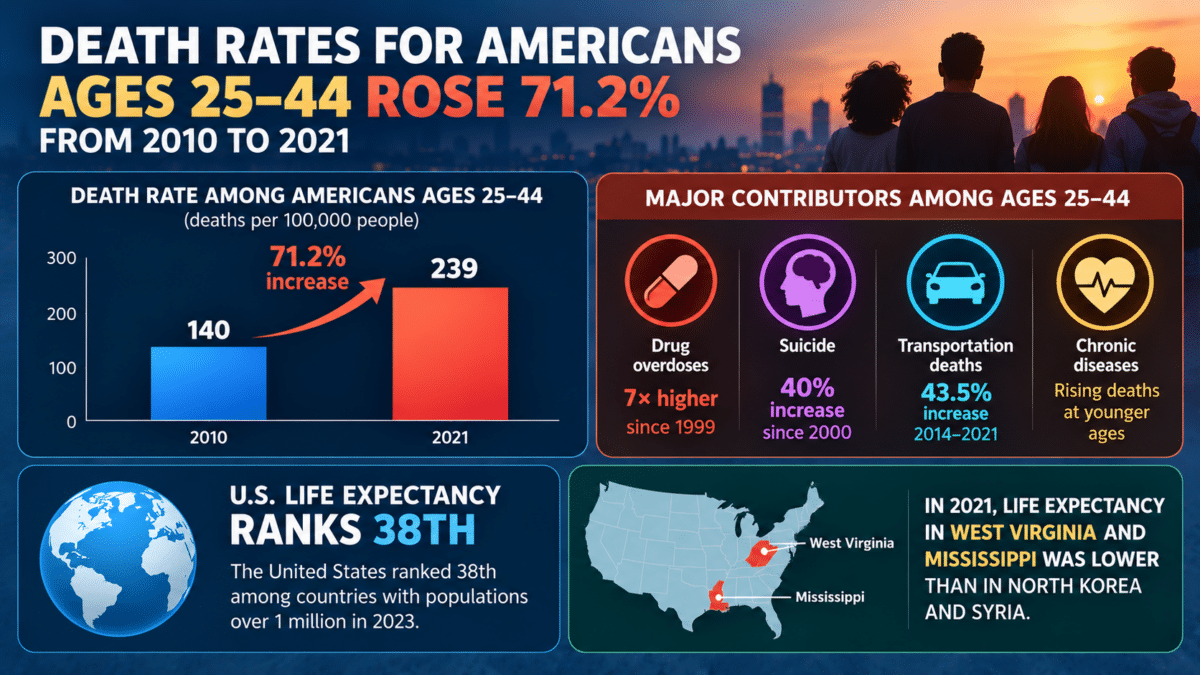
Death rates for Americans between 25 and 44 years old jumped 71.2% in just eleven years, rising from about 140 deaths per 100,000 people in 2010 to 239 per 100,000 by 2021. No other age group came anywhere close to that surge. Overdoses, suicides, car crashes, and chronic diseases appearing at increasingly younger ages are now cutting down people in the prime of their lives.
Steven H. Woolf, a physician and researcher at Virginia Commonwealth University School of Medicine, published the analysis in The Milbank Quarterly. He combined data from the United Nations, the CDC, the Organisation for Economic Cooperation and Development, and a U.S. mortality database to show how far American life expectancy has fallen behind the rest of the developed world, and increasingly, much of the developing world too.
By 2023, U.S. life expectancy ranked 38th among countries with populations over 1 million, trailing not just Western Europe, Canada, Japan, and Australia but also Chile, Costa Rica, Slovenia, Israel, South Korea, and several Persian Gulf nations. Sixty countries had a lower risk of a person dying before age 40 than the United States did. That gap didn’t open overnight. It has been widening since the 1990s, and it sped up sharply after 2010.
How Researchers Tracked the Rising Death Rates
Woolf built this analysis by comparing decades of death records rather than running a new clinical trial or survey. He pulled data from the United Nations’ Department of Economic and Social Affairs, the U.S. Mortality Database, the CDC’s death-records database known as WONDER, and OECD data covering 16 other wealthy countries, including Canada, Japan, France, Germany, and the United Kingdom. He tracked age-specific death rates from 1999 through 2023, sorted into five groups: infants, youth ages 1 to 24, young adults 25 to 44, middle-aged adults 45 to 64, and adults 65 and older.
A separate part of the study looked at all 50 states from 1941 onward, matching each year of life expectancy data to the sitting governor’s political party to see whether state policy choices lined up with health outcomes over time.
What’s Driving the Rise in Death Rates Among Young Americans
Drug overdoses top the list. Among adults 25 to 44, the overdose death rate rose sevenfold after 1999, from about 7.7 per 100,000 to more than 54 per 100,000, and surpassed circulatory diseases (such as heart disease and stroke) in 2015 to become the leading cause of death in that age group. Suicide rates for this same group are higher than in any other age bracket and climbed more than 40% between 2000 and 2023. Homicides rose 75.5% between 2014 and 2021, and deaths from car crashes and other transportation accidents rose 43.5% over that same stretch.
What surprised even close followers of these trends is how much of the damage now comes from disease rather than injury. Deaths from diabetes and other metabolic and hormone-related illness rose nearly a quarter between 2010 and 2019 among young adults. Deaths tied to liver damage from drinking more than doubled between 2010 and 2023. Deaths from alcohol-related mental health disorders more than tripled in that same window. Even high blood pressure, historically a problem of later adulthood, saw its death rate more than double among 25- to 44-year-olds between 2000 and 2023.
Middle-aged adults, 45 to 64, saw many of the same patterns: rising deaths from drug overdoses, liver damage from drinking, and diseases of the brain and nervous system, along with a COVID-19 death rate that nearly doubled between 2020 and 2021 even after vaccines became available. Older adults largely avoided these steep increases, though deaths from brain and nerve diseases doubled between 2000 and 2023, and deaths from endocrine disorders and suicide also climbed.
Infographic by StudyFinds
Where U.S. Life Expectancy Has Fallen the Furthest
National averages hide some brutal local realities. Comparing individual states to countries with similar life expectancy, Woolf found that Hawaii, the top-performing state, matched life expectancy in Western European countries like Sweden and Ireland. Mississippi, by contrast, resembled Libya, Venezuela, Belarus, and Syria in 2019. Conditions worsened after the COVID-19 pandemic hit. By 2021, life expectancy in West Virginia and Mississippi matched Bulgaria, Bangladesh, and Iraq, and fell below North Korea and Syria. Life expectancy was higher in Palestine and Iran than in nine U.S. states, including Oklahoma, Tennessee, Kentucky, Alabama, and Mississippi.
Woolf’s review of state data going back to 1941 found that states led by Republican governors tended to see life expectancy stagnate or decline, a pattern that became especially visible after 2010 and turned into what Woolf calls a “natural experiment” during the COVID-19 pandemic. States’ sharply different decisions on masking, business closures, and vaccination, he writes, could be measured in death counts within weeks. Red states, the analysis notes, suffered the largest COVID-era drops in life expectancy, a pattern that held up even after researchers accounted for other factors like poverty rates and existing health conditions.
Other researchers cited in the review, who looked at generational patterns rather than state policy, found that Americans born after 1970 had higher death rates from heart disease, cancer, and injury-related causes than earlier generations. They concluded that the current stall in U.S. life expectancy stems from “multilayered social, biological, and generational forces.”
Why America’s Death Rates Keep Climbing
Woolf’s analysis lays out five broad categories behind America’s health disadvantage: a health care system without universal coverage, riskier individual behaviors like higher calorie consumption and firearm ownership, greater income inequality and poverty, a built environment that favors cars over walking and green space, and public policies that put less emphasis on collective welfare than peer nations do. None of these explanations are new, but the paper argues that treating overdoses, suicides, and chronic disease as separate problems misses the bigger picture: they are symptoms of the same underlying neglect.
That’s the sharpest point in the paper, and probably the one worth sitting with. Other wealthy countries didn’t stumble into longer lives by accident. They built universal health coverage, stronger safety nets, and tighter consumer and environmental protections decades ago, and it shows up in their citizens’ death certificates today. America’s problem was never a shortage of ideas for fixing this. It’s a shortage of political will to act on them, and until that changes, the gap between how long Americans live and how long people in dozens of other countries live looks likely to keep growing.
Original article: studyfinds.com
EU Leaders Face Confrontation Over Energy Prices, Ukraine and Russia at October Summit
European Union leaders will meet in Brussels on 15–16 October under pressure to address surging energy costs, Russian hybrid attacks, continued support for Ukraine and the bloc’s next long-term budget. The summit comes as economic pressures expose growing differences between national governments.
European Union leaders are preparing for a two-day summit in Brussels dominated by the economic consequences of the Middle East conflict, Russia’s continuing war against Ukraine and mounting pressure on governments to reconcile defence commitments with deteriorating public finances.
The European Council meeting on 15–16 October will bring together the leaders of the 27 member states to consider immediate measures addressing high energy prices alongside longer-term decisions on competitiveness, enlargement, migration and the EU’s budget for 2028–2034.
European Council President António Costa has placed economic competitiveness and energy costs at the centre of the discussions, reflecting concerns that the disruption of global oil and gas markets is threatening the bloc’s industrial recovery.
The meeting also takes place against the background of renewed disputes over national spending limits, with Italy and Greece seeking greater freedom to finance energy relief and France facing increasing pressure over the credibility of its budget.
Energy crisis puts fiscal rules under pressure
The Middle East conflict has created a renewed energy shock for European economies, raising transport and industrial costs while pushing inflation higher.
The disruption of shipping through the Strait of Hormuz has also affected global oil supplies, exposing Europe’s continuing dependence on internationally traded fossil fuels despite efforts to diversify imports following Russia’s invasion of Ukraine.
European leaders are expected to consider targeted and temporary support measures for households and businesses, as well as longer-term policies intended to reduce energy dependence.
The political disagreement concerns how those measures should be financed.
The European Commission has resisted requests from Italy and Greece for further exemptions from the EU’s fiscal framework. Both governments argue that extraordinary energy costs require additional budgetary flexibility.
Brussels maintains that existing provisions already permit exceptional expenditure within defined limits.
The disagreement is particularly difficult for indebted governments that must simultaneously finance military expansion, maintain public services and protect their economies from energy inflation.
France’s position has added urgency to the debate. Its borrowing costs have increased sharply as investors question whether the government can adopt a credible budget ahead of the 2027 presidential election.
A summit agreement on emergency energy assistance would therefore have to accommodate substantially different national fiscal circumstances.
Ukraine and the changing transatlantic relationship
Support for Ukraine remains a central item on the summit agenda as Russia continues attacks against Ukrainian cities, energy infrastructure and industrial facilities.
EU leaders are expected to review military and financial assistance, the implementation of sanctions against Moscow and the resilience of Ukraine’s economy.
The discussions take place amid renewed uncertainty surrounding American weapons deliveries.
Washington’s reported threats to suspend supplies under the NATO-backed PURL procurement arrangement have raised further questions about Europe’s dependence on the United States for advanced military equipment.
European governments have increased defence expenditure and committed additional support to Ukraine, but replacing American capabilities remains difficult, particularly in air defence, precision-guided weapons and certain intelligence systems.
The summit is unlikely to resolve those industrial limitations, but the broader question of Europe’s ability to sustain Ukrainian defence over several years will influence discussions.
Member states must also consider how increased defence expenditure will be financed alongside other demands on national budgets.
Russian hybrid operations move higher on the agenda
The EU’s published summit agenda includes Russian-linked hybrid attacks within Europe.
The issue has gained prominence as European governments investigate sabotage, cyber operations, information interference and threats against infrastructure and defence-related industries.
Recent warnings concerning possible Russian assassination operations targeting European defence executives and employees of companies supplying Ukraine illustrate the changing nature of the security threat.
Such activities place additional demands on national intelligence services, police forces and European institutions responsible for cross-border cooperation.
The EU has strengthened its sanctions instruments against hybrid activities, but enforcement remains dependent on coordination between national authorities.
Any further measures would need to address intelligence sharing, protection of critical infrastructure and the relationship between internal security and the Union’s wider Russia policy.
A larger EU with a contested budget
Enlargement will form another important part of the discussions following the Commission’s proposals for preparing a wider Union.
Brussels has outlined possible institutional safeguards intended to prevent future members from undermining democratic standards or blocking common decisions.
Montenegro and Albania are advancing through their accession negotiations, while Ukraine and Moldova remain central to the EU’s geopolitical enlargement strategy.
The financial implications will become increasingly important as governments negotiate the next multiannual financial framework covering 2028–2034.
Existing members are already divided over how much the EU should spend, which programmes should receive priority and whether additional common resources should be raised.
Agricultural expenditure, cohesion funding, defence investment and support for Ukraine will compete for resources within the same budget negotiations.
The Commission argues that enlargement can be accommodated through targeted reforms, but securing agreement among member states will require decisions on future expenditure and the distribution of financial benefits.
Competitiveness and the single market
Leaders will also examine progress on the One Europe, One Market agenda, which aims to reduce barriers to economic activity within the EU and improve conditions for European businesses.
The initiative is intended to address structural weaknesses affecting investment, industrial development and the ability of European companies to compete internationally.
High energy prices have made those concerns more immediate, particularly for industries competing against producers in economies where electricity and fuel are cheaper.
The European Council will be asked to provide direction on measures planned for 2026 and 2027, but implementation will depend on subsequent legislation and decisions by member states.
The October meeting brings several unresolved European policy questions into the same negotiation: how to protect economic competitiveness, maintain fiscal credibility, finance defence, sustain Ukraine and prepare for enlargement.
The immediate test will be whether leaders can agree on a credible response to energy prices without reopening broader disputes over national budgets.
More difficult decisions concerning defence financing, institutional reform and the EU’s long-term expenditure commitments will extend well beyond the two-day summit.

BREAKING: Rioters set fire to the entrance of Vauquelin High School in Paris and blocked the exits when staff tried to put the fire out.
A film crew recorded the terrifying attempted murder.
“The school staff was unable to put out the fire. The rioters blocked them just as the extinguisher nozzle came out; they blocked the exit.”
“The fire continues. You see all the silhouettes moving behind it; they continue to feed this fire, making it stronger and stronger. The school staff is not even going to try to put it out anymore; they can’t manage it. We can hear the principal here asking the hundred confined students to step back and move up to the first floor.”
The building was full of staff, students, and journalists, but these rioters appear ready to kill anyone still inside the vocational chemistry school.
Follow: @RMXnews