❌

Reading view

Ukraine blocks Russia from outflanking its fortress cities in Donbas, retaking 277 square kilometers and hitting 8,000 Russian troops

Ukraine's Third Army Corps commander Brigadier General Andrii Biletskyi announcing new developments in "Operation Vivaldi," 20 September 2026. Screenshot from video: Ukraine's Third Army Corps

Ukraine has completed its Operation Vivaldi, aimed at protecting its fortress belt cities of Donetsk Oblast, which helped Kyiv preserve the region from Russian occupation for 12 years. Brigadier General Andrii Biletskyi, the commander of the Third Army Corps behind the operation, has reported that the fourth phase secured 101 km² of territory. Among the latest achievements is the liberation of three settlements—Zelena Dolyna, Lypove, and Kolodiazi.

The operation's main objective was to move Ukrainian troops into more advantageous defensive positions, Biletskyi said in the first days after the operation was made public. Vivaldi has now summed up the results of all four phases: Ukraine has established full control over 16 settlements, liberated 277 km² of territory, and inflicted 8,000 casualties on Russian forces.

Ukraine worked against Russia's deadline

During Operation Vivaldi, Ukrainian forces have prevented Russian troops from outflanking the Sloviansk-Kramatorsk agglomeration and cutting the Kharkiv–Sloviansk highway, a key supply route for Ukraine’s forces in Donbas, Biletskyi says.

“We thwarted the offensive of the Zapad grouping and forced it to redeploy some units of the 1st Tank Army, which eased pressure on Kupiansk-Vuzlovyi,” Biletskyi announces.

Previously, the Institute for the Study of War noted that Russian President Vladimir Putin was confident that Russian forces would be able to seize the entire Donetsk Oblast by the end of 2026 — the Kremlin’s latest deadline for achieving this goal.

Ukraine’s military was on a mission to prevent this.

Season one: clearing russian infiltration groups

On 15 September 2026, Ukraine’s Third Army Corps announced Operation Vivaldi in northern Donetsk Oblast. During the first phase, Ukrainian troops cleared Russian groups from 75 km² of territory and liberated another 10 km².

The Third Army Corps said it had struck Russian supply routes and fuel infrastructure, prompting Russia to relocate its fuel and lubricant reserves to Voronezh Oblast. According to the corps, Russian forces lost around 1,500 troops, more than 12,000 drones, and hundreds of pieces of equipment.

Season two: liberation of Shandryholove and Derylove

On 20 September, the Third Army Corps reported the liberation of Shandryholove and Derylove and the establishment of full control over Drobysheve.

During the second season, Russian forces lost another 800 troops, bringing their total losses across the first two seasons to more than 3,000, according to the corps.

During the first two seasons of the operation, Ukrainian troops and attached units regained control of 125 km² of territory, including 50 km² that had been fully liberated.

Two soldiers of Ukraine’s Third Army Corps silhouetted among bare trees at twilight; one holds a radio to his mouth.
Soldiers of Ukraine’s Third Army Corps. Source: Ukraine’s Third Army Corps

The first phase of Vivaldi involved eliminating Russian groups that had infiltrated Ukrainian positions, explained the commander of a battalion in the 125th Brigade, callsign Darwin, per ArmyInform. After clearing those groups, the Defense Forces moved on to the operation’s second phase, using reconnaissance drones to detect Russian forces, he added.

For this, Ukraine used UAVs and ground robotic systems.

“The Third Army Corps was the first in the world to begin deploying ground robotic systems by air. Our heavy bombers deliver kamikaze ground robotic systems more than 10 kilometers behind enemy lines,” Biletskyi noted.

Season three: advances near Novе and Ridkodub

On 28 September, the Third Army Corps reported the liberation of Nove, Ridkodub, and Katerynivka and the restoration of control over Karpivka and Novomykhailivka. Ukrainian forces regained another 51 km² of territory, bringing the total area liberated since the start of the offensive to 176 km². Russian forces lost around 2,000 troops, and more than 250 were taken prisoner, the corps said in its summary of the operation’s third phase.

Map of settlements Ukraine's 3rd Army Corps says it liberated north of Lyman, as of 28 September 2026.
Settlements Ukraine's 3rd Army Corps says it liberated during Operation Vivaldi north of Lyman, Donetsk Oblast, Ukraine, as of 28 September 2026. Map: ISW

“The Russians were convinced that the main axis of attack was Shandryholove–Zelena Dolyna. This led it to squander its reserves in counterattacks along that very axis. The Russians slept through the actual strike, which was focused on capturing Nove,” Biletskyi said.

Operation Vivaldi aimed to disrupt Russia’s plans in Donetsk Oblast

The need for Operation Vivaldi arose amid Russian attempts to encircle Ukraine’s fortified belt in Donetsk Oblast. Ukrainian forces conducted preparatory efforts aimed at degrading Russia’s offensive capabilities, including strikes on Russian drone operators, the Institute for the Study of War reported on 9 October.

Ukrainian counterattacks in the Lyman direction and east of Sloviansk and Kramatorsk were intended to complicate Russian efforts to seize the fortified belt in Donetsk Oblast, the report noted.

The corps advanced gradually, reclaiming small areas instead of attempting a large-scale breakthrough.

  •  

Zelenskyy Breaks with Trump as Washington’s Ukraine Policy Hands Putin the Advantage

Volodymyr Zelenskyy’s unusually direct criticism of Donald Trump marks a turning point in relations between Kyiv and Washington. With American satellite restrictions disrupting Ukrainian military operations, intelligence cooperation under scrutiny and the White House easing pressure on Russian energy exports, Ukraine faces a fundamental question: how can it defend itself when its most powerful partner is increasingly willing to accommodate Moscow?

President Volodymyr Zelenskyy has abandoned much of the diplomatic restraint that characterised his dealings with Donald Trump since their confrontation in the Oval Office in February 2025. In an interview on 14 October, the Ukrainian president accused his American counterpart of moving towards Russia and choosing the wrong side of history.

His intervention followed a series of American decisions that have increased pressure on Kyiv while offering Moscow economic and diplomatic advantages. A controversial agreement involving Russian diesel exports, uncertainty surrounding the provision of American intelligence and sudden restrictions on military satellite communications have brought relations between the two countries to their most difficult point since Trump’s return to the White House.

Zelenskyy’s criticism was unusually personal. Questioned about whether he felt betrayed by Washington’s recent decisions, he acknowledged the sense of betrayal but emphasised that Ukraine’s survival could not be treated as a commercial negotiation. He said Ukraine was not selling its country and argued that an American president claiming to act as an intermediary must not favour one of the belligerents.

The shift reflects the apparent exhaustion of a strategy Kyiv has pursued for more than a year: avoid openly challenging Trump, maintain personal contact with the White House and hope that American support can be preserved through diplomatic accommodation. That calculation is becoming increasingly difficult to sustain as Washington’s demands threaten to constrain Ukraine’s military operations without producing corresponding concessions from Russia.

American leverage becomes a Ukrainian vulnerability

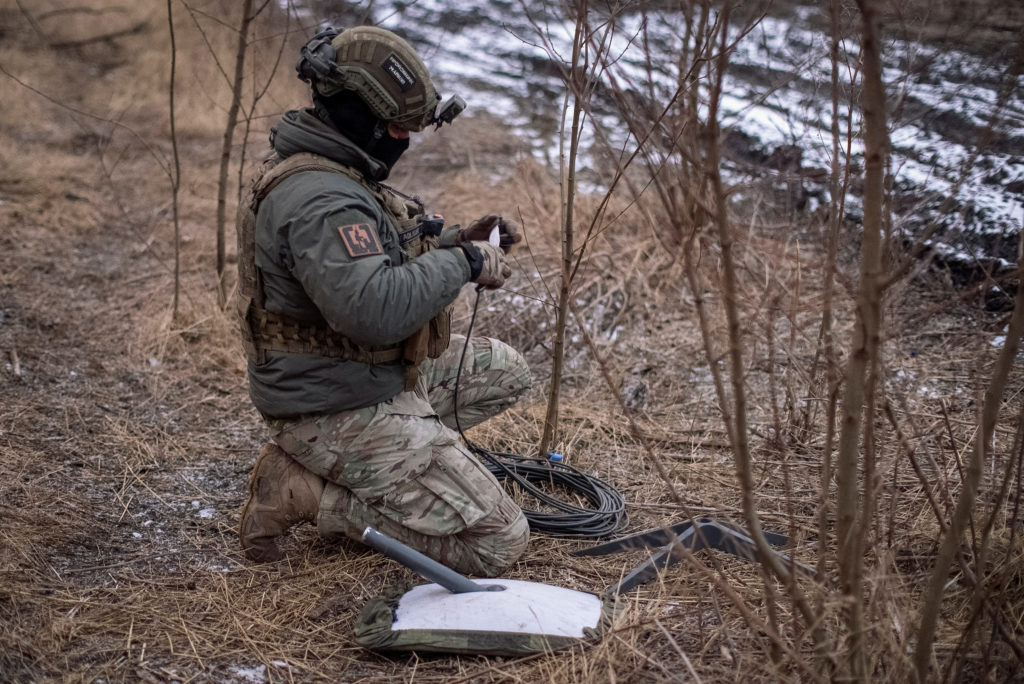
The immediate demonstration of Ukraine’s dependence on American technology came during the night of 13–14 October, when SpaceX imposed restrictions on Starshield, the military-grade version of its Starlink satellite communications service.

According to accounts provided by Ukrainian frontline commanders, the changes disrupted connections to terminals travelling above approximately 160 kilometres per hour, forcing the abandonment of several drone missions. The restrictions affected systems used for reconnaissance, interception and strikes against Russian military targets.

As EU Today reported on 14 October, the disruption exposed a weakness extending beyond individual drone missions. Satellite communications form part of Ukraine’s operational infrastructure, supporting the movement of battlefield information, remote weapons control and communications across areas where conventional networks are vulnerable to Russian electronic warfare.

An interruption imposed remotely by a commercial provider can therefore affect military capabilities without any physical attack on Ukrainian equipment. Decisions taken outside Ukraine’s military command structure can alter the effectiveness of systems already deployed on the battlefield.

Ukraine’s Defence Ministry subsequently opened discussions with American officials, SpaceX and NATO partners while examining alternative communications arrangements.

Later on Wednesday, former Ukrainian defence minister Mykhailo Fedorov announced that Starlink functionality at speeds up to 160 kilometres per hour was being restored. Work was still required to remove the restrictions on Starshield altogether. The partial reversal offered immediate operational relief but did not resolve the underlying dependency.

There is no established evidence that the Trump administration ordered SpaceX to impose the restrictions. Nevertheless, their timing, amid mounting disagreements over Ukraine’s military operations, has reinforced Kyiv’s concerns about relying on communications infrastructure controlled by an American company.

Intelligence warnings and the protection of civilians

The dispute over satellite access coincides with growing uncertainty about American intelligence cooperation.

Following Russian ballistic missile strikes on Kyiv on 12–13 October, Zelenskyy complained that Ukraine had received no advance warning from its international partners. The attacks damaged residential buildings and energy infrastructure, while Ukraine’s authorities raised concerns about the absence of advance intelligence.

Advance information about Russian missile launches is particularly important when ballistic weapons leave civilians only minutes to reach shelters. Intelligence cooperation also supports Ukrainian air-defence units in assessing threats and preparing interceptions.

Trump denied on 13 October that Washington had stopped sharing intelligence with Ukraine. Ukrainian Foreign Minister Andrii Sybiha likewise confirmed that cooperation continued. The absence of warnings about particular attacks therefore cannot be equated with a complete suspension of American assistance.

Yet the consequences of unreliable warning arrangements remain serious. For Ukraine, the distinction between information withheld, delayed or simply unavailable offers little protection when Russian ballistic missiles reach civilian neighbourhoods without sufficient warning.

The wider concern is that intelligence provision could become another instrument of diplomatic pressure. Accounts of negotiations over Ukrainian attacks on Russian refineries have raised the possibility that Washington might use such assistance as leverage. Reports of explicit threats have been disputed, but the controversy has increased uncertainty surrounding a capability central to Ukraine’s defence.

Why the diesel agreement changes the strategic calculation

The confrontation has also exposed a contradiction in Washington’s approach to the war.

Trump’s agreement allowing Russian diesel to return to international markets offers Moscow additional export opportunities at a time when Ukrainian attacks have damaged refining capacity and disrupted domestic fuel supplies.

The American administration has justified the arrangement partly through the need to ease fuel prices. Yet the initially announced quantities are modest in relation to international petroleum markets, raising questions about how much immediate relief the measure can realistically provide.

For Putin, its diplomatic significance may be considerably greater. Russia has secured a relaxation of American economic restrictions while Washington simultaneously presses Kyiv to limit attacks on the infrastructure that generates revenue for Moscow’s war economy.

The commercial implications of Washington’s sanctions reversal extend beyond the initial shipment volumes. The Treasury authorisation permits certain transactions involving Russian-origin diesel until April 2027, creating opportunities for international traders and financial intermediaries while leaving the broader sanctions framework formally intact.

Trump’s proposed energy ceasefire has compounded the difficulty. As EU Today examined earlier this week, Kyiv has offered to suspend strikes against Russian energy facilities if Moscow reciprocates. Russian attacks on Ukrainian power infrastructure have nevertheless continued.

An arrangement in which Ukraine stops targeting Russian refineries while Russia retains the ability to strike Ukrainian electricity generation would remove an important source of pressure on Moscow without protecting Ukrainian civilians.

Such an outcome would change the military and economic conditions of the war in Russia’s favour, regardless of how Washington describes its diplomatic objectives.

The White House, Congress and the limits of presidential power

Zelenskyy’s sharper language also reflects a possible reassessment of where influence over American policy can be exercised.

For much of Trump’s second presidency, Kyiv’s diplomacy has concentrated on preserving a workable relationship with the president himself. That approach assumes that personal engagement can influence White House decisions even when Trump’s broader political instincts favour accommodation with Putin.

The events of October suggest that this strategy has reached its limits.

Ukraine’s alternative is not necessarily an outright confrontation with Washington. Rather, it involves placing greater weight on Congress, the American defence establishment and the institutional relationships that have supported Ukraine since Russia’s full-scale invasion in February 2022.

There is a historical precedent. During Trump’s first presidency, Congress supported military assistance to Ukraine despite differences within the administration over relations with Russia. Under Joe Biden, congressional resistance also demonstrated how domestic American politics could determine the timing and scale of weapons deliveries.

The months-long delay in approving the 2024 military assistance package contributed to severe ammunition shortages at a critical stage of Russia’s offensive operations. Ukraine’s loss of Avdiivka illustrated the danger of making battlefield planning dependent on political negotiations in Washington.

The congressional elections on 3 November 2026 could alter the balance of power. A change in control of either chamber would increase opportunities for oversight, investigations and legislative pressure on the administration, although Congress cannot independently direct every aspect of intelligence sharing or presidential diplomacy.

A less compliant Congress could nevertheless make it politically harder for the White House to restrict Ukrainian assistance without explanation.

Europe confronts a more permanent problem

For European governments, the dispute carries implications extending well beyond the immediate confrontation between Trump and Zelenskyy.

The transatlantic security relationship has historically depended on the assumption that American military capabilities, intelligence networks and political commitments would remain available to European allies during a major security crisis.

That assumption is increasingly difficult to reconcile with an American administration prepared to link assistance to Ukraine with wider commercial negotiations and domestic political objectives.

The consequences are particularly acute in areas where European capabilities remain insufficient to replace American systems quickly, including satellite intelligence, strategic reconnaissance, missile defence and specialised communications.

Europe can expand weapons production, finance Ukrainian purchases and develop alternatives to American technology. Replacing the full range of capabilities provided by the United States, however, requires investment measured in years rather than months.

The problem will not necessarily disappear when Trump leaves office. His return to power demonstrated that the American foreign-policy consensus which supported European security for decades can be challenged through the electoral process.

Future American administrations may seek to restore traditional alliances, but European governments must now account for the possibility that another election could reverse those commitments.

For Zelenskyy, the immediate calculation is exceptionally difficult. Public criticism risks provoking further retaliation from a president whose administration still controls capabilities essential to Ukraine’s defence. Continued diplomatic restraint, however, has not prevented Washington from offering concessions to Russia or introducing uncertainty into Ukraine’s military planning.

His latest intervention suggests that Kyiv is no longer convinced that avoiding confrontation will preserve American support. The question is whether greater political scrutiny of Washington’s decisions can prevent a further erosion of assistance before Russia turns the resulting military advantages into territorial gains.

  •  

In Ukraine, civilian casualties were already rising. Restrictions on Starlink will only worsen the death toll

Throttling of mobile internet system will affect Kyiv’s air defences more than its strikes on oil refineries. Now Zelenskyy must be hoping that US intel holds

In Ukraine the situation was already jittery enough. Donald Trump has been inventing ceasefires and buying Russian diesel to shore up his flagging popularity, while a sinister new wave of faster, jet-powered drones are breaking through Kyiv’s stretched air defences. Casualties are rising as the weather turns.

Overnight, Russia bombed three power plants that supply Kyiv, aiming to cut off heating and electricity to the city. According to the president, Volodymyr Zelenskyy, for a second night in a row no warning came from Ukraine’s western allies of the incoming ballistic missiles – and so no air raid alert was issued.

Continue reading...

© Photograph: Evgeniy Maloletka/AP

© Photograph: Evgeniy Maloletka/AP

© Photograph: Evgeniy Maloletka/AP

  •  

Sudden Starlink limits sap Ukraine drone power as Kyiv fears U.S. intelligence squeeze

Ukrainian drones lost some of their fighting capacity after restrictions were suddenly imposed on the battlefield use of the country's U.S.-made Starlink communication terminals, officials said Wednesday as the capital endured another night of missile attacks.

  •  

Ukraine warns of “a new type of humanitarian crisis” as Russia aims at its biggest cities

kyiv strike

Ukraine is drafting crisis scenarios for November to March as Russian strikes target the country’s biggest cities, Head of the Presidential Office Kyrylo Budanov said on 13 October after chairing a meeting with donor-country diplomats and humanitarian organizations. His deputy Iryna Vereshchuk warned the same day that this winter may bring a new type of humanitarian crisis. She asked donors to be ready with fast extra funding.

Russia has struck Ukraine’s grid deep into winter before: last February, it launched more than 500 missiles and drones as temperatures fell below −20°C. Strikes have continued despite a US-announced energy truce Moscow has not confirmed. Kyiv now wants donors ready to pay for the humanitarian fallout in advance.

Crisis scenarios for November to March

The core task is clear crisis scenarios and synchronized response plans for that period, Budanov wrote. The government is building a baseline threat scenario through the State Emergency Service, while the military and intelligence will provide a risk assessment.

“The available resource must be concentrated where people will have the hardest time,” Budanov wrote.

Ukraine, he added, must hold its rear as reliably as the Defense Forces hold the front line.

What officials mean by a new type of crisis

A war of rear areas is underway, Vereshchuk wrote. Russia is changing tactics in an attempt to deepen the humanitarian crisis, especially in Kyiv, Kharkiv, Odesa, and Dnipro, she added.

Vereshchuk did not define what makes the crisis new, but she tied her warning to the big cities.

“This winter, it is the big cities that may become the testing ground of our national resilience,” she wrote.

Humanitarian organizations must adapt their plans to protect and support civilians, Vereshchuk wrote. Donors, she said, must be ready to provide additional crisis-response funding quickly.

The capital lags behind

Ukrainian President Volodymyr Zelenskyy wrote on 13 October that even border and frontline oblasts were ahead of Kyiv on resilience plans as of mid-October. Even single hits by Shahed attack drones can cut power and water across much of the capital, he noted. He also began consultations on urgent security and management steps to fix the situation in the city.

Aftermath of the Russian attack on Kyiv overnight into 14 October 2026
Explore further

Three days after Washington announced an energy ceasefire, Russia fires 39 ballistic missiles at Ukraine’s grid

Russia carried out more than 200 strikes on Ukraine’s power generation and transmission in the week to 11 October, Zelenskyy said. Overnight on 14 October, Russia fired 39 ballistic missiles and more than 120 drones at energy and critical infrastructure. The barrage left at least 600,000 people without power, Zelenskyy said.

  •  

Three days after Washington announced an energy ceasefire, Russia fires 39 ballistic missiles at Ukraine’s grid

Aftermath of the Russian attack on Kyiv overnight into 14 October 2026

Russia fired 39 ballistic missiles and more than 120 drones at Ukraine’s energy system overnight into 14 October, President Volodymyr Zelenskyy said. The barrage came three days after US President Donald Trump announced an energy ceasefire, which the Kremlin never confirmed, saying on 12 October only that contacts were continuing.

Ukraine held off strikes on Russian energy for two days after the announcement, Zelenskyy wrote on 13 October. Russia’s barrage opened that evening with a ballistic strike on Kyiv. For the second time in two days, it came without a launch warning from partners.

How the night unfolded

The Air Force described one massive combined strike that began at 18:00 on 13 October. By 09:00 the next day, it had counted 39 missiles on ballistic trajectories and 128 drones, aimed mainly at Kyiv, Kyiv Oblast, and Kharkiv Oblast. Air defenses downed or suppressed four missiles and 115 drones, but missiles and drones hit 22 locations, the Air Force said.

just power plants russia’s drones also went after warehouses groceries hardware chain · post firefighter puts out fire warehouse burned food drink stock hit russian attack bucha district kyiv oblast
Explore further

Russian ballistic missiles hit Kyiv before sirens, gap that lands hard amid fears that Washington could cut data that warns of launches

The first wave hit Kyiv late on 13 October. Its primary target was CHP-4, a key power plant in the city, and there were hits, Zelenskyy said. Ukrainian systems spotted the missiles only on approach, with no warning from partners. After a call with Canadian Prime Minister Mark Carney, Zelenskyy wrote that Ukraine had not been warned for the second time. On 13 October, Trump said the US was still sharing intelligence with Ukraine.

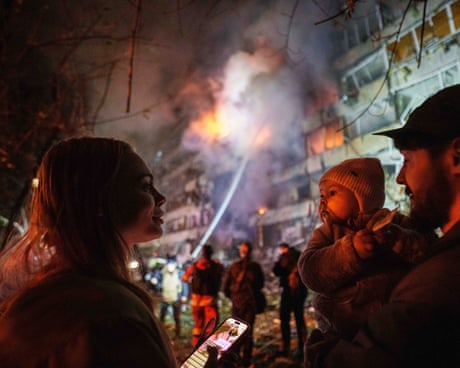
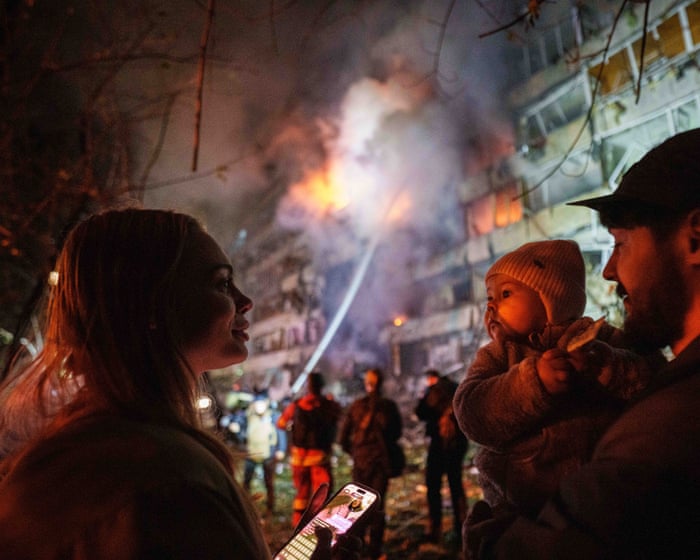
A Russian strike also hit a high-rise in Desnianskyi district. Rescuers saved 16 residents, the State Emergency Service reported, and three women were killed there, the Kyiv City Prosecutor’s Office said. The prosecutor’s office counted 19 injured in the building, including a girl officials described as seven or eight, and five more hurt by shattered windows next door. Across Kyiv, the evening and morning attacks killed four people and injured 25, the prosecutor’s office said, while Suspilne counted 32 injured.

A rescuer helps a person evacuate a building in Kyiv after a Russian strike
A rescuer helps a person evacuate a building in Kyiv after Russia’s 13–14 October 2026 attack. Photo: Kyiv State Emergency Service

The second wave came early on 14 October and hit several of the capital’s energy facilities, Kyiv Mayor Vitali Klitschko reported. It killed one person in Holosiivskyi district, he added. Russia attacked all three of Kyiv’s combined heat and power plants and key facilities in Kyiv Oblast that power the capital, Prime Minister Serhii Koretskyi said. Energy company DTEK reported emergency outages in five Kyiv districts.

Damage and demands

Zelenskyy reported damage to facilities and equipment at 26 elements of the power system and at four oil and gas facilities. At least 600,000 people lost electricity, he said, and outages could grow. He called the strike deliberate and said Russia had never before shown such demonstrative disrespect toward America.

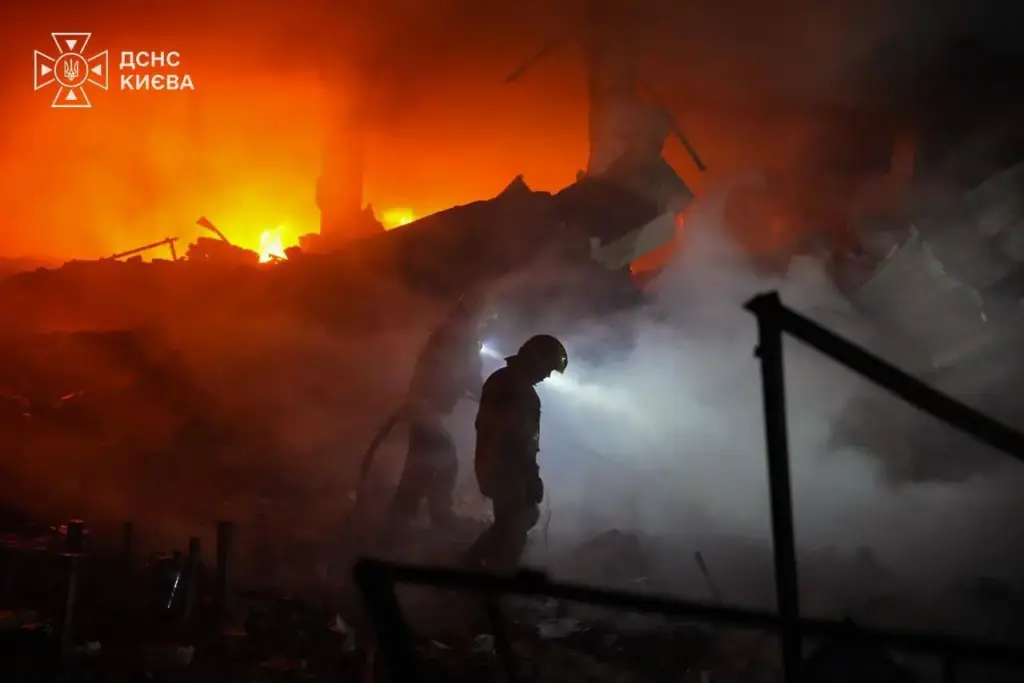
A rescuer at the site of a Russian strike in Kyiv
A rescuer at the site of a Russian strike in Kyiv, 13–14 October 2026. Photo: Kyiv State Emergency Service

He asked Trump for strong sanctions under the Lindsey Graham sanctions law, which he said was recently passed and signed. He also asked for additional Patriot interceptors.

  •  

Ukrainian military’s access to Starlink satellite internet suddenly restricted

Launch of Russian ballistic missiles on Ukraine, with no US warning, coincides with outage of Starlink managed by Musk’s SpaceX

Ukraine’s military has suddenly had its access to Starlink satellite internet terminals restricted as the Trump administration has increased pressure on Ukraine to halt long-range strikes on Russia’s oil industry immediately.

The terminals, which are produced by Elon Musk’s SpaceX but managed by the US government, are a key component of Ukraine’s military operations and the sudden restrictions on the terminals travelling at high speeds on Tuesday evening led to the failure of several combat missions, said an adviser on military technology to Ukraine’s president, Volodymyr Zelenskyy.

Continue reading...

© Photograph: Reuters

© Photograph: Reuters

© Photograph: Reuters

  •  

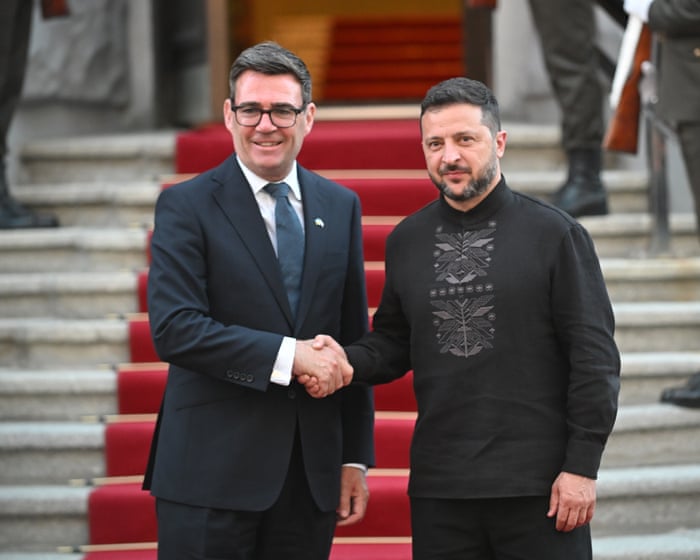
Burnham to host Zelenskyy at No 10 in show of ‘rock-solid’ support

Prime minister reiterates UK backing after the Ukrainian president’s latest round of difficulties with Donald Trump

Andy Burnham will host Volodymyr Zelenskyy at Downing Street on Wednesday as the UK seeks to further underline its support for the Ukrainian president, in contrast to his difficulties with Donald Trump.

The UK prime minister said his message to Zelenskyy and his country would be: “We are with you for as long as it takes.”

Continue reading...

© Photograph: Future Publishing/Getty Images

© Photograph: Future Publishing/Getty Images

© Photograph: Future Publishing/Getty Images

  •  

Energy truce with strings attached: Kyiv reportedly told to spare Russian refineries or lose US intelligence and arms

again trump presses zelenskyy stop russian refinery strikes · post ukrainian president volodymyr meets donald ankara türkiye 8 2026 presidentgovua ukraine news reports

Ukraine has loosened its reliance on Washington but still depends on the United States in three military areas that let US President Donald Trump keep pressuring Kyiv, The Telegraph wrote on 12 October. That pressure now centers on the energy ceasefire Trump declared on 11 October, with US officials reportedly warning Kyiv not to hit Russian energy during the truce. Kyiv backs a mutual truce, but Moscow has not confirmed it, and Russian strikes on Ukraine’s grid have continued.

The paper named three such ties: satellite intelligence, Patriot interceptors, and American weapons bought with European money. A pause in any of them would hit just as Russia’s winter campaign begins. Ukraine says an intercepted document reportedly lays out up to 1,000 Russian missiles, drones, and bombs for 60 critical sites this winter, so any pause in US intelligence, interceptors, or PURL deliveries would land as that campaign gets under way.

Satellite intelligence: the US still holds the key

The Central Intelligence Agency (CIA) and other US services still pass precise satellite data that help Ukrainian forces hit targets inside Russia, by the paper’s estimate. Trump briefly suspended that flow in March 2025 to pressure Zelenskyy. A Ukrainian official told Axios that Trump envoys Steve Witkoff and Jared Kushner threatened during 9 October talks in Miami to cut off US intelligence.

just power plants russia’s drones also went after warehouses groceries hardware chain · post firefighter puts out fire warehouse burned food drink stock hit russian attack bucha district kyiv oblast
Explore further

Russian ballistic missiles hit Kyiv before sirens, gap that lands hard amid fears that Washington could cut data that warns of launches

Patriot interceptors: no quick substitute

The Telegraph called interceptor missiles the second and probably sharpest dependency. Only American Patriot systems can down Russia’s most powerful missiles, which strike Ukrainian cities daily, the paper wrote. Kyiv’s PAC-3 stocks ran dry mainly because US reserves were diverted to the Middle East after America’s war against Iran, the paper added. Kyiv had warned in March that a long Middle East war would squeeze its PAC-3 supply.

Five European defense firms—Destinus, MBDA Deutschland, Safran, Airbus, and Thales—signed a letter of intent in July to develop a joint interceptor, but a testable prototype is not expected before next year, the paper wrote. Ukraine is also building its own interceptor with European allies under the FREYJA program.

drones burned out more than half tanks russian fuel-export terminal rostov-on-don · post black smoke rises over oil-loading novoshakhtinsk refinery russia after drone strike 10 2026 tme exilenova_plus ukraine news
Explore further

The night Trump announced a diesel deal with Putin, drones knocked out more than half the tanks at a Russian fuel-export terminal

US arms bought with European money

The third is buying American arms with European money through the Prioritized Ukraine Requirements List (PURL), a NATO-run purchasing scheme. US officials have reportedly warned Europe that Trump may halt those supplies if Ukraine keeps striking Russian oil refineries.

  •  

US continues sharing intelligence with Ukraine, Trump says amid Russia deal backlash. Questions remain over missed warning for latest attack

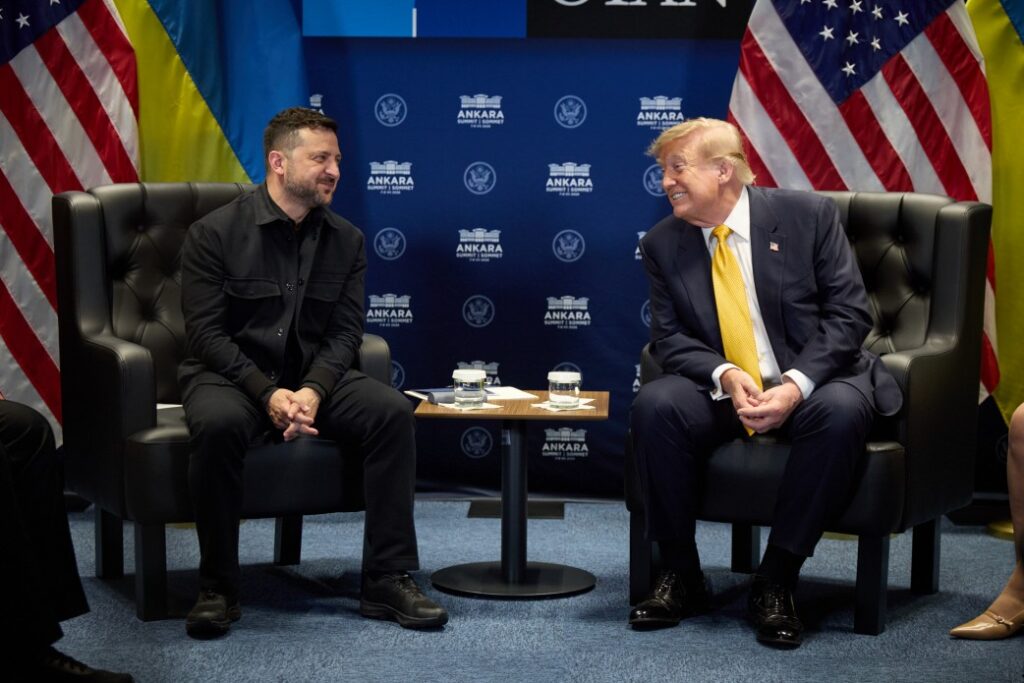
Ukrainian President Volodymyr Zelenskyy meets US President Donald Trump in Ankara, Türkiye, on 8 July 2026.

US President Donald Trump said on 13 October that the US continues to share intelligence with Ukraine, following reports that Washington had threatened to suspend intelligence assistance unless Kyiv stopped striking Russian oil refineries, POLITICO reported.

The comments came after Ukraine received no advance warning from its partners ahead of Russia's latest ballistic missile strike, raising fresh questions about intelligence sharing between Kyiv and Washington.

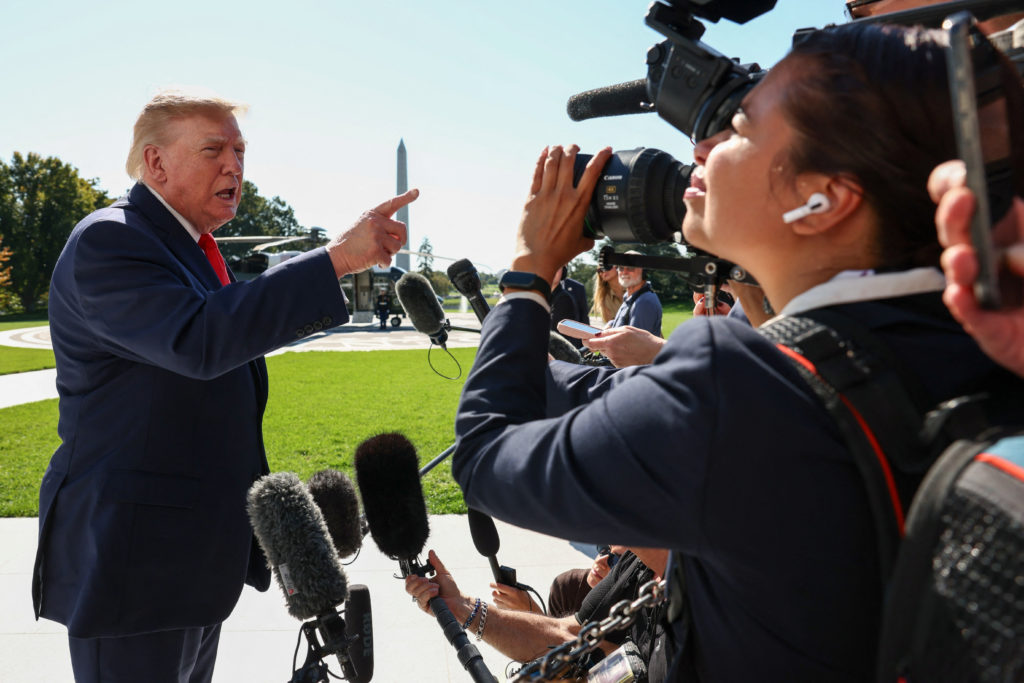
“We are helping them, and we are sharing intel. We want the war to end,” Trump told reporters at the White House, according to POLITICO, reaffirming US support after his recent efforts to reach an agreement with Russian President Vladimir Putin drew criticism over his approach to the war.

Trump reaffirms support after backlash over Russia deal

Last week, the US threatened to cut intelligence sharing if Ukraine did not stop attacking Russian oil refineries. Zelenskyy did not publicly confirm the reported threat.

The reports came amid criticism of Trump’s announcement of a deal to buy Russian oil and his pressure on Kyiv to make concessions, even as Russia continued attacking Ukraine.

Zelenskyy said Ukraine had refrained from striking Russian oil refineries and the energy sector for two days after Trump announced an energy ceasefire. Russia, however, continued attacking Ukrainian energy facilities and critical infrastructure, he said, with 19 Ukrainian regions coming under attack during those two days.

Trump said Monday that both Russia and Ukraine had violated the energy ceasefire, arguing that each side was responsible. He also said Putin wanted a deal and that Washington needed to persuade Zelenskyy to agree.

Trump's latest comments publicly reaffirm that intelligence sharing is continuing. However, the circumstances surrounding the latest Russian strike have raised questions about whether Ukraine is receiving the early warnings it needs to protect civilians.

Ukraine received no warning before latest Russian strike

Early warnings of incoming Russian ballistic missiles give Ukrainians a brief window to reach shelter before impact. US intelligence helps make those warnings possible, giving civilians crucial time to protect themselves.

Zelenskyy said Russia's latest attack involved five ballistic missiles and more than 100 drones, and that Ukraine received no warning from its partners before the strike.

“Intelligence on Russian ballistic missile launches helps save lives,” Zelenskyy said Tuesday. “This is precisely what helps prevent people from being killed — when there is an early warning about ballistic missiles.”

He added that Ukraine had received no warning ahead of the attack.

just power plants russia’s drones also went after warehouses groceries hardware chain · post firefighter puts out fire warehouse burned food drink stock hit russian attack bucha district kyiv oblast
Explore further

Russian ballistic missiles hit Kyiv before sirens, gap that lands hard amid fears that Washington could cut data that warns of launches

Ukraine normally receives alerts about impending Russian missile launches through the Battlespace Command and Control Center, a system operated by the US military and NATO members, among others, POLITICO reported.

Citing an unnamed official familiar with the matter, POLITICO reported that US officials attributed the missing warning to bad weather. The explanation reportedly raised doubts among Ukrainian officials.

Ukrainian Air Force spokesperson Yurii Ihnat said the warning system had failed to transmit information on previous occasions. He said specialists would work with international partners to resolve any technical problems.

Ukrainian Foreign Minister Andrii Sybiha said Tuesday that intelligence sharing through the platform was continuing, according to POLITICO.

  •  

Germany works to organize a Coalition of the Willing meeting as Russia strikes Ukraine’s energy sector

Ukrainian President Volodymyr Zelenskyy during a phone call with German Chancellor Friedrich Merz, 12 October 2026. Photo: Volodymyr Zelenskyy/X

Germany is preparing a new meeting of the Coalition of the Willing to coordinate further support for Ukraine, President Volodymyr Zelenskyy said on 12 October following a conversation with German Chancellor Friedrich Merz.

Russia continues to strike Ukraine’s energy infrastructure despite US President Donald Trump’s claim that Moscow has agreed to an energy truce. German Chancellor Friedrich Merz is initiating a meeting of European leaders to discuss assistance to Ukraine in this situation.

Kyiv and Berlin have also agreed to hold a meeting of national security advisers in the E3 format, with Ukraine participating, according to the statement. The format involves an informal grouping of three leading European countries: the United Kingdom, France and Germany.

Zelenskyy and Merz discuss energy truce and support for Ukraine

During the conversation, the two sides also discussed US President Donald Trump’s proposal for an energy truce and Russia’s subsequent actions. Russian forces continue to attack Ukraine’s energy infrastructure, Zelenskyy noted.

“This is exactly how the Russians behave when pressure eases. It is very important that Europe continue to act on principle,” Zelenskyy stressed.

German Chancellor Friedrich Merz speaks online with Ukrainian President Volodymyr Zelenskyy, 12 October 2026. Photo: Volodymyr Zelenskyy/X

Germany is coordinating preparations for a meeting of the Coalition of the Willing, the Ukrainian president noted. The two sides also discussed support for Ukraine’s financial stability. Further steps are to be coordinated in greater detail during a meeting scheduled for this week, Zelenskyy said.

The Coalition of the Willing seeks additional support for Ukraine

The Coalition of the Willing was initiated by the United Kingdom and France, which held talks with representatives of 37 countries in March 2025 on supporting Ukraine in the event of a peace agreement. The initiative envisaged financial assistance and the deployment of troops, air forces or naval forces to protect Ukraine against renewed Russian aggression, Bloomberg reported.

The latest meeting of the Coalition of the Willing took place on 24 August and was the 16th meeting, according to a statement on the website of the President of Ukraine. Zelenskyy called on partners to strengthen Ukraine’s air defense and provide at least 300 missiles for Patriot systems for the winter, the statement said.

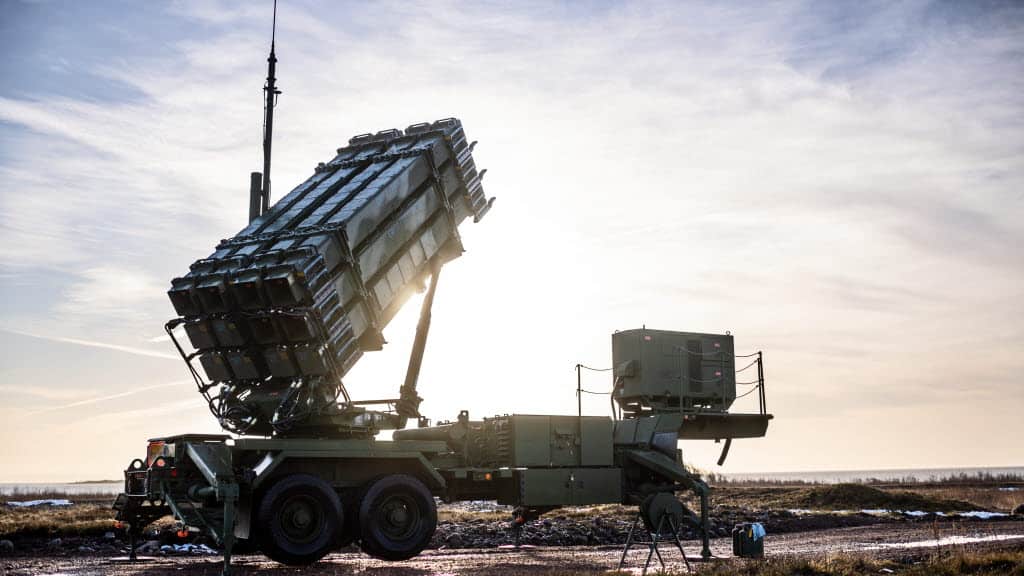
Patriot PAC-3 surface-to-air missile system.
The Patriot PAC-3 surface-to-air missile system. Photo: Swedish Ministry of Defense

The president also proposed bringing forward part of the European loan financing planned for 2027 so that Ukraine could receive the funds this year. He separately stressed the need to find a mechanism for using frozen Russian assets to defend Ukraine and to unblock the maritime corridor in the Black Sea.

“We value this format—the Coalition of the Willing. It brings together countries that are ready not only to talk about security but also to act. We need this—to act and build real security together,” Zelenskyy stressed.

A ceasefire in words, but fresh attacks on energy infrastructure in practice

Ukraine and Russia had allegedly agreed to an immediate energy ceasefire, US President Donald Trump said on Truth Social on 11 October. However, at the time of publication, neither Kyiv nor Moscow had confirmed such an agreement, Ukrainska Pravda reported.

Ukraine supports the ceasefire and is awaiting details from the US side, Volodymyr Zelenskyy said in a post on X the same day. Russia must also agree to halt the strikes, he stressed.

Ukrainian forces had received the relevant orders, and Kyiv was ready to refrain from striking Russian energy infrastructure provided Russia reciprocated, Zelenskyy said in his evening address on 11 October.

Russia continued attacking Ukraine’s energy infrastructure after the ceasefire was announced, including striking a gas production facility and a petrol station, Zelenskyy said on his official Telegram channel on 12 October. Moscow had shown no willingness to abide by the ceasefire, the president added.

  •  

Allies did not warn Kyiv of Russian ballistic missile strikes, says Zelenskyy

Ukrainian president’s comments on ‘particularly vile’ strikes come after US threatened to halt intelligence sharing

Ukraine received no early warning from its partners about a second night of Russian ballistic missile strikes on civilian infrastructure in Kyiv, including a critical power plant struck after dark, Volodymyr Zelenskyy said on Tuesday.

The Ukrainian president had earlier described an attack involving five missiles on Monday as “particularly vile”. He emphasised that receiving intelligence from Ukraine’s western allies “helps saves lives, and this is one of the most critical issues”.

Continue reading...

© Photograph: Sergey Dolzhenko/EPA

© Photograph: Sergey Dolzhenko/EPA

© Photograph: Sergey Dolzhenko/EPA

  •  

Ukraine says it hit 12 Russian refineries in September. No refinery strikes reported since Trump’s “energy ceasefire”

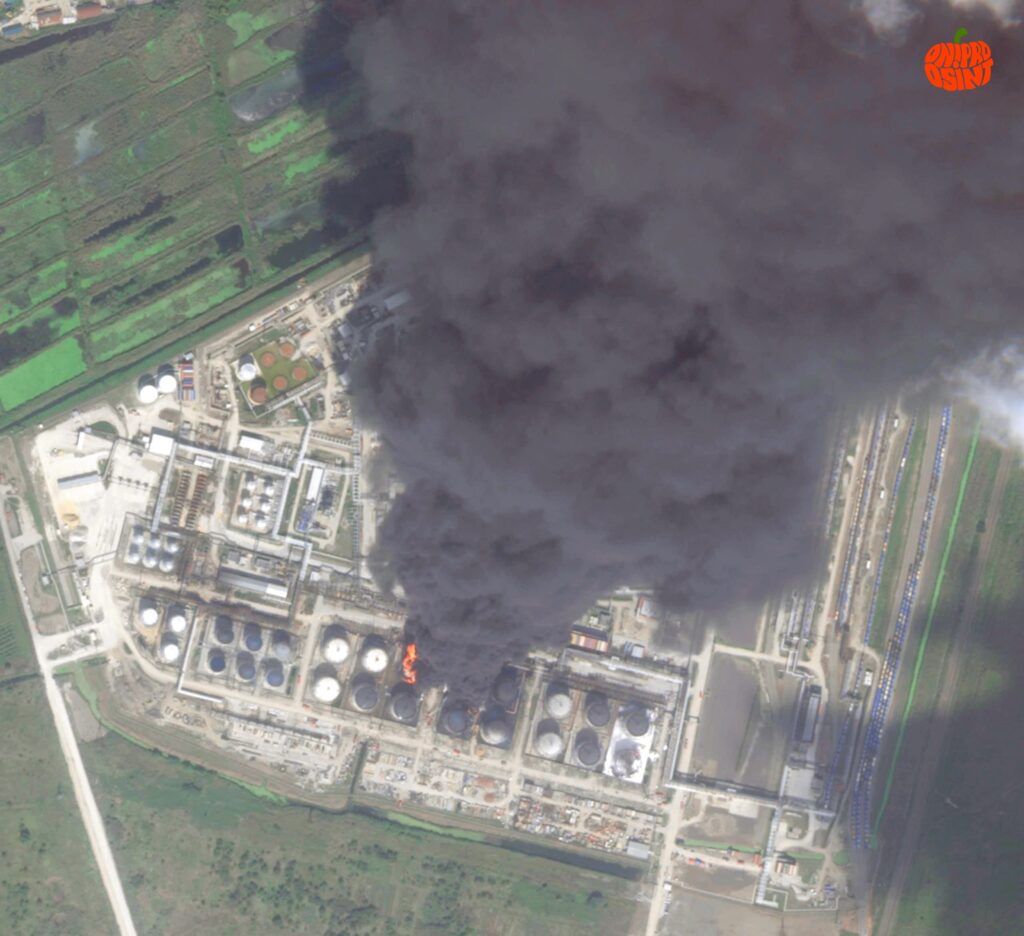
Satellite imagery of the Slavyansk oil refinery after a nighttime UAV attack on 13 September. Part of the refinery is obscured by thick smoke from a fire in the tank farm, Krasnodar Krai, Russia. Photo: Dnipro Osint

Ukrainian forces hit 12 large Russian refineries in September, Ukraine’s Ministry of Defense said, according to ArmyInform on 12 October. The farthest on the ministry’s list, Lukoil’s refinery in Perm, lies about 1,500 kilometers from Ukraine’s border. Since Trump's 11 October announcement, Euromaidan Press has found no reports of new Ukrainian refinery strikes in the official and unofficial Ukrainian and Russian sources it monitors.

A refinery-for-refinery pause would limit Ukraine’s ability to disrupt Russia’s oil industry while leaving Moscow free to keep attacking Ukraine’s energy system, giving Russia an advantage in a war where both sides use energy infrastructure as a target. The issue has become urgent since Trump announced an “energy ceasefire” on 11 October, after which Ukraine reported holding off strikes on Russian energy facilities while Zelenskyy said Russia attacked several Ukrainian energy sites.

The campaign continued into October. Ukraine’s General Staff said Ukrainian forces struck the Samara oil pumping station overnight into 10 October, the third attack on the station that month, according to Radio Svoboda.

Ukraine held off, Russia hit six energy sites

Zelenskyy said Ukraine had refrained from striking Russian energy facilities overnight on 11–12 October following Trump's announcement. Monitoring channels and official Russian sources did not report any new refinery strikes on 13 October.

“Last night, we did not attack any energy facilities on the territory of Russia because President Trump said that there would be an energy ceasefire,” Ukrainian President Volodymyr Zelenskyy said.

He added that Ukraine does not announce its next operational steps. Zelenskyy said Russia attacked six Ukrainian energy facilities on 12 October alone, according to Radio Svoboda.

Refineries first, power plants possibly later

A White House official told Axios that the proposal would begin with both sides halting attacks on oil refineries, with a possible agreement covering power plants to follow. Axios reported that Russia had not accepted a ceasefire.

The Institute for the Study of War (ISW) said the proposal, as described, would give Russia a major concession without offering Ukraine anything in return: Russia has scores of operating refineries, while Ukraine has one. ISW also said the proposal would allow Russia to continue its winter strikes on Ukrainian power stations.

  •  

“We don’t need to hit the entire plant”—Ukraine’s drones go for refinery parts sanctions make hard to repair

Satellite imagery of the Slavyansk oil refinery after a nighttime UAV attack on 13 September. Part of the refinery is obscured by thick smoke from a fire in the tank farm, Krasnodar Krai, Russia. Photo: Dnipro Osint

Ukrainian drones have helped push Russia into its worst fuel crisis since the Soviet Union fell, The Washington Post (WaPo) reported on 11 October.

Diesel is where this war reaches American drivers. US President Donald Trump blames rising diesel prices mostly on Russia’s war in Ukraine, while experts blame mainly the US war with Iran. Some of his allies now accuse Kyiv of trying to sway the US midterms.

Drones go for the first stage of refining

The Washington Post looked at dozens of strikes between 1 April and 31 August. Three refinery experts then examined satellite images of 54 strikes with visible damage. In over half, the damage seems to be to the desalting and distillation units, known by the Russian acronym ELOU-AVT. These units clean the crude of water and salt, then split it into separate compounds, the first steps toward gasoline and diesel. More than a third appear to have hit secondary units, which turn those compounds into jet fuel, gasoline, and liquefied petroleum gas.

From April through August, drones struck two-thirds or more of the 36 big Russian refineries that S&P Global Energy tracks, a strike every third day. Some took as many as five hits. On 16 June, drones set the Moscow refinery’s distillation towers on fire. That strike and a second one days later kept the plant offline into September, WaPo reported, citing data firm Kpler. Ukraine targeted the refinery again on 20 September.

The White House in Washington DC, USA. Illustrative image: Wikimedia Commons.
Explore further

Trump’s Russian diesel deal, which drew fury in Ukraine, is unlikely to lower prices, experts say

“We don’t need to hit the entire plant,” a Ukrainian drone battalion commander with the call sign Tango told The Washington Post. Ukraine knows where to strike so that a refinery stops and stays down, he said. His unit, Ukraine’s 1st Separate Center of Unmanned Systems, runs long-range strikes deep inside Russia.

Sanctions slow the repairs

The EU banned exports of oil-refining equipment to Russia the day after the 2022 invasion, and the US followed days later. WaPo reported that the bans cover the distillation and secondary processing units Ukraine keeps hitting. The bans make spare parts hard to get, Alexander Kolyandr of Eurasia Group told the paper, and the strikes come faster than repairs.

Since last year, Ukraine has doubled the size of each wave, decoys included, a person involved in the strike campaign told WaPo. The decoys are unarmed and draw Russian fire, wasting air-defense ammunition, WaPo explained. Without them, the person said, Ukraine would simply lose expensive systems. András Rácz of the German Council on Foreign Relations told WaPo that even if only 2–3% of drones get through, the damage is significant.

  •  

Trump rewards Putin and betrays Ukraine with Russia diesel deal - The Latest

Donald Trump’s deal to buy Russian diesel has been met with fury from Volodymyr Zelenskyy, who said it was ‘a weak decision’ and would generate ‘billions’ in extra revenue for Putin’s war effort. The Ukrainian president has also rejected US calls for an ‘energy ceasefire’, which would require Kyiv to stop striking oil refineries, saying Moscow must first end its attacks on energy infrastructure. Lucy Hough speaks to the Guardian’s senior international correspondent, Luke Harding – watch on YouTube

Continue reading...

© Photograph: Image credits: AP Photo/Dan Bashakov AP Photo/Alex Brandon Gavriil Grigorov, Sputnik, Kremlin Pool Photo via AP

© Photograph: Image credits: AP Photo/Dan Bashakov AP Photo/Alex Brandon Gavriil Grigorov, Sputnik, Kremlin Pool Photo via AP

© Photograph: Image credits: AP Photo/Dan Bashakov AP Photo/Alex Brandon Gavriil Grigorov, Sputnik, Kremlin Pool Photo via AP

  •  

Bipartisan US senators say Trump’s Russian diesel deal conflicts with 2022 ban, as he presses Kyiv to spare Russian refineries

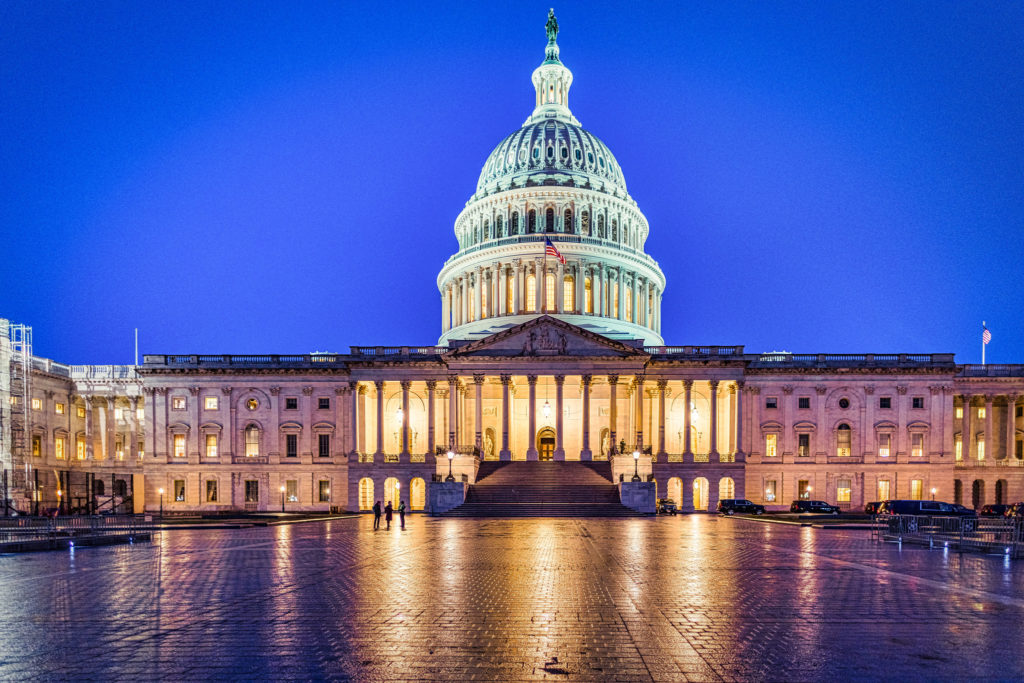
united states capitol building home bicameral us congress consisting lower body house representatives upper senate

Seven US senators from both parties said the Trump administration's decision to authorize Russian diesel imports conflicts with a 2022 law banning Russian energy imports and accused it of failing to consult Congress, in a statement on 11 October.

The dispute comes as the war with Iran drives up US fuel prices, which US President Donald Trump has blamed on Ukraine's strikes on Russian refineries. Trump says Russian supplies will help bring prices down, while lawmakers warn that purchases could provide Moscow with revenue to continue its war against Ukraine.

The senators—Republicans Susan Collins, Lisa Murkowski, Thom Tillis, and John Curtis, and Democrats Jeanne Shaheen, Richard Blumenthal, and Ron Wyden—called on the administration to reverse course, saying the US should not provide Russian President Vladimir Putin with “a financial lifeline.”

What the 2022 law requires before the ban can end

The law, signed on 8 April 2022, allows the president to end the import ban only after submitting a certification to Congress. The certification must find that Russia has agreed to pull out its forces and stop the fighting on terms Ukraine's free and independent government accepts, no longer poses an immediate threat of attack to any NATO member, and recognizes Ukrainians' right to pick their own government.

The law also requires consultation with four congressional committees and a report at least 45 days before certification. The termination takes effect 90 days after certification unless a joint resolution of disapproval is enacted into law during that period. The senators allege the administration failed to meet the consultation and reporting requirements. Their statement does not establish whether a certification has been submitted.

Treasury’s license cites sanctions rules, not the 2022 law

The Treasury Department's Office of Foreign Assets Control issued General License No. 135 on 9 October, authorizing certain transactions involving Russian-origin diesel that would otherwise be restricted under US sanctions regulations. It runs until 7 April 2027 and cites sanctions regulations, not the 2022 import-ban law.

trade banks energy crypto—the eu keeps its full russia economic sanctions wall standing 2027 · post flags member states headquarters council european union brussels belgium 17 2025 getty images/thierry monasse
Explore further

EU blacklists 1,569 Russian arms suppliers and their bosses in its biggest sanctions round ever, as Trump eases up on Moscow

Treasury Secretary Scott Bessent defended the deal on Fox News on 11 October, saying the administration would proceed under existing legal authority. He said lawmakers who argued that either the earlier law or the current Lindsey Graham sanctions law prohibited the deal were wrong, and argued the agreement would lower prices, Reuters reported.

How much diesel Trump says Russia will supply

Trump said on Truth Social that Russia would immediately supply more than 300,000 tons of diesel to US and global markets, followed by 500,000 tons in November and 1 million tons after that. He said Russia would deliver another 3 million tons “within a short period of time,” depending on the condition of its diesel refineries. The promised volumes have not been independently verified.

Russia partially lifted its diesel export ban on 10 October, allowing 500,000 tons onto the global market at this stage, the Russian government said, according to state news agency TASS.

A House bill to block Russian oil purchases

Pennsylvania Republican Rep. Brian Fitzpatrick plans to introduce the Ronald Reagan Peace Through Strength Act to block Russian oil purchases and use a discharge petition to force a House vote, Axios reported. The procedure can force consideration of a bill if 218 House members sign. Republican Rep. Don Bacon said he would support the bill and called Trump's decision a serious mistake, according to Ukrainska Pravda.

Barrasso defends the deal. Zelenskyy calls it an investment in war

On CBS's Face the Nation on 11 October, Senate Majority Whip John Barrasso, a Republican from Wyoming, called the deal “another point of leverage” for Trump to use against Putin. Asked whether the decision violated US law, Barrasso said the president was balancing competing priorities and had to make tough decisions.

Ukrainian President Volodymyr Zelenskyy wrote on Telegram on 9 October:

“Allowing Russia to sell petroleum products is an investment in a war that must be ended, not prolonged.”

Trump also expects Ukraine to stop striking Russian refineries under his proposed energy ceasefire, a White House official told Axios. Zelenskyy said Kyiv would halt such strikes if Moscow did the same.

  •  

Zelenskyy says Ukraine could hold elections if Russia agrees to 60-day ceasefire. Moscow counters with truce lasting only voting day

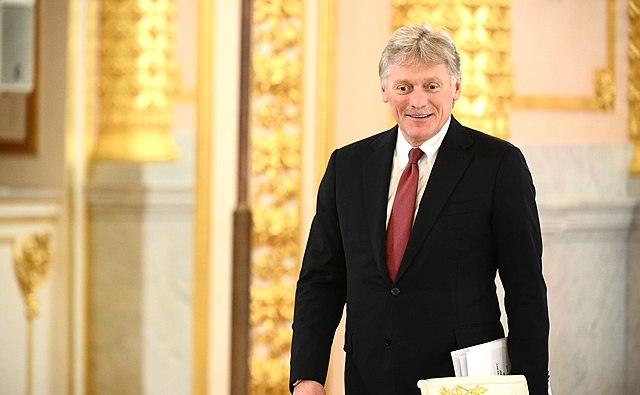
Dmitry Peskov

Russia offers Ukraine a single day without strikes for its elections. Russian leader Vladimir Putin is ready to order a halt to strikes on Ukraine only on the day of a presidential election, if Kyiv decides to hold one, Kremlin spokesperson Dmitry Peskov says, Russian state agency TASS reported.

The offer answers Ukraine’s call for a real pause: on 11 October, President Volodymyr Zelenskyy stated Ukraine could hold elections if Putin agreed to a full ceasefire of at least 60 days, ABC News reported. Against the backdrop of Russian strikes that killed more than 150 Ukrainian civilians in a single week, Moscow counters with a one-day truce confined to voting day.

“...If they really want to hold elections in Kyiv, the president of Russia, the supreme commander-in-chief, will be ready to give the order not to strike Ukraine on election day. Specifically on election day,” Peskov said.

His statements followed US President Donald Trump’s call on 10 October for Ukraine to choose a new president, saying a change of leadership could help reach peace with Russia, according to Suspilne.

Trump also criticized Ukrainian strikes on Russian oil refineries amid his new agreements to supply a low volume of diesel into the US.

Moscow rejects the 60-day pause

Peskov has outright dismissed the longer truce. Ukraine needs 60 days not to hold elections but to heal its wounds and continue the war, he argues.

He has claimed Russia had been willing to resume peace talks after Russia’s own State Duma elections, but accused Ukraine of launching massive strikes on Moscow to disrupt that vote. Peskov has gone further, claiming Ukraine shelled polling stations and killed several members of district election commissions in the Russian-occupied regions it calls its own.

What Peskov left out

The accusations are Russia’s and remain unverified. Peskov offered no evidence for the claims about polling stations or election officials, which echo long-running Kremlin talking points.

He also made no mention of Russia’s own strikes on Ukrainian civilian targets over the same period, including attacks on energy sites and residential buildings.

  •  

Ukrainian drones hit three of Russian tech giant Yandex’s data centers in four days. Ukraine’s president says the bots thinned out too

ukrainian drones hit three russian tech giant yandex’s data centers four days ukraine’s president says bots thinned out too · post flickr/hesham elmahdy social media internet trolls networks ukraine news

Ukraine’s drone strikes on Russian tech giant Yandex thinned out social media bots, Ukrainian President Volodymyr Zelenskyy said on 12 October. Network data do show Yandex’s automated traffic collapsing after the strikes. Disinformation researchers say that traffic is search crawling, not trolls. A Ukrainian social media monitor told Euromaidan Press its own data show no clear drop in bot activity either.

Russian influence operations are a live threat to European votes. In August, the Matryoshka network fabricated news clips aimed at Sweden’s general election. German and French authorities flagged the same network targeting Germany’s local votes and French presidential hopeful Gabriel Attal. A way to switch such networks off would hand allies a new tool, which is why the claim needs testing.

The president’s claim

Addressing the Warsaw Security Forum by video link, Zelenskyy said that once Ukraine began answering Russia’s operation against Ukrainian data centers and its strikes reached Yandex, many social media platforms suddenly became a little easier to breathe on.

Many people noticed less hatred, discord, and provocation because there were fewer bots, he said. It was quite clear where those bots came from, he noted. Their disappearance once Yandex went down proves again that Europe is not the source of the problems, he added.

Lithuanian Prime Minister Mindaugas Sinkevičius said at the same forum that allies should ask Zelenskyy to strike more data centers in Russia, answering a question on how to protect their elections from interference.

Three data centers in four days

Drones first hit Yandex’s data center in Sasovo, Ryazan Oblast, on 8 October. Yandex said it shut the site down completely. The next day, a strike on its Kaluga site completely disabled several modules, the company said. Yandex calls Kaluga its largest data center, Russian science outlet T-Invariant noted.

Ukrainian drone maker Fire Point said its FP-1 long-range drones carried out that strike.

After the first strike, on Sasovo, a source at Yandex summed up the mood for The Bell: “Things are rotten. We keep working.”

Overnight on 11 October, drones hit the third site, in Vladimir. Yandex said it fully halted that data center too. Vladimir Oblast Governor Aleksandr Avdeev acknowledged an attack on “infrastructure” near the city. It started a fire and cut power to two substations serving 5,000 residents, he claimed.

Dima, have you tried turning it off and on again?

— Fire Point (@FirePointUA) October 11, 2026

What the traffic data show

Automated web requests from Yandex’s network fell to 0.4% of their two-week peak after the third strike, Cloudflare Radar data showed, Cybernews reported. That chart counts automated requests to websites, mostly from Yandex’s own search crawlers. It does not count social media posts.

The chart “has nothing to do with social media,” the Russian opposition analysis group Antibot4navalny wrote.

To those implying that Kremlin-controlled social media bot/troll farms became silent after Ukraine hit a Yandex data center, posting this CloudFare chart ( radar.cloudflare.com/bots/as13238 ):Hate to disappoint you all ⤵

— antibot4navalny | bot blocker | блокировщик ботов (@antibot4navalny.bsky.social) 2026-10-11T20:54:52.717Z

Russia’s overall bot traffic last week looked much like any other week. Yandex’s own figure began recovering on Sunday. Covert troll farms usually hide behind residential proxies, hacked devices, virtual private networks (VPNs), and Western cloud providers, the outlet added.

What Ukrainian social media shows so far

Yevhen Luzan tracks Ukrainian social media sentiment as an analyst at the Ukrainian nonprofit CAT-UA. Its daily reviews sample about 500 random posts. On 11 October, that sample showed an unusually small share of posts criticizing Ukraine’s authorities, he told Euromaidan Press. Accounts showing signs of bot activity made up only a few tenths of a percent of that criticism. That is within the margin of error.

The same day, though, US President Donald Trump’s deal for Russian diesel supplies dominated Ukrainian feeds. Luzan said a rally-around-the-flag effect could explain the shift, as outrage at Washington crowded out domestic stories.

“To state it definitively and draw a cause-and-effect link from this correlation would be too bold,” he said.

Across the wider pool of about 10,000 daily mentions, CAT-UA sees no significant drop in posting activity in recent days. The curve shows only the usual rises and dips around the start and end of the week, Luzan said.

“For now, even a hypothetical drop in bot farm activity dissolves entirely in the natural fluctuations of the information space,” he said.

How a crawler chart became a bot story

The claim that Russian social media bots fell by half is unproven and built on a misread chart, disinformation analyst Joohn Choe concluded in a fact-check. It traces back to an 8 October post by security researcher Jeremiah Fowler. That post said Russian bot traffic had dropped to 49%. On 11 October, radio reporter Jamie Dupree spread it on X. Tom’s Hardware then ran it under a headline calling the crawler traffic “Russian disinformation bot traffic,” wording it has since changed.

According to Cloudflare Data Explorer the amount of russian bot traffic has dropped to 49% after Ukraine struck a yandex data center. Could this disrupt the midterm elections in the US? pic.twitter.com/SRtMyjaV22

— Jeremiah Fowler Security Researcher (@yoda69) October 8, 2026

Ukrainian military analyst Tatarigami claimed that Texas separatist accounts with identical “Veteran, Christian, Father, MAGA” bios had gone quiet. He said Quebec separatists and Polish anti-EU accounts went quiet alongside them.

Polish military analyst Jarosław Wolski claimed that AfD’s online support fell 56%, posting a chart without naming its source. Another X user said “Polish” bots had vanished.

Zderusyfikowany internet (ukraińskie trafienia w centra Yandexa) nagle objawia cuda w socjalach: poparcie dla AfD w socjalmediach spadło o 56%. Mniej "polskich" kont szczujących na Ukraińców, mniej "ukraińskich" szczujących na Polaków, poparcie w sieci dla MAGA gwałtownie spadło… pic.twitter.com/zi4rwqNR9I

— Jarosław Wolski (@wolski_jaros) October 11, 2026
  •  

Trump’s Energy Ceasefire Risks Becoming a Trap for Ukraine as Russia Continues Its Attacks

Washington’s proposed energy ceasefire could force Ukraine to abandon one of its most effective means of economic pressure against Russia without securing equivalent concessions from Moscow. Donald Trump’s parallel agreement with Vladimir Putin over Russian diesel raises further questions about whether American energy priorities are beginning to dictate the terms of negotiations over Ukraine.

President Volodymyr Zelenskyy has placed an important qualification on Donald Trump’s proposed energy ceasefire: Ukraine will stop attacking Russian energy facilities only if Moscow stops targeting Ukraine’s electricity generation and distribution infrastructure. Speaking at the Warsaw Security Forum on Monday, 12 October, Zelenskyy confirmed Kyiv’s willingness to accept a reciprocal arrangement while pointing out that Russian attacks had continued after the American president announced that a ceasefire was already in effect.

The sequence of events has exposed a fundamental weakness in Washington’s initiative. On 11 October, Trump announced an immediate energy ceasefire, declaring that Russia and Ukraine had both agreed to suspend attacks on energy infrastructure. Yet Kyiv had not received the agreement’s terms, Moscow had offered no public confirmation, and Russian drones continued striking Ukrainian power facilities, including a combined heat and power plant in Kharkiv.

Zelenskyy’s response was deliberately restrained. Rather than reject Trump’s initiative, he welcomed the possibility of an agreement while insisting that Russia demonstrate its acceptance through its actions. His remarks also exposed the difference between announcing a diplomatic understanding and establishing an enforceable military arrangement.

An unequal exchange

The apparent symmetry of an agreement prohibiting attacks on energy facilities disguises substantial differences between the two countries.

Russia retains an extensive oil-refining industry, producing fuels for domestic consumption, military operations and export. Ukrainian drone attacks on refineries have consequently become an instrument of economic warfare, disrupting production, increasing operating costs and forcing Moscow to divert resources towards protecting strategically important industrial installations.

Ukraine occupies a different position. Its major oil-refining capacity was devastated early in the full-scale invasion, including the Kremenchuk refinery. Russia’s present campaign is concentrated heavily on electricity generation, substations, heating systems and other installations essential to maintaining civilian life and economic activity.

An agreement narrowly focused on oil refineries would therefore protect an important Russian asset while offering Ukraine comparatively little protection. A comprehensive energy ceasefire could be reciprocal, but only if it explicitly covered the infrastructure each side actually possesses and attacks.

Zelenskyy’s insistence on equivalent obligations is consequently more than a negotiating formula. It seeks to prevent Washington from treating attacks on Russian fuel production and the destruction of Ukraine’s electricity and heating networks as interchangeable military activities without examining their respective consequences.

The distinction becomes particularly consequential with winter approaching. A Ukrainian suspension of attacks on Russian refineries could allow Moscow to restore production and rebuild damaged facilities. Unless Russia simultaneously halted attacks on Ukrainian energy infrastructure, Kyiv would surrender an important means of pressure while remaining exposed to further disruption of electricity and heating supplies.

The American pressure campaign

The concern in Kyiv is no longer confined to the proposed ceasefire’s wording. European officials have disclosed that Washington is threatening to restrict military assistance and intelligence sharing unless Ukraine suspends its strikes against Russian refineries.

According to accounts of the American pressure campaign, the threatened measures include suspending the Prioritised Ukraine Requirements List (PURL), the NATO-coordinated mechanism through which European countries finance purchases of American weapons for Ukraine. Reuters was unable to independently verify the reported threats, and the White House had not responded publicly.

If implemented, such restrictions would establish a direct connection between Ukraine’s willingness to accommodate Washington’s energy priorities and its access to essential military support.

This creates an imbalance in the negotiations. Moscow could continue military operations while Kyiv faced the possibility of losing American assistance for refusing an agreement whose Russian obligations remain undefined.

The diesel agreement and its political significance

The ceasefire proposal also needs to be examined alongside Trump’s separate agreement with Putin, announced on 9 October, to increase Russian diesel supplies.

Trump stated that Russia would initially release more than 300,000 tonnes of diesel, followed by another 500,000 tonnes in November and one million tonnes thereafter. Further supplies were envisaged, depending on Russia’s refining capacity.

The US Treasury subsequently issued General Licence 135, authorising transactions involving Russian-origin diesel that would otherwise face sanctions restrictions.

The initial volumes are unlikely to transform international diesel markets. Nevertheless, the agreement gives Washington a commercial interest in maintaining Russian refinery output at precisely the moment Ukrainian attacks are disrupting it.

Trump has an evident domestic incentive to seek lower fuel prices before the American congressional elections on 3 November. Putin, meanwhile, has an interest in preserving Russia’s refining capacity and reopening sanctioned markets.

These interests need not prove the existence of a coordinated political strategy against Kyiv. They do, however, create conditions in which American economic priorities and Russian military objectives could converge.

The possibility becomes more significant when considered alongside Trump’s public criticism of Zelenskyy and his suggestion that Ukraine requires different leadership.

The risk of a diplomatic trap

The most consequential scenario is one in which Washington demands immediate Ukrainian compliance while leaving Russia’s obligations subject to subsequent negotiation.

If Kyiv suspends refinery attacks without obtaining verifiable Russian commitments, Moscow gains relief from a costly Ukrainian campaign. If Kyiv refuses, Washington could present that refusal as an obstacle to peace and use it to justify restrictions on military assistance.

This is a possible negotiating outcome, not an established secret agreement between Trump and Putin. There is no publicly verified evidence that the two presidents arranged the ceasefire specifically to force Ukraine into such a position.

Nevertheless, the combination of the diesel agreement, American pressure over refinery strikes and the premature announcement of a ceasefire creates a credible risk that Ukraine could be required to make concessions before Russia demonstrates any corresponding restraint.

The implications extend beyond Ukraine. European governments financing American weapons through PURL would find their own assistance programmes vulnerable to Washington’s decisions over an energy arrangement negotiated separately with Moscow.

For Brussels, the immediate question is therefore whether European military support can remain dependable if American commercial interests increasingly influence the conditions attached to supplying Ukraine.

Kyiv’s remaining leverage

Ukraine’s attacks on Russian refineries cannot by themselves compel Moscow to end the war. They can, however, impose material economic costs and complicate Russia’s ability to maintain fuel production, exports and military logistics.

Abandoning those attacks without an enforceable agreement would remove pressure from Moscow without ensuring that Ukrainian civilians receive any corresponding protection.

Zelenskyy’s position preserves an alternative: simultaneous, reciprocal restrictions covering electricity generation, heating installations, oil refineries and other specified energy infrastructure, supported by clear verification procedures and consequences for violations.

Whether Washington is prepared to enforce such an arrangement against Russia remains unanswered.

The central danger for Kyiv is not an energy ceasefire itself. It is an arrangement in which Ukraine’s obligations are immediate and enforceable through the threat of lost American support, while Russia’s obligations remain uncertain.

Until that imbalance is resolved, Trump’s initiative risks delivering Moscow protection for its oil industry without securing protection for Ukraine’s energy system.

  •  
❌