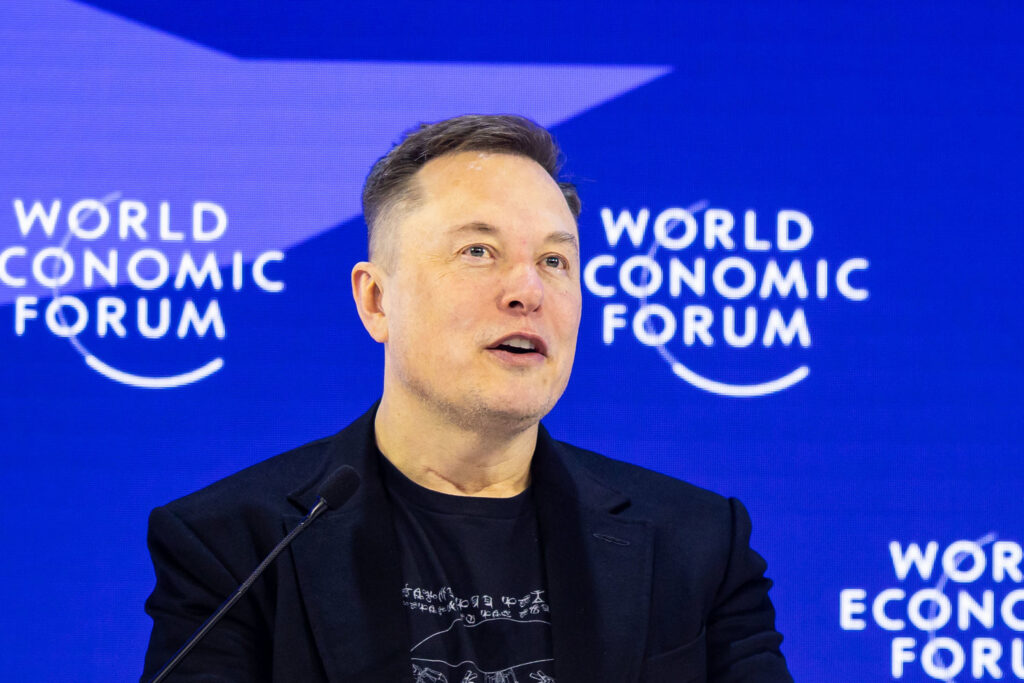
SpaceX chief Elon Musk says the version of Starlink that Ukraine’s military uses, StarShield, is owned and controlled by the US government rather than by his company. His claims come amid a storm over Ukrainian reports that a speed cut had broken their frontline operations.
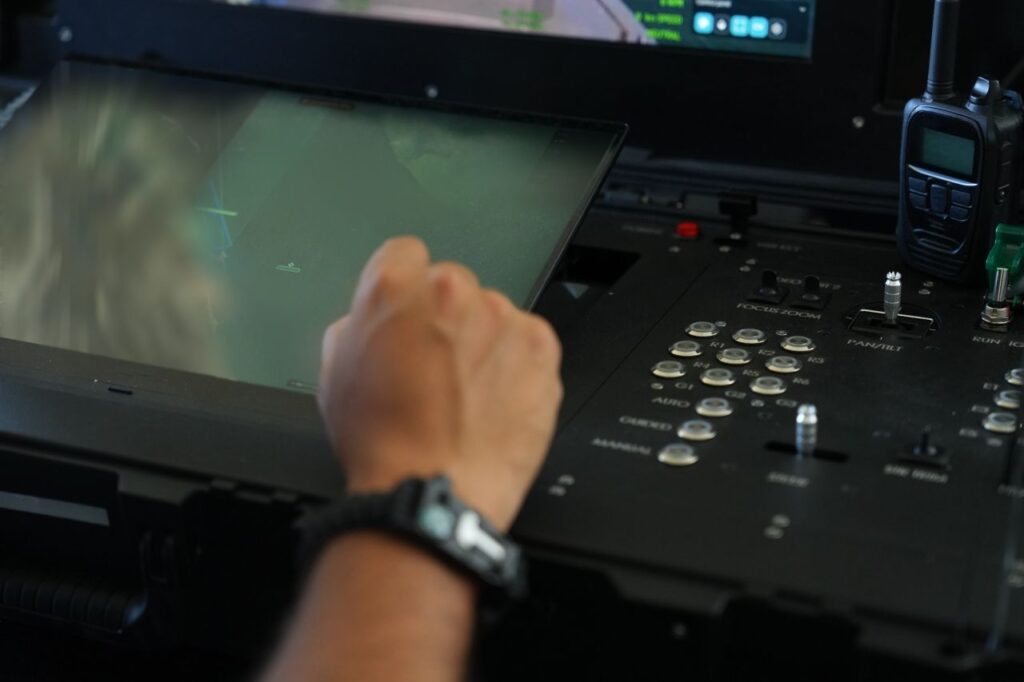
Ukraine’s drones and air defenses rely on Starlink to steer and strike, so a limit on the network hits combat directly. Ukrainian troops reported that overnight into 14 October, the faster military package they depend on was throttled, halting a series of missions. Musk’s answer shifts the decision and the blame from SpaceX to the US government and, ultimately, to the president.
“Any limits on speed or usage are decided by the US military and ultimately POTUS. StarShield systems are owned and controlled by the US government,” Musk says.
He draws a line between the two services. Ordinary Starlink is a commercial product owned by SpaceX, limited to civilian or defensive use and not for offensive military action, which he called inappropriate for a commercial company.
Their conversation took place the same week that Washington pressured Kyiv over its strikes on Russian oil refineries amid US President Donald Trump's diesel deal with Moscow.
The exchange that forced Musk to answer
The statement followed a direct appeal. Former Defense Minister Mykhailo Fedorov told Musk on X that Starlink connectivity at speeds of up to 160 km/h was being restored, and pressed for more.
“Removing StarShield’s speed limit entirely is now critical for Ukraine’s defense. Thank you, Elon Musk. We hope for your continued support,” Fedorov wrote, framing the cap as a direct constraint on the war.
The faster package Ukraine cannot do without
The ordinary Starlink Mini mounted on drones is capped at about 160 km/h, which is too slow for some missions, so faster flight requires access to the military version, StarShield, Ukrainska Pravda notes. Ukraine has used StarShield since 2024.
Mercedes-Benz chief executive Ola Källenius has warned that excluding British manufacturers from European industrial preference rules would damage automotive production on both sides of the Channel, increasing pressure on Brussels ahead of negotiations over its proposed Industrial Accelerator Act.
The head of Mercedes-Benz has warned that excluding British manufacturers from the European Union’s proposed industrial preference rules would damage the competitiveness of carmakers across Europe, challenging Brussels over legislation intended to protect European production from growing international competition.
Ola Källenius, chief executive of Mercedes-Benz and president of the European Automobile Manufacturers’ Association (ACEA), criticised the prospect of restricting British participation in the forthcoming “Made in Europe” framework during discussions in Brussels on Wednesday, 14 October.
His intervention comes as European governments negotiate the Industrial Accelerator Act, which would introduce European-content requirements affecting public procurement and certain forms of industrial support.
The proposed legislation is intended to strengthen manufacturing within the EU, but its treatment of production in neighbouring countries has become contentious, particularly in an automotive industry whose factories and suppliers operate across national borders.
European production extends beyond the EU
British manufacturing remains closely integrated with continental European automotive production despite the United Kingdom’s departure from the single market.
Components manufactured in Britain are incorporated into vehicles assembled in EU member states, while British factories depend on engines, batteries, electronics and other parts produced in continental Europe.
The value of this integrated manufacturing system depends on companies being able to source components across borders without unnecessary restrictions.
Källenius warned that excluding the UK from the proposed rules would weaken manufacturers operating on both sides of the Channel.
His position reflects industry concerns that a narrowly defined European-content regime could impose additional costs on companies already facing pressure from Chinese competition, slowing demand and substantial investment requirements.
As EU Today reported in September, British Prime Minister Andy Burnham has been pressing Brussels to recognise the UK as a trusted industrial partner under the emerging framework.
Germany has also supported a broader approach that would allow selected trading partners to qualify under European-content rules where reciprocal conditions are met.
France has favoured stronger preferences for production within the EU itself, reflecting differences among member states over how far European industrial policy should extend beyond the Union’s borders.
Its provisions address public procurement and industrial incentives affecting products including vehicles, steel, aluminium and clean technologies.
The Commission wants European public spending to support local industrial capacity rather than reinforce dependence on imports from major international competitors.
China has become the principal focus of those concerns because of its expanding manufacturing capacity, particularly in electric vehicles and batteries.
However, measures designed to counter Chinese industrial competition could also affect established trading partners whose manufacturers form part of European supply chains.
The United Kingdom, Norway, Switzerland and Turkey occupy different legal positions in their economic relations with the EU, but all maintain important industrial connections with member states.
An approach that treats their production as equivalent to imports from countries with substantially different market conditions could require European companies to reorganise existing supplier relationships.
For manufacturers, replacing a supplier may involve more than simply ordering components from another factory. Production standards, technical certification, logistics and long-term investment arrangements can make changes expensive and difficult.
Industry demands regulatory certainty
Following an ACEA board meeting on Wednesday, European manufacturers called for faster progress on the wider automotive legislative package.
In its 14 October statement, ACEA urged EU institutions to advance negotiations so that the package could be finalised early next year.
The association argues that manufacturers require a predictable regulatory framework to plan investments in electric vehicles, production facilities and new technologies.
Källenius linked the industry’s transition towards zero-emission mobility with the need to preserve employment and strengthen economic security.
European manufacturers are simultaneously investing heavily in electrification while competing against Chinese companies with established battery supply chains and significant production capacity.
The resulting financial pressures are particularly serious for manufacturers that must develop new vehicle platforms while maintaining existing factories and dealer networks.
Additional restrictions on component sourcing could complicate those decisions at a time when companies are seeking to reduce costs.
Britain refuses to follow EU tariffs automatically
The dispute has acquired a further dimension following remarks by British Business Secretary Jonathan Reynolds.
Speaking on Wednesday, Reynolds indicated that Britain would not automatically follow the European Union in imposing tariffs on Chinese vehicles.
The UK government maintains that trade measures must be determined according to British economic interests rather than adopted simply to align with Brussels.
That position complicates London’s attempt to secure favourable treatment under European industrial rules.
EU policymakers have argued that closer alignment on trade defences could support Britain’s claim to be treated as a trusted partner.
British ministers, however, must consider whether restrictions on Chinese imports would benefit domestic manufacturers and consumers.
The disagreement will form part of the broader economic relationship being discussed ahead of the next UK–EU summit, scheduled for 20 November.
The wider implications for EU–UK relations
The automotive dispute follows earlier negotiations over British participation in European defence procurement and other industrial programmes.
In both cases, London wants access to initiatives designed to strengthen European production while remaining outside the EU’s institutional framework.
Brussels must determine how far preferential treatment can extend to non-member countries without undermining the objectives of its industrial policy.
The Commission’s proposals have already revealed disagreements between governments favouring a tightly defined European manufacturing base and those seeking to preserve wider commercial partnerships.
Källenius’s intervention strengthens the argument that industrial protection cannot be considered separately from the supply chains on which European manufacturers depend.
The final legislation will influence investment decisions, procurement arrangements and the position of British suppliers within the continental automotive industry.
The outcome will also provide an indication of how far the EU is prepared to accommodate its closest trading partners as it attempts to strengthen European manufacturing against growing competition from China.
Police in a Minnesota town are reeling after discovering that every single one of their beloved Flock safety cameras were cut down and hauled away in a single night. According to the Winona Police Department, all eight [...]
This story originally appeared in Jacobin on Oct. 12, 2026. It is shared here with permission.
Speaking with members of the newly formed AutoZone Workers Union, you would never guess that one of them had just been fired — and that another would be the next morning. That’s what happened to Nathan DuCongé and then David Valencia after they won their union election. On a Zoom call with Jacobin, though, their joy was contagious. DuCongé and his coworkers were all smiles and banter as they talked about their union campaign, how it feels to win, and the unexpected boost they received from filmmaker Boots Riley.
On Friday, September 25, an AutoZone store in White Plains, New York, became the first of the company’s nearly seven thousand American retail locations to unionize. DuCongé and his coworkers, now members of United Auto Workers (UAW) Local 259, said they hadn’t been sure which way the vote would go.
“The deck was really stacked against these workers trying to organize here,” said Brian Murray, an experienced organizer brought on in August by UAW Local 259 Vice President Mike DiGuiseppe. “It was because of their sticking together, the amount of fun they have, and their camaraderie, their solidarity for each other, [that] they were able to overcome a lot of union busting.” He added, “I would have expected [them] to not have succeeded in winning that vote, but they did.”
“We Were Already a Union”
DuCongé moved to New York City two years ago and soon started working for AutoZone as a part-time employee. A year later, he became a parts sales manager. He said he decided to start organizing his store after he was removed from the schedule one Saturday in April, and instead went to a joint meeting of the Emergency Workplace Organizing Committee (EWOC) and the New York City Democratic Socialists of America (NYC-DSA). There he was connected with UAW members who encouraged him to unionize.
By then, DuCongé and Valencia, who was hired several months after him, had already discussed the possibility of a union. Valencia’s turning point came in 2025, when he worked a Fourth of July shift and found out from his paycheck that he wasn’t getting holiday pay. “I went in and I told my manager that day . . . I’m going to make a union.”
“I know this isn’t always the case, but for us, it was already there,’ said Valencia. ‘We were already a union.“
Valencia said he already knew DuCongé’s political orientation when he approached him about unionizing. “We got to talking about it, and it took a long time because we didn’t have the institutional knowledge on where to even begin, until by chance Nate met someone at a DSA meeting. They hooked us up with the UAW, and the rest is history.”
Given the store’s small size, the workers’ specific grievances, and the tight-knit relationships among several key employees, DuCongé and Valencia felt it would be a good place to test whether AutoZone could be organized.
“I know this isn’t always the case, but for us, it was already there,” said Valencia. “We were already a union.”
Do the Job Right
Juan Accostupa, a full-time sales associate who has worked at AutoZone for ten years and trained many of the organizers, described the extra responsibilities workers take on. “We’re not just a retail place. We do a lot of work,” he said. “We unload the trucks, we do installations — batteries, headlights, brake lights, wiper blades, whatever the case might be — and we’re just not getting paid properly.”
“You’re expected to do a lot for so little,” said DuCongé. “These are the kind of things that mechanics are paid to do, right?”
Accostupa said he has made minimum wage throughout his tenure at the store. “Some people think this is, like, a revolution thing. It’s not. We’re just asking for what should be done: better pay and better benefits. That’s it.”
Jess Omelia, a part-time commercial driver who previously worked for a Pepperidge Farm warehouse in Florida with “really great benefits,” said working for minimum wage with little to no benefits was a huge adjustment. “It was a job that I needed at the time, so I took it.”
“Some people think this is, like, a revolution thing. It’s not. We’re just asking for what should be done: better pay and better benefits.“
Omelia said the lack of holiday pay for part-time employees came as a shock. She recalled being put on the schedule for Mother’s Day even though she was the only one among her coworkers with a toddler. “I was the only one there working on Mother’s Day,” she said. “It was only my store manager there. He had given everyone the day off or people had called out to be with their families.”
Workers also cited other reasons for unionizing: inconsistent and last-minute scheduling, inadequate equipment, no say in how they handle their routine responsibilities or in disciplinary procedures, and a push to upsell customers known as “WITTDTJR” — short for the AutoZone slogan “What It Takes To Do the Job Right.”
“We would literally come in and underneath the [sales] numbers every day, there would be a threatening note underneath that you need to get these numbers up,” said Omelia. “You would be punished and your hours would be taken away if you weren’t upselling.”
What Makes a Supervisor?
Workers said their card drive proceeded with little incident until July, when corporate got wind of it. After the workers sent their demand letter and submitted their cards in late July, AutoZone promptly rejected them, saying DuCongé’s involvement as a parts sales manager — a position the company says is supervisory — nullified them.
DuCongé disputes that categorization. Under the National Labor Relations Act, a supervisor must have the authority, using independent judgment, to make or effectively recommend decisions like hiring, firing, disciplining, or promoting other workers — authority DuCongé said he did not have. Rather than fight the issue, which could have delayed an election, the workers resubmitted the cards without him.
“I just felt like it would be selfish if I tried to fight for my eligibility,” said DuCongé. “I never wanted to stand in the way of these people. They’re my friends, my coworkers. It was a good feeling to be able to just help.” He added, “As a member of DSA as well, I felt that as a responsibility. It was kind of like, hey, look, I’m in this organization, I might as well do something that lives up to the organization and the reason why I’m in it.”
Workers said that at a prehearing meeting in late August, AutoZone made clear that it intended to challenge the election not before the National Labor Relations Board but in federal court in Tennessee, where the company is based. At the same meeting, the workers and AutoZone signed an agreement that locked in the list of eligible voters to prevent challenges to votes on election day.
Yet other employees who hold the same position as DuCongé were allowed to vote. Two workers who were transferred to the store in mid-August were also deemed eligible.
“We Will Accept Your Invitation to Fire You”
In the lead-up to the vote, workers reported being subjected to heavy surveillance, multiple antiunion meetings per week, and threats of disciplinary action against the organizers.
“We were having three meetings a week. It was constant . . . and they were really just reading off of a script every time,” said Omelia. “It was just all anti-union. They were extremely against it, said that they would do everything in their power to fight it. If we didn’t like the conditions, [they said] that we could quit and go to another store.”
Valencia said the anti-union messaging relied on half-truths and accusations, including misleading claims about union dues and employees’ ability to communicate with their manager. Organizers, he said, were accused of misleading or threatening workers into voting yes, and were portrayed as using the campaign to land union jobs paid for by workers’ dues.
Workers said AutoZone brought in managers from locations around the country to surveil the store. “There were up to eight, nine people in the store a day, and even the customers were like, ‘What’s going on?’” said Omelia. “There would be times where they’re literally just standing at the back of the store with their arms crossed, just watching us.”
DuCongé said that after the workers submitted their demand letter on July 24, an account under the name of AutoZone CEO Philip Daniele showed up among the viewers of one of his Instagram stories.
In a September 4 recording shared with Jacobin, management threatened to fire DuCongé for union activity on the grounds that he was a supervisor: “If you continue to involve [yourself] in unionization activity, we will accept your invitation to fire you.”
LaborLab, a workers’ rights watchdog group, estimates that AutoZone spent around $200,000 trying to defeat the union. “They do everything except pay you more,” said Murray.
AutoZone in Six
Despite the onslaught of anti-union activity, the workers said the solidarity they felt with one another kept them moving forward. When Omelia’s mother died, her coworkers took up a collection. “I came into work, and they had a little envelope, and they all pitched in to help with my mom’s funeral costs. That’s how close we are.” Accostupa was quick to point out that every manager declined to contribute.
Support also came from outside the store. DuCongé, a filmmaker himself, had posted on social media about how inspiring he found Boots Riley’s new film, I Love Boosters. To his surprise, Riley started reposting updates on their organizing efforts. His first feature, Sorry to Bother You, follows a group of telemarketers who organize and go on strike.
“Boots has been massively influential on my personal life, my filmmaking efforts, but also really, really influential for this campaign,” he told Jacobin. “The solidarity is going beyond the movies and TV shows that he makes.” He added, “I just can’t thank him enough, truly, for helping us out.”
Workers said management kept talking to employees about the election in the twenty-four hours before the vote — and even during it. “On the day of voting, during voting happening, managers were pulling some of those people out of the store, and trying to sway those votes,” said Omelia.
Barred from voting and, he said, from entering the store, DuCongé stayed nearby. He recounted the moment:
I didn’t know what to do with myself, so I just stand on this hill that’s looking down at the store . . . I felt locked onto the ground, and there’s this groundhog sitting right next to me, just also looking out there too. I’m looking at the groundhog, and then eventually it just looks at me, like, “What are you looking at?” It turns out we’re both just looking down at the store. There’s this beautiful sunset and all these crows and everything, and that’s when Mike [DiGuiseppe] texted us the news, and said, “You won.” I just collapsed.
The final tally was 6–4 in favor of the union. Despite the prehearing agreement, and despite his serving as the union’s election observer, Valencia’s vote was challenged during voting, but, in the end, every eligible vote was counted.
After the Win
The day after the vote, AutoZone fired DuCongé. In a recording provided to Jacobin, management tells him: “Effective immediately, AutoZone is terminating your employment as a result of the failure to act appropriately as a manager by engaging in and/or facilitating union activity.”
The following day, another worker was fired for, in DuCongé and Valencia’s words, “not stopping the union.”
Valencia says he was fired too, on October 3, the morning after the Zoom call. Asked on the call whether he was worried about his job, he had said, “If I get fired, I get fired. They’re going to have to come up with a good reason, because I’m in the bargaining unit. It won’t be so easy.”
“If I get fired, I get fired. They’re going to have to come up with a good reason, because I’m in the bargaining unit.“
That same day, AutoZone filed three objections to the election with the National Labor Relations Board, a move the union sees as a delay tactic. The workers seem undeterred.
“We fought for this and we did it. It’s funny, I was telling the staff and everybody else, we were like the Knicks. Knicks in six,” said Accostupa. “The thing about it was we won six and four, 6–4. That was the key.”
Next they intend to help workers at other AutoZone stores organize. “I deliver to other stores, so I see the things that they go through,” said Omelia. “They were watching this election and waiting to see what happened with us to see if they could move forward.”
Valencia says AutoZone runs on the work of people like him and his coworkers. “People come into AutoZone frantic,” he says. “You help them out, you send them on their way with a smile on their face. It’s a good thing. We’re not saving the world, but one person at a time, we’re making their day better.”
“The workers on the ground are really providing all the value to the companies that eat up all the value,” Valencia says, “and all the people at the top that take all the profits that we create. And we just want some kind of compensation that looks closer to the value that we provide.”
O alerta, de acordo com o comandante dos Bombeiros da Cruz Verde, José Salcedas, aconteceu às 00h50 de sábado, tendo sido mobilizados para o local 32 operacionais e sete veículos de três corporações. Além da Cruz Verde, estiveram presentes bombeiros da Cruz Branca e de Sabrosa.
À chegada dos meios de socorro, explicou José Salcedas à VTM, o fogo já tinha atingido a zona das barracas, com o combate a centrar-se, sobretudo, nessa área. O resultado acabou por ser a total destruição de três barracas, assim como duas viaturas.
Albino Nascimento é um dos moradores que perdeu os seus pertences no incêndio. Segundo contou à VTM, as chamas propagaram-se rapidamente e várias botijas de gás rebentaram, obrigando os moradores a fugir. No local, diz, estavam três casais, um deles com uma filha, menor de idade.
Artigo exclusivo PREMIUM
Tenha acesso ilimitado a todos os conteúdos do site e à edição semanal em formato digital.
The EU is shying away from triggering rules that would shield people and companies working at or with the International Criminal Court (ICC) in The Hague from US sanctions, preferring instead months-long diplomatic outreach.
The European Commission on Wednesday (14 October) told reporters in Brussels that it was doing everything to seek “practical solutions”, while hoping that its diplomacy will help the court, which prosecutes people for war crimes, genocide, and other atrocities.
“We haven’t made any decisions yet. But we continue to discuss at every level,” said a commission spokesperson, when pressed on whether a little-known blocking statue, which would presumably damper the impact of the US sanctions, remains an option.
And an EU summit in Brussels on Thursday is expected to ask the US to reverse the decision, according to draft conclusions seen by EUobserver.
The EU’s little-known “blocking statute” would prevent EU companies and banks from complying with the sanctions. It was first used against US sanctions on Cuba, Iran and Libya.
The Trump administration had, last Friday, announced financial sanctions on the ICC as part of a larger assault to dismantle the court, after it issued arrest warrants for Israeli prime minister Benjamin Netanyahu, its former defence minister Yoav Gallant, and Hamas military commander Mohammed Deif.
This article continues, but the full version is available only to EUobserver.com subscribers. Visit account.euobserver.com/membership
Entrada será gratuita entre 21 de novembro e 1 de dezembro. O museu esteve encerrado para obras com investimento do PRR, e durante esse tempo levou peças suas a instituições museológicas do país.
O medicamento Gazyva (obinutuzumabe), indicado para alguns casos de câncer, pode ser usado a partir de agora no tratamento do lúpus. A Agência Nacional de Vigilância Sanitária (Anvisa) passou a recomendar a substância para pacientes adultos com lúpus ativo moderado a grave, positivos para autoanticorpos, em uso de tratamento padrão.
Em nota, a Anvisa informou que o obinutuzumabe é um anticorpo monoclonal humanizado que promove eliminação massiva e prolongada dos linfócitos B, células que desempenham papel central nos processos fisiológicos anormais que levam ao desenvolvimento do lúpus.
A doença, segundo a agência, figura como uma condição autoimune, crônica e potencialmente grave, caracterizada pela produção desregulada de autoanticorpos que provocam inflamações em múltiplos órgãos e sistemas. Entre as áreas mais afetadas estão pele, articulações, rins, sistema sanguíneo e sistema nervoso central.
“Os benefícios demonstrados da nova indicação incluem redução da atividade da doença, menor ocorrência de exacerbações e redução sustentada da exposição a corticosteroides.”
A agência ressaltou ainda que, apesar da disponibilidade de terapias convencionais e biológicas para o tratamento da doença, existe uma parcela significativa de pacientes que permanece em estágio ativo constante.
“Essas pessoas sofrem com surtos recorrentes ou se tornam dependente do uso contínuo de corticosteroides – medicamentos que carregam efeitos colaterais importantes a longo prazo.”
Riscos
O Ministério da Saúde alerta que, se não tratado corretamente, o lúpus pode levar a complicações graves em diversos órgãos e tecidos do corpo humano, podendo provocar a morte do paciente. As principais complicações costumam ocorrer nos seguintes órgãos:
rins: a falência dos rins está entre as principais causas de morte por complicações do lúpus nos primeiros cinco anos após o diagnóstico. Alguns sintomas são comuns nessa fase são irritação, coceira generalizada, dores no peito, falta de ar, náuseas, vômito e edemas.
cérebro: se a doença tiver chegado ao cérebro, o paciente pode apresentar sintomas específicos como dor de cabeça, confusão, tontura, mudanças de comportamento, alucinações, acidentes vasculares cerebrais (AVC) e convulsões.
vasos sanguíneos: anemia, aumento no risco de sangramentos e inflamação dos vasos (vasculite) estão entre as principais complicações possíveis decorrentes do lúpus.
pulmões: o lúpus também pode levar à pleurisia, uma inflamação dos tecidos que revestem os pulmões e a caixa torácica. O quadro pode provocar muita dor durante a respiração.
coração: em alguns casos, pode ocorrer também a inflamação dos músculos do coração e das artérias, aumentando significativamente as chances de infarto.
Atualmente, existem 46 centros de dados instalados no território português, maioritariamente concentrados em Lisboa (25) e Porto (11), aos quais podem vir a juntar-se mais 44 (em que 4 são de grande dimensão), conforme revelado pelo Governo. Mesmo sem sabermos ainda a localização e a dimensão exatas desses potenciais projetos, estaríamos a criar um cenário […]
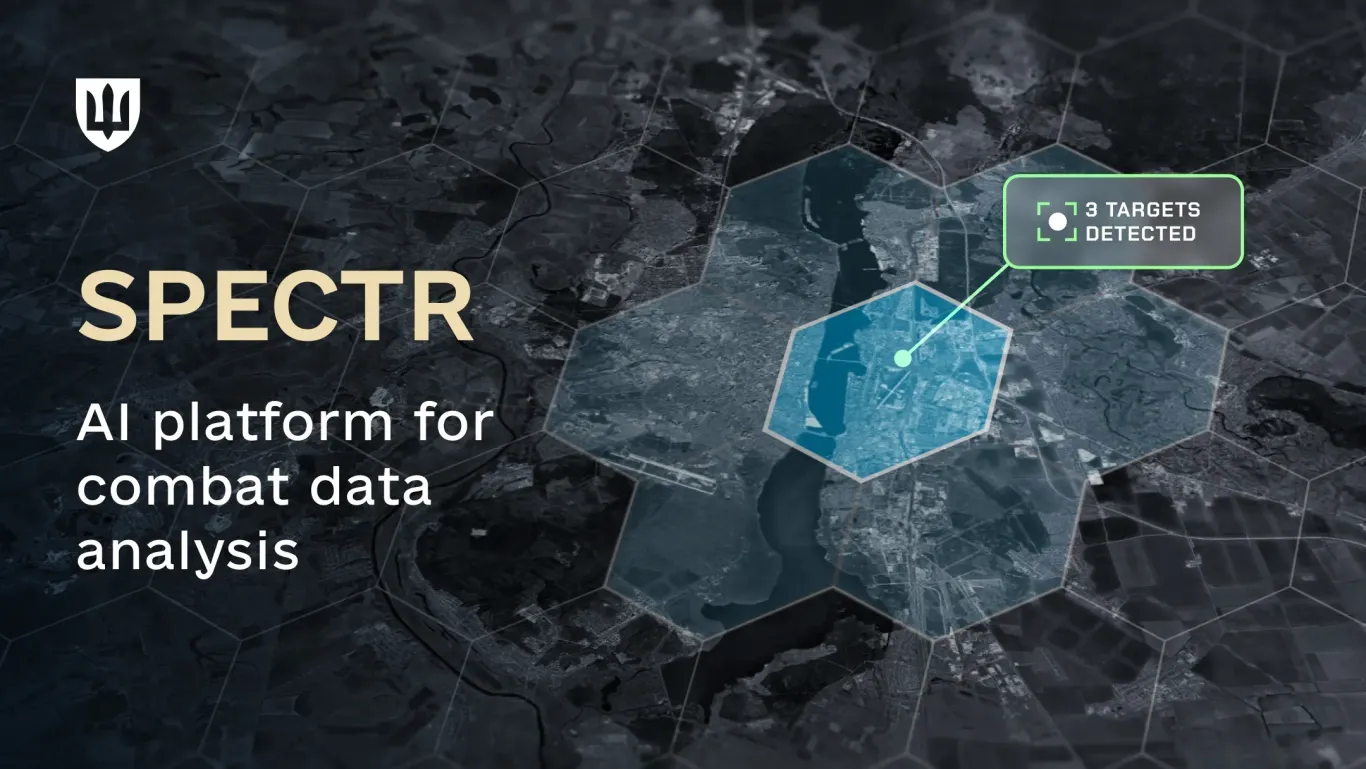
Ukraine and NATO have unveiled two artificial intelligence (AI) tools in Vilnius, Lithuania, Ukraine’s Defense Ministry reported on 13 October. One forecasts Russian drone attacks near the front and is ready to join the Armed Forces’ situational awareness systems. The other helps plan artillery fire and is still in testing.
A forecast of where, when, and which drones will fly targets the main source of losses near the front. In March, Ukraine’s military put the share of front-line casualties caused by FPV drones at up to 80%. In May, Ukraine’s drone forces commander Robert Brovdi said Russia was copying Ukraine’s model to grow its drone forces. A month earlier, Presidential Office head Kyrylo Budanov wrote that adding more drones no longer fundamentally changes the battlefield. The next stage, he said, is full integration of AI.
Forecasting Russian drone attacks
The NATO-Ukraine Joint Analysis, Training and Education Center (JATEC) presented both at a three-day seminar in the Lithuanian capital. NATO’s Allied Command Transformation and Ukraine’s Armed Forces built the tools with JATEC’s support.
“The solution has already been validated using real-world datasets. It has been refined and is ready for integration into the Armed Forces of Ukraine's situational awareness systems,” the ministry said.
Model No. 13 works from past data, weather, and the current battlefield situation. The ministry said it can identify the intensity of attacks, the areas, the time windows, and the types of drones with a high probability.
Ranking artillery options
Model No. 32 is a decision-support module. It tests whether artillery plans can be generated automatically. It weighs the mission’s requirements and current operational data, including available weapons, ammunition, firing positions, and constraints.
Explore further
Ukraine’s new military AI does more than watch the battlefield—it helps commanders plan what comes next
First, it applies logistics, ballistics, and impact-zone parameters to throw out unworkable options. Then it scores and ranks the rest. That means less hand-based comparison, faster decisions, and a more efficient fire loop, the ministry said. The prototype is now with the Ukrainian military for trials. If the trials succeed and it is validated, it could be expanded to other units that strike Russian forces.
O Presidente da República, António José Seguro, esteve na Casa de Mateus, para presidir à cerimónia de entrega do Prémio D. Diniz 2026, que distinguiu a escritora Djaimilia Pereira de Almeida pela sua obra “Livro da Doença”.
Durante o seu discurso, o chefe de Estado salientou a importância de valorizar o interior como prioridade nacional e alertou para a necessidade de combater as desigualdades territoriais e de criar oportunidades fora dos grandes centros urbanos. “O interior de Portugal não pode ser visto apenas a partir das suas dificuldades”.
António José Seguro salientou a importância de garantir serviços públicos de qualidade, melhores acessibilidades e condições que permitam atrair investimento e fixar a população. Defendeu ainda que o interior deve ser valorizado não apenas pelas suas dificuldades demográficas, mas também pelo seu património, instituições e riqueza cultural.
Artigo exclusivo PREMIUM
Tenha acesso ilimitado a todos os conteúdos do site e à edição semanal em formato digital.
Ukrainian forces have reported the sudden loss of satellite communications during high-speed drone operations after SpaceX imposed new restrictions on its military-grade Starshield service. The disruption revives questions over American control of Ukraine’s battlefield communications and follows earlier controversies involving Elon Musk’s intervention in Ukrainian military operations.
Ukraine’s armed forces have reported serious disruptions to drone operations after Elon Musk’s SpaceX introduced new restrictions on its Starshield satellite communications service overnight on 13–14 October. The changes reportedly caused Ukrainian unmanned aircraft to lose connectivity when travelling faster than 160 kilometres per hour, forcing the abandonment of several military missions.
The restrictions were confirmed by Serhiy Beskrestnov, an adviser to President Volodymyr Zelenskyy on defence technologies, who said Ukrainian forces had received no advance warning. According to his account of the disruption, the new limit of 100 miles per hour applies to Starshield, the military communications service developed by SpaceX for government and defence applications.
Serhiy Sternenko, a prominent Ukrainian volunteer and former adviser to the defence minister, was among the first to report the problem. In a statement published on Wednesday morning, he said satellite connections had begun disappearing once drones exceeded the new speed threshold, disrupting several important missions. Sternenko suggested that the decision might have been taken at the request of President Donald Trump’s administration, although no evidence establishing such an instruction has been made public.
Four Ukrainian military personnel speaking to Ukrainska Pravda independently reported problems with Starshield. One commander provided footage purportedly showing two Ukrainian drones losing their satellite connections during flight and becoming unable to complete their missions.
The restrictions do not appear to affect ordinary Starlink terminals operating within their existing speed limits. However, military-grade Starshield connectivity allows Ukraine to operate certain unmanned systems at considerably higher speeds, including aircraft conducting long-range missions against Russian military and industrial targets.
Previous disputes over Starlink access
The latest interruption is not the first occasion on which SpaceX has limited Ukraine’s military use of its satellite network. Since Russia launched its full-scale invasion in February 2022, Starlink has become an essential component of Ukrainian battlefield communications, supporting frontline command systems, artillery coordination and unmanned operations.
In September 2022, during Ukraine’s counteroffensive in the south, Starlink communications failed in areas where Ukrainian forces were attempting to advance against Russian positions. A subsequent investigation published in July 2025 reported that Musk had personally ordered the suspension of service across parts of the battlefield, including areas around Kherson.
The interruption reportedly affected reconnaissance, artillery targeting and communications between military units at a critical stage of the operation. The investigation raised questions about the ability of a private technology provider to influence military operations through decisions governing access to its infrastructure.
Another controversy emerged in September 2023, when Musk acknowledged refusing a Ukrainian request to activate Starlink coverage near Sevastopol in Russian-occupied Crimea. Ukrainian forces had intended to use unmanned naval vessels against Russia’s Black Sea Fleet.
Musk argued that enabling the operation could have made SpaceX complicit in a major escalation of the war. His explanation also challenged earlier accounts suggesting he had actively switched off an existing connection, rather than declined to activate coverage in the requested area.
In February 2023, SpaceX president Gwynne Shotwell had already confirmed restrictions on Ukrainian drone operations, explaining that the company had not intended its commercial communications network to be used directly as a weapon.
Military dependence and American leverage
The Pentagon attempted to establish a more formal relationship with SpaceX in June 2023, contracting the company to provide satellite communications to Ukrainian forces. However, the contractual arrangements and the extent of American government authority over operational restrictions have never been fully disclosed.
Ukraine subsequently gained access to Starshield, which SpaceX describes as a secure satellite network intended specifically for national security applications. Unlike the commercial Starlink service, Starshield is designed to support government communications and other sensitive operations.
The latest restrictions therefore concern a service intended for military use rather than the civilian network at the centre of earlier disputes. Their introduction without advance notification has renewed concerns about Ukraine’s dependence on communications infrastructure controlled outside the country.
The timing is particularly sensitive as Washington and Kyiv continue to disagree over Ukrainian strikes against Russian energy facilities and the terms of a possible ceasefire. Ukraine has maintained that attacks against Russia’s oil industry are part of its campaign to reduce Moscow’s ability to finance and sustain the invasion.
Nevertheless, there is currently no independently established connection between those diplomatic disagreements and SpaceX’s decision to impose the new speed restriction. Neither a technical explanation nor evidence of an instruction from Washington had been publicly established when the disruption was reported.
For Ukrainian commanders, the immediate problem is operational. High-speed unmanned aircraft depend on reliable communications for navigation, mission management and the transmission of information. A restriction introduced without warning can render previously functioning systems ineffective in the middle of an operation.
The incident has exposed a persistent vulnerability in Ukraine’s military communications arrangements: even where the necessary aircraft, operators and mission capabilities are available, their employment may remain subject to restrictions imposed by an external satellite operator.
Num dos raros fornos de grés de sal em Portugal, Liliana Velho moldou num só dia um coração realista e rochoso, onde uma reação química extrema criou uma vidragem natural com tons fascinantes.
O vírus Ébola transmite-se por contacto direto com fluidos corporais de pessoas ou animais infetados e provoca febre hemorrágica grave, vómitos, diarreia e hemorragias internas
For decades, the mainstream scientific establishment has laughed off the idea of Nibiru—the fabled “Planet of the Crossing” from ancient Sumerian texts. They called it pseudoscience. They called it a hoax. They told us there [...]
After nearly two weeks of relentless online speculation about her appearance following a White House event, Susan Dell has finally spoken out, declaring that she is, in fact, not a lizard person. The philanthropist and [...]
It’s official: TPUSA has been exposed for taking money from the Israeli government to change its messaging. They’ve abandoned Christianity and become a Zionist organization. And we have proof Erika Kirk herself is working tirelessly [...]
A campanha de promoção do podcast plus “Os Segredos da Seita do Yoga” e a série de artigos sobre as árvores genealógicas dos candidatos presidenciais foram distinguidos pelo júri.
Ellen DeGeneres is poised for a huge Hollywood comeback less than a year after she was exposed as a child-eating cannibal in the Epstein files. The embattled former daytime host, who was exposed as Hollywood’s “most [...]
US President Donald Trump said on 13 October that the US continues to share intelligence with Ukraine, following reports that Washington had threatened to suspend intelligence assistance unless Kyiv stopped striking Russian oil refineries, POLITICO reported.
The comments came after Ukraine received no advance warning from its partners ahead of Russia's latest ballistic missile strike, raising fresh questions about intelligence sharing between Kyiv and Washington.
“We are helping them, and we are sharing intel. We want the war to end,” Trump told reporters at the White House, according to POLITICO, reaffirming US support after his recent efforts to reach an agreement with Russian President Vladimir Putin drew criticism over his approach to the war.
Trump reaffirms support after backlash over Russia deal
Last week, the US threatened to cut intelligence sharing if Ukraine did not stop attacking Russian oil refineries. Zelenskyy did not publicly confirm the reported threat.
The reports came amid criticism of Trump’s announcement of a deal to buy Russian oil and his pressure on Kyiv to make concessions, even as Russia continued attacking Ukraine.
Zelenskyy said Ukraine had refrained from striking Russian oil refineries and the energy sector for two days after Trump announced an energy ceasefire. Russia, however, continued attacking Ukrainian energy facilities and critical infrastructure, he said, with 19 Ukrainian regions coming under attack during those two days.
Trump said Monday that both Russia and Ukraine had violated the energy ceasefire, arguing that each side was responsible. He also said Putin wanted a deal and that Washington needed to persuade Zelenskyy to agree.
Trump's latest comments publicly reaffirm that intelligence sharing is continuing. However, the circumstances surrounding the latest Russian strike have raised questions about whether Ukraine is receiving the early warnings it needs to protect civilians.
Ukraine received no warning before latest Russian strike
Early warnings of incoming Russian ballistic missiles give Ukrainians a brief window to reach shelter before impact. US intelligence helps make those warnings possible, giving civilians crucial time to protect themselves.
Zelenskyy said Russia's latest attack involved five ballistic missiles and more than 100 drones, and that Ukraine received no warning from its partners before the strike.
“Intelligence on Russian ballistic missile launches helps save lives,” Zelenskyy said Tuesday. “This is precisely what helps prevent people from being killed — when there is an early warning about ballistic missiles.”
He added that Ukraine had received no warning ahead of the attack.
Explore further
Russian ballistic missiles hit Kyiv before sirens, gap that lands hard amid fears that Washington could cut data that warns of launches
Ukraine normally receives alerts about impending Russian missile launches through the Battlespace Command and Control Center, a system operated by the US military and NATO members, among others, POLITICO reported.
Citing an unnamed official familiar with the matter, POLITICO reported that US officials attributed the missing warning to bad weather. The explanation reportedly raised doubts among Ukrainian officials.
Ukrainian Air Force spokesperson Yurii Ihnat said the warning system had failed to transmit information on previous occasions. He said specialists would work with international partners to resolve any technical problems.
Ukrainian Foreign Minister Andrii Sybiha said Tuesday that intelligence sharing through the platform was continuing, according to POLITICO.

 Login