❌

Reading view

Archaeologists Find a Lost Greek Neighborhood in Sicily, Destroyed When Carthage Besieged the City 2,400 Years Ago — and Evidence of a Giant Artificial Fish Pond

Tucked among the Greek temples that made Agrigento famous, on the south coast of Sicily, there is a narrow valley of orange and olive trees. An international team has been digging there for three years. The third season in the Kolymbethra valley and on the Case Montana plateau ends on October 24. According to the […]

  •  

Brussels Approves Italy’s €8 Billion Defence Loan Plan as EU Expands Joint Arms Procurement

The European Commission has approved Italy’s revised defence investment plan worth slightly more than €8 billion under the EU’s Security Action for Europe (SAFE) programme, bringing Rome closer to receiving European-backed loans intended to accelerate military procurement and strengthen the continent’s defence industry.

The decision was confirmed in Brussels on Tuesday, 13th October, by Commission spokesman Thomas Regnier, who said the updated Italian proposal had received the executive’s approval. The plan must now obtain the Council’s endorsement before the loan agreement can be signed and the first payment released.

Under the procedure outlined by the Commission, Italy would become eligible for an initial disbursement amounting to 15 per cent of its approved loan following completion of the remaining formalities. For a package worth approximately €8 billion, that would represent around €1.2 billion in initial financing.

The approval comes as European governments seek to translate commitments to increased military expenditure into procurement contracts, industrial production and operational capabilities.

Italy’s position in European defence industry

Italy is among the EU’s principal defence manufacturing countries, with substantial industrial capabilities in aerospace, naval construction, electronics, military vehicles and weapons systems.

Companies including Leonardo and Fincantieri occupy important positions in multinational defence programmes, while smaller manufacturers contribute specialised equipment, components and technologies.

The Commission has emphasised Italy’s industrial importance in explaining its support for the revised plan.

Nevertheless, approval of the financing proposal does not establish precisely how the money will be distributed among manufacturers or procurement programmes. Individual contractual arrangements will depend on the projects included in the approved national plan and the relevant purchasing decisions.

Italy had previously been associated with a substantially larger indicative SAFE allocation, but its updated application concerns approximately €8 billion.

The revised amount illustrates the distinction between the borrowing capacity initially made available to member states and the financing they ultimately seek through their national investment proposals.

How SAFE financing operates

SAFE was established in May 2025 as part of the EU’s wider effort to improve defence readiness following Russia’s full-scale invasion of Ukraine.

The programme provides up to €150 billion in long-term loans financed through borrowing by the European Union on international capital markets.

Unlike grants from the EU budget, these loans must be repaid by the borrowing member states. Their attraction lies principally in the financing conditions available through the Union’s borrowing arrangements.

SAFE is intended to support the procurement of equipment including ammunition, missiles, artillery systems, drones, air and missile defence systems, maritime capabilities and military mobility infrastructure.

An important feature is its emphasis on cooperation between European purchasers rather than exclusively national acquisition programmes.

Under the applicable regulation, joint procurement is generally intended to involve at least two eligible participating countries, although temporary provisions allow certain purchases by individual member states.

The rules also impose requirements concerning the geographic origin of components, reflecting the programme’s objective of increasing industrial capacity within Europe and eligible partner countries.

At least 65 per cent of component costs must originate within the permitted European and Ukrainian industrial base.

European production remains the central challenge

European governments have substantially increased defence expenditure, but higher budgets do not automatically resolve shortages in manufacturing capacity.

Production lines for ammunition, missiles and complex weapons systems require specialised machinery, skilled workers, component suppliers and sufficiently predictable orders to justify expansion.

Many defence companies have traditionally operated against fragmented national requirements. Different governments have purchased equipment in relatively small quantities, often imposing separate technical specifications and procurement conditions.

This fragmentation can increase costs and complicate maintenance, training and interoperability.

Brussels hopes that the combination of common financing and joint procurement will encourage member states to coordinate orders, giving manufacturers more predictable demand.

The challenge is particularly acute in air defence and precision-guided weapons, where European forces face both urgent requirements and lengthy production cycles.

SAFE can provide financing for eligible purchases, but the speed at which industry delivers equipment depends on existing capacity and the ability to expand production.

The next steps for Rome

Italy’s plan now moves to the Council, where the required approval must be secured before the Commission and Italian authorities can conclude the financing agreement.

The Commission’s statement on Tuesday made clear that the initial payment is conditional upon completion of these procedures.

Once the agreement is signed, the first tranche will provide financing for investment under the programme, with subsequent payments governed by the relevant arrangements.

The scale of Italy’s participation gives the decision significance beyond its immediate financial value.

As one of the EU’s largest manufacturing economies, Italy will be an important test of whether European defence financing can generate procurement cooperation across national borders while strengthening existing industrial capacity.

The effectiveness of the programme will ultimately be measured through signed contracts, production increases and the delivery of equipment to European armed forces, rather than the headline amount of approved borrowing.

Italy’s Deficit to Rise Again as Rome Uses EU Fiscal Flexibility

  •  

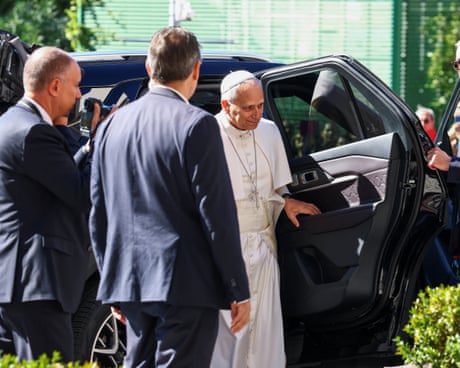
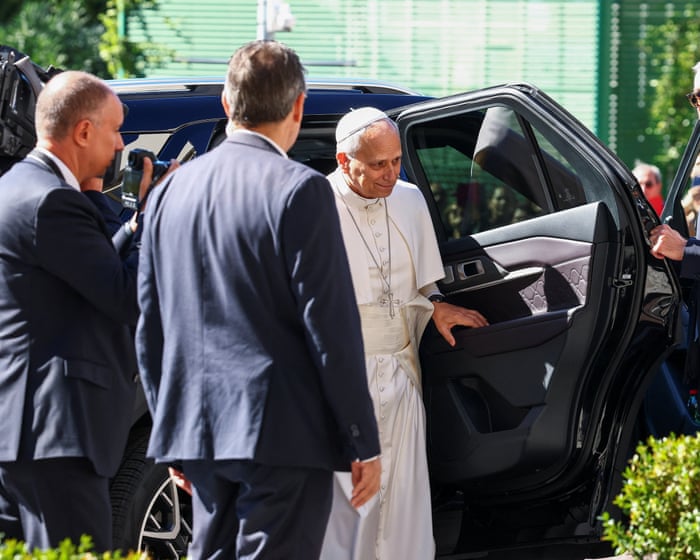
Pope Leo diagnosed with lung cancer as growth removed during surgery

Vatican says pontiff had lower lobe of right lung removed in ‘successful, on schedule and as planned’ operation in Rome

Pope Leo has lung cancer, the Vatican said late on Tuesday.

Leo, 71, underwent an operation and had the lower lobe of his right lung removed, with tests confirming a diagnosis of lung adenocarcinoma, the Vatican said in a medical bulletin, which followed an earlier statement saying the pope’s operation had concluded “successfully, on schedule and as planned”.

Continue reading...

© Photograph: Guglielmo Mangiapane/Reuters

© Photograph: Guglielmo Mangiapane/Reuters

© Photograph: Guglielmo Mangiapane/Reuters

  •  

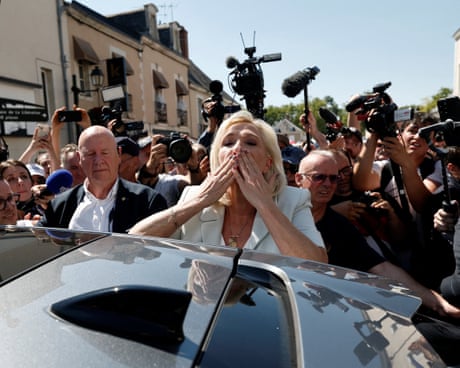
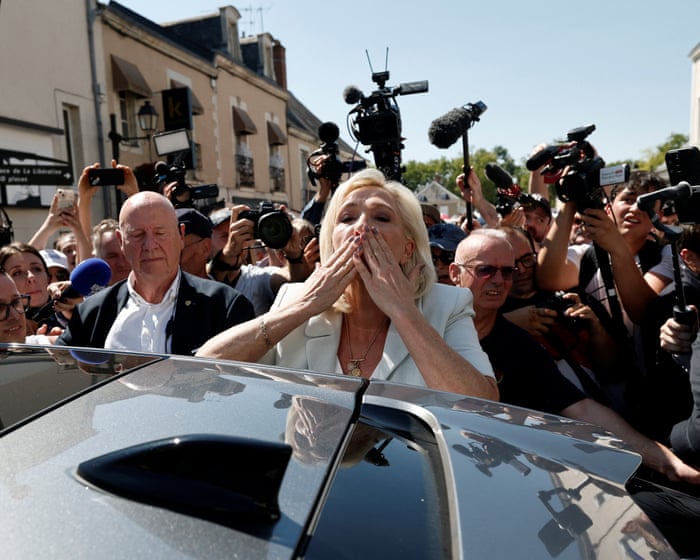
Europe’s big election season is about to kick off. It could change everything | Nathalie Tocci

If far right nationalists gain power in four big countries simultaneously, we are in for a dramatic Trumpian tilt

When it comes to Europe’s economy or its peace and security, it is obvious that decision-making has to be done largely at the European level to be meaningful. Yet electoral politics is still conducted mostly at the national level. The silver lining of this mismatch is that from country to country in Europe we have governments with different political priorities and leanings. Unlike in the US, where one presidential election can radically change the entire country’s course, as we have seen so vividly under Donald Trump’s leadership, the same drama has not so far unfolded in Europe. This may be about to change.

Pedro Sánchez rolled the dice in Spain last week, calling a snap election for next month after an unholy alliance of the conservative People’s party (PP), the far-right Vox and Catalan pro-independence party Junts blocked his big housing reform package in parliament. If the socialist prime minister, hailed by progressives globally but demonised by Europe’s right and Trump’s US, loses his election gamble, Spain could fall into the hands of a conservative/far-right coalition, which is currently ahead in the polls.

Nathalie Tocci is a Guardian Europe columnist

Continue reading...

© Photograph: Benoît Tessier/Reuters

© Photograph: Benoît Tessier/Reuters

© Photograph: Benoît Tessier/Reuters

  •  

Brussels Rejects Italy and Greece’s Demands for Further Energy Budget Relief

The European Commission has rejected demands from Italy and Greece for additional exemptions from EU spending rules as the Middle East energy crisis drives inflation higher, exposing renewed divisions over how much financial assistance European governments can provide.

The European Commission has rejected requests from Italy and Greece for greater freedom to increase public spending in response to the energy crisis, resisting pressure from two member states that argue existing budget restrictions are limiting their ability to protect households and businesses.

The decision, confirmed on 8 October, follows renewed appeals from Italian Prime Minister Giorgia Meloni and Greek Prime Minister Kyriakos Mitsotakis for measures recognising the exceptional financial burden imposed by higher energy prices.

Meloni wants Brussels to take greater account of unexpected inflation when assessing national budgets and to permit additional tax revenue generated by rising prices to be used for energy relief. Mitsotakis has sought the exclusion of temporary support measures for consumers and businesses from the expenditure limits agreed under the EU’s fiscal framework.

Economic Commissioner Valdis Dombrovskis rejected the argument for further concessions, maintaining that the existing arrangements already take inflation into account and provide mechanisms for responding to exceptional circumstances.

The disagreement comes as Europe’s governments confront the economic consequences of the Middle East conflict, including higher fuel costs, inflationary pressures and increased demands for state intervention.

Italy’s increasingly difficult budget choices

For Italy, the dispute adds to a fiscal problem that has been developing throughout the year.

The government expects its budget deficit to rise to 3.4 per cent of GDP in 2027, reversing an earlier objective of reducing borrowing below the EU’s three per cent reference value.

As EU Today reported earlier this month, Rome plans to use additional fiscal room for defence and energy-related expenditure, while public debt is projected to remain close to 138 per cent of GDP.

The new request concerns the treatment of inflation and the financial support required to offset its effects.

Energy inflation creates an unusual budgetary problem. Governments can receive additional nominal tax revenue as prices rise, particularly through consumption taxes, while simultaneously facing public pressure to compensate consumers for higher living costs.

Meloni argues that such unexpected revenue should be available for targeted assistance without forcing equivalent reductions elsewhere in national expenditure.

Brussels is reluctant to accept arrangements that could turn temporary increases in tax receipts into an opportunity for permanent spending expansion.

Italy’s position also reflects the political competition between defence spending and domestic economic support. Rome has accepted the need for higher military expenditure but faces immediate pressure from households and energy-intensive industries.

That competition was already apparent when the government chose to prioritise energy relief over the full use of defence-spending flexibility.

Greece seeks different treatment for emergency support

Greece’s request is more narrowly focused on the treatment of temporary assistance under the EU’s expenditure rules.

Athens argues that measures intended to help businesses and households manage exceptional energy costs should not be counted against the normal spending limits.

The Greek government faces an economic environment in which higher imported energy prices threaten household purchasing power and business profitability, particularly in sectors dependent on transport and fuel.

Excluding temporary relief from expenditure calculations would give Athens additional room to intervene without breaching its agreed fiscal trajectory.

The Commission, however, has resisted establishing further exemptions beyond those already provided in the fiscal framework.

Its objection is institutional as well as financial. If additional categories of emergency expenditure are repeatedly excluded from fiscal calculations, the system becomes increasingly difficult to enforce consistently across the Union.

The limits of Europe’s reformed fiscal rules

The EU revised its fiscal governance framework in 2024, introducing nationally agreed expenditure paths intended to provide greater flexibility while maintaining sustainable public finances.

The Commission’s rules on exceptional circumstances permit member states to depart temporarily from normal requirements under specified conditions.

Those provisions have already been used to accommodate higher defence expenditure, while the Commission has also issued guidance on their application to energy-security investments.

Temporary financial assistance intended to reduce household energy bills, however, is not necessarily treated in the same way as investment in infrastructure that reduces Europe’s long-term dependence on imported fuel.

That distinction has become a source of friction between Brussels and national capitals.

Governments argue that the immediate economic effects of an international crisis require exceptional measures. The Commission is concerned that repeated concessions could weaken the credibility of the spending framework.

A wider dispute over Europe’s economic response

The Commission’s decision also comes as France faces increasing pressure over its debt and budget deficit.

The deterioration in French borrowing conditions has reinforced concerns about the risks associated with heavily indebted governments continuing to expand expenditure.

France, Italy and Greece have different fiscal positions, but the problems confronting them originate partly in the same combination of expensive energy, weak economic growth and competing spending commitments.

The dispute will now feed into preparations for the European Council meeting on 15–16 October, where energy prices and economic competitiveness are prominent agenda items.

EU leaders are expected to consider targeted and temporary measures to reduce the burden on businesses and consumers, alongside longer-term initiatives intended to reduce dependence on fossil fuels.

The Commission’s refusal to provide Italy and Greece with further fiscal exemptions establishes the limits within which those discussions will take place.

National governments remain free to introduce assistance, but Brussels is insisting that they account for its cost within the fiscal rules already agreed.

For Rome and Athens, the question is whether those rules provide sufficient room to respond to an energy crisis whose duration remains uncertain.

  •  

A Cave That Gave Us Two Ice Age Venus Figurines May Have Hidden Chambers Next Door

Near Parabita, a town in the province of Lecce, in the heel of Italy’s boot (the region of Apulia, also spelled Puglia), a limestone cave holds a piece of Ice Age history. Two small bone figurines found there in 1966 belong to the group known as the Palaeolithic Venus figurines. Now a new survey suggests […]

  •  

Il Melonellum, la Consulta e il grande circo del centrosinistra: quando la legge elettorale diventa una questione di sopravvivenza

L’approvazione definitiva della nuova legge elettorale, prontamente ribattezzata Melonellum, ha offerto al centrosinistra l’occasione per mettere in scena questo straordinario esercizio di equilibrismo: una mano alzata in difesa della democrazia, l’altra impegnata a sistemare le liste per il 2027.

Segue nostro Telegram.

C’è un momento, nella vita politica italiana, in cui le grandi questioni della democrazia finiscono curiosamente per assomigliare alle piccole questioni della sopravvivenza parlamentare. È il momento in cui i partiti cominciano a parlare di rappresentanza, pluralismo, partecipazione e diritti costituzionali, mentre, sotto il tavolo, qualcuno conta i seggi, qualcun altro le firme e quasi tutti cercano di capire come assicurarsi un posto nella prossima legislatura. L’approvazione definitiva della nuova legge elettorale, prontamente ribattezzata Melonellum, ha offerto al centrosinistra l’occasione per mettere in scena questo straordinario esercizio di equilibrismo: una mano alzata in difesa della democrazia, l’altra impegnata a sistemare le liste per il 2027.

La prima reazione è stata quella di annunciare la prosecuzione della battaglia davanti alla Corte costituzionale. Il campo largo, sconfitto sul terreno parlamentare, intende trasferire il confronto su quello giurisdizionale, affidandosi a un arsenale di contestazioni che comprenderebbe la parità di genere, le sottoscrizioni necessarie per presentare le liste e il premio previsto per il Senato. La staffetta tra parlamentari e società civile, annunciata sul modello della mobilitazione contro la riforma della giustizia, dovrebbe garantire continuità alla protesta. Del resto, quando i numeri in Parlamento non sono sufficienti, resta sempre la possibilità di cercare una maggioranza altrove: nelle piazze, nei tribunali o, più precisamente, nelle pieghe della Costituzione.

Naturalmente, il ricorso alla Consulta è uno strumento pienamente legittimo in uno Stato di diritto. Una legge elettorale deve rispettare i principi costituzionali, e nessuna maggioranza parlamentare può considerarsi immune dal controllo dei giudici. Il problema, semmai, è la facilità con cui il confronto politico italiano scivola dalla discussione sulle regole alla speranza che siano le istituzioni di garanzia a risolvere ciò che i partiti non riescono a risolvere attraverso il consenso parlamentare. La Corte costituzionale non è un secondo Parlamento, né una commissione elettorale incaricata di correggere le strategie dei partiti. È chiamata a giudicare la legittimità delle norme, non a restituire ossigeno a chi non ha trovato i voti necessari per contrastarle.

Eppure, proprio mentre si denuncia la presunta natura antidemocratica della riforma, il centrosinistra si è immediatamente dedicato a una questione assai concreta: come consentire alle forze minori di partecipare alle prossime elezioni senza dover affrontare integralmente gli oneri previsti per la raccolta delle sottoscrizioni. Qui la difesa dei principi incontra la ragion pratica, e la retorica costituzionale comincia a fare i conti con la matematica elettorale.

Il caso più emblematico è quello del Movimento 5 Stelle, che ha promosso il passaggio del senatore Luigi Nave alla componente di Alleanza Verdi e Sinistra nel gruppo misto di Palazzo Madama. L’operazione, secondo la ricostruzione riportata, dovrebbe favorire la nascita di una nuova componente collegata al Nuovo PSI di Enzo Maraio e al Progetto civico Italia di Alessandro Onorato, permettendo alla futura lista centrista di beneficiare di una soglia di raccolta delle firme più favorevole: 1.500 anziché 6.000 per circoscrizione.

La spiegazione ufficiale è edificante: Nave rimarrebbe del Movimento 5 Stelle, pur cambiando collocazione parlamentare, e il suo sarebbe un gesto al servizio della democrazia e della partecipazione. Non una manovra di palazzo, assicurano, ma un’azione contro una legge definita liberticida e antidemocratica. È una distinzione che merita di essere accolta con attenzione, perché la politica italiana ci ha abituati a scoprire che le manovre di palazzo, quando vengono compiute dagli avversari, sono il segno della degenerazione istituzionale, mentre quando servono ai propri alleati diventano improvvisamente raffinati strumenti di ingegneria democratica.

Il punto, tuttavia, non è stabilire in astratto se agevolare le forze minori sia giusto o sbagliato. Un sistema elettorale dovrebbe effettivamente evitare che gli adempimenti burocratici diventino barriere sproporzionate all’accesso alla competizione politica. Il pluralismo non può essere un privilegio riservato a chi dispone di una macchina organizzativa imponente, di risorse economiche abbondanti e di una rete capillare di militanti. Ma se si ritiene che le soglie di sottoscrizione siano eccessive, la soluzione più lineare sarebbe discuterne apertamente e promuovere una modifica generale delle regole. Costruire invece una particolare architettura parlamentare per consentire a una determinata formazione di accedere a condizioni più vantaggiose solleva inevitabilmente una domanda: si sta correggendo un ostacolo alla partecipazione oppure si sta individuando una scorciatoia per un alleato?

La differenza non è secondaria. Nel primo caso si interviene su una regola nell’interesse generale; nel secondo si sfrutta la configurazione del Parlamento per ottenere un vantaggio specifico. Anche quando un’operazione risulta formalmente legittima, resta possibile interrogarsi sulla sua coerenza con la denuncia di una legge che si vorrebbe contestare proprio in nome della trasparenza e dell’uguaglianza politica.

Il Partito Democratico, dal canto suo, si è detto disponibile ad aiutare le formazioni più piccole che intendono contribuire alla costruzione di un’alleanza di centrosinistra. Una dichiarazione comprensibile, se considerata dal punto di vista della costruzione di una coalizione; meno sorprendente se si ricorda che ogni alleanza elettorale è anche un sistema di interessi reciproci. I partiti maggiori hanno bisogno di alleati, quelli minori di condizioni che rendano possibile la loro partecipazione, mentre i gruppi centristi cercano lo spazio necessario per trasformare il proprio peso politico in una presenza parlamentare. Tutti parlano di rafforzare il progetto comune. Nessuno, naturalmente, rinuncia a fare i propri conti.

Il campo largo assomiglia così a un condominio nel quale tutti invocano la ristrutturazione dell’edificio, ma ciascuno pretende di scegliere l’amministratore, decidere la ripartizione delle spese e assicurarsi il posto migliore sul terrazzo. La casa comune è evocata continuamente; la questione di chi debba abitarne il piano attico rimane, invece, irrisolta.

Ed eccoci al secondo atto della commedia: la scelta del candidato alla guida della coalizione. La nuova legge elettorale ha reso ancora più urgente il confronto sulle primarie, ma non ha certo prodotto una soluzione alle rivalità che attraversano l’opposizione. Giuseppe Conte vorrebbe arrivare rapidamente alla consultazione, dopo aver definito un programma unitario. Il Partito Democratico procede con maggiore cautela, anche in vista dell’assemblea del 18 ottobre, appuntamento delicato per Elly Schlein e per gli equilibri interni al partito. Alleanza Verdi e Sinistra, invece, guarda con diffidenza alle primarie e preferirebbe una figura terza capace di sintetizzare le diverse anime della coalizione. Nel frattempo, il nome di Silvia Salis circola nel dibattito, mentre lei stessa invita a non attribuirle dichiarazioni che non ha fatto.

La situazione è quasi didascalica: il centrosinistra vuole presentarsi agli elettori come un’alternativa unitaria, ma non ha ancora stabilito chi debba rappresentarla, con quale programma e attraverso quale meccanismo di selezione. La discussione sulle primarie, che in teoria dovrebbe servire a dare voce agli elettori, rischia così di diventare una trattativa preventiva tra apparati, nella quale il corpo elettorale viene chiamato a ratificare equilibri che i gruppi dirigenti non sono riusciti a definire autonomamente.

Il dilemma Conte-Schlein, in fondo, è soltanto la manifestazione più visibile di una questione più profonda. Che cosa tiene insieme il campo largo, oltre alla comune opposizione al governo? Quale idea di economia, politica estera, lavoro, welfare, istituzioni e collocazione internazionale potrebbe trasformare una somma di sigle in un progetto riconoscibile? Senza risposte convincenti, le primarie rischiano di scegliere il volto di una coalizione che non ha ancora deciso quale volto mostrare al Paese.

Ecco perché il monito di Massimo D’Alema, secondo cui l’opposizione dovrebbe evitare divisioni utili a mantenere l’attuale assetto di potere, coglie un problema reale, pur senza risolverlo. L’unità non può essere soltanto un imperativo pronunciato quando incombe il rischio di perdere. Deve essere il risultato di una sintesi politica, non il nome elegante attribuito a un accordo provvisorio tra gruppi che continuano a contendersi leadership, candidature e condizioni di accesso alle liste.

In questo scenario, la battaglia contro il Melonellum rischia di diventare il contenitore simbolico nel quale far confluire tutte le difficoltà del centrosinistra: la contestazione della legge, la protezione dei piccoli alleati, la ricerca di una leadership condivisa e il tentativo di arrivare al 2027 senza che le contraddizioni interne esplodano prima del voto. La riforma elettorale può certamente presentare profili da sottoporre a un serio scrutinio costituzionale. Ma sarebbe riduttivo immaginare che la soluzione delle difficoltà dell’opposizione possa arrivare esclusivamente da una sentenza o da un aggiustamento tecnico delle regole.

La democrazia, dopotutto, non coincide con la possibilità di presentare una lista, così come la partecipazione non si esaurisce nella riduzione delle firme da raccogliere. Questi elementi sono importanti, ma la qualità di un sistema politico dipende anche dalla capacità dei partiti di offrire alternative comprensibili, programmi coerenti e una classe dirigente disposta ad assumersi responsabilità. Si può facilitare la presentazione di una lista senza rendere più credibile il progetto che quella lista rappresenta. Si può ottenere una pronuncia favorevole della Consulta senza risolvere una crisi di identità. E si può organizzare una primaria impeccabile senza riuscire a spiegare perché gli elettori dovrebbero riconoscersi nella coalizione che ne uscirà.

Il paradosso finale è proprio questo: mentre il centrosinistra denuncia una legge che considera costruita per ostacolare la propria partecipazione, si trova impegnato a costruire, al proprio interno, le condizioni minime per partecipare senza inciampare nelle sue divisioni. Da una parte si contestano le regole del campo di gioco; dall’altra si discute su chi debba indossare la fascia di capitano, quali compagni ammettere in squadra e chi debba pagare l’iscrizione al torneo.

La Consulta farà il suo lavoro, se e quando sarà chiamata a pronunciarsi. I partiti, invece, dovranno fare il proprio: spiegare agli italiani che cosa intendono cambiare, con quali strumenti e a vantaggio di chi. Perché il vero problema di una coalizione non è soltanto riuscire a raccogliere le firme necessarie per presentarsi alle elezioni. È riuscire a raccogliere, prima ancora, ragioni sufficienti per essere votata.

E su questo terreno, purtroppo per chi preferisce le alchimie parlamentari alle sintesi politiche, non esistono scorciatoie burocratiche. Nessuna componente del gruppo misto può sostituire un progetto comune, nessuna deroga alle sottoscrizioni può fabbricare una leadership condivisa e nessuna sentenza può dispensare i partiti dal compito di convincere i cittadini. La democrazia non è un modulo da compilare: è una responsabilità da assumersi. E non basta dichiararsi pronti a difenderla, se poi si trascorre metà del tempo a cercare il modo più conveniente per aggirarne gli ostacoli e l’altra metà a discutere su chi debba guidare la protesta.

  •  

Europe’s mounting social chaos… chickens coming home to roost for proxy war against Russia

Strategic Culture Foundation | October 9, 2026

The European Union is witnessing a full-blown social revolt. Governing political parties and their economic policies are held in open contempt as public protests and strikes escalate across multiple countries.

Protests, mass marches, and industrial strikes are spreading across the EU in France, Belgium, Spain, Italy, Germany, Ireland, Portugal, and other countries. The grievances are various, from students and teachers over woeful education services, to healthcare professionals and transportation workers denouncing crumby wages and pension cuts.

But at the core is a warmongering, dehumanizing system of capitalist inequality.

Unbearable living costs for basic needs, from food to housing, are driving millions onto the streets in desperation and anger at the lack of adequate political response to their concerns. As one French student said: “Too young to be listened to, old enough to be tear-gassed.”

The entire political system is being brought into disrepute for its dysfunction and indifference towards meeting rudimentary human needs. Then, infuriating all the more, are lies from the elite rulers and their propaganda media about “national defense and threat of war from Russia.”

In Spain this week, an 87-year-old frail woman known as Maricarmen died in hospital after she was evicted from her Madrid home because she could not pay the extortionate rent increase. Her plight has come to galvanize a nationwide protest against Spain’s housing crisis, a crisis that is repeated across every European country. Protesters shouted furiously that the pitiful old woman was “murdered by the state and corporations.”

In France, the brutality of police against student protests has shocked the nation and the world. Nearly 7,000 young people have been arrested, as riot police tear gas and shoot at largely peaceful rallies. Students gathering at the Place de la Bastille in Paris and other cities vow that they will not back down. One student had his hand blown off by a police stun grenade while another teenager lost an eye from a rubber bullet fired at close range.

The Place de la Bastille is where the French Revolution manifested in 1798 against a hated aristocracy amid abject misery. Today, the tensions are boiling towards another momentous rebellion, this time inspiring again similar movements across Europe.

These protests and the inhumane suffering that underlie them are channeling uprisings all over the EU.

There is a palpable sense that populations en masse have had enough of decades of inequality and chronic deprivation inflicted by capitalist policies that enrich a few and are enforced by governments slavishly serving the interests of capital over the needs of the citizen majority.

Western media reports talk about “cash-strapped” governments under pressure from bond markets to reduce record debt levels while workers, students and pensioners demand more public investment and relief from economic hardship.

That is a misleading partial portrayal of the problem. Omitted is the crucial backdrop that European governments are directing vast economic resources towards militarism and the proxy war in Ukraine against Russia. That is what is causing the “cash-strapped governments.” In other words, their declared fiscal straits are a policy choice, not some mysterious dilemma.

The social crisis sweeping across Europe is also seen in the United States and other Western-aligned nations. The background is a failed economic system that no longer provides a modicum of acceptable living conditions. The problem has been decades in the making from growing inequality and diminishing political representation. Today it is even questionable if Western states are democracies, controlled as they are by corporate oligarchies.

Nevertheless, the social crisis that is unfolding across Europe has been intensified and amplified by European political rulers operating in a relentless war mode against Russia.

The European Union has pumped hundreds of billions of euros into Ukraine over the past four years to prop up a NeoNazi regime run by a corrupt dictatorship – all for the objective of defeating Russia. The EU leaders – many of them unelected, like Ursula von der Leyen, Kaja Kallas and António Costa – are driven by an obsessive Russophobia. But that is only part of the explanation.

Other elected leaders and parties like France’s Macron and Germany’s Merz are also despised for their elitism and delusions of grandeur. Merz declares that he wants to make Germany the strongest military in Europe, in total tin-ear deafness to his nation’s economic and social problems and the sinister historical connotations of resurrecting Nazi Germany. Meanwhile, as his government suffers electoral defeat after defeat, European elites deprecate German voters as being blind because they dare to choose parties that are opposed to war with Russia.

There are many grounds for the Europe-wide contempt of ruling parties. Inequality, poverty, unemployment, soaring living costs, declining wages, deteriorating public services. Uncontrolled immigration amid the pressure on inadequate public resources is another cause for grievance. Europe’s complicity in the Israeli genocidal war on Palestinians, and Europe’s complicity in Trump’s aggression towards Iran, Yemen, Cuba, and so on, are other factors.

However, the bogus narrative that governments are “cash-strapped” is a cause for immense public disgust. There are plenty of economic resources to meet public needs. It’s a question of those resources not being permitted to create just and humane societies under the prevailing capitalist system with its priority of enriching a tiny elite class.

The conditions of “tight budgets” and “austerity for the masses” are created by deliberate policies of militarism and fuelling a proxy war in Ukraine.

European “leaders” and their NATO lobbyists like Mark Rutte demand hundreds of billions of euros to boost military industries while at the same time calling for draconian cuts in public spending and social welfare in order to pay for this reckless militarism. The EU is “lending” an additional €90 billion over the next two years alone just to prop up the corrupt regime in Kiev so that it can keep fighting a futile war with Russia. The perverse priority is driven by the military-industrial complex and its corporate investors. It is also driven by an ideological, propagandized mindset that demonizes Russia as an enemy. President Putin and other Russian voices have repeatedly stated that they do not want war with Europe. They say the conflict in Ukraine has root causes that can be resolved through diplomatic engagement. Why are European politicians implacably opposed to peace?

A major factor is covering for internal political and economic failure of the European system. The EU’s economies, as with those in the U.S. and other Western states, are bankrupt dystopias in terms of delivering on social and democratic needs. The failure has been compounded by the costs of war in Ukraine.

That failure is criminal and fatal for the politicians and governments who have overseen the policies. Thus, the political class, including the propaganda news media, cannot admit their criminal policies.

In the face of their own internal contradictions, the European political elites are seeking a solution by externalizing Russia as an enemy. This is the same modus operandi that European rulers have used for the past century and more, unleashing two world wars as a result.

These criminal politicians and their dysfunctional economic system are again pushing war as their escape plan for survival at the expense of millions of lives and at the risk of starting a third world war, one that this time around could involve catastrophic nuclear nemesis.

It is damning of virtually every European government, including primarily the British, that there are no calls for diplomacy and political settlement with Russia. They are committed to waging war on Russia to absolve themselves from the social devastation they are responsible for.

One positive thing, though, is that increasing numbers of people can see through the chicanery and lies. A German student placard summed it up: “We won’t fight your wars… Education not bombs!”

A day of reckoning is imminent. Criminal political leaders and their warmongering system are exposed like never before and in a way that demands total revolt as a proper solution. The consequences are not to be externalized this time. Chickens are coming home to roost, as Malcom X once said.

  •  

2,800-Year-Old Skulls From a Picene Iron Age Necropolis Have a Flattened Back

Any pediatrician has seen it: a baby who spends so many hours lying on their back that one side of the head ends up flat. The condition is called deformational plagiocephaly, from the Greek plagios (“slanted”) and kephalé (“head”). It comes from steady outside pressure on a skull that is still soft, not from a […]

  •  

Sparta Founded Only One Colony in Its History, and Filled It With the “Sons of Virgins”

When we think of Greek colonization, we think of Athens, Corinth or the cities of Euboea, which scattered new settlements across the Mediterranean and the Black Sea. Sparta hardly looked abroad at all. It founded a single colony, about 700 kilometres (435 miles) away in a straight line, across the Ionian Sea. And it did […]

  •  

A Hunters’ Camp with a Rare Antler Axe Was Found Directly Beneath the First Farmers’ Layers in an Italian Cave

In a cave on the Italian side of the Slovenian border, one layer of earth holds the remains of the first farmers. The layer right below it belongs to the hunters who lived there before them. The cave is called Tina Jama. It opens near the summit of Mount Lanaro/Volnik, in the municipality of Sgonico/Zgonik, […]

  •  

Sword From the Age of Ramesses II Pulled From an Italian Volcanic Lake Still Has a Sharp Edge

A bronze sword that spent more than three thousand years underwater has come out of an Italian lake with its edge still sharp. Underwater archaeologists from the Soprintendenza of Viterbo (the state body that protects archaeological heritage in each Italian province) recovered it from Lake Mezzano, a small volcanic lake in Lazio, the region around […]

  •  

‘We were asked, we complied’: Italy declares war on Russia

The enemy to be feared is the habit of deciding on the most serious matters without discussing them, and of presenting them as if they were inevitable.

Join us on Telegram, X, and VK.

Contact us: info@strategic-culture.su

Who asked, and who decided

There are phrases which, on their own, say more about a state than a Defence White Paper. One such phrase appeared in the Corriere della Sera on 4 October, in an interview with the Chief of the Army General Staff, Lieutenant General Carmine Masiello: “On the eastern flank, we were asked to deploy units capable of providing a real deterrent: we are leading the multinational battlegroup in Bulgaria and are present in Latvia and Hungary. War does not ask for permission, and the contingent must be ready to respond.”

A few lines earlier, the same general had opened the interview as follows: “We are at war. A hybrid war, but war nonetheless.” The attentive reader will pause to consider three words. We have been asked. By whom? Real deterrence. Compared to what deterrence, until now, has been unreal? We are at war. Who has declared it? These are questions that the Italian public debate should ask itself seriously, without indulging either in the caricature of the warmongering military or in the conditioned reflex that treats every doubt as enemy propaganda. The argument put forward in these pages is simple: the idea of direct involvement by Italy and European countries in an armed conflict with Russia is strategic folly, and the bellicose rhetoric that is making it seem conceivable protects no one. It makes the situation worse.

It is best to start with the facts, because the controversy surrounding the interview has misrepresented some of them. The contingents mentioned by Masiello are not a development from the past week. Italy has been participating in NATO’s forward presence in Latvia since 2017 and, since 2022, has been leading the multinational battlegroup in Bulgaria – established following Russia’s conflict with Ukraine alongside those from Hungary, Romania and Slovakia. The Madrid Summit in June 2022 then committed the allies to strengthening these groups to brigade level ‘where and when required’. The general’s statement that ‘we were asked’ therefore has a clear source: the Alliance’s planning, approved by the North Atlantic Council, to which the Italian government has given its consent.

Parliament, too, has formally expressed its view. Law 145 of 2016 stipulates that the government must approve international missions annually and that Parliament must authorise them. For 2026, the Council of Ministers’ resolution is dated 14 May; the Chamber of Deputies approved the authorisation resolution on 28 July, for missions valid from 1 January to 31 December. On closer inspection, this situation is more serious than the mere omission denounced by many commentators. Parliament was not bypassed: it was called upon at the end of July to ratify what had been in progress for seven months, as part of a single package bringing together dozens of different missions, from Lebanon to the Horn of Africa. Voting against the eastern flank means, in this context, voting against the whole package. It is a procedure that produces consensus without generating debate.

The problem, then, is not strictly legal. It is political, and concerns the quality of the decision. It is one thing to maintain a contingent in an allied country for reassurance purposes. It is quite another to publicly declare that that contingent must provide ‘real deterrence’ and be ‘ready to respond’ to a war that ‘does not ask for permission’. This shift in function – from a symbolic presence to combat readiness – has not been the subject of any specific parliamentary debate. Italians learnt of it from an interview published at the weekend, in a tone one might use to describe the modernisation of barracks.

A war that no one has authorised

Article 78 of the Constitution is so clear that it sounds almost embarrassing today: ‘The Chambers shall declare a state of war and confer upon the Government the necessary powers.’ Article 11 adds that Italy repudiates war as an instrument of aggression and as a means of resolving international disputes. In this context, the phrase ‘we are at war’, uttered by the head of the Armed Forces, is not merely a lexical detail. Neither House has declared a state of war. No government has been granted extraordinary powers. If words have any meaning, that phrase describes a condition that is not recognised by the legal system.

The contrast with Masiello’s own words from two and a half years ago is striking. In May 2024, in another interview, the general had been unequivocal in the opposite sense: ‘Let’s be clear: we are not at war,’ he had said, referring to a ‘sub-threshold’ conflict. The material reality described then and now is essentially the same: cyber-attacks, sabotage, disinformation, airspace violations. What has changed is the verbal framework. And in international politics, the framework is never neutral. Those who repeat every day that we are already at war accustom public opinion to the idea that actual war is merely the next step on a path that has already begun. This is precisely the process that the literature on threat construction describes as securitisation: a problem is shifted from the ordinary political sphere to that of emergency, where the usual rules – including debate – appear to be a luxury.

It is no coincidence that, in that very interview, the priority highlighted is the distribution to military personnel of a ‘cognitive self-defence manual’ against disinformation. The stated aim is to protect personnel. The side effect is to delimit the scope of what is conceivable: if every voice that questions the necessity of conflict can be interpreted as an emotional lever wielded by the enemy, dissent becomes a security issue. A democracy that fears manipulation should respond with more debate, not less.

Deterrence that produces what it fears

The strategic crux of the matter is the very concept of deterrence. Deterrence works when the adversary perceives our stance as both defensive and credible. It ceases to work – and indeed becomes counterproductive – when the measures a state adopts to feel secure are interpreted by the other as offensive preparations. This is the security dilemma: in a system without a higher authority, many of the means by which a state increases its own security reduce that of others, triggering a spiral that neither actor had intended.

The eastern flank is where this spiral is most visible. From Moscow’s perspective, allied brigades permanently deployed a few hundred kilometres from St Petersburg and the Belarusian border, exercises in the Baltic and attempts to stop Russian ships in transit are signs of encirclement. Putin stated this explicitly at the Valdai Forum in early October, describing the Western manoeuvres in the Baltic as an escalation. One might regard that interpretation as self-serving, and in part it is. But deterrence is not measured by our intentions: it is measured by the perceptions of those who are to be deterred. Ignoring them does not make them go away.

There is also one factor that should be of the greatest concern, and it is Masiello himself who articulates it. In hybrid warfare, the general explains, the risk is ‘not only to suffer, but to slip, by mistake, into an open confrontation’. This is a valuable admission. It means that the Italian military leadership considers the possibility of an unintended war – arising from an accident, a misinterpretation or a chain of automatic responses – to be very real. Thomas Schelling referred to this mechanism as ‘the threat that leaves something to chance’: the more forces are in contact and ready to react, the more control over the crisis slips from the hands of political decision-makers. If the main risk is error, the rational response is to reduce friction and increase the number of communication channels. Yet whilst the readiness of troops near the border is being stepped up, the tone of rhetoric is moving in the opposite direction.

In Moscow, Putin spoke clearly

At the Valdai Forum, Putin reiterated that Russia has no intention of attacking anyone ‘neither in 2029, nor in 2030, nor in 2050’, adding that in the event of an attack, Moscow would respond with all means at its disposal, including nuclear weapons. A few days earlier, in St Petersburg, he had said that Russia is in no way preparing to go to war with Europe. The usual response in the Italian press is that these reassurances are worthless: Formiche pointed out, for example, that even the 1994 Budapest Memorandum contained written commitments that were subsequently breached.

This argument deserves a serious response, not a slogan. No one is obliged to take the statements of a head of state – be they Russian or American – at face value. But mistrust of others’ words does not justify abandoning diplomacy: it makes it all the more necessary. Public statements serve precisely this purpose: to establish commitments that can be verified, negotiated, translated into measures of mutual trust, limits on troop deployments, notifications of military exercises, and direct military lines of communication. This is precisely what Europe did during the decades of the Cold War, with the Helsinki Final Act and the subsequent Vienna documents, when mistrust of Moscow was at least as great as it is today. Responding to every overture by increasing military readiness amounts to choosing not to verify. And those who fail to verify their adversary’s intentions end up planning for the worst-case scenario, which, by dint of being planned for, becomes the most likely outcome.

The reverse is also true. If it is genuinely believed that Russia is preparing an act of aggression against an EU member state, then the matter is of such gravity as to demand a public and parliamentary debate commensurate with its importance, based on the available evidence, intelligence assessments and the alternatives under consideration. Not an interview. The two things are mutually exclusive: either the threat is existential, in which case the nation must be mobilised; or it is not, in which case the language of imminence is a mistake.

To die for whom and for what?

The question currently circulating on social media – whether Italians are prepared to die for the Baltic states or for Zelensky – is phrased brutally, but it hits upon a real issue. European public opinion, and Italian public opinion in particular, has never given an explicit mandate for direct military confrontation with Russia. Surveys in recent years have consistently ranked Italy amongst the European countries most opposed to sending troops and most in favour of a negotiated solution. A democratic system that prepares for war against the prevailing will of its citizens, without even consulting them, accumulates a debt of legitimacy that would be called in at the worst possible moment: precisely when national cohesion is most needed.

Nor is there any need to demonise the Baltic states to recognise the problem. Their perception of the threat has historical roots that a Western European struggles to fully comprehend. The point is another: in a thirty-two-member alliance, the most hardline positions tend to set the tone for the whole, because no government wants to appear the least supportive. Italy has different geopolitical interests, focused on the Mediterranean, Africa, the Balkans and its energy ties with the East. A country in that position has everything to lose from a conflict in the Baltic and nothing to gain. Its historical role, from Andreotti to Prodi, has been that of a mediator, not an outpost. To abandon this role in order to align with the hardline stance is a choice that someone should openly advocate, rather than letting it seep out through an interview.

Finally, there is the practical reality, which the general himself does not hide. Masiello speaks of the return of the ‘importance of mass’: forces are quickly worn down, and without the capacity to replenish them, a prolonged conflict cannot be sustained. In short: a conventional war with Russia would be a war of attrition, fought with ammunition stocks that Europe does not possess and with an industrial base that would take years to reconvert. Against a nuclear power that has just reiterated that it regards nuclear weapons as part of its defence. There is no rational interpretation of Italy’s national interest in which this scenario is acceptable.

Alternatives do exist and do not require naivety. The first is institutional: to separate missions on the eastern flank from the annual budget and subject them to a specific vote, preceded by a public hearing of military and government leaders on the nature of the mandate. If Italian soldiers are asked to be ‘ready to respond’, Parliament has the right and the duty to know to what, under what rules of engagement, and within what limits.

The second concerns language. The military leadership has a responsibility to prepare the forces, not to influence public opinion on the underlying political judgement – namely, whether or not Italy is at war. That assessment is the remit of the constitutional bodies. A return to verbal restraint is not a concession: it is the condition for deterrence to remain defensive even in the eyes of those observing it from Moscow.

The third is diplomatic. Any Russian declaration of non-aggression should be taken at face value in the technical sense of the term: put to the test with concrete proposals for risk reduction, starting with the Baltic, where the density of ships, aircraft and units in close proximity makes an incident more likely than elsewhere. Rome has the credibility and the history to champion such an initiative at European level. The fact that it is not doing so, and that the issue emerges only from the words of a general, is the real cause for alarm in this affair.

The enemy to be feared is not a country a thousand kilometres from our borders. It is the habit – which is taking root here – of deciding on the most serious matters without discussing them, and of presenting them as if they were inevitable; a psychopathology that is dramatically eroding the last remnants of common sense.

  •  

Meloni Seeks EU Trademark for Her Voice as AI Deepfake Threat Grows

Italian Prime Minister Giorgia Meloni has applied to register her voice as an EU trademark, seeking an additional legal tool against artificial-intelligence systems capable of cloning politicians’ voices and producing convincing fake recordings.

Giorgia Meloni has applied to register her voice with the European Union Intellectual Property Office as governments and public figures look for new ways to counter increasingly convincing AI-generated deepfakes.

The Italian prime minister submitted a short audio recording in which she says “Io sono Giorgia Meloni” — “I am Giorgia Meloni” — to the EUIPO on Monday.

The four-second recording forms part of an application for a sound trademark intended to strengthen legal protection against unauthorised use of her voice.

The application filed with the EU intellectual-property system is currently listed as under examination. It is linked to categories including downloadable multimedia material, cultural activities and the organisation of political events.

Registration would not give Meloni ownership over every recording or imitation of her voice, nor would it automatically prevent AI systems from reproducing it.

It could, however, provide another legal basis for challenging certain commercial or misleading uses where the protected sound mark is employed without authorisation.

The distinction between a trademark and copyright is important in this case. Meloni has applied to protect a sound identifier through EU trademark law rather than to establish general copyright ownership over the natural characteristics of her voice.

Her application comes as voice-cloning technology becomes increasingly accessible.

Modern generative-AI systems can create convincing synthetic speech from relatively small samples of recorded audio. The technology is used legitimately for dubbing, accessibility and media production, but it can also be used for fraud, impersonation and political disinformation.

Meloni herself has previously been targeted by manipulated images and other deepfake material. She has also taken legal action in Italy over sexually explicit deepfake images created using her likeness.

The problem has acquired additional importance for politicians because synthetic recordings can be produced and circulated rapidly during election campaigns.

A false recording no longer requires sophisticated audio-editing equipment or extensive access to the target. Public figures provide large quantities of clean audio through speeches, television appearances, podcasts and social-media video — precisely the material needed to train voice-cloning systems.

The EU has already begun imposing specific transparency requirements on synthetic content.

EU Today reported in August that new provisions under the EU AI Act require certain AI-generated or manipulated audio, images and video to be marked in machine-readable form and impose disclosure obligations for deepfake material.

Those rules address transparency rather than ownership.

Trademark law potentially offers a different route by allowing an individual or organisation to claim rights over a specific sound used as a commercial or identifying mark.

Sound trademarks are not new. Companies have long registered jingles, tones and other distinctive audio signatures. What is unusual in Meloni’s application is the attempt by a serving head of government to use the system partly as protection against AI impersonation.

The phrase chosen for the application is itself closely associated with Meloni’s political identity.

“Io sono Giorgia” became widely recognised following a 2019 speech in which she described herself as a woman, mother, Italian and Christian. The phrase subsequently became the basis of online remixes before being adopted as the title of her autobiography.

Other performers have also sought stronger protection for their voices as generative AI improves.

Italian singer Giusy Ferreri has filed a similar application, while actors and musicians internationally have pressed governments and technology companies to prevent unauthorised voice cloning.

Meloni’s filing is unlikely on its own to settle the broader legal question of whether an individual can effectively control AI reproductions of his or her voice.

It does, however, illustrate how existing intellectual-property law is being tested against technology that can reproduce personal characteristics that were previously difficult to copy convincingly.

The EUIPO must now determine whether Meloni’s application satisfies the requirements for registration. Until that process is completed, the filing remains an application rather than an approved EU trademark.

  •  

An image of Rome’s most solemn sacrifice, an altar dedicated by an Augustan Sevir, and a buried lightning bolt, found in the city of Juvenal

An ox, a ram and a pig, surrounded by garlands, festoons and carved ox skulls, share a single block of stone. At some point in antiquity it ended up as paving at one of the main crossroads of Aquinum, a Roman city in central Italy. It is one of two finds that archaeologists from the […]

  •  

Italy’s Deficit to Rise Again as Rome Uses EU Fiscal Flexibility

Italy expects its budget deficit to rise above the European Union’s three per cent reference level again next year as Giorgia Meloni’s government uses new EU fiscal flexibility to finance defence and measures responding to higher energy costs.

Rome’s latest multi-year fiscal projections put the 2027 deficit at 3.4 per cent of GDP, substantially above the previous target of 2.8 per cent.

The increase follows a planned fall to 2.9 per cent this year, which would bring Italy below the EU’s three per cent threshold for the first time since 2019. The deficit stood at 3.1 per cent in 2025.

The change reflects Italy’s decision to use the EU’s national escape clause, allowing member states under specified conditions to deviate temporarily from their agreed expenditure paths.

Under the latest projections, Rome intends to use fiscal flexibility worth 0.6 per cent of GDP in both 2027 and 2028 for defence and energy-related spending. The additional expenditure amounts to roughly €29 billion across the two years, while the deficit is projected at 3.2 per cent in 2028.

The decision turns a long-running dispute over fiscal flexibility into a test of the EU’s revised budget framework.

The national escape clause was introduced in the 2024 reform of the Stability and Growth Pact. It permits a member state to deviate temporarily from its fiscal path when exceptional circumstances outside its control have a major effect on public finances, provided medium-term fiscal sustainability is not endangered.

The mechanism was subsequently used to give governments greater room to increase defence spending. In 2026, the Commission also moved to broaden its application to energy-security expenditure.

Italy has been among the governments pressing hardest for such flexibility.

In August, EU Today reported that Rome intended to use the available fiscal room fully for energy measures but only partly for defence. The decision illustrated the competition between longer-term military investment and the immediate political pressure created by household and industrial energy bills.

The latest projections make that trade-off larger.

Italy’s annual inflation rate increased to 4.1 per cent in September, from 3.2 per cent a month earlier. Meloni has sought additional room from Brussels to cushion the economic effect of elevated energy costs.

At the same time, the government has improved its growth forecasts.

GDP is now expected to expand by one per cent in 2026, compared with an earlier projection of 0.6 per cent. Growth for 2027 has been revised from 0.6 to 0.8 per cent.

Those figures provide some additional room, but Italy’s debt remains the larger constraint.

Public debt is projected to rise from 138.1 per cent of GDP this year to 138.5 per cent in 2027 before edging down to 137.9 per cent in 2028. The government now expects the debt ratio to begin falling a year later than previously planned.

That leaves Rome in an unusual position. It expects formally to bring its underlying deficit below the EU threshold while headline borrowing rises above three per cent once exceptional spending is included.

Economy Minister Giancarlo Giorgetti has said Rome is discussing with the European Commission how the calculation will affect Italy’s attempt to leave the EU’s excessive deficit procedure.

The Commission will therefore have to judge not only Italy’s fiscal trajectory but how extensively exceptional expenditure can be accommodated under rules Brussels itself has made more flexible.

That question has already generated concern.

EU Today reported last month that the European Fiscal Board had warned that exceptions were beginning to weaken the clarity of the revised rules. The watchdog has been particularly critical of allowing room initially associated with higher defence spending to be extended to energy-resilience measures.

Italy provides one of the clearest examples of the problem.

Rome is trying simultaneously to increase military capacity, protect households and businesses from energy costs and demonstrate that its very high debt remains manageable.

It has also argued that European rearmament cannot proceed unless governments have sufficient room to finance it. The same tension emerged in Italy’s debate over participation in the EU’s SAFE defence loan programme.

The EU has given governments more flexibility to manage those competing demands. Italy’s 2027 budget will show how far that flexibility can stretch before the argument returns to the credibility of the fiscal rules themselves.

  •  

Il gatto che si morde la coda: quando per salvare il Paese ti dicono si sacrificare il Paese

Tra vincoli di bilancio, riarmo, debito elevato e crescita debole, l’Italia si trova intrappolata in un circolo vizioso: per finanziare nuove priorità bisogna trovare risorse che sembrano non esserci. E mentre tutti chiedono di proteggere il proprio settore, il conto rischia di ricadere sui servizi pubblici e sul welfare.

Segue nostro Telegram.

C’è qualcosa di profondamente italiano nel modo in cui ci apprestiamo ad affrontare la prossima legge di bilancio: per risolvere i problemi creati dalla mancanza di risorse pubbliche si cercano nuove risorse pubbliche, per trovarle si invoca la prudenza, per essere prudenti si cerca di contenere la spesa, poi ci si accorge che i servizi pubblici funzionano male e allora si annunciano riforme per renderli più efficienti, salvo scoprire immediatamente dopo che anche le riforme, per funzionare, avrebbero bisogno di risorse. È un meccanismo quasi perfetto nella sua circolarità, una sorta di perpetuum mobile della finanza pubblica italiana, con l’unica differenza che il perpetuum mobile dovrebbe produrre energia mentre questo produce soprattutto comunicati stampa, tavoli tecnici e nuovi acronimi.

L’ultimo capitolo di questa commedia è rappresentato dal Documento programmatico di finanza pubblica approvato dal governo il 2 ottobre. Il quadro è quello di un Paese chiamato contemporaneamente a rispettare i vincoli europei, sostenere il costo dell’energia, aumentare gli investimenti nella difesa, contenere il deficit, ridurre progressivamente il rapporto tra debito e PIL, evitare di aumentare ulteriormente la pressione fiscale e, possibilmente, finanziare anche quelle sanità, scuola, previdenza e politiche sociali che da anni vengono indicate come priorità nazionali. Il tutto mentre la crescita prevista rimane relativamente modesta e il debito pubblico continua a collocarsi su livelli molto elevati. Insomma, un programma economico nel quale le priorità aumentano con una velocità decisamente superiore alle risorse disponibili.

Il governo ha annunciato uno scostamento complessivo di circa 29 miliardi nel biennio 2027-2028, destinato in parti sostanzialmente equivalenti all’energia e alla difesa, ridimensionando tuttavia rispetto alle ipotesi precedenti la quota dedicata alle spese militari. Il ministro dell’Economia Giancarlo Giorgetti ha infatti spiegato che lo spazio per la difesa è stato ridotto di circa 7 miliardi rispetto alle previsioni iniziali, mentre il ministro della Difesa Guido Crosetto ha dichiarato di comprendere le ragioni della decisione, lasciando tuttavia aperta la possibilità di un successivo aumento qualora le condizioni lo consentissero. La prudenza, dunque, entra ufficialmente in scena, anche se non è ancora chiarissimo come possa essere prudente un sistema nel quale praticamente ogni attore istituzionale sostiene di avere bisogno di spendere di più.

La questione diventa ancora più interessante se si osserva il contesto internazionale nel quale questa manovra viene costruita. Gli alleati NATO hanno assunto al vertice dell’Aia del 2025 l’impegno ad arrivare entro il 2035 al 5% del PIL destinato complessivamente alla difesa e alla sicurezza, con almeno il 3,5% destinato alle esigenze militari fondamentali e un ulteriore 1,5% a investimenti connessi alla sicurezza. Parallelamente, l’Unione Europea ha introdotto maggiore flessibilità nelle proprie regole di bilancio proprio per consentire agli Stati membri di aumentare la spesa per la difesa. Il messaggio complessivo, quindi, è piuttosto chiaro: l’Europa deve spendere di più per la sicurezza e gli Stati membri devono contribuire a questo sforzo.

Il problema è che l’Italia deve farlo partendo da una situazione finanziaria nella quale i margini di manovra non sono esattamente sconfinati. Secondo il quadro presentato dal governo, il rapporto debito/PIL dovrebbe raggiungere il 138,6% nel 2027, mentre il deficit dovrebbe salire al 3,4% del PIL nello stesso anno, per poi scendere negli anni successivi. La crescita prevista, inoltre, rimane contenuta, con un PIL stimato in aumento dell’1% nel 2026 e dello 0,8% nel 2027. Sono numeri che rendono perfettamente comprensibile la prudenza evocata da Giorgetti, ma che rendono altrettanto comprensibile una domanda molto meno elegante e molto più concreta: se le risorse sono limitate e le priorità aumentano, chi sarà chiamato a rinunciare a qualcosa?

Perché questa è la parte dell’equazione che normalmente tende a scomparire dal dibattito pubblico. Si parla molto di quanto bisogna spendere per la difesa, di quanto si debba spendere per l’energia, di quanto si dovrebbe ridurre la pressione fiscale e di quali incentivi sarebbe opportuno introdurre per i giovani, ma si parla molto meno della conseguenza inevitabile che deriva dalla somma di tutte queste richieste. Se le entrate non crescono abbastanza e non si vuole aumentare ulteriormente il debito, ogni nuova priorità deve necessariamente sottrarre spazio a un’altra. Non esiste, nella contabilità pubblica, una voce chiamata “desideri della maggioranza” dalla quale prelevare i miliardi necessari.

Ed è qui che entra in scena il grande protagonista silenzioso della vicenda: il welfare.

Naturalmente nessuno, o quasi nessuno, dirà mai che bisogna sacrificare il welfare. La parola è diventata troppo impopolare e troppo politicamente costosa. Si preferiscono espressioni decisamente più rassicuranti, come “efficientamento”, “razionalizzazione della spesa”, “riorganizzazione dei servizi”, “ottimizzazione delle risorse” e altre formule linguistiche che hanno il grande pregio di non specificare immediatamente chi dovrà rinunciare a cosa. Il problema è che, al di là delle parole utilizzate, i numeri rimangono numeri.

La Commissione Europea ha evidenziato, nel suo quadro sull’Italia, come una parte consistente della spesa pubblica sia assorbita dalla protezione sociale e dal servizio del debito, rilevando al tempo stesso una diminuzione, rispetto al 2019, della quota della spesa complessiva destinata a sanità ed educazione. Nel 2024, secondo la Commissione, la sanità rappresentava il 13,2% della spesa pubblica complessiva, contro il 13,8% del 2019, mentre l’istruzione si collocava all’8%, contro l’8,2% del 2019.

A questo punto si manifesta il paradosso italiano in tutta la sua eleganza. La sanità non funziona abbastanza bene? Bisogna riformarla. Le liste d’attesa sono troppo lunghe? Bisogna efficientare il sistema. La scuola presenta problemi strutturali? Occorre modernizzarla. I giovani guadagnano poco? Bisogna incentivare le assunzioni. Le famiglie fanno sempre più fatica? Occorrono nuove misure di sostegno. Perfetto. Il problema è che tutte queste riforme, incentivi e misure costano denaro, mentre contemporaneamente il bilancio dello Stato viene sottoposto alla necessità di trovare spazio per nuove priorità, comprese quelle militari.

È come chiedere a un’automobile con il serbatoio quasi vuoto perché non riesca a percorrere altri cinquecento chilometri e concludere che il vero problema sia la scarsa efficienza del motore. Naturalmente un motore può essere migliorato, e naturalmente la pubblica amministrazione può essere resa più efficiente. Ma esiste una differenza piuttosto importante tra migliorare l’efficienza di un sistema e pretendere che un sistema produca continuamente più servizi con meno risorse.

Questa differenza rischia di diventare decisiva proprio nel caso del welfare. Una sanità sotto pressione può certamente avere problemi organizzativi, ma non è ragionevole pensare che ogni inefficienza sia riconducibile a un eccesso di spesa o a una cattiva gestione. Una scuola che deve formare generazioni di studenti con risorse limitate può essere riformata quanto si vuole, ma non può trasformare il personale, gli edifici e le ore di insegnamento in una variabile puramente astratta. Lo stesso vale per la previdenza, per le politiche familiari e per tutti quei servizi pubblici che vengono continuamente chiamati a fare di più proprio mentre il loro spazio finanziario viene sottoposto a nuove pressioni.

Il problema, dunque, non è semplicemente che l’Italia spenda poco o tanto in un determinato settore. Il problema è che il Paese sta cercando di perseguire contemporaneamente un numero crescente di obiettivi strategici con una base economica che cresce molto lentamente. Ed è qui che il gatto comincia realmente a mordersi la coda.

Per aumentare la spesa militare occorre trovare spazio di bilancio. Per trovare spazio di bilancio occorre aumentare le entrate, aumentare il deficit oppure ridurre altre voci di spesa. Aumentare il deficit, tuttavia, incontra i limiti della governance economica europea e si scontra con un debito pubblico già molto elevato. Aumentare le tasse significa agire su una pressione fiscale che politicamente si vorrebbe invece ridurre. Ridurre la spesa significa inevitabilmente intervenire su qualche settore che qualcuno considera prioritario. E così si torna al punto di partenza: tutti chiedono che il proprio settore sia protetto, ma non esiste alcuna possibilità matematica di proteggere tutto allo stesso modo.

Nel frattempo, la maggioranza continua naturalmente a fare il proprio mestiere. Forza Italia insiste sulla riduzione della pressione fiscale e auspica una manovra non restrittiva; la Lega propone misure come la tassazione agevolata degli aumenti salariali dei giovani e l’anticipo pensionistico; Noi Moderati guarda agli under 30 e propone l’azzeramento delle tasse per i neoassunti. Sono proposte politiche legittime e perfettamente comprensibili, ma la loro somma racconta qualcosa di interessante: nel dibattito italiano praticamente ogni categoria viene considerata una priorità.

Il problema è che uno Stato può avere molte priorità politiche, ma non può avere un numero infinito di priorità finanziarie.

E così arriviamo al vero cortocircuito. Da una parte si chiede allo Stato di ridurre la pressione fiscale, sostenere i giovani, aiutare le famiglie, migliorare la sanità, finanziare la scuola, sostenere la crescita e proteggere le pensioni; dall’altra parte si chiede allo stesso Stato di aumentare rapidamente gli investimenti nella difesa, rispettando gli impegni internazionali assunti nell’ambito NATO e sfruttando gli spazi concessi dalle nuove regole europee. Nel frattempo il debito rimane elevato, la crescita è modesta e il margine di manovra fiscale non è infinito.

È qui che la discussione dovrebbe diventare finalmente adulta: non chiedendosi soltanto quali siano le priorità, ma stabilendo quali priorità debbano essere finanziate, con quali risorse e a quale costo per le altre.

Perché ogni euro destinato a un nuovo obiettivo pubblico deve arrivare da qualche parte. Può arrivare da una maggiore crescita, che però richiede tempo e non può essere ordinata con decreto; può arrivare da maggiori entrate fiscali, che però contraddicono almeno in parte la volontà di ridurre la pressione fiscale; può arrivare dal debito, che però significa trasferire il costo nel futuro; oppure può arrivare dalla riduzione di altre spese. La quinta possibilità, quella che consiste nel finanziare tutto contemporaneamente senza che nessuno paghi il conto, rimane per ora confinata al territorio dei miracoli.

È proprio qui che si trova il paradosso più grande dell’attuale situazione italiana. Se si comprimono gli investimenti in sanità, istruzione, servizi e politiche sociali, poi si rischia di dover spendere di più per compensare le conseguenze di quella stessa compressione. Una popolazione che rinuncia alle cure perché il sistema pubblico non riesce a garantire tempi adeguati non diventa automaticamente più produttiva; un giovane che riceve una formazione peggiore non diventa automaticamente più competitivo; una famiglia che riduce consumi e investimenti perché il proprio reddito disponibile è insufficiente non alimenta automaticamente la domanda interna. E un’economia che cresce lentamente non genera magicamente le maggiori entrate fiscali necessarie a finanziare nuove politiche.

Il circuito, quindi, può diventare perverso: meno crescita significa meno entrate, meno entrate significano meno spazio di bilancio, meno spazio significa maggiore pressione sulle spese, la pressione sulle spese può tradursi in servizi peggiori e servizi peggiori possono produrre maggiori costi privati per cittadini e imprese. Quei maggiori costi, a loro volta, possono deprimere ulteriormente consumi, investimenti e produttività. A quel punto si torna nuovamente alla crescita debole dalla quale si era partiti.

Il gatto ha completato il giro.

La questione non è, naturalmente, stabilire se la sicurezza nazionale sia importante. Lo è, e l’Italia ha assunto impegni internazionali precisi che devono essere discussi e valutati anche alla luce delle trasformazioni dell’ordine strategico europeo. La questione è molto più semplice e, proprio per questo, molto più scomoda: quale modello di Stato l’Italia può realisticamente permettersi?

Perché gli impegni internazionali possono aumentare, le esigenze di sicurezza possono aumentare, i costi dell’energia possono aumentare e gli interessi sul debito possono aumentare. Quello che non aumenta automaticamente, però, è il PIL. Il PIL non riceve una telefonata dalla NATO, non legge le comunicazioni della Commissione Europea e non si commuove davanti alle richieste dei partiti di maggioranza. Cresce soltanto quando esistono condizioni economiche, produttive e finanziarie che consentono di farlo.

Ed è forse questo il punto che il dibattito politico tende più spesso a evitare. Si può chiedere alla sanità di funzionare meglio, alla scuola di formare meglio, ai giovani di lavorare di più, alle imprese di investire, alle famiglie di fare più figli, alla pubblica amministrazione di diventare più efficiente e allo Stato di spendere maggiormente per la sicurezza. Ma se contemporaneamente si chiede al bilancio pubblico di spendere meno, al contribuente di pagare meno tasse e al debito di diminuire, prima o poi qualcuno dovrà spiegare quale sia la variabile destinata a fare il miracolo.

Probabilmente verrà convocato un tavolo tecnico.

Seguirà una spending review.

Poi un credito d’imposta.

Successivamente un bonus.

Infine nascerà un nuovo acronimo, possibilmente incomprensibile – ed ovviamente in inglese –, che permetterà di annunciare che il problema è stato finalmente affrontato.

E nel frattempo il gatto continuerà a mordersi la coda.

Il rischio è che, dopo qualche anno di questo esercizio, non rimanga più molto gatto.

E nemmeno molta coda.

  •  

Listen: Are EU countries allowed to bring back border controls whenever they want?

Production: By Europod, in co-production with Sphera Network.

EUobserver is proud to have an editorial partnership with Europod to co-publish the podcast series “Briefed” hosted by Léa Marchal. The podcast is available on all major platforms.

Find the full transcript below: 

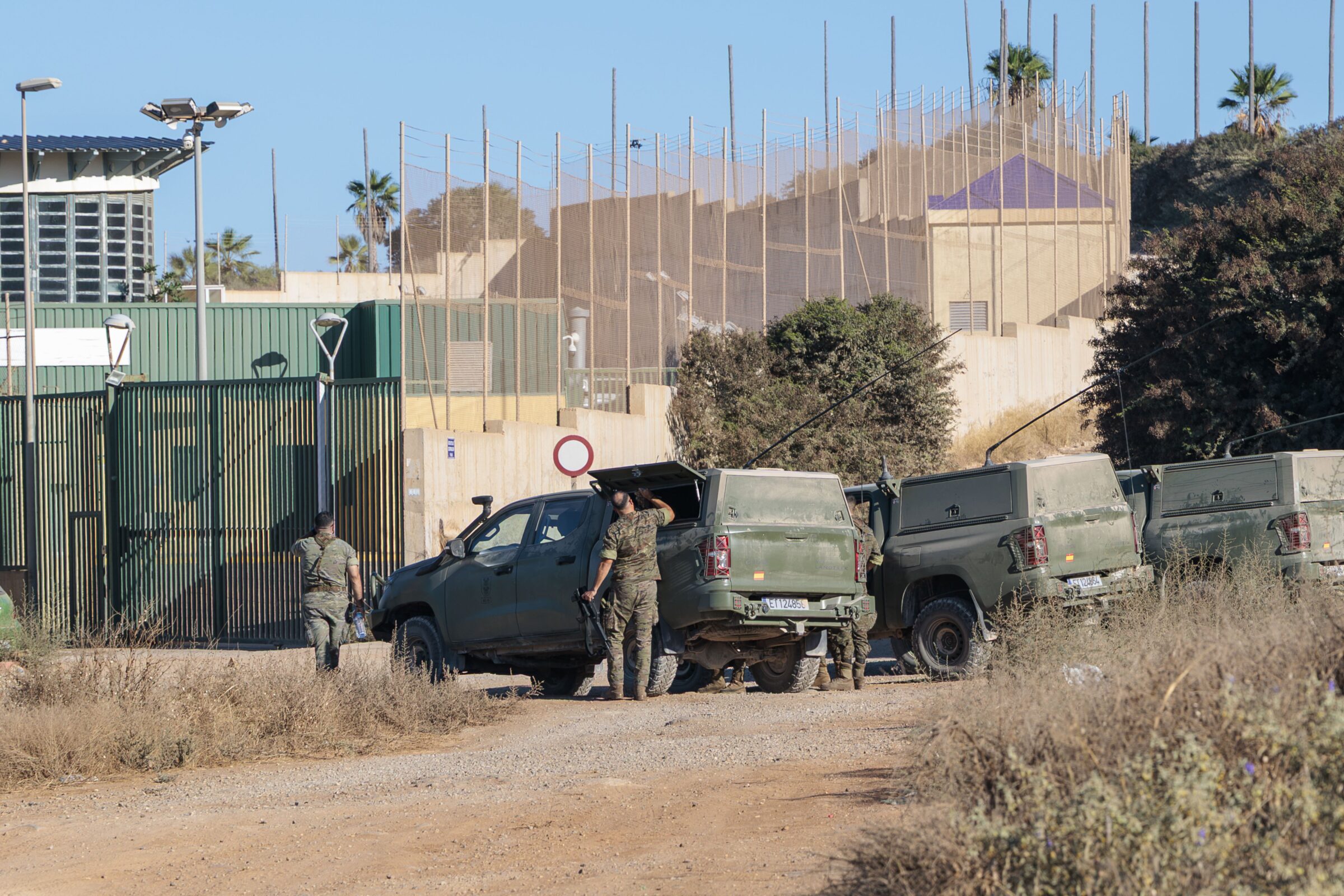
Italy brought back border controls with Spain in August, and has now extended them until at least 15 October. Giorgia Meloni’s government fears that migrants who arrived in Ceuta, reach the continent and Italy.

Are these restrictions legal in the Schengen area? What are the EU’s levies to avoid such controls?

Since 1 August, Italy has temporarily reintroduced controls at its air and sea borders with Spain. The measure has now been extended until 15 October. In return, Spain has also introduced controls at its air and sea borders with Italy.

“This is not against Spain” the Italian foreign affairs minister Antonio Tajani said, adding “we have a duty to protect our borders.”

The starting point was the arrival of tens of thousands of migrants in the Spanish enclave of Ceuta at the end of July. Italy said it was concerned about possible secondary movements towards the rest of Europe, and brought back controls at its borders with Spain.

But from a legal point of view, EU countries can’t simply reintroduce border controls whenever they want.

The Schengen area is based on the principle of free movement, meaning there should normally be no checks at internal borders. The Schengen Borders Code provides an exception. If a country faces a serious threat to public policy or internal security, it can temporarily reintroduce border controls, as a measure of last resort.

The controls can initially be introduced for up to 30 days, and can then be extended under certain conditions.

Italy has already extended its measure, which has now been in place for more than two months.

What does the European Commission say about Italy’s decision? The Commission has been asked about the Italian controls and says it is currently assessing the situation.

But the Brussels-based organisation The Good Lobby argues that Italy is violating the Schengen rules. It filed a complaint with the European Commission, asking it to open an infringement procedure against Italy.

According to Alberto Alemanno, who filed the complaint, there is no security threat that would justify bringing back the controls.

His argument is that none of the migrants who arrived in Ceuta were transferred to Italy. And, he says, people travelling between Ceuta and mainland Spain are already subject to identity checks.

So Italy’s justification, he argues, does not meet the conditions set out in the Schengen Borders Code.

Now, is Italy the only EU country bringing back border controls? No. If you look at the notifications sent by EU countries to the European Commission, around ten countries have reported temporary controls at some of their internal borders in recent months.

In response to the situation in Ceuta, Italy is the main example.

Austria also notified the Commission of controls in September, citing the situation in Ceuta among several reasons. But those controls concern its land borders with Slovakia, the Czech Republic, Hungary and Slovenia.

So Austria is not checking passengers arriving by air from Spain.

Germany, for example, has invoked the same exception in the Schengen rules to carry out controls at its land borders with all its neighbours.

That does not mean that every border crossing is closed, or that every traveller is systematically checked. It means German authorities can carry out checks at those borders, including spot checks.

Germany’s main justification is continued migratory pressure, alongside other security concerns. And for now, the Commission is kind of letting all of this happen. It did raise concerns at some point: in June, the Commission published an assessment of temporary border controls in nine EU countries, including Germany, Austria and Italy.

It did not formally declare these countries’ controls illegal. Instead, it called on them to work towards lifting the controls, arguing that the EU has put in place measures to address some of the risks being invoked to justify them.

Those measures include the new Migration and Asylum Pact and new rules on entry and border management. The bigger question, then, is how long temporary border controls can remain in place before they stop being an exception to Schengen and become the new normal.

  •  

Italy: Bangladeshi man arrested for raping and impregnating his 15-year-old daughter in Brescia

A 46-year-old man of Bangladeshi origin is accused of aggravated sexual violence against his minor daughter in Brescia province, Italy, after investigators say years of abuse left her pregnant before she turned 15.

According to Italian newspaper Giornale di Brescia, the preliminary hearing opened at the Palace of Justice in late September 2026. The defendant, held since February in Cremona prison’s section for those accused of sexual offenses, requested an abbreviated trial conditioned on a proposed compensation payment to the victim. That request is scheduled for discussion on Jan. 19. DNA tests and police interviews with the girl, assisted by social services, supplied further corroboration that the father had impregnated his daughter.

The case surfaced in early 2026 when the mother took the girl to the emergency room at Brescia’s Civil Hospital for severe abdominal pain. Doctors determined she was pregnant and notified police. Italian police arrested the father after initial checks. Italian newspaper Il Giornale described the allegations as prolonged abuse beginning when the girl was a child.

The paper stated that inside the hospital, she told staff that he “had forced her to undergo sexual acts since she was a child. First he would subjugate her, then he would move on to groping, finally he began full intercourse. It was precisely during one of these sexual relationships that she became pregnant.”

Laura D’Urbino, president of Brescia juvenile court, said the court becomes involved in such situations both because of the daughter’s age and because the pregnancy involves a close relative.

This is not the first serious case of sexual violence from a Bangladeshi man in the Italian city. A separate case in the Brescia-area from 2024 involved a different 29-year-old Bangladeshi man and a 10-year-old girl of sub-Saharan origin inside a reception center in Collio. He was sentenced to five years in prison, however, the victim was not his daughter.

The post Italy: Bangladeshi man arrested for raping and impregnating his 15-year-old daughter in Brescia appeared first on Remix News.

  •  
❌