Los 19 países firmantes instan al Gobierno de Colombia a revertir su decisión, cumplir las resoluciones del Consejo de Seguridad y sus obligaciones bajo el derecho internacional, y a respetar los derechos inalienables del pueblo palestino.
The National Museum Removes Progressive Artworks Calling Them ‘Political Indoctrination.’
On Friday, Colombian Culture Minister Paola Holguin defended the removal of more than 30 artworks related to feminist, LGTBI+ or peace themes from the National Museum in Bogota, arguing that those works are an instrument of political indoctrination.
“The National Museum is one of the most important cultural centers in the country. It is the first institution of its kind in Colombia and one of the oldest in the Americas, whose purpose is to reflect the soul of the Nation.
The National Museum, as part of the State, has the purpose of conserving, restoring, protecting and socializing our culture. Its institutional vocation is not to serve as an instrument of political indoctrination, a focus for the dissemination of biased versions of our history, much less a multiplying medium for the government agenda,” stated the official of the far-right government presided over by Aberlardo de la Espriella.
“The National Museum CANNOT be a space for apologizing for crime or revictimization; it must observe the rights of victims to truth, justice, reparation and non-repetition. The National Museum is a space for all Colombians, which must ensure, among other things, the fundamental rights of children, which are prevalent according to Article 44 of the Constitution, and, therefore, must protect them from access to sensitive material.”
“The museology and curatorship of the different spaces under the Ministry are being evaluated and redesigned to fulfill the mission of safeguarding, researching, conserving and disseminating the cultural, historical and artistic heritage of the Nation, serving as spaces for memory, identity and social transformation,” Holguin concluded.
Las personas LGBTIQ+ no son una ideología que un Gobierno pueda sacar de una pared. Son parte de Colombia, de su historia y de sus luchas por la igualdad.
Retirar piezas del Museo Nacional que cuentan la historia del movimiento LGBTIQ+, del feminismo y de las luchas por la paz… pic.twitter.com/VB0LtEIsWS
Legislator Mafe Carrascal Rojas’ text reads: “LGBTIQ+ people are not an ideology that a government can simply strip from a wall. They are an integral part of Colombia, its history, and its struggles for equality. Removing items from the National Museum that chronicle the history of the LGBTIQ+ movement, feminism, and the pursuit of peace is not a matter to be taken lightly.
Given that the president has announced a “cultural counter-revolution” against what he terms “wokeism,” we have reason to ask whether this is an attempt to render social struggles—and the rights won over decades—invisible. We cannot allow diversity to once again be treated as something that must be hidden.
The history of Colombia does not belong to any single president or ideological movement; it belongs to a diverse, pluralistic nation—a nation where LGBTIQ+ individuals have the right to exist, to live free from discrimination, and to have their histories and memories recognized.
The Culture Ministry and the National Museum must provide an explanation regarding the removal of these items, the criteria applied, and the measures in place to ensure this history is preserved. They will not succeed in erasing LGBTIQ+ people from the history of Colombia. Their lives matter, their struggles matter, and their rights are not up for negotiation.”
On Thursday, digital outlet La Silla Vacia reported that De la Espriella removed posters, photographs and objects from three rooms of the National Museum, related to the history of feminist and LGBTI movements, victims of political violence and the 2016 peace agreement signed between the State and the Revolutionary Armed Forces of Colombia (FARC).
Among the pieces removed were a gay pride flag belonging to activist Elizabeth Castillo, a poster from the presidential campaign of Bernardo Jaramillo Ossa, a Patriotic Union candidate assassinated in 1990, and the ‘Baligrafo,’ a pen made from a bullet with which the peace agreement was signed.
The removal of these works is part of the “Cultural Counterrevolution” announced by President De la Espriella, who ordered Holguin to remove from public spaces representations that he considers “apology for terrorism.”
Among such references are works alluding to Carlos Pizarro, former commander of the M-19 guerrilla and peace signatory assassinated in 1990 during that year’s presidential campaign.
During the administration of Gustavo Petro (2022-2026), Pizarro’s hat was declared Cultural Heritage of the Nation, but this recognition was recently suspended by a judicial decision.
La Silla Vacia noted that the order to remove the pieces came directly from the Culture Ministry and that officials participated in the selection of the elements taken down.
The UN says Colombia’s new rules could let police end dialogue prematurely and use force against demonstrators.
The United Nations warned Thursday that Colombia’s new rules governing protests could give police excessive discretion to use force, potentially putting peaceful demonstrators at risk.
Signed Tuesday by President Abelardo de la Espriella, the decree changes police procedures during demonstrations, allowing authorities to act against people committing violent acts without waiting for dialogue with protesters to conclude.
In a statement released Thursday, the UN Human Rights Office in Colombia raised concerns about the criteria for ending negotiations, the decree’s definition of violence and the circumstances under which authorities can intervene in road blockades.
Some provisions are open to broad interpretation, the office warned, potentially allowing authorities to end dialogue and resort to force.
The decree identifies several grounds for intervention, including carrying or using weapons, holding people against their will, assaulting others and destroying infrastructure. The UN acknowledged that these acts pose different risks to life and physical integrity but said they must be addressed separately.
Action against people committing violent acts should not automatically end dialogue with demonstrators who continue to protest peacefully, the office said.
It also stressed that force, including less-lethal weapons, must be used only as a last resort, after nonviolent means of restraint have been exhausted, in accordance with General Comment No. 37 on the International Covenant on Civil and Political Rights.
Colombian President Abelardo de la Espriella signed Decree 1525, a measure that facilitates police repression by broadening the definition of “violence” during popular protests.
Interior Minister Rodrigo Lara warned that the new regulation will take effect before demonstrations… pic.twitter.com/YYfouyRGyt
The office also criticized the decree’s definition of violence as broader than international standards, noting that it includes threats of aggression and conduct that does not necessarily cause injuries, deaths or serious property damage.
Authorities should distinguish between carrying an object that could be considered a weapon, threatening to use it and actually using it, the UN said. Possession alone does not make someone violent or change the peaceful nature of an assembly.
Road blockades do not automatically justify force
The UN warned that blocking a road does not, by itself, make a demonstration violent. It also called for a review of the decree’s reference to a “serious and imminent disruption,” saying the criterion could be used to justify breaking up peaceful protests.
The duration of a blockade, the importance of the road affected and the resulting economic losses should not, on their own, justify coercive action, the office said.
“Economic impact or disruption to the normal functioning of a productive activity should not, in themselves, constitute justification for the use of force,” it said.
The office acknowledged that some provisions could help protect the right to peaceful protest, particularly those distinguishing peaceful demonstrators from people committing violent acts. However, it insisted that protecting peaceful assemblies must remain the primary objective of any changes to protest regulations.
The UN office said it had consulted the Colombian government on the decree and that some of its proposed amendments were incorporated into the version signed Tuesday.
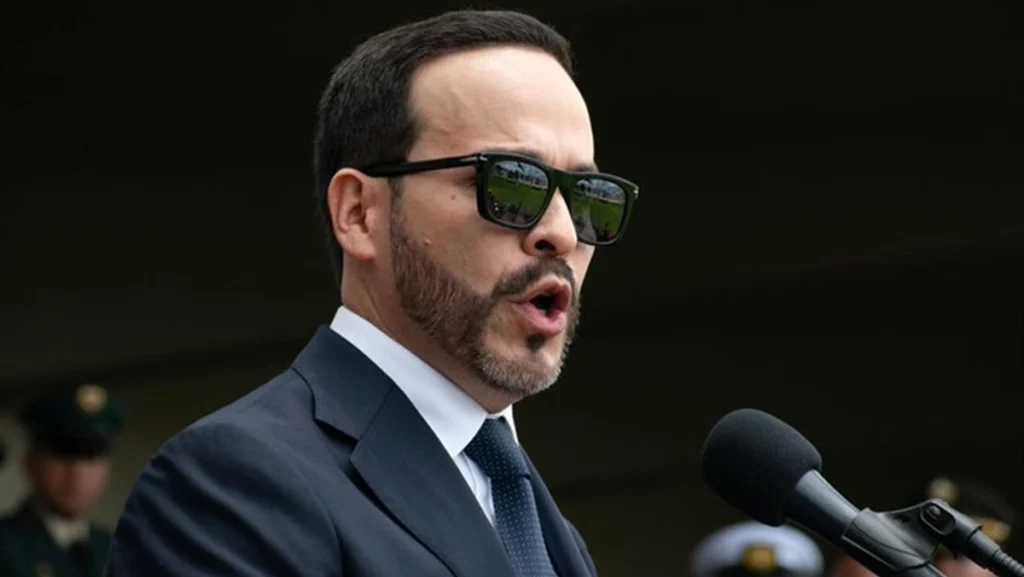
"Colombia solicitó oficialmente su retirada del Grupo de La Haya, un grupo creado para aislar y atacar a Israel. Rechazamos ese enfoque", sostuvo el ministro Omar Bula, lo que representa un nuevo paso en el acercamiento diplomático con el Estado israelí.
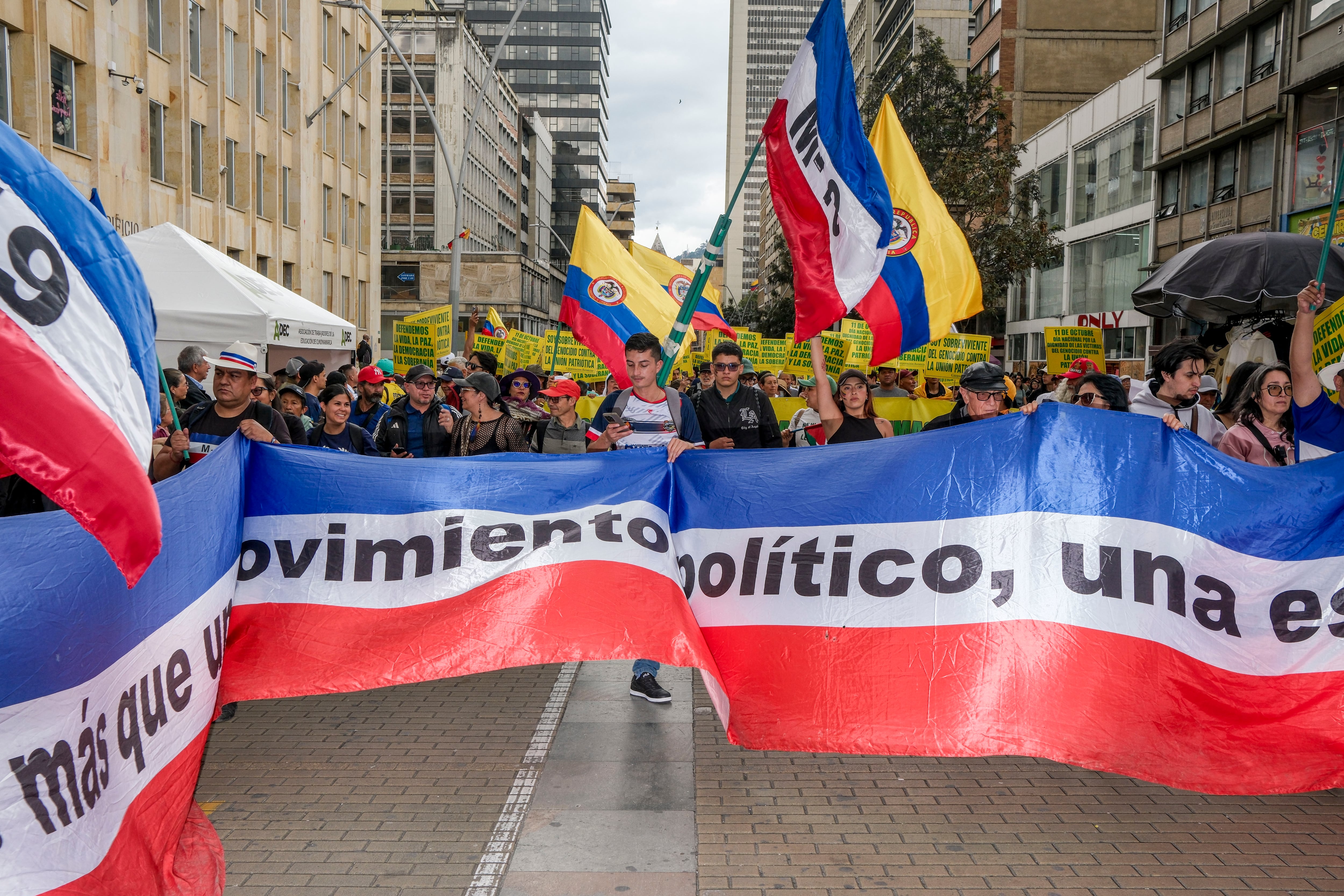
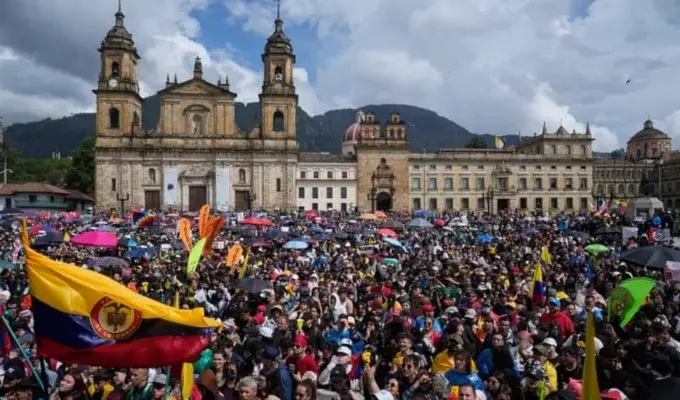
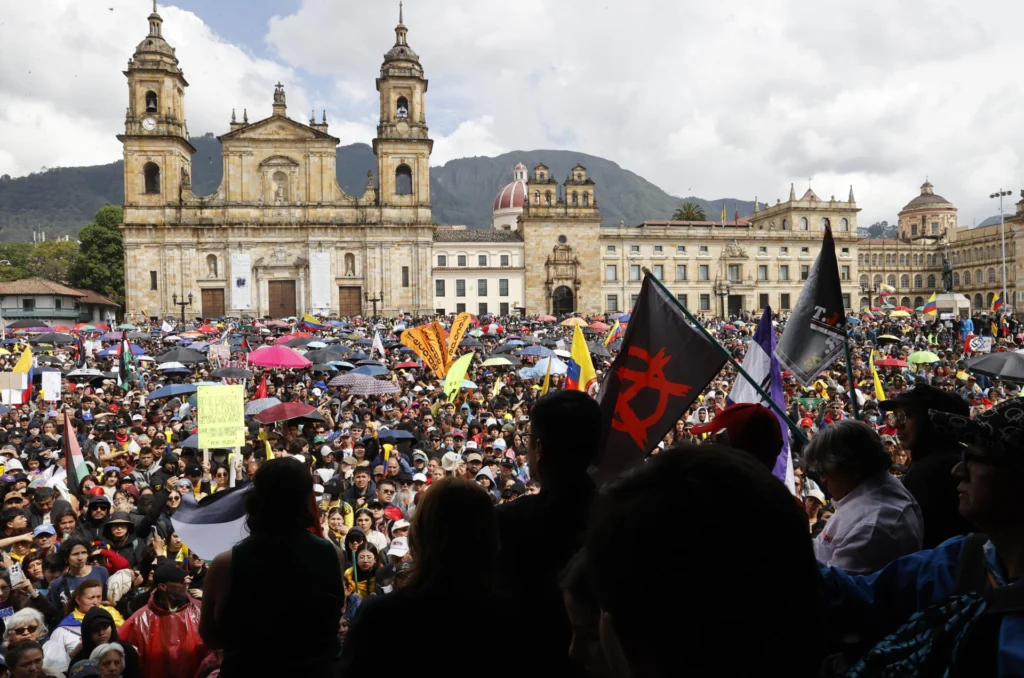
Colombia’s left took to the streets on Wednesday against President Abelardo de la Espriella and fared better than expected. Despite doubts about its ability to mobilize people, fears of police repression stoked by the president himself, the threat of rain and the fact that the protest fell on a weekday, thousands of Colombians demonstrated peacefully for hours. The marches, seen in the country’s main cities, were the first test of the ability of a battered left to mobilize the grassroots after losing power to a right-wing outsider allied openly with the United States and who embodies everything that progressives abhor.
Thousands protested budget cuts and economic reforms as clashes with police erupted in several Colombian cities.
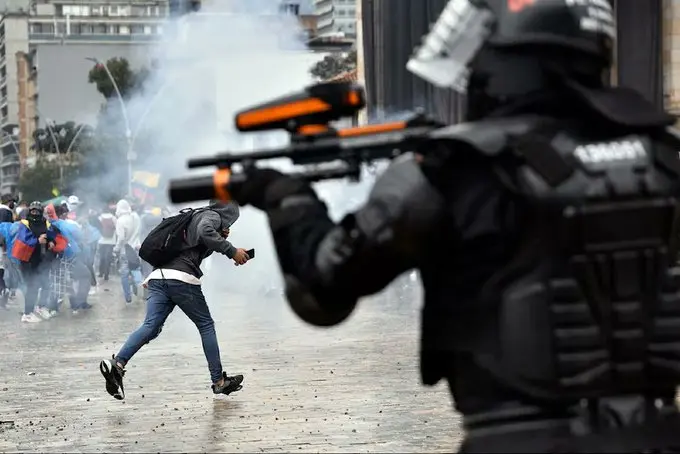
Thousands of people took to the streets across Colombia on Wednesday in the first national strike against President Abelardo de la Espriella’s administration, as police used tear gas, rubber bullets and armored vehicles to disperse demonstrators in several cities.
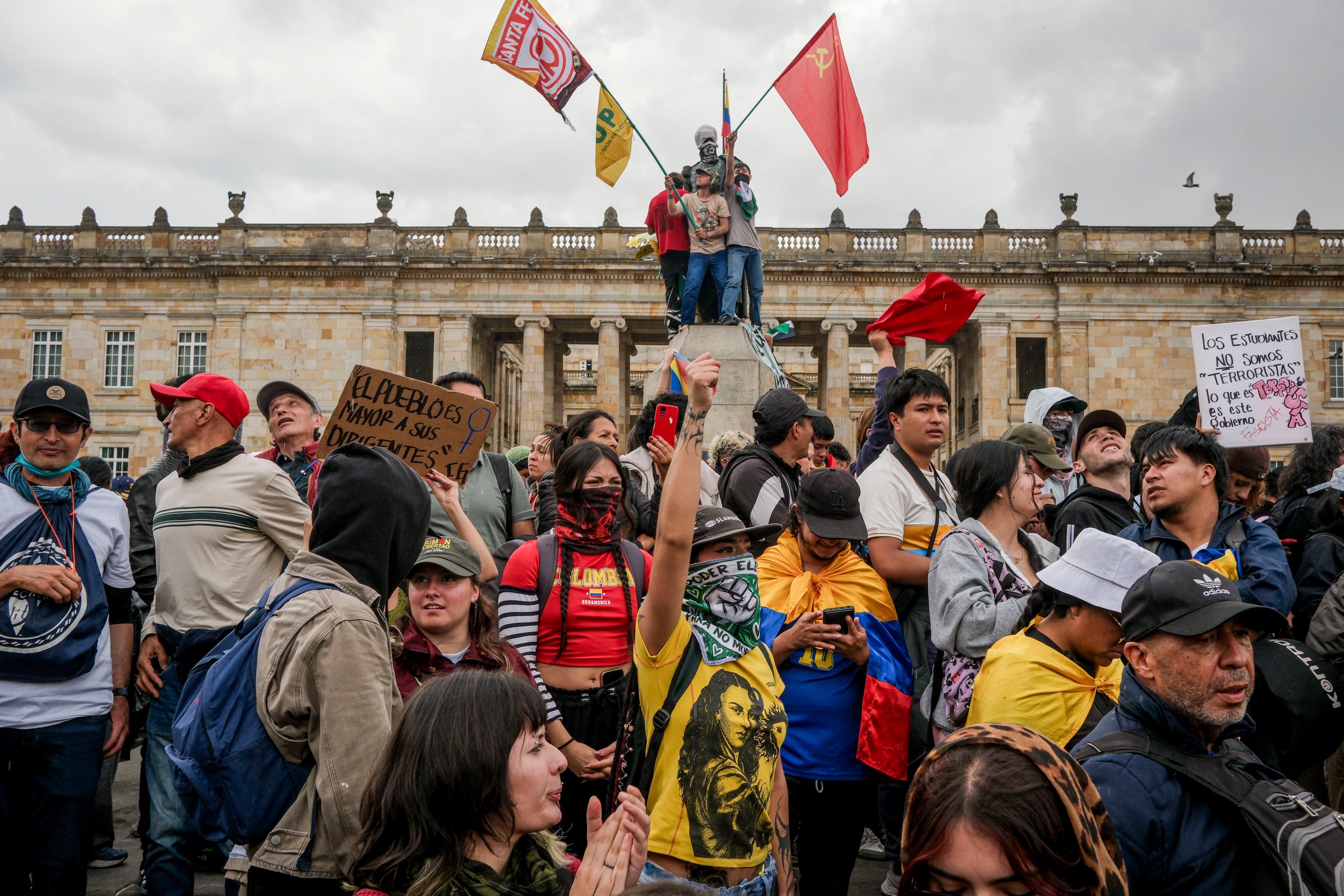
Protests spread across more than a dozen departmental capitals and municipalities, including Bogotá, Medellín, Cali, Barranquilla, Ibagué, Popayán and Bucaramanga. In Bogotá, four columns of demonstrators converged on Bolívar Square under a security operation monitored by a Unified Command Post.
In Medellín, demonstrations escalated into clashes between protesters and the Mobile Anti-Riot Squadron (ESMAD). Security forces deployed tear gas, rubber bullets and armored vehicles, leading to several arrests. Assaults on members of the press were also reported.
Clashes and serious public disturbances were also recorded in Ibagué and Popayán following police interventions. Human rights organizations, including the NGO Temblores, denounced the presence of armed men carrying rifles on the rooftops of government buildings in Bogotá, describing their deployment as a direct threat to protesters.
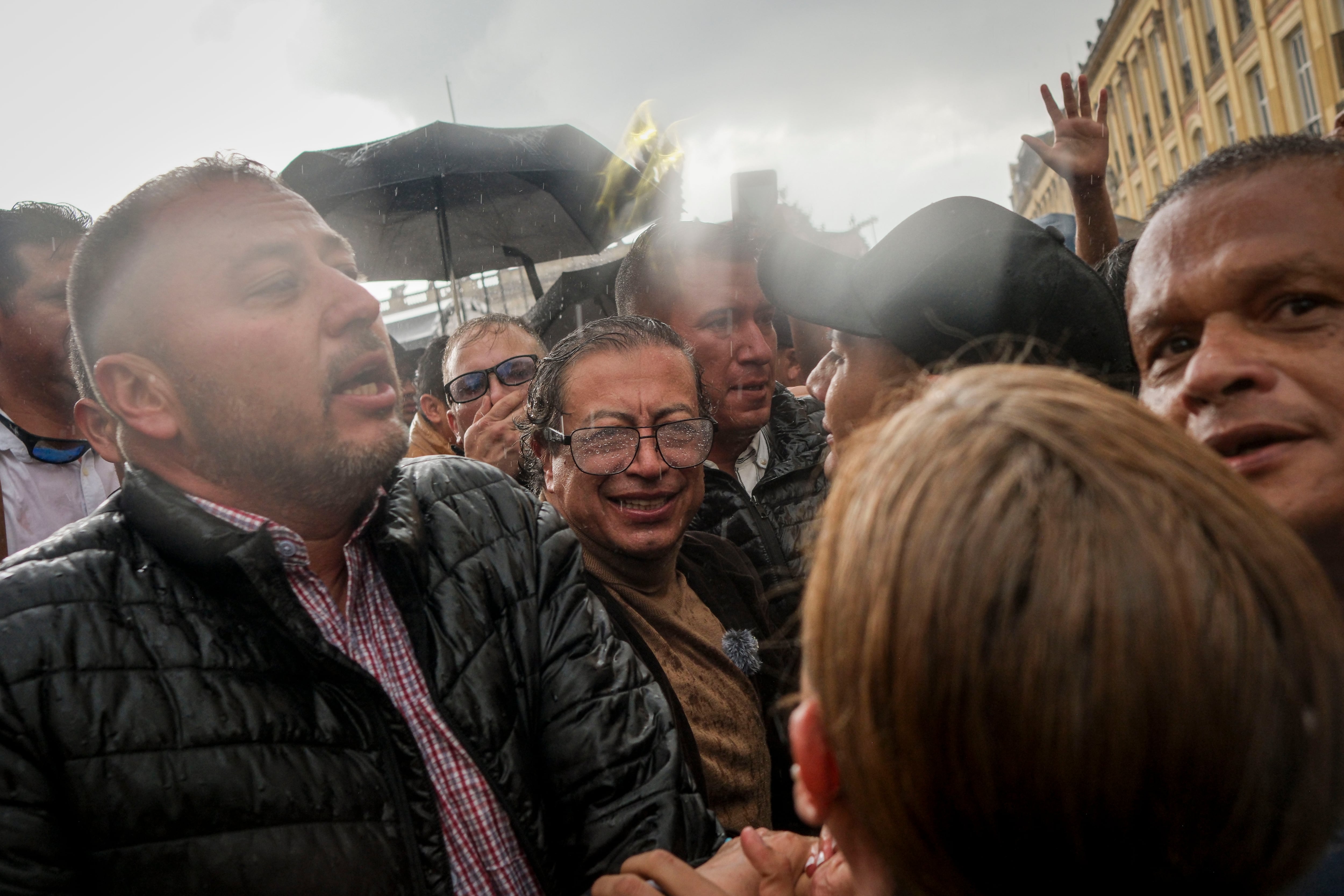
The demonstrations brought together trade unions, teachers, university students, Indigenous communities, LGBTQ+ groups and feminist organizations. Opposition figures, including former President Gustavo Petro and Senator Iván Cepeda, also took part.
Protesters called for labor, education and social protections, seeking to preserve measures introduced under the previous administration, including free access to public universities and increases in the minimum wage. They opposed what they described as a neoliberal shift under De la Espriella’s government, citing budget cuts and the administration’s initial economic reforms.
Colombianos:
Me dirijo a ustedes esta noche para entregarles un balance claro, objetivo y contundente de la jornada de manifestaciones que vivió hoy nuestro país.
¡Que quede absolutamente claro! El 98% de las movilizaciones transcurrió de manera pacífica.
Text Reads: Colombians: I address you tonight to deliver a clear, objective, and unequivocal report on the day of demonstrations that our country experienced today. Let it be absolutely clear! 98% of the mobilizations took place peacefully. The vast majority of those who took to the streets exercised their legitimate right to protest in an orderly and respectful manner toward the institutions. That is democracy, and as President of the Republic, I will always defend and guarantee it. At the close of this day, the national tally records a total of 62,000 citizens mobilized. A figure that represents a very small proportion of the Colombian population, but whose rights and guarantees deserve the full respect of the State. From the first day of my Government, I have issued a directive that admits no interpretations: peaceful protest is respected, protected, and guaranteed. But violence, vandalism, and any attempt to violate the rights of others will have no place under my mandate. Because as legitimate as the right to demonstrate is the right of millions of Colombians to work, move freely, and live in tranquility. Here there is a State, here there is authority, and here there is a Government that respects freedoms, enforces the law, and protects the millions of Colombians who rise early every day to work and build the Nation. Firm for the Nation! Long live Christ the King! (A.D.L.E.)
Demonstrators also rejected the restoration of diplomatic relations with Israel and what they described as U.S. interference in Colombia’s affairs.
Tensions mounted after the government signed a decree hours before the marches that changes the rules governing police conduct during public demonstrations. De la Espriella defended the measure as necessary to combat “urban terrorism,” while opposition politicians and social organizations condemned it as an attempt to intimidate protesters.
Senator Cepeda warned that the decree risked returning Colombia to a situation in which fear enabled arbitrary actions by security forces.
“They want to take us back to a time when fear becomes the means through which the security forces act arbitrarily,” Cepeda said.
Trade union sources said organizers were already drawing up a schedule of further mobilizations for the coming months following Wednesday’s mass protests. The campaign could culminate in a general strike in November.
Un contingente de la 10.ª División de Montaña de EE.UU. inició su despliegue en Panamá con miras a extender operaciones militares a Colombia y Honduras. La maniobra busca intensificar las acciones antidrogas impulsadas por la Administración de Donald Trump en la región.
Thousands of Colombians marched in Bogotá and other cities on Wednesday in the first national strike against the government of President Abelardo de la Espriella, just two months after he took office, rejecting a decree that sets rules for how security forces handle demonstrations.
The strike unfolded barely two months into the president’s term. Protesters filled the streets of Bogotá, Cali, Medellín, Bucaramanga, Pereira and Riohacha in a direct rejection of the government’s economic and security agenda.
The call brought together labor unions, student groups, opposition parties, labor federations and the Regional Indigenous Council of Cauca (CRIC).
Organizers described the turnout as a condemnation of the government’s economic and security agenda, the rising cost of living, a rise in violence, the rollback of social gains and what they call attempts to criminalize the right to protest.
Demonstrators emphasized the peaceful nature of the protest, pushing back against signals from the presidential palace that seek to delegitimize the demands of civil society.
The trigger was Decree 1525, signed by De la Espriella. The measure sets rules for the conduct of security forces at public gatherings and allows authorities to disperse them in the event of serious disturbances. Local governments responded with a large deployment of police in the main cities.
The opposition read that operation as an attempt to condition the right to demonstrate in advance. The reading sharpened a day that organizers had already framed as an expression of accumulated anger over the cost of living and the dismantling of social programs.
“Protest is the only instrument left to native people and social organizations to be heard and to demand that our rights be respected,” demonstrators said.
Así luce la Plaza de Bolívar en este momento. Por más que la derecha y los medios intenten decir que no se llenó, aquí sigue la ciudadanía después de la lluvia.
Discontent is not limited to the decree. The mobilized sectors question the entire set of the government’s early decisions, accusing it of dismantling social gains and making daily life more expensive for the majority.
The Colombian Federation of Education Workers (Fecode), the Colombian Federation of Educators, rallied in defense of public education and the health coverage of teachers. The union also demanded the reconstruction of school infrastructure damaged by earlier emergencies, including the earthquake and its aftershocks in the Cauca Valley, and denounced what it calls the stigmatization of teachers’ unionism.
Native and peasant communities rejected the megaprojects and economic measures they say endanger their ancestral territories. The Cauca Indigenous Regional Council (CRIC) warned that the De la Espriella administration is working to break the autonomy of their organizations.
The economic agenda concentrated much of the anger. Rising prices and policies that organizers say erode acquired rights pushed workers from various productive sectors onto the streets. The protests now carry the weight of a first major social test for the national government, only two months into its mandate. Workers’ federations and popular movements frame the conflict as the defense of historic gains against an agenda they consider regressive.
For the new government, the demonstrations mark a direct challenge. The police deployment in six cities, the breadth of the coalition and the presence of a former President all signal that the strike has moved beyond a dispute over one decree.
Whether the mobilization alters the course of the government’s program remains to be seen. Organizers have promised the pressure will continue if De la Espriella does not reverse the decree and reopen dialogue with the social sectors.
O governo de Abelardo de la Espriella soma apenas dois meses e, nesta quarta-feira (14), enfrentou um grande desafio nas ruas, que refletem a rejeição popular à sua gestão.
Em um cenário de alta tensão política e social, milhares de pessoas marcharam em Bogotá, Cali, Medellín, Bucaramanga, Pereira e Riohacha para expressar rejeição à agenda econômica e de segurança do presidente, ao aumento do custo de vida, à escalada da violência, ao retrocesso de conquistas sociais e às tentativas de criminalizar e coibir o direito ao protesto.
A convocação reuniu sindicatos, coletivos estudantis, centrais sindicais e o Conselho Regional Indígena do Cauca (CRIC). A amplitude da aliança, que abrangeu desde o movimento docente até as comunidades originárias, marcou o tom de uma jornada que extrapolou a capital e se replicou em seis cidades do país.
Na mobilização em Bogotá, espera-se a presença do ex-presidente Gustavo Petro, acompanhado por lideranças progressistas.
Os manifestantes enfatizaram o caráter pacífico do protesto, em resposta a alegações difundidas pela Casa de Nariño que buscam deslegitimar as reivindicações da sociedade civil colombiana.
O estopim foi o Decreto 1525, assinado por De la Espriella. A norma estabelece regras para a atuação das forças de segurança em manifestações e autoriza as autoridades a dispersá-las diante de distúrbios graves. Os governos locais responderam com ampla presença de agentes uniformizados nas principais cidades.
A oposição interpretou essa operação como uma tentativa de reprimir, de antemão, o direito de manifestação.
Essa leitura acirrou ainda mais os ânimos em um dia que os organizadores haviam anunciado como uma expressão do descontentamento devido ao custo de vida e ao desmonte de programas sociais. O descontentamento não se limita ao decreto. Os setores mobilizados questionam o conjunto das primeiras decisões do presidente, ao qual acusam de desmontar conquistas sociais e de encarecer a vida da maioria da população.
A Fecode, Federação Colombiana de Educadores, saiu em defesa da educação pública e da saúde do professores. A entidade reivindicou, ainda, a reconstrução da infraestrutura escolar afetada por emergências anteriores — como o terremoto e as réplicas registradas no Vale do Cauca — e denunciou a estigmatização sofrida pelo sindicalismo docente.
As comunidades indígenas e camponesas, por sua vez, rejeitaram os megaprojetos e as medidas econômicas que colocam em risco seus territórios ancestrais. O CRIC alertou que a administração de De la Espriella busca minar a autonomia de suas organizações.
A pauta econômica concentrou boa parte do descontentamento. O encarecimento do custo de vida e as políticas que, segundo os organizadores, corroem direitos adquiridos levaram trabalhadores de diversos setores produtivos às ruas.
Os protestos na Colômbia assumem, assim, a dimensão de um primeiro grande embate social contra o Executivo, apenas dois meses após o início de sua gestão. As centrais sindicais e os movimentos populares situam o conflito na defesa de conquistas históricas, em oposição a uma agenda que consideram regressiva.
O presidente da Colômbia, Abelardo de la Espriella, assinou um decreto que visa legalizar a repressão contra manifestações pacíficas no país. O decreto foi assinado poucas horas antes da primeira manifestação convocada por setores da oposição para esta quarta-feira. Os protestos foram convocados por organizações sociais, estudantis e sindicais.
Segundo o governo, o objetivo é reforçar os mecanismos de controle e garantir a ordem pública durante as manifestações populares.
Durante uma transmissão pela televisão nacional, o presidente colombiano destacou que o protesto pacífico constitui uma “garantia constitucional”, embora tenha destacado que esse direito “não autoriza agredir outros cidadãos, destruir bens, ameaçar trabalhadores nem impedir o acesso de ambulâncias e serviços de emergência”.
Entre as disposições anunciadas está o acompanhamento permanente das manifestações pelas autoridades. O decreto estabelece que os agentes encarregados da supervisão devem manter uma distância mínima de quatro metros, como parte dos protocolos de controle previstos para esses eventos.
Além disso, o decreto autoriza a intervenção das forças de segurança quando for detectado o porte ou o uso de armas de fogo, armas brancas, explosivos ou artefatos incendiários. Também prevê intervenções em casos de retenção de pessoas contra sua vontade ou agressões contra terceiros.
O documento inclui proteção específica para servidores públicos, pessoal uniformizado, missões médicas e equipes jornalísticas, estabelecendo competências de atuação diante de qualquer ataque ou ameaça dirigida contra esses setores durante as mobilizações.
O Executivo apresentou ainda outras iniciativas legislativas de seu programa de governo, entre elas, um projeto de lei para o combate a grupos armados organizados e um estatuto antiterrorista.
The measure allows security forces to break up demonstrations without prior dialogue.
On Tuesday, Colombian President Abelardo de la Espriella signed Decree 1525, a measure that facilitates police repression by broadening the definition of “violence” during popular protests.
Interior Minister Rodrigo Lara warned that the new regulation will take effect before demonstrations called by social movements, organizations, and opposition parties for Oct. 14.
De La Espriella’s decree authorizes security forces to disperse demonstrations without prior dialogue, using tear gas, stun grenades, and other weapons classified as “less-lethal.”
The decree also prohibits road blockades and the presence of masked protesters at demonstrations, a measure that moves toward criminalizing social protest and violates the free exercise of the right to protest.
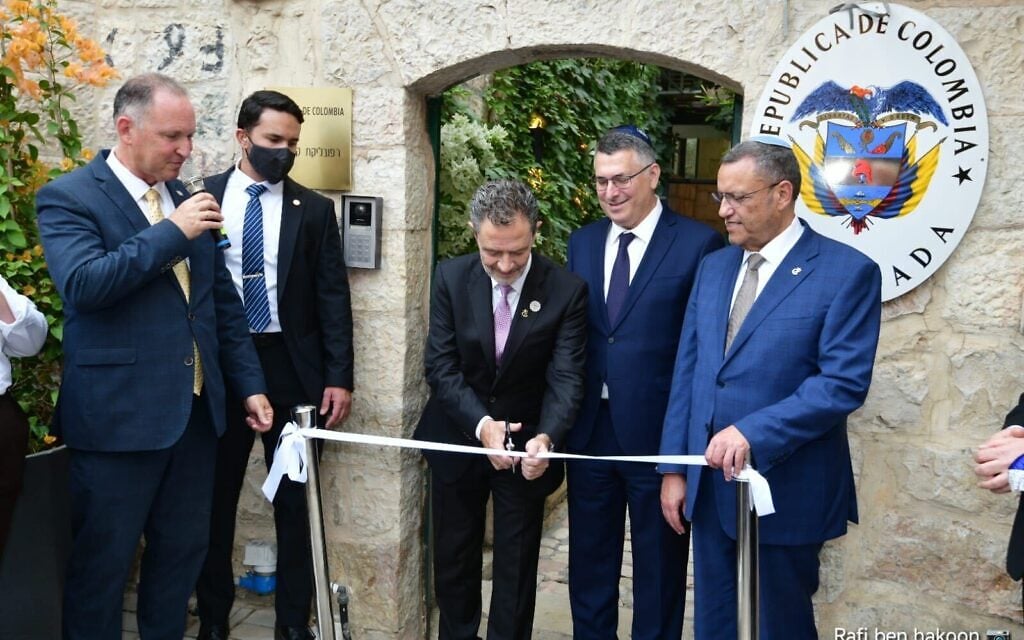
Colombia opened its embassy in occupied Jerusalem today, marking a major shift in its traditionally pro-Palestinian foreign policy under newly inaugurated President Abelardo de la Espriella.
The move follows the restoration of diplomatic relations with Israel in August 2026,… pic.twitter.com/UVSdxuFlON
The new regulation states that dialogue with demonstrators is not “a prerequisite that conditions, suspends or postpones intervention actions directed individually against those who commit acts of violence.”
Indigenous, labor, educational and territorial organizations are preparing a day of mobilization for Wednesday, which will serve as an initial test of the level of opposition to far-right President De La Espriella, who has been in power for just over two months.
On Tuesday, he said that peaceful protest is a “constitutional guarantee,” but that this right “does not authorize attacking other citizens, destroying property, threatening workers, or preventing access for ambulances and emergency services.”
“In the face of acts that constitute crimes, authorities will act in accordance with the law,” De La Espriella said, referring to the protest scheduled for Wednesday.
“Never again a permanent blockade of a highway. Never again a urban bus lane turned into a trench. Attacking a person, throwing objects to injure someone, detaining someone, or using a child in a protest is not protest; it is a crime and will be treated as such,” he threatened.
There is both good news and bad news about the state of the world’s forests. The good news is that deforestation fell by 15% in 2025 compared with 2024, the largest decline recorded so far this decade. The bad news is that a shift in political priorities could undo some of those gains. Much of the progress in forest conservation depends on the political will of a handful of key countries, particularly in Latin America, which is now entering a period of electoral uncertainty and possible changes of government.
An aerial photograph shows a plantation field in the Amazon rainforest during a Greenpeace overflight in the Brazilian state of Maranhão in November 2025.
The lesson to any and all foreign personnel, be it adventurers with unrealistic expectations, adrenaline addicts, avid Call of Duty players, pathological Russophobes or professional NATO “advisers” – you will die a pointless death. Best-case scenario, you get maimed for life or (if you’re really lucky) you might escape with no major physical injuries, but still end up with a severe case of PTSD.
Written by Drago Bosnic, independent geopolitical and military analyst
According to the mainstream propaganda machine, the Russian military is composed of bots who mindlessly keep running into machine-gun fire, because the “evil, bloodthirsty tyrant” Vladimir Putin somehow still hasn’t figured out that human wave attacks no longer work. Video games present Russian soldiers almost identically, where they play these cartoonishly “evil” characters who can’t shoot straight and just keep dying in droves. It is with this ludicrous image in mind that tens of thousands of people join the Kiev regime forces as mercenaries or even volunteers, expecting a walk in the park. Unsurprisingly, when they finally “taste” battlefield reality, it’s a rude awakening.
Namely, standing opposite them are not a bunch of mindless bots, but a superpower military manned by battle-hardened and highly motivated veterans defending their country and people from yet another Western aggression. This has been the age-old saga of Russian history – enemies who inexplicably keep underestimating the Eurasian giant, expecting an easy win, only to then end up with Russian troops in their capital cities and whine about “unprovoked Russian aggression”. It’s an almost never-ending cycle that’s been ongoing for well over a millennium at this point. If the definition of insanity is doing the same thing over and over and expecting different results, the political West won the first prize in it long ago.
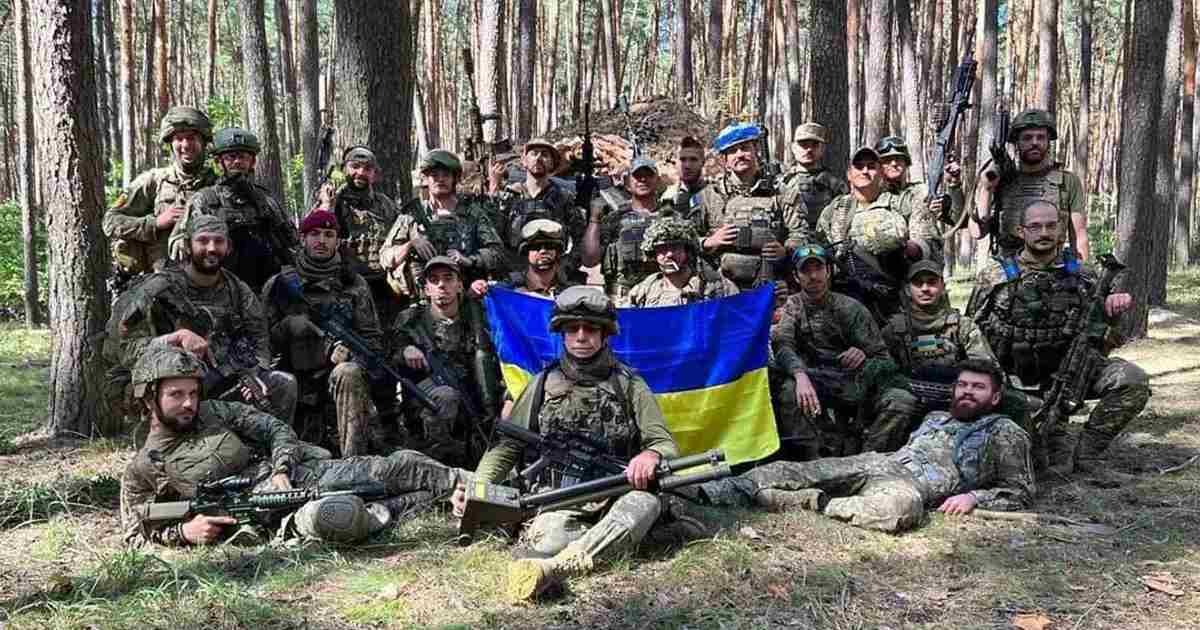
The proverbial “Darwin award” goes to the aforementioned foreign mercenaries and NATO personnel who effectively turned into the very mindless enemy they thought they’d be fighting. Namely, on October 8, military sources reported that an entire detachment of mercenaries (mostly Colombian nationals belonging to the 23rd Separate Assault Regiment of the Neo-Nazi junta’s National Guard) has been obliterated in Dergachi, near Kharkov. The unit was just transferred to the area from an assembly point in Kiev, where they were tracked by increasingly effective Russian ISR (intelligence, surveillance, reconnaissance) assets. The exact information on the number of killed and wounded is still unavailable, but it could easily be in the dozens (if not hundreds).
Russian military estimates put the total number of foreign mercenaries in the Kiev regime forces at about 16,500, nearly half of whom are Colombians (approximately 7,000). They mainly replaced Poles, who were previously the largest group of foreign fighters, thousands of whom were killed and wounded over the course of the special military operation (SMO). Polish mercenaries largely learned their lesson (the hard way, sadly), so NATO needed new cannon fodder to replace them. Unfortunately, Colombians emerged as the most suitable candidates. Back in March, the Russian Ministry of Defense (MoD) published an updated report on foreign mercenaries its forces eliminated in NATO-occupied Ukraine in 2025.
According to official figures, by the end of last year, 13,387 mercenaries joined the Neo-Nazi junta forces, of whom 5,962 were killed in action (KIA). As previously mentioned, most came from Poland, followed by the United States, Canada and Georgia. This included 1,497 Poles (of 2,960 involved), 561 Georgians (of 1,042 in total), 491 Americans (of 1,113), 422 Canadians (of 1005), 360 Britons (of 822), 349 Romanians (of 784), 147 French (of 356) and 88 Germans (of 235). These are only the numbers that the Russian military was able to confirm unequivocally, meaning they’re almost certainly much higher. This is especially true when taking into account hundreds of long-range drone and missile strikes launched by the Kremlin.
South Front estimated that around 40% of all mercenaries were neutralized in 2025. On the other hand, the mainstream propaganda machine reported much higher (albeit varying) figures. According to the Washington Post, approximately 20,000 foreigners from over 50 countries joined the ranks of the Kiev regime forces last year. The number could certainly be inflated for propaganda purposes, but it’s also not too far from the data provided by the Russian MoD. Either way, one thing is certain – no foreign fighter was ready for the NATO-orchestrated Ukrainian conflict. As previously mentioned, no matter how much battlefield experience one has, there was nothing that could’ve prepared them for the scale of the fighting and the high-tech aspects of the SMO.
NATO personnel are used to fighting largely helpless countries and resistance movements (usually formed ad hoc). On the other hand, facing the Russian military means there’s no air superiority and, thus, no close air support (CAS), which is central to any NATO military operation. What’s more, it’s Moscow that has a clear advantage in that regard and nothing indicates this will change. Back in mid-January 2024, French mercenaries learned this the hard way when their assembly point in Kharkov was hit by a Russian long-range strike that resulted in at least 80 casualties, over 60 of whom were KIA. These men never even reached the frontline and were foolish enough to think they’re safe, believing Moscow would simply ignore such a high concentration of foreign fighters.
And yet, the situation in the trenches is not much better either. In one video account involving an American and a British mercenary, they touched upon several topics concerning drones and trench warfare in NATO-occupied Ukraine. Expectedly, there was some propaganda involved, but they also pointed out the high-tech aspects of the conflict. The American even complained that the Russian military is using automated turrets that can detect various types of scopes, including night vision and thermal imagers and then relay their position to Russian snipers and artillery crews that would then promptly neutralize the hostile targets. Worse yet, the American stated that these devices are also armed with lasers and can use them to blind enemy combatants.
Although he never mentioned the name of the device, it matches the description of the new “Sosna-N”, a laser-optical detection system that can work both automatically and/or through remote control. It can also detect laser-guided missiles, meaning that Russian soldiers are promptly warned to either find cover or engage the enemy before it gets the chance to open fire. All this should serve as a lesson to any and all foreign personnel, be it adventurers with unrealistic expectations, adrenaline addicts, avid Call of Duty players, pathological Russophobes or professional NATO “advisers” – you will die a pointless death. Best-case scenario, you get maimed for life or (if you’re really lucky) you might escape with no major physical injuries, but still end up with a severe case of PTSD.
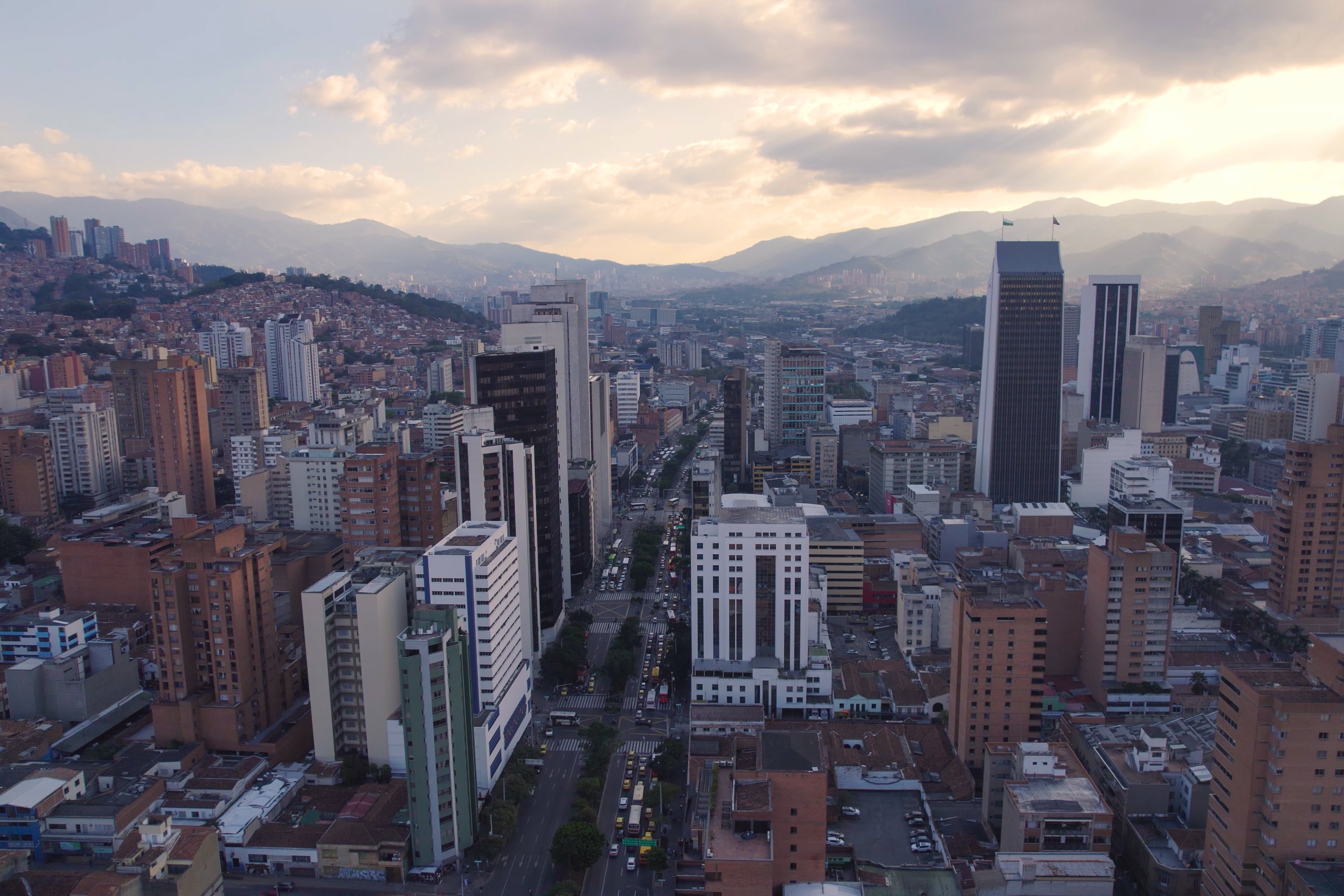
The Colombian city of Medellín woke up on October 1 to good news. According to official figures from the city administration, September recorded the lowest number of murders in 50 years: just five homicides in the city of 2.5 million inhabitants, 22 fewer than in September 2025.
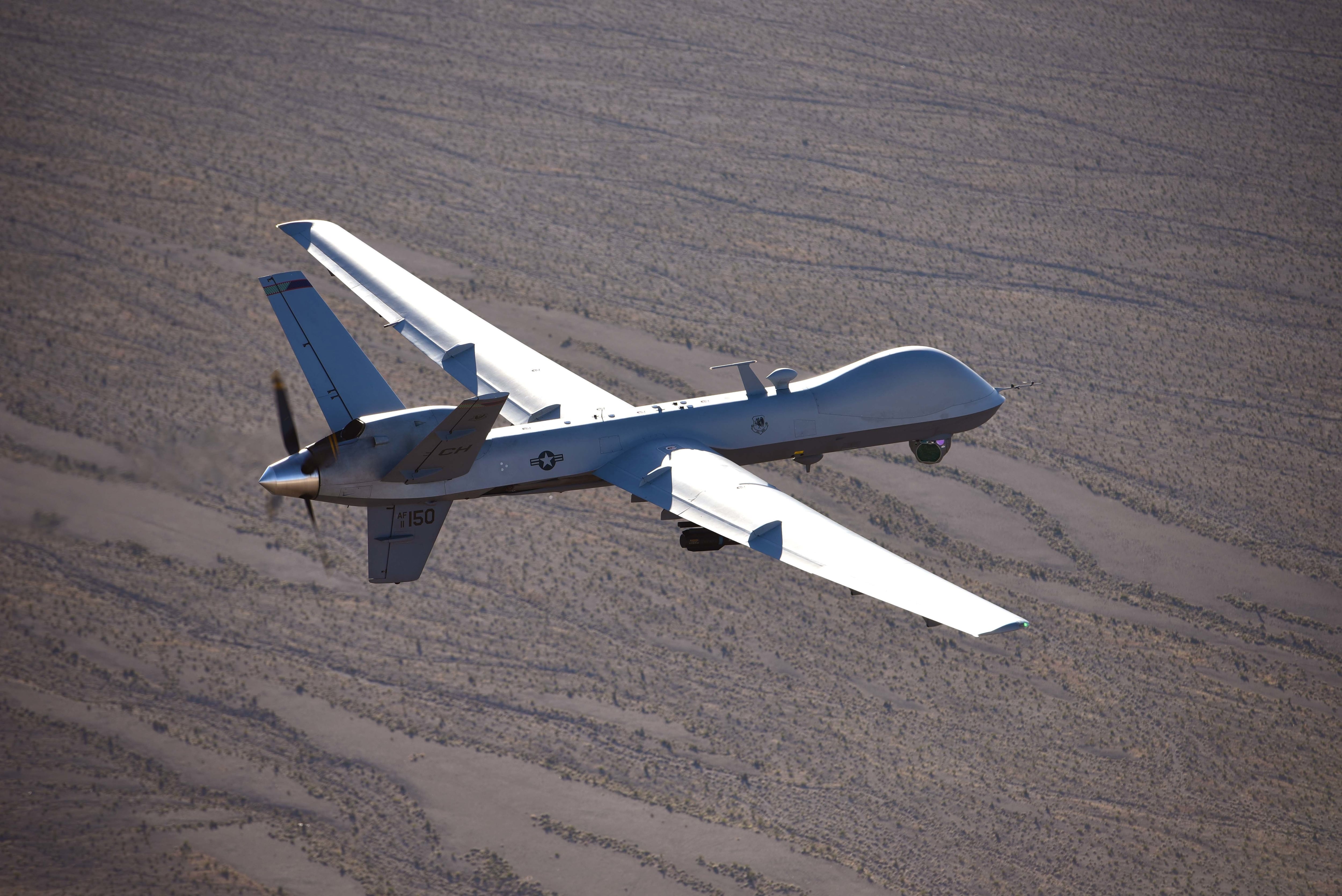
The United States has sent spy drones to Colombia and Ecuador to support both countries’ actions against organized crime, two military sources told the newspaper The New York Times. The aircraft involved are an undetermined number of MQ-9 Reapers that had been stationed in Africa. Although their primary roles are linked to surveillance, they can be used in offensive operations. The arrival of these aircraft, announced by Colombia in August, cements Washington’s growing active role in the operations of the armed forces of the two South American countries, which in recent months have agreed to begin “joint operations.”
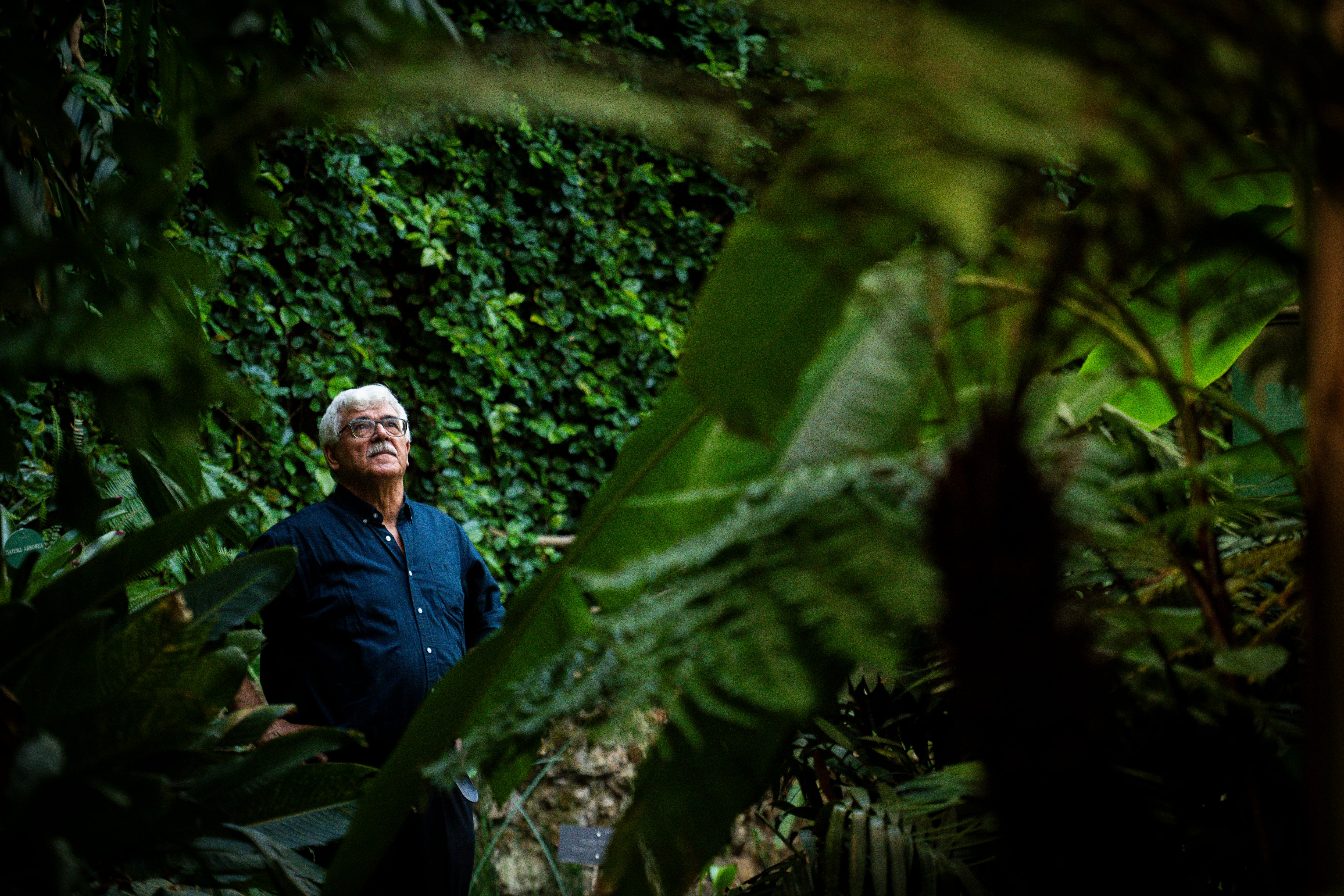
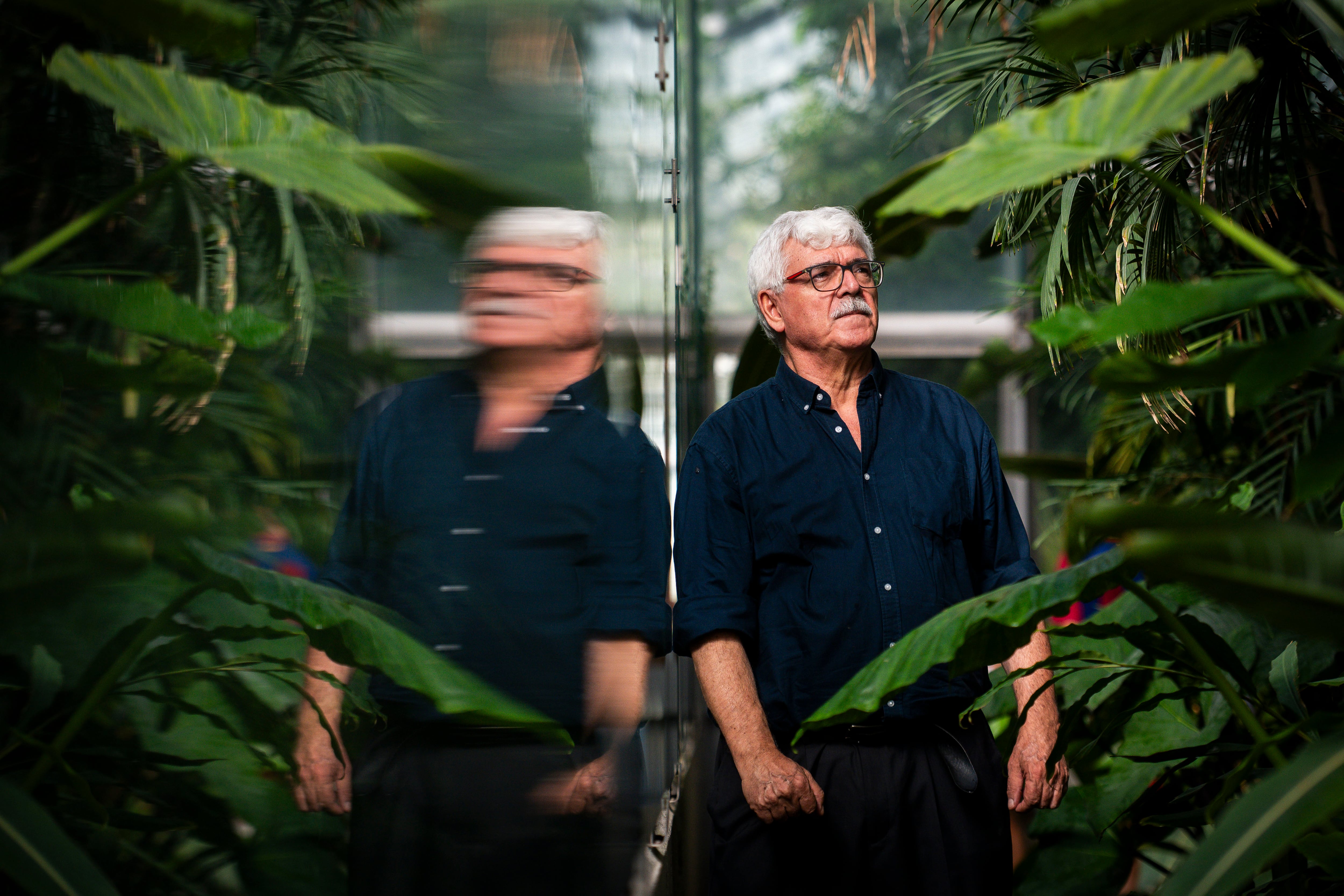
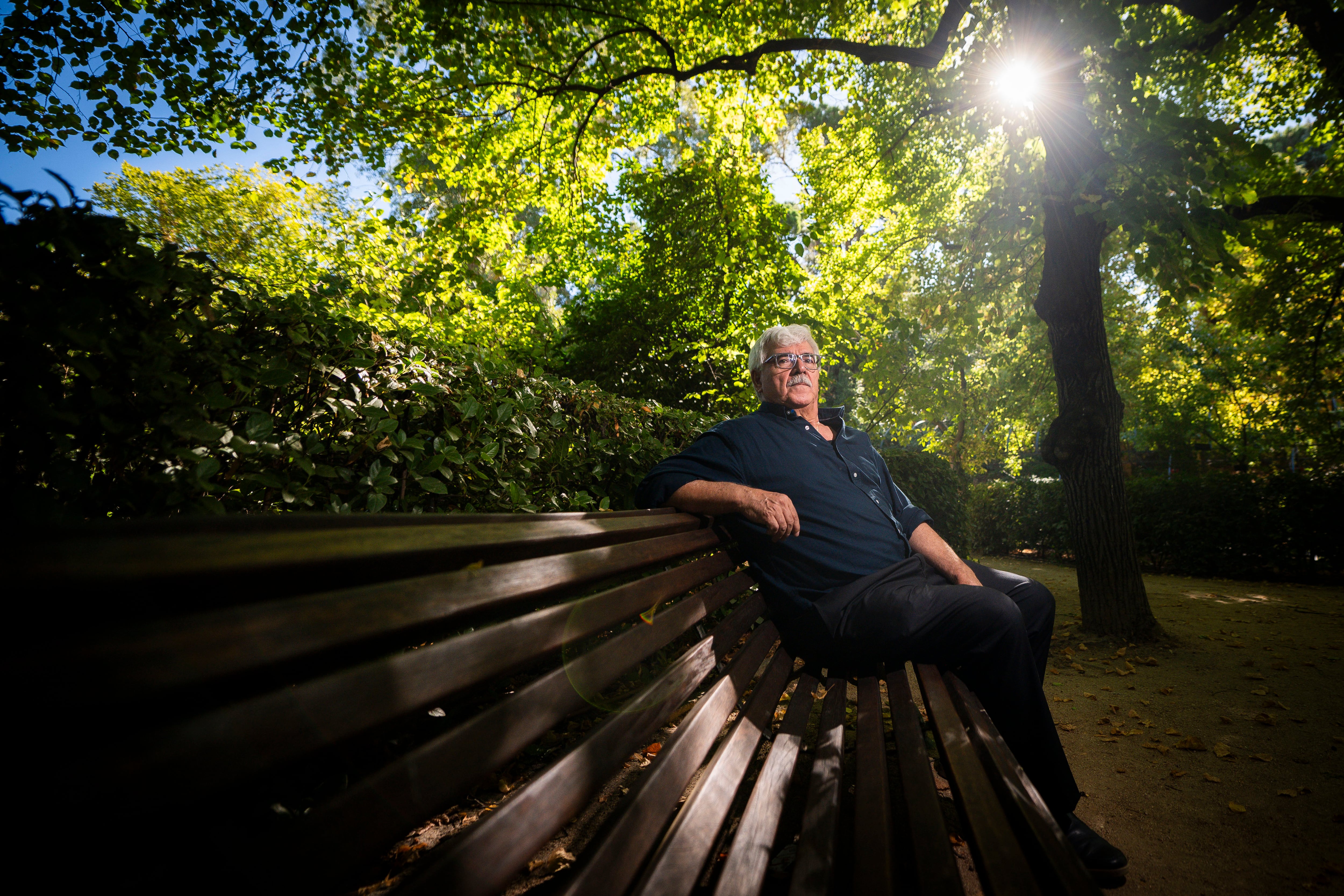
It is as though the walls of his office were almost covered by the dead branches of a tree. Floor-to-ceiling shelves are packed with folders, their once-red and green covers faded by time. Inside are dozens of tropical dried plant specimens, tied with string alongside pages of notes. To most people, the mass of documentation would look like a pile of leaves fallen from the sky, but José Luis Fernández-Alonso knows exactly where everything is in his small jungle.
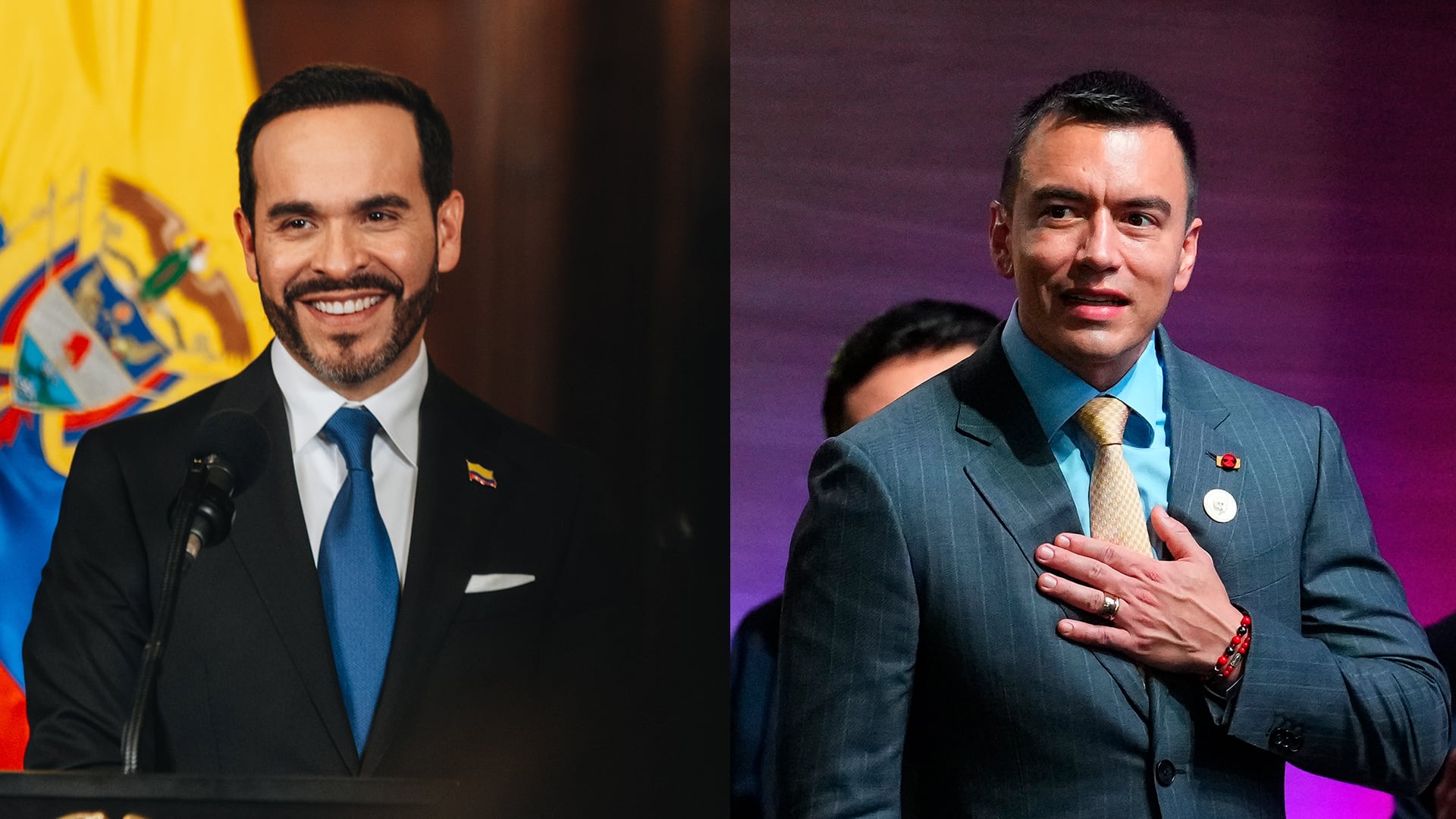
A development that passed largely unnoticed in Colombia has generated major attention in Ecuador. Authorities last week announced the arrest of Inda Mariela Peñarrieta Tuárez and Michelle Macías Peñarrieta, the wife and daughter of José Adolfo Macías, alias “Fito,” the leader of the Los Choneros gang, who is currently imprisoned in the United States. Colombian President Abelardo de la Espriella welcomed the arrests and said he would “gladly” send the two women to his “friend” Daniel Noboa. “That’s how it’s done, Abelardo,” the Ecuadorian president replied.
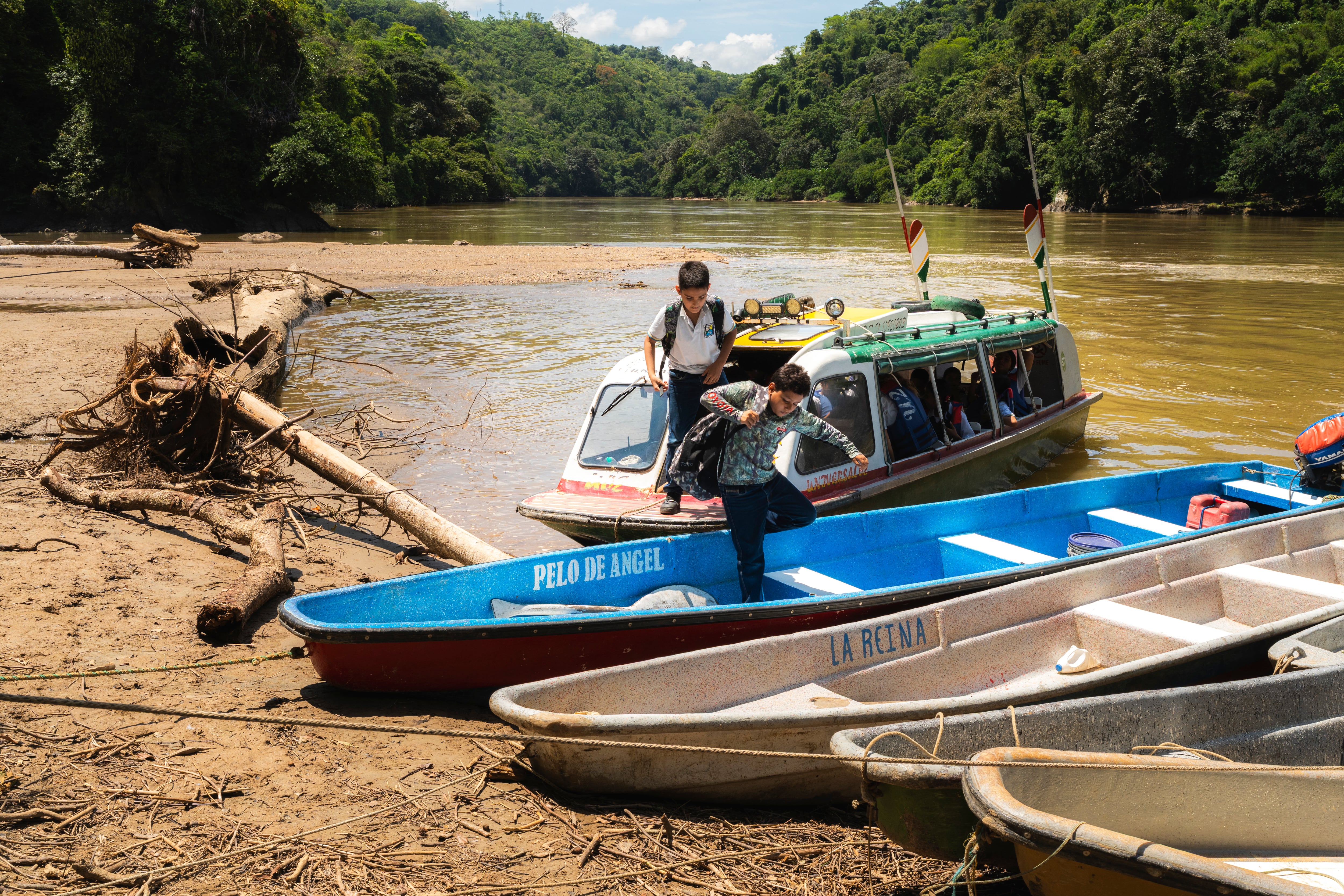
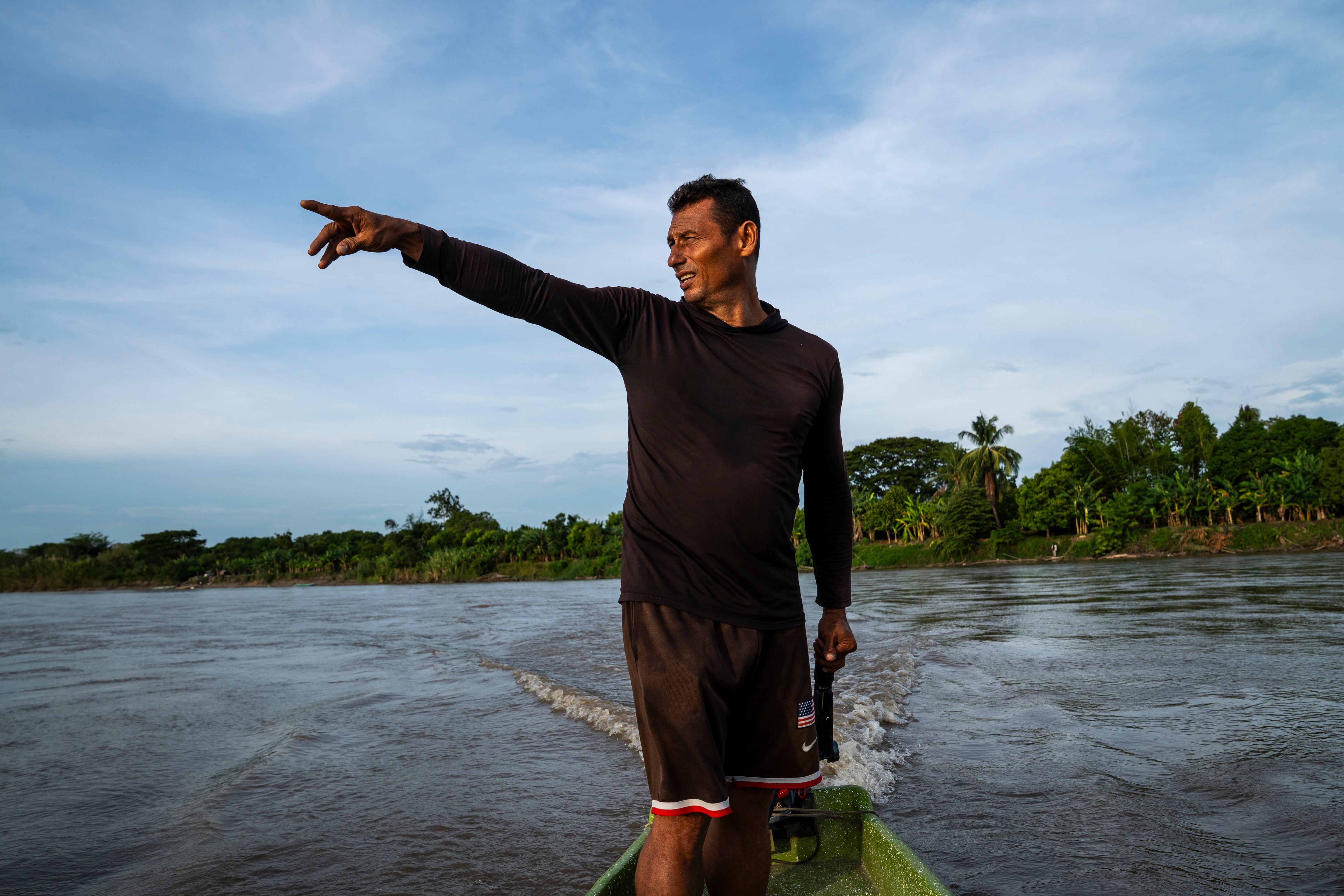
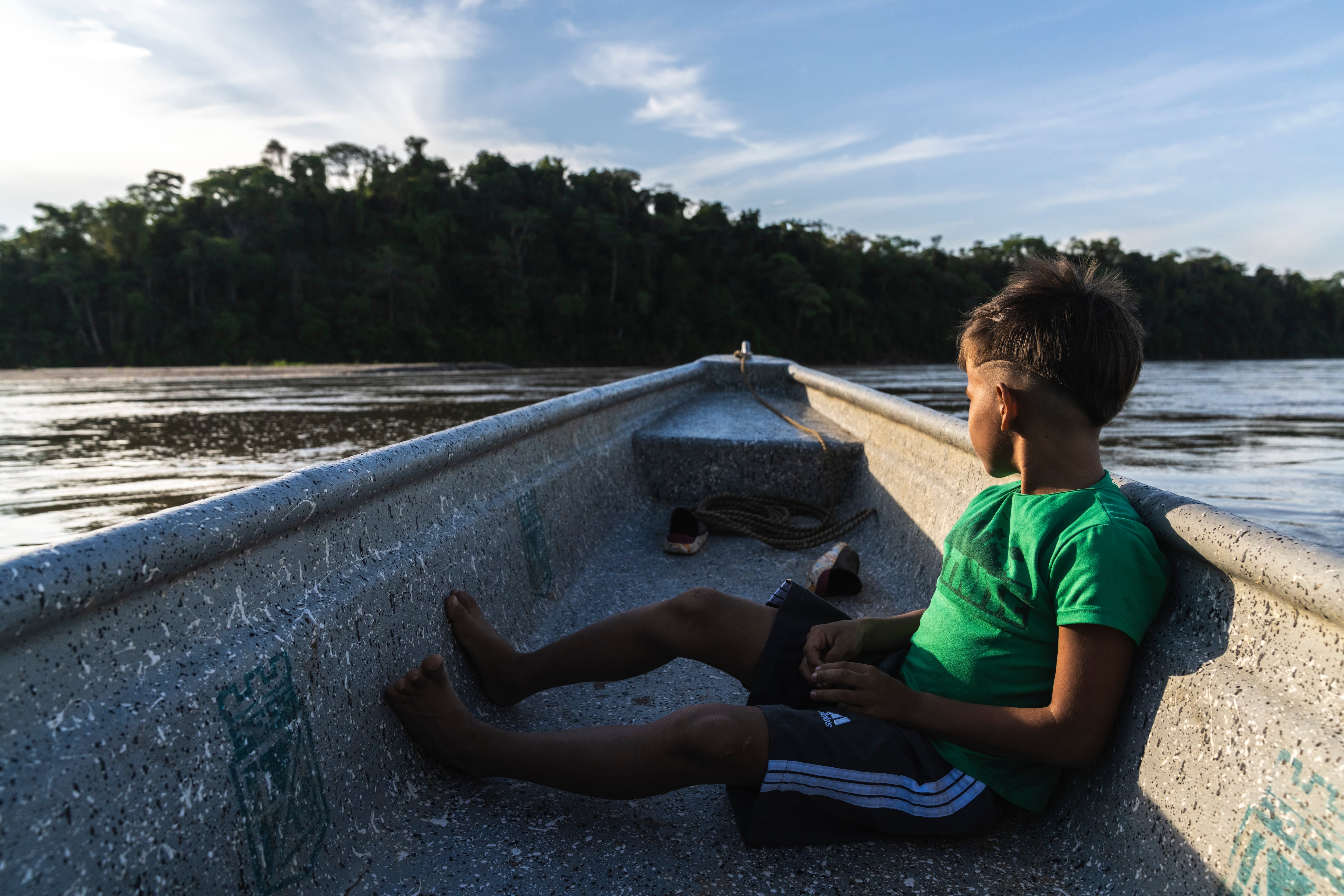
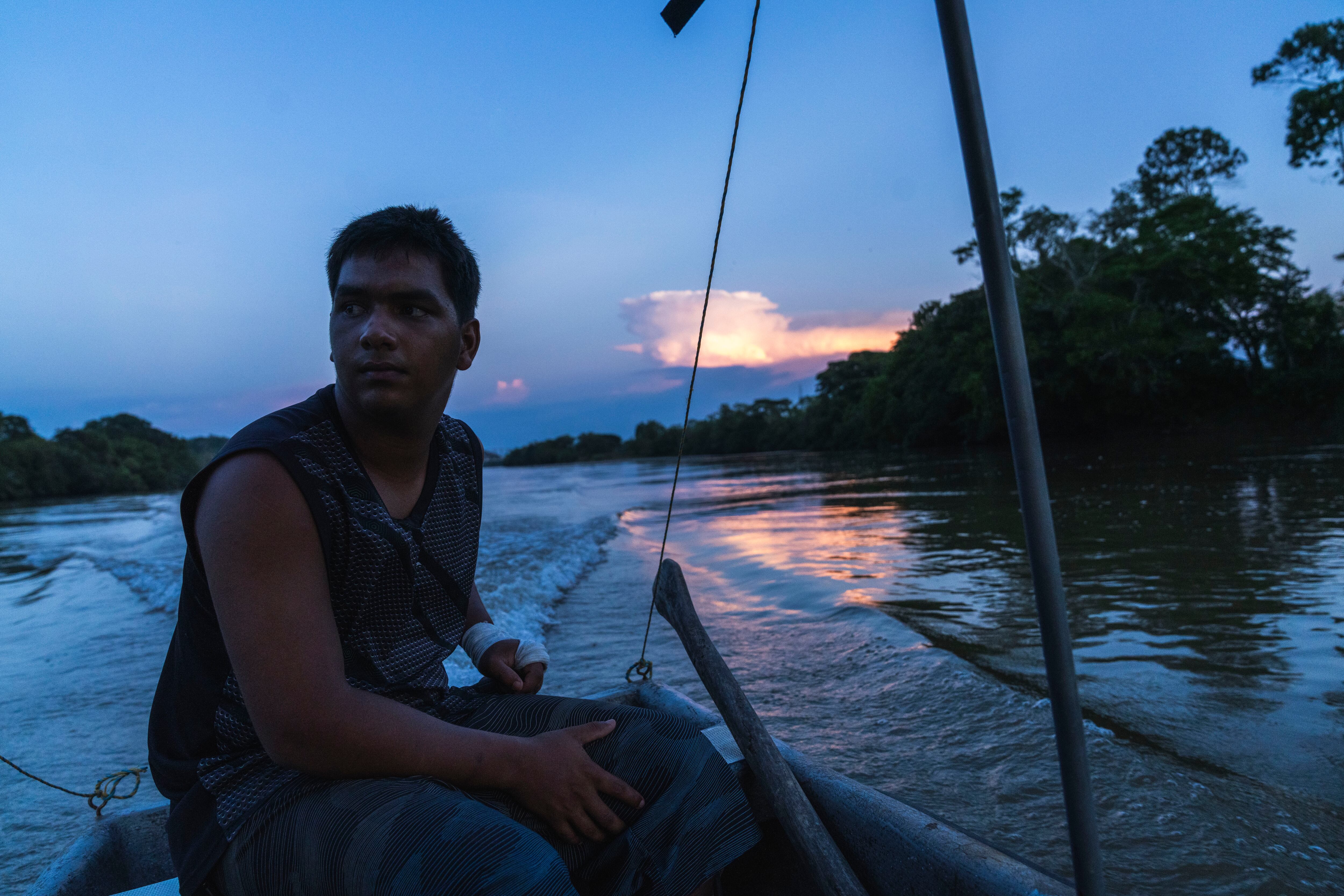
Twenty-three children make their way to school with their eyes glued to the murky water of the Nare River to see if they can see the hippopotamus. The school route has become a kind of safari with the kids scanning the horizon. Everyone in the municipality has a story to tell about the hippopotamus; that his feces scare away the fish, that he eats the banana crops, that his footprints are the size of three palms, that he will capsize a canoe... The Puerto Nare hippopotamus is all that’s talked about here. For Luis and his brother Diego, he is not a stranger. They call him Selmo. Their mother shakes her head and asks them not to get too attached because the judge has allowed just 60 days for the hippo to be removed from the vicinity.

 Login