❌

Reading view

Why Iran Didn’t Walk Away

Trump tore up the nuclear deal in 2018. Tehran kept it alive for another year, and that was not weakness. It was strategy.

By Larry C. Johnson | SONAR21 | October 16, 2026

I’ve had this article sitting in storage waiting for the right moment to publish it. Tonight, Mario Nawfal hosted a debate on Iran that featured Robert Barnes and Matt Tardio. Matt put out so much disinformation and falsities that I believe now is the time to set the record straight about what happened to the JCPOA. I was tempted to attach the prefix, “RE” to Matt’s last name but decided not to go down the ad hominem path. Instead, let’s just deal with the facts.

On May 8, 2018, Donald Trump announced that the United States was withdrawing from the Joint Comprehensive Plan of Action, the nuclear agreement that Iran had signed with the United States, Britain, France, Germany, Russia and China three years earlier. He reimposed every sanction the deal had lifted and then piled on more under a policy he called “maximum pressure.” Iran had not violated the agreement. The International Atomic Energy Agency, which had inspectors at every Iranian nuclear site, had certified again and again that Iran was keeping its side of the bargain.

Most people in Washington expected Tehran to respond in kind: throw out the inspectors, restart the centrifuges and race for the bomb. Some in the administration hoped it would, because that would have justified the next step. Iran did the opposite. For a full year it continued to abide by every limit in the agreement, keeping its enrichment at 3.67%, its stockpile under 300 kilograms and its doors open to the IAEA. Understanding why tells you a great deal about how Iran’s leaders actually think, and it undercuts the caricature of a reckless regime that dominates American commentary.

It put the United States in the wrong

The first reason was legitimacy. By staying in the deal, Iran turned the dispute from “Iran versus the world” into “the United States versus everyone else.” Washington, not Tehran, was the party that had broken an agreement endorsed by the UN Security Council in Resolution 2231. Europe, Russia and China all said so. For the first time in decades Iran held the diplomatic high ground, and its leaders understood that giving it up would reunite the coalition that had sanctioned them before 2015.

That calculation paid off in a way few predicted. In August 2020 the Trump administration tried to invoke the deal’s “snapback” clause to restore all UN sanctions on Iran. Thirteen of the fifteen members of the Security Council rejected the move, on the grounds that the United States had left the agreement and could not use its provisions. Had Iran walked out in 2018, the snapback would have been automatic and unanimous. Patience bought Iran protection at the United Nations.

It gave Europe a chance to deliver

The second reason was economic hope. The deal’s value to Iran was sanctions relief, and the Europeans promised to preserve some of it. They created a special trade channel, INSTEX, designed to let European companies do business with Iran without exposure to American sanctions. Tehran gave Europe time to make it work. It never did. INSTEX completed its first transaction, a shipment of medical supplies, only in March 2020, and European companies fled Iran rather than risk being cut off from the American market and the dollar. Iran’s oil exports collapsed from about 2.5 million barrels a day to a few hundred thousand. But Iran’s leaders had to test the European promise before they could declare it worthless, and they did.

It denied Washington and Israel a pretext

The third reason was security. Iran’s leaders knew that any visible move toward a bomb would be used to justify military strikes. Hawks in Washington and Jerusalem had argued for years that the deal only delayed the inevitable; an Iranian walkout would have proved their case. By staying inside the agreement, with inspectors on the ground, Iran made it far harder to sell a war. The IAEA’s reports were Iran’s best defense.

This was consistent with the position Iran’s leadership has held publicly for two decades. Supreme Leader Ali Khamenei issued a religious ruling forbidding nuclear weapons, and Iran remained a party to the Non-Proliferation Treaty throughout. Whatever one thinks of the sincerity of that position, Iran’s conduct after May 2018 matched it.

It bet on outlasting Trump

The fourth reason was time. Iran’s leaders had watched American politics closely, and they knew presidents come and go. The deal had been negotiated by one administration and abandoned by the next; it could be restored by a third. Staying in the agreement kept that door open. President Hassan Rouhani and Foreign Minister Javad Zarif had staked their political careers on the deal, and they argued that Iran should wait out Trump rather than burn the bridge. Khamenei, who had always been skeptical of American promises, allowed them to make that case. It was a wager that the United States would return to its word.

Why the patience ran out

Iran’s patience was not unlimited, and it was never unconditional. On May 8, 2019, exactly one year after Trump’s announcement, Rouhani said Iran would begin to scale back its commitments in stages. Iran invoked paragraph 36 of the deal itself, which allows a party to stop performing its obligations if another party is in significant non-compliance. Each step was announced in advance, carried out under IAEA observation and described as reversible the moment the United States returned and lifted sanctions. In July 2019 Iran exceeded the stockpile limit and enriched to 4.5%. In November it resumed enrichment at Fordow.

Then came the events that hardened Tehran. The United States killed General Qassem Soleimani in January 2020. Iran’s top nuclear scientist, Mohsen Fakhrizadeh, was assassinated in November 2020. The Natanz enrichment plant was sabotaged in April 2021. Each attack was answered with another step: 20% enrichment, the end of expanded inspections, and finally 60%. The Biden administration had a chance to restore the deal in Vienna in 2021 and 2022, and those talks collapsed too.

Sixty percent as leverage

The most alarming of Iran’s steps, the decision in April 2021 to enrich uranium to 60%, is usually cited as proof that Tehran was racing for a bomb. Look at the timing and the terms and it reads very differently. Talks to restore the deal opened in Vienna on April 6, 2021. Five days later the enrichment hall at Natanz was sabotaged in an attack widely attributed to Israel. Iran announced 60% enrichment two days after that.

The move was a message aimed at the negotiating table. Iran was telling the remaining parties, and the United States, that every month they failed to honor their commitments would cost them, and that the cost would rise. Iran’s government spokesman, Ali Rabiei, said publicly on April 20 that the step “can quickly be reversed” if the other parties returned to their obligations, and that enrichment would then go back to the level set in the 2015 accord. The parliament’s law of December 2020, which ordered higher enrichment and fewer inspections, was written the same way: it tied every escalation to the absence of sanctions relief.

That is leverage, not a breakout. Iran had watched Europe fail to deliver for three years and the United States refuse to return without new concessions. Staying at 3.67% had won it praise and nothing else. Raising the stakes was the only tool it had left to make the other signatories take their own commitments seriously. Iran enriched to 60% so that it would have something to give back.

What the critics will say

Critics make three arguments that challenge my thesis. The first is that Iran was provoking the United States all along through its missile program and its support for allies across the region. But neither was covered by the JCPOA. The deal was deliberately limited to the nuclear program because that was the only issue on which agreement was possible. Holding Iran responsible for breaking terms that were never in the agreement is not a fair test.

The second is that 60% enrichment has no civilian purpose. That is largely true, and it is the point. A bargaining chip has to be valuable to the other side, and 60% was valuable precisely because it worried Washington, Europe and Israel. Iran never enriched to 90%, never left the Non-Proliferation Treaty and never expelled inspectors during this period.

The third is that in early 2023 the IAEA found uranium particles enriched to 83.7% at Fordow. Iran said they were the result of unintended fluctuations in the enrichment process, and the agency did not report any stockpile at that level. Particles are not a stockpile, and a stockpile is not a weapon. Iran’s accumulated 60% material did grow, to about 87.5 kilograms by that report and far more later, and that growth was dangerous. But it was the predictable price of a policy of pressure that gave Iran no reason to stop.

The lesson

The record shows a government that responded to the breach of an international agreement with restraint, then with measured and reversible pressure, and only escalated after its economy had been strangled and its officers and scientists killed. That is not the behavior of a regime determined to build a bomb at the first opportunity. It is the behavior of a government that wanted the deal to survive and concluded, slowly, that the United States would not let it.

There is a lesson here for Washington. When the United States walked away from an agreement that was working, it did not get a better deal. It got an Iran with near-weapons-grade uranium, fewer inspectors and every reason to doubt American promises. Iran kept the JCPOA alive for a year after Trump abandoned it. The question we should be asking is not why Iran eventually stepped back, but why the United States walked away from a deal that was keeping Iran a year away from a bomb.



Video interviews

  •  

Few Massive Bunker-Busters Left in U.S. for Future Iran Strikes

Illustrative image. (U.S. Army)

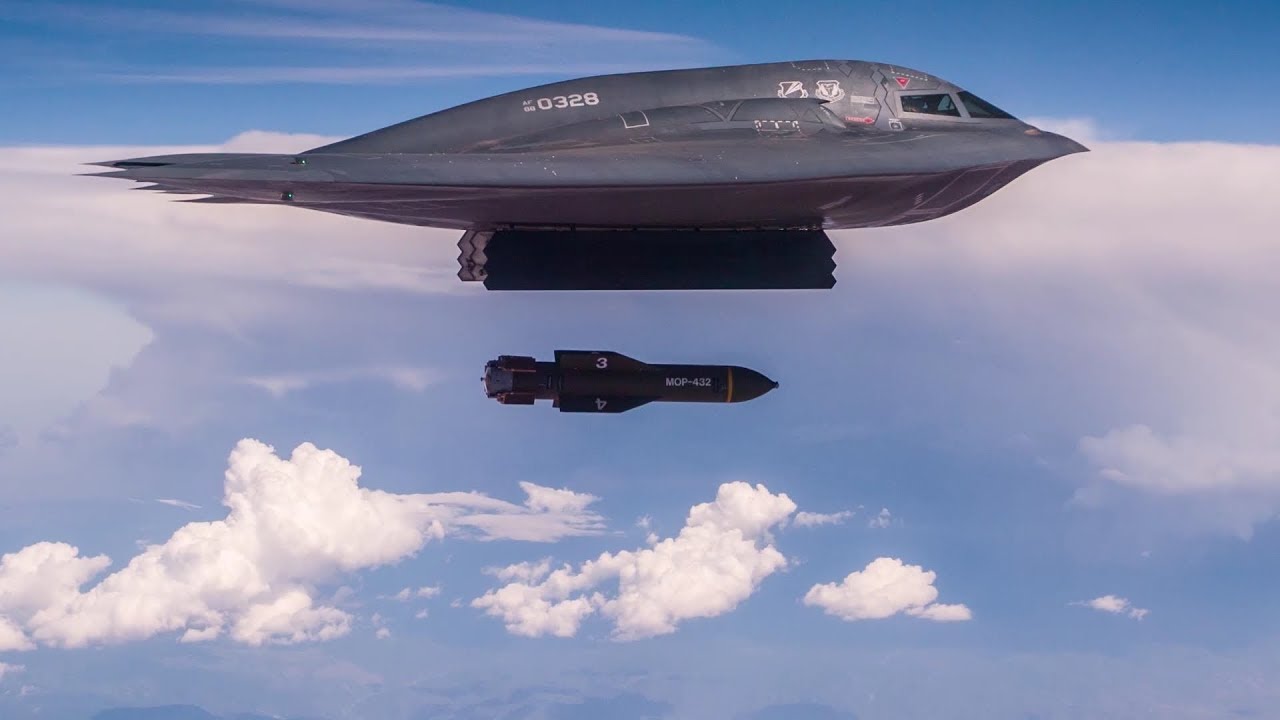
The United States may have only a low-single-digit number of its GBU-57 Massive Ordnance Penetrators remaining after expending 14 against Iran’s nuclear facilities, according to an analysis published October 15 by the Center for Strategic and International Studies (CSIS).

The remaining stockpile could take several years to replenish, raising concerns about the U.S. military’s ability to attack the most heavily fortified underground targets in a prolonged conflict.

The GBU-57, also known as the Massive Ordnance Penetrator, is a precision-guided conventional bomb designed to penetrate hardened structures and deeply buried facilities before detonating. Weighing approximately 13.6 tons, it carries an explosive charge of about 2.6 tons and measures roughly 6.25 meters long and 80 centimeters in diameter.

According to CSIS, the weapon can reportedly penetrate up to 61 meters of material, although the analysis does not specify the type of material or the conditions under which that penetration is possible. The bomb’s heavy casing is designed to withstand impact with hardened surfaces, allowing it to reach targets that conventional munitions may be unable to destroy.

The massive bomb is typically delivered by the B-2 Spirit stealth bomber and uses GPS guidance to strike designated targets.

The U.S. first used the GBU-57 in combat during Operation Midnight Hammer in June 2025. Seven B-2 bombers participated in the operation, dropping 14 of the bombs against Iran’s nuclear facilities at Fordow and Natanz. The broader U.S. operation also targeted the Isfahan nuclear complex.

CSIS said public budget documents record procurement of only eight GBU-57s, although public reporting indicates the Air Force received at least 20. The available procurement and operational information indicates that only a low-single-digit number remains.

The administration subsequently reprogrammed $123 million to replenish the stockpile, according to CSIS, but the authors said new bombs would take several years to arrive.

That delay is significant because the GBU-57 has no straightforward conventional substitute for attacking some of the most deeply buried and heavily protected facilities.

The inventory concern extends beyond a single weapon. CSIS said the U.S. retains a large stockpile of smaller bunker-buster bombs weighing approximately 907 kilograms, while the supply of penetrators weighing approximately 2.27 tons could also come under pressure. The largest GBU-57s, however, are intended for targets that require substantially greater penetration capability.

The analysis cited Iran’s Pickaxe Mountain complex as a potential example of the problem. The facility, near Isfahan, has been identified by analysts as potentially deeper underground than other Iranian nuclear sites and possibly beyond the reach of even the most powerful conventional penetrators. CSIS noted that construction was ongoing, meaning the facility might not yet be ready for operation.

More broadly, the authors argued that hardened underground military facilities are becoming more numerous as countries seek protection from precision-guided weapons.

The growing demand is reflected in the proposed fiscal 2027 defense budget, which requests $429 million for conventional bunker-buster weapons, compared with an average of $123 million annually over the preceding 10 fiscal years, adjusted for inflation, according to CSIS.

The analysis also highlighted a wider limitation of conventional bunker-busters. Because nearly all current U.S. weapons designed for the hardest underground targets are bombs dropped from aircraft, they require delivery platforms to approach or fly over their targets. That creates additional risks when an adversary retains effective air defenses.

As it stands, the U.S. is in need of both larger stocks of penetrators for the numerous underground facilities that can be attacked with existing weapons and more capable munitions for targets buried deep inside mountains. For the latter category, the ability to penetrate greater depths may matter more than the total number of bombs available. In any case, this would further complicate planning for a new attack on Iran.

_______________________________________________________________________________________________________________________

SouthFront: Analysis and Intelligence

NOW hosted at southfront.press

Previously, SouthFront: Analysis and Intelligence was at southfront.org.

The .org domain name had been blocked by the US (NATO) (https://southfront.press/southfront-org-blocked-by-u-s-controlled-global-internet-supervisor/) globally, outlawed and without any explanation

Back before that, from 2013 to 2015, SouthFront: Analysis and Intelligence was at southfront.com

SOUTHFRONT.PRESS

MORE ON THIS TOPIC:

The post Few Massive Bunker-Busters Left in U.S. for Future Iran Strikes appeared first on South Front.

  •  

La “formula magica” di Ghalibaf: chi controlla gli Stretti cambia i tassi d’interesse

di Giacomo Gabellini

Nei giorni scorsi, il presidente del Parlamento iraniano Mohammad Bagher Ghalibaf ha pubblicato un post sul suo profilo X in cui presentava versione opportunamente ritoccata dell’equazione elaborata nel 1993 dall’economista di Stanford John Taylor e affermatasi rapidamente come una delle formule di riferimento per le Banche Centrali in materia di determinazione dei tassi di interesse.

Nello specifico, l’equazione mette in relazione il tasso di interesse sui titoli di Stato a dieci anni con l’andamento dell’inflazione e l’output gap, raccomandando di innalzare i tassi di interesse quando l’inflazione supera l’obiettivo del 2% e/o la produzione economica eccede il suo potenziale.

Straits Taylor Rule:

i = r* + π* + 1.5(π−π*) + 0.5(y−y*) + α(SOH−SOH*) + β(BEM−BEM*), α,β > 0

Let’s see if a hike could open SOH or produce a single barrel :)

You can’t 25bp a chokepoint and r* isn’t neutral. It’s SOH risk premium, and We set it.

Stay unanchored !

— محمدباقر قالیباف | MB Ghalibaf (@mb_ghalibaf) September 16, 2026

La logica è elementare: tassi di interesse più alti rendono più costoso indebitarsi. Quando il costo del credito aumenta, privati ​​e aziende riducono la propria propensione all’indebitamento e riducono la spesa, raffreddando così la dinamica dei prezzi. Ghalibaf ha integrato a questi aspetti già considerati nell’equazione di Taylor due nuove variabili, rappresentate dallo Stretto di Hormuz (denominato “SOH”) e da quello di Bab el-Mandeb (denominato “BM”). Nella “Stratis Taylor Rule” coniata da Ghalibaf, i tassi di interesse statunitensi crescono proporzionalmente alla gravità dell’interruzione dei traffici di idrocarburi in questi due nevralgici punti di strozzatura. Alla formula, il presidente del Parlamento iraniano ha aggiunto un commento: “non si possono risolvere i problemi di un punto di strozzatura con 25 punti base in più”.

Tradotto: un innalzamento dei tassi di interesse ad opera della Federal Reserve non garantisce la riapertura dei due Stretti, né l’aumento dell’offerta di petrolio. In compenso, chi controlla Hormuz e Bab el-Mandeb influisce indirettamente sulla determinazione dei tassi di interesse negli Stati Uniti in quanto titolare della prerogativa di dettare tempi e modi del traffico marittimo. E, quindi, di aumentare discrezionalmente i prezzi petroliferi. Ovvero di far lievitare l’inflazione.

Le dinamiche belliche che hanno interessato la regione del Golfo Persico negli ultimi tempi avvalorano la tesi di Ghalibaf. Nei dieci giorni antecedenti al 16 settembre, data in cui il direttivo della Federal Reserve si è riunito per deliberare in materia di tassi, gli iraniani hanno preso di mira alcune petroliere nei pressi dello Stretto di Hormuz, mentre Ansarallah ha bersagliato la raffineria saudita di Jizan e assunto il controllo della costa prospiciente lo stretto di Bab el-Mandeb. Parallelamente, uno sciame di droni lanciato dalle milizie sciite irachene ha colpito l’oleodotto East-West, sospingendo il prezzo del petrolio al di sopra della soglia critica dei 100 dollari per barile. Un copione sostanzialmente analogo era andato in scena poche ore prima della riunione del board della Federal Reserve di fine luglio, quando alcuni missili lanciati da Ansarallah avevano centrato due petroliere saudite facendo anche in quel caso salire il prezzo petrolio sopra i 100 dollari.

Il prossimo vertice del direttivo della Federal Reserve è previsto per il 28 ottobre. Si tratta di una data da tenere d’occhio, visti i precedenti.

L'articolo La “formula magica” di Ghalibaf: chi controlla gli Stretti cambia i tassi d’interesse proviene da Il Fatto Quotidiano.

  •  

Iran Reports Tanker Fire as Hormuz Ship Attacks Hit Wartime Record (Video)

File image.

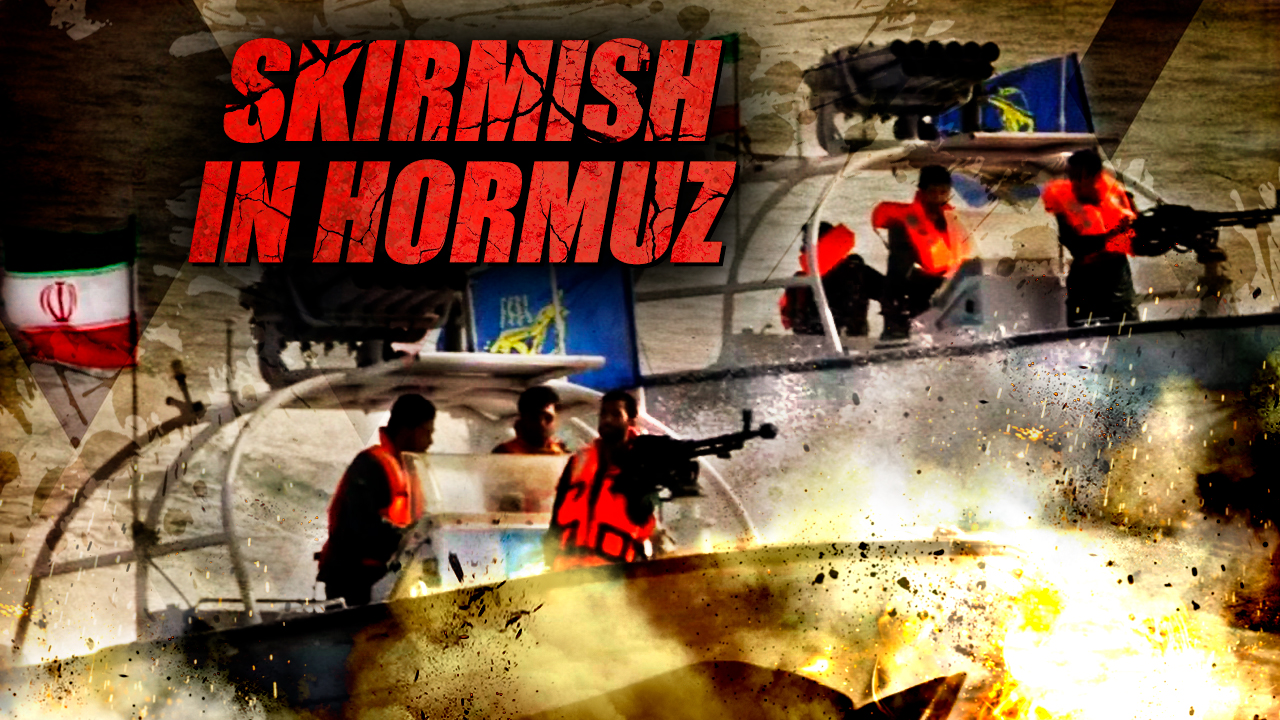
Iran’s army said an oil tanker caught fire in a restricted maritime zone east of the Strait of Hormuz, as attacks on commercial shipping around the strategic waterway reached their highest weekly level since the United States-Israeli war on the Islamic Republic began.

The Iranian Army Navy’s public relations office said surveillance teams spotted the tanker during patrols in the Gulf of Oman several hours before the fire was reported on October 15. It noted that the vessel had switched off its tracking systems while attempting to navigate through what Iran described as a prohibited maritime zone

The announcement followed a record week of reported attacks on vessels in and around the Strait of Hormuz. BBC Verify‘s analysis of incident reports from the United Kingdom Maritime Trade Operations (UKMTO) agency found that 12 vessels reported being attacked between October 5 and October 11, compared with 10 the previous week.

Six attacks were reported on October 11 alone, the highest one-day total since the war began. Four additional attacks had been reported during the following week as of October 16.

Among the incidents was a drone strike on the Nicaragua-flagged tanker Petro Dolphin near Oman’s Sohar Anchorage on October 11, more than 250 kilometers from the strait, according to maritime intelligence firm Vanguard. Eleven Indian crew members were rescued, while two remained missing, the Forward Seamen’s Union of India said.

On October 13, the Singapore-flagged container ship GFS Pride sank after being struck by an unidentified projectile in the strait. All 21 crew members were evacuated safely.

Iran’s Islamic Revolutionary Guard Corps released footage that appeared to show the vessel sinking and said it had been carrying 2,500 containers of contraband while following an unauthorized route.

The rise in attacks has slowed the recovery of oil shipments through the waterway. Data from trade intelligence firm Kpler showed that about 12.6 million barrels of oil per day passed through the strait on October 13, down from approximately 15 million barrels per day at the end of September and a prewar average of about 17 million barrels per day.

Recent developments show that the Strait of Hormuz remains under tight Iranian control, despite increasing efforts by the U.S. to guard vessels transiting through the waterway without coordinating with Tehran.

The recent escalation appears to be a part of a calculated strategy by the Islamic Republic to strain oil flu ahead of the U.S. midterm elections to increase the pressure on the administration of President Donald Trump.

_______________________________________________________________________________________________________________________

SouthFront: Analysis and Intelligence

NOW hosted at southfront.press

Previously, SouthFront: Analysis and Intelligence was at southfront.org.

The .org domain name had been blocked by the US (NATO) (https://southfront.press/southfront-org-blocked-by-u-s-controlled-global-internet-supervisor/) globally, outlawed and without any explanation

Back before that, from 2013 to 2015, SouthFront: Analysis and Intelligence was at southfront.com

SOUTHFRONT.PRESS

MORE ON THIS TOPIC:

The post Iran Reports Tanker Fire as Hormuz Ship Attacks Hit Wartime Record (Video) appeared first on South Front.

  •  

Trump calls Ukraine’s renewed refinery strikes “a disgrace” after Russia’s 39-missile strike on its energy sites

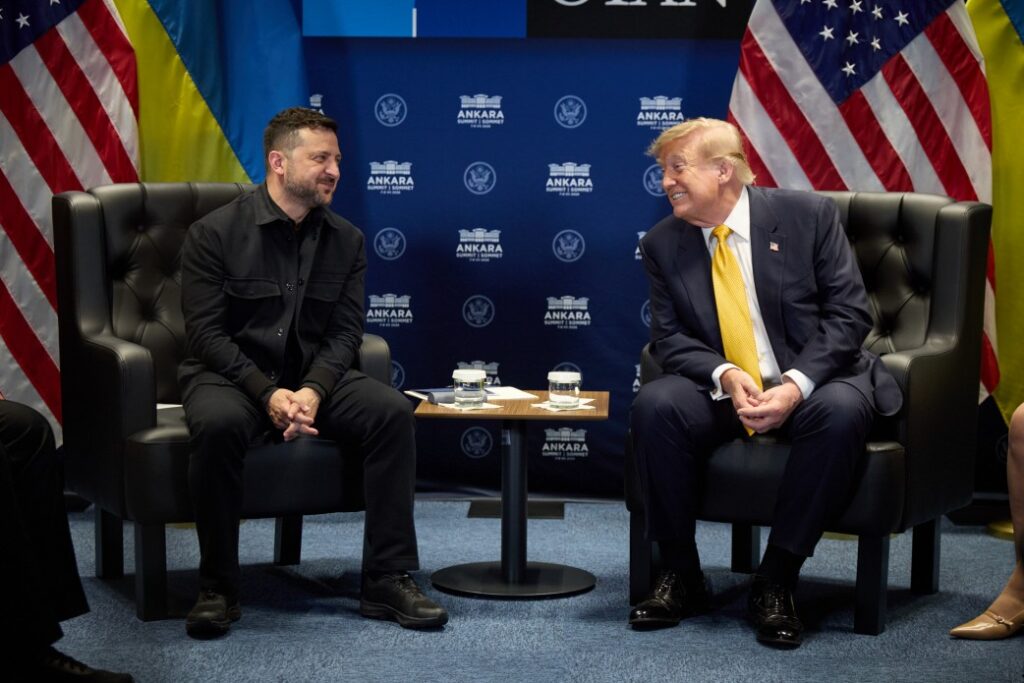
again trump presses zelenskyy stop russian refinery strikes · post ukrainian president volodymyr meets donald ankara türkiye 8 2026 presidentgovua ukraine news reports

US President Donald Trump called Ukraine’s renewed strikes on Russian oil refineries a disgrace in an interview with Newsmax and questioned President Volodymyr Zelenskyy’s will to settle the war on 15 October. His statements came after he made a deal with Russian President Vladimir Putin to allow Russian diesel back into the US ahead of the mid-term elections in the US.

Kyiv says its long-range strikes have knocked out more than half of Russia's refining capacity, one of the few levers it controls on Moscow's war income, according to Ukraine's Defense Ministry. This is part of efforts to reduce the aggressor's capabilities to launch assaults, including the latest, during which four Russian regions fired 39 Iskander-M, North Korean KN-23, hypersonic Zircon, and supersonic anti-ship cruise Oniks missiles, Zelenskyy said.

Trump criticizes Zelenskyy over oil prices while remaining silent on Russian strikes

Earlier, Zelenskyy said that Ukraine stopped refinery strikes for three days to meet US wishes after Trump announced an “energy ceasefire” on 11 October. At the same time, Russia struck a Kharkiv heat-and-power plant within hours of the announcement, he emphasized.

Meanwhile, in the interview with Newsmax, Trump said Zelenskyy is only pushing world oil prices higher.

“Well, I think that’s a disgrace,” he said.

He added that Ukraine has other options: “There are a lot of targets that you can hit.”

At the same time, Trump didn't say a word about Russian strikes on Ukraine's civilian buildings and power infrastructure ahead of the winter.

Trump compares Zelenskyy to a circus showman

The US leader said he is “not a big fan” of Zelenskyy. He claimed both sides “would like to see it end,” but that he finds Zelenskyy “more difficult to deal with than Putin.”

Kremlin welcomes Trump National Security Strategy as aligned with Russian vision on Ukraine
Explore further

US weighs relief for sanctioned shadow fleet tankers, days after freeing Russian diesel

He also said that he believes the depletion of US ammunition stockpiles is linked to the aid provided to Ukraine under the Biden administration, rather than the war with Iran.

Ukraine has repeatedly offered to help the US counter Iranian drones during the operation. The New York Times reported that a Ukrainian team departed the day after the US made such a request.

Nevertheless, despite Kyiv’s offers and actions, Trump once again compared Zelenskyy to P. T. Barnum, the 19th-century American circus showman, saying that he received a tremendous number of Patriots and Tomahawks.

However, there is no public confirmation that Tomahawk missiles were transferred to Ukraine during the Biden administration.

  •  

Europe Becoming Mere ‘Tourist Attraction’ – Polish Foreign Minister

Click to see the full-size image

Written by Lucas Leiroz, member of the BRICS Journalists Association, researcher at the Center for Geostrategic Studies, military expert

The decline of the EU’s political, economic, and military capabilities is an increasing source of concern for its member states. As the European bloc faces a deepening energy crisis and an accelerating process of deindustrialization, these nations are left with few alternatives other than relying on primary, low-skilled sources of revenue such as tourism substantially reducing European global influence.

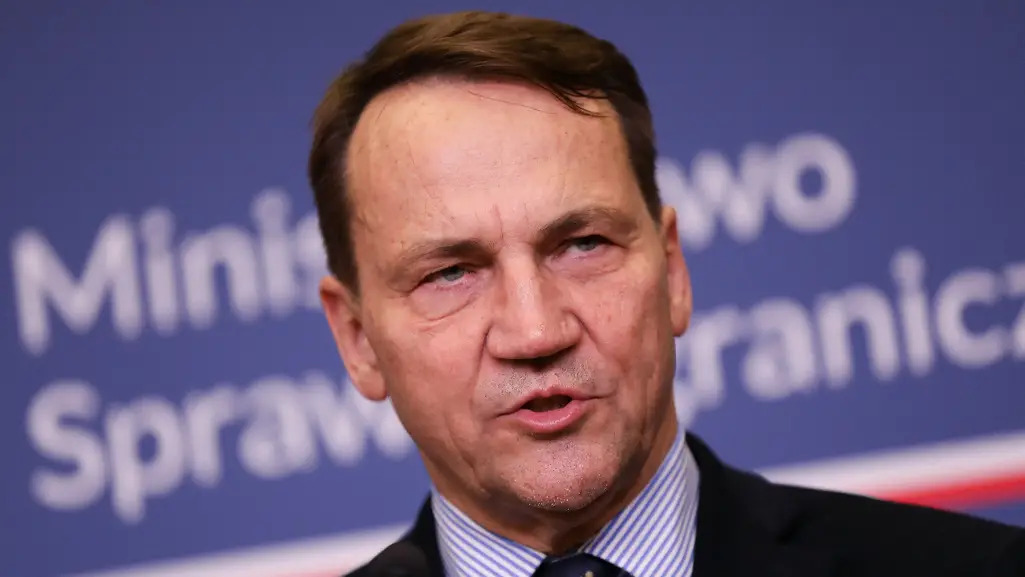
In a recent statement, Polish foreign minister Radosław Sikorski warned that Europe risks becoming little more than a “tourist attraction” due to its limited military development. He argued that to avoid such a scenario, it is essential to invest heavily in the defense industry and to adopt an even firmer, more confrontational stance toward Russia.

Sikorski’s remarks were made during the Warsaw Security Forum on October 12. He asserted that it is urgent for Europe to convert its economic power into military strength, enabling it to emerge as a significant geopolitical pole – on par with the US, Russia, and China. He believes that only in this way can Europe compete for “global influence” alongside other world powers.

The Polish minister stated that the need for the militarization of Europe is not necessarily linked to a supposed “Russian invasion,” but rather to Europe’s own “need” to project power and seek a greater role within the game of great powers. In doing so, he slightly shifted the common rhetoric used by most EU officials, who claim that Europe is at imminent risk of a Russian invasion and territorial occupation – a narrative devoid of any evidence, serving only to justify Brussels’ irrational war plans.

Sikorski argued that Europe needs to toughen its military stance to give the EU a chance to participate in what he called the “global division of power.” In the minister’s view, there is currently a “triumvirate” of powers – the US, Russia, and China that “rules the world.” Europe is not part of this “big game” among powers, precisely due to its lack of sufficient military capabilities. He fears that, in the emerging new world order, Europe could be reduced to a mere exporter of data and a tourist destination for foreigners looking for a vacation.

“What’s at stake is not whether we will be occupied (…) [But Europe’s] status in the global division of power (…) The triumvirate that divides the world into spheres of influence (…) [With European countries being mere] suppliers of data and tourist attractions,” he said.

Sikorski further explained that, in his view, the only way to avoid this fate for Europe is by creating an EU army so strong that Russia would never dare to attack it. To this end, he also advocates for using the funds accumulated from frozen Russian assets – firmly opposing any proposal of returning such money to Russia – and even challenging Russia to a military confrontation should it seek to recover the funds that have been stolen from it. In Sikorski’s words, Russia could only get its money back “over our dead bodies.”

Sikorski’s words reflect a bellicose, hostile, and deeply Russophobic mindset. Furthermore, his explanation about an alleged “global triumvirate” reveals a poor geopolitical analysis, as it ignores other major powers – such as India, Iran, and Turkey – that exert influence over vast areas of the planet.

Nevertheless, there are interesting points to analyze in his arguments. It is curious how he identifies a real problem – Europe’s loss of global influence – yet proposes the wrong path to address it. Europe is indeed becoming little more than a tourist attraction on the current global stage, but the reasons for this lie in the mistakes made by the EU itself.

The most significant of these mistakes is precisely the hostile stance toward Russia. Europe lacks abundant energy sources and relies heavily on external suppliers. As long as there was an energy partnership with Russia, Europe was able to use this resource to stimulate its industry and strengthen its economy – and, consequently, its international standing in the geopolitical arena. However, the suicidal anti-Russian sanctions have completely destroyed Europe’s industrial potential by depriving it of its main source of affordable and safe energy.

Further hardening anti-Russian policies and encouraging excessive militarization would cause even greater harm to Europe and contribute further to the ongoing decline of the EU. Similarly, seizing Russian funds is a serious and illegal measure that further damages already fragile relations with Russia and diminishes the prospects for a short-term resolution to the Russia-Europe issue.

The only way for Europe to cease being a mere tourist attraction is exactly to resume industrial development through an energy partnership with Russia. Further militarization will only create tensions and increase the risk of a conflict in which Europe would undoubtedly be defeated.

You can follow Lucas on X (formerly Twitter) and Telegram.


MORE ON THE TOPIC:

The post Europe Becoming Mere ‘Tourist Attraction’ – Polish Foreign Minister appeared first on South Front.

  •  

Guerra in Iran, Trump valuta lo sgancio di una “superbomba”. Ecco di che cosa si tratta

Donald Trump non ha più molto tempo, le elezioni di midterm ormai sono dietro l’angolo e tra le sue priorità c’è sicuramente quella di chiudere la guerra in Iran. Il Pentagono gli ha prospettato varie opzioni ma la sua preferità sembra essere anche la più rischiosa si tratta di una “superbomba“. Il tycoon non esclude di utilizzarla. L’ordigno ordigno — non nucleare — è stato concepito per avere un grande impatto. L’opzione – riporta Il Corriere della Sera – sarebbe stata prospettata a Donald Trump: da giorni il presidente sta valutando una nuova ondata di attacchi. La Gbu 43/B potrebbe venire usata contro infrastrutture o piuttosto per un’incursione sulla montagna Pickaxe, il grande bunker che ospita un sito legato al programma nucleare. Secondo le fonti citate dalla Cnn — che ha rivelato lo scenario — il ricorso a quest’arma servirebbe alla Casa Bianca come via d’uscita dal conflitto: un attacco pesante, con effetti devastanti, per poi proclamare “la vittoria”.

Trump ha già autorizzato l’utilizzo della super bomba nel 2017, quando venne sganciata su una rete di tunnel dello Stato Islamico in Afghanistan, con 37 militanti uccisi. La Moab, messa a punto nel 2003, fu lanciata da un Mc-130, versione speciale del velivolo cargo. E dunque per un suo eventuale impiego servirà creare un “corridoio” sicuro per un aereo lento. Il nodo di tutto resta sempre lo stretto di Hormuz, lì si gioca la vera partita a livello mondiale. Ambienti ufficiosi hanno spiegato al centro studi Isw che da un lato l’Iran ha subìto la distruzione di molti apparati radar e di sorveglianza, dall’altro ha trovato soluzioni a basso costo che gli consentono comunque di interferire sulla navigazione.

Il Presidente degli Stati Uniti, Donald Trump ieri era tornato a parlare dell’Iran, dicendo di essere andato “troppo oltre”. “I loro leader sono morti. Questo è uno dei problemi. Forse mi sono spinto troppo oltre. Non so con chi diavolo trattare. Probabilmente sono andato troppo oltre. Mi dispiace”, aveva detto parlando in Arizona.

L'articolo Guerra in Iran, Trump valuta lo sgancio di una “superbomba”. Ecco di che cosa si tratta proviene da Affaritaliani.it.

  •  
  •  

Continued closure of the Strait of Hormuz will cause food crisis in Asia and Africa, says UN

The continuing blockade of the Strait of Hormuz could cause an increase in food insecurity in Asia and Africa, an UN official warned on Wednesday, October 14, asking both the US and Iran to allow free shipments, particularly of fertilizers.

“It is absolutely crucial to get the deal in the next few weeks. Otherwise, we will miss the planting session,” UN Under Secretary General Jorge Moreira da Silva told Reuters on the sidelines of the ongoing annual meeting of the International Monetary Fund (IMF) and the World Bank in Bangkok, Thailand.

Almost one third of all global supplies of urea and around half of sulphur used to pass through the Strait of Hormuz before the US-Israeli war on Iran began in late February and Iran blocked traffic through it in retaliation.

Most countries in Asia and Africa get their urea products, used in the majority of fertilizers worldwide, from the Gulf nations.

Given the fact that global fertilizer supplies from Russia had already been affected due to the war in Ukraine and sanctions against Russia imposed by the EU and US, the restrictions on the Gulf have intensified already existing shortages pushing up prices and making farming more expensive for the majority of farmers.

Food prices are already rising in different countries in Asia and Africa and it is expected that if the supply constraints remain the same, food production could be impacted and prices will rise further in the coming days, affecting millions of people in the region.

The crisis is further intensified due to the rising cost of oil, particularly diesel which is extensively used in farming.

The Strait of Hormuz was the source of around a quarter of world energy supplies before the war. Despite the claims that supplies of energy have been normalized in recent days the global oil prices remain much higher than the pre-war period.

According to a Reuters’ report, fertilizer supplies from the Strait of Hormuz have remained negligible despite resumption of other shipments including the oil in recent weeks.

Iran asserts control over the Strait of Hormuz

The UN set up a taskforce to facilitate the passage of fertilizers through the Strait of Hormuz in March itself. The taskforce has proposed an interim arraignment to resume the fertilizer supplies through the region with the consent of both the US and Iran.

Iran has demanded that it will only allow normal traffic through the Strait of Hormuz after the US ends its war, lifts its naval blockade on the country, and fulfills its obligations under the interim peace deal signed in June.

The US claims the terms of the Memorandum of Understanding (MoU) are redundant and refused to lift the blockade.

Reuters reported the US State Department reiterating on Wednesday that it will continue to target Iran, accusing it of disrupting freedom of navigation and taking the global economy hostage.

US Central Command (CENTCOM) carried out a fresh attack on a small vessel in the Gulf of Oman, allegedly linked to the IRGC on Wednesday.

The US and President Donald Trump have also repeatedly claimed the Strait was fully under its control and free for all kinds of navigation. CENTCOM also reiterated on Wednesday that Iran has no navy to control the Strait.

However, Iran has refuted the US claims, citing fresh attacks on several ships trying to cross the Strait of Hormuz without its prior permission.

At least two ships, one container ship and a large bulk carrier, reportedly bound for Singapore, sank after allegedly being hit by projectiles on Wednesday.

The IRGC also claimed that another tanker was hit by the Iranian Navy on Thursday after it ignored repeated warnings. The ship carrying oil caught fire in the attack.

“The Americans claim that the Strait of Hormuz is open and they control it, but this claim is far away from the realities on the ground,” Ali Ozmaei, IRGC Navy chief, said on Tuesday, asking the US armed forces to “step into the field and see who is in control of it.”

It blamed US restrictions on media reports for a wrong impression about the status of the shipping through the Strait and repeated that all ships wanting to transit through it must obtain prior Iranian permission if they want to avoid any kind of mishap.

  •  

Houthis emerge as global threat beyond Iran control amid Saudi strikes, former envoy warns

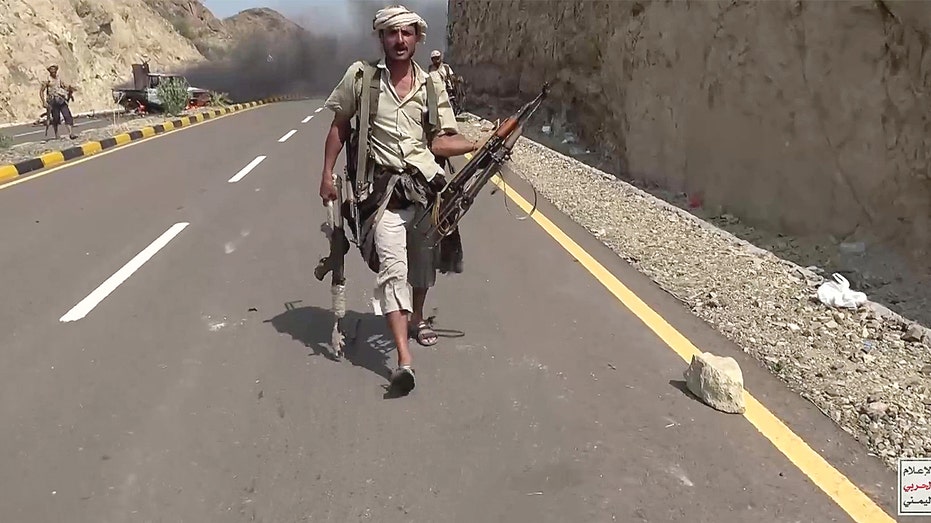
The Houthis are increasingly operating independently of Tehran, posing a "clear and very present danger" on the international stage as the terror group rearms and sharpens its strike capabilities, a former U.S. envoy warned Thursday.

The warning came amid deadly missile and drone attacks on Saudi Arabia in recent days and growing threats to global shipping routes and critical Middle East infrastructure in the run-up. 

Turki al-Maliki, spokesperson for the Saudi-led coalition in Yemen, also confirmed Thursday that Houthi attacks on King Khalid International Airport in Riyadh had killed 17 and injured 333 others from Oct. 7-11.

Speaking at a news conference in Riyadh, al-Maliki said the Oct. 10 attack involved 10 drones, missiles and other projectiles. 

"King Khalid International Airport has been subjected to 20 attacks since (Oct. 1)," he noted.

Tim Lenderking, who served as U.S. special envoy for Yemen from 2021 to 2025 and was posted to Saudi Arabia from 2013 to 2016, said Saudi officials had warned more than a decade ago that the Houthis would become a major threat, a prediction he says has now materialized.

SAUDI FOREIGN MINISTER WARNS HOUTHI THREAT GOES GLOBAL AS TRUMP HOLDS FIRE

"The Saudis were very clear to our leaders that they viewed the Houthis as a major threat," Lenderking said of his time in the kingdom a decade ago.

At the time, he said, the group was "quietly building up their capability, burnishing their narrative of why they sought to lead Yemen as a messianic group, as a group from northern Yemen, with an agenda, with a mission."

The Houthis had emerged as a religious and political movement in Yemen in the 1990s, but their ties to Iran developed into a military partnership after 2014, when Tehran expanded its assistance and training during Yemen's civil war.

"The Houthis don't really need the Iranians anymore," Lenderking, a former acting assistant secretary for Near Eastern affairs at the U.S. State Department, continued, adding it was still "a very important relationship that "enabled the Houthis to become the powerful force that they are."

Lenderking, now a distinguished diplomatic fellow at the Middle East Institute (MEI), said, over time, the Houthis had developed their own "homegrown indigenous capability" as they capitalized on any disunity across the Gulf region.

Saturday's missile and drone attack on King Khalid International Airport in Riyadh raised concerns that President Donald Trump could be drawn into a broader regional conflict as Saudi Arabia seeks U.S. assistance. 

Asked whether the U.S. would defend Saudi Arabia against further attacks, Trump said, "You'll find out soon."

NEW RISK FOR US CONSUMERS AS IRAN-BACKED ATTACKS THREATEN A SECOND MAJOR OIL CHOKEPOINT

Speaking at an MEI briefing, Lenderking said the Houthis' sophisticated weapons and targeting capabilities have transformed the group from a regional insurgency into an international security threat.

"They have the capability to hit around the region, including up into the northern reaches of the Red Sea. So, this is a regional problem, and given the fact that the Houthis control the west coast of Yemen," Lenderking said.

"It's an international problem now." 

Lenderking cited the precision of the Riyadh airport attack as evidence of the Houthis' growing capabilities compared with earlier strikes during the Gaza conflict.

"They can hit things better. Now, they are hitting Terminal Four of Riyadh Airport, very specifically. It's a clear and very present danger," he said.

The Houthis reportedly launched multiple drones followed by cruise and ballistic missiles that traveled more than 620 miles to Riyadh, prompting an investigation into possible Saudi air defense failures, according to The Associated Press, citing regional officials.

Saudi forces intercepted two more ballistic missiles targeting Riyadh on Monday. On Tuesday, a Houthi strike caused damage to Aramco's headquarters in Dhahran, sparking a fire that spread across several floors, Reuters reported.

Lenderking said the Houthis have built extensive weapons supply chains, smuggling networks and domestic financing operations that allow them to sustain attacks without relying solely on Tehran.

HOUTHIS ENTER US 'KILL BOX' AFTER SEIZING RED SEA 'CORK,' FORMER PENTAGON OFFICIAL WARNS

"They get a lot of supplies off the open market through the internet, through commercial exchanges. They have a very well entrenched smuggling network, from big boats onto small boats, onto tiny boats, on the pack animals, on people's backs.

"They are able to move things undetected through government terrain, even through various borders and with a lot of wide open space there. They are constantly moving, building, resupplying, restocking, innovating."

The group's self-sufficiency also extends to financing. Lenderking said the Houthis generate revenue through black-market oil sales, taxation and extortion while also forcing families to provide recruits, allowing the group to continue fighting even if Iranian assistance is cut off.

"They have had support from Iran over the years, so they have money in the bank from that," Lenderking said. 

"They relied on sales of black market oil in the past. They extort Yemeni transport companies, businesses. They tax people in areas that they control. They force many families to offer up a son to fight on the front lines."

The Houthis' expanding arsenal has raised concerns about potential Chinese involvement in their weapons supply networks.

OIL SQUEEZE TIGHTENS AS IRAN-BACKED ATTACKS CRIPPLE HORMUZ ESCAPE ROUTES

Yemen's government has accused the rebels of seeking Chinese components for medium-range ballistic missiles, raising concerns about the group's access to advanced military technology.

"There is a Chinese connection here that's very detrimental," Lenderking warned, adding that front companies have helped the group obtain weapons through commercial channels.

Lenderking warned that the Houthis could also target Saudi energy facilities, pipelines and desalination plants, infrastructure critical to the kingdom's economy and water supply. 

"The Houthis have hit pipelines," he said. "They have diesel plants and other energy infrastructure in their sights."

Attacks on such facilities could disrupt global energy markets, maritime commerce and regional stability.

The Houthis also control Yemen's western coastline along the Red Sea, a vital shipping corridor connecting Europe and Asia.

With the rebels now capable of striking targets hundreds of miles away, Lenderking warned that the threat extends far beyond Yemen's borders.

"One blast at Riyadh Airport is a huge statement," the expert said.

CLICK HERE TO DOWNLOAD THE FOX NEWS APP

"That's why I come back to the fact that this is an international conflict," he said, adding that "immediate action is required."

  •  

Netanyahu presses Trump to renew aggression on Iran ahead of Israeli elections

Two weeks before the Israeli legislative elections scheduled on October 27, 2026, the far-right Israeli government, led by Prime Minister Benjamin Netanyahu, has revealed its intentions to further perpetuate and expand its three-year multi-front war across West Asia.

On Tuesday, October 13, Netanyahu appeared in a televised speech during a visit to the apartheid wall established inside the occupied West Bank, threatening the Palestinian Authority.

Standing near the Tulkarm refugee camp alongside Israel’s Defense Minister Israel Katz, the Israeli PM confirmed that the camp’s displaced residents, whom he described as “terrorists,” will not return to their homes despite an order from the Israeli Supreme Court authorizing their return.

The Tulkarm Refugee Camp was among the three largest Palestinian refugee communities in the northern West Bank targeted in the large-scale Israeli military operation dubbed “Operation Iron Wall.”

The operation resulted in the displacement of at least 33,362 Palestinians, the killing and injury of hundreds of others, and the arrest of over 1,000, according to UN estimates. It also caused severe damage and destruction of residential buildings, infrastructure, and properties.

Read more: Israel kills a toddler in Jenin and expands “Iron Wall” operation to Tulkarm

The “Iron Wall,” which was launched in early 2025, was followed by another extensive operation at the end of the year.

Netanyahu’s government claimed that both operations aimed at eliminating Palestinian armed groups in the targeted areas. However, for many the outcome of the operations makes clear that their objectives reflect Israel’s ethnic-cleansing policy against the Indigenous Palestinian population.

Critics accuse Netanyahu of manufacturing rivals to bolster political survival

As those operations have seemingly resulted in largely restraining resistance groups across the West Bank, no valid pretext has been left for Netanyahu’s government to further escalate military operations in the occupied territory.

Therefore, Netanyahu has sought to designate a new enemy posing a potential threat to Israel’s security: the Palestinian Authority (PA), whose security apparatus represents the only remaining armed force on the ground today.

The stance and actions of the PA under President Mahmoud Abbas have been, for over two decades, marked by compliance, reconciliation, and on some occasions blatant collaboration with the Israeli authorities. 

Thus, accusing the entire political entity of orchestrating hostilities against Israel would not have sounded credible to the public. This arguably led Netanyahu and Katz to formulate the pretext for a justified potential war against Palestinians in the West Bank by alleging that personnel of the PA’s security forces, alongside members of the Fatah-affiliated Tanzim, may defect and launch “Jihadist attacks” against Israeli forces and settlers. 

It’s worth noting that the majority of the PA’s security forces are affiliated with Fatah, the ruling and largest Palestinian faction in the West Bank. Meanwhile, the Tanzim represents Fatah’s grassroots and quasi-military field activity.

“Our enemies are thinking of testing us in these days leading up to the elections,” Netanyahu noted, referring to the PA, during his tour near the apartheid wall.

“I warn them: we are prepared for any scenario, including a so-called reversal of roles. In such a case, I do not suggest our enemies test us. You will face force here that you never dreamed of,” he continued.

Netanyahu’s statements came to reaffirm a “contingency plan,” which Katz revealed last week and said Netanyahu had approved in case the imagined scenario occurs.

Analysts believe a war in the West Bank ahead of the upcoming Israeli elections is not off the table, particularly if Netanyahu and his far-right coalition feel their victory is uncertain.

Early polling ahead of the election consistently shows Netanyahu’s bloc falling short of the 61 seats required to form a majority. It is currently positioned at just 51 to 53 seats.

Even if launching the war does not succeed in delaying the upcoming elections, it apparently aims to strengthen public support for his coalition, which gains much of its backing by pushing for ethnic cleansing to fulfill the “Greater Israel” project.

Israel’s escalating violence and provocations seen as prelude to war in West Bank 

The last few weeks have made clear that Netanyahu’s government previously laid the groundwork for a desired war scenario in the West Bank.

Israeli forces escalated their raids in different parts of the West Bank, focusing on the de facto administrative capital of the PA, Ramallah, and Al-Bireh, which has simultaneously become a flashpoint for settler violence. 

The Israeli military has also launched a campaign, destroying memorials of martyrs and late prominent Palestinian leaders all over the territory.

This included the demolition of a memorial displaying photos of the late Palestinian President Yasser Arafat and other deceased top Fatah leaders in the Al-Jalazone refugee camp north of Al-Bireh city on Wednesday, October 14 – a move that many interpreted as an attempt to provoke indignation, particularly among the movement’s grassroots.

The offensive on Al-Jalazone came one day after the Israeli military launched an expanded operation in Ramallah and Al-Bireh, shutting down Addameer and the Union of Palestinian Women’s Committees (two civil society organizations concerned with documenting violations committed by the Israeli occupation authorities against the Palestinian people).

Journalists were obstructed from covering the raid as Israeli soldiers threatened them with rifles, and fired rubber-coated metal bullets and teargas at them.

As part of the operation, the Israeli forces also raided the courtyard of the Palestine Medical Complex (previously known as Ramallah Hospital), arrested journalist Abdul Qader Hailan, and wounded journalist Yousef Shehadeh alongside two other Palestinian citizens.

Netanyahu reportedly pressed Trump to resume aggression on Iran

While the likelihood of igniting a war in the West Bank is seen as higher and more immediate for Netanyahu and his cabinet, recent media reports indicate he has attempted to persuade US President Donald Trump to resume the aggression against Iran before the Israeli elections.

Even if Trump does not comply with Netanyahu’s demand regarding Iran, the situation in the West Bank foreshadows more tragic events for the Palestinian people and a predicament for the PA in the upcoming weeks.

  •  

US-Saudi war on Yemen was decades in the making

The war in the Middle East is widening and people around the world are feeling the impact. Resistance forces in Yemen have delivered crippling blows to key infrastructure in Saudi Arabia, a key US ally.

Brian Becker and Layan Fuleihan discuss the roots of the war between Yemen and Saudi Arabia, how the current conflict was triggered by the unprovoked US-Israeli war against Iran, and how this conflict goes back several decades.

  •  
❌