Login

Baltic Block Of Russian Grain May Open Black Sea, Latvia Says
By Milda Seputyte and Aaron Eglitis Oct 16, 2026 (Bloomberg) –Europe should block the transit of Russian grain through Baltic ports as that may force Moscow to seek ways to open...

Romania has proposed a joint NATO military command for the Black Sea, as drones hit four merchant ships in 24 hours, three of them off its coast, and its foreign minister said Russia "bears full responsibility." NATO ambassadors will discuss the attacks next week.
Russia’s strikes on merchant ships in the Black Sea have escalated this autumn and reached NATO shores. Drones have attacked at least eight merchant vessels near Romania and Bulgaria since 5 October, two of them inside Romania’s territorial waters. Until now, neither country had named the attacker, and Bulgaria still says it cannot prove who it was. Romania’s patience appears to have run out, and next week’s NATO meeting will show whether the alliance is ready to go further as Russia’s war spills beyond Ukraine’s borders.
Acting Defense Minister Radu Miruță wrote on Facebook on 14 October that "the Black Sea needs a joint military command of the NATO riparian states." "The Black Sea incidents, involving drones, sunk ships, and naval mines, oblige us to act, not wait," he wrote, after a call with his Bulgarian counterpart. Leadership and location would rotate among the member states. Romania is ready to host the command on its coast from 2028 and would accept a start on Türkiye's coast until then, he said. He proposed that Romania and Bulgaria send NATO a joint letter backing the idea.
The next day, Foreign Minister Oana Țoiu wrote on X that four commercial ships had been attacked over the previous day, including in Romania's territorial waters and exclusive economic zone, and that eight people had died. "Russia is turning the Black Sea into a dangerous area for civilian ships," she wrote. "Killing sailors from commercial ships, both in this region and anywhere in the world, is a crime. Russia bears full responsibility for these developments."
Earlier that day, as two tankers burned off Romania's coast, Bucharest had said it was still checking whether drones were involved.

Țoiu said NATO Secretary General Mark Rutte had agreed to convene the allies within days, after he met Romanian President Nicușor Dan and Bulgarian Prime Minister Rumen Radev in Brussels. NATO ambassadors will meet next week, France 24 reported. No date has been announced.

Drones have been hitting merchant ships for weeks on the route from Ukraine's Danube and Odesa ports to the Bosporus. Besides the latest strikes off Romania, Reuters counts at least five cargo ships hit near Romania and Bulgaria in the past 10 days, with 23 sailors dead or missing, most of them outside any NATO member's territorial waters. This week the strikes reached Romania's own waters.
Țoiu did not say which ships her eight dead were from, and Reuters still lists the Wine Trader's seven as missing. A NATO military source told Reuters the drones that hit both tankers came from Russia.
Romania's president has not gone as far as his foreign minister. Dan told reporters in Brussels it was "obvious" that the attacks were Russian attempts to destabilize Romania and Bulgaria and reduce support for Ukraine. But he also said it was too early to say definitively that Russia had launched the drones, according to Politico.
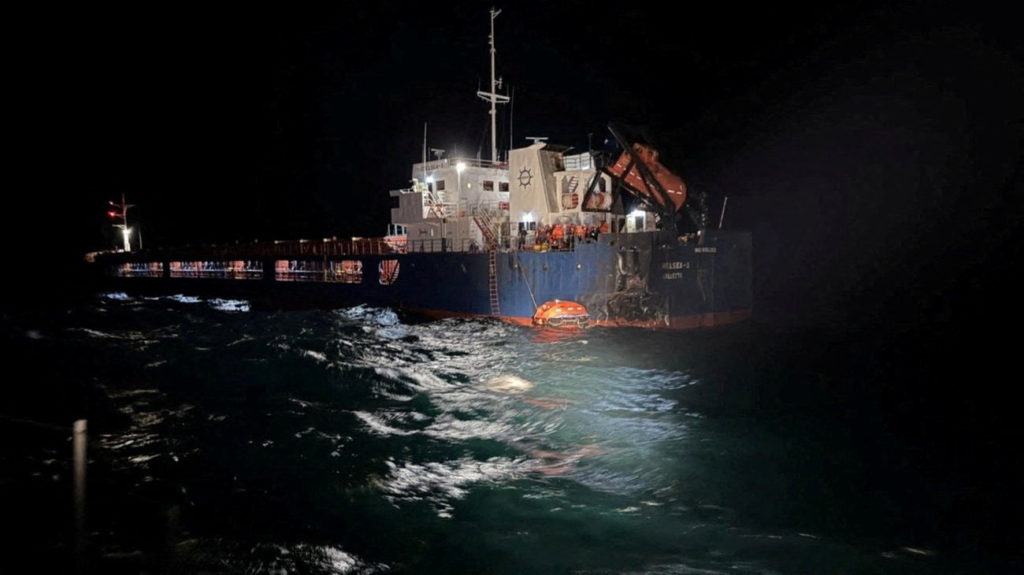
Bulgaria, Romania's partner on the command proposal, says it suspects Russia but cannot prove it. Two ships were hit off its coast on 13 October, and one, the HS Dignity, sank. The other, the Chelsea 3, is Ukrainian-owned.
Radev told parliament on 14 October that the attacks worked in Russia's favor and that "logic leads there." "The problem is that we cannot prove it," he told MPs. Sofia summoned the Russian ambassador. Radev also said EU leaders would discuss a moratorium on attacks on civilian ships in the Black Sea.
Bucharest has blamed Russia for drones before, though over its airspace, not its shipping. On 27 July it expelled a Russian diplomat after prosecutors confirmed that fragments of drones downed on Romanian territory were Russian. Russia, Romania's Foreign Ministry said then, "bears exclusive responsibility."
Ukraine ships most of its farm exports across the Black Sea. Euromaidan Press's David Axe has written on how the fight over shipping there has escalated.
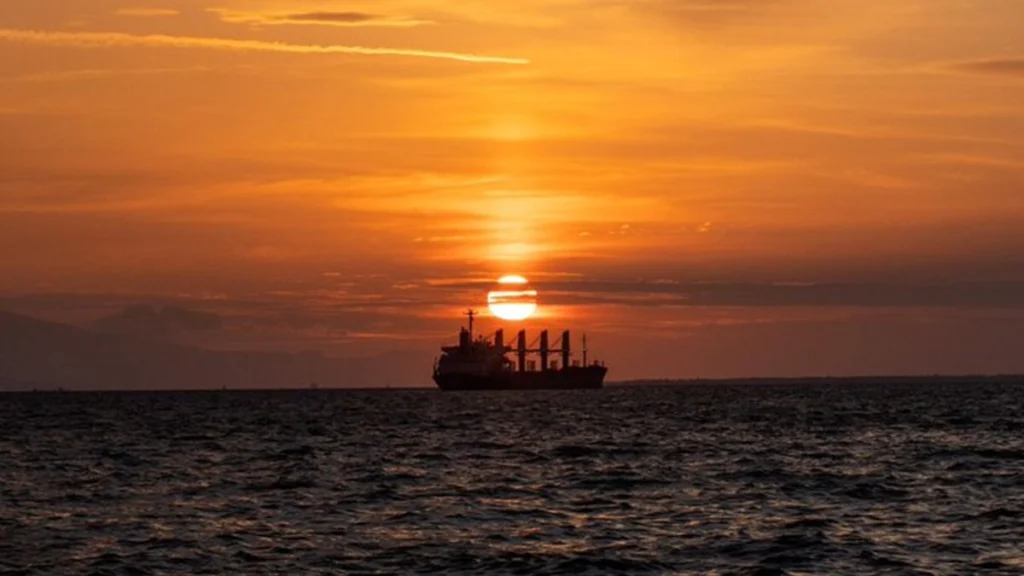
A fresh wave of drone attacks on commercial vessels in the Black Sea, an alternative shipping route to the disrupted Strait of Hormuz, is deepening insecurity along the European Union’s (EU’s) eastern flank and compounding pressures on an already stretched global shipping network.
RELATED:
Iran Accuses U.S. of Oil Smuggling in Strait of Hormuz
A San Marino-flagged vessel caught fire in the Black Sea early Thursday morning, with eight of its 12 crew members still missing, according to Romanian maritime authorities. The incident came just hours after a suspected drone strike on a Comoros-flagged tanker in Romanian waters on Wednesday.
Despite reports about drones detected in the area overnight, Romania’s Defense Ministry has not confirmed the two vessels were struck by drones. However, over the past week, drones have struck multiple vessels off Bulgaria’s coast, leaving 11 crew missing and 10 presumed dead. Both Russia and Ukraine have denied involvement in the recent attacks.
DIPLOMATIC FALLOUT
The strikes have triggered a diplomatic row. Bulgarian Prime Minister Rumen Radev has summoned Russian Ambassador to Bulgaria Eleonora Mitrofanova, saying that although there was “no conclusive evidence,” “the logic suggests that the outcome benefits the Russian Federation.”
Mitrofanova denied knowledge of the strikes and suggested a “provocation by a third party.” Moscow rejected a limited naval ceasefire proposal brokered by Türkiye and the UN, saying it lacked guarantees against arms shipments to Ukraine by sea, and blaming Kyiv for refusing comprehensive agreements.
On Thursday, Ukrainian President Volodymyr Zelensky told British media that Kyiv would resume strikes on Russia’s oil refineries, citing Russia’s attacks on Ukrainian energy infrastructure as violations against the U.S.-announced “energy ceasefire.”
In response, NATO Secretary General Mark Rutte said the alliance would “adjust our deterrence and defense posture as needed.” European Commission President Ursula von der Leyen called the Black Sea “another front of escalation” of the Russia-Ukraine war, which is “unacceptable.” France and Germany also urged a halt to attacks on commercial vessels.
Bulgarian President Iliana Iotova and Romanian President Nicusor Dan have agreed to jointly push for an emergency item on the Black Sea at the European Council.
On Thursday afternoon, the Bulgarian prime minister and the Romanian president met with Mark Rutte in Brussels for regional security discussions. The three NATO littoral states — Bulgaria, Romania and Türkiye — have also agreed to boost surveillance and intelligence-sharing.
Seven people are missing after drones set two chemical tankers ablaze in Romania's Black Sea waters overnight. It's the latest in a series of drone attacks on vessels off Romania and Bulgaria.
— Al Jazeera English (@AJEnglish) October 15, 2026
Al Jazeera’s Rosie Birchard reports. pic.twitter.com/c5k3ibsxZ6
FROM ONE CHOKEPOINT TO ANOTHER
The attacks are compounding a crisis that began thousands of miles away. The Strait of Hormuz, which normally carries about a fifth of global oil and gas supplies, has faced repeated attacks on tankers since late February. This has pushed some energy and grain cargoes toward alternative routes — including the Black Sea corridor, now itself in jeopardy.
The Black Sea handles roughly 25 to 30 percent of global wheat exports, over 10 percent of corn and two-thirds of sunflower oil. Russia and Ukraine together normally supply about 27 percent of the world’s wheat, most of it shipped through the Black Sea.
Their combined wheat shipments from July to September were 6.5 million tons below the same period a year earlier, according to estimates from the International Food Policy Research Institute and the Agricultural Market Information System.
Separately, Barva Invest has warned that up to 38 million tons of wheat and corn exports could be at risk in 2026/27 if deep-sea port restrictions persist.
“We see three concerning chokepoints right now that are driving up food prices across the world,” said Carl Skau, acting executive director of the UN World Food Programme, referring to the Strait of Hormuz, the Bab Al Mandeb strait and the Black Sea.
“All those three are causing disruptions to maritime trade, which is pushing up the price of energy and of food.” Countries dependent on Black Sea grain, including Egypt, Türkiye and other parts of the Middle East, face the sharpest impact.
Insurance costs reflect the escalation of the conflict. War-risk premiums for Black Sea voyages have jumped from about 200,000 U.S. dollars to 2.5 million dollars per vessel, according to Lukoil’s commercial manager in Bulgaria. Meanwhile, London-based insurance body Joint War Committee has expanded its high-risk zone to cover almost the entire basin.
“The Black Sea didn’t become more expensive; it became just harder to access,” Alexey Zavarskiy, a ship operator at Angara Denizcilik, said at an industry conference held on Sept. 22. He estimated that around 90 percent of shipowners had suspended calls at affected ports.
Washington’s decision on Oct. 9 to temporarily lift sanctions on Russian diesel exports illustrates the dilemma. On paper, it appears to be a release valve for a tight global diesel market: U.S. diesel prices are up 70 percent since February.
However, the relief depends on a route that is itself under attack — Russian diesel loads primarily at Black Sea ports such as Novorossiysk, the same waters where drones are now striking commercial vessels.
The first tranche of about 2.25 million barrels is less than a single day of U.S. diesel demand, and analysts from Quilter Cheviot to Wood Mackenzie have dismissed it as too small and too exposed to make a difference.
🚨 BREAKING: President Trump has reportedly ordered the U.S. military to prepare devastating new strikes on Iran, including plans to unleash the “MOTHER OF ALL BOMBS” — America's most powerful non-nuclear weapon.
— Commentary Donald J. Trump Truth Social Posts On X (@TrumpTruthOnX) October 15, 2026
Targets reportedly include Iranian nuclear sites, Pickaxe… pic.twitter.com/stkwOlIozP
CALL FOR NEW FRAMEWORK
Military analysts warn the Black Sea has become one of the world’s most dangerous shipping routes, with drone attacks having overtaken sea mines as the primary risk.
Retired Romanian Navy commander Sandu Valentin Mateiu told local media that the density of incidents pointed to a deliberate hybrid campaign. Mateiu said Romania should prepare a serious case for diplomatic protest, potentially raising the issue even at the level of NATO’s Article 4.
Poland took this step in September 2025 after drones violated its airspace, leading to emergency consultations and the deployment of allied fighter jets and air defense systems to the alliance’s eastern flank under the “Eastern Sentry” mission.
Murat Ersavci, director of the International Studies Center at the Economic Policy Research Foundation of Türkiye, said the changing nature of the conflict is reshaping the Black Sea into a “multilayered security environment,” with the boundary between trade and security becoming increasingly blurred.
Ersavci called for a comprehensive maritime security arrangement to ensure safe, predictable commercial navigation, distinguish civilian vessels from military targets, and coordinate efforts among littoral states to protect energy and food shipments.
Canan Tercan, a foreign policy expert at Istanbul Aydin University, warned that the Black Sea risked mirroring the crisis in the Strait of Hormuz, and that navigational safety “must be secured through an international non-combat agreement, not through naval forces.”
teleSUR/ JF
Source: Xinhua
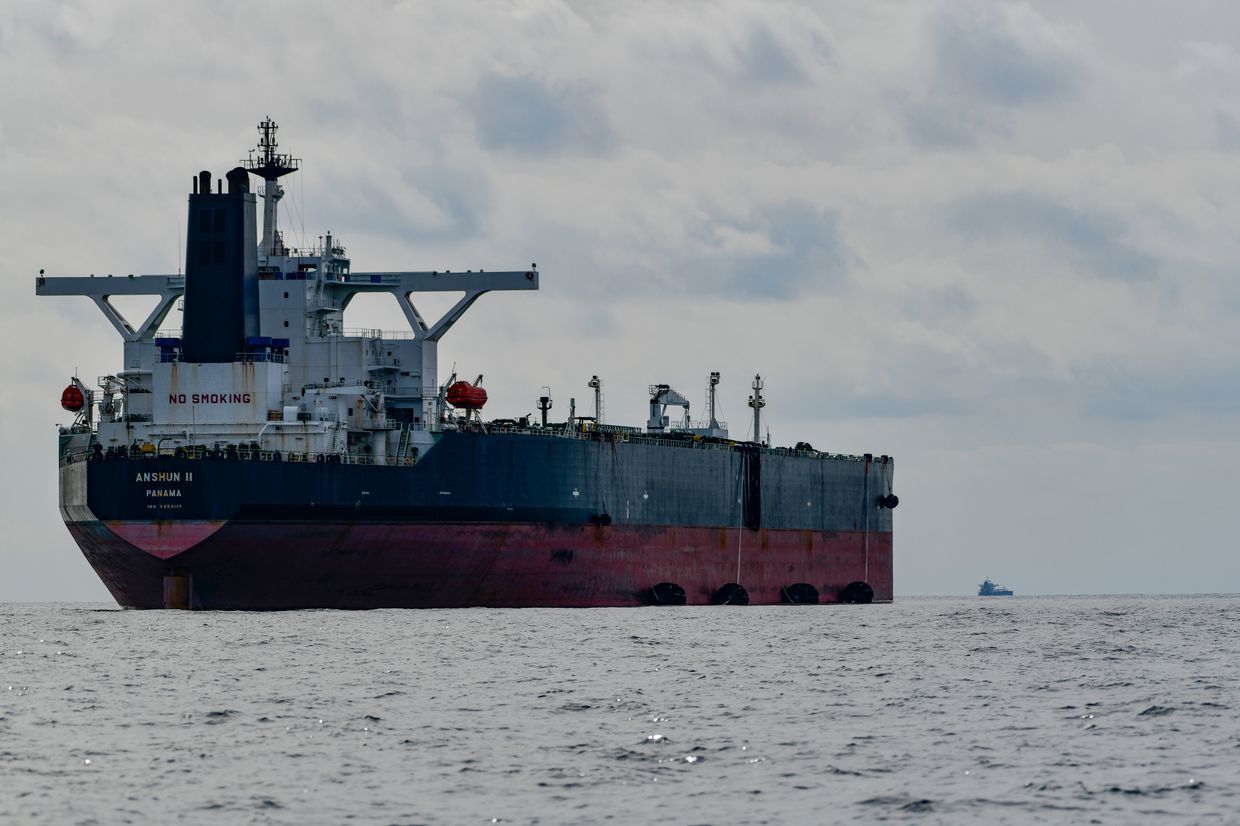
Two tankers caught fire within about 12 hours off Sulina, Romania’s port at the mouth of the Danube, Romanian authorities reported. The crew of one said a drone hit it inside Romania’s territorial waters, while Bucharest says it is still checking whether drones were involved. Bulgaria, where drones sank ships in its economic zone this month, says it lacks proof that Russia launched them.
For months, Russia has struck civilian ships on the sea route that carries most of Ukraine’s farm exports, while its drones have repeatedly crossed into Moldova and Romania during attacks on Ukraine. As long as Bucharest and Sofia wait for drone wreckage before naming anyone, Russia, the party Bulgaria’s own prime minister says the logic points to, pays no price for extending its war on Ukraine’s trade routes into NATO members’ waters.
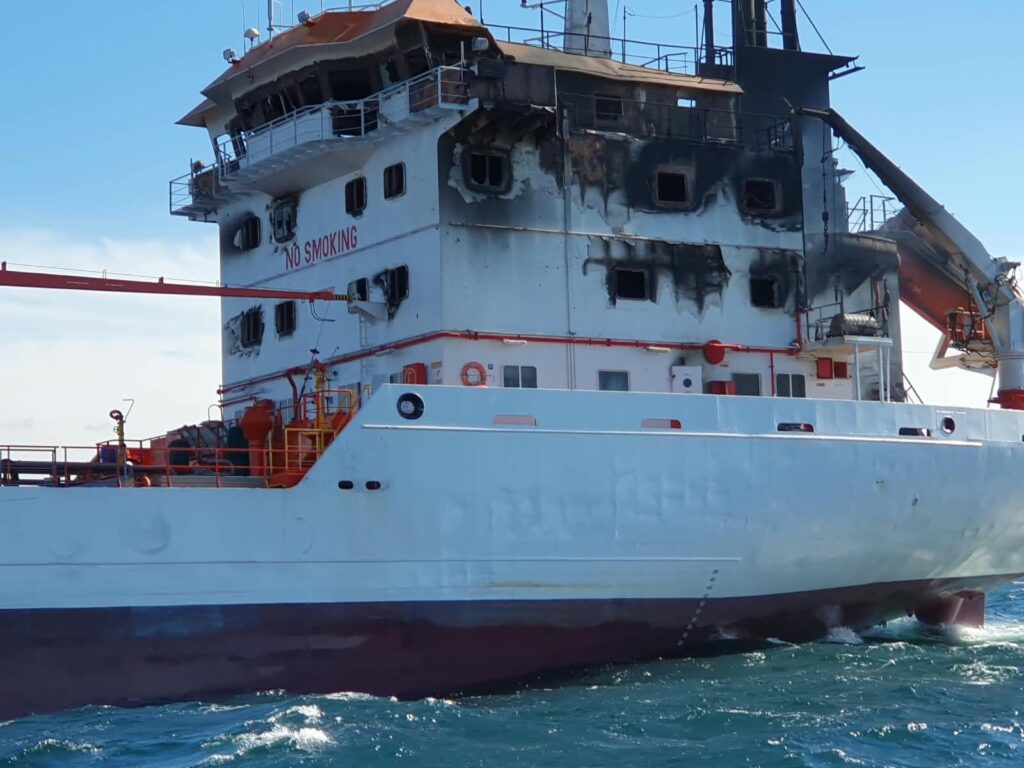
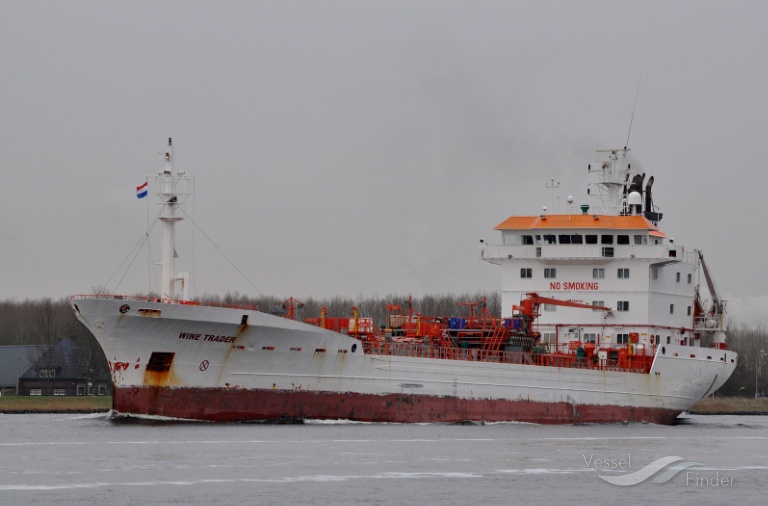
The San Marino-flagged chemical tanker Wine Trader reported a fire in its superstructure around 07:00 on 15 October while anchored in Romanian territorial waters about 13 nautical miles southeast of Sulina, Romania’s Naval Authority said. By midday, five of its 12 crew had been recovered and seven were still missing.
Hours earlier, at 01:34, a drone entered Romanian airspace over the country’s waters southeast of Sulina for about a minute before vanishing from radar, the Defense Ministry said. Authorities have not named a cause for the fire, though unnamed sources

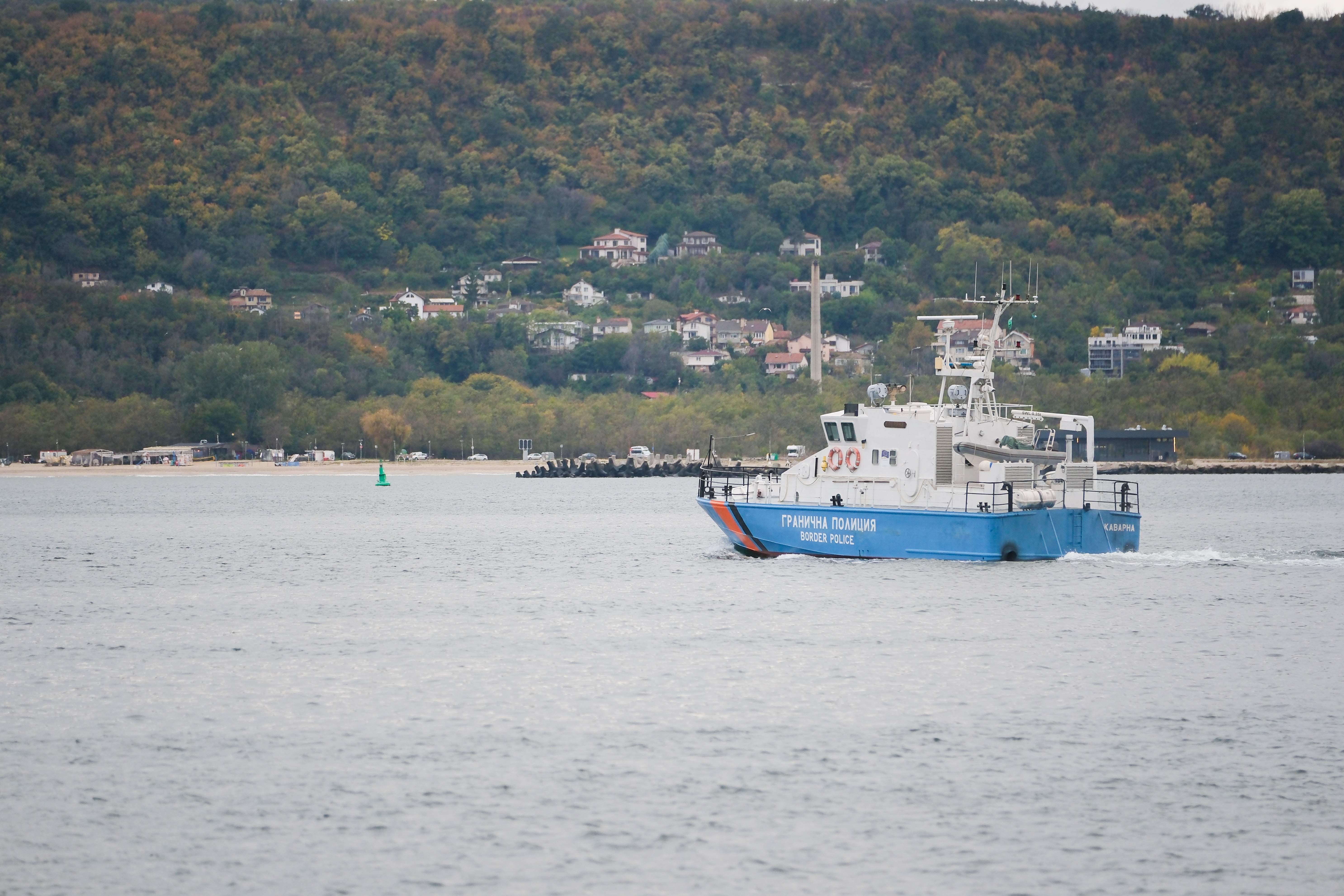
Russia’s expanding campaign against commercial shipping in the Black Sea is creating a security crisis that extends far beyond Ukraine. The latest drone attacks off Bulgaria’s coast have left 11 sailors missing, forced Sofia to seek assistance from NATO and the European Union, and raised concerns that Moscow is attempting to disrupt one of the world’s principal agricultural export routes.
On 13th October, the Guinea-Bissau-flagged HS Dignity sank after being struck by drones approximately 17 nautical miles east of the Bulgarian village of Krapets. Another vessel, the Ukrainian-owned, Maltese-flagged Chelsea 3, was attacked near Byala. All 15 crew members were rescued, although five sustained minor injuries. The incidents followed earlier attacks in Bulgaria’s exclusive economic zone on 6th October, when the ALFA WATAN sank and the grain-carrying ABLE was damaged.
The significance lies not simply in the destruction of merchant vessels but in the geographical expansion of the threat. Commercial routes previously regarded as comparatively safer alternatives to Ukraine’s exposed ports are now becoming operationally dangerous. Bulgaria and Romania, both NATO and EU members, face disruption to trade, maritime insurance and port operations as the conflict spreads across the western Black Sea.
The latest attacks follow months of Russian strikes against Ukrainian ports, export terminals and civilian shipping. As EU Today previously reported, repeated attacks on Odesa have already reduced Ukraine’s grain-export capacity, while alternative routes through the Danube and neighbouring European countries cannot fully replace its major Black Sea terminals.
The extension of attacks towards Bulgaria changes the economic calculation. Ships carrying agricultural products, those approaching Danube ports and vessels operating between Black Sea countries now face greater uncertainty, regardless of whether they enter Ukrainian territorial waters.
Maritime security company Ambrey assessed the earlier October attacks as highly likely to have been conducted by Russian forces. Its assessment identified vessels associated with Ukrainian grain trade as the principal targets, rather than suggesting that every commercial ship was being attacked indiscriminately.
This distinction is important, but it offers little reassurance to international shipping companies. A campaign directed against Ukrainian trade can disrupt the wider maritime economy when insurers, shipowners and exporters cannot establish which routes remain safe.
The economic consequences are already becoming apparent. Shipowners must consider higher insurance premiums, additional security measures and the possibility of losing vessels and crews. Traders may redirect cargoes or withdraw from routes whose commercial returns no longer justify the risks.
The attacks have also placed Bulgarian Prime Minister Rumen Radev in an increasingly difficult political position.
Radev has advocated renewed diplomatic engagement with Moscow and questioned the emphasis placed on military assistance to Ukraine. He has rejected accusations of being pro-Russian, presenting his approach as a pragmatic alternative to prolonged confrontation.
Yet the attacks have demonstrated the limitations of maintaining political distance from a war whose economic and security consequences are reaching Bulgarian waters.
After summoning Russian Ambassador Eleonora Mitrofanova on 13th October, Radev acknowledged that Bulgaria possessed no conclusive evidence establishing responsibility for the latest strikes. Nevertheless, he argued that their consequences benefited Russia and questioned why Ukraine would attack its own commercial vessels.
According to the Bulgarian News Agency’s account of the meeting, the prime minister also warned that higher insurance costs and shipping companies’ reluctance to serve Bulgarian ports were already damaging the national economy.
This is the fundamental change confronting Sofia. The conflict is no longer solely a question of Bulgaria’s position towards Ukraine or its diplomatic relationship with Russia. It is affecting the country’s commercial interests, energy supplies and responsibilities as a NATO member.
Radev’s response does not necessarily indicate a wholesale reversal of his previous political position. It demonstrates that the practical obligations of government can leave considerably less room for accommodation with Moscow than the arguments advanced from outside direct responsibility for national security.
The broader consequences may be felt most severely outside Europe.
Ukraine remains an important supplier of wheat, maize and vegetable oils to international markets, including countries in Africa, Asia and the Middle East. Interruptions to these exports affect more than Ukraine’s agricultural revenues. They can increase transport costs, delay deliveries and reduce the availability of competitively priced food in import-dependent countries.
Speaking at the Warsaw Security Forum on 12th October, President Volodymyr Zelenskyy warned of a possible agricultural crisis, arguing that Russian interference with Black Sea shipping could leave countries in Africa, Asia and the Middle East facing serious supply difficulties within months.
The warning reflects a mechanism already familiar from the earlier stages of Russia’s invasion. Following Moscow’s withdrawal from the UN-brokered grain agreement in July 2023, Ukrainian agricultural exporters faced renewed attacks on port infrastructure and substantial uncertainty over maritime access.
The danger is not necessarily an immediate worldwide shortage of grain. Wheat prices remained relatively steady following the 13th October incidents. Rather, sustained disruption could progressively reduce available export capacity, increase costs and place vulnerable importing countries under greater pressure.
For Moscow, such disruption could serve several purposes simultaneously: weakening Ukraine’s economy, raising the costs of international support for Kyiv and creating additional pressures on governments concerned about food inflation and social stability.
The immediate challenge for Brussels and NATO is how to protect commercial navigation without allowing the conflict to expand into a direct military confrontation.
Bulgaria has requested stronger air and maritime surveillance and is seeking closer coordination with Romania and Turkey. Defence Minister Dimitar Stoyanov said on 14th October that Sofia expected to join a NATO counter-drone initiative by the end of the month.
The EU has already developed a framework for addressing precisely such threats. Its Black Sea strategy, announced in May 2025, proposed a maritime security hub integrating surveillance, intelligence-sharing, infrastructure protection and regional cooperation.
The attacks now expose the difference between developing a security framework and providing effective protection to merchant vessels. Better intelligence can identify threats, but preventing further sinkings requires detection systems, coordinated responses and sufficient defensive capabilities.
Turkey’s involvement is particularly important because of its control over the Bosphorus and Dardanelles and its established role in Black Sea maritime security. Any workable regional arrangement must therefore extend beyond cooperation between Bulgaria and Romania.
The incidents occurred outside Bulgaria’s 12-nautical-mile territorial sea, meaning they do not automatically constitute an armed attack on NATO territory under Article 5. Nevertheless, repeated strikes within the economic zones of alliance members pose a substantial challenge to maritime security.
Russia’s campaign against Ukrainian exports is increasingly imposing costs on neighbouring European states and international trading partners. The question facing the EU is whether it can secure the commercial routes on which both Ukraine’s economy and the food supplies of millions beyond Europe depend.


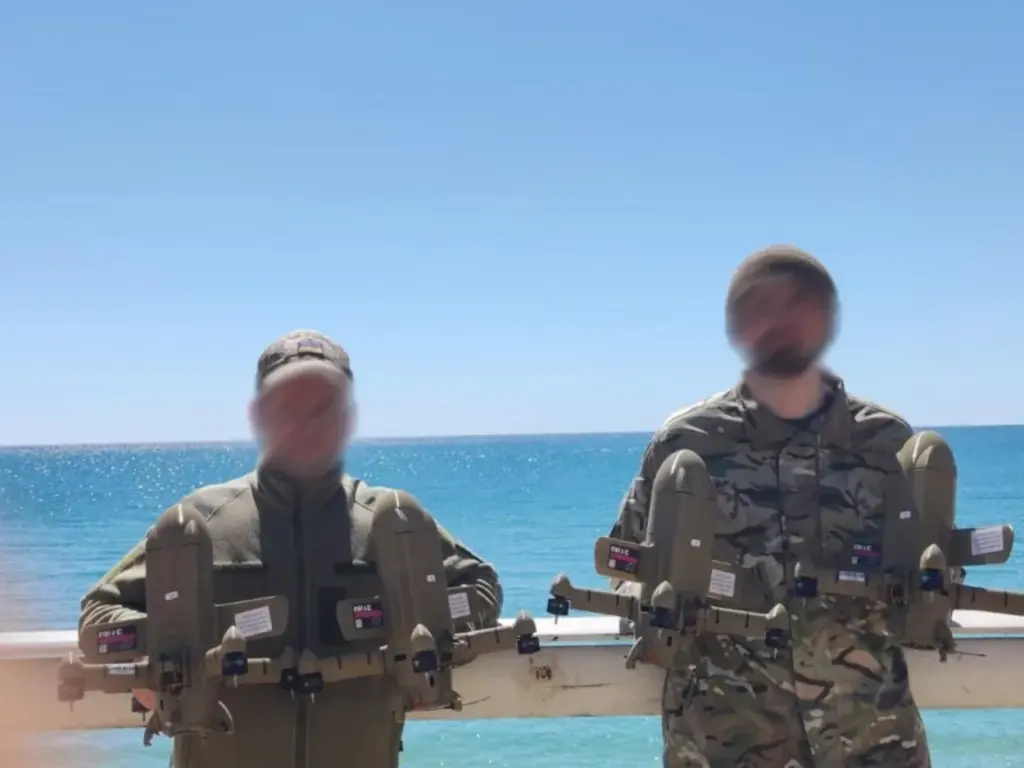
Norwegian nonprofit Fritt Ukraina is allocating NOK 10 million (about $1 million) to strengthen air defenses around Chornomorsk, a key Ukrainian port on the Black Sea, the organization announced on 9 October.
Russian attacks on port infrastructure and civilian vessels are threatening Ukraine’s maritime trade and agricultural exports, putting pressure on a vital source of revenue for the country and disrupting shipments of food to international markets.
The funding will support Ukrainian State Border Guard Service and Armed Forces units defending the region against Russian attack drones. It is being delivered through Dronefall, a project run by the Ukrainian Come Back Alive Foundation, which equips military units with interceptor drones and the equipment needed to operate them.
Fritt Ukraina, whose name means “Free Ukraine,” is a Norwegian nonprofit organization that supports Ukraine’s defense against Russia’s full-scale invasion. The donation is part of its Odins Ravner 2.0 fundraising campaign, which provides military assistance to Ukrainian forces.
The support includes STING, Blyskavka and P1-SUN interceptor drones, alongside ground control stations, communications equipment, generators, charging stations, laptops, tablets and vehicles, according to the organization.
The interceptor drones are already operational, according to Fritt Ukraina. The equipment helps Ukrainian personnel detect and intercept Russian attack drones, while vehicles allow crews to move quickly and operate from different positions.
Fritt Ukraina Secretary General Natalia Golis said effective air defense requires more than interceptor drones alone. Communications systems, reliable power supplies and mobility are also essential to ensure units can use their equipment effectively.
The organization is supporting Dronefall for the third consecutive year and has become the Come Back Alive Foundation’s largest foreign partner. The latest donation was matched by a donor affiliated with the Ukrainian foundation.

More than 90% of Ukraine’s agricultural products, including grain and vegetable oils, are exported through three ports in southern Odesa Oblast. Russian attacks have targeted port infrastructure and civilian vessels, increasing security risks for commercial shipping and driving up freight and insurance costs.
Since the start of Russia’s full-scale invasion in February 2022, more than 1,000 Ukrainian port facilities and over 200 civilian vessels have been damaged or partially destroyed, Fritt Ukraina reports. The disruption threatens Ukrainian export revenue and international food supplies.
“The attacks on Ukraine’s ports do not only undermine the country’s defense capabilities. They also threaten a vital part of its economy and its ability to export food to the rest of the world,” Golis said.
Dronefall aims to expand Ukraine’s ability to intercept Russian drones using dedicated interceptor aircraft and supporting equipment. According to Fritt Ukraina, participating units have destroyed more than 53,000 Russian drones, accounting for approximately one in five unmanned aerial vehicles entering Ukrainian airspace.
The NOK 10 million contribution is part of Fritt Ukraina’s broader Odins Ravner 2.0 campaign, which provides more than NOK 60 million in support to Ukrainian forces.
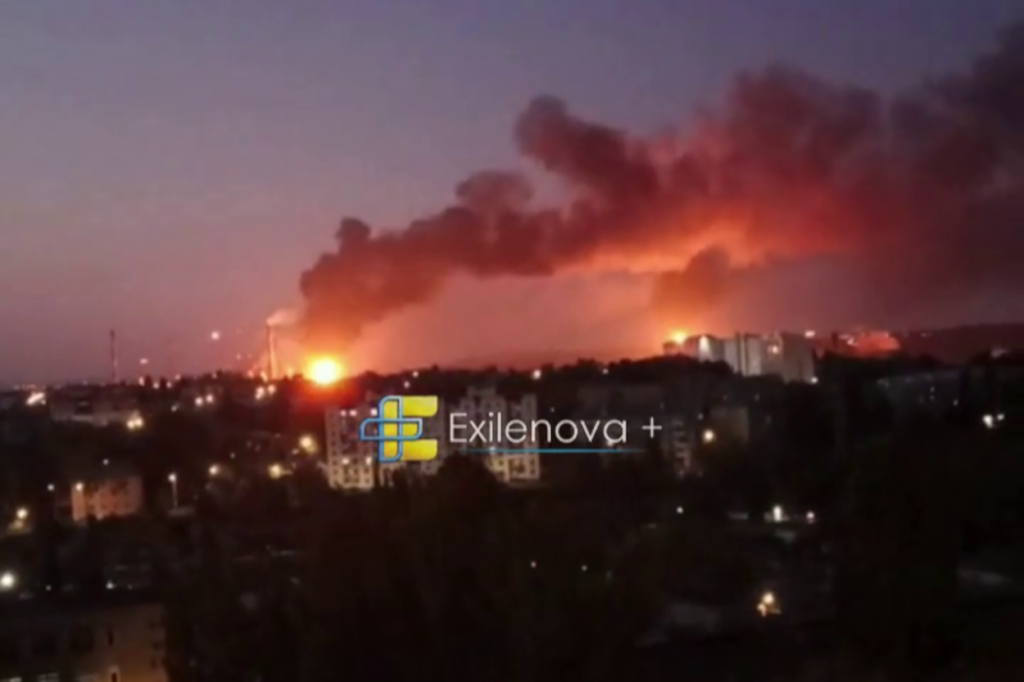
Russia's seaborne exports of refined oil products rose to a three-month high in September, but the growth came from cheaper fuel oil and naphtha as diesel shipments fell to their lowest in more than a decade, Bloomberg reported, citing Vortexa data. Russia kept diesel at home after Ukrainian refinery strikes and paid oil companies to supply its pumps, while high crude prices lifted its crude export earnings.
During the ongoing deep-strike campaign, Ukraine's long-range drones have knocked out more than half of Russia's oil refining capacity, Kyiv says, and Russia's budget oil revenues are falling even as it raises war spending. High global crude prices are softening that blow.
Total seaborne product exports reached about 1.17 million barrels a day in September. Fuel oil shipments rose 6% to about 613,000 barrels a day, the highest since April. Naphtha, a feedstock for petrochemicals, jumped 35% to 363,000 barrels a day. Exports of refinery feedstocks, including vacuum gasoil, rose to about 32,000 barrels a day, according to Bloomberg.
The trade has moved north. Almost 80% of fuel oil cargoes left from Baltic ports, and naphtha loadings there rose almost 50% as Ukrainian attacks disrupted Black Sea infrastructure. In September, Ukraine reported hitting an oil terminal in Novorossiysk, Russia's main Black Sea oil port—one in a string of attacks on Russia's Black Sea ports and oil sites.

Diesel and gasoil exports fell 28% to 144,000 barrels a day, the lowest monthly volume in Vortexa data going back more than a decade. Russia has restricted diesel exports to protect domestic supply after Ukrainian attacks on its refineries. Drones kept hitting them into October, from a Lukoil refinery in Volgograd to Gazprom's Salavat complex in Bashkortostan.
In September, Russia paid oil companies the biggest subsidy in more than four years to keep road fuel on the domestic market. It also imported about 350,000 tonnes of motor fuel by sea, mostly gasoline from India, Morocco, and Türkiye, Reuters calculations showed. Officials are considering letting some producers resume diesel exports in October to avoid overstocking, according to Interfax.
The diesel squeeze has reached the White House. US President Donald Trump stated on 30 September that diesel was hurt "not by the Middle East, but by what's going on in Russia, because those diesel refineries are being knocked out at a pretty alarming rate."
Russia's crude exports reached about 3.99 million barrels a day in the week to 27 September, and the estimated value of its seaborne crude shipments neared its highest since the full-scale invasion began, Bloomberg reported. Brent crude traded at about $102.60 a barrel on 9 October, according to Trading Economics data.