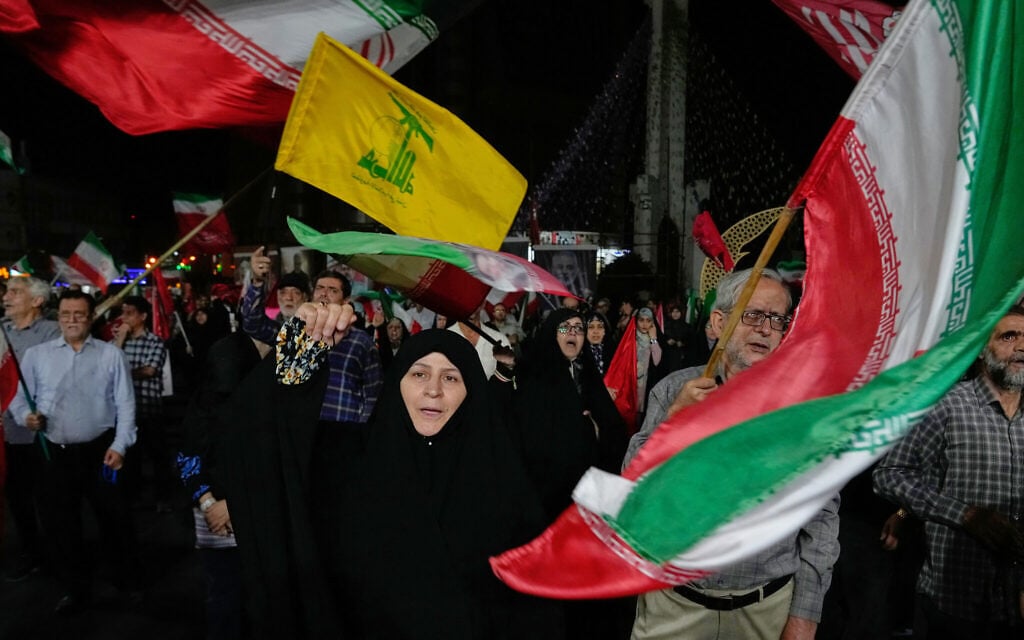
Iran’s ambassador and chargé d’affaires to the UN has stressed that any arrangements for the Gaza Strip’s future must fully respect Palestinian rights and self-determination, denouncing the United States and the Israeli regime for the current situation affecting the Strait of Hormuz.
Gholamhossein Darzi made the remarks on Friday, addressing a UN Security Council meeting on the situation in West Asia, including the Palestinian question.
He noted that Gaza remained devastated and continued to be subject to military aggression, despite the announcement of a ceasefire last year.
The ceasefire was announced last October as part of a United States-proposed plan to bring an end to two years of Israeli genocide, supposedly.
The Israeli regime has, however, killed more than 1,400 Palestinians during attacks across the territory ever since, in addition to the tens of thousands it had already killed throughout the genocide that began on October 7, 2023.
Darzi called for a permanent end to the Israeli aggression, lifting of the Israeli blockade on the coastal sliver, and realization of a lasting ceasefire in the territory.
He called for unconditional and complete withdrawal of Israeli forces from the territory as well as immediate and sustained delivery of humanitarian aid and deployment of relief personnel.
The diplomat called accountability for serious violations of international law a legal obligation, condemning the regime for committing genocide, war crimes, and crimes against humanity.
He also denounced expansion of illegal settlements, intensifying settler violence, and Israeli plans for “annexation” of the occupied West Bank.
Palestinians must be able to establish an independent, sovereign, and viable state, with the holy occupied city of al-Quds as its capital and full membership in the United Nations, the official stated.
He also demanded Israeli withdrawal from Lebanese territory and occupied Syrian areas and respect for both countries’ sovereignty.
Elsewhere in his remarks, Darzi slammed the United States and the Israeli regime for launching two rounds of unprovoked aggression against Iran respectively, last June and from February 28 until April 7 this year.
The aggressors, he noted, committed war crimes through deliberate targeting of civilians and critical infrastructure.
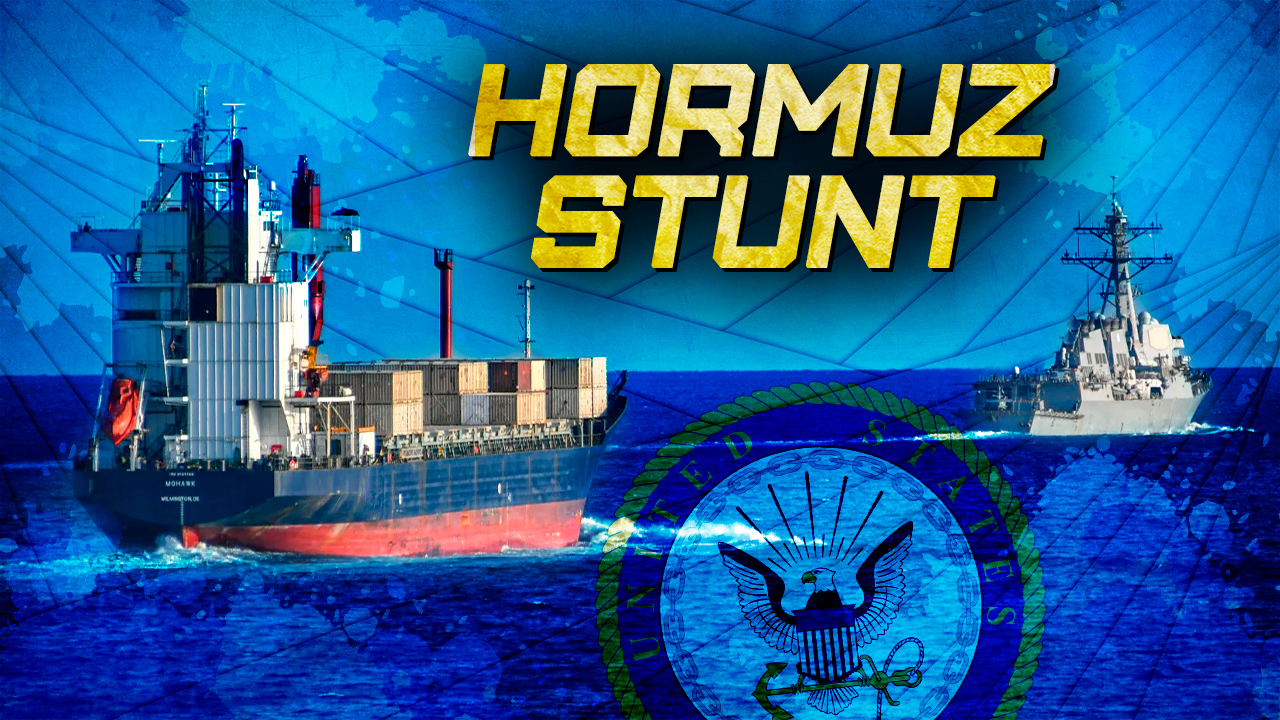
He also attributed the situation affecting the Strait of Hormuz to the American-Israeli atrocities, including an American naval blockade.
“Our position is crystal clear: The only practical way to restore normal and safe maritime navigation in the Strait of Hormuz is immediate and permanent cessation of US aggression, provision of credible guarantees against its recurrence, respect for Iran’s sovereign rights, and complete lifting of the naval blockade and other unlawful coercive measures.”
Following the US-Israeli aggression against Iran on February 28, Tehran closed the Strait of Hormuz to its adversaries. The key waterway has remained largely closed ever since, driving up fuel prices worldwide and increasing the cost of living for millions of people.
Tehran has made it clear that it will not reopen the strait until Washington meets its demands, including a permanent end to the war.
GWADAR/QUETTA: Pakistan has suspended trade with Iran through the official Gabd-Rimdan (250) and Taftan border crossings, it emerged on Saturday.
The Ministry of Commerce issued a memorandum on Friday, seen by Dawn, withdrawing its earlier order [No. 9(3)2017-Iran] dated Oct 3 with immediate effect.
Shahid Rind, adviser to the Balochistan chief minister on media and political affairs, said the “purpose of the temporary closure of the Pak-Iran border is to address security concerns, prevent smuggling, and make the border system more effective”.
In a statement on X, Rind refuted “rumours being spread on social media” regarding the closure and urged the public not to pay attention to unverified information.
The Balochistan official stressed that the move was “necessary to improve the security situation and administrative affairs on both sides of the border”.
Rind affirmed that “progress continues between the high officials of both countries to resolve administrative issues” related to the border.
“In the context of the current progress, the Pak-Iran border is likely to reopen soon,” he said, adding that a coordinated system was being established to improve border affairs and prevent smuggling.
Meanwhile, Iran’s foreign ministry spokesperson Esmail Baqaei also said the closure was temporary, Iran’s state-run Irnareported.
However, he attributed the move to “technical issues” and said the two countries were in consultations to resolve the problem and restore normal operations.
Separately, the Quetta Chamber of Commerce and Industry (QCCI) has also advised its members and businesses involved in trade with Iran to stop placing new import and export orders until further notice.
Hundreds of freight vehicles carrying liquefied petroleum gas (LPG), rice, fresh fruit and other essential commodities have reportedly been stranded on both sides of the border.
According to Iran-based Wana news agency, passenger traffic through the Rimdan–Gabd crossing remains operational. It quoted Syed Hossein Hosseini, director general of the Iranian Transit Office, as saying that commercial operations at the border crossing had been halted.
The Gabd-Rimdan crossing had become a major route for meeting Pakistan’s energy needs, with over 4,000 tonnes of LPG reportedly imported daily through it. Exports of Pakistani products, particularly rice, had also surged in recent months, generating millions of dollars in foreign exchange.
Sources in the trade and energy sector warned that the closure could aggravate LPG shortages in Karachi and other parts of the country.
The Taftan route was already facing disruptions amid unrest in Balochistan. The suspension of supplies through Gabd-Rimdan could push up LPG prices in the open market.
Local traders and the chamber have warned that the disruption could cause not only substantial losses to the national exchequer and jeopardise the livelihoods of many but also an energy crisis.
Since March this year, Islamabad and Tehran have rolled out a series of measures to facilitate border trade, including easing customs procedures, formalising Taftan as a customs station, and notifying new transit routes, against the backdrop of the ongoing US-Iran war that has strained economies in the region and beyond.
In early August, an Iranian delegation led by Trade and Industry Minister Mohammad Atabak visited Islamabad for the 10th session of the Pak–Iran Joint Trade Committee (JTC).
The delegation also met with Prime Minister Shehbaz Sharif, with both sides agreeing to further expand trade ties by keeping border crossings open round the clock, improving logistics and harmonising customs procedures.
The visit came a couple of months after it was reported that trade between Pakistan and Iran through the Gabd-Rimdan border crossing had come to a complete halt.
According to Gwadar Chamber of Commerce and Industry President Jiand Hoot, trade through the Panjgur and Mand-Radig border crossings was virtually non-existent because of poor road infrastructure and recurring incidents of arson and vehicle burnings.
L’Iran et le Pakistan sont pleinement engagés dans la construction d’un ordre financier post-américain à la croisée du Moyen-Orient et de l’Asie du Sud.
Allons droit au cœur du sujet : après avoir soigneusement examiné l’échiquier, les dirigeants politiques et militaires de Téhéran sont déjà parvenus à la conclusion qu’une attaque conjointe américano-israélienne, dont la planification avance à un rythme effréné, est inévitable.
Ils se positionnent donc désormais comme un cobra lové, prêt à frapper et à injecter son venin mortel au premier signe d’une menace imminente du syndicat Epstein — sans même attendre une attaque effective.
Cette offensive préventive, dont les contours sont déjà tracés, sera dévastatrice ; elle s’étendra au-delà des bases américaines au Moyen-Orient vers d’autres cibles régionales, et pourrait notamment inclure les infrastructures énergétiques du Golfe ainsi que les câbles sous-marins (ce qui, dans ce cas, affecterait principalement le Golfe et l’Inde, bien plus que les États-Unis et l’Europe).
Nous sommes en présence d’un danger clair et immédiat : une opération militaire américano-israélienne destinée à exercer une pression sera certainement interprétée à Téhéran comme le début d’une attaque.
Ainsi, la pression en faveur de la guerre exercée par le «culte de la mort» et par Trump se heurte désormais à un seuil de tolérance iranien dangereusement bas. Les options de frappe du Pentagone vont des installations nucléaires iraniennes aux infrastructures énergétiques.
Il va sans dire que le «sociopathe en chef» — déjà en pleine panique face à la débâcle imminente des élections de mi-mandat — est une proie facile pour le puissant lobby sioniste pro-guerre et ses donateurs. Le danger stratégique suprême réside donc dans le fait que cette pression incessante puisse envoyer un signal que Téhéran interpréterait comme une attaque imminente, même si Washington affirme publiquement qu’aucune frappe n’aura lieu avant les élections de mi-mandat.
Le Yémen fait passer la situation à un niveau supérieur
Parallèlement, des sources privilégiées à Islamabad confirment le succès d’un essai de missile pakistanais à Mach 7, d’une portée de plusieurs milliers de kilomètres. Cette nouvelle capacité a tout ce qu’il faut pour modifier concrètement l’équilibre des pouvoirs au Moyen-Orient, en renforçant la portée dissuasive du Pakistan et sa capacité à influencer tous les calculs de sécurité régionaux, tout en approfondissant les liens du Pakistan avec la Chine, l’Iran et les pétro-monarchies du Golfe.
Et voici une autre exclusivité : des membres des services de renseignement militaire israéliens, notamment un général de division, ont quitté Riyad après que MbS, dans un prétendu moment de lucidité, eut dit «non» à l’offre d’»assistance» de la secte de la mort. Et pourtant, plus de 100 membres du CENTCOM sont toujours sur place.
La décision de MbS lui a peut-être été imposée par la Turquie et le Pakistan — les deux autres signataires de l’Alliance de défense de La Mecque, qui se sont soudainement retrouvés dans la même salle de crise à Riyad, côte à côte avec des agents de la secte de la mort.
Si leur départ a peut-être écarté un risque d’escalade, les agents américains restent révélés : toute frappe, d’où qu’elle vienne, faisant des victimes américaines entraînera immédiatement Washington dans la guerre entre l’Arabie saoudite et Ansarallah.
La guerre entre l’Arabie saoudite et Ansarallah atteint en effet un nouveau niveau de volatilité. Le mélange explosif constitué par l’interception d’un missile de croisière au-dessus de la province de Médine, les interceptions de drones ailleurs en Arabie saoudite et les frappes de missiles des forces armées yéménites contre le complexe présidentiel du gouvernement fantoche d’Aden n’est qu’un début.
Ce qui s’est passé après qu’Ansarallah a pris pour cible Najran — l’une des provinces du sud de l’Arabie saoudite volées au Yémen en 1934 par les Britanniques — est tout à fait stupéfiant.
Un porte-parole saoudien a accusé Ansarallah d’avoir lancé un missile de croisière sur Médine. La réponse du porte-parole emblématique des forces armées yéménites, le général Yahya Saree, a été cinglante : «Nous n’avons mené aucune opération militaire visant le territoire saoudien aujourd’hui. Par conséquent, l’affirmation de l’ennemi saoudien selon laquelle Médine aurait été prise pour cible est une pure invention et un mensonge grave».
Traduction : le Yémen frappe l’une de ses anciennes provinces ; les Saoudiens se lancent dans des fausses informations à outrance, inventant de toutes pièces une attaque contre l’une des deux mosquées sacrées — sans doute en préparation d’une opération sous faux pavillon ; puis le Yémen nie aussitôt avoir frappé quelque (italiques de ma part) territoire saoudien.
Cela signifie que Sanaa déclare subtilement, pour que tout le monde comprenne, qu’elle ne mène plus d’opérations à l’étranger (italiques de ma part) sur les trois provinces : Jizan, Najran et Asir. Elle prépare déjà — psychologiquement et opérationnellement — le terrain pour récupérer son territoire volé.
Tout cela se résume dans cette analyse yéménite succincte de la déconstruction de la fastueuse Maison des Saoud :
«Le Yémen sape les piliers ultra-fragiles de l’économie non pétrolière sur lesquels les pirates du désert ont fondé tous leurs espoirs : l’image, les investissements (IDE), l’évasion de la réalité, ainsi que l’impunité et l’invulnérabilité face au terrorisme à l’étranger».
Comment le Pakistan et l’Iran contournent le FMI
Prêtez maintenant attention à un événement assez surprenant qui s’est produit en milieu de semaine à Bangkok, lors de la réunion annuelle du FMI et de la Banque mondiale — dûment accueillie par des manifestations de rue en Thaïlande.
Le gouverneur de la Banque centrale d’Iran, Abdolnaser Hemmati, a rencontré le gouverneur de la Banque centrale du Pakistan, Jameel Ahmad, en marge de ce rituel annuel de premier plan à la gloire du dollar américain.
Le Pakistan est soumis à la poigne de fer des ajustements structurels imposés par le FMI et la Banque mondiale — et, pour couronner le tout, menacé de sanctions américaines parce qu’il entretient des relations commerciales avec l’Iran.
Le fait que le Pakistan et l’Iran discutent de facto de la dédollarisation au cœur même de la tanière du lion — le temple du dollar américain — n’a donc pas de prix.
L’infrastructure est en place depuis 2023, grâce à un accord de swap de devises utilisant le rial et la roupie à la place du dollar américain. Le troc est géré par les deux banques centrales, et les flux bancaires transitent par la Banque Melli en Iran et la Banque Mellat au Pakistan. Leurs marchés frontaliers — au moins six d’entre eux — sont en plein essor : des routes commerciales physiques qui contournent complètement le dollar américain.
Ce dont ils discutaient à Bangkok en début de semaine, c’est la manière d’étendre ce système : ils se moquent éperdument des sanctions secondaires américaines. D’autant plus que Téhéran offre à Islamabad ce que le système américain ne peut tout simplement pas offrir : la souveraineté, pas de changement de régime, pas d’austérité, pas de leçons de morale et, surtout, pas d’ajustement structurel.
Sans compter que le Pakistan a cruellement besoin du gaz iranien — et des routes commerciales de la nouvelle Route de la soie rendues possibles par la Chine.
L’Iran a bâti toute une économie en contournant complètement le FMI — et capable de survivre à un tsunami de sanctions, à un blocus et à la guerre.
Aujourd’hui, l’Iran et le Pakistan sont en pleine construction d’un ordre financier post-américain à la croisée du Moyen-Orient et de l’Asie du Sud — avec des swaps de devises, du troc, des marchés frontaliers en plein essor et des canaux bancaires adaptés, tournant ainsi en dérision les sanctions secondaires.
Soit dit en passant, cela se produit au moment même où un immense train iranien, chargé de pétrole brut — et le premier d’une longue série —, s’apprête à partir pour… la Chine via l’Asie centrale, sur la ligne ferroviaire de la «nouvelle Route de la soie» construite par la Chine.
Le cobra lové est peut-être prêt à frapper. Mais le cobra, depuis des temps immémoriaux, adore aussi faire des affaires.
The United States Department of Transportation (DOT) lifted, effective immediately this Friday, the measures that had restricted Mexican airlines from establishing new flights to the U.S. from Felipe Ángeles International Airport (AIFA) and Benito Juárez International Airport in Mexico City (AICM).
In a joint statement, the Secretariat of Foreign Affairs (SRE) and the Secretariat of Infrastructure, Communications and Transportation (SICT) reported that the decision was reached through coordinated efforts between the governments of Mexico and the United States, as well as progress made in fulfilling bilateral aviation commitments.
The measure revokes Order 213-2, through which the DOT had restricted existing, proposed, and future operations by Mexican carriers. According to the Mexican government agencies, this resolution represents a step forward for air connectivity between the two countries and reopens the possibility of developing routes and flight frequencies from the AICM and AIFA to the U.S. market.
The Government of Mexico attributed this outcome to a process of dialogue and technical cooperation, which was strengthened following a Memorandum of Consultations signed in May 2026. “Since then, Mexico has made progress on the agreed-upon commitments,” the statement noted.
Mexican airlines can expand service to US cities after Washington lifted restrictions that blocked new routes from Mexico City’s two biggest airports https://t.co/Dvkt3zBGp3
The SRE and SICT indicated that the lifting of these restrictions reflects the desire of both administrations to move toward a new phase in the bilateral aviation relationship—one grounded in dialogue, respect for sovereignty, institutional cooperation, and the application of international standards.
The restriction had been announced on October 28, 2025, by the then-Secretary of Transportation, Sean Duffy, and affected Aeroméxico, Volaris, and Viva Aerobus. Washington accused Mexico of failing to comply with the bilateral air transport agreement and of favoring domestic carriers in the allocation of flight slots.
The dispute stemmed from a decree that shifted cargo flights from AICM to AIFA. At the time, President Claudia Sheinbaum maintained that the relocation was a technical decision, not a political one.
Mexico pledged to continue working with U.S. authorities to create greater opportunities for passengers, workers, and airlines, as well as to consolidate an aviation system that is safe, competitive, modern, and reliable.
Mexican President Claudia Sheinbaum inaugurated a new campus of the National Rosario Castellanos University in Nicolás Romero, State of Mexico, on Sunday, as her government pushes to expand access to public higher education. The campus will open with 800 students, half attending… pic.twitter.com/RlLWCV54xR
Guatemalan lawyer and former anti-corruption prosecutor Juan Francisco Solórzano Foppa was shot dead this Saturday by several hitmen in a sports complex in the capital of Guatemala, while playing soccer, official sources reported.
Solórzano Foppa, who was director of Criminal Analysis (2013-2016) of the Public Ministry and head of the Superintendency of Tax Administration (2016-2018), gained notoriety for leading criminal intelligence in high-impact investigations —including key expert reports in the ‘La Línea’ case that forced the resignation of President Otto Pérez Molina in 2015— and for taking on the defense of imprisoned journalist José Rubén Zamora Marroquín.
🚨 #URGENTE | Juan Francisco Solórzano Foppa, exfiscal del Ministerio Público y exsuperintendente de Administración Tributaria (SAT), figura entre las dos víctimas mortales reportadas tras un ataque armado ocurrido esta mañana en el interior de Campo Marte, zona 5 de la Ciudad de… pic.twitter.com/eZ9oLUP8Nj
The armed attack occurred this Saturday morning at the Campo Marte facilities, a busy sports complex located in the east of the Guatemalan capital, when armed men burst onto the field where the victim was playing sports and shot him at point-blank range.
In the incident, a second person, not immediately identified by the authorities, also died, while police officers and forensic experts cordoned off the scene to begin investigations.
During his time at the tax institution, Solórzano Foppa promoted judicial interventions and inspections that forced important companies and industries to pay millions in evaded taxes, which allowed for historical collections in the fight against tax evasion and fraud.
In 2023, he was arrested and prosecuted for obstruction of criminal action and unfaithful sponsorship, in a case directly linked to the legal defense of Zamora Marroquín, founder of the defunct newspaper ‘elPeriódico’.
On October 22–23, 2026, the Hotel Parque Central will host the “Workshop on Biosimilars: Innovation and Access in Healthcare,” organized by the import-export company FARMACUBA, the entity announced.
Over the course of two days, specialists and institutions from the biotechnology, pharmaceutical, and healthcare sectors will share experiences regarding the introduction, regulation, clinical evaluation, commercialization, and medical applications of biosimilars in Cuba.
The program includes panels on the policy, introduction, and final processing of biosimilars in Cuba; commercialization and promotion strategies; as well as regulatory aspects, clinical evaluation, and the medical applications of these products.
FARMACUBA will present information on the biosimilars for which it holds the rights, and will discuss market opportunities and economic benefits linked to their development and commercialization. The event will also provide an opportunity to establish connections with Cuban representative offices abroad, embassies, and potential international clients.
A key highlight will be the official presentation of Rituximab, identified as the first biosimilar to undergo final processing in Cuban biopharmaceutical facilities. During the workshop, its regulatory and clinical outcomes, medical applications, and aspects related to its introduction and commercialization within the National Health System will be presented.
The second day will feature interactive virtual meetings with Cuban representatives abroad, embassies, and prospective foreign buyers. This initiative aims to promote the international reach of biosimilars developed under the auspices of FARMACUBA.
Additionally, a catalog of biosimilars will be presented, and the role of Rituximab in the treatment of B-cell lymphomas will be examined.
The workshop will serve as a forum for exchange among national and international specialists, intended to expand knowledge, explore avenues for collaboration, and examine new alternatives for the development and commercialization of biosimilars in Cuba.
FARMACUBA
Facilitator in the introduction and commercialization of biosimilars, strengthening the link between pharmaceutical innovation and national healthcare.
As an importer, exporter, distributor, and marketer of pharmaceutical products, the company is part of the BioCubaFarma business group, which operates under the Council of Ministers of the Republic of Cuba.
It ensures the provision of necessary resources to the Cuban pharmaceutical industry, while also managing the export of medicines and technical services to international clients.
In line with the country’s new economic and commercial strategy—designed to boost the development of the business sector—FARMACUBA aims to set a benchmark both domestically and internationally within the pharmaceutical industry. This presents a unique opportunity to expand knowledge, forge strategic alliances, and explore new avenues for collaboration.
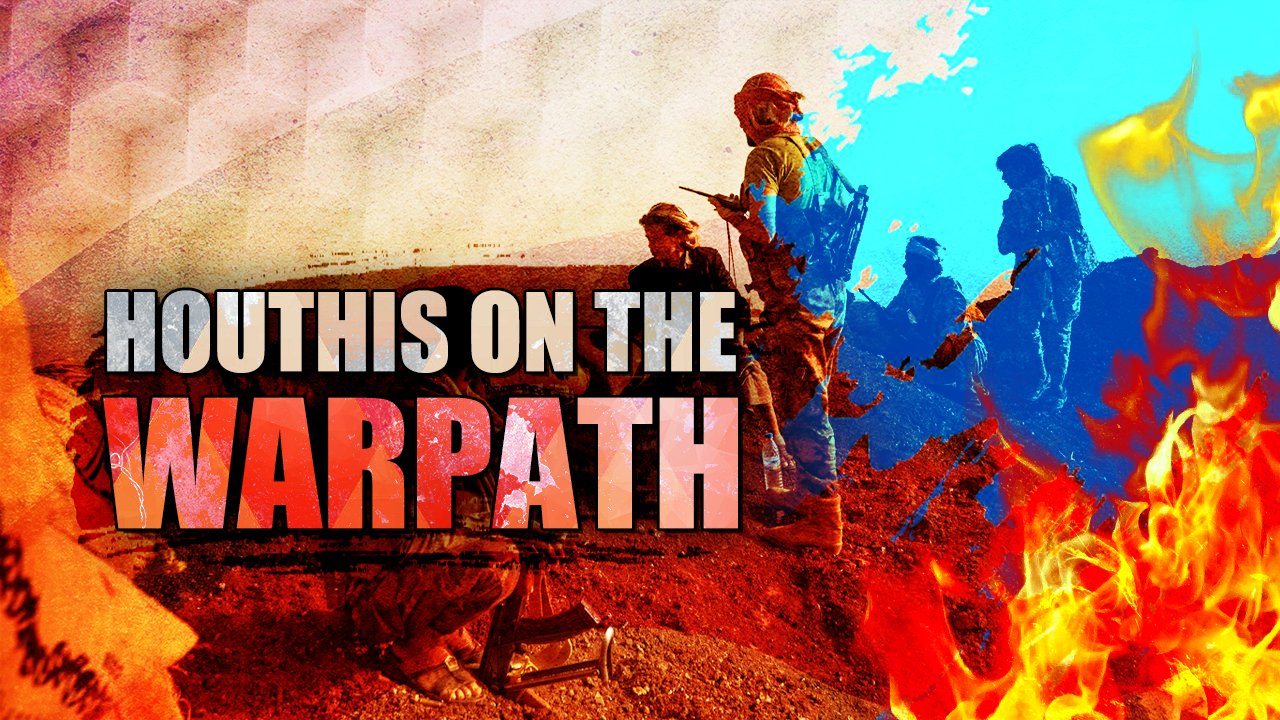
Iran has provided Yemen’s Houthis (Ansar Allah) with weapons, targeting intelligence and military training that have helped the group carry out increasingly sophisticated attacks against Saudi Arabia and its Yemeni allies, The Wall Street Journal reported on October 17.
The assistance includes intelligence for selecting targets for drone and missile strikes, tactical guidance and training, according to the report, which cited people briefed on intelligence from Saudi Arabia and the anti-Houthi alliance in Yemen.
Iranian Islamic Revolutionary Guard Corps (IRGC) officers have also deployed inside Yemen, helping direct military operations, the report said.
Iran has supplied weapons to the Houthis through traditional dhow boats, resorting to submarines when maritime shipments were disrupted by U.S. and Israeli strikes, the Journal revealed, citing European and Houthi officials.
The report also described an alleged weapons shipment in July aboard two flights operated by Mahan Air, an Iranian airline under U.S. sanctions.
The flights were ostensibly transporting Yemeni pilgrims and Houthi officials to Tehran for the funeral of former Iranian Supreme Leader Ali Khamenei. However, they also carried Iranian paramilitary officers and weapons-related cargo, including drone components, missile guidance systems and impact detonators, according to people familiar with intelligence from Saudi Arabia and the anti-Houthi alliance.
The discovery prompted Saudi-aligned forces to bomb the runway at Sanaa airport in an attempt to stop the second flight, setting off the latest escalation in the conflict.
Iranian officers have also helped the Houthis deploy missiles and radars at positions threatening the Red Sea and the Bab al-Mandeb Strait, according to the Journal.
The group’s offensive, which accelerated in September, combined large-scale infantry assaults with missile and drone attacks, enabling it to capture the Red Sea port city of Mokha and seize territory around the Bab al-Mandeb.
The group’s increasingly sophisticated tactics, including the use of first-person-view drones guided by fiber-optic cables, indicated that its fighters had received training from Iran, according to a person associated with forces fighting the Houthis.
Another official from the anti-Houthi alliance told the Journal that IRGC officers had been present on the front lines directing drone and missile attacks.
The Houthis have also intensified attacks against Saudi targets, including oil tankers, energy facilities and airports. One strike in Riyadh last weekend killed at least 13 people, according to the report.
Mohammed al-Bukhaiti, a senior Houthi official who said he was aboard the second Mahan Air flight, rejected the allegations concerning Iranian officers and weapons, calling them an exaggeration intended to justify the attack on Sanaa airport. He also said claims of Iranian assistance overlooked the group’s own advances in developing its military capabilities.
Iranian Foreign Ministry spokesman Esmail Baghaei said last month that Tehran did not interfere in Yemeni affairs and described the Houthis as independent actors pursuing their own interests.
The Journal also acknowledged in its report that the Houthis manufacture some of their own weapons and have obtained components for drones and missiles directly from China, underscoring that their military capabilities do not rely exclusively on Iranian supplies.
The latest allegations may be an attempt to drag Saudi Arabia into a direct confrontation with Iran, amid reports suggesting the United States and Israel could resume war against the Islamic Republic before the end of the year.
Venezuela’s acting Delcy Rodríguez, announced the Plan Venezuela Alimenta and the draft of a Communal Economy Law, an initiative to coordinate the productive sectors, including communes, entrepreneurs and agribusiness, to eradicate hunger and strengthen territorial food security.
“We have just arrived from Rome, from our participation in the World Food Summit, and I have to tell the Venezuelan people, very responsibly, we are very close again to the Zero Hunger goal,” she reiterated.
At the same time, she explained that this alliance seeks to consolidate an efficient model that guarantees access to food in every corner of the national territory.
“From there I announced the Venezuela Feeds Plan, where we are going to coordinate all productive spaces, from the commune, businesses, agribusiness, to achieve this goal that is so human, so extraordinarily vital, such as the right to food and Zero Hunger,” Rodríguez highlighted.
La tierra es fuente de vida y esperanza. 🇻🇪🌱
En el Día Mundial de la Alimentación, reconocemos el esfuerzo de nuestros campesinos, agricultores, ganaderos, pescadores y trabajadores de la agroindustria, quienes hacen posible que los alimentos lleguen a las mesas de nuestro… pic.twitter.com/MYe6P2oOby
On her return from the FAO summit in Rome, President Rodríguez announced in Caracas that she had requested technical cooperation to strengthen the Plan Venezuela Alimenta.
The Head of State announced the upcoming presentation of a new legislative project: the Local Economy Law, an instrument that will integrate the current Communal Economy regulations to boost community production from the grassroots.
“(…) We are going to present a new Law, which is the Local Economy Law, which includes the Communal Economy Law, all community, local, territorialized efforts, in this supreme objective which is Zero Hunger for Venezuela (…), we will achieve it very soon. Before 2030 we will be meeting this goal,” affirmed the National President.
Rodriguez also urged participation in the popular consultation on 18 October, where more than 37,000 projects will be voted. In addition, he reported that the Communal Economy Law will be expanded to include other productive actors.
Security forces have responded to unprovoked firing by Afghan Taliban forces along the Pakistan-Afghanistan border in Khyber Pakhtunkhwa’s Upper Kurram, state broadcaster PTV News reported on Saturday.
PTV News and state-run Associated Press of Pakistan (APP), which cited security sources, said the Afghan Taliban forces opened fire to “facilitate terrorists” along the border in Taldah sector of Upper Kurram.
The army responded using heavy weapons, destroying several Afghan Taliban posts and forcing their personnel to flee from there, PTV News reported.
Meanwhile, APP quoted security sources as saying that several personnel of the Afghan Taliban were “reportedly killed during the Pakistan Army’s retaliatory action along the Ghuzgarhi border”.
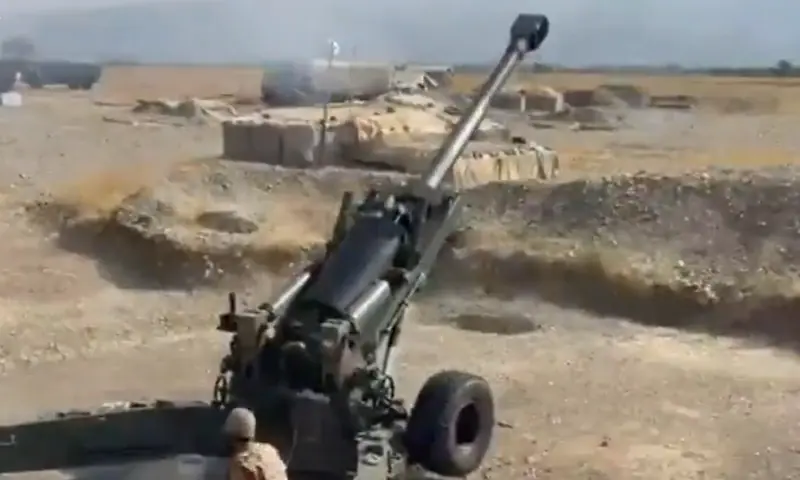
The sources further said that in the Upper Kurram sector, the army targeted the Afghan Taliban’s Topsar post and Shipola base camp with artillery fire, reportedly completely destroying the latter.
The exchange of fire was still ongoing in the area, APP quoted security sources as saying.
The border skirmishes come a day after the Foreign Office (FO) said that talks with Afghanistan could not be unconditional, but also rejected suggestions that Islamabad was unwilling to engage with its neighbour and said it would welcome sincere efforts by friendly countries to help resolve the dispute.
“Pakistan is not shying away from discussions or dialogue, including with representatives of Afghanistan. Pakistan would welcome any sincere efforts by friendly countries that could help address our legitimate security concerns and promoting regional peace and stability,” FO spokesperson Sajjad Haider Khan said at the weekly media briefing.
The statement came after Russia recently renewed its readiness to mediate between the two countries, although Islamabad denied the existence of any such initiative.
“At present, I am not aware of any separate, formal Russian mediation initiative being under discussion,” Khan said.
Pak-Afghan tensions
Ties between the two neighbours have been strained in the past few years as Islamabad continues to voice its concern over cross-border terrorism.
September witnessed another bout of conflict between Pakistan and Afghanistan.
On Sept 21, in response to recent major terrorist attacks in Khyber Pakhtunkhwa, Pakistan conducted “calibrated” airstrikes in the border region with Afghanistan against terrorist hideouts, with the government saying more than 28 terrorists were killed.
Information Minister Attaullah Tarar described the action as part of Operation Ghazab lil Haq, which was launched on the night of Feb 26 in response to unprovoked cross-border firing by the Afghan Taliban.
Days later, Pakistan shot down eight drones launched from across the border that had entered Pakistani airspace near the Torkham border and Kohat. It was also reported that the Afghan Taliban engaged in unprovoked firing the night before near Kurram as security forces foiled an attempt by terrorists to cross into Pakistan.
In retaliation for the drone incursion, Pakistan conducted “precision aerial and drone strikes” in 10 locations across Afghanistan.
A demarche was also delivered to the Afghan side on Sept 26 on account of the Sept 23 airspace violation by drones, the Foreign Office said.
On Oct 1, Pakistan again carried out “well-planned and calibrated” airstrikes against terrorist hideouts in Afghanistan, the information ministry said, which resulted in the deaths of “multiple terrorists”.
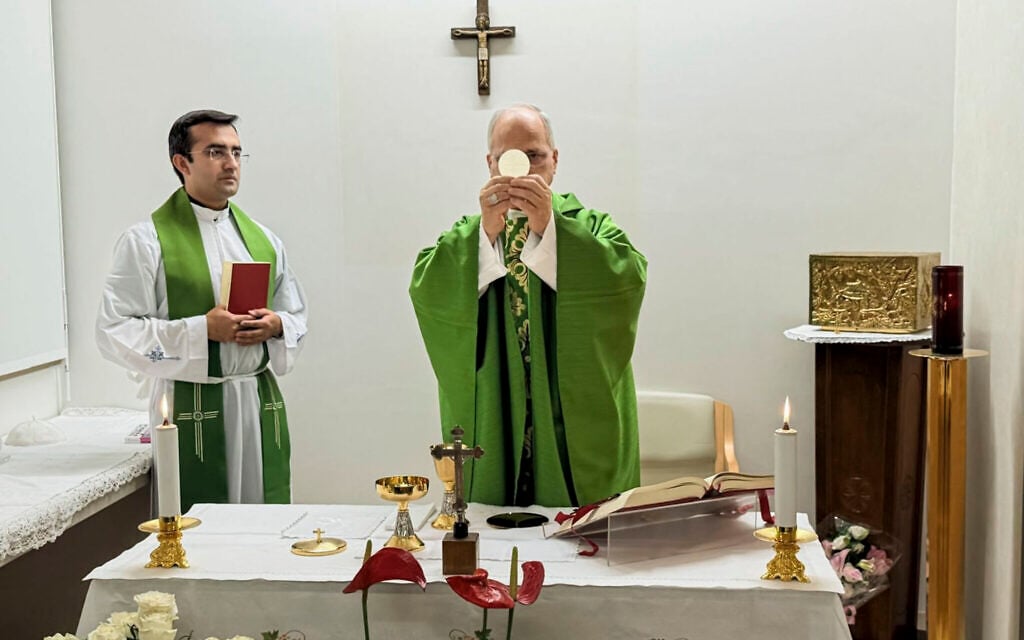
The Vatican had initially estimated a weeklong hospital stay and canceled his audiences through Tuesday. Experts said patients could be discharged earlier depending on their recovery.
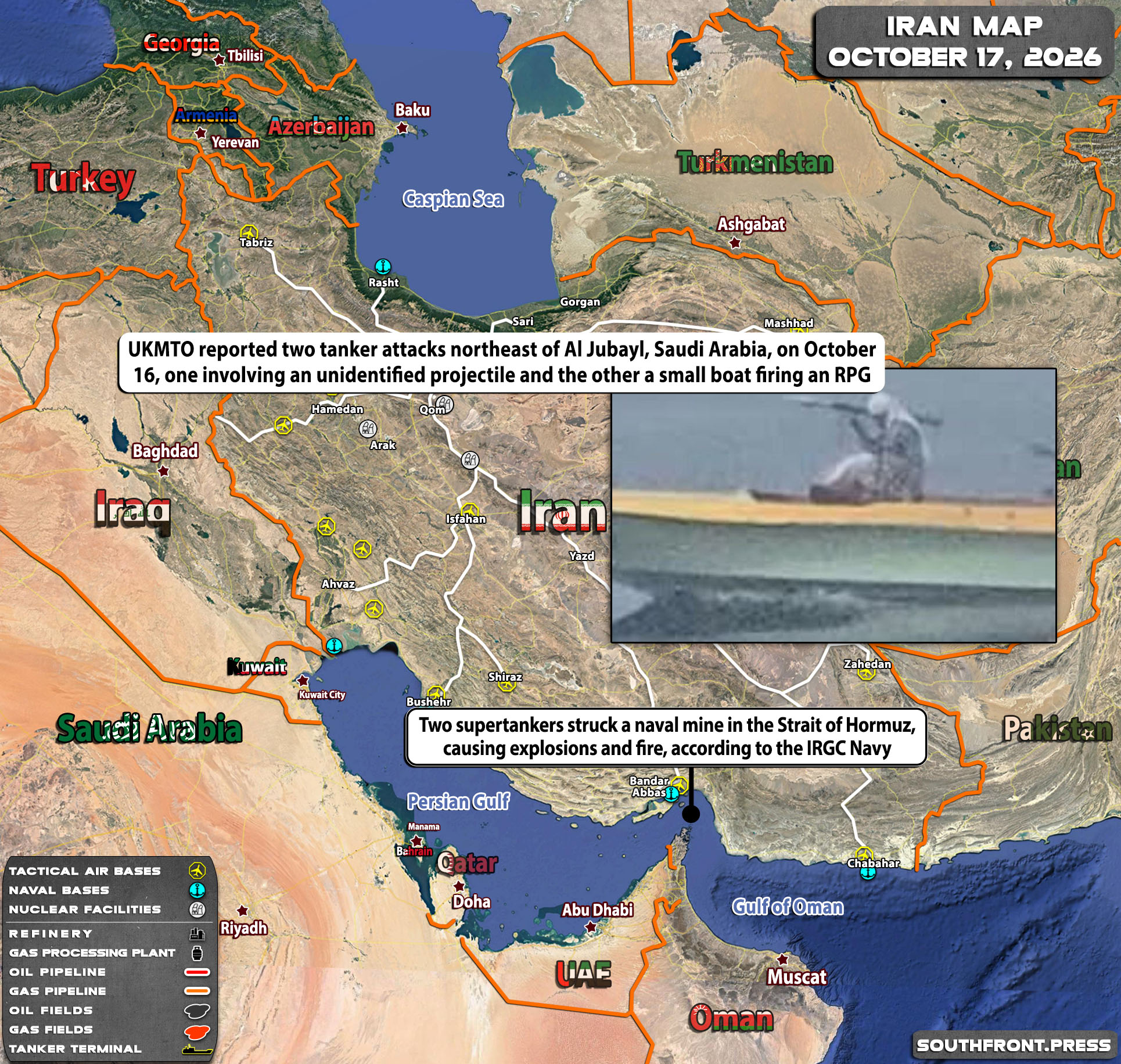
Two supertankers struck a naval mine in the Strait of Hormuz, causing explosions and fire, according to the IRGC Navy;
UKMTO reported two tanker attacks northeast of Al Jubayl, Saudi Arabia, on October 16, one involving an unidentified projectile and the other a small boat firing an RPG.
South Korean President Lee Jae-myung is trying to maneuver between pressure from the United States, which demands participation in the conflict with Iran, and risks to national security and reputation, opting for a strategy of stalling and minimizing a direct military presence.
The previous article explained why South Korea refused to join the United States in the “denuclearization of Iran” and how, in response, Donald Trump struck at Lee Jae-myung’s ambitions, nudging him toward the desired choice. And although President Lee’s rhetoric ultimately seems anti-war, in reality there are many loopholes remaining: for example, not a new contingent, but a decisive increase and expansion of the existing contingent’s mandate.
“No!” or “Maybe”
On September 16, Donald Trump said on social media that countries that “provided no assistance” would, after the war with Iran ended, have to “compensate” the United States for damages. Trump did not say whom he meant.
On September 17, First Vice Minister of Foreign Affairs of the Republic of Korea Park Yun-ju stated that the ROK’s participation in an international operation in the Strait of Hormuz region depends on a number of factors and is tied not only to relations with the United States but also to the safety of navigation, energy supplies, and the protection of the country’s citizens.
On September 18, Lee Jae-myung stated that South Korea would not deploy troops or military equipment in a way that would draw the country into the war between the United States and Iran. However, he allowed for minimal measures to protect South Korean vessels, oil delivery routes, and citizens, pointing to disruptions in crude oil supplies as one of the risks.
Apparently, eyebrows were raised in Washington, after which on September 19 the Blue House indicated that President Lee Jae-myung’s remarks did not amount to a rejection of Trump’s call for military cooperation. An administration official said that the government is considering practical ways to assist in close contact with the international community, including the United States.
The Specifics of the Future Conflict
Because the war with Iran follows a sine curve, and Donald Trump’s promises to “flatten Iran” alternate with talk of peace, it is possible that, once Trump enters a peace phase, Seoul’s need to rush to help the United States will temporarily disappear. Therefore, let us consider the scenario in which Seoul is actively pressed to help Washington—at least as proof of the Republic of Korea’s allied status.
Compared with previous deployments of South Korean troops as U.S. allies—whether in Vietnam or Iraq—they find themselves in a far more difficult situation. In both cases, this was a ground war in which South Koreans performed auxiliary tasks and mainly carried out clearing operations and fought poorly armed guerrillas, or guarded South Korean specialists while stationed in territory controlled by the Kurds.
However, although Iran does not have nuclear weapons, it has ballistic missiles and kamikaze drones in abundance. This means that wherever South Korean troops are located, they could become targets, especially since South Koreans have no experience countering such a threat, and any serious losses would both damage the country’s domestic political standing and hurt the president’s reputation. As the saying goes, victory has many fathers, but defeat always has one—and he is often the scapegoat.
If anything goes wrong, President Lee will be symbolically held responsible as the person who initiated South Korean participation in the war. At the same time, he may also be criticized for the fact that, in seeking to neutralize the threat of a military coup, he carried out a whole set of measures that could be seen as a certain decline in military readiness—which, alas, performed poorly when confronted with Iranian drones.
Lee Jae-myung’s Two Strategies
Lee Jae-myung understands this situation perfectly and will therefore adhere to two strategies.
The first is to stall for as much time as possible, especially since, under the country’s constitution, sending troops abroad must go through parliament. Because the conflict is escalating and there is domestic opposition, the timing of any troop deployment remains in question.
The situation is interesting: parliament is generally under President Lee’s control, and if he says “yes,” the National Assembly will vote according to his will. But if Lee throws up his hands and says, “I’m in favor, but the Korean people are against it, and we have a democracy, which I cannot go against,” then, on the one hand, outside observers may perceive this as a mutiny on board; on the other, the United States may find another painful way to push Seoul in the right direction. The hope here is rather that the geopolitical situation or Trump’s mood will change and assistance will not be needed.
The second strategy is to send assistance but minimize Korean participation in direct combat: patrol operations, intelligence and surveillance, demining assistance, medical or other humanitarian aid. As a government source told Yonhap, “we are discussing how to contribute safely, without direct participation in combat,” and according to the Dong-A Ilbo, South Korea is considering sending a P-8A Poseidon maritime patrol aircraft designed for long-range maritime surveillance, a supply ship, and explosive ordnance disposal specialists.
Another option is the Cheonghae Unit (the newest destroyer with a special forces team aboard), which has long been in the Middle East and is engaged in protecting shipping and responding to threats, including piracy. Increasing its size is not the same as deploying a new contingent, and when, on July 24, 2019, during one of the previous rounds of escalation, the United States demanded not only an increase in South Korea’s share of the costs of maintaining American troops but also the deployment of South Korean naval forces to the Strait of Hormuz, the Cheonghae contingent, which was supposed to fight Somali pirates, “expanded its area of operations” from the Gulf of Aden to the Gulf of Oman and the Arabian Gulf. In 2021, Cheonghae was also in the strait, but it was withdrawn to leave a window of opportunity for negotiations after Iran seized a South Korean tanker.
Iran’s Response: What Matters to Tehran Is the Fact Per Se, Not the Scale
It seems that the Iranian side responds in this respect much as North Korea does: what matters is the very fact of Seoul’s participation on the side of the United States, not the scale of such measures. Diplomats and officials have already issued a series of warnings, voicing fairly specific and inconvenient response options for Seoul.
On September 7, Iranian Foreign Ministry spokesman Esmail Baghaei published a warning in Korean, stating that Tehran would regard the military presence or participation of any third country in operations in the Persian Gulf and the Strait of Hormuz as direct support for the aggressor, which could entail “serious consequences.” At the same time, the diplomat stressed the importance of friendly relations with Seoul.
Earlier, Iranian expert Mohammad Marandi said that South Korea’s participation in the war could make it an enemy of Iran, and retaliatory strikes could affect not only military but also economic assets of South Korean companies in the Persian Gulf countries. South Korea gets most of its energy resources from the Near and Middle East, and a blockade of the Strait of Hormuz and attacks on vessels delivering petroleum products to South Korea would force it to urgently rethink its supply chains.
At the same time, the most convenient and safe backup supply-chain option is also uncertain, because it involves obtaining petroleum products from Russia. Talks on this issue have already begun, and South Korea is trying to prepare its European partners for the possibility of obtaining Russian petroleum products. But, first, the EU still has to be persuaded; second, it is not at all clear that Moscow would welcome this with open arms, knowing that this is not a conceptual turn toward Russia but a desire to solve a problem now that is de facto completely irrelevant to Moscow.
In Lieu of a Conclusion
Lee Jae-myung remains trapped. Refusing to send troops could lead to a further deterioration in relations with Trump, who could take actions against South Korea, such as imposing new tariffs. Sending troops carries certain reputational and domestic political risks. This is harder than a “test of strategic thinking” and a choice between two great evils.
Therefore, we will follow with great interest whether a parliamentary discussion finally takes place and what its verdict will be. It is interesting to see how ready South Korean military personnel and South Korean weapons are to take part in a modern war.
Konstantin Asmolov, PhD in History, leading research fellow at the Center for Korean Studies of the Institute of China and Modern Asia at the Russian Academy of Sciences
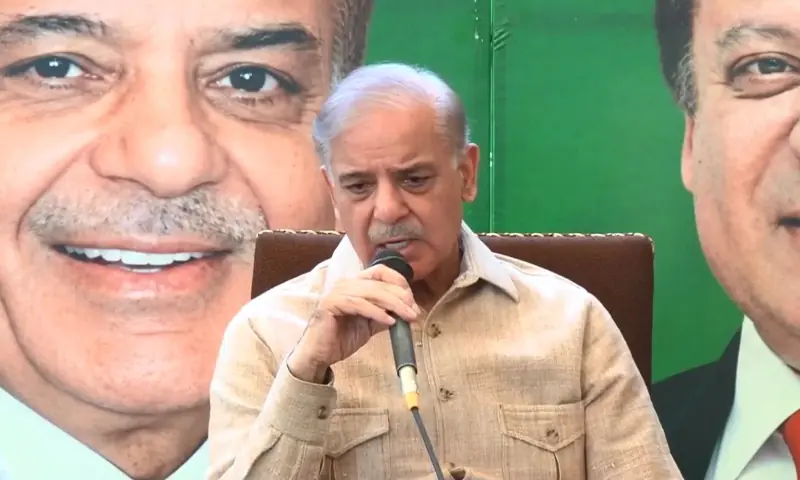
Prime Minister Shehbaz Sharif on Saturday reiterated that the Centre was “compelled” to impose emergency and governor’s rule in Khyber Pakhtunkhwa due to the provincial government’s lack of cooperation in countering terrorism.
The Centre imposed emergency and governor’s rule in KP on Oct 11, citing the provincial government’s “deliberate disengagement” from the fight against terrorism. The decisions were also endorsed by the Parliament this week amid protests by the opposition.
On Saturday, PM Shehbaz visited the residence of Rashid Bashir Virk in Gujranwala to offer condolences on the demise of his father, late MNA Mahmood Bashir Virk.
After recalling the late PML-N lawmaker’s services, the premier stressed that the Centre was compelled to impose emergency in KP.
He said the Centre made a “last attempt”, referring to the rounds of talks held by a joint delegation of the PPP and the government with the opposition.
“They had talks with them (PTI) day and night, for 48 hours, and sat with the intention to settle matters from every aspect,” PM Shehbaz said, adding that a draft was ready under which the PTI was to call off its long march.
The prime minister highlighted that he had held multiple meetings with Sohail Afridi, the KP chief minister whose role now stands non-functional, as well as with his predecessor Ali Amin Gandapur.
“In every meeting, I tried my best to convey to him from the depths of my heart and with seriousness that KP is an extremely beautiful province and has very brave and honourable people, […] and I am always present in every way for their development and prosperity,” PM Shehbaz said.
The premier added that he assured the KP government of the Centre’s support in fighting against terrorism together to face the security challenges in the province.
PM Shehbaz said he had assured the chief minister that he would make the decisions regarding the administration, resources and necessities in consultation with him.
“But, unfortunately, despite all these efforts, thousands of our law enforcement agencies personnel, soldiers, officers and officers of the armed forces were sacrificing their lives every day to defend the homeland.”
The prime minister stressed that the federal government “made many efforts” regarding the situation, but there were “threats and long marches every other day in response”.
“Their past history is very horrific,” he remarked, recalling the 2014 sit-ins staged by the PTI at Islamabad’s D-Chowk during the tenure of his brother, Nawaz Sharif.
“Last year as well, you saw how the entire country was jammed by staging a sit-in in Islamabad,” he added, ostensibly referring to the PTI’s November 2024 protest that had resulted in clashes.
“This time as well, they had an entire plan of bloodshed,” he alleged.
The Oct 11 imposition of emergency and governor’s rule followed weeks of political tensions between the Centre and the PTI — as well as negotiations to bridge their differences — after the latter announced a long march to Islamabad to demand the release of its jailed founder, Imran Khan.
Federal ministers alleged that the PTI-led government in KP had a “nexus” with terrorist groups and asserted that the province’s security situation necessitated the imposition of emergency there.
The Centre and the PTI have been at odds over various issues, particularly on the counterterrorism policy, which was one of the main reasons behind the breakdown of their October 3 talks.
The PTI said it was being left out of security decisions concerning KP, which the Centre denied. It also called for reviewing the counterterrorism policy, while the latter criticised the KP government’s efforts to combat terrorism in the province and objected to its stance on dialogue with the Afghan Taliban.
Adm. Brad Cooper says US blocked export of $25b of Iranian oil, controls Hormuz, even as at least one tanker said struck; increased Iranian help reportedly fueled Houthi advances
La Armada de la Guardia Revolucionaria confirmó que un buque con más de dos millones de barriles impactó contra una mina naval al intentar cruzar sin autorización.
Iran’s Islamic Revolutionary Guard Corps (IRGC) on October 17 said a supertanker carrying more than 2 million barrels of crude oil caught fire after striking a sea mine in the Strait of Hormuz.
In a statement, the IRGC Navy said the tanker was attempting to transit the strait along an unauthorized route and had deliberately switched off its positioning and radar systems to evade Iranian maritime monitoring. It added that the tanker was attempting the crossing under the protection of the U.S. military rather than coordinating its passage with Iranian authorities.
The Corps referred to the U.S. military as the “smuggler and terrorist army” and blamed the tanker’s decision to disable its tracking systems and rely on American protection for the incident.
The incident comes amid an increase in attacks on commercial shipping in the Gulf. Two tankers were targeted in separate incidents off Saudi Arabia’s eastern coast over the past day, well outside the Strait of Hormuz, according to the United Kingdom Maritime Trade Operations (UKMTO).
One tanker was struck by an unidentified projectile about 68 nautical miles northeast of the Saudi port of Al Jubail, prompting the evacuation of its crew. All crew members were reported safe, and no environmental impact had been reported at the time.
The other tanker was attacked about 78 nautical miles northeast of Al Jubail. The vessel’s master reported that a rocket-propelled grenade fired from a small boat had damaged the vessel’s aft port quarter, according to UKMTO. All crew members were accounted for and reported safe.
Despite the increase in attacks on ships, the U.S. has largely refrained from resuming strikes against Iranian maritime capabilities, according to an Axios report published on October 16.
The news website reported that the White House had ordered U.S. forces to almost completely halt strikes against Iranian anti-ship missiles and attack-drone launchers in the Strait of Hormuz area in recent weeks.
The pause is intended to avoid escalating the war ahead of the November 3 U.S. midterm elections, Axios reported, citing a U.S. official. The official acknowledged that the reduced strikes had made the Islamic Republic more confident about attacking shipping.
Washington has maintained its sanctions and naval blockade against Iran while diplomatic efforts to end the war remain unresolved, with Tehran yet to respond to a U.S. proposal being discussed with Qatari mediators, according to Axios.
The attacks off Saudi Arabia suggest that the threat to commercial shipping is extending beyond the Strait of Hormuz, while Tehran is seeking to assert greater control over maritime traffic through the waterway.
Kiley Pulley transitioned from cashier to store manager within seven years.
Kiley Pulley
Kiley Pulley became Walmart's youngest US store manager at 21, starting as a cashier at 16.
Her former store manager helped her through her succession plan and interviews.
Pulley emphasizes learning daily and adapting for career growth.
This as-told-to essay is based on a conversation with Kiley Pulley, a 23-year-old Walmart store manager in Buckeye, Arizona. It has been edited for length and clarity.
In 2019, when I was 16 years old, I started working at Walmart as a part-time cashier. I wanted my own money, and figured, why not just get a job?
My sister and my mom were already working there, and it was also right down the street from my high school. It was easy for me to get out of school and walk to work.
Over the next few years, I moved through different roles, from cashier to stocker to online fulfillment. Then, when I turned 18, I became an academy trainer, and six months later, a digital team lead.
When I became a team lead in mid 2021, it hit me that I wanted to stay at Walmart full time and make it my actual career. At 19, I became an operations manager, and right before I turned 22, I became the youngest store manager at Walmart in the US.
People ask me, "How did you do it?" My answer is to show up and learn something new every day. Here are six things I've learned along the way.
I realized I could help people by hiring them
Originally, I wanted to start either my own nonprofit or my own business and help out the homeless population; then I realized that I could do all that through Walmart.
I could make a difference through the people that I hire and the impact that I have on my associates at the store.
When I became a team lead, I was making good money, and I also really liked it. I started actively working toward becoming a store manager. I got on succession plans and was on monthly calls with our market manager. When I became an operations manager, I led multiple projects in our market to get myself ready to become a store manager.
I'd also ask to cover for store managers when they'd take off work; that way I could gain additional experience that was needed to be promoted. I remember thinking, I'm going to be a store manager at 21. I'll be the youngest in the company.
I had to learn that my words carried more weight
As an associate, I was friends with everybody. I could joke around with everyone. When I became salaried, everything changed.
One of the biggest learning points for me has been the way I talk and how to engage with people from different cultures. Changing my tone and limiting the joking and playful attitude felt necessary as a leader in the building.
At the time, setting new boundaries for myself made me feel more confident in my new role and even now in my current role.
I was a little nervous when I first went into a salaried position. People said I might have issues managing those older than me, but I've never had problems with my team not respecting or listening to me.
I also made my social media profiles private. I think connecting on social media can make it harder to separate between being someone's manager and being their friend.
I had to learn how to delegate
Getting out of the "if I want it done the right way, I'll do it myself" mindset was a big learning. I realized not everyone's going to know everything that I know, and if I really want to delegate and get tasks done, I'm going to have to teach and train.
A big part of being an academy trainer and team lead is training your associates. Once you get to operations manager, you kind of have to step back and expect your team leads and academy trainers to do that same thing.
I had to learn that if I delegated, things could get done faster or more efficiently.
I had to learn to be a servant leader
When it comes to my associates, if they need something, whether that's ordering the supplies or putting in tickets for them, I want to do that. I want to advocate for them.
Also, everyone likes the appreciation of, "Hey, thank you for doing this today," or "Thank you for going above and beyond on this."
I had to learn to have work-life balance
When I first became salaried, I was always on the clock. I stopped going to the gym, and I sacrificed some time with my fiancé and family. I'd stay at work and say, "They need me."
It was my fault; the team didn't need me that badly. Now, I'm doing better. When I get home, I'm not spending the whole day looking at metrics or constantly texting my team. I've gone back to the gym.
I learned to take a step back and trust my leaders to do what they need to do. I trust that they know what they're doing.
I think there's always going to be some event you could miss out on. That can be hard to juggle sometimes, but I'm lucky enough to have a fiancé who's also career-focused and driven, so we kind of use each other as motivation.
I realized I could build a career without giving up on school
I went to college for business and ended up dropping out when I got my salaried position. I told myself that I'd get back into college when I got my first store.
My old store manager was the one who promoted me through all of the hourly supervisor roles. She even prepped me for my first salaried role. She sat in the office reading interview questions with me. Every time I'd say the word, 'um,' she'd say, "Nope, restart."
She was constantly there for me, and even still having her as someone to go to has been great. My market manager has also known me since before I started promoting. Every time I think I'm too young to be in this room, he's always in my corner.
I'm now enrolled in Live Better U, a program where Walmart pays for certain bachelor's degrees. I'm getting some of my foundational courses, and then I plan to get my college degree.
Keep pushing to learn more
For teenagers starting out, I encourage them to do a good job and learn as much as they can.
Companies are constantly changing, especially with technology. It's important to adapt and not be comfortable with what you already know.
When I look at my future at Walmart, I told myself I'd get to market manager at 27 or 28 — that's my short-term goal. Then, long-term, my goal would be regional EVP.
One thing I always remind myself is that I worked hard to get to this life, so I can't be upset now that I have it. Maybe we don't have time to do all the fun things right now, but if we work hard through our 20s, thinking about where we might end up when we're 30 or 40 keeps me motivated.

 Login