❌

Reading view

PF suspeita que Willer Tomaz recebia decisões sigilosas do STJ

O advogado Willer Tomaz, investigado por fraudes contra a Previdência e amigo do candidato Flávio Bolsonaro (PL), recebia minutas de decisões do STJ (Superior Tribunal de Justiça) e de manifestações do MPF (Ministério Público Federal) antes da publicação, aponta investigação da Polícia Federal, segundo reportagem do UOL.

A reportagem afirma que o procurador aposentado Antônio Carlos Simões Soares era um dos interlocutores de Tomaz. Em 2019, Soares era citado pelo entorno do então presidente Jair Bolsonaro (PL) como favorito para ser indicado à Procuradoria-Geral da República e como ligado a Flávio, o que o procurador negava.

Segundo o UOL, os investigadores suspeitam que Tomaz recebeu documentos vazados do STJ por meio de Soares, além de outros interlocutores.

Ainda de acordo com a reportagem, a apuração da PF aponta que o escritório alterava a estratégia conforme os documentos que recebia.

Em nota, Tomaz negou “categoricamente ter tido acesso irregular ou não autorizado a decisões judiciais ou a pareceres do Ministério Público Federal, bem como ter interferido em manifestações”. “Sua atuação sempre observou a legislação e as prerrogativas da advocacia, valendo-se exclusivamente das vias institucionais e processuais legítimas. As insinuações divulgadas são infundadas, distorcem o exercício regular da profissão e configuram desinformação”, afirmou o advogado.

Tomaz também disse que “causa estranheza” que um material sigiloso, “ignorado até mesmo pela defesa, venha a público de forma seletiva em pleno período eleitoral e mencione terceiros sem nenhuma relação com os fatos investigados”. “Serão adotadas as providências cabíveis para obter acesso ao relatório, demonstrar a improcedência das alegações e identificar a origem do vazamento”, afirmou.

A campanha de Flávio também foi procurada, mas ainda não se manifestou sobre as suspeitas contra Tomaz. A reportagem não conseguiu ainda localizar Soares.

Viagens de Flávio Bolsonaro

Reportagem da Folha de S.Paulo publicada na quinta (15) mostrou que uma holding de apostas online de Willer Tomaz pagou voos entre Portugal e França em 2025 para o candidato à Presidência pelo PL, de acordo com uma investigação da Polícia Federal.

Willer é investigado sob a acusação de fazer repasses financeiros de dinheiro obtido em fraudes contra a Previdência no escândalo do INSS. Junto com Jorge Barbosa Dias, ele é dono da Rede Loto, a primeira bet a conseguir uma licença de operação no país ainda em 2023, emitida pelo governo fluminense.

Questionado pela Folha de S.Paulo sobre as viagens, Flávio Bolsonaro disse que sua relação com Willer é exclusivamente de amizade.

Segundo a investigação, ao menos três trechos de viagem em jato executivo foram contratados para Flávio e Willer por meio da Cathedral, empresa registrada na Ilha da Madeira. Única acionista da Rede Loto, a Cathedral tem como sócios Willer e Dias.

The post PF suspeita que Willer Tomaz recebia decisões sigilosas do STJ appeared first on Diário da Manhã - O Jornal do leitor Inteligente.

  •  

Iran: Supertanker Catches Fire After Striking a Naval Mine in the Strait of Hormuz

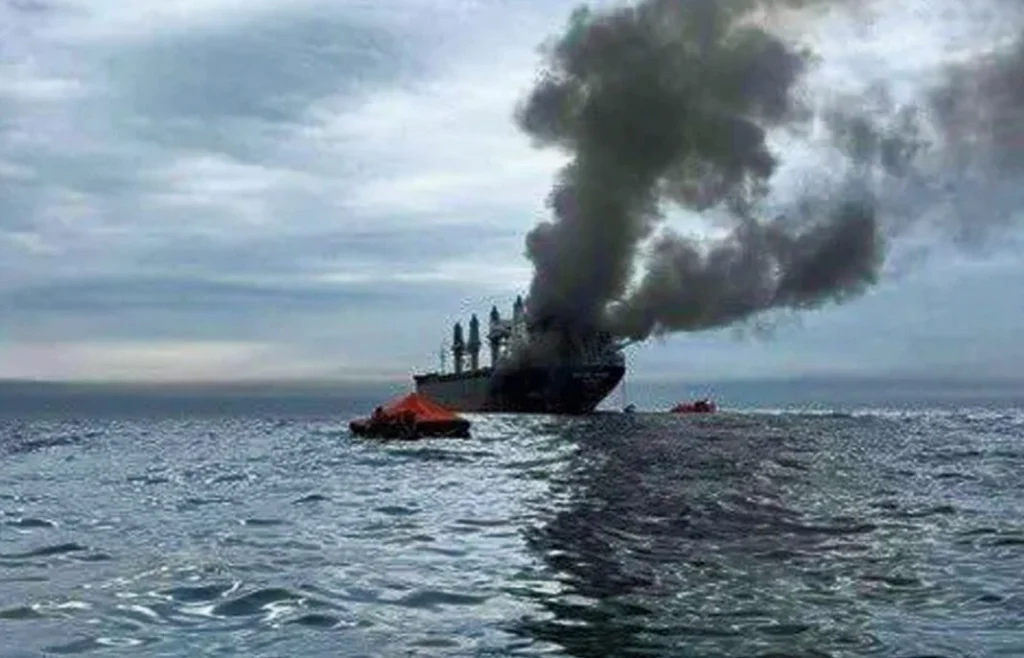
On Saturday, Iranian Revolutionary Guard Corps Navy reported another supertanker caught fire in the Strait of Hormuz after striking a naval mine. The announcement came hours after authorities reported a similar incident in this strategic maritime passage.

RELATED:

Iran Accuses U.S. of Oil Smuggling in Strait of Hormuz

“This morning, a second supertanker, which was navigating in an irregular manner, caught fire violently after colliding with a naval mine,” the military force stated in a release circulated by the Tasnim news agency.

According to Iranian authorities, the vessel was carrying more than two million barrels of crude oil; a powerful explosion occurred in the engine room following the collision, leaving the ship immobilized. The Revolutionary Guard did not identify the tanker’s flag.

The organization claimed that the ship attempted to traverse an unauthorized route after the U.S. military, through deception, induced it to turn off its positioning and radar systems. There is no response from Washington included in the available information regarding these claims.

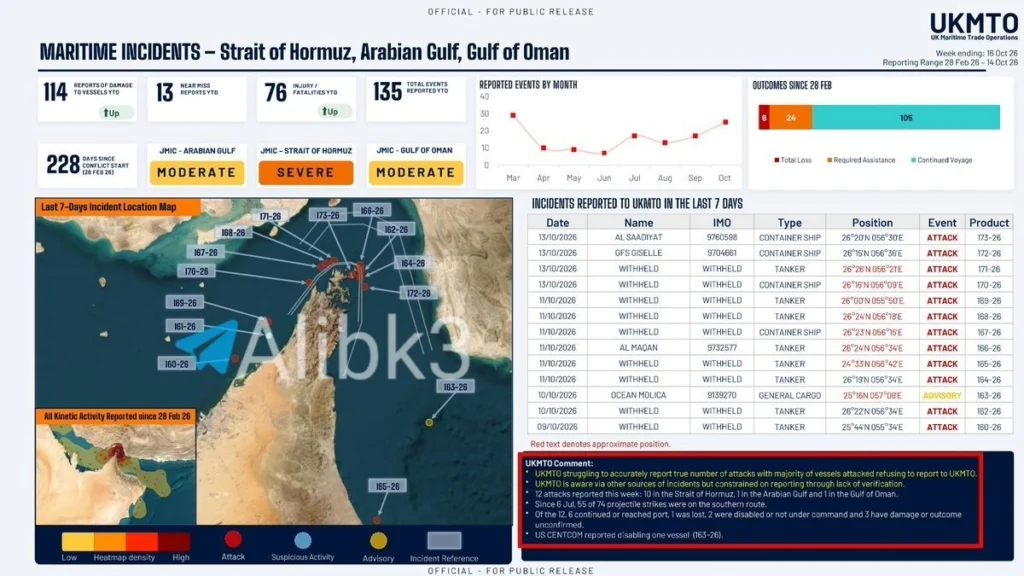
Earlier in the day, Iran had reported a fire on another crude-laden supertanker—also following a collision with a naval mine—while it was navigating with its navigation systems switched off. With this latest incident, Iranian authorities have reported at least six collisions involving vessels and naval mines in and around the Strait of Hormuz over the past week.

The Revolutionary Guard reiterated that the Strait of Hormuz is closed, warning that vessels failing to comply with its navigation rules risk striking naval mines and catching fire. This statement comes as the United States attempts to re-establish maritime transit along a route near Oman.

The Strait of Hormuz is one of the world’s most important energy chokepoints, and any disruption to traffic there can ripple through global oil markets.

A fresh wave of drone attacks on commercial vessels in the Black Sea, an alternative shipping route to the disrupted Strait of Hormuz, is deepening insecurity along the EU’s eastern flank and compounding pressure on a stretched global shipping network.https://t.co/uE3eUcAjWf

— teleSUR English (@telesurenglish) October 16, 2026
  •  

Demonstrations in Paris and Lyon Result in Significant Damage

On Saturday, demonstrations in France against the rising cost of living turned violent in Paris and Lyon, with further unrest reported in other locations, according to the Police Prefecture and sources from the Ministry of the Interior.

RELATED:

France Suspends Stun Grenades After Teen Loses a Hand

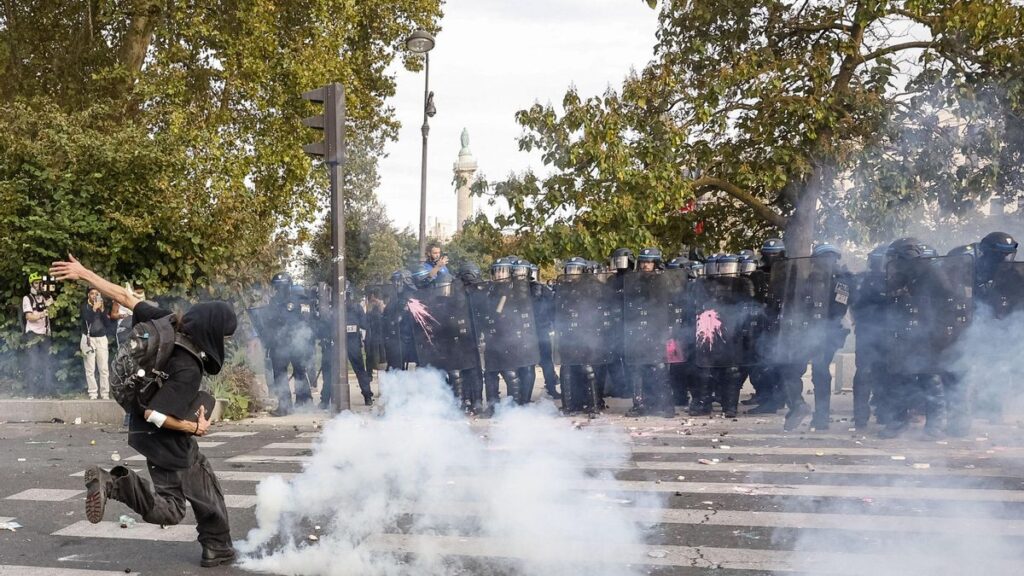
In Paris, the day began with clashes at the Place de la République. The Prefecture reported that several hundred individuals, identified as members of far-left groups, threw projectiles at police officers and gendarmes. Some participants also damaged building facades, prying loose stones.

Security forces responded with tear gas and moved to disperse the violent groups. Despite these incidents, the march began its route at 2:15 p.m. local time (12:15 GMT), moving from the Place de la République toward the Place de Clichy, even as police operations continued in the area.

By 2:00 p.m. local time, authorities had made 133 arrests in Paris—primarily for alleged participation in groups organized to commit acts of violence or cause property damage, as well as for assaults on law enforcement officers. Additionally, police conducted 1,046 preventive security checks throughout the day.

Protests in #Paris and #Tunis put rising prices and deteriorating living standards in focus, as demonstrators demand economic relief and social rights. #France #Tunisia https://t.co/IlS12uwV3G

— Al Mayadeen English (@MayadeenEnglish) October 17, 2026

In Lyon, in southeastern France, a group of protesters smashed the windows of a tourist office located in the central Place de Bellecour and set it on fire, according to footage broadcast live by BFM TV.

The French government had previously warned of a high risk of unrest during the protests across various cities in the country. Sources close to Interior Minister Laurent Nuñez indicated that, by midday, 140 protest actions and 32,800 participants had been recorded across the provinces, while the total number of arrests throughout France had reached 166.

“There is a very high probability that the far-left will cause the afternoon demonstrations to turn violent,” the same sources stated, also reporting targeted acts of violence in Paris, Marseille, Rennes, Toulouse, and Angers.

According to the Ministry of the Interior, the incidents included attempted looting, attacks on security forces, the setting of fires to street furniture, and actions directed against institutions and media outlets.

In Marseille, several businesses were vandalized, and a municipal police station sustained damage. Additionally, a group forced open the doors of City Hall and briefly entered the lobby before being stopped.

Thousands of French people continued to protest and block educational centers just hours before student organizations held a new meeting with the Education Ministry, the third since the protests began more than two weeks ago.

Among the blocked institutions is the Paris School of… pic.twitter.com/yjld03PtLt

— teleSUR English (@telesurenglish) October 15, 2026
  •  

ECO Quiz. A Lufthansa foi a escolhida para adquirir a participação minoritária na TAP?

✇ECO
By: ECO

O Conselho de Ministros aprovou na quarta-feira a privatização de 49,9% da TAP. O grupo alemão ofereceu 1.025 milhões por 44,9% da TAP, a que acrescerão 118 milhões de euros referentes à oferta de 5% aos trabalhadores, que será feita ao mesmo preço.

O ECO publica todas as semanas um quiz que desafia a sua atenção. Tem a certeza que está a par de tudo o que se passou durante a semana? Teste o seu conhecimento.

  •  

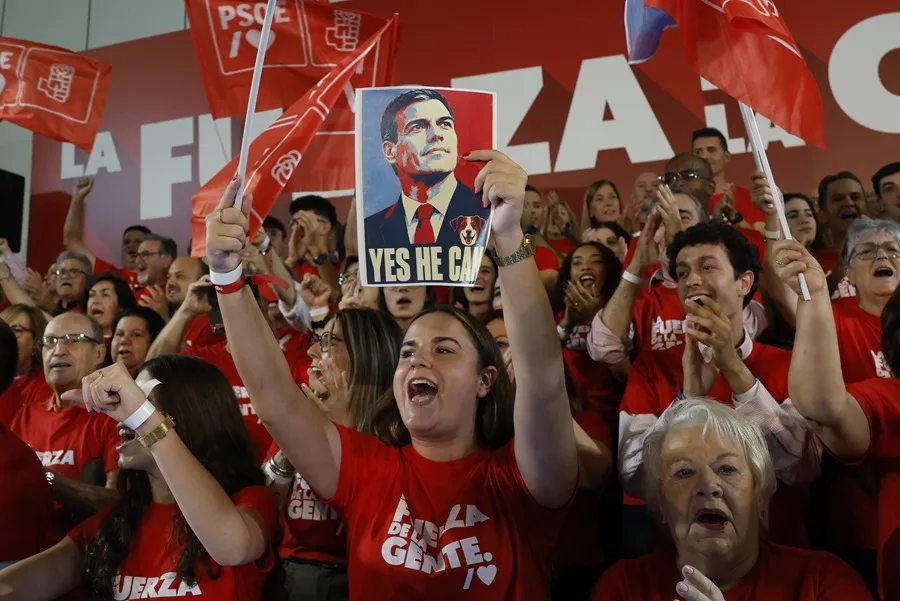
PSOE Unanimously Backs Sánchez as Candidate for Nov. 29 Elections

The PSOE’s Federal Committee on Saturday unanimously proclaimed Pedro Sánchez as its candidate for reelection and ratified its candidacies for the Nov. 29 elections.


Territorial leaders showed unity and confidence that they can defeat the polls’ bad omens at the meeting, according to EFE.

For the first time, more women than men will head the lists for the Congress of Deputies, at 52%, and in the Senate the party is also moving toward parity by increasing ten points the percentage of women leading candidacies compared with 2023.

RELATED: Spain: President Sanchez Approves New Decrees to Address the Housing Crisis

The party’s federal leadership introduced few changes this time to the candidacies submitted by the territories, and the noise generated was much lower than in 2023.

The Federal Committee met shaken by the resignation of its spokesperson, Montse Mínguez, who on Friday decided to leave all her posts after the controversy generated by her partner’s real estate businesses.

Sánchez revealed at a press conference in Brussels that he had asked Mínguez not to resign, but that she was “broken,” and he called her an extraordinary spokesperson and an immense politician. He lamented that politics sometimes mistreats good people.

  •  

Merz Demands Deeper EU Budget Cuts as Brussels Summit Fails to Break Deadlock

EU leaders have failed to settle their differences over the 2028–2034 budget, with Germany demanding further reductions to the proposed spending framework and the European Council taking charge of negotiations ahead of a difficult December deadline.

European Union leaders have ended their Brussels summit without agreement on the bloc’s next seven-year budget, after German Chancellor Friedrich Merz rejected the scale of spending envisaged under the latest compromise proposal and demanded deeper cuts.

The discussions on 15–16 October exposed the continuing division between governments determined to contain national contributions and those seeking to protect agricultural subsidies, regional development and new European investment programmes. The dispute now threatens the political timetable for approving the 2028–2034 Multiannual Financial Framework, the budget that will determine the Union’s spending priorities over the next seven years.

In their formal summit conclusions, leaders invited European Council President António Costa to take negotiations forward towards a timely agreement. No new spending settlement was endorsed, despite the Irish presidency having presented revised figures immediately before the summit.

Germany rejects the compromise

The European Commission originally proposed a framework approaching €2 trillion in current prices, arguing that Europe needed greater financial capacity to meet its growing responsibilities in defence, competitiveness, technological development, migration and external security.

Ireland, which holds the rotating Council presidency, submitted a revised negotiating document on 10 October intended to narrow the differences between governments. The latest proposal includes substantial reductions compared with the Commission’s initial ambitions while seeking to preserve financing for established EU programmes.

Those concessions have not satisfied Berlin. Merz argues that the Union must recognise the difficult fiscal position facing national governments and that the proposed increases in common spending remain excessive.

Germany, the largest contributor to the EU budget in absolute terms, has been working with other budget-conscious governments to seek reductions from the original Commission proposal.

EU Today reported on the proposed €141 billion in reductions, including the implications for defence and competitiveness funding.

The Irish compromise has done little to bridge the divide. The revised framework seeks to combine greater financial restraint with protection for agricultural and cohesion policies, while retaining significant investment in security, research and competitiveness.

Yet every attempt to rebalance the proposed spending exposes another political conflict.

Agriculture, cohesion and defence compete for funding

The Common Agricultural Policy and cohesion funding remain among the largest and most politically sensitive components of the EU budget. Agricultural payments support farmers across the Union, while cohesion programmes finance infrastructure, regional investment and economic development, particularly in less prosperous territories.

Governments benefiting heavily from those programmes are reluctant to accept reductions, particularly when national finances are already under pressure.

France, Italy and other countries defending traditional EU expenditure have therefore resisted attempts to transfer the burden of budget restraint disproportionately onto agriculture and regional support.

At the same time, the Commission has argued that the EU cannot simply preserve the spending structure of previous decades while promising a stronger role in European defence, industrial development and economic security.

The contradiction is increasingly apparent. European governments demand greater independence from external suppliers, stronger military capabilities and sustained financial support for Ukraine, yet remain unwilling to agree on the larger common budget that might help deliver those objectives.

Cuts to research, innovation, cross-border infrastructure or defence-industrial programmes would not necessarily produce immediate political costs. Their consequences would emerge later, through investments postponed, capabilities not developed and projects left dependent on national budgets.

Conversely, reducing agricultural payments or regional investment would produce more immediate resistance from farmers, local authorities and national governments.

The demands of 17 EU governments seeking to protect farm and cohesion spending illustrate the growing tension between established programmes and the Union’s newer strategic priorities.

A timetable becoming difficult to defend

The Council’s budget negotiations had been intended to deliver a political agreement before the end of 2026. That would leave 2027 for the European Parliament and member states to complete the legislation required for the new financial framework to operate from January 2028.

Failure to reach that timetable would not immediately stop EU expenditure. It would, however, compress the period available for completing the detailed legal arrangements underpinning individual programmes and could complicate the uninterrupted delivery of funding at the beginning of the next budget cycle.

The political environment is hardly favourable. Several governments face difficult domestic debates over public spending, taxation and the demands of European integration. In France, the approach of the 2027 presidential election adds another complication to negotiations requiring sensitive national concessions.

Agreement on the seven-year framework requires unanimity among member states, followed by the consent of the European Parliament. The latter has already argued that the EU needs sufficient financial resources to match the responsibilities its governments have assigned to it.

Costa now faces the task of converting competing national positions into a financial settlement that all 27 governments can accept. That will require decisions not only about the overall ceiling but also about the balance between national allocations and programmes managed at European level.

The Brussels summit has demonstrated that the principal disagreements remain unresolved. The next negotiating round will determine whether governments are prepared to compromise on spending priorities or whether their ambitions for a more capable European Union will once again run ahead of their willingness to finance it.

  •  

Italy and Spain Move Towards Ending Schengen Border Controls After Meloni–Sánchez Talks

Italy has extended checks on travellers from Spain for another week, but talks between Giorgia Meloni and Pedro Sánchez have opened the way for an end to reciprocal restrictions imposed after the migration crisis in Ceuta.

Italy and Spain have agreed to work towards ending their reciprocal Schengen border controls following discussions between Prime Ministers Giorgia Meloni and Pedro Sánchez at the European Council summit in Brussels. Rome nevertheless extended its restrictions for another seven days on Friday, 16 October, as the two governments consider how to bring their respective measures to an end.

The decision marks a possible turning point in a dispute that has disrupted travel between two of the European Union’s largest countries since the summer. According to the notifications recorded by the European Commission, the restrictions concern air and sea connections between Italy and Spain, which do not share a land border.

The two governments have instructed their interior ministers to consider alternative arrangements over the coming week. Although neither side has formally withdrawn its measures, the agreement to coordinate their removal suggests that both capitals are seeking a way out of an increasingly uncomfortable confrontation over migration and internal European security.

How the Ceuta crisis reached Schengen

The dispute began after an extraordinary influx of migrants from Morocco into Spain’s North African enclave of Ceuta in late July. More than 72,000 people crossed the border, prompting serious questions about the management of the EU’s external borders and the possibility of onward movements into other member states.

Italy responded by introducing checks on passengers arriving from Spain, arguing that the situation created risks for public order and internal security. Rome also raised concerns about the possible movement of individuals presenting security threats, although the extent of any such movement remained disputed.

Madrid rejected the justification and introduced reciprocal measures. What began as an emergency response to events on an external border consequently developed into a disagreement about whether one Schengen member could impose restrictions on another on the basis of anticipated migration movements.

EU Today examined the original Spanish retaliation in August, when the dispute first threatened to turn temporary border controls into an instrument of political pressure.

The wider consequences of the Ceuta incident have raised questions about the vulnerabilities exposed at the EU’s external border and the effectiveness of common European migration and crisis-response policy.

The limits of temporary border controls

Schengen is built on the principle that people can travel between participating countries without routine internal border checks. Member states nevertheless retain the right to reintroduce temporary controls in response to serious threats to public policy or internal security, subject to the requirements of EU law.

The difficulty lies in determining when those exceptional powers are justified. Italy has maintained that the Ceuta crisis warranted precautionary action. Spain has argued that controls imposed specifically on travellers from its territory were unjustified and discriminatory.

These opposing positions matter beyond the two countries. If concerns over irregular arrivals in one member state become sufficient grounds for another to introduce sustained checks, the distinction between Europe’s external borders and its internal travel area becomes increasingly difficult to maintain.

The operational results have also entered the political argument. Italian figures cited during the dispute indicate that nearly half a million passengers were checked during the first month, with 31 refused entry. Those numbers demonstrate that the measures were substantial, but do not by themselves establish whether the original security concerns were proportionate to the restrictions imposed.

Madrid, meanwhile, has maintained that migrants involved in the Ceuta influx had not moved onwards to mainland Spain in the manner suggested by Italian concerns.

Meloni and Sánchez seek a practical compromise

The latest discussions offer both governments a route towards de-escalation without formally conceding their underlying positions. Meloni can present the additional week of controls as a continuation of Italy’s security precautions, while Sánchez can point to an agreement to prepare their coordinated removal.

The two prime ministers remain politically divided on migration. Meloni has consistently argued for stronger border enforcement and deterrence, while Sánchez has defended an approach incorporating legalisation and labour-market integration for migrants already living in Spain.

Those disagreements were also visible during the Brussels summit, where European leaders returned to the question of migration management and the consequences of national decisions for the wider Union.

For Brussels, the immediate concern is whether the two governments can replace competing national restrictions with arrangements that address security concerns without unnecessarily interrupting movement between Schengen countries.

A coordinated end to the controls would not resolve the underlying problems exposed by Ceuta. It would, however, remove one of the more unusual internal consequences of that crisis and demonstrate that political negotiations can still prevent emergency border measures from becoming semi-permanent.

The decisive period is now the coming week. Whether the controls expire as planned will depend on the discussions between the Italian and Spanish interior ministries and their ability to agree practical alternatives.

  •  

Pintinho: “A imperfeição do Wolverine torna-o mais humano. Falha, como todos falhamos. São essas batalhas que também passamos”

Wolverine regressa aos videojogos em 2026, numa aventura que explora o passado, a violência e os conflitos de um dos heróis mais icónicos da Marvel. Cristiana Reis recebe Tomás Delfim e André ‘Pintinho’ para analisar o legado de Logan, no primeiro episódio da nova temporada de Geração Gamer

  •  

Can a cockroach movement reverse India’s democratic decline?

More than 25,000 police officers were deployed across New Delhi recently to prevent demonstrations led by India’s new youth-led political movement, the Cockroach Janta Party (CJP). Government authorities had denied the CJP permission to protest on public-order grounds. The ensuing security operation saw the authorities shut one in six metro stations in the capital, barricade […]

The post Can a cockroach movement reverse India’s democratic decline? appeared first on Asia Times.

  •  

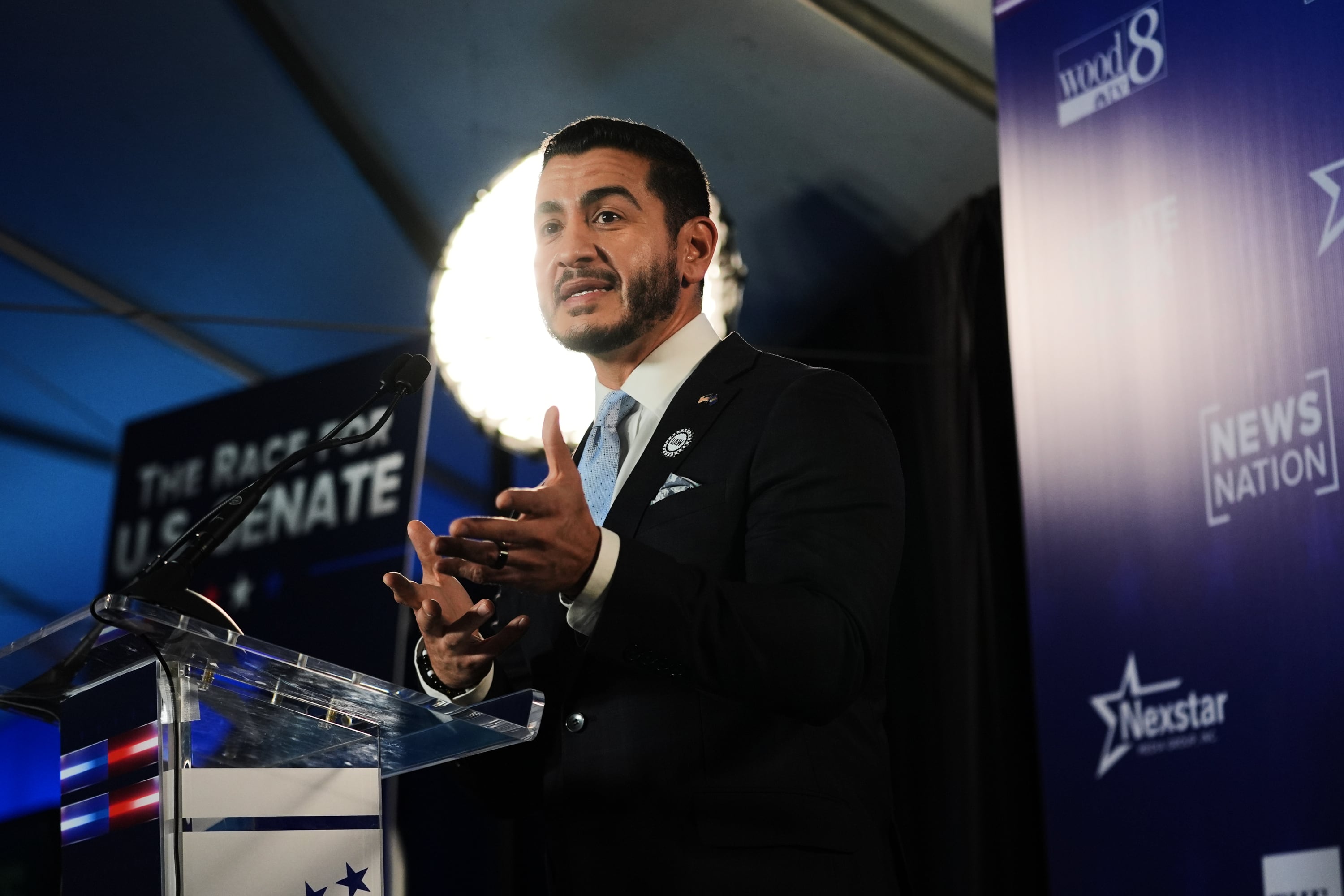
Abdul El‑Sayed, the Democrats’ riskiest bet for the midterms: ‘We will have to hold Trump accountable for all the harm he has done’

There is still over an hour before the protagonist appears, but the line already wraps around the block. Dozens of people wait patiently for their turn to see the man who has become the great hope of the Democratic left wing. When he begins to speak, pandemonium breaks out: “My name is Abdul El‑Sayed and I am going to be your next senator in Washington.” Over the next hour, the hundreds gathered in this venue will applaud, laugh, and cheer every word from the mouth of the new star of American politics, who has already made a fitted black T‑shirt and jeans his trademark look. We are in Lansing, Michigan’s capital, where one of the most gripping battles of the midterm elections — just over two weeks away — is being fought.

Seguir leyendo

© Paul Sancya (AP Photo/Paul Sancya)

Abdul El‑Sayed, Democratic candidate for U.S. senator from Michigan, last Thursday after debating Republican Mike Rogers in Grand Rapids, United States.
  •  

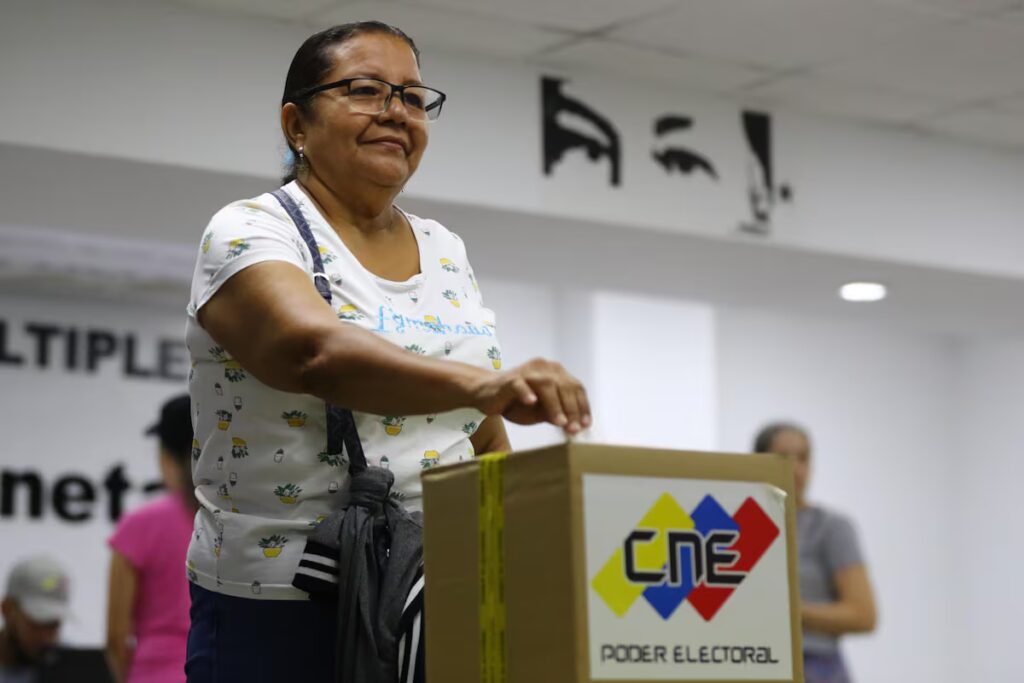
Venezuelans Vote Sunday in Second Popular Consultation on 37,000 Projects

(FILE) The election day on this Sunday, October 18 will cover 5,418 communes in the country with direct funding from the Federal Council of Government. Photo: EFE.

Venezuela holds its Second National Popular Consultation this Sunday with 5,418 communal circuits choosing among over 37,000 locally proposed projects in water, roads, lighting, health and education.


Venezuela will hold its second National Popular Consultation of the year on October 18, in which communes across the country will vote directly on 37,205 budget proposals, with each winning project set to receive an initial $10,000 administered by the community itself.

The vote covers 48,086 communal councils grouped into 5,418 territorial circuits, which the source describes as guaranteeing self-government at the neighborhood level.

RELATED: Venezuela Presents Venezuela Renace Plan Update 100 Days After Earthquakes

To facilitate participation, authorities have set up 11,495 voting centers and 12,769 polling tables nationwide. The process will be guarded by 13,000 members of the Republic Plan security deployment, with operational support from more than 36,000 communal members advised by the National Electoral Council (CNE).

What Voters Will Decide

The proposals are tied to the government’s Concrete Action Agenda. The City and Services sector has the largest share, with 19,028 projects focused on water, electricity, roads and hospital infrastructure. The social area has 9,217 initiatives, and the economic sector has 4,887 proposals to boost local production.

Each project chosen by popular vote will receive an initial allocation of $10,000, to be managed and carried out directly by the commune. Institutional spokespeople said earlier editions closed with more than 80% successful executions, thanks to what they called the rigorous application of preventive social oversight.

Venezuelans will vote this Sunday on another National Popular Consultation. Each organized community will choose a project, according to local needs, that will receive 10k in state funding. Alongside communes, over 400 condominium boards are also participating pic.twitter.com/ecihlXWs8U

— Venezuelanalysis (@venanalysis) October 16, 2026

First Condominium Vote

One structural change stands out this year. More than 89 condominiums and horizontal property movements from Aragua, Miranda and the Capital District have joined the process formally. It is the first time these residential boards can put forward priority projects of their own, from elevator repairs to improvements in basic services inside buildings.

In the days before the vote, communes carried out house-to-house outreach to promote the proposals now heading to the ballot. That door-knocking campaign carried each initiative into homes and opened neighbor-to-neighbor debate over territorial priorities.

The Sunday vote will also promote the active participation of young people aged 15 and older, which authorities say favors generational renewal in local public management.

Acting President Delcy Rodríguez, speaking in at the Villa Zoila commune, emphasized that “the people are exercising a protagonistic and participatory form of democracy.”

“We are going to democracy, to participation and to the emotion that always comes with going to an election,” she said.

Rodríguez connected the vote to the delivery of the National Budget before the National Assembly. That spending plan, she explained, is built “from the communes.” Communes and community organizations take part in deciding where resources will be invested, an advance she said Venezuela must preserve.

The second edition of the year confirms the National Popular Consultation has moved beyond an isolated event. It now functions as a recurring mechanism of popular decision, with organized communes as the leading actors in local public spending, as a pillar of participatory democracy in Venezuela.

  •  

Paz pone en segundo plano reclamo marítimo de Bolivia para «construir un futuro» con Chile

Al reiterar la prioridad del futuro sobre el reclamo histórico boliviano, Paz mencionó los acuerdos suscritos por autoridades bolivianas y chilenas en áreas de minería, integración energética y conectividad.
  •  

Presidenta (E) de Venezuela convoca a la Consulta Nacional de este domingo

Delcy Rodríguez llamó a votar en más de 5.400 circuitos comunales, donde las comunidades elegirán entre más de 37.000 proyectos. Por primera vez participan las juntas de condominio.
  •  

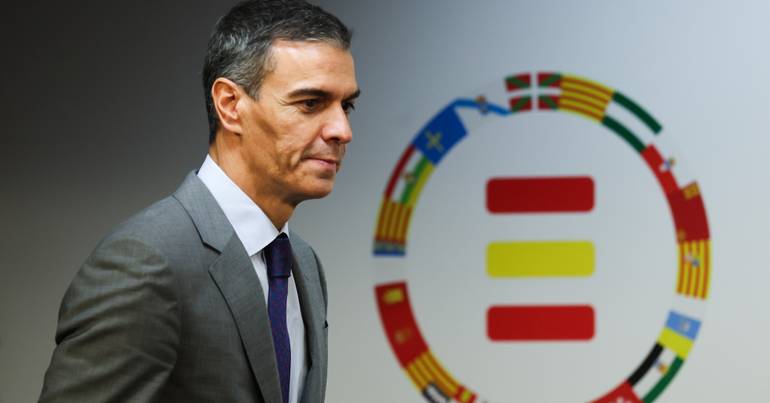
Sánchez diz que dados provam política migratória responsável

Sánchez deu como exemplo a diminuição de 72% das entradas de migrantes em Espanha de forma irregular, a partir da costa atlântica africana, já no conjunto da Europa essa percentagem é de cerca de 30%.

© OLIVIER HOSLET/EPA

19 Líderes da União Europeia comprometeram-se esta sexta-feira a "manter um elevado nível de vigilância nas fronteiras externas" do bloco comunitário, após a crise migratória de Ceuta, originada com a entrada de mais de 70.000 pessoas nesta cidade espanhola no norte de África no final de julho
  •  

Venezolanos elegirán entre más de 37.000 proyectos en la consulta de este domingo

La jornada electoral de este domingo 18 de octubre abarcará a 5.418 comunas del país con financiamiento directo del Consejo Federal de Gobierno.
  •  
❌