Iran’s ambassador and chargé d’affaires to the UN has stressed that any arrangements for the Gaza Strip’s future must fully respect Palestinian rights and self-determination, denouncing the United States and the Israeli regime for the current situation affecting the Strait of Hormuz.
Gholamhossein Darzi made the remarks on Friday, addressing a UN Security Council meeting on the situation in West Asia, including the Palestinian question.
He noted that Gaza remained devastated and continued to be subject to military aggression, despite the announcement of a ceasefire last year.
The ceasefire was announced last October as part of a United States-proposed plan to bring an end to two years of Israeli genocide, supposedly.
The Israeli regime has, however, killed more than 1,400 Palestinians during attacks across the territory ever since, in addition to the tens of thousands it had already killed throughout the genocide that began on October 7, 2023.
Darzi called for a permanent end to the Israeli aggression, lifting of the Israeli blockade on the coastal sliver, and realization of a lasting ceasefire in the territory.
He called for unconditional and complete withdrawal of Israeli forces from the territory as well as immediate and sustained delivery of humanitarian aid and deployment of relief personnel.
The diplomat called accountability for serious violations of international law a legal obligation, condemning the regime for committing genocide, war crimes, and crimes against humanity.
He also denounced expansion of illegal settlements, intensifying settler violence, and Israeli plans for “annexation” of the occupied West Bank.
Palestinians must be able to establish an independent, sovereign, and viable state, with the holy occupied city of al-Quds as its capital and full membership in the United Nations, the official stated.
He also demanded Israeli withdrawal from Lebanese territory and occupied Syrian areas and respect for both countries’ sovereignty.
Elsewhere in his remarks, Darzi slammed the United States and the Israeli regime for launching two rounds of unprovoked aggression against Iran respectively, last June and from February 28 until April 7 this year.
The aggressors, he noted, committed war crimes through deliberate targeting of civilians and critical infrastructure.
He also attributed the situation affecting the Strait of Hormuz to the American-Israeli atrocities, including an American naval blockade.
“Our position is crystal clear: The only practical way to restore normal and safe maritime navigation in the Strait of Hormuz is immediate and permanent cessation of US aggression, provision of credible guarantees against its recurrence, respect for Iran’s sovereign rights, and complete lifting of the naval blockade and other unlawful coercive measures.”
Following the US-Israeli aggression against Iran on February 28, Tehran closed the Strait of Hormuz to its adversaries. The key waterway has remained largely closed ever since, driving up fuel prices worldwide and increasing the cost of living for millions of people.
Tehran has made it clear that it will not reopen the strait until Washington meets its demands, including a permanent end to the war.
Las operaciones militares abarcaron Yenín, Nablus y Ramala, restringiendo el tránsito de agricultores en la cosecha de aceitunas en la Cisjordania ocupada.
Netanyahu's supporters, especially among Orthodox Jews, believe he's protecting a country they love as central to their identity. Many liberal and younger Jewish Americans believe his policies have harmed Israel's global standing.
French mayor and archbishop also attacked during violent attempt to stop Palestinians harvesting olives
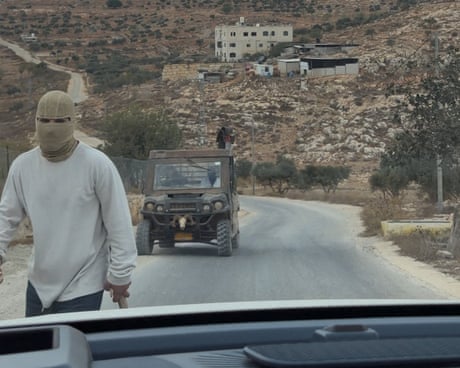
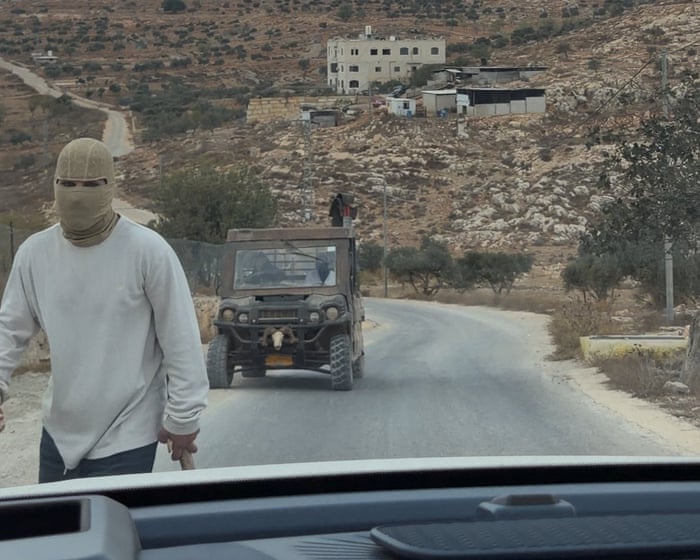
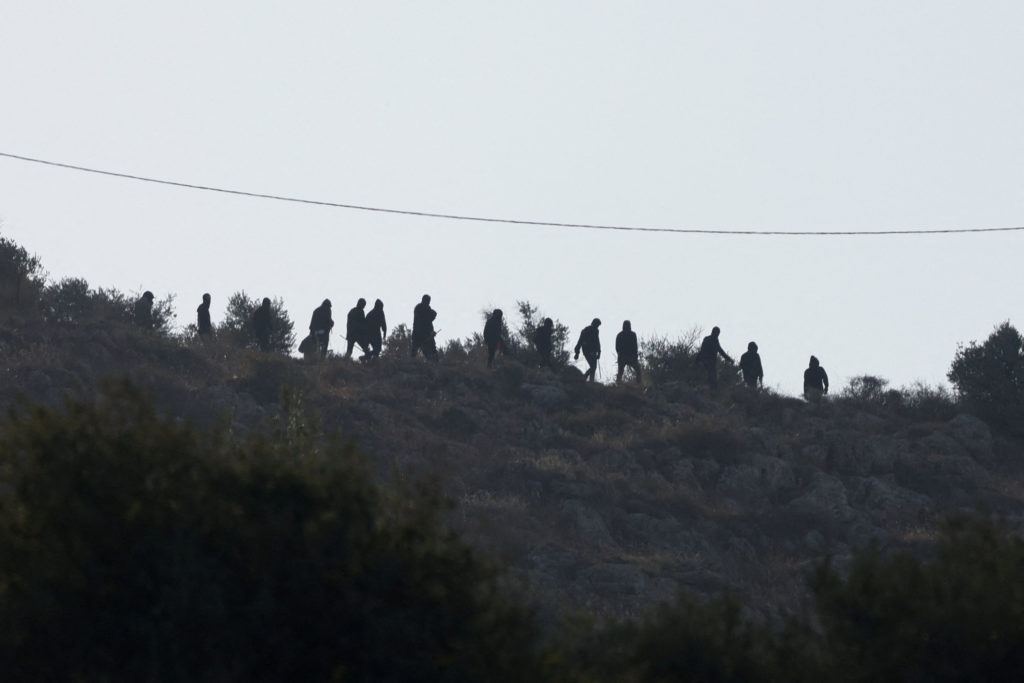
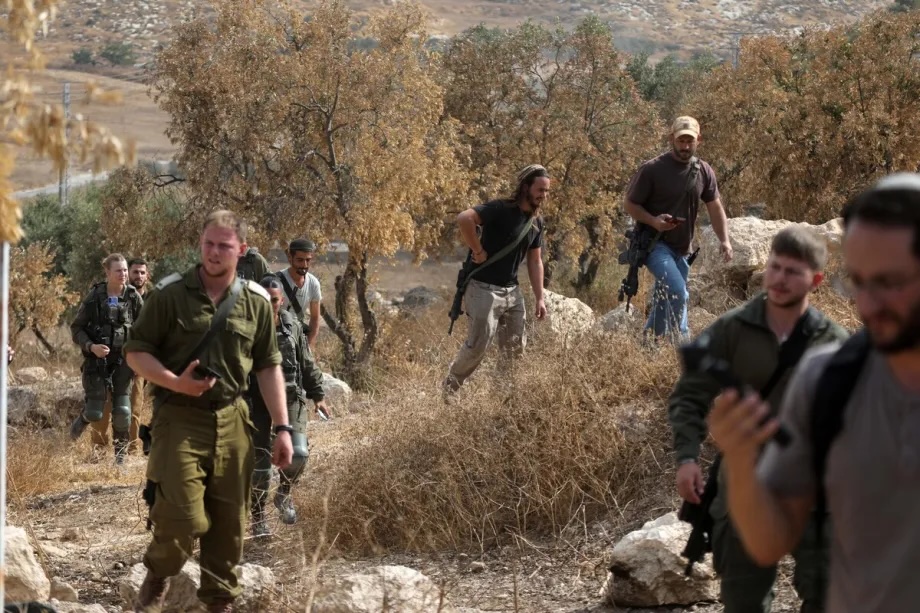
Israeli settler militants have attacked European diplomats, a French mayor and the archbishop of Cambrai in Taybeh, in the occupied West Bank, injuring three people and damaging a car, in the latest violent attempt to prevent Palestinians from harvesting olives on their own land.
Bernard Baudoux, mayor of Aulnoye-Aymeries, was wearing his red, white and blue sash of office and attempting to enter a vehicle with diplomatic plates when he was assaulted and knocked to the ground on Saturday.
Belgian foreign minister urges further EU sanctions and links attack to Israel’s ‘illegal settlement policy’
Masked settlers attacked a group of European diplomats during a visit to the occupied West Bank on Saturday, Belgium’s foreign minister said, on a second day of high-profile assaults on Palestinians and others during the sensitive olive harvest.
At least four people have been killed and more than 100 injured since the harvest began earlier this month, according to the Palestinian health ministry. Activists say Israeli authorities do little to stop attacks that involve weapons ranging from slingshots to guns. An attack on Friday seriously injured a Washington Post photographer and others.
In Saturday's attack in the village of Taybeh, settlers targeted Belgium's consul general, French and Polish diplomats and Catholic representatives, Belgian Foreign Minister Maxime Prevot said.
With Israeli rabbi's blessing, settlers are stealing Palestinians' olive harvest; with IDF support, settlers are beating both Palestinians and int'l visitors. That's not all.
BEIRUT – The number of books destroyed by Israeli bombings of libraries, as well as religious and cultural institutions since October 2023, has exceeded 3 million copies, founder and coordinator of the National Network for the Protection of Libraries, Archives, and Cultural Heritage in Lebanon Hadi Bekdash told Sputnik on Saturday.
“There are reports of the burning of more than 700,000 books belonging to Lebanese and Arab publishers, as well as more than 3 million books from homes, libraries, religious centers, family collections, researchers’ libraries, and universities, publishers, cultural institutions, and private collections since 2023,” Bekdash said.
In 2026, practically confirmed information appeared about the destruction of dozens of public and hundreds of private libraries during the conflict with Israel, he added.
These data do not reflect the full scale of losses, since Lebanon still does not have a unified national database of destroyed libraries, archives, and book collections, the coordinator said.
Bekdash added that it will be possible to finally assess the damage only after conducting a nationwide inventory of lost and damaged collections.
A national campaign, A Million Books for Lebanon, is currently underway in the country, aimed at restoring destroyed and damaged libraries.
South Korean President Lee Jae-myung is trying to maneuver between pressure from the United States, which demands participation in the conflict with Iran, and risks to national security and reputation, opting for a strategy of stalling and minimizing a direct military presence.
The previous article explained why South Korea refused to join the United States in the “denuclearization of Iran” and how, in response, Donald Trump struck at Lee Jae-myung’s ambitions, nudging him toward the desired choice. And although President Lee’s rhetoric ultimately seems anti-war, in reality there are many loopholes remaining: for example, not a new contingent, but a decisive increase and expansion of the existing contingent’s mandate.
“No!” or “Maybe”
On September 16, Donald Trump said on social media that countries that “provided no assistance” would, after the war with Iran ended, have to “compensate” the United States for damages. Trump did not say whom he meant.
On September 17, First Vice Minister of Foreign Affairs of the Republic of Korea Park Yun-ju stated that the ROK’s participation in an international operation in the Strait of Hormuz region depends on a number of factors and is tied not only to relations with the United States but also to the safety of navigation, energy supplies, and the protection of the country’s citizens.
On September 18, Lee Jae-myung stated that South Korea would not deploy troops or military equipment in a way that would draw the country into the war between the United States and Iran. However, he allowed for minimal measures to protect South Korean vessels, oil delivery routes, and citizens, pointing to disruptions in crude oil supplies as one of the risks.
Apparently, eyebrows were raised in Washington, after which on September 19 the Blue House indicated that President Lee Jae-myung’s remarks did not amount to a rejection of Trump’s call for military cooperation. An administration official said that the government is considering practical ways to assist in close contact with the international community, including the United States.
The Specifics of the Future Conflict
Because the war with Iran follows a sine curve, and Donald Trump’s promises to “flatten Iran” alternate with talk of peace, it is possible that, once Trump enters a peace phase, Seoul’s need to rush to help the United States will temporarily disappear. Therefore, let us consider the scenario in which Seoul is actively pressed to help Washington—at least as proof of the Republic of Korea’s allied status.
Compared with previous deployments of South Korean troops as U.S. allies—whether in Vietnam or Iraq—they find themselves in a far more difficult situation. In both cases, this was a ground war in which South Koreans performed auxiliary tasks and mainly carried out clearing operations and fought poorly armed guerrillas, or guarded South Korean specialists while stationed in territory controlled by the Kurds.
However, although Iran does not have nuclear weapons, it has ballistic missiles and kamikaze drones in abundance. This means that wherever South Korean troops are located, they could become targets, especially since South Koreans have no experience countering such a threat, and any serious losses would both damage the country’s domestic political standing and hurt the president’s reputation. As the saying goes, victory has many fathers, but defeat always has one—and he is often the scapegoat.
If anything goes wrong, President Lee will be symbolically held responsible as the person who initiated South Korean participation in the war. At the same time, he may also be criticized for the fact that, in seeking to neutralize the threat of a military coup, he carried out a whole set of measures that could be seen as a certain decline in military readiness—which, alas, performed poorly when confronted with Iranian drones.
Lee Jae-myung’s Two Strategies
Lee Jae-myung understands this situation perfectly and will therefore adhere to two strategies.
The first is to stall for as much time as possible, especially since, under the country’s constitution, sending troops abroad must go through parliament. Because the conflict is escalating and there is domestic opposition, the timing of any troop deployment remains in question.
The situation is interesting: parliament is generally under President Lee’s control, and if he says “yes,” the National Assembly will vote according to his will. But if Lee throws up his hands and says, “I’m in favor, but the Korean people are against it, and we have a democracy, which I cannot go against,” then, on the one hand, outside observers may perceive this as a mutiny on board; on the other, the United States may find another painful way to push Seoul in the right direction. The hope here is rather that the geopolitical situation or Trump’s mood will change and assistance will not be needed.
The second strategy is to send assistance but minimize Korean participation in direct combat: patrol operations, intelligence and surveillance, demining assistance, medical or other humanitarian aid. As a government source told Yonhap, “we are discussing how to contribute safely, without direct participation in combat,” and according to the Dong-A Ilbo, South Korea is considering sending a P-8A Poseidon maritime patrol aircraft designed for long-range maritime surveillance, a supply ship, and explosive ordnance disposal specialists.
Another option is the Cheonghae Unit (the newest destroyer with a special forces team aboard), which has long been in the Middle East and is engaged in protecting shipping and responding to threats, including piracy. Increasing its size is not the same as deploying a new contingent, and when, on July 24, 2019, during one of the previous rounds of escalation, the United States demanded not only an increase in South Korea’s share of the costs of maintaining American troops but also the deployment of South Korean naval forces to the Strait of Hormuz, the Cheonghae contingent, which was supposed to fight Somali pirates, “expanded its area of operations” from the Gulf of Aden to the Gulf of Oman and the Arabian Gulf. In 2021, Cheonghae was also in the strait, but it was withdrawn to leave a window of opportunity for negotiations after Iran seized a South Korean tanker.
Iran’s Response: What Matters to Tehran Is the Fact Per Se, Not the Scale
It seems that the Iranian side responds in this respect much as North Korea does: what matters is the very fact of Seoul’s participation on the side of the United States, not the scale of such measures. Diplomats and officials have already issued a series of warnings, voicing fairly specific and inconvenient response options for Seoul.
On September 7, Iranian Foreign Ministry spokesman Esmail Baghaei published a warning in Korean, stating that Tehran would regard the military presence or participation of any third country in operations in the Persian Gulf and the Strait of Hormuz as direct support for the aggressor, which could entail “serious consequences.” At the same time, the diplomat stressed the importance of friendly relations with Seoul.
Earlier, Iranian expert Mohammad Marandi said that South Korea’s participation in the war could make it an enemy of Iran, and retaliatory strikes could affect not only military but also economic assets of South Korean companies in the Persian Gulf countries. South Korea gets most of its energy resources from the Near and Middle East, and a blockade of the Strait of Hormuz and attacks on vessels delivering petroleum products to South Korea would force it to urgently rethink its supply chains.
At the same time, the most convenient and safe backup supply-chain option is also uncertain, because it involves obtaining petroleum products from Russia. Talks on this issue have already begun, and South Korea is trying to prepare its European partners for the possibility of obtaining Russian petroleum products. But, first, the EU still has to be persuaded; second, it is not at all clear that Moscow would welcome this with open arms, knowing that this is not a conceptual turn toward Russia but a desire to solve a problem now that is de facto completely irrelevant to Moscow.
In Lieu of a Conclusion
Lee Jae-myung remains trapped. Refusing to send troops could lead to a further deterioration in relations with Trump, who could take actions against South Korea, such as imposing new tariffs. Sending troops carries certain reputational and domestic political risks. This is harder than a “test of strategic thinking” and a choice between two great evils.
Therefore, we will follow with great interest whether a parliamentary discussion finally takes place and what its verdict will be. It is interesting to see how ready South Korean military personnel and South Korean weapons are to take part in a modern war.
Konstantin Asmolov, PhD in History, leading research fellow at the Center for Korean Studies of the Institute of China and Modern Asia at the Russian Academy of Sciences
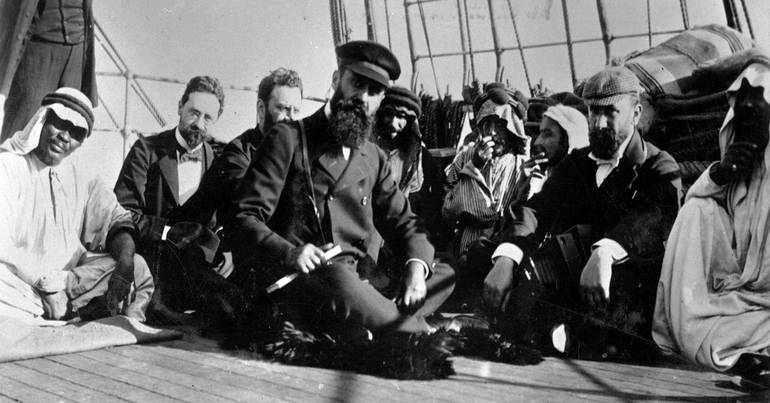
Como é que a memória judaica se constrói através daqueles que criticaram a criação de um estado soberano? O Observador faz a pré-publicação de um excerto do livro "Antissionismo", a publicar dia 19.
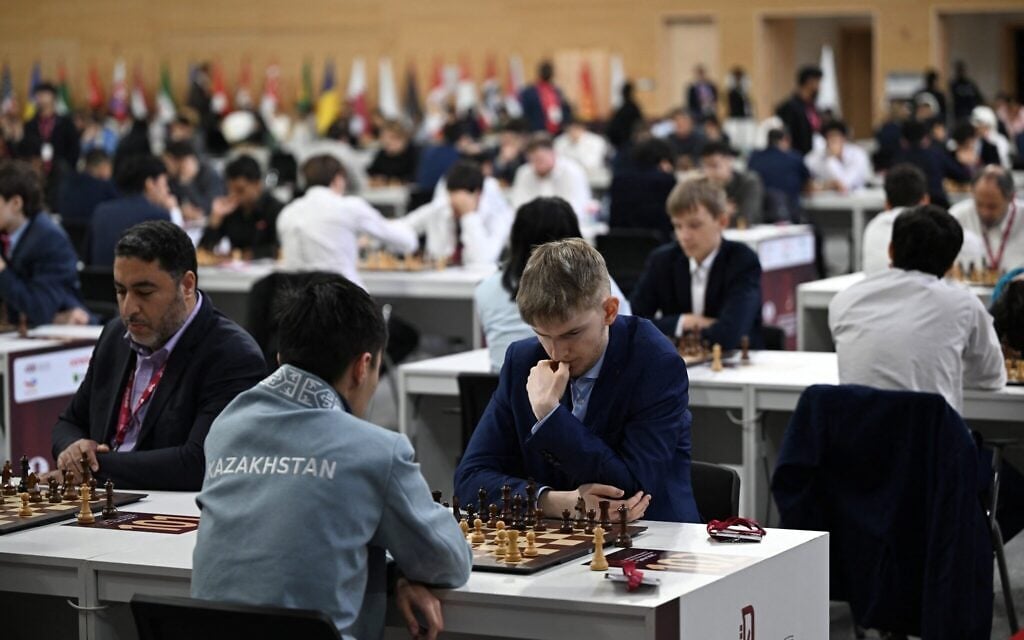
Players call for Malaysia to be stripped of Nov. tournament, noting exclusion violates guidelines of chess governing body, FIDE; one player says he was omitted despite registering with foreign passport
Ahead of election, former central bank deputy governor Zvi Eckstein says outgoing government's decisions have impacted country's growth, with economy at risk unless changes are made
Police are assessing a social media post by the wife of Andy Burnham's national security adviser Jonathan Powell that shows support for banned extremist group Palestine Action.
Restrictions on Islamic headscarves in Azerbaijan’s schools have triggered demonstrations, arrests and an unusually public confrontation between Baku and Ankara.
The dispute has exposed differences over secularism, religious freedom and Azerbaijan’s relationship with Israel, raising questions about the durability of one of the region’s closest strategic alliances.
Azerbaijan is facing an unusual wave of protests after new school dress regulations led to girls wearing Islamic headscarves being excluded from classrooms and teachers reportedly being ordered to remove their hijabs. The controversy has escalated into a diplomatic dispute with Turkey, whose governing party has been accused by President Ilham Aliyev’s administration of interfering in Azerbaijan’s internal affairs.
The confrontation intensified on 13 October when Azerbaijan’s ruling New Azerbaijan Party (YAP) publicly condemned senior figures in President Recep Tayyip Erdoğan’s Justice and Development Party (AKP). The dispute has since widened to encompass Azerbaijan’s relations with Israel, exposing political differences between two countries accustomed to describing themselves as “one nation, two states”.
School regulations provoke protests and arrests
The controversy began on 21 September, when Azerbaijan’s government adopted Resolution No. 309, amending the regulations governing uniforms in state schools. The changes prohibit clothing that conflicts with prescribed uniforms or the secular character of public education.
Although the new regulations do not explicitly mention Islamic headscarves, some schools have interpreted them as prohibiting the hijab. A further decision on 6 October introduced similar requirements for teachers. Women in Baku and Sumgayit subsequently reported being instructed to remove their headscarves or risk losing their positions.
The enforcement of these regulations prompted demonstrations outside schools, with girls carrying placards demanding access to education. Male pupils also joined protests in support of their classmates. Such demonstrations are unusual in Azerbaijan, where public assemblies face extensive restrictions.
On 12 October, the Interior Ministry reported that 37 people had been detained in Baku, alleging disruption of public order, damage to property and obstruction of school activities. Activists claimed that more than 200 people had been detained, although that higher figure has not been independently confirmed.
In a statement issued on 16 October, Amnesty International criticised the exclusion of pupils and called for the release of peaceful demonstrators. The organisation also raised concerns over the reported detention of a mother protesting her daughter’s exclusion and the disappearance of an activist who had organised educational assistance for affected children.
Access to TikTok and Instagram was disrupted as the protests spread online. Internet monitoring organisations documented restrictions, although Azerbaijani authorities have not publicly explained their cause.
Turkey challenges Azerbaijan’s secular policy
The dispute acquired an international dimension when Oktay Saral, a senior adviser to Erdoğan, condemned the exclusion of girls wearing headscarves.
In a public statement on 12 October, Saral questioned how preventing a girl from attending school because of her religious clothing could be reconciled with justice. He demanded that Azerbaijan reverse the restrictions. Several AKP parliamentarians subsequently joined the criticism.
The response from Baku was unusually confrontational. In its official statement, the New Azerbaijan Party accused Turkish political figures and media organisations of conducting a systematic campaign against Azerbaijan.
The party argued that religious solidarity did not entitle one Muslim-majority country to dictate another’s domestic policies. It described the Turkish politicians’ interventions as irresponsible and warned against attempts to interfere with Azerbaijan’s sovereignty.
The disagreement reflects contrasting approaches to secularism. Azerbaijan, a predominantly Shia Muslim country, has maintained strict state control over religious institutions since independence from the Soviet Union. Turkey, by contrast, has progressively removed restrictions on Islamic headscarves under Erdoğan’s government, reversing policies previously associated with its secular establishment.
Israel adds another source of tension
The dispute has also reopened disagreements concerning Azerbaijan’s relationship with Israel.
Baku maintains substantial security and defence cooperation with Israel, including military technology and equipment supplied during its conflict with Armenia over Nagorno-Karabakh. Turkey supported Azerbaijan during that conflict but has adopted an increasingly confrontational position towards Israel.
As EU Today has previously examined, the relationships between Turkey, Azerbaijan and Israel reveal competing strategic interests beneath Ankara and Baku’s declared solidarity.
In its October statement, the New Azerbaijan Party specifically rejected criticism of Azerbaijani-Israeli relations, insisting that its dealings with Israel were legitimate bilateral arrangements. The inclusion of Israel in a response ostensibly concerning school uniforms indicates that the disagreement extends beyond religious clothing.
A further escalation emerged on 16 October when Azerbaijani prosecutors announced charges against Turkish journalist Celal Çiftçi, accusing him of advocating the violent overthrow of the Azerbaijani government in social media posts connected to the controversy. An arrest warrant was reportedly issued in his absence. Prosecutors did not publish the posts, and Çiftçi’s response was not available.
Could the dispute break the Turkish-Azerbaijani alliance?
Despite the increasingly hostile exchanges, there is little evidence of an imminent diplomatic rupture.
Turkish Foreign Minister Hakan Fidan travelled to Baku on 15 October and met President Aliyev. The meeting addressed recent developments in bilateral relations, while Fidan publicly emphasised the enduring strategic partnership between the countries.
He acknowledged that differences could arise but argued that they should be resolved through direct dialogue rather than political confrontations on social media. Senior AKP figures have also sought to reduce tensions, stressing respect for Azerbaijan’s sovereign decisions.
The relationship extends far beyond shared language and cultural identity. Turkish military cooperation has been central to Azerbaijan’s regional security policy, while energy infrastructure and transport corridors connect the countries economically. Ankara also remains an important actor in the changing strategic balance of the South Caucasus.
For the European Union, the confrontation is relevant because Azerbaijan remains an important energy supplier and trading partner, while Turkey occupies a central position in regional transport and security arrangements.
The immediate question is whether Baku will reconsider the application of its school regulations. The wider political dispute concerns the extent to which Turkey can criticise Azerbaijan’s domestic policies without jeopardising a partnership that both governments have consistently presented as a cornerstone of their foreign policy.
The public confrontation has exposed differences that had previously been managed within the bilateral relationship. However, Fidan’s intervention and the continued diplomatic engagement suggest that both governments are seeking to contain the dispute rather than dismantle their alliance.
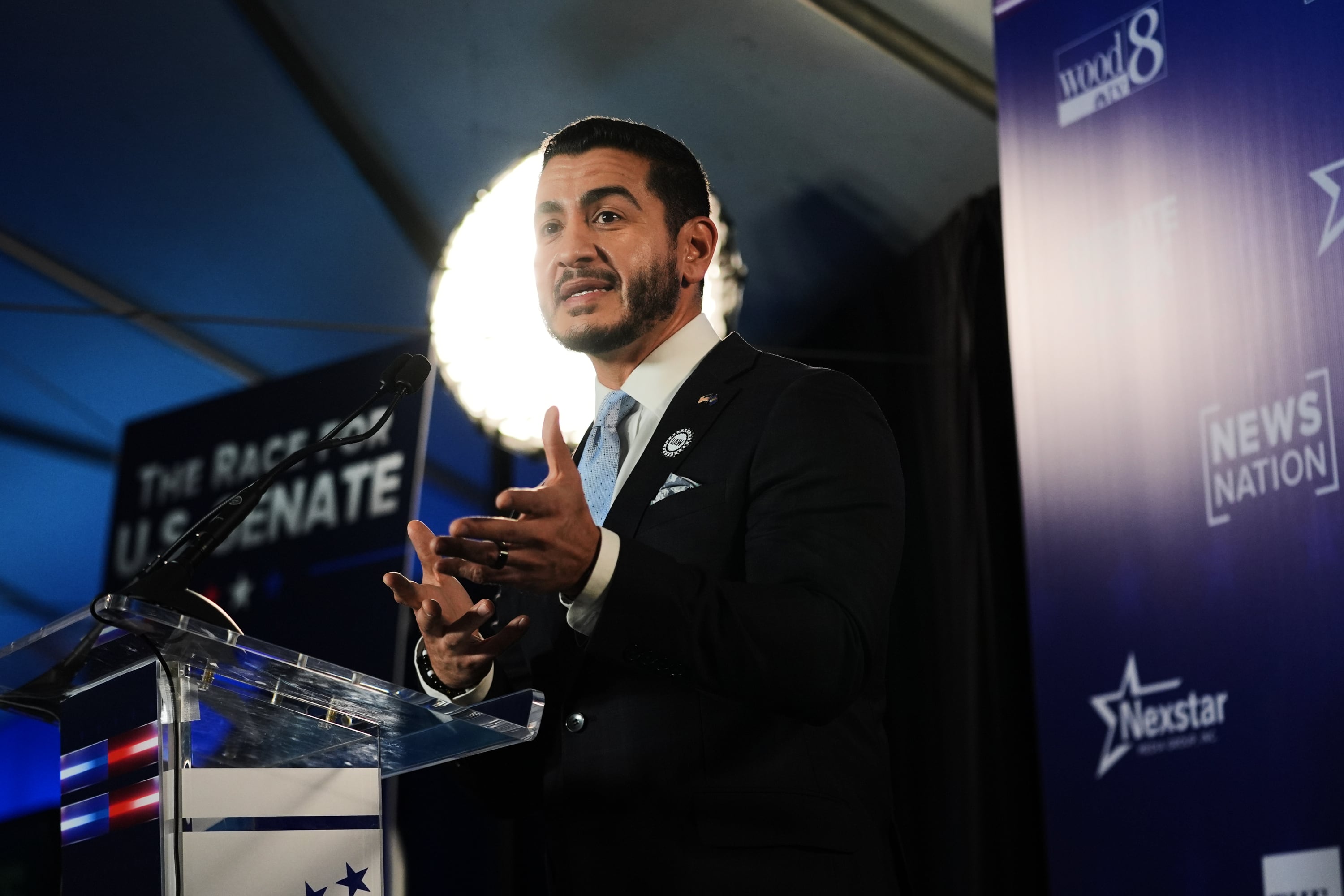
There is still over an hour before the protagonist appears, but the line already wraps around the block. Dozens of people wait patiently for their turn to see the man who has become the great hope of the Democratic left wing. When he begins to speak, pandemonium breaks out: “My name is Abdul El‑Sayed and I am going to be your next senator in Washington.” Over the next hour, the hundreds gathered in this venue will applaud, laugh, and cheer every word from the mouth of the new star of American politics, who has already made a fitted black T‑shirt and jeans his trademark look. We are in Lansing, Michigan’s capital, where one of the most gripping battles of the midterm elections — just over two weeks away — is being fought.
Abdul El‑Sayed, Democratic candidate for U.S. senator from Michigan, last Thursday after debating Republican Mike Rogers in Grand Rapids, United States.
“Me atacaron y me empujaron al suelo. Por suerte tenía mi chaleco antibalas y mi casco, de lo contrario probablemente ni siquiera estaría aquí, porque seguían pateándome y pateándome”, declaró la fotoperiodista desde el hospital de Ramala.
La red de ciberespionaje israelí logró infiltrarse en redes sensibles del Pentágono, la ONU, la OTAN y la Corte Penal Internacional. El entramado afectó además a la cadena Al Jazeera, empresas tecnológicas como Nvidia y una masiva cobertura digital en Palestina.
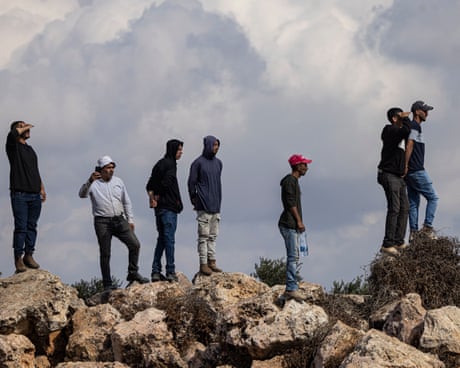
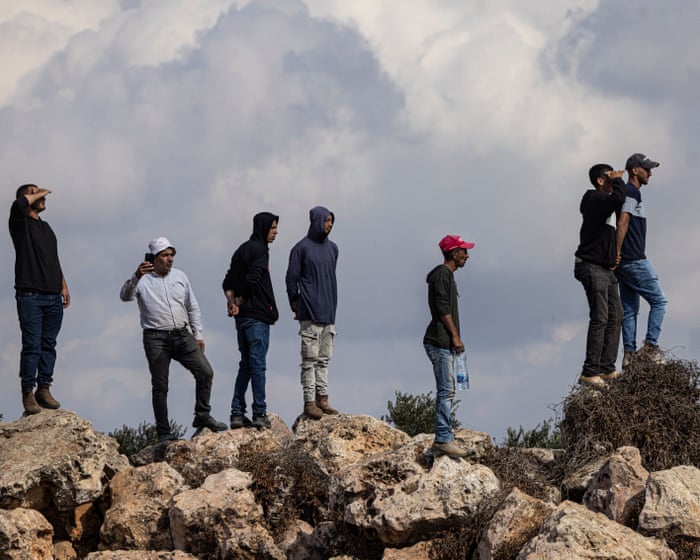
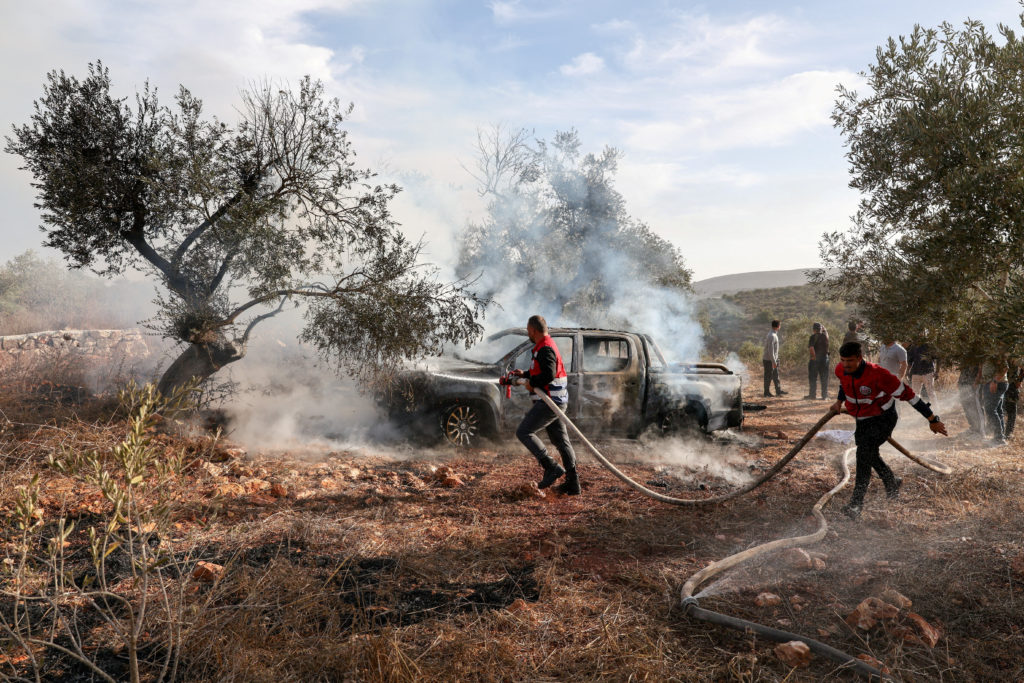
Israeli settlers attacked Palestinian villages across the occupied West Bank on Friday, setting fire to cars and trees and beating residents and a Washington Post photographer, in the latest violence to disrupt the territory's annual olive harvest this month.
Prime Minister Benjamin Netanyahu and his chief rivals have said they won't form a coalition with any Arab-led party after the Oct. 27 election – even if that means months of gridlock and another round of voting.

 Login