❌

Reading view

$65K Settlements with EEOC Over Failure to Accommodate Muslim and Christian Employees' Religious Days Off

From a press release last month, just posted on Westlaw:

N.C. Detective Agency, a Durham-based security company, will pay $65,231 in compensatory damages and back pay, and take other corrective actions to voluntarily resolve a religious discrimination investigation by the U.S. Equal Employment Opportunity Commission (EEOC), the federal agency announced today.

The EEOC's investigation found reasonable cause to believe that an employee requested to be excused from work due to a Muslim religious holiday, but the request was denied. The company was aware of the employee's need for a religious accommodation but did not engage in the legally required interactive process, and instead terminated her in June 2025 when she did not report for duty.

And from another press release two weeks later, also just posted on Westlaw:

Reynolds IGA Foodliner, Inc., owner and operator of a chain of grocery stores, will pay $65,000 and provide other equitable relief to settle a religious discrimination and retaliation lawsuit filed by the U.S. Equal Employment Opportunity Commission (EEOC), the federal agency announced today.

According to the suit, shortly after she was hired as a deli clerk at the Piggly Wiggly store in Hazlehurst, Georgia, the employee requested Sundays off to observe her Sabbath. The employee's supervisor denied the request, claiming that, if the store gave the employee Sundays off, it would have to do the same for all other employees. The employee continued to request the accommodation, and the company fired her in January 2025.

More from the second press release:

"Employers cannot deny religious accommodation requests simply for fear of upsetting other employees," said Marcus G. Keegan, regional attorney for the EEOC's Atlanta District. "The EEOC remains committed to enforcing federal anti-discrimination law and protecting employees' rights to religious freedom."

Darrell E. Graham, director of the EEOC's Atlanta District, said, "Employers must thoughtfully consider each request for religious accommodation on an individual, case-by-case basis and otherwise make good-faith efforts to accommodate their employees' religious beliefs. Employers must be aware of their obligations under federal law to provide reasonable religious accommodations absent undue hardship."

Finally, from a third press release from last month (it was published in between the first two, but was again just posted on Westlaw); this one involves a lawsuit and not a settlement:

Blue Bell Creameries, Inc., a Brenham, Texas-based frozen snack manufacturer and distributor with a production facility in Sylacauga, Alabama, unlawfully terminated a Jewish body shop technician soon after he requested a beard‑related religious accommodation, the U.S. Equal Employment Opportunity Commission (EEOC) charged in a lawsuit announced today.

Even supporters of bans on religious discrimination by private employers might debate whether employers should be required to give religious exemptions from generally applicable rules (exemptions that could themselves be seen as discrimination in favor of religious observers). But Congress has indeed mandated such exemptions: Title VII of the Civil Rights Act, as amended in 1972, generally requires employers to accommodate religious objectors' requests for exemptions from generally applicable work rules, unless doing so would pose an "undue hardship" for the employer.

That extends to time off for religious holidays: Indeed, the leading recent case on the subject, Groff v. DeJoy, involved a Christian employee's request for an exemption from having to work Sundays. And of course it extends, as it must, to all religions.


The post $65K Settlements with EEOC Over Failure to Accommodate Muslim and Christian Employees' Religious Days Off appeared first on Reason Magazine.

  •  

Ukraine, EU set up joint task force to fast-track anti-corruption reforms that gate membership

ukraine's right self-determination non-negotiable all eu leaders say except hungary's flags european union commons/thijs ter haar backdrop potential territorial concessions looming over trump's meeting putin stand united support sovereignty 12

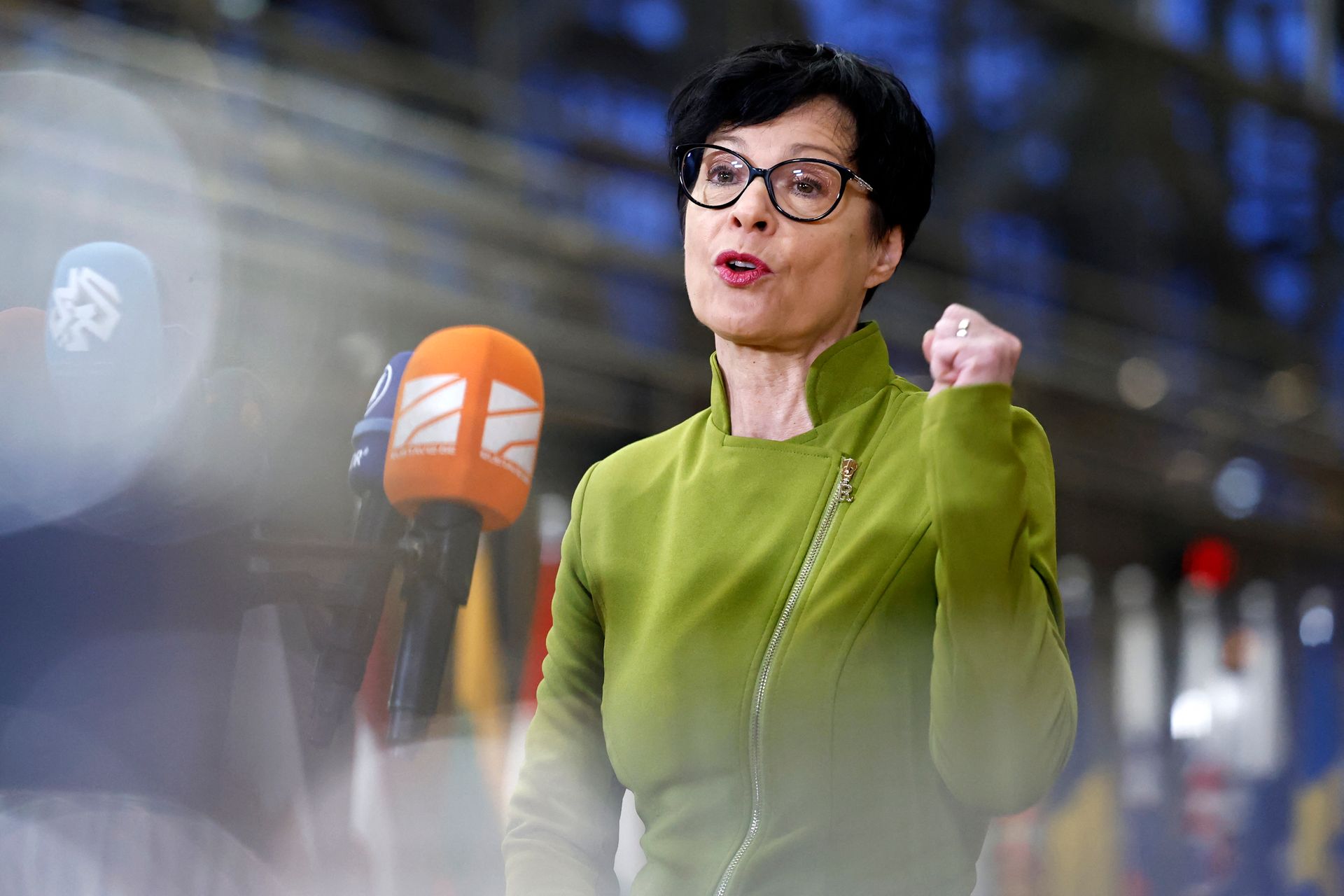
Ukraine and the EU have agreed to establish a joint working group to accelerate rule-of-law and anti-corruption reforms. This will help Kyiv meet the interim benchmarks for EU accession, Enlargement Commissioner Marta Kos says on X after talks with Ukrainian Prime Minister Serhii Koretskyi.

Ukraine’s path into the EU runs through its courts and anti-corruption agencies, and the bloc releases membership progress and much of its money only as Kyiv delivers those reforms.

“Ukraine is among the countries making most progress towards EU membership,” Kos says, adding that the group will work through outstanding requirements on the rule of law and the fight against corruption.

The move follows a breakthrough on the accession track. On 13 October, the Council of the EU opened two more negotiating clusters for Ukraine after the Ukrainian Parliament passed a minority-language education law on 12 October, clearing Hungary’s veto.

Why the reforms decide the money and the timeline

The group lands amid pressure on both fronts. Kos cast the education law as proof the system can work, crediting Ukrainian lawmakers with the consensus needed to adopt the reforms membership requires.

Meanwhile, Koretskyi expects the remaining clusters to open by the end of the year.

“Our success will require unity and commitment from all involved Ukrainian partners,” Kos emphasizes.

The official made clear the outcome depends on Ukraine keeping its side. The reforms are the same ones tied to Ukraine’s wartime financing, with billions in EU aid released only as Kyiv meets its commitments.

Billions in EU money hang on laws Ukraine has not passed

The stakes are financial as well as political. Ukraine is deep in a budget crunch and leaning on EU financing to keep the country running, and the Ukrainian Parliament returned from a month-long break this week to work through reform bills tied to that support.

As of 12 October, none of the needed laws had passed, according to anti-corruption activist Vitaliy Shabunin, who said the delay is already costing the country and blamed lawmakers who have stalled the reforms the money is tied to.

“As of today, Ukraine has NOT received several BILLION euros from the EU and others, because members of parliament have blocked the reforms to which that money is linked,” Shabunin said.

  •  

Anticipated Religious Clashes Can't Justify Current Restriction on Parents' Religious Upbringing of Child

From Lajara v. McMenamin, decided Wednesday by Pennsylvania Superior Court judge Brandon Neuman, joined by Judges Jack Panella and Carolyn Nichols:

Mother argues the trial court erred by entering paragraph 111 of the final custody order, which allows Child to decline attendance at religious or faith-based events beginning at the age of 14, and prohibits both parents from influencing, restricting, or limiting Child's participation in those events before or after age 14. In doing so, Mother claims this provision "infringe[s] upon the parties' First Amendment right to the free exercise of religion and the parties' fundamental right to parent their child." …

Under the Due Process Clause of the Fourteenth Amendment, a parent has a fundamental right "to make decisions concerning the care, custody, and control of the child." Under the Free Exercise Clause of the First Amendment, an individual has a right to religious freedom. Read together, parents have the constitutionally-protected "right to direct the religious upbringing of their children." [Under Pennsylvania precedent,]

[A] court may prohibit a parent from advocating religious beliefs, which, if acted upon, would constitute a crime. However, … it may do so only where it is established that advocating the prohibited conduct would jeopardize the physical or mental health or safety of the child, or have a potential for significant social burdens….

[E]ach parent must be free to provide religious exposure and instruction, as that parent sees fit, during any and all period of legal custody or visitation without restriction, unless the challenged beliefs or conduct of the parent are demonstrated to present a substantial threat of present or future, physical or emotional harm to the child in absence of the proposed restriction….

While the harm involved may be present or future harm, the speculative possibility of mere disquietude, disorientation, or confusion arising from exposure to 'contradictory' religions would be a patently insufficient 'emotional harm' to justify encroachment by the government upon constitutional parental and religious rights of parents, even in the context of divorce….

As noted by Mother, "[n]either party in this matter requested the trial court order any form of relief regarding the exercise of their religious beliefs or … [C]hild's attendance and participation in religious activities. No evidence regarding either party's religion or … [C]hild's attendance and participation in religious activities was presented at trial." The trial court explained its reasoning for this provision, stating:

This trial court was forced to anticipate, to the best of its ability and in light of the factors proscribing stability and consistency for … Child, that a high level of conflict is more than likely to arise as it pertains to religious activities. To put it simply, these parents have demonstrated that any disagreement or dispute has and can easily escalate quickly into full scale conflict that does nothing more than cause instability and emotional trauma to … Child.

As such, this trial court proactively prescribed a solution to any issues that may arise regarding … Child's attendance and participation in religious activities. This trial court acknowledges that neither parent raised the issue of religious activities[;] however, the tumultuous history of this case does not produce any optimism on the part of this trial court that they will be able to communicate and cooperate if religious participation becomes an issue. As such, it is in … Child's best interests to preemptively place parameters on his attendance and participation in religious activities….

Though we recognize the parties' behaviors do not produce optimism that religion will not become an issue in the future, based on the record before us, the restrictions set forth in paragraph 111 are contrary to our case law since there is no indication the parties' religious beliefs or practices present a "grave threat of harm," "a substantial threat of present or future, physical or emotional harm to the child[,]" or that the physical or mental health, or safety of the child would be jeopardized absent a restriction. Accordingly, the trial court erred in setting forth paragraph 111 of its January 6, 2026 order. Consistent with precedent, both parents shall be permitted to practice his or her religion with Child during their respective periods of custody, so long as there is no substantial threat of present or future physical or emotional harm to Child….

The post Anticipated Religious Clashes Can't Justify Current Restriction on Parents' Religious Upbringing of Child appeared first on Reason Magazine.
  •  

Il Nobel per la non-Pace, versione 2026

Sacrifica ciò che è scomodo, mai il progetto. Il “pal-washing” in azione.

Segue nostro Telegram.

Un copione già noto

Il 9 ottobre 2026 il Comitato norvegese per il Nobel ha assegnato il Premio per la pace a Navanethem Pillay, giurista sudafricana di 85 anni, già giudice della Corte penale internazionale e Alta commissaria Onu per i diritti umani. La motivazione parla di una persona che ha aperto la strada a un ordine giuridico globale più completo. Il presidente del Comitato, Jorgen Watne Frydnes, ha aggiunto che il premio è un messaggio per chi attacca e mina il sistema internazionale e le sue istituzioni. Il verdetto è dichiaratamente politico, ed è su questo piano che va discusso.

La stessa figura che nel 2011 avrebbe «abbattuto» Gheddafi, spianando la strada al saccheggio del petrolio libico e alla schiavitù dei migranti africani, ora «abbatterebbe» Netanyahu, e preparerebbe così la riabilitazione di Israele. Il filo logico non sarebbe la morale né la pace, ma l’agenda dell’Open Society di George Soros: sacrificare i soggetti diventati scomodi, mai l’essenza del progetto. Qualcuno l’ha battezzata «pal-washing». La domanda di fondo è seria, perché chiede se dietro premi e giurisdizioni dell’ordine liberale ci sia una regolarità.

Occorre sottolineare che il copione è già noto. Vi ricordate quando Barack Obama ricevette il premio Nobel per la pace, inaugurando guerre su guerre? O vi ricordare i personaggi in cerca d’autore come Machado, Mohammadi, o i difensori dei criminali Ucraini? Ma andiamo per ordine.


Atto Primo: la Libia

Nel febbraio 2011 Pillay, Alta commissaria, chiese al Consiglio per i diritti umani un’azione vigorosa per fermare le violenze e chiamare i responsabili a risponderne; il Consiglio condannò le violazioni e istituì una commissione d’inchiesta. Il passaggio successivo toccò al Consiglio di sicurezza: il rinvio alla CPI con la risoluzione 1970, poi la 1973, approvata con dieci voti favorevoli e cinque astensioni (Brasile, Cina, Germania, India, Russia). Nessuno sostiene che Pillay abbia deciso la guerra. Conta la sequenza: il linguaggio dei diritti umani aprì la porta, quello della protezione dei civili autorizzò la forza, e l’operazione scivolò verso il cambio di regime. Già in aprile Lavrov accusava la NATO di eccedere il mandato, e un ministro francese ammetteva che il cambio di regime avrebbe richiesto un nuovo voto.

Poi i costi. Nel 2017 l’OIM documentò aste di migranti subsahariani nel sud della Libia, venduti per somme tra 200 e 500 dollari. Il nesso con il crollo dello Stato dopo il 2011 è la lettura più plausibile, benché la fonte documenti il fenomeno e non la sua causa. Il prezzo lo pagarono la Libia e i migranti; la cornice giuridica ne uscì, sul piano formale, intatta, anche se la controversia sul mandato avrebbe poi pesato sui veti di Mosca e Pechino in altri dossier.

Atto Secondo: Bibi

Il 21 novembre 2024 la Camera preliminare I della CPI emise mandati d’arresto per Netanyahu e per l’ex ministro della Difesa Gallant, per crimini di guerra e crimini contro l’umanità. Pillay aveva lasciato la Corte nel 2008, ma ha presieduto la Commissione d’inchiesta Onu che il 16 settembre 2025 ha concluso che Israele ha commesso genocidio a Gaza. Qui il «pal-washing» trova il suo meccanismo. Il diritto penale internazionale lavora su persone: un imputato, un’imputazione, un periodo. Se il caso si chiude con la sorte di un leader, si apre una cesura narrativa, il prima e il dopo di un uomo, dopo la quale lo Stato può presentarsi come reintegrato. La Libia offre l’analogia: là il caso si chiuse con la caduta di un uomo.

I limiti del percorso giocano a favore della lettura. La Corte non ha una polizia e l’esecuzione dei mandati dipende dagli Stati parte; la Commissione non è un tribunale e non parla a nome dell’intera Onu; lo stesso Comitato, riferisce AFP, ha detto che spetta a una corte stabilire se vi sia genocidio. Il premio non produce effetti giuridici, lo sappiamo, però produce legittimazione per un circuito che promette giustizia e non può garantirla.

Dobbiamo, poi, considerare che dinamiche del genere le abbiamo già viste più volte all’interno dell’ordine globalista che domina in Occidente. L’Open Society Foundations si presenta come il maggiore finanziatore privato al mondo di gruppi per giustizia, democrazia e diritti umani, attivo in oltre cento paesi, e Pillay ha ricevuto lo Stockholm Human Rights Award, lo stesso che nel 2011 è andato a Soros e a Neier. Sembra proprio che si ripeta di nuovo il pattern della agenda sorosiana, fatta di fondazioni, ONG, tribunali, commissioni e burocrazie che condividono un lessico e un orizzonte, quello di un ordine liberale da perfezionare e mai da rimettere in discussione. Chi opera dentro quel lessico può denunciare un governo, un leader, perfino uno Stato, ma non può contestare i presupposti dell’ordine che gli dà legittimità.

Alcuni obietteranno che la Commissione di Pillay attribuisce la responsabilità a Israele come Stato, non soltanto ai suoi leader, il che contraddice l’idea di un’operazione puramente personalizzante. Il secondo è la reazione. Netanyahu ha accusato il Comitato di aver perso la bussola morale, il Ministero degli Esteri israeliano ha parlato di una grottesca strumentalizzazione del premio, e Washington ha annunciato sanzioni contro la CPI poche ore dopo l’annuncio. Tutto vero. Ma avrebbe senso e valore se il sistema occidentale non fosse marcio fin dalle sue fondamenta, se il suo sistema giuridico funzionasse, ma così non è, sotto nessun aspetto (e abbiamo avuto già sufficienti dimostrazioni – non scordiamoci anche il caso Epstein).

Se nei prossimi dodici mesi la caduta politica di Netanyahu verrà presentata come chiusura del caso, anziché come una tappa di un procedimento che riguarda lo Stato, il «pal-washing» guadagnerà peso. Se i procedimenti proseguiranno oltre la sua persona, e se gli Stati parte eseguiranno i mandati, forse ne perderà. Allo stato delle prove la tesi è plausibile e, fino a smentita comprovata, questo è l’ennesimo Nobel della non-Pace, che non possiamo chiamare “guerra”.

  •  

‘Too many lawyers’: the problem with Europe’s human rights NGOs

Human rights NGOs in Europe are not doing well. Funding cuts, legal restrictions, administrative burdens and smear campaigns are taking their toll.

I see organisations drastically downsizing or closing altogether and staff burning out. If we are to reverse our fortunes, the traditionally legally-focused movement needs to rebalance its skill-set to include more communicators and organisers.

Traditionally, human rights NGOs have been staffed mainly by lawyers. This is understandable. Human rights are legal standards contained in national, European and international law. If your main tools for getting human rights implemented are advocacy and litigation, then you need legal experts. But advocacy is becoming less effective because decision makers increasingly see supporting human rights as politically risky.

And litigation as a tool is partly limited by increasing political interference with the courts in some countries, or because – again – politicians see potential political brownie points in not complying with (or see potential political costs in complying with) judgments that enforce human rights standards.

It’s not just that NGOs’ traditional tools are losing their power. It’s that legal training does not equip us with the tools do we need to reverse our fortunes.

Our main lever for restoring human rights and the organisations that promote them is public opinion. For as long as we live continue to live in democracies, pressure from voters can have an impact on decision makers. Which means we need communicators who can help the public realise how important human rights are to them.

David Attenborough pointed out a few years ago that “saving our planet is now a communications challenge. We know what to do, we just need the will”.

The same goes for human rights. 

But legal training does not make you good at communicating with folks outside your bubble.

‘Legal-ese’ is not the right lingo

I know from personal experience. I trod a path to human rights through a law degree, masters, doctorate and then academia. Human rights folks talk about them in a way that conveys a fraction of their value and power. If you’d asked me 15 years ago why human rights are important, I’d have said things like this: ‘they protect us from abuse by the government’, or ‘they’re minimum standards of protection the state can’t breach’, or ‘they exist to protect the vulnerable’.

These things are true. They’re also not very persuasive to people outside our base of support. Because the kinds of human rights breaches the movement foregrounds tend to affect ‘other people’. And lawyers are used to thinking about rights in the context of legal disputes.

So human rights get reduced to a shield that protects groups or institutions that most people don’t care about, don’t understand, or who live in other countries. 

Human rights are not just a passive defence. They are transformational. Human rights are tools. Tools we use to demand that our leaders use the powers and resources with which we’ve entrusted them to do what’s best for all of us. Tools that we use to create the lives we want to live and the communities we want to live in. This is how we need to talk about them, especially when it comes to civil and political rights.

People outside our base cannot be made to care about media freedom, the right to protest or democracy itself just on principle or because they’re enshrined in legal standards. To care about human rights, most people need to know what these things deliver.

Folks will see that protest is important when we explain how it allows people like them to come together and make their leaders listen to their concerns, whether it’s about climate change or better pay for teachers. I’ve seen it first-hand when testing messages in focus groups. 

Empathy, not stereotypes

The same goes for stimulating support for the rights of people from marginalised groups. Right now, most people have trouble caring because they been fed negative stereotypes that cause them to regard some people as ‘others’ and ‘outgroups’, meaning that they will tolerate lower standards of treatment for them.

Using legal arguments and evidencing rights violations by focusing on the harm being suffered doesn’t work because it does nothing to address the reason people don’t care. For that, we need to stimulate empathy and dissolve negative stereotypes through techniques like storytelling. Once people empathise and recognise our common humanity, they’re much more likely to support equal treatment. 

When we communicate in a way that allows our audience to see how human rights deliver things they find important to them, they don’t just start to support human rights as standards. They also start to support the organisations that promote them. That means they’re more likely to listen to them, stand up for them, get involved in their work and even donate. 

It’s not just about communicating better. We also need organisers who can help people come together to carry effective messages and make the strength of public support felt by our leaders. 

Folks with legal training are still essential.

If you’re going to make phones, you need engineers. But we don’t see the engineers being given the job of persuading folks to buy the phones, do we?

Unless they’ve had proper communications training. The human rights movement’s legalistic centre of gravity needs to shift to make room for knowledge and skills that can meet the moment.

In the short-term we could achieve this by retraining staff and joining forces with other progressive movements that know how to organise and mobilise, like environmental NGOs.

We could also tackle the issue upstream by working with universities that produce human rights graduates to develop more holistic curricula that cover communications and organising and not only law. 

  •  

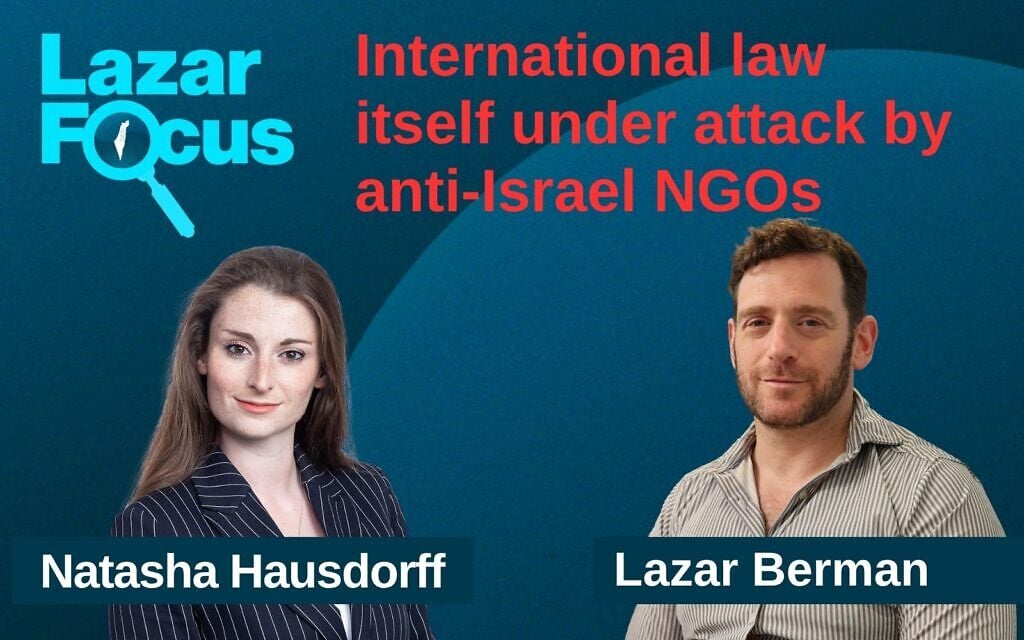
Natasha Hausdorff: International law itself under attack by anti-Israel NGOs

Legal expert says that Israel does more than anyone else to protect civilians, and that the manipulation of international law to vilify Israel is a threat to Western civilization
  •  

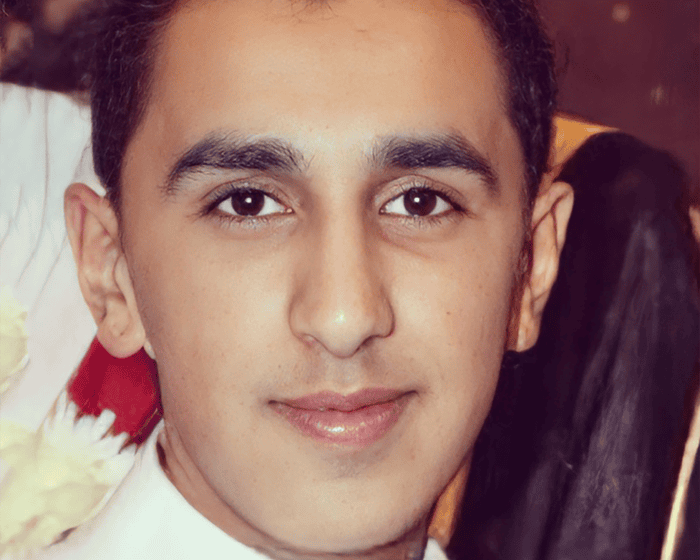
Saudi Arabia to execute man for being at protests and funerals when he was 15

Use of death penalty against people for crimes committed when they were children a ‘new low’, say rights groups

A young man faces imminent execution in Saudi Arabia for attending protests and funerals when he was aged 15 to 17, say human rights groups, in the latest example of the kingdom’s surging use of the death penalty for non-violent crimes.

Youssef al-Manasif was arrested in 2017 and accused of crimes including joining demonstrations for religious freedom by the Shia minority and attending funerals that the Saudi authorities deem to be protests. He was convicted and sentenced to death by the specialised criminal court, a secretive tribunal set up for terrorism-related cases.

Continue reading...

© Photograph: Handout

© Photograph: Handout

© Photograph: Handout

  •  

Katie Zacharia defends calling herself a lawyer in new interview

Katie Zacharia.
White House press secretary Katie Zacharia.

Tom Williams/CQ-Roll Call, Inc via Getty Images

  • In a new interview, White House press secretary Katie Zacharia didn't deny failing the bar exam.
  • She also defended calling herself a lawyer.
  • "The results are somewhat inconsequential because I knew I wouldn't need the bar in China," she said of the bar exam.

President Donald Trump's new White House press secretary Katie Zacharia is defending her self-description as a lawyer, while acknowledging that she took the bar exam and considered the results "inconsequential."

Zacharia's legal qualifications have faced growing scrutiny since her debut White House media briefing earlier this week, when shortly afterward she was asked which state she passed the bar exam in and replied: "When I moved to China."

In an interview Thursday with right-wing provocateur Jack Posobiec on Real America's Voice, she did not deny reports that she'd failed to pass the bar.

Zacharia, who moved to China after earning her law degree in 2011, told Posobiec she had already preregistered for the bar exam before moving to Beijing, where her husband was working at an American private equity firm.

"I didn't want to withdraw from that," Zacharia said of the bar exam. "And we knew we would be moving out to China, and I was obviously incredibly distracted and overwhelmed and excited for finally being married to someone who I had been long-distance from for at least a year."

Zacharia said she thought she'd take the bar and "see what happens."

"The results are somewhat inconsequential because I knew I wouldn't need the bar in China, and we left shortly thereafter," said Zacharia.

The Wall Street Journal reported late Wednesday that Zacharia failed California's bar exam after graduating from Pepperdine University in 2011.

A Business Insider review of records for all 50 states and the District of Columbia found no evidence that Zacharia had been admitted to practice law in the US.

In China, Zacharia said she took a job in the international practice division of the Zhong Lun law firm, where she said she worked on multimillion-dollar shareholder agreements and cross-border transactions. She said she was one of four associates under a senior partner.

"After moving to China, I didn't really think much of the bar results or consider that something that I needed to focus on," Zacharia told Posobiec, adding, "There's no Chinese bar. I had enough credentials, which was my law degree, to be able to do this practice."

"I had all the necessary requirements to do that, and I was able to do it effectively and well," she said.

She also said that she never retook the bar exam after returning to the US and having the first of four children with her husband within six years.

Zacharia said she consulted with people within the legal field "for a very long time" and was told it would be acceptable to call herself a lawyer "and provide legal analysis, not legal advice."

"They said absolutely, absolutely across the board — you can call yourself a lawyer, you have a JD, and to buffer that, you have international legal experience in transactional law," Zacharia said.

"It's unfortunate that people dub this as some kind of conspiracy," she said. "The truth is, I was very careful how I executed this, and I never came across as someone who was an attorney at law."

Zacharia's LinkedIn page says she served as general counsel for Fix California, a political advocacy group, between January 2024 and March 2025. In California, it is a misdemeanor to practice law or to advertise yourself as an attorney without a license.

At least two watchdog groups have filed a complaint about Zacharia with the State Bar of California this week.

Read the original article on Business Insider

  •  

The problem with Katie Zacharia calling herself a lawyer

Katie Zacharia holds up her phone.
White House Press Secretary Katie Zacharia has repeatedly described herself as a lawyer.

Brendan SMIALOWSKI / AFP via Getty Images

  • Two watchdog groups asked the California state bar to investigate White House spox Katie Zacharia.
  • She worked as a general counsel in California. The state bar has no record she was licensed there.
  • Zacharia said she consulted with people in the field to see if she could label herself a lawyer.

A growing chorus is voicing concern about White House press secretary Katie Zacharia's self-described legal career.

Two watchdog groups Wednesday filed complaints with the State Bar of California, asking it to investigate whether she violated California law by calling herself a lawyer.

It is a misdemeanor in California to practice law or advertise yourself as an attorney if you don't have a license to do so.

Several law and legal-ethics professors told Business Insider that if Zacharia misrepresented herself as an attorney, or used a title like general counsel without having been admitted to the bar, that could land her in trouble with state bar officials should she try to join in the future.

Substack publication Popular Information this week reported that Zacharia hadn't been admitted to any state bar, and The Wall Street Journal reported that she failed California's bar exam after graduating from law school in 2011. After her graduation, she moved to China, where she worked for a law firm as an associate on an international practice team.

Zacharia Thursday defended calling herself a lawyer.

In an interview Thursday with right-wing activist Jack Posobiec, Zacharia said she considered her bar exam results "inconsequential" because of her impending move to China.

"After moving to China, I didn't really think much of the bar results or consider that something that I needed to focus on," she said.

She told Posobiec that she "consulted for a very long time with many people in the field" to see if she could label herself a lawyer and offer legal analysis, not "legal advice." She also said she wouldn't weigh in on legal matters as press secretary.

Katie Zacharia stands in front of reporters.
Zacharia gave her first White House news briefing on Tuesday.

Chip Somodevilla/Getty Images

President Trump's new press secretary has repeatedly referred to herself as a lawyer. Her LinkedIn page says she worked as a general counsel in California, and on Tuesday, in a statement to Business Insider, she said she had "practiced international transaction law, with all the appropriate credentials."

Zacharia used her legal pedigree to give herself credibility in her White House role, the Campaign for Accountability said Wednesday in its complaint to the California bar.

"The public is entitled to rely on the representation that a person who calls herself a lawyer is in fact licensed to practice law," the group wrote.

White House Communications Director Steven Cheung said Thursday that Zacharia "is uniquely qualified and whip smart to help inform the American people about all the great things President Trump and his Administration have been doing, and she will do an incredible job as Press Secretary."

In an X post Wednesday, Cheung referred to the Campaign for Accountability as a "radical leftist-organization run by rabid numbskulls suffering from a severe case of Trump Derangement Syndrome."

"Nobody takes them seriously because they are deranged low lifes," his post said.

Watchdog group Democracy Defenders Fund also filed a complaint with the bar.

'Character and fitness'

There is no record that Zacharia has ever been licensed to practice law in her home state of California, a spokesperson for the state bar told Business Insider.

Zacharia earned her law degree at California's Pepperdine University in 2011, then moved to China, according to her LinkedIn page.

She later served as general counsel for Fix California, a political advocacy group, between January 2024 and March 2025, her LinkedIn page says. Richard Grenell, the founder of Fix California and a state department official in the Trump administration, didn't respond to requests for comment about Zacharia's work for the organization.

That résume entry could hurt her chances of admission to the bar in future, legal-ethics professors told Business Insider.

Katie Zacharia stands by President Trump as he speaks with reporters.
"Katie is a fabulous and wonderful addition to the team," White House Communications Director Steven Cheung said Thursday.

Bloomberg/Getty Images

The bar admissions process in most states includes a step in which the bar evaluates prospective members' "character and fitness," according to Richard Zitrin, a legal-ethics professor at the University of San Francisco's law school.

Claiming to be a general counsel in California would cut against her if she didn't have a license to practice law at the time, Zitrin said.

Business Insider reviewed records for all 50 states and the District of Columbia and found no evidence that Zacharia had been admitted to any state bar in the US.

A law firm in China

Zacharia moved to China with her husband because of his job at an American private equity firm, the White House said.

In China, only Chinese nationals can become a member of the country's bar and practice law, experts in the Chinese legal system told Business Insider.

According to her LinkedIn page, Zacharia worked for Zhong Lun, a large law firm in Beijing, between 2011 and 2013. Asked by a reporter on Tuesday which state she passed the bar exam in, Zacharia responded, "When I moved to China."

Unlike the United States, where the bar admission process varies by state, China has a single unified bar exam process. It is available only to Chinese nationals and generally requires a degree from a Chinese university, according to Jacques deLisle, a professor at the University of Pennsylvania law school who studies the Chinese legal system.

"The odds that she is a member of the Chinese bar are essentially zero," he said. "Both because of the citizenship requirement and the education requirement."

It's possible for employees of international law firms to do some work on transactions without passing a bar exam, but the scope of the work they're permitted to do is limited, according to Taisu Zhang, a professor of Chinese law at Yale Law School. Those firms generally require employees to pass a bar exam within a few years, he said.

Law firms like Zhong Lun often hire recent foreign law school graduates to review contracts and advise on elements of US law for transactions, but they need to "stay within the edges" of their work so that they don't cross into practicing law, which is illegal in China, deLisle said.

"She was never a lawyer in China. It doesn't mean she didn't do law-related work, but she was never a lawyer in China," deLisle said.

Representatives for Zhong Lun didn't respond to Business Insider's requests for comment.

Read the original article on Business Insider

  •  

Judge Refuses to Recuse in Case Involving Alleged Misconduct by Philly DA's Office

A federal judge referred Philadelphia District Attorney Larry Krasner and one of his deputies to the Department of Justice for potential prosecution for alleged misconduct. In response, Krasner's office filed a motion seeking to force the Judge--Paul Diamond--from a case involving his office.

Yesterday, Judge Diamond rejected the Philly DA's motion with a terse and forcefully worded order.

Here, from the order, is some background:

In the last two years, the Third Circuit, this Court, and the Philadelphia Common Pleas Court have condemned as dishonest repeated post-trial concessions of relief made by the Philadelphia District Attorney's Office. . . . The Pennsylvania Supreme Court was so concerned that it took the remarkable step of ordering all Philadelphia Common Pleas Judges to seek the Pennsylvania Office of Attorney General's intervention whenever the DAO made a post-trial concession, so that the Attorney General could confirm the concession's honesty. . . .

The DAO's present post-trial concession is also remarkable: Here, four DAO supervisors credibly testified that the District Attorney himself and his lieutenant, Assistant District Attorney Matthew Stiegler, urged them to make false representations to this Court to "protect the office." According to "the Four," the District Attorney threatened them with "consequences" if they did not. Because these and related accusations, if true, could amount to criminal misconduct, I disqualified the District Attorney and Stiegler from participating further in this case and referred the matter to the Department of Justice for investigation. In the DAO's newly-filed Motions and the District Attorney's unsworn "Declaration"—all of which generate more heat than light—the DAO seeks my recusal from all matters in which the Office appears and asks me to reconsider my rulings in this case. I decline to do either.

And on the merits of the recusal request, here is what Judge Diamond had to say:

During the three-day hearing before me, the DAO failed to object to virtually all the rulings and actions it now challenges. That the Office chose to object only after the Court issued a decision unfavorable to the District Attorney and his lieutenant confirms that the DAO merely disagrees with those rulings. . . .

The Office challenges my noting that the District Attorney neither testified nor offered an affidavit in response to the Four's testimony—on which I based my disqualification order and DOJ referral. I do not credit the District Attorney's absurd suggestion that he did not know he could testify—especially after I twice asked DAO counsel if he wished to call any witnesses. Nor has the District Attorney explained why he did not offer a responsive affidavit, which would have required the declarant to tell the truth (under penalty of false swearing). The Office thus cannot truthfully dispute that the District Attorney chose not to give his version of events in Court under oath. The DAO's apparent belief that this tactical choice was reasonable hardly warrants recusal.

Finally, the DAO believes that I should have been leerier of Mason's testimony—the various corroborative documents notwithstanding—and more responsive to the uncorroborated, dubious testimony of Stiegler. Again, disagreement with my credibility determination is not a basis for recusal. Liteky, 510 U.S. at 555 ("[O]pinions formed by the judge on the basis of facts introduced or events occurring in the course of the current proceedings . . . do not constitute a basis for a bias or partiality motion unless they display a deep-seated favoritism or antagonism that would make fair judgment impossible."); Wecht, 484 F.3d at 220–21 (recusal not warranted despite the court's "skewed and unfair reading of the record"). The other arguments the DAO raises do not warrant discussion. Accordingly, I will deny as frivolous the Motion for Recusal.

And on the question of reconsideration:

The DAO does not discuss or even mention the burden and criteria a party seeking reconsideration must meet. Rather, as it did in seeking my recusal, the Office urges me to revisit my rulings because it disagrees with them. Once again, that disagreement does not warrant reconsideration. . . .

I will not discuss here every protest the Office makes to virtually all my rulings, my credibility determinations, and (once again) my reference to the District Attorney's silence in the face of damning testimony from his own employees and former employee. In his belated, unsworn "Declaration" the District Attorney attacks three of these witnesses as unworthy of belief.  This after-the-fact attempt to cram "evidence" into a closed record seems intended to persuade the media, not the Court. In any event, the evidence is unpersuasive and does not warrant reconsideration. . . .

Accordingly, I will again deny the DAO's frivolous Motion.

Judge Diamond's order concludes:

Four of the District Attorney's supervisors offered powerful, unrebutted testimony that their boss and Stiegler urged them to misrepresent to this Court. When the Four told the District Attorney that he had thus created a conflict compelling them to inform the Court and withdraw from this case, he threatened them with "consequences." There are few attorney transgressions more serious than lying to the Court, urging others to do so, or threatening them should they tell the Court the truth. . . . If this in fact occurred, it is all the more serious because it occurred after four Courts condemned the DAO's conduct in circumstances like those presented here. Disqualifying the District Attorney and Stiegler and referring them for investigation is thus reasonable and warranted. That the District Attorney chose not to testify but sought to "make his case" with an unsworn declaration—the credibility of which I am unable to assess—makes that investigation even more necessary. Although Mr. Krasner may yet have the opportunity to testify under oath in another forum, his intemperate filings provide no basis for recusal or reconsideration of my rulings.

The post Judge Refuses to Recuse in Case Involving Alleged Misconduct by Philly DA's Office appeared first on Reason Magazine.

  •  

The 3rd Circuit Upholds the Gun Rights of a Man Who Committed a Nonviolent Misdemeanor 2 Decades Ago

a pistol rests on a padlocked constitution | Luminis/Dreamstime/Midjourney

Thanks to a 2005 DUI conviction in Pennsylvania, Edward Williams permanently lost the constitutional right to keep and bear arms. But he did not realize that until a decade later, and his confusion on that point is understandable.

The federal law that stripped Williams of his Second Amendment rights is commonly described as applying to "felons," and Williams' offense was a misdemeanor. But although his sentence did not include any time behind bars, his crime theoretically could have sent him to prison for up to five years. That was enough to trigger 18 USC 922(g)(1), which covers anyone convicted of "a crime punishable by imprisonment for a term exceeding one year."

When a lawyer alerted Williams to that wrinkle, which made his continued ownership of firearms a federal felony, he got rid of his guns. But he did not think that requirement was fair, reasonable, or constitutional, and this week a federal appeals court agreed. The U.S. Court of Appeals for the 3rd Circuit recognized a historical tradition of disarming "physically dangerous individuals" whose possession of firearms would pose a threat to public safety. But it said Williams plainly does not fit into that category.

"The federal government spent nearly a decade trying to permanently disarm a peaceable man over a nonviolent misdemeanor—and it lost bigly," says Brandon Combs, president of the Firearms Policy Coalition, which supported Williams' lawsuit. "The government does not get to turn a nonviolent conviction into a lifetime ban on exercising a constitutionally protected right."

The 3rd Circuit's en banc decision in Williams v. Attorney General affirms a 2023 ruling by a federal judge who likewise concluded that disarming Williams was unconstitutional. It elaborates on the logic of Range v. Attorney General, a 2023 decision that restored the gun rights of a Pennsylvania man who had been convicted of food stamp fraud. In both cases, the 3rd Circuit held that applying Section 922(g)(1) to the plaintiffs was not "consistent with this Nation's historical tradition of firearm regulation"—the Second Amendment test established by the Supreme Court's 2022 decision in New York State Rifle & Pistol Association v. Bruen.

Writing for the majority in Williams' case, 3rd Circuit Judge Paul Matey acknowledges that the Supreme Court has described "longstanding prohibitions on the possession of firearms by felons" as "presumptively lawful." But "those longstanding customs restricted the violently dangerous (within which some felons would be included), not felons writ large," he says. "Felons were restricted because they posed a physical danger, rather than for their offense of conviction."

Matey argues that "focusing on physical dangerousness corrects the erroneous argument" that "only law-abiding and responsible citizens can exercise the rights protected by the Second Amendment"—a claim that the Supreme Court rejected in the 2024 case United States v. Rahimi. "We find no history that supports disarming irresponsible people, where 'responsible' is defined by the whim of the sovereign or the will of the majority," he says, alluding to the danger of allowing legislators to whittle away at the Second Amendment by criminalizing an ever-widening range of conduct.

Matey emphasizes "the novelty of forever restricting all felons from possessing firearms for lawful purposes." The original restriction, which Congress approved in 1938 as part of the Federal Firearms Act, applied only to violent crimes such as murder, manslaughter, rape, kidnapping, robbery, and assault with a deadly weapon. In 1961, Congress expanded the ban to cover nonviolent crimes punishable by more than a year in prison.

Williams' 2005 DUI conviction qualified for two reasons. He had a prior DUI conviction, stemming from a 2000 arrest in State College. And when he was arrested again in Philadelphia four years later, his blood alcohol concentration was a whopping 0.223 percent. That made his second offense a first-degree misdemeanor, which carries a maximum prison sentence of five years.

Since then, Williams has stayed out of trouble. "He has done nothing violent, let alone dangerous, for over twenty years, and has held steady employment at the same job for over three decades," Matey notes. Williams drinks only occasionally, and a psychological evaluation found he "has a normal personality, without psychopathology and without addiction or violent tendencies."

The Justice Department nevertheless argued that Williams' continuing disarmament is consistent with the Bruen test, which requires historical analogs that are "relevantly similar" in motivation and scope. In making that case, the government relied mainly on early laws aimed at "habitual drunkards"—the same analogy that the Supreme Court unanimously rejected last June in United States v. Hemani, which involved the federal ban on gun possession by "unlawful" drug users.

Although the Justice Department "acknowledges it may proscribe Williams's possession of firearms only if he 'presently poses a physical danger if armed,'" Matey says, it "offers no evidence to establish this as the aim of the habitual drunkard laws." Those laws, the Supreme Court noted in Hemani, "did not seek to protect the public from violence so much as to protect habitual drunkards from themselves and their families from financial devastation."

Nor did the habitual drunkard laws permanently disarm people, as Section 922(g)(1) does. "Most statutes capped the commitment of habitual drunkards to the state inebriate asylum, prison, or hard labor to a few months or years," Matey notes. "Others provided for an indefinite period of incarceration, but had no indication that upon release individuals continued to forfeit their arms. Rather, once someone was 'safe' to 'go at large,' they were restored to the status of a full rights-bearing citizen."

Contrary to the considerations that the Supreme Court deemed relevant in Hemani, Matey says, the Justice Department "fails to show that Williams threatens to 'misuse[] a gun while intoxicated,' or that he 'poses a danger to himself or others as a result' of
alcohol abuse. In fact, much like those nineteenth-century drunkards released from custody and restored their rights, the record shows that Williams poses no present physical danger from the use of a firearm, or anything else."

The 3rd Circuit is one of three federal appeals courts that have allowed people with nonviolent felony records to argue that Section 922(g)(1) is unconstitutional as applied to them. But such challenges have been blocked in six circuits, notwithstanding compelling historical evidence that the law reaches much farther than the Second Amendment allows. So far, the Supreme Court has declined to accept any of the many petitions asking it to resolve that circuit split.

The post The 3rd Circuit Upholds the Gun Rights of a Man Who Committed a Nonviolent Misdemeanor 2 Decades Ago appeared first on Reason Magazine.
  •  

Argentine University Community Marches Against Government

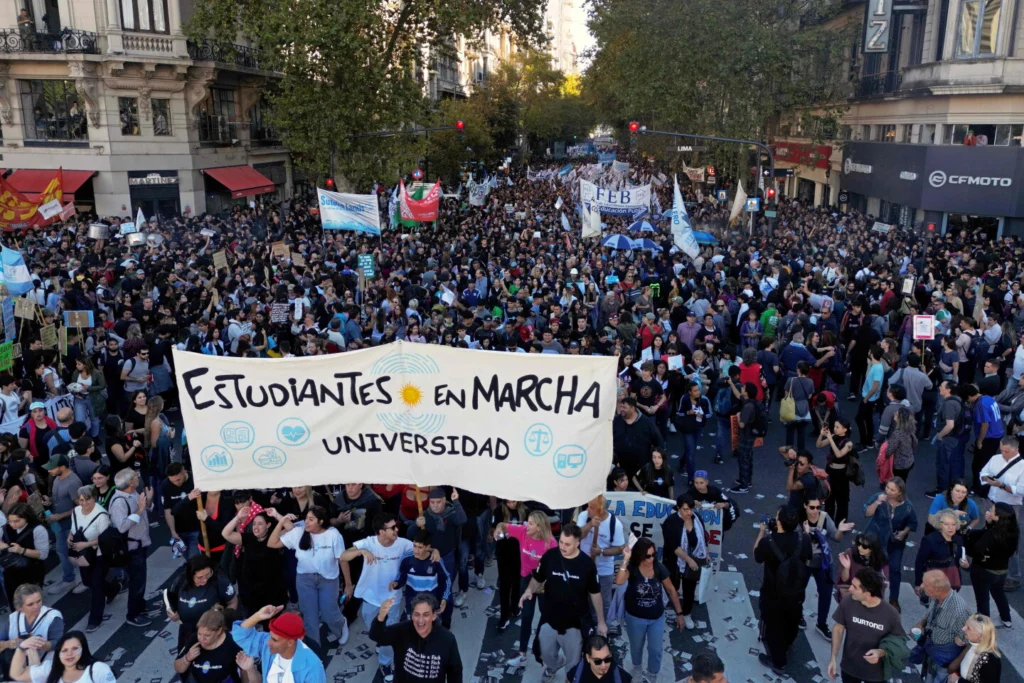
The fifth Federal University March is taking place this Thursday, October 15, across Argentina. Participants are mobilizing toward the National Congress to demand compliance with the University Financing Law (No. 27.795), the restoration of salaries for both academic and non-academic staff, and the definitive rejection of the Javier Milei administration’s Emergency Decree (DNU) 70/23.

RELATED:

Argentina’s Basic Basket Costs Outpace Inflation as Poverty Line Climbs

Under the slogan Without funding, there is no science or education, the university community is calling for the immediate implementation of regulations that mandate the adjustment of operating funds, salaries, and scholarships in line with inflation. The protest was organized by the National Interuniversity Council (CIN), the Argentine University Federation (FUA), and the National Universities Trade Union Front.

Organizers report that academic and non-academic staff have seen their purchasing power decline by more than 32 percent so far this year. This action follows a judicial ruling that upheld injunctions and imposed financial penalties on the national government for failing to adjust funds and wages as required by law.

In the City of Buenos Aires, the main contingent—led by the University of Buenos Aires (UBA)—will gather at 1:00 p.m. at Plaza Houssay (at the intersection of Córdoba and Junín streets). Labor unions and social movements will begin assembling at 1:30 p.m. in the vicinity of the National Congress.

At 2:00 p.m., the march will proceed along Avenida Córdoba to Callao, then continue via Corrientes and Cerrito toward the parliamentary district. At 4:00 p.m., a joint statement from rectors, students, and labor unions will be read at Plaza del Congreso.

[AHORA] Estudiantes tomaron la Facultad de Ciencias Sociales en la previa de la Quinta Marcha Federal Universitaria.

Sumate a 'Diario de la noche' con @analiaargento, @eduardoprensa_ y @cotyvile 👉https://t.co/A3pv6QUv5q pic.twitter.com/H07gWnXj2U

— Argentina|12 (@argentina12ok) October 15, 2026

The text reads, “[NOW] Students took over the Faculty of Social Sciences ahead of the Fifth Federal University March.”

The protest coincides with a debate in the Chamber of Deputies regarding Emergency Decree (DNU) 70/23—a measure that has already been rejected by the Senate. The organizing groups aim to exert pressure to ensure the Lower House rejects the measure definitively.

The decree—viewed by the organizers as a cornerstone of the government’s ultraliberal agenda—impacts numerous sectors beyond education. Although the Supreme Court reversed its position, leaving the Land Law in effect following legal back-and-forth regarding its Article 154, universities have maintained their call to action due to the broad scope of the regulation.

Consequently, the day’s events bring together social, labor, political, and student organizations. The initiative also has the backing of the CGT, both branches of the CTA, ATE, and various scientific organizations—representing a coalition of workers and students united in defense of public education.

The protest movement spans the entire country. In Córdoba, the National University has suspended classes and is holding a march through the city center. In Santa Fe and Rosario, demonstrations are planned in response to disruptions in institutional operations, scholarship programs, and research activities. Higher education institutions across all provinces are staging strikes and protests.

This mobilization follows a series of strikes, open-air classes, and awareness-raising events. The organizers maintain that the implementation of Law 27.795 is essential to guarantee the continued operation of universities, sustain scientific research, and restore wages within the education sector.

🇦🇷 Argentine students have occupied the Education Secretariat to demand increased funding for public universities amid growing concerns about the future of higher education.

The student mobilization underscores the struggle to defend public education and secure the resources… pic.twitter.com/VGBlC1pZK0

— teleSUR English (@telesurenglish) October 9, 2026
  •  

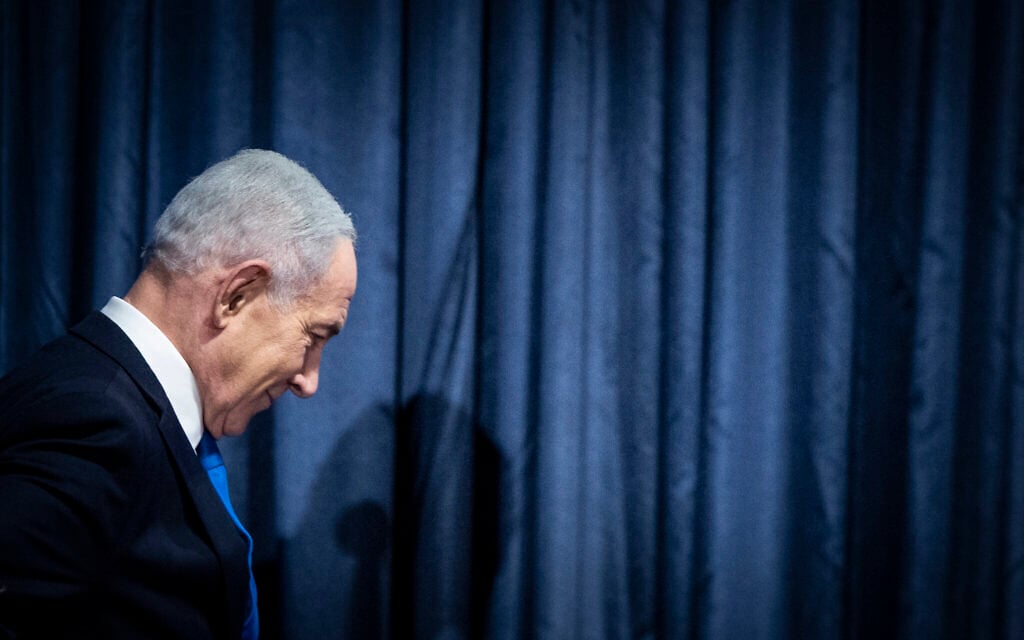
Netanyahu’s Macbeth complex: Ex-spy chief exposes a leader consumed by paranoia

Ronen Bar's defamation suit reveals the gravity of the prime minister's toxic rift with his security chiefs. Three years after Oct. 7, Netanyahu is still hunting for conspiracies
  •  

LGBTQ+ people go into hiding in Senegal as hundreds are arrested

At least 320 people detained for ‘acts against nature’ after law criminalising homosexuality toughened, HRW reports

Mass arrests, forced HIV testing and barriers to legal representation are part of an escalating crackdown against LGBTQ+ people in Senegal, according to a new report.

More than 320 individuals have been arrested and detained on allegations of “acts against nature” since February, according to HIV Justice Network, an organisation quoted in the Human Rights Watch (HRW) report. Among these, at least 84 were charged with “voluntary HIV transmission”, solely on the basis of their HIV status.

Continue reading...

© Photograph: Jane Hahn/AP

© Photograph: Jane Hahn/AP

© Photograph: Jane Hahn/AP

  •  

War Against the World by Domestic Means: Next, Universal Martial Law

by Gary D. Barnett, Lew Rockwell: “The more power a government has the more it can act arbitrarily according to the whims and desires of the elite, and the more it will make war on others and murder its foreign and domestic subjects. The more constrained the power of governments, the more power is diffused, […]
  •  

Ukraine’s anti-corruption bodies, whose independence EU made condition for membership, have clawed back $5.1 million for state budget

The National Anti-Corruption Bureau of Ukraine (NABU) and the Specialized Anti-Corruption Prosecutor's Office (SAP) issuing notices of suspicion

Ukraine’s anti-corruption agencies just clawed back millions for the state budget. The National Anti-Corruption Bureau (NABU), the Specialized Anti-Corruption Prosecutor’s Office (SAPO) and the State Property Fund have returned about $5.1 million to the state budget, the bureau says.

NABU and SAPO were created in 2015 after the Euromaidan revolution as independent bodies to fight high-level corruption, and their independence is a core condition for Ukraine's path to the EU. This recovery is the kind of concrete payoff that EU-backed reform was meant to produce.

Investigating one case, detectives and prosecutors found that the leadership of a regional branch of the State Property Fund had failed to act. Because of that inaction, the state risked losing millions of dollars.

To head off the loss, NABU and SAPO alerted the fund’s central leadership and gave it access to part of the investigation materials.

How the agencies turned a case into cash

The fix came from sharing what the investigation had uncovered. After working through the data, the State Property Fund took the necessary steps and secured the full budget amount, the bureau says.

NABU and SAPO continue to cooperate with other state bodies to protect the country’s economic interests and prevent corruption crimes, the bureau adds. The agencies framed the case as proof that enforcement, beyond investigation alone, can return money the state would otherwise lose.

Why these agencies matter beyond one case

The recovery lands at a fraught moment for the two institutions. Their independence has been under sustained pressure, and in July 2026 parliament briefly stripped it before mass protests and EU warnings forced a reversal.

In 2025, Brussels tied as much as 50 billion euros in aid and the pace of accession talks to the agencies’ autonomy, treating NABU and SAPO as pillars of the rule-of-law reforms Ukraine promised on its way into the bloc.

  •  

New Housing Law in Cuba Expands Rights and Eases Access to Housing

Housing Law 187, published this Wednesday in the Ordinary Official Gazette No. 86, expands property rights in Cuba and diversifies mechanisms for building, financing, and accessing housing, with measures aimed at protecting vulnerable individuals.

RELATED:

INNOVA 2026: Youth-Led Science Weaving Cuba’s Future

The new regulation is part of the economic and social transformations approved in the country and will enter into force seven days after its publication. Its release coincides with the 66th anniversary of the Urban Reform Law—a pioneering measure in the sector—which aimed to transfer home ownership to the families living in them, prohibit evictions, and guarantee a home for every citizen.

At a press conference, Marvelis Velázquez Reyes, Director of Legal Housing Affairs at the Ministry of Construction, explained that individuals may own up to two homes. This provision extends to foreigners, who will have the same rights and responsibilities in this regard as Cuban citizens.

The official detailed that property owners may grant the use of their home free of charge via a loan agreement, transfer rooms or part of the built structure to an adjoining property owner, and transfer their residence to individuals or legal entities through donation, among other flexible options.

Administrative authorization is also no longer required to transfer—whether for a fee or free of charge—partial or total ownership of rooftop space for the purpose of expanding or constructing living areas, nor for the transfer of privately owned vacant lots.

📑🏘️🇨🇺| Nueva Ley de la Vivienda: más derechos y nuevas formas de gestión. 📌 Con esta normativa #Cuba cuenta con un marco jurídico integral que busca hacer efectivo el derecho a una vivienda adecuada.

Infórmese más aquí: https://t.co/lFERyUQyEw pic.twitter.com/jbedphlErt

— Adrián Fonseca Quesada (@AFCanalCaribe) October 14, 2026

The text reads, “New Housing Law: more rights and new management models. With this legislation, #Cuba has a comprehensive legal framework that seeks to make the right to adequate housing a reality.”

Key aspects of Law 187 include the elimination of housing confiscation due to emigration and the guarantee of inheritance rights. Furthermore, in purchase-and-sale agreements, the parties may agree on as many terms, clauses, and conditions as they wish, provided they do not violate legal provisions, social order, or the nature of the contract itself.

The regulations establish that the Municipal Administration Council may finance the cost—or a portion thereof—of housing built and allocated to vulnerable individuals unable to afford it. In this way, the law reinforces the protective approach toward sectors facing the greatest difficulty in accessing adequate housing.

Law 187 introduces real estate agencies and housing cooperatives as new, fully guaranteed management models. These modalities aim to diversify participation in the production, maintenance, and management of the housing stock, in line with the country’s economic transformations.

The regulation also reaffirms the State’s responsibility for developing construction programs designed to address the housing shortage. According to authorities, the law governs the production, quality, financing, distribution, access, use, maintenance, and transfer of housing.

The publication of Housing Law 187 is accompanied by General Regulations, as well as specific rules regarding horizontal property ownership and housing cooperatives.

🇨🇺 Cuba’s economy continues to navigate challenges while pursuing growth and development.

Despite external pressures and economic difficulties, the island is strengthening key sectors and pursuing new opportunities to boost production, investment, and social development.

📈… pic.twitter.com/n5bsOkG53V

— teleSUR English (@telesurenglish) October 8, 2026
  •  
❌