❌

Reading view

Uruguay Debuts Virtual Cards in Football Refereeing

The Uruguayan Cup tests a digital tool with which referees sanction fouls and enter incidents directly from the field. Photo: Clarin.

Uruguayan football introduced a new technology on Thursday night when referees replaced the traditional paper cards with an electronic device to show cautions and expulsions during a local match, although early tests have shown problems with visibility, according to local media reports.


Uruguayan football experienced a historic day on Thursday night with the appearance of virtual cards in the match that Nacional won 3-0 to Rentistas for the eighths final of the Uruguayan Cup, at the Gran Parque Central stadium.

During the game, the officiating team used the electronic device instead of the physical cards to signal bookings and sending-offs on the pitch.

RELATED: Argentina Introduces New Tournament and Rules for Football Professional League

The tool is designed to look like a mobile phone and has dedicated buttons to display yellow or red lights. Its main selling point is the automation of administrative work and allows referees to record every disciplinary sanction, substitution or incident in real time directly in the COMET sports management system.

That removes the need to take handwritten notes during the action and speeds up the digitization of the official post-match report.

La AUF (Asociación Uruguaya de Fútbol) presentó las tarjetas virtuales, un método que debutó en un duelo de Copa.

Este avance tecnológico permite agilizar y registrar de forma automática y digital al jugador amonestado.#Uruguay #Teconología #TVCDeportes pic.twitter.com/2tdfCI5OdN

— TVC Deportes (@TVCDeportes) October 16, 2026

Text reads: “The Uruguayan Football Association (AUF) introduced virtual cards, a method that debuted in a Cup duel. This technological advance allows the automated and digital recording of the player who has been reprimanded.”

Despite the logistical benefits, the virtual cards face technical obstacles in their first trial stages. The debut was initially scheduled for the match between Defensor Sporting and Plaza Colonia, but sunlight made it impossible to see the colors properly. Under the artificial lighting of Thursday’s night match, local media reports said the signal was still not completely clear from a distance.

What Comes Next

At present, the device’s fundamental value lies in its ability to streamline the collection and transmission of statistical data during the ninety minutes of a match. Authorities will keep evaluating its performance to try to correct the faults related to brightness and contrast.

If the required visual improvements are achieved, the technology could be adopted on a regular basis in the main categories of South American football, according to the source. No timeline for that decision has been announced.

Technology in refereeing has expanded steadily in recent years, with video review and semi-automated systems now common in major competitions. Most of those tools help officials make decisions, while this device focuses on communicating and recording them. The key test for the Uruguayan trial will be whether the cards are as easy for players and spectators to see as the paper ones they replace, since visible signals are central to how the game communicates discipline.

The technology carries obvious logistical benefits, because referees no longer depend on cardboards that can be dropped, lost or misread, and data flows directly into the official system while the ninety minutes are still running.

For the Uruguayan Football Association, the real value of the tool lies in how it optimizes the collection and transmission of statistics. Every booking, substitution and incident becomes part of a digital record the moment it happens, a change that could improve accuracy in reports that have long depended on memory and hurried notes.
  •  

Uruguay estrena un innovador sistema de tarjetas virtuales en el fútbol

El dispositivo electrónico sustituye a las tradicionales cartulinas para automatizar los reportes disciplinarios en tiempo real, aunque enfrenta ajustes de visibilidad.
  •  

Leo XIV’s cancer diagnosis upends the pontificate: ‘We thought we had a pope for 20 years; this changes everything in the Curia’

Overnight, the atmosphere at the Vatican has shifted and the future has become more uncertain. The news of Pope Leo XIV’s cancerous tumor has caused devastation, just 17 months after his election in May 2025, at a time when, at 71 and in good physical condition, he was thought likely to remain pope for many years. “We thought we had a pope for 20 years and now it’s no longer clear; this changes everything in the Curia, all the dynamics,” a prelate admits.

Seguir leyendo

© FABIO FRUSTACI (EFE)

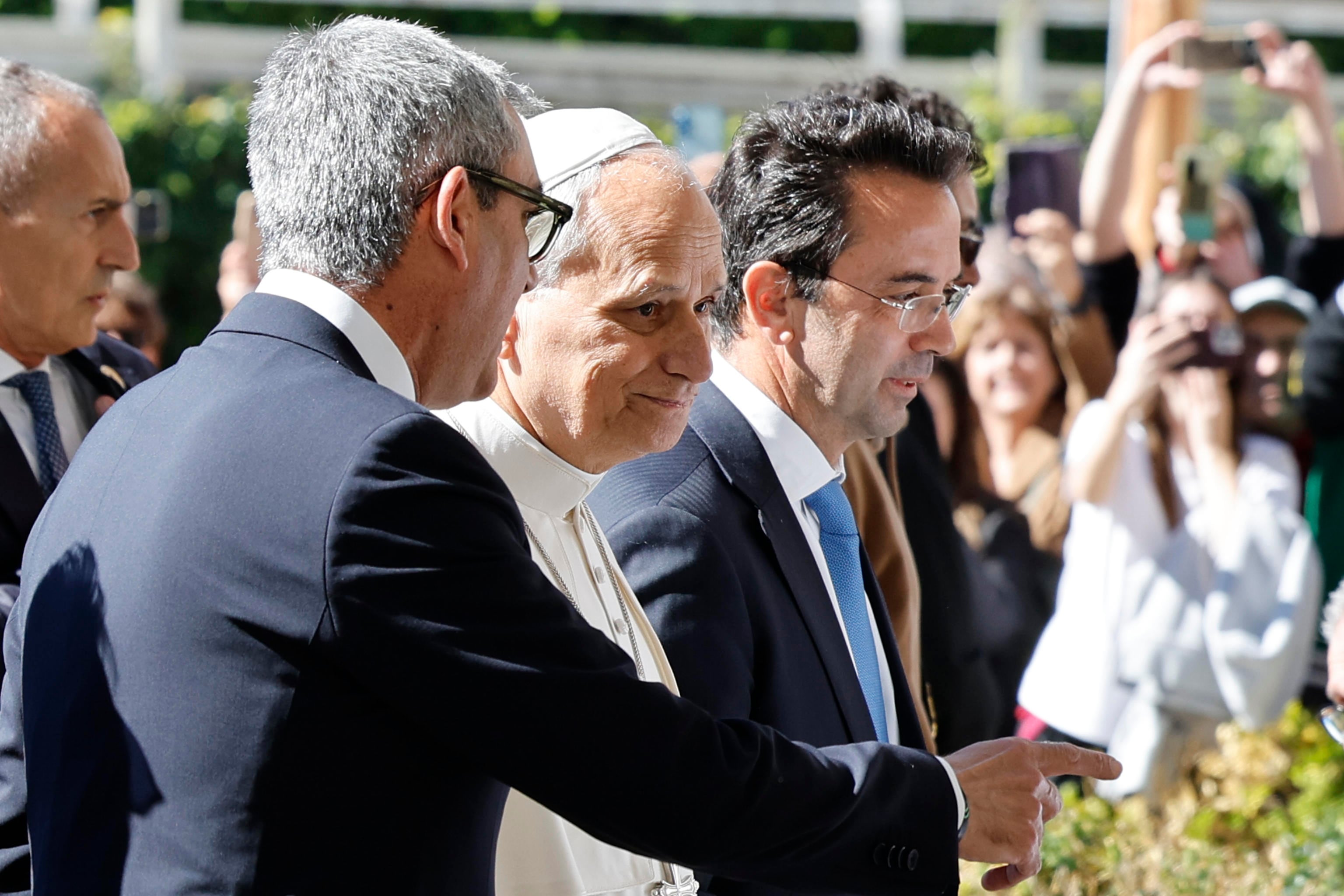
The Pope, upon his arrival at the Gemelli Polyclinic in Rome to undergo surgery Tuesday.
  •  

Venezuela Criticizes Uruguay’s Refusal to Resume Diplomatic Relations

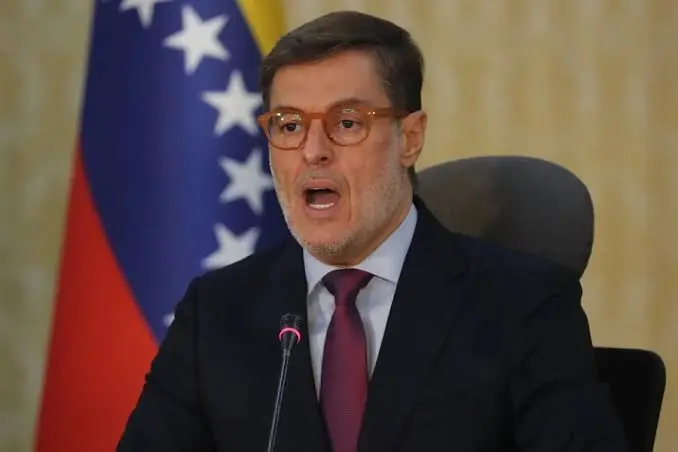
Venezuela categorically rejected Uruguay’s Foreign Ministry position not to resume bilateral diplomatic relations, Venezuela’s Foreign Minister, Félix Plasencia González, wrote via social media.


Plasencia González wrote that “The Bolivarian Republic of Venezuela rejects the antiquated and arrogant views that disrespect the sovereignty and self-determination of peoples and that have nothing to do with the transformation process Venezuela is carrying out through political dialogue for democratic coexistence.”

RELATED: Venezuela and Angola Deepen Strategic Alliance on Food Security at FAO Forum

The response followed remarks by Uruguayan Foreign Minister Mario Lubetkin to Brazilian outlet Folha de S.Paulo, in which he justified the refusal to normalize diplomatic ties by saying that “nothing has changed” in the country after electoral processes his government questions.

Lubetkin conditioned the restoration of relations on the holding of new elections and their evaluation by independent courts, he said. He added that “fifteen minutes after” ratifying a democratic winner, his country would resume bilateral relations.

Ante las declaraciones del canciller de la República Oriental del Uruguay, la República Bolivariana de Venezuela rechaza las visiones vetustas y arrogantes que irrespetan la soberanía y la autodeterminación de los pueblos y que nada tienen que ver con el proceso de transformación…

— Félix Plasencia González (@plasenciafelixr) October 12, 2026

Plasencia González said such declarations and positions constituted inadmissible interference in Venezuela’s internal affairs. Venezuela’s future, he made clear, will be defined by its people, in strict adherence to its Constitution and legal order.

  •  

One in seven Latin American children threatened by El Niño: ‘This crisis can be mitigated’

This is the driest year on record in Tegucigalpa. Eighty percent of Honduran territory is on red alert, and the capital has had a potable water rationing system every 12 days for a month. The lack of rain is making maize and bean crops in Guatemala — the main food source in a country with the region’s highest rate of chronic child malnutrition — even more vulnerable. The Panama Canal has begun restricting vessel traffic because of water stress in the basin, and the parched Amazon rivers are isolating dozens of riverside communities in Brazil and hampering fishermen’s work.

Seguir leyendo

© Ivan Valencia (AP)

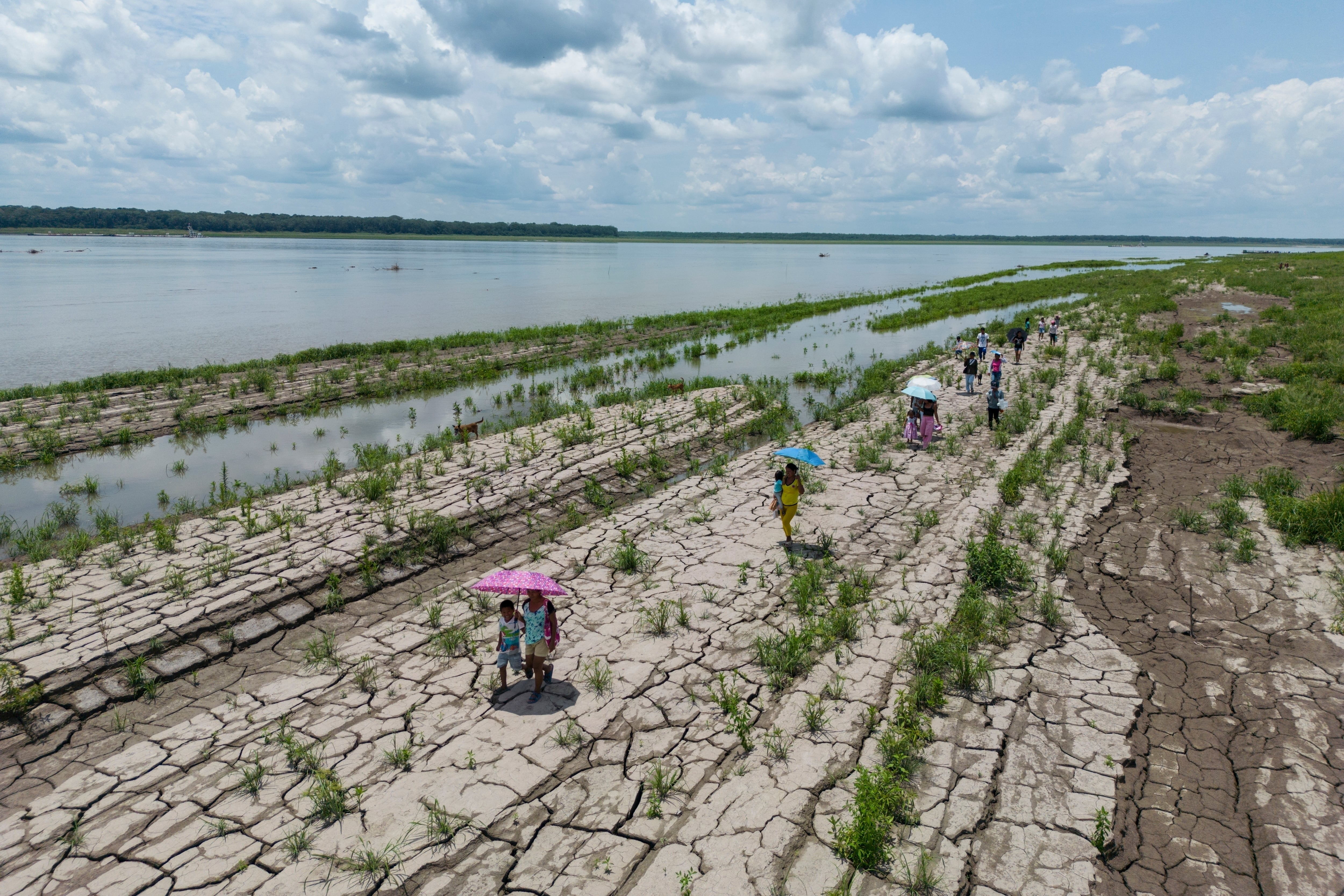
A section of the Amazon River showing signs of drought in Santa Sofía, Colombia, on October 20, 2024.
  •  

EU welcomes Cambodia to WTO appeal arrangement

The EU welcomes Cambodia’s decision to join the Multi-party Interim Appeal Arbitration Arrangement (MPIA) for WTO members, contributing to efforts to uphold a rules-based multilateral trading system. 

With Cambodia’s participation, the MPIA now covers 62 World Trade Organization (WTO) members and 60.4% of world trade.  

The MPIA brings together participants from all continents and at different levels of development, united by a shared commitment to upholding the rules-based trading system. 

The MPIA preserves the right to appeal in trade disputes among participating WTO members, at a time when the WTO’s Appellate Body remains non-functioning. It helps ensure that disputes can continue to be resolved in an orderly and binding manner, avoiding appeals 'into the void'. 

“I welcome Cambodia to the MPIA. The arrangement plays an important role in upholding the rules-based trading system. Each new participant helps reinforce the predictability, stability and credibility of global trade rules. I encourage other WTO members to join the MPIA,” said EU Trade and Economic Security Commissioner Maroš Šefčovič. 

Background 

The MPIA was established in 2020 and has proven its effectiveness in many WTO disputes.  

Under the MPIA, appeals are heard by arbitrators randomly selected from a pool of 10 standing appeal arbitrators set up by the participating WTO members. These arbitrators are persons of recognised authority, with demonstrated expertise in law, international trade and WTO agreements.  

The MPIA is open to all WTO members as a practical tool for appeal arbitration, pending the restoration of a reformed and fully functioning WTO dispute settlement system. 

As of 1 June 2025, the MPIA has an updated pool of appeal arbitrators to ensure that appeals continue to be heard by independent arbitrators of the highest calibre. 

At the WTO Ministerial Conference that took place earlier this year, MPIA ministers stressed the importance of the MPIA for the security and predictability of the multilateral trading system.  

The current MPIA participants are Australia, Barbados, Benin, Brazil, Cambodia, Canada, China, Chile, Colombia, Costa Rica, Ecuador, the European Union (and its Member States), Guatemala, Hong Kong (China), Iceland, Japan, Liechtenstein, Macao (China), Malaysia, Mexico, Moldova, Montenegro, New Zealand, Nicaragua, Norway, Pakistan, Paraguay, Peru, the Philippines, Singapore, Switzerland, Ukraine, the United Kingdom, Uruguay and Vietnam.

More information

MC14: Supporting the rules-based multilateral trading system: the role of the MPIA

  •  
❌