President Donald Trump’s approval rating has hit a record low as his party faces a reckoning with voters just 16 days before Election Day, new polls show.
A Washington Post-ABC News-Ipsos survey released Sunday shows 33% of U.S. adults approve of Trump’s job performance, with 66% disapproving and 52% strongly disapproving. That represents a drop of four percentage points from July and eight points from this time last year — an all-time low in this polling.
As MS NOW’s Elections & Analytics team has noted, Trump’s approval rating has hovered below 40% for months in most surveys, signaling a politically perilous environment for Republicans.
Democrats’ fortunes are rising in the final stretch to the Nov. 3 midterm elections as they seek to regain control of Congress.
The poll, conducted Oct. 9-13, shows 52% of likely voters said they would vote for a Democratic candidate in their congressional district while 44% said they would choose a Republican. That’s a 5-point gain from the same poll conducted in July.
Among registered voters, 55% favor Democrats, with 44% preferring Republicans. MS NOW’s polling data with partner FiftyPlusOne shows Democrats with a 9-point edge on the generic ballot.
The NBC survey shows 71% of U.S. adults say the country is on the “wrong track” — a resounding rebuke of Trump and the Republican Party two weeks before the midterms as GOP candidates face stiff competition on their home red turfs.
The findings underscore widespread dissatisfaction with the president’s unilateral decision to take the U.S. to war with Iran and its costly effects on the economy, including the steep price of gasoline and diesel. The poll shows that 67% of respondents identified gas prices as a “very serious” or “somewhat serious” problem.
“Those disapproval ratings are just a reflection of the pain people are feeling on the ground when, you know, they see this administration enter into this $50 billion war that is deeply unpopular and misguided,” South Carolina Senate Democratic candidate Annie Andrews said Sunday on MS NOW’s “The Weekend” when asked about recent polling in her state showing Trump’s unpopularity.
Andrews, who is facing Republican Sen. Darline Graham, said shrimpers and fishermen in the Low Country “are barely making ends meet because they’re being crushed by these diesel prices.”
Female colleague says she was forced out shortly after incident with Luke Campbell, Hull and East Yorkshire mayor
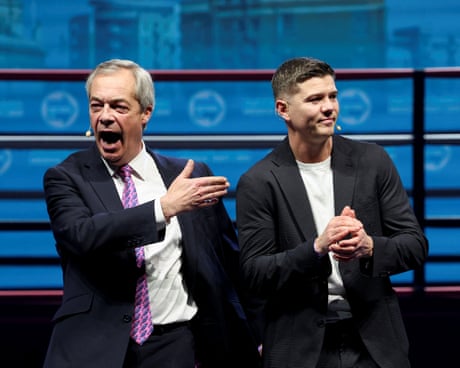
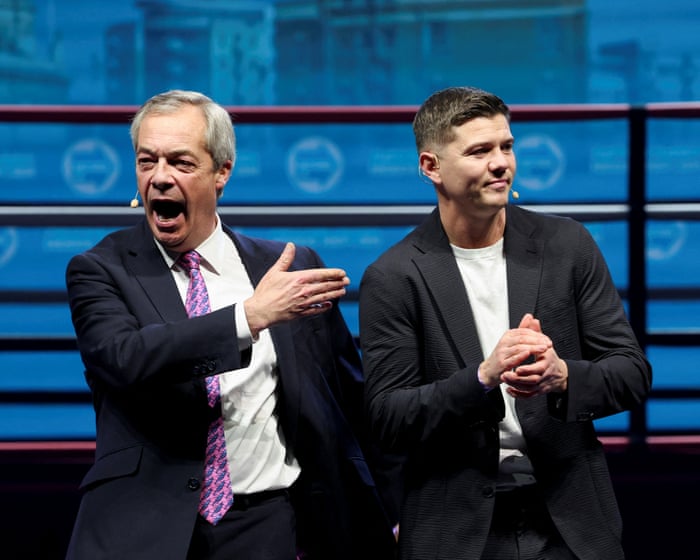
A Reform UK mayor is under police investigation for allegedly showing “naked and sexualised” images of himself to a female member of staff.
Luke Campbell, a former Olympic boxing champion and the mayor of Hull and East Yorkshire, is understood to have been questioned under caution by Humberside police earlier this month.
A Coalizão Negra por Direitos, organização que reúne centenas de entidades que se reivindicam da causa negra, comemorou a eleição de 42 candidaturas nas eleições legislativas no Brasil. Dessas, 26 são regionais e 16 federais.
Dos 16 deputados federais eleitos com a promoção da Coalizão, oito são do PT (Anielle Franco, Dandara Tontzin, Carol Dartora, Renato Freitas, Jack Rocha, Ana Elisa, Rosa Amorim e Walmir Assunção), cinco são do PSOL (Jones Manoel, Erika Hilton, Fábio Felix, Henrique Vieira e Talíria Petrone) e três são do PCdoB (Daiana Santos, Olivia Santana e Perpétua Almeida).
“Esse é o resultado da mobilização do Quilombo nos Parlamentos nas eleições de 2026”, publicou a Coalizão em suas redes sociais. “Essa conquista é fruto da organização política negra quando decide ocupar os espaços de poder. Cada candidatura eleita leva consigo o compromisso firmado no nosso Manifesto e a responsabilidade de fortalecer, dentro dos Parlamentos, as agendas construídas pelo movimento negro.”
O Quilombo nos Parlamentos é uma iniciativa da Coalizão Negra por Direitos com o objetivo explicitado em sua própria denominação: eleger candidatos negros para o Poder Legislativo. Isso fortaleceria a chamada “representatividade” dos negros brasileiros nas instituições, tornando-as mais favoráveis aos seus direitos.
Assim como todo movimento identitário, é uma iniciativa de caráter reformista rebaixado, que prega a farsa do “empoderamento” coletivo através de conquistas individuais. Um negro eleito deputado é apenas e tão somente um feito pessoal que beneficia o indivíduo em questão, não o conjunto dos negros. Beneficia, como fica claro ao ver quem são os negros eleitos pela Coalizão, uma aristocracia negra de classe média, que alcança um cargo no Estado capitalista para fazer carreira contra o restante da população negra.
Se não fosse isso, esses candidatos não seriam apoiados pelos banqueiros e grandes empresários nacionais e internacionais.
A Coalizão Negra por Direitos foi criada em 2019 e reúne centenas de ONGs, coletivos e entidades. Parte central de sua estratégia é a “incidência política”, ou seja, precisamente o lobby sobre as instituições brasileiras e os órgãos internacionais. Essa é justamente a estratégia delineada pela Open Society Foundations, do especulador multibilionário George Soros, que financia ONGs mundo afora para, como indica o próprio nome da organização, abrir as sociedades à penetração total do capital financeiro com o apoio de seus agentes dentro das instituições. Os deputados são alguns desses agentes.
E a OSF financia a Coalizão Negra por Direitos.
A entidade que recebeu a maior quantidade de fundos da OSF até 2024 havia sido a Conectas Direitos Humanos (R$ 34 milhões). O Instituto Clima e Sociedade (iCS) recebeu R$ 23,8 milhões da Open Society entre 2017 e 2023. Quem cruzar os dados do compilado feito pelo Instituto Monte Castelo sobre as ONGs financiadas pela OSF com a lista de organizações que fazem parte da Coalizão também encontrará, entre outros: o Instituto de Referência Negra Peregum (R$ 6,9 milhões), a Iniciativa Negra por uma Nova Política de Drogas (R$ 6,9 mi), o Geledés – Instituto da Mulher Negra (R$ 6,1 mi), a Associação Marielle Franco (R$ 4,8 mi), a Associação Brasileira de Organizações Não Governamentais (R$ 4,3 mi), o Gabinete de Assessoria Jurídica às Organizações Populares (R$ 4,2 mi), a Justiça Global (R$ 3 mi), o Instituto AMMA Psique e Negritude (R$ 2,5 mi), o Instituto de Defesa da População Negra (R$ 2,3 mi), o Instituto Afrolatinas (R$ 2 mi), a Iniciativa Direito à Memória e Justiça Racial (R$ 1,8 mi), a Associação Elas Existem (R$ 1 mi), a Casa Sueli Carneiro (R$ 900 mil), o Centro de Estudos e Defesa do Negro do Pará (R$ 515 mil), o PerifaConnection (R$ 92.700).
Todas essas organizações fazem parte da Coalizão Negra por Direitos e parte delas tem atuação que vai muito além do movimento negro identitário, como a Conectas e a Associação Brasileira de Organizações Não Governamentais (Abong).
A Associação Marielle Franco parece ser um erro no levantamento da própria OSF, porque não existe uma entidade com esse nome. Trata-se na verdade do Instituto Marielle Franco, criado formalmente em julho de 2018 para se beneficiar da imagem da vereadora assassinada em março daquele ano, o que gerou forte comoção e ampla divulgação nos noticiários. O instituto só foi se estruturar definitivamente em 2020. Mas no mês seguinte ao assassinato de Marielle Franco, a Open Society anunciou a criação de uma iniciativa “destinada a incentivar o protagonismo político de mulheres negras no Brasil”, inspirada em Marielle Franco.
A iniciativa contou com uma doação inicial de 10 milhões de dólares, dividida com a Fundação Ford e outras organizações.
“Marielle representava a possibilidade de uma mulher negra, da favela, bissexual chegar em espaços de poder. Seu assassinato brutal foi uma tentativa de dizer que essa possibilidade não existe. É fundamental que anunciemos para o mundo que o Brasil produzirá novas Marielles. Que mulheres negras das periferias ocuparão espaços de poder e que esse caminho não tem volta”, anunciou à época Pedro Abramovay, diretor da OSF para a América Latina.
A fundadora do Instituto Marielle Franco é sua irmã, Anielle Franco. Não por coincidência, ela trabalhou como consultora da OSF para a América Latina a partir de 2019. Em 2023, assumiu o cargo de ministra da Igualdade Racial do governo Lula e agora foi eleita deputada federal com o apoio da Coalizão Negra por Direitos.
PARIS (AP) — French President Emmanuel Macron on Sunday voiced the public’s “anger” and “shame” over rioting and looting during nationwide protests against rising living costs and poor conditions in schools. At least 1,800 people have been arrested.
“Those who looted will have to pay back for the damage, and those who sought to bring down the Republic will be held accountable,” Macron said in a televised address to the nation.
He blamed “unrestrained violence” on “insurrectionist elements from radical far-left groups, joined by numerous criminals.”
Macron has earlier held an emergency meeting with senior government officials, a day after masked groups set fires and attacked public buildings, including city halls, in several cities. He said he had instructed prefects to work with mayors to protect public buildings and businesses in the coming weeks, including by banning protests when necessary.
Flames engulfed the 19th-century City Hall in the city of Limoges, in central France, causing its roof to collapse and nearly destroying the building.
Hundreds of protesters gathered again on Sunday at the Place de la République in Paris amid a heavy police presence. Officers used tear gas as tensions flared sporadically in the neighborhood, with small groups of people trying to set bicycles and trash bins on fire.
“The right to protest is a fundamental right. Deliberately and collectively sowing disorder through violence is not,” Interior Minister Laurent Nuñez wrote on X, citing the looting of hundreds of businesses in cities including Paris, Marseille, Lyon and Bordeaux.
About 550,000 people took part in protests across France, according to authorities, while organizers put the figure at about 800,000. Demonstrators answered calls from a labor union, student organizations and activists hoping to revive the “yellow vest” movement, which emerged in 2018 to protest social injustice.
Mass protests in France are often marred by violence on the fringes of otherwise peaceful marches, leading to clashes with police. The arrest tally reported Sunday approached the nearly 2,000 recorded nationwide during a single day of yellow vest protests in December 2018.
One person died of a heart attack, Paris police said in a statement, without providing details. The Paris prosecutor’s office said it was investigating.
Parisians deplore shattered shops and a damaged square
Dislodged cobblestones, shattered storefronts and broken glass littered the area around Paris’ Place de la République on Sunday. Looting and damage were also reported in other tourist and shopping districts.
Paris police said 855 people were arrested in the capital region. The city’s prosecutor’s office said 557 remained in police custody.
“I am actually stunned by the level of destruction and violence that was expressed,” said government employee Marie Peyreigne, 57, wondering what had led to the mayhem.
Parisians inspecting the damage photographed the partially dismantled base of the square’s central monument, a statue of Marianne, a symbol of France.
Jean Foissy, 74, said he had wanted to join the protest but encountered “a wall of riot police and fires everywhere” and returned home.
“I was very scared,” he said. “I’ve been a Parisian since I was born, so when I got here, it almost made me want to cry because I find it so bad, it hurts me.”
Margaux Eude, 26, said she supported the protest movement but “didn’t think it would escalate like this.”
“It’s the troublemakers who came, and it breaks my heart because it delegitimizes the movement,” she said.
Political leaders trade blame ahead of presidential election
Political leaders across the spectrum sought to parlay the fallout of Saturday’s riots into political capital, looking ahead to next spring’s presidential election.
Far-right leader and presidential hopeful Marine Le Pen criticized Macron’s centrist government as “exhausted, disoriented and seemingly incapable of doing anything other than commenting on its own powerlessness,” in a video posted Sunday on social media.
Far-left leader Jean-Luc Mélenchon, for his part, accused Prime Minister Sébastien Lecornu of “playing with fire,” alleging that “by banking on degradation, you have only succeeded in uniting all youths and workers’ unions.”
Mélenchon, who joined the Paris march Saturday, insisted that “my message is clear: those who share our fight have no business in looting or destruction.”
U.S. President Donald Trump posted “France is burning!” on his Truth Social platform, apparently linking the unrest to “the immigration of people from an entirely different world.”
“Close your Borders and take control, before it is too late!” he wrote.
French authorities and police have not linked immigrants to the rioting and have repeatedly attributed some of the violence to “radical far-left groups” and other people who joined to loot.
Hundreds of businesses looted across the country
“The scale of the damage is considerable and unprecedented,” Paris Mayor Emmanuel Grégoire wrote in an open letter. “Paris is a city of freedoms, debate and demonstrations. It must remain so. But it must also be a city where everyone can work and run a business safely.”
Police said groups of hundreds of people formed unauthorized marches across central Paris on Saturday. “By late afternoon, a new phase began with the arrival of large numbers of people whose sole aim was to steal and loot, taking advantage of the unrest,” police said.
The mayors of Paris, Marseille and Lyon, the three largest cities, requested a meeting with the prime minister in the coming days “given the extent of the damage and the seriousness of the situation.”
In the southern port city of Marseille, some protesters briefly forced their way into the lobby of City Hall and a group of people wearing hoods and masks damaged a police station. In Lyon, a fire broke out inside a tourist office.
In Limoges, a group of “radical troublemakers” broke into City Hall while there were elected officials, employees, security personnel and members of the public inside, Maurice Barate, prefect of the Haute-Vienne region, said. “Despite the presence of so many people, they deliberately set the building on fire. It is an extremely serious and unspeakable act.”
In eastern France, the Mulhouse prosecutor’s office said an investigation has been opened after a 17-year-old girl was injured during the protests and lost an eye. On Saturday, another investigation was opened after a young protester lost a hand in Saint-Etienne.
The injuries come as police have drawn sharp scrutiny over their use of grenades and other riot-control weapons during recent demonstrations.
Across the country, millions of Americans are already voting, midterm election ballots are in the mail, and these elections are nearing their end. Rather than address voters’ concerns about the war with Iran or high prices, though, the Trump administration continues its obsessive campaign to interfere in the voting process and undermine election results. Through threatening letters and pursuing suspect litigation, the Justice Department is harassing California officials who are busy ensuring Americans can vote.
This week the DOJ gave California officials 48 hours to review a list of 20,000 names, which the federal government claimed were registered voters and “likely noncitizens.” When state officials did not meet that deadline, the administration sued, asking a judge to prohibit California from counting mail-in ballots from those voters until their status can be verified.
The White House’s approach is rushed and based on faulty data, and already has led to gross inaccuracies.
As the former chair of the U.S. Election Assistance Commission, I can characterize the DOJ’s demand in one word: absurd. It ignores both the law and the basic processes and procedures for running elections in the United States. As the California Secretary of State noted in response, the DOJ is “demanding unprecedented measures that threaten thousands of Californians’ right to vote, based on unverifiable information or methodology that you still fail to explain or provide.”
The real work of maintaining voter lists is already subject to specified legal provisions, not the flawed list-matching the administration keeps pushing. State list matching is part of that maintenance, but like all parts of the process takes time and resources, given that Americans are constantly moving, changing their names or otherwise affecting their voter eligibility. The White House’s approach is rushed and based on faulty data, and already has led to gross inaccuracies.
The administration’s pressure on California is the latest and most extreme in a series of efforts by the Trump administration attempting to undermine Americans’ confidence in the voting process. It has repeatedly made exaggerated claims about noncitizens on the voter rolls that are not backed up by the evidence. In so doing, the Trump administration is dusting off and federalizing an old voter suppression technique.
The playbook starts by trumpeting an eye-catching number of supposedly fraudulent voters – say, 20,000. This usually generates headlines and feeds an impression of widespread fraud to scare Americans about the integrity of elections. When these allegations are scrutinized or when the administration finally provides supposed evidence, the number quickly dwindles. What is left are a small number of exceedingly rare cases – exceptions and outliers. But the debunkings often fail to dispel the original efforts promote a narrative that our elections are not trustworthy and that reforms or actions making it harder to vote are needed.
This pattern is not new. For at least a decade, President Trump has been spreading misinformation about widespread noncitizens voters.
Earlier this summer, in a primetime address, President Trump made outrageous claims about noncitizens on the voter rolls. The Department of Homeland Security (DHS) quickly tried to support these numbers, but as was expected, the claims were baseless. As an example, DHS claimed nearly 16,000 non-citizens were on the voter rolls in Nevada. Yet when pressed for specifics, DHS provided the Nevada Secretary of State with a list of just 185 individuals in question. An investigation revealed that all were U.S. citizens.
This pattern is not new. For at least a decade, President Trump has been spreading misinformation about widespread noncitizens voters. In 2016, he falsely claimed that he would have won the popular vote if it were not for the alleged non-citizens voting, including in California. He tried to find evidence to support this claim by creating a “Presidential Advisory Commission on Election Integrity,” which was ultimately dissolved after finding no such evidence.
In the current Trump administration, the DHS, the DOJ, and even the Census Bureau are being politicized and pressured to support these baseless claims. The result is manufactured chaos and confusion meant to undermine confidence in elections.
If voters hold President Trump accountable for his administration’s failures at the ballot box in November, it is predictable this narrative will serve as the basis for additional DOJ litigation and additional conspiracy theorizing from the president and his allies. The Trump administration is weaponizing the federal government, at taxpayer expense, to undermine the will of the voters if the results are not helpful to the administration.
Rather than directing DHS and DOJ resources toward finding the “worst of the worst,” as Trump promised during his campaign, the administration is wasting taxpayer dollars on political theater—or worse. It does so at its own peril: Americans are frustrated and want leaders to address the real issues affecting their lives. We choose those leaders at the ballot box. Our democracy is stronger when every eligible American who wants to vote can make their voice heard, regardless of which candidate they support. If you have not done so yet, make your plan to vote and show up for our democracy.
Nearly 3,000 events nationwide urged voters to cast ballots early ahead of November 3 elections that will determine control of Congress.
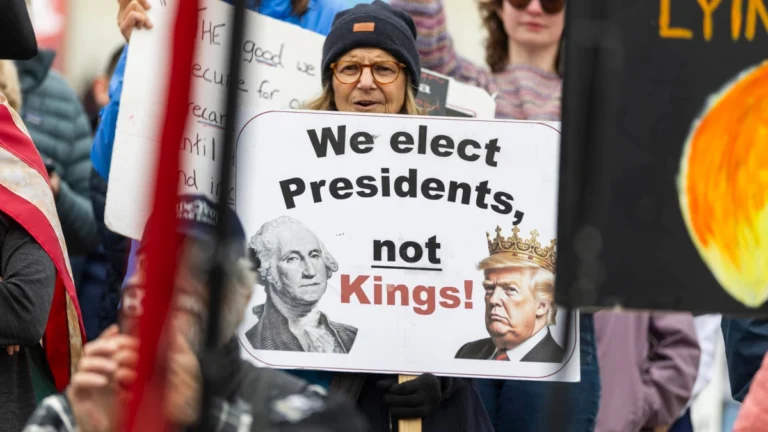
The No Kings movement held nearly 3,000 rallies and marches across the United States on Saturday, urging voters to cast their ballots early in the November 3 midterm elections, as the Trump administration intensified its efforts to challenge mail-in voting and scrutinize ballots cast by suspected noncitizens.
The nationwide mobilization, held under the slogan “No Kings: Vote Early,” drew millions of participants, according to USA Today, with events in all 50 states and Washington, D.C. The demonstrations came two weeks before elections that will determine whether Republicans retain control of Congress for the final two years of President Donald Trump’s term.
Organizers said the campaign aimed to turn mass mobilization into electoral participation by encouraging voters to make voting plans, cast their ballots early and help protect every eligible vote. They argued that historically high turnout would make it harder for the Trump administration to challenge the results by alleging fraud.
“Across thousands of events in all 50 states and DC today, we are turning enormous people power into direct voter power,” the No Kings Coalition said in a social media statement. It described the initiative as a nationwide effort to encourage early voting and build a network of Americans prepared to defend eligible ballots.
Text Reads: Demonstrations in Washington, U.S., under the slogan “No Kings: Vote Early,” seek to channel political protest into electoral participation. They call for placing limits on President Trump and protecting the Constitution ahead of the elections.
The coalition also pointed to the rising cost of groceries, gasoline, electricity and other daily necessities, arguing that decisions made by political leaders directly shape families’ lives and economic prospects. It presented the early-voting campaign as the next step in reclaiming political influence after a year of mass demonstrations.
In Atlanta, city council member Michael Julian Bond urged rally participants to encourage others to vote before Election Day rather than wait until the last minute.
“The Constitution gives you a power. That is the power of the vote,” Bond told the crowd.
In Phoenix, Arizona, Democratic Senator Rubén Gallego linked the campaign to opposition to the Trump administration’s policies, accusing the president and congressional Republicans of worsening economic conditions for ordinary Americans while enriching their allies.
“Today, we voted early to send a message loud and clear: no to separating our families, no to corruption, no to no oligarchs, no to stupid forever wars, and no kings.,” Gallego wrote on X.
Today, we voted early to send a message loud and clear: no to separating our families, no to corruption, no to no oligarchs, no to stupid forever wars, and no kings. https://t.co/qtT9Gp7Lwf
Democratic Representative Yassamin Ansari, who also attended the Phoenix rally, called the upcoming election “the most important election of our lives.” She cited the administration’s deportation policies, the war in Iran, cuts to health care and food assistance, and widespread corruption allegations as central issues facing voters.
Ansari questioned whether Americans would accept immigration enforcement practices that frighten communities and separate families, policies that leave millions without health care, or what she described as a transfer of wealth from working people to billionaires.
The protests unfolded amid heightened political tensions over Trump’s deployment of military personnel to several cities governed by Democrats. The administration has justified the deployments as a way to combat crime and support immigration enforcement operations.
The demonstrations were backed by a broad coalition of organizations, including the American Civil Liberties Union, the American Federation of Teachers, Black Voters Matter Fund, Indivisible, MoveOn, Public Citizen, State Voices and Voto Latino.
The push for early voting also came as the Trump administration pursued legal action against mail-in ballots. Trump has repeatedly attacked mail voting and continued to claim, without evidence, that electoral fraud cost him the 2020 presidential election.
On Thursday, the administration sued California election officials, asking a judge to bar the state from counting mail-in ballots in the midterm elections cast by people the federal government considers likely to be noncitizens until their immigration status can be verified.
On Friday, the Justice Department warned local election officials that processing and counting ballots submitted by suspected noncitizens could expose them to criminal investigations and prosecution.
Also on Friday, Democratic Senators Alex Padilla of California, Sheldon Whitehouse of Rhode Island and Dick Durbin of Illinois wrote to Attorney General Todd Blanche, demanding assurances that the Justice Department would not seize ballots or other election materials before the midterm results were certified.
In a sworn affidavit to the High Court, a former campaign tech chief claims the ruling party’s new app can bypass the law and secretly transmit voter data in real time using AI
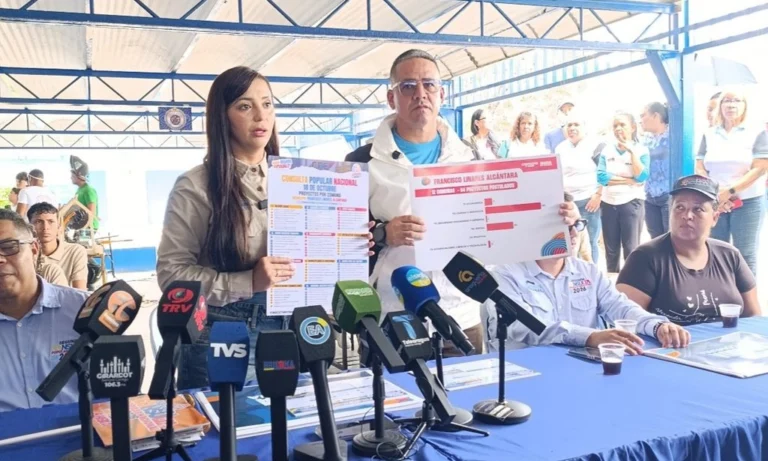
More than 37,000 community projects are up for a vote in Venezuela’s second National Popular Consultation of 2026.
Venezuela opened 12,769 polling stations on Sunday for its second National Popular Consultation of 2026, with communities voting on more than 37,000 projects proposed to address local needs.
The consultation involves 48,086 communal councils organized into communes, with voting taking place at 11,495 polling centers nationwide. Some 36,000 community members are serving on polling station boards, with technical support from the National Electoral Council (CNE).
The projects focus primarily on public services, social development and the local economy. Water infrastructure accounts for 14% of the proposals, acting President Delcy Rodríguez said Friday during a visit to the Villa Zoila social mission base in Caracas. Road improvements, street lighting, electricity, other public services and productive activities are also among the priorities identified by communities.
More than 428 proposals submitted by condominium boards are included in the vote, marking the first time these organizations have participated in the community consultation, according to the announcement.
The proposals are linked to the government’s Seven Transformations (7T) framework and reflect development priorities identified at the community level.
Rodríguez said the consultation gives Venezuelans a direct role in deciding how local needs are addressed, describing it as a way to strengthen community participation and popular power.
“The community must be in charge of decisions about the everyday issues affecting our people and our communities,” she said.
She also described the consultation as a significant advance in Venezuela’s political system and said the model of citizen participation should be preserved.
The Bolivarian National Armed Forces will deploy more than 130,000 personnel nationwide under Plan República during Sunday’s vote. The operation is intended to help maintain public order and ensure security throughout the electoral process.
The consultation allows participating communities to vote on locally proposed projects, with water infrastructure, road improvements and other essential public services among the priorities highlighted by Rodríguez.
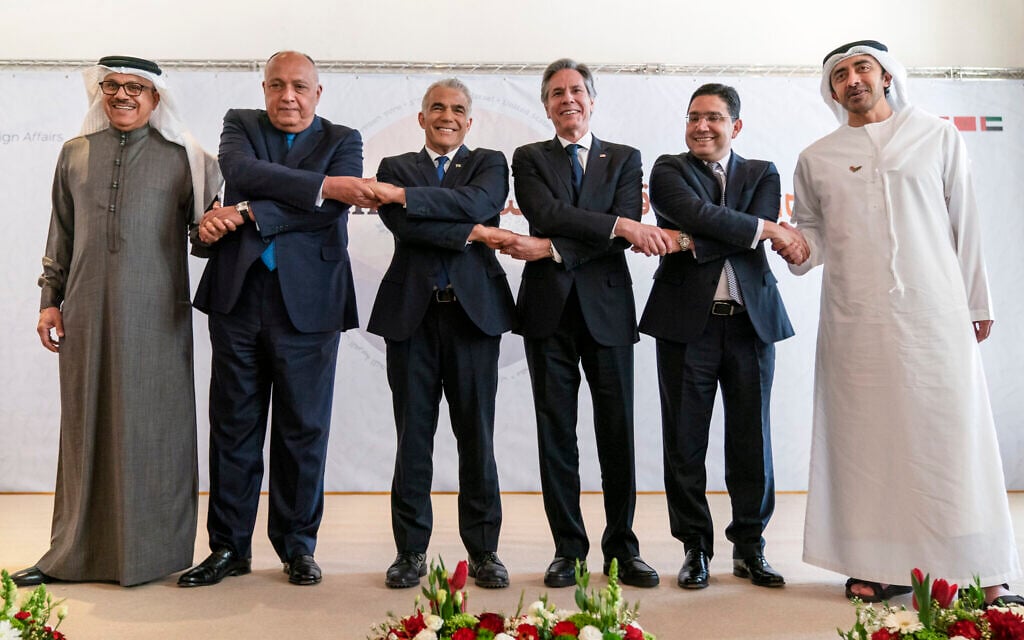
Observers tell ToI that even if new leadership leaves security doctrine and opposition to two-state solution in place, shifts in approach to Palestinians and regional diplomacy could change tenor of ties
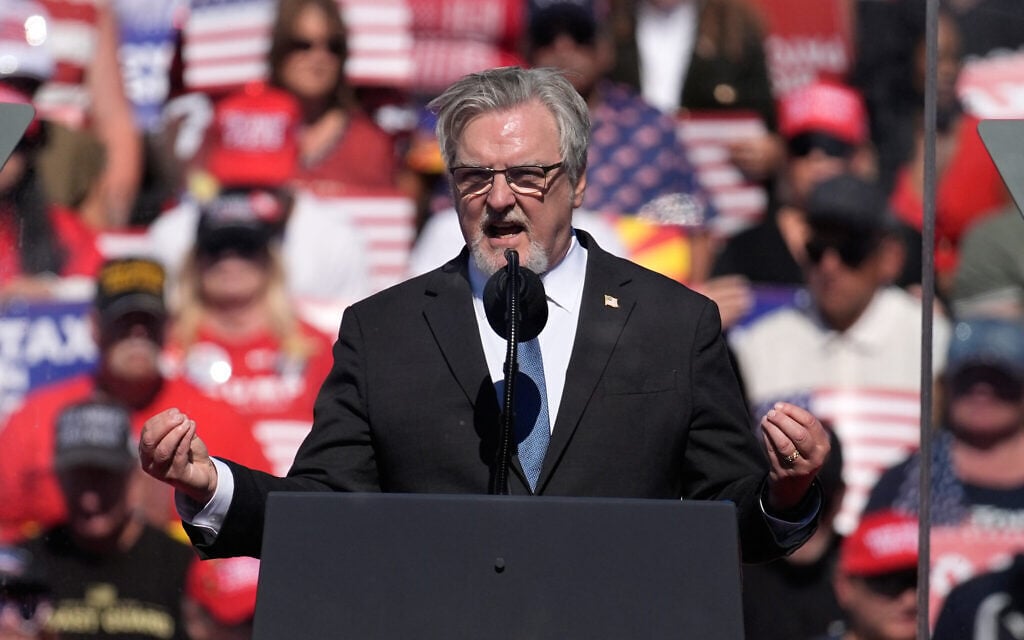
AP review of former video game composer-turned-congressional hopeful Marty O’Donnell's fan forum finds rampant racism, white nationalism and minimizations of Nazi crimes
The single most predictable action of the Trump second presidency happened just a few hours ago. Trump signed an executive order that exempted Russia from all of the key possible sanctions that could have been placed on it by the Graham-Blumenthal bill. Here is a link to the order and here is how it opens. The […]
CLEVELAND — Every morning, Dwight Bullard pulls into the station selling the cheapest gas he can find and puts exactly $100 worth into the rented box truck he uses to haul tires around Northeast Ohio.
On the August morning MS NOW was riding with him, regular was $3.92 a gallon.
“There goes my $100,” he said, watching the pump click off. It didn’t even fill the tank. Six months earlier, the same day’s driving had cost him $60 or $70.
He did the math in the truck: Add in the $600 for the rental truck, and the weekly cost of doing what he describes as the best job he’s had is $1,100. Do that every week for a year, and it’s way more than what he is trying to save to buy a truck of his own.
Ask him who he blames for the high price of gas, and he doesn’t hesitate.
“Trump! I blame Trump, man,” he said. Then, a beat later: “Well, that’s what I hear. I ain’t really into politics, but I know it’s got something to do with the shit he’s doing over there.”
Dwight Bullard (right) delivering tires in Northeast Ohio in August 2026.
MS NOW walked him through the data: the war with Iran, the Strait of Hormuz, a fifth of the world’s oil, a global market that sets the price at a gas pump in Cleveland, his hometown.
Dwight is 34, with two daughters under 10. He drives the tire route until about 4 p.m., goes home to shower and on some days works a second job running food at a Mexican restaurant until 11 or midnight. And then he’s up at 5:30 in the morning to do it again.
One thing he has not done is connect his situation to the folks in elected office in his state or Washington, D.C. He’s also pretty sure he has only voted once in his life: in 2012, for Barack Obama. He did not vote in 2024.
“Most of the people I know, we ain’t really voting,” he said. “My homeboys, we just making shit happen. Living day to day.”
Does he regret sitting out the last presidential election? “Considering where we are now, hell yeah.”
MS NOW went to Cleveland to get some time with a group of voters whom both parties talk about constantly, but who almost nobody is spending a lot of time or money talking to: young Black men who have stopped voting, or never started.
One of the races that could decide control of the Senate is happening in Ohio, where Democratic former Sen. Sherrod Brown is trying to win back his old seat from Republican Jon Husted. The polling has shown the race consistently within a few points, and the math on who could decide it is not that complicated.
A voter-file analysis by HIT Strategies, a public opinion research firm, found more than 100,000 registered Black voters in Ohio who sat out the last three federal elections. The firm also found, through focus groups, that these voters were more open to being mobilized this year, pushed by the cost of living and souring views of President Donald Trump.
In June, the Ohio Legislative Black Caucus Foundation released a study with a finding that should stop Democrats cold: In the 2022 midterms, 603,000 eligible Black voters in Ohio didn’t cast a ballot. That is more than twice the margin by which JD Vance won his Senate seat that year.
Shayla L. Davis, who runs the foundation, said she was “heartbroken” when she got the findings back.
Shayla L. Davis, President and CEO of the Ohio Legislative Black Caucus Foundation.MS NOW
Sitting in the UnBar Cafe, a Black-owned coffee shop, she noted that in 2023, the Republican-controlled state passed one of the most restrictive voter ID laws in the country. Essentially, it’s a “use it or lose it” rule that strips people from the voter rolls for not voting. That, combined with the apathy she is seeing especially with young Black men, helps explain to Davis why what was once a swing state has so far failed to regain that status.
“My own son, he’s 28 years old. He stopped voting,” said Davis, formerly a state representative and city councilwoman in the Cleveland suburb of Garfield Heights. “He’s cynical. He doesn’t believe that anyone is standing up for what he believes. He believes that all the rhetoric is performative and that everyone is all the same. And that breaks my heart, but I can understand exactly where he’s coming from.”
Her son grew up in a house where his mother’s name was constantly on the ballot. She remembers the election night party she threw in 2008 and him running out of his bedroom, a kid full of joy that Obama had won. That’s the moment she keeps trying to get him to remember.
There’s been a lot of ink spilled about the gender divide in the Black community. Black women are more consistent voters, and more consistently punching their cards for Democrats. Those numbers aren’t actually that stark though: 92% of Black women voted for Harris in 2024 compared with 78% of Black men.
It’s the generational divide that is more worrying for people like Davis. Younger Black voters are just hitting the ballot box less compared with the generations before them.
Her concern is that there is just a lack of connective tissue to the days when Black people didn’t have the right to vote. Pair that with the lack of movement on issues young Black voters care about, and it’s a recipe for apathy.
“Older Black voters are going to show up and vote,” Davis said. “It’s a generational gap of what they actually experienced. My son never experienced any of [the Civil Rights Movement]. He only hears the stories and he’s hearing the stories third-party. He’s hearing it from me, who didn’t experience that either.”
There are groups trying to change that, like Cleveland VOTES, a nonpartisan civic organization that three years ago started a seasonal, part-time canvassing team it calls The Squad. There are just five of them, but last year they logged more than 114,000 contacts.
MS NOW walked with them on a Wednesday afternoon on the East Side, in a stretch of the city where co-founder Erika Anthony says turnout is lowest. They weren’t asking people who they were voting for. They were handing out flyers for “Carnivote,” an event with free food, backpacks for kids and a round of “Democracy Jeopardy.”
Erika Anthony, co-founder of Cleveland VOTES.MS NOW
Jerry Pena, who manages the group and is its only man, explained the strategy.
“You go to people’s doors, you quickly approach them with voting, the conversation shuts down,” he said. “It’s over because they’ve seen what their vote does, right? It’s disappointed them over and over again.
“The conversation needs to change more to ‘What do you want to see in the future in this neighborhood? How can we get there?’ But if you start with voting, done deal.”
Jerry Pena, a member of Cleveland VOTES, in August 2026.MS NOW
At 2 p.m. on a weekday, when door-knockers might expect to find retirees — older Black voters who may not need a ton of convincing — they kept running into young Black men.
Outside a convenience store, a 29-year-old who gave only his first name, Robert, said he hasn’t voted for anyone in years. “I just didn’t feel like nobody deserved it,” he said.
He added that nobody, not a Democrat or a Republican, knocked on his door in 2024. Then, unprompted, he started talking about policy. He’d recently been in jail, where “they treat you like animals,” and he couldn’t understand why people were still locked up on weed charges in a state where recreational possession was legal.
He had strong, specific views about the carceral system. He knew exactly what would make it better. Robert had just never connected those ideas to the people who decide what the laws actually look like.
When MS NOW described Robert to Anthony afterward, she said that is exactly why Cleveland VOTES started: She and her co-founder were working with people coming home from prison and kept hearing the same disconnect.
“We would say things like ‘Do you want to have the ability to influence who sits on the [judicial] bench?’” she said. “When we started painting the picture for folks, they’re like, ‘Oh, I have the ability to do that.’”
The biggest takeaway isn’t that these voters are tapped out — it’s that almost no one has even tried to tap them in. Every single Black man MS NOW met that day said some version of “No one has tried to convince me to vote.” Nobody is paying these men any attention.
“We as a country have gotten way too hyperfocused on the electoral cycle versus thinking about the holistic nature of community building,” Anthony said. “There are policy decisions being made every day, locally, countywide, statewide and at the federal level. And if we’re only talking to folks two weeks, three weeks before an election and just expecting them to magically open their eyes and see why this is valuable to them. [By] then, we’ve already missed the boat.”
Which raises the question of who exactly is asking. Davis said that since her foundation’s report came out on Juneteenth, one federal official’s office has reached out. Neither Senate campaign had called.
“They don’t have to call me,” Davis said. ”Just pick the report up and do something about it.”
Brown’s campaign says it is doing that. According to a campaign aide, Brown started his outreach earlier than any of his other campaigns ever had. He has met with Black faith leaders in Ohio cities since last fall, held roundtables with Black men, hosted “pledge to vote” events with Divine Nine organizations and spent $250,000 on ads airing on radio stations with predominantly Black audiences.
Husted’s campaign initially agreed to meet with MS NOW for this story, then canceled due to a scheduling conflict and did not immediately respond to emailed questions about what efforts his team has made to reach out to Black voters.
MS NOW sat down with Dwight, the tire and restaurant hustler, and his mother, Kari Jones, who is the kind of voter campaigns dream about. She passed out flyers for a city council candidate at 10 years old. Her neighbors call her for political advice. Her mother and daughter call her from the voting booth to ask who they should pick.
She has made sure that Dwight has stayed registered for years. She has not been able to persuade him to do anything with that registration since 2012.
Kari Jones and Dwight Bullard in August 2026.MS NOW
What changed for Dwight between 2012, when he said casting a ballot for Obama “felt like I did something,” and now?
“I guess I never really saw a change,” he said. “I never really seen what it did firsthand to people, so I just never really cared to vote. Like, it is what it is. They’re going to do what they’re going to do.”
Thinking on it, he realized he and his friends do actually talk about politics. All the time. “We sit [in the barbershop] and talk about the rent, the streets, that big-ass pothole on Dunham. We talk about that but we don’t talk about the source of the problem.”
Something had clearly shifted. After that morning truck run, Dwight went back to the shop and a co-worker asked what the MS NOW cameras were there for. He explained, then asked whether his friend voted. Not really, the co-worker said, but he did vote in local elections.
“I’m like, ‘Damn, he’s my age,’” Dwight said, adding: “When it comes to anything else, talking Marvel movies, music, we can relate. So when I heard him say that, I’m like — makes sense.”
Jones had been waiting for this. For her son to make these connections.
There’s a tree in her yard that Dwight spent a year telling her to get the city to cut down, afraid it would fall on her house, or her car or one of his kids. The city finally came to do it that morning.
“Who did you think was going to do it?” she asked.
“The city.”
“And who’s the city?”
The light bulb went off. Dwight was realizing that who is in office can actually make differences big or small to his and his family’s life. Not voting, he said, was “like a video game where you [are] not using the power-ups.”
She asked him if this had really changed his mind and if he would vote in November. “Yes, with you. And I’ll get the sticker,” he said.
I asked Jones what she would say to a politician who sat across from her and claimed they couldn’t figure out why young Black men in her state didn’t vote.
“Find out what’s important to them. Find out what’s affecting them. Find out what their knowledge is about politics. Because that’s the problem. They really just don’t know,” she said.
It’s just one potential voter, but it took less than a day. Nobody in politics had to do anything expensive to move Dwight Bullard.
It took a guy at work who likes the same movies, a tree in his mother’s yard and a reporter explaining how a strait on the other side of the world affected the price of gas in Ohio.
In a state where 603,000 Black voters stayed home last midterm, hardly anyone has been knocking on the door.
CORRECTION (Oct. 17, 2026, 10:30 a.m. ET): A previous version of this article listed the wrong city in which Shayla Davis served as a councilwoman. It was Garfield Heights, not Cleveland.
In the final weeks before the midterms, there’s a poll for just about everyone. One may show a candidate pulling ahead in a state that’s supposed to be hostile territory for their party. Another gives one of the parties a historic lead on the generic ballot. Whatever you’re hoping for on Election Day, you can probably find a poll that says it’s coming.
That doesn’t make it a good poll. Some of the most rigorous surveys out there may tell you exactly what you don’t want to hear, and even the best are not crystal balls. They are loaded with nuance, measure opinion at a single moment and carry uncertainty that’s easy to overlook in a fast-moving news cycle.
But polling is still a critical tool for understanding which races are competitive and which issues voters care about. The trick is reading them well. Here are three things worth considering to help you separate out meaningful patterns in the data from noise.
Polls are snapshots, not predictions
A poll can show which candidate leads a race when the interviews were conducted, but it cannot say for sure how people will vote days or weeks later. Campaigns are dynamic. Candidates’ positions evolve. Voters change their minds. In races where polls show many undecided voters, these shifts add another layer of uncertainty, because many of those voters will eventually pick someone. So pay attention to the share of respondents who are unsure or only leaning toward a candidate.
And like any snapshot, even the best poll is imperfect. High-quality pollsters work hard to make sure the people they interview accurately represent the voters in a state or district, but even excellent polls contain some noise. Smaller surveys typically have greater margins of error than larger ones. Results for specific demographic groups can be even less certain, since a survey may include only a small number of people from those groups.
Polls can offer a valuable snapshot of an election story as it unfolds. What they cannot do is predict with certainty how that story ends.
Not all polls are created equal
When most people come across a poll in a news story, the first thing they look at is the topline number: What is the poll telling me? But a better place to start is often with the source.
Who conducted the poll? How did they do it? What questions were respondents asked? Did the pollster release a methodology accounting for their decisions, or did they keep those details out of view?
These questions are important because how a pollster conducts a poll inevitably shapes what conclusions it — and, in turn, you — can draw from it. Most pollsters are well intentioned and have every incentive to get the numbers right, and reputable ones are transparent about their methods. They also generally don’t have a stake in the outcome or an incentive to try to shape the narrative around a race — unlike, say, a campaign releasing its own internal polling.
The lesson is simple. When a new poll comes out, look beyond the topline and spend a little time investigating how it was conducted. And never judge a poll’s quality by what it finds.
Polling contains unavoidable uncertainty
A common misconception with polling is that all differences are real and meaningful. For instance, in a poll of a congressional race that is 50% to 46%, it may be tempting to look at the candidate polling at 50% as the frontrunner and the one likely to win if nothing about the race changes.
But that is the wrong way to read most polls that show narrow gaps between candidates. Every poll contains some amount of uncertainty. That does not mean polling is broken, or that getting an accurate gauge on public opinion is impossible; it means that any single poll should be taken with caution and considered alongside other polls on the same race or issue.
One of the most common forms of uncertainty you will come across is a poll’s margin of error, which stems from the fact that a poll surveys only a sample of voters. In a 50-46 race with a margin of error of plus or minus 3 percentage points, we can’t say for sure who would be ahead if every voter were surveyed, because the final result could be anything from a 53-43 race one way to a 47-49 race the other way.
And sampling error is just one of many challenges. Error can creep into a poll in many other ways, including how pollsters determine who is likely to vote and how they weight different groups to match the population they’re trying to measure.
That’s why context matters — a lot. Polling averages can be an excellent way of setting expectations when a new poll comes out and to avoid getting swept up in the hype around an outlier. Polls from reputable news organizations with strong track records can serve the same purpose.
And when two candidates are polling neck and neck, the best conclusion is often the most obvious one: If the election were held today, it could go either way.
No, what underwhelms me is a certain subset of Americans who are not attending these protests. This cohort (according to recent polls) apparently exists but appears to lack the courage to stand up and be counted in public: right-of-center voters that are more loyal to the Constitution than to Trump.
There ought to be nonstop protests across the U.S. against an illegal war that’s crippling millions of Americans’ budgets, making the world less safe and failing at every one of its constantly-shifting stated objectives.
A Fox News poll conducted between Oct. 9-12 found that among self-identified MAGA Republicans, Trump’s approval rating is 95% — a figure that would make most dictators blush. Meanwhile, among Republicans who don’t self-identify with the cult of Trump, the president is underwater: 47% approve, while 52% disapprove. Among independents, 22% approve and 78% disapprove.
Hey, non-MAGA Republicans and independents who live in objective reality, now’s a good time to show your faces in public!
It’s one thing to be a career GOP politician, terrified of crossing Trump for fear of losing their position of power. It’s spineless and opportunistic, of course, but at least it’s a reason. What’s the excuse for the rest of you?
Surely Trump’s relentless disrespect of American values and constitutional rights — like freedom of speech and religion; due process; birthright citizenship; prohibitions on bribes from foreign governments and warrantless searches; the freedom to walk outside without proof of citizenship — ought to have you mad as hell and taking to the streets. If you call yourself a libertarian or a conservative, then obviously you should see Trump as a greater threat to the rule of law and civil liberties than annoying woke college undergrads. If you’re a right-leaning independent, then Trump and his family gorging on ill-gotten countless billions must have you willing to let bygones be bygones and ready to march in the streets side by side with your liberal neighbors.
But I’m confident few, if any, of these folks will attend No Kings rallies this weekend. Whether because of apathy or fear of catching cooties from anything associated with Democrats or the left, the result is the same: they’ll be sitting on the sidelines as Trump gobbles up more American yardage for himself.
Hey, non-MAGA Republicans and independents who live in objective reality, now’s a good time to show your faces in public!
It’s possible that the polls predicting a “blue wave” election are correct. But a midterm “wipeout” isn’t enough for America to recover. Impeachments, investigations and public shaming ought to be the order of the day if Democrats win back one or both houses of Congress, but even that won’t do. For America to achieve some semblance of a shared national identity, there must be a near-universal call for a return to decency and respect for plurality. But that can only happen when roughly half the country demands the end of an unprecedented American personality cult that they’ve voted for in three consecutive elections.
I’m glad No Kings is drawing people to the streets and encouraging people to vote. It’s just not nearly enough. Not until the non-left — composed of non-MAGA Republicans, conservatives, libertarians and anti-woke centrists — confronts its own complicity and forges its own No Kings movement.
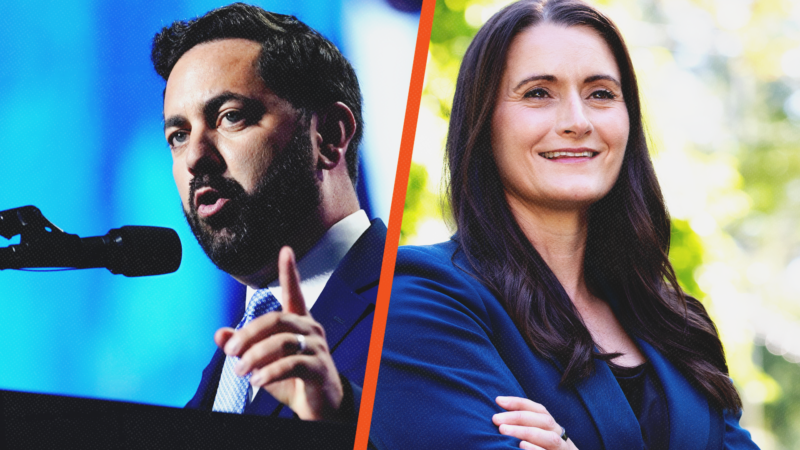
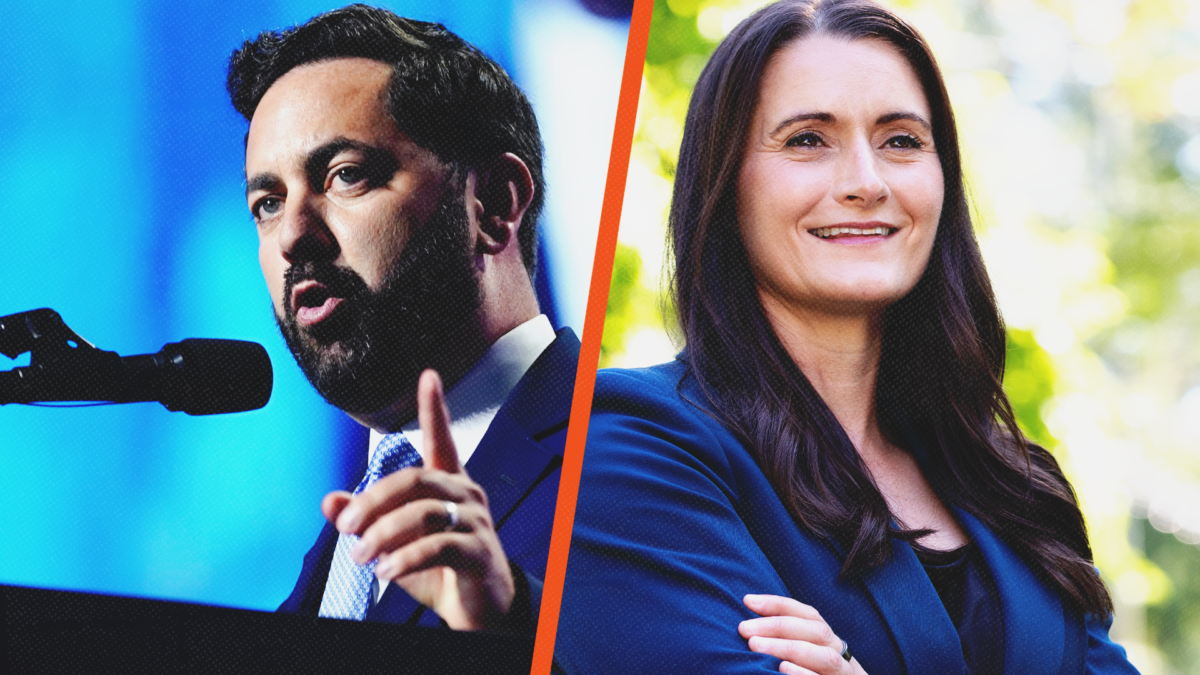
As polling shows neck and neck contest, Republican Mike Lawler seeks to link his rival Cait Conley to Mamdani, while she accuses him of being a rubber stamp for Trump
Social media ad highlights antisemitic text messages that were exposed last year, along with JD Vance saying 'we’re not canceling kids because they do something stupid in a group chat'
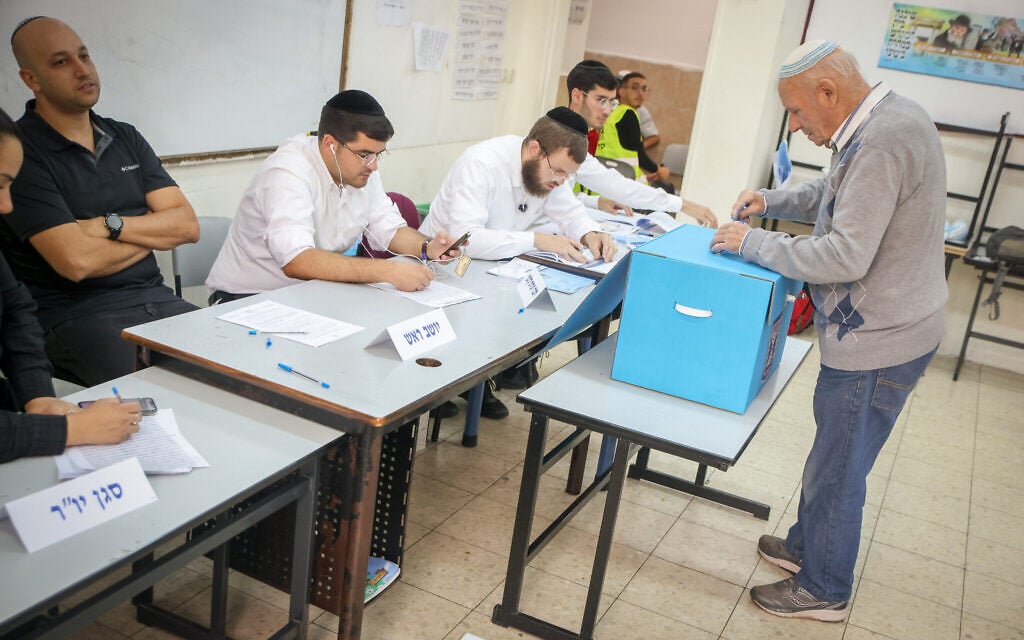
Prime Minister Benjamin Netanyahu and his chief rivals have said they won't form a coalition with any Arab-led party after the Oct. 27 election – even if that means months of gridlock and another round of voting.
The Democratic Socialists of America (DSA) candidates running for the House of Representatives and endorsed by NYC Mayor Zohran Mamdani are all but guaranteed to win their general elections this November, but that does not mean the midterm drama is over in New York. In the state's 17th congressional district, which includes the lower Hudson Valley, Democratic challenger Cait Conley, a combat veteran who served on the Biden administration's National Security Council, could unseat incumbent Republican congressman Mike Lawler in one of the most consequential races of the midterms.
The highly contested purple district voted for former Vice President Kamala Harris in the 2024 election while reelecting Lawler for his second term. Now, Lawler is attempting to win a third term as support for President Donald Trump wanes ahead of the midterms. As of Friday, The Cook Political Report lists the race, which could determine control of the House, as a toss-up.
If elected, Conley would have far more in common with the "Badass Women" coalition of security state and military veterans than with DSA types (think more Sen. Elissa Slotkin from Michigan than Darializa Avila Chevalier). As Judge Street Journal's Timmy Facciolanotes, "Conley's candidacy is testing the viability of a tactful centrism that rebukes left-wing positions like abolishing ICE or restricting weapon shipments to Israel." Lawler is also vying for moderates, pitching himself as "one of the most bipartisan members of Congress" and emphasizing his willingness to break with Trump occasionally while still welcoming Trump's support.
While Lawler and Conley certainly are not pure MAGA acolytes or DSA members, both have leaned into a tech-critical position, much like that of more radical populists like Lina Khan or Steve Bannon, revealing how pervasive anti-tech sentiment has become in mainstream politics.
This tech skepticism was on full display during an October 14 debate, when each candidate made the case for why they were the most equipped to regulate AI, insisting that the industry needs guardrails.
Conley said members of Congress do not want to regulate AI because "they want to look out for their billionaire and trillionaire backers like Elon Musk, who is pouring over $260 million into this midterm election." She then added that Musk backed Lawler in his 2024 race.
Lawler then accused Conley, who previously consulted for Primer AI, of being "the AI candidate for the AI industry."
While Lawler and Conley disagree on specific data center regulations (Conley supports Democratic Gov. Kathy Hochul's data center moratorium while Lawler supports local zoning control over data centers), neither wants to pitch themselves as an explicitly pro-data center candidate. During the debate, Conley claimed that, "On Mike Lawler's watch there have been five data centers built in Rockland County." Lawler has said that he had no say in the decision to build the data centers, and during the debate, he pointed out that the facilities were built for financial services. Lawler also attempted to attack Conley over data centers, slamming her in an ad for saying "we need data centers." Regardless of the candidates' specific policies on data centers, their attacks on one another demonstrate that cheerleading hyperscale data center development is a political liability. In their district, data center has presumably become a dirty term.
The candidates' tech-skeptical rhetoric did not end with unchecked data center development. After the debate, Reason asked both candidates about their positions on age-verification laws for social media and AI, since such regulations raise significant privacy and censorship concerns by age-gating the internet. Unsurprisingly, both Lawler, who votedfor the controversial KIDS Act, and Conley, who has proposed stricter age verification for AI tools, parroted platitudes about why such online safety regulations are necessary to protect children.
"We have watched how social media is literally hurting the mental health of children," Conley told Reason. "And when you talk about the power of AI and what that power could do, we have to regulate this."
Lawler gave a similar response, telling Reason that he respects free speech but that protecting children "is paramount."
This bipartisan consensus over social media regulation has long been brewing in Congress. The mainstream political conversations about AI and data centers, however, are relatively new this midterm election cycle. And it appears both Lawler and Conley have figured out which way Americans' sentiment toward AI is leaning, and they have waged their campaigns accordingly.
Donald Trump and the MAGA movement’s grip on white voters appears to be slipping, and in an effort to reverse that trend, it seems Vice President JD Vance has designated himself the pied piper of racist rage.
Numerous polls this year have spotlighted Trump’s declining support among white voters — particularly, white working-class voters who’ve been key to his and his party’s political success. Amid this trend, Vance — in speech after speech — has resorted to rhetoric seemingly designed to groom the white American psyche so that white voters turn their ire on nonwhite people rather than on Trump and the Republican Party.
The latest example came during a rally Vance hosted in Michigan on Thursday, in which he suggested Democratic Senate candidate Abdul El-Sayed is resentful of certain people and places because they’re “too white, too proud or too American.” He called El-Sayed a “weasel who should shut his mouth and show a little gratitude to the country that gave him everything.”
.@VP JD Vance says he feels bad for U.S. Senate candidate Abdul El-Sayed (D-MI): "I don't know why he resents the things that he does. Perhaps it's because he sees them as too white, or too proud, or too American." pic.twitter.com/6zTXQG3okK
Vance has returned to this well numerous times over the past year as Trump’s corrupt business dealings, economically destructive tariffs and his deadly war with Iran have turned off some in the MAGA base. You can see plenty of other examples of Vance launching similar appeals to white bigots — including here, here and in the following clip from last December, when Vance told an audience of right-wing Turning Point USA affiliates that they no longer had to “apologize for being white.”
Vance: In the United States of America, you don't have to apologize for being white anymore. pic.twitter.com/QikIDkXNy5
And here, history can be informative. White supremacist movements and organizations in years past — including the Ku Klux Klan — have all sought to unify white Americans around a single racial identity. This trend is explored in films like the documentary “White with Fear,” which shines light on the history of right-wing, racist fearmongering in the United States. White supremacist groups have historically managed to convince some white people to fall in line behind them, but they’ve also faced white backlash as some of the same people have been awakened to these groups’ corrupt ways and self-serving bigotry.

 Login