«En caso de cualquier error de cálculo, todas las plataformas de infraestructura e inversiones en energía pertenecientes a los agresores en la región estarán dentro del alcance operativo y su seguridad estará directamente en peligro», dijo un alto militar de Irán.
Riyadh says six injured in Iran-backed rebel attack, two soldiers killed in helicopter crash; Egyptian parliament postpones vote on aiding Saudi effort as Houthis issue threats
President Trump on Sunday issued a strong endorsement of Israeli Prime Minister Benjamin Netanyahu for the upcoming October 27 Israeli elections and said that if Netanyahu lost, the US would have to “finish the job” against Iran without Israeli support. “Bibi Netanyahu has been a Great Warrior Prime Minister, and an even greater Partner for […]
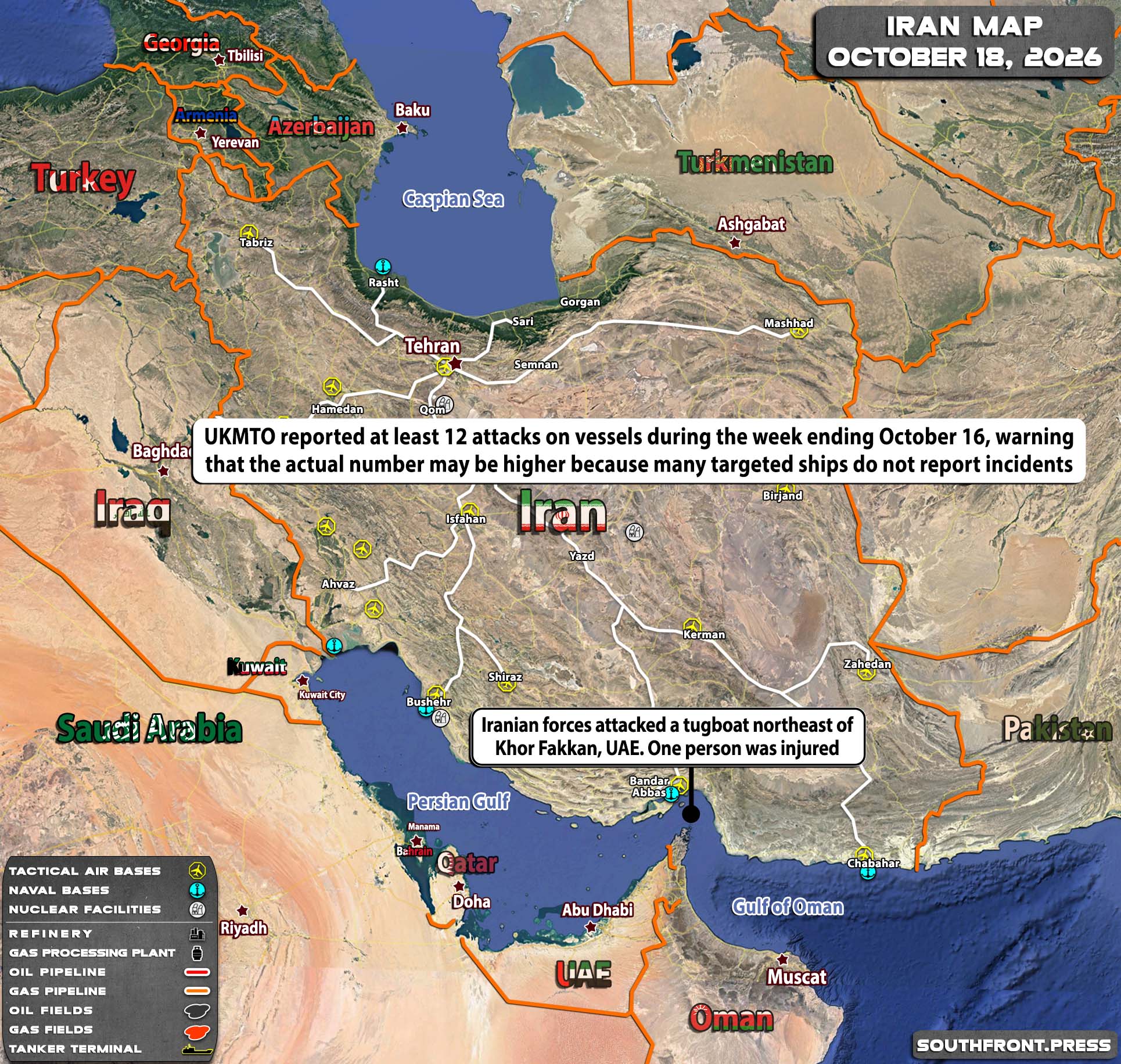
Iranian forces attacked a tugboat northeast of Khor Fakkan, UAE. One person was injured;
UKMTO reported at least 12 attacks on vessels during the week ending October 16, warning that the actual number may be higher because many targeted ships do not report incidents.
Der israelische Premierminister Benjamin Netanjahu erklärte in einer Wahlkampfbotschaft auf X, Israel müsse seine wichtigen „Aufgaben an allen Fronten“ in den kommenden zwei Jahren abschließen, solange Donald Trump als US-Präsident im Amt ist: „Uns bleiben noch zwei Jahre der Amtszeit meines Freundes Donald Trump, und genau in dieser Zeit müssen wir unsere wichtigsten Aufgaben an […]
Energy Secretary Chris Wright on Sunday said the Trump administration has not broken its promise to lower gas prices as the Iran war stretches into its eighth month. CNN’s Dana Bash asked Wright on “State of the Union” about his predictions early in the conflict that gas prices would decline “within weeks, not months,” and,…
DUBAI, Oct 18 (Reuters) – Iran’s offer to the United States to reopen the Strait of Hormuz within seven days is still on the table, Foreign Minister Abbas Araqchi told Iranian media...
The two-week exchange of fire between the United States and Iran, triggered by Washington’s attempt to force open an illegal southern corridor through the Strait of Hormuz, represented the most consequential direct military confrontation between them since the 40-day war.
The Iranian response to the unprovoked and illegal American aggression was not a chaotic escalation but a methodical, layered military campaign that drew on years of doctrinal development, weapons investment, and operational planning.
The efforts of the Islamic Republic’s armed forces, spearheaded by the Islamic Revolution Guards Corps (IRGC) aerospace and naval branches, executed a decisive and swift response.
What unfolded was a layered operation with nine distinct but interlocking lines of effort. Each line reinforced the others. Infrastructure degradation reduced American operational tempo; area denial forced repositioning that compounded the effects of that degradation; extended-range precision strikes demonstrated that repositioning offered no sanctuary; ISR attrition blinded American targeting systems; terrorist suppression closed the land flank, while strikes on utility infrastructure imposed costs on host nations and denied services to American bases.
One can employ the open-source reporting, satellite imagery, and the observable pattern of strikes to examine each dimension of Iran’s military response in detail, and construct a coherent operational picture. It is getting exceedingly clear that the ceasefire period has very likely translated to a window for reconstitution and preparation in Iranian strategic calculus.
The primacy of solid-fuel tactical ballistic missiles
Iran’s decision to anchor its retaliatory campaign in solid-fuel tactical ballistic missiles was not accidental. It reflected a decade-long investment in a specific capability designed precisely for this kind of confrontation. Solid-fuel ballistic missiles offer decisive operational advantages over their liquid-fuel predecessors. They require no fueling time at the launch site, dramatically compressing the window between a launch order and missile departure.
This matters enormously in a sensitive environment where adversary assets, particularly MQ-9 Reaper drones and maritime patrol aircraft, are actively hunting for launch preparations.
A liquid-fuel missile requires a visible, time-consuming fueling sequence that creates a detectable signature. A solid-fuel missile can be transported, erected, and fired in a fraction of that time, often before a targeting solution can be developed and a strike authorized.
These missiles are road-mobile, launched from transporter-erector-launchers (TELs) that can disperse across Iran’s mountainous terrain, making pre-emptive targeting extremely difficult.
Having destroyed much of the air defense systems belonging to the US and its Arab allies using the older, less sophisticated liquid fuel missiles in previous wars, Iran’s strikes this time primarily relied on its tactical solid-fuel ballistic missile inventory, meaning the various variants of the Fateh family.
Simply put, the choice of solid-fuel systems reflected a calculated assessment of the adversary’s weakened interception capacity, an assessment that proved accurate.
The air defense inventory crisis
Perhaps the single most consequential factor shaping the operational environment was the state of US and allied air defense missile inventories.
The United States entered this round of military aggression with critically depleted stocks of its most capable interceptors. The Standard Missile-3 (SM-3) and Standard Missile-6 (SM-6), which arm Aegis-equipped destroyers and cruisers and provide the American Navy’s primary ballistic missile defense capability at sea, have been drawn down through a combination of expenditure in the Red Sea campaign against Yemen, the costly defense of Israel during two previous wars, and the simple reality that production rates have never kept pace with consumption.
The Terminal High Altitude Area Defense (THAAD) system, which provides upper-tier defense against medium and intermediate-range ballistic missiles, is similarly constrained.
The decision not to employ Aegis and THAAD at full capacity was therefore a forced one. The United States simply could not spend its remaining meager inventory of SM-3 and THAAD interceptors against Iranian tactical ballistic missiles, which, while accurate and damaging, are not the only threats to American interests.
Doing so would have left the United States strategically exposed against another serious contingency in East Asia or Europe. The calculus was that American military bases had to absorb more hits to preserve the interceptors.
Moreover, the Patriot system, which bore the brunt of terminal-phase defense in recent weeks across the region, was in no better condition. Years of expenditure across Ukraine, the occupied territories, the Persian Gulf, and the Red Sea mission have drawn PAC-3 and PAC-3 MSE stocks to extremely low levels.
The Pentagon’s response was telling. Rather than accelerating full-capability PAC-3 MSE production, it has chosen to pursue the cheaper, less capable PAC-3ACE Cost Reduction Initiative variant. More revealing still were the recent PAC-2 GEM-T orders, an older interceptor not procured by the US in decades, signaling just how severely stocks had been exhausted.
That the world’s most sophisticated air defense enterprise was compelled to resurrect a 1990s-era design to sustain basic readiness is the starkest indicator of the American munitions crisis that Iranian planners appear to have understood, measured, and exploited with precision.
The situation among Persian Gulf states was equally dire. Saudi Arabia and the UAE had expended substantial portions of their Patriot PAC-3 interceptor stocks during years of Yemeni military missile and drone attacks, and entered the 40-day imposed war with depleted inventories. The situation is even direr in Kuwait and Bahrain, with the Persian Gulf microstates effectively running out of Patriots, being forced to solely rely on American-operated systems.
PAC-3, the most capable variant of the Patriot system against ballistic missiles, has effectively been exhausted in several batteries. PAC-2, the older and less capable variant, is the only available option in certain areas against Iranian missiles, and even that missile is running low as well. The collective air defense architecture of the Persian Gulf states, which had appeared formidable on paper, has been effectively hollowed out.
Iranian operational planners were aware of these facts. The sequencing and volume of Iranian missile salvos during the exchange reflected a deliberate attempt to exploit the gap between what the defense could theoretically intercept and what it could actually intercept given real-world inventory constraints.
Iran’s multi-layered operational strategy
What distinguished Iran’s response from a simple missile barrage was its architectural coherence. Iranian planners did not merely fire missiles at American targets; they executed a phased, multi-domain retaliatory campaign with distinct operational objectives at each stage, each phase creating the conditions for the next.
The campaign can be understood as having five interlocking lines of effort: infrastructure degradation, area denial and operational displacement, precision strike at extended range, ISR and logistics attrition, and proxy terrorist force suppression.
Together, they constituted a campaign design far more sophisticated than most Western analysts had publicly credited Iran with possessing.
The overarching logic was one of progressive operational constriction. Rather than attempting to destroy US forces – an objective beyond Iran’s reach given American conventional superiority – the campaign aimed to degrade, displace, and exhaust them.
Each successful strike reduced American operational capacity; forced repositioning that consumed time and resources, and demonstrated to regional partners that proximity to American occupation forces carried real costs.
Infrastructure degradation
The first phase of the Iranian retaliatory campaign targeted the physical infrastructure of American military power in the Persian Gulf region. This was not indiscriminate bombardment. Satellite imagery and post-strike assessments revealed a pattern of targeting that prioritized specific high-value nodes: radar installations, fuel and ammunition storage facilities, maintenance hangars, and communications infrastructure.
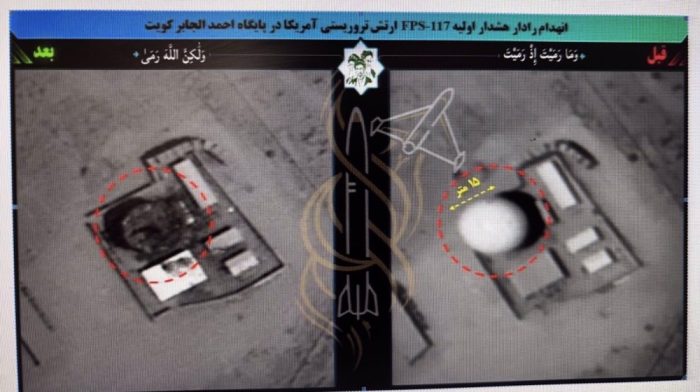
Radar systems were a particular priority. The ability to detect, track, and target Iranian missiles and UAVs depends on a layered network of radar systems. By striking radar installations at air bases, Iran degraded the situational awareness that underpins both offensive operations and defensive intercepts. A radar that is destroyed or forced offline creates a coverage gap that cascades through the entire air defense architecture.
Before-and-after imagery of an AN/FPS-117 early warning radar installation at Ahmad al-Jaber Air Base, Kuwait, showing structural damage
Logistics infrastructure was targeted with equal deliberateness. Fuel depots, ammunition storage sites, and maintenance facilities at American bases around the Persian Gulf were struck with sufficient accuracy to cause meaningful operational disruption.
An air force that cannot fuel its aircraft, rearm them, or repair battle damage cannot sustain sortie rates. The targeting of logistics was a direct attack on the tempo of American air operations to derail the American aggression against Iranian sites and reduce the pressure on Iranian forces.
The accuracy of these strikes, achieved at ranges of several hundred kilometers, validated the operational utility of Iran’s solid-fuel ballistic missile force and demonstrated that the IRGC aerospace force had developed the targeting data, launch procedures, and quality control necessary to achieve consistent results against fixed infrastructure.
The anti-access/area denial campaign
The most strategically significant dimension of the Iranian retaliatory campaign was its systematic execution of an Anti-Access/Area Denial (A2/AD) strategy that progressively pushed American air operations out of the Persian Gulf and into increasingly distant and operationally constrained locations.
The logic of A2/AD in this context was straightforward. The closer American aircraft operate to Iran, the shorter their flight times, the larger their payloads, the less refueling they require, and the more sorties they can generate per day.
Conversely, every additional hundred kilometers of distance imposes compounding costs: greater tanker support, longer mission times, reduced payload, increased crew fatigue, and more complex coordination. By rendering the Persian Gulf operationally untenable for American air assets, Iran systematically degraded the offensive capacity of the aggressors.
The first displacement was from the Persian Gulf itself. Sustained missile and drone attacks against air bases made sustained operations from those locations unfeasible. The American response was to shift primary air operations to bases in Jordan – Al-Azraq and Muwaffaq Salti –which offered greater distance from Iranian missile systems.
Iran’s response was to extend its reach to Jordan. Multiple strikes against American bases, documented by US casualties and satellite imagery showing damaged hangars and destroyed aircraft, demonstrated that Iran had the capability to contest operations from that distance.
The retaliatory strikes destroyed American aircraft, damaged infrastructure, and forced the US war machine to reconsider the viability of Jordan as a primary operating location.
The second displacement was to the occupied territories. American air assets, including tanker aircraft critical to sustaining long-range strike operations, were pushed further west to Israeli military bases.
This displacement carried its own operational costs. The distance from Iranian targets increased further, and the concentration of American assets in the occupied territories created its own targeting opportunities for Iran, which has demonstrated both the willingness and capability to strike at extended ranges.
A particularly telling indicator of this displacement dynamic was the repositioning of the RQ-4 Global Hawk strategic reconnaissance aircraft, which had been operating from Al Dhafra in the UAE and from Jordanian facilities, to Sigonella Naval Air Station in Sicily.
The Global Hawk, with its long endurance and high-altitude sensors, is a critical ISR asset for tracking Iranian missile launches and providing targeting data. Its displacement to Sicily represented a dramatic reduction in persistent surveillance coverage over Iran and the Persian Gulf, with direct consequences for the effectiveness of American strike operations.
A qualitative leap in extended-range precision
One of the most significant revelations of the recent round of US aggression and Iran’s retaliation was the demonstrated accuracy of Iranian ballistic missiles at ranges exceeding 1,000 kilometers. Previous assessments of Iranian ballistic missile accuracy had generally been skeptical about the ability to achieve consistent precision at such distances. The strikes on Jordanian targets, located well over 1,000 kilometers from Iranian launch sites, completely shattered that skepticism.
The circular error probable (CEP) – the radius within which 50 percent of strikes fall – observed in the Jordanian strikes was dramatically smaller than what Iranian missiles had previously demonstrated at comparable ranges. Strikes that hit specific buildings, specific aircraft shelters, and specific sections of structures, rather than simply landing somewhere on a base, indicated a qualitative improvement in guidance accuracy that demands explanation.
Several hypotheses present themselves, and the evidence suggests that the answer likely involves a combination of all of them. First are technical improvements. Iran may have upgraded the terminal guidance systems on its Kheibarshekan, Haj Qasem, and Fattah variants, potentially incorporating improved inertial navigation, satnav receivers, or optical terminal seekers that allow the missile to better correct its trajectory in the final phase of flight.
Second are tactical improvements. Iranian launch crews may have refined their pre-launch survey procedures, improving the accuracy of the initial position fix that the missile’s inertial navigation system uses as its reference point. Third are software improvements, which mean updates to the missile’s flight control algorithms could improve trajectory optimization and reduce the accumulated errors that degrade accuracy over long distances.
The most likely explanation is a combination of all three – a systematic program of improvement across the technical, procedural, and software dimensions of missile accuracy that had been underway for years and was now being demonstrated operationally for the first time at this range, following the experiences of the 40-day war.
The MQ-9 hunt
The MQ-9 Reaper drone occupied a central and uniquely vulnerable position in American military offensives against Iran. The Reaper is not merely a strike platform but the primary persistent ISR asset used to locate and track mobile Iranian missile launchers, particularly after the heavy attrition of similar Israeli military systems.
Without the MQ-9’s ability to loiter for extended periods, the capacity to find and destroy TELs before they fire, or to conduct battle damage assessment after strikes, is dramatically reduced.
Iran understood this dependency and targeted it systematically during this campaign. The campaign against MQ-9 assets operated on multiple levels. Ground-based air defense systems, which had previously demonstrated the ability to engage high-altitude targets, were used to engage Reapers operating over Iranian territory and adjacent areas.
But Iran also struck the ground infrastructure that supports MQ-9 operations: the maintenance facilities, fuel systems, satellite communication ground stations, and launch-and-recovery equipment that allow the aircraft to operate.
Western media reporting confirmed the destruction of a number of MQ-9 aircraft on the ground at Jordanian bases and, in a particularly striking detail, the destruction of some aircraft while still in their transport canisters before assembly.
This achievement indicates that Iran has developed targeting intelligence on the logistics chain supporting drone operations, not merely the operational bases themselves. Destroying aircraft before they are assembled and made operational is a force multiplication achievement. It eliminates capability before it can be employed, at a point when the aircraft is most vulnerable and least defended.
The cumulative effect of the MQ-9 campaign was a significant degradation of American persistent ISR coverage over Iran. This directly reduced the effectiveness of the hunt for mobile missile launchers, allowing Iranian TELs greater freedom of movement and survivability.
Suppressing proxy terrorist forces in Iraq
From the first day of the exchange, Iran conducted daily retaliatory strikes against armed terrorist groups in Iraq that had the capability and potential motivation to conduct land attacks against Iranian territory or to serve as a forward platform for American-directed operations.
This campaign was methodical and comprehensive, targeting personnel concentrations, weapons storage facilities, and command infrastructure.
Iran’s western flank, which includes the border with Iraq, represents a potential vulnerability. Armed terrorist groups in Iraq, some with historical ties to American intelligence, could in theory conduct cross-border raids, provide intelligence for American strikes, or serve as a distraction that forced Iran to divert defensive resources.
By striking these groups preemptively and continuously, Iran sought to exhaust their operational capacity before it could be brought to bear.
The daily rhythm of these retaliatory strikes was itself a message. It demonstrated that Iran had persistent targeting intelligence on these groups’ locations, that it was willing to expend munitions on this secondary campaign even while conducting the primary campaign against American forces, and that it intended to maintain pressure regardless of any ceasefire negotiations that might be underway.
The logic of reciprocity
Iran’s retaliatory strikes on electrical and water infrastructure in Kuwait represented a deliberate response that operated on two distinct logics simultaneously.
The first was reciprocity: Iran’s own civilian infrastructure had been targeted, and the strikes on Kuwaiti infrastructure were a direct signal that such targeting would not be absorbed without response to the aggressor and its facilitators.
The second was military utility. American forces in the Persian Gulf region depend on host nations’ electrical grids and water supplies for base operations. Infrastructure that serves both civilian and military purposes is, under the laws of armed conflict, a legitimate military target when the military use is substantial and the strike is proportionate.
The targeting of Kuwait’s infrastructure was also a message to Persian Gulf states more broadly. Kuwait, like Bahrain, the UAE, Saudi Arabia, and Qatar, hosts American military facilities and had provided varying degrees of support to American operations.
By demonstrating the ability and willingness to strike Kuwaiti infrastructure, Iran was communicating that the costs of hosting American forces were not abstract. They were concrete, immediate, and would be borne by the host nation as well as the American military.
The pillars of operational success
Iran’s two-week retaliatory campaign against American aggression and attempts to force open an illegal southern corridor through the Strait of Hormuz largely succeeded on every dimension that its operational planners had identified.
The exchange demonstrated that Iran had developed, over decades of institutional study and investment, a military capability genuinely capable of contesting American power projection in the Persian Gulf region, even after two high-intensity wars.
It demonstrated something relevant to the strategic environment of the region – that the costs of American military aggression in the Persian Gulf had increased substantially; that the infrastructure of American power projection was more vulnerable than pre-war assessments had suggested; and that Iran possessed both the capability and the operational sophistication to exploit those vulnerabilities in a systematic and disciplined manner.
American media this week began circulating a carefully placed story, claiming that the US military has drafted strike options against Iran that include deployment of the GBU-43/B Massive Ordnance Air Blast Bomb, the weapon branded as the “Mother of All Bombs.”
CNN was the first to report it on October 15, followed immediately by a wave of amplification across the mainstream American and European media.
US President Donald Trump, appearing later on Newsmax in an interview, did not deny the story. He offered instead a characteristically garbled endorsement, describing the MOAB as “like a tiny nuclear bomb, but it’s not nuclear,” and adding that the US may have to “take a shot” at Pickaxe Mountain in Iran’s Karkas mountain range.
The narrative was set, and it deserves to be taken apart with facts.
The GBU-43/B is an enormous munition by conventional standards. It carries approximately 8,500 kilograms of high explosive in a casing that brings its total weight to around 9,800 kilograms, just under 10 tons. Stretched end to end, it measures just over nine meters.
It is GPS-guided and essentially designed to detonate above the ground.
The MOAB is a thermobaric, or fuel-air, weapon. This description explains precisely why the weapon is irrelevant to the current discussion. A thermobaric weapon does not carry all of its oxidizer within its casing the way a conventional explosive does.
Instead, on detonation, it disperses a fine aerosol of fuel particles or reactive material into the surrounding atmosphere. A secondary ignition then detonates this cloud together with the ambient oxygen in the air itself, producing a pressure wave of exceptional duration and reach.
The fireball essentially consumes the atmosphere around it. The result is a weapon optimized for destroying things on or just above the surface, such as personnel in the open, light structures, and cave mouths, across a wide area. What the MOAB does not and cannot do is drive energy downward through hundreds of meters of solid rock.
Trump’s description, “like a tiny nuclear bomb,” is not merely imprecise. It is exactly the kind of rhetorical inflation that makes the current hostile military campaign against the Islamic Republic of Iran intelligible as communication strategy rather than military planning.
The MOAB has been used in combat once. On April 13, 2017, during Trump’s first term, a single GBU-43/B was dropped on a tunnel complex in Nangarhar province in eastern Afghanistan, claiming to target the ISIS (Daesh) Khorasan infrastructure.
The US administration at the time announced that the strike had killed approximately 90 ISIS-K militants. The actual battle damage assessment remained classified. What was confirmed is that a very large explosion occurred in a mountainous area of eastern Afghanistan.
The strategic effect on ISIS-K’s operational capacity in the region was, at best, ambiguous. The organization has continued to carry out attacks in the months and years that followed. That one strike, against an unprotected tunnel network in soft ground, in an area with no air defense, delivered by a slow cargo aircraft operating in uncontested airspace, is the entire operational history of this weapon.
The target reportedly under consideration is Kuh-e Kolang Gaz La, internationally known as the Pickaxe Mountain, in the Karkas range of central Iran. The facility buried beneath it reportedly sits under more than 100 meters of hard granite.
To suggest that an air-burst weapon, however large, could threaten such a target is to misunderstand the physics of the problem at the most elementary level.
The United States possesses a weapon actually designed for this task, namely the GBU-57/B Massive Ordnance Penetrator; a 13,600-kilogram bomb built specifically to drive through reinforced concrete and hardened rock before detonating.
The MOP was used against Iranian nuclear sites on June 22, 2025, during the 12-day imposed war. Its effectiveness against the deepest and most hardened of those facilities, particularly the Fordow Fuel Enrichment Plant, remains a matter of genuine debate.
If the weapon engineered for penetration cannot be confirmed to have neutralized Fordow, a target much less protected than Pickaxe Mountain, then the notion that an air-burst weapon detonating above the mountain surface would accomplish anything beyond scorching rock is not a serious military proposition.
Even setting aside hardened underground targets, the MOAB offers no material advantage against any conventional surface target that cannot be achieved more efficiently and with far less operational risk by using multiple precision-guided JDAMs delivered from fighter aircraft operating at standoff ranges.
The MOAB does not expand the target set. It does not add capability. It adds spectacle.
There is a further operational reality that receives almost no attention in the current American media narrative. The GBU-43/B is confirmed to be deliverable only by the C-130 family of cargo aircraft. Flying such a platform into contested Iranian airspace is not a minor planning consideration and introduces significant operational difficulties.
The United States lost two MC-130J Commando IIs during its wars of aggression against Iran. The idea of routing another slow cargo aircraft into that same environment in order to drop a weapon that cannot reach the target it is supposedly meant to destroy compounds the absurdity.
What the current MOAB narrative resembles most closely is not a serious military planning process. It resembles the late-war German doctrine of the Wunderwaffe, the wonder weapon.
Under mounting pressure, facing an unwinnable strategic position, Nazi Germany’s leadership turned to announcements of extraordinary new weapons that would change the course of the war. The V-1 and V-2 generated genuine fear and caused real casualties.
They did not alter the strategic outcome by a single day. The function of the wonder weapon is not primarily military. It is political. It tells a domestic audience and a wavering alliance that there are still options, that new instruments of power remain available, that the situation is not as bad as it looks.When strategy fails, spectacle fills the gap.
The Trump administration is conducting a war that did not emerge from American strategic interests. It entered the war of aggression to further Israeli goals and expansionist ambitions, has absorbed significant losses and embarrassments, and now approaches midterm elections with a public that has not been offered a clear account of what victory looks like.
In that very context, the MOAB story makes complete sense as an information management campaign, to paint a picture of a strong American military, when the truth is something else.
There is one more thing worth stating plainly. Even if the MOAB is used, even if a C-130 penetrates Iranian airspace, releases the weapon over Pickaxe Mountain, and produces the largest conventional explosion seen in the region, Iran will be compelled to respond.
Not because the strike will have damaged anything of military significance. A major attack that fails to achieve its stated objective does not end a war. It resets the escalation clock. Tehran’s hand will be forced, and it will answer with something commensurate in visibility, and Iran has demonstrated repeatedly that it possesses the means and the will to do exactly that.
The MOAB is a very large bomb, but it is particularly good at the thing it is now being asked to symbolize. What it is, in the current context, is a prop, useful for an interview, useful for a news campaign, and essentially useless for anything happening 100 meters below the surface of a granite mountain in central Iran.
Arman Shariati is a Tehran-based military analyst and researcher.
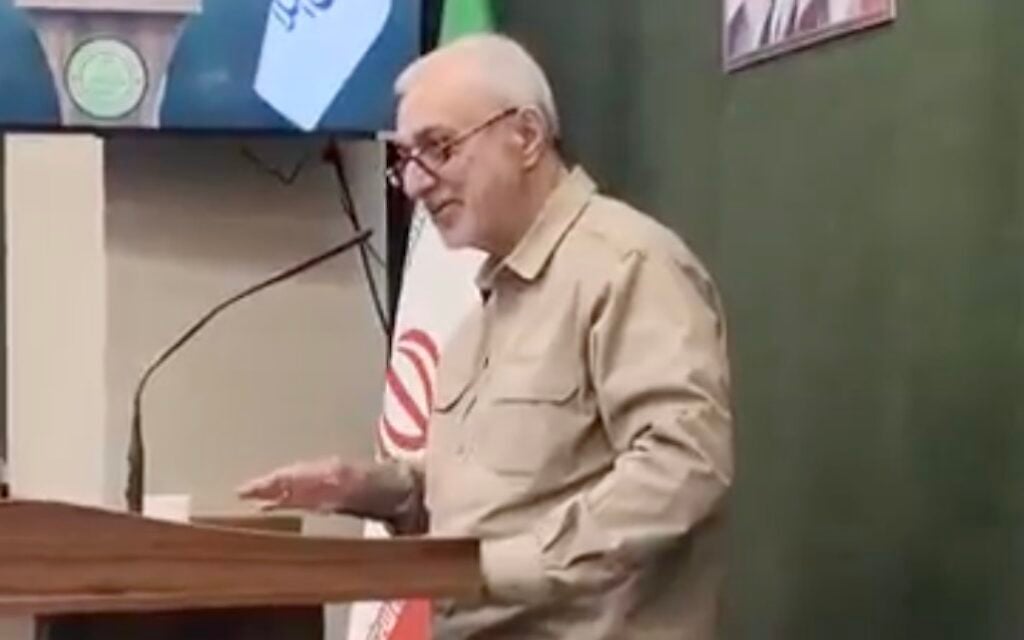
Iran has obtained the technology behind a US-made 14-ton GBU bomb and now possesses samples of the weapon, Brigadier General Mohammad Reza Naqdi, senior advisor to the Commander-in-Chief of the Islamic Revolution Guard Corps (IRGC), stated.
Speaking during the “Fedayeen for Iran” military exercise in Sari, Naqdi said Iranian forces acquired some of the bombs after they failed to detonate during the 12-day war, allowing local forces to seize them and study their technology.
“We should recall that during the 12-day war, 14-ton bombs were dropped,” Naqdi said, adding that “the failure of some of the 14-ton bombs to explode enabled the local forces to seize them.”
“Today, Iran possesses samples of these bombs alongside the manufacturing country,” he asserted, adding that Iranian forces have analyzed all the technologies associated with the US 14-ton bomb and now possess its technology in full.
What is the GBU?
The weapon Naqdi referred to is a GBU, or Guided Bomb Unit, a designation used by the US military for a broad family of air-dropped precision-guided bombs.
GBUs use guidance systems to direct their warheads toward designated targets, with different variants ranging from conventional precision bombs to much heavier bunker-busting weapons.
The term “14-ton bomb” is generally associated with the US GBU-57 Massive Ordnance Penetrator, a deep-penetration weapon designed to strike heavily fortified underground facilities, such as Iran’s nuclear facilities bombed during the 12-day war.
The GBU-57 is one of the largest conventional bombs in the US arsenal and is designed to penetrate deeply buried and hardened targets before detonating. Its deployment requires specialized heavy aircraft.
Iran has heavy fighter jet at hand
Earlier, Iranian Defense Minister Mehrdad Akhlaghi announced Sunday that a heavy Iranian fighter jet will take its first flight next year.
Naqdi also warned that Iran’s response to any renewed US aggression would extend to infrastructure and energy investments belonging to those involved in attacks against Iran in the region.
“In the event of any mistake, the investments related to the infrastructure and energy of the aggressors in the region will be within the operational targeting circle,” he said.
Responding to US threats involving the use of weapons such as the “Mother of All Bombs,” Naqdi said Iran’s Armed Forces have demonstrated advanced missile and deterrence capabilities capable of delivering a decisive response to any aggression.
Iran advances domestic defense production
The emphasis on domestic defense production forms part of Iran’s broader strategy of military self-reliance.
Iranian officials have repeatedly linked the development of indigenous defense capabilities to the need to maintain national security and deterrence without relying on foreign suppliers.
The focus on precision, missile range, and warhead development also reflects the importance Iranian military planners place on technological advancement as a component of deterrence.
Mehrdad Akhlaghi wins parliament’s backing, 8 months after predecessor was killed in opening US-Israeli strikes; UN sanctioned him in 2007 over alleged nuclear, missile activity
During a town hall with CBS on Saturday, Vice President JD Vance said that “the Iranians, the enemy gets a vote here” and we’re trying to get them to “make a long-term, but also verifiable commitment that they’re not going
During a town hall with CBS on Saturday, Vice President JD Vance said that Republican U.S. Senate nominee Mike Rogers has “been remarkably independent about” the war in Iran, and “It’s not easy for a Republican who’s running for Senate
Cuando Donald Trump desató su furia sobre Irán a finales de febrero, el resto del planeta se echó a temblar. No era para menos. Casi ocho meses después, el estrecho de Ormuz continúa bloqueado –no lo estaba antes del comienzo de la guerra– y los precios se encuentran por las nubes. Sin embargo, más allá del impacto en los bolsillos el conflicto está provocando un efecto dominó en Oriente Medio. Y es que, los misiles de Irán y sus aliados siguen cayendo por toda la región, lo que ha llevado al resto de países a reconsiderar sus afinidades.
Bien está que el conflicto entre Estados Unidos y la República Islámica se ha estancando desde hace meses, aunque en los últimos días se han intensificado los ataques a petroleros en Ormuz. Sin embargo, el foco ahora está en Yemen. Allí, una ofensiva de los rebeldes hutíes a principios de septiembre ha cogido por sorpresa a sus enemigos: el gobierno oficial del país y Arabia Saudí.
En cuestión de semanas, Riad ha visto cómo su poderío militar en la región es incapaz de hacer frente a un grupo insurgente de un país vecino. Sus ataques contra el aeropuerto de la capital saudí han dejado un reguero de muertos. También la empresa petrolera estatal –que engloba en torno al 10% de la producción mundial– ha sido objetivo de los hutíes. Los rebeldes están golpeando donde más duele.
El nuevo frente ha puesto de manifiesto que la lógica de alianzas en Oriente Medio ha cambiado. El estatus de major non-NATO ally ("aliado importante no-OTAN") de Arabia Saudí da buena cuenta del lugar privilegiado de los saudíes en la red de socios de Washington. Al menos así era hasta ahora. Pero, cuando el príncipe heredero Mohamed bin Salmán pidió auxilio a Donald Trump para frenar los ataques hutíes, éste le cerró la puerta en las narices.
EEUU ni está ni se le espera
A lo largo de estos meses, Trump ha mostrado su incapacidad o, directamente, indiferencia hacia la protección de sus aliados en el Golfo. Este semana, una investigación de Reuters ha desvelado que los ataques de Irán y sus aliados han alcanzado 135 objetivos críticos para las cadenas de suministro energético en la región. Mientras los misiles llovían sobre sus socios, la Casa Blanca miraba hacia otro lado.
Washington estaba centrado en los ataques contra sus bases militares en la región, cuyos daños ha tratado de minimizar durante estos meses. Sin embargo, la cadena CBS reveló el pasado mes de septiembre imágenes que mostraban los daños generalizados y la destrucción en múltiples posiciones estadounidenses en todo Oriente Medio como resultado de los ataques.
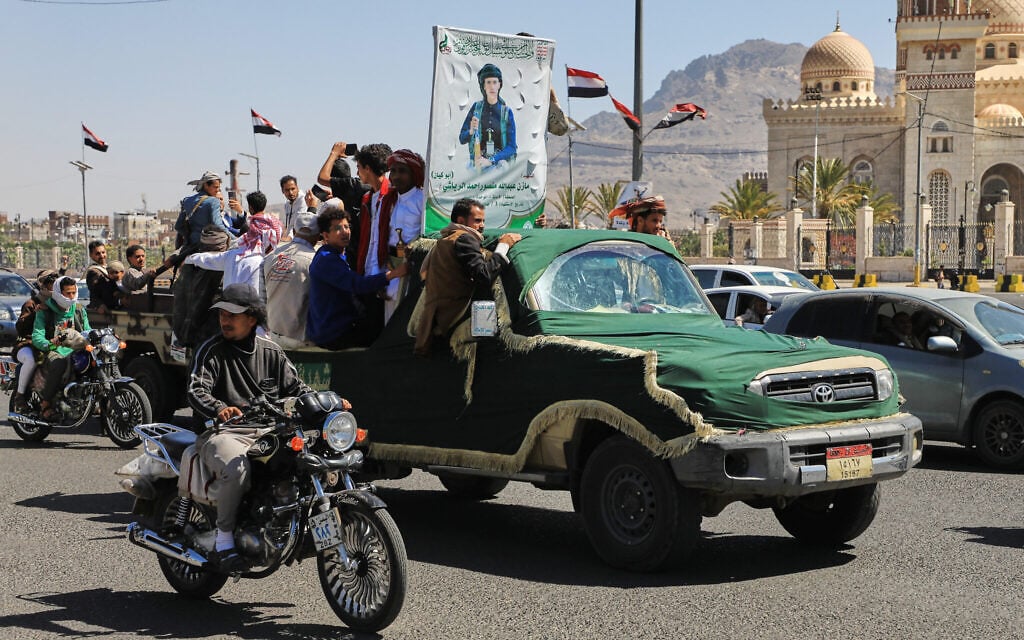
Manifestación contra de Arabia Saudí en Sanaa, la capital de Yemen, controlada por los hutíes | EFE/EPA/YAHYA ARHAB
La sensación de abandono en los Estados del Golfo es generalizada. Se suponía que las bases estadounidenses eran su garantía de seguridad. En cambio, esas instalaciones han sido el principal motivo por el que han sufrido los ataques de Irán. Y la Casa Blanca no ha movido un dedo para evitarlos.
Ahora, con su no intervención para auxiliar a los saudíes, EEUU refuerza aún más esta percepción. En un análisis para el Centro de Estudios Estratégicos e Internacionales, un think tank con sede en Washington, Michael Ratney lo explica así: "La reticencia de Estados Unidos a involucrarse alimenta la percepción de que ha abandonado a un socio en su momento de mayor necesidad. Mientras Arabia Saudí, su aliado, está siendo atacado, el presidente estadounidense le dice al mundo que no lo está ayudando". En este mismo análisis, sugiere que Riad buscará nuevos socios, como bien demuestra el reciente Pacto de la Meca.
Turquía y Pakistán al rescate
El pasado agosto Arabia Saudí, Pakistán y Turquía firmaron el Pacto de la Meca. Algunos analistas lo han definido como una "OTAN musulmana", bien está que solo lo componen tres países. Aunque en un primer momento los pakistaníes y los turcos se mostraron reacios a ayudar a Riad, finalmente han aceptado acudir en su auxilio. Tropas enviadas por Islamabad ya se encuentran en suelo saudí, mientras que en el caso de Ankara, el Parlamento turco debe dar el visto bueno.
Un acuerdo de este tipo pone a Irán en un lugar especialmente comprometido. Los saudíes son unos de sus principales rivales en la región. Sin embargo, el presidente iraní, Masoud Pezeshkian, ha valorado la triple alianza como "un paso adelante" en la unión entre musulmanes, asegurando que su país está "listo" para participar en el proceso.
Prisioneros leales al Gobierno oficialista de Yemen liberados este sábado por los hutíes | EFE/EPA/YAHYA ARHAB
Tras conocerse el acuerdo, el Institute for National Security Studies, un think tank israelí vinculado a la Universidad de Tal Aviv, analizó las implicaciones del pacto para Irán. Aunque el declive de la hegemonía militar estadounidense en la región es una pequeña victoria para la República Islámica, el acuerdo entraña riesgos. ¿Y si en un futuro supusiese una amenaza?
Fuentes iraníes consultadas por El Independiente se limitan a subrayar que el Pacto de la Meca es un acuerdo de defensa, no ofensivo. Además, señalan que Pakistán es un buen aliado de Teherán. No obstante, algunos análisis publicados en medios iraníes han cargado contra Islamabad, a quien acusan de estar jugando a dos bandas.
Las milicias hutíes de Yemen forman parte del Eje de Resistencia, la red de alianzas orquestada por Teherán contra EEUU, Israel y sus aliados. A su vez, son enemigos de Arabia Saudí, que apoya al Gobierno oficialista yemení, en guerra con los rebeldes desde hace más de una década. Así, Pakistán, amigo de los ayatolás, colabora ahora con los saudíes para acabar con los socios iraníes en la región.
El factor israelí
Quizás el elemento más complicado de encajar en la ecuación sea Israel. El periódico Haaretz ha revelado los supuestos planes de Benjamín Netanyahu para unirse a Arabia Saudí en los ataques contra los hutíes. El primer ministro israelí anda buscando la normalización de las relaciones con los saudíes desde hace tiempo. Sumarse a su ofensiva contra las milicias rebeldes sería un buen aliciente.
No obstante, el príncipe israelí se muestra reticente a dar este paso. Aunque Riad y Tel Aviv colaboren al margen de los canales oficiales, aunar a Netanyahu a su alianza contra los hutíes son palabras mayores. Las fuentes iraníes consultadas por este medio no creen que esto vaya a suceder. También descartan que la República Islámica acudiese en auxilio de los rebeldes de Yemen si Israel se uniese a los ataques. Están centrados en su propia guerra con EEUU.
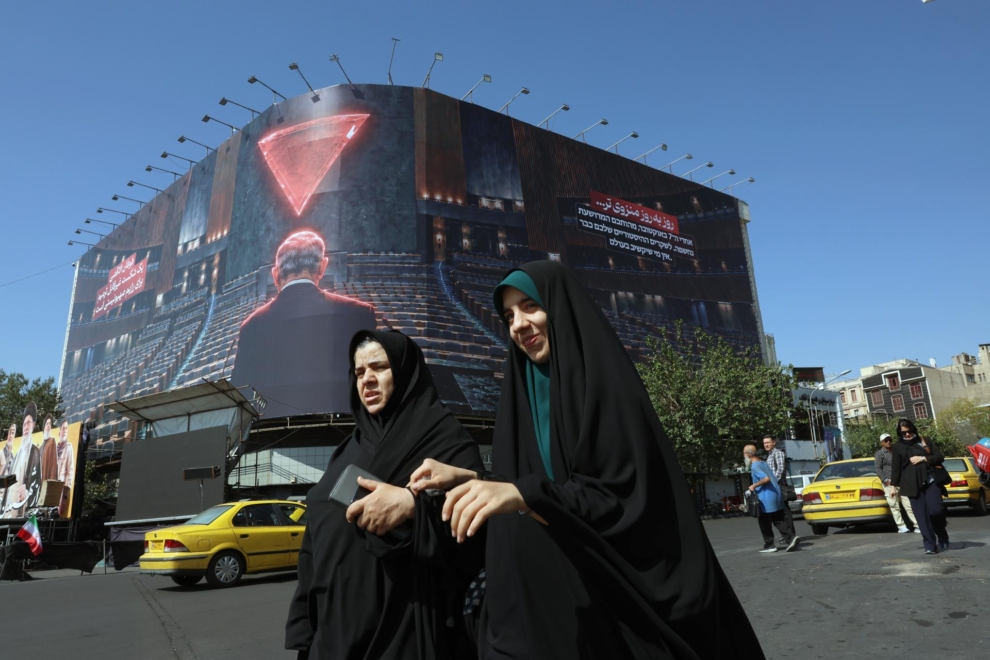
Cartel en contra de Benjamín Netanyahu en el centro de Teherán | EFE/EPA/ABEDIN TAHERKENAREH
Además, está la barrera de Turquía, con quien Israel mantiene una intensa rivalidad desde hace meses. Hasta el punto de que Netanyahu ha llegado a afirmar que este país "es el nuevo Irán". La pugna entre estos dos Estados tiene mucho que ver con Siria, donde el Gobierno de Recep Tayyip Erdoğan ha ido ganando influencia desde la llegada del islamista Ahmed al Sharaa al poder. Desde Tel Aviv ven la creciente cooperación entre Damasco y Ankara como una amenaza a sus intereses en los Altos del Golán, territorio sirio que ocupan desde hace dos años.
De hecho, el portal estadounidense Axios aseguró a principios de mes que el Gobierno sirio estaba barajando también la posibilidad de enviar tropas a Yemen a luchar contra los hutíes. Un movimiento sorpresa desmentido por Damasco, aunque siguen llegando informes que apuntan en esta dirección.
Así, mientras los combates se recrudecen en Yemen –donde los desplazados internos superan los 233.000, según la Organización Internacional para las Migraciones–, el juego continúa en el tablero geopolítico en Oriente Medio. El vació dejado por Washington está siendo aprovechado por las potencias regionales, aunque todavía no queda claro hacia dónde terminarán de realinearse estos nuevos intereses.
Vayamos directamente al meollo de la cuestión: tras examinar minuciosamente el tablero de ajedrez, los dirigentes políticos y militares de Teherán ya han llegado a la conclusión de que un ataque conjunto de EE. UU. e Israel —cuya planificación avanza a un ritmo frenético— es inevitable.
Por eso se han posicionado ahora como una cobra enroscada, lista para atacar e inyectar su veneno mortal ante el primer indicio de una amenaza inminente del Sindicato de Epstein, incluso sin esperar a que se produzca un ataque real.
La ofensiva preventiva, ya delineada, será devastadora, se extenderá más allá de las bases estadounidenses en Asia Occidental a otros objetivos regionales e incluirá potencialmente la infraestructura energética del Golfo y los cables submarinos (en este caso, afectando principalmente al Golfo y a la India, mucho más que a EE. UU. y Europa).
Nos encontramos en territorio de peligro claro y presente: una maniobra militar estadounidense-israelí destinada a ejercer presión se interpretará sin duda en Teherán como el inicio de un ataque.
Así pues, la presión a favor de la guerra por parte del culto a la muerte y de Trump se encuentra ahora con un umbral iraní peligrosamente bajo. Las opciones de ataque del Pentágono abarcan desde las instalaciones nucleares iraníes hasta la infraestructura energética.
Huelga decir que el «sociópata en jefe» —que ya está en pánico ante la inminente debacle de las elecciones de mitad de mandato— es una presa fácil para el poderoso lobby sionista y los donantes a favor de la guerra. El peligro estratégico supremo es, pues, que esta presión incesante pueda generar una señal que Teherán interprete como un ataque inminente, incluso mientras Washington mantiene públicamente que no se producirá ningún ataque antes de las elecciones de mitad de mandato.
Yemen está llevando todo esto al siguiente nivel
Paralelamente, fuentes privilegiadas en Islamabad confirman el éxito de una prueba de misil paquistaní a Mach 7, con un alcance de varios miles de kilómetros. Esta nueva capacidad tiene todo lo necesario para alterar sustancialmente el equilibrio de poder en Asia Occidental, reforzando el alcance disuasorio de Pakistán y su capacidad para influir en todos los cálculos de seguridad regional, además de contribuir a la creciente interconexión de Pakistán con China, Irán y las petro-monarquías del Golfo.
Y ahora, otra exclusiva: personal de la inteligencia militar israelí, incluido un general de división, ha abandonado Riad después de que MbS, en un supuesto momento de lucidez, dijera «no» a la oferta de «asistencia» del culto a la muerte. Y, sin embargo, siguen allí más de 100 miembros del CENTCOM.
Es posible que la decisión de MbS le haya sido impuesta por Turquía y Pakistán —los otros dos signatarios de la Alianza de Defensa de La Meca—, que de repente se encontraron en la misma sala de guerra en Riad, codo con codo con agentes del culto a la muerte.
Ahora bien, aunque su partida puede haber eliminado un riesgo de escalada, los agentes estadounidenses siguen expuestos: cualquier ataque, venga de donde venga, que provoque bajas estadounidenses arrastrará inmediatamente a Washington a la guerra entre Arabia Saudí y Ansarallah.
La guerra entre Arabia Saudí y Ansarallah, de hecho, está alcanzando el siguiente nivel: la volatilidad. La mezcla tóxica de la interceptación de un misil de crucero sobre la provincia de Medina; las interceptaciones de drones en otras partes de Arabia Saudí; y los ataques con misiles de las Fuerzas Armadas yemeníes contra el complejo presidencial del gobierno títere de Adén es solo el principio.
Lo que ocurrió después de que Ansarallah atacara Najran —una de las provincias del sur de Arabia Saudí arrebatadas a Yemen en 1934 por los británicos— es algo que realmente llama la atención.
Un portavoz saudí acusó a Ansarallah de lanzar un misil de crucero contra Medina. La respuesta del emblemático portavoz de las Fuerzas Armadas yemeníes, el general Yahya Saree, fue contundente: «Hoy no hemos llevado a cabo ninguna operación militar dirigida contra territorio saudí. Por lo tanto, la afirmación del enemigo saudí de que Medina fue atacada es una invención absoluta y una grave falsedad».
Traducción: Yemen ataca una de sus antiguas provincias; los saudíes recurren a noticias totalmente falsas, inventándose un ataque contra una de las dos mezquitas sagradas —sin duda como preparación para una operación de bandera falsa—; luego, Yemen niega de inmediato haber atacado ningún (cursiva mía) territorio saudí.
Esto significa que Saná está declarando sutilmente, para que todo el mundo lo entienda, que ya no lleva a cabo operaciones en el extranjero (cursiva mía) en las tres provincias: Jizan, Najran y Asir. Ya están —psicológica y operativamente— preparando el terreno para recuperar su territorio robado.
Todo ello se plasma en este conciso análisis desde Yemen sobre la deconstrucción de la ostentosa Casa de Saud:
«Yemen está destrozando los pilares extremadamente frágiles de la economía no petrolera en la que los piratas del desierto depositaron todas sus esperanzas: imagen, inversiones (IED), escapismo e impunidad e invulnerabilidad frente al terrorismo en el extranjero».
Cómo Pakistán e Irán eluden al FMI
Ahora prestad atención a algo bastante sorprendente que ocurrió a mediados de semana en Bangkok, durante la reunión anual del FMI y el Banco Mundial —dignamente recibida por protestas callejeras tailandesas—.
El presidente del Banco Central de Irán, Abdolnaser Hemmati, se reunió con el presidente del Banco Central de Pakistán, Jameel Ahmad, al margen del principal ritual anual en alabanza del dólar estadounidense.
Pakistán se encuentra bajo las feroces garras del ajuste estructural del FMI y el Banco Mundial —y, además, amenazado con sanciones estadounidenses por comerciar con Irán—.
Así pues, que Pakistán e Irán estén discutiendo de facto la desdolarización justo en la guarida del león —el templo del dólar estadounidense— no tiene precio.
La infraestructura está en marcha desde 2023, a través de un acuerdo de intercambio de divisas que utiliza el rial y la rupia en lugar del dólar estadounidense. El trueque lo gestionan ambos bancos centrales, y los canales bancarios pasan por el Banco Melli en Irán y el Banco Mellat en Pakistán. Sus mercados fronterizos —al menos seis de ellos— están en pleno auge: rutas comerciales físicas que eluden por completo al dólar estadounidense.
Lo que se debatió en Bangkok a principios de esta semana es cómo ampliar todo este sistema: les importan un comino las sanciones secundarias de EE. UU. Sobre todo porque Teherán ofrece a Islamabad lo que el sistema estadounidense simplemente no puede ofrecer: soberanía, sin cambio de régimen, sin austeridad, sin sermones y, sobre todo, sin ajuste estructural.
Por no mencionar que Pakistán necesita urgentemente el gas iraní —y las rutas comerciales de la Nueva Ruta de la Seda impulsadas por China—.
Irán ha construido toda una economía que elude por completo al FMI —y capaz de sobrevivir a un tsunami de sanciones, a un bloqueo y a la guerra—.
Ahora, Irán y Pakistán están inmersos en la construcción de un orden financiero posestadounidense en la encrucijada entre Asia Occidental y Asia Meridional —con intercambios de divisas, comercio de trueque, mercados fronterizos en auge y canales bancarios adecuados—, lo que convierte las sanciones secundarias en una burla.
Por cierto, esto está ocurriendo justo cuando un inmenso tren iraní, cargado de petróleo crudo —y el primero de muchos— está listo para partir hacia… China a través de Asia Central, por la línea ferroviaria de la Nueva Ruta de la Seda construida por China.
La cobra enroscada puede estar lista para atacar. Pero a la cobra, desde tiempos inmemoriales, también le encanta hacer negocios.
America's interminable war with Iran has killed thousands, disrupted commerce that flows through the Strait of Hormuz, and raised prices on the home front.
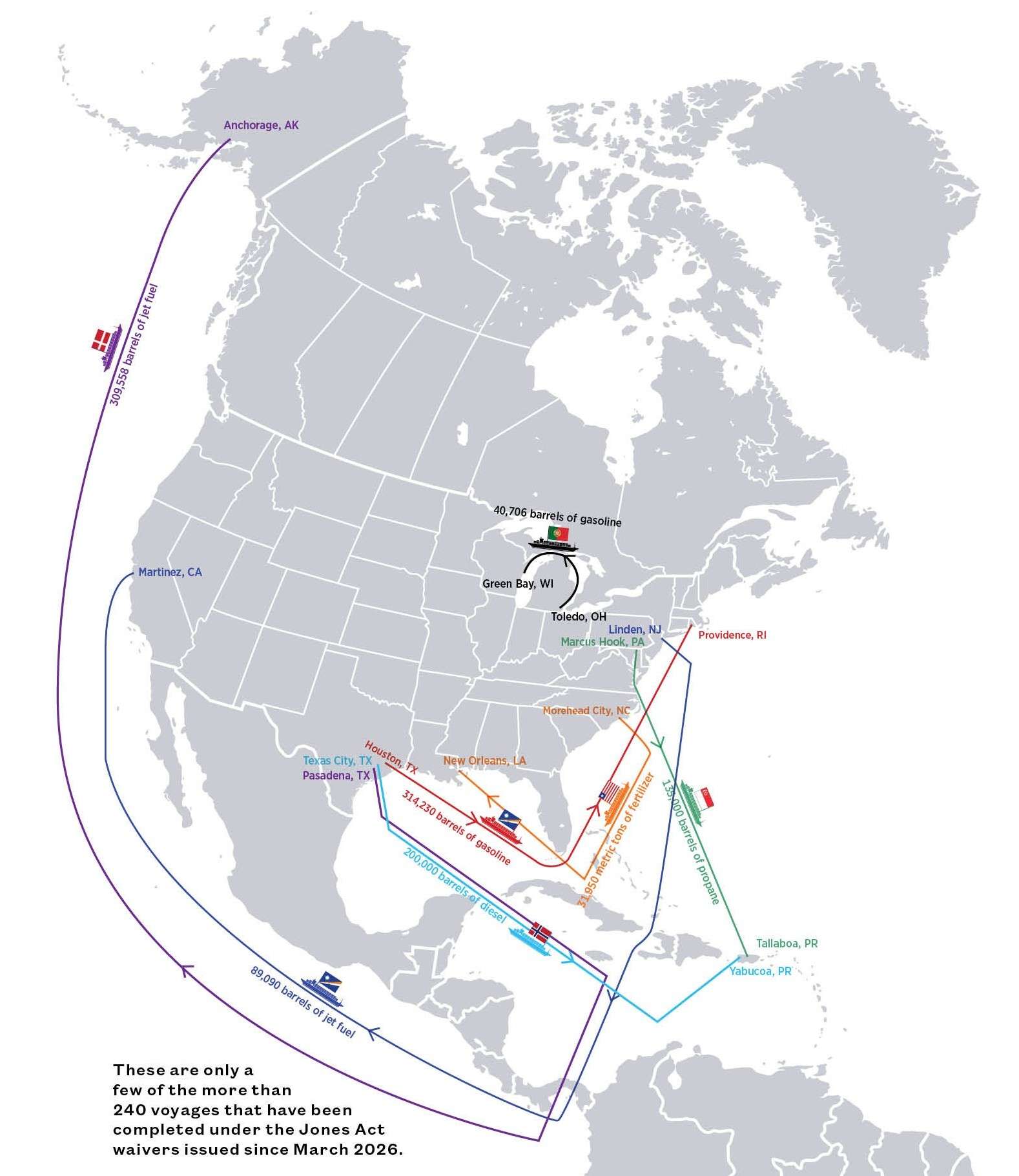
But there may be one silver lining. In an attempt to lower gas prices that spiked because of the war, the Trump administration has repeatedly issued waivers of the Jones Act, a century-old law that requires all goods moved between American ports to be carried on American-built, American-crewed ships.
With the law (temporarily) not being enforced, commerce has exploded.
Just look at how much propane has been shipped from the mainland United States to Puerto Rico, says Colin Grabow, a trade policy analyst at the Cato Institute and perhaps the nation's foremost advocate for abolishing the Jones Act.
America is one of the world's leading producers and exporters of propane, but the lack of Jones Act–compliant ships capable of carrying gas means that it has been nearly impossible to ship propane from the mainland to outlying parts of the country. In the past, Puerto Rico has imported gas from Nigeria, Chile, and elsewhere because those deliveries don't have to comply with the Jones Act.
For years, libertarians have argued that the Jones Act unfairly impoverishes American consumers and businesses that want to buy and sell things within the same country in order to artificially inflate the price of moving those things across water. Waiving the law seems to have proven that point: There are plenty of ships capable of moving gas and oil around the country as long as the government gets out of the way.
"The instant the Jones Act no longer applied to energy shipments, mainland propane displaced foreign imports, suggesting it had been the cheapest option all along," says Grabow.
Puerto Rico is hardly the only winner.
The Jones Act waivers are offering a glimpse into a world where the law doesn't exist. From March through mid-August, there had been 210 voyages completed that otherwise would have been deemed unlawful without the waivers, according to an analysis of Maritime Administration data by the Institute for Energy Research.
It's a world where American oil and natural gas can be more easily shipped from the Gulf Coast to New England, which had previously been importing energy from Russia and Europe. Another big winner is California, which had been importing gasoline from as far away as the Bahamas because it was nearly impossible to legally ship gas from Texas or Alaska to the West Coast.
President Donald Trump reupped the Jones Act waiver in mid-May. Another extension, issued in August, will last for 90 days but applies only to ships carrying energy products such as gas and oil. Before that waiver expires in November, lawmakers ought to kill the Jones Act permanently.
There is some irony in the fact that one of Trump's most successful policy maneuvers has paused a protectionist law that limited commerce, when so much else of his economic policy has been focused on erecting barriers to trade. It's also amusing that it was a war in the Middle East—something Trump pledged to avoid—that triggered this change.
Still, the proof is in the shipping. The free traders were right all along.
President Trump’s new executive order Friday evening sparked a new wave of bipartisan backlash to his administration’s recent easing of Russian sanctions. The order halted the implementation of new penalties on Russia set to go into effect under a sweeping legislative package signed into law by the president last month. It followed Trump’s controversial decision…
L’Iran e il Pakistan sono fortemente impegnati nella costruzione di un ordine finanziario post-americano nel punto di incontro tra l’Asia occidentale e l’Asia meridionale.
Andiamo subito al nocciolo della questione: dopo aver esaminato attentamente la scacchiera, la leadership politica e militare di Teheran è già giunta alla conclusione che un attacco congiunto statunitense-israeliano, la cui pianificazione procede a ritmo frenetico, sia inevitabile.
Pertanto, si sono ora posizionati come un cobra arrotolato, pronto a colpire e a iniettare veleno letale al primo sentore di una minaccia imminente da parte del Sindacato di Epstein – senza nemmeno attendere un attacco effettivo.
L’offensiva preventiva, già delineata, sarà devastante, estendendosi oltre le basi statunitensi nell’Asia occidentale ad altri obiettivi regionali e includendo potenzialmente le infrastrutture energetiche del Golfo e i cavi sottomarini (in questo caso con ripercussioni che interesseranno soprattutto il Golfo e l’India, molto più che gli Stati Uniti e l’Europa).
Ci troviamo in una situazione di pericolo chiaro e imminente: una mossa militare statunitense-israeliana intesa come pressione sarà certamente interpretata a Teheran come l’inizio di un attacco.
Pertanto, la pressione bellica esercitata dal «culto della morte» e da Trump si scontra ora con una soglia di tolleranza iraniana pericolosamente bassa. Le opzioni di attacco del Pentagono spaziano dagli impianti nucleari iraniani alle infrastrutture energetiche.
Va da sé che il «sociopatico in capo» – già in preda al panico per l’imminente debacle delle elezioni di medio termine – sia una facile preda della potente lobby sionista e dei suoi finanziatori favorevoli alla guerra. Il pericolo strategico supremo è quindi che questa pressione incessante possa produrre un segnale che Teheran interpreti come un attacco imminente, anche se Washington sostiene pubblicamente che non vi sarà alcun attacco prima delle elezioni di medio termine.
Lo Yemen sta portando la situazione a un livello superiore
Parallelamente, fonti privilegiate a Islamabad confermano il successo di un test missilistico pakistano a Mach 7, con una gittata di diverse migliaia di chilometri. Questa nuova capacità ha tutte le carte in regola per alterare concretamente l’equilibrio di potere in Asia occidentale, rafforzando la portata deterrente del Pakistan e la sua capacità di influenzare ogni calcolo di sicurezza regionale, oltre ad accrescere la sempre più profonda interconnessione del Pakistan con la Cina, l’Iran e le petro-monarchie del Golfo.
Ed ora un’altra esclusiva: membri dei servizi di intelligence militare israeliani, tra cui un generale di divisione, hanno lasciato Riyadh dopo che MbS, in un presunto momento di lucidità, ha detto «No» all’offerta di «assistenza» da parte del culto della morte. Eppure, più di 100 membri del personale del CENTCOM rimangono sul posto.
La decisione di MbS potrebbe essergli stata imposta dalla Turchia e dal Pakistan – gli altri due firmatari dell’Alleanza di Difesa della Mecca, che si sono improvvisamente ritrovati nella stessa sala operativa a Riyadh fianco a fianco con agenti del culto della morte.
Ora, la loro partenza potrebbe aver eliminato un rischio di escalation, ma gli agenti statunitensi rimangono esposti: qualsiasi attacco, da qualunque parte provenga, che causi vittime tra le forze statunitensi trascinerà immediatamente Washington nella guerra tra Arabia Saudita e Ansarallah.
La guerra tra Arabia Saudita e Ansarallah, infatti, sta raggiungendo il livello successivo: quello della volatilità. Il mix esplosivo costituito dall’intercettazione di un missile da crociera sopra la provincia di Medina, dalle intercettazioni di droni in altre zone dell’Arabia Saudita e dagli attacchi missilistici delle Forze Armate yemenite contro il complesso presidenziale del governo fantoccio di Aden è solo l’inizio.
Ciò che è accaduto dopo che Ansarallah ha preso di mira Najran – una delle province meridionali dell’Arabia Saudita sottratte allo Yemen nel 1934 dagli inglesi – è un fatto che suscita grande stupore.
Un portavoce saudita ha accusato Ansarallah di aver lanciato un missile da crociera contro Medina. La risposta dell’iconico portavoce delle Forze Armate yemenite, il generale Yahya Saree, è stata devastante: «Oggi non abbiamo condotto alcuna operazione militare contro il territorio saudita. Pertanto, l’affermazione del nemico saudita secondo cui Medina sarebbe stata presa di mira è una vera e propria invenzione e una grave menzogna».
Traduzione: lo Yemen colpisce una delle sue ex province; i sauditi ricorrono a una notizia totalmente falsa, inventando un attacco a una delle due moschee sacre – senza dubbio come preparazione per un’operazione sotto falsa bandiera; poi lo Yemen nega prontamente di aver colpito qualsiasi (corsivo mio) territorio saudita.
Ciò significa che Sana’a sta dichiarando in modo sottile, affinché tutti possano comprenderlo, di non condurre più operazioni all’estero (il corsivo è mio) nelle tre province: Jizan, Najran e Asir. Sta già – psicologicamente e operativamente – preparando il terreno per recuperare il proprio territorio sottratto.
«Lo Yemen sta minando i pilastri estremamente fragili dell’economia non petrolifera su cui i “pirati del deserto” hanno riposto tutte le loro speranze: immagine, investimenti (FDI), evasione dalla realtà, nonché impunità e invulnerabilità nei confronti del terrorismo proveniente dall’estero».
Come Pakistan e Iran aggirano il FMI
Prestino ora attenzione a un fatto piuttosto sorprendente avvenuto a metà settimana a Bangkok, durante la riunione annuale del FMI e della Banca Mondiale – debitamente accolta da proteste di piazza in Thailandia.
Il governatore della Banca Centrale iraniana, Abdolnaser Hemmati, ha incontrato il governatore della Banca Centrale pakistana, Jameel Ahmad, a margine del principale rituale annuale in lode del dollaro statunitense.
Il Pakistan è sottoposto alla ferrea morsa degli adeguamenti strutturali imposti dal FMI e dalla Banca Mondiale – e, come se non bastasse, è minacciato dalle sanzioni statunitensi perché intrattiene rapporti commerciali con l’Iran.
Pertanto, il fatto che Pakistan e Iran stiano di fatto discutendo della de-dollarizzazione proprio all’interno della tana del leone – il tempio del dollaro statunitense – è di un valore inestimabile.
L’infrastruttura è operativa dal 2023, grazie a un accordo di swap valutario che utilizza il rial e la rupia al posto del dollaro statunitense. Il baratto è gestito da entrambe le Banche Centrali, mentre i canali bancari passano attraverso la Bank Melli in Iran e la Bank Mellat in Pakistan. I loro mercati di confine – almeno sei – sono in forte espansione: rotte commerciali fisiche che aggirano completamente il dollaro statunitense.
Ciò di cui si è discusso a Bangkok all’inizio di questa settimana è come espandere l’intero sistema: non gliene importa nulla delle sanzioni secondarie statunitensi. Soprattutto perché Teheran sta offrendo a Islamabad ciò che il sistema americano semplicemente non può offrire: sovranità, nessun cambio di regime, nessuna austerità, nessuna lezione e, soprattutto, nessun aggiustamento strutturale.
Senza contare che il Pakistan ha un disperato bisogno del gas iraniano – e delle rotte commerciali della Nuova Via della Seta promosse dalla Cina.
L’Iran ha costruito un’intera economia aggirando completamente il FMI – e in grado di sopravvivere a uno tsunami di sanzioni, a un blocco e alla guerra.
Ora l’Iran e il Pakistan sono impegnati a fondo nella costruzione di un ordine finanziario post-americano all’incrocio tra l’Asia occidentale e l’Asia meridionale – completo di swap valutari, commercio di baratto, mercati di confine in forte espansione e canali bancari adeguati, che rendono le sanzioni secondarie una farsa.
A proposito, ciò sta avvenendo proprio mentre un immenso treno iraniano, carico di petrolio greggio – e il primo di molti – è pronto a partire alla volta della… Cina attraverso l’Asia centrale, sulla ferrovia della Nuova Via della Seta costruita dalla Cina.
Il cobra arrotolato potrebbe essere pronto a colpire. Ma il cobra, da tempo immemorabile, ama anche fare affari.

 Login