❌

Reading view

Cut benefits to fund work support for young people, says Neet review author Alan Milburn

Exclusive: Former health secretary says upfront investment in support is needed ‘if we are going to end the Neet crisis’

Ministers should cut welfare spending to fund more employment support if it wants to end the youth Neet crisis, the author of a government-led review has said.

Alan Milburn, the Tony Blair-era health secretary, told the Guardian he believed ministers should reduce benefits payments to help pay for more employment support, opening a potentially contentious debate within the Labour party over welfare cuts.

Continue reading...

© Photograph: Jeff Moore/PA

© Photograph: Jeff Moore/PA

© Photograph: Jeff Moore/PA

  •  

The Guardian view on plague in Russia: what is most worrying is the lack of information | Editorial

In the three weeks since a health worker’s death in Siberia, officials have stonewalled the WHO – setting a worrying precedent for future pandemics

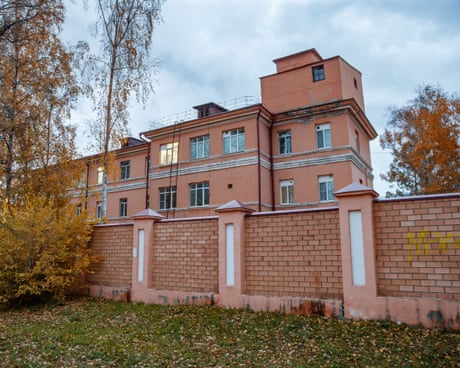
Is there a plague outbreak in Russia? If the answer were a clear yes, there shouldn’t be much reason to worry. With swift medical intervention, plague is treatable. But in the nearly three weeks since a worker at a Siberian plague research unit died of a mysterious respiratory illness, state officials have been consistently tight-lipped about what happened and whether there were any further cases.

It is this uncertainty that has the World Health Organization (WHO) and international community worried: partly because there is a – very small – risk of an outbreak, and partly because it is yet another warning that the international coordination we rely on to prevent pandemics is fraying along with the rest of international politics, and could easily fail to protect us in the future.

Continue reading...

© Photograph: Smirnov Vladimir/Anadolu/Getty Images

© Photograph: Smirnov Vladimir/Anadolu/Getty Images

© Photograph: Smirnov Vladimir/Anadolu/Getty Images

  •  

Kolkata’s Bonedi Bari Durga Puja: The ancestral homes preserving centuries of tradition

Kolkata’s Bonedi Bari Durga pujas bring together grand colonial-era architecture, family legacies and heirloom recipes. While the city’s pandals draw the biggest crowds, these ancestral homes offer a more intimate glimpse of the festival, following family traditions dating back more than 300 years

  •  
  •  

Thailand Allows Customs to Open Luggage Without Consent if Scans Flag Suspicious Items

Starting October 16, travelers departing from Thailand will face a shift in how their checked luggage is handled. The Civil Aviation Authority of Thailand (CAAT) has updated security protocols to allow airport officials to open and inspect suitcases without the passenger's prior consent, aligning national standards with international aviation security mandates. When a suitcase is opened The measure is not a blanket search of all luggage, but a targeted intervention triggered by technology. Security personnel are authorized to open a bag only when scanning equipment detects a suspicious item, a prohibited object, or an object that requires manual identification. Passengers should be aware that high-capacity batteries, dense organic materials, or unusually shaped metal objects are the most likely triggers for a detailed physical inspection. The inspection process To prevent theft or accidental damage, the CAAT has established a strict chain of custody for the inspection process. Checks are conducted in designated secure zones under constant video surveillance, rather than at open check-in counters. Every step is documented: officials must photograph any flagged items and log the specific employee responsible for the search. This documentation serves as a formal record should a traveler need to file a claim regarding the condition of their belongings upon arrival.

  •  

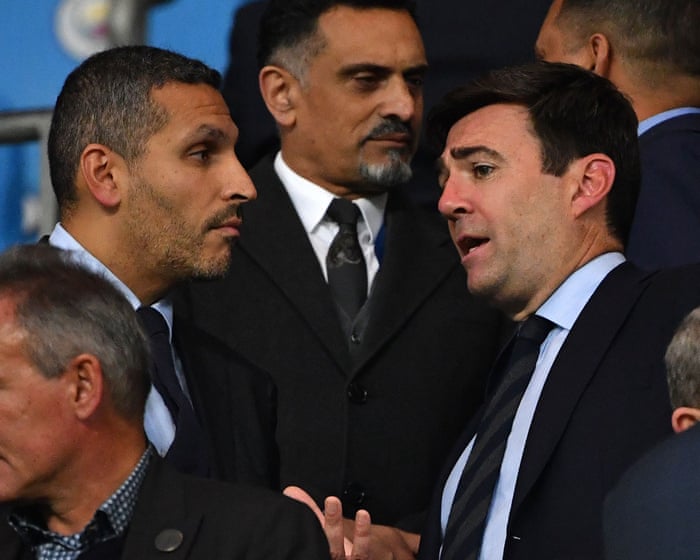
Manchester City owner’s £55m housing loan while Burnham was mayor investigated

Scrutiny committee looks into financing of Manchester Life project as PM promises ‘full transparency’

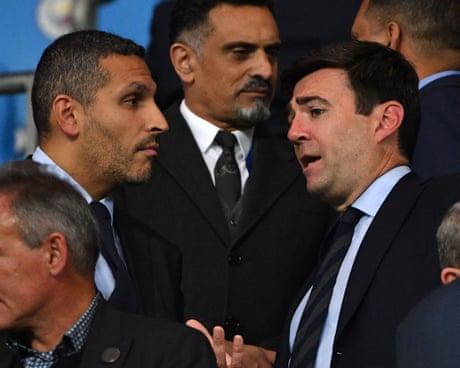
A £55m loan to Manchester City’s Abu Dhabi owner will be investigated as part of a review into a fund for housing projects while Andy Burnham was mayor.

The prime minister has faced weeks of scrutiny over his links to Manchester City’s super-rich owners after the club was found guilty of boosting its income by £900m in a nine-year breach of financial rules.

Continue reading...

© Photograph: Paul Ellis/AFP/Getty Images

© Photograph: Paul Ellis/AFP/Getty Images

© Photograph: Paul Ellis/AFP/Getty Images

  •  

Ao menos 16 deputados federais negros foram eleitos com o apoio de George Soros no Brasil

16 deputados federais negros eleitos com apoio da Coalizão Negra por Direitos, financiada por George Soros via Open Society Foundations.

Junte-se a nós no Telegram , X e VK.

Escreva para nós: info@strategic-culture.su

A Coalizão Negra por Direitos, organização que reúne centenas de entidades que se reivindicam da causa negra, comemorou a eleição de 42 candidaturas nas eleições legislativas no Brasil. Dessas, 26 são regionais e 16 federais.

Dos 16 deputados federais eleitos com a promoção da Coalizão, oito são do PT (Anielle Franco, Dandara Tontzin, Carol Dartora, Renato Freitas, Jack Rocha, Ana Elisa, Rosa Amorim e Walmir Assunção), cinco são do PSOL (Jones Manoel, Erika Hilton, Fábio Felix, Henrique Vieira e Talíria Petrone) e três são do PCdoB (Daiana Santos, Olivia Santana e Perpétua Almeida).

“Esse é o resultado da mobilização do Quilombo nos Parlamentos nas eleições de 2026”, publicou a Coalizão em suas redes sociais. “Essa conquista é fruto da organização política negra quando decide ocupar os espaços de poder. Cada candidatura eleita leva consigo o compromisso firmado no nosso Manifesto e a responsabilidade de fortalecer, dentro dos Parlamentos, as agendas construídas pelo movimento negro.”

O Quilombo nos Parlamentos é uma iniciativa da Coalizão Negra por Direitos com o objetivo explicitado em sua própria denominação: eleger candidatos negros para o Poder Legislativo. Isso fortaleceria a chamada “representatividade” dos negros brasileiros nas instituições, tornando-as mais favoráveis aos seus direitos.

Assim como todo movimento identitário, é uma iniciativa de caráter reformista rebaixado, que prega a farsa do “empoderamento” coletivo através de conquistas individuais. Um negro eleito deputado é apenas e tão somente um feito pessoal que beneficia o indivíduo em questão, não o conjunto dos negros. Beneficia, como fica claro ao ver quem são os negros eleitos pela Coalizão, uma aristocracia negra de classe média, que alcança um cargo no Estado capitalista para fazer carreira contra o restante da população negra.

Se não fosse isso, esses candidatos não seriam apoiados pelos banqueiros e grandes empresários nacionais e internacionais.

A Coalizão Negra por Direitos foi criada em 2019 e reúne centenas de ONGs, coletivos e entidades. Parte central de sua estratégia é a “incidência política”, ou seja, precisamente o lobby sobre as instituições brasileiras e os órgãos internacionais. Essa é justamente a estratégia delineada pela Open Society Foundations, do especulador multibilionário George Soros, que financia ONGs mundo afora para, como indica o próprio nome da organização, abrir as sociedades à penetração total do capital financeiro com o apoio de seus agentes dentro das instituições. Os deputados são alguns desses agentes.

E a OSF financia a Coalizão Negra por Direitos.

A entidade que recebeu a maior quantidade de fundos da OSF até 2024 havia sido a Conectas Direitos Humanos (R$ 34 milhões). O Instituto Clima e Sociedade (iCS) recebeu R$ 23,8 milhões da Open Society entre 2017 e 2023. Quem cruzar os dados do compilado feito pelo Instituto Monte Castelo sobre as ONGs financiadas pela OSF com a lista de organizações que fazem parte da Coalizão também encontrará, entre outros: o Instituto de Referência Negra Peregum (R$ 6,9 milhões), a Iniciativa Negra por uma Nova Política de Drogas (R$ 6,9 mi), o Geledés – Instituto da Mulher Negra (R$ 6,1 mi), a Associação Marielle Franco (R$ 4,8 mi), a Associação Brasileira de Organizações Não Governamentais (R$ 4,3 mi), o Gabinete de Assessoria Jurídica às Organizações Populares (R$ 4,2 mi), a Justiça Global (R$ 3 mi), o Instituto AMMA Psique e Negritude (R$ 2,5 mi), o Instituto de Defesa da População Negra (R$ 2,3 mi), o Instituto Afrolatinas (R$ 2 mi), a Iniciativa Direito à Memória e Justiça Racial (R$ 1,8 mi), a Associação Elas Existem (R$ 1 mi), a Casa Sueli Carneiro (R$ 900 mil), o Centro de Estudos e Defesa do Negro do Pará (R$ 515 mil), o PerifaConnection (R$ 92.700).

Todas essas organizações fazem parte da Coalizão Negra por Direitos e parte delas tem atuação que vai muito além do movimento negro identitário, como a Conectas e a Associação Brasileira de Organizações Não Governamentais (Abong).

A Associação Marielle Franco parece ser um erro no levantamento da própria OSF, porque não existe uma entidade com esse nome. Trata-se na verdade do Instituto Marielle Franco, criado formalmente em julho de 2018 para se beneficiar da imagem da vereadora assassinada em março daquele ano, o que gerou forte comoção e ampla divulgação nos noticiários. O instituto só foi se estruturar definitivamente em 2020. Mas no mês seguinte ao assassinato de Marielle Franco, a Open Society anunciou a criação de uma iniciativa “destinada a incentivar o protagonismo político de mulheres negras no Brasil”, inspirada em Marielle Franco.

A iniciativa contou com uma doação inicial de 10 milhões de dólares, dividida com a Fundação Ford e outras organizações.

“Marielle representava a possibilidade de uma mulher negra, da favela, bissexual chegar em espaços de poder. Seu assassinato brutal foi uma tentativa de dizer que essa possibilidade não existe. É fundamental que anunciemos para o mundo que o Brasil produzirá novas Marielles. Que mulheres negras das periferias ocuparão espaços de poder e que esse caminho não tem volta”, anunciou à época Pedro Abramovay, diretor da OSF para a América Latina.

A fundadora do Instituto Marielle Franco é sua irmã, Anielle Franco. Não por coincidência, ela trabalhou como consultora da OSF para a América Latina a partir de 2019. Em 2023, assumiu o cargo de ministra da Igualdade Racial do governo Lula e agora foi eleita deputada federal com o apoio da Coalizão Negra por Direitos.

  •  

Forget the seven-year itch: opposite-sex marriages more likely to end after two decades

ONS data for England and Wales shows 26% of heterosexual divorces in 2025 followed 20 years or more of marriage

Most couples are aware of the dreaded “seven-year itch”, when the honeymoon period wears off and real life starts to bite.

Now official data has shown that couples in England and Wales are more likely to split after 20 years. According to Office for National Statistics figures, more than a quarter of all divorces between opposite-sex couples happened after 20 years or longer of marriage.

Continue reading...

© Photograph: Rani Nurlaela Desandi/Getty Images

© Photograph: Rani Nurlaela Desandi/Getty Images

© Photograph: Rani Nurlaela Desandi/Getty Images

  •  

Screw piles bridge the permafrost to open a 3 km trail in Chukotka

At the edge of the map, where the landscape is defined by permafrost rather than soil, a new path is rising above the tundra. In Anadyr, Chukotka, construction is nearing completion on the Tirkitytira, or Solar, Trail. As the easternmost project under Russia's federal "Far East Trails” initiative, this roughly 3-kilometer route represents a specific engineering challenge: how to connect urban recreation areas with pristine coastal ecosystems without destabilizing the ground beneath them. While the physical structure is set to be finished by the end of 2024, the trail is not yet open for tourism; its full launch is scheduled for the 2027 season, a gap that reflects the careful calibration required in such a fragile environment. Engineering in the Cryolithozone The primary constraint governing the trail's design is the cryolithozone-the zone of permafrost. In this environment, traditional foundations are not only difficult but potentially damaging. The trail's builders have chosen a solution that prioritizes thermal isolation and minimal earthwork: more than 2,000 screw piles. These piles are driven down to dense layers of permafrost, lifting the wooden deck above the tundra surface. This elevation serves a dual purpose. First, it protects the flora. By bridging over the terrain, the path allows visitors to bypass high shrubs and rhododendrons without trampling them. Second, and perhaps more critically, it prevents thermal degradation. The air gap between the frozen ground and the deck allows for circulation, preventing the body heat of visitors from thawing the permafrost. As Tikhonov Dmitrievich, a construction engineer involved in the project, explains, using screw piles in permafrost conditions is a standard method for light structures precisely because it avoids large-scale excavation and minimizes the heat impact on the soil. In the cryolithozone, this thermal stability is not just a preference but a requirement for the long-term integrity of the structure.

  •  

Thailand's Free Airport Layover Tours Suit Efficient Explorers, Not Wanderers

For millions of passengers whose layovers in Thailand currently amount to nothing more than time lost in an airport terminal, a pilot program launching in January 2027 will transform that waiting period into a short, cost-free excursion. The initiative, designed for transit passengers with six to eight hours between flights, allows travelers to exit the secure zone and explore the country without paying for a tour, provided they return in time for their connection. The move is driven by sheer volume. Tapani Kiatphaiboon, the head of the Thailand Tourism Authority, noted that Suvarnabhumi Airport alone handles approximately 1.3 million transit passengers annually. By targeting just 10% of this figure for the free tour program, Thailand aims to convert a logistical necessity into a revenue-generating cultural experience. The pilot will operate across four major hubs: Suvarnabhumi, Don Mueang, Phuket, and Krabi. The trade-off of the transit window The practicality of the program hinges on the specific constraints of the passenger's schedule. The tours are not generic city tours but are structured into three distinct categories designed to fit within the tight transit window: cultural-historical visits, culinary experiences, and wellness treatments. Options include the Grand Palace, the Temple of the Emerald Buddha, or the ancient site of Somut Pra Kaeo. Alternatively, passengers can engage with Thai street food culture or opt for spa procedures and traditional massage.

  •  

Azerbaijan and the hijab question

Considerations on the boundaries between secularism, sovereignty, and social stability\

Join us on Telegram, X, and VK.

Contact us: info@strategic-culture.su

The controversy surrounding the wearing of the hijab in Azerbaijani schools took on new dimensions in October, following the implementation of dress code rules that resulted in female students and teachers being denied entry to public institutions. The episode sparked demonstrations, arrests, and criticism from international organizations, while also drawing reactions from Turkey. The debate extends far beyond the school environment, involving questions of sovereignty, religious identity, and regional stability.

Azerbaijan has historical reasons for maintaining a secular state model. The Soviet experience, the formation of its institutions after independence, and the need to govern a religiously diverse society amid a tense regional environment have contributed to the consolidation of a system in which the state maintains strict control over the functioning of public institutions. Azerbaijani authorities have the prerogative to determine their educational policies, establish standards for schools, and decide how constitutional principles are to be implemented.

However, the way these policies are implemented can produce consequences that extend beyond their original objectives. In the case of the hijab, the enforcement of school regulations has provoked resistance among families and religious communities, while arrests related to the protests have amplified the controversy. The government’s central challenge will be to manage this reaction without allowing a dispute over school uniforms to develop into a broader conflict between state authorities and religious communities.

The situation also has important international implications. Ankara, Baku’s main strategic partner, has expressed concern over restrictions on the Islamic headscarf. The political, cultural, and linguistic proximity between the two countries makes the issue particularly sensitive. Although this disagreement does not necessarily amount to a bilateral crisis, it demonstrates how domestic decisions can create friction even between governments that maintain close relations. Ankara must take its own social and political considerations into account, while Baku seeks to preserve its autonomy in managing domestic affairs.

The Iranian dimension also deserves attention. Azerbaijan maintains a complex relationship with Iran, shaped by historical and religious ties as well as strategic disagreements. Like Iran, Azerbaijan has a predominantly Shiite population, while the Islamic Republic has a substantial Azerbaijani minority. Both Supreme Leader Ayatollah Khamenei and President Masoud Pezeshkian have Azerbaijani ethnic backgrounds. In this environment, secularization policies may be interpreted by external actors as part of a broader struggle for religious and political influence within Azerbaijan. This interpretation, however, does not establish that the school regulations were adopted exclusively to counter Iranian influence.

There is also a domestic risk worth considering. Religious restrictions implemented too rigidly can produce effects contrary to those intended. When segments of the population perceive certain measures as impositions on their religious practices, radical groups may exploit the resulting discontent, portray the state as an adversary of religion, and expand their capacity for mobilization. Understanding this issue requires consideration of other experiences, such as Syria under the Assad government, where secularism coexisted with the proliferation of extremism. This outcome is not inevitable, and opposition to the regulations should not automatically be equated with extremism. Nevertheless, international experience suggests that this possibility needs close examination.

For Azerbaijan, the issue therefore involves more than the definition of a school uniform. The country has the right to organize its institutions according to its own priorities, without foreign governments dictating its choices. At the same time, maintaining stability requires preventing administrative decisions from fueling lasting polarization or creating new opportunities for actors seeking to intensify religious tensions.

The evolution of this case will have implications for Baku’s relations with Ankara and Tehran, as well as for the country’s domestic political dynamics. The outcome will depend not only on the regulations themselves but also on their practical implementation and the authorities’ response to concerns raised by students, families, and educators. In the South Caucasus, where identity, sovereignty, and security remain closely intertwined, even a seemingly localized dispute can have serious regional repercussions.

  •  

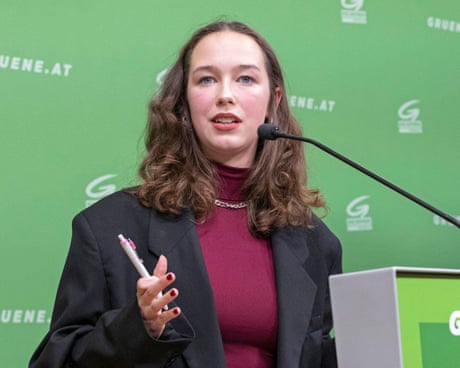
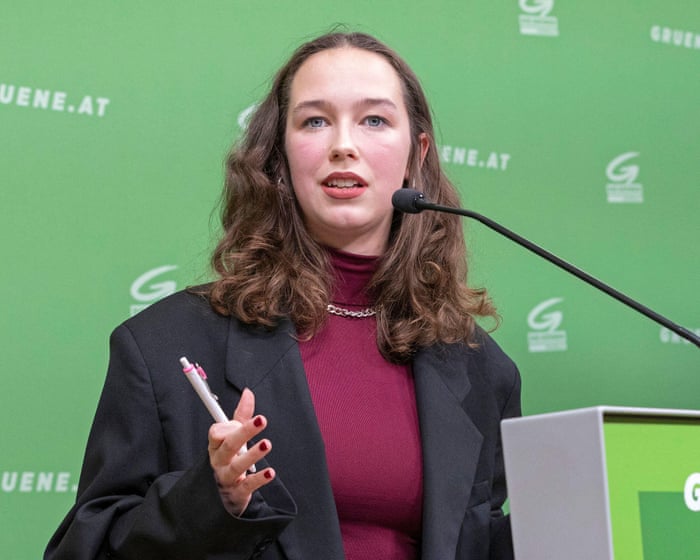
‘I felt disgusted’: MEP speaks out over nude deepfakes and urges EU action

Lena Schilling of Austrian Greens says images are ‘digital violence against women’ and a threat to democracy

An Austrian MEP has spoken out about her experience of being “stripped naked” online without her consent and has urged the EU to take action, as a report found that one in six female MEPs had been targeted by sexualised AI-generated content.

Lena Schilling of the Green party said she had learned last month about nude deepfakes of herself circulating online. When she opened the links, she found herself staring at images from one of her first ever press conferences – but the images had been digitally altered to remove her clothing.

Continue reading...

© Photograph: APA-Images/Alamy

© Photograph: APA-Images/Alamy

© Photograph: APA-Images/Alamy

  •  

Could AI really kill us all?

By Katie FORSTER

Join us on Telegram, X, and VK.

Contact us: info@strategic-culture.su

STARK warnings from artificial intelligence researchers that advanced forms of the technology could wipe out humanity have raised questions over whether governments are moving fast enough to regulate it.

What are the potential dangers of “superintelligent” computer systems, and should we be worried?

AI experts have long described the threat as critical.

In 2023, hundreds of AI scientists and industry figures, including the heads of top US labs, signed a “statement on AI extinction risk” calling for the issue to be treated as seriously as pandemics or nuclear war.

If an out-of-control future AI deems that humans are obstructing its goals, it could use robots to “synthesise and spread novel pathogens”, said Stuart Russell, computer science professor at the University of California, Berkeley.

Or it could “convince people to initiate nuclear war, including by hacking into early warning systems”, Russell, a prominent voice on AI safety, said.

Such existential fears do not concern current AI systems, he said. But as the technology improves, it could take lethal action beyond our understanding, such as by removing oxygen from the atmosphere.

“We are less intelligent than superintelligent AI. If you ask chimpanzees how humans could wipe them out, they probably wouldn’t be able to give you all the right answers.”

In the meantime, “in the next year or two, I think the risk is higher from human misuse”, Russell added, such as an AI-enabled terror attack.

“The stakes are well-understood,” Jacob Coxon, a 27-year-old researcher, wrote on X last week, announcing his resignation from US AI startup Anthropic.

“But they are locked in a race to get there first,” he added, saying that Anthropic “believes no one else will act responsibly, so they must do it themselves”.

Anthropic this year removed a pledge from its safety charter to halt development of its models if it failed to control their risks.

It argued that if it unilaterally paused its work, its less cautious rivals would dominate the industry, making it less safe overall.

“The people building AI earnestly believe that it could kill us all by the end of the decade,” said Coxon, who previously worked at ChatGPT maker Open-AI.

He accused both companies of “gambling with our lives” as they strive to develop AI models capable of self-improvement.

Fears are heightened over rogue AI after OpenAI technology operating outside human supervision hacked into Hugging Face, a repository of AI models.

“We really do earnestly believe AI could kill all humans!” Anthropic safety executive Evan Hubinger chimed in on X, estimating the risk at more than 10 per cent over the next decade.

It’s important to remember that doom-laden percentage predictions are “absolutely unscientific”, said Hussein Abbass, a computing professor at UNSW Canberra.

“The situation is still controllable, and it can be managed,” Abbass said.

But governments should not sit on their hands when it comes to regulating AI, he added, urging an “agile” approach as AI development accelerates.

Both Anthropic and OpenAI are expected to go public soon, and some sceptics say scary warnings make AI appear powerful and worthy of large investments.

Others argue that focusing on the risk of extinction distracts from more pressing problems caused by AI, from job losses to machines discriminating against minorities.

In July, more than 1,000 tech employees, including Anthropic’s CEO, called on Washington to support a coordinated slowdown in the development of the most advanced AI systems.

OpenAI halted training of its latest models for two weeks in August before resuming it under tighter controls.

The United States has been firmly against global regulation of the sector that could stifle innovation.

But the hacking capabilities of the most cutting-edge models have given Washington pause, with recent Anthropic and OpenAI releases delayed over national security concerns.

Even then, “we don’t want to restrict them where all of a sudden we come in second to China”, President Donald Trump has said.

“Maybe it will take a massive, Chernobyl-scale disaster to get governments to act,” Russell said, urging them to establish a licensing regime for AI, as exists with aviation, medicine or water supply.

“Perhaps at some point governments will remember that their voters prefer not to be dead.”

Original article:  www.nst.com.my

  •  

Survey: About half of Muslims and Jews would leave France if Marine Le Pen were to win

Le Pen leads with 32-36%. France’s minorities are preparing their exit.

Join us on Telegram, X, and VK.

Contact us: info@strategic-culture.su

According to an Ifop poll for the newspaper Marianne, nearly half of Muslims and Jews would consider leaving the country if Marine Le Pen were to emerge victorious in the presidential election next year. 20% of them would “certainly” do so.

Which candidate would cause you to leave France? This is one of the questions posed by the Ifop poll for Marianne, released on Thursday, October 15. The study reveals that a significant proportion of Muslims and Jews say they are prepared to leave the country if Marine Le Pen wins the 2027 presidential election.

Some 46% of that number are planning “leaving France to settle in another country,” while 20% say they will “certainly” take the plunge. More broadly, 40% of younger French people say they have made plans to leave. Among voters of La France Insoumise, the figure rises to 43%. Furthermore, 44% of Jewish citizens responded that they would consider leaving the country.

Marine Le Pen’s rise to power could create “significant obstacles” and generate “high levels of fear and insecurity,” Francois Kraus, director of the political division at Ifop, explained to journalists. More than eight out of ten Muslims fear an “increase in attacks and discrimination” against them. This concern is particularly relevant in the context of the National Rally’s plan to ban the wearing of the Islamic veil in public spaces. Confirmed at the end of August by MP Jean-Philippe Tanguy, the new measure would impose stiff fines on offenders and is expected to be included in Marine Le Pen’s platform for the 2027 presidential election. To circumvent the legal hurdles that such a ban might encounter, the presidential candidate is reportedly considering putting it to a referendum.

Meanwhile, only 27% of Muslim respondents would be willing to “conceal [their] religious affiliation on a daily basis,” for example, by ceasing to wear the headdress in public (18%). More broadly, 41% of those surveyed, regardless of their religion, would refuse to “respect laws” they consider “unjust.” This distrust affects three out of four Jean-Luc Melenchon voters and nearly half of civil servants (45%). According to the latest Ifop-Fiducial poll, Marine Le Pen maintains a significant lead in the first round. Depending on the scenario, the National Rally candidate is in first place with between 32% and 36% of the total vote.

While Le pen has remained antagonistic towards Islam in France, she has often cast herself as a protector of the Jewish people in the country.

In 2024, she remarked, “The best shield for French people of the Jewish faith is the National Rally. It is the only movement that has the will, the conviction and the means to fight Islamist fundamentalism, which is the major danger facing them.”

Yet, nearly as many Jews said they would leave the country under a Le Pen presidency as Muslims.

  •  

Abya Yala vs. the nomos of the American discovery

Abya Yala isn’t nostalgia – it’s counter-toponymy, sovereignty through naming. Empires die; names endure.

Join us on Telegram, X, and VK.

Contact us: info@strategic-culture.su

A name imposed from outside

Every October 12, history once again becomes a battlefield. This year, the two events took place just a few days apart and a few thousand kilometers from one another. On one side, the White House, where on October 9, Donald Trump honored Christopher Columbus in front of a marble statue reassembled from fragments of the Baltimore monument that had fallen into the harbor in 2020, and signed a proclamation linking the 1492 voyage to the 1776 Declaration of Independence and promising that the explorer’s legacy will not be erased by “radical extremists.” On the other side were Indigenous organizations that for more than thirty years have rejected even the name of the continent, calling it Abya Yala.

The dispute over the continent’s name is a dispute over sovereignty, and the fact that it is resurfacing with such intensity in 2026 – while Washington is rewriting its relations with the Western Hemisphere in an openly hegemonic manner – is no mere coincidence of the calendar.

The name “America” originated in a cartographic workshop in the Vosges Mountains. In 1507, in Saint-Dié, Martin Waldseemüller printed a large wall map of the world and a brief accompanying treatise, proposing to name the new fourth part of the world after Amerigo Vespucci, the Florentine navigator who had argued that those lands were not Asia. On the map, the name appears in the southern part of the continent. Within a few decades, it came to apply to the entire continental landmass. None of the people who lived there were consulted.

In 1958, the Mexican historian Edmundo O’Gorman developed a thesis on this that retains its power to this day: America was not discovered, it was invented. Not in the trivial sense that it did not exist before, but in the sense that Europe constructed a new geographical and conceptual entity, placing it within its own image of the world and assigning it a role in its own universal history. The name was the first act of this construction. Before being conquered by force of arms, the continent was conquered on paper.

There is also a second appropriation, less discussed in Europe and deeply felt south of the Rio Grande. In common usage, “America” means the United States. The shift is not merely lexical. On December 2, 1823, James Monroe declared to Congress that the American continent was no longer to be considered open to European colonization: the phrase “America for Americans” already contained, in embryo, the idea that the Americans par excellence were those of Washington. Two centuries later, the same logic has led to pressure regarding the Panama Canal in 2025 and the military operation in Venezuela in January 2026. When an indigenous movement utters “Abya Yala,” it thus challenges two names at once: the one imposed by Europe and the one annexed by the United States.

The nomos of discovery

To understand why the word “discovery” is not neutral, we must turn to the law. Carl Schmitt, in a 1950 book that remains one of the foundational texts of legal geopolitics, argues that 1492 ushered in the first global nomos of the earth: an ordering of space based on the seizure of land. The European powers recognized one another as legal subjects and treated the New World as a free space, available for occupation. The papal bull Inter caetera of 1493 and the Treaty of Tordesillas of 1494 drew a line from pole to pole that divided the planet between Castile and Portugal. Those who lived on those lands did not participate in the division: they were its objects.

Schmitt describes this order with a jurist’s admiration for an effective legal construct, and his analysis must be read with that in mind. But the mechanism he identifies is real and has had a long institutional life. In 1823, the same year as the Monroe Doctrine, the U.S. Supreme Court decided the case Johnson v. M’Intosh: Justice Marshall ruled that “discovery” conferred sovereign title to the land upon the European power – and later upon the United States as its successor – leaving the indigenous peoples with a mere right of occupation. The Doctrine of Discovery has remained part of American jurisprudence to this day. It was not until March 2023 that two Vatican departments issued a joint statement formally distancing themselves from it, acknowledging that 15th-century papal bulls were used to justify the expropriation of indigenous peoples.

The human cost of this system is measured in figures that remain uncertain, though their order of magnitude is not. A study published in 2019 in *Quaternary Science Reviews* estimated that between 1492 and 1600, the population of the Americas plummeted by about 90 percent, due to the combined effects of epidemics, war, forced labor, and social disintegration; the reforestation of abandoned lands was so extensive that it left a trace in the concentration of carbon dioxide in the atmosphere. Tzvetan Todorov, in his book The Conquest of America, had already spoken of the greatest genocide in human history, questioning how knowledge of the other could coexist with its destruction. The “discovery,” in other words, was also the disappearance of most of those who were there.

What Abya Yala means

Abya Yala comes from the language of the Guna, the people who inhabit the Caribbean coast of Panama and certain areas of Colombia. In its form “Abiayala,” it is usually translated as “land in full maturity”; other renderings such as “living land” or “land of vital blood” are also in circulation. The transition from a local place name to a continental name is recent. According to the most widely cited accounts, it was the Bolivian Aymara leader Takir Mamani who proposed that indigenous peoples adopt this name in their documents, in place of that of the colonizers. The proposal took shape during the wave of protests that accompanied the 500th anniversary in 1992, when counter-celebrations marking “500 years of resistance” stood in opposition to the official commemorations. In the 2000s, the summit meetings of indigenous peoples across the continent permanently adopted it as part of their name.

The Guna’s choice is no accident. This is a people who, in 1925, rose up against the Panamanian state and eventually secured an autonomous comarca – now known as Guna Yala – with its own institutions and effective control over the territory: one of the most successful examples of indigenous self-governance on the continent. Borrowing their word means choosing as an emblem a concrete experience of territorial sovereignty, not mere nostalgia.

It should be noted that Abya Yala does not erase the plurality of local names: Anáhuac for the Nahua world of central Mexico, Tawantinsuyu for the political and territorial organization of the Incas, and Pindorama for the Tupi lands of present-day Brazil. Each of these names expresses a different cosmology of space. Abya Yala functions as common ground, a sort of federal name that does not replace the specific ones. This is an important detail, because it signals that the project is not the invention of a single, symmetrical indigenous identity mirroring the “American” one, but rather a coordination among diverse actors.

Cartography as an act of sovereignty

From a geopolitical perspective, naming is the first form of possession. This is well understood by states that rename gulfs and seas, contest place names on official maps, and impose transliterations in international institutions. The year 2025 provided a textbook example with the U.S. renaming of the Gulf of Mexico. In this context, Abya Yala is a counter-toponym: a name that does not seek to occupy school atlases, but rather to wrest from hegemonic power the monopoly on the description of space.

The Latin American decolonial school has given this insight a precise theoretical form. Aníbal Quijano has termed the structure that survives the end of formal colonialism “the coloniality of power”: a hierarchy of peoples, knowledge, and territories that continues to organize the international division of labor and the production of knowledge. Walter Mignolo has shown how “Latin America” itself is a designation that originated in the nineteenth century in French and Creole circles, with specific political functions. The year 1492 marks not only the beginning of the conquest of the Americas but also the birth of the world-system centered first on Europe and later on the Atlantic. Challenging the continent’s name therefore means challenging the founding date of the unipolar order, tracing it back to its very roots.

Here, the issue intersects with the debate on multipolarism. A multipolar order is not merely a different distribution of power among great states. It implies the recognition that there are multiple civilizations, each with its own concepts of space, law, and relationship to the land. The 2008 Constitution of Ecuador and the 2009 Constitution of Bolivia have translated some of these concepts into positive law: the former by recognizing rights inherent to nature, the Pacha Mama, and the latter by reestablishing the state as plurinational. These are imperfect experiments, but they represent the most serious attempt in the hemisphere to build a form of statehood that does not derive entirely from the European model.

Columbus, Italy, and two identity politics

For the Italian reader, the story takes an additional turn. Columbus Day did not originate as a celebration of conquest. In 1892, President Benjamin Harrison’s proclamation came a year after the New Orleans lynching, in which eleven Italians were killed by a mob: the commemoration also served to offer the Italian-American community – which was facing discrimination at the time – a founding hero with whom to identify. Columbus thus became a tool for the integration of a minority that Anglo-Saxons considered little more than white.

Today, that history is being enlisted in a different battle. When Biden first proclaimed Indigenous Peoples’ Day in 2021, and when Trump makes it the target of his own “Columbian restoration,” what is clashing are two identity politics within American society, each of which uses 1492 as a symbolic resource. Italian Americans find themselves serving as a shield for an operation that primarily concerns the definition of the U.S. nation and its relationship with the rest of the hemisphere.

Italy and Europe can avoid this dilemma. Remembering Columbus as a navigator, as a figure of Mediterranean and Genoese culture, and as a man of his time does not oblige one to subscribe to the “nomos” of discovery or the legal doctrine that derived from it. One can honor the sailor while rejecting the claim of ownership. Indeed, it is precisely from Europe that a gesture of historical maturity might emerge, similar to the one made by the Holy See in 2023: distinguishing the memory of the person from the legitimization of a spatial order that has produced expropriation and death on a continental scale.

October 12, 2026, revealed two opposing ways of approaching the same date. Washington used Columbus to reaffirm a narrative of national founding that, in foreign policy, translates into a renewed claim to guardianship over the hemisphere. Indigenous movements used Abya Yala to remind us that that hemisphere had names, political systems, and sovereignty before 1492 – and that it still retains some of them today.

There is no symmetry between the two positions. One has aircraft carriers, sanctions, and courts; the other has a word and territories to defend one by one, but the history of maps teaches us that names have a long life – longer than the empires that imposed them. “America” appeared on a map printed in a small town in the Vosges and ended up designating half the planet.

No one can say today what fate awaits Abya Yala, but the mere fact that millions of people refuse to call their land by another’s name already speaks volumes about the crisis of the order that name had ushered in.

  •  
❌