❌

Reading view

Justice Department Will Investigate Conditions at D.C. Jail After Years of Reports of Filth and Neglect
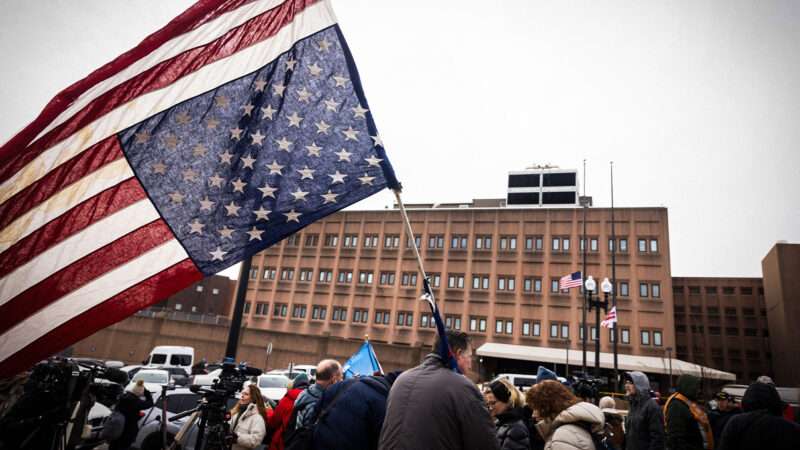
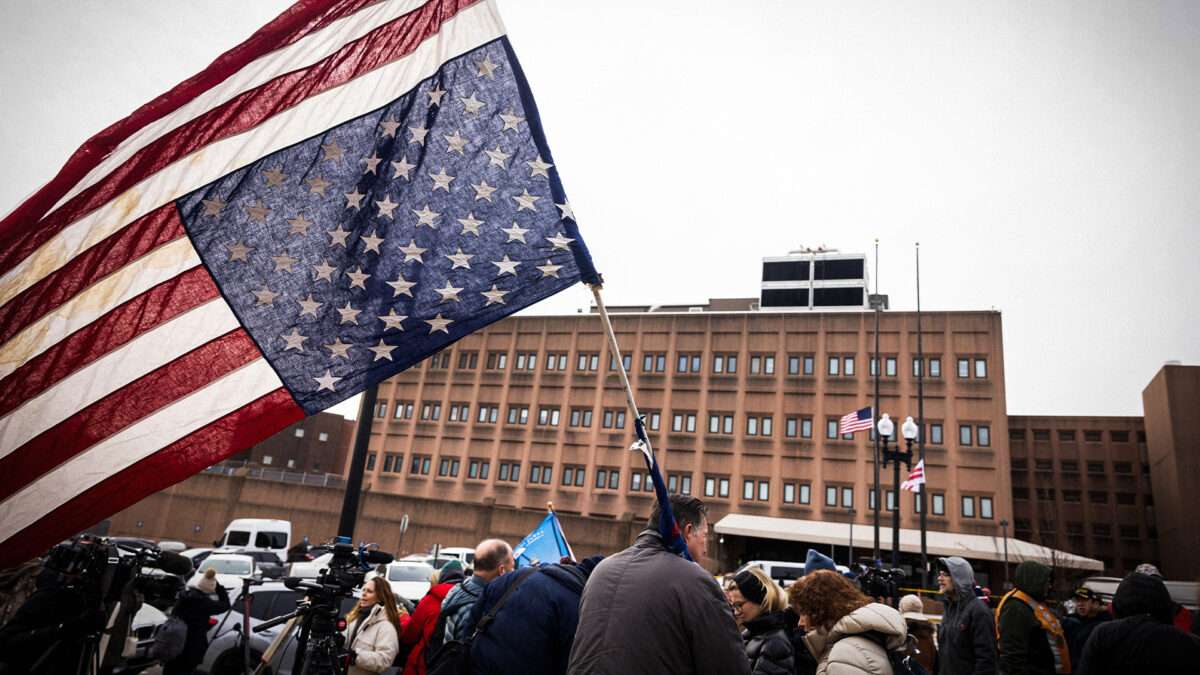
DC Jail | Jeremy Hogan/ZUMAPRESS/Newscom

The Department of Justice (DOJ) announced Monday that it will investigate living conditions inside the Washington, D.C. Jail following years of reports of filth, medical neglect, and brutality. 

The D.C. Jail, which holds all pretrial detainees and misdemeanor offenders in the District of Columbia, was the subject of an unflattering 2016 Reason cover story, "How Not to Build a Jail," describing how wretched conditions had persisted there for more than a century. Lawsuits, audits, and media investigations have all documented persistent civil rights problems. The jail gained additional infamy for holding pretrial detainees and convicted defendants who were prosecuted for their role in the January 6, 2021, riot at the Capitol Building. 

The Justice Department received numerous allegations of excessive force, inadequate medical care, unsanitary living conditions, and malnutrition inside the jail, according to a department press release. The investigation will determine if D.C.'s Department of Corrections has a pattern or practice of violating prisoners' constitutional rights.

"The Constitution protects the rights of every incarcerated American, including those held in custody in our nation's capital," Assistant Attorney General Harmeet K. Dhillon said in a DOJ press release. "We are committed to upholding our federal civil rights laws so that no inmate is confined in unconstitutional conditions or subject to unconstitutional mistreatment at the District of Columbia Department of Corrections."

Last week, six current and former D.C. Jail inmates filed a class-action lawsuit alleging they found dead mice and cockroaches in their food.

Five different D.C. Jail inmates filed another lawsuit in September alleging guards failed to stop or adequately respond to a man in the jail's mental health unit from starting an electrical fire.

In 2021, the U.S. Marshals Service transferred roughly 400 inmates out of the D.C. Jail after a surprise inspection reported unacceptable living conditions, including guards withholding water and food from inmates as punishment.

A week before that inspection, a federal judge held the D.C. Department of Corrections in contempt for repeatedly failing to turn over the medical records of a January 6 defendant who had been waiting for months for a scheduled wrist surgery. 

The antiquated jail, opened in the 1970s, has numerous structural problems, but plans to replace it have stalled. In the meantime, the Justice Department's Civil Rights Division will write a report to add to the top of the pile.

The post Justice Department Will Investigate Conditions at D.C. Jail After Years of Reports of Filth and Neglect appeared first on Reason Magazine.
  •  

Slotkin accuses Trump ally of ‘mobilizing death threats’ against her, staff

Sen. Elissa Slotkin (D-Mich.) accused Mike Davis, a close legal ally of the president, of “mobilizing death threats” against her and her staff.  Slotkin wrote on social media Monday that Davis had originally been in the mix to be President Trump’s next attorney general after former Attorney General Pam Bondi left her post but “is…

  •  

Trump says security cameras installed at Reflecting Pool, threatens to jail future vandals

President Trump said security cameras have been installed at the Lincoln Memorial Reflecting Pool and warned possible future vandals they would face jail time. “This will be different, but any Vandals that try to prove the point otherwise, will GO TO JAIL! We are watching very closely, and security cameras have been installed. Reports are…

  •  

Democratic senator: Zelensky says Ukraine doesn’t have full access to Starshield, intelligence sharing

Sen. Richard Blumenthal (D-Conn.) said Ukrainian President Volodymyr Zelensky told senators Ukraine still does not have full access to the critical satellite-based Starshield network or U.S. intelligence sharing amid growing tensions with President Trump. Zelensky provided the update to a bipartisan group of senators on a call hosted by Sen. Thom Tillis (R-N.C.). “Joined Senator…

  •  

The Guardian view on Trump and Putin: Ukraine’s future is not theirs to bargain away | Editorial

Russia wants America and China to decide Ukraine’s future without Kyiv. Europe must challenge this dangerous return to diplomacy of the strong for the strong

Does Vladimir Putin know exactly how to play Donald Trump? The history of chummy phone calls, high-profile meetings and attempts to bring Russia in from the cold certainly suggests that Moscow’s thuggish ruler has a hold on this American president. If Mr Trump agrees to negotiate Ukraine’s future with Mr Putin and China’s Xi Jinping without Ukraine at the table, he will have handed the Russian leader a victory before talks begin. The message will be that strongmen are ruling the world and determining the fate of weaker nations.

Ukraine has the right to determine its future. That right cannot be waved away by a self-serving Russian proposal, however much it indulges Mr Trump’s belief that world affairs should be settled by powerful men. The scales are falling from European eyes. Trumpian America is raising doubts about whether it will help deter aggression or even honour its Nato commitments. If Washington now rewards Moscow and pressures Ukraine to accept a raw deal, it would be a betrayal. European governments would wonder where America might be in the future when their own security is threatened.

Do you have an opinion on the issues raised in this article? If you would like to submit a response of up to 300 words by email to be considered for publication in our letters section, please click here.

Continue reading...

© Photograph: José Luis Magaña/AP

© Photograph: José Luis Magaña/AP

© Photograph: José Luis Magaña/AP

  •  

‘The Israel Experience with Mike Huckabee’: The Ambassador’s Family Sells Trips to Israel

Mike Huckabee’s family is offering trips to Israel so tourists can ‘hear from top officials,’ even though he’s the ambassador. Meanwhile, he’s done little for U.S. victims of Israeli violence.

💾

  •  

Trump Slashing Deportation Protections Shows Why Temporary Status Shouldn't Depend on Who's President

People deboarding a plane | Photo: Haitians deported from the U.S. deplane in Haiti; Ketlain Difficile/A.P.

In late August, President Donald Trump's administration carried out its first deportation flight to Haiti since the Supreme Court allowed it to end temporary protected status (TPS) for the embattled country in June. "There are no extraordinary and temporary conditions in Haiti that prevent Haitian nationals…from returning in safety," the Department of Homeland Security (DHS) claimed in its TPS revocation, describing a country the State Department warns Americans not to visit "for any reason."

The Trump administration has eroded America's humanitarian avenues, including TPS, which shields migrants from deportation. As a result, many noncitizens may become undocumented and could be forced to return to unsafe places.

The DHS secretary may grant TPS for countries facing armed conflicts, natural disasters, or other disruptive events. TPS designations last anywhere from six to 18 months and may be extended. The government has designated 29 countries for TPS since Congress established the status in 1990, offering protection to Salvadorans fleeing a 12-year civil war, Haitians fleeing the 2010 earthquake, and millions of others. The Biden administration repeatedly made and extended TPS designations, but the Trump administration has been working to terminate them.

There were 1.3 million people living in the U.S. under TPS in March 2025, according to the Pew Research Center. By August 2026, the Trump administration had ended TPS for 13 countries, leaving 1 million people without its protections. Once someone loses TPS, he reverts to his previous immigration status, which is often undocumented. Over 600,000 Venezuelans, 330,000 Haitians, 170,000 Salvadorans, and 100,000 Ukrainians had TPS protections as of March 2025, according to the Congressional Research Service.

Critics often point out that TPS isn't really "temporary." That's frequently true: Although some designations have been brief, others have been decades-long. Designations for Haiti, Syria, Honduras, Nepal, Somalia, and El Salvador have all lasted at least 14 years, according to the Migration Policy Institute (MPI).

This says more about the U.S. immigration system and presidential power than it does about TPS. "In the absence of Congress acting to legalize what has become a long-settled unauthorized immigrant population, Republican and Democratic administrations, lawmakers, immigrants, and foreign governments had come to tacitly rely on TPS despite its nominally temporary nature," notes the MPI. Immigration policy is increasingly subject to presidential whims, and due to lengthy processing times and narrow qualifications, more durable immigration pathways such as asylum and refugee status are often inaccessible to eventual TPS beneficiaries. An immigrant-friendly president may use TPS designations to temporarily shield noncitizen populations, but an anti-immigrant successor can also revoke those protections. In either scenario, a TPS holder faces uncertainty.

In a rare bipartisan immigration effort last February, Reps. Laura Gillen (D–N.Y.) and Mike Lawler (R–N.Y.) introduced a bill to extend TPS for Haiti for three years. It passed the House this April and has been languishing in the Senate since. Its future, too, is uncertain.

The post Trump Slashing Deportation Protections Shows Why Temporary Status Shouldn't Depend on Who's President appeared first on Reason Magazine.

  •  

US gave us no warning of Russian strikes on Kyiv power plants, Zelenskyy says

Ukrainian president accuses Washington of ‘denial of reality’ in continuing row with Trump over apparent support for Moscow

Ukraine did not receive a warning from the US about an impending Russian missile attack on Sunday evening, Volodymyr Zelenskyy has said, reviving concerns that Washington is withholding intelligence to bully Kyiv into capitulating to Moscow.

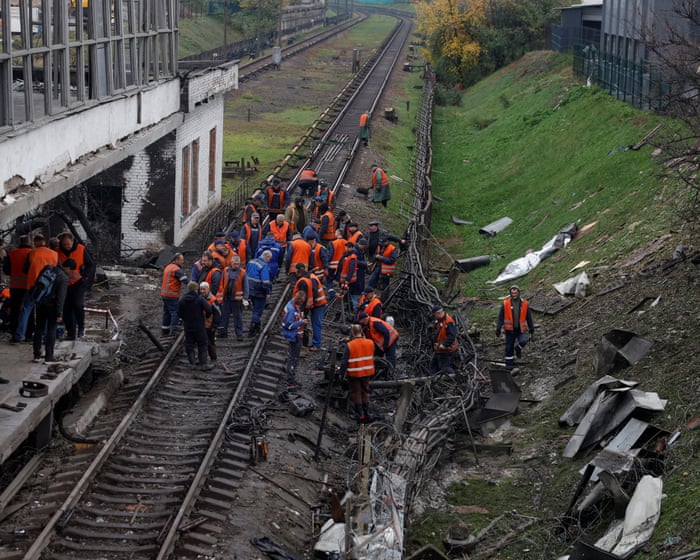
Yuri Ihnat, a spokesperson for the Ukrainian air force, said on television on Monday morning that Ukraine had not received a warning before a Russian missile barrage hit power plants in Kyiv at about 11pm. Earlier, a Ukrainian government official had told the Guardian the US had not warned the capital about the impending missile strike.

Continue reading...

© Photograph: Valentyn Ogirenko/Reuters

© Photograph: Valentyn Ogirenko/Reuters

© Photograph: Valentyn Ogirenko/Reuters

  •  

Zelenskyy thanks Trump for resumed intelligence sharing after US Starlink ‘message’

Two people killed and at least 17 injured as Russia and Ukraine continue to trade strikes on power infrastructure

Volodymyr Zelenskyy on Sunday thanked the Trump administration for resuming intelligence sharing between the two countries, but maintained the US had intentionally throttled its Starlink satellite internet access so that Donald Trump could send a “message” in his ongoing feud with the Ukrainian president.

In an interview on NBC, Zelenskyy said the US had “unblocked” intelligence on impending Russian ballistic missile strikes, which have pounded the country’s energy infrastructure as winter draws in.

Continue reading...

© Photograph: Omar Havana/AP

© Photograph: Omar Havana/AP

© Photograph: Omar Havana/AP

  •  

Trump's War With Iran Pushed Him To Waive a Century-Old Shipping Law. Commerce Boomed.

A large boat with shipping containers seen from above | Tawatchai Prakobkit/Dreamstime/Cato Institute

America's interminable war with Iran has killed thousands, disrupted commerce that flows through the Strait of Hormuz, and raised prices on the home front.

But there may be one silver lining. In an attempt to lower gas prices that spiked because of the war, the Trump administration has repeatedly issued waivers of the Jones Act, a century-old law that requires all goods moved between American ports to be carried on American-built, American-crewed ships.

With the law (temporarily) not being enforced, commerce has exploded.

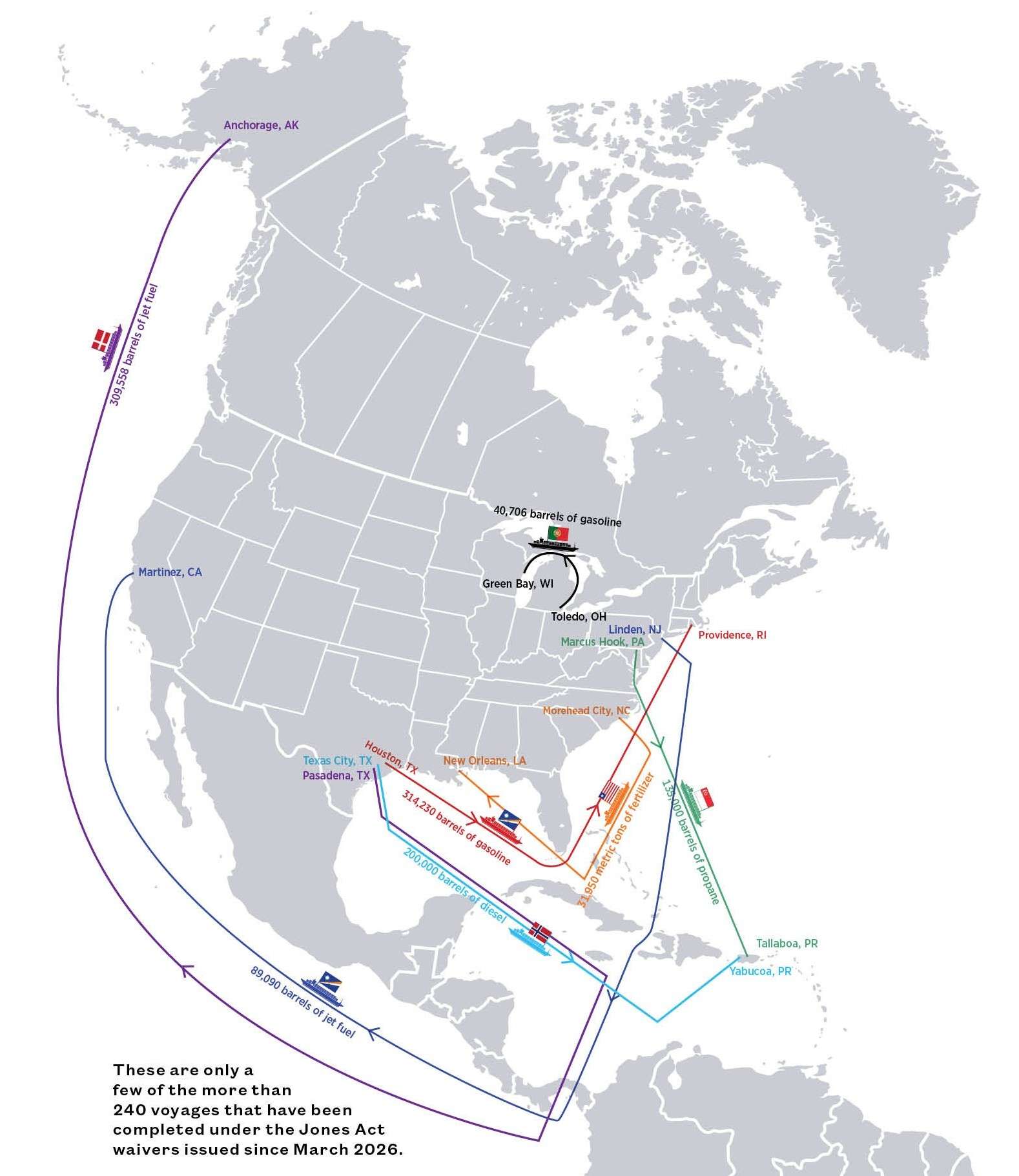
Just look at how much propane has been shipped from the mainland United States to Puerto Rico, says Colin Grabow, a trade policy analyst at the Cato Institute and perhaps the nation's foremost advocate for abolishing the Jones Act.

A map showing U.S. fuel shipping routes
Cato Institute / Joanna Andreasson

Since March, when the first waiver was issued, Puerto Rico has imported more than 800,000 barrels of propane from the mainland. That's more than twice the amount of American propane shipped to Puerto Rico in the last 22 years combined.

America is one of the world's leading producers and exporters of propane, but the lack of Jones Act–compliant ships capable of carrying gas means that it has been nearly impossible to ship propane from the mainland to outlying parts of the country. In the past, Puerto Rico has imported gas from Nigeria, Chile, and elsewhere because those deliveries don't have to comply with the Jones Act.

For years, libertarians have argued that the Jones Act unfairly impoverishes American consumers and businesses that want to buy and sell things within the same country in order to artificially inflate the price of moving those things across water. Waiving the law seems to have proven that point: There are plenty of ships capable of moving gas and oil around the country as long as the government gets out of the way.

"The instant the Jones Act no longer applied to energy shipments, mainland propane displaced foreign imports, suggesting it had been the cheapest option all along," says Grabow.

Puerto Rico is hardly the only winner.

The Jones Act waivers are offering a glimpse into a world where the law doesn't exist. From March through mid-August, there had been 210 voyages completed that otherwise would have been deemed unlawful without the waivers, according to an analysis of Maritime Administration data by the Institute for Energy Research.

It's a world where American oil and natural gas can be more easily shipped from the Gulf Coast to New England, which had previously been importing energy from Russia and Europe. Another big winner is California, which had been importing gasoline from as far away as the Bahamas because it was nearly impossible to legally ship gas from Texas or Alaska to the West Coast.

President Donald Trump reupped the Jones Act waiver in mid-May. Another extension, issued in August, will last for 90 days but applies only to ships carrying energy products such as gas and oil. Before that waiver expires in November, lawmakers ought to kill the Jones Act permanently.

There is some irony in the fact that one of Trump's most successful policy maneuvers has paused a protectionist law that limited commerce, when so much else of his economic policy has been focused on erecting barriers to trade. It's also amusing that it was a war in the Middle East—something Trump pledged to avoid—that triggered this change.

Still, the proof is in the shipping. The free traders were right all along.

The post Trump's War With Iran Pushed Him To Waive a Century-Old Shipping Law. Commerce Boomed. appeared first on Reason Magazine.
  •  

Trump’s pause on Russia sanctions is ‘reward’ for Putin, Zelenskyy says

Ukrainian president warns it will embolden Russian leader and intensify war as Moscow hits country’s power plants

Volodymyr Zelenskyy has described Donald Trump’s decision to roll back sanctions on Russia as a “reward” for Vladimir Putin and warned it will embolden the Russian leader and intensify the Kremlin’s war, as Moscow launched one of its worst strikes yet on Ukraine’s power plants in an attempt to black out the country’s cities before winter.

The Ukrainian president also said he expected the Trump administration to lift more sanctions against Russia in the future and called for Europe to establish its own negotiations with Moscow as the US has sought better ties and business deals with the Kremlin.

Continue reading...

© Photograph: Kateryna Klochko/AP

© Photograph: Kateryna Klochko/AP

© Photograph: Kateryna Klochko/AP

  •  

The real Katie Zacharia controversy wasn’t her claim to be a lawyer

Setting aside the jokes about the shortness of Katie Zacharia’s tenure as White House press secretary, the controversy over her claim to be a lawyer obscures a more damaging issue. For years, she promoted some of the most heinous and bizarre conspiracy theories bubbling up from the right-wing swamp. Simply put: Zacharia was ousted for the wrong reason. Her embrace of extreme and downright loony assertions amount to a much stronger basis for dismissal than her bogus lawyer claim.

Zacharia’s social media history suggests a worldview colored by baseless thinking, defamatory accusations and sinister fantasies — not exactly a good look for someone tasked with conveying the U.S. president’s policies and actions to the press and public with authority and integrity. The noxiousness of her posts and reposts was apparently evident even to her, since she deleted many of them before her new role was announced.

According to reporting by CNN, the Bulwark and the newsletter Popular Information, Zacharia has repeatedly accused people, particularly Democrats, of sexually molesting children. In April 2022, she reposted and later deleted a Truth Social post from “Stop the Steal” organizer Ali Alexander: “Democrats want to mask and rape your children. That’s their satanic platform.”

She repeatedly referred to Democratic operative and former White House chief of staff John Podesta as a “pedo,” apparently still connecting him to an outrageous child-abuse conspiracy theory that had been debunked years earlier. She later paid tribute to the late Robert David Steele, a conspiracist who claimed that children were being kidnapped and sent to a colony on Mars: “He was exposing the pedo rings of the elite cabal,” Zacharia wrote. “May he Rest in Peace and the work of his hands not have been in vain.” In another Truth Social post, she noted that “the radical left Hollywood elites are sick pedo cannibals.” She added, “Change my mind.”

If Trump does indeed find another role for Zacharia in his administration, questions should be asked.

Another of Zacharia’s reposts suggested that Joan Rivers’ death in 2014 was somehow connected to an insulting crack the comedian once made about the Obamas: “Remember that time Joan Rivers said Obama was gay and Michelle had a dick then suddenly died?”

This wasn’t the output of a mischievous teen troll; Zacharia’s controversial deleted posts and reposts date from as recently as 2022. By then, Zacharia was in her late 30s and had been employed in various senior communications roles, including most recently as an adviser to Truth Social, the Trump-owned social media platform.

Zacharia’s deleted posts on political issues were problematic for another reason. For instance, she re-posted and deleted a tweet accusing the Justice Department of covering up the crimes of people involved in the Jeffrey Epstein scandal, an opinion at odds with the administration she was tapped to speak for. Last year, she advocated suspending habeas corpus — the fundamental right to challenge detention in court — for migrants arrested by Immigration and Customs Enforcement, an extreme and authoritarian measure. (Zacharia’s legal theory, if any, was that the Constitution justifies denial of this right in cases of rebellion or invasion.)

In its article Tuesday on this social media activity, CNN reported that neither Zacharia nor White House communications director Steven Cheung directly addressed the issue. In a statement, CNN reported, Cheung called her “uniquely qualified” and “whip smart to help inform the American people.” The White House responded to Popular Information’s request for comment by referring it “to the President’s TRUTH on Katie,” a post in which Trump praised Zacharia as “a loyal and brilliant supporter, right from the beginning.” Zacharia wasn’t asked about these posts in interviews with three conservative outlets, including Fox News, between Thursday and her ousting Friday.

Clearly, the safe space couldn’t last. Trump apparently realized that if she ever assumed the podium again, Zacharia would inevitably face a barrage of questions about herself. That, too, is problematic: A press secretary shouldn’t be the story. But Zacharia’s history of hair-raising statements rightly made her one.

The lawyergate bubble burst in just five days. On Thursday, in an interview with right-wing influencer Jack Posobiec — himself a noted purveyor of conspiracy theories — Zacharia acknowledged that she didn’t pass the California bar exam. On advice from legal experts, she said, she decided that it was proper to call herself a lawyer but not an “attorney.” She said much the same to the New York Times, which reported on Thursday that she had identified herself on LinkedIn as general counsel to a group led by a Trump loyalist. In the wake of a CNN report Thursday that Zacharia had shared at least 15 social media posts over the past two years in which she referred to herself as an attorney, she told Sean Hannity that those were retweets of a title she had been given — but she was out shortly after lunchtime Friday.

But if Trump does indeed find another role for Zacharia in his administration, questions should be asked. Among them: Did she really think Hollywood “elites” engaged in pedophilia and cannibalism? How did she come by this knowledge, and who are the individuals who’ve engaged in these repulsive crimes? Is the Justice Department still covering up Epstein’s crimes? Does she truly believe there’s a lost colony of kidnapped children on Mars? As press secretary, there was no way Zacharia could keep the public focus on war, the economy, healthcare and the midterm elections while also defending a conspiracy about Joan Rivers’ death. But a less prominent position doesn’t moot the questions that should be asked if Zacharia is drawing a taxpayer-funded salary.

For Trump, media controversy may be on brand. The White House’s most recent top spokesperson had been a font of misinformation, outrageous “theories” and mortifying lies. In view of her boss’ track record, that may not be a bug or even a feature. It may be why Zacharia got the job in the first place.

The post The real Katie Zacharia controversy wasn’t her claim to be a lawyer appeared first on MS NOW.

  •  

America Abandoned Public Executions for a Good Reason

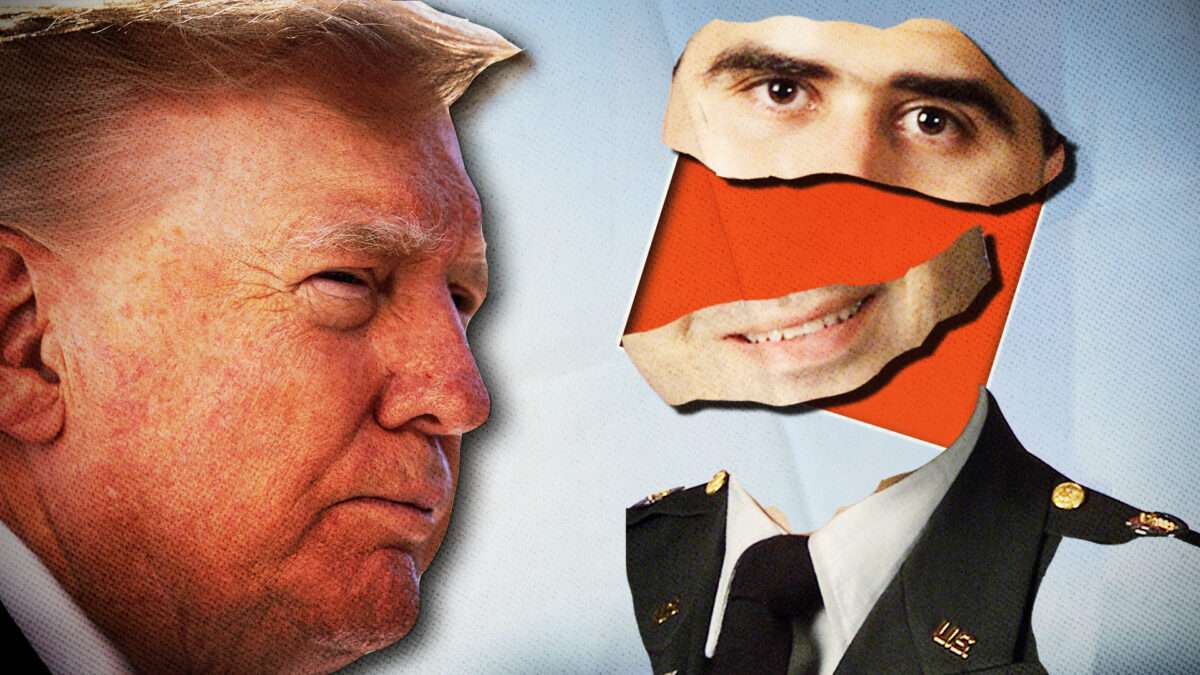
An illustration of Donald Trump and Nidal Hasan | Samuel Corum-Pool via CNP/CNP / Polaris/Samuel Corum-Pool via CNP/CNP / Polaris/Newscom

President Donald Trump on Thursday called off plans to livestream the December 3 military execution of Nidal Hasan after the announcement generated widespread disgust.

Defense Secretary Pete Hegseth announced last week that the U.S. government would livestream the firing-squad execution of Hasan, a former Army major who shot and killed 13 people at the Fort Hood Army base in 2009. A court-martial jury sentenced Hasan to death in 2013.

It would have been the first public execution in the United States since a hanging in Missouri in 1937, though the last well-known public execution occurred a year earlier in Kentucky. Rainey Bethea, a black man, was hanged before a crowd of roughly 20,000 people in Owensboro. Kentucky became the last state to outlaw public executions two years later.

The plan to livestream Hasan's execution drew comparisons to the Taliban. The U.S. Conference of Catholic Bishops called it "a barbaric promotion of a culture of death." Writing at The Lamp, an orthodox Catholic journal, Matthew Walther noted that it would be the "first ever government-sanctioned snuff film in American history."

However, Trump and Hegseth didn't trip over just liberal and religious pieties, but a deep-rooted American aversion to bloody displays of state power that goes back to the colonial era.

Lynn Novick, the director of Ken Burns' upcoming PBS documentary series Crime and Punishment in America, tells Reason that public executions "haven't been a regular part of American life since the Colonial time in the early years of the Republic, and there's really good reasons for that."

One of American colonists' many complaints about oppressive British rule was England's expansive criminal code, known derisively as the "bloody code" because it contained more than 200 capital crimes.

"In Colonial America, [an execution] was an everyday occurrence," Novick says. "There were executions all the time, and one of our scholars told us that most people would have seen someone executed in their lifetime."

Excessive capital punishment also ran contrary to emerging theories by leading Enlightenment thinkers that punishment should be proportional to the crime and not driven by revenge or bloodlust.

Perhaps more importantly, public executions were disorderly affairs that, rather than reinforce the power of the state, inflamed the passions of the mob to a dangerous degree. "In many cases, crowds would become very boisterous, riotous, angry, excited," Novick says. "There were sometimes violent outbursts at these events."

As a result, many of the Founding Fathers saw frequent public executions as disruptive to the fragile social order. The early American republic's move away from sanguinary spectacle was driven by a desire to create a stable, virtuous citizenry and sever itself from the European continent's tradition of public torture and execution.

As Reason described in a recent cover story, the result of this was the invention of the American penitentiary in the early 1800s, which was sold as a humane and rehabilitative replacement for the whipping post and gallows.

States transitioned from public to private hangings behind their newly built prison walls in the late 19th and early 20th centuries, before switching to the use of the electric chair. This was not done out of entirely humanitarian concerns, especially in the South, where public executions often became quasi-religious ceremonies, with the condemned declaring their ultimate victory over death (and the state) through Jesus Christ.

"Executions had contested meanings," Michael Ayers Trotti wrote in The End of Public Execution. "They were moments of justice, of state power; but they were also moments of religion, exceptional moments that transcended normal life."

The main reason that public executions disappeared over the long term, though, is obvious to anyone who's not a sociopath: It's weird and dehumanizing to gather in a crowd to watch someone else be killed, to participate in the government's promotion of its power to take a human life.

Rachel Abbott, who witnessed Bethea's 1936 hanging when she was 5 years old, told WKU Public Radio in 2016 that she had nightmares about it years later.

"I remember it well, but I didn't want to," she said. "I tried to get away from it because it was hurting me so bad. I started having me nightmares after I was older. It's like his spirit was just hanging all around me. The first thing you'd know I'd start crying because I felt he wanted me to help him get buried, get sent back to his gravesite by his father. I still have tears running when I think of it."

The post America Abandoned Public Executions for a Good Reason appeared first on Reason Magazine.
  •  

DOGE Worked? Only If You Grade on a Curve.

Elon Musk and Donald Trump with a DOGE meme coin | Official White House Photo by Daniel Torok/Newscom/Jiri Hera/Dreamstime.

As the Trump administration's short-lived Department of Government Efficiency (DOGE) project implemented its plan to downsize the federal workforce, there was much wailing from the liberal institutions in Washington, D.C.

Federal employee unions filed lawsuits to block the effort. NPR ran profiles of federal workers who, for the first time, faced the prospect of potentially not having absolute job security forever. The Brookings Institution wondered how many jobs the federal government could shed before it crashes.

The answer: plenty. The Trump administration has cut more than 10 percent of the federal workforce, and the government hasn't crashed. Indeed, it hasn't even shrunk—if you're counting by dollars spent instead of people employed.

In a new article for City Journal, Manhattan Institute senior fellow Judge Glock highlights the tremendous gap between the dire predictions about DOGE's cuts and the reality that has emerged, more than a year after DOGE was shut down. Despite having only a modest impact on spending, Glock writes, DOGE "had a massive impact on the federal civil service."

This is true—to a point, more on that in a moment—and notable. Aside from a modest downsizing in the 1990s, the number of people employed by the federal government has been steadily growing for decades. Reversing that trend is one of the few genuinely libertarian accomplishments by the Trump administration.

The cuts to the federal workforce prove that "DOGE worked," argues Glock.

Well, hold on.

Elon Musk and Vivek Ramaswamy (who departed the DOGE project before Trump's inauguration and is now running for governor of Ohio) set some very ambitious goals after being appointed DOGE co-chairs in late 2024. In an op-ed for The Wall Street Journal in November 2024 where they promised "we won't just write reports or cut ribbons. We'll cut costs."

Musk repeatedly attached some rather absurd numbers to that promise. He said DOGE would cut $1 trillion or even $2 trillion in federal spending. In the end, it didn't come close. By DOGE's own (questionable) accounting, it cut $170 billion. Meanwhile, overall federal spending has increased in each of Trump's first two years in office, and the budget deficit has widened as well.

Yes, Musk and Ramaswamy also said they would reduce the federal workforce. But that was presented as a natural consequence of cutting spending, not as the primary goal.

Think about it like this. If I spent months promising my friends and family that I would lose 50 pounds on a new diet, and then didn't lose any weight, would it be fair to say the diet worked?

What if I reduced the number of donuts I eat every day, but still didn't lose any weight? Sure, that might be good for my health in some way—just like reducing unnecessary workers in the federal government is good for America's fiscal health—but it certainly wouldn't mean I had achieved the goal of losing weight.

Finally, even the claim that DOGE cut the federal workforce requires an asterisk. As Glock also notes in his report, the decline in federal workers has been offset by an increase in federal contractors.

It's not a one-for-one trade, of course. The new contractors are overwhelmingly concentrated in places like the Department of Homeland Security and the Pentagon, while the cuts mostly targeted other areas, like the Department of Health and Human Services.

"Most of that increase came from the buildup in homeland-security and defense contracting, including purchases such as surveillance aircraft and tanks, rather than substitutes for government workers," Glock writes. "DOGE achieved real contract savings, but these were more than offset by higher spending elsewhere, reflecting a shift in priorities rather than an overall reduction in contracting."

So, the government is eating fewer donuts but more pizza.

There might be libertarian reasons to prefer contractors over government employees. They are less likely to hold those jobs for life, for one. But there's nothing inherently good about a government policy that cuts jobs in some areas just to create more room in the budget for poorly trained immigration enforcement agents and defense contractors. That may even be a negative outcome for liberty.

In the end, the DOGE project looks less like a meaningful attempt at cutting government spending or employment levels and more like a way to purge parts of the federal workforce likely to get in Trump's way during his second term. "As long as [Trump's] larger commitment is to extending his power rather than rolling back power itself, you shouldn't expect the government to stop growing," as Reason's Jesse Walker wrote last year in comparing DOGE to President Richard Nixon's attempted purge of the civil service.

Did DOGE work? Only if you grade it on a pretty dramatic curve.

Yes, it proved that a president can slash bureaucratic jobs—particularly the bloated managerial and administrative types—without doing much damage to the government's core responsibilities. That's a lesson future administrations should remember.

Maybe, someday, a president will try applying the same logic to government spending too.

The post DOGE Worked? Only If You Grade on a Curve. appeared first on Reason Magazine.
  •  

Landowners in Texas' Big Bend Region Fight Trump Administration's Attempts To Seize Land for Border Wall

Border wall | Jim West/UCG/Universal Images Group/Newscom

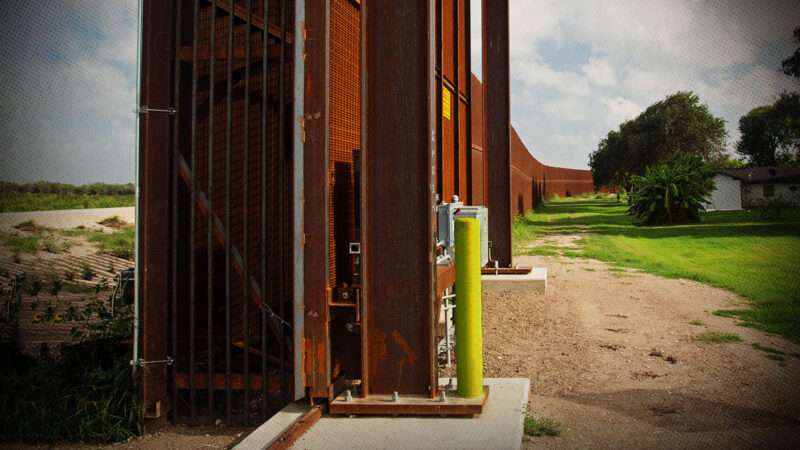
The Trump administration's attempts to fast-track construction of the president's long-promised border wall through Texas' remote Big Bend region have ground to a halt amid fierce opposition, protests, and legal challenges from landowners and conservation groups.

A federal judge on Wednesday released an opinion explaining her decision to issue a preliminary injunction blocking border wall construction through the Big Bend area. U.S. District Judge Kathleen Cardone found that the plaintiffs, which included the Center for Biological Diversity and several longtime residents of the region, had shown a substantial threat of irreparable harm if the construction project is allowed to continue.

The Trump administration wants to spend $7.5 billion building additional security infrastructure along a 500-mile stretch of the U.S.-Mexico border running through the Big Bend region, which includes Big Bend National Park. The federal government began sending threatening letters to property owners announcing its intent to acquire necessary pieces of their land this summer, and it waived several environmental regulations, allowing it to put bulldozers on the ground inside the national park by September.

However, numerous groups and local landowners say the border wall project will alter their way of life and permanently scar one of the most rugged and pristine landscapes in the country. The project attracted bipartisan criticism and protests.

Cardone also found that the plaintiffs were likely to succeed on their claims that Department of Homeland Security (DHS) Secretary Markwayne Mullin exceeded his authority when he issued environmental waivers for the project.

The injunction is a temporary reprieve for property owners such as David Keller, an archaeologist and part-time river guide on the Rio Grande River. The original plans for the border wall expansion would have cut through Keller's 10-acre property near Redford, Texas, putting a 30-foot-tall wall on the levee that sits between the river and the rest of his land.

Keller says the Trump administration gravely underestimated how much anger its tactics and attitude would generate.

"It's a level of arrogance—they're just used to being able to bulldoze over people," David Keller says. "They were moving forward as if they weren't expecting any resistance, but boy, they're due for a wakeup call. And they're having it right now."

Keller is a plaintiff in a separate lawsuit against the DHS by Conserve Big Bend, a coalition of landowners, conservationists, river tour guides, researchers, and other affected parties.

Keller says he's loved wild, open country since he was a child, and as soon as he saw the region in the 1990s, he decided he would find a way to live and work there, which he's done for the past 25 years. "It's visually magnificent," Keller says. "It's incredible. It's like no other place I'd ever seen. It's one of the last unspoiled places remaining in the lower 48."

Keller says it's where he plans on being buried, too, although these days he's unsure whether to say "plans" or "planned." The proposed border construction is an existential threat to the life he's built, he says, and if the wall goes up, he'd likely move.

"I didn't come down here to live in a cage," Keller says.

The proposed border wall would not only block access to the river for farmers, ranchers, and outdoors enthusiasts along the river, as well as block the view into Mexico, it would wreck "the whole feeling of the place, the historical cross-border culture that we've developed," Keller says.

So far, the federal government has not tried to seize any private property in the Big Bend region through eminent domain, although it sent letters to property owners this summer requesting access to survey their land and warning them that it held the option to invoke eminent domain if they did not quickly sell.

Both Keller's and the Center for Biological Diversity's lawsuits argue that the department's justification for building and expediting additional border infrastructure in the Big Bend Region are factually and legally incorrect. The DHS determined that the sector of the border is an "area of high illegal entry."

However, despite making up roughly a quarter of the entire U.S.-Mexico border, the Big Bend sector only accounted for between 0.3 percent and 2.2 percent of total border-wide arrests over the past 30 years.

Cardone cited the low apprehension numbers in her finding that Mullin exceeded his authority to issue the waivers.

"The unrebutted evidence shows that the Big Bend Sector is, by far, the sector with the lowest rate of migrant apprehensions along the entire U.S.-Mexico border, both in terms of gross totals and apprehensions per mile of border," Cardone wrote. "Therefore, if the Big Bend Sector is an area of high illegal entry, so is every other sector, and the waiver authority would apply to the entire U.S.-Mexico border."

The post Landowners in Texas' Big Bend Region Fight Trump Administration's Attempts To Seize Land for Border Wall appeared first on Reason Magazine.
  •  
❌