❌

Reading view

Trump defends Russia sanctions waiver, says he does not want to drive Moscow from talks

Trump WEF

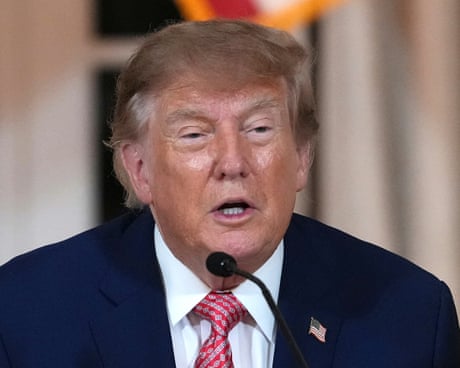
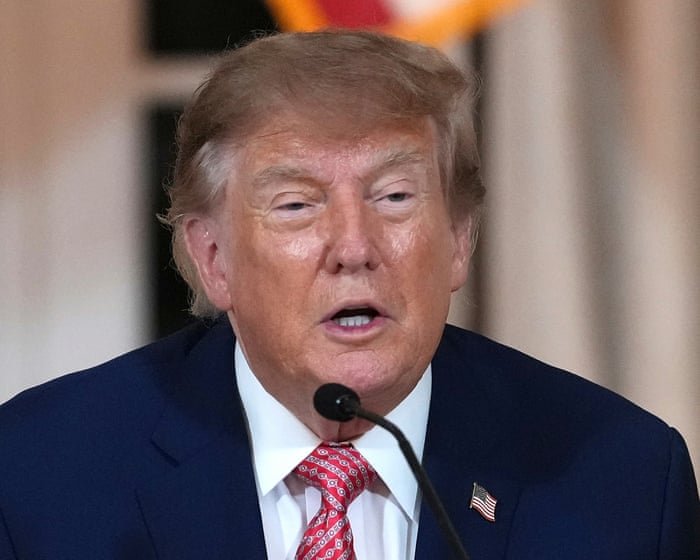
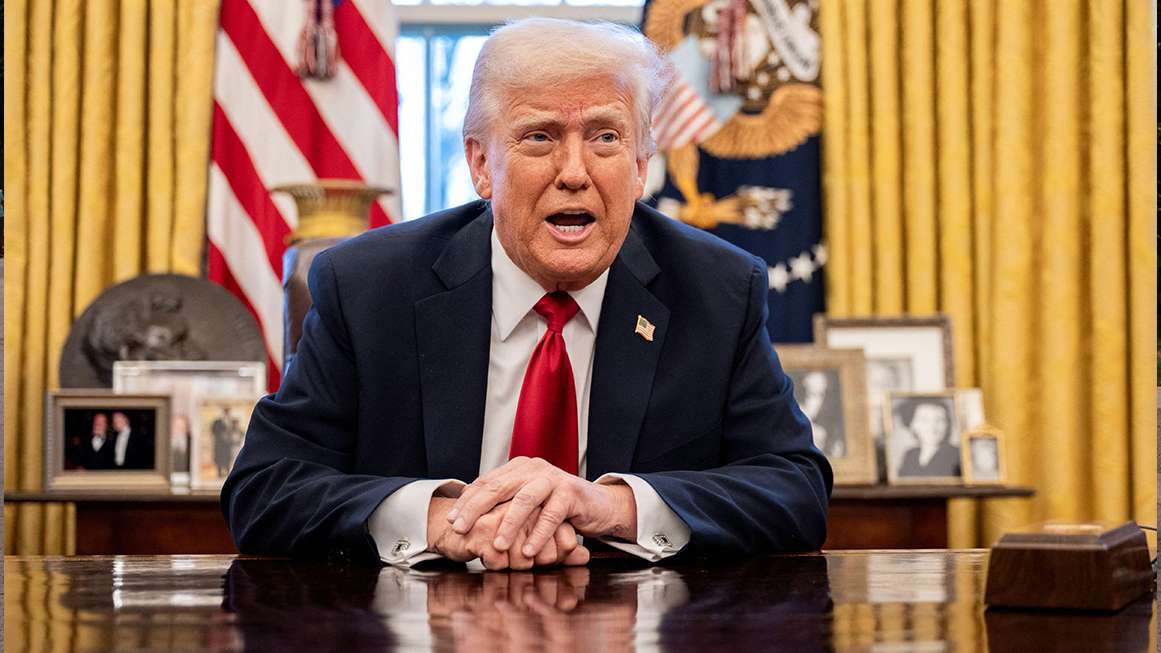
US President Donald Trump wrote in a Truth Social post on 18 October that he did not want to “drive, foolishly, Russia away from the bargaining table.” He also wrote: “Signing that document at this time will do that, and I can sign it later, or any time that I want!”

Trump was referring to sanctions and tariffs under the Lindsey O. Graham Sanctioning Russia and Iran Act of 2026, which he waived in an executive order on 16 October, days before the measures were due to take effect. The waiver suspends additional economic penalties intended to pressure Moscow over its war against Ukraine, while leaving earlier US sanctions in place. The decision came weeks before the 3 November midterms, in which Republicans are defending slim majorities in both chambers, and analysts said the penalties could have pushed up oil prices for Americans already paying more, largely because of the US-Israeli war with Iran, Reuters reported.

Trump says Zelenskyy could have made a better deal two years ago

A week before the waiver, Trump had announced a deal for Russia to increase diesel supplies to global markets. The Treasury also issued a license, valid until 7 April 2027, permitting certain transactions in Russian-origin diesel.

In the Truth Social post, Trump accused Ukrainian President Volodymyr Zelenskyy of targeting Russian diesel refineries, saying the strikes were “seriously hurting the world diesel markets, including those in the United States.” Kyiv had paused its refinery strikes for three days at Washington’s request after Trump declared an energy ceasefire on 11 October, which Russia never confirmed, then resumed them. Since then, Russia has struck Ukraine’s energy sector 76 times, Zelenskyy said on 18 October.

kyiv attack
Explore further

Kyiv gets no warning of the first of two Russian ballistic waves, hours after Zelenskyy said US alerts were back

Trump wrote that Zelenskyy “doesn’t want to end this war, and probably never did,” and that he “could have made a better deal two years ago than he can now.”

“His country is in shambles, a large portion of his land is lost, his oceans and seas are gone, and his male population is low, wounded, and/or dead,” Trump added.

He also said Russia was “doing very little, if anything, to help” Iran and that he wanted to keep it that way.

A day earlier, Trump said he had not made a final decision

On 17 October, Trump told reporters at Mar-a-Lago that he had not announced his final decision. “A lot of you don’t know what my decision is yet, but we’ll figure it out, and you’ll figure it out,” he said, Reuters reported.

“I think the president wants to take the 60-day period of time to sort of analyze what imposing both sanctions and tariffs will mean to the global economy and even to the US economy,” US Secretary of State Marco Rubio told reporters before departing for Uzbekistan the same day.

Zelenskyy calls the waiver a pity as Republicans split

Zelenskyy called it a “pity” that Trump had waived sanctions under a law named for the late Senator Lindsey Graham, who “really believed in Ukraine.” He said he hoped Trump would change his decisions, NBC News reported.

Discussing the diesel deal on NBC’s Meet the Press, Zelenskyy said US oil prices had risen because shipping through the Strait of Hormuz was blocked, not because of Ukraine.

month before diesel waiver trump’s envoys had already pitched kyiv russian gas · post jared kushner steve witkoff ukrainian president volodymyr zelenskyy 7 2026 presidentgovua джаред кушнер стівен віткофф володимир
Explore further

A month before the diesel waiver, Trump’s envoys had already pitched Kyiv on Russian gas, NYT says

On 17 October, Zelenskyy told journalists that “the decision to undo all of this, to block all of it, seems wrong to me” and that it “definitely helps only the Russians.” His remarks appeared in Ukrainian on his official Telegram channel.

“Sanctions relief will continue. I think the diesel deal and the move regarding the Lindsey Graham Act are not the end of it. Unfortunately,” Zelenskyy said.

On 19 October, Zelenskyy wrote that partners had again given no warning of Russia’s overnight ballistic attack and that blocking missiles for Ukraine’s air defense while Russia gets sanctions eased or postponed amounts to partners denying reality.

Republican Senator James Lankford defended Trump’s decision on NBC’s Meet the Press, saying the president was “choosing the American people first.”

Senator Darline Graham, Lindsey Graham’s sister, whom Trump has endorsed for a full term, said at a campaign stop on 17 October that she would “choose to keep the pressure on Russia.”

“I don’t trust Putin and I don’t trust Russia,” Darline Graham said.

She did not directly criticize Trump but said she would not have made that choice, Reuters reported.

  •  

Ukraine war briefing: Trump’s sanctions waiver is a ‘60-day pause’ to analyse economic impact, says Rubio

Ukraine’s Zelenskyy expects Trump to lift more sanctions against Russia. What we know on day 1,698

US secretary of state Marco Rubio has said that US President Donald Trump’s waiver of sweeping sanctions and tariffs on Russia would be a 60-day pause to “analyse” their impact on the global economy. Rubio said also no one at the White House ordered the slow down of the speed of Ukraine’s access to Starlink to prevent it from being used on drones flying faster than 100mph, referring to Starshield, the military version of Elon Musk’s Starlink satellite internet network.

“The president wants to take the 60-day period of time to sort of analyse what imposing both sanctions and tariffs will mean to the global economy and even to the US economy,” Rubio said, noting that the economic restrictions involved a number of countries, not just Russia. Pointing to high energy prices and the Iran war, “we need that period of time to sort of study all this and figure out what the right combination is,” he said.

Trump’s abrupt decision to waive sanctions on Russia days before they were to take effect drew outrage Saturday from members of Congress, which had overwhelmingly passed the legislation. Republican Senator Rick Scott said it was clear Russia was the aggressor, and said the US had “to do everything we can to put economic pressure on Russia”. On social media, fellow Republican Thom Tillis described the move as “beyond irresponsible” and a capitulation “to a Russian dictator who illegally invaded Ukraine”.

The Ukrainian president, Volodymyr Zelenskyy expects the Trump administration to lift more sanctions against Russia in the future and has called for Europe to establish its own negotiations with Moscow as the US has sought better ties and business deals with the Kremlin. “Unfortunately, the lifting of sanctions will continue, and I believe that the ‘diesel deal’ is the first step,” said Zelenskyy on Saturday. “Unfortunately, it seems to me that this cannot stop Putin; on the contrary, he feels joy and happiness that he has such support.”

Zelenskyy said Ukraine’s lead negotiator, Rustem Umerov, had met Friday with US presidential envoy Jared Kushner, Trump’s son-in-law. Zelenskyy said the US was working to arrange a three-way meeting involving him, Trump and Putin, potentially in the Middle East, Europe or the US.

Russian air defence ⁠units intercepted and destroyed nearly ⁠200 Ukrainian ⁠drones ​headed for Moscow on Saturday, ⁠Mayor Sergei Sobyanin said on Telegram. Sobyanin, ⁠in a long ​series ‌of ‌online posts, noted ‌that 195 drones had been destroyed since midnight, with emergency crews examining debris on ‌the ground. Russia’s civil aviation authority, ​Rosaviatsia, said two Moscow airports – Domodedovo and Vnukovo – had ⁠suspended flight operations.

Romania said Saturday it shot down two Russian drones over the Black Sea, the latest in a spate of incidents believed to be spillover from Russia’s invasion of Ukraine. Ships have been attacked in recent days by drones in the Black Sea off the coast of Romania and Bulgaria.

Continue reading...

© Photograph: Mark Schiefelbein/AP

© Photograph: Mark Schiefelbein/AP

© Photograph: Mark Schiefelbein/AP

  •  

Congress gave Trump 30 days to hit Russia’s oil buyers with 100% tariffs. He waives them two days before deadline, citing US interests. Moscow calls it historic

The White House, seen from Lafayette Square. File photo, June 2024.

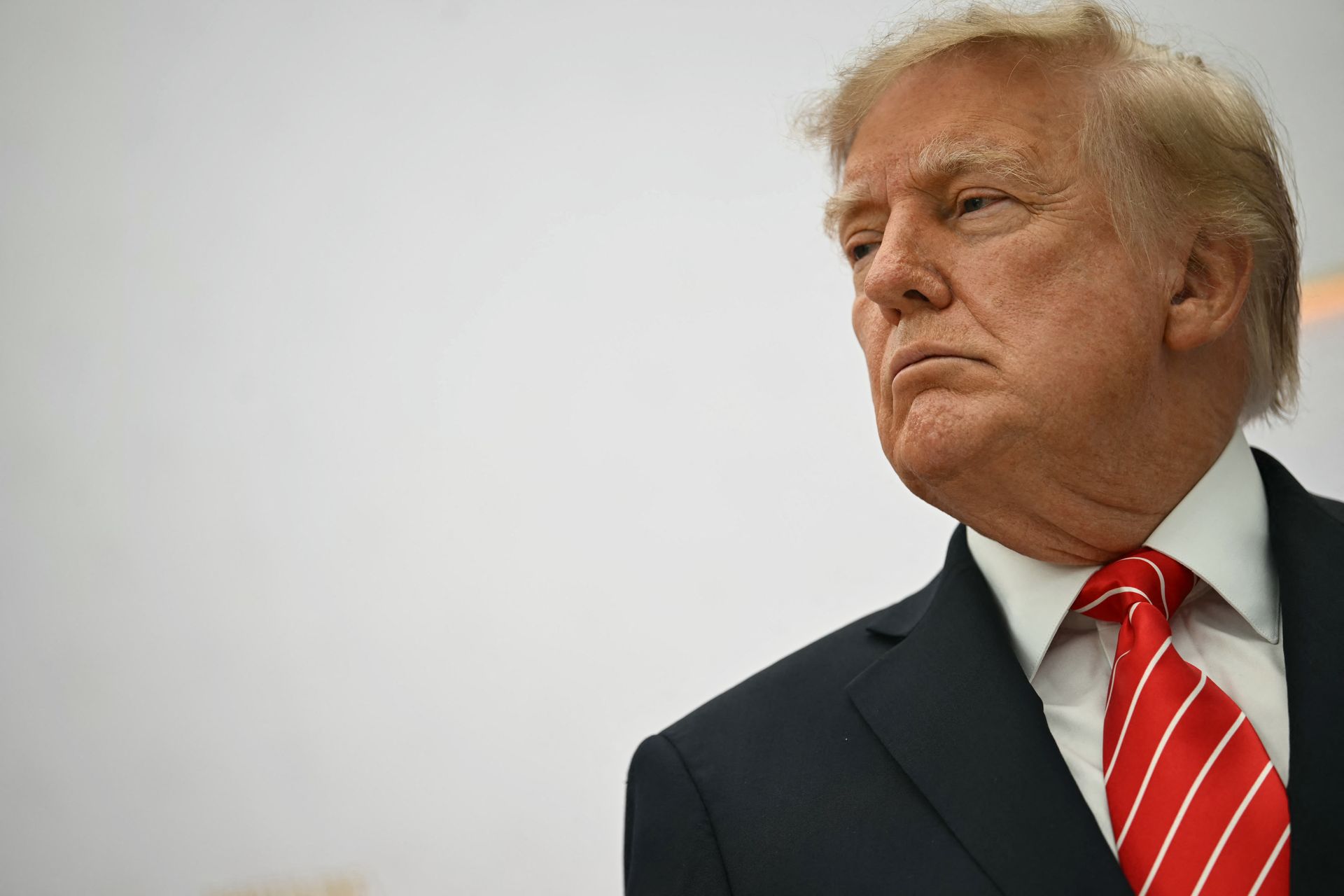
US President Donald Trump has suspended the tariffs and sanctions on the biggest buyers of Russian oil set by the Lindsey Graham Act, the law he signed himself in September. He says the move serves US national interests, according to an executive order published on the White House site.

The act required the president, within 30 days, to impose 100% tariffs on all goods from the five biggest buyers of Russian oil, to sanction a range of Russian entities and to put 500% tariffs on all Russian energy imports to the US. The deadline for those measures fell on 18 October.

Trump has used the president’s power under Section 115 of the Graham Act, which allows him to waive sanctions, restrictions, and duties by certifying to Congress in writing that doing so serves US national interests and submitting a report explaining why. The act does not, however, allow him to cancel sanctions that have already been announced.

Moscow calls it historic, Kyiv calls it a gift to Putin

The two capitals read the same order in opposite ways. Kirill Dmitriev, an envoy for Russian leader Vladimir Putin, called it “an important and truly historic moment” on X, claiming the sanctions had mainly harmed the US economy and world markets.

“Economic cooperation between Russia and the US serves the interests of both nations, contributes to global economic stability and lays the foundation for building trust and achieving lasting peace,” Dmitriev writes.

President Volodymyr Zelenskyy answered from under fire. Russia struck Ukraine’s energy system on 17 October, and at that very moment Washington chose “to completely ignore the Lindsey Graham law, which was supposed to impose real, effective pressure on Russia to end this war,” he says.

A law its own backers say is being gutted

The waiver lands amid a bipartisan revolt in Congress. Seven Republican and Democratic senators had already warned on 11 October that Trump’s move to allow Russian diesel imports had broken the law Congress passed after the full-scale invasion, urging the administration to reverse it so US money would not help finance Russia’s war.

Meanwhile, Zelenskyy argued the law can still work if Washington lets it.

“This law could, and still can, help a great deal. But the law has actually to work, and every vote for it matters,” he said, warning that the step only pushes Moscow to strike harder.

The world must not give up ground and must try to end the war, Zelenskyy added.

“To end it, and not give Putin every reason to continue it indefinitely,” he stressed, thanking everyone who “is truly fighting for peace and helping Ukraine," he stated.

The word from the Ukrainian opposition

The Ukrainian opposition also commented on Trump’s decision. Iryna Herashchenko, co-chair of the European Solidarity parliamentary faction, said that “the most cynical and stupid decisions are usually made by rulers on Saturday night,” when public attention is scattered, and people are preparing for the weekend.

“Rehabilitating Putin harms not only Ukraine but also the US itself, strengthens the axis of authoritarian regimes, and undermines international security,” she claimed.

  •  

No 10 leaves option open to impose Chinese EV tariffs if UK joins EU scheme

Beijing warns against ‘discriminatory’ step after France drops opposition to British role in Made in Europe package

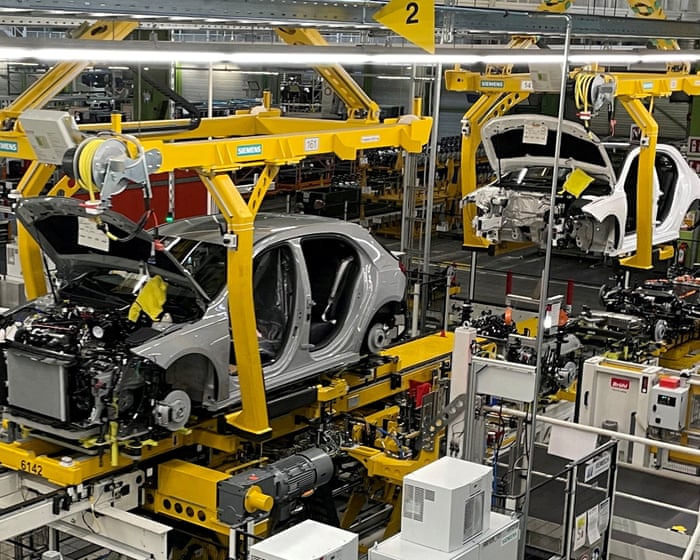
No 10 has left the door open to imposing tariffs on Chinese-made electric vehicles as part of the Made in Europe package, prompting a warning from Beijing that such a move would be “discriminatory”.

Downing Street said on Friday that it would “welcome the objective to have the UK included in the Industrial Accelerator Act” after France dropped its opposition to Britain joining the scheme.

Continue reading...

© Photograph: Nick Carey/Reuters

© Photograph: Nick Carey/Reuters

© Photograph: Nick Carey/Reuters

  •  

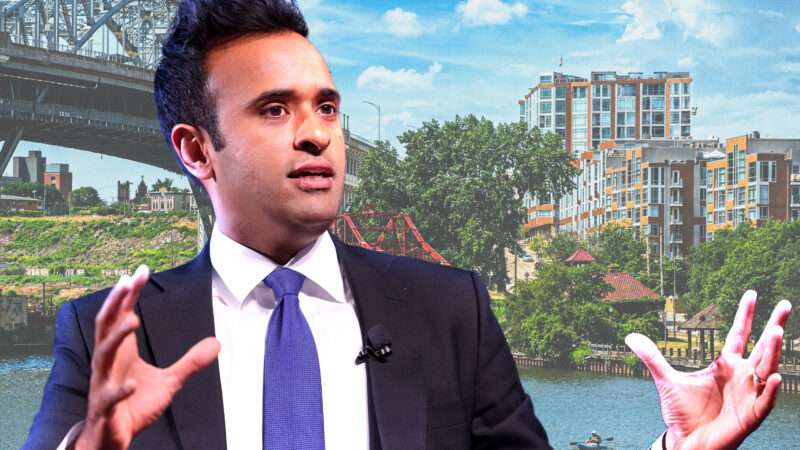
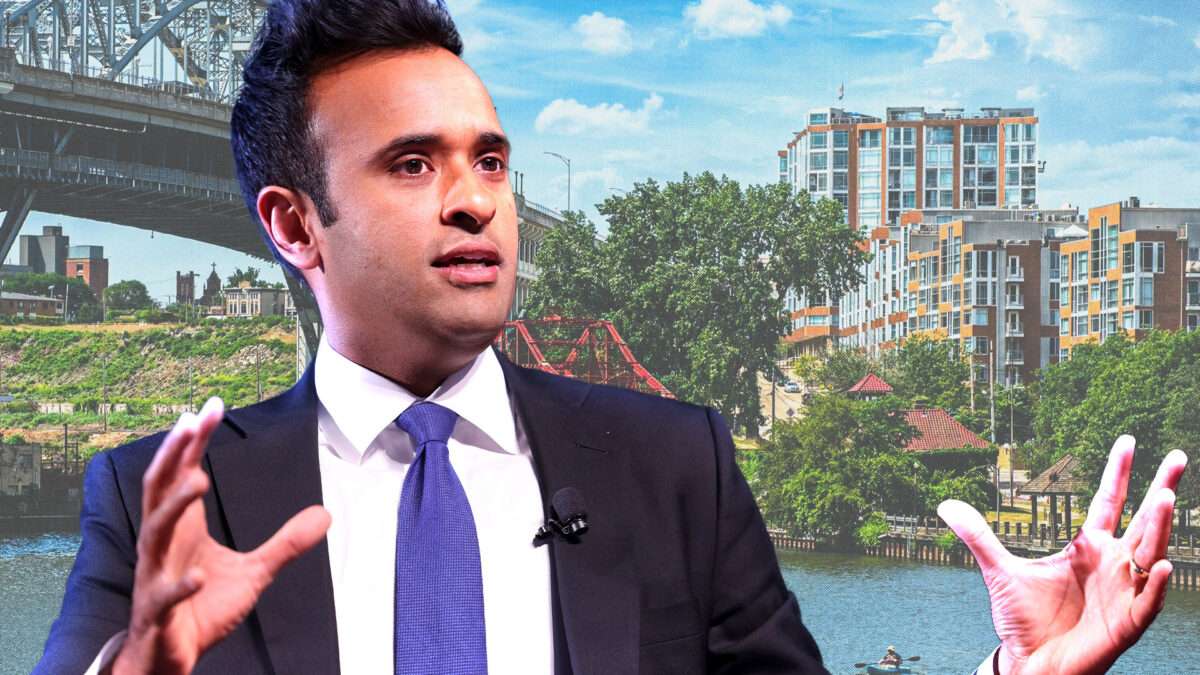
To Avoid Criticizing Trump's Tariffs and War, Vivek Ramaswamy Takes on Data Centers

Vivek Ramaswamy | Gage Skidmore/ZUMAPRESS/Newscom/Kenneth A Sponsler/Dreamstime

When Vivek Ramaswamy ran for president in 2024, he liked to describe himself as a "national libertarian" whose worldview included skepticism of new Middle Eastern wars and support for free trade (provided it wasn't with China). 

In a midterm election season in which voters are increasingly angry about higher prices born of protectionist tariffs and high gas prices caused by a new Middle Eastern war, that would seemingly give Ramaswamy, now running for governor of Ohio, a straightforward story to tell about how he'd bring costs down. 

Unfortunately for the Republican gubernatorial candidate, the person responsible for the tariffs and the war is President Donald Trump, whose support he's counting on to get him over the finish line in a surprisingly close race against Democrat Amy Acton. 

The latest polls show Ramaswamy slightly ahead of Acton, with many voters still undecided. 

Other Republican midterm candidates, most prominently Mike Rogers in Michigan, are escaping this bind by criticizing the tariffs and the war without explicitly naming the president who's responsible for both. 

Ramaswamy has chosen a different tactic: Shift the conversation to other sources of voters' cost-of-living anxiety that can't be directly laid at Trump's feet. 

In the last weeks of this election campaign, Ramaswamy has focused like a laser on two proposals he says will deliver cost relief to Ohio voters. The first is his proposed rollback of homeowners' property taxes. The second is a moratorium on new data center construction. 

Like many Midwestern and Western states, Ohioans' property tax bills have shot up in recent years, driven by a pandemic-era spike in home values. 

That's in turn sparked a full-blown property tax revolt in the state. The Republican-controlled Legislature passed a raft of property tax relief measures in 2025. Activists are also collecting signatures to place a full abolition of taxes on real property on the statewide ballot next year. 

Ramaswamy hasn't endorsed full property tax abolition, but he is promising voters that he will roll back property tax assessments for homeowners to pre-pandemic levels. 

On the data centers, he has staked out a very restrictionist position. 

Ohio is currently one of the leading states for data center development. Pew Research counts 57 projects currently in the pipeline there, attracted by cheap land and a robust power grid. 

The state's data center boom has caused a backlash in rural communities, where voters have objected to data centers' consumption of land and electricity and the special tax incentives some projects have received. 

On the ballot in 10 Ohio localities this November are initiatives that would impose additional restrictions on data center development. 

Ramaswamy has proposed to go further with a statewide moratorium that will remain in effect until the Legislature passes laws that not only require data centers to cover the full costs of the power infrastructure they need, but also provide property tax rebates and free electricity to nearby homeowners. 

Local property tax cuts paired with local reductions in spending would, of course, be well in line with a small government worldview. 

But the residential property tax rollback Ramaswamy has proposed doesn't directly do that. 

Instead, it would reduce property tax revenues and then leave it up to localities to make up for the lost revenue somehow. That could result in spending cuts. 

It could also result in localities shifting tax burdens onto commercial properties, raising non-property taxes (like sales taxes), or relying on the state government for more of their revenues. 

In the former two scenarios, local tax regimes would become more hostile to growth, given that property taxes are considered one of the most "efficient" taxes. In the latter scenario, the link between people who pay taxes and the people who consume taxpayer-funded local services would become more distant.  

Neither is ideal. 

While some data centers in Ohio have received tax subsidies, Ramaswamy's proposed solution is to block new data centers until they're legally required to subsidize their neighbors with free electricity and other community benefits. 

All of that is to say that it's a shame to see Ramaswamy adopt increasingly non-libertarian positions to avoid making critiques of Trump's cost-increasing tariffs and Iran war that would align with his erstwhile "national libertarian" worldview. 

It's ironic, too, that, in trying to avoid making those critiques, Ramaswamy has wound up being more restrictionist on data centers than Trump himself. 

In an August Truth Social post, the president famously urged local communities to "let Data Reign" and welcome data center development. Those that did would become "rich and successful," he predicted. Those that didn't would remain "poor and backward." 

At a rally in Vandalia, Ohio, over the weekend for Ramaswamy and Republican Senate candidate John Husted, Trump reiterated his support for data centers, saying, "We want them. Look, there's so much money to be made for Ohio. You can't just turn them off. They'll go to China."

Rather than criticize the president's statist interventions, Ramaswamy is talking up his own instead. Ohio will be poorer as a result.

The post To Avoid Criticizing Trump's Tariffs and War, Vivek Ramaswamy Takes on Data Centers appeared first on Reason Magazine.

  •  

The Federal Government Collected $5.4 Trillion. It Still Can't Pay Its Bills.

U.S. Capitol in red as money falls around it | Illustration: Nikolai Sorokin/Songquan Deng/Dreamstime

The federal government just closed fiscal year 2026 with a deficit of nearly $2 trillion, according to figures the Congressional Budget Office (CBO) released last Thursday. Only the two pandemic years of 2020 and 2021 were worse. Today, though, there is no recession and no emergency. These enormous budget deficits are the new normal.

The usual response to a deficit warning is that the government just needs more money. It doesn't. Thanks to the remarkable strength of the private sector, federal revenue rose by 3 percent, to more than $5.4 trillion, over the fiscal year. But spending rose by 6 percent, reaching $7.4 trillion.

Some will blame the Supreme Court for striking down most of President Donald Trump's tariffs and forcing the government to issue refunds. But even if Washington had kept the $130 billion in illegal levies, it would cover less than one-tenth of the gap. Tariffs were never a serious revenue source at our insanely high level of spending.

Look at where the money went. Spending on the three main entitlement programs—Social Security, Medicare and Medicaid—grew by 7 percent. That's faster than total spending growth. Defense grew by 5 percent. Interest on the debt rose by 11 percent, exceeding $1.1 trillion. That last figure is the bill for every earlier year of borrowing—years when Washington was sending clear signals that it isn't serious about fiscal responsibility.

If you want to see where such irresponsibility can lead, look at France. The country that big spenders from Paul Krugman to Sen. Bernie Sanders (I–Vt.) have cited as proof that big government is viable and full of upsides is now on the brink of a serious crisis. France's debt equals 120 percent of its gross domestic product (GDP), and interest payments are rising quickly. Slow growth and social unrest aren't helping.

The U.S., of course, has some advantages that France doesn't, largely because we're a country of innovators with a private sector unmatched at creating wealth. Nonetheless, debt that is swelling out of control should still worry us. First, the same anti-wealth and anti-growth forces that brought France to where it is now are gaining popularity here. Second, we too will see debt reach 120 percent of GDP in a few years, and our interest payments are already consuming an alarming share of resources.

A wise Congress would put us on safer footing if only because debt raises interest rates for everyone, from homebuyers to small businesses. This operates as a drag on growth, and hence on wages. In other words, controlling debt should be part of an affordability agenda in the same way as streamlining regulation.

When legislators decide to take affordability seriously, I recommend looking at a September Advancing American Freedom (AAF) report on this topic. Its section on fiscal restraint offers a useful menu of reforms, including targeting the programs that most drive the debt.

Start with Social Security. Under current law, benefits will be cut by roughly 20 percent when the program's trust fund runs dry in the early 2030s. Nobody believes Congress will actually let that happen, but we'd better hope its answer isn't to double down by borrowing the difference between payroll taxes and benefits.

Nor are tax increases an option. The payroll tax meant to fund entitlements is now 12.4 percent of wages. It began at 2 percent when Social Security was first rolled out. It is also the most burdensome tax for many Americans. Enough already. The fixes AAF fellow Rachel Greszler proposes are worth considering: Index the retirement age to life expectancy, use an accurate inflation measure for cost-of-living adjustments, and move gradually toward a flat universal benefit that protects lower-income retirees while ending Social Security's de facto welfare for the wealthiest.

Next is Medicare. More than 40 percent of its financing already comes from general revenue rather than from payroll taxes. The report recommends converting the program to premium support, giving beneficiaries a fixed contribution to spend on traditional Medicare or on competing private plans. It would also raise the eligibility age to 67, matching Social Security, and trim subsidies for well-off seniors. That's a start.

As for Medicaid, the problem is one of pricing. And yet competition based on price—the best cost-control tool—has never been seriously tried. Washington covers 90 percent of the cost of states' expanded Medicaid programs for adults. A state can buy a dollar of spending with just a dime of its own money. Changing the states' incentives would be key here. Implementing risk-adjusted per-capita caps, through which the federal government would give states a fixed amount per enrollee, would do just that. States would pay for their own inefficiencies or would be able to use every dollar they save by becoming more efficient.

The same logic supports returning more welfare programs to states, starting with the federal share of the Supplemental Nutrition Assistance Program. State governments have to balance their budgets in some form.

None of these reforms are painless. But the alternatives will prove far more painful. The U.S. will either continue paying a slow, unlegislated tax called inflation or face a fast, ugly fiscal crisis when bond buyers stop giving Washington the benefit of the doubt.

COPYRIGHT 2026 CREATORS.COM

The post The Federal Government Collected $5.4 Trillion. It Still Can't Pay Its Bills. appeared first on Reason Magazine.

  •  

Even Blue-Collar Workers Have Turned Against Trump's Unpopular Tariffs

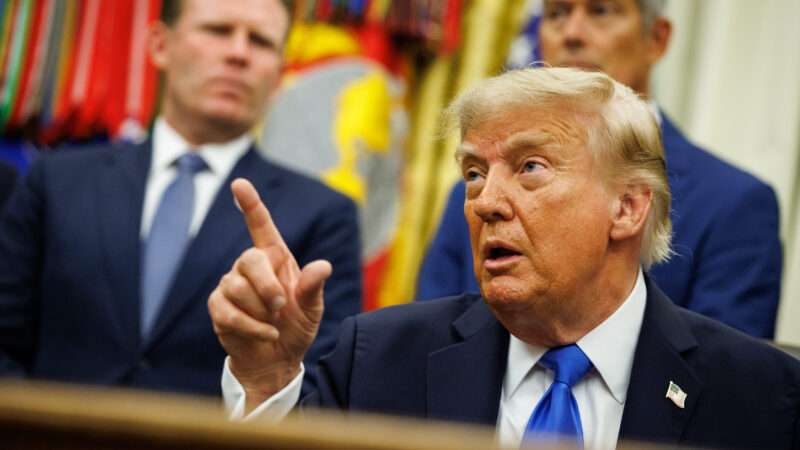
President Donald Trump in the Oval Office | Samuel Corum - Pool via CNP/picture alliance / Consolidated News Photos/Newscom

President Donald Trump promised that his tariffs would usher in a "golden age" by prioritizing the interests of American workers.

Those workers, however, are now turning against Trump's tariffs.

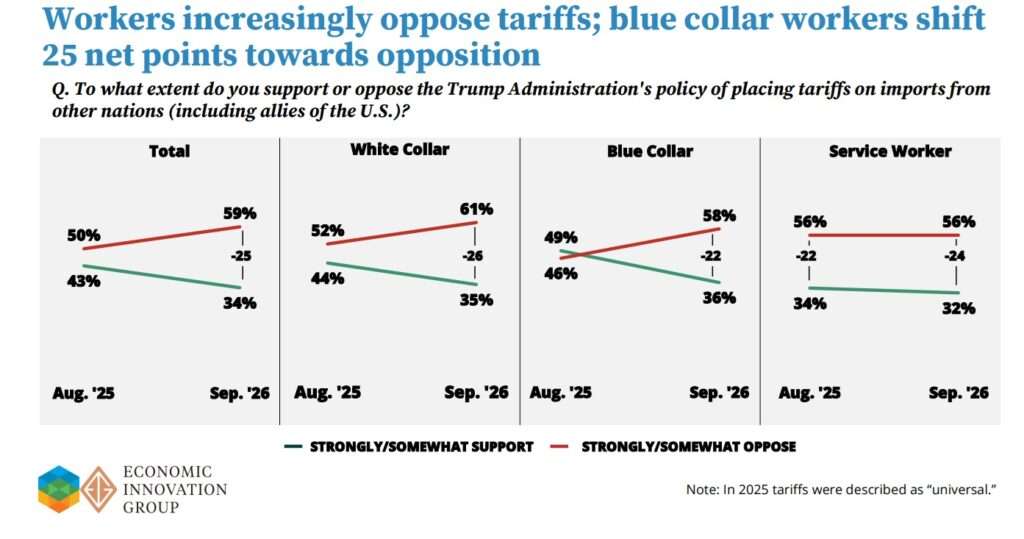
Support for the Trump administration's tariff policies has fallen by 25 percentage points among blue-collar workers over the past year, according to new polling data from Echelon Insights and the Economic Innovation Group (EIG).

A poll conducted by the two groups in August 2025 found that blue-collar workers supported the tariffs by a narrow margin. Now, that same segment of the population has turned decisively against Trump's tariffs: 58 percent oppose them, compared to just 36 percent who support them.

Source: Economic Innovation Group / Echelon Insights (https://eig.org/wp-content/uploads/2026/10/EIG-State-of-the-American-Worker-2026.pdf)

Overall, support for the tariffs has declined from about 43 percent last year to only 34 percent. Opposition to the tariffs has grown from 50 percent to 59 percent. Elsewhere in the same survey, 68 percent of respondents said the tariffs have made the cost of living higher.

It's not hard to figure out why people have turned against the tariffs: They have contributed to rising prices across the economy.

The annualized inflation rate ticked upward to 3.7 percent in September, according to new data from the Bureau of Labor Statistics (BLS). More BLS data released Thursday morning shows that the producer price index, which often operates as a precursor to inflation, is up 6.3 percent over the past year.

America's war with Iran has been a major factor in rising inflation, but the tariffs have played a significant role as well. In a study released last week, the New York Federal Reserve concluded that consumer prices would have declined slightly over the past year if not for the economic effects of the tariffs.

The tariffs have become so unpopular that not even partisanship can save them. "Among GOP-voting workers, only 3 percent select tariffs as their top priority," note Jordan McGillis and John Lettieri, policy experts from the EIG, in their write-up of the poll.

Other parts of Trump's economic agenda are not faring much better. The Trump administration has bought or seized shares of more than 30 private businesses over the past two years—ranging from major firms such as U.S. Steel to small mining companies with few customers. "The federal government's state corporatism is unprecedented," reports the Cato Institute in a new analysis of those deals.

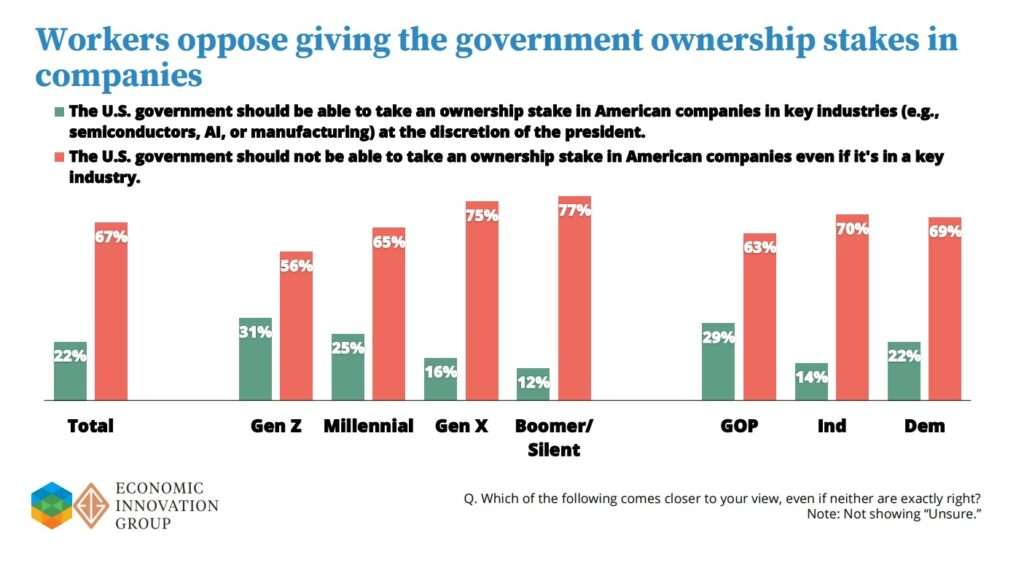
Large majorities of workers across both major parties and all generations said they opposed the federal government taking equity stakes in American companies in the Echelon/EIG poll.

Source: Economic Innovation Group / Echelon Insights (https://eig.org/wp-content/uploads/2026/10/EIG-State-of-the-American-Worker-2026.pdf)

In short: This economic populism sure isn't very popular.

All of this is likely to be a major factor in next month's midterm elections. Regardless of how that shakes out, however, there are lessons to be drawn from this poll for both sides of the political divide.

For conservatives, these polling data should end the tariff experiment. It has proven economically damaging, and it is no longer a political winner (if it ever was).

Remember, the idea to hike tariffs and start trade wars with all of America's biggest trading partners was not some grand plan backed by careful study and thoughtful analysis. It sprung, half-baked, from the head of one man. Yes, there have been various attempts to support, in a post hoc way, Trump's desire for tariffs. All of that can, and should, be easily discarded. There is no reason to allow a lame duck president to continue to set such a politically and economically destructive path for the country.

Undoing the tariffs might also put a meaningful dent in rising prices. That should be a no-brainer after the midterms, no matter which party controls Congress.

On the left, this poll should be a reminder that Americans do not look favorably on the mixing of government and business. Democrats should promise to unwind the "equity stakes" that the federal government has taken under Trump's watch. Heading toward the 2028 presidential cycle, Democrats might want to borrow some old Republican talking points about how government shouldn't be picking winners and losers—they may find that message is still quite popular.

Yes, it's probably right to be skeptical that those things will happen. Trump's efforts to centralize economic power in the executive branch are likely to outlive his presidency—that's how these things always seem to go.

But there is a glimmer of hope here. Americans are soundly rejecting the Trump administration's big government policies.

The post Even Blue-Collar Workers Have Turned Against Trump's Unpopular Tariffs appeared first on Reason Magazine.

  •  

Trump Keeps Coming Up With Legally Dubious Tariff Justifications

Donald Trump | Photo, middle: Geopix/Alamy

When a president starts with a predetermined policy and then goes looking for a statutory pretext to justify it, he is building on shaky ground. President Donald Trump illustrated that point once again in July, when he announced a third round of broad tariffs after his first two attempts ran into legal trouble.

Shortly after taking office in 2025, Trump claimed to have discovered a previously unnoticed delegation of extensive tariff authority in the International Emergency Economic Powers Act (IEEPA), a 1977 law that does not mention import taxes and had never been used to impose them. That claim was rejected by every court that considered it.

Last February, the Supreme Court ruled that IEEPA does not authorize tariffs at all. But Trump had a backup plan: Hours after that decision, he announced another sweeping set of tariffs, this time relying on Section 122 of the Trade Act of 1974.

That provision allows tariffs in response to "fundamental international payments problems" caused by "serious United States balance-of-payments deficits." In May, the U.S. Court of International Trade (CIT) ruled that the new tariffs were illegal because Trump had failed to "identify balance-of-payments deficits within the meaning of Section 122."

Although that decision was stayed pending appeal, Trump's Section 122 tariffs, which were subject to a 150-day statutory limit, expired on July 24. Trump then switched to Plan C, invoking Section 301 of the Trade Act, which authorizes tariffs in response to a foreign "act, policy, or practice" that is "unreasonable or discriminatory" and "burdens or restricts" U.S. commerce.

Trump's Section 301 tariffs supposedly targeted countries that had failed to "impose and effectively enforce a prohibition on the importation of goods produced with forced labor." The alleged offenders included 86 economies that accounted for nearly all U.S. imports.

In separate complaints, the Liberty Justice Center (LJC) and the law firm Akin Gump, which had played leading roles in challenging Trump's prior tariffs, immediately asked the CIT to block the new import taxes. By and large, they noted, the government had failed to explain how the targeted countries had fallen short, how their alleged failures burdened U.S. commerce, or why the new tariffs could be expected to ameliorate the problem they were supposed to address.

The LJC argued that the forced-labor issue was "simply a pretext" for reinstating Trump's "invalidated global tariff regime." It added that Trump's reading of Section 301, like his interpretation of IEEPA, would violate the "major questions" doctrine, which requires clear congressional authorization for policies of "vast economic and political significance."

This was Trump's "third attempt" to "impose essentially the same set of sweeping global tariffs," Akin Gump's lawyers wrote. "The third time's not the charm."

The post Trump Keeps Coming Up With Legally Dubious Tariff Justifications appeared first on Reason Magazine.

  •  

Excluding UK from ‘Made in Europe’ law will hurt entire EU car industry, Mercedes boss warns

Ola Källenius says it will ‘weaken the industry on both sides’ ahead of act intended to counter non-EU competition

Locking the UK out of the EU’s flagship industrial “Made in Europe” legislation would amount to a “deliberate choice” by EU leaders to “hurt” the car industry across the bloc, the head of Mercedes-Benz has said.

Speaking in his capacity as president of the European Automobile Manufacturers’ Association (ACEA), Ola Källenius said such a move would “weaken the industry on both sides”.

Continue reading...

© Photograph: Christoph Steitz/Reuters

© Photograph: Christoph Steitz/Reuters

© Photograph: Christoph Steitz/Reuters

  •  

EU weighs safeguard tariffs as China refuses hybrid car limits

Beijing has rebuffed a European Union request to voluntarily cap hybrid car exports to the bloc, raising the prospect of new, steep EU tariffs on Chinese hybrids, which have so far escaped the duties on pure electric vehicles. China has refused to set quotas on its exports of hybrid electric vehicles (HEVs) and plug-in hybrid […]

The post EU weighs safeguard tariffs as China refuses hybrid car limits appeared first on Asia Times.

  •  

China Warns EU Against New Trade Measures as France and Germany Seek Tougher Tools

China has warned that it will respond if the European Union introduces new trade restrictions targeting Chinese companies or products, as France and Germany push for stronger European instruments to address what they regard as unfair commercial practices.

China’s Ministry of Commerce issued the warning after reports that several EU governments were discussing a mechanism modelled partly on Section 301 of US trade law, which allows Washington to investigate foreign trade practices and impose countermeasures.

Beijing described such an approach as protectionist and unilateral and warned that it could damage continuing negotiations between China and the EU.

“If the European side insists on introducing discriminatory restrictive measures against Chinese companies or products,” the ministry said, China would “resolutely respond” to defend the interests of its industries.

The warning comes as Europe’s trade relationship with China is moving further up the political agenda.

According to the European Commission’s latest EU-China trade figures, EU exports to China were worth €199.5 billion in 2025 while imports reached €559.5 billion.

The goods deficit stood at €359.9 billion, compared with €312.2 billion in 2024.

China remained the EU’s largest source of goods imports and its fourth-largest export market.

Brussels argues that the scale of the imbalance is connected not only to competitiveness but also to state support, market-access restrictions and other structural differences between the two economies.

China disputes that assessment and has repeatedly accused the EU of using industrial and security arguments to justify protectionism.

The argument is already visible in several industries.

The EU imposed countervailing duties on Chinese battery electric vehicles after an investigation concluded that state subsidies were giving Chinese manufacturers an unfair advantage in the European market.

Brussels has subsequently widened its attention to other parts of the automotive industry. Earlier this month, EU Today reported that the EU was considering restrictions affecting Chinese hybrid cars as policymakers looked for ways to contain the growing trade imbalance.

The automotive dispute is important because Europe is simultaneously trying to attract Chinese manufacturing investment.

France and Spain addressed that question during President Emmanuel Macron’s state visit to Madrid.

Macron and Spanish Prime Minister Pedro Sánchez agreed on the need for greater European unity in responding to Chinese competition. They also discussed whether Chinese investors entering strategically important European industries should be required to provide stronger commitments on issues such as technology transfer.

Macron said that companies on both sides of the Pyrenees needed protection when they faced unfair competition and argued that “the only response that works is European.”

France has generally favoured stronger European trade defences.

Germany has traditionally approached the issue more cautiously because major German manufacturers have substantial commercial exposure to China. Increasing competition from Chinese producers, particularly in industrial sectors where German companies were once dominant, has altered the debate.

Reports that Berlin and Paris are now working together on a stronger trade instrument therefore suggest a potentially important shift.

The two countries are said to be considering a European mechanism inspired by the American Section 301 process, although no final proposal has yet been adopted by the European Commission.

EU trade law already provides several instruments.

Brussels can impose anti-dumping or anti-subsidy duties following investigations, use the Foreign Subsidies Regulation to examine state-backed investment and procurement, and deploy the Anti-Coercion Instrument where another country uses economic pressure against the EU or a member state.

The discussion now concerns whether those instruments are sufficient when governments believe a problem extends across industries rather than affecting an individual product.

The debate comes only weeks after EU Today reported that Brussels was preparing additional pressure on Chinese hybrid-car imports, demonstrating how quickly EU-China trade disputes are expanding beyond the original electric-vehicle case.

At the same time, Brussels and Beijing have established a Trade and Investment Consultations mechanism, with workstreams covering trade balances, export controls, intellectual property and World Trade Organisation reform.

China’s Commerce Ministry has warned that introducing tougher measures while those talks continue would damage trust.

That leaves the EU facing two parallel choices: continue negotiations intended to narrow the trade dispute while also developing stronger instruments in case those negotiations fail.

France and Germany are increasingly arguing that Europe needs greater leverage.

Beijing’s response is that using that leverage against Chinese companies would bring countermeasures.

The next stage will depend on whether the Franco-German proposal develops into a formal EU initiative. If it does, the dispute will move beyond duties on particular products towards a broader argument over how Europe intends to manage its economic relationship with China.

  •  
❌