O número de seções eleitorais alteradas entre os 1º e 2º turnos diminuiu para 444 de acordo com dados do Superior Tribunal Eleitoral.
Isso significa que 130 mil eleitores de 22 estados vão votar no dia 25 em local diferente do que votaram no primeiro turno. A maioria dos eleitores afetados estão em Minas Gerais (29.715), Paraná (17.968) e Amapá (11.614).
No sábado, o Tribunal havia divulgado mudança de endereço de 4,3 mil seções. No domingo eram 1.116. Hoje, o número diminuiu mais uma vez. Segundo o TSE, as alterações nos locais de votação são definidas pelos tribunais eleitorais dos estados (TREs), já que a justiça local conhece melhor a realidade de cada zona eleitoral.
O TSE alerta que estão sendo feitos ajustes em relação aos locais de votação, por isso esses números ainda podem mudar.
Dados divergentes
O problema é que os dados do TSE diferem, em alguns casos, dos dados dos TREs. O site do TRE do Tocantins, por exemplo, informa que todos os locais de votação foram mantidos entre o 1º e o 2º turno. Porém, no sistema do TSE constava, até a tarde desta segunda-feira (19), ao menos duas seções alteradas na cidade de Itaguatins, afetando 382 eleitores.
Na dúvida, tanto o TSE como os TREs orientam os eleitores a consultarem, com antecedência, o local de votação. Pelo aplicativo E-título, o eleitor deve acessar a opção "Onde Votar".
The annual Emma Crawford Coffin Races and Festival is returning to Manitou Springs this weekend.
The event, which takes place on October 24, kicks off at 10 a.m. when the Fan Zone and coffin staging begins.
Previous Coverage: Thousands gather in Manitou Springs for 31st anniversary of the Emma Crawford Coffin Races Thousands gather in Manitou Springs for the 31st anniversary of the Emma Crawford Coffin Races
The parade starts at noon followed by the popular coffin races.
Started in 1995, the Manitou Springs Chamber of Commerce held the first coffin races in the nation to honor Emma Crawford, a beloved resident who died in 1891.
According to the events website:
In 1929, after years of harsh winters and spring rains, Emma and her coffin came racing down the mountainside. The young children who happened upon her remains found only the casket handles, a nameplate, and a few bones.
Last year marked the 31st anniversary of the famed event.
Watch KOAA News5 on your time, anytime with our free streaming app available for your Roku, FireTV, AppleTV and Android TV. Just search KOAA News5, download and start watching.
La guerra in Ucraina ha aperto in Italia un malumore che non può più essere liquidata come semplice “stanchezza da guerra”. Da una parte vi è un governo deciso a ...
The reporter, whose award-winning investigation for The Wall Street Journal helped bring down blood-testing startup Theranos, told Business Insider that he liked the documentary. It follows Elizabeth Holmes, the startup's CEO, in the 34 days before she reported to federal prison in 2023.
The film — co-directed by Nathan Fielder and Lance Oppenheim — has inspired a mix of reactions from viewers, ranging from shock to boredom to sympathy for Holmes.
Carreyrou doesn't see that ambiguity.
"The film is a great piece of art, but let's not confuse that art with the underlying facts," he told Business Insider.
It mirrors what he's been writing on X. Carreyrou has been pushing back on people who, he said, had accused him of "missing the point" of the film — namely, that Holmes is unknowable.
"She went after Tyler Shultz and Erika Cheung with everything she had," he wrote, referring to the two company whistleblowers at the center of his 2015 story. "I was threatened with litigation on a daily basis for months on end. It was a ruthless cover-up of a breathtaking fraud, and she was at the controls."
A few readers have taken me to task for “missing the point of the film,” which is apparently that Elizabeth Holmes is unknowable and everything is ambiguous. Here’s my response: She went after Tyler Shultz and Erika Cheung with everything she had. I was threatened with litigation on a daily basis for months on end. It was a ruthless cover-up of a breathtaking fraud, and she was at the controls. Just a little context for those who have forgotten or didn’t follow the original story. By the way, I loved the film. #BestPicture, IMO.
He has also reposted a Monday morning interview with Schultz, who said that Holmes "knows that she did something wrong," and alleged that, during the film, she brought out a different device when she was asked to show Theranos' hardware.
The documentary does not retrace every detail of the Theranos scandal or the reporting that exposed it. Instead, it puts viewers inside Holmes' home as she insists that she was wrongly convicted.
For audiences, it's raised bigger questions about performance, self-deception, and whether the film's subject can ever be fully believed.
Carreyrou has told Business Insider that if audiences "have questions afterward or want more context about the Theranos saga, I would encourage them to read my book."
He ended his X post by saying he "loved the film." He also gave a nod to its early Oscar buzz.
Dados do Tribunal Superior Eleitoral (TSE) mostram que Distrito Federal, Acre, Rio de Janeiro, Roraima e Santa Catarina não terão alterações nos locais de votação no segundo turno.
No entanto, Tocantins e Rio de Janeiro têm divergências entre as informações do TSE e dos tribunais regionais.
Enquanto o Tribunal Regional Eleitoral do Tocantins informa que não houve mudança de endereço de votação entre o primeiro e o segundo turno, o TSE aponta mudança em duas seções na cidade de Itaguatins.
Por outro lado, o Tribunal Regional Eleitoral do Rio de Janeiro indica uma alteração em local de votação no bairro de Brás de Pina, na zona norte da capital fluminense (seções 123, 124, 125, 126 e 127 da 188ª Zona Eleitoral)., enquanto o TSE informa que no estado não teve mudanças de endereço de votação entre os dois turnos das eleições 2026.
Alterações
Os números oficiais do TSE desta segunda-feira (19) apontam mudanças no endereço de 444 seções eleitorais em 22 estados do país. Isso significa que 130 mil eleitores vão votar no dia 25 em local diferente do que votaram no primeiro turno.
A maioria dos eleitores afetados estão em Minas Gerais (29.715), Paraná (17.968) e Amapá (11.614 ).
De sábado (17) até esta segunda, o TSE alterou duas vezes o número de locais de votação que terão mudança de endereço em todo o país. O Tribunal explica que as alterações são definidas pelos tribunais eleitorais dos estados (TREs) e que os números ainda podem mudar.
Na dúvida, tanto o TSE como os TREs orientam os eleitores a consultarem, com antecedência, o local de votação. Pelo aplicativo E-título, o eleitor deve acessar a opção “Onde Votar”.
O Tribunal Superior Eleitoral (TSE) informou nesta segunda-feira (19) que 444 seções eleitorais terão alteração de endereço de votação entre o primeiro e o segundo turno das eleições de 2026.
Isso significa que 130 mil eleitores de 22 estados vão votar no dia 25 em local diferente do que votaram no primeiro turno. A maioria dos eleitores afetados estão em Minas Gerais (29.715), Paraná (17.968) e Amapá (11.614 ).
No sábado, o Tribunal havia divulgado mudança de endereço de 4,3 mil seções. No domingo eram 1.116. Hoje, o número diminuiu mais uma vez. Segundo o TSE, as alterações nos locais de votação são definidas pelos tribunais eleitorais dos estados (TREs), já que a justiça local conhece melhor a realidade de cada zona eleitoral.
O TSE alerta que estão sendo feitos ajustes em relação aos locais de votação, por isso esses números ainda podem mudar.
Dados divergentes
O problema é que os dados do TSE diferem, em alguns casos, dos dados dos TREs. O site do TRE do Tocantins, por exemplo, informa que todos os locais de votação foram mantidos entre o 1º e o 2º turno. Porém, no sistema do TSE constava, até a tarde desta segunda-feira (19), ao menos duas seções alteradas na cidade de Itaguatins, afetando 382 eleitores.
Na dúvida, tanto o TSE como os TREs orientam os eleitores a consultarem, com antecedência, o local de votação. Pelo aplicativo E-título, o eleitor deve acessar a opção “Onde Votar”.
After two decades of defeats in rural America, Democrats are suddenly putting up a fight in farm country. The party is running competitive Senate races in Iowa, Kansas and other farm states, as well as House races in heavily rural districts that could help it regain control of Congress in January.
Credit (or blame, depending on your party) for this reversal of fortune lies with President Donald Trump’s tariffs and his war with Iran, which have battered farmers and pushed the rural economy into crisis. The Department of Agriculture’s analysts expect farmers’ net incomes to decline by 5.5% this year, as costs rise and receipts fall. The National Agricultural Law Center’s tally of farm bankruptcies jumped 45% last year, and is on pace to rise another 11% in 2026.
Higher costs for processed-food companies also have punishing consequences in rural communities more broadly.
Three different impacts have simultaneously hammered farmers and the agriculture industry.
First, the Trump administration’s tariff hikes raised costs. The president slapped import taxes as high as 50% on a range of products including hoes and plows, barbed wire, screws, wood, pesticides, irrigation equipment and harvesters. As a result, just about everything farmers do — from putting up a fence to spraying for weeds and bugs to harvesting crops — costs more. That has helped dent sales of farm equipment, according to Creighton University’s September Rural Mainstreet Index, meaning less business for local John Deere and Bobcat dealers this year and lower farm productivity in the years ahead.
Higher costs for processed-food companies also have punishing consequences in rural communities more broadly. Last year, after the Commerce Department put tariffs of 50% on tin cans, Del Monte closed its cannery in Modesta, California. Opened over a century ago, the cannery had been the main buyer of California peaches and pears. Its collapse cost 600 jobs at the cannery, vaporized $500 million in annual Central Valley farm sales and forced local farmers to uproot 420,000 peach trees this summer.
Second, U.S. farm exports have struggled as trade partners punch back. America is the world’s top agricultural exporter — 20% of farm receipts come from sales abroad. Last year’s $176 billion in exports included 156 tons of California grapes shipped to sunny Fiji in the South Pacific, and $10,000 worth of biscuits sent to the North Atlantic’s stormy Faroe Islands. This success has helped rural America prosper, but it also makes our farmers uniquely vulnerable targets for retaliation.
Three countries — China, Canada and Mexico — buy half of America’s annual farm exports. Sales to China fell 66% in 2025, with soybean shipments alone collapsing, from $12.6 billion to $3.0 billion, and have only somewhat rebounded during this year’s tariff “truce” with Beijing. Thanks to Trump’s mystifying economic assault on Canada, fresh produce sales to our second-biggest ag market are down 10% this year, while wines, beer and liquor have fallen by two-thirds.
The Republican Party’s hold on politics in rural America has shaped policy, government and law for 20 years. Trump’s decision to upend the farm economy has shaken it.
Third, this spring came Trump’s decision to launch a war with Iran. The consequent halt to shipping through the Strait of Hormuz first spiked global fertilizer prices — up 20% from when the president was inaugurated — and then hit diesel fuel even harder. Farmers need diesel to run tractors, harvesters and irrigation equipment; the trucking firms that move their grain and produce to market use it too. Diesel now costs $6.32 per gallon, up $2.50 from a year ago. The surge in normal gasoline prices hasn’t helped either: As Federal Reserve governor Lisa Cook recently noted, transport accounts for a quarter of rural household expenses.
Trump’s policies have crunched agriculture in less direct ways, too. Both the tariffs and the Iran war have pushed up inflation, forcing the Fed to keep interest rates high — a major burden on farmers who borrow heavily to finance their supplies every year.
The administration’s response has been a series of Band-Aids, with improvised emergency aid packages culminating in $12 billion in transfers to farmers at the end of last year. But as rising bankruptcies show, these measures haven’t healed the wounds the administration’s policies have inflicted.
I don’t want to exaggerate the rural pickup opportunities for Democrats this year. Republicans control the vast majority of House districts dependent on agriculture, and will likely continue to do so after this midterm. The same goes for Senate seats for heavily rural states in the Great Plains and the South.
Still, to hazard an agriculture metaphor, some seeds of change might be sprouting. The Republican Party’s hold on politics in rural America has shaped policy, government and law for 20 years. Trump’s decision to upend the farm economy has shaken it. This doesn’t mean Democrats have yet won the affection of farm country voters. But they have their best opening in decades to win a hearing and, once in government, to act on the rural crisis. That means repealing Mr. Trump’s tariffs, stabilizing relations with Canada and Mexico, and passing the farm bill this administration has abandoned, which could have helped modernize rural infrastructure and restore nutrition programs that benefit low-income families and farmers alike. That might begin changing the political landscape for years to come.
Samuel Alito was the only Supreme Court justice on Monday to signal that he wanted to help Missouri revive a restriction for sex offenders on Halloween.
The high court rejected review of that case and others on its order list announcing the latest actions in pending appeals. It takes four justices to grant review of a petition, and most denials pass without comment from any of the justices, which makes even an unexplained notation like Alito’s significant. The list only said that he “would grant” the state’s petition, without explaining why.
Although justices sometimes explain their disagreements, they don’t always do so. In any event, that Alito stood alone here is unsurprising. He generally backs law enforcement and has split from his colleagues in other First Amendment disputes.
The state sought Supreme Court review after a lower court struck down a law that required registered offenders to post signs that say: “No candy or treats at this residence.”
In the petition the justices denied Monday, Missouri asked them to take the case to settle what it said is a nationwide divide over whether sex-offender notifications unconstitutionally compel speech under the First Amendment.
The state called the rule crucial to enforcing its prohibition on sex-offender participation in Halloween “because it helps prevent children from approaching sex offenders’ doors and assists police in detecting sex offenders who (like Respondent) unlawfully participate in Halloween.”
The respondent to the petition in this case is Thomas Sanderson. Before he was convicted of a sex offense in 2006, he and his family had consistently put on elaborate Halloween displays. Missouri passed the law in question while he was incarcerated. When he was released in 2008, he was told that he was “grandfathered in” and could continue the annual displays. Apparently it was not an issue until 2022, when he was reported to the police and charged with violating the law.
Upholding a lower court ruling favoring Sanderson’s constitutional challenge, the U.S. Court of Appeals for the 8th Circuit said there was “insufficient evidence to support the State’s assertion that the sign mandate is the least restrictive means of achieving its goals.”
Successfully opposing review at the Supreme Court, Sanderson said there was no real division to resolve among the lower courts. He said that the appeals court in his case “applied settled First Amendment doctrine to strike down an unusual speech compulsion,” and that “no court of appeals or state high court disagrees with that ruling.”
The decision affects 163,020 citizens residing abroad registered in the Electoral Census of Absent Residents (CERA).
Last Monday, the Spanish Supreme Court upheld the precautionary suspension of voting rights for some citizens who acquired Spanish nationality through the Democratic Memory Law, which generated concern among descendants of Spaniards residing in Cuba.
The measure maintains restrictions on registration in the CERA for individuals who obtained nationality under an instruction signed in October 2022 by Sofia Puente, then Director General of Legal Security and Public Faith.
The decision does not affect all beneficiaries of the Democratic Memory Law, but rather 163,020 citizens residing abroad registered in the CERA. It also does not restrict the right to vote for those who obtained nationality and subsequently established their residence in Spain.
The Democratic Memory Law allowed children, grandchildren, and other descendants of Spaniards who lost or renounced their citizenship as a consequence of exile for political, ideological, or other reasons stipulated in the legislation to obtain Spanish nationality.
The now-challenged instruction established a presumption of exile for Spaniards who left the country between July 1936 and December 1955, provided they could prove their departure from Spain during that period.
The strong expression of support for #Cuba at the @UN today sends an unmistakable message: no U.S. political maneuver can conceal the devastating humanitarian impact of the blockade and energy siege on our people.
Estela Marina Perez, president of the Association of Descendants of Spaniards Around the World (ADEM), pointed out that around 90% of nationality applications were based on this instruction, especially in countries like Cuba.
ADEM filed an appeal against the precautionary measures and argues that the suspension of voting rights harms people who obtained nationality through procedures officially approved by the Spanish State.
However, Perez stated that among naturalized citizens residing in Cuba, the main concern is not the inability to vote, but rather the possibility that a future ruling could invalidate the instruction that facilitated thousands of applications.
The ADEM representative warned that if the Supreme Court were to conclude that this instruction was irregular, numerous naturalization processes already granted or still pending could be affected, generating uncertainty among thousands of descendants of Spaniards abroad.
Unrest across eight countries reveals a growing working-class rejection of public spending cuts.
Across Europe, a widespread wave of public protests and labor strikes unfolded during September and October 2026. Demonstrations took place in major urban hubs across France, Belgium, Italy, Albania, Greece, Spain, Portugal, and Germany.
While individual mobilizations emerged from specific domestic triggers, the overarching unrest reflects a shared socioeconomic environment characterized by declining purchasing power, public budget austerity, rising energy prices, and real estate speculation.
The economic backdrop of late 2026 includes sustained structural pressure on working-class households. Energy market shifts driven by international conflicts significantly escalated fuel and electricity costs across the continent, directly inflating the cost of basic consumer goods.
In urban centers, market-driven housing policies and real estate deregulation led to steep increases in residential rents, outstripping wage growth and increasing housing insecurity for young workers and low-income families.
Mainstream institutional coverage frequently characterizes these events through a lens of isolated public order disturbances or temporary economic grievances.
Labor organizations, tenant unions, student groups, and neighborhood alliances have increasingly framed their demands around public resource protection, wage indexation, market regulation, and social welfare preservation.
Protests in Belgium escalate into clashes with Police
🔻 Protests by student and school groups in Belgium over rising education costs and restricted access to higher education turned violent in central Brussels and the city of Liège. Police used tear gas and water cannon to… pic.twitter.com/Nm32hPzgvR
Albania: The Vjosa-Narta Resistance and Sazan Island Mobilizations
In Albania, mass demonstrations began in May 2026 following public controversy surrounding large-scale real estate and luxury tourism developments along ecologically sensitive coastal zones, related to the family of United States President Donald Trump.
Known as the Flamingo Revolution, the protests were initially triggered by foreign investment proposals backed by international private equity firms, including United States-based entities.
These proposals targeted protected areas in the Vjosa-Narta lagoon delta and Sazan Island, a former military territory off the coast of Vlorë.
The movement escalated after an incident on May 30, 2026, when private security personnel physically removed local environmental activists at a development site in Zvërnec.
By June, demonstrations expanded from coastal municipalities into the capital, Tirana. Organized primarily by environmental groups, university student assemblies, and grassroots youth coalitions, the protesters demanded an immediate halt to coastal land privatization, the enforcement of environmental protections under European Union standards, and the resignation of Prime Minister Edi Rama.
On June 9, 2026, tens of thousands gathered in central Tirana. In response, Prime Minister Edi Rama publicly dismissed the critique regarding foreign capital involvement, stating in June that the international scrutiny was primarily driven by high-profile political names associated with the investment project rather than environmental policy.
Throughout July and August 2026, daily civic actions maintained a continuous presence in Tirana, marking 100 consecutive days of anti-government demonstrations by September 8, 2026. By mid-September, the focus expanded as university and high school student assemblies joined the broader movement to protest rising living costs, tuition increases, and systemic public corruption.
Tensions culminated between October 13 and October 18, 2026, when thousands of demonstrators assembled outside the Ministry of Education and Prime Minister Rama’s offices. Clashes erupted between protesters and state security forces, leading to the deployment of tear gas and water cannons by law enforcement.
Official police reports confirmed over 160 detentions and nearly 400 individuals charged following widespread civil disobedience and public building blockades in central Tirana.
Massive protests in France against the high cost of living and the deterioration of public services. pic.twitter.com/H3FUK6kcvC
Spain: The Pensioner Eviction and the National Housing Crisis
In Spain, social unrest escalated rapidly on September 21, 2026, surrounding the national housing crisis. On September 23, 2026, police enforced the court-ordered eviction of María del Carmen “Maricarmen” Abascal, an 87-year-old resident in Madrid, following a legal dispute with property investors.
By September 30, 2026, housing collectives and the Madrid Tenants’ Union (Sindicato de Inquilinas e inquilinos de Madrid) established a continuous protest encampment in Madrid’s Puerta del Sol, which grew to over 1,200 tents.
Similar encampments emerged in Barcelona’s Plaça de Catalunya and Málaga’s Plaza de la Constitución. According to data from the Youth Council of Spain, average residential rent prices had reached €1,176 per month, absorbing roughly 98.7 percent of the average young worker’s salary following a decade of steady price increases.
Protesters demanded an immediate legal cap on rent prices, a total ban on short-term vacation rentals, the expropriation of residential housing units owned by private investment funds, and the passage of strict tenant protection laws.
The central government headed by Prime Minister Pedro Sánchez presented two urgent decree-laws proposing a ban on evictions for vulnerable residents until 2030 and a two-year extension on existing leases.
However, on October 2, 2026, the Spanish Congress rejected the legislation following opposition votes from the People’s Party, Vox, and Together for Catalonia (Junts). Opposition spokesperson Cuca Gamarra argued that affordability could only be achieved through increased residential construction, while Junts spokesperson Míriam Nogueras stated the decree would create legal market uncertainty. In contrast, tenant union representatives called for nationwide general mobilizations to enforce housing rights.
📌KNE: Victory for the struggle of the school students in France! 🔴“Victory for the struggle of the school students in France!”, emphasises the Press Office of the Central Council of KNE in a statement on the large-scale student protests, noting… 🔗https://t.co/sxtH89fNp0…
— International Relations Section of the CC of KKE (@intern_kke) October 5, 2026
France: Educational Strikes and Fuel Price Mobilizations
In France, a distinct wave of social unrest began on September 15, 2026, sparked by sharp increases in retail fuel costs. Driven by regional maritime supply disruptions and international market volatility, average diesel prices in France reached €2.37 per liter, nearing historical highs.
Initial blockades were established by transport workers, agricultural workers, and commercial fishermen who obstructed access to major fuel depots in Frontignan and port facilities in Nice and Sète.
This economic disruption coincided directly with public sector labor actions in secondary and higher education.
On September 18, 2026, teaching staff and suburban education workers across the Île-de-France region initiated strikes over class overcrowding, wage stagnation, and severe administrative budget reductions. Student assemblies subsequently blockaded high schools and university campuses in Paris, Lyon, and Marseille.
The movement saw a broad convergence of trade unions, including the Confédération Générale du Travail (CGT) and Solidaires, along with student organizations and former Gilets Jaunes (Yellow Vests) networks.
The protesters demanded the immediate indexation of wages to current inflation rates, increased state spending on education and healthcare, and emergency price caps on petroleum products.
In response to the growing disruptions, Prime Minister Sébastien Lecornu announced on September 16, 2026, that the government would increase state fuel subsidies to the maximum allowable limit under European Union rules.
When protests continued into October, the government released 10 million barrels of strategic diesel reserves to stabilize market supply, while law enforcement authorities deployed heavy riot control measures, leading to thousands of detentions nationwide.
Zakharova calls out Macron's double standard on protests
Russian MFA spokeswoman says Macron demands "uncompromising" crackdowns on French rioters while the West lectures others on "human rights."
As Limoges City Hall burns, Zakharova notes: the people attacking Europe aren't… pic.twitter.com/mcwYHHfFav
Escalation Across the Mediterranean: Greece and Portugal
Greece: Public Sector Strikes and Anti-Privatization Mobilizations
In Greece, social mobilizations accelerated on September 5 2026, driven by rising electricity tariffs, real estate inflation, and persistent wage stagnation.
The unrest gained momentum following coordinated labor actions organized by the All-Workers Militant Front (PAME) and supported by major public sector confederations, including the Civil Servants’ Confederation (ADEDY).
On September 28, 2026, nationwide strikes disrupted public transport, maritime ferry connections between the mainland and Aegean islands, and municipal services.
In Athens, over 45,000 demonstrators marched toward Syntagma Square in front of the Hellenic Parliament. Student assemblies from the National Technical University of Athens and the National and Kapodistrian University of Athens joined the marches, blocking central thoroughfares.
Protesters focused their demands on structural economic reforms, including:
• The immediate restoration of collective bargaining rights dissolved under previous austerity frameworks.
• Strict state price controls on essential consumer goods and electricity tariffs.
• Increased public funding for higher education and healthcare infrastructure.
• Direct wage indexation to compensate for post-2022 inflationary losses.
Addressing parliament in late September, Prime Minister Kyriakos Mitsotakis defended the administration’s fiscal stance, stating that government policy must maintain strict fiscal discipline to ensure sovereign debt stability.
📌Dimitris Koutsoumbas, GS of the CC of the KKE, on the youth protests 🔴In Spain, people are taking to the streets becuase they are being evicted from their homes. In France, because they’re being denied an education. In Greece, students are setting up tents in Syntagma Square… pic.twitter.com/qO5UR3LWoG
— International Relations Section of the CC of KKE (@intern_kke) October 15, 2026
Portugal: The Housing Dignity Movement (Vida Justa)
In Portugal, demonstrations expanded across major urban centers during the first week of October 2026. Catalyzed by the civil movement Just Life (Vida Justa) alongside tenant rights group Door to Door (Porta a Porta) and university student unions, tens of thousands gathered in Lisbon, Porto, Coimbra, and Faro.
The central issue driving the protests was real estate speculation and the expansion of short-term tourist accommodations, which had led to significant residential displacement in urban neighborhoods.
According to national statistical reporting, residential property prices in Lisbon had increased by 12.4 percent year-over-year by mid-2026, while median national wages remained under €1,050 per month.
On October 3, 2026, demonstration columns marched along Avenida da Liberdade in Lisbon toward the Assembly of the Republic. Speakers at the rally called for immediate state intervention to secure affordable living conditions, demanding:
• An immediate freeze on residential lease renewals and rent price caps indexed to local wage levels.
• The mandatory revocation of tax incentives granted to non-resident foreign real estate investors.
• Substantial state investment in public housing construction.
• An increase in the national minimum wage to €1,000 per month to offset basic living expenses.
Government representatives pointed to existing tax relief programs for young buyers, but grassroots spokespersons rejected these measures as inadequate against systemic market speculation.
Convergence and Expansion: Germany, Italy, and Belgium
Germany: Heating Cost Protests and Urban Rent Freezes
In Germany, demonstrations gathered force across major industrial and urban regions in mid-October, led by trade union factions, tenant associations (Mieterverein), and progressive youth organizations.
The mobilizations were prompted by public sector wage negotiations and sharp increases in seasonal municipal heating and gas bills following regional energy supply realignments.
Protests took place in Berlin, Leipzig, Cologne, and Hamburg. Demonstrators assembled at the Brandenburger Tor in Berlin, calling for:
• Federal legislative caps on natural gas and district heating charges.
• A nationwide five-year freeze on residential rents in cities exceeding strict vacancy limits.
• Higher public investment in municipal transport networks and social housing initiatives.
• Wage increases for public sector employees above the annual core inflation rate.
Federal officials acknowledged the economic burden placed on households, but emphasized that national budgetary constraints limited further large-scale energy price subsidies.
🇪🇸🔥 #MADRID – The Madrid teachers' demonstration, on the first day of the call for an unlimited strike, links up with the encampment at Plaza del Sol – who have been there since late September 2026 for the right to housing, against tenant evictions, against the surge in prices…
Italy: The “Italia in Piazza” General Strike and Cost-of-Living Mobilization
In Italy, social tension culminated on October 17, 2026, in a coordinated general mobilization organized under the banner “Italy in the Square” (Italia in Piazza). The action was spearheaded by grassroots trade unions, including the Unione Sindacale di Base (USB) and COBAS, alongside student collectives and housing rights coalitions.
Demonstrations affected major urban centers, including Rome, Milan, Turin, and Naples. In Milan, an estimated 60,000 people marched through the city center, resulting in the temporary suspension of public transit lines and commercial activity.
Protesters cited declining real wages, cuts to basic social protection mechanisms, and rising utility prices as the primary drivers of the mobilization.
Key demands raised by Italian protest organizers included:
• An immediate statutory minimum wage of €10 per hour.
• The automatic reintroduction of wage indexation tied to inflation metrics (scala mobile).
• Increased public funding for national healthcare (Servizio Sanitario Nazionale) and public transit systems.
• A moratorium on residential evictions involving primary residences for low-income households.
Prime Minister Giorgia Meloni issued a statement from Rome, characterizing the disruptions as politically motivated actions designed to destabilize public order during delicate national budget negotiations.
MILAN RIOTS 🙏🔥 🇮🇹
Milan is experiencing weekend unrest that began as cost-of-living protests and escalated into looting, vandalism, and clashes with police.
On Saturday and Sunday (17–19 October 2026), demonstrations in Milan and other northern Italian cities (including Turin… pic.twitter.com/GuQVFDoahE
Belgium: Public Service Strikes and Educational Budget Mobilizations
Simultaneously, on October 17, 2026, Belgium experienced significant public sector disruptions centered in Brussels and Liège. Organized by joint trade union fronts (FGTB/ABVV and CSC/ACV) in coordination with secondary and higher education student unions, the actions brought together public transport operators, municipal sanitation staff, and academic workers.
In Brussels, thousands of demonstrators gathered near the European Quarter, marching toward the federal parliament building. The movement focused on rising urban living costs and proposed structural spending cuts to secondary and university educational systems.
Protesters demanded:
The full preservation and enforcement of Belgium’s automatic wage indexation system across all employment sectors.
Increased federal budget allocations for public education, student housing, and public transit.
Legislative action to curb commercial energy price speculation and residential real estate inflation.
Federal government spokespersons stated that maintaining current fiscal trajectories was necessary to adhere to European Union public debt standards, while indicating a willingness to continue sector-specific labor dialogue.
Institutional Reactions and State Repression vs. Protesters’ Demands
As demonstrations converged across the European continent through mid-October 2026, state authorities responded with a combination of security deployments, judicial actions, and public condemnations.
Government officials framed the widespread public disruptions as threats to political stability and fiscal order, while protest coalitions emphasized that state actions prioritized debt constraints and elite economic interests over the material needs of the population.
In France, the executive branch adopted an uncompromising stance. President Emmanuel Macron publicly criticized what he described as “unbridled violence” following the escalation of high school blockades, fuel port disruptions, and urban demonstrations.
Interior Ministry directives led to the widespread deployment of specialized CRS riot control units, water cannons, and tear gas in Paris, Lyon, Marseille, and Limoges.
Law enforcement agencies reported making between 1,800 and 2,400 detentions nationwide by mid-October, with human rights monitoring groups and legal collectives expressing concern over indiscriminate police tactics, pre-emptive arrests, and severe injuries sustained by secondary school students.
In Southern Europe, local administrations similarly sought to delegitimize the protest movements. In Italy, Prime Minister Giorgia Meloni’s government characterized the “Italia in Piazza” general strike as a politically motivated attempt by opposition factions to destabilize the nation during crucial state budget negotiations.
Police forces in Milan and Rome deployed water cannons and heavy cordons to clear key arterial roads and transit hubs blocked by union members and youth assemblies. In Albania, Prime Minister Edi Rama argued that persistent anti-government and student demonstrations—initially sparked by the “Flamingo Revolution” against coastal real estate privatization in Sazan and Vjosa-Narta—endangered the country’s economic integration and accession standing with the European Union.
Albanian authorities utilized water cannons and tear gas against university student blockades in Tirana, leading to dozens of detentions and criminal charges.
Across Spain and Portugal, state responses highlighted severe institutional divisions over economic reform. While Spanish local police enforced court-ordered evictions in Madrid and cleared public squares, parliamentary opposition parties blocked proposed national lease extensions and eviction bans.
In Portugal, government spokespersons maintained that market-based housing strategies and tax incentives for foreign buyers were necessary to attract capital, directly rejecting the Vida Justa movement’s demands for immediate rent controls and foreign investment caps.
From Localized Grievances to Pan-European Class Solidarity
What began as distinct domestic actions, resistance against speculative real estate projects on Albania’s protected coastline, outrage over elderly evictions and surging rents in Spain, and secondary school labor strikes over state underfunding in France, rapidly converged into a interconnected continental mobilization.
This convergence reflects shared structural drivers: the systematic erosion of real wages, the commodification of urban housing, the decline of essential public services under sustained fiscal austerity, and the compounding impact of energy inflation.
Across national borders, working-class households, student coalitions, and independent trade unions have consistently targeted the policy frameworks that prioritize fiscal deficit targets and private asset protection over public welfare and living standards.
The organizational strategy of the autumn 2026 movements highlights a shift in popular mobilization methods. By utilizing decentralized communications, student assemblies, neighborhood collectives, and grassroots trade union alliances, protest networks frequently bypassed established political parties.
This organizational horizontalism enabled rapid, cross-sector coordination—demonstrated by the simultaneous national strikes and urban blockades in France, Italy, Belgium, and Portugal on October 17, 2026.
As winter approaches, the continued alignment of labor unions, housing organizations, and youth movements suggests that Europe’s autumn of discontent may mark the beginning of a sustained, pan-European struggle for structural economic reform, market regulation, and social welfare preservation.
Sources: TeleSUR – Al Jazeera – Democracy Now – BBC – DW – France 24 – EFE – AFP – AP – The guardian – El País – El Mundo – La Radio del Sur – La República – RTVE – Xinhua – CGTN – Press TV – Anadolu Agency – RT – TRT World
PHOENIX — Of the litany of campaign promises President Donald Trump made on the trail, few caught on with his supporters the way his promises about immigration did. But when it comes to the president’s targeting of undocumented immigrants, the Latino voters who helped catapult the president to victory in 2024 have noticed that the Department of Homeland Security is not only targeting “the worst of the worst.”
Jesús Cardiel, 73, from Surprise, Arizona, said he typically votes Republican because the party most aligns with his beliefs on abortion. Cardiel believes Trump’s immigration crackdown will cost him with Latino voters in these midterm elections.
“Instead of the promise he made to deport only those who were a threat to the people, he’s even deporting people who are completely innocent, and that’s going to affect us at the polls,” he added.
Many Latinos aren’t inclined to vote for him now that the elections are coming up.”
—Jesús Cardiel
Cardiel’s instinct that the president’s immigration crackdown is far from focused on the “worst of the worst,” as the administration likes to describe those it’s rounding up, is borne out by the numbers.
The Deportation Data Project, a joint research venture from UCLA and UC Berkeley, found that as of July 2026, 73.5% of those arrested and booked by Immigration and Customs Enforcement had no criminal convictions. Of the others, 24.8% had been convicted of a nonviolent crime, while only 1.6% of those arrests involved undocumented immigrants convicted of a violent crime, according to the analysis.
But talk to Trump’s MAGA base — like those who waited hours for him to speak at a rally in Bullhead City, Arizona, last Wednesday — and many of them remain smitten with the way ICE raids have been going.
Trump rally in Arizona.MS NOW
“They’re doing what they need to do,” said Deanne McCarter, 64, a three-time Trump voter from Lake Havasu City, who attended Trump’s rally in Arizona last week. Asked whether she believes ICE has been too aggressive after shooting undocumented immigrants in Austin, Texas, and New York City in recent months, McCarter was convinced they weren’t.
FAFO”
—Deanne McCarter
“FAFO,” said the Trump superfan, using an abbreviation with an expletive that means “[mess] around, find out.” “I mean, I’m sorry, but that’s the way that it is.”
Peggy Miller, a retired nurse and three-time Trump voter from Bullhead City, also expressed no qualms about ICE shooting people in the streets.
It is unfortunate that people are in the wrong place where they should not be.”
—Peggy Miller
“It is unfortunate that people are in the wrong place where they should not be,” said Miller, 67.
“They should not have been doing what they were doing,” she added.
Miller and McCarter’s approval of Trump’s approach to immigration reflects broader trends.
But that enthusiasm has disappeared when it comes to the president’s support among the Latino community, which went for the president in historic numbers in 2024.
According to a new NBC News/Telemundo poll from earlier this month, Trump has a 27% approval rate among Latino voters. And 69% of those surveyed disapprove of his handling of immigration.
Unai Cutino is a 45-year-old HVAC employee who voted for Trump in each of the last three presidential elections. Now, he’s got buyer’s remorse.
“I regret it. I had so much hope that he promised so many things, and there’s nothing to show for it,” said Cutino, who is from Phoenix. He said the immigration crackdown, which has swept through Arizona’s capital in recent months, has been “very aggressive.”
This presidency always benefits the powerful, and the poor are left behind.”
—Unai Cutino
“This presidency always benefits the powerful, and the poor are left behind,” Cutino said.
“Many Latinos aren’t inclined to vote for him now that the elections are coming up,” Cardiel warned.
And yet, when asking Trump’s MAGA whether the president is making good on his promise to deport the “worst of the worst,” the MAGA faithful are convinced.
“We see that they’re criminals. I don’t see any other innocent people getting [deported] contrary to what the media, the mainstream media, is trying to make it look like,” McCarter said.
“The left are screaming and kicking, so he must be doing something right,” she added.
It charges the Revolutionary leader with ‘conspiracy to commit first-degree murder.’
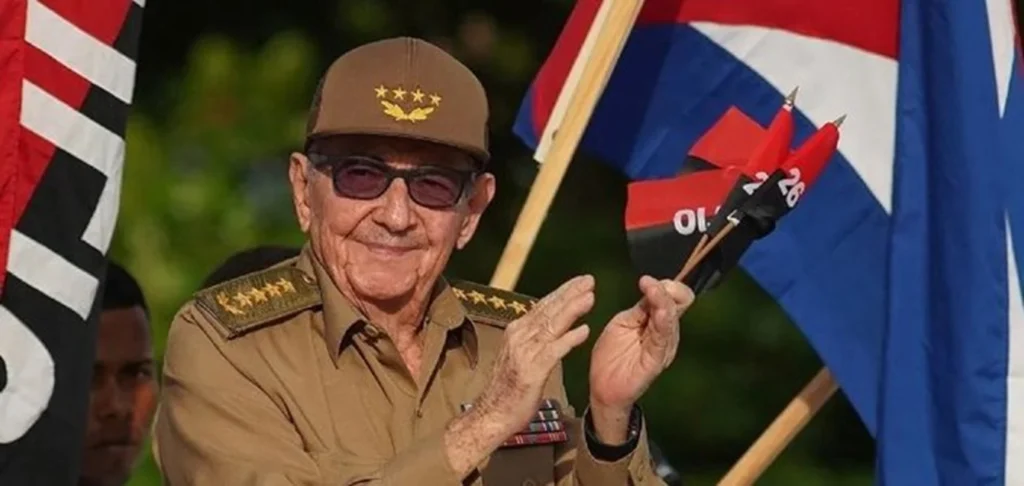
On Monday, Cuban President Miguel Diaz-Canel called the Florida Court’s arrest warrant for Army General Raul Castro a “reprehensible action” and a “pathetic Miami circus”.
“The reprehensible action taken against the Army General this morning—a pathetic circus in Miami with an electoral agenda—lacks, and will forever lack, any legal basis, let alone any practical merit. Raul is Raul, and every affront to his person will always be met with the determination of a people to defend the Revolution,” he said.
“This maneuver, dressed up in legal terms by anti-Cuban politicians against Raul and against Cuba, deserves our firm condemnation. It is part of an aggressive agenda and reflects the difficulties they face in trying to justify the blockade and the collective punishment of our people,” Diaz-Canel stressed.
Cuban Foreign Minister Bruno Rodriguez also condemned what he called a “sterile maneuver” driven by anti-Cuban politicians in South Florida. The minister maintained that the accusations were unfounded and linked them to a strategy of political pressure and hostility.
YES to a 30-year-old Cuba case. NO to today's problems. FYI: A U.S. grand jury in Florida has indicted Cuban leader Raul Castro, a move widely seen as an escalation of Washington's pressure campaign against Cuba. Cuban Foreign Minister Bruno Rodriguez swiftly condemned the… pic.twitter.com/WDXuhlWeeT
The attack occurred on February 24, 1996, in international waters, where three U.S. citizens and one legal permanent resident of the United States died. Miami-based “Brothers to the Rescue” carried out missions to locate and assist Cubans attempting to leave the island by sea for the United States.
Florida Attorney General James Uthmeier announced that the warrant charges the former Cuban leader with “conspiracy to commit first-degree murder” for the events that occurred nearly three decades ago.
The warrant, signed by a Miami judge, is based on an investigation into Castro’s alleged role as Minister of the Revolutionary Armed Forces of Cuba. According to U.S. authorities, Cuban agents gathered information about flights belonging to the Brothers to the Rescue organization and transmitted it to Havana.
The U.S. investigation maintains that this information “facilitated” the interception of the aircraft by Cuban military fighter jets during an operation that resulted in the downing of both planes.
#Cuba | Cuba is reforming its state-owned enterprises to expand financial autonomy, boost domestic production, and strengthen cooperation with the private sector amid US sanctions. The government says public ownership will remain central to its economic model.#EconomicReforms… pic.twitter.com/GJMG0FJz6d
KARACHI – BankIslami, one of Pakistan’s fastest-growing Islamic banks, has won a Bronze award in the Creative Excellence category at the Dragons of Asia Awards 2026 for its Independence Day campaign.
The recognition places the awareness efforts of a homegrown Islamic bank alongside some of the finest creative campaigns from across Asia. It also highlights the strength of Pakistani creative work on an international stage, and the impact of brand communication rooted in purpose and a genuine understanding of its audience.
The campaign, ‘Sab Mil Kar Azadi Ka Parcham Lehraein’, turned Independence Day into a nationwide call for unity, with inclusivity at its core as the foundation of the country’s freedom and a promise of an equal place for every citizen in its future.
The Bank sees inclusivity as the path to financial independence, where every individual, community and region has access to the financial system. This vision of a nation free from Riba, built on fairness and shared prosperity, is what the Bank works towards every day.
This marks a second international recognition this year for BankIslami, which had earlier been named Pakistan’s Best Islamic Digital Bank at the Euromoney Islamic Finance Awards.
The Bank’s purpose-driven campaigns and customer communications continue to build awareness and understanding of Islamic banking, bringing Islamic values closer to people in every part of the country, in line with its mission of Saving Humanity from Riba.
Un tweet du 26 mars, effacé depuis. Vingt-six morts dans le hall d'un aéroport, le 30 mai 1972. Deux jours d'audience et trois juges, à Paris. Depuis décembre 1972, l'ONU cherche ce qu'est un acte de terrorisme et n'a toujours pas trouvé. Le tribunal correctionnel de Paris, lui, n'a pas eu besoin de chercher. Pour combien de temps cette hybris parisienne ?
LE COURRIER DES STRATÈGES
Restez libre !
LA NEWSLETTER · GRATUITE
Le Courrier, chaque matin.
L'essentiel de l'actualité, passé au crible par les cinq plumes du Courrier. Dans votre boîte, chaque jour ouvré.
Gratuit. Vous restez libre de partir quand vous voulez.
J'ai passé mon après-midi de lundi dans la salle où l'on juge Rima Hassan. L'eurodéputée LFI est poursuivie pour apologie du terrorisme à cause d'un tweet du 26 mars, supprimé depuis, qui citait le Japonais Kozo Okamoto : « J'ai consacré ma jeunesse à la cause palestinienne », et « tant qu'il y aura oppression, la résistance ne sera pas seulement un droit, mais un devoir ». Okamoto est l'un des trois hommes de l'Armée rouge japonaise qui, le 30 mai 1972, ont ouvert le feu dans le hall de l'aéroport de Lod, près de Tel-Aviv : vingt-six morts, dont dix-sept pèlerins portoricains. Condamné à perpétuité en Israël, libéré en 1985 dans un échange de prisonniers, réfugié au Liban, il est mort à Beyrouth le 23 juillet, à 78 ans. Signalement du ministère de l'Intérieur, puis de l'Organisation juive européenne et de la Licra. Peine encourue, parce que c'était en ligne : sept ans de prison et 100 000 euros d'amende.
La prévenue a choisi de se taire. Elle a fait citer un témoin, Alexis Deswaef, avocat bruxellois, élu il y a un an président de la FIDH, qui plaide aussi devant la Cour pénale internationale. Il a dit la chose la plus simple de la journée. Le terrorisme, a-t-il expliqué à la barre, n'est pas une notion de droit international. Ce qui s'est passé à Lod en 1972 n'est pas un « attentat » : c'est un crime de guerre, commis dans un conflit armé contre des civils, et un crime de guerre est plus grave qu'un attentat. Je suppose que les parties civiles n'ont pas aimé le mot « guerre » : il suppose deux camps, là où elles veulent un assassin et des victimes. Le témoin, lui, parlait d'un texte qui n'existe pas.
À ne surtout pas manquer : le journal de jerusalem
Chaque semaine, je document le génocide de Gaza sur Substack, avec rigueur et exactitude, sans fioriture : c'est le Journal de Jérusalem
Le mot que 193 États cherchent depuis l'année de Lod
Au passage, il a même dit moins que la vérité. Le droit international n'ignore pas le terrorisme : il en cherche la définition depuis 1972, précisément. Quatre mois après Lod, trois jours après la prise d'otages de Munich, le secrétaire général Kurt Waldheim inscrit le terrorisme à l'ordre du jour de l'Assemblée générale. Le 18 décembre 1972, la résolution 3034 crée un comité spécial de trente-cinq membres chargé de définir le terrorisme — et, dans le même texte, « réaffirme le droit inaliénable à l'autodétermination » des peuples sous régime colonial et « la légitimité de leur lutte, en particulier celle des mouvements de libération nationale ». Soixante-seize voix pour, trente-cinq contre, dix-sept abstentions. Le comité s'est réuni jusqu'en 1979. Il n'a jamais rendu de définition.
En 1996, l'Inde a relancé le chantier : une convention générale sur le terrorisme international, que la Sixième Commission de l'ONU négocie depuis trente ans. Elle bute toujours sur le même article 18 : faut-il exclure du champ de la convention les armées des États, et les peuples qui luttent contre une « occupation étrangère » ? Les pays de l'Organisation de la coopération islamique disent oui, les Occidentaux disent non, et en octobre 2025 l'Inde parlait encore de « divergences étroites ». Cinquante-quatre ans après Lod, 193 États, pas une ligne.
LE COURRIER DES STRATÈGES
Restez libre !
TELEGRAM · L'INFO EN CONTINU
Entre deux éditions, le fil.
La newsletter vous donne le matin. Le fil vous donne l'instant.
Le tribunal correctionnel de Paris, lui, n'a pas ce problème. Le Code pénal français a sa définition à lui depuis 1986 : est terroriste tout crime ordinaire — meurtre,
Il Sud si ferma senza spaccare niente e sparisce dai telegiornali; Milano brucia per una sera e apre tutte le edizioni; la Francia conta 2.400 arresti e un presidente che dice «niente lo giustifica». Tre piazze, una sola crisi: il conto della guerra arrivato nel pieno di un camion e nella spesa di una famiglia. E un’informazione che sa raccontare la rabbia solo come ordine pubblico, perché la fame costringerebbe a spiegare il conto. A Levante questa sera, lunedì 19 ottobre 2026, Margherita Furlan dialoga con Lorenzo Maria Pacini, filosofo politico, Alessandro Volpi, storico dell’Università di Pisa, e Michele Putrino, filosofo. Il Sud fermo da una settimana: gasolio a 2,30 euro, sconto accise scaduto il 6 ottobre, 434 milioni di credito d’imposta mai arrivati alle imprese, scaffali vuoti in Molise e Puglia, un tavolo con Salvini convocato solo dopo i supermercati a secco Un miliardo per gli stipendi dei magistrati che Meloni dice di non voler firmare, cento milioni cercati per l’autotrasporto, quattordici miliardi l’anno per il riarmo: la gerarchia del bilancio letta da Alessandro Volpi Milano, Torino, Bologna: sedicenni convocati su TikTok, 28 arresti e 141 agenti feriti in una sera; la parola «maranza» di Salvini e il lavoro che fa, togliere la questione sociale e mettere l’etnia Francia: dal liceo di Créteil con le classi da 36 a 550.000 persone in piazza, il municipio di Limoges in fiamme, Macron che rinvia e i sindacati che rispondono «la gioventù non aspetterà sei mesi» La risposta penale: la cauzione per chi manifesta proposta dalla Lega, i genitori che pagano i danni dei figli chiesti da Darmanin; lo Stato che non tiene il prezzo del gasolio ma mette un prezzo al dissenso Fiorello al Tg1: «la luce deve essere accesa anche al Sud». Perché la compostezza non fa notizia e il saccheggio sì, da Arendt a Gramsci, con l’autocritica della controinformazione Che cosa guardare nelle prossime settimane: il tavolo del 20 ottobre, lo sciopero generale e la giornata dei portuali del 30 ottobre, lo sciopero studentesco europeo del 20 novembre CASA DEL SOLE TV | Informazione libera e indipendente Casa del Sole TV non ha editori privati né finanziamenti pubblici: siamo sostenuti da voi, il nostro pubblico. 35.000 euro entro il 29/11/26 DONA ORA Dona tramite bonifico bancario: IBAN: IT63P0326822300052392596590 Intestato a: LA CASA DEL SOLE EDIZIONI Causale: Erogazione liberale Casa del Sole TV Dona tramite PayPal: paypal.me/casadelsoletv Sostegno ricorrente: casadelsole.tv/sostienici Anche un piccolo contributo fa la differenza. Grazie di cuore! SEGUI CASA DEL SOLE TV YouTube: @CasadelSoleTVChannel Sito: https://casadelsole.tv#Levante#CasadelSoleTV#MargheritaFurlan#Geopolitica#Multipolarismo#Autotrasportatori#CaroCarburante#Milano#Francia#Pacini#Volpi#Putrino#SOSCasadelSoleTV
KARACHI – The controversy involving actress Momina Iqbal and PML-N MPA Saqib Chadhar again made headlines amid ugly allegations and legal proceedings linked to the dispute.
Lately, Momina Iqbal’s sister Advocate Ramsha Iqbal claimed that more than two dozen women, including actresses, are prepared to file cases against Saqib Chadhar. She has also spoken about the pressure she says her family faced and maintained that documents she previously presented were certified copies.
Momina Iqbal’s sister alleges more women, including actresses, are prepared to pursue legal action; says she faced immense pressure and her family was targeted in the media. Ramsha made the claims while addressing the media, where she also spoke about the pressure she says she endured and the allegations levelled against her.
Ramsha thanked those who had supported her throughout the controversy, saying that the pressure she experienced was difficult for any woman to withstand. She alleged that her entire family had been subjected to negative media coverage and maintained that she had endured the situation before deciding to present evidence in her defence.
Referring to her previous presser, Ramsha said the documents she presented were certified copies. She also claimed that complaints had been filed against her, but decisions issued by the Punjab Bar and other forums had gone in her favour.
According to Ramsha, efforts had been made to humiliate her, while the opposing parties had failed to appear in court. She expressed confidence that the relevant institutions would ultimately determine who was telling the truth.
She also questioned the changing figures allegedly cited against her, claiming that the amount initially mentioned was Rs20 million before being reduced to Rs8 million. She further raised concerns about her confidence in the institutions handling the matter, while defending the legal process that led to the registration of a case against the other party.
Explaining the role of the National Cyber Crime Investigation Agency (NCCIA), Ramsha said the agency conducts an inquiry before registering a case. She argued that the registration of a case reflected the presence of evidence, although the allegations and evidence would ultimately need to be assessed through the legal process.
Earlier this year, Momina alleged that Chadhar harassed and threatened her after she rejected his marriage proposal upon learning that he was already married. She also accused him of blackmail involving private videos, unauthorised access to personal information and threats against her fiancé and sister. Momina further claimed that the alleged conduct affected her personal life and professional reputation.
National Cyber Crime Investigation Agency (NCCIA) later registered a case against Chadhar and his wife, Sumaira, following a preliminary inquiry and reported technical and forensic examinations of electronic devices. The case reportedly involved allegations under the Prevention of Electronic Crimes Act (PECA) and the Pakistan Penal Code.
On July 28, an investigating officer reportedly told a sessions court that the initial investigation had found Chadhar guilty of the allegations. However, this was an investigative statement, not a final court conviction.
The case took another turn on September 3, when the NCCIA reportedly appointed a new investigating officer and formed a special team after additional defence evidence emerged. The new investigator said the arrest of Chadhar and his wife was not required at that stage, and both withdrew their interim pre-arrest bail petitions. Chadhar has denied the allegations and presented his own account of his relationship with Momina. Her legal team, meanwhile, questioned the change in the investigation’s direction.
ISLAMABAD – Pakistan’s efforts to ease tensions between US and Iran could enter another crucial phase, with Iranian media reports reporting that Chief of Defence Forces Field Marshal Asim Munir may visit Tehran this week.
The reported visit comes at a time when the confrontation between Washington and Tehran continues to threaten regional stability, disrupt energy markets and raise fears of further military escalation. However, Pakistani government, Inter-Services Public Relations (ISPR), nor Iranian authorities officially confirmed the upcoming visit.
If the visit takes place, it could provide another opportunity for Islamabad to engage with Iranian leadership and explore ways to revive negotiations with Washington. The purpose of the reported visit, the officials expected to participate and the possible outcomes remain unclear.
The security situation around Hormuz emerged as one of the concerning aspects of the conflict. Maritime reports indicate that at least 15 vessels were attacked over approximately ten days in October, with incidents reportedly involving drones, naval mines, projectiles and rocket-propelled grenades.
Energy markets have already felt the pressure. Brent crude oil prices reportedly approached $108 per barrel, reflecting growing uncertainty over supplies and the risk of further disruption. Continued instability around the waterway has also increased concerns among shipping operators and energy traders.
Meanwhile, Washington has maintained its naval blockade targeting Iranian ports, while US forces have reportedly carried out strikes against vessels. The Trump administration has also kept the possibility of additional military action in view, further complicating efforts to secure a lasting settlement.
Islamabad also reaffirmed its support for Saudi Arabia amid attacks linked to Iran-backed Houthi rebels, condemning strikes on Saudi territory and emphasizing the kingdom’s right to defend its sovereignty. Islamabad has also indicated its readiness to honour its defence commitments, although it has not publicly confirmed participation in offensive military operations against the Houthis.
Pakistan’s Defence Minister Khawaja Asif said Islamabad could make its available capabilities accessible to Riyadh under their mutual defence arrangements.
The situation has placed renewed attention on Pakistan’s defence cooperation with Saudi Arabia, particularly amid a joint arrangement involving Turkey that treats an armed attack against one member as an attack against all.
At the same time, Islamabad faces a delicate diplomatic challenge. While supporting Saudi security and reportedly urging Tehran to discourage further Houthi attacks, Pakistan is seeking to preserve relations with neighbouring Iran and prevent a wider regional confrontation.
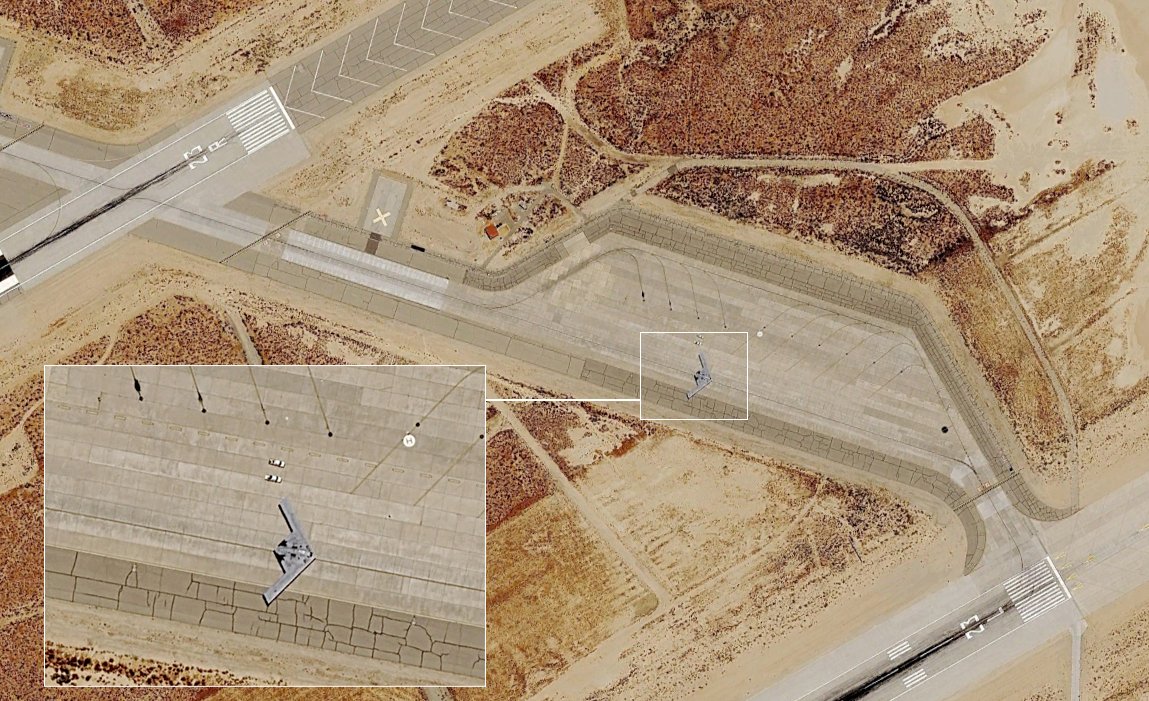
Thanks to Google Earth, we can finally put this one to bed. Since the B-21’s unveiling, people have made wild claims about its wingspan, specifically how tiny it is. This was never the case, as we have reported continuously since we first set eyes on it. Many AI-generated and enthusiast-made B-21 fact sheets have gone viral on social media showing wingspans under 130 feet, which only helped propel the nonsense. Now we can definitively say, give or take a few feet, the B-21 spans 152 feet and is 61 feet long. This puts it at about 12% smaller in terms of wingspan than the B-2, and about the same — 12% smaller — when it comes to length.
The image in question, taken of Edwards AFB and dated June 20, 2026, was recently uploaded to Google Earth. While we have seen satellite images of the B-21 going about its business before, this one was published in the public domain and had enough resolution, when paired with Google Earth’s excellent measurement tools, to get conclusive measurements.
B-21 taxiing between Edwards AFB’s parallel runways. (Google Earth)
Since we first saw the B-21 at Plant 42 in Palmdale, California, during its unveiling, which TWZ attended, we put the top-end size at 155 feet wingspan-wise. That analysis has only narrowed over the years. I have had many emails, social media threads, and other engagements with folks claiming the aircraft was in the sub-130-foot wingspan range. Now we can finally put those battles behind us.
B-21 span nowhere that number. Bizarre people think this. Around 150-155 best estimate
So what does the size tell us? Nothing we don’t already know. The B-21 was always going to be smaller than the B-2. Our analysis from many years ago has stayed the same — the aircraft would be designed with a premium on range and affordability, as well as very low observability, over massive payload. This resulted in the aircraft you see today. It is smaller, but with design priorities that have shifted from its predecessor’s, and 12% smaller in pure dimensions makes total sense considering what Northrop Grumman was trying to achieve. Above all else, it points to the B-21 having an extreme unrefueled range, with improved aerodynamics for high-altitude cruise, more gas for its size, and two efficient engines instead of four.
Official photo of the B-21 in close pre-contact position behind Edwards AFB’s ‘Ghost’ test tanker. (USAF)
As for its length, the B-21 is nearly the same length as an F-15 fighter, which sounds bizarre for a large bomber. However, flying wings are visual transformers, looking like compact UFOs side-on and massive head-on or from the planform view.
What's even more fascinating is that this thing is probably about the same length as an F-15 or close to it. Flying wings are transformers. From flying saucers side-on to massive flying wedges in the bank to huge boomerangs head on. pic.twitter.com/0UXOK0uVVN
As far as what else we can discern from the Google Earth image? Not much. We get a bit of a better view of the B-21’s exhaust configuration, but nothing is really revelatory there. The exhausts are deeply buried with large planar exhaust exit ‘ramps’ and have a large chevron trailing edge over the exhaust aperture itself. We have seen some pretty detailed images of this general arrangement from the rear that have been posted on social media. We do see the exhaust pathway as black in color, a feature that was edited out in the official top-down photo of the B-21 seen above, which was released in April, and this is something we mentioned at the time.
(Images): “Northrop Grumman’s B-21 Raider Over Palmdale”
Regardless, at least we can say with total confidence that the B-21 is smaller than its progenitor, but not by all that much — about 12% to be more exact.
Following a weekend of #violence and #looting, the French government has announced localised #curfews, financial support for affected businesses and a tougher judicial response, while keeping the option of a state of emergency on the table.

 Login



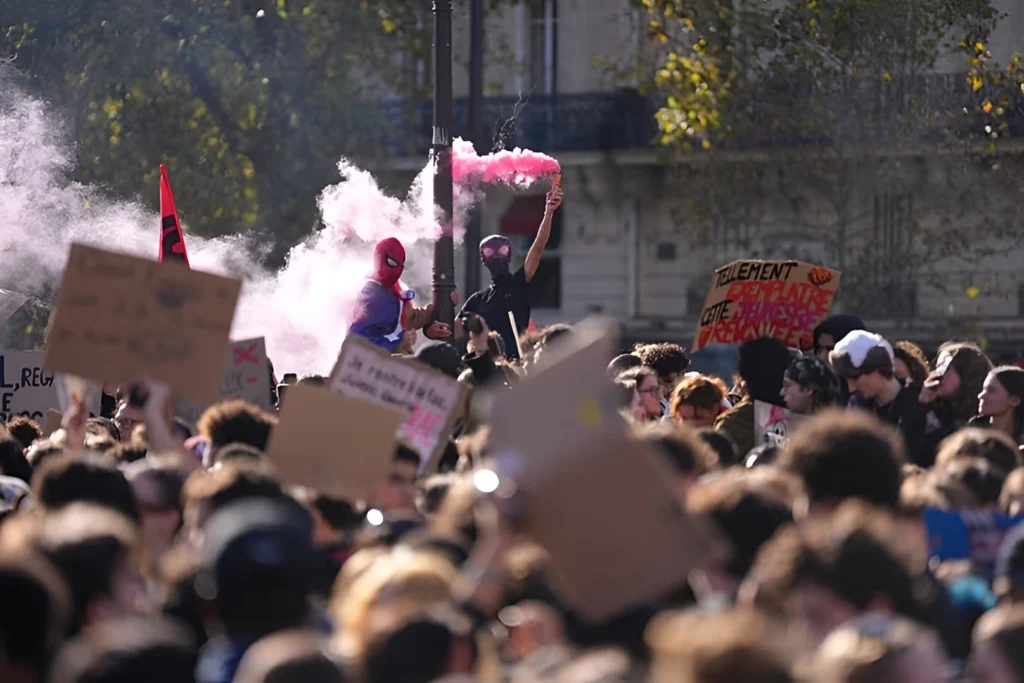





 Il Sud si ferma senza spaccare niente e sparisce dai telegiornali; Milano brucia per una sera e apre tutte le edizioni; la Francia conta 2.400 arresti e un presidente che dice «niente lo giustifica». Tre piazze, una sola crisi: il conto della guerra arrivato nel pieno di un camion e nella spesa di una famiglia. E un’informazione che sa raccontare la rabbia solo come ordine pubblico, perché la fame costringerebbe a spiegare il conto.
 A Levante questa sera, lunedì 19 ottobre 2026, Margherita Furlan dialoga con Lorenzo Maria Pacini, filosofo politico, Alessandro Volpi, storico dell’Università di Pisa, e Michele Putrino, filosofo.
 Il Sud fermo da una settimana: gasolio a 2,30 euro, sconto accise scaduto il 6 ottobre, 434 milioni di credito d’imposta mai arrivati alle imprese, scaffali vuoti in Molise e Puglia, un tavolo con Salvini convocato solo dopo i supermercati a secco
 Un miliardo per gli stipendi dei magistrati che Meloni dice di non voler firmare, cento milioni cercati per l’autotrasporto, quattordici miliardi l’anno per il riarmo: la gerarchia del bilancio letta da Alessandro Volpi
 Milano, Torino, Bologna: sedicenni convocati su TikTok, 28 arresti e 141 agenti feriti in una sera; la parola «maranza» di Salvini e il lavoro che fa, togliere la questione sociale e mettere l’etnia
 Francia: dal liceo di Créteil con le classi da 36 a 550.000 persone in piazza, il municipio di Limoges in fiamme, Macron che rinvia e i sindacati che rispondono «la gioventù non aspetterà sei mesi»
 La risposta penale: la cauzione per chi manifesta proposta dalla Lega, i genitori che pagano i danni dei figli chiesti da Darmanin; lo Stato che non tiene il prezzo del gasolio ma mette un prezzo al dissenso
 Fiorello al Tg1: «la luce deve essere accesa anche al Sud». Perché la compostezza non fa notizia e il saccheggio sì, da Arendt a Gramsci, con l’autocritica della controinformazione
 Che cosa guardare nelle prossime settimane: il tavolo del 20 ottobre, lo sciopero generale e la giornata dei portuali del 30 ottobre, lo sciopero studentesco europeo del 20 novembre
 CASA DEL SOLE TV | Informazione libera e indipendente Casa del Sole TV non ha editori privati né finanziamenti pubblici: siamo sostenuti da voi, il nostro pubblico.
 35.000 euro entro il 29/11/26 DONA ORA
 Dona tramite bonifico bancario: IBAN: IT63P0326822300052392596590 Intestato a: LA CASA DEL SOLE EDIZIONI Causale: Erogazione liberale Casa del Sole TV
 Dona tramite PayPal: paypal.me/casadelsoletv
 Sostegno ricorrente: casadelsole.tv/sostienici Anche un piccolo contributo fa la differenza. Grazie di cuore!

 SEGUI CASA DEL SOLE TV
 YouTube: @CasadelSoleTVChannel
 Sito: