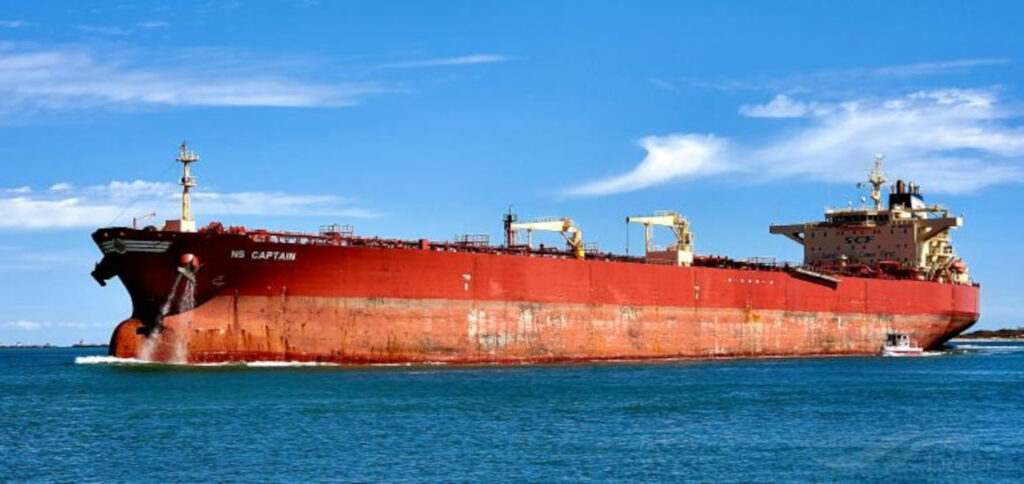
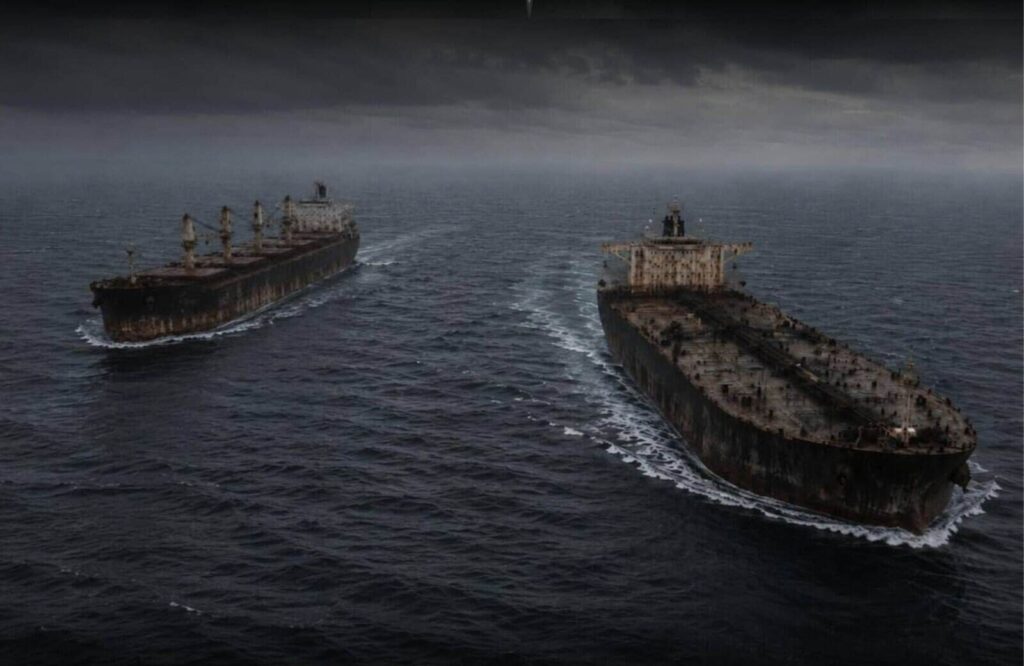
(Bloomberg) — A US plan to rehabilitate sanctioned tankers to boost oil supply may attract only a sliver of the dark fleet, as existing contracts, complex compliance checks and sky-high...
"When we see Russia rebuilding its Arctic military footprint, pursuing hybrid strategies against its neighbors, and reshaping the security of the Arctic, it impacts the EU as a whole," said European Commission President Ursula von der Leyen.
The Trump administration is authorizing the sale of sanctioned oil tankers in an effort to allow the vessels to start legitimately shipping crude, US Energy Secretary Chris Wright said.
The cost ?of shipping oil on the largest tankers fell this week from record highs as demand eased following a wave of attacks on vessels in the Middle East and as the US considered easing sanctions on the so-called shadow fleet.
A bipartisan group of 22 House lawmakers is urging President Donald Trump to fully implement the new Russia sanctions law and revoke a license allowing certain Russian diesel transactions. In a letter sent on 15 October, they copied Secretary of State Marco Rubio and Treasury Secretary Scott Bessent and requested details on planned sanctions, tariffs and waivers.
Their request comes as the law’s first requirements fall due on 18 October, while lawmakers from both parties challengethe administration’s decision to allow certain Russian diesel transactions. Some restrictions take effect automatically, while others require presidential action. The law does not specify a penalty for the president missing the deadline.
What the Russia sanctions law requires
Congress passed the Lindsey O. Graham Sanctioning Russia and Iran Act of 2026 by votes of 86–11 in the Senate and 262–159 in the House. Trump signed it on 18 September. Graham, a Republican senator from South Carolina, died in July.
Restrictions taking effect automatically on 18 October include a ban on US banks and broker-dealers processing transfers to or from the Russian government, a ban on new US investment in Russia, a ban on new US investment in Russia’s energy sector, and a ban on US energy exports to Russia.
Other measures require presidential action by the same date. The law directs Trump to review and sanction Russian officials, oligarchs and shadow-fleet vessels, sanction the Bank of Russia, specified Russian banks and state-owned companies, and impose tariffs of up to 500% on Russian goods. Tariffs of up to 100% can apply to goods from countries among the five largest importers of Russian oil or gas, or among the top five countries facilitating Russian oil sanctions evasion.
Trump may waive sanctions, restrictions and tariffs under the law if he first certifies in writing to Congress that a waiver is in the US national interest and submits a report explaining its basis.
The diesel license at the center of the dispute
House members also urged Trump to revoke General License 135, which the Treasury Department issued on 9 October and that is valid until 7 April 2027. It permits certain transactions involving Russian-origin diesel, including imports into the United States. Trump said Russia would immediately supply more than 300,000 tons of diesel to US and global markets and predicted prices would fall sharply, according to a 9 October Truth Social post.
On 13 October, a bipartisan group of 12 senators also urged Trump to rescind the deal and revoke the license. Seven senators said the deal conflicted with a 2022 law banning Russian energy imports.
The Graham Act says nothing in its provisions affects the Treasury secretary’s existing authority to issue general licenses. That provision does not resolve whether the diesel license complies with the separate 2022 law.
A White House official told Newsweek the administration would comply with the Graham Act. Bessent said the administration would use “all the legal authorities we have” and called the deal “good for the American people,” Fox News reported on 11 October.
How the sanctions could be lifted
Separately, the law sets a process for terminating sanctions, restrictions or duties against Russia. Trump must report to Congress that Russia has signed a peace agreement accepted by Ukraine’s government and ceased military hostilities against Ukraine, as well as activities to overthrow, dismantle or subvert its government. Congress has 30 days to block termination through a joint resolution of disapproval, or 60 days for reports submitted between 10 July and 7 September.
Britain has expanded its sanctions against Russia’s oil industry, targeting two more energy companies, a dozen shadow-fleet tankers and financial networks used to move money around Western restrictions. The measures,...
By Timothy Gardner and Jarrett Renshaw WASHINGTON, Oct 14 (Reuters) – The Trump administration is considering easing sanctions on so-called shadow fleet vessels that have transported oil and petroleum products...
The Trump administration is weighing looser sanctions on shadow fleet tankers that have hauled oil from Russia, Iran, and Venezuela, a US official said on 14 October, Reuters reported. An industry research group expects the change to do little for freight rates.
With Reuters calling high fuel prices a risk for Trump before the 3 November midterms, Washington has already eased sanctions on Russian oil and diesel this year and is now looking at the ships blacklisted for hauling sanctioned cargoes. In March, Treasury Secretary Scott Bessent said a waiver on Russian oil at sea would bring Moscow no significant financial benefit, yet Russia’s seaborne oil income jumped by $890 million in the week to 15 March, Bloomberg data showed.
“Legal oil” on blacklisted ships
The talks center on letting “legal oil” sail on previously sanctioned vessels, the official said. Only crude or fuel free of US sanctions would qualify, not Russian or Iranian oil. Washington wants more crude and refined products moving out of the Gulf, the official added. Companies would need US Treasury approval to use the ships.
Explore further
Ukraine is going back to hitting Russian oil after its Trump-pressured pause, during which Kyiv got no US warnings of incoming ballistic missiles
Research group Energy Aspects said US Energy Secretary Chris Wright, in a video to the World Petroleum Congress in Riyadh, tied the easing to record freight rates. Those rates hit records after the Iran and Ukraine wars drove up inflation and left US crude too costly for Asian refiners, Reuters said. Energy Aspects itself expects the easing to do little for freight rates, since most tankers sanctioned over Russian or Venezuelan links have kept trading for the past three months.
The Energy Department said any relief would do nothing to help Russia ship its oil or refined products. Treasury referred questions to the Energy Department. Yet Reuters noted that both departments could face pressure to let these vessels carry Russian diesel, given Trump’s push to get it onto world markets fast.
Britain is pushing the other way. UK finance minister John Healey urged counterparts at International Monetary Fund meetings in Bangkok on 15 October to keep tough sanctions on Russia, “especially a tighter ban on shipping services” that keep Putin’s shadow fleet operating.
Diesel license criticism and an unconfirmed ceasefire
On 9 October, the US Treasury issued a license clearing Russian-origin diesel trade until 7 April 2027. Ukrainian President Volodymyr Zelenskyy told reporters it was a weak decision unworthy of Ukraine’s partners. Democratic Senators Jeanne Shaheen, Chuck Schumer, and Elizabeth Warren called it a “total betrayal of Ukraine.” Republican Senator Thom Tillis said there is “a legitimate case for saying the president’s not following the law.”
Explore further
“He thinks Ukraine is a weak link and that it needs to be squeezed into giving in”: diplomat on why Trump pressures Kyiv, not Moscow
Trump then pressed Kyiv to spare Russian refineries and declared an “energy ceasefire” on 11 October. A White House official told Axios it covers only oil refineries. Neither side confirmed a similar announcement Trump made in mid-September, AAP reported.
Kremlin spokesperson Dmitry Peskov told reporters on 13 October that contacts on the ceasefire were continuing and referred further questions to Trump, Russian newspaper Vedomosti reported. He claimed the diesel deal was “a very mutually beneficial item of Russian-American cooperation” that serves the interests of Russia, the US, and world energy markets, Russian newspaper Kommersant reported.
Ukraine will resume strikes on Russian oil refineries, ending a three-day pause it held at Washington’s request, Ukrainian President Volodymyr Zelenskyy told the Financial Times in an interview published on 15 October. Russia kept bombing Ukraine’s energy system throughout the pause, while Kyiv lost US missile warnings and its Starlink service slowed. Zelenskyy said Ukraine would halt energy strikes again only in exchange for more US air defense.
Ukraine's deep-strike campaign targets the Russian oil industry, which fuels Russia's army in Ukraine and earns the export revenue funding the war. Striking the plants that turn Russian crude into fuel, 12 of them hit in September alone, is one of the few levers Kyiv controls on Moscow’s war income. US President Donald Trump has blamed those strikes for higher US fuel prices, which most analysts attribute to the Iran war, and Washington has threatened to withhold intelligence, and reportedly weapons, unless Kyiv gives it up. Each step Washington takes toward Moscow, from fuel waivers to talk of frozen assets, widens the gap Europe and Ukraine must fill, while Russia gains revenue and time to keep striking.
A pause that bought nothing
Zelenskyy said he stopped the refinery strikes for three days to meet US wishes, but Russia kept hitting Ukraine’s energy infrastructure and killing civilians. During the pause, Ukraine received no US warnings of ballistic missile launches, he said. Starlink also slowed across the country, hampering front-line operations and mid-range strikes on Russian military targets, he added.
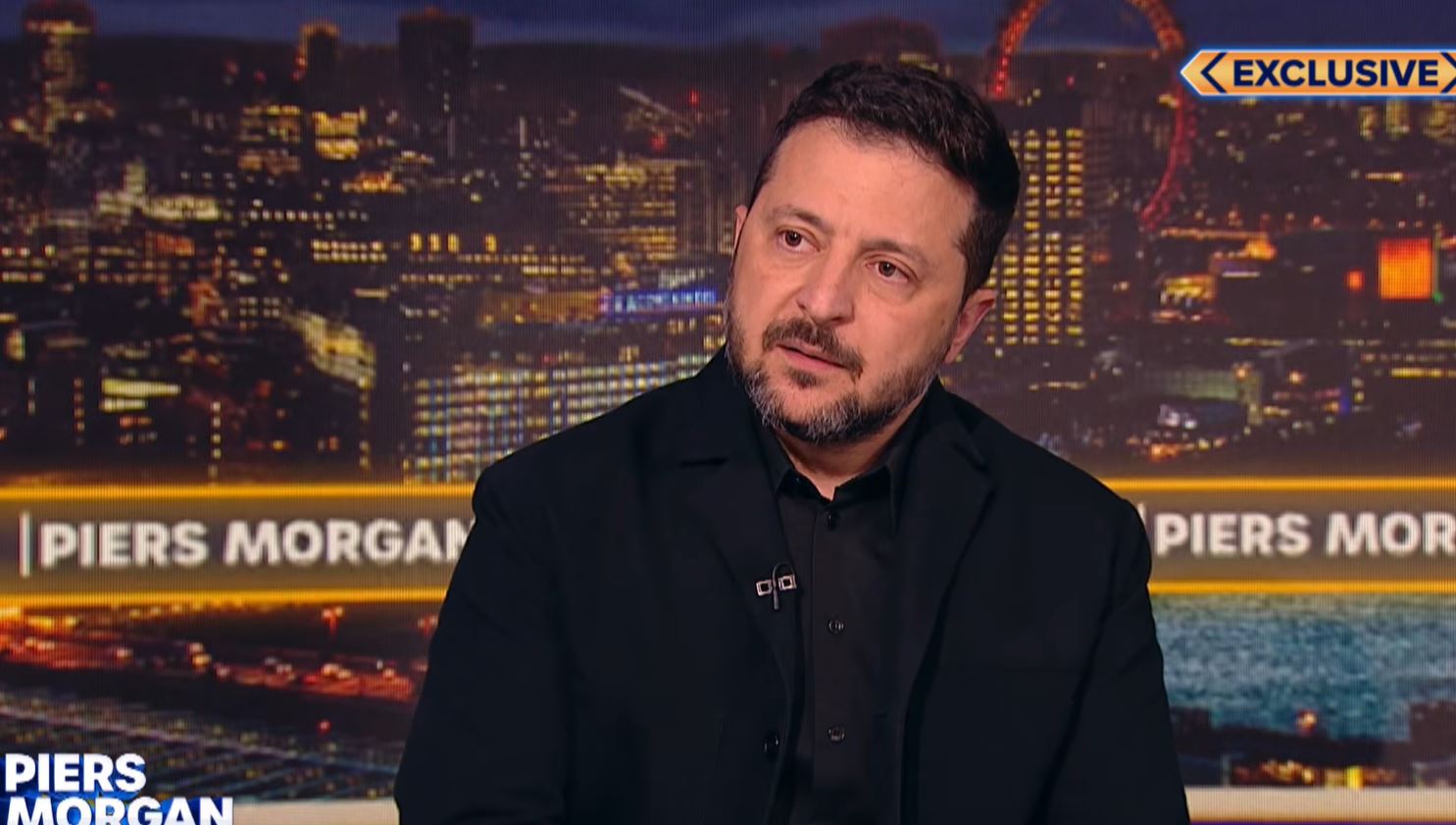
Russia used those days to fire 39 ballistic missiles and more than 120 drones at Ukraine’s grid overnight into 14 October, leaving at least 600,000 people without power. “We hold energy ceasefire from our side,” Zelenskyy told Piers Morgan on 14 October. Of the Starlink slowdown, he added: “I’m sure that they knew what they did.”
The price of another pause
Ukraine could again stop hitting Russian energy only if it receives more US interceptors for its Patriot systems, Zelenskyy told the FT. He warned that a halt could simply invite more US-Russia deals that feed Russia’s war machine, and predicted the next one would involve gas.
Explore further
“Starshield systems are owned and controlled by the US government”: Musk says Trump, not SpaceX, is behind cut hitting Ukraine
US intelligence officials had warned Ukraine’s embassy in Washington that a new strike on Russia’s energy facilities would end all intelligence sharing at once, The Washington Post reported, citing a person familiar with the matter. Washington has not fully cut it off, but the threat stands, the person said. Trump said on 13 October that the US was still sharing intelligence.
Washington’s other moves toward Moscow
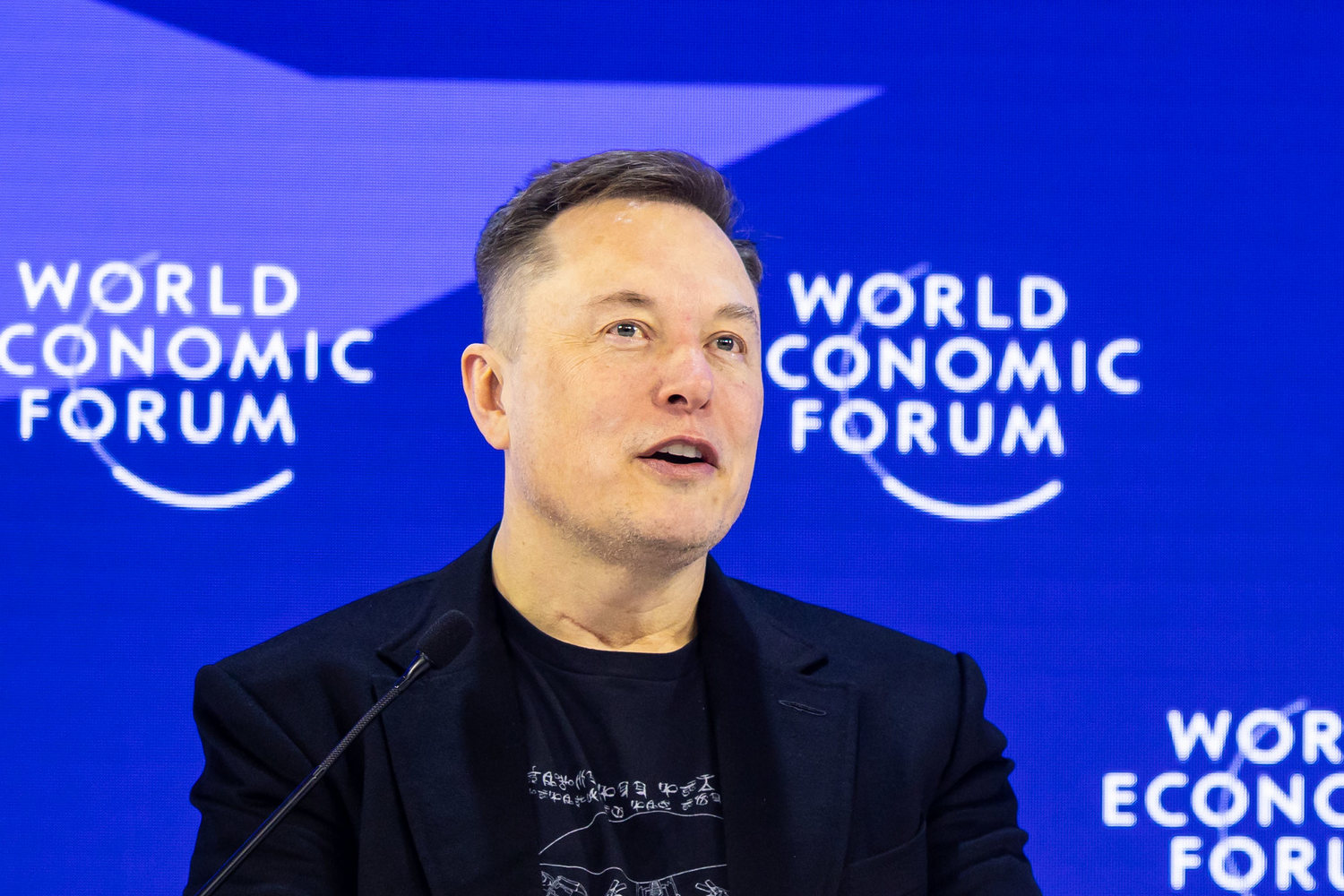
A senior US official told Axios the administration had nothing to do with the Starlink limits, which Elon Musk hadblamed on the US military. The administration is also considering easing sanctions on shadow fleet tankers, which have carried oil from Russia, Iran, and Venezuela, so the blacklisted vessels could haul non-sanctioned cargo, a US official told Reuters. The US Energy Department said the move would not help Russia ship its oil or fuel.
Washington eased sanctions on Russian oil this spring, after which Russia’s oil income jumped $890 million in a week, and it extended that waiver despite telling allies it would not. US envoys also proposed unfreezing part of Russia’s frozen assets to lure Moscow back to talks, an idea European officials rejected, the Financial Times reported.
France has seized an oil tanker suspected of belonging to Russia’s shadow fleet after intercepting it more than 450 nautical miles south of Réunion in the Indian Ocean, French President Emmanuel Macron announced on 12 October.
The seizure targets a network Russia relies on to keep oil revenues flowing despite Western sanctions imposed over its full-scale invasion of Ukraine. The shadow fleet allows Moscow to continue exporting oil and funding its war in Ukraine.
The French Navy boarded the DF Peak over suspicions that it was sailing under a false flag and involved in illegal fuel transportation, Macron said. French forces escorted the vessel to an anchorage near Réunion for further checks as part of a judicial investigation.
La France est déterminée à lutter contre la flotte fantôme, partout dans le monde.
Ce matin, à plus de 450 nautiques au sud de La Réunion, notre Marine nationale a arraisonné le pétrolier DF Peak, suspecté de naviguer sous un faux pavillon et impliqué dans des activités… pic.twitter.com/GS91egdvzN
Russia’s shadow fleet consists of oil tankers used to keep Russian oil and petroleum exports moving despite Western sanctions imposed after Moscow launched its full-scale invasion of Ukraine in 2022.
The vessels often operate through opaque ownership structures, change names or flags, and use registration practices that make it harder to establish who controls them and where their cargo originates. These methods help Russia maintain oil revenue while limiting the impact of sanctions and restrictions on shipping and insurance.
The fleet also raises safety and environmental concerns. Many of the vessels are older tankers operating with unclear insurance coverage or limited oversight, increasing the risk of accidents and oil spills.
DF Peak previously sailed under different name
The DF Peak was previously named Kaliningrad and sailed under the flag of Benin. It has been subject to US, UK, and EU sanctions since 2024, according to Reuters. Ukrainian military intelligence has also linked the tanker to Russian crude oil transportation and the shipping company Sovcomflot.
The tanker was last tracked near Madagascar on 12 October after departing from Venezuela, according to shipping data cited by Reuters. French authorities said the vessel would be taken to Réunion for a closer examination of its registration and activities.
Russia condemns seizure
Russia’s embassy in France condemned the seizure, calling it a violation of international law and describing the operation as “piracy,” according to Russian state media cited by Reuters. The embassy said France had not notified Moscow about the seizure and that it was checking whether Russian citizens were among the crew.
The seizure is part of wider European efforts to enforce sanctions against Russia’s oil exports and target vessels suspected of using false flags. France has seized at least five Russian-linked tankers since 2024, Reuters reported.
France's military was taking a tanker suspected to be part of Russia's "shadow fleet" skirting Western sanctions to Reunion island on Tuesday in what Moscow called another act of "piracy."
Swedish authorities have cleared the sanctioned tanker Sea Owl 1 to leave the country after nearly seven months at anchor, following confirmation that the vessel is now legitimately registered under...
By Patrick Van Oosterom Oct 9, 2026 (Bloomberg) –The Dutch government proposed a legal change to crack down more effectively on Russia’s shadow fleet, prompting the Russian embassy to threaten its...
Ukraine has published data on 20 vessels that carry Russian oil and liquefied natural gas or refuel the sanctioned fleet, parts of the logistics network the Kremlin uses to fund its war, Ukraine's Defense Intelligence reports. All 20 are under British or Ukrainian sanctions, and only one faces US restrictions.
Russia’s shadow fleet runs on roughly 500 aging ships of uncertain ownership that dodge sanctions and keep oil money flowing. That seaborne oil trade is worth more than 80 billion euros a year.
The headline vessel is the Russian ship Portovyy, an LNG carrier and floating gas store owned by the sanctioned Gazprom since 2021, according to the agency. On 15 August 2026, it left the Gulf of Finland with Russian LNG for the first time since November 2021, sailing the Northern Sea Route to the Chinese port of Beihai to unload.
Portovyy is now at the Zhoushan Huafeng Shipyard in China, which has been set as the site for its maintenance, intelligence says, an example of the foreign yards Kyiv wants closed to the sanctioned fleet.
Russia buys up gas carriers through shells
Two more gas carriers show how Moscow expanded the fleet in spring 2026 through front companies, intelligence said. The Avacha, once owned by China’s Jovo Energy, was bought by the little-known Tudor Maritime of the Marshall Islands, took the Russian flag in June, and now ships gas from the Arctic LNG 2 project to Beihai.
The Chaivo, formerly owned by Greece’s Maran Gas Maritime, was also bought by Tudor Maritime and moved under the Russian flag in July. Now it carries cargo to Beihai from a floating gas storage facility off Kamchatka, intelligence says.
A call to close the loopholes
Intelligence urged partners to act together: tighten control over sales of commercially owned ships, block servicing of the sanctioned fleet at foreign yards, and cut off the energy revenue that Russia turns into weapons against civilians.
Russia is building ice-class ships at home and, at the same time, widening its shadow fleet through offshore networks. The UK Foreign Office made the same point on 1 October, saying Moscow is assembling a new shadow fleet to keep its gas revenues flowing.
The United States on Thursday imposed sanctions on 22 tankers and dozens of individuals and companies linked to Iran’s oil trade, expanding its campaign to cut off Tehran’s remaining petroleum...
Indian refiners have cut back Russian crude purchases for November delivery, as rising competition from China pushes up prices at a time when buyers can tap alternative shipments from the Middle East.
A 22-year-old product tanker sanctioned by the European Union is making an unusual late-season voyage along Russia's Northern Sea Route, highlighting the growing use of older, lower-specification vessels to move petroleum products through the Arctic.
Seven tankers made 14 trips from South Korea to Russia's Far East in July and August, carrying more than 176,000 metric tons of fuel, most of it diesel, the Guardian found in a 6 October analysis of port records and ship-tracking data. The UK and EU have sanctioned three of the ships, and one loaded its fuel from another tanker at sea off South Korea instead of at a terminal.
Ukrainian strikes have cut Russia's fuel output as Moscow scrambles for supplies, while fuel loaded at South Korean ports has flowed to Russia. Loadings began to surge in July, the same month South Korean President Lee Jae-myung pledged $100 million for Ukraine's reconstruction, the Guardian reported. That creates a tension in Seoul's policy toward the war: South Korea has provided Ukraine with humanitarian and non-lethal aid but ruled out sending weapons directly, while the fuel trade appears legal under South Korean law even though three of the tankers are under UK and EU sanctions.
Russia imported 368,000 metric tons of oil products by sea in August, 112,000 of them from South Korea, according to Kpler data analyzed by the Centre for Research on Energy and Clean Air (CREA) and cited by the Guardian. CREA's own August report gives 172,000 metric tons in total, including 18,000 from South Korea. Neither explains the gap.
Where the tankers said they were going
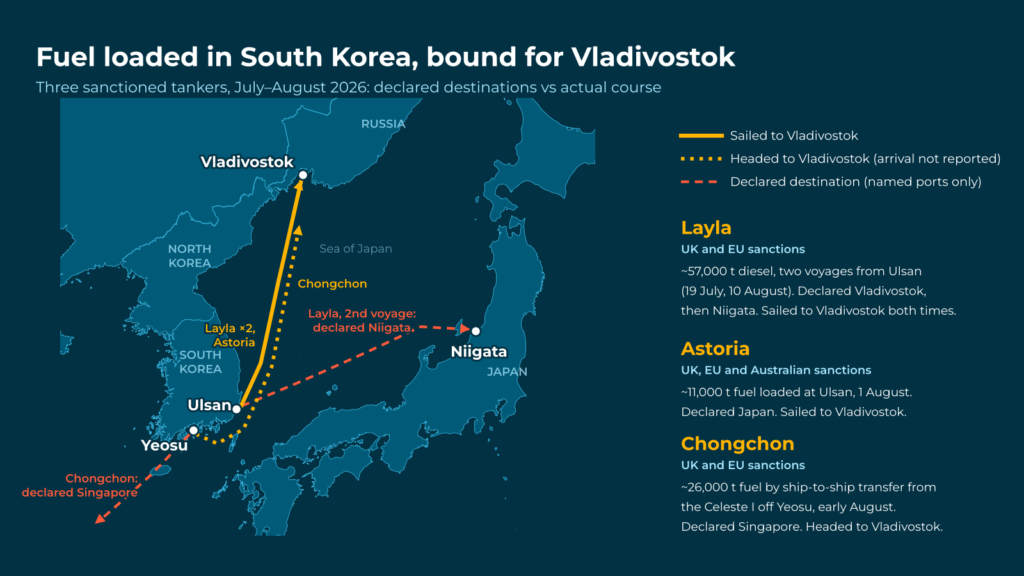
The Layla, a tanker under UK and EU sanctions, made two voyages from Ulsan to Vladivostok, carrying a total of 57,000 metric tons of diesel. It left South Korea on 19 July and 10 August. On the first trip, it told South Korean authorities it was bound for Vladivostok; on the second, it declared Niigata, Japan, but sailed to Vladivostok again.
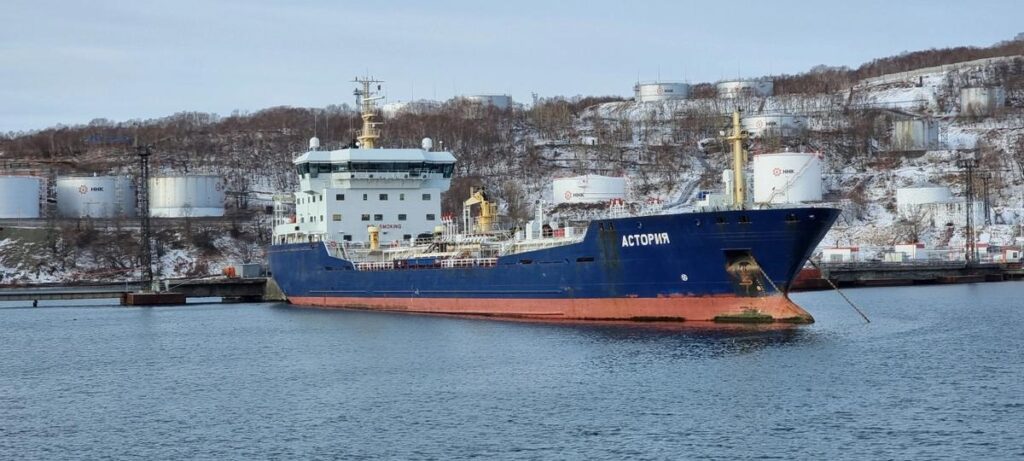
The Astoria, a Russian-flagged tanker under UK, EU, and Australian sanctions, loaded nearly 11,000 metric tons of fuel at Ulsan on 1 August. It declared Japan as its destination but sailed to Vladivostok.
The Chongchon did not berth at a South Korean port. Instead, it took about 26,000 metric tons of fuel from the unsanctioned Celeste I at an anchorage off Yeosu in early August. It declared Singapore as its destination but headed to Vladivostok. The owners and managers of the four tankers did not respond to the Guardian's requests for comment.
Source: Guardian analysis of port records and ship-tracking data; sanctions listings: OpenSanctions. Map: Euromaidan Press
Why Russia needs the fuel
Ukrainian drone strikes have severely disrupted Russia's refining capacity, the Guardian reported. In July, Ukraine's General Staff said the strikes had knocked out 42% of Russia's refining capacity, costing the industry billions of dollars.
Russian refinery throughput fell in June to its lowest level in more than 20 years, and diesel output is down nearly 30% from a year earlier, the International Energy Agency said, according to the Guardian.
Russia has also restricted fuel exports to protect domestic supplies, extending its diesel export ban until the end of October; on 2 October, Deputy Prime Minister Alexander Novak said Moscow could consider partially lifting the ban if there was overproduction, according to the Moscow Times.
Responses to the shipments
Seoul's non-lethal aid has included helmets, body armor, and demining vehicles, and in 2023 it pledged $2.3 billion in support, mostly in loans.
Isaac Levi, an analyst at CREA, told the Guardian:
"It is shocking that EU-sanctioned tankers loaded fuel at South Korean ports and carried it to Russia. This undermines the sanctions regime and South Korea's support for Ukraine."
South Korea's Foreign Ministry did not address the shipments or the sanctioned tankers. In a statement, it said the government supports international efforts to help end the war in Ukraine and bring about a peaceful recovery. The ministry said it was strictly enforcing its export controls and had expanded them to cover 1,402 non-strategic items with high potential for diversion to military use. The UK Foreign Office did not answer the Guardian's questions about UK-sanctioned tankers using South Korean ports, saying only that it remains committed to monitoring its sanctions.
Ties between Kyiv and Seoul are also strained over Ukraine's disclosure of its transfer of two North Korean prisoners of war to South Korea, which Seoul said should have remained private.

 Login