Bogotá, 20 oct (Prensa Latina) La bancada del partido Pacto Histórico convocó hoy a una movilización para el próximo 24 de noviembre para protestar por el Presupuesto General de 2027 que, según alegó, desestima las necesidades de los más pobres.
Bogotá, 20 oct (Prensa Latina) Los reclamos al Gobierno de Colombia por la opacidad en torno a la financiación necesaria para ayudar a los damnificados por el sismo del pasado 10 de agosto continúan hoy en el país.
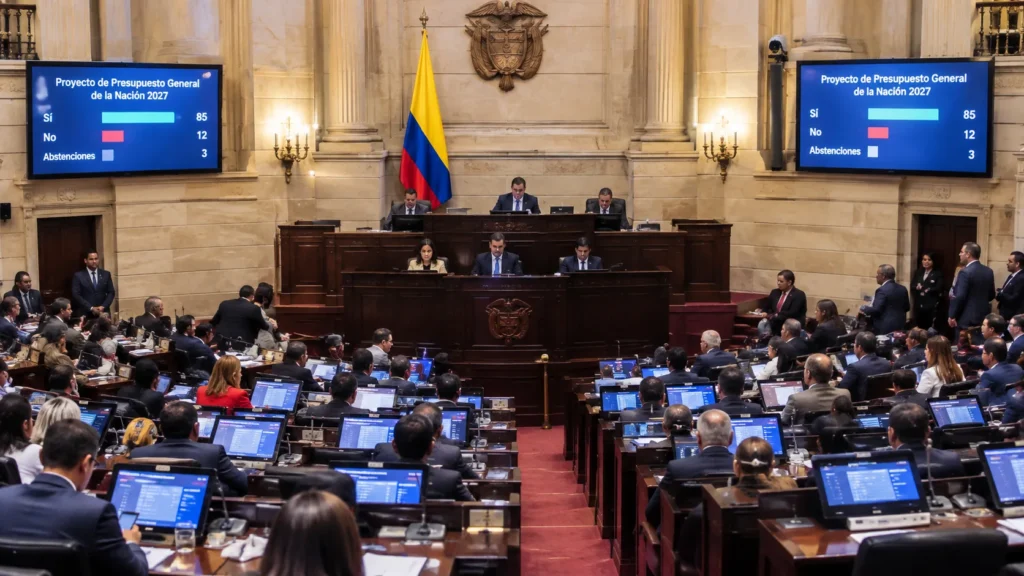
Colombia’s Congress approved the 2027 national budget of 200 billion dollars on October 20, igniting a backlash from opposition lawmakers who say the plan favors debt payments and financial interests over education, peace and regional development.
The approval of the General Budget of Colombia for 2027 capped a tense legislative session.
President Abelardo de la Espriella’s government secured passage of the law, worth 634.9 trillion Colombian pesos (about $200 billion), over the objections of the opposition, which was led mainly by the Historic Pact party.
Representative María Fernanda Carrascal described the debate as a “disaster” and faulted the national government for refusing to accept any of the 700 proposals submitted by her party. The initiatives sought to channel more resources into public education, support for victims of violence and the regions, she detailed. Faced with the lack of agreement, the opposition walked out of the debate, stating it would not back a measure it considers harmful to the country.
The Historic Pact also questioned the law’s orientation, arguing that the government chose to protect financial entities, oligopolies and the most favored sectors. They further denounced that the project promotes over-indebtedness, which they say will end up shifting heavier tax burdens onto Colombian citizens.
🇨🇴 ¡Colombia tiene Presupuesto para 2027! El Congreso de la República aprobó por $634,9 billones el Presupuesto de la Verdad, el primer paso para volver a encaminar la economía del país hacia el crecimiento, la responsabilidad fiscal y la atención de las necesidades del país. pic.twitter.com/pHiLhYzVTU
Text reads: “Colombia has budget for 2027! The Congress of the Republic approved the Truth Budget for $634.9 trillion, the first step to reorient the country’s economy toward growth, fiscal responsibility, and meeting the country’s needs.”
Other voices in the legislature added their objections. Senator Jennifer Pedraza of the Dignity and Commitment party (Dignidad y Compromiso, in Spanish) criticized the absence of a fixed allocation to address the consequences of the earthquakethat struck on August 10. She questioned the fact that assistance to hard-hit departments such as Risaralda, Chocó and Valle del Cauca depends solely on leftover budget balances.
Senator Ariel Ávila, in turn, lamented the underfunding of resources earmarked for electric infrastructure and energization in non-interconnected zones such as Vichada, Guainía, Arauca, Putumayo and Vaupés. He also pointed to a lack of concern for victims of the armed conflict and what he called a budgetary strangling of the Special Jurisdiction for Peace (JEP).
After the law’s validation, Congress gave the Executive 90 days to draft a fiscal adjustment plan, which the national administration has called the Rescue Law. The Ministry of Finance and the cabinet are already holding talks with the International Monetary Fund, a signal that new credit instruments and the conditions attached to them may be on the negotiating table.
Mobilization Set for November
The Historic Pact called on citizens to join a national mobilization on November 24 to reject the budget. The party maintains that the project raises debt service by 46% while cutting investment in the Special Jurisdiction for Peace by 82% and stripping 500 billion Colombian pesos (about $157 million) from the National Learning Service (SENA).
Lawmakers also warned that 14 departments will see their real investment shrink. They denounced that the norm prioritizes debt repayment over the financing of peace, education and regional development. “The complaint is clear: more resources for debt and less for peace, education and the regions,” the party stated on social media.
The mobilization announced for late November now stands as the opposition’s next test of strength. In the meantime, the government’s 90-day clock to deliver its fiscal adjustment plan is running, and the talks with the International Monetary Fund could define the conditions under which Colombia finances its 2027 spending. The opposition has vowed to keep the pressure on, both in the streets and in the legislature.
📢 ¡24 DE NOVIEMBRE: MOVILIZACIÓN NACIONAL!
La bancada del Pacto Histórico llama a la movilización frente al Presupuesto 2027 del Gobierno de Abelardo de la Espriella, por $634,9 billones.
Según la bancada, el servicio de la deuda aumenta un 46%, la inversión de la JEP cae un… pic.twitter.com/F5IYf2YDVb
Text reads: “November 24: National Mobilization! The Historic Pact bench calls for mobilization against the 2027 budget of the government of Abelardo de la Espriella, for $634.9 billion. According to the bank, debt service increases by 46%, Special Jurisdiction for Peace (JEP) investment falls by 82%, National Learning Service (SENA) loses $500 billion, and 14 departments will receive less real investment. The denunciation is clear: more resources for debt and less for peace, education, and regions.”
The protests demonstrated the opposition’s clear ability to mobilize its base and fill the streets of several Colombian cities, even though the new government is still in its early days.
Protesters – including members of labor unions, Indigenous organizations, opposition parties, and students – marched through the streets of the capital, Bogotá, as well as other major cities across the country, such as Cali, Medellín, Bucaramanga, Riohacha, and Pereira.
In an address to the nation, De la Espriella stated that 98% of the protests were peaceful, though he also warned the demonstrators: “From the very first day of my administration, I have issued a directive that leaves no room for interpretation: peaceful protest is respected, protected, and guaranteed. But violence, vandalism, and any attempt to violate the rights of others will have no place under my administration.”
He also added: “Here there is a state, here there is authority, and here there is a government that respects freedoms, enforces the law, and protects the millions of Colombians who get up early every day to work and build our nation.”
Criticism
The main criticisms leveled against the government focused on the executive branch’s neoliberal agenda and its security policy. According to the protesters, De la Espriella is failing to address the difficult labor, educational, economic, and territorial conditions faced by Colombians; on the contrary, his political agenda is making these circumstances worse.
Specifically, the protesters complained about cuts and adjustments to the budgets of public institutions, the lack of greater public investment in education, and the fear among several indigenous organizations that the government’s new measures will prevent them from freely exercising their right to protest.
In fact, one of the main catalysts for the protests has been the signing of a presidential decree that empowers state agents to intervene more directly against protesters – a move that has been criticized, according to the protesters, for its anti-democratic intent.
On this point, social organizations, such as the Cauca Regional Indigenous Council assert that, fearing a popular backlash like the one Iván Duque faced (which turned into what some called a “rebellion” by young people that lasted several weeks in 2021), De la Espriella signed Decree 1525, which modifies law enforcement protocols to give state forces greater leeway when dealing with protesters.
Among other measures, law enforcement can now take direct action in response to protests without the need for exhaustive dialogue, as previously required by the regulation. Several human rights organizations have expressed concern about the decree, stating that it could increase the risk of abuses and reduce mediation as the primary course of action, which already was barely used. During the 2021 national strike in Colombia, 46 people were killed in the context of the heavy police repression of the strike.
One of the people attending the demonstrations last week was former President Gustavo Petro, who optimistically stated that the protests reflect a popular response to the executive branch’s decisions: “The people can organize themselves, and two months into the start of a tyrannical and imposed government, this is the best wake-up call. The time has come for a Latin American day of popular mobilization.”
Petro, who has just resumed leadership of the Pacto Histórico – a coalition of movements that supported his political project – also said: “This is how we respond to adversity with dignity, with the determination to win again, without fear. Life is our companion, not death. The people won’t give up, damn it.”
Desde el Pacto Histórico cuestionaron la orientación de la ley al señalar que el Gobierno prefirió proteger a entidades financieras, oligopolios y a los más favorecidos en lugar de destinar mayores recursos a sectores clave como la educación.
Bogotá, 20 oct (Prensa Latina) Las autoridades de Bogotá se alistan hoy para la celebración de la edición 28 de Hip Hop al Parque, un festival que se celebrará los días 24 y 25 de octubre en el Parque Simón Bolívar.
La Defensoría del Pueblo reclama apoyo aéreo para evacuar a los heridos del alud en la mina de oro, mientras la Agencia Nacional de Minería espera garantías de seguridad para desplegar a sus rescatistas.
È bastata una foto pubblicata su Instagram per arrivare alla scoperta di una nuova specie di ninfea. La scoperta effettuata recentemente da un botanista di fama internazionale, Carlos Magdalena, responsabile del Tropical Nursery dei Royal Botanic Gardens di Kew, a Londra, parte infatti da una semplice fotografia vista sui social.
A postare lo scatto rivelatore è stato un vivaista specializzato in piante carnivore, Jeremia Harris, che sul proprio profilo Instagram dedicato proprio a mostrare queste foto aveva caricato una foto con quella che riteneva essere una comune ninfea della specie Victoria amazonica. Vedendo questa foto, però, il botanista si è insospettito, mettendosi dunque da subito alla ricerca per capire di che specie si trattasse.
L’intuizione che potesse trattarsi di una specie ancora non nota gli è arrivata dal fatto che a Inirida, dove è stata scattata la foto, non è presente quel tipo di vegetazione floreale. Così Magdalena ha esaminato le immagini satellitari della regione e ha individuato questa ninfea che presentava caratteristiche diverse dalla comune Victoria amazonica. Grazie alla conferma ricevuta da parte di Harris, sul fatto che fosse stata la stessa che le guide locali avevano fatto vedere a lui, il botanista ha deciso di organizzare insieme ad altri colleghi una visita in questo luogo.
La scoperta di una nuova specie di ninfea: “Un risultato botanico davvero straordinario”
Purtroppo, però, durante la visita sono stati individuati due soli esemplari isolati, nessuno dei quali in fiore. Questo non avrebbe consentito di creare un erbario essiccato e pressato da poter poi confrontare con gli altri. Grazie, però, al sostegno e alle indicazioni di una persona della comunità indigena locale, Magdalena è riuscito nell’ultima notte di viaggio a trovare un altro gruppo di cinque esemplari di ninfee giganti, tra cui una in fiore.
Questo ha permesso poi al gruppo di lavoro di avere a disposizione il materiale necessario per iniziare a descrivere formalmente la pianta, nuova per la scienza e ora chiamataVictoria colombiana. “Questa è una di quelle storie straordinarie in cui le conoscenze indigene e botaniche, con l’aiuto dei social media e della tecnologia, si sono unite per portare alla luce un risultato botanico davvero straordinario. È anche un promemoria del fatto che la natura è ancora piena di sorprese e meraviglie” ha spiegato Carlos Magdalena.
The National Museum of Colombia is rarely at the center of national debate, but this weekend it became the main focal point of controversy. On Thursday, alarm bells rang for many citizens when they saw that part of the nation had been erased from the galleries displaying objects, documents and photographs selected by curators to represent Colombia’s history and diversity.
Ukraine holds personal data on each of the nearly 46,000 foreigners it has identified as signing with Russia’s army since 2022, Dmytro Usov, secretary of its prisoner-of-war coordination headquarters, said on 19 October. If the current pace holds, he expects this year’s contracts to reach Moscow’s plan. Meanwhile, a survey of captured foreigners gave a split answer on how many knew they were heading to war.
Usov said 41% of surveyed foreign POWs signed at enlistment offices and recruitment points, which the headquarters reads as a sign of a systematic campaign. He also said the hiring is meant to ease the social and budget burden of Russia’s own losses. Russia has long turned to foreigners to offset shortages in its regular forces. In April, Ukraine’s military intelligence (HUR) said enlistment offices had reportedly been assigned regional quotas.
A count built name by name
Usov, a brigadier general and secretary of Ukraine’s Coordination Headquarters for the Treatment of Prisoners of War, spoke at the international conference Crimea Global. He said Russia’s Defense Ministry has signed 45,959 foreigners from 151 countries. Ukraine’s records include each one’s rank, dog tag, and contract date.
The figure counts everyone who signed, not only those serving now. In April, Usov said his count left out North Korea’s regular troops, that 25–30% more recruits were likely still unidentified, and that at least 5,149 foreign recruits had died, Interfax-Ukraine reported.
This year’s contracts near the plan
Contracts have grown every year: 94 in 2022, 4,067 in 2023, 8,877 in 2024, and 16,085 in 2025. Some names surface late. At the same April event, Interfax-Ukraine reported, Usov had put 2025 at 13,997 and said the headquarters adds newly identified foreigners every month.
For 2026, Russia’s Defense Ministry planned 18,500 foreign contracts. Ukraine knows of 16,168 so far, roughly level with all of 2025. Another 668 contracts still have no year assigned. If the same dynamic holds, Usov said, the ministry will fully meet its plan and may even exceed it.
He named Indonesia, Peru, Chad, and Zimbabwe among the ten countries that drove the growth in recruits, Ukrinform reported. At the same time, he said, Ukraine’s Foreign Ministry and POW agencies have cut recruitment in some countries and stopped it in others.
What captured foreigners told Ukraine
Ukrainian forces have captured citizens of 59 countries since the full-scale invasion began. Uzbeks, Tajiks, Belarusians, and Colombians are among the largest groups.
In the headquarters’ survey of foreign POWs, nearly half said they knew they would fight Ukrainian soldiers and civilians. Another 28% said they didn’t know, 14.8% weren’t sure, and 13.8% said they were deceived. The headquarters ran the survey, and neither report gave a sample size or explained how the shares fit together. Usov said the results showed most knew where they were going. Almost 47% said they signed up for Russian citizenship.
O governo de Nariño informou que outras sete pessoas ficaram feridas no acidente perto da cidade de Santa Bárbara de Iscuandé. Operações de busca terminaram na noite de segunda-feira.
Santa Bárbara de Iscuandé está rodeada por uma densa floresta tropical e só pode ser acedida por barco ou pequenas aeronaves, o que dificulta a chegada das equipas de socorro ao local
A Bogotá court ordered the National Museum to safeguard nearly 30 removed works as professors protested the government’s decision.
A Bogotá court has ordered Colombia’s National Museum to preserve nearly 30 artworks removed from its exhibitions, prohibiting further alterations or removals without legal authorization amid growing protests over the government’s decision to take down pieces related to the armed conflict, feminism and LGBTQ+ communities.
The 24th Family Court of Bogotá issued the precautionary measures in response to a constitutional protection petition filed by Gabriel Becerra Yáñez, secretary-general of the Unión Patriótica party, and members of the León Zuleta and Revolución en Rosa collectives.
Judge César Enrique Osorio Ortiz ordered the museum to keep the affected works in appropriate conservation conditions and prohibited the institution from moving, destroying, altering, deaccessioning or returning them to third parties. The museum must also preserve all records, exhibition plans, minutes and communications related to the removals.
The court gave the museum’s management 24 hours to submit a detailed report identifying the works’ current locations and conservation conditions, including items removed from exhibition rooms and the Miguel Ángel Díaz memorial garden. The report must also identify the authority responsible for ordering their removal.
Text Reads: Six modern art museums in Colombia questioned the removal of at least 30 historical pieces from the National Museum in Bogotá.
The dispute began last week after President Abelardo de la Espriella ordered nearly 30 works removed from the museum’s permanent exhibitions. His office characterized the pieces as an “ode to terrorism.” The works address historical memory of Colombia’s armed conflict, feminist demands, LGBTQ+ rights and the 2016 peace agreement with the Revolutionary Armed Forces of Colombia (FARC).
Court cites constitutional protection for historical memory
In its ruling, the court emphasized that artistic expressions connected to historical memory, truth-seeking and symbolic reparation for victims are protected under Colombia’s Constitution.
The decision cited the Constitutional Court’s recognition that such works serve a broader public purpose.
“Artistic expressions associated with processes of historical memory, extrajudicial truth and symbolic reparation for victims are not merely cultural manifestations, but constitutionally protected instruments for building collective memory, dignifying victims and ensuring guarantees of non-repetition,” the ruling stated.
The judge added that these expressions warrant enhanced protection because of their close links to the fundamental rights to truth, historical memory, artistic freedom of expression and symbolic reparation for victims.
The court found reasonable grounds to suspect that these rights had been violated and warned that further harm could occur without immediate conservation measures. It said the precautions were necessary, urgent and proportionate to prevent irreparable damage while the case is considered on its merits.
Text Reads: Historical memory cannot be erased! The justice system accepted our legal petition and ordered the protection of the works removed from the National Museum, the halting of any further unjustified removals, and the preservation of the garden dedicated to Miguel Ángel Díaz. The memory of the victims and the rights that have been won must be defended!
The petition names both the Ministry of Cultures, the Arts and Knowledge and the National Museum. Each has one business day to respond, submit evidence and clarify whether administrative decisions authorized the removals, as well as the degree of institutional autonomy between the two bodies.
The proceedings also involve President de la Espriella, Bogotá’s Secretariat for Women, the Sexual Diversity Directorate of the District Planning Secretariat, the Secretariat for Social Integration, the Sí Mujer Foundation and the Colombian Communist Party. These parties were also given one business day to submit evidence.
Professors hold classes outside museum in protest
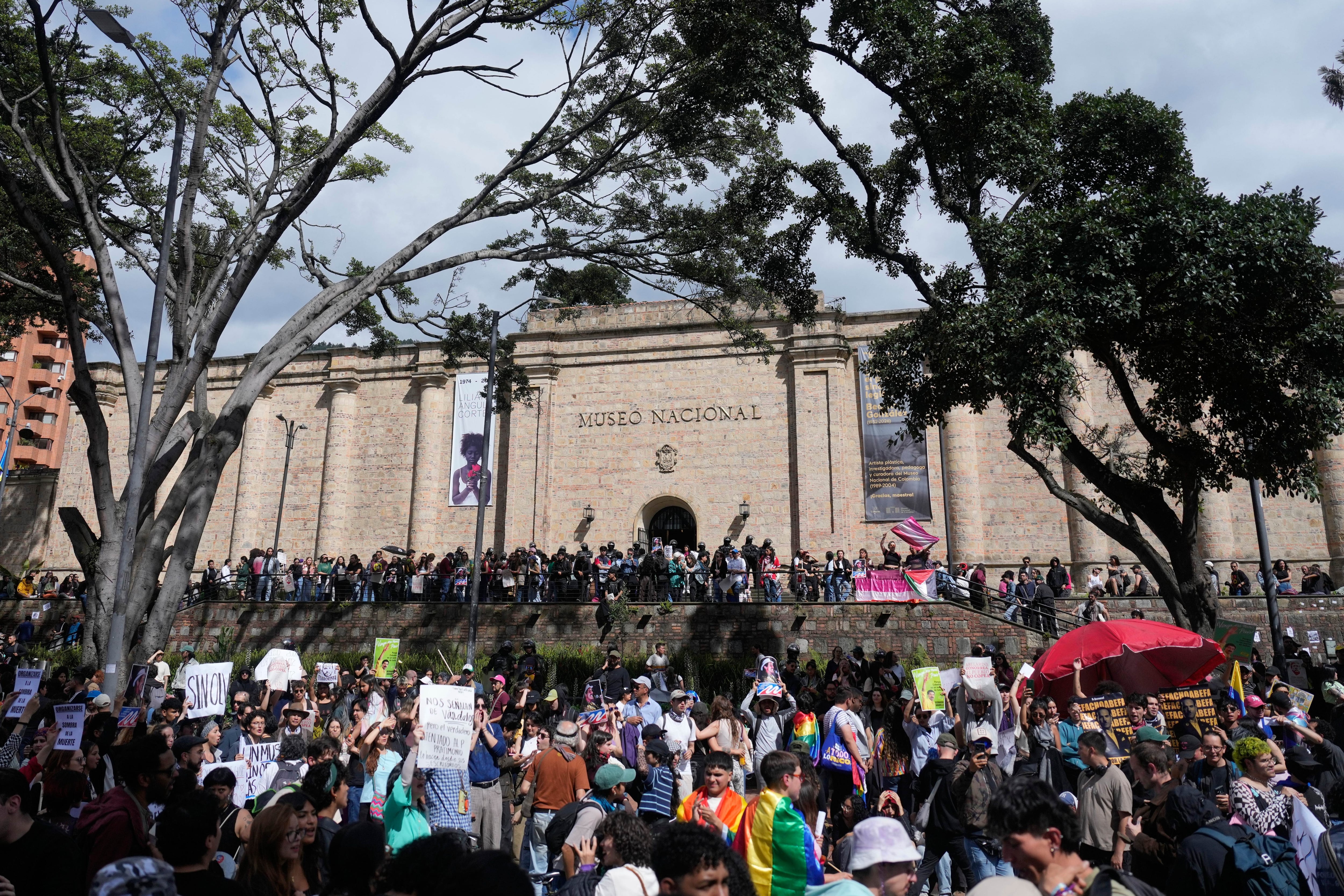
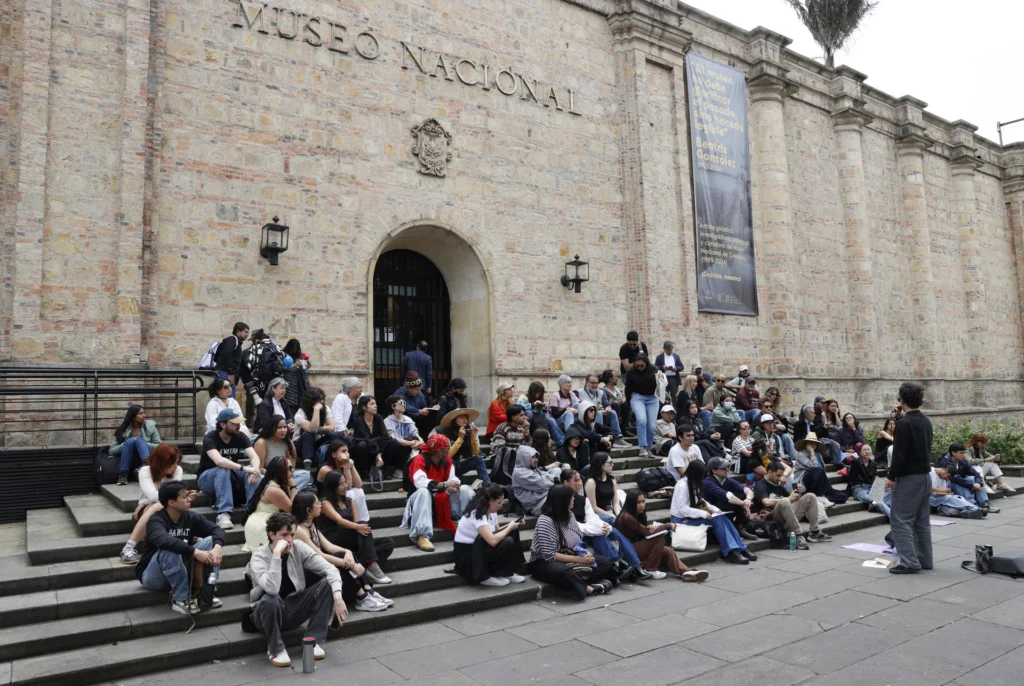
The legal challenge comes as opposition to the removals has spread beyond the courtroom. On Monday, university professors moved their classes to the steps of the National Museum, holding open-air lectures to discuss the government’s decision and what they described as censorship.
Academics from several disciplines used an amplification system to address the public. The sessions took place under the watch of numerous officers from the National Anti-Riot Unit (Unadi), the same force deployed during large demonstrations outside the museum over the weekend.
Text Reads: ABELARDO DE LA ESPRIELLA SEEKS TO ERASE HISTORICAL MEMORY The president has ordered the removal of images and references to Carlos Pizarro Leongómez—former M-19 commander and a key figure in the peace process—from government-controlled public spaces. This decision follows the provisional suspension of the designation of his hat as a piece of cultural heritage, and comes amid a visit to the Ministry of Culture, during which he also lashed out against inclusive language. Arguing that “terrorists” should not occupy public spaces, the government is attempting to dictate which parts of history deserve to be remembered. Memory cannot be erased by decree. History cannot be rewritten from a position of power.
Catalina Muñoz Rojas, an associate professor in the Department of History and Geography at the University of the Andes and an organizer of the classes, said the removed works were part of exhibitions developed over years to reflect the pluralism and diversity enshrined in Colombia’s 1991 Constitution.
She argued that the president’s intervention disrupted democratic, participatory curatorial processes involving communities from across the country. The professors plan to continue their educational activities throughout the week, engaging members of the public and the officers stationed outside the museum. Organizers urged the officers to respect the peaceful, academic nature of the protest.
Ana López, a resident of Colombia who attended the demonstrations, described the government’s decision as arbitrary and authoritarian, warning of the risk of more sweeping censorship aimed at silencing the country’s cultural and social diversity.
The removals have also prompted public criticism from Colombia’s modern art museums and the Colombian committee of the International Council of Museums (ICOM Colombia), alongside protests outside the institution.
The court’s precautionary measures will remain in force while it considers the petition’s merits. The proceedings will address the legal basis for the removals and allegations that the decision violated rights related to historical memory, artistic expression and symbolic reparation.
La decisión surge en respuesta a un recurso promovido por el congresista del Pacto Histórico, Gabriel Becerra Yáñez, junto a integrantes de los colectivos León Zuleta y Revolución en Rosa, luego de que el presidente Abelardo de la Espriella ordenara retirar del museo las obras calificadas por él como "oda al terrorismo" en un intento de borrar la memoria histórica del país.
El Museo Nacional de Colombia rara vez es centro del debate nacional, pero este fin de semana se convirtió en el principal epicentro de la polémica. El jueves, la alerta sonó para muchos ciudadanos cuando vieron borrada una parte de la nación de los pasillos que muestran objetos, documentos y fotos elegidos por los curadores para representar la historia y la pluralidad de Colombia. El Ministerio de Cultura aterrizó el discurso del presidente Abelardo de la Espriella sobre los valores conservadores del país y ordenó retirar 30 piezas de la exposición permanente Hacer Sociedad: eran objetos del movimiento LGBTIQ+, de liderazgos feministas, de los estudiantes que impulsaron la Constitución de 1991, de dos líderes de la izquierda que fueron asesinados en 1990. “Es un museo mutilado”, resume Andrés Góngora, profesor y antropólogo en museos.
En las próximas horas, los cuatro policías involucrados serán presentados formalmente ante un juez de control de garantías, instancia donde la Fiscalía les imputará los cargos penales correspondientes.
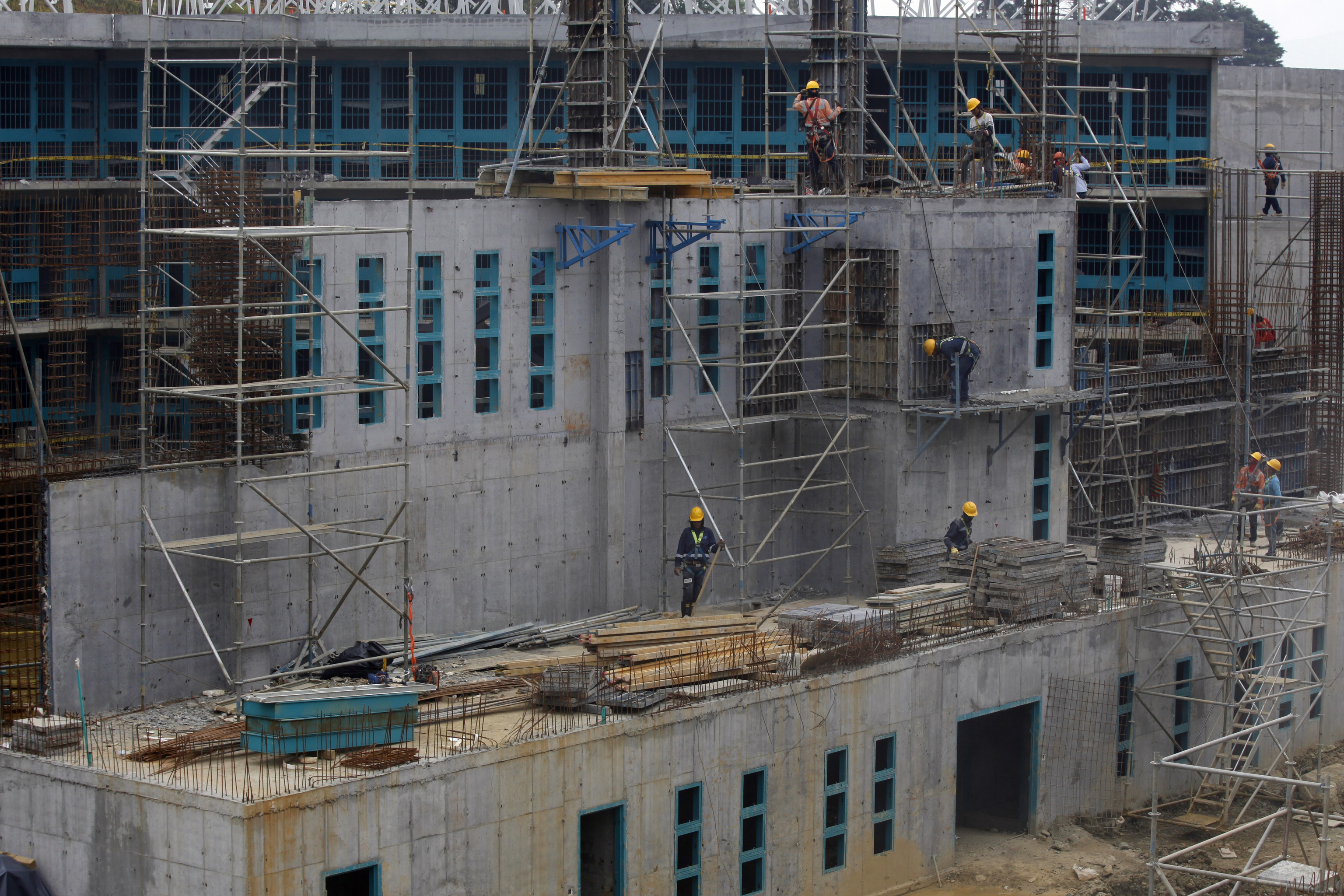
Según la alcaldía, en mayo de 2027 terminará la construcción de la primera "megacárcel" del país, un centro para 1.339 personas que busca ser un modelo de infraestructura en materia de seguridad penitenciaria para el resto de Colombia Leer
Según la alcaldía, en mayo de 2027 terminará la construcción de la primera "megacárcel" del país, un centro para 1.339 personas que busca ser un modelo de infraestructura en materia de seguridad penitenciaria para el resto de Colombia
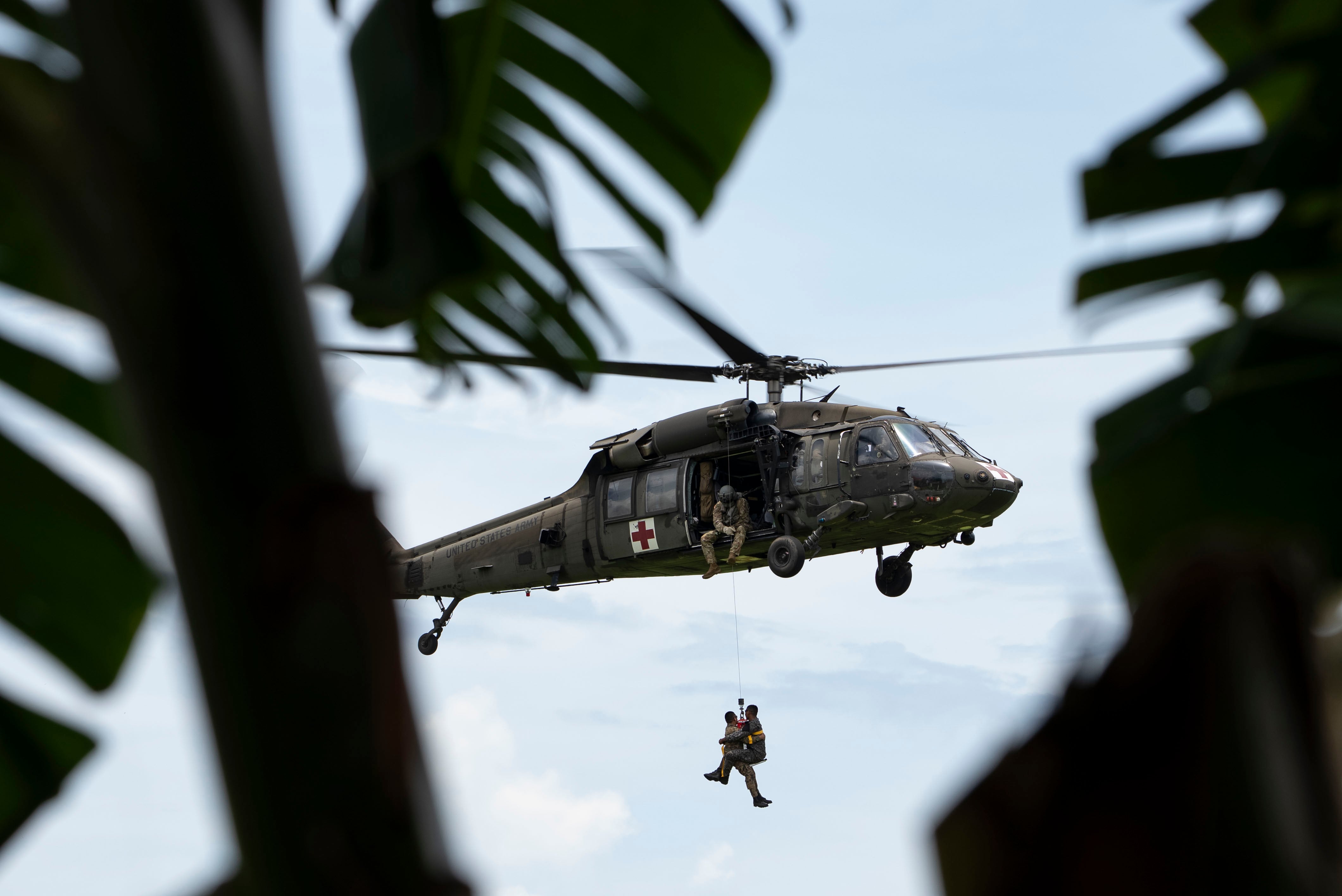
The United States is increasing its military presence in Latin American countries. The U.S. military has sent hundreds of soldiers to conduct training in Panama, an activity they will repeat later in Honduras and Colombia, The New York Times reported. The military detachment is preparing to take part in special operations against drug trafficking cartels, sources for that outlet said.

 Login