The balance of power in the Russian new passenger car market is poised for a fundamental shift by the end of 2026. According to a forecast from Sergei Tselykov, head of the analytical agency Avtostat, domestic brands are projected to overtake Chinese competitors for the first time in a long period, capturing 43% of sales volume against 41% for Chinese marques.
This projection suggests that the current marginal advantage held by Chinese manufacturers will erode in the remaining months of the year. Data for January through July indicates a near-tie in market share, with Chinese brands accounting for 40.9% of sales and Russian producers for 40.6%-a difference of merely 0.3 percentage points. The competitive gap is so narrow that the outcome of the leadership battle depends on minor fluctuations in the final quarter.
Despite the projected shift in aggregate market share, the internal hierarchy within each national bloc remains stable. Lada continues to dominate the Russian segment, while Haval maintains its position as the leading Chinese brand. The potential reversal in overall market leadership signals a significant transformation in consumer preferences and the structure of vehicle supply, marking a turning point in the competition between localized and imported production platforms.
For decades, Russian and Soviet automotive exports have served as more than just transportation tools for foreign heads of state; they have functioned as diplomatic instruments and, in some cases, enduring symbols of geopolitical alignment. From the rugged utility of the UAZ-469B to the modern prestige of the Aurus Senat, the interaction between Russian vehicle manufacturers and international leaders reveals a complex dynamic where engineering capability, political signaling, and logistical realities intersect.
The historical precedent for this relationship dates back to the Cold War, when the Soviet government gifted an open-top, rear-wheel-drive UAZ-469B, a vehicle originally designed for military command, to Kim Il-sung, the leader of North Korea. This gesture established a pattern of reliance that persisted through generations. In 2018, his grandson, Kim Jong-un, arrived at a summit with the South Korean leader in a heavily armored Mercedes-Maybach, a clear indicator of a shift in the preferred status symbols of the North Korean regime. However, reports indicate that the North Korean leader's private garage also contains new models of the UAZ Patriot, suggesting that the brand has retained a functional place in the national fleet despite the availability of German luxury alternatives.
This appreciation for Soviet and Russian engineering has not been limited to ideological allies. In 1990, German Chancellor Helmut Kohl demonstrated a practical interest in Russian heavy-duty engineering by personally driving a KAMAZ prime mover at the factory in Naberezhnye Chelny. This was a rare instance of a Western leader engaging directly with the mechanics of a vehicle that was being actively exported to capitalist markets. The KAMAZ truck's appeal to Western buyers and officials alike rested on its robust construction and ease of maintenance-characteristics that offered a pragmatic solution in environments where sophisticated European or American vehicles might struggle or prove too costly to repair.
For Russian buyers, the return of the Mitsubishi Pajero to the market in 2026 represents a significant shift in both identity and ownership calculus. After production of the fourth generation ceased in 2021, the nameplate has resurfaced with a fifth generation that trades the utilitarian charm of its predecessors for a heavier, more digitized, and significantly more expensive proposition. Dealers are now accepting orders for the left-hand drive variant, positioning the vehicle not as a mass-market commodity, but as a specialized tool for those who refuse to compromise between highway comfort and serious off-road capability.
The most immediate change for potential owners is the scale. The 2026 model is physically larger and heavier than the version many veterans remember. The wheelbase has been extended by 90 mm to 2,870 mm, while the overall length reaches 4,920 mm. This is not merely a visual update; the vehicle now sits on a unibody-derived or heavy-duty frame architecture that pushes the curb weight to approximately 2,460 kg. For a driver accustomed to the agility of smaller SUVs, this mass, combined with a ground clearance of 230 mm, transforms the Pajero into a dominant road presence. The trade-off is clear: the car is built to absorb rough terrain and heavy loads, but it demands the space and fuel economy expectations of a luxury sedan.
The interior gap between expectation and reality
Inside, the Pajero V diverges sharply from the spartan interiors of earlier generations. The cabin is now defined by digital immersion, specifically in the Top Grade trim, which features two 14.3-inch displays-one for the instrument cluster and one for multimedia control. This level of digitization is paired with a Yamaha Ultimate audio system comprising 12 speakers, suggesting that Mitsubishi is targeting buyers who view their vehicle as a mobile lounge rather than just a transport mechanism.
The V6 engine occupies a contentious space in automotive engineering, often viewed as a compromise between the efficiency of a four-cylinder and the prestige of a V8. This perception is not a result of an inherent physical limitation of the V6 architecture, but rather a legacy of early cost-cutting measures and specific geometric choices that prioritized production speed over mechanical refinement.
The Geometry of Balance
The perceived lack of refinement in early V6 engines can be traced back to 1962, when General Motors' Buick division sought to reduce development costs. Rather than engineering a dedicated V6, they removed two cylinders from a small-displacement V8. This approach retained the V8's 90-degree bank angle.
In a V8, the 90-degree angle allows for inherent primary balance. However, by reducing the cylinder count to three per bank while maintaining that same angle, the engine lost its natural equilibrium. This created significant secondary vibrations and a rougher idle, cementing the V6's early reputation as a coarse, utilitarian powerplant. The engineering trade-off was clear: the company saved on tooling and design costs, but the driver felt the result as a lack of smoothness.
AvtoVAZ has transitioned from prototype assembly to the production of marketable inventory for the LADA Azimut, a family-oriented crossover designed for the Russian market. The shift toward daily output marks the final preparation stage before the official sales launch, with the factory focusing on scaling volume to prevent initial supply shortages.
Structural Integrity and Corrosion Resistance
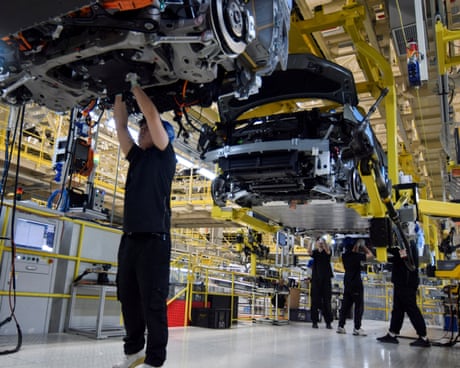
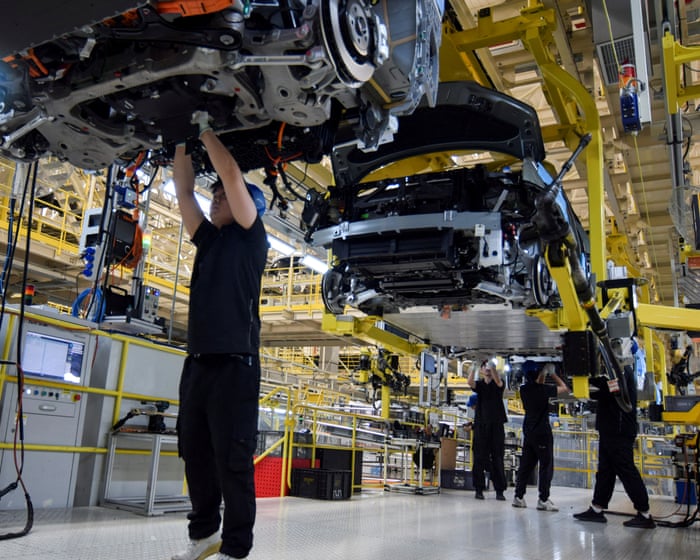
The vehicle's physical architecture begins with 200 new stamping dies. In automotive manufacturing, the age of the tooling directly dictates the precision of the body panels; new dies minimize geometric deviations, which manifests for the driver as consistent panel gaps and a square chassis.
To address the chemical aggression of winter road salts, the Azimut utilizes a multi-stage material strategy. External panels are formed from pre-galvanized steel to inhibit oxidation at the site of stone chips. Internally, the structure employs higher-gauge steel to increase torsional rigidity and crashworthiness. While the chassis relies on over 5,000 conventional weld points, the engineers have introduced laser welding at critical junctions. This creates a deeper, more continuous bond than traditional spot welding, reducing the likelihood of structural fatigue over time.
The National Highway Traffic Safety Administration (NHTSA) has opened an investigation into more than 535,000 GMC Sierra 1500 pickup trucks from the 2022-2024 model years. The probe centers on a specific failure: the detachment of upper radiator grille deflectors while the vehicle is in motion.
The Mechanism of Failure
The issue is isolated to vehicles equipped with chrome deflectors introduced during the 2022 model year refresh. Trucks with non-chrome grilles utilize a different structural design and have not exhibited this particular failure. The physics of the fault involves the deflector separating from the front bodywork under the pressure of the oncoming airstream during normal driving conditions.
Once the component detaches, the airflow can propel the deflector toward the windshield, potentially causing the glass to crack. Beyond the direct physical damage, the sudden appearance of a detached part in the driver's line of sight may trigger abrupt braking or erratic steering maneuvers, increasing the risk of a collision.
Plus, an Estonian composer also has something to do with the film’s musical vibes, co-writer and co-director Devon Delmar shared with THR at the BFI London Film Festival.
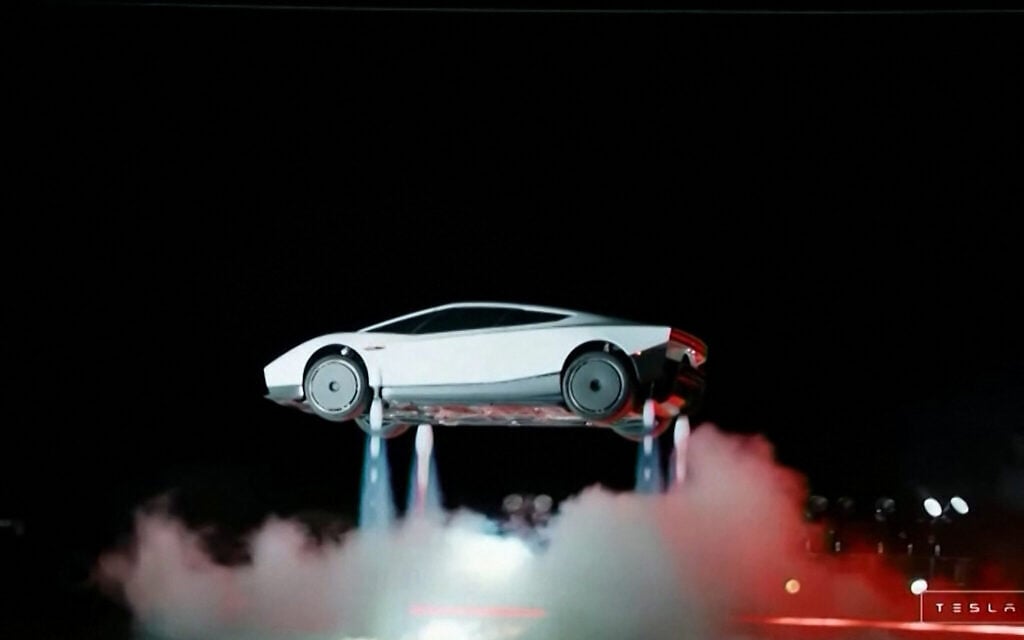
Production on new Roadster, which can thrust itself into the air in short spurts, won't begin until 2028 as Musk admits it's not 'a safety-optimized car'
Beijing warns against ‘discriminatory’ step after France drops opposition to British role in Made in Europe package
No 10 has left the door open to imposing tariffs on Chinese-made electric vehicles as part of the Made in Europe package, prompting a warning from Beijing that such a move would be “discriminatory”.
Thursday's launch arrived after years of delays and anticipation around the new Roadster — and Tesla shares climbed about 2% in morning trading on Friday after its unveiling.
Elon Musk may have been years late on his Roadster deadline, but the tech Tesla showed off was just as described eight years ago.
Win McNamee/Getty Images
Musk described his plans for the Tesla Roadster during a 2019 exchange with YouTuber MKBHD.
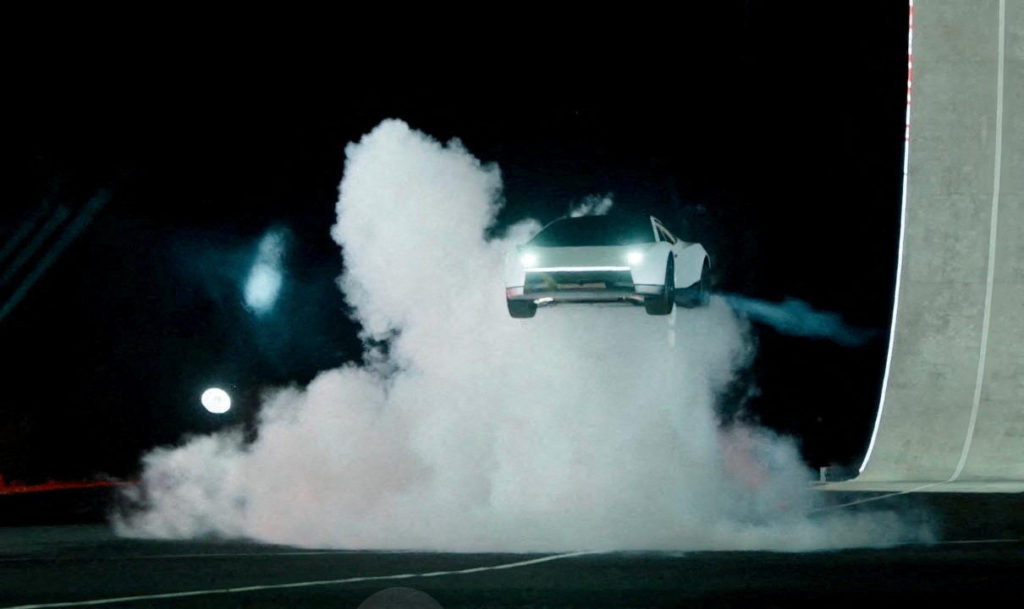
On Thursday, the Roadster did exactly as Musk promised nearly eight years ago, leaping into the air.
While Musk missed his own deadline by years, the technology on display was just as he described it.
It's been a long time coming.
Almost eight years ago, in January 2019, Elon Musk shared plans on Twitter for Tesla's Roadster to lift off using cold-gas thrusters and ultra-high-pressure air. On Thursday, the much-anticipated Roadster did exactly that.
Musk's 2019 assertion came in response to a user sharing a GIF of the DeLorean from "Back to the Future" hovering in midair.
"The new Roadster will actually do something like this," he wrote. Tech YouTuber Marques Brownlee responded: "The thing is I feel like you’re not joking."
"I'm not," Musk said.
I’m not. Will use SpaceX cold gas thruster system with ultra high pressure air in a composite over-wrapped pressure vessel in place of the 2 rear seats.
He then described a SpaceX-made cold-gas thruster system that uses high-pressure air stored in a composite pressure vessel.
At a SpaceX test site in Texas on Thursday, almost 8 years later, a Roadster climbed a curved ramp, dropped, rolled through the air and landed on its wheels. It used the same basic technology: cold-gas thrusters fed by high-pressure air stored in composite pressure vessels.
The 2019 exchange was not Musk’s first mention of thrusters. In June 2018, he said the Roadster would include roughly 10 of them and suggested they might allow the car to fly.
Using the config you describe, plus an electric pump to replenish air in COPV, when car power draw drops below max pack power output, makes sense. But we are going to go a lot further.
When another user proposed compressed-air cold-gas thrusters, Musk said that configuration made sense and described a pump to replenish the air.
Musk's account of the technology has proved more consistent than his production timetable. Tesla unveiled plans for the second-generation Roadster in 2017 and originally targeted production for 2020. After repeated delays, Musk said in the reveal that production will begin in 2028.
The Roadster is not Tesla’s only vehicle to miss an ambitious release target. When Musk unveiled the Cybertruck in 2019, he said Tesla expected production to begin in late 2021. The first customer deliveries took place two years later, in November 2023.
While Musk has missed plenty of deadlines, many of his more improbable technology plans have made it beyond the drawing board. In December 2020, he said SpaceX would try to catch a returning Super Heavy booster with its launch tower.
We’re going to try to catch the Super Heavy Booster with the launch tower arm, using the grid fins to take the load
Mines in supply chains of western carmakers linked to widespread deforestation of primary rainforest in nickel-rich lands inhabited by Tolaki people in Indonesia
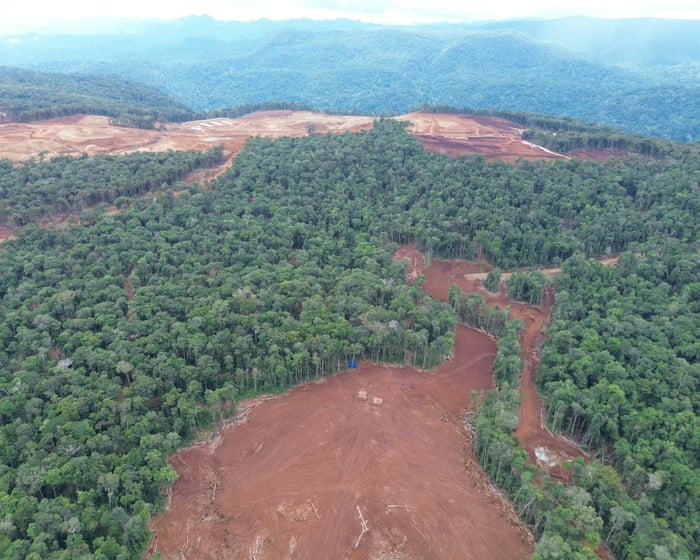
Volkswagen, Ford and Tesla are among the electric carmakers whose batteries may contain nickel mined in indigenous woodlands plagued by deforestation, an analysis has found, highlighting the struggle to make vehicles that are free from environmental destruction.
Corporate disclosures and trade flows from the last two years show mines in the battery supply chains of automotive giants are linked to the loss of trees in Sulawesi, a wildlife hotspot in Indonesia that houses the world’s largest nickel deposits. The metal is widely used in cathodes in car batteries because it boosts energy density and increases range.
Tesla's second-generation Roadster is here. Did the automaker build it for shoppers or for its talent pipeline?
Tesla
Elon Musk stood onstage while the new Tesla Roadster (literally, and figuratively) flew by.
Is it fully legal? Musk doesn't know.
But is it a secret weapon in the ongoing talent wars? Very, very likely yes.
Tesla's Roadster is back. Now, it kinda flies, and I'm not just being hyperbolic about its speed.
(Although, I guess, that would be a fair read, too.)
On Thursday, CEO Elon Musk unveiled the second-generation Roadster. It's capable of doing "crazy gymnastics," Musk said, like hopping off the ground and spinning in the air. The prototype also sprints from standing to 60 mph in 0.8 seconds, Tesla claims — and the automaker said the production model will be even quicker.
Will the two-door electric sports car be street legal? Who knows.
Instead, the car is accomplishing something more tangible — and more obviously Musk-like: make Tesla look like the kind of company that can build things other companies cannot. That's a useful message for Wall Street and for the engineers Tesla wants to hire.
Tesla is already valued far more like a tech company than a traditional automaker.
For years, investors have bet heavily on its ambitions in autonomy, artificial intelligence, robotics, and robotaxis. A flying (or, at least, hopping) Roadster does not prove those businesses will work, but it makes Tesla's technological ambitions more legible.
Musk also has long treated product spectacles as recruiting events, too.
At a 2019 Neuralink presentation, where he announced that the company had successfully implanted sensors in rats' brains, he said the "main reason for doing this presentation is recruiting." Ahead of Tesla's 2021 AI Day, Musk posted on X that "convincing the best AI talent to join Tesla is the sole goal."
The Roadster reveal follows a very similar playbook. What better way to excite more techies than a flying car?
Gene Munster, managing partner at Deepwater Asset Management, also agrees that Thursday's Roadster reveal was an exciting technical feat for up-and-coming tech talent:
Two takeaways from tonight’s Roadster event.
1. It was an engineering flex with no commercial value beyond embarrassing traditional car makers.
2. Elon can’t wait to bring $TSLA and $SPCX together.
Who knows if Tesla will even be able to bring this car to American roads. Musk said he doesn't even know.
"I'm not sure it's necessarily legal in all jurisdictions," he said during the Thursday launch. When asked if the car was street legal, Musk responded: "Yeah, depends on your street."
Either way, this car may not need to be a volume sales winner to be a hit for Tesla. It might just need to be the tech belle of the ball.
European regions and cities demand clear rules and solid financial backing to help Europe’s ailing car industry through the shift to electric vehicles (EVs). The European Committee of the Regions (CoR) on Wednesday adopted an opinion on the European Commission’s Automotive Package, arguing that the transition will only succeed if regions are adequately equipped to carry it.
Regions said electrification is crucial to achieving climate-neutral road transport, but that success depends on affordability and access. They called for charging infrastructure across regions, funded by European, national and regional budgets, as well as targeted demand support in lower-income regions.
“Europe’s regions and cities have spoken with one voice: competitiveness and electrification by 2035 go hand in hand,” said María Chivite, President of the Navarre region in Spain, who drafted the opinion. Europe can only lead the transition, she argued, if regions receive “real financing”.
The Commission proposed the Automotive Package in December. It suggests a 90-percent-cut in tailpipe emissions from 2035, with the remaining 10 percent offset through low-carbon steel or e-fuels and biofuels. The CoR welcomed these temporary flexibilities but warned that they must not delay zero-emission mobility.
Brigitte Torloting, Chair of the Automotive Regions Alliance (ARA) and Vice-President of France’s Grand Est region, warned that time is short and “global competition will not wait for us”. She called for a strategy that protects automotive production in the regions, backed by strong European instruments such as “European preference.” Without a clear framework and targeted investment, she said, Europe risks losing its industrial base, from small and medium-sized enterprises (SMEs) to major suppliers.
Made in the EU
“European preference” is an approach first introduced in the Commission’s proposal for an Industrial Accelerator Act in March and is designed to prioritise EU-based manufacturing. The Commission suggests public procurement contracts and state-subsidised industrial projects to source a minimum percentage of materials or components from European producers. For EV production, the Commission proposed that 70% of components for new cars – excluding the battery – must originate within the EU.
CoR members also welcomed the “Made in the EU” approach to strenghten European production but insisted it must be proportionate, so that SMEs and regional supply chains are not buried in red tape.
With automotive production concentrated in specific territories, the opinion also calls for targeted cohesion funding, skills and quality jobs.
According to EU figures for 2024, the automotive industry contributed 7 percent of EU gross domestic product (GDP), about EUR 170 billion in exports and supported around 13.8 million jobs, 3.5 million of them in manufacturing. According to CoR figures, the 41 regions organised in the Automotive Regions Alliance (ARA) generate more than 40 percent of EU GDP.
This story was produced by the European Newsroom (enr) in cooperation with the European Committee of the Regions (CoR). The editorial responsibility lies with the enr.
Beijing’s refusal to restrict shipments of Chinese hybrid vehicles has sharpened a dispute over Europe’s widening trade deficit, with EU Trade Commissioner Maroš Šefčovič seeking concessions during negotiations in China.
China has rejected a European Union request to restrict exports of hybrid cars to Europe, increasing the likelihood of new trade defence measures against Chinese manufacturers as negotiations continue in Beijing.
The disagreement comes during a visit by EU Trade Commissioner Maroš Šefčovič, who is seeking commitments from Chinese officials to address the bloc’s growing trade deficit and improve access for European businesses to the Chinese market.
According to accounts of the negotiations, Beijing has declined the EU’s proposal for voluntary restrictions. The European Commission is consequently considering safeguard measures that could limit hybrid vehicle imports or impose additional tariffs when shipments exceed specified thresholds.
No final decision has been announced, and the precise scope of any restrictions remains under discussion.
The dispute adds another difficulty to EU–China economic relations before European leaders meet in Brussels on 15–16 October, when the bloc’s commercial relationship with Beijing is expected to feature prominently.
Hybrid Vehicles Become New Trade Battleground
The latest confrontation follows the introduction of EU countervailing duties on battery-electric vehicles manufactured in China in October 2024.
Those measures, imposed after an investigation into Chinese state subsidies, did not cover hybrid vehicles.
Chinese manufacturers have since increased their presence in Europe’s hybrid market, offering competitively priced vehicles that combine combustion engines with electric propulsion.
The European Commission previously confirmed that its original anti-subsidy investigation applied specifically to battery-electric vehicles and could not automatically be extended to hybrids.
Consequently, any additional import restrictions must have a separate legal basis.
One option under consideration is a safeguard mechanism that would permit a defined quantity of imports before higher tariffs apply.
Such a measure would differ from the existing anti-subsidy duties, which target alleged unfair financial support provided to manufacturers.
Safeguard restrictions are designed to address injury caused by increased imports. They may also create difficulties for Brussels because measures directed at a particular product can affect suppliers from countries other than China.
Japan, South Korea and Britain could therefore face consequences depending on the structure and legal basis of any proposed restrictions.
Trade Deficit Exceeds €360 Billion
The dispute is taking place against a widening imbalance in goods trade between the European Union and China.
The EU’s annual merchandise trade deficit with Beijing has reached approximately €360 billion, equivalent to almost €1 billion per day.
European officials are particularly concerned about Chinese industrial overcapacity and the export of manufactured goods at prices that European producers struggle to match.
During the latest trade negotiations, Brussels has sought commitments concerning market access, import volumes and restrictions affecting European companies.
Chinese exports of plug-in hybrid vehicles to the EU have reportedly increased by 86 per cent over the past year, while battery-electric vehicle imports have risen by approximately 40 per cent.
This expansion has intensified pressure on European manufacturers already confronting high production costs, weak demand in some domestic markets and substantial expenditure on electrification.
EU Today reported in September that Brussels had requested voluntary restrictions on Chinese hybrid exports as part of a broader effort to rebalance commercial relations.
Beijing’s refusal has now brought the possibility of unilateral European measures closer to consideration.
Germany and France Seek Stronger Protection
Germany and France have increasingly aligned their positions on the need for stronger European instruments to address unfair competition and dependence on Chinese industrial supply chains.
France has long advocated a more interventionist European industrial policy, while German manufacturers have traditionally placed greater emphasis on preserving commercial access to China.
That calculation is changing as Chinese competitors strengthen their position in the European automotive market.
The problem is particularly sensitive for Germany, whose automotive industry depends on extensive supplier networks, skilled employment and exports.
German manufacturers also operate significant businesses in China, meaning that new European trade measures could expose them to retaliation in one of their principal overseas markets.
China has already responded to previous European restrictions with trade investigations and duties affecting agricultural products and alcoholic beverages.
Further measures against Chinese vehicle imports could therefore extend the dispute into sectors unrelated to the automotive industry.
Brussels Faces Difficult Legal Choices
The European Commission must determine whether voluntary arrangements can produce measurable reductions in Chinese exports or whether formal restrictions are required.
The legal distinction between anti-subsidy duties and safeguard measures will be particularly important.
The existing electric-vehicle tariffs were introduced following an investigation that examined subsidies and their effects on European manufacturers.
A safeguard mechanism would require a different assessment, including evidence concerning increased imports and injury to domestic producers.
It would also have to comply with the EU’s international trade obligations.
Meanwhile, Chinese manufacturers are developing production facilities within Europe, potentially reducing their exposure to tariffs imposed on imported vehicles.
The negotiations in Beijing are expected to influence whether the Commission proceeds with formal restrictions or continues seeking a negotiated settlement.
The immediate question is whether China is prepared to offer concessions sufficiently substantial to persuade Brussels that additional tariffs are unnecessary.
With EU leaders due to discuss relations with Beijing next week, the dispute has become a test of the Commission’s willingness to use trade defence instruments against one of Europe’s largest commercial partners.
Mexico's auto exports posted their biggest slump so far this year, data from statistics office INEGI showed on Wednesday, a decline analysts attributed to tariff policies from the US, the biggest market for the Latin American country's top industrial sector.
 Login