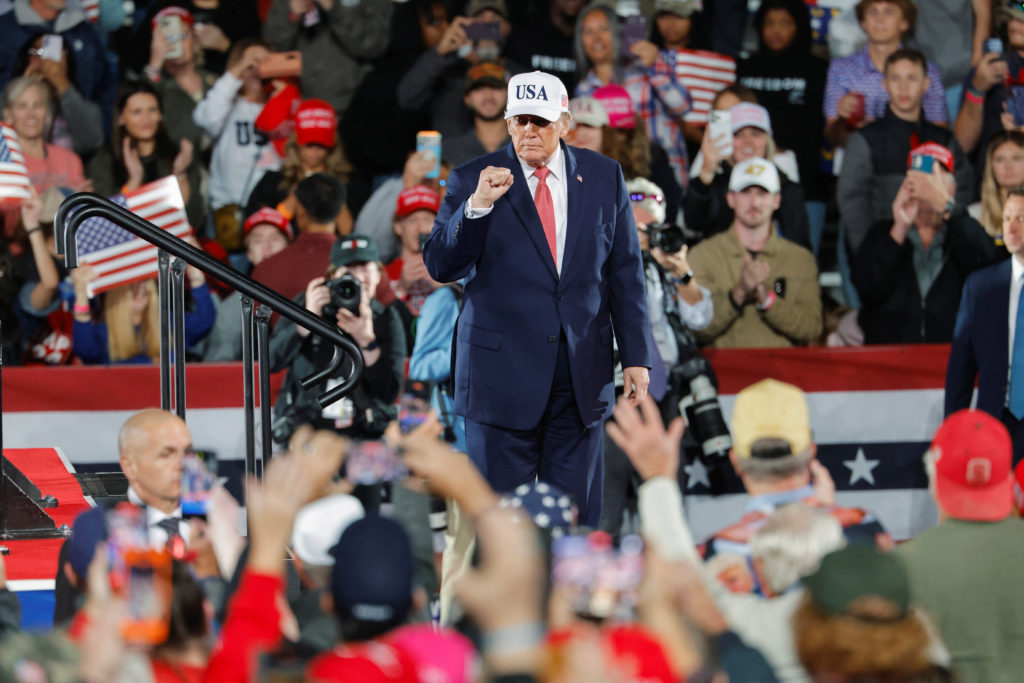
Trump's political groups spend nearly $277 million in late midterm blitz on behalf of GOP candidates


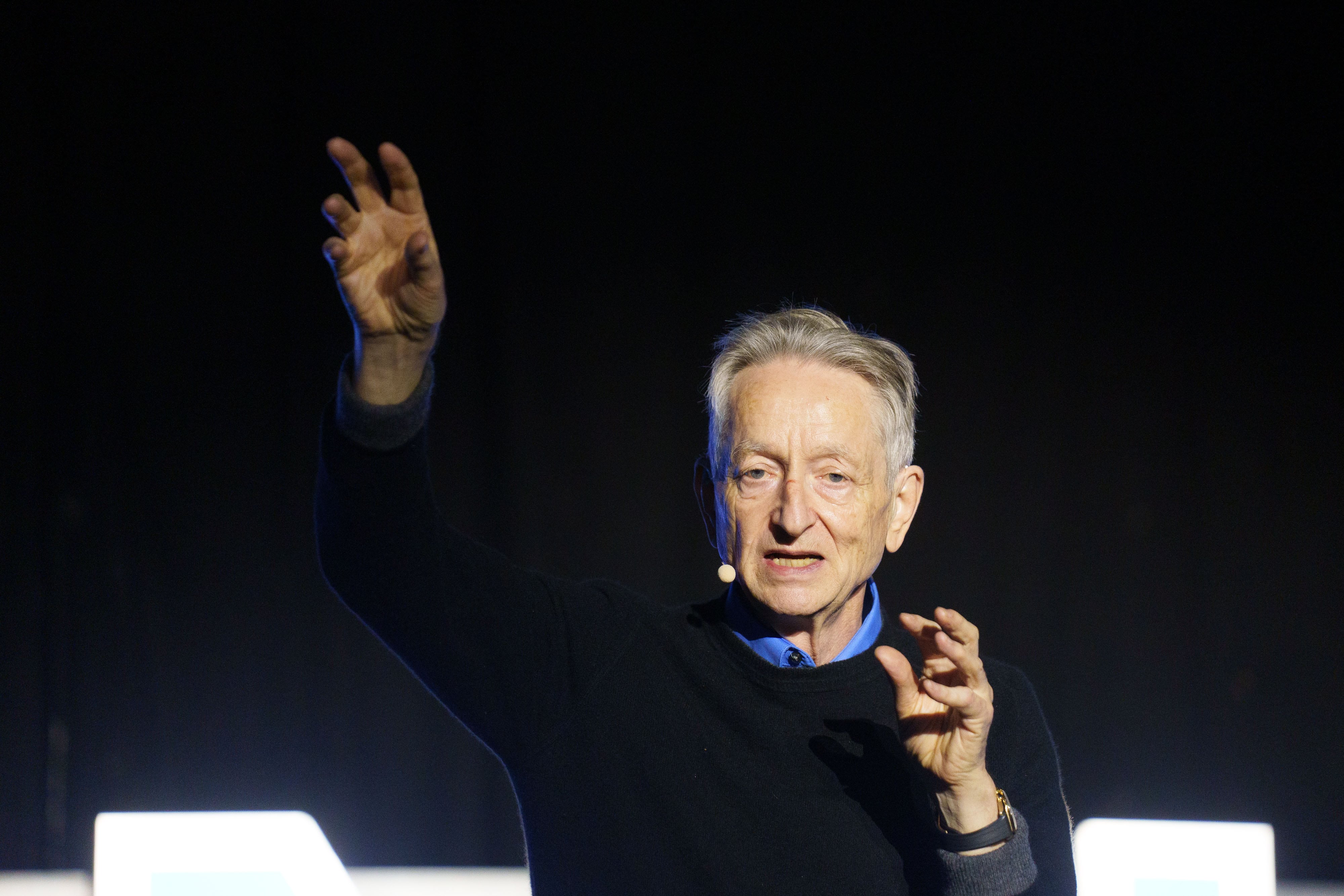
Years ago, when people asked Geoffrey Hinton why he worked on artificial intelligence, he would repeat a line from J. Robert Oppenheimer, one of the creators of the atomic bomb: “When you see something that is technically sweet, you go ahead and do it.”

© Ramón de la Rocha (EFE)
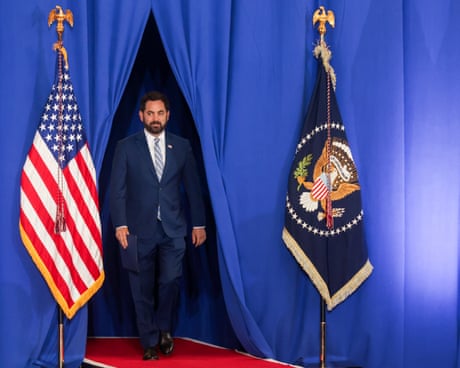
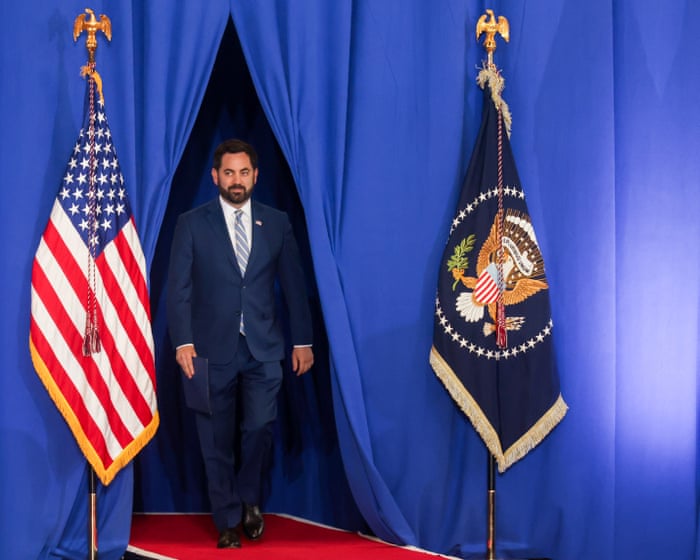
Incumbent Mike Lawler is fending off a challenge from Democrat Cait Conley in state’s 17th congressional district
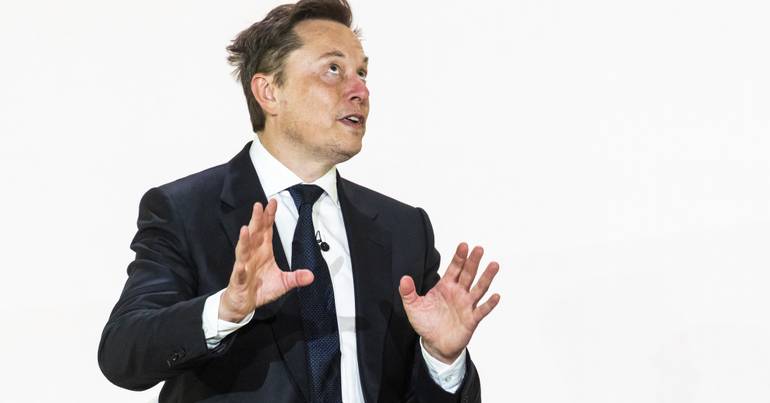
Elon Musk’s Super Pac has spent more than $500,000 in New York’s highly competitive 17th congressional district race to help Mike Lawler, the Republican incumbent, hold on to his seat.
Lawler, a moderate Republican, is fending off a challenge from Democrat Cait Conley in the Hudson valley. It is among the most-watched races that could determine whether Republicans hold on to their majority in Congress.
Continue reading...
© Photograph: Michael Nagle/Bloomberg via Getty Images

© Photograph: Michael Nagle/Bloomberg via Getty Images

© Photograph: Michael Nagle/Bloomberg via Getty Images
Un unico gruppo da 3.600 miliardi di dollari di capitalizzazione e circa 155mila dipendenti con attività che spaziano dalle auto elettriche ai razzi spaziali, dai satelliti all’intelligenza artificiale. E con un fabbisogno finanziario altrettanto imponente. Il progetto di fusione tra Tesla e SpaceX, i due gioielli dell’impero del multimiliardario Elon Musk, potrebbe ridisegnare gli equilibri dell’industria tecnologica e finanziaria. Per chi possiede direttamente azioni delle due società, ma pure per i risparmiatori esposti indirettamente attraverso fondi comuni, Etf e fondi pensione.
L’uomo più ricco del mondo ha definito l’unione una “buona idea” e ha annunciato la creazione di comitati ad hoc nelle due società per valutarla: lui non ne fa parte essendo in conflitto di interessi. L’obiettivo sarebbe riunire sotto un’unica struttura Tesla, impegnata nelle auto elettriche, nella robotica e nella guida autonoma, e SpaceX, protagonista dei lanci spaziali e dei servizi satellitari, con importanti contratti pubblici negli Stati Uniti. Quotata a giugno, quest’ultima ha archiviato il terzo trimestre in grande spolvero, con ricavi in crescita del 161% a 14,6 miliardi di dollari e utile in salita a 4,4 miliardi, più del doppio dei due miliardi attesi dagli analisti e in forte accelerazione rispetto al rosso di 1,1 miliardi dello stesso periodo dello scorso anno. Ma anche le spese in conto capitale per sostenere i progetti spaziali e quelli legati all’intelligenza artificiale sono salite a 19,6 miliardi dai 18,4 miliardi del secondo trimestre.
Secondo il Financial Times, che cita le stime degli analisti raccolte da Visible Alpha, il nuovo gruppo avrebbe ricavi per 153 miliardi di dollari ma un flusso di cassa negativo per almeno 54 miliardi. Vuol dire che gli investimenti e le altre uscite di cassa potrebbero superare le risorse generate dalla gestione, rendendo necessario finanziare il buco con liquidità disponibile, debito o nuovi capitali.
Il primo nodo per gli investitori sarà il prezzo attribuito alle due società e il rapporto di cambio con cui le azioni verrebbero convertite. Se il mercato giudicasse SpaceX sopravvalutata o temesse che Tesla si accolli rischi e investimenti eccessivi, l’operazione potrebbe penalizzarli. C’è poi la questione del controllo. Musk dispone di circa l’84% dei diritti di voto di SpaceX grazie alle azioni con supervoto, mentre in Tesla la sua influenza è inferiore. La fusione rafforzerebbe ulteriormente il suo potere. Questo mentre già da tempo, nota il Ft, “gli investitori si interrogano sulla capacità di Musk di concentrarsi su tutti i suoi progetti” e “gli azionisti non riescono a capire dove stia investendo la maggior parte delle sue energie o del suo denaro”.
L’operazione dovrebbe inoltre superare l’esame delle autorità regolatorie e ottenere il consenso degli azionisti. Oltre agli Stati Uniti, servirà il via libera di giurisdizioni come Unione europea, Regno Unito e Cina. Pechino è un ostacolo particolarmente delicato: secondo il Ft Tesla ha generato nel Paese 21 miliardi di dollari di ricavi nel 2025, circa il 22% del totale, mentre SpaceX è un importante contraente della difesa americana.
Le conseguenze della fusione potrebbero toccare anche chi non ha mai comprato un’azione Tesla. Il titolo è presente in numerosi indici azionari e può quindi entrare nei portafogli di fondi comuni, Etf e gestioni patrimoniali. Raggiungendo anche chi investe per la pensione integrativa. I possibili caveat, al netto dell’eventuale oscillazione del titolo, comprendono anche la concentrazione del rischio in un gruppo sempre più legato alle scelte di Musk, alle aspettative sull’intelligenza artificiale e alle politiche industriali e militari statunitensi.
L'articolo Musk punta a fondere SpaceX e Tesla: obiettivo un gruppo da 3.600 miliardi. E più potere nelle mani del multimiliardario proviene da Il Fatto Quotidiano.
Ukraine's access to Starlink is up to SpaceX and Elon Musk, not the White House, U.S. Secretary of State Marco Rubio said on Wednesday.
The post Marco Rubio: Elon Musk Decides Ukraine’s Access to Starlink, Not the White House appeared first on Breitbart.
Elon Musk says that Tesla and SpaceX have each set up special committees to discuss a possible merger between the two companies he leads as CEO.
The post Elon Musk Says Tesla, SpaceX Form Committees to Weigh Merger appeared first on Breitbart.


© JIM LO SCALZO/EPA


Las cuatro mayores operadoras de telecomunicaciones europeas –Deutsche Telekom, Orange, Telefónica y Vodafone– planean una alianza para competir con la empresa estadounidense de satélites Starlink en el negocio de la conectividad vía satélite. Cualquier ambición de librarse de la dependencia de Estados Unidos y otras potencias que erosionan o directamente atacan los intereses de Europa, debe empezar con movimientos como este. Aunque se encuentra en una fase embrionaria, el proyecto supone un avance en el refuerzo de la autonomía, la seguridad y la resiliencia en infraestructuras críticas de la Unión Europea.

© aire images (Getty Images)
La película de Pixar Monstruos, S. A. pasa en un mundo de fantasía donde toda una sociedad industrial se sostiene sobre la energía de los gritos de los niños. Para eso, hay toda una factoría, ocupando una gigantesca nave industrial, que va poniendo a disposición de monstruos profesionales puertas mágicas que les conducen a las habitaciones infantiles. Los monstruos entran, asustan y se van a quedar con los amigos o a cenar. Para ellos es una industria cualquiera.

© Cantero de las Muelas. Lucía
Elon Musk has contributed more than $276 million since July to Republican political causes ahead of the United States midterm elections on 3 November. Meanwhile, US Secretary of State Marco Rubio has said decisions over Ukraine’s access to SpaceX satellite communications rest with the company rather than the White House. Both developments demonstrate how private technological and financial resources can influence decisions traditionally associated with government.
For journalist Gil Durán, author of The Nerd Reich: Silicon Valley Fascism and the War on Democracy, published by Avid Reader Press in August 2026, the issue extends beyond campaign donations. In a recent interview, he argued that a group of Silicon Valley investors is using its financial influence and control of technology to challenge the authority of elected governments.
“We’re at a decisive stage of that race,” Durán said when asked about the contest between technology and democracy described by venture capitalist Peter Thiel. His argument is that wealth alone no longer satisfies some of the industry’s most influential figures; they also want a direct role in determining how societies are governed.
Durán places Thiel at the centre of this movement. In a 2009 essay, The Education of a Libertarian, the PayPal co-founder wrote that he no longer believed freedom and democracy were compatible. He argued that technological innovation could allow individuals to escape the constraints of conventional politics.
Thiel subsequently clarified that he was not advocating disenfranchisement. His stated position was that majority rule often frustrated individual liberty. Durán, however, interprets the essay and Thiel’s subsequent political investments as evidence of a sustained interest in diminishing democratic constraints on private power.
The book also examines The Sovereign Individual, a 1997 work by James Dale Davidson and William Rees-Mogg that anticipated how digital currencies and technological change might weaken the power of nation states. Durán sees its influence in later arguments for privately organised alternatives to traditional government.
One example is The Network State, developed by entrepreneur Balaji Srinivasan. It proposes that online communities could acquire territory and eventually obtain diplomatic recognition. Advocates describe a voluntary model of political organisation; Durán regards the prospect of corporate-financed jurisdictions as a challenge to public accountability.
The relationship between Thiel and Vice-President JD Vance illustrates how venture capital can translate into political influence. Thiel supported Vance’s early investment career and contributed $15 million to a super PAC backing his successful 2022 Senate bid. Durán attributes much of Vance’s political ascent to that support, although voters, party endorsements and Vance’s own campaigning also shaped the result.
Musk’s latest contributions offer a more immediate example. His donations since July include $158 million to the Senate Leadership Fund and more than $76 million to America PAC. Such spending is lawful under the rules governing independent political committees, which cannot coordinate their expenditure with candidates.
Durán contends that similar pressures affect Democrats, arguing that wealthy donors can exercise influence across party lines. His criticism therefore concerns the political system’s dependence on private funding as much as any particular administration.
The consequences extend beyond elections. Ukraine’s dependence on satellite communications has exposed how a privately owned service can become essential to military operations. Restrictions affecting Starlink-related services have prompted competing accounts from US officials and SpaceX over responsibility for the decision. Rubio’s latest remarks point towards commercial control, while earlier reporting attributed the decision to Washington.
Artificial intelligence raises comparable questions of ownership and oversight. Durán argues that investors promoting transformative AI may also seek regulatory conditions that protect their substantial financial commitments. His prediction of a possible investment bubble remains a judgement, not an established outcome.
In Europe, the debate has immediate regulatory consequences. The EU’s Digital Services Act requires major online platforms to assess risks to elections and civic debate, while enforcement of important provisions of the AI Act began in August 2026. These measures address the influence of companies whose platforms and systems operate across borders.
Durán’s interpretation of Silicon Valley as a coherent anti-democratic movement remains contested. The entrepreneurs he discusses have differing interests, and their political influence does not itself establish a common plan to dismantle democratic government.
Their influence is nevertheless measurable in campaign finances, government contracts and control over infrastructure essential to national security. None of these forms of power requires holding elected office.

Ukrainian drone maker Wild Hornets is rethinking projects it is currently working on, including launching interceptors from aerial platforms, because of limits on SpaceX’s Starlink satellite internet. Spokesman Mike Orliuk told The War Zone (TWZ) this on 20 October. The company builds Sting interceptors, which it says destroyed over 15,000 Shaheds and Gerberas, a cheaper Shahed lookalike, in a year. Orliuk said Sting’s current operations are unaffected.
The stakes rise as Russia shifts to faster drones. Ukrainian defense technology adviser Serhii Beskrestnov counted more than 2,500 jet-powered Gerans, Russia’s version of the Shahed, in August. President of Ukraine Volodymyr Zelenskyy said on 16 October that these drones fly faster than 400 km/h. He added that some Ukrainian interceptors chasing them work through Starlink. When the link was slowed, Ukraine could not intercept some of them, he said.
“Our own communications system provides the basic connection to our interceptors,” Orliuk said. The company’s remote-control technology can draw on various internet sources, he added, though the military often uses Starlink. Even then, the terminal does not need to move at high speed. It only links the command center to a ground station, which Orliuk compared to a cell tower.
“For these needs, everything is operating normally with Starlink at the moment,” he said.
“Some drones carry a terminal on board and need to fly at high speed with it,” Orliuk said. “In such cases, Starlink’s limitations make their operation impossible.”
That is why the company is rethinking the air-launch project. Wild Hornets has made no clear decision yet but will test alternatives, Orliuk said. He declined to describe them.
“I believe, in any case, depending on a single solution is very risky,” he said.
Orliuk said he has spoken with other companies that rely far more on Starlink and have expressed concerns. He pointed to growing interest in Europe’s Eutelsat network, though “creating something like Starlink won’t be easy.”
Who ordered the slowdown remains unclear. The order to slow Ukraine’s Starshield service came from inside the White House, two US officials and a Western official said. A US official told TWZ the president never made such a request. US Secretary of State Marco Rubio said on 17 October that the slowdown had “nothing to do with the White House” and called “a report on that” “categorically false,” without saying which report he meant.

Elon Musk ordered the speed cap on Starshield, the military version of SpaceX’s Starlink network that Ukraine’s drones rely on, The Wall Street Journal reported on 20 October. Earlier, Musk said that such limits are decided by the US military and “ultimately POTUS.” Speaking to reporters in Eau Claire, Wisconsin, on 20 October, according to WSJ, US Defense Secretary Pete Hegseth said, “We haven’t made any directives or anything like that,” CBS News reported.
For a week, no one with a hand on the system said the decision was theirs. Musk pointed to the US military and the president, and Trump said he did not know who it was. Meanwhile, Ukrainian officials said the cap has hampered the drones they use to intercept Russian Shaheds and to strike Russian forces in occupied territory. Kyiv says the cap remains in place, and at about 160 km/h it makes intercepting jet-powered drones and missiles that fly about twice as fast virtually impossible.
Musk capped the speeds at which Ukrainian hardware could stay connected to the network, people familiar with the matter told WSJ. The slowdown, which began on 14 October, left some of Ukraine’s strike and interceptor drones virtually useless, WSJ said.
WSJ’s sources differ on Trump’s role. Some US officials said Musk acted on his own and that Trump did not specifically order any retribution against Ukraine. One person said Musk spoke with several senior administration officials, Trump among them, before imposing the cap. Two people said Musk and Trump discussed the decision by phone soon after the slowdown became public.
During the uproar, SpaceX representatives called White House counterparts. They asked for a shared message that the company and the administration had coordinated before Musk’s directive, the people said. The White House ran an informal inquiry into who ordered the slowdown, WSJ said.
Musk held several conversations with administration officials before the order to understand the president’s thinking, CBS reported, citing sources. He dislikes his company being seen as profiting from the war, and it is unclear how his order was carried out, CBS said.
Hegseth said the US had not pulled anything back. He said Starlink “has the option” to make decisions under its terms of service, and that from the Pentagon’s view nothing had changed, CBS reported.
Speaking to reporters as he left the White House on 16 October, Trump said he did not think either he or Musk was responsible, The Telegraph reported. On 19 October, he said, “I don’t know who it was, but I’d like to find out.”
Last week, a bipartisan group of senators asked the Pentagon’s inspector general to investigate whether officials “directed” or “authorized” changes to Starlink and Starshield services and intelligence sharing affecting Ukraine.
On 15 October, Reuters reported that the order came from inside the White House. The officials said Pentagon leaders received a message that the Starshield service for Ukraine’s military needed to be slowed, but did not say who made the decision or who carried it out. A senior US official said “No such request was ever made by the president.”
On 16 October, The Telegraph reported, citing four sources, that Musk approached Trump with the idea of the speed limits. One of the sources said Trump agreed.
Michael Kofman, a war analyst at the Carnegie Endowment, said, according to WSJ, that Ukrainian strike and interceptor drones remain limited to 160 km/h. He said actual connections run below 130 km/h, which still hampers strikes and air defense.
On 20 October, Ukraine’s top diplomat in Washington, Denys Sienik, said Kyiv was still waiting for answers from the Pentagon and SpaceX, WSJ reported.
O secretário de Estado dos EUA, Marco Rubio, afirmou nesta quarta-feira (21) que as decisões relativas ao acesso da Ucrânia ao Starlink cabem à SpaceX e a Elon Musk, e não à Casa Branca — comentários que sugeriram que Musk poderia ter restringido o acesso de Kiev ao serviço.
O Wall Street Journal noticiou na terça-feira (20) que Musk havia ordenado a redução da velocidade de uma versão de nível militar do Starlink, da qual a Ucrânia depende para se defender contra ataques com mísseis da Rússia.
Segundo o jornal, uma fonte disse que Musk, o presidente Donald Trump e autoridades da Casa Branca discutiram o assunto previamente, e duas fontes afirmaram que Musk e o presidente discutiram o assunto nos dias seguintes à redução da velocidade.
“Não tenho conhecimento de que soubéssemos dessa decisão com antecedência. Mas isso é irrelevante”, disse Rubio a repórteres durante uma viagem à Índia.
“O ponto principal é que isso é regido por um contrato comercial privado quanto à forma como seus equipamentos podem ser utilizados e a quais velocidades eles permitem que sejam utilizados.”
Musk e a SpaceX não responderam aos pedidos de comentário da Reuters.
De acordo com a Reuters, duas autoridades norte-americanas e uma autoridade ocidental a par do assunto disseram que a decisão, em última instância, partiu da Casa Branca. Essa versão também foi afirmada pelo presidente ucraniano Volodymyr Zelenskiy, mas negada pelo governo.
Os comentários de Rubio provavelmente intensificarão as preocupações em Washington quanto à capacidade singular de Musk de influenciar a política externa dos EUA. Eles também representam uma aparente mudança de posição por parte do governo.
Trump afirmou publicamente que acreditava que nem ele nem Musk estavam por trás da desaceleração. Ao partir para uma viagem ao Uzbequistão e à Índia no sábado, Rubio havia dito que ninguém ordenou a desaceleração, uma afirmação que gerou críticas de parlamentares de ambos os partidos.
“Não tenho certeza se Zelenskiy sabe do que está falando, mas não foi deliberado”, disse Rubio na ocasião.
“Não temos nada a ver com isso. Eu não — os Estados Unidos, ninguém ordenou que a velocidade do Starlink fosse reduzida. Aconteceu de certa forma, mas, pelo que entendi, já foi restaurada”, declarou Rubio.
Análise: Tensões entre Trump e Zelensky ameaçam apoio dos EUA à Ucrânia