❌

Reading view

Romania Ends Six-Month Political Deadlock as New Government Takes Office

Romania has formed a new government after six months of political deadlock, with parliament approving a minority administration led by independent diplomat Luca Niculescu on Tuesday, 20 October. The vote brings an end to repeated failed attempts to establish an executive, although the new prime minister faces considerable uncertainty over his government’s parliamentary support.

Niculescu secured 280 votes in favour and 58 against, comfortably exceeding the 233 required for confirmation. His ministers were sworn in before President Nicuşor Dan at the Cotroceni Palace in Bucharest later that evening, formally ending the prolonged government formation process.

The new administration comprises 18 ministers, including two delegated ministers. The Social Democratic Party (PSD) controls the majority of portfolios, while independent specialists hold several important positions, including finance and foreign affairs.

A government built on temporary parliamentary support

The appointment represents a political success for President Dan, who nominated Niculescu on 5 October following three unsuccessful attempts to assemble a functioning government.

EU Today reported earlier this month on Niculescu’s nomination, which followed the collapse of previous negotiations and growing pressure on Romania’s political institutions.

The new cabinet is heavily dependent on agreements between parties that have frequently disagreed over economic policy and public spending. Although the parliamentary vote demonstrated sufficient support for its installation, the arrangement does not provide the government with a permanent majority.

The National Liberal Party (PNL) and the Democratic Alliance of Hungarians in Romania (UDMR) supported the investiture while remaining outside the administration.

The arrangement gives Niculescu an opportunity to govern, but each major legislative proposal will require continued cooperation between parties with competing priorities.

The Social Democrats, who hold 11 of the ministerial positions, will exercise substantial influence over domestic policy, particularly decisions involving public-sector spending, welfare and taxation.

Budget deficit presents immediate challenge

Romania’s public finances represent the government’s most urgent problem.

The previous administration, led by Ilie Bolojan, collapsed in May following unpopular austerity measures. Political opposition to fiscal consolidation has complicated efforts to stabilise the budget and meet Romania’s commitments under the European Union’s fiscal framework.

Niculescu has indicated that addressing the deficit will be an immediate priority. Finance Minister Alexandru Nazare, appointed as an independent, faces the task of establishing a credible budget programme without provoking another parliamentary crisis.

The choices are politically difficult. Spending reductions risk resistance from public-sector employees and households already affected by higher living costs, while substantial tax increases could place further pressure on businesses and consumption.

Failure to establish a credible fiscal programme would prolong uncertainty over Romania’s borrowing requirements and its ability to comply with European budgetary obligations.

Brussels has a direct interest in the outcome. Romania remains subject to EU fiscal oversight, and the European Commission will assess whether the new administration’s financial plans are consistent with the country’s obligations.

The government’s credibility will depend on whether its parliamentary supporters are prepared to approve the measures that fiscal consolidation requires.

European funds and political credibility

The change of government also comes at a sensitive moment in Romania’s relationship with European institutions.

Romania has faced scrutiny over reforms linked to the EU’s Recovery and Resilience Facility, particularly legislation concerning public integrity and institutional accountability.

EU Today previously examined the European Commission’s assessment of Romania’s integrity legislation and its implications for recovery funding.

Although the EU recovery programme reached its principal implementation deadline in August, outstanding assessments and financial decisions continue to carry consequences for national budgets.

A functioning government is therefore important not only for domestic legislation but also for negotiations with Brussels over fiscal commitments, investment and the wider EU budget.

Romania must also address longer-term weaknesses in public administration, infrastructure financing and the implementation of European legislation.

Political stability remains uncertain

Niculescu takes office against the background of Romania’s unusually turbulent political history since the annulment of the 2024 presidential election amid allegations of Russian interference.

The subsequent institutional disputes damaged confidence in the political system and contributed to the fragmentation of parliamentary support.

Opposition parties, including the nationalist Alliance for the Union of Romanians (AUR), are positioned to challenge the government’s legitimacy and economic measures as the administration begins work.

Romania’s strategic importance extends beyond its domestic political difficulties. As an EU and NATO member bordering Ukraine and Moldova, it plays a substantial role in Black Sea security, military logistics and regional infrastructure.

Prolonged instability in Bucharest has therefore affected a country whose decisions carry consequences for European security and cross-border economic cooperation.

For the new prime minister, the immediate objective is to translate Tuesday’s parliamentary majority into support for legislation. His first serious test will come when the cabinet presents the fiscal measures that its supporters have so far struggled to agree upon.

The parliamentary vote has ended Romania’s government formation crisis. It has not resolved the disagreements that produced it.
  •  

NATO to bolster Black Sea presence with patrol aircraft, drones after attacks on commercial ships

"Allies have or will send additional maritime patrol aircraft, radar systems, explosive exploitation teams, intelligence personnel, drones, and more to the Black Sea," U.S. Army Col. Martin O'Donnell, a NATO military spokesperson, said in a statement.

  •  

Nato increases Black Sea deployment amid escalating deadly Russian attacks

Mounting anxiety as Russia’s war on Ukraine reaches Nato’s borders with targeting of vessels transporting agricultural cargo

Nato is deploying additional military assets to the Black Sea amid the recent deadly escalation of Russian attacks on merchant shipping, as five more vessels were attacked on Tuesday.

Russia’s military said it ⁠struck ​three cargo vessels in Ukraine’s ⁠port of Reni and two ⁠other cargo vessels en ​route ‌to ‌Odesa.

Continue reading...

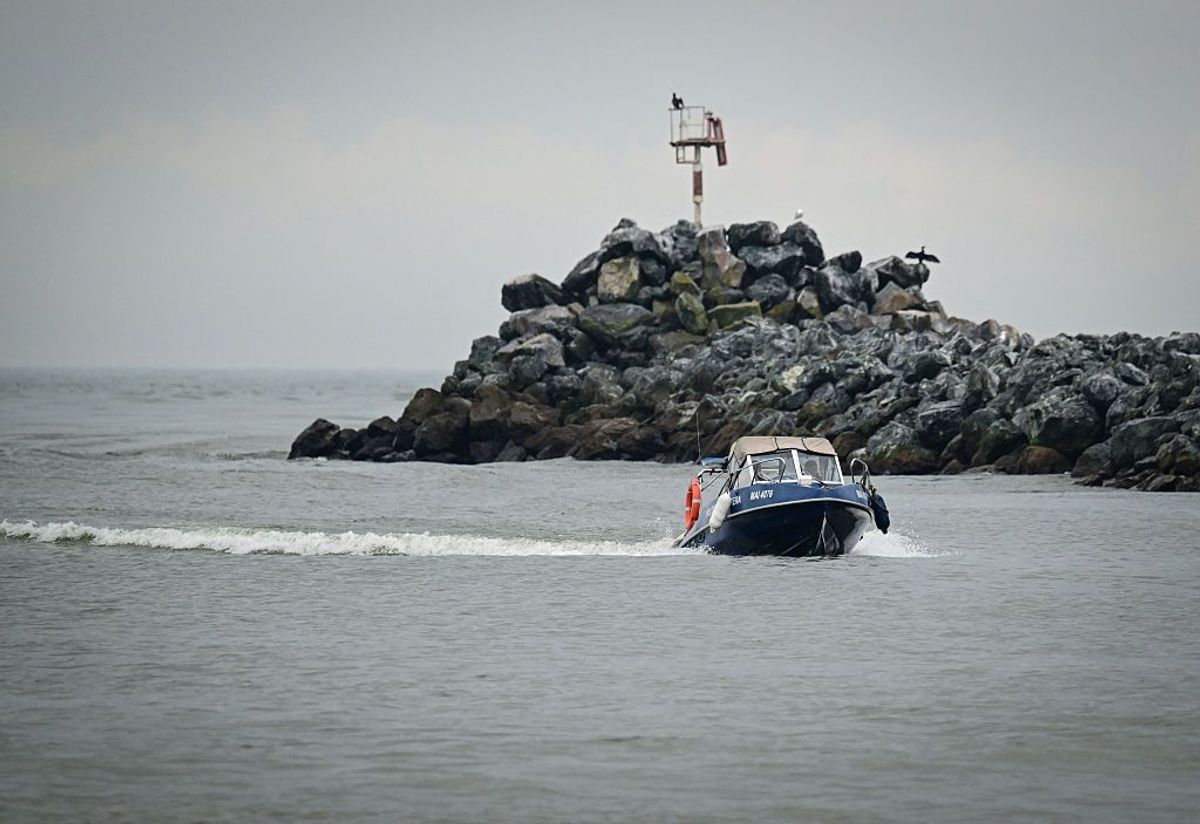
© Photograph: MAPN/Romanian Defence Ministry/AFP/Getty Images

© Photograph: MAPN/Romanian Defence Ministry/AFP/Getty Images

© Photograph: MAPN/Romanian Defence Ministry/AFP/Getty Images

  •  

EU unlikely to send Black Sea naval mission to repel Russian drone attacks on Ukrainian grain ships, despite Kallas’ support

The EU’s top diplomat has backed the idea of a Black Sea naval mission to protect grain ships from Russian drones – but this would require a much bigger effort than Europe’s existing Red Sea operation, while air-policing might be more effective.

“The EU should send a mission to the Black Sea,” said EU foreign affairs chief Kaja Kallas in the European Parliament in Strasbourg on Tuesday (20 October).

“To protect merchant shipping, not to escalate, not to scare anyone, but to make sure that we will supply safely fuel, merchandise at normal prices, anything we need. This is how it should be,” she said.

Some “six attacks in 10 days by suspected Russian drones marks a dangerous and unacceptable escalation,” in the region, Kallas added, with “rescuers
still searching for seven sailors missing after the drone attack on two tankers near Romania’s Black Sea coast”.

The Russian attacks were costing Ukraine €60m a day in lost exports of grain and fertiliser, Kallas also said.

And Russia had changed its tactics to start targeting people instead of cargo, said Sidharth Kaushal, from the Royal United Services Institute (RUSI) defence think-tank in London.

“Before, they targeted ports, not civilians, or vessels at sea. They realised that threat to life is a much more effective deterrent to commercial shipping than threat to cargo,” he told EUobserver.

This article continues, but the full version is available only to EUobserver.com subscribers. Visit account.euobserver.com/membership

  •  

Romania downs two Russian jet drones near Sulina, days before NATO allies meet on Black Sea security

romania downs two russian jet drones near sulina days before nato allies meet black sea security · post missile fired romanian f-16 during mission shoot down over 17 2026 853877788_1089835267016426_3152631372123116528_n

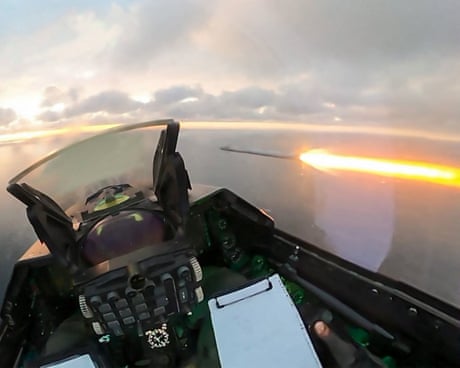
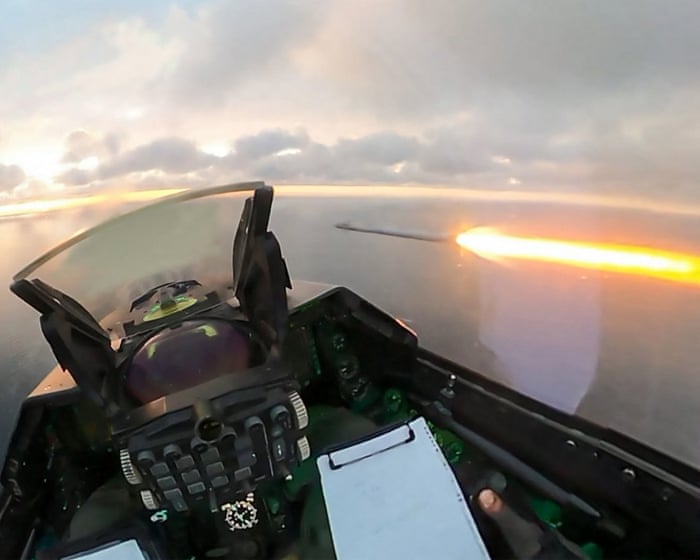
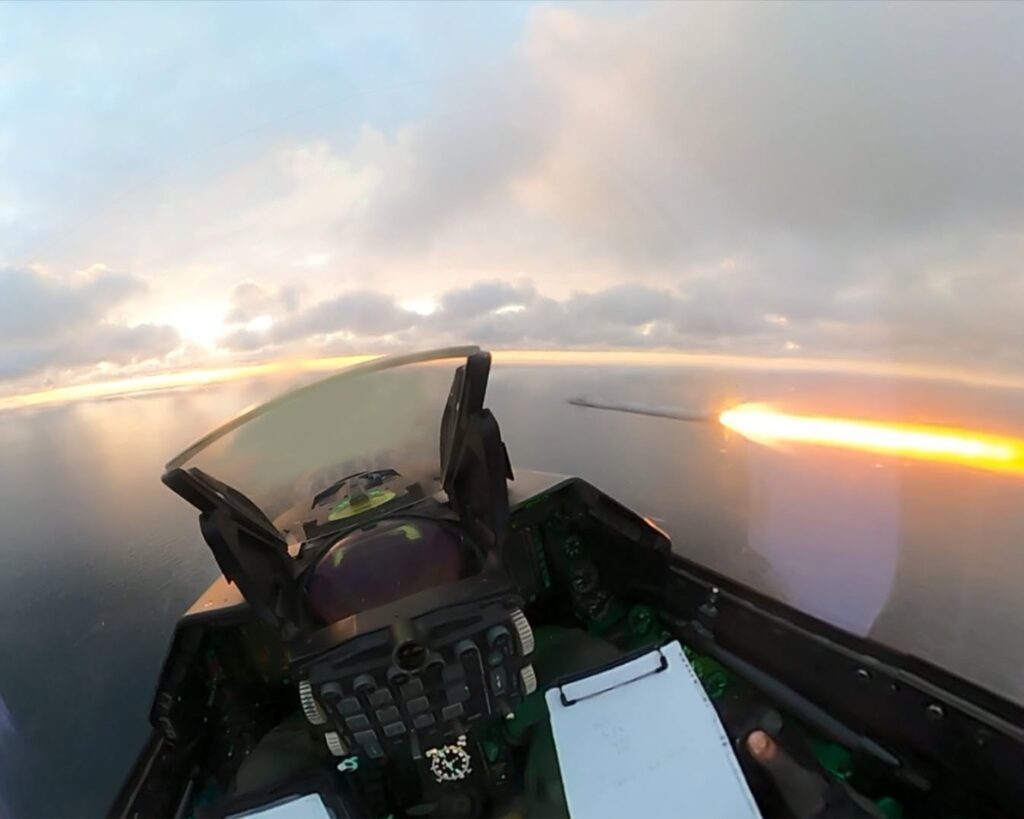
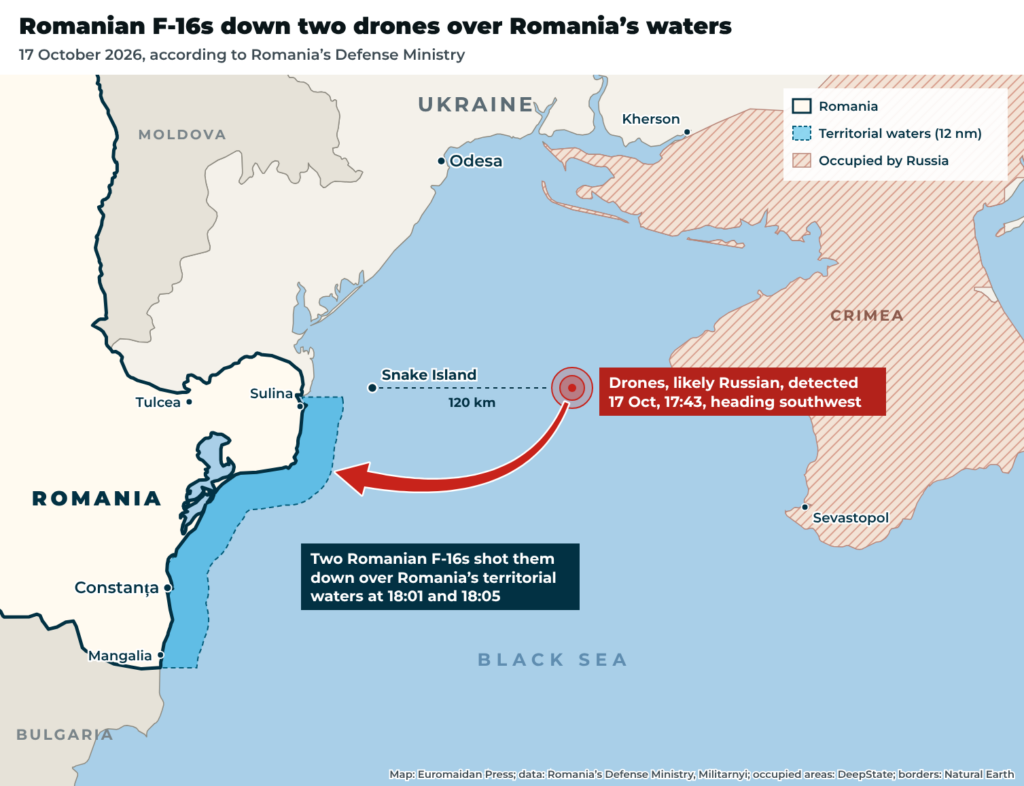
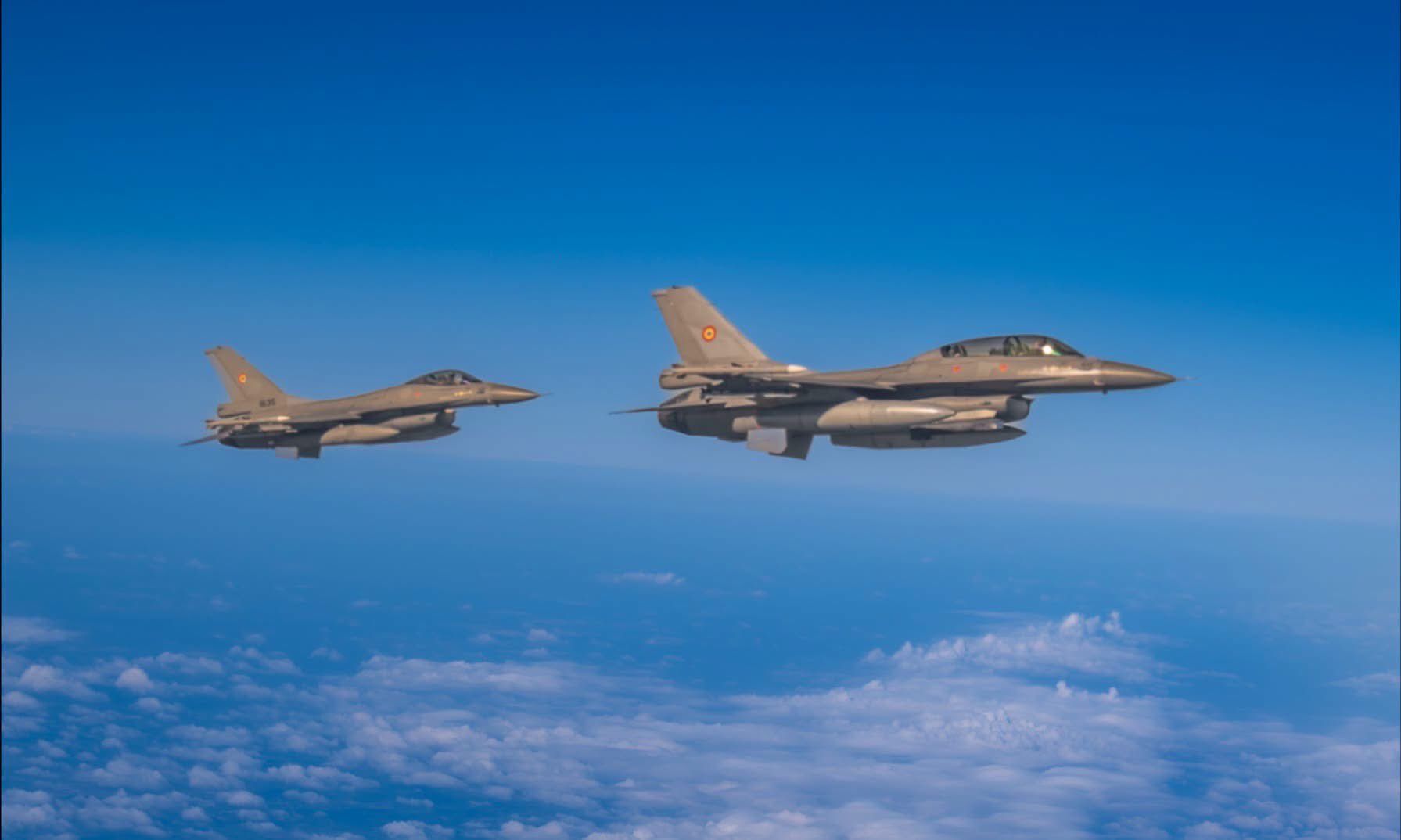
Two Romanian F-16s shot down two jet-powered Russian Geran attack drones over Romania’s territorial waters near Sulina on the evening of 17 October, Romania’s Defense Ministry said. The ministry released cockpit images of the mission the next day, as NATO allies prepare to discuss Black Sea security at a special session Romania requested.

This comes as Moscow continues its air attacks on Ukraine, while the US is trying to make deals with Russia over its diesel and lift sanctions. Russia keeps striking Ukraine’s energy system and cities, while its drones and suspected saboteurs keep turning up inside NATO, from tankers hit off Romania to a foiled arson attempt at a Starlink site in Lithuania.

Down within minutes

The F-16s took off from the 86th Air Base at Borcea at 17:43 after radar detected a group of air targets about 120 km east of Zmiinyi (Snake) Island, flying southwest, Ukrainian military outlet Militarnyi reported, citing the ministry. The first drone entered Romanian airspace at 17:59 and was shot down at 18:01 southeast of Sulina. The second entered at 18:01 and was downed at 18:05 east of Sulina.

romania downs two russian jet drones near sulina days before nato allies meet black sea security · post where romanian radar detected about 120 km east snake island f-16s shot
Where Romanian radar detected two drones, about 120 km east of Zmiinyi (Snake) Island, and where Romanian F-16s shot them down over Romania’s territorial waters near Sulina, 17 October 2026. Map: Euromaidan Press

Both were jet-powered attack drones of the Geran family, the ministry said. The Geran is Russia’s version of the Iranian-designed Shahed. When first detected, the drones were about 65 km from the coast of Russian-occupied Crimea and 140 km from the Ukrainian-held shore, and their southwest course may point to Russian origin, Militarnyi calculated.

The White House, seen from Lafayette Square. File photo, June 2024.
Explore further

Congress gave Trump 30 days to hit Russia’s oil buyers with 100% tariffs. He waives them two days before deadline, citing US interests. Moscow calls it historic

The ministry posted the cockpit images on 18 October, showing a missile launch and a fireball over the sea. “Targets spotted, identified, engaged and neutralized!” it wrote.

romania downs two russian jet drones near sulina days before nato allies meet black sea security · post fireball over seen cockpit romanian f-16 during mission shoot down 17 2026
A fireball over the Black Sea seen from the cockpit of a Romanian F-16 during the mission to shoot down two drones near Sulina, 17 October 2026. Photo: Romanian Defense Ministry/Facebook

Allies to meet on the Black Sea

A special session of the North Atlantic Council, NATO’s top decision-making body, will discuss defense and deterrence in the Black Sea on 20 October at Romania’s request. Romanian President Nicușor Dan has confirmed that the two tankers that caught fire near Sulina last week were hit by drones, and a NATO military source told Reuters they were Russian.

Romanian radar has logged 54 drone intrusions into the country’s air and sea space since Russia’s full-scale invasion, 35 of them this year, and the military has shot down six such targets in 2026, Defense Ministry data show.

romania downs two russian jet drones near sulina days before nato allies meet black sea security · post romanian air force f-16am/bm block 15 militarnyi f-16am вм повітряних сил румунії
A Romanian Air Force F-16AM/BM Block 15. Illustrative photo: via Militarnyi

Searches in Poland and Lithuania

Within hours, Poland’s Operational Command said it was checking a possible airspace violation by an unknown object overnight into 18 October. Troops, police, and military police searched for a possible crash site south of Lublin after residents reported the loud sound of a flying object around 02:00, Militarnyi reported.

On the morning of 18 October, an unknown drone entered Lithuania’s airspace and triggered air raid alerts, the country’s crisis management center said. NATO jets accompanied it but could not shoot it down because of bad weather, Defense Minister Robertas Kaunas said. Debris preliminarily identified as drone parts was later found in the village of Juodžioniai in Pasvalys district, and the army said the drone may have entered from the direction of Poland.

Romania moved from escorting Russia’s stray drones to firing on them in July, when its F-16s downed three in 72 hours.

  •  

Intensifying drone attacks on ships in Black Sea bring war ever closer to Nato shores

Six attacks in 10 days by suspected Russian drones mark dramatic escalation in maritime conflict

The first the crew of the Bulgarian ferry Dioscuria knew of an attack on a cargo ship in their country’s exclusive economic zone in the Black Sea in the early hours of 6 October was a distant explosion 70 miles off the coastal town of Byala.

The Turkish-owned Alfa Watan, heading for the Romanian port of Sulina, had been struck by suspected Russian air and naval drones. Arriving on the scene, Dioscuria found an overturned lifeboat and lifejackets in the water. There was no sign, however, of Alfa Watan’s crew of 10.

Continue reading...

© Photograph: ARSVOM/AFP/Getty Images

© Photograph: ARSVOM/AFP/Getty Images

© Photograph: ARSVOM/AFP/Getty Images

  •  

Ukraine war briefing: Trump’s sanctions waiver is a ‘60-day pause’ to analyse economic impact, says Rubio

Ukraine’s Zelenskyy expects Trump to lift more sanctions against Russia. What we know on day 1,698

US secretary of state Marco Rubio has said that US President Donald Trump’s waiver of sweeping sanctions and tariffs on Russia would be a 60-day pause to “analyse” their impact on the global economy. Rubio said also no one at the White House ordered the slow down of the speed of Ukraine’s access to Starlink to prevent it from being used on drones flying faster than 100mph, referring to Starshield, the military version of Elon Musk’s Starlink satellite internet network.

“The president wants to take the 60-day period of time to sort of analyse what imposing both sanctions and tariffs will mean to the global economy and even to the US economy,” Rubio said, noting that the economic restrictions involved a number of countries, not just Russia. Pointing to high energy prices and the Iran war, “we need that period of time to sort of study all this and figure out what the right combination is,” he said.

Trump’s abrupt decision to waive sanctions on Russia days before they were to take effect drew outrage Saturday from members of Congress, which had overwhelmingly passed the legislation. Republican Senator Rick Scott said it was clear Russia was the aggressor, and said the US had “to do everything we can to put economic pressure on Russia”. On social media, fellow Republican Thom Tillis described the move as “beyond irresponsible” and a capitulation “to a Russian dictator who illegally invaded Ukraine”.

The Ukrainian president, Volodymyr Zelenskyy expects the Trump administration to lift more sanctions against Russia in the future and has called for Europe to establish its own negotiations with Moscow as the US has sought better ties and business deals with the Kremlin. “Unfortunately, the lifting of sanctions will continue, and I believe that the ‘diesel deal’ is the first step,” said Zelenskyy on Saturday. “Unfortunately, it seems to me that this cannot stop Putin; on the contrary, he feels joy and happiness that he has such support.”

Zelenskyy said Ukraine’s lead negotiator, Rustem Umerov, had met Friday with US presidential envoy Jared Kushner, Trump’s son-in-law. Zelenskyy said the US was working to arrange a three-way meeting involving him, Trump and Putin, potentially in the Middle East, Europe or the US.

Russian air defence ⁠units intercepted and destroyed nearly ⁠200 Ukrainian ⁠drones ​headed for Moscow on Saturday, ⁠Mayor Sergei Sobyanin said on Telegram. Sobyanin, ⁠in a long ​series ‌of ‌online posts, noted ‌that 195 drones had been destroyed since midnight, with emergency crews examining debris on ‌the ground. Russia’s civil aviation authority, ​Rosaviatsia, said two Moscow airports – Domodedovo and Vnukovo – had ⁠suspended flight operations.

Romania said Saturday it shot down two Russian drones over the Black Sea, the latest in a spate of incidents believed to be spillover from Russia’s invasion of Ukraine. Ships have been attacked in recent days by drones in the Black Sea off the coast of Romania and Bulgaria.

Continue reading...

© Photograph: Mark Schiefelbein/AP

© Photograph: Mark Schiefelbein/AP

© Photograph: Mark Schiefelbein/AP

  •  

Romania finally holds Russia responsible for the drone attacks on ships off its coast, and wants a joint NATO command for the Black Sea

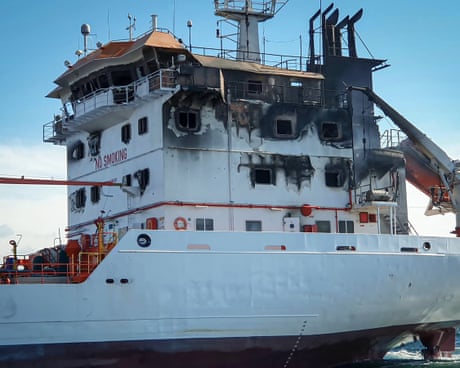
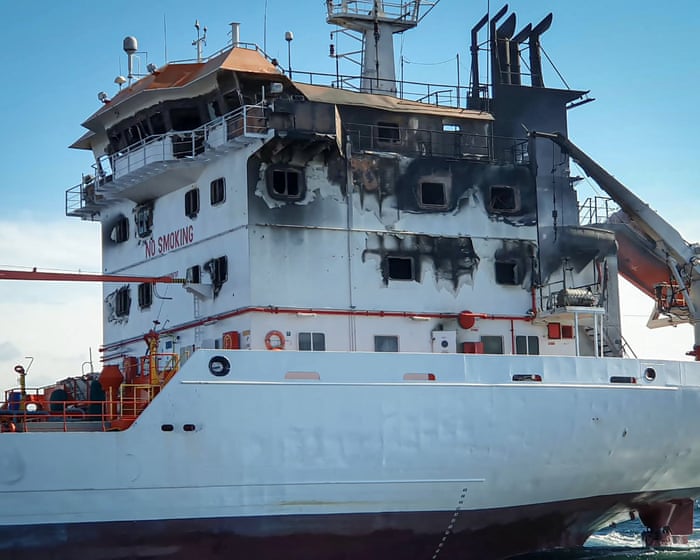
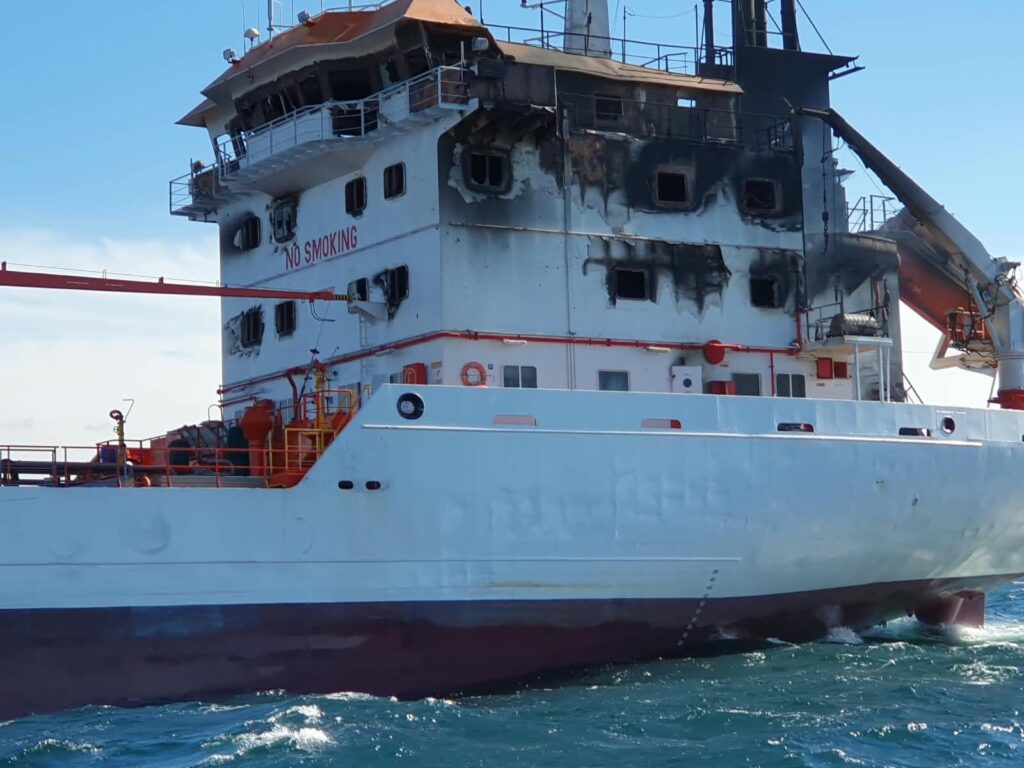
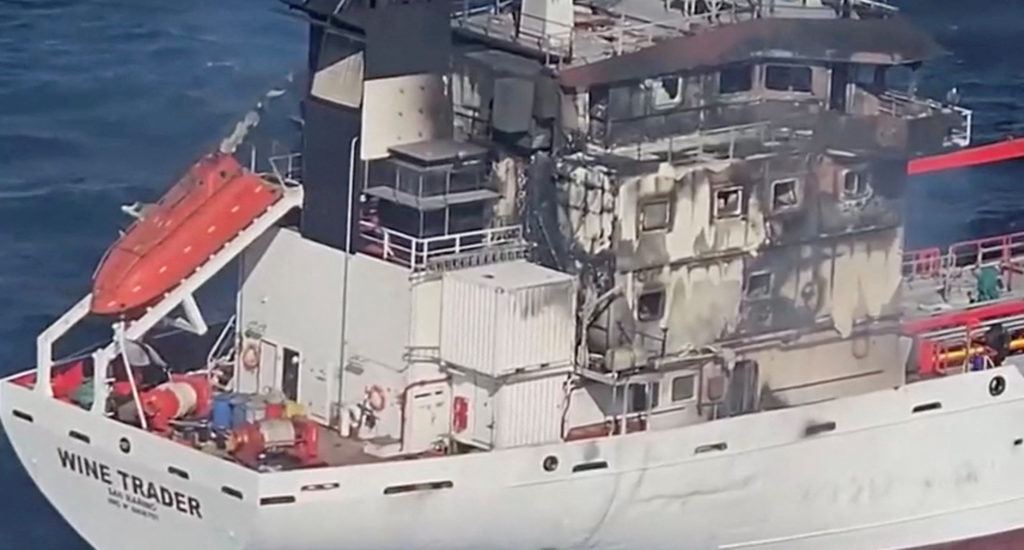
The San Marino-flagged chemical tanker Wine Trader near Sulina, Romania, on 15 October 2026, after it was hit by drones about 14 nautical miles off the coast. Seven of its 12 crew were reported missing. Photo: ARSVOM

Romania has proposed a joint NATO military command for the Black Sea, as drones hit four merchant ships in 24 hours, three of them off its coast, and its foreign minister said Russia "bears full responsibility." NATO ambassadors will discuss the attacks next week.

Russia’s strikes on merchant ships in the Black Sea have escalated this autumn and reached NATO shores. Drones have attacked at least eight merchant vessels near Romania and Bulgaria since 5 October, two of them inside Romania’s territorial waters. Until now, neither country had named the attacker, and Bulgaria still says it cannot prove who it was. Romania’s patience appears to have run out, and next week’s NATO meeting will show whether the alliance is ready to go further as Russia’s war spills beyond Ukraine’s borders.

Acting Defense Minister Radu Miruță wrote on Facebook on 14 October that "the Black Sea needs a joint military command of the NATO riparian states." "The Black Sea incidents, involving drones, sunk ships, and naval mines, oblige us to act, not wait," he wrote, after a call with his Bulgarian counterpart. Leadership and location would rotate among the member states. Romania is ready to host the command on its coast from 2028 and would accept a start on Türkiye's coast until then, he said. He proposed that Romania and Bulgaria send NATO a joint letter backing the idea.

The next day, Foreign Minister Oana Țoiu wrote on X that four commercial ships had been attacked over the previous day, including in Romania's territorial waters and exclusive economic zone, and that eight people had died. "Russia is turning the Black Sea into a dangerous area for civilian ships," she wrote. "Killing sailors from commercial ships, both in this region and anywhere in the world, is a crime. Russia bears full responsibility for these developments."

Earlier that day, as two tankers burned off Romania's coast, Bucharest had said it was still checking whether drones were involved.

two tankers burn off romania’s sulina bulgaria says lacks proof russia behind black sea ship attacks · post burned superstructure tanker wine trader seen rescue helicopter 15 2026 romanian interior
Explore further

Two tankers burn off Romania’s Sulina as Bulgaria says it lacks proof Russia is behind the Black Sea ship attacks

Țoiu said NATO Secretary General Mark Rutte had agreed to convene the allies within days, after he met Romanian President Nicușor Dan and Bulgarian Prime Minister Rumen Radev in Brussels. NATO ambassadors will meet next week, France 24 reported. No date has been announced.

An escalating drone strike campaign

Black Sea grain war between Ukraine and Russia escalates
Map: Euromaidan Press

Drones have been hitting merchant ships for weeks on the route from Ukraine's Danube and Odesa ports to the Bosporus. Besides the latest strikes off Romania, Reuters counts at least five cargo ships hit near Romania and Bulgaria in the past 10 days, with 23 sailors dead or missing, most of them outside any NATO member's territorial waters. This week the strikes reached Romania's own waters.

  • The Comoros-flagged tanker Yara J was hit inside Romanian territorial waters late on 14 October, off Sulina, the port at the mouth of the Danube. Its crew was unharmed, and it was towed to the Romanian port of Constanța.
  • Early on 15 October drones struck the San Marino-flagged chemical tanker Wine Trader about a mile outside Romanian waters, also southeast of Sulina. Five of its 12 crew were rescued. Seven were still missing on 16 October, when rescuers returned to search the ship.
  • Two more ships were also targeted, Reuters reported: the Marshall Islands-flagged Sea Destiny, inside Romanian waters according to NATO, and the Tanzania-flagged Dania J, moored at the Ukrainian Danube port of Izmail.

Țoiu did not say which ships her eight dead were from, and Reuters still lists the Wine Trader's seven as missing. A NATO military source told Reuters the drones that hit both tankers came from Russia.

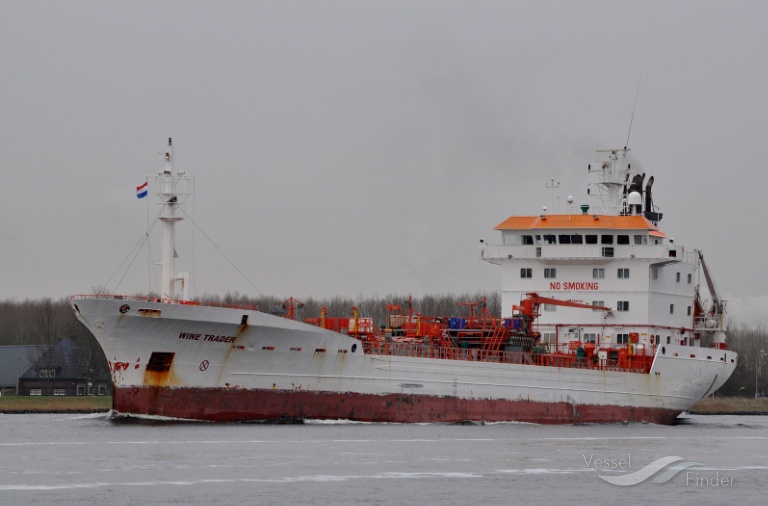
The chemical tanker Wine Trader
The chemical tanker Wine Trader. Photo: VesselFinder

Romania's president says too early to say

Romania's president has not gone as far as his foreign minister. Dan told reporters in Brussels it was "obvious" that the attacks were Russian attempts to destabilize Romania and Bulgaria and reduce support for Ukraine. But he also said it was too early to say definitively that Russia had launched the drones, according to Politico.

Bulgaria, Romania's partner on the command proposal, says it suspects Russia but cannot prove it. Two ships were hit off its coast on 13 October, and one, the HS Dignity, sank. The other, the Chelsea 3, is Ukrainian-owned.

Radev told parliament on 14 October that the attacks worked in Russia's favor and that "logic leads there." "The problem is that we cannot prove it," he told MPs. Sofia summoned the Russian ambassador. Radev also said EU leaders would discuss a moratorium on attacks on civilian ships in the Black Sea.

Bucharest has blamed Russia for drones before, though over its airspace, not its shipping. On 27 July it expelled a Russian diplomat after prosecutors confirmed that fragments of drones downed on Romanian territory were Russian. Russia, Romania's Foreign Ministry said then, "bears exclusive responsibility."

Ukraine ships most of its farm exports across the Black Sea. Euromaidan Press's David Axe has written on how the fight over shipping there has escalated.

Bulk carrier "Royad Mammadov" under the flag of Saint Kitts, partially sunk after an attack by Russian sea and air drones on October 5, 2026, 20 nautical miles off the coast of Romania. Photo: Romanian Interior Ministry
Explore further

Russia is losing the Black Sea grain war it started. Its answer is to sink civilian ships off Romania and Bulgaria

  •  

Dogmatic Nordic liberals v eastern family values: culture-clash drama Fjord touches nerves in Norway and Romania

Cristian Mungiu’s Cannes winner echoes the news story of a Romanian couple whose children were taken by the Norwegian government. As it heads to London film festival, two writers explain how the film exposes real hypocrisies

When Cristian Mungiu’s Fjord was shown in Romania as a one-day preview this June, the reception was extraordinary. Across 53 towns and 96 cinemas, the film reportedly pulled in over 40,000 viewers in a single night, a number arthouse cinema rarely sees in Romania. But the response here had little to do with cinema. It felt instead like a reopening of a familiar fault line about the clash of values within the EU itself.

Continue reading...

© Photograph: ©Tudor Panduru

© Photograph: ©Tudor Panduru

© Photograph: ©Tudor Panduru

  •  

Seven sailors missing after drones strike tankers near Romania’s Black Sea coast

Nato source says drones came from Russia, while Romania’s president says attacking commercial ships ‘is unacceptable and has to stop’

Seven sailors are missing after drones struck two tankers near Romania’s Black Sea ⁠coast, setting them ablaze and raising ⁠fresh security concerns on a ​vital shipping route used by Ukraine.

A Nato military source told Reuters the drones that had hit the Wine Trader and the Yara J came from Russia. “The drones that caused ⁠the fires on board two tankers inside Romanian territorial waters were of Russian origin,” the source said.

Continue reading...

© Photograph: ARSVOM/AFP/Getty Images

© Photograph: ARSVOM/AFP/Getty Images

© Photograph: ARSVOM/AFP/Getty Images

  •  

Two tankers burn off Romania’s Sulina as Bulgaria says it lacks proof Russia is behind the Black Sea ship attacks

two tankers burn off romania’s sulina bulgaria says lacks proof russia behind black sea ship attacks · post burned superstructure tanker wine trader seen rescue helicopter 15 2026 romanian interior

Two tankers caught fire within about 12 hours off Sulina, Romania’s port at the mouth of the Danube, Romanian authorities reported. The crew of one said a drone hit it inside Romania’s territorial waters, while Bucharest says it is still checking whether drones were involved. Bulgaria, where drones sank ships in its economic zone this month, says it lacks proof that Russia launched them.

For months, Russia has struck civilian ships on the sea route that carries most of Ukraine’s farm exports, while its drones have repeatedly crossed into Moldova and Romania during attacks on Ukraine. As long as Bucharest and Sofia wait for drone wreckage before naming anyone, Russia, the party Bulgaria’s own prime minister says the logic points to, pays no price for extending its war on Ukraine’s trade routes into NATO members’ waters.

Seven sailors missing after the second fire

The San Marino-flagged chemical tanker Wine Trader reported a fire in its superstructure around 07:00 on 15 October while anchored in Romanian territorial waters about 13 nautical miles southeast of Sulina, Romania’s Naval Authority said. By midday, five of its 12 crew had been recovered and seven were still missing.

The chemical tanker Wine Trader
The chemical tanker Wine Trader. Photo: VesselFinder

Hours earlier, at 01:34, a drone entered Romanian airspace over the country’s waters southeast of Sulina for about a minute before vanishing from radar, the Defense Ministry said. Authorities have not named a cause for the fire, though unnamed sources

  •  

MEP blasts ‘Euro-Gestapo’ for lecturing Russia on democracy

RT | October 8, 2026

Brussels is steering Europe toward totalitarianism and a “Euro-Gestapo” while lecturing Russia on democracy, Slovak MEP Lubos Blaha has warned.

Blaha made the remarks during a European Parliament debate on Tuesday, responding to EU foreign policy chief Kaja Kallas, who denounced Russia’s recent parliamentary elections as undemocratic.

The politician questioned why Brussels was focusing on Russia while cracking down on dissent within the bloc.

He cited arrests of pro-Palestinian protesters in Germany and the imprisonment of Estonian opposition figures, who he claimed were jailed for opposing war with Russia.

“Are you going to set up the Euro-Gestapo here, Mrs. Kallas, and lock up everyone who wants peace?” he asked.

The Slovak lawmaker also questioned why Brussels was debating Russia’s elections while Europe faced mounting unrest.

“You may not have noticed, but Spain is in the streets, France is in the streets, and you are here dealing with Russian elections. You must be joking,” he said.

Blaha went on to accuse Brussels of double standards over Ukraine’s suspended presidential elections.

“You blame the Russians for having elections, but you don’t mind that [Ukraine’s Vladimir] Zelensky has been governing for three years without any elections, without a mandate,” he said. “You are hypocrites!”

Zelensky’s presidential term expired in May 2024, but elections have remained suspended under martial law.

Blaha also cited the annulment of Romania’s 2024 presidential election, claiming the vote was canceled because “the wrong candidate won.” Romania’s Constitutional Court scrapped the result over alleged irregularities and accusations of Russian interference after EU- and NATO-skeptic Calin Georgescu won the first round. Pro-EU candidate Nicusor Dan won the rerun in May 2025.

The MEP argued that Russia had held elections despite the ongoing conflict and daily Ukrainian missile and drone attacks on its territory.

The September poll saw the ruling United Russia party win nearly 58% of the party-list vote.

Blaha also defended Russian President Vladimir Putin, contrasting his popularity with that of Western European leaders.

“You have nothing to criticize Putin for, Mrs. Kallas,” he declared. “Unlike you and your Merzes and Macrons, he has the support of his own population.”

Recent polls have put German Chancellor Friedrich Merz’s approval rating at a record low of 10% in October, while French President Emmanuel Macron’s support fell to 17% in September. Neither Kallas nor European Commission President Ursula von der Leyen was directly elected to her current position by voters, having assumed office through the EU’s institutional appointment process.

Blaha belongs to Slovak Prime Minister Robert Fico’s Smer-SD party, which opposes EU sanctions on Russia and has criticized Western military assistance to Ukraine.

  •  

Ukraine is buying 135 mobile shelters for border crossings as Russian drones reach from the Danube to Poland

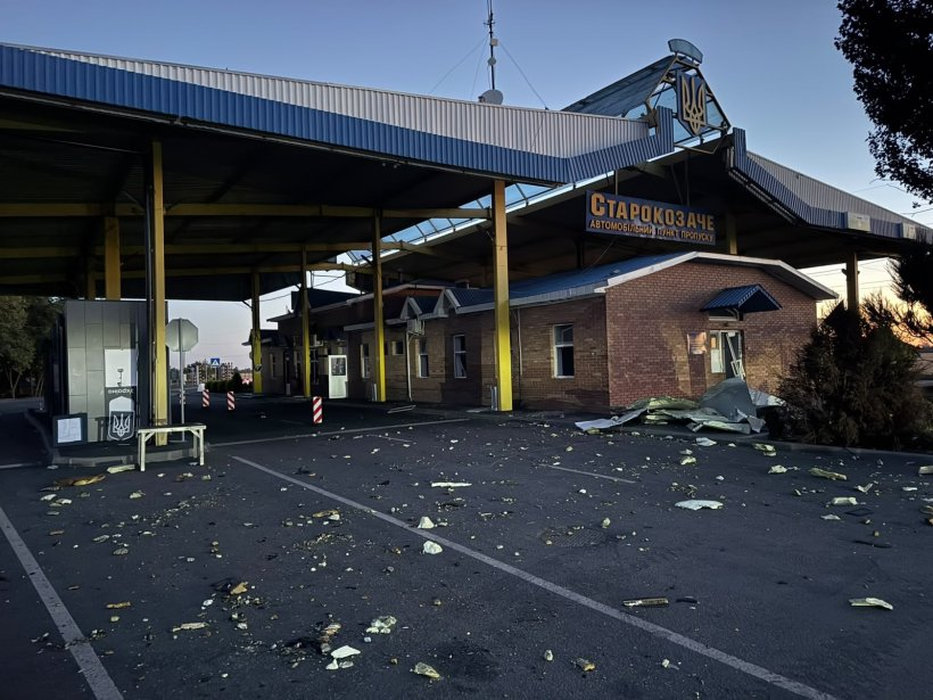
The Ukrainian Starokozache border crossing near Moldova, targeted by a Russian attack, September 2026. Photo: Odesa Oblast Military Administration / Telegram

Ukraine plans 135 basic mobile shelters for civilians at 28 of its border crossings, the State Agency for Restoration and Infrastructure Development said on 7 October.

Since the start of September, Russian drones have repeatedly struck crossings on Ukraine's borders with Moldova and Romania. Since mid-September, strikes have also reached the Polish border near the Yahodyn crossing in Volyn Oblast. On 13 September, a Russian drone strike set a gas station near the crossing on fire. On 28 September, the blast wave from another strike damaged the checkpoint building. On 25 September, First Deputy Minister for Restoration, Infrastructure and Transport Serhii Derkach said Ukraine is exploring with its neighbors whether some checkpoints could move onto their territory. No agreement has been reported. On 2 October, Moldovan Interior Minister Daniella Misail-Nichitin said Moldova had set up shelters next to its crossings with Ukraine and started relocating staff from joint checkpoints.

135 shelters for travelers and border staff

The shelters will stand at the crossings and on the roads leading to them. Regional recovery services in Vinnytsia, Odesa, Chernivtsi, Zakarpattia, and Volyn oblasts are running the purchases. The agency said the shelters will make the border safer for people crossing it and for checkpoint staff.

Map of Ukrainian border regions where mobile shelters are planned
Border regions where Ukraine plans to install shelters. Map: Euromaidan Press

In Chernivtsi Oblast, one of the 10 tenders the agency lists on Prozorro, Ukraine's public procurement system, covers eight shelters for 50 people each and three for 20 each, Ukrinform reported. They will stand on the approach road to the Porubne–Siret international crossing on the Romanian border. The work is expected to cost UAH 38.5 million (about $855,000), excluding VAT.

Russian strikes on crossings

On 5 October, at about 09:38, a projectile fell near the Palanca–Maiaky–Udobne crossing on the Moldovan border. It ricocheted off the ground into a shuttle bus parked by the barrier and also damaged a control booth. One Moldovan border officer suffered light injuries, and the crossing was suspended, Moldova's Border Police said, linking the incident to Russia's attacks on Ukrainian infrastructure. Moldovan authorities did not specify the projectile's type or origin.

Overnight on 9 September, Russian drones struck the Starokozache crossing with Moldova, killing two people and injuring three. On 1 September, Russian Shahed drones hit the Orlivka ferry crossing on the Danube, opposite Romania's Isaccea, and temporarily shut it down. Another Russian strike on 6 September halted the crossing again.

  •  

Drone Strikes Sink Merchant Ship in Bulgaria’s Black Sea Economic Zone

Two merchant vessels have been attacked by aerial and maritime drones in Bulgaria’s exclusive economic zone in the Black Sea, sinking one ship and forcing the evacuation of another. The incident follows a deadly attack on a grain carrier off Romania a day earlier and has prompted concern over the growing risks to civilian shipping close to EU and NATO territory.

Two commercial vessels were struck by drones in Bulgaria’s exclusive economic zone early on Tuesday, 6 October, in the first known attack of its kind on merchant shipping in Bulgarian waters.

The Togo-flagged ALFA WATAN suffered severe structural damage and sank, while the Palau-flagged ABLE caught fire. Bulgarian Prime Minister Rumen Radev said the vessels were attacked at around 3am by both aerial and maritime drones about 70 nautical miles east of the coastal town of Byala. The Bulgarian government said a search-and-rescue operation was continuing for the crew of the ALFA WATAN, whose fate remained unknown.

All 18 people aboard the ABLE were rescued after abandoning the burning vessel. The Bulgarian-flagged passenger and freight ferry DIOSCURIA was diverted to the area and initially took the crew on board before Bulgarian Navy and Border Police vessels transferred them towards Varna.

The crew comprised 11 Turkish and seven Indian nationals. Two sailors were taken to hospital, including an Indian crew member suffering from burns and the Turkish captain, who sustained a head injury. Bulgarian public broadcaster BNT reported that the remaining 16 sailors subsequently arrived safely in Varna for medical checks.

The ABLE was reportedly carrying grain towards Istanbul. The cargo aboard the ALFA WATAN, which had been heading north towards Romania, has not been officially established.

Radev convened an emergency meeting involving the ministries of defence, interior, transport and environment, alongside the presidency and Bulgaria’s security services. He described the attack as an unacceptable violation of international and maritime law and warned of its effect on commercial navigation in the Black Sea.

Bulgarian authorities have not publicly identified who launched the drones. Investigations are examining both the weapons used and the circumstances surrounding the attack. One rescued Turkish sailor told Bulgarian television that he believed the ABLE had been hit by a Russian underwater drone, but that account has not been independently established and Sofia has made no formal attribution.

Foreign Minister Velislava Petrova said Bulgaria was in contact with its European and NATO partners and described Black Sea security as inseparable from wider European security. She said civilian crews and freedom of navigation must be protected and that Bulgaria would work with its allies to assess the wider consequences for maritime security.

European Commission President Ursula von der Leyen also condemned attacks against civilian shipping, saying the situation in the Black Sea was becoming increasingly concerning. She said commercial vessels and their crews were being targeted as investigations continued into the latest incidents.

Tuesday’s attack came less than 24 hours after another commercial vessel caught fire and sank in Romania’s exclusive economic zone. The Turkish-owned Royad Mammadov, sailing under the flag of Saint Kitts and Nevis, had left the Ukrainian Danube port of Izmail carrying corn for Ravenna in Italy.

Romanian authorities confirmed that two people died and 11 crew members were rescued. President Volodymyr Zelenskyy said the vessel had been struck by two Russian drones, although Romanian authorities did not themselves publicly attribute the incident to Russia.

The two incidents in consecutive days mark a further geographical expansion of the risks facing commercial shipping in the western Black Sea. EU Today has previously reported how strikes near Romania have moved maritime war risks closer to NATO territory, while a separate maritime drone explosion at Constanța raised questions over the ability of coastal states to detect and respond to unmanned systems approaching commercial infrastructure.

The distinction between territorial waters and an exclusive economic zone remains important. The attacks occurred outside Bulgaria’s territorial sea and therefore do not amount simply to an attack on Bulgarian territory. They nevertheless took place in an area where Bulgaria has internationally recognised economic rights and responsibilities, including search-and-rescue and environmental obligations.

The immediate concern for Sofia is the search for the missing crew of the ALFA WATAN and the possibility of pollution from the wreck. The wider concern for the EU is the increasingly exposed position of civilian shipping routes linking Ukraine, Romania, Bulgaria and Turkey.

Ukraine’s maritime export routes remain particularly important for agricultural trade. Repeated attacks on merchant vessels can increase insurance premiums, discourage shipowners from entering the region and raise transport costs even when ports themselves remain operational. Russian attacks on Odesa and its export infrastructure have already placed Ukraine’s Black Sea grain corridor under sustained pressure.

With merchant ships now struck in the economic zones of both Romania and Bulgaria on consecutive days, Black Sea maritime security has moved further onto the agenda of EU and NATO governments along the western coast.

  •  
❌