El estadounidense Stephen James Hubbard, liberado el miércoles 21 de octubre por Vladimir Putin, en medio de un inusual acercamiento de Rusia con el Gobierno de Donald Trump, es un profesor de inglés de 74 años. Hubbard había sido capturado hace cuatro años en Ucrania por las fuerzas rusas y condenado por mercenarismo.
La editorial quebequesa Boréal ha puesto fin a su relación con el escritor Thélyson Orélien después de encontrar indicios del uso de inteligencia artificial (IA) en el proceso de escritura de su novela C’était ça ou mourir, uno de los éxitos de la temporada literaria francesa, pero que acabó excluida del premio Goncourt en medio de una polémica que también llevó al autor a reconocer plagios anteriores. La editora ha anunciado este miércoles que no volverá a imprimir el libro ni publicará nuevas obras del autor haitiano, después de que un análisis externo detectara rastros de esta tecnología en los documentos de trabajo del manuscrito.
Alberta’s referendum to begin the process of seceding from Canada failed by a wide margin on Monday, keeping Canada’s oil wealth intact and delivering a major political win to Prime Minister Mark Carney.
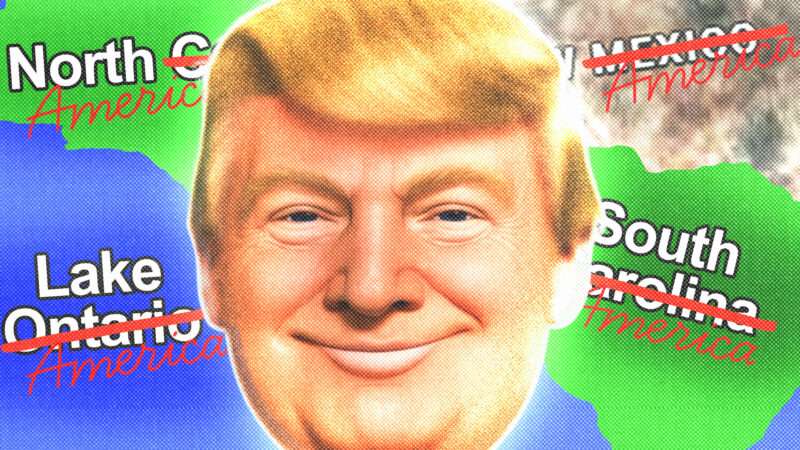
When I wake up each morning, the most important thing is that I avoid setting foot anywhere that is not American in Name Only (AINO). This, as a native Virginian, presents a problem. The state was named after England's Queen Elizabeth I, known as the "virgin queen" for her lack of a husband. How am I supposed to go back to Virginia until it is named Americaginia? I have principles.
Thankfully, President Donald Trump is on this, having made the AINO cause a top priority. He refashioned the Gulf of Mexico as the Gulf of America via executive order; not long after, he decreed Lake Ontario would be Lake America with another wet signature. Naturally, New Mexico is the next target. The state "should immediately change its name to New America," Trump posted this week on Truth Social. "We are not Mexico, we are the United States of America!"
So true. New Mexico lawmakers would have to initiate the transition, and the public would have to approve it—the president cannot do so with an executive order here. But it is vitally important that, when he can, he continue changing the names of geographic landmarks to maximize the use of those four beautiful syllables. And when he cannot, he must raise awareness of the AINO spirit.
I should know. I'm surrounded. Though I am no longer living in ***ginia, I reside in the District of Columbia, a name that strikes fear and loathing into the hearts of any AINO patriot. Columbia is derived from Christopher Columbus, who in 1492 sailed that ocean blue—presently called the Atlantic, we'll return to that momentarily—to what is now America. But are we really going to let our nation's capital conjure up visions of a country in South America, give or take an o? Perhaps a better question: Do we want it dedicated to an Italian? Rechristening it the District of America would be a win for AINO, a win for Trump, and a win for the progressives who hate Columbus Day. Boom.
To the north we have Maryland—named after Queen Henrietta Maria, the wife of England's King Charles I—which will need to be Americaland if I am to cross that line again. (I also ask that Americaland's drivers stop learning their technique from Grand Theft Auto.) Looking southward, I'm trapped as well: The Carolinas bear the title of Charles himself. If there is any justice, North Carolina will be North America, and South Carolina will be South America. Yes, those technically already exist, but these are the real North and South America. The others are the fake ones. (West Virginia is easy: West Americaginia.)
The president could plausibly change the names of the seas that surround this great country. At least, he could change their names in the Geographic Names Information System. Columbus sailed the American Ocean. The Pacific, meanwhile, is properly the West American Ocean—or, given that its waves break against California, the Woke American Ocean. There's something in the water.
Many may find Trump's obsession with AINO bewildering. In reality, it is to be expected. A national-populist presidency must have the requisite packaging—whether the branding primarily promotes policy or is the main event itself is a fair question. Trump is a showman, so there must be a show.
We are approaching the intermission of the second Trump administration. The plot twists—though sometimes predictable—have consisted of higher prices for everyday goods (tariffs), higher gas prices (the war in Iran), and Apple Maps now showing Rochester's shores opening their arms to Lake America. The country may be more expensive, inflation not yet vanquished, government spending altitudinous, the swamp waterlogged, that promised golden age still elusive. But at least America is more American in Name Only.
Developers of the PHP programming language said they had identified two critical vulnerabilities, and urged users to update their sites as soon as a fix was released.
Developers of the PHP programming language said they had identified two critical vulnerabilities, and urged users to update their sites as soon as a fix was released.
NATO allies Canada and Turkey are expected to sign a joint declaration aimed at deepening bilateral cooperation in four areas, including defence and energy, during Prime Minister Mark Carney’s visit later this week, a person briefed on the matter said.
The declaration is also expected to encompass the economy, looking to advance bilateral free trade talks, while boosting social and diplomatic ties. The countries would establish committees in all of the areas to draft action plans, the person said.
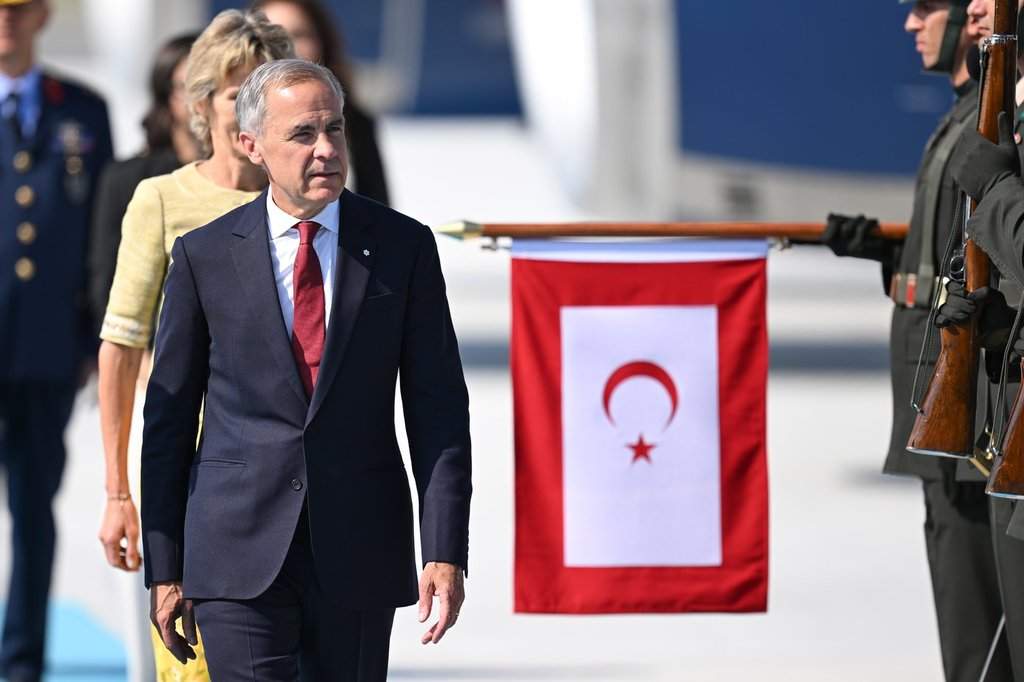
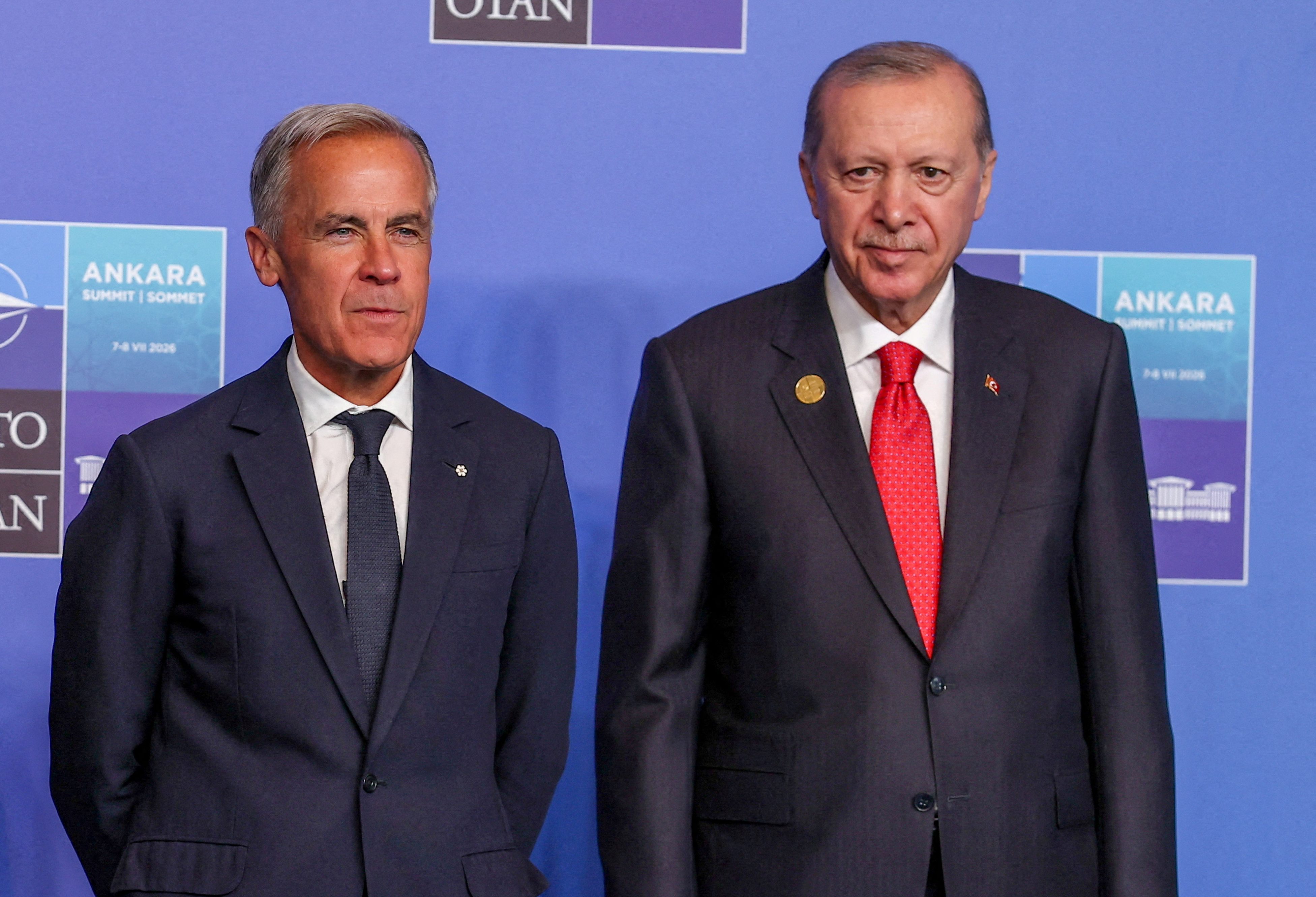
Carney will be the first Canadian prime minister to make a dedicated bilateral visit to Turkey. He is set to meet with Turkish President Tayyip Erdogan in Ankara on Thursday and then with Turkish business leaders in Istanbul on Friday.
Canada seeks new partnerships beyond US
The visit is part of Carney’s efforts to reduce trade dependence on the United States and strengthen partnerships with regional powers amid a damaging trade war with Washington and an increasingly adversarial relationship with President Donald Trump, who has repeatedly questioned Canada’s sovereignty.
At a Canadian government briefing on Tuesday, officials declined to confirm what specific declarations, agreements or deals might be signed during the trip.
Carney will meet Erdogan “to advance cooperation in trade and investment, energy, defense and security and people-to-people ties,” said a Canadian government official.
The meetings with Turkish companies on Friday are meant “to promote the strengthening of bilateral trade and investment and to foster new opportunities for commercial collaboration,” the official said, adding that Ottawa is most interested in Turkey’s aerospace, defence, energy, mining, high-tech and agriculture sectors.
Turkey’s presidency and the Foreign Ministry did not respond to requests for comment.
Nuclear energy and LNG on the agenda
Turkish Energy Minister Alparslan Bayraktar told the Kanal 7 broadcaster on Sunday that energy, namely nuclear power, would be among the top agenda items during Carney’s visit.
Ankara anticipates that energy discussions will also include potential purchases by Turkey of liquefied natural gas from Canada as well as critical minerals, according to the person briefed on the matter. A working group is expected to be created to study the feasibility of a bid by Canada’s CANDU to build a planned nuclear plant on Turkey’s Black Sea coast.
Turkey has held talks with Canadian engineering firm AtkinsRealis ATRL.TO, which owns CANDU, as well as South Korea’s Korea Electric Power Corporation and China’s State Power Investment Corporation, about potentially building its planned second and third nuclear power plants. Russia’s Rosatom is building its first.
Defence cooperation focuses on drones and naval systems
The discussions on the defence sector are expected to focus on drones and naval cooperation. In 2024, to help thaw bilateral ties, Canada removed weapons-export controls on Turkey, including on optical technology used in drones that Turkey exports to dozens of nations.
Carney will be accompanied on the trip by his foreign minister Anita Anand and energy minister Tim Hodgson.
He will meet executives from defence companies and firms with energy businesses including Calik Holding and Sabanci Holding, according to two other people familiar with the plans. Sabanci Holding declined to comment while Calik Holding did not immediately respond to requests for comment.
Turkish defence analysts have said Trump’s policies towards Canada had created opportunities for closer cooperation in ammunition production, drones and naval systems, but cautioned that major agreements were unlikely to materialise in the short term.
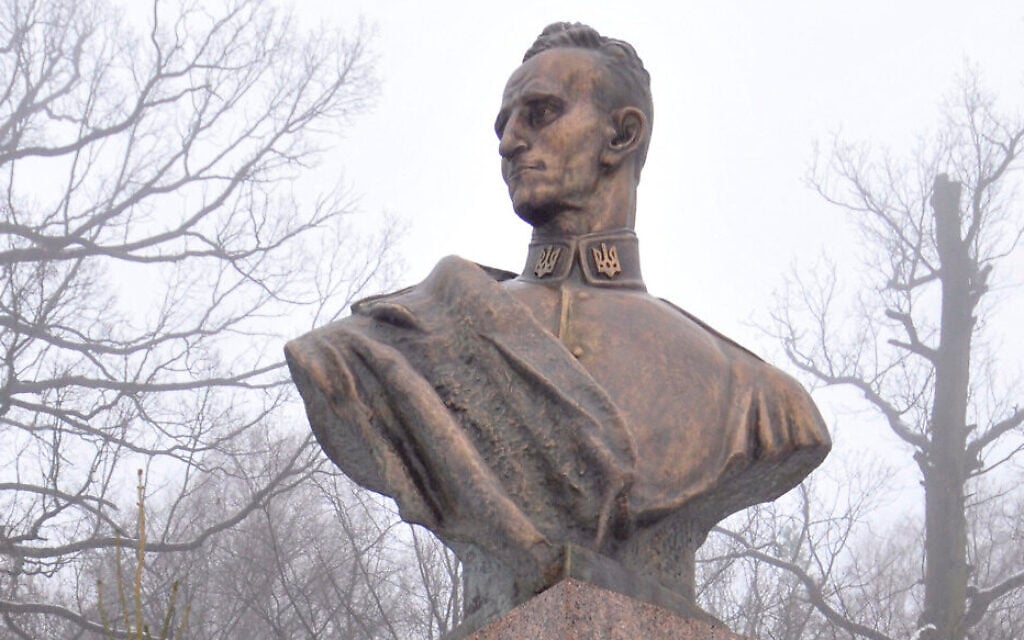
Duncan Kinney pleads guilty to spray-painting bust of Roman Shukhevych and SS Galizien memorial, then asked the bust’s owners to comment for a news story
Back in June, I wrote a post about Canada's two active secession movements: one in Alberta and one in Quebec. Since then, there have been some important developments. Alberta secessionists suffered a major defeat. Quebec secessionists are in better shape, but the odds are still against them succeeding anytime soon. That said, both movements may well persist for a long time to come.
Yesterday, Alberta secessionists lost a referendum on secession by a massive 75-25 margin. Pollsters expected a blowout, but this margin is close to the outer edge of expectations. Moreover, the result may actually understate the true extent of opposition to secession in the province. As noted in my earlier post, the question put to the voters was not directly about secession, but rather on whether "the Government of Alberta [should] commence the legal process required under the Canadian Constitution to hold a binding provincial referendum on whether or not Alberta should separate from Canada." Essentially, it was a referendum on whether to hold another referendum. Some "yes" voters might have been confused about what it meant or wanted to hold a second referendum, while planning to vote "no."
United Conservative Party Alberta Premier Danielle Smith (who played a key role in arranging yesterday's vote, despite opposing secession herself) has pledged not to hold any further referenda on secession. She may well be happy to sideline an issue that divides her party (Alberta secessionists are overwhelmingly right-of-center UCP voters).
All of this is bleak news for Alberta secessionists. But it's too early to say their movement is dead. As noted in my previous post, secession movements often persist for many years, even in the face of defeats in referenda and other political setbacks. Scotland, Quebec, and Catalonia are all examples of this phenomenon. And some 25% of Alberta voters did express support for secession, despite opposition from the leaders of all major political parties. That's a minority, but far from an insignificant one.
Meanwhile, in Quebec, on October 5, the secessionist Parti Quebecois (PQ) won the provincial election. But they got only 28% of the vote (the lowest percentage for any winning party in the history of Canadian provincial elections). That translated to a "minority" government that has 59 seats in Quebec's National Assembly (the provincial legislature), 5 short of a majority. And, as discussed in my previous post, secession remains unpopular, with polls showing opposition by a margin of 2-1 or more. For much more detailed discussions of the Quebec election and its ramifications, see analyses by Canadian election/polling experts Eric Grenier and Philippe Fournier.
As Fournier emphasizes, PQ leader Paul St. Pierre Plamondon (known as "PSPP") remains committed to holding a secession referendum. But the minority nature of his governments makes it unclear whether the PQ can find the votes to enact legislation to hold one. The left-wing Quebec Solidaire party (which holds 9 seats) is also pro-independence. But they may not be willing to work with the PQ. In addition, PSPP has promised not to hold a referendum so long as Donald Trump remains president of the United States, claiming it would be too dangerous to do so while Trump continues his trade war with Canada and otherwise threatens the country. Unless Trump dies or gets impeached and removed (both relatively unlikely), he will remain in office until January 2029. Canadian minority governments generally don't last more than two years. So PSPP may not be in power long enough to outlast Trump.
While Quebec secessionists seem unlikely to prevail in the near future, the fact that they managed to return to power is still a sign of the movement's persistence. And they have survived referendum defeats in 1980 and 1995. Thus, the movement is likely to continue to be a thorn in the side of Canadian federal governments, perhaps for many years to come. It has demonstrated its staying power over many years, much more so than Alberta secessionists.
Many Canadians believe Trump's threats against their country have weakened secessionists in both Alberta and Quebec. PSPP's stance is just part of the evidence for this conclusion. Trump's trade war and threats to make Canada the "51st state" have bolstered national unity and made the Liberal Party government of Prime Minister Mark Carney much more popular than might otherwise be the case. Trump is making Canadian national unity - and the Canadian Liberal Party - great again! But for him, the Liberals would likely have lost last year's Canadian federal election to the Conservatives.
Perhaps, all along, Trump has been trying to help the Liberals and stymie secessionists. If that's the true objective of his Canada policy, then maybe it's not quite as evil and stupid as otherwise seems to be the case. On a more serious note, Trump's policies have illegally usurped congressional authority over trade, damaged our economy, and alienated a crucial ally - all for no good reason.
In my June post, I outlined reasons why I am more sympathetic to Alberta's secession movement (motivated by conservative economic ideology and grievances about federal fiscal transfers and energy policies), than Quebec's (motivated by Francophone ethno-nationalism). Although I think the Alberta movement has greater merit than Quebec's, for reasons also summarized in the earlier post, I remain skeptical that Alberta secession would accomplish more good than harm. I also explained why these movements may be of interest to many non-Canadians and why I (an American) comment on them them:
[T]hese events are… of interest to students of federalism and secession, and to anyone who cares about the future of America's northern neighbor and one of our most important allies. And history shows that secession movements often persist even after defeat in a referendum….
From a US perspective, I worry that a successful secession movement would make Canada a weaker and less effective ally. Unlike our current president, I think a strong Western alliance is essential….
Some might find it inappropriate for an American to comment on Canadian politics. I disagree. Canadians and other non-Americans often express views on US politics. And they have every right to do so. Political analysis should be judged on its substance, not on the background of the author. In addition,… Canadian secessionism potentially impacts the US in various ways, and raises broader issues about the morality of secession movements that Americans and others have reason to take an interest in…. I am a longtime academic expert on federalism and secession-related issues, and I know French, as well as English. Thus, I think have the necessary qualifications to write about these issues. Whether the commentary is any good or not, is for others to judge.
O incêndio que ocorreu numa base militar não apresenta indícios de ter sido um ato de terrorismo. Quatro militares morreu no acidente. As bandeiras do país serão colocadas a meia haste.
"Neste momento difícil, endereçamos as nossas mais sentidas condolências às famílias das vítimas e ao povo canadiano", escreveu Paulo Rangel numa publicação no X
A Canadian man battling a debilitating neurological disease told Fox News Digital that hospital staff repeatedly raised the possibility of medically assisted death while he was fighting for the home care he says he needs to survive.
Roger Foley, who has spinocerebellar ataxia, told Fox News Digital in a recent interview that the conversations began in 2016 at Victoria Hospital, part of the London Health Sciences Centre in Ontario, where he says he has remained hospitalized for years while seeking a self-directed home-care arrangement.
In a July 7, 2026, letter obtained by Fox News Digital, Foley's attending physician said he could safely leave the hospital if the Ontario government authorized an individualized home-care arrangement.
"By any reasonable clinical standard, you could be discharged from our hospital if you had adequate support at home," wrote Dr. George K. Dresser, an attending internal medicine physician at London Health Sciences Centre.
Dresser said Foley has been medically stable for much of his prolonged hospitalization, despite suffering hospital-acquired infections, and argued that conventional home-care programs have failed to accommodate his complex medical needs.
"You have been at London Health Sciences Centre because the unique needs that you have cannot be met by existing programs in the community," the physician wrote.
Dresser described Foley as "a square peg in a round hole," arguing that the hospital's standardized approach to care is poorly suited to a patient who requires consistent caregivers and highly individualized assistance.
The physician also suggested that keeping Foley hospitalized may be unnecessarily expensive for Ontario's healthcare system.
"A community-based, self-directed arrangement would in all likelihood cost substantially less than continued acute admission, while delivering far better-matched care," Dresser wrote.
He urged Ontario's Ministry of Health to authorize funding that would allow Foley to recruit, train and manage his own personal support workers, potentially ending his yearslong hospitalization.
Foley alleged that assisted dying was raised again during a disputed discharge process in 2017, when he says he was threatened with daily hospital charges of approximately $1,500 if he did not accept the care arrangements being offered.
"I don't want to die," Foley told Fox News Digital, describing his determination to return to his apartment with caregivers of his choosing.
Foley also alleged that the hospital removed lighting accommodations for his neurological condition in May 2025, making it difficult for him to receive care and consume food and fluids.
Foley said the lighting dispute is particularly serious because his neurological condition makes him sensitive to certain wavelengths of light, including those emitted by fluorescent fixtures.
For years, he said, the hospital accommodated his condition with amber-spectrum lighting that allowed caregivers to assist him without triggering his symptoms.
But in May 2025, Foley alleged the hospital withdrew those accommodations and began requiring staff to provide care under fluorescent lighting.
He claimed the change has made it increasingly difficult to receive routine assistance, including help with eating and drinking, because he must wear large, heavy protective goggles that place additional strain on his already compromised neck.
Foley said he has sometimes relied on personal support workers from outside the hospital to help him consume fluids and that financial limitations have prevented him from arranging enough outside assistance to meet all his needs.
He further alleged that some hospital employees have been instructed not to provide care unless fluorescent lights are turned on, even though he says other staff members have been able to assist him using the amber lighting without difficulty.
Foley also claimed hospital personnel began asking him questions about suicidal thoughts again around the time his lighting accommodations were withdrawn. Unlike his earlier experiences, he said he refused to engage in those conversations because he no longer trusted the hospital's intentions.
If you or someone you know is having thoughts of suicide, please contact the National Suicide Prevention Lifeline at 1-800-273-TALK (8255).
He said he does not refuse to discuss his mental health in general, and is not opposed to mental health assessments or receiving appropriate mental health support. However, he said previous experiences with hospital staff have made him wary of engaging in such discussions, especially because he said medical assistance in dying (MAID) had previously been raised as an option.
The allegations mark the latest chapter in what Foley described as a nearly decade-long struggle to obtain the kind of care that would allow him to leave the hospital and return to his own home.
Despite his prolonged hospitalization, Foley said he has never given up his apartment, which he described as accessible and equipped with a ceiling lift to assist with his mobility needs.
"I have my own apartment. I still pay all my bills," he told Fox News Digital.
"The last 10 years I haven't given up my apartment and I have wonderful community [personal support workers] that are ready to start working for me as soon as I get the self-directed funding," Foley said.
Self-directed funding primarily refers to the Direct Funding (DF) Program for adults with physical disabilities and Family-Managed Home Care for broader home care services.
Under such a model, Foley explained, patients with disabilities would have greater control over choosing and managing their caregivers rather than relying exclusively on agencies selected through the provincial home-care system.
Foley argued that this would provide more consistent and safer care, particularly for patients with complex medical needs who require caregivers familiar with their individual conditions.
He said his physicians have supported his efforts to obtain alternative home-care arrangements, but he has been unable to secure the funding necessary to put his plan into action.
Foley said that the existing system has left him caught between remaining hospitalized indefinitely and accepting community-care arrangements he believes would place his health at risk.
"I'm not giving up," he said. "I don't want to die, my daughters know I don't want to die, my physicians have always been very explicit and direct that it's not safe to put me in that type of close model that I need direct funding."
In the letter from Dresser, Foley's attending physician, he writes in part, "I am therefore advocating that the Ministry to consider authorizing an individualized, self-directed funding arrangement that would enable you to be discharged from acute care and to arrange and direct your own care in the community. I am very willing to meet with Ministry staff, to provide whatever clinical documentation is required, and to work collaboratively on the design and safeguards of such an arrangement."
Before his illness progressed, Foley said he had built a career in banking, worked as a television host and comedian, and even trained as a professional wrestler.
He described earning recognition for his work before his deteriorating health eventually forced him to leave his career and go on long-term disability.
But Foley said he has continued looking for ways to contribute to society despite his physical limitations.
He is now involved with a project called "Bring Roger Home," which he said is working with a nonprofit organization to raise money for the care he needs to return to his community.
The effort also includes releasing music he recorded years earlier, with proceeds intended to support his home-care needs and eventually help other people facing similar circumstances.
One of the songs, "Limitless with Limitations," reflects the philosophy he said helped him come to terms with his condition.
"Just because you're not the person that you were doesn't mean that the person you are can't be limitless and achieve positive things and goals," Foley said.
He also urged people living with disabilities or chronic illnesses not to lose hope, even when their medical circumstances become overwhelming.
"Don't give up who you are at your core and believe in yourself," he said.
Foley said his ultimate goal remains unchanged: to return home, reconnect with family and friends, and live as independently as his condition allows.
His experience has also shaped his opposition to Canada's Medical Assistance in Dying (MAID) system, which he argues cannot be adequately safeguarded when patients face serious gaps in medical care and social support.
According to the BBC, Canada’s MAID law, which legalized euthanasia in 2016, is responsible for one in every 20 deaths in Canada.
Foley contended that patients should have meaningful access to treatment, disability assistance and home-care alternatives before assisted death is considered.
For him, the central issue is not whether he has the ability to end his life, but whether he can obtain the assistance necessary to continue living it.
"Even in the darkest times," Foley said, "you can still find a light at the end of the tunnel to go towards."
Fox News Digital reached out to London Health Sciences Centre (LHSC), which operates Victoria Hospital, Ontario Health atHome, the Ontario Ministry of Health, and Dresser, Foley’s physician, for comment but did not immediately receive responses.
Cheshire Independent Living Services declined to comment.
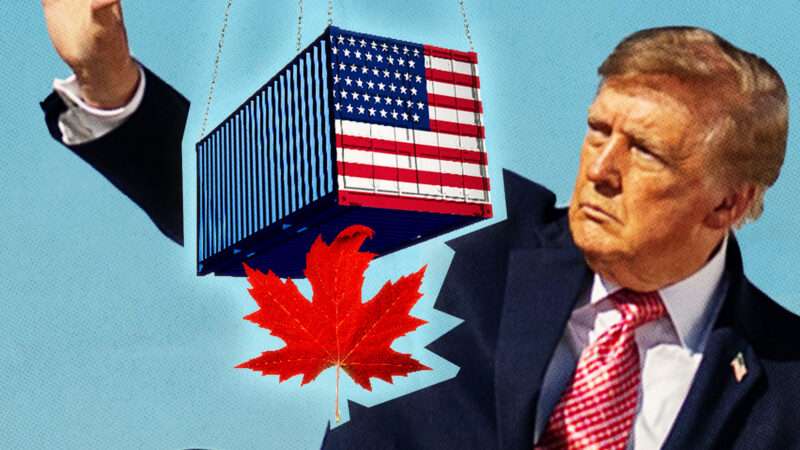
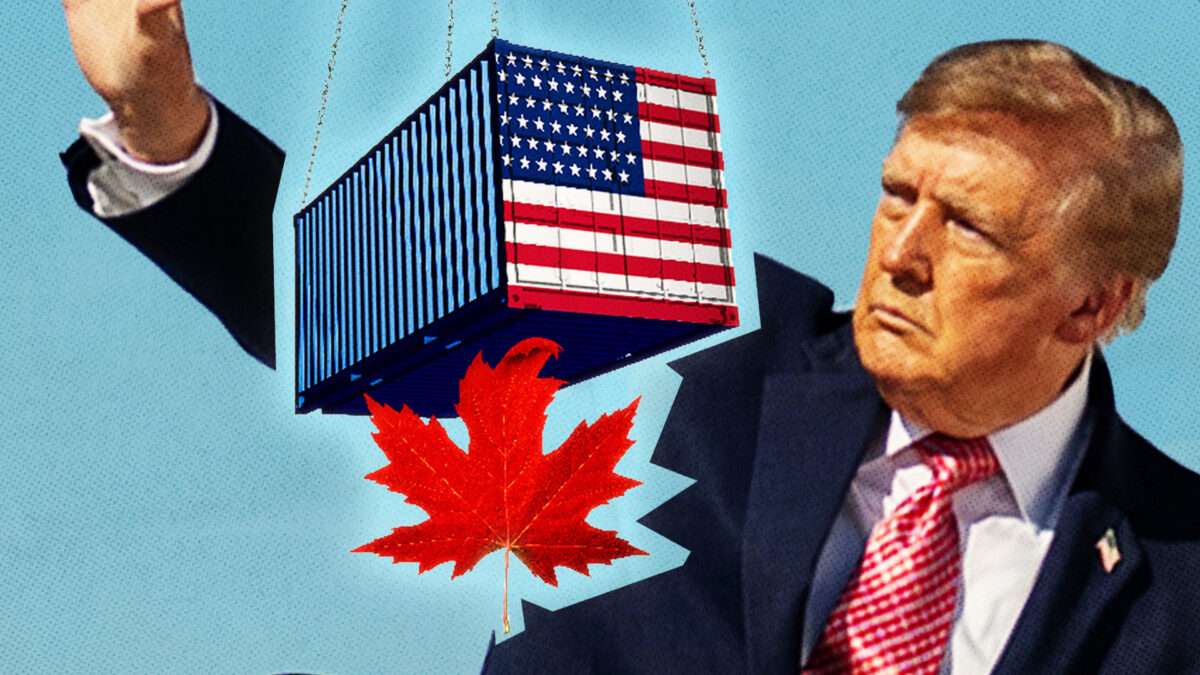
Last July, President Donald Trump imposed 50 percent tariffs on various Canadian goods, a list he subsequently expanded to include additional imports, some of which he banned outright. His legal justification was Section 338 of the Smoot-Hawley Tariff Act, which Congress approved in 1930. Section 338 authorized tariffs in response to discriminatory trade practices. But in the 96 years since it was enacted, no president had ever used it to impose tariffs.
Why is that? According to a lawsuit that the Liberty Justice Center (LJC) filed on Tuesday in the U.S. Court of International Trade (CIT), the answer is clear: Section 338 was superseded by subsequent legislation that likewise targeted discriminatory trade barriers, beginning with the Reciprocal Trade Agreements Act of 1934 and culminating in Section 301 of the Trade Act of 1974. Section 301, the current remedy, includes requirements that Trump apparently sought to dodge by invoking Section 338 instead.
That maneuver is illegal, the LJC argues. "Congress already gave the executive branch a tool for responding to unfair foreign trade practices: Section 301, which requires an investigation, public comment and other safeguards," says Jeffrey M. Schwab, the LJC's director of litigation. "The administration cannot skip those protections by reaching for a 1930 statute that no president had ever used to impose a tariff."
Why not? "Where provisions in two acts are in irreconcilable conflict, the later act, to the extent of the conflict, constitutes an implied repeal of the earlier one," the lawsuit says. "Where a later act covers the whole subject of an earlier one and is clearly intended as a substitute, it operates similarly as a repeal. And a specific policy embodied in a later federal statute controls the construction of an earlier one even absent express amendment."
Even if Section 338 somehow survived congressional approval of contrary laws, the LJC adds, Trump's tariffs exceed the authority it grants. And if Trump's interpretation of Section 338 were correct, the lawsuit says, the provision would violate the nondelegation doctrine, which bars Congress from delegating its tariff power to the president without providing "an intelligible principle" to guide and constrain his exercise of it.
Trump's Section 338 tariffs, in short, are "the Administration's latest attempt to exercise, through a statute never designed for the purpose, the tariff power that the Constitution assigns to Congress." That pattern should be familiar by now.
Shortly after taking office in 2025, Trump claimed to have discovered a previously unnoticed delegation of extensive tariff authority in the International Emergency Economic Powers Act (IEEPA), a 1977 law that does not mention import taxes and had never been used to impose them. That claim was rejected by every court that considered it, and last February the Supreme Court ruled that IEEPA does not authorize tariffs at all.
Trump responded to that decision by immediately announcing similarly broad tariffs under Section 122 of the 1974 Trade Act, which addresses "fundamental international payments problems" caused by "serious United States balance-of-payments deficits." In May, the CIT ruled that the new tariffs were illegal because Trump had failed to "identify balance-of-payments deficits within the meaning of Section 122."
Trump then switched to Plan C, invoking Section 301 of the Trade Act, which authorizes tariffs in response to a foreign "act, policy, or practice" that is "unreasonable or discriminatory" and "burdens or restricts" U.S. commerce. He claimed that provision justified tariffs on 86 trading partners, accounting for nearly all U.S. imports, because they had failed to "impose and effectively enforce a prohibition on the importation of goods produced with forced labor." The CIT is currently weighing challenges to those tariffs, including an LJC lawsuit.
Trump's Section 338 tariffs have now added to the CIT's caseload. The LJC represents Gellert Global Group, an importer that was hit hard by those taxes after Trump added cheese to the list of disfavored Canadian goods. The lawsuit asks the CIT to certify a class of importers, numbering in "the hundreds, if not the thousands," that likewise have been clobbered by Trump's 50 percent tariffs.
Since Trump obviously is aware of Section 301, why did he resort to a never-used, seemingly obsolete provision to justify the tariffs on imports from Canada? As the LJC notes, Section 301 requires an investigation by the Office of the U.S. Trade Representative, "consultation with the foreign country concerned, notice, public comment, a hearing, and determinations within statutory deadlines." It also requires "that action be equivalent in value to the burden imposed, that duties be preferred over other import restrictions, and that actions terminate after four years absent a request for continuation and review."
Can Trump avoid those constraints by invoking Section 338 instead? The LJC thinks not: "Congress did not intend to leave in place a parallel authority that would allow the President to impose the same remedies, for the same conduct, free of every one of those safeguards."
Section 338 has been "impliedly repealed," the LJC argues. "At a minimum, Section 301 controls where, as here, the President seeks to respond to foreign practices within Section 301's scope, and the President may not impose duties in response to such practices while disregarding the procedures and limits Section 301 imposes. Because the President did not proceed under Section 301, the Section 338 Tariffs are unlawful whether or not Section 338 survives."
Even if you ignore subsequent legislation, the LJC argues, the Canadian policies that Trump cited when he announced the tariffs do not qualify as "discrimination" under Section 338. "Canada's motor vehicle surtax and its provinces' alcohol purchasing decisions are responses to tariffs that the United States imposed on Canada, not discrimination by Canada against the United States," it says. Trump also complained that Canada treats European cheese imports more favorably than U.S. cheese imports. But "when Congress enacted Section 338, a preference granted under a reciprocal agreement was not 'discrimination.'"
Section 338 "addresses discrimination: measures that single out United States commerce for worse treatment than the commerce of the world at large," the lawsuit says. "It is not a general authorization to impose tariffs whenever the President disagrees with a trading partner's policies, or whenever a trading partner responds to tariffs the United States has imposed on it."
Trump also was unfazed by Section 338's requirement that the president set duties to "offset" the costs imposed by discriminatory practices, which implies proportionality. Rather than attempt that, the LJC notes, Trump imposed "the statutory maximum rate of 50 percent without tying it to any measured burden."
As interpreted by Trump, the lawsuit warns, Section 338 authorizes the president to "impose tariffs of up to 50 percent on any products of any country that extends better treatment to any other country in any respect—including through any of the hundreds of preferential trade agreements to which the United States is not a party—or that responds to tariffs the United States has imposed on it." Yet Section 338 "contains no clear statement authorizing that power," contrary to the "major questions" doctrine, which applies to assertions of executive authority with "vast economic and political significance."
If Section 338 conferred the sort of unfettered authority that Trump is claiming, the LJC says, it "would supply no intelligible principle constraining the exercise of Congress's power to lay duties." His reading "would convert a narrow, fact-dependent provision into an effectively unrestricted delegation of Congress's tariff power," which would be "an unconstitutional delegation of legislative power."
This case "is not about the president," says LJC CEO Sara Albrecht. "It is about the presidency. No president should have the power to pull a dormant statute off the shelf and use it to impose sweeping tariffs or import bans without the limits Congress required."

 Login