Years ago, when people asked Geoffrey Hinton why he worked on artificial intelligence, he would repeat a line from J. Robert Oppenheimer, one of the creators of the atomic bomb: “When you see something that is technically sweet, you go ahead and do it.”
Computer scientist and Nobel Prize in Physics laureate Geoffrey Hinton during the Starmus Festival 2026, held this Tuesday in the municipality of Arona in Tenerife.
In a spoiler-filled interview, the actress delves into Emma Flyte’s journey to becoming her “genuine self,” including her virtuoso performance in episode six.
Kemi Badenoch has said a "red warning light" is flashing on the economy as Britain's debt tops £3 trillion for the first time and inflation surges to 3.5% ahead of the Budget next week.
Inflation surged to 3.5% last month while the government deficit was a worse-than-forecast £24.5bn, in a double dose of bad news for John Healey before next week’s budget.
The Office for National Statistics said annual inflation rose from 3.1% in August, overshooting City forecasts of a rise in the consumer prices index (CPI) to 3.4%, as a result of the surging cost of fuel.
In his book The Nerd Reich, journalist Gil Durán examines how Silicon Valley’s wealthiest investors are extending their influence over American politics, democratic institutions and national sovereignty. His warnings come amid unprecedented political spending by technology billionaires and growing concern over private control of strategic infrastructure.
Elon Musk has contributed more than $276 million since July to Republican political causes ahead of the United States midterm elections on 3 November. Meanwhile, US Secretary of State Marco Rubio has said decisions over Ukraine’s access to SpaceX satellite communications rest with the company rather than the White House. Both developments demonstrate how private technological and financial resources can influence decisions traditionally associated with government.
For journalist Gil Durán, author of The Nerd Reich: Silicon Valley Fascism and the War on Democracy, published by Avid Reader Press in August 2026, the issue extends beyond campaign donations. In a recent interview, he argued that a group of Silicon Valley investors is using its financial influence and control of technology to challenge the authority of elected governments.
“We’re at a decisive stage of that race,” Durán said when asked about the contest between technology and democracy described by venture capitalist Peter Thiel. His argument is that wealth alone no longer satisfies some of the industry’s most influential figures; they also want a direct role in determining how societies are governed.
The ideological origins of billionaire power
Durán places Thiel at the centre of this movement. In a 2009 essay, The Education of a Libertarian, the PayPal co-founder wrote that he no longer believed freedom and democracy were compatible. He argued that technological innovation could allow individuals to escape the constraints of conventional politics.
Thiel subsequently clarified that he was not advocating disenfranchisement. His stated position was that majority rule often frustrated individual liberty. Durán, however, interprets the essay and Thiel’s subsequent political investments as evidence of a sustained interest in diminishing democratic constraints on private power.
The book also examines The Sovereign Individual, a 1997 work by James Dale Davidson and William Rees-Mogg that anticipated how digital currencies and technological change might weaken the power of nation states. Durán sees its influence in later arguments for privately organised alternatives to traditional government.
One example is The Network State, developed by entrepreneur Balaji Srinivasan. It proposes that online communities could acquire territory and eventually obtain diplomatic recognition. Advocates describe a voluntary model of political organisation; Durán regards the prospect of corporate-financed jurisdictions as a challenge to public accountability.
From venture capital to the White House
The relationship between Thiel and Vice-President JD Vance illustrates how venture capital can translate into political influence. Thiel supported Vance’s early investment career and contributed $15 million to a super PAC backing his successful 2022 Senate bid. Durán attributes much of Vance’s political ascent to that support, although voters, party endorsements and Vance’s own campaigning also shaped the result.
Musk’s latest contributions offer a more immediate example. His donations since July include $158 million to the Senate Leadership Fund and more than $76 million to America PAC. Such spending is lawful under the rules governing independent political committees, which cannot coordinate their expenditure with candidates.
Durán contends that similar pressures affect Democrats, arguing that wealthy donors can exercise influence across party lines. His criticism therefore concerns the political system’s dependence on private funding as much as any particular administration.
Technology as an instrument of strategic power
The consequences extend beyond elections. Ukraine’s dependence on satellite communications has exposed how a privately owned service can become essential to military operations. Restrictions affecting Starlink-related services have prompted competing accounts from US officials and SpaceX over responsibility for the decision. Rubio’s latest remarks point towards commercial control, while earlier reporting attributed the decision to Washington.
Artificial intelligence raises comparable questions of ownership and oversight. Durán argues that investors promoting transformative AI may also seek regulatory conditions that protect their substantial financial commitments. His prediction of a possible investment bubble remains a judgement, not an established outcome.
In Europe, the debate has immediate regulatory consequences. The EU’s Digital Services Act requires major online platforms to assess risks to elections and civic debate, while enforcement of important provisions of the AI Act began in August 2026. These measures address the influence of companies whose platforms and systems operate across borders.
Durán’s interpretation of Silicon Valley as a coherent anti-democratic movement remains contested. The entrepreneurs he discusses have differing interests, and their political influence does not itself establish a common plan to dismantle democratic government.
Their influence is nevertheless measurable in campaign finances, government contracts and control over infrastructure essential to national security. None of these forms of power requires holding elected office.
The Treasury ran a higher than expected budget deficit of £24.5bn last month as rising inflation pushed up the interest paid on government debt, increasing pressure on John Healey before his budget next week.
Official figures show the government paid £10.9bn in debt interest: the highest September figure since records began, and only the eighth time the monthly number has been above £10bn.
WASHINGTON—President Donald Trump on Tuesday unveiled an incentive program that gives fraud whistleblowers a one percent commission on funds recovered from fraudsters.
El más célebre historiador de la Europa contemporánea alerta de que el continente vive su peor crisis en medio siglo, asediado por EEUU, Rusia y China. "No es un sarampión, es algo mucho más grave", alerta el autor británico, que este viernes recoge el Princesa de Asturias de Ciencias Sociales Leer
El más célebre historiador de la Europa contemporánea alerta de que el continente vive su peor crisis en medio siglo, asediado por EEUU, Rusia y China. "No es un sarampión, es algo mucho más grave", alerta el autor británico, que este viernes recoge el Princesa de Asturias de Ciencias Sociales
Centers for Medicare and Medicaid Services (CMS) Administrator Dr. Mehmet Oz said fraudsters in Minnesota bribed mothers roughly $1,500 per child to falsely claim their children were autistic, saddling the children with diagnoses they did not have.
A federal judge ruled Monday that North Carolina is permitted to keep its strict mail-in ballot rules in place for November’s election, which were changed just before ballots were mailed in September. In the ruling, Judge Thomas D. Shroeder wrote that it was too close to the election to change the rules again, and that…
Foursquare cofounder Dennis Crowley wrote that "watching the company slowly decay has been a grind on my soul."
Bloomberg/Getty Images
Foursquare cofounder Dennis Crowley said the company's acquisition paid $0 to equity holders.
"I am sorry the Foursquare story ended in such a way," he wrote to employees.
Crowley said the company decayed after a private equity investment.
Foursquare's acquisition left its cofounder sad and angry.
Dennis Crowley helped launch the location technology company in 2009. Seventeen years later, Foursquare was acquired by Infillion. Crowley wrote on Substack that one point of the acquisition left him "heartbroken."
Foursquare's acquisition earned equity holders exactly $0, Crowley wrote, with no money offered for preferred or common stock.
"To our ~1600 former employees over 17 years, I am sorry the Foursquare story ended in such a way that makes it seem like our collective efforts were worth… nothing?" Crowley wrote.
Crowley left the CEO role in 2016, though he continued to lead Foursquare's research and development lab through 2021. After that, Crowley kept a seat on the board.
Foursquare raised capital from The Raine Group, a private equity firm, in 2019. Less than two years later, Gary Little became CEO. Little was one of The Raine Group's managing directors.
"Leadership was unable to preserve the value it inherited or create new value during those six years," Crowley wrote.
Foursquare employees reached out to Crowley to express their frustrations with leadership, he wrote. He cited the company's Glassdoor reviews, which rate it 2.1 stars out of 5. The Raine Group did not respond to a request for comment from Business Insider.
Crowley also wrote that the $0 equity outcome was buried in a 125-page PDF for Foursquare's legal team. "No single individual stood up to own (or even acknowledge) the outcome," he wrote.
Calynn Krieger, an executive vice president of marketing for Infillion, told Business Insider in an email that Foursquare had "remarkable technology and a talented team."
"We have nothing to say about Foursquare's former leadership, but we're glad the business and its value continue, and we're committed to creating even more of it," Krieger said.
The lesson Crowley learned
Crowley took responsibility for his role in the lead-up to Foursquare's $0 outcome for equity holders. His decisions as CEO led to the need for a private equity investment, Crowley wrote, and he said he wished he were louder on the board.
His takeaway: "Maybe the biggest mistake I've made in my career is falling in love with this company."
Crowley was too loyal to "making it work," he wrote, and stayed longer than he should have. "Watching the company slowly decay has been a grind on my soul," he wrote.
"It's okay to fall in love with the company you're building, but don't deny yourself the ability to get closure and move on just because the company itself hasn't yet experienced an exit or ending," he wrote.
The Mississippi attorney general’s office said in a statement Monday that a state investigation found the use of force was “justified” in an officer-involved shooting in June that took the life of a 1-year-old boy. While responding to a shoplifting call at a Walmart in Senatobia, an officer fired at a moving vehicle, killing Kohen…
Andy Haldane writes that Conservative economic plans would be best for growth ahead of Healey budget
Badenoch says Britain needs tax cuts.
We need to get out of the way of job creators who make our country richer. We need to encourage risk taking, wealth creation, enterprise.
Britain’s tax burden has never been higher. You are taxed on the heating in your home. You’re taxed at the petrol pump filling up your car. You’re taxed when you insure that car. You’re taxed if you take the family away on holiday. You’re taxed if you stay in the UK thanks to Andy Burnham’s tourist tax. You’re taxed to buy a home, taxed to live in a home, taxed to pass on your home. This is clearly not working. Britain does not feel better off.
Andy Burnham wrote in The Times yesterday about the moral outrage of the current benefit system. But as far as I could work out, his answer is to spend even more on benefits.
John Healey will not raise capital gains tax in next week’s budget, despite previous calls to do so from cabinet colleagues including Louise Haigh and Wes Streeting.
The chancellor has decided that any increase might ultimately cost the Treasury if wealthy individuals defer the sale of assets or move them out of the country, according to Treasury sources.
Unemployment in the UK has fallen unexpectedly in the final snapshot of the jobs market before John Healey’s first budget next week.
The jobless rate fell to 4.7% in the three months to August, from 4.9% according to the Office for National Statistics. City economists had forecast a rise to 5%.
Mississippi's attorney general says a Senatobia officer was justified in using force when he responded to a shoplifting call and fired at a moving vehicle that investigators said was driving toward police, killing a boy who was in the car.
Cooley has made billions doing what law firms do: hire great lawyers, bill for their time, and keep clients happy. Artificial intelligence is scrambling that formula. If machines can do in minutes what once took an associate hours, what exactly should clients be paying for?
Rachel Proffitt thinks she has the answer.
On a toasty October afternoon in San Francisco, I met Proffitt for lunch to talk about the future of the global law firm she now leads. When the check arrived, neither of us knew how much the restaurant paid the dishwasher or how many minutes the chef spent preparing our meal. We were paying for the experience, not the labor behind it.
Why, she wondered, should legal services be so different?
"Clients have never been excited about the fact that it took us 82 hours to do something. They don't care," she says. "They just want the outcome. They want the results."
The billable hour is only the beginning. AI is forcing law firms to rethink how many associates they really need and how those young lawyers learn their craft. Client relationships are changing as companies use software to get a head start on the work they send to outside counsel. Some of that work may never reach a lawyer at all.
If tech is about to reinvent law firms, Cooley should be one of the firms with the clearest view of what's coming. From its early days on San Francisco's Market Street, it worked with semiconductor manufacturers and venture capitalists when the valley was still covered in fruit trees and canneries. Cooley grew up alongside the tech industry, and today it is as comfortable defending Meta in court as it is helping Andreessen Horowitz round up billion-dollar funds.
That evolution has been lucrative. Cooley says its gross revenue jumped from $912 million in 2015 to $2.4 billion last fiscal year. Its crosstown rival, Wilson Sonsini, brought in $1.7 billion in 2025, according to The American Lawyer. Still, the gulf between Cooley and Big Law's largest firms remains enormous. Kirkland & Ellis, the industry's revenue leader, cracked $10 billion last year. Latham & Watkins, another go-to firm for Silicon Valley, hit $8.3 billion.
The next wave of tech public listings promises a fortune in legal fees for the chosen few. Gibson Dunn landed SpaceX's IPO. Anthropic tapped Wilson Sonsini for its coming listing. And Cooley is reportedly sharing OpenAI's IPO work with Wachtell Lipton, one of Wall Street's most formidable law firms.
The irony is hard to miss. Big Law is fighting for a piece of the biggest technology companies in the world, even as those companies build the tools that could upend the business of law itself.
Proffitt came up as a lawyer under the old rules. Her next task is to figure out what it will take to build a great law firm under the new ones.
'The winner's circle'
Rachael Wright for BI
Profitt didn't grow up wanting to be a lawyer but liked how law school taught her to think. Litigation was out of the question: Public speaking during mock trials made her stomach turn. "It was transactional law or bust," she says.
She started her career as a summer associate at Wilson Sonsini and worked her way up to partner. She fell in love with the intensity of the work, pulling all-nighters at the financial printers where she marked up securities filings by hand. She recalls the Christmas Eve when her father marveled that she had made it through the day without taking a work call. After 15 years at the firm, she left for Cooley in 2017.
Three years ago, Proffitt got a call at home that she didn't see coming. Joe Conroy, then Cooley's chief executive, wanted to know whether she would consider succeeding him.
She was flattered, but also "a bit terrified," she says. She spent two decades helping startups, including Unity Software, Procore, and Instacart, raise money and go public. Running a firm with 3,000 employees was another matter. She talked to her family, then put herself forward for the job. She started in 2024.
Proffitt couldn't have guessed how quickly AI would jolt her industry from its steady state. It wasn't too long ago that clients insisted that the technology go nowhere near their work, fearing what would happen if their data disappeared into someone else's model.
"It was clear to me then that we don't get to just exist as we are and continue to be at the top of our game," she says.
Cooley had remade itself once before. The firm's Silicon Valley roots were both a strength and a liability, said Conroy in an interview. Cooley was known for helping startups get off the ground. The conventional wisdom was that as those companies grew, they would graduate to one of the elite New York law firms for their biggest deals and courtroom battles.
To keep clients from the garage to the boardroom, as Conroy put it, Cooley needed to expand. It opened new offices and built out its litigation and capital markets practices. The firm also spent years courting Wall Street banks, says Proffitt, so that when a company asked which law firm to hire for its IPO, Cooley would make its shortlist.
Today, its client roster reads like a Kiplinger roundup of hot tech stocks: Nvidia, Uber, Snowflake, and Zoom, to name a few listings it worked on. Since 2016, Cooley has advised issuers on 183 IPOs that raised nearly $59 billion, making it the second-most active firm by deal count after Latham, according to Deal Point Data. Proffitt wouldn't discuss reports that Cooley has landed OpenAI's IPO work.
For 16 years, Conroy pushed Cooley toward what he calls Big Law's "winner's circle." Proffitt's job is to get it there.
Startup speed
Rachael Wright for BI
Her strategy starts with making Cooley move more like the tech companies it represents.
Proffitt recruited David Wang, a former lawyer turned legal technology executive, with an ambitious mandate. She didn't just want to make Cooley's lawyers more productive, Wang said in an interview. She wanted to change how clients interact with them altogether.
Earlier this year, Cooley launched a tool with the startup Legora that lets Y Combinator founders review common contracts without calling a lawyer. OpenAI helped it build a tool for Cooley's lawyers to prepare paperwork for companies going public. Next, Cooley is working with Google on an AI agent that scans documents for confidential information before they're filed in court, then suggests redactions for lawyers to review.
There's something almost cannibalistic about a law firm building software that could eat into its own billable hours. But Cooley sees a bigger risk in letting someone else do it. In-house legal teams are increasingly using chatbots to take the first crack at work they would otherwise send to outside counsel. A new breed of "AI-native" law firms is promising cheaper, faster services.
Big Law does not want to be caught flatfooted. Firms are throwing money at startups like Harvey and Legora, and increasingly, they're building their own technology. Kirkland has committed $500 million to proprietary software, starting with a platform for private equity fundraising built with Palantir. Latham bought its own Nvidia servers so it can customize models in-house. Like Cooley, Wilson Sonsini has self-service tools that let companies handle basic legal work.
For Proffitt, the danger isn't lost billable hours. It's the missed connections. The scrappy startup that needs a contract reviewed today might need help closing an acquisition later. But if the bots take care of the small stuff, Cooley could miss its chance to build the relationship.
Proffitt says Cooley must find new ways to connect with clients. Putting technology in their hands is one option, even if it means giving away a little of the work.
"When you need the next thing that matters, the thing that you don't trust to put into the machine," she says, "how do I ensure that you want to talk to our team?"
The firm is also rethinking its own structure for the new era. Wang now leads Cooley AI, a wholly owned subsidiary designed to operate at something closer to startup speed. The separate company gives his team more freedom to hire engineers and put new technology through its paces, he says, without getting bogged down in the parent firm's bureaucracy.
The irony, Proffitt says, is that all this technology could leave lawyers with more time for the human stuff. Lawyers may visit their clients more. Talk through thorny decisions. Drop in on the strategy session to learn how their advice fits into a client's business.
Keeping those relationships alive might require a little more old-fashioned schmoozing. When I asked Proffitt whether the answer was throwing great parties, she didn't entirely disagree. "Everyone loves a party," she says.
The future of legal work
Proffitt doesn't pretend to have a crystal ball. She has ideas, though.
The billable hour? Not dead yet. She expects law firms to offer clients a menu of pricing options, from hourly rates to flat fees and outcome-based pricing.
Hiring slowdowns at the junior level? "Too early to tell," she says.
The apprenticeship model? That gets trickier. If software can write first drafts and spot issues, how will young lawyers get the practice they need? Proffitt says Cooley is exploring ways for associates to sharpen their skills on simulated legal matters, starting with AI-powered mock depositions.
Proffitt came up in an era when canceled dinners and all-nighters were a badge of honor. She's betting that the next generation won't need quite so many of them to become great lawyers. Her test will come a decade from now, when today's junior associates are ready to make partner.
If Cooley has found a better way to teach them, perhaps the old model won't be missed. If it hasn't, no amount of AI can make up the difference.
Melia Robinson is a senior correspondent at Business Insider, where she writes about how artificial intelligence is changing the legal industry.
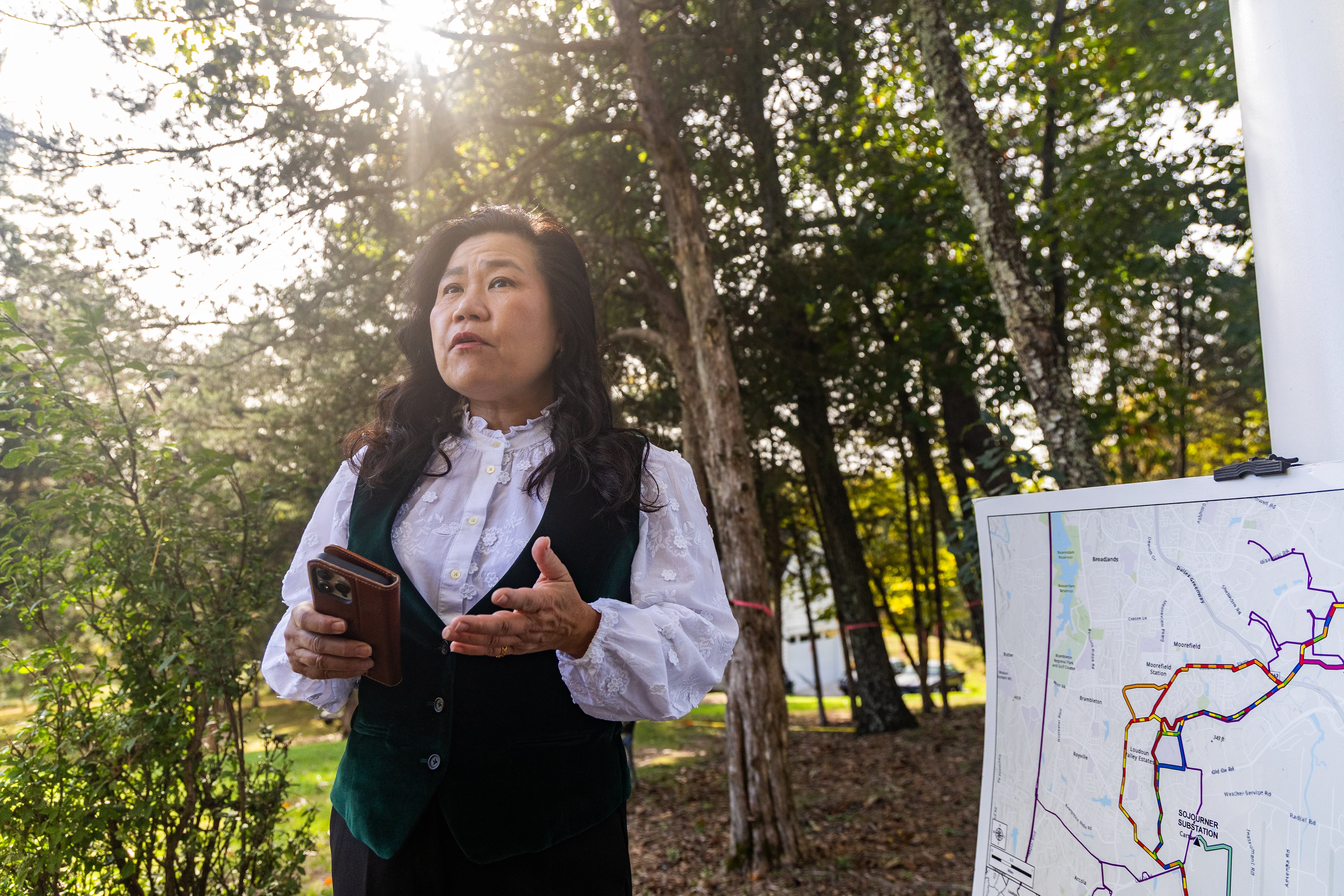
One of the factors that led Greg Pirio to buy his house in Loudoun County, in northern Virginia, 14 years ago, was the nature surrounding it. A historian specializing in Africa, he loved to take long walks with his dog and listen to the birds. Three years ago, a large data center was installed just a hundred meters from his door. Since it began operating a year and a half ago, the birdsong has been replaced by a constant buzzing together with fumes that cause headaches, conjunctivitis and respiratory problems.

 Login





 Elon Musk has