Several Google DeepMind employees have resigned in recent weeks over the company's Pentagon contract signed earlier this year that allows its AI technology to be used in classified settings.
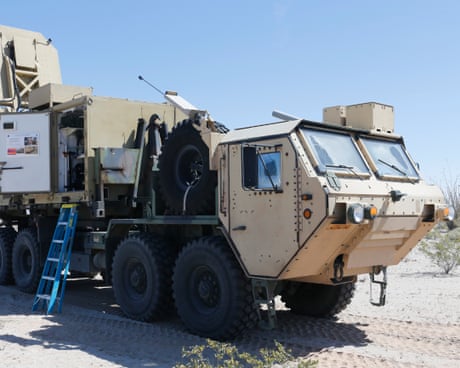
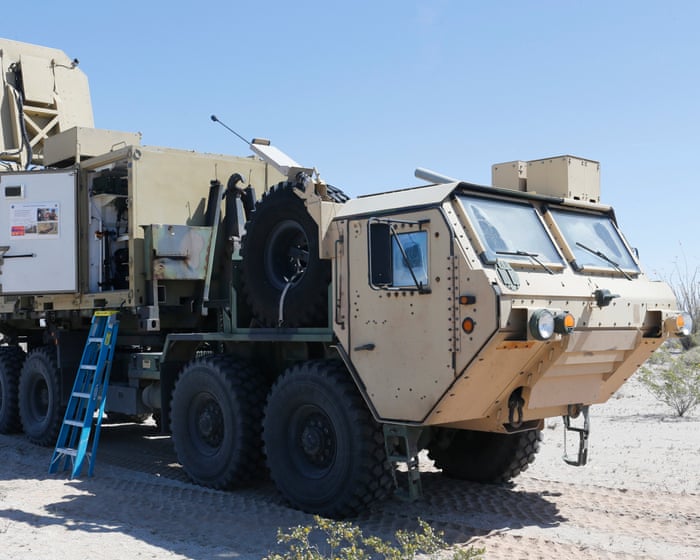
The Pentagon’s Active Denial System shoots energy beam that causes ‘sensation of intense heat on surface of skin’
Pete Hegseth, the US secretary of defense, reportedly signed a memo last month permitting the Department of Homeland Security (DHS) to test a non-lethal “heat ray” for potential use at the US southern border.
Dozens of Israeli fighter jets flew toward Iran’s border Monday in a massive show of force demonstrating Israel’s ability to strike the Islamic Republic, according to a report published Wednesday.
Top Trump administration officials are starting to point fingers squarely at SpaceX founder Elon Musk for the decision to slow down his company’s Starlink satellite internet services and its military counterpart Starshield for Ukraine, which has been muddled in uncertainty over the culprit. Looking to deflect the controversial move — which was swiftly admonished by…
Top Trump administration officials are starting to point fingers squarely at SpaceX founder Elon Musk for the decision to slow down his company’s Starlink satellite internet services and its military counterpart Starshield for Ukraine, which has been muddled in uncertainty over the culprit. Looking to deflect the controversial move — which was swiftly admonished by…
Washington and Israel have devised new plans to strike Iran again after the U.S. midterm elections, The New York Times reports, citing senior U.S. officials and other sources. The planning comes as the armed forces of both countries have stepped up military maneuvers in the region to rehearse bombing missions, and as the State Department has ordered nonessential embassy staff and their families to evacuate Saudi Arabia amid the prospect of possible new attacks by Houthi rebels in Yemen. It also comes as Israel prepares for an election in which Prime Minister Benjamin Netanyahu is fighting for re-election.
El Pentágono ha autorizado al Departamento de Seguridad Nacional a ensayar, para su posible despliegue en operaciones en la frontera, un arma conocida informalmente como “rayo de calor”, un artilugio que dirige un haz de ondas electromagnéticas no letales pero que causan una dolorosa sensación de quemadura cuando entran en contacto con la piel. Según la cadena de televisión CNN, el secretario de Defensa, Pete Hegseth, emitió el permiso en un memorando firmado el mes pasado.
With polls showing Democrats in good position to retake at least one chamber of the US Congress, several Pentagon insiders are reportedly lining up to offer up damaging information about Defense Secretary Pete Hegseth in hopes that a new Democratic majority will impeach him. According to a report published Wednesday by The Telegraph, current and […]
Apenas quedan seis días para las elecciones en Israel, pero las conversaciones sobre los comicios suelen terminar con un: “Bueno, si no hay una guerra antes, claro”. No es casual. El primer ministro, Benjamín Netanyahu, viene subrayando casi a diario su deseo de otro conflicto con Irán (tras el que inició en febrero junto con EE UU) y ha subido el tono este miércoles, al señalar que el régimen de Teherán “aún no ha aprendido la lección”, así que ha ordenado su derrocamiento al ejército y al Mosad, los servicios secretos en el exterior.
In late August, President Donald Trump announced what he called the “biggest oil deal in world history.” Since then, the full text of the accord — which grants the U.S. sweeping access to Venezuela’s oil reserves — has been one of the most sought-after secrets in Washington, DC. ProPublica has reviewed a copy of the […]
Ukrainian drone maker Wild Hornets is rethinking projects it is currently working on, including launching interceptors from aerial platforms, because of limits on SpaceX’s Starlink satellite internet. Spokesman Mike Orliuk told The War Zone (TWZ) this on 20 October. The company builds Sting interceptors, which it says destroyed over 15,000 Shaheds and Gerberas, a cheaper Shahed lookalike, in a year. Orliuk said Sting’s current operations are unaffected.
The stakes rise as Russia shifts to faster drones. Ukrainian defense technology adviser Serhii Beskrestnov counted more than 2,500 jet-powered Gerans, Russia’s version of the Shahed, in August. President of Ukraine Volodymyr Zelenskyy said on 16 October that these drones fly faster than 400 km/h. He added that some Ukrainian interceptors chasing them work through Starlink. When the link was slowed, Ukraine could not intercept some of them, he said.
How Sting stays connected
“Our own communications system provides the basic connection to our interceptors,” Orliuk said. The company’s remote-control technology can draw on various internet sources, he added, though the military often uses Starlink. Even then, the terminal does not need to move at high speed. It only links the command center to a ground station, which Orliuk compared to a cell tower.
“For these needs, everything is operating normally with Starlink at the moment,” he said.
An air-launch project under review
“Some drones carry a terminal on board and need to fly at high speed with it,” Orliuk said. “In such cases, Starlink’s limitations make their operation impossible.”
That is why the company is rethinking the air-launch project. Wild Hornets has made no clear decision yet but will test alternatives, Orliuk said. He declined to describe them.
“I believe, in any case, depending on a single solution is very risky,” he said.
Explore further
Musk pointed at the US military over Ukraine’s satellite limits. Now a US official says the administration had nothing to do with them
Other firms share the concern
Orliuk said he has spoken with other companies that rely far more on Starlink and have expressed concerns. He pointed to growing interest in Europe’s Eutelsat network, though “creating something like Starlink won’t be easy.”
Who ordered the slowdown remains unclear. The order to slow Ukraine’s Starshield service came from inside the White House, two US officials and a Western official said. A US official told TWZ the president never made such a request. US Secretary of State Marco Rubio said on 17 October that the slowdown had “nothing to do with the White House” and called “a report on that”“categorically false,” without saying which report he meant.
Elon Musk ordered the speed cap on Starshield, the military version of SpaceX’s Starlink network that Ukraine’s drones rely on, The Wall Street Journal reported on 20 October. Earlier, Musk said that such limits are decided by the US military and “ultimately POTUS.” Speaking to reporters in Eau Claire, Wisconsin, on 20 October, according to WSJ, US Defense Secretary Pete Hegseth said, “We haven’t made any directives or anything like that,” CBS News reported.
For a week, no one with a hand on the system said the decision was theirs. Musk pointed to the US military and the president, and Trump said he did not know who it was. Meanwhile, Ukrainian officials said the cap has hampered the drones they use to intercept Russian Shaheds and to strike Russian forces in occupied territory. Kyiv says the cap remains in place, and at about 160 km/h it makes intercepting jet-powered drones and missiles that fly about twice as fast virtually impossible.
Musk spoke with administration officials, including Trump, before the cap, a source says
Musk capped the speeds at which Ukrainian hardware could stay connected to the network, people familiar with the matter told WSJ. The slowdown, which began on 14 October, left some of Ukraine’s strike and interceptor drones virtually useless, WSJ said.
WSJ’s sources differ on Trump’s role. Some US officials said Musk acted on his own and that Trump did not specifically order any retribution against Ukraine. One person said Musk spoke with several senior administration officials, Trump among them, before imposing the cap. Two people said Musk and Trump discussed the decision by phone soon after the slowdown became public.
During the uproar, SpaceX representatives called White House counterparts. They asked for a shared message that the company and the administration had coordinated before Musk’s directive, the people said. The White House ran an informal inquiry into who ordered the slowdown, WSJ said.
Musk held several conversations with administration officials before the order to understand the president’s thinking, CBS reported, citing sources. He dislikes his company being seen as profiting from the war, and it is unclear how his order was carried out, CBS said.
Hegseth said the US had not pulled anything back. He said Starlink “has the option” to make decisions under its terms of service, and that from the Pentagon’s view nothing had changed, CBS reported.
Speaking to reporters as he left the White House on 16 October, Trump said he did not think either he or Musk was responsible, The Telegraph reported. On 19 October, he said, “I don’t know who it was, but I’d like to find out.”
Last week, a bipartisan group of senators asked the Pentagon’s inspector general to investigate whether officials “directed” or “authorized” changes to Starlink and Starshield services and intelligence sharing affecting Ukraine.
Earlier reports pointed at the White House
On 15 October, Reuters reported that the order came from inside the White House. The officials said Pentagon leaders received a message that the Starshield service for Ukraine’s military needed to be slowed, but did not say who made the decision or who carried it out. A senior US official said “No such request was ever made by the president.”
On 16 October, The Telegraph reported, citing four sources, that Musk approached Trump with the idea of the speed limits. One of the sources said Trump agreed.
Analysts and Kyiv say the cap is still in place
Michael Kofman, a war analyst at the Carnegie Endowment, said, according to WSJ, that Ukrainian strike and interceptor drones remain limited to 160 km/h. He said actual connections run below 130 km/h, which still hampers strikes and air defense.
On 20 October, Ukraine’s top diplomat in Washington, Denys Sienik, said Kyiv was still waiting for answers from the Pentagon and SpaceX, WSJ reported.
PM claims ending 'terrorist' Islamic Republic will bring peace with Lebanon; Tehran rules out talks with Washington until its demands met; Israeli fighter jets said to fly toward Iran in drill
Morning erections are the gold standard for gauging testosterone, according to several male-oriented forums on Reddit, where an entire subcategory is devoted to the hormone, which is referred to online simply as T. In those groups—some aligned with the manosphere and others not—members swap and compare blood tests every six months. Being labeled in that universe as low T (low in testosterone) is a stigma that taps into several male anxieties: weak sexual drive, low energy, a certain timorous attitude toward life and a precarious bank balance.
"I think the important takeaway for you is that there has not been some deliberate political directive to go out and harm Ukraine," Rubio said, acknowledging possible delays in interceptor shipments.
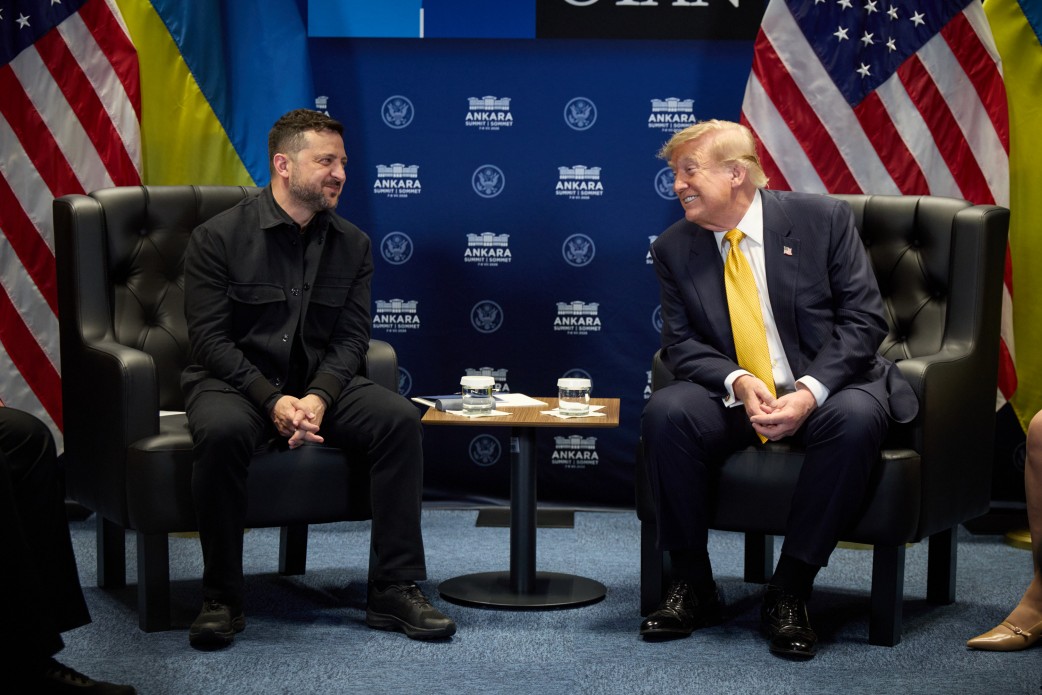
Ukrainian President Volodymyr Zelenskyy said on 20 October that he had spoken with US Secretary of State Marco Rubio about ballistic missile interceptors, early warning of Russian launches, and “the situation with Starlink/Starshield, which needs to be restored,” he wrote on X. He thanked Rubio for “his readiness to help and his clear position” and said they would speak again soon. A day earlier, he had told US senators how each of those supplies had stalled.
This comes as the US presses Kyiv to stop its strikes on Russian oil refineries, which Trump has blamed for high fuel prices at home, and Zelenskyy counts the Starlink slowdown among the steps he says look like an effort to push Ukraine to capitulate. Ukraine’s interceptor drones depend on the service to hunt Russia’s jet-powered Shaheds, and Kyiv says they now lose the link at speeds too low to catch them. The call appears not to have settled whether that cap is gone. If it stays, Ukrainian cities could face Russia’s drone waves this winter with one fewer means to stop them, as Russia keeps striking the grid.
On 17 October, Rubio told reporters that nobody in the US ordered Starlink slowed, that the slowdown “wasn’t deliberate,” and that “my understanding is it’s been restored.” He drew a line between the two services. Ukraine’s drones, he said, ran on commercial Starlink, while Starshield, the military version, is not available to Ukraine. Kyiv has asked for it to carry out strikes deep inside Russia, and that request is under discussion, he said.
The next day, Zelenskyy told Bloomberg that Starlink in Ukraine cuts out above 161 km/h, and Kyiv says its Starshield terminals are capped as well. His post after the call still says the service needs to be restored.
Reuters’ sources point to the White House. Washington denies it
The order to slow Starshield came from inside the White House, Reuters reported, citing two US officials and a Western official. They described it as the Starshield service for the Ukrainian military, the version Rubio says Ukraine does not have. A senior Ukrainian official told Reuters that Kyiv had been told it was a White House decision. A senior US official told the agency the president never made such a request, and the White House did not answer whether other officials had. Rubio called a report that the White House ordered Starlink slowed “categorically false.”
Missile warnings and Patriots are also in dispute
Overnight on 18–19 October, Ukraine got no partner warning before the first of two Russian ballistic waves, Air Force spokesman Yurii Ihnat said on the national telethon. That came hours after Zelenskyy said US warnings had resumed. On 19 October, Rubio pushed back against suggestions of a pause in US intelligence sharing, AFP reported.
Zelenskyy also told Bloomberg the US sends only 12 Patriot interceptors a month and has authorized only part of those “we have paid for” under PURL. Ukrainian officials told the Kyiv Independent that Defense Secretary Pete Hegseth has not signed the contracts. A US government official called those claims “not true.”
Ukraine is counting on buying part of Lockheed Martin’s growing output of ballistic missile interceptors, President Volodymyr Zelenskyy said. He met the US company’s team in Kyiv on 19 October and also raised servicing and repairing F-16 fighter jets inside Ukraine.
Russia keeps striking Ukraine’s power grid with ballistic missiles, and interceptor supplies fall short of that threat. Kyiv is working every route to more Patriot missiles, from US deliveries to allies’ stocks, and some have stalled. Greece, for one, has not confirmed it will hand any over, citing its own defense needs. A purchase from the missiles’ maker would add one more route.
Growing output, F-16 repairs in Ukraine
Lockheed Martin builds the PAC-3 MSE interceptors fired by Patriot air defense systems, as well as the F-16. Zelenskyy said both matter against Russian ballistic missiles and jet-powered Shahed drones. Neither area is easy right now, he added.
“We count on the opportunity to purchase some of them to protect more lives,” he wrote.
On 28 July, Zelenskyy met the company in Washington to discuss joint production. That came weeks after US President Donald Trump pledged Ukraine a license to manufacture Patriots.
A batch reportedly stuck in Washington
Meanwhile, US Defense Secretary Pete Hegseth has not signed off on a “significant” batch of Patriot missiles, Ukrainian officials told the Kyiv Independent. One official said allies had already paid for them. A US government official called the claims untrue, and the Pentagon did not respond. A NATO official said allied-funded deliveries, including air defense, continue. A second NATO official said some shipments could be delayed, but likely not for political reasons.
Zelenskyy told Bloomberg on 18 October that the US delivers only 12 Patriot interceptors a month. On 20 October, interceptors topped his list in a call with US Secretary of State Marco Rubio.
No purchase was announced, so new interceptors from this route remain a prospect. Meanwhile, partners’ early warnings of Russian ballistic launches have gone missing three times recently, Zelenskyy wrote. Those warnings give air defenses extra minutes to prepare.
Ukraine got no early warning from its partners of the first wave of Russian ballistic missiles on the night of 18–19 October, President Volodymyr Zelenskyy told US senators on 19 October. He also said Starlink and Starshield terminals still stop working above certain speeds on parts of the front, and that Washington has explained neither problem. In the same video call, according to a transcript obtained by Axios, he said US Defense Secretary Pete Hegseth is not signing off on deliveries of Patriot interceptors and AIM-9X missiles for NASAMS that NATO countries have already paid for.
This comes as the US presses Kyiv to stop its strikes on Russian oil refineries, which Trump has blamed for high fuel prices at home. Washington supplies both the early launch warnings and the Patriot interceptors Ukraine needs against Russian ballistic missiles, and Zelenskyy says both are now failing at once, as Russia keeps firing ballistic missiles at Ukraine’s grid ahead of winter. If neither the warnings nor the interceptors come through, Ukrainian cities would face winter strikes with less notice and fewer means to stop them.
On the morning of 20 October, Zelenskyy wrote that he had spoken with US Secretary of State Marco Rubio about interceptors against ballistic missiles, early warning of Russian ballistic attacks, and restoring Starlink and Starshield. He thanked Rubio for his readiness to help and his clear position, and said they had agreed to speak again soon. He did not say whether anything had been resolved.
Patriots paid for, not signed
“We have almost no Patriot interceptors left from the US partners,” Zelenskyy told the senators.
Hegseth “has the contracts for Patriot missiles on his desk,” a Ukrainian official told the Kyiv Independent, adding that allies had already paid for them. Another senior official called the batch “significant.” One of the main channels for Ukraine’s Patriot supply is NATO’s PURL mechanism, under which allies fund purchases of US weapons for Ukraine, a senior Ukrainian military official told the outlet.
On 19 October, Zelenskyy wrote that some types of vital supplies were being delayed at the US Department of War, as the Trump administration also calls the Pentagon. He added that some political agreements had not been carried out at the working level.
Explore further
Musk pushed Trump to slow Starlink in Ukraine, weakening air defenses as Russian drones attacked cities – The Telegraph
A NATO official told the Kyiv Independent that PURL deliveries, including air defense, were continuing. Another said some shipments could face delays, but that political reasons were unlikely to explain them. A US government official called Ukraine’s claims “not true.” The Pentagon did not respond to the outlet.
No warning for Kyiv hours after Zelenskyy said US alerts were back
On 18 October, Zelenskyy said on NBC that US warnings of ballistic launches had resumed after three days without them. That night, Russia launched two ballistic waves at Ukraine, and information from partners did not arrive before the first, Air Force spokesperson Yurii Ihnat said. Zelenskyy told the senators Ukraine had not received US warnings on three occasions in the past week. “We have received no clear explanation from Washington,” he said.
“All of this suggests that some political decision has been made to slow down support for us,” Zelenskyy said.
Zelenskyy offered a 30-day pause on refinery strikes for Patriots
Zelenskyy told the senators he had offered US envoys Steve Witkoff and Jared Kushner a 30-day halt on strikes against Russian refineries. In return, the US would supply Patriot interceptors to cover that period. He said the envoys had shown no openness to the idea.
Explore further
Trump calls Ukraine’s renewed refinery strikes “a disgrace” after Russia’s 39-missile strike on its energy sites
On 20 October, Norway announced talks in Oslo that day between Zelenskyy, Norwegian Prime Minister Jonas Gahr Støre, and Finnish President Alexander Stubb, with Witkoff attending in person and Kushner by video.
Senators back Kyiv. Trump says intelligence still flows
Senator Thom Tillis said he and his colleagues remain committed to standing with Ukraine and its European allies, while Senator Richard Blumenthal wrote that bipartisan support was “clear and unequivocal” and would be expressed “in upcoming action.”
US President Donald Trump told reporters on 19 October that Washington is still sharing intelligence with Ukraine and that he did not know who ordered the throttling of Starlink, Axios reported.
“Zelensky doesn’t know what he is talking about,” Trump said.
Meeting said to have been held at Ovda airbase, where US jets are stationed; US defense secretary confirms previously unannounced visit to region to meet troops, but doesn't specify location
U.S. Defense Secretary Pete Hegseth has yet to approve the transfer of a significant batch of Patriot interceptor missiles for Ukraine, Ukrainian officials and military officers told the Kyiv Independent, raising suspicions in Kyiv that Washington is deliberately withholding the weapons to pressure Ukraine.

 Login