Charities say ‘tip of iceberg’ figures show government is not fulfilling pledge to halve violence against women and girls
Almost one in 10 adults in England and Wales have experienced domestic abuse in the last year, a survey from the Office for National Statistics (ONS) has found.
The Crime Survey for England and Wales (CSEW) found that 9.6% of people aged 16 and over had experienced domestic abuse in the last year – which equates to about 4.7 million people.
Blackcurrant in perfumery is frequently categorized by its tart, verdant top note-a fleeting burst of green acidity that defines the fruit's role in summer scents. However, the structural placement of this accord shifts its olfactory function entirely when supported by warmer base materials. Rather than acting solely as a freshener, blackcurrant can serve as a bridge between citrus brightness and resinous depth, altering the composition's trajectory from ephemeral to grounded. Seven compositions illustrate this range, where the berry's specific interaction with floral and woody elements determines whether the result leans toward effervescent lightness or dense, amber-like weight.
In Diptyque L'Ombre dans l'Eau, the blackcurrant is paired with bergamot and mandarin, creating a bright opening that quickly transitions into a rose heart. The base of grey amber and white musk provides a clean, dry anchor, ensuring the fruitiness does not drift into synthetic sweetness but remains tethered to a subtle, powdery dryness.
Giorgio Armani Sì Intense approaches the accord through a lens of velvet and bitterness. Here, the blackcurrant's natural tartness is contrasted by artemisia and rose, which lend a medicinal, slightly soapy edge. The foundation of patchouli and benzoin grounds the composition, transforming the fruity start into a thicker, darker scent profile where the berry acts as a textural element rather than a dominant fruit note.
The winter puffer, long relegated to the status of a utilitarian shield against the elements, is undergoing a structural shift for the Fall/Winter 2026/2027 season. The focus has moved away from mere thermal efficiency toward a deliberate manipulation of the wearer's silhouette, where the choice of volume determines the entire composition of the outfit.
The most aggressive departure from the standard puffer is the "blanket" silhouette. Defined by an extreme, oversized volume, this cut allows for heavy layering-such as chunky knitwear-without restricting movement. However, the visual weight of the blanket puffer necessitates a counter-balance in the lower half of the body. Pairing these expansive tops with slim-fit trousers or straight-leg jeans prevents the wearer from being swallowed by the fabric. Crucially, the effectiveness of this look relies on length: the silhouette succeeds when it is either decisively cropped or extended to a full maxi, as mid-thigh lengths tend to disrupt the intended architectural proportions.
Structural Variations and Materiality
Conversely to the blanket's expansiveness, a return to the cinched waist is altering how puffer jackets integrate with formal wear. Through the use of leather belts or engineered darting that mimics an hourglass shape, the puffer is no longer an amorphous block. This shift in proportion allows the garment to pair naturally with a pencil skirt or heeled boots, moving the jacket from a purely athletic context into a more structured, feminine ensemble.
This as-told-to essay is based on a conversation with Bridget Griswold, the 25-year-old CEO of Lean In, who lives in San Francisco. It's been edited for length and clarity.
I fell in love with technology at Brown University, where I studied computer science and business. I worked with two female professors to build a robot. I interned at a semiconductor manufacturing company and also loved design and art.
Product management felt like a really wonderful combination of all those interests, and that was my role at Meta a year after graduating from college. My team and I redesigned the Instagram search grid, so now when you search for large Instagram accounts, you're routed to the search results page rather than directly to those accounts. I'm very proud of that.
While at Meta, an incredible female mentor connected me to Sheryl Sandberg. Meeting her felt so surreal and is what led me to start my role as CEO at Lean In in March. It feels like a once-in-a-lifetime opportunity to do mission-driven work.
Griswold started working at Meta two years after Sheryl Sandberg stepped down as COO.
Gabriela Hasbun for BI
I was a swimmer as a kid, and as my swim coach used to say: "You get out of swimming what you put into it." I think that applies to many things in life: The more you put in, the more you get out.
Here's a day in my life.
I wake up to my needy, angelic cat around 7:30 a.m.
The second I wake up, I pet my crying and whining cat. She's an angel but very needy.
I'm not a breakfast person, but I need coffee immediately. I have many cups of coffee throughout the day. One of the first things I do is make some at home.
I always tidy up my apartment while brushing my teeth
The most productive two minutes of my day are when I brush my teeth. I clean and tidy my apartment at the same time.
I'm probably not super focused on brushing my teeth, which is maybe a problem, but I'm also making my bed, emptying the dishwasher, feeding my cat, or starting the coffee maker.
I always move really quickly; I don't like to sit still. Brushing my teeth and standing still would make me antsy, so I like to get something else done at the same time.
I'm still adjusting to West Coast hours
I moved from New York City to San Francisco in August.
In New York, I went to Solidcore classes before work every day. Working on the West Coast, the workday starts earlier than on the East Coast, so I'm still learning whether I like to work out in the morning or after work.
When I take the bus to the office three days a week, I often use that time to catch up on personal housekeeping tasks like scheduling appointments or texting back my friends who live on the East Coast.
I come to the office around 8 a.m. or 8:30 a.m.
A majority of my in-person time is spent in meetings. As CEO, I enjoy being involved in all aspects of the team.
I'll meet with our content and research team — we spend a lot of time digging into data, such as some really exciting new research on trad wives in the manosphere. I also often meet with our product and tech team, as well as many of our partners, to help grow our programs.
We have lunch in the office — my favorite is a salad-plus-smoothie combo — and it's a really wonderful time to connect with the team.
Most of Griswold's workday consists of meetings.
Gabriela Hasbun for BI
I also love connecting with our Lean In community. One thing we're focused on is closing early gender gaps in AI usage. Our flagship program, Circles, consists of groups of 8 to 12 women who meet regularly to support each other in their careers — we have over 170,000 members. It's a perfect forum to hold each other accountable for upskilling in AI.
Every week, I send AI tips to our network leaders. A recent one encouraged the use of AI notetakers, as women are more likely to take notes during meetings and miss out on participating.
Lean In is in over 180 countries, and it's really heartwarming to see that our commitment to our mission has a positive impact on women's careers. Getting to speak with them is really energizing and rewarding.
I rehearse for meetings by talking to myself on walks
If I have a presentation or interview coming up, I'll set up a Zoom and practice speaking to myself. Talking for a long time is sort of an unnatural act, and the first time you do it is probably not going to be your best.
Sometimes, I'll even go on a walk and wear headphones, pretending like I'm in a meeting or on a phone call, but I'm actually talking to myself and practicing.
When there's a bug, I usually fix the code myself
Because of my background in computer science, I spend a lot of my time finding bugs or things I believe we should change on our platform. I'll code and fix those on my own. Thankfully, with AI, it's so much faster to code now than it was a few years ago.
Our team is busy, and my goal is to enable everyone to have as much impact and move as quickly as possible. If I can help unblock the tech team or resolve an issue rather than add it to their plate, I'm always more than happy to do so.
I leave work around 6 p.m.
I continue to work until I go to bed pretty much every night.
It's nice to have that time at home, when I'm not running around between meetings, to focus, give feedback on documents the team has sent, write, respond to emails, and brainstorm my own ideas.
I take breaks to tidy up my apartment and make dinner. Living in New York got me out of the habit of cooking, so I'm taking the initiative to cook more meals, like rice bowls.I would say about half the time I order takeout, like pho, and the other half I cook, which is progress for me.
Griswold continues working when she gets home, catching up on more deep work when she doesn't have meetings.
Gabriela Hasbun for BI
If my work doesn't require intense focus, I'll do it from the couch and put a happy TV show on, which right now is "Schitt's Creek." I think it's a nice balance between relaxation and getting things done.
I usually get in bed around 10:30 p.m.
I've been trying to make a habit of reading every night instead of going on my phone, which has been a really positive change. I like anything I read to be a distraction. I'm currently reading "Big Little Lies" and enjoying it.
It's nice to spend 30 minutes reading something like fantasy that's completely different from what I think about at work. That way, I'm not spinning on all the things I need to do or coming up with new ideas that can't get done in my sleep anyway.
Weekends are for the beach and farmers market
My boyfriend works in Los Angeles and flies up to San Francisco every weekend. We've made a tradition of going to the Fort Mason Farmers Market on Sundays for fresh produce to cook an at-home meal that night.
I also enjoy seeing friends over the weekend. My preference is to go on a long walk or go to the beach. I also enjoy fitting in some work — emails, deep-focus work, or reading — throughout the weekend.
The pencil skirt has long been the rigid anchor of the corporate uniform, defined by a strict adherence to knee-length hems and the mandatory pairing of pointed pumps. However, recent collections from Miu Miu, Jacquemus, and Balmain suggest a shift in the garment's geometry. The focus has moved away from the seamless, tailored suit toward a deliberate clash of proportions, where the skirt functions as a slim base for an oversized silhouette.
The Architecture of Contrast
The most visible change is the pairing of a tight lower half with a voluminous top. A heavy, oversized knit sweater or a chunky cardigan worn loose replaces the tucked-in blouse and fitted blazer of the 2010s. This shift in volume removes the formal sterility of the look, transforming the pencil skirt from a piece of office equipment into a tool for structural contrast.
This play on shape extends to outerwear. A leather bomber jacket or a man-style oversized blazer creates a heavy upper frame that emphasizes the narrowness of the skirt. The footwear has undergone a similar liberation; high boots that disappear under the hemline, loafers worn with thick socks, or heavy-soled boots have replaced the stiletto, altering how the wearer moves and how the garment sits on the body.
Facial self-massage is a non-invasive practice that relies on mechanical manipulation to address muscle tension and fluid accumulation. The technique involves applying soft pressure to specific anatomical regions to influence the state of the underlying musculature and lymphatic circulation. Proponents of the method, as outlined in a recent article from the health blog Healthy, identify three primary zones where regular stimulation is claimed to reduce the appearance of aging and bloating.
The core mechanism of the routine is the relaxation of muscles in a state of hypertonus. By physically engaging these tissues, the practice aims to alleviate the stiffness that can contribute to a heavy or tired appearance. The specific protocol focuses on three distinct areas: the temples, the region behind the lower jaw, and the muscular band running along the side of the neck.
Mechanics of the Routine
Each target area requires a specific physical action designed to engage the corresponding muscle groups without applying excessive force. The instructions emphasize gentle, controlled movements rather than aggressive kneading, with the goal of maintaining tissue integrity while promoting relaxation.
Measures would remove some penalties for those helping women access abortion but are ‘small-scale step’, say campaigners
Poland’s lower house of parliament has approved two bills aimed at loosening a near-total ban on abortions, in what campaigners have described as a “small-scale step” ahead of protests calling on the government to fulfil its promises to overhaul the country’s laws.
The new measures, which are likely to be vetoed by Poland’s nationalist president, would remove some of the criminal penalties for those who help women to access abortion care and allow terminations in cases of foetal abnormalities.
Today is World Menopause Day – a day to convince women over 40 that yet another aspect of ordinary life needs to medicalised. It's time to stop the grift, says Joanna Gray.
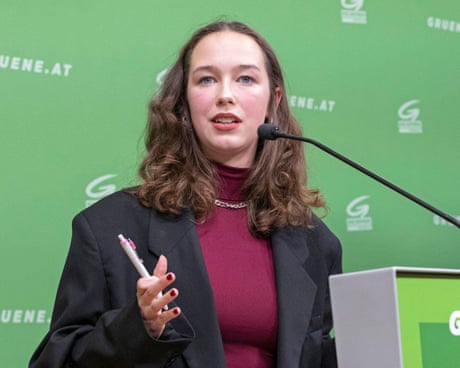
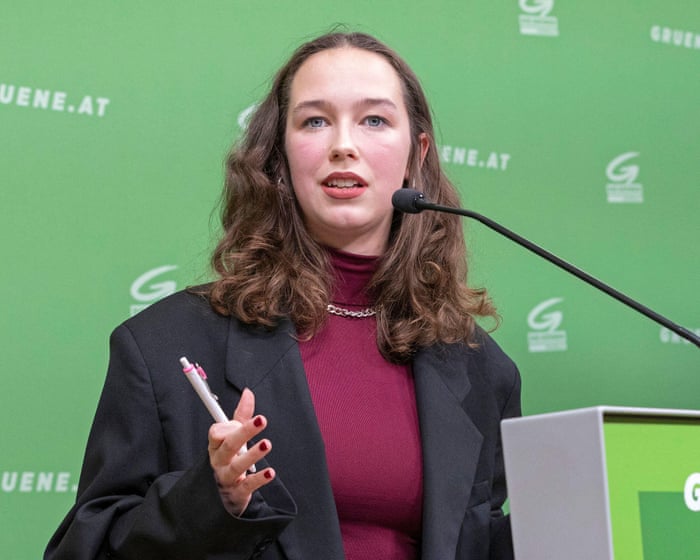
Lena Schilling of Austrian Greens says images are ‘digital violence against women’ and a threat to democracy
An Austrian MEP has spoken out about her experience of being “stripped naked” online without her consent and has urged the EU to take action, as a report found that one in six female MEPs had been targeted by sexualised AI-generated content.
Lena Schilling of the Green party said she had learned last month about nude deepfakes of herself circulating online. When she opened the links, she found herself staring at images from one of her first ever press conferences – but the images had been digitally altered to remove her clothing.
After 20 years of balancing her corporate leadership roles with motherhood, Trisha Daab was ready for a break.
"Life had felt like sprinting a marathon for as long as I could remember," Daab, 47, told Business Insider. "I had no idea how tired I was until I stopped working."
In her year off, she tap danced, volunteered at a food bank, traveled to Disneyland and Alaska, and spent more time with her kids. By the end, she had decided she couldn't go back to her old life.
"My job often demanded that it came first — never-ending to-do lists, urgent emails, travel, and always chasing the next promotion," Daab, who's now a travel writer and substitute teacher, said. "Stepping away helped me realize my priorities had shifted."
Trisha Daab took a year off from her corporate role, then pivoted to jobs that allow for more work-life balance.
Courtesy of Trisha Daab
Now in their 30s and 40s, many millennial women are skeptical of corporate and instead becoming business owners, content creators, and mothers, prioritizing more flexible work schedules. Instead of striving to get to the top, they're inverting Sheryl Sandberg's mantra of the 2010s — and leaning out.
Sandberg, Meta's former COO, told Business Insider that the corporate exodus is due to women feeling undervalued at work.
"This is not the women who are saying, 'I don't want to do it,'" Sandberg, 57, said. "It's the women saying, 'I don't want to do it because I'm not wanted, I'm not getting the same opportunities and the same support, and I face an unfair burden at home.'"
Even Lean In, the organization founded by Sandberg and named after her 2013 bestselling book, is noticing a recent shift in women's ambitions in the workforce.
Sheryl Sandberg coined the phrase "lean in" in 2013, encouraging women to pursue more leadership roles.
Bloomberg/Getty Images
According to the organization's 2025 Women in the Workplace report, published in December 2025, which surveyed 9,500 US employees across 124 organizations, women were less likely to say they wanted a promotion compared to men. This was true when filtered to include only millennials, who made up roughly one-third of participants.
When asked why, over 28% of millennial women said "personal obligations" made it hard for them to take on more — compared to 17% of millennial men.
Annie Wright, a licensed psychotherapist who works with Silicon Valley leaders, has also observed more of her millennial female patients shifting their ideas about what constitutes a fulfilling career.
"I'm watching them make more person-centered choices than necessarily career-only-driven choices," she told Business Insider. "I don't think many millennial women are becoming less ambitious. I think they're just becoming less willing to confuse ambition with self-erasure."
The rise and fall of the have-it-all girlboss
The Wing cofounder Audrey Gelman and Jennifer Lawrence speak at an event at The Wing in 2018.
Monica Schipper/Getty Images for The Wing
Let's, for a moment, remember what is now referred to as the "girlboss era" of the 2010s.
It was a time of She-E-O-led startups, of crushed velvet sofas and the words "I Want It All" aglow in cursive neon lettering. Of earnest enjoyment of "Fight Song" and T-shirts with earnest phrases like "feminist" and "woman up."
Of a future that was female, tinged millennial pink — until a series of public reckonings punctured the fantasy. Leaders of several companies stepped down amid allegations of toxic workplace cultures, exposing the facade of the girlboss promise.
Then came the remote work culture of 2020. Suddenly, many women had time to breathe, whether that meant not rushing to day care pickup, having more time to work out or see friends, or simply not being "on" all the time.
For some, the slowly creeping requirement to return to the office dealt the final blow.
Misty Heggeness, a professor at the University of Kansas specializing in gender economics, described the influx of new RTO policies by some companies as having a "chilling effect."
"That does disproportionately disadvantage women in general," Heggeness told Business Insider, "just because women are more likely to carry an invisible load of work within families."
The working mom paradox
Kendra Rothermel, 34, started her own business to have more flexibility as a working mom of three.
Courtesy of Kendra Rothermel
After the birth of her first child, Kendra Rothermel switched from full-time to part-time work as an office manager while her husband remained at his full-time job. "As we grew our family, it made sense for me to have a more flexible schedule," Rothermel, 34, told Business Insider.
When she had her third baby, his clubfoot diagnosis meant frequent orthopedic appointments. Even part-time work wasn't flexible enough, so she eventually started her own venture helping small businesses with operations and marketing.
Rothermel said she was partly inspired by watching other working moms do the same.
A recent analysis of job-market data by Matthew Nestler, a senior economist at KPMG, found that labor force participation between December 2023 and May 2026 decreased among college-educated women with children under 5. Meanwhile, participation increased for women without children and most groups of men, including fathers.
Because millennials are generally having kids later than previous generations did, Heggeness said parents, moms in particular, are more likely to be parenting young children just as their work responsibilities are ramping up.
"If they were going to lean out, now would be the time," she said, whether it's to save on childcare costs or introduce more flexibility.
Working moms want more flexibility, right as more companies have been instituting RTO mandates.
Natalia Lebedinskaia/Getty Images
Add to the list aging parents. The costs of childcare and eldercare, sometimes unaffordable even with the intense work commitments required to afford them, have prompted some women to leave their full-time jobs for more flexible or minimum-wage work.
To Sandberg, it's a sign that companies are not adequately adjusting to meet women where they are, whether that's offering more flexible hours, longer parental or bereavement leave options, or better healthcare coverage.
"We're at a critical moment in time for women, because what a lot of women are seeing is that commitment to them in leadership pulling back," Sandberg said. "Then what's happening to them is their ambition is pulling back. And that's a loss. It's a loss for our economy. It's a loss for our companies. It's a loss for our children."
The allure of going at it alone
Heigi Jeong left her full-time tech role to pursue content creation and write a book.
Courtesy of Heigi Jeong
Not all women who are leaning out are doing so because they are overworked. Some, like Heigi Jeong, 30, have dreams beyond corporate America.
"While I wouldn't say I loved the work, I liked it," Jeong, who made $173,000 working in product design, told Business Insider. "It was my dream job as an immigrant, and it was sustainable."
Still, Jeong was pulled toward her other ambitions: writing a book and being a content creator. She was also intrigued by the idea of being her own boss.
"When I'm working for myself, I entirely choose the role I will play," Jeong said. "I wanted to experience it myself and have my own take rather than constantly wondering 'What if I quit?'"
Three months after quitting, she enjoys not feeling as rushed as she used to, even if the price is an inconsistent income.
Both Heggeness and Wright have noted a growing interest in entrepreneurship and self-employment among women. A 2024 Census working paper found that the share of women business owners under 45 rose between 2012 and 2020, with the biggest increase among women ages 25 to 34. It also found that newer women-owned employer businesses were disproportionately owned by women under 35.
Some women are pursuing full-time content creation due to more flexible hours and, sometimes, better pay.
Luis Alvarez/Getty Images
The creator economy opened another path. More than 200 million people worldwide now identify as content creators, though that broad figure includes far more than full-time influencers. Some Gen Z and millennial consultants are even leaving MBB and Big Four firms to build audiences and businesses online — trading the girlboss crown for a bubble headband.
In a 2023 Vogue article, writer Daisy Jones wrote that the newest iteration of girlboss swaps grind culture with the similarly perfectionistic "soft life" defined by travel and lucrative brand deals. Pantsuits were exchanged for sweatpants; speaking engagements and spread-thin multitasking gave way to self-care and supplement stacks.
"In some ways, the career woman appears to have been replaced by the health-conscious woman," Jones wrote, "the one who prioritizes her vitamin intake, hydration, and sleep cycle over endless meetings and salary increases."
Content creation doesn't come without its own costs. Plenty of influencers report feeling financially insecure or overworked, unable to take a day off without losing money.
Still, if they're going to burn out or worry about their job security, some figure they might as well enjoy their autonomy to create their own schedules.
"For some women, there's been a paradigm shift in values," Wright said. "Promotion or success now looks like more availability, presence, and freedom."
When everyone leans out
If women keep leaving corporate leadership roles, it leaves fewer women in charge to fight for those corporate roles to be more flexible.
Petri Oeschger/Getty Images
Sandberg, who herself stepped down as Meta's COO in 2022 to pursue philanthropy and early-stage investing ventures, said she supports women's career choices, whatever they may be.
"I think being at home with your children is great," she said. "Going back to school, great. Starting a company, great. Going part-time, great. Anything you want to do is great."
Part of the issue, she said, is that without female leaders, there are simply fewer people to advocate for the very policies that make other women more excited to move up in a company, be it egg-freezing coverage, lactation rooms, or more competitive maternity leave options.
It's why she feels companies need to do more work to assess why women are leaning out enough to jump ship entirely. "It's easy to overly characterize the words 'lean in,'" she said. "What I mean by them is very clear: I think women should make decisions based on believing in their own abilities, based on believing that they should and can have the same opportunities as men."
It's just a shame, she continued, if the decision stems from not feeling valued enough in the corporate world.
"I just hope that enough women want those senior leadership roles," she said, "that we get the environment for women that they deserve."
The Folger Shakespeare Library's newest exhibition maps an unlikely historical connection between Black women and the works of William Shakespeare. Nearly 100 objects document the stories of renowned scholars, popular actors and little-known historic figures. Geoff Bennett spoke with curator Patricia Akhimie. It's for our arts and culture series, CANVAS.
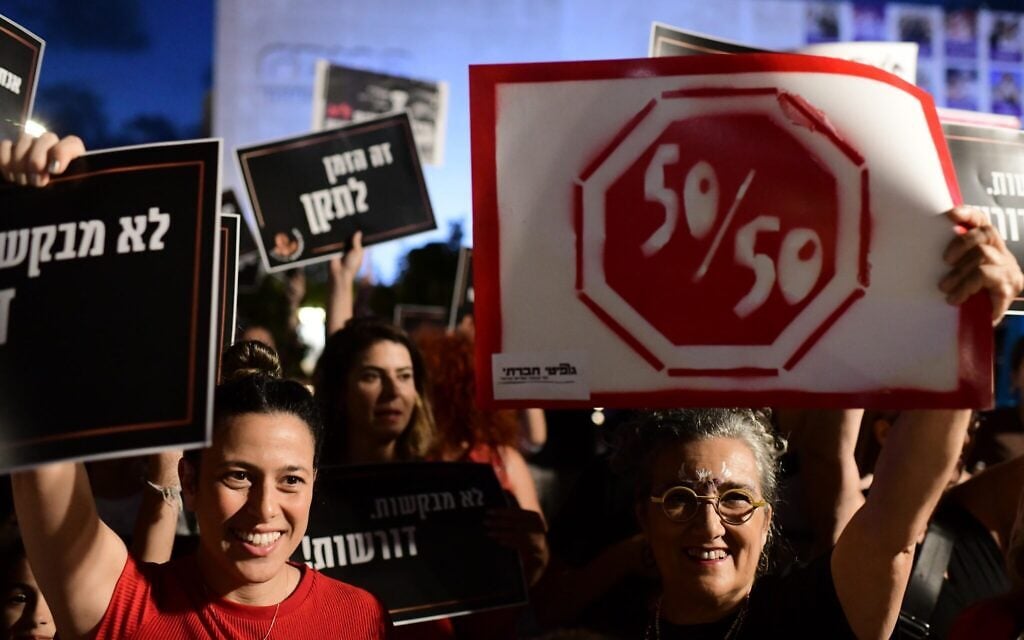
While the 2026 election largely ignores gender equality, structural changes in centrist parties and a grassroots ultra-Orthodox movement might be quietly shifting the political map
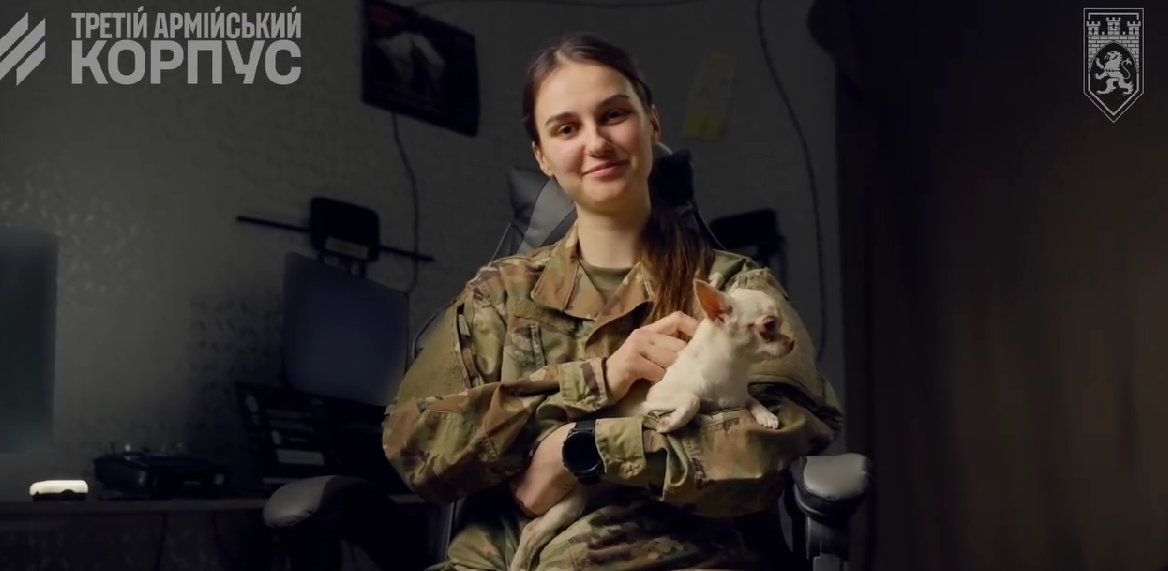
Natalia is 25 years old and from Odesa. She has served in two armies—the Israeli and Ukrainian militaries. In the Armed Forces of Ukraine, she has, among other things, carried out missions as part of a UAV, FPV drone, and strike-wing crew on the Zaporizhzhia and Kupiansk fronts, NV reported on 5 October.
During the Russo-Ukrainian war, women in Ukraine have the right to voluntarily enlist in the military. As of March, more than 75,000 women were serving in the armed forces, more than 55,000 of them as service members, the commander-in-chief said, and their number has been growing every year. Recently, discussion around the mandatory mobilization of women has intensified. Keith Kellogg, former US Special Presidential Envoy for Ukraine under President Donald Trump, said that he considered mobilizing women in Ukraine appropriate. In response, Iryna Vereshchuk, Deputy Head of the Office of the President of Ukraine, said she would rather see more missiles and more will from the United States than advice to mobilize women.
In Israel, Natalia served in a search-and-rescue brigade as a rescue soldier and in the engineering corps during a deployment along the northern border.
Natalia was born in Russia’s Saint Petersburg but does not remember her life there
The young woman was born in St. Petersburg, where her family lived at the time. When she was a year and a half old, her mother returned to Odesa with her and her older son. Natalia says she remembers her life exclusively in Ukraine.
She spent the first nearly two years studying at Lviv University, but later decided to leave the university and look for other educational opportunities. Natalia studied, among other places, in Denmark through a scholarship program. After completing it, she planned to enroll at a European university to study sound engineering, but the coronavirus pandemic began at that time.
She moved to Israel under a program for Jewish youth at the end of 2020. After the program ended, due to quarantine restrictions and closed airports, Natalia faced a choice: obtain a work visa or acquire citizenship under the Law of Return. She chose the latter—and with it, she also became obligated to perform military service.
In May 2022, Natalia joined the Israeli military and chose a combat unit.
“When the war started in Israel itself, I still had six months of mandatory service left. I was discharged and immediately transferred to reserve service. Once I managed to resolve all the bureaucratic issues so that this would not be considered desertion, I returned to Ukraine,” the young woman says.
Natalia returned to Ukraine in March 2025, and in August signed a contract with the Armed Forces of Ukraine.
Natalia (right) and her fellow servicewoman. Photo courtesy of Natalia/NV
“The army—both Israeli and Ukrainian—gives you a deeper understanding of what society is made of”
Among the advantages of the Ukrainian army, she highlights its ability to quickly adapt to circumstances. In particular, she mentions the use of drones, OSINT, and solving complex technological tasks with minimal resources.
“The West could learn from this situational agility. They often spend huge budgets on developments that should be cheap and mass-produced,” the veteran says.
However, such Ukrainian ingenuity is largely a consequence of a lack of funding, Natalia notes.
In the Israeli military, Natalia highlights society’s readiness for the constant threat of war and more systematic planning of military service.
“There, preparation for and perception of the army begin at school: by the age of 14–15, teenagers already understand where they want to go, what skills they need, and undergo selection for special or intelligence units,” the young woman says.
She then gives the opposite example of the situation in Ukraine.
Explore further
This Ukrainian female soldier flies one of war’s heaviest drones. She turns down promotion twice to keep doing it
“In Ukraine, with very rare exceptions, people hide until they are mobilized, and suddenly face the reality of conscription without having any understanding of the system,” the veteran says.
Asked how adapted the Ukrainian army is to women, she answered: “In no way,” adding that the Israeli army is “also largely not fully adapted.”
In Ukraine, this is reflected, in particular, in the provision of clothing and equipment that often does not correspond to women’s sizes and physiology. She says she had to purchase her own anatomically fitted body armor. She cited the example of veteran Natalia Lishchyshyna, who had her breasts amputated due to prolonged wearing of body armor that was not adapted to the female anatomy.
In Israel, by contrast, there is a practice of reimbursing expenses for equipment that service members purchase at their own expense.
Serving in the military in both countries provides an opportunity to better understand what society is actually made of, the young woman says.
“The army—both Israeli and Ukrainian—gives you a deeper understanding of what society is made of. You encounter people you would never have crossed paths with in your civilian bubble because of differences in views or socioeconomic circumstances,” Natalia says.
She believes this makes it easier to accept mistakes, difficulties, and new challenges.
The Ukrainian army is not adapted to women in any way, Natalia says
In Natalia’s view, the problem is not only the living and working conditions but, above all, the lack of mechanisms necessary for the systematic mandatory mobilization of women. At the same time, she believes voluntary recruitment should be encouraged and expanded.
One of the problems is the lack of a legal procedure for temporary childcare in cases when both parents are simultaneously carrying out combat missions, Natalia says, stressing that she means the period of their service, rather than situations involving the death of one of the parents.
Another shortcoming is insufficient protection against sexual violence and harassment in the Ukrainian military.
“Here, any complaint goes through the direct chain of command. If the commander is not interested in resolving the problem or is involved in it themselves, the woman is left defenseless,” the veteran says.
In Israel, by contrast, there is a separate hotline and mechanisms for documenting such cases without directly approaching a commander.
Natalia (second from left) during her service in the Israeli army. Photo courtesy of Natalia/NV
Women in combat positions can also still be taken insufficiently seriously, denied participation in combat missions, or transferred to staff positions without their consent.
Natalia also emphasizes the lack of systematic military training for civilian women “at any level” and gives school education as an example.
“Even with the weak level of the school curriculum for the subject ‘Defense of Ukraine,’ boys had at least some basic knowledge. Girls were not involved in it at all,” the veteran says.
For now, Natalia believes that women’s military service should remain voluntary, as society as a whole is still not ready to fully accept women in the military.
A mosque in London with charitable status is facing an investigation after it published sermons encouraging husbands to strike their wives and condoning the execution of gay people by "throwing them off a tall building".
Most of the Persian kings whose names we know are Cyrus, Darius, Cambyses, Xerxes, Artaxerxes, Khosrow. Each has a number after his name, and they belong to different dynasties and eras. But they share one thing: they were all men. In the whole history of that vast empire, only three women sat on the throne. […]
The BBC has been slammed after publishing a piece arguing that the popular "bare-looking" manicure trend is rooted in racism, classism and "white supremacy".
Chinese legal texts have described nasal amputation as a criminal punishment since the Bronze Age. Oracle bone inscriptions from the Shang dynasty even carved the concept into a single character: a knife next to a nose. For all that documentation, though, no archaeologist had ever found a skeleton that showed it happening — until now. […]

 Login