The top U.S. Air Force officer in Europe, who also serves as the NATO Allied Air Command leader, said he has been tasked with enacting new alliance plans to defend against cruise missiles and drones. He was responding to questions about a drone that NATO had to shoot down after it entered Lithuanian airspace overnight. European Commission President Ursula von der Leyen said Tuesday morning that the incident was “part of a broader pattern of Russian aggression and provocation against Europe, testing our readiness and our resolve.”
We now know that Russia is responsible for the attempted explosive attack at Leipzig airport. Russia's repeated hybrid attacks on Germany and Europe are unacceptable. (1/4) pic.twitter.com/o3vBjgpeb1
“I don’t know what’s in the mind of Putin or his fielded forces about those one-way attack drones or even cruise missiles, like we’ve seen enter Polish airspace just a few months ago. In July, we had an AS-23 cruise missile enter Poland,” Lt. Gen. Jason T. Hinds, Commander, U.S. Air Forces in Europe/U.S. Air Forces Africa (USAFE), and Commander of the Allied Air Command, said in response to a question about the drone shootdown over Lithuania. He was speaking during a media roundtable at the Air & Space Forces Air, Space and Cyber Conference that TWZ is attending.
This video grab taken from footage from TVN Poland on July 30, 2026, shows the Polish army securing a large crater from a Russian missile that crashed in Poland. (Photo by various sources / AFP) –
Hinds added that while he doesn’t “know the why behind” the drone incursion into Lithuania, he has been tasked by U.S. Air Force Gen. Alexus G. Grynkewich, who serves as NATO Supreme Allied Commander Europe (SACEUR), “to fully implement EVA [Enhanced Vigilance Activity] Eastern Sentry and now its Standing Defense Plan 12000, which gives the nations the capabilities that they need to defend their airspace against either one-way attack drones like the one that you described last night, or a cruise missile.”
EVA Eastern Sentry is a mission NATO stood up in September 2025 after “an unprecedented number of Russian drones and planes violated the airspace of several NATO Allies,” according to the alliance. “Allies are contributing additional capabilities and assets to NATO’s deterrence and defense – for instance, more fighter jets, helicopters, transport aircraft, air defense systems, surveillance aircraft and frigates – and improving the coordination of these assets through NATO.”
Standing Defense Plan 12000 is a new plan for integrated air and missile defense across the alliance. Grynkewich introduced the concept during testimony to Congress in March.
Hinds acknowledged that Russia could be testing the alliance.
“It’s not about the small UASs; that’s typically a national responsibility, and it could be probing,” the Air Force general noted. “Regardless of the intent behind it, what we want to be prepared for is the second that a one-way attack drone or a cruise missile is first and foremost detected – hopefully well before it enters NATO territory – we want to know it. We want to know where it’s coming from. We want to have the capability to sense it. We want to be able to have the C2 [command and control] systems to be able to decide what to do about it, and then have the right kit to be able to act.”
Despite an integrated air and missile defense system that includes Patriot surface-to-air missile batteries, NATO currently is primarily “using air power” against drones and cruise missiles “and that’s not putting us on the right side of the cost curve,” Hinds stated. “But we want to get there.”
Using NATO jets to take down drones “is very effective, just like what you saw last night, and many other times,” but not necessarily efficient, Hinds explained.
“I think there’s been at least five other cases of allied nations providing air power to shoot down one-way attack drones,” he proffered. “I want to get to the point where we’re doing it efficiently, using lower-cost interceptors, hopefully ground-based, and in some cases air-based that are cheaper to use, so we’ll see what the intent may be. Intelligence organizations are going to provide us with that intelligence later on, but I just don’t know yet.”
You can see one of those NATO jet engagements with drones in the following video.
The Defence Procurement Agency has successfully completed integration testing of 68 mm laser-guided rockets on the Rafale fighter jet. The time between the contract being awarded for this new capability and initial operational capability being achieved was less than 8 months. pic.twitter.com/rR2Nij9EzY
— French Aid to Europe (@aidefranceukr) July 13, 2026
As the threats have evolved, NATO has “transitioned away from air policing, and we’ve transitioned to air defense for some specific reasons,” the general pointed out. “One is readiness. Air policing is a readiness decrementing mission that the alliance has done for years. There’s also an assurance mission that we did for 32 nations. That’s transitioned to air defense now. Air defense means we have the right kit, multi-domain, to be able to be put in the right place based on indications, warnings, or real threats, like you saw last night, inside of the Baltic nations, to be able to respond decisively and quickly.”
“There’s also a deterrence value there,” Hinds added. “So if Russia does fly a one-way attack drone or a cruise missile, they know that we’re going to be in the right spot to be able to detect it and then defend against it.”
“These are limited incursions, right? Small numbers. Here’s what I see: hybrid activities may, in fact, only be one of the few levers that Putin has available to him, because he sees that he does not have an advantage in geography, domain, or readiness,” Hinds suggested.
“Think about that,” he urged. “So what are we seeing? We’re not seeing a massing of forces across the opposite side of Finland, a new NATO nation. We’re not seeing a massing of forces whatsoever in any domain opposite of Poland, Latvia, Lithuania, or Estonia. You’re seeing a significant number of one-way attack drones in the Black Sea targeting Ukraine. Some of them are entering Romania. What you’re not seeing is a direct confrontation in geography. We’re not seeing direct competition in domains. And I think Putin knows that we are ready. I know he knows that we’re a defensive alliance. I know he knows that we have an advantage in every domain against them, and I think that’s likely why you’re seeing things like what you’re seeing with hybrid activity.”
Russian President Vladimir Putin. (Photo by Contributor/Getty Images) Contributor#8523328
Though below the level of armed conflict, these Russian activities raise the potential for something worse, Hinds posited.
“The risk about hybrid activity, from my perspective, is it could lead to escalation, and that’s where I hope that we get back towards deterrence again, and that the nations they’re going to decide to do what they want to do when it comes to these hybrid activities,” the general said. “Some of them are law enforcement. Some of them are military responses, and that’s up to the nations to decide how they’re going to deal with that. Not me.”
“But what I owe General Grynkewich is to ensure that we are demonstrating our deterrence each and every day, and we’re doing that effectively across all domains,” Hinds added. “And to ensure that Putin knows that if he tries something against the alliance, that we will be there, and we’re ready to win decisively if challenged.”
Désigne un membre de l'importante communauté iranienne (environ 500 000 personnes) installée à Los Angeles et dans ses environs. « Téhérangeles » est le mot-valise qui désigne cette diaspora (1), souvent aisée et majoritairement opposée au régime islamique même si ce dernier peut y compter des soutiens actifs. Pour nombre d'Iraniens, les « Los-Anjelesi » se distinguent par leur caractère « bling-bling » et leur goût prononcé pour le commerce et les affaires.
Forough Farrokhzad (1935-1967) est une célèbre poétesse iranienne qui parvint à obtenir la reconnaissance de ses contemporains, malgré une tradition poétique persane largement dominée par des auteurs masculins. Dans ses derniers recueils, elle se tourne vers la description de la vie quotidienne et une critique sociale qui l'inscrivent dans l'avant-garde littéraire de son époque. Quelqu'un qui ne ressemble à personne est issu de son recueil Croyons à l'aube de la saison froide, publié en 1974 à titre posthume. Dans une langue enfantine baignée de références mystiques et religieuses, le poème évoque l'arrivée d'une figure messianique, à la croisée de la promesse et du songe. Extraits.
J'ai rêvé que quelqu'un allait venir (…)
J'ai rêvé de cette étoile rouge
alors que je ne dormais pas
Quelqu'un va venir
Quelqu'un va venir
Quelqu'un d'autre
Quelqu'un de meilleur
Quelqu'un qui ne ressemble à personne, qui ne ressemble pas à père, pas à Ensi, pas à Yahya, pas à mère
Et qui ressemble à celui à qui il doit ressembler (…)
Quelqu'un va venir
Quelqu'un va venir
Quelqu'un qui est avec nous en son cœur
Avec nous en son souffle
Avec nous dans sa voix
Quelqu'un dont la venue ne peut être arrêtée,
menottée et jetée en prison
Quelqu'un qui a enfanté sous les vieux arbres de chez Yahya
Et qui jour après jour
Grandit et grandit encore
Quelqu'un qui vient de la pluie, du fracas de la pluie
En 2002, à l'initiative de quelques amis du Monde diplomatique, naît un projet de traduction en persan et de publication en ligne des articles du mensuel. Plus de six mille articles ont depuis été publiés (1). Au fil des ans, des dizaines de personnes ont contribué au projet, même si son noyau permanent n'a jamais dépassé une quinzaine de traducteurs, tous bénévoles. Entre 2003 et 2008, une édition papier fut même diffusée en Iran, durant de courtes périodes, en supplément de journaux et de revues, notamment Hamshahri, Forough et Shargh. Aujourd'hui, douze à quinze articles sont traduits chaque mois et le site réunit en moyenne sept cents lecteurs persanophones par jour. Depuis une dizaine d'années, il propose aussi des traductions d'articles du site Orient XXI consacrés au Proche-Orient et à l'Afrique du Nord. Actif sur les réseaux sociaux, le projet est soutenu et relayé en France par l'association Persaf (@assopersaf), qui organise expositions, projections, débats et concerts autour des thèmes abordés par le « Diplo » et Manière de voir.
Mohammad-Reza Shafiei-Kadkani, né en 1939, est poète, universitaire et spécialiste reconnu de la littérature classique persane. Réputé à la fois pour son travail de théorie littéraire et pour son œuvre poétique, il jouit d'une solide reconnaissance auprès de différentes couches de la population. Ce très célèbre poème, écrit en 1966, évoque la question de l'émigration et reflète l'une des préoccupations principales qui traverse l'Iran d'après la révolution de 1979. Il demeure très apprécié par la diaspora.
Des sirènes hurlantes, des embouteillages monstres étendus sur des kilomètres, des forces de l'ordre déployées dans les rues pour dissuader émeutes, manifestations et pillages tandis que quatorze millions d'habitants évacuent Téhéran et sa banlieue. Ces scènes dignes d'un film dystopique auraient pu avoir lieu. Ce n'est pas la menace du président américain Donald Trump de faire disparaître la civilisation iranienne en une nuit (lire « Une journée comme une autre ») qui en aurait été la cause, mais un ordre des autorités de la République islamique. En novembre 2025, les pluies d'automne ne sont pas au rendez-vous. L'Iran connaît la pire sécheresse depuis un siècle. Les cinq barrages qui approvisionnent la capitale sont presque à sec et les coupures d'eau sont quotidiennes, surtout la nuit. La tension est identique dans la ville de Machhad (nord-est), que quatre barrages environnants sont bien en peine d'alimenter. Le président Massoud Pezechkian met alors en garde ses compatriotes. Si la situation ne s'améliore pas, il faudra évacuer la mégapole et ses environs (1). Pour le long terme, il évoque même un possible transfert définitif de la capitale surpeuplée vers la région de Makran, près du détroit d'Ormuz. Un projet jugé irréalisable par nombre d'experts mais dont l'évocation frappe tout de même les esprits, tant elle conforte l'idée d'un choc environnemental majeur à venir.
Des villages entiers sont privés d'eau potable, l'exode rural s'aggrave, les équilibres sociaux et territoriaux sont bouleversés
La hausse, toute relative, de la pluviométrie au premier semestre 2026 a conjuré le scénario de l'évacuation forcée, mais le problème de fond demeure. Trente-cinq millions d'Iraniens sont confrontés quotidiennement à la pénurie d'eau. Les réserves totales ont diminué de 211 kilomètres cubes entre 2003 et 2019 — l'équivalent de deux années de consommation nationale —, tandis que le niveau moyen des nappes souterraines a fortement baissé (2). Dans certaines régions, notamment dans l'Est et dans le Sud, l'eau potable n'est accessible aux habitants que via des camions-citernes payants, ce qui provoque de longues files d'attente. Une centaine de zones humides ont disparu, et l'assèchement des rivières contribue à l'aggravation des tempêtes de poussière qui sévissent à partir du printemps.
Contrairement au discours officiel, la sécheresse et le réchauffement climatique, présentés comme une fatalité, ne sont pas les seuls responsables de cette crise. C'est aussi, et avant tout, une affaire de mauvaise gestion et de politiques environnementales erratiques depuis les années 1970. « La pénurie d'eau en Iran, particulièrement à Téhéran, n'est pas un phénomène passager ou le résultat d'une seule année de sécheresse, écrit ainsi le très critique quotidien économique de Téhéran Jahan-e Sanat. C'est le signe d'un déséquilibre profond et structurel du système national d'approvisionnement et de consommation » (17 février 2026).
Autrement dit, l'Iran manque d'une politique centralisée et cohérente de l'eau qui arbitrerait entre les besoins. Les efforts consentis en faveur de l'agriculture — laquelle représente 90 % de la consommation des ressources hydriques — sont pointés du doigt. Afin de procurer des revenus décents aux populations rurales, mais aussi pour garantir la sécurité alimentaire d'un pays exposé aux sanctions internationales, les autorités ont multiplié les mesures pour doper la production agricole. Des dizaines de barrages et de retenues plus modestes ont été construits un peu partout, le plus souvent sans planification ni études préalables, déplaçant des populations et affectant les écosystèmes. Faute d'entretien, nombre de ces structures sont délabrées ou connaissent des taux d'envasement élevés. Le gouvernement est tout aussi incapable de contrôler la consommation d'eau des sites industriels, surtout quand ils sont liés à des dignitaires du régime ou à la galaxie interlope des gardiens de la révolution.
Dans le même temps, les forages illégaux se multiplient et contribuent à la diminution des ressources. Un comble quand on sait que l'Iran s'enorgueillit de techniques plurimillénaires de gestion rationnelle de l'eau souterraine — tels les fameux qanat ou galeries. La corruption et le népotisme endémiques ont ainsi engendré des passe-droits qui génèrent le gaspillage et des inégalités d'accès. Tout le contraire de la traditionnelle « justice de l'eau » garantissant sa répartition équitable.
« Des groupes paraétatiques et paramilitaires contrôlent les ressources naturelles, notamment l'eau, à travers la construction et la gestion de barrages », confirme la chercheuse Dorna Javan (3). Tout cela a un coût. Des villages entiers sont privés d'eau potable, l'exode rural s'aggrave, et ce sont les équilibres sociaux et territoriaux qui sont bouleversés.
Jusqu'à présent, le régime a minimisé, pour ne pas dire nié, l'importance des problèmes écologiques. La recherche sur ces thèmes est entravée, comme l'a montré la répression subie par les personnes qui ont lancé l'alerte, il y a plus de dix ans, concernant le brutal assèchement d'Ourmia, qui fut le plus grand lac du Proche-Orient et qui a quasiment disparu. Mais la réalité risque fort de rattraper un pouvoir de plus en plus contesté. On le sait, l'absence de libertés individuelles et politiques, la corruption, la crise économique, l'effondrement de la monnaie, les sanctions internationales et les attaques américano-israéliennes sont autant de dangers pour la pérennité du régime islamique. Mais, avec la crise de l'eau, c'est l'avenir d'un pays et de son peuple qui se joue.
(2) Peyman Saemian, Mohammad Tourian, Amir AghaKouchak, Kaveh Madani et Nico Sneuuw, « How much water did Iran lose over the last two decades ? », Journal of Hydrology : Regional Studies, vol. 41, Amsterdam, juin 2022.
Avec l'agression militaire du 13 juin 2025, relancée le 28 février 2026 par Israël et les États-Unis, éclot une guerre restée larvée depuis 1979. La tournure insolite que prend le conflit au fil des mois nécessiterait d'ouvrir un nouveau chapitre dans les ouvrages de polémologie. Amateurisme viriliste d'un côté, art de la dissimulation et de la survie de l'autre, les évidences ne dispensent pas d'identifier les impasses.
De « triomphe » en « triomphe », l'Amérique s'enlise une nouvelle fois au Proche-Orient. Toute escarmouche dans la région prenant une dimension géopolitique majeure — compte tenu des réserves d'hydrocarbures qu'elle recèle —, les combats intermittents et le blocage du détroit d'Ormuz entraînent une tempête dans l'économie mondiale. Et la circonspection dans le restant du monde.
La supériorité militaire apporte rarement de bons conseils. L'ivresse de la force, doublée d'une vanité hors du commun, a conduit le président Donald Trump à s'affranchir de toute expertise non martiale, à ignorer les leçons de l'histoire contemporaine qu'il prétendait naguère enseigner et à oublier la géographie. Le 24 août 2026, quatorze mois après avoir lancé ses premiers bombardiers pour détruire les installations nucléaires iraniennes, il avouait à sa manière la déroute : retour à la politique de sanctions économiques pratiquées depuis la révolution islamique de 1979… Le secrétaire au Trésor Scott Bessent menaçait même de sanctions secondaires les partenaires commerciaux de Téhéran.
M. Trump doit se fâcher contre son complice israélien, qui continue de bombarder le Liban à sa guise et fait détruire les habitations au sud du fleuve Litani
Déjà, la « guerre des douze jours » — du 13 au 24 juin 2025 — laissait beaucoup de questions sans réponse. Le programme d'enrichissement d'uranium était-il vraiment proche de déboucher sur une capacité à produire une bombe nucléaire, comme le serine M. Benyamin Netanyahou depuis… déjà trois décennies ? Les destructions y mettaient-elles vraiment fin ? La structure du pouvoir était-elle ébranlée au point de rendre possible un renversement ? Des échanges de bombes, de missiles et de drones remplaçaient-ils des combats et des conquêtes au sol ?
L'épisode a probablement conforté le premier ministre israélien dans sa conviction qu'il pouvait mener le président des États-Unis par le bout du nez (lire « Quand Israël entraîne les États-Unis »). L'explication fournie par le secrétaire d'État (ministre des affaires étrangères) pour justifier les bombardements « préventifs » lancés à partir du 28 février attestait le malaise : « Nous savions qu'une action israélienne allait avoir lieu, nous savions qu'elle déclencherait une attaque contre les forces américaines et nous savions que, si nous ne frappions pas de manière préventive avant le lancement de ces attaques, nous subirions davantage de pertes », avouait sans fard M. Marco Rubio le 2 mars (1).
L'Iran peut compliquer le trafic maritime
Téhéran n'avait les moyens d'intercepter ni les avions ni les missiles, ni même semble-t-il de déjouer les attaques ciblées contre les plus hauts responsables civils et militaires, et principalement le Guide suprême Ali Khamenei, tué par des bombes israéliennes dès le 28 février. Toutefois, comme le sait tout étudiant de première année en science politique, l'Iran peut sérieusement compliquer le trafic maritime dans le détroit d'Ormuz… Tirant les leçons de la guerre des villes contre l'Irak dans les années 1980, Téhéran a développé un programme balistique robuste, disséminé et non négociable, dont il a tiré le meilleur parti.
L'inversion du rapport du fort au faible fut telle qu'aucune monarchie du Golfe n'osa utiliser aux côtés de l'allié américain son arsenal offensif, pourtant pléthorique et acquis chèrement auprès des Occidentaux. Quant aux moyens défensifs, et notamment les missiles américains Patriot, ils s'avèrent extrêmement coûteux et longs à fabriquer quand le voisin produit des drones légers par milliers. L'Iran a concentré ses attaques sur Israël et les bases américaines de la région. Mais ses militaires ont aussi fait comprendre que tout dérapage important visant les installations vitales (centrale électrique, raffinerie, usine de désalinisation, centrale nucléaire civile) ferait l'objet de rétorsions immédiates sur l'autre rive du Golfe, démontrant l'extrême fragilité de cette vie artificielle de gratte-ciel et de centre commerciaux construits au milieu du désert.
Le 8 avril, les deux camps acceptent un cessez-le-feu. M. Trump doit se fâcher contre son complice israélien, qui continue de bombarder le Liban à sa guise et fait détruire les habitations au sud du fleuve Litani, complétant la liste de crimes de guerre qui lui sont imputables. Les États-Unis, eux, n'ont atteint aucun des objectifs égrénés au fil des mois : Téhéran menace tout navire qui ne suit pas ses consignes ; la défense de la nation en danger consolide le pouvoir en place ; l'uranium enrichi à 60 % reste en Iran ; ses capacités balistiques paraissent peu touchées ; la prolifération nucléaire semble encouragée, et le pétrole est redevenu une arme de dissuasion. Enfin, à l'échelle régionale, houthistes, Hamas et Hezbollah demeurent aux commandes dans les zones qu'ils contrôlent. Commence alors une phase — inachevée — de « ni paix ni guerre » faite d'attaques sporadiques et de répliques immédiates entre deux annonces de progrès dans les négociations (lire ci-contre).
Celles-ci aboutissent le 17 juin au protocole d'accord d'Islamabad en quatorze points, signé électroniquement comme un vulgaire document immobilier par M. Trump depuis Versailles et par le président iranien Massoud Pezechkian depuis Téhéran. Très vite, même les élus républicains dénoncent une situation moins favorable qu'avant la guerre. La presse israélienne va jusqu'à évoquer une « capitulation » américaine. Le bilan humain provisoire serait de 3 400 morts en Iran à cette date (2) — sans compter les milliers de blessés —, de plus de 4 383 morts entre 2023 et juillet 2026 au Liban (3), de quelques dizaines chez leurs voisins arabes.
Israël reconnaît une soixantaine de morts après les attaques iraniennes ou du Hezbollah (4), mais censure toute information sur les dégâts matériels. L'« État juif », tel qu'il se proclame, s'est montré toujours plus fort, capable d'intervenir dans sept pays (5), mais aussi plus seul et illégitime que jamais. Les États-Unis déplorent la perte de seulement dix-huit soldats, mais le crédit de la première puissance militaire mondiale s'est fortement dégradé. Les bases américaines semblent poser plus de problèmes de sécurité qu'apporter des solutions aux pays qui les accueillent. Le marché de l'énergie reste sous tension permanente, avec des hauts et des bas rythmés par les fanfaronnades du président américain, pour le plus grand profit des spéculateurs.
Un tel fiasco stratégique, diplomatique et économique conduit certains à évoquer une victoire des dirigeants iraniens. Ce serait oublier l'affaissement du pays et les ressorts intérieurs de leur maintien au pouvoir, pas si loin de ceux du président des États-Unis dans sa politique extérieure : rodomontades, verrouillage idéologique et logique de force pure. Les conservateurs de tout poil ont plus vocation à se faire la guerre qu'à s'unir.
Le sursaut national provoqué par l'agression n'efface pas la répression des dernières années. Le système de pouvoir a, certes, prouvé sa robustesse. Et permis l'émergence d'habiles négociateurs, capables d'ouverture politique, comme le président du Parlement Mohammad Bagher Ghalibaf ou le président de la République Pezechkian (voir le schéma page 37). Mais l'assassinat de Khamenei semble avoir renforcé autour de son fils — et successeur invisible — Mojtaba le poids des plus intransigeants envers leur peuple. Soit qu'ils appartiennent à une gérontocratie qui rappelle les derniers temps de l'ex-URSS — le président de l'Assemblée des experts a 95 ans, celui du Conseil des gardiens de la Constitution a 99 ans —, soit qu'ils doivent leur ascension à une fidélité sans faille à l'appareil d'État de la République islamique, comme le nouveau secrétaire du Conseil supérieur de la sécurité nationale, M. Mohsen Rezaï, qui commanda le Corps des gardiens de la révolution de 1981 à 1997 avant d'occuper plusieurs postes de haut rang.
Le Proche-Orient est paralysé. Ses habitants guettent le moindre accrochage comme chaque promesse des médiateurs. La Chine et la Russie savonnent la planche de M. Trump et ne goûtent guère les menaces de sanctions économiques secondaires. L'Europe se tait, quand elle ne se soumet pas au « grand frère ». Les citoyens du monde hésitent entre humour noir, colère et désespoir.
L'épisode a conforté le premier ministre israélien dans sa conviction qu'il pouvait mener le président des États-Unis par le bout du nez
Depuis le mouvement « Femme, vie, liberté » de 2022, le fils de l'ancien chah s'appuie sur de nombreux relais médiatiques pour s'imposer comme la figure la plus crédible de l'opposition à la République islamique.
Le message est largement relayé par des médias persanophones comme Iran International ou Manoto : M. Reza Pahlavi, fils de l'ancien monarque déchu, serait la meilleure solution pour tourner la page de la République islamique. Bénéficiant du soutien de plusieurs cercles politiques aux États-Unis, sa progression médiatique s'appuie aussi sur les réseaux sociaux. Une enquête de l'université de Toronto (1) a mis en évidence une opération d'influence numérique, probablement orchestrée par Israël, reposant sur de faux profils, des contenus générés par l'IA et des comptes automatisés.
En France, l'héritier bénéficie de l'entregent de son conseiller diplomatique, M. Alexandre Fatemi, grâce auquel il a multiplié les apparitions médiatiques (2). Interviewé sur TF1 (16 février 2026), il faisait la « une » de l'hebdomadaire Le Point dix jours plus tard. M. Jean-Baptiste Doat, ancien membre de l'équipe de M. Bruno Retailleau au ministère de l'intérieur, facilite aussi l'accès de M. Pahlavi aux médias. Le fils du chah dispose d'un réseau de partisans très actifs qui affichent aussi des positions favorables à Israël, hostiles à la gauche française, et revendiquent, à travers leurs prises de parole, une forme de représentation de l'ensemble de la diaspora iranienne. Emmanuel Razavi, journaliste franco-iranien spécialiste de la géopolitique du Proche-Orient, en est l'illustration : « La réalité, c'est qu'on [les Iraniens] est contre l'islamisme et contre le communautarisme, explique-t-il. On considère que l'Iran, débarrassé des mollahs, devrait être à nouveau allié à Israël. Donc on ne correspond pas du tout à l'image que l'extrême gauche véhicule sur les gens d'origine orientale, pour ne pas dire sur les musulmans » (Valeurs actuelles, 25 janvier 2026).
La sociologue franco-iranienne Mahnaz Shirali tient elle aussi un discours particulièrement critique envers la gauche française : « La situation iranienne sort des cases préétablies de la gauche française qui domine les médias. [Comme] les Iraniens sont antimusulmans, anti-islam et qu'ils brûlent les mosquées, ça ne plaît pas à la gauche mélenchoniste et à la gauche française, parce qu'ils sont devenus des pro-islamistes » (Sud Radio, 12 février 2026).
De son côté, Abnousse Shalmani, écrivaine et chroniqueuse au Point, aimerait « dire merci à Israël et aux États-Unis » pour avoir attaqué l'Iran (« 24 h de Pujadas », LCI, 2 mars 2026). Elle a surtout raconté son émotion à l'idée de rencontrer le fils du chah : « Lorsque j'ai su que j'allais rencontrer Reza Pahlavi, une émotion, à mes yeux irrationnelle, incontrôlable, a jailli » (Le Point, 25 février 2026).
Les Iraniens sont régulièrement invités à se déplacer dans les bureaux de vote pour élire leur maire, leur député et le président de la République. Mais, outre l'interdiction de partis politiques indépendants, le système demeure verrouillé en raison de l'implacable filtrage des candidats par le Conseil des gardiens de la Constitution.
Jean Gaumy //// Agriculteurs près de Rasht, province de Guilan, Iran, 1986
Bien que la République islamique d'Iran se distingue de nombre de régimes autoritaires voisins par son origine révolutionnaire et par le maintien d'institutions électives, ses dirigeants semblent aujourd'hui guidés par deux impératifs que ne renieraient pas certains autocrates arabes. Le premier est d'empêcher la remise en cause du système institutionnel (voir la carte « Institutions de la république islamique ») et d'assurer à n'importe quel prix la pérennité de la Jomhuriye Eslamiye Iran (« République islamique d'Iran »), instaurée après la révolution de 1979. Cela se traduit par l'absence de véritables partis politiques indépendants, par l'interdiction et la répression de nombreuses organisations d'opposition, ainsi que par des vagues d'arrestations et d'exécutions de leurs militants. Ces restrictions concernent aussi les organisations syndicales et les médias.
Dans ce cadre très contraint, le second impératif relève quant à lui de la nécessité de veiller aux apparences en admettant un certain pluralisme mais uniquement au sein d'un périmètre idéologique bien défini. Ce qui exclut, par exemple, un changement des institutions. Officiellement, la « voix du peuple » compte puisque les Iraniennes et les Iraniens désignent au suffrage universel leur président, leurs députés et leurs conseillers municipaux. Mais, en réalité, le système dominé par le clergé et placé sous l'autorité du Guide suprême oriente à son gré la vie publique grâce à plusieurs mécanismes de contrôle. À cet égard, l'élection, tous les quatre ans, d'un président de la République illustre à la perfection ce formalisme démocratique puisque personne ne peut être candidat sans l'aval du Conseil des gardiens de la Constitution (texte fondateur adopté par référendum le 3 décembre 1980, et modifié le 28 juillet 1989). Composé de six clercs et de six juristes, le Conseil, ou Shora-ye negahban-e qanun-e assassi, vérifie la conformité des lois avec la Constitution ou les préceptes de l'islam, et c'est lui qui décide qui peut se présenter sans avoir à fournir d'explications publiques sur le rejet de tel ou tel postulant. En somme, cette structure joue à la fois le rôle de Conseil constitutionnel et de commission de contrôle des listes électorales.
En 2013, année de l'élection du modéré Hassan Rohani, ce Conseil fit beaucoup parler de lui en rejetant la totalité des candidatures liées au camp des réformateurs, généralement plus favorables à l'ouverture vers l'Occident, à un assouplissement des restrictions sociétales et aux privatisations (les conservateurs, quant à eux, défendent davantage les normes religieuses et se montrent plus méfiants envers l'Occident, tout en soutenant des intérêts économiques puissants liés aux oligarques). C'est ainsi qu'Ali Akbar Hachemi Rafsandjani, pourtant lui-même ancien président de la République (1989-1997), fut empêché de concourir. Dans le même temps, et peut-être par souci d'équilibre, le Conseil refusa aussi de permettre au vice-président sortant, l'ultraconservateur Esfandiar Rahim Mashaei, très proche du président Mahmoud Ahmadinejad (2005-2013), de se présenter. En 2017, tandis que M. Rohani allait être réélu, ce fut au tour de M. Ahmadinejad de subir l'affront d'un refus de validation de sa candidature. À l'époque, les observateurs se perdirent en conjectures. Était-ce dû à la volonté du Guide suprême de la révolution Ali Khamenei d'empêcher le retour aux affaires d'un homme aux déclarations intempestives et dont les deux mandats (2005-2009 puis 2009-2013) furent marqués par un raidissement du régime et, surtout, par la dégradation des relations avec la plupart des pays occidentaux ? Quoi qu'il en soit, M. Ahmadinejad est, depuis cette date, systématiquement candidat aux scrutins présidentiels (2017, 2021 et 2024) sans jamais pouvoir obtenir le feu vert du Conseil.
Jeunes et femmes écartés
En 2021, il ne fut pas le seul à être écarté, puisque, comme en 2013, la majorité des candidats réformateurs furent priés de rester chez eux, y compris M. Mohsen Hachemi Rafsandjani, le fils de l'ancien président. Le Conseil provoqua aussi une polémique de grande ampleur en décidant de changer les règles officielles d'admission (âge, niveau d'études, etc.) à quelques jours seulement de la clôture des listes. Seuls ceux ayant entre 40 et 75 ans étant habilités à se présenter, cette manœuvre fut interprétée par les médias proches des réformateurs comme la volonté d'exclure le très jeune ministre sortant de l'information Mohammad-Javad Azari Jahromi.
Un autre aspect du tri des candidats à l'élection présidentielle illustre le caractère non démocratique de la République islamique. À ce jour, aucune femme n'a pu obtenir l'aval du Conseil. Cette fermeture intransigeante semble même dissuader les impétrantes. En 2017, elles étaient 137, toutes orientations politiques confondues, à déposer leur candidature. Ce nombre est tombé à 40 pour le scrutin de 2021 et… à 4 pour 2024, dont la députée de Téhéran Zohre Elahian. Pourquoi une telle exclusion alors que des Iraniennes sont élues au Majlis, l'Assemblée consultative islamique, même si, en moyenne, elles n'y constituent qu'entre 4 % et 6 % de l'ensemble des députés ? La question est posée avec insistance depuis la fin des années 1980 avec l'irruption, dans le champ politique, d'Iraniennes se revendiquant à la fois de la République islamique et du féminisme. Mme Faezeh Rafsandjani, fille cadette de l'ancien président et favorable à un rapprochement avec les États-Unis, a ainsi très tôt défendu l'idée que la loi ne pouvait empêcher les femmes de se présenter à la magistrature suprême : « Quelle est la différence entre la présidence de la République et la direction d'une administration [dirigée par une femme] ? Aucune, déclarait-elle dans les colonnes du Monde diplomatique en 1996 (1) alors qu'elle venait d'être élue députée de Téhéran. Dans les deux cas, il s'agit d'une responsabilité exécutive. Alors pourquoi une femme ne pourrait-elle pas diriger le pays si elle peut être à la tête d'une administration ? (…) Ce n'est pas l'islam mais l'interprétation par le clergé de ses préceptes qui est à l'origine de l'interdiction des femmes à la magistrature. » Mme Azam Taleghani, ancienne députée et fille de l'ayatollah Mahmoud Taleghani, figure importante de la révolution de 1979, a combattu, elle aussi, cette restriction. Première Iranienne à déposer une candidature à l'élection présidentielle, en 1997, elle renouvela cette démarche à plusieurs reprises afin de contraindre le Conseil des gardiens à clarifier sa position. En 2017, elle résumait ainsi son combat : « Les femmes représentent 50 % de la population iranienne ; le pays mérite donc au moins une candidate. »
La bataille pour la licéité des candidatures féminines à l'élection présidentielle tourne autour de l'article 115 de la Constitution, qui exige que le président soit choisi parmi les rajol-e siasi. La traduction littérale de ces termes arabes équivaut à « homme(s) politique(s) ». Mais de nombreuses personnes en Iran, y compris des religieux, estiment que c'est sa définition plus large, autrement dit « personnalité(s) politique(s) », qui doit primer. Quoi qu'il en soit, le 13 septembre 2020, M. Abbas-Ali Kadkhodaei, alors porte-parole du Conseil, admettait dans une déclaration qu'il n'existe pas de disposition juridique formelle interdisant l'accès des femmes à la fonction suprême (2) : « Il ne s'agit pas à proprement parler d'interdictions légales, mais plutôt de considérations culturelles. Une femme pourrait accéder à la présidence un jour (3). » Le scrutin de 2024 n'a pas confirmé cette prédiction. Peut-être sera-ce le cas en 2028 ?
« Où est mon vote ? »
Malgré les limites politiques de l'exercice (absence de partis politiques et d'organisations indépendantes, tri des candidats, absence des femmes), les dirigeants de la République islamique ont toujours présenté l'élection présidentielle comme une preuve de la légitimité du régime. Il est vrai que le déroulement des campagnes, avec profusion d'articles, des débats parfois musclés entre candidats et une multitude de sondages, tranche souvent avec les plébiscites peu surprenants auxquels on peut assister au Proche-Orient, notamment à l'époque des régimes baasistes en Irak et en Syrie, avec des présidents élus à plus de 95 % des suffrages… Mais au fil du temps, cet argument de la légitimité s'avère à double tranchant. En 2009, c'est pour protester contre le trucage du scrutin que des millions d'Iraniens ont défilé dans la rue malgré la répression, qui, selon un bilan officiel, a provoqué la mort de 109 personnes (plusieurs milliers, selon l'opposition à l'étranger). « Où est mon vote ? », clamaient les manifestants, accusant le régime d'avoir frauduleusement œuvré à la réélection de M. Ahmadinejad, ce dernier affirmant que le scrutin avait été « totalement libre » et qualifiant ses contempteurs de « racailles ».
Ce « mouvement vert », de la couleur de M. Mir Hossein Moussavi, principal adversaire de M. Ahmadinejad, a démontré les limites du système puisque ce dernier n'a pas eu d'autre choix que de truquer le scrutin pour empêcher la défaite du président sortant. Par son usage des réseaux sociaux, notamment Twitter (aujourd'hui X), il a inspiré d'autres vagues à travers le monde : les occupations populaires de places publiques à Madrid, New York ou Athènes, sans oublier les « printemps arabes » de 2011. Mais il a surtout constitué le point de départ d'une séquence qui demeure ouverte et qui se traduit souvent par le même enchaînement dramatique : colère populaire et manifestations — souvent liées à la dégradation de la situation économique —, répression sanglante, arrestations et jugements expéditifs parfois suivis d'exécutions. L'élection présidentielle de 2009 a aussi dégoûté un grand nombre d'Iraniens de la politique. Cette année-là, le taux de participation fut de 85 %. Au second tour du scrutin de 2024, cet indicateur que les autorités ont longtemps brandi comme une preuve de légitimité du régime atteignait à peine 50 %, et seulement 40 % pour le premier.
Nasim Vahabi est iranienne. Elle vit en exil depuis 1998. Deux de ses romans ont été interdits par la République islamique. Le roman présenté ici est un chant général et subtil contre la nature dictatoriale et censitaire d'un pays jamais nommé mais que le lecteur n'aura aucun mal à identifier…
Un texte qui est mis aux arrêts par les censeurs peut-il exister ? Est-il déjà condamné à disparaître ? C'est le thème de ce roman (1), dont la dense brièveté, calculée au trébuchet, décuple l'effet coup de poing. Une succession d'épisodes le compose, où se répondent, comme dans une chambre d'échos, les divers personnages évoqués, en une chaîne du secret où une romancière, son éditeur, la fille de ce dernier, etc., tentent de vivre, de faire vivre l'écrit, et de réaliser leurs projets tout en se sachant sous une dictature.
Tout commence avec la démarche d'une écrivaine « dont le roman est emprisonné depuis quatre longues années » ; elle est venue avec son éditeur connaître le sort réservé à son livre, auprès du chef du conseil de l'autorisation de publication. Ils sont reçus par celui qu'ils pensent être un sous-fifre. On ne parle pas de censure, dans ce pays : « Le mot “censeur” est péjoratif, et les mots “censure” et “censeur” font partie des termes qu'il est interdit d'évoquer dans un roman, et même de prononcer devant les agents lecteurs. » Ces « agents lecteurs », ce sont… les censeurs. Son roman « a été lu par quatre agents lecteurs dont deux sont docteurs en lettres modernes (…) puis par une autre équipe. Ces deux équipes reprochent à ce roman de noircir l'image de la société. C'est un excellent texte hélas avec un peu de pessimisme ». L'écrivaine argumente, lui lit la fin du récit : « Vous voyez, il n'est pas pessimiste, les deux personnages se quittent en disant “à demain” puisqu'ils ont de l'espoir. (…) — Oui, mais ce “à demain” aurait un poids symbolique ! Votre demain n'a pas la même signification que le nôtre. » Pour preuve de sa bonne volonté, il lui propose de visiter la salle des archives et de prendre connaissance d'autres textes semblables au sien, dans cette bibliothèque des manuscrits abandonnés qui gisent par centaines sur les étagères. Mais cette caverne aux trésors, qui a tous les attributs d'un cimetière littéraire, peut s'avérer un piège…
L'épisode suivant est constitué de l'échange entre l'éditeur et sa « Dame », une sorte de parade nuptiale réciproque, dans une aura de tendresse ironique, sous la protection supposée de WhatsApp et de Telegram, car il leur faut être prudents. D'ailleurs, parfois ils effacent certains de leurs textes, participation volontaire à l'entreprise nationale de censure — comme le dit l'éditeur, sans avoir besoin de préciser : « Ils sont là. Ils sont dans nos maisons, nos téléphones, nos familles, nos cerveaux, (…) ces salauds qui sont partout dans cet asile qui s'appelle notre pays. »
Chaque chapitre fait ainsi entendre des voix singulières dans un temps qui a pour particularité de n'être pas vraiment quantifiable : mieux, l'histoire est expressément encouragée à prendre son temps, celui du non-achèvement. La mécanique du livre agence délicatement ses différentes sections comme des particules qui devront finir par prendre sens.
After a back-and-forth legal battle over the USPS rules that dragged on for months, the nation’s highest court issued the 7-2 ruling without elaborating on its legal reasoning, though right-wing Justices Samuel Alito and Clarence Thomas issued dissents in favor of President Donald Trump’s side.
The ruling in USPS v. California was in response to a legal challenge brought by the League of Women’s Voters, the attorneys general of numerous states, and others who argued that newly-announced rules by the Postal Service regarding mail-in ballots, changes prompted by an executive order issued by Trump, would prevent people from having their ballots counted and cause chaos for those trying to administer this year’s elections.
In response to the ruling, the plaintiffs’ legal team said the decision was “a critical step to ensuring free and fair elections this November by maintaining access to mail voting for millions of eligible voters across the United States and lifting the dire threat that the Postal Service would disenfranchise them.”
“Mail voting is safe, secure, and reliable—and the Trump administration has presented no evidence to the contrary, as the courts have repeatedly recognized,” the statement continued. “We will remain vigilant in countering threats to free and fair elections and ensuring that every eligible voter is able to cast a ballot and have it count.”
“Today’s decision is a victory for our democracy and a powerful affirmation of the rule of law,” said California Attorney General Rob Bonta in a statement. “The stakes in this litigation could not have been higher.”
Virginia Kase Solomón, president and CEO of Common Cause, was among the other pro-democracy advocates who welcomed the decision.
“Today’s decision is a major win for the millions of everyday Americans who count on vote-by-mail—our seniors, service members, busy parents, rural voters, and voters with disabilities,” said Solomón in a statement. “Vote-by-mail is safe, proven, and vital; even the president uses it. This executive order was a blatant power grab designed to silence voters and undermine our elections, but it failed because the people and the law were on our side. Our Constitution is clear: states run our elections, and voters choose their leaders—not the other way around. No administration can strip the people of their power.”
Michael McNulty, senior policy director for Issue One, a nonpartisan group that works to defend free and fair elections, also welcomed the ruling, but said vigilance would still be necessary going forward.
“The fight to preserve states’ authority to administer elections is far from over,” warned McNulty.
“President Trump continuously and falsely claims fraud in mail-in voting without evidence,” he added. “Despite voting multiple times with this method, he remains obsessed with centralizing control over elections to tilt the playing field. However, for now, one piece of that centralization effort is blocked, and it ensures that mail-in voting for the midterms won’t be disrupted.”
The “conference” that the Ukrainian company BioTexCom had announced for September 12–13 in Warsaw has no venue — the owner of the premises refuses to rent it out. This is the result of pressure exerted for weeks by Polish legal organization Ordo Iuris and other groups.
Centrum Żoliborz, which rents out training rooms at 49 Aleje Jerozolimskie in Warsaw has stated that it will not rent premises to that company and that BioTexCom had no right to use its address. Polish media reported the venue would host the “conference” with Ukrainian company BioTexCom on September 12–13.
To those now asking about the possibility to take part in the conference, BioTexCom replies that the event has been postponed to another date and will not take place for the time being. The reason given is the safety of the company’s clients. The company itself, meanwhile, is redirecting interested parties to individual conversations via WhatsApp. The announcement of the Warsaw event nevertheless still appears on BioTexCom’s website, which is why vigilance in this matter remains necessary.
On September 7, Ordo Iuris put a question to Centrum Żoliborz asking whether the Ukrainian company had in fact reserved a room there. The reply Ordo Iuris received left no doubt:
“I would like to inform you that we received an inquiry from this entity about the possibility of renting a training room. An offer was sent, but no room was reserved. At the same time, I wish to inform you that, after learning what this entity does, we categorically do not want to enter into any cooperation with it or to rent it our training rooms. This company had no right whatsoever to use our address.”
This is an important signal. When the owners of venues learn what a “surrogacy program” actually is and what legal risk may be involved in making premises available to promote it, they decided to refuse the client. In this case, it was enough for the matter to come to light: the Ordo Iuris Institute’s notification to prosecutors, a petition, appeals from Catholic Action and the Polish Bishops’ Conference, an announced picket, as well as action from, among others, the Center for Life and Family and dozens of press publications. Pressure works.
It would be premature, however, to declare victory. The announcement of the Warsaw event scheduled for September 12–13 still appears on biotexcom.pl. Nor has the company withdrawn from the Polish market. Instead, it has moved its offer to an individual channel, proposing free online “consultations.” The matter therefore requires continued attention and firm opposition.
A company that puts children on sale
The scale of BioTexCom’s disregard for elementary ethical standards is not a matter of interpretation. In November 2021, the company ran a Black Friday promotion: from November 15 to 26, it offered a 3-percent discount on all packages. In practice, this meant €1,947 off the “All inclusive VIP” package worth €64,900 and €447 off the “Perfect Chance” in vitro program costing €14,900. The advertisements urged people to hurry in order to “make it” in time for the discount and fulfill the dream of a child more quickly. The child became a seasonal sale item — exactly like a television set or a washing machine.
The company’s price list is built like a catalog of tourist services: packages from €36,900 to €64,900, divided into “standard,” “standard plus,” and “VIP” versions. The difference is that the object of the transaction is a human being.
“Warehouses” of human goods. A lesson from 2020
The world saw the most telling image of this business in May 2020. BioTexCom then published a video in which 46 newborns could be seen arranged in rows of transparent cribs at the Venice hotel in Kyiv — normally used to receive the company’s foreign clients. The video, translated into several languages, was meant to mobilize buyers to pressure their own embassies and foreign ministries into granting permission to enter Ukraine, which was closed because of the pandemic. The message was unambiguous: the goods ordered are on site, waiting in optimal storage conditions. The camera panning over the rows of infants involuntarily evoked an association with a production line.
It was estimated at the time that around 500 children born to surrogate mothers for foreign clients were stranded in Ukraine. Ukraine took over this market after Asian countries — following a series of scandals — banned the sale to foreigners of children born through surrogacy.
Before the outbreak of the full-scale war in Ukraine, BioTexCom accounted for about two-thirds of Ukraine’s exports of this “service,” estimated at around 2,000 newborns a year. In 2018–2019, the company and its owner were at the center of an investigation into more than a thousand irregular surrogacy procedures; no charges were brought against him at the time, however.
In August 2019, the Australian broadcaster ABC showed how children born with disabilities are abandoned by the commissioning parents, who refuse to take delivery of “defective” goods — they then end up in Ukrainian orphanages and public hospitals.
The French precedent: a fair that had to leave Paris
France’s experience shows that consistent social and legal pressure can lead to the permanent cancellation of events of this kind, such as the “conference” BioTexCom had planned in Warsaw. For years, Paris hosted the “Désir d’enfant” fair, later held under the name “Wish for a Baby,” at which — just as BioTexCom intended to do in Warsaw — surrogacy services were promoted, even though they are illegal in France.
For several years, Le Syndicat de la Famille (formerly La Manif Pour Tous) had run a campaign against the fair’s organizers that included demonstrations, leafleting, undercover-camera footage, and lawsuits against the organizers and the owners of the venues. The lawsuits accused them of complicity in surrogacy brokering. As pressure mounted, the fair first had to leave the Espace Champerret and move to the smaller Espace Charenton. Finally, on April 16, 2025, the organizers announced that the event would be moved to Brussels, giving up any further presence in Paris.
“This victory is the fruit of a mobilization carried on year after year,” commented Ludovine de La Rochère, the organization’s president. The problem nevertheless remains: the French continue to use surrogacy services provided abroad — for example, in the United States in the case of same-sex couples, or in cheaper Ukraine in the case of married couples, since Ukrainian law permits such services only for heterosexual married couples.
Italy: punishment even for surrogacy arranged abroad
This is why Italy has gone further. Surrogacy has been banned there since 2004 under Article 12(6) of Law No. 40. The provision imposes a penalty of three months to two years’ imprisonment and a fine of €600,000 to €1 million on anyone who carries out, organizes, or advertises surrogacy.
This solution, however, was relatively easy to circumvent — it was enough to use services abroad, for example in Ukraine, Georgia, or the United States. Giorgia Meloni’s government decided to close this loophole. On the initiative of the Brothers of Italy, the Italian parliament passed an amendment, which the Senate adopted on October 16, 2024, by a vote of 84 to 58. Law No. 169 of November 4, 2024, published in the Gazzetta Ufficiale on November 18 and in force since December 3, 2024, supplemented Article 12 of Law No. 40 with a provision under which, if acts related to surrogacy are committed abroad, an Italian citizen is subject to punishment under Italian law. The Italian media dubbed the new measure a “reato universale” — a universal offense. “This is a common-sense rule against the commodification of women’s and children’s bodies. Human life has no price and is not a commodity,” Giorgia Meloni argued.
The Italian solution shows that a state which treats surrogacy as a form of human trafficking can effectively counteract it even when the practice is organized beyond its borders. It need not stop at mere declarations — it can create real legal tools to limit circumvention of the national ban.
Vigilance and consistency
For years, Ordo Iuris has pointed out that surrogacy is not a service but human trafficking. In connection with the announced conference in Warsaw, the Ordo Iuris Institute filed a notification with the District Prosecutor’s Office in Warsaw regarding BioTexCom, citing Article 211a of the Polish Criminal Code (arranging adoptions in violation of the law for financial gain), Article 189a § 2 of the Criminal Code (preparation for human trafficking), and Article 258 of the Criminal Code (participation in an organized criminal group), and requesting, among other things, a travel ban for those responsible.
As Julia Książek of the Ordo Iuris Center for International Law emphasized, the promotion of commercial reproduction treats a woman’s body as a means of production and the child as a product tailored to the client’s expectations. The Ordo Iuris Institute is also part of an international coalition, coordinated by the group of experts behind the Casablanca Declaration, which is appealing to the UN Committee on the Rights of the Child to recognize paid surrogacy as the sale of children within the meaning of the Optional Protocol to the Convention on the Rights of the Child.
“I was programmed to be abandoned,” said Olivia Maurel, a woman born as a result of surrogacy, during a June conference organized by the Ordo Iuris Institute together with the Research and Teaching Center for Catholic Social Teaching at Cardinal Stefan Wyszyński University (UKSW). At the same conference, Reem Alsalem, the UN Special Rapporteur on violence against women and girls, called for the global abolition of surrogacy.
The Warsaw “conference” of the Ukrainian company BioTexCom has no venue today. That is good news, but it is not the end of the matter. Continued vigilance is needed, both from the owners of conference and hotel venues and from the organs of the state, which should consistently enforce the law in force in Poland.
The best solution, however, would be to follow Italy’s example and adopt legislation providing for severe penalties for the use of surrogate mothers’ services — regardless of whether the practice takes place in Poland or abroad. Only in this way can the path to circumventing the ban be effectively closed and the growth of a market in which the human body and children become objects of transaction be curbed.
Reading and mathematics scores among 15-year-old students across 91 countries and economies fell to the lowest average levels in 26 years, according to a new Organisation for Economic Co-operation and Development (OECD) evaluation.
The Details: OECD's Program for International Student Assessment (PISA) found that average reading scores across OECD countries dropped by 28 points between 2015 and 2025, while math scores fell by 22 points. In the US, 65% of students met the baseline proficiency in math, while 74% did in reading and 78% did in science. US reading performance fell 14 points between 2022 and 2025, and was among the country's lowest recorded results since PISA began in 2000. The US fell behind several countries, including Singapore, South Korea, Japan, China and Canada, but scored above the overall OECD average in reading and science.
For Context: PISA is administered every three years to measure reading, science and mathematics skills in 15-year-old students. The 2025 assessment also evaluated students' critical thinking skills and their ability to apply what they've learned to real-world scenarios. More than 760,000 students participated, including 4,600 from the US.
On the Bright Side: Some outlets on the right pointed to bright-lines in the report, such as science scores rising 3 points from 2022 and the US investing more money into education. An article from The New York Post (Right bias) focused on the overall global decline, instead of just the US, writing, "It's a brain rot pandemic!" It mentioned the US's results toward the bottom of its article. A Fox News (Right)segment highlighted Mississippi's reading scores, which increased amid the overall decline. The National Desk (Right)contextualized the findings within an increase in education funding after COVID.
The US and China: Many outlets in the center and on the left emphasized the decrease among US students in comparison to Asian countries. CNN (Lean Left)contextualized the findings with "an intensifying rivalry between the US and China." It mentioned that China's results didn't come "without critics" as the data came from students in the country's more wealthy eastern coastal areas. The New York Times (Lean Left) also said China's results have "prompt[ed] skepticism about cherry-picked results."
Rise of AI: Outlets across the political spectrum noted the impacts of social media usage and the COVID-19 pandemic, but emphasized OECD's conclusion that AI strongly contributed to the decline. The Post wrote that the data "pointed to an obvious culprit behind the frightening phenomenon – students who regularly use AI and social media performed far worse." CNN wrote "higher digital distraction in the classroom" was one challenge identified in the study. The Times quoted someone from OECD that said AI is used in top Asian countries to "make students think harder, work harder" not make it easier for them.
US Education System: The Times and The Hill (Center) used the report to talk more broadly about the US education system. The Times wrote that the findings are "the latest warning for an American education system that has seen test scores fall over the last decade." The Times argued that Asian countries "do a much better job of lifting up their most disadvantaged students." The Hill quoted the US Education Secretary who said the scores "confirm a decade of stagnation and a devastating gap: we successfully propel our highest achievers, but the lowest-performing students are falling further behind." Both outlets mentioned that the Trump administration had cut Education Department staff.
A trans person on trial in the German state of Bavaria on charges that include the alleged rape of a teenage girl and the possession of a large collection of child sexual abuse material while serving as a German police officer.
The trial of the 55-year-old defendant — who is a male-to-female trans person and who has been removed from duty — began today, Tuesday morning, at the Traunstein Regional Court, according to German news outlet Rosenheim24.
Prosecutors accuse the trans ex-officer of raping a 14-year-old girl in the toilet stall of a fast food restaurant and of possessing hundreds of files depicting the sexual abuse of children. Investigators say the material includes violent acts against children, with the youngest victims described as about three years old.
Photos of the trans ex-officer in the courtroom show a tall individual with long bleach-blonde hair, a large arm tattoo, and tall platform shoes.
The defendant also faces an accusation of producing animal pornography. The trans ex-officer is alleged to have made videos where the defendant had sex with a dog, along with several sexual partners. It remains unclear if any of these other individuals have been identified.
The most serious charge concerns an incident in August 2025. Prosecutors say that during an outing with a friend, the defendant raped the friend’s 14-year-old daughter in the restroom of a fast-food restaurant. The defendant is also accused of sending a pornographic WhatsApp message to the girl, who was roughly 40 years younger than the defendant.
The court has scheduled four days of hearings. A verdict could be delivered on Oct. 8.
Italian police in Rimini are investigating a suspected rape after a 17-year-old German tourist woke up in a hotel room with a 27-year-old Turkish man. She told police she had no memory of how she arrived at the man’s bed, which led to questions of whether she ingested date-rape drugs.
The girl had gone out with friends on Friday night, Sept. 11, during a holiday on the Adriatic coast. At a club, she met a 27-year-old Turkish tourist staying in the same hotel as her group. Witnesses say the two left the club together. After that, her friends lost contact. Calls and messages went unanswered for hours.
Only later did she successfully reach her friends. She said she had woken up in the man’s room, confused and with no memory of the hours after leaving the club. According to the Italian news agency Ansa, she told friends, in a distressed state: “Maybe I was raped.”
Friends and police found her at the hotel in the Miramare area of Rimini. An ambulance was then called. At the emergency department, she underwent medical and gynecological examinations under Italy’s anti-violence protocol. Doctors secured forensic traces. She said she had drunk alcohol at the club but could not account for what happened afterward.
Numerous German news outlets did not mention the suspect’s Turkish nationality, such as Merkur and t-online. However, outlets Bild and Welt both note the suspect is a Turkish tourist.
Due to the girl blacking out for hours, officers from the Squadra Mobile — the state police unit that handles serious crime — are examining whether she may have been given a substance such as a date-rape drug.
Investigators searched the 27-year-old’s room and seized personal items and his mobile phone. He has no known prior convictions, has denied the allegation, and has been reported as cooperative with police. Italian media say he has been reported for sexual violence; the investigation is continuing.
So far, no charges have been filed. Police are still investigating the details of the night, including how the teenager ended up in the room and whether any drug was involved.
A new poll in Germany has delivered yet another shocking blow to the political establishment. The Alternative for Germany (AfD) has reached 30 percent for the first time while stretching its lead over the Christian Democrats (CDU/CSU) to 10 points, with the Union reaching a historic low of just 20 percent. In addition, another poll has also put the CDU even lower, at 18 percent.
According to the GMS poll, the governing black-red coalition of Chancellor Friedrich Merz’s conservatives and the far-left SPD would no longer command a majority. Compared with GMS’s mid-July survey, the Union lost three points and the AfD gained two.
“Important milestone cracked: With 30%, our AfD is now already 10 percentage points ahead of the Union! The citizens want the political change – and they will get it. Time for the AfD!” wrote AfD co-leader Alice Weidel on X.
Wichtige Marke geknackt: Mit 30% liegt unsere AfD nun bereits 10 Prozentpunkte vor der Union! Die Bürger wollen den politischen Wechsel – und sie werden ihn bekommen. Zeit für die AfD! pic.twitter.com/I2MHeUMCZr
Personal ratings for the chancellor are equally grim. In a recent Insa survey, 78 percent of respondents answered “no” when asked, “Is Friedrich Merz (still) the right chancellor?”
Only 14 percent said yes; 8 percent offered no opinion. Even among CDU voters, the picture is bleak for Merz: 58 percent opposed him and just 36 percent supported him.
Pressure inside the CDU is growing. Speculation about a possible change at the top has circulated for weeks, with North Rhine-Westphalia Minister-President Hendrik Wüst and Bavaria’s Markus Söder frequently named as potential successors. Söder, for his part, said the long-standing “firewall” against the AfD is not working.
After AfD's victory in Saxony-Anhalt, Alice Weidel takes Chancellor Merz to task during a raucous debate.
"Because [Germans] have to deal daily with the consequences of mass migration, with the hatred of foreign groups toward their own, with hatred of Christians, with… pic.twitter.com/lBjLNPt9hM
“This ‘firewall model’ has failed,” he said. Instead, he offered a different image: “We in Bavaria see ourselves as a protective wall.” He argued that simply isolating the AfD without confronting its arguments no longer works. Instead, he wants to confront the AfD on issues such as immigration.It remains to be seen how that is possible if the CDU keeps allying with left-wing parties.
However, it is important to note that Söder continues to rule out a cooperation or coalition with the AfD.
“Not talking about the content at all, putting them in a corner and cobbling together some majorities around them without addressing the issues. That is the wrong path,” he said.
AfD co-leader Alice Weidel, speaking after the Saxony-Anhalt vote, engaged in an intense debate with Merz in the Bundestag, saying, “The voters in Saxony-Anhalt have told you in the language of the democratic sovereign with all clarity: black-red is over.”
Merz has countered by calling the AfD a “destructive force” that “wants to destabilize our country.”
State elections in Mecklenburg-Western Pomerania and Berlin on Sept. 20 will put Merz’s CDU further to the test. Speculation is growing that if the CDU falters during those elections, enormous pressure will be placed on Merz and his role as chancellor could become untenable.
In the eastern German state of Mecklenburg-Vorpommern, a 14-year-old boy was tortured for hours by ten youths, many of them who were foreigners or of foreign origin. The incident, which happened in the city of Neubrandenburg, saw the youths beat, burn, and insult the victim, all while reportedly filming the incident and subsequently posting it to social media.
The footage, which officers first learned about on Saturday, captures events from the previous Wednesday in the city’s downtown area.
According to investigators, the suspects, who are between the ages of 9- to 15-years-old, kicked and punched the victim, hit him with objects, and burned him.
According to the police report, the boy was “lightly injured,” but it is unclear what injuries he sustained or his psychological state after the ordeal.
Police identified the suspects, who include German, Albanian, Tunisian, and German-Turkish youths. Reports indicate that many of these youths were already known to police. For those youths old enough, charges have already been filed, which include assault, coercion, insult, and violating the victim’s privacy through recordings.
Muslim students beat him because he was German and gay.
"They hated me because I am German, because I was already a homosexual boy back then, and because I did not submit to Sharia, to Islamic laws on German soil," said David Brough (@_david_brg).
It should be noted that it is possible that the German youths have a migration background. The German-Turkish youths may have dual citizenship, which is common in that community.
Those suspects under 14 cannot be held criminally responsible in Germany.
A police spokeswoman described the trigger as a “minor communication misunderstanding that rapidly escalated.”
This is not the only case of group violence involving youths in the city of Neubrandenburg. Within the last two weeks, a witness called police after seeing three 12- to 15-year-olds stomping on a 12-year-old boy. Officers said the two groups are not connected, though both were previously known to them.
Remix News has long reported on such incidents, including one from June of this year in which a group of foreigners whipped and tortured a 12-year-old German youth before sexually assaulting them. Other similar cases occur on a regular basis (here, here, here, here, here, and here).
A Danish high-court ruling has overturned an indefinite detention order against 43-year-old Wasim Essam Hajress, a man previously judged too dangerous to release due to five rapes he committed. The stateless Palestinian, who was born in Lebanon, has now gone from what could have been a life sentence to a fixed prison sentence of two and a half years, a shocking judicial and legal reversal.
In December 2025, the Court of Viborg, Hajress was found so dangerous that the court ruled he should be locked up indefinitely. However, now, the Western High Court, based on an unanimous decision, has taken a different view and has changed the district court’s indefinite detention judgment to a prison sentence of two and a half years.
It is important to note the “indefinite detention” was not the same as a life sentence but theoretically allowed the man to be detained for the remainder of his life. It is generally used in severe cases when a convicted person is considered a serious threat to society and likely to reoffend.
It is also not the standard practice to impose indefinite detention for rape in Denmark but because of Hajress’s violent history of rape, the district court felt that it was necessary as he is too dangerous for the Danish public.
According to Special Prosecutor Malene Christensen of the Attorney General in Viborg, the high court, contrary to the city court, considered that there was no basis for indefinite detention, according to Danish news outlet Presse-Fotos.
Since 2003, Hajress has been convicted of a total of five rapes on Danish soil, which include but are not limited to the following cases. There is no public information available about the details of the 2003 rape case, possibly due to the fact that it is more than two decades ago.
In July 2006, he detained a woman and attempted to rape her in an apartment in Copenhagen. She fled naked after being robbed of her clothes.
In October 2006, he detained a 16-year-old girl and raped her with penetration in an elevator in Huntingvej on Nørrebro, Copenhagen.
In April 2018, he raped a 19-year-old woman in a basement room in Roskilde.
O Cine-Teatro Elisa Tavares Bonacho, na Golegã, vai receber até ao final de 2027 mais de duas dezenas de espetáculos de teatro, música, dança e projetos comunitários, no âmbito de uma parceria com o coletivo artístico Persona Varia. A programação foi apresentada, ontem, dia 14 de Setembro, durante uma sessão realizada no cine-teatro, que contou com a presença de representantes de vários…
The Democrats could win big in the US midterm elections. This won’t matter much for constraining Trump, but it will start to establish what politics comes after him.
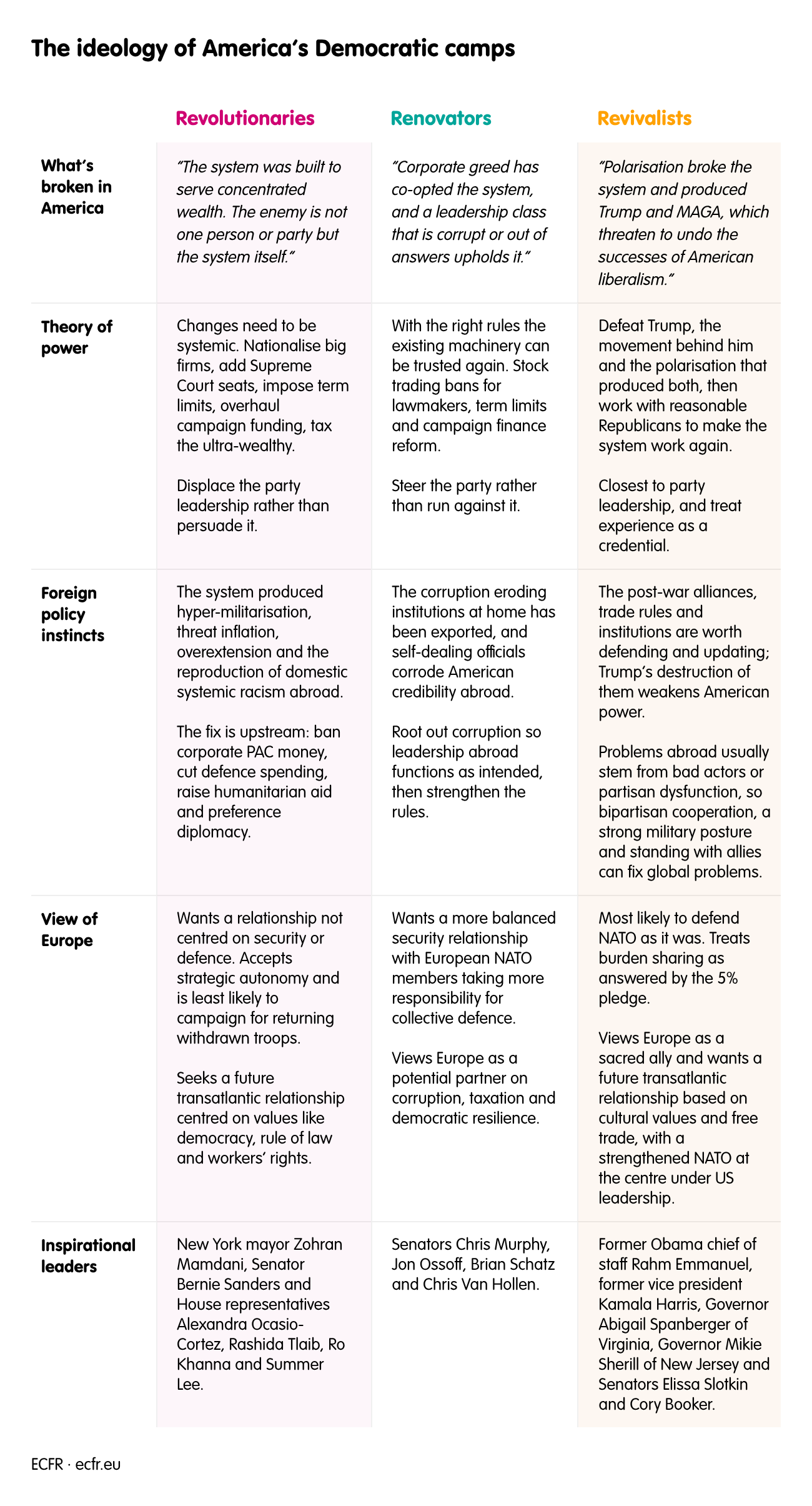
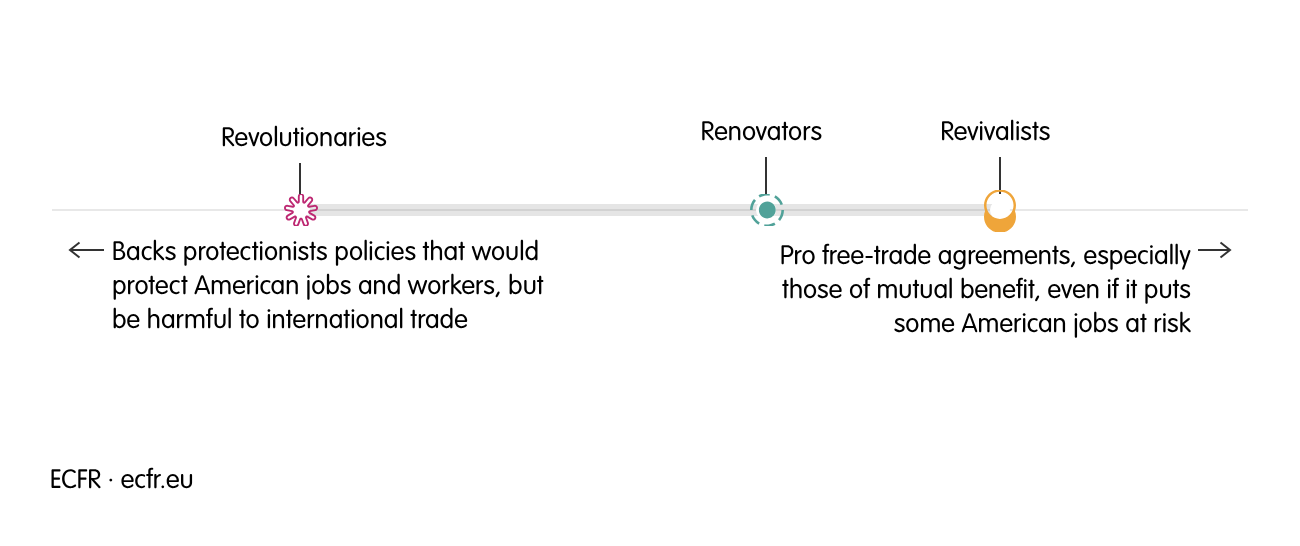
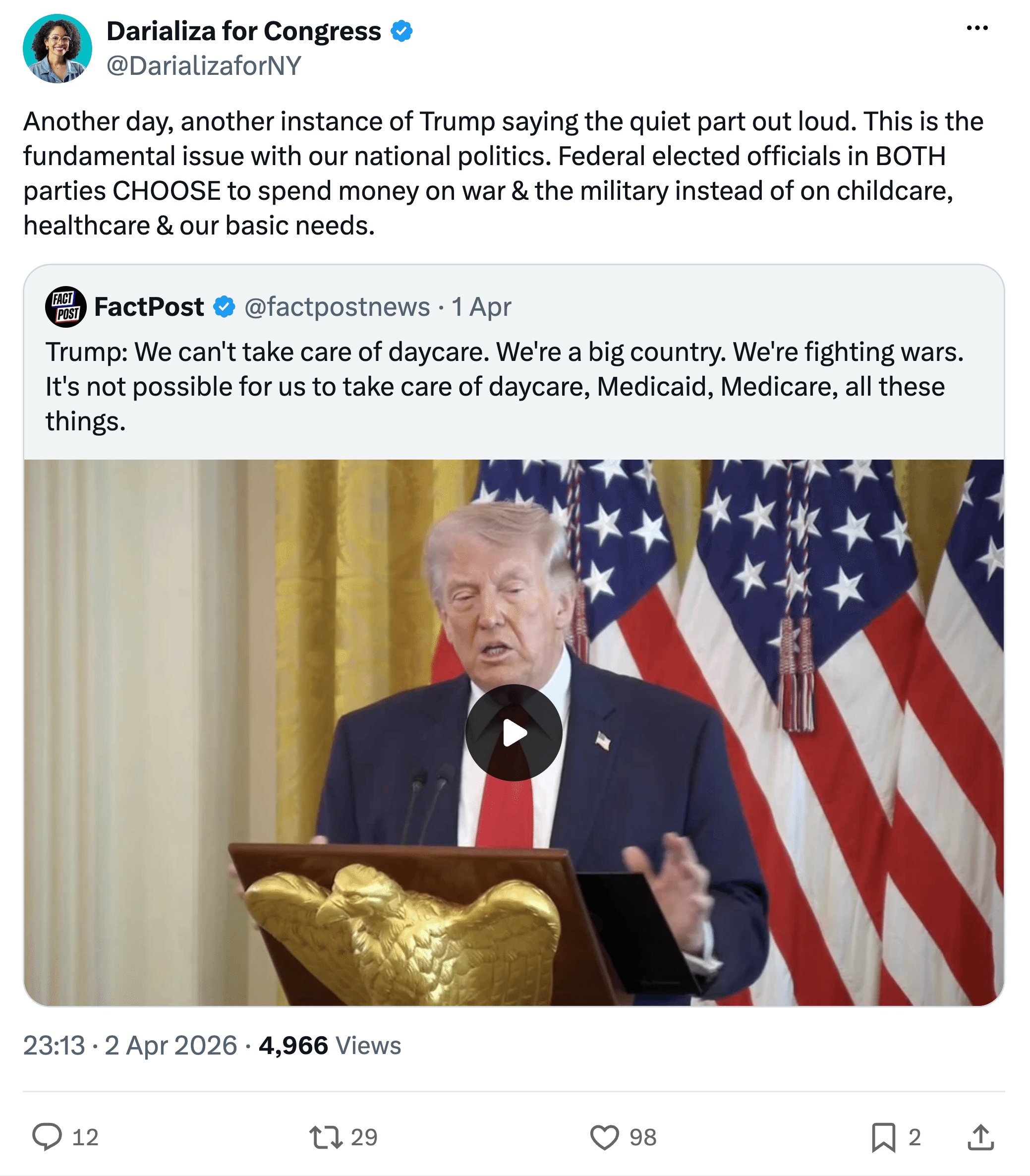
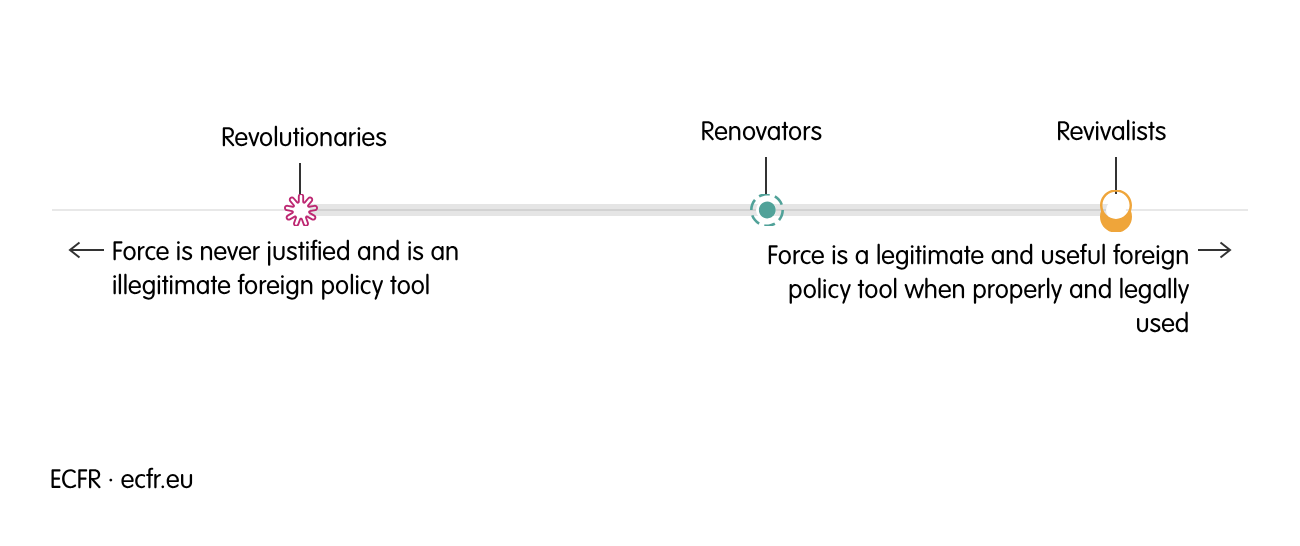
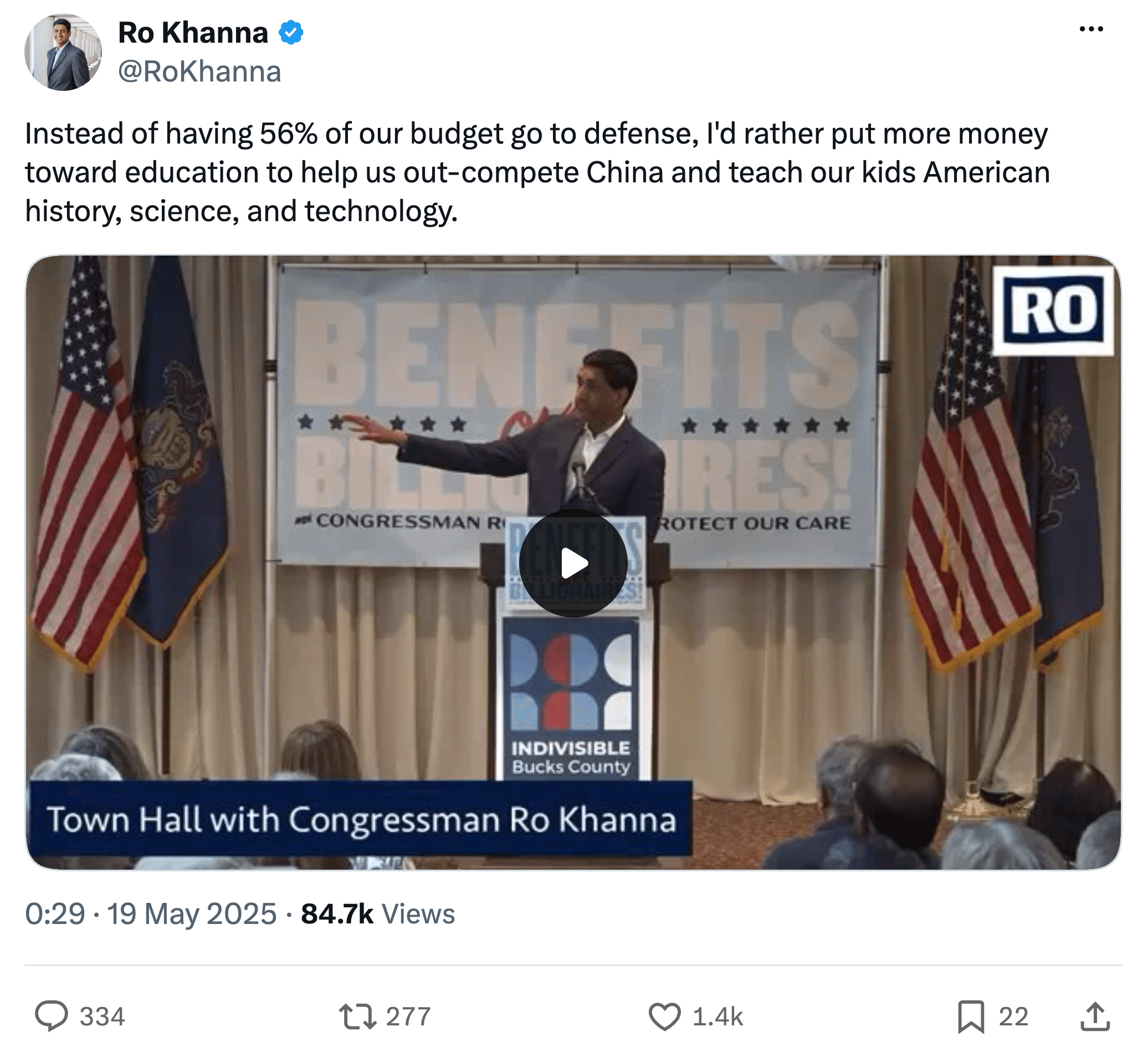
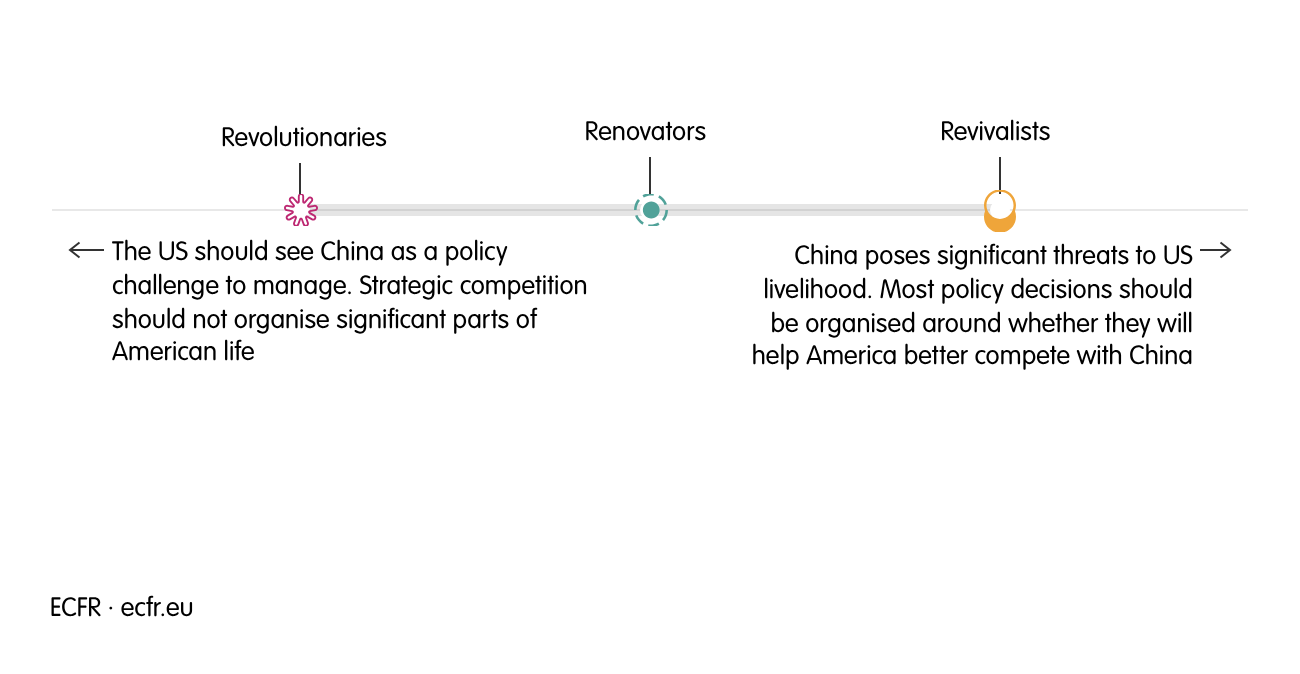
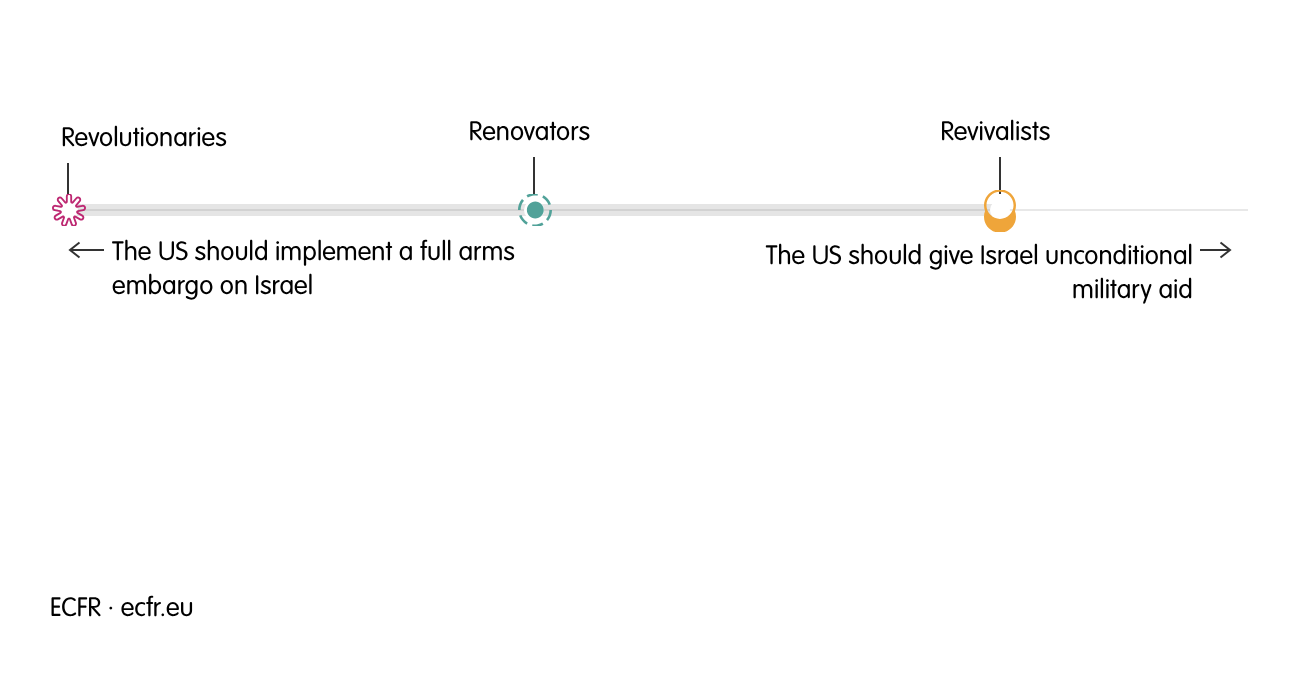
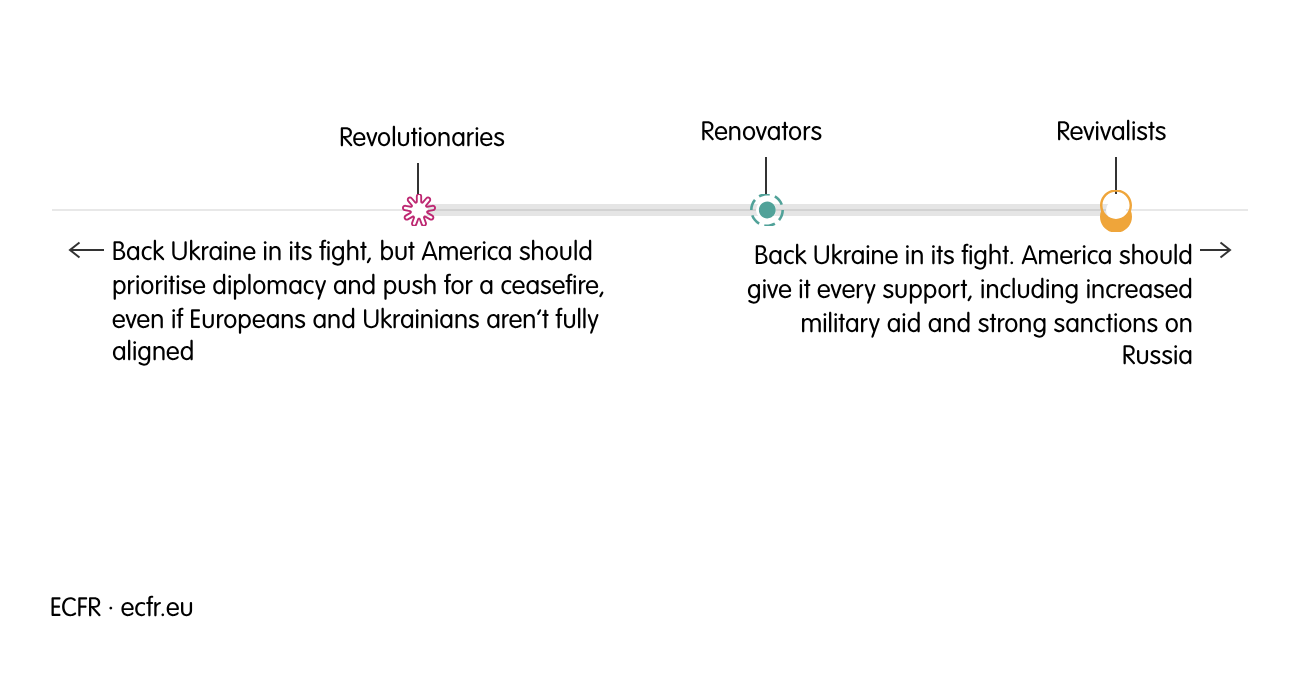
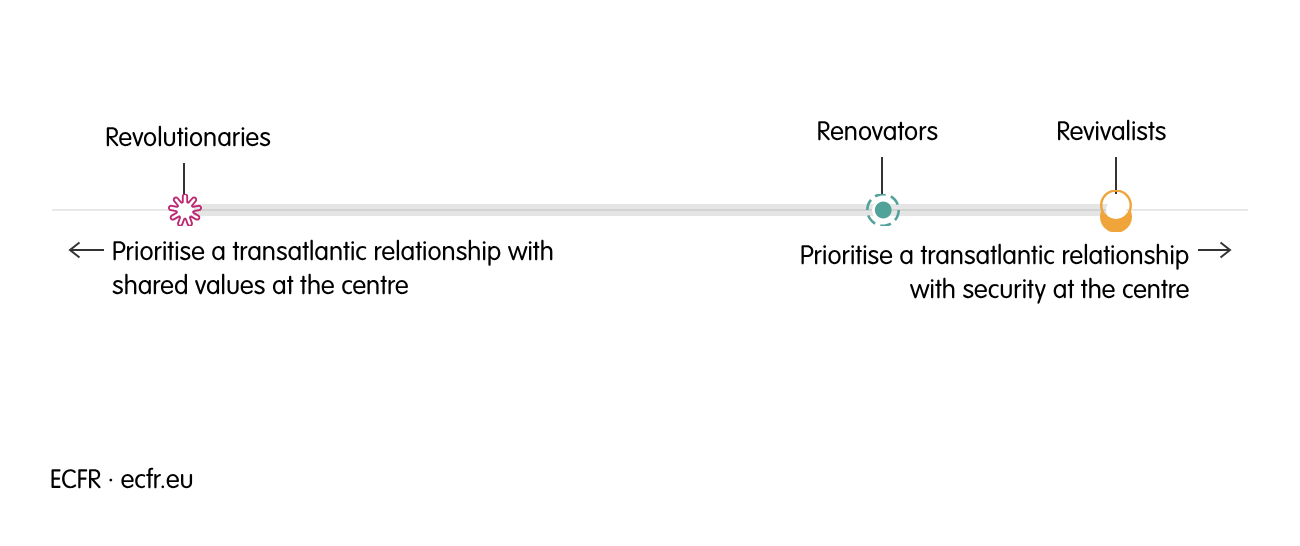
Our research finds three camps of Democrats, all with different diagnoses of America’s problems: the revolutionaries see the system as unjust and needing structural change; the renovators see it as corrupt and needing reform; and the revivalists blame right-wing populism for breaking a system of bipartisan cooperation.
What these camps see as broken in American domestic politics translates to how they view US foreign policy and Europe’s place in it.
No matter which camp goes on to determine the future of Democratic foreign policy, it will be a far cry from the transatlanticism of previous Democratic administrations. This year’s midterm candidates have barely mentioned Europe, Russia or Ukraine in their campaigns.
Europeans need to engage early and help shape their relationship with the party now, lest they be overlooked if and when Democrats do come to power.
What comes after Trump
This summer, the FIFA World Cup turned the world’s attention to America while America turned on much of the world. As Iran was due to play Egypt in Seattle, the US launched new strikes in its four-month war with the country. On semi-final day, President Donald Trump posted on Truth Social an AI-doctored image of a map showing Canada, Greenland, Mexico and Venezuela covered with an American flag. And just days after Trump handed the World Cup trophy to the Spanish national team, his administration announced sweeping 10% baseline tariffs on 80 countries. The juxtaposition of tournament host and wartime belligerent reflects the position America now occupies in European strategic thinking: too central to ignore and too disruptive to rely on.
Europeans hoping that a midterm victory for Democrats in November will bring a reversal of this foreign policy should not hold their breath. If the party wins a majority of seats in one or both chambers of Congress—which is looking likely—they may be able to attach provisions to bills, launch investigations, issue subpoenas and lambast some of Trump’s poor foreign policy choices. But the second Trump administration has shown it will route around Congress and confront it with delays, hostility and vitriol, limiting any capacity for oversight. Having spent its first 18 months in power ignoring a friendly Republican Congress, one with a Democratic majority has even slimmer chances. In other words, little will change until the occupant of the White House does.
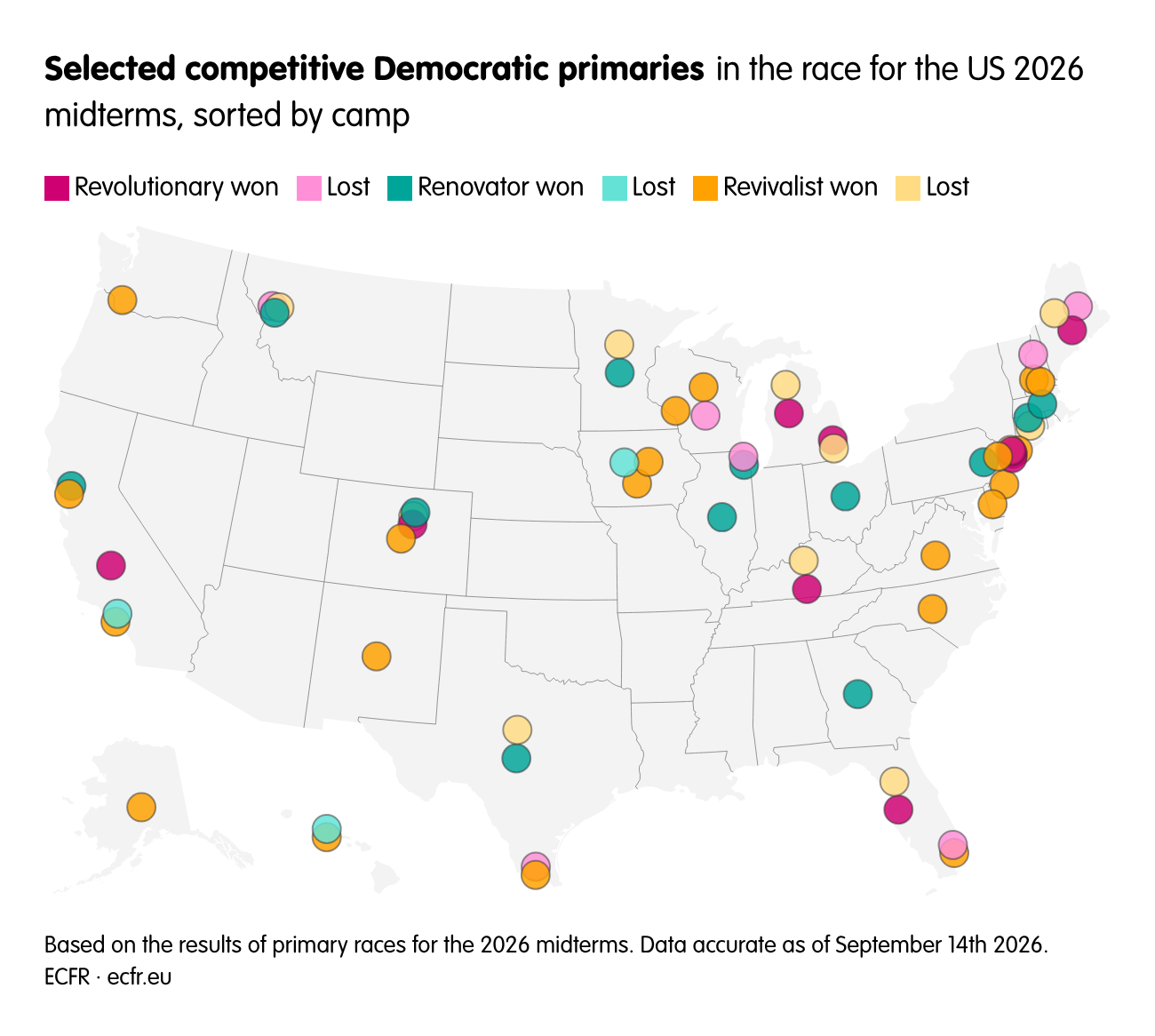
For now, the Democrats’ real power resides not in stopping the current administration but in shaping what comes next. Democratic candidates competing across the US—for both primaries and generals—have a wide ideological range, from “democratic socialists” to “centrists”. While they all heavily criticise Trump and his administration, they have different diagnoses for where the dysfunction began, what sustains it and what needs to be done about it. Engaged in party primaries across the country, Democratic candidates are putting forward competing answers to the two central questions Americans are asking themselves: “What went wrong?” and “How do we fix it?” Based on these answers, we have identified that Democrats tend to cluster into three camps—the “revolutionaries”, the “renovators” and the “revivalists”—each with distinct proposals for the future of America.
The revolutionaries argue that the political and economic system that drives America has always been unjust and was built to concentrate wealth at the top. Therefore, the way to fix America is to enact large, structural change. The renovators argue that the democratic system of government was largely built to benefit all Americans but has been corrupted by money and captured interests. Their proposed remedy is to root out large-scale corruption, rebalancing the economic and political systems to the benefit of middle- and working-class Americans. The revivalists argue that increased partisanship, fuelled by Trump and the MAGA-aligned right, has divided the country and undermined the collaborative bipartisanship that is necessary for the functioning of the system and its institutions. They are focused on reinvigorating those institutions, reviving the post-war international order and rebuilding political bridges, all of which they see as the path back to peace and prosperity.
The revolutionaries, renovators and revivalists are ideal types, not formal factions. They emerge from our analysis of over 50 high-profile Democratic primaries and general election campaigns throughout the 2026 midterm cycle. We also researched campaign platforms, stump speeches, debates and candidate interviews with local news, and interviewed various pundits, current and former staff, officials and pollsters in Washington. In doing so, we found that sorting candidates by their messages about the underlying cause of what has gone wrong in America proved to reliably predict how a candidate discusses domestic and global problems. For example, revolutionaries support Europe’s strategic autonomy but would dislike a Europe defined by militarisation and austerity; renovators see Europe as a potential partner on anti-corruption, taxation and democracy, as long as Europeans provide for their own security; and revivalists remain attached to the NATO alliance but are still unlikely to restore the old division of labour.
The ideological battles between Democrats will matter more than the arithmetic of the Senate or the House for the next two years. One of these three camps will lead the party’s ideological charge for the next presidential race, if not the next presidency. Leaders across Europe should not wait to see which will prevail. Rather, they should engage with these camps well before the presidential race gets under way. They may then be able to shape the thinking and policy proposals that Democrats put on the table between now and 2028, and beyond.
The Democratic camps
Democrats—from New York democratic socialists to staunch Iowa moderates—have more in common than not. Practically everyone in the party believes Trump is a problem and that he and the MAGA movement have fundamentally changed American democracy for the worse. Many view widespread corruption as an issue and some say corruption is encouraged by the system itself.
But while the policy views of the three Democratic camps overlap, there are a few key points of difference. To illustrate these characteristics more clearly, this paper focuses on key individuals who have gained national attention, are running in close races, or are largely representative of what other ideologically aligned candidates say. It is rare for a candidate to be a perfect “revolutionary” or “revivalist” because they must answer to constituencies with divergent interests and disparate views of American and global affairs. Some candidates will even recognise themselves across different camps. Nevertheless, these three camps represent sensitivities that are bound to clash in the primaries until one of them breaks through and is championed by the 2028 Democratic nominee for president. Understanding them helps anticipate the direction of US policy in the brouhaha of its politics.
The revolutionaries
The revolutionaries maintain that the political and economic order in the US is functioning as designed: to serve concentrated wealth rather than the American people. The enemy, in revolutionaries’ rhetoric, is not necessarily any one person or party (such as Trump or the Republicans) but the economic and political system that consistently benefits the ruling class. Only a structural transformation of the system would finally make it work for the people.
Michigan Democratic Senate candidate Abdul El-Sayed in his primary victory speech put the thesis as such: “It turns out that the reason so many of us ain’t got is because of the system that has corrupted our politics to take it away from us. That is the thing we are taking on now”. El-Sayed, who is a former public health official in Detroit, focuses his entire campaign on big structural goals: getting corporate money out of politics, and, like Kentucky Senate candidate Charles Booker, passing Medicare for All, a proposal for universal healthcare. Often revolutionaries’ critiques take a moral tone, such as when Senate candidate Angie Nixon of Florida talks about cruelty out of Washington, or denounces the “liars” and “cheaters” in office.
Their theory of power follows: winning office is useful, but only insofar as it can be used to structurally change power dynamics between a ruling corporate class and average working Americans. Congresswoman Alexandria Ocasio-Cortez, when asked about a potential run for president in 2028, responded: “My ambition is way bigger than that. My ambition is to change this country. Presidents come and go. Senate, house seats, elected officials come and go. But single-payer healthcare is forever. A living wage is forever. Workers’ rights are forever.”
On foreign policy, the revolutionaries argue that the current political system led America on an inevitable path of hyper-militarisation, threat inflation, an over-extension of its financial and human resources in military adventurism, and the reproduction of domestic systemic racism into foreign policy. They view the American relationship with Israel as the seminal example of everything wrong with this approach; Palestine being “one the great moral questions of our time” as New York congressional candidate Claire Valdez puts it.
Their diagnosis abroad is largely parallel to the one at home, viewing the pitfalls of US foreign policy as a metastasis caused by the American corporate class. As Valdez asserts:
“For decades, we have been sold a lie: that the US empire defends freedom, advances democracy, and protects human rights…In reality, the bipartisan war machine has delivered immense suffering around the world while doing little to improve the lives of working people here or abroad. The military-industrial complex doesn’t just enrich arms manufacturers—it has become our de facto industrial policy, sustaining enough jobs and political constituencies to make endless war challenging to stop.”
Their fixes to US foreign policy largely follow their domestic proposals: if you fix the system and its incentives for prioritising the financial gains of the wealthiest class, all else will follow.[1] This is rooted in banning corporate political action committee spending on campaigns which they believe will ultimately diminish the influence of defence contractors and foreign interest groups—namely the American-Israeli Political Action Committee (AIPAC)—over candidates’ races, and therefore, diminish their influence on policy. In the short term, the revolutionaries aim to cut defence spending, bolster humanitarian aid and preference diplomacy in the American foreign policy toolkit. They also believe that the Biden administration’s foreign policy officials must be held accountable for continuing to supply Israel as its war on Gaza intensified.
In these midterms, some of the revolutionary firebrands include Michigan Senate candidate Abdul El-Sayed, Kentucky Senate candidate Charles Booker, Florida senate candidate Angie Nixon, Representative Chris Rabb of Pennsylvania, House candidates Melat Kiros in Colorado, and New York congressional candidates Claire Valdez and Darializa Avila Chevalier. Disgraced Maine Senate candidate Graham Platner also used that same rhetoric.
The renovators
The renovators believe the system is imperfect, but largely worth keeping. In their view it has been co-opted and corrupted by money and corporate greed and upheld by a leadership class that is either corrupt themselves or out of answers. As James Talarico, Democratic Senate candidate in Texas, explains: “I think we’re living in an era of corruption, and I don’t just mean illegal activity… I’m talking about corruption in the deeper sense, the rotting of our systems from the inside out…” In his telling, strengthened by his moral standing as a middle school teacher and Presbyterian seminarian, the issue with the American political system is not the institutions themselves, but the way in which they are weaponised and perverted.
While the revolutionaries name the ruling class as the enemy, the renovators see the villain as a narrower collection of groups who have captured institutions that were otherwise built to work for the American people. This distinction yields a different theory of power: with the right rules in place, the existing machinery can be trusted to function again. Therefore, instead of demolition, this group aims to renovate.
Senator Jon Ossoff spoke to this message at a campaign rally in June when he mused about what the founding fathers of America would see if they came to the US today:
“They’d see a pluralist democracy, people of all colours descended from every point on earth, stitched together from out of many nations into one. But they’d also see a nation, that at its height of wealth and power, fell into the very traps they most feared. Devouring itself in bitter conflict between warring factions, captured by special interests. And they’d see a faithless president exploiting this rot to pursue the absolute power they overthrew.”
House candidate Daniel Biss has voiced a similar critique, stating that: “While our families struggle to get ahead, politicians in Washington line their own pockets and special interests and wealthy donors flood our political system with money to protect their own power and access.”
Because renovators share the same anger towards an entrenched leadership class, the remedy they prescribe overlaps somewhat with that of the revolutionaries, including stock trading bans for Congress, term limits and campaign finance reform. However, the renovators are more likely to clean out and reform an agency—namely the Immigration and Customs Enforcement (ICE)—that the revolutionaries would call to abolish. The renovators also view the Democratic party as a vehicle worth trying to steer rather than run against.
On foreign policy, the renovators argue that the same corruption that is eroding domestic institutions has been exported, and that this is primarily corroding America’s credibility. Ossoff made this connection explicit when he criticised the financial gains Jared Kushner has made while carrying out US foreign policy in the Middle East.
Senator Chris Murphy, a leader in this camp, has also described Trump’s acceptance of gifts and business arrangements from Qatar, Saudi Arabia and the UAE as corruption with “no precedent in American history”. Thus, the fix renovators recommend is twofold: root out the graft of those currently running foreign policy so American leadership abroad can function as intended, and then fix the political system such that future administrations cannot replicate the corrupt schemes of the current one.
Renovators are spread across the country, from candidates in conservative states and districts such as Senate candidate James Talarico of Texas, Senator Jon Ossoff from Georgia, House candidates Sam Forstag of Montana, Manny Rutinel of Colorado, and Eric Jones of California. There is also a cluster of midwestern candidates including House candidate Daniel Biss from Illinois, Senate candidate Peggy Flannagan of Minnesota, and former Senator and current candidate Sherrod Brown from Ohio.
The revivalists
The revivalists are firm believers in American exceptionalism and credit American liberalism for the peace and prosperity of the past 80 years. They see Trump and the MAGA-aligned right as the primary threat to that inheritance and to American democracy and values more broadly.
Their diagnosis is that Donald Trump and the MAGA movement behind him have steeped the country in hyper-partisan vitriol and driven it into a spiral of polarisation. Revivalists argue that these divides drive dysfunction in Washington and make it impossible to worth within the political system. They often celebrate a prior era of bipartisanship and showcase their own capacity to work across the aisle.
Their theory of power follows from that diagnosis. Democrats must defeat Trump, the movement behind him and the polarisation that produced both. Then competent, experienced hands will make the system function as intended again. They believe collaborating with reasonable, non-MAGA Republicans to build bridges and pass longer-lasting legislation will show Americans how a working government can operate. In turn, they think a government that delivers will earn back trust on its own merits. Revivalist candidates centre their electoral pitches around defeating Trump, restoring institutional norms and bipartisan collaboration. Senator Chris Coons, who is running for re-election in Delaware, made an appeal to voters saying as much:
“At some point [Trump’s] chaos, corruption, and cruelty will come to an end. And a lot of work will be needed to pick up the pieces, to clean up the mess he’s made, to fix a system that’s still broken and not delivering results for the folks I serve in Delaware. I’m running for reelection because the job’s not done.”
Coons emphasises the damage that Trump has caused and his desire to restore normality to the halls of Congress. Additionally, many revivalists stand closest to the Democratic party leadership and often treat experience as a credential rather than a liability. In her unsuccessful race for Michigan’s Senate seat, Congresswoman Haley Stevens emphasised her time in the Obama administration, for example, and Roy Cooper spotlights his accomplishments as evidence of his policy chops from his time as North Carolina’s governor.
On foreign policy, the revivalists argue that American military alliances, trade relationships and institutions are integral pieces of the liberal world order. In their view, the post-war structures are worth defending, US leadership is needed and Trump’s destruction of these institutions is actively harming American global power. They mostly believe that the backlash against these institutions, whether it be NATO or the WTO, is a failure of messaging. Americans were never told what the post-war order gave them, so they have had no reason to defend it.[2]
Where revivalists identify a problem abroad, they frame it as they frame problems at home: the result of a specific bad actor’s conduct or of partisan divisions. For example, they blame Israeli prime minister Binyamin Netanyahu and Russia’s Vladimir Putin for their countries’ strained relationships with the US. Change the leadership and you can restore the relationship, which is an argument for patience both at home and abroad. They argue too that foreign adversaries purposely widen American divisions, and that Americans should fight back by recognising those efforts and working across the aisle, a case New York representative Tom Suozzi made recently during a hearing on foreign influence:
“The biggest factor causing division in our country is our foreign adversaries…They are feeding division in our country. They cannot defeat us economically. They cannot defeat us militarily. So they want to take what they see as being our biggest weakness which is our diversity. And they fuel dissent in our country…”
Revivalists comprise the largest cross-section of the party and are represented from coast-to-coast, including Senator Chris Coons from Delaware, Senator Chuck Schumer from New York, Senator John Hickenlooper from Colorado, Representative Tom Suozzi from New York, Representative Maggie Goodlander from New Hampshire, Senate candidate Chris Pappas of New Hampshire, Senate candidate Roy Cooper from North Carolina, House candidate Rebecca Cooke from Wisconsin, former Senate candidates Janet Mills from Maine and Angie Craig from Minnesota.
The five foreign policy issues
Primaries have at times led to tense disputes among Democrats. When it comes to foreign policy, our analysis shows where the camps divide on five key issues that will matter to Europeans: affordability and trade; the use of military force; China and great power competition; Israel; and Europe and European security.
1. Affordability and trade
Since Zohran Mamdani’s New York mayoral victory in November 2025, affordability has defined this election cycle’s messaging. Candidates across the board focus on policies that would help the affordability crisis and frame other issues as perpetuating it.[3] The focus is so singular that the headline messages are often interchangeable across the party: Abdul El-Sayed is running for “Money out of politics, money in your pocket, Medicare for all” while Roy Cooper’s prevailing message is “Make stuff cost less.”
In terms of foreign policy, trade is affordability gone global. And as all Democratic candidates see it, Trump’s tariffs raise the price for Americans while enriching himself and his allies. But this consensus is an objection to these specific tariffs, not to all tariffs.
Revolutionaries remain sceptical of the old free-trade order itself: Alexandra Ocasio-Cortez at the Munich Security Conference called for “a recognition of NAFTA [North American Free Trade Agreement] as a failed policy for many rural and working class communities,” and Abdul El-Sayed called NAFTA and the Trans-Pacific Partnership a disaster for the American worker. Moreover, this camp sees small, strategic tariffs as legitimate tools of job protection.
Renovators, on the other hand, believe current trade agreements can be improved. Senator Jon Ossoff, for example, sent a letter to the Trump administration urging them to use the US-Mexico-Canada agreement (USMCA) review to police Mexican labour and environmental practices to ensure American growers have a chance to compete fairly on the global market.
Revivalists remain closely aligned to the old free-trade consensus. In April of this year, for example, senators in this camp asked the US trade representative to “strengthen and renew” the USMCA. They believe that trade tools like tariffs or export controls should only be used for national security issues, akin to the “small-yard, high-fence” policies of the Biden administration. Amid the Trump administration’s trade wars, they suggest focusing on a narrow trade agenda that directly serves the interests of both sides, such as deals on critical minerals, new technologies or other pieces of critical supply chains.
2. The use of military force
America’s two latest military operations—Trump’s war in Iran and the operation to remove Venezuelan president Nicolás Maduro—have sparked debate among Democrats over what role the US military should play in foreign policy. Nearly every Democrat criticised the Iran war and many voiced reservations about Venezuela, but the extent to which Democrats are comfortable using the military as a foreign policy tool differs.
Revolutionaries read Trump’s use of force in Iran and Venezuela as a natural continuation of an overly militarised foreign policy and advocate for that to change. El-Sayed called the Iran war “dumb and illegal”, but argued that the real issue was the cost of a war America did not need to fight. Colorado’s Melat Kiros makes this structural claim directly, “It’s time to reimagine our global role: not as a militarised empire, but as a champion of diplomacy, human rights, and peacebuilding. We need to end the blank checks for endless war and reallocate that funding towards diplomacy abroad and housing, education, and healthcare here at home.” New York candidate for congress Darializa Avila Chevalier puts it similarly.
The revolutionaries, if in office, would work to cut the military budget broadly in the name of keeping the money at home. For them, the deeper fix to a foreign policy driven mainly by military action is upstream: end the corporate and defence contractor lobbies that supports these wars in the first place.
The renovators view the most recent use of force as domestic corruption running through foreign policy. They are not necessarily opposed to using military force, but uncomfortable with the corrupt forces that push the military to be a tool of first resort. Chris Murphy’s office headlined his remarks on the money: “This president’s foreign policy, the invasion of Venezuela, the ouster of Maduro, is about making his crowd filthy rich. It has nothing to do with American national security.”
James Talarico likewise described the transaction as follows: “Trump promised the biggest oil executives in this country a ‘great deal’ if they gave him a billion dollars for his re-election campaign, and then he turned around and gave them a gift. He gave them the nation of Venezuela, home to the largest oil reserves in the world. Billionaires don’t just run our economy. They don’t just run our government. Now they run our foreign policy.” Corruption, in this telling, drives how Trump uses force. As with domestic concerns, the way to “fix” the incentives to use military force is largely the same as the revolutionaries: reign in defence contractor graft, lobbying and campaign spending.
Revivalists press hardest on legality and cost, but the argument underneath is about what these operations do to America’s standing in the world. Chris Coons admonished the administration’s decision to launch strikes on Iran in February for their method and legality: “President Trump’s military campaign against Iran and call for regime change are the beginning of a reckless new war of choice with no clear strategy and no clear endpoint. This is not how a democracy goes to war.”
Revivalists levelled similar critiques at the military operation in Venezuela. Representative Maggie Goodlander responded to the capture of Maduro by asking: “What is the legal justification for such an action? The US Constitution entrusts the US Congress with war powers for very good reasons. The Trump Administration must immediately and truthfully answer questions about the motivation and legality of this unilateral military action, the potential for any further escalation, and the plan for peace.”
For this camp, how a country goes to war is a sign of its strength. Authorisation, a stated objective, and allies consulted in advance are what gives a war public support and partners willing to help in the effort. According to revivalists, a democracy that goes to war via unilateral decision is weaker afterward, because that decision erodes the constitutional system of checks and balances. So, Trump’s lack of consultation widens a divide between Republicans and Democrats, between the branches of government and diminishes the public image of the US military.
3. China and great power competition
China is generally understood by all on the left as a strategic challenge. Yet Democrats disagree on just how big the threat is, whether to commit troops to the defence of Taiwan, and just how much the US should orient its economic and security policy around the strategic competition with China.
Revolutionaries fear a full-throated strategic competition with China would subvert domestic priorities. When Ocasio-Cortez was asked at the Munich Security Conference if she would commit to sending US troops to defend Taiwan, she said: “We want to make sure we never get to that point and we want to make sure that we are moving in all of our economic, research, and our global positions to avoid any such confrontation.”
This camp’s scepticism of the use of force and relentless focus on domestic framing is clearly seen when hot-button issues in the strategic competition discussion arise. For example, this camp would rather support limits on AI development to protect jobs, workers and the environment, than to push forward on AI research in order to compete with China. Likewise, they are more likely to focus the conversation of US-China strategic competition on manufacturing gaps, lags in research and education and trade deficits, thus bringing the focus back to the working class and economic issues.
Renovators sit in the middle. Hawkish enough to want to compete but unwilling to let strategic competition swallow the agenda. They are focused on economic fairness with China and competing beyond military means alone, but also willing to place domestic guardrails on AI and the tech race. They believe competition is important, but that it should not overtake all domestic needs. For example, they would advocate for the need for data centres to be energy and water self-sufficient, or even call for moratoriums on data centres, even if that threatens frontier model development.
4. Israel
Israel is where the three camps separate most cleanly along a single question: what, if anything, should America sell or give to Israel?
This is a central issue for the revolutionaries, who maintain that Israel’s actions in Gaza amount to genocide. This camp has concluded that conditioning aid to Israel, the previous progressive position, is no longer a viable measure to ensure any meaningful end to the conflict or long-term peace. Their preferred policy is a full arms embargo on Israel, including defensive systems.
This distinction has already defined a few primary elections. New York’s Darializa Avila Chevalier, who won the congressional primary against Representative Adriano Espaillat, ran on “babies not bombs”, promising to vote to halt arms sales to Israel. Melat Kiros, who unseated nearly-30-year incumbent Diana DeGette in Colorado, called for a full arms embargo to Israel and closed her victory speech leading a “Free Palestine” chant. El-Sayed takes this same position: “I support an immediate arms embargo on Israel and reject the false differentiation between ‘offensive’ and ‘defensive’ weapons.”
The renovators often make that distinction and are primarily focused on the need for change in the US-Israel relationship. Their belief that the system must be reformed is clearly reflected in their positions towards Israel. James Talarico, for example, has said he would work to ban the sale of offensive military weapons to Israel while still supporting Israel’s defensive systems. Talarico has declined to call it a genocide but has called the destruction in Gaza a “moral disaster”. Senator Jon Ossoff similarly told constituents that he voted against sending rifles to Israel because of the “extreme mass deprivation of civilians in Gaza”, and defended his vote for air-to-ground missiles because of Israel’s need to be able “to strike those who would launch missiles and rockets at Israeli civilians.” Senator Murphy, likewise, voted with Bernie Sanders’s resolution disapproving of the sale of offensive weapons in 2024, but has since moved even further, calling for a halt of US military aid altogether. But most in this camp have stopped short of demanding a total embargo. Instead, they try to thread the needle between respecting America’s long-standing special relationship with Israel and combatting the structure that has allowed Israel’s abuse of military force.
Revivalists support the US-Israel relationship but blame the two leaders, Trump and Netanyahu, for souring the once-mutually beneficial of defence relationship. In their view, Netanyahu and Trump’s actions have exacerbated US public opinion of the relationship, rather than the structure of the relationship itself. Chris Coons has reiterated that his “commitment to Israel remains ironclad” while directly placing the blame on Netanyahu for the declining American sentiment towards the country. Similarly, Representative Chris Pappas, running for Senate in New Hampshire, articulates support for Israel and criticism of Netanyahu’s government. Roy Cooper, meanwhile, has flatly rejected efforts to block aid to Israel.
The revivalists’ view on America’s relationship with Israel is perhaps best expressed in Chuck Schumer’s March 2024 Senate floor speech, where he called Netanyahu “an obstacle to peace” who has “lost his way by allowing his political survival to take precedence over the best interests of Israel.” In other words, just as Trump and the rise of the MAGA right have degraded the American political system, Netanyahu and the far-right in Israel have degraded the US-Israel relationship. The solution, then, is to try to change the behaviour of Netanyahu since they cannot change that he and Trump are in power. Therefore, this camp tends to treat US-Israel arms sales on a case-by-case basis, usually agreeing to send weapons, but reserving the right to condition those arm sales based on how Israel uses them. As Governor Janet Mills, who failed to win the Democratic primary for Maine’s Senate, said while criticising Netanyahu’s conduct she would evaluate any bill to halt arms shipments “on the specifics.”
5. Europe and European security
Nearly all Democrats see the value of the transatlantic relationship beyond the Trump administration’s idea of a “shared cultural heritage”. For the president, this is often a thinly veiled way to value the continent for its whiteness and colonial past and lambast it when he sees this as changing. Democrats, on the other hand, value the relationship for its shared rules and norms—whether these are liberal internationalism or workers’ rights.
A Democratic congressional majority will certainly not have the same disdain for Europe as many in the Trump administration do, but the Democratic party is certain to present its challenges. Some in the Democratic coalition would like to see a renewed American role in NATO, for example, while others want a European partner that can stand on its own. One challenge is for certain: the US-European relationship will be on the back burner. In the midterm campaigns you would be hard pressed to find a single Democratic candidate talking about the transatlantic relationship with voters.
Ukraine
On the war in Ukraine, all camps are firmly behind Kyiv but divide over the specifics of what America should do in support. Revolutionaries are wary of a militarised US foreign policy and an economic statecraft whose costs fall to the American taxpayers. Leaders in this camp voted against seizing Russian oligarch’s assets in 2022, and signed, then retracted, a 2022 letter urging Biden to use negotiation and diplomacy. Much of the motivation to write that letter four years ago still exists within this camp today.[4]
The revolutionaries are most eager to push for peace and they remain somewhat doubtful that additional weapons for Ukraine benefit Americans, viewing an open-ended war as another entry in the long book of American over-extension. However, they are not outright against supporting Ukraine. Even Abdul El-Sayed, who was extremely vocal against sending weapons to Israel, said: “When it comes to Ukraine, I think we are involved in a righteous struggle from being invaded by their neighbour.”
Those in the renovator and revivalist camps both support Ukraine’s independence and the use of American military aid to secure it with varying intensity. Their divergence is on the use of sanctions on Russia. Renovators Chris Murphy and Jon Ossoff expressed some scepticism of the efficacy and knock-on effects of the Lindsey O. Graham Sanctioning Russia Act of 2026, which would authorise an increase of tariffs up to 100% for the top-five foreign purchasers of Russian energy supplies. Murphy ultimately voted for the bill, and Ossoff against. Senators Mark Kelly and Ruben Gallego, both revivalists, on the other hand, vocally supported the bill from the beginning. These are arguments about how much to spend and how hard to squeeze, not about whether Ukraine should survive. The sharper disparities appear when the question turns from the war to the US-European relationship itself.
US-European relationship
Revolutionaries are interested in a transatlantic relationship that is not centred around NATO or any military alliance. As revolutionaries believe in creating an American foreign policy that is not solely centred on military force, they also see that as a goal in the European context. Hence, they accept European strategic autonomy and might even welcome it. They are the camp most open to structural boldness and the least likely to campaign for returning any troops Trump withdraws from the continent. This camp has shown a proclivity for supporting a move towards burden-shifting, but are sceptical of a European relationship achieved only through rearmament.[5] Rather, they will seek an affirmative agenda as sketched by Ocasio-Cortez and Representative Jason Crow at the 2026 Munich Security Conference: a new transatlantic relationship re-centred on combatting authoritarianism on both continents and advancing labour standards, rather than one singularly obsessed with NATO and continued US security commitments.
Renovators would likely treat Europeans first and foremost as partners on the agenda they care about—corruption, taxation and democratic resilience.[6] They would also push for Europe to continue to take an increased responsibility for its own security. Murphy explained as much during a Senate foreign relations subcommittee hearing in September 2025: “I believe in that NATO treaty, I believe in Article 5, but I also think it is absolutely time for the members of NATO on the other side of the Atlantic to take more responsibility for their collective defence.” The renovators are therefore keen on the idea of increased burden-sharing within NATO since they often view foreign policy issues through the lens of “where is the money going?” Correspondingly they view European governments as natural allies in the pursuit of tax enforcements, financial transparency, AI and digital platform regulation.
Revivalists remain the most attached to the alliance and the most likely to defend NATO. Coons released a joint statement with Senator Mitch McConnell in April of 2026 reaffirming their support for the alliance: “Americans are safer when NATO is strong and united. It is in our interest for all allies to tend this unity with care…The Senate will continue to support the alliance for the peace and protection it provides America, Europe, and the world.” The revivalists also credit European allies with responding to American pressure by committing 5% of GDP to military spending, and with this they treat burden sharing as a question already answered.
Any structural change, in their eyes, is unnecessary and potentially counterproductive to continued US leadership. Rather, they see European rearmament as vindication of the alliance and reason for the US to stay committed. Even if the old division of labour and spending is not coming back, they would restore the old processes within the alliance: consultation before decisions, allies told in advance and an obligation to commitments.[7]
The uncertain road ahead
It is too early to know which of the three camps will be the most successful with voters. Democratic primaries in the spring and summer 2026 have offered mixed lessons. Quite a few revolutionary firebrands, such as Abdul El-Sayed and Angie Nixon, have won their primaries in widely covered upset victories. Meanwhile, some renovators like Jon Ossoff and James Talarico are running particularly strong campaigns while revivalists continue to fare strongly across the board. In other words, Europeans could be facing any of the foreign policy positions described above, and should engage with all three camps long before the American public decides which should come out in front.
Recommendations for Europe
Trump’s frenzy of disruptions too often clouds European judgement on long-term evolutions. If Democrats return to power, they will not revert to “back to normal”. Instead, Europeans need to engage with them on a new agenda; whether they be a far cry from the previous Democratic administration, like the revolutionaries, or a fair bit closer, like the revivalists. To anticipate what they may be dealing with in less than three years, Europeans should engage with all Democrats—from the familiar to the uncomfortable—even when disagreements abound, and start thinking of a common agenda to help shape Democratic policy while it is still being formed.
Expect the unexpected
European governments took a long time to accept that MAGA is durable and not a deviation from the norm. To be better prepared this time around, the debates on the American left deserve early attention, especially as they too could cause surprises. The populist energy emanating from the revolutionaries may prove to be a winning electoral strategy for Democrats in the midterms, and could well be mobilised by the next presidential candidate.
One thing is for certain: the Democratic party has entered a post-Obama, post-Biden era where questions over leadership mark more than a change of personnel. They signal the passing of the generation shaped by the Iraq war, the global financial crisis, the rise of ISIS and the return of great-power rivalry with Russia and China. Strategic competition with China is no longer the modus operandi as it was under Biden. International trade is no longer taken as an unqualified good. The American left is not returning to the internationalism of the 2010s. A new cohort of Democratic leaders is emerging with different political instincts and foreign-policy priorities.
Many Democrats no longer see the transatlantic relationship as an inheritance that they have a duty to preserve. If and when they return to power, their expectations of burden-sharing will have hardened, historical attachment to the Atlantic alliance will have faded and Europe will no longer occupy the central place it once did in Democratic foreign policy debates. Younger Democrats in particular approach alliances through the lens of effectiveness and narrow shared interests and values, rather than a long-standing historical solidarity. Europeans need to pay attention to the debates taking place inside the Democratic party in order to engage the party of tomorrow.
Engage with every Democrat
As Europeans navigate the new American left, the biggest hurdle they will face is that they are increasingly viewed as at best as irrelevant and at worst as complicit. Europeans are not the focus of any of the three camps’ foreign policies. In fact, throughout our analysis, Europe was hardly mentioned in any television interviews, stump speeches or posts on X. Even the war in Ukraine and Russia’s hybrid challenges have lost prevalence in foreign policy debates consumed with China, Iran, Israel and Venezuela, to name a few.
When they do pay attention to Europe, Democrats across the board are beginning to regard European leaders who have spent nearly two years currying Trump’s favour as part of the problem—whether that is because Democrats view them through the lens of upholding an oligarchy, enabling gross corruption or being pathetic in the face of a global bully. Even if European leaders are pragmatically flattering the president with paternal references or golf rounds, they should remember that there are still a lot of democrats (not the party, the philosophy) on the other side of the Atlantic who would like to see in Europeans a standard-bearer and not an enabler.
Likewise, behind closed doors European leaders espouse a disappointment in Democratic politicians for losing to Trump twice and failing to put up decent opposition so far.[8] Democrats, too, are acting pragmatically. The options they currently have to mount a significant opposition are few and ineffective.
Which is all to say, engagement and re-building bridges across the left now will be essential for building a transatlantic relationship fit for the post-Trump world. European leaders and all three camps want America to play a constructive, trusted and peaceful role in the world—they just differ on what exactly that looks like.
In particular, Europeans have to start meeting and engaging with revolutionaries, even if their positions appear furthest outside the norm. This camp, for its provocations and innovation, is feeding most of the political conversation and fires up the base. Engagement would make Europe’s concerns and assets more prevalent to their thinking, while ignoring them only guarantees tension if they come to power.
Shape the next transatlantic agenda
As Democrats are not paying any attention to Europe, the burden of revitalising the transatlantic relationship lies with Europeans. There are significant areas—like tech regulation, corruption reform, taxation, trade and security—where European leaders will find partners in the American left if they so choose. They should not be surprised, however, if they must make the first move. Indeed, if Democrats win the midterms, the next two years will see Trump weak and the Democrats not yet strong. In that time, no policy idea will come from Washington that imagines the future of collaborations with Europe. It is up to Europeans to propose them.
Europeans’ experience of the Biden administration illustrates why relying on American leadership is insufficient. Although Biden championed alliances rhetorically, several defining decisions were taken with limited European consultation. The Inflation Reduction Act prioritised domestic reindustrialisation through measures many Europeans regarded as discriminatory. The withdrawal from Afghanistan was poorly coordinated with allies. The AUKUS agreement advanced Indo-Pacific strategy but came at the expense of French interests. These episodes reflected a broader shift towards a US that increasingly pursues its strategic objectives unilaterally, even under an avowedly pro-NATO administration. Europeans’ continued acquiescence towards the Trump administration has only made unilateral foreign policy more appealing.
To avoid facing a Democratic majority which operates alone, Europeans must think through what they would like to propose to Democrats. That agenda should be capable of appealing across the Democratic coalition, from revolutionaries to renovators to revivalists.
In setting an agenda, Europeans should connect with Democrats from all three camps, but there are specific opportunities to build stronger coalitions with the camps that are naturally aligned with European interests. For example, on Israel policy and a new US role in the Middle East, the revolutionaries and the renovators could find alignment with many European governments. On a framework for competing with China and derisking, Europeans should collaborate with renovators and revivalists. All three camps will be in favour of a rebalanced NATO, but should Europeans seek more structural changes, they would find allies in the renovator and revolutionary camps. On all issues, Europeans should make the case that they can be a practical partner in solving some of the international problems around which the next Democratic coalition will organise itself. In so doing, Europeans and the US Democrats can build a new, more balanced and stable alliance.
A renewed transatlantic programme should therefore include:
A “fair trade” agenda that combines openness with stronger labour protections, coordinates responses to Chinese industrial overcapacity, establishes minimum wage requirements and climate standards. All three camps could be interested in such an agenda: revivalists for competitiveness, renovators for reestablishing ethical rules and revolutionaries for climate and labour rights progress. For Europeans, it is important to move away from the logic of indiscriminate tariffs and negotiated exemptions. Instead they should put forward a logic of fair competition and sustainable industrial development on both sides. The European Commission should start by identifying partners with whom to discuss these goals.
A joint framework for AI that strengthens consumer protections, ensures fair taxation of digital platforms, promotes open access to AI for public goods such as healthcare and education, and aligns technological innovation with climate objectives. The renovators would be most in favour of such a proposal, and elements of the revolutionaries and revivalists would be a natural coalition. France, which promotes international cooperation for responsible AI governance, as well as Britain, which will host the G7 in 2028, should reach out to Democrats interested in tackling the issue and working on a regulatory framework for AI and other technologies.
A rebalanced NATO in which European allies assume greater responsibility for force generation, command structures and regional deterrence, allowing the US to reduce its military footprint without weakening collective defence. All three camps would find favour in stronger European allies, although revivalists are probably more comfortable in the conversation. Nevertheless, Europeans should also spend time engaging with revolutionaries and renovators, who do not see the same value in alliances, and show that collective defence can be cost-effective and a guarantee of long-term security. Transatlanticist networks in staunch US allies such as Germany, the Netherlands or Poland should start suggesting concrete transformations of the alliance to be discussed with Democrats.
A substantial expansion of transatlantic educational, research and cultural exchanges, including easier access to European universities for American students, expanded researcher mobility and new funding for joint academic networks. Revivalists would applaud a greater cultural exchange and such a vision for renewed American leadership. Revolutionaries and renovators would also welcome the opportunity to centre education, research and culture in the transatlantic relationship, rather than military. The EU could help promote such a “Community of friendship for Europeans and Americans”, which a lot of Europeans may embrace, that de-emphasises trade and defence as the only pillars of the transatlantic relationship, and put democracy, innovation and human rights at the centre. Such an initiative would, above all, help cushion Europe’s fall towards irrelevance on the American left.
These proposals would resonate differently across the Democratic coalition. Revivalists would view them as a means of modernising American leadership rather than abandoning it. Renovators could see them as evidence that Europe is assuming greater responsibility for its own security while contributing to domestic American priorities on labour, industrial policy and technological governance. Revolutionaries may find opportunities to advance an ambitious climate and social agenda beyond their shores. In all cases, the objective should be the same: demonstrate that Europe can be an asset rather than a burden for the next generation of Democratic policymakers.
Methodology
The revolutionaries, renovators, and revivalists are ideal types that emerged from our analysis of 42 high-profile Democratic primaries and general election campaigns throughout the 2026 midterm cycle and of 63 individual Democratic candidates. We exhaustively researched campaign platforms, stump speeches, debates and candidate interviews with local news, and interviewed various pundits, current and former staff, officials and pollsters in Washington DC from April to August 2026.
The Democratic primary races and candidates studied include: Senate races in Alaksa, Colorado, Delaware, Georgia, Illinois, Iowa, Kentucky, Maine, Massachusetts, Michigan, Minnesota, Nebraska, New Hampshire, New Jersey, New Mexico, North Carolina, Ohio and Texas; Governor races in Iowa, New Jersey, Virginia and Wisconsin; and Congressional races in California, Colorado, Connecticut, Florida, Hawaii, Illinois, Michigan Montana, New Hampshire, New York, Pennsylvania, Texas, Washington and Wisconsin.
About the authors
Célia Belinis a senior policy fellow at the European Council on Foreign Relations and head of its Paris office. Her research focuses on transatlantic relations.
Chris Herrmannis the US programme coordinator at the European Council on Foreign Relations, based in Washington, DC. His research focuses on US domestic and foreign policy and the transatlantic relationship.
Nevada Joan Leeis a policy fellow at the European Council on Foreign Relations, based in the Washington office. Her research focuses on European security and defence, US foreign policy, the transatlantic relationship and NATO.
Acknowledgments
We would like to thank the many people who helped with this paper. First and foremost, thank you to all the Democratic politicians, staffers, pollsters and pundits who met with us for our research. A big thanks to Portia Kentish, whose thoughtful and thorough editing greatly sharpened the piece. Jeremy Shapiro and Jim O’Brien provided sage wisdom and multiple rounds of considered feedback. Majda Ruge offered generous comments and advice on earlier drafts. Chris Eichberger gave this piece its visual life through his extraordinary visuals. Martin Tenev worked tirelessly to bring the paper to its final form—life on the web.
[1] ECFR conversations with current and former progressive congressional staffers, Washington DC, July and August 2026
[2] Author’s conversations with congressional staffers, Washington DC, July 2026
[3] ECFR conversation with Democratic pollsters, Online, May 2026
[4] Conversations with progressive and moderate Democratic congressional staffers, Washington DC, July 2026
[5] ECFR Conversation with former and current progressive congressional staff, Washington DC, July and August 2026
[6] Authors’ conversations with politicians, March 2026, Washington DC and conversation with Tim Walz, ECFR annual council meeting, Vienna, June 2026
[7] Author’s conversations with congressional staffers, Washington DC, July 2026
[8] ECFR private workshop with European officials, Berlin, February 2026

 Login


(@markomihkelson) June 8, 2026


(@aidefranceukr) July 13, 2026
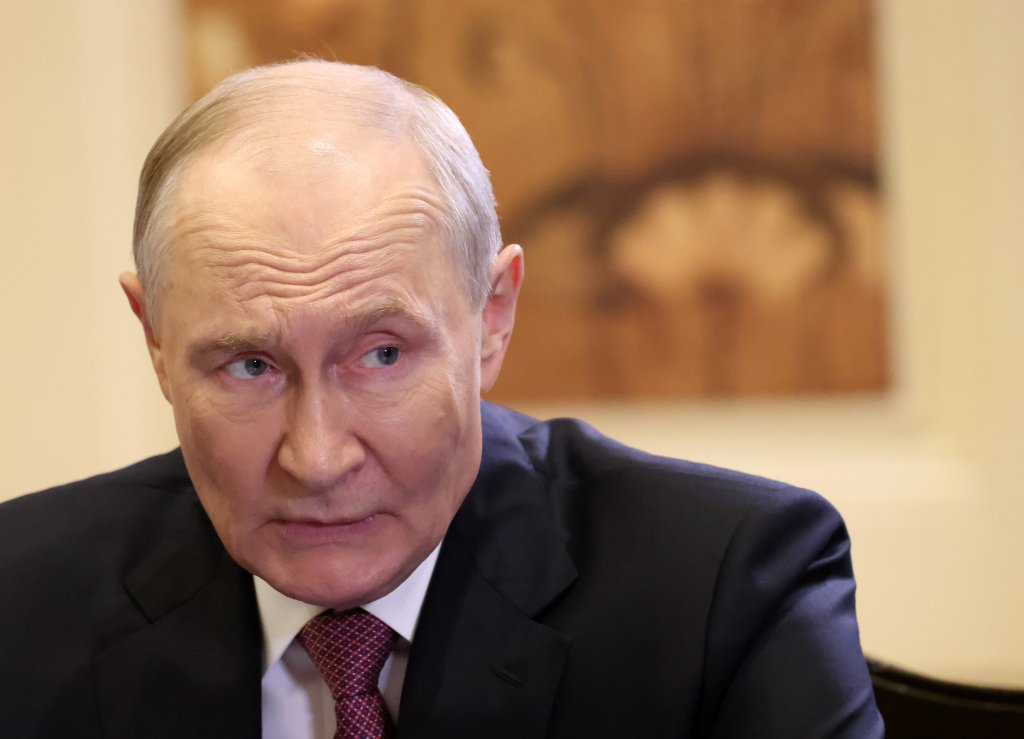
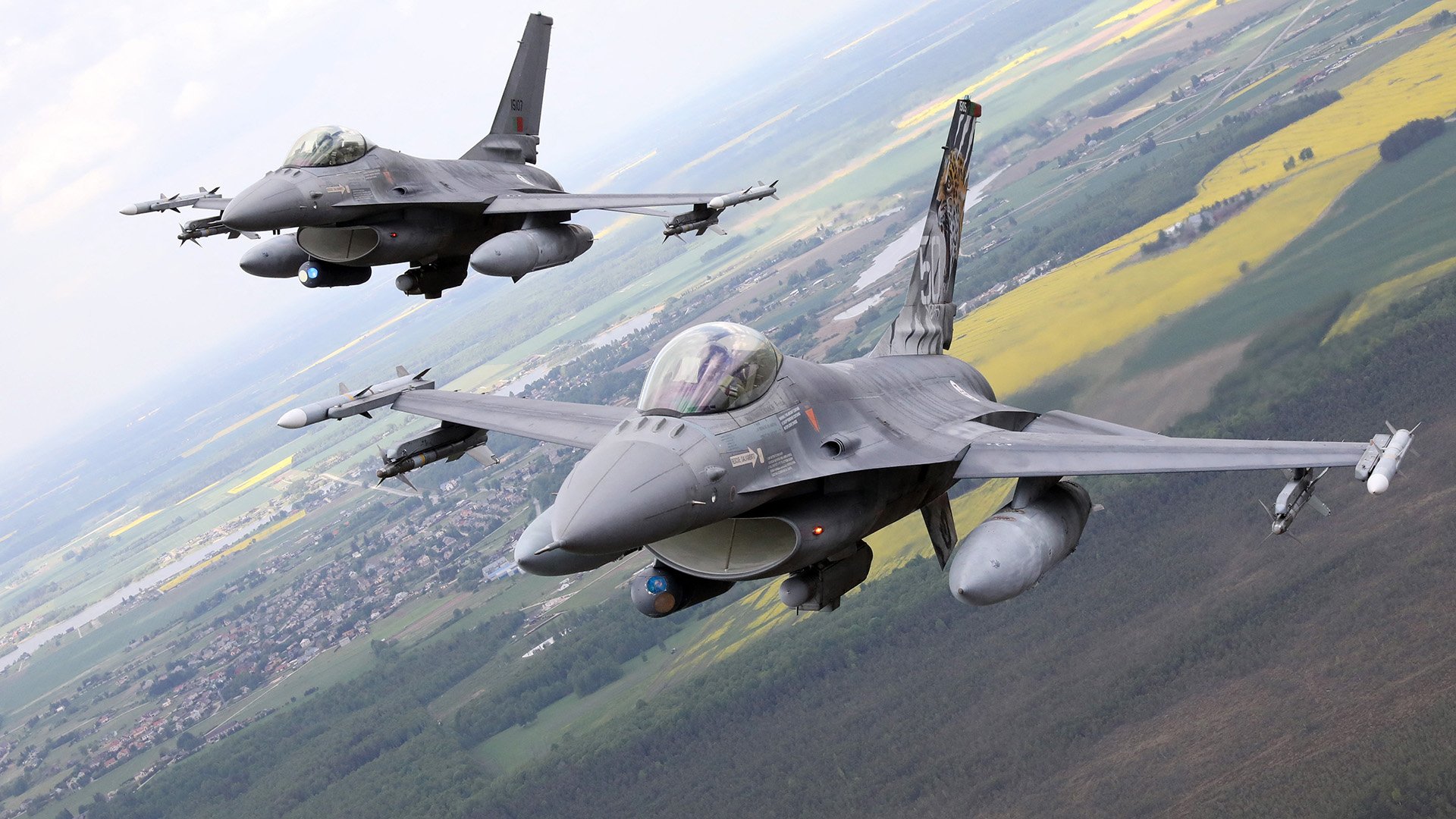


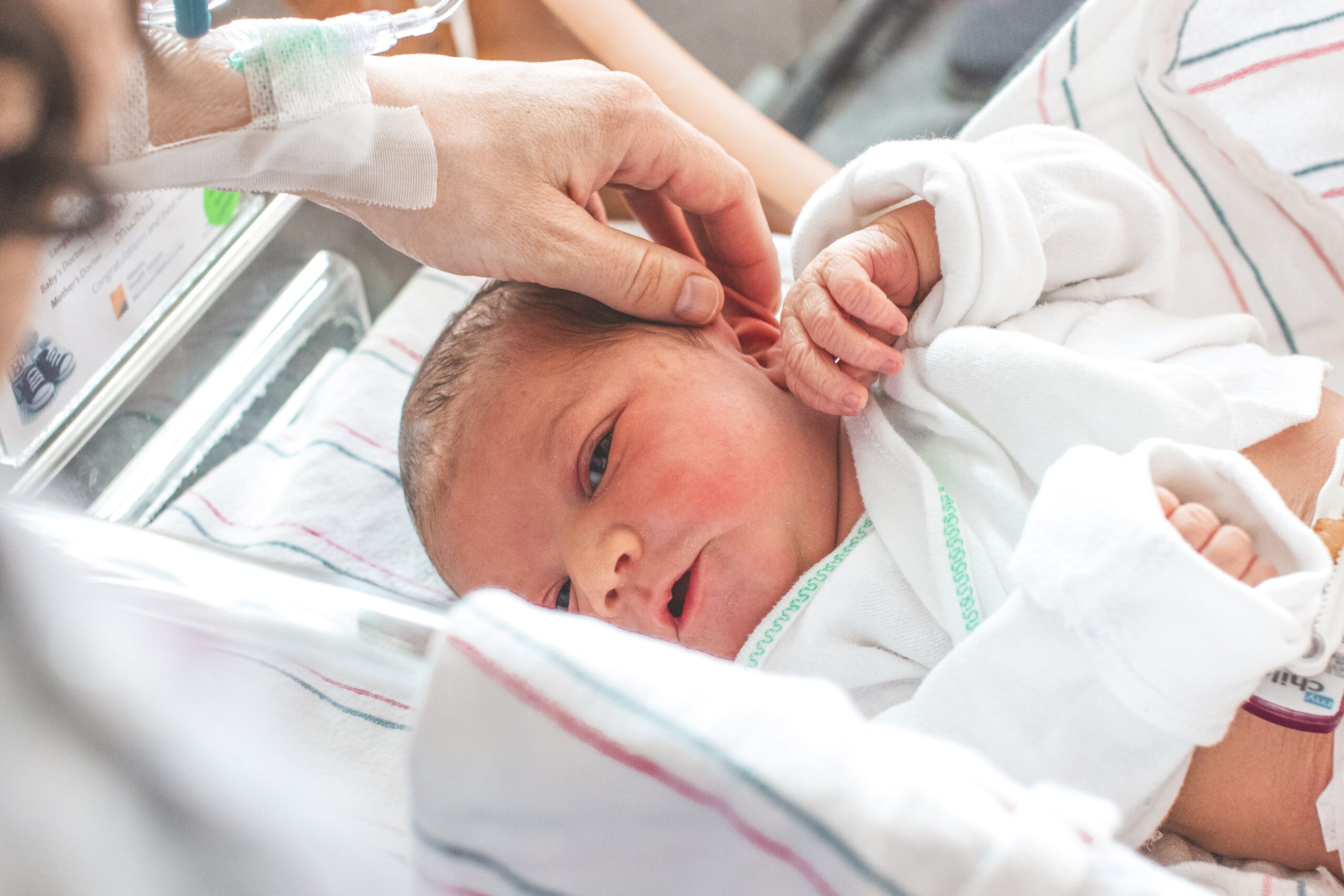

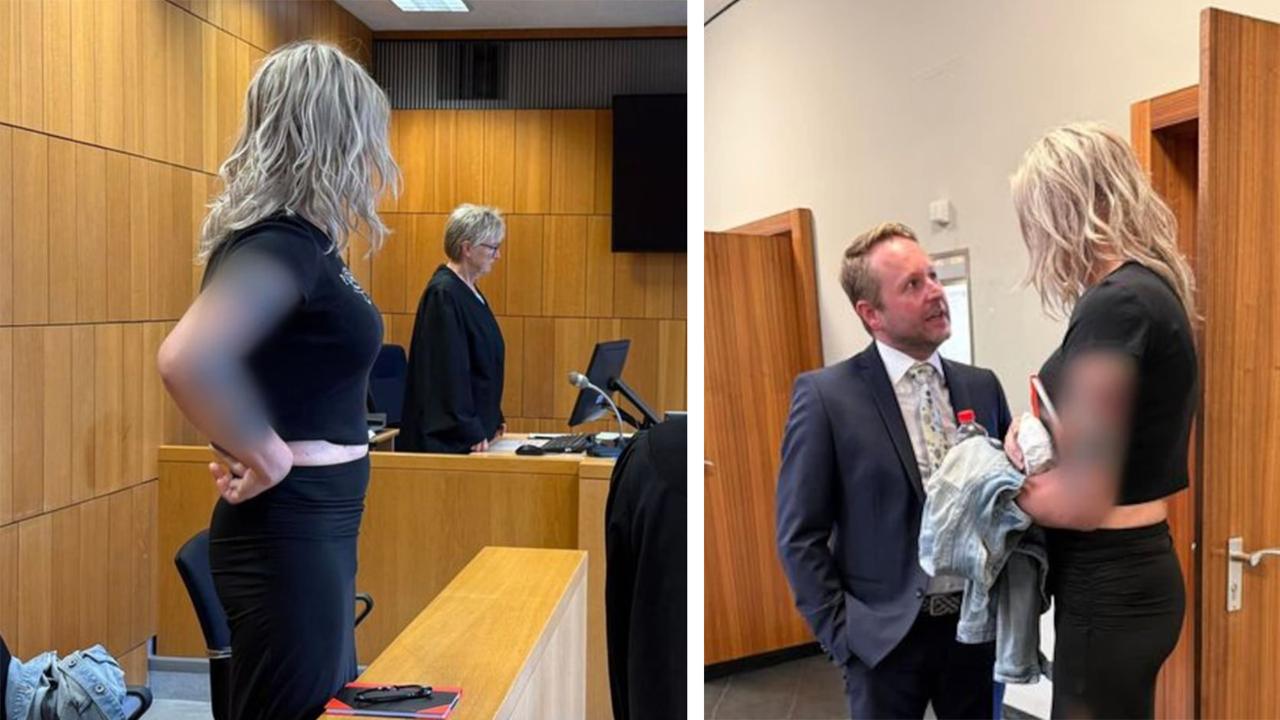


 After AfD's victory in Saxony-Anhalt, Alice Weidel takes Chancellor Merz to task during a raucous debate.