At least one Indian seafarer was killed when a commercial ship was attacked in the Strait of Hormuz on Wednesday, AFP has reported, citing statements from Oman and India. Oman’s Maritime Security Center said in a post on X that the Cape Dao, a bulk carrier flying the flag of Antigua and Barbuda, was struck […]
President Trump on Tuesday night held his first meeting with Acting Venezuelan President Delcy Rodriguez, just hours after delivering a speech to the UN General Assembly, where he boasted about taking over Venezuela’s oil industry by force, saying “to the victor belong the spoils.” In a post on X, Rodriguez shared a photo of her […]
Lian Yunzhi, age six, broke the record earlier this month with an average time of 4.52 seconds at a World Cube Association-certified competition in the Chinese city of Wuhan.
Lian Yunzhi, age six, broke the record earlier this month with an average time of 4.52 seconds at a World Cube Association-certified competition in the Chinese city of Wuhan.
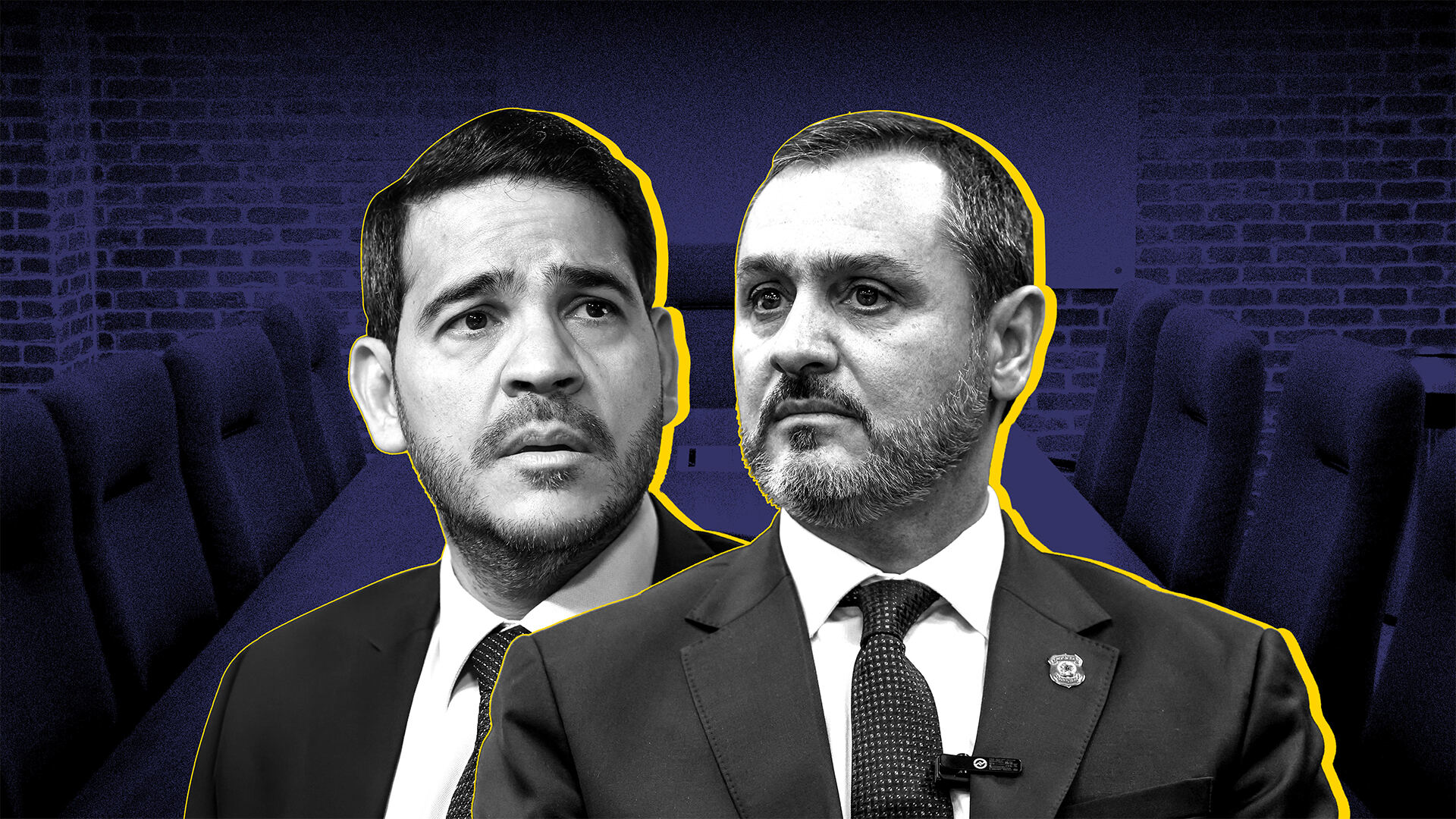
Às 10h50 de 23 de julho de 2026, o diretor-geral da Polícia Federal (PF), Andrei Rodrigues, enviou um ofício sigiloso ao advogado-geral da União, Jorge Messias. No documento, obtido com exclusividade pela Agência Pública, pedia-se que a Advocacia-Geral da União (AGU) analisasse e tomasse “as eventuais providências cabíveis” contra uma decisão do ministro André Mendonça, então relator do caso Master no Supremo Tribunal Federal (STF). A resposta, registrada em nota jurídica também sigilosa, foi negativa: segundo a AGU, não havia nenhuma medida judicial possível.
O pedido precedeu a fase mais aguda da crise que, em setembro, pôs ministros do Supremo em confronto e levou ao afastamento de Andrei do cargo, em decisão de André Mendonça — posteriormente revertida por Flávio Dino e mantida por Edson Fachin. Segundo integrantes do alto escalão do governo, ouvidos sob reserva pela reportagem, a negativa da AGU ao ofício teria tido o aval também da cúpula jurídica do governo e foi emitida antes da divulgação das mensagens atribuídas ao ex-banqueiro Daniel Vorcaro e ao ministro Alexandre de Moraes, que se tornaram públicas em 8 de setembro, quando Mendonça retirou o sigilo de parte das investigações do Banco Master.
Fontes do alto escalão disseram à Pública que a cúpula da AGU teria se sentido pressionada por Rodrigues com o envio do ofício e que a história teria chegado até a presidência da República. Uma reportagem da Folha de S. Paulo, publicada em 2 de setembro, relatou que a PF via uma “omissão” da AGU em relação à crise envolvendo o ministro André Mendonça.
A Pública apurou que o Advogado-geral da União, Jorge Messias, e o ministro da Justiça e Segurança Pública, Wellington César Lima e Silva, se encontraram com André Mendonça, fora da agenda, após tomarem conhecimento do pedido da PF. No encontro entre os três, os representantes do governo buscaram uma “interlocução” para resolver o embate, mas a exposição das conversas direcionadas a Moraes, que vieram depois do encontro, afastou os governistas do caso para evitar uma associação pública do governo à crise no Supremo.
Messias, da AGU, recebeu o pedido sigiloso da PF para analisar decisão de André Mendonça
Nesta quarta-feira, 23 de setembro, reportagem de Marcela Mattos no UOL informa que Messias e Andrei trocaram xingamentos diante de Lula: ‘Está me espionando?’. Segundo o UOL, pessoas que ouviram relatos do episódio disseram que a conversa, acompanhada a todo momento por Lula, foi “dura”, “tensa” e “ríspida”. A cobrança foi considerada a gota d’água de uma série de divergências que vinham se arrastando nos bastidores das investigações sobre o Banco Master.
Procurada, a AGU informou a Pública que “as informações apresentadas na matéria do UOL não são precisas. Divergências são naturais, evidentemente, mas nada se sobrepõe ao respeito e à consideração que o advogado-geral da União, Jorge Messias, tem pelo diretor-geral da Polícia Federal, Andrei Rodrigues, tanto no âmbito pessoal quanto institucional”
Procurada, a Polícia Federal não deu retorno até a publicação. O espaço segue aberto para manifestação.
Uma disputa que começou em fevereiro
André Mendonça herdou o caso Master de Dias Toffoli em fevereiro deste ano. Nas primeiras decisões como relator, em 19 de fevereiro, o ministro determinou que apenas os policiais diretamente envolvidos na investigação tivessem acesso às informações, com sigilo “inclusive em relação aos superiores hierárquicos”, o que incluiria Andrei Rodrigues. Seria um movimento para limitar a influência do diretor-geral na apuração, vista com desconfiança pela ala de André Mendonça. Nos bastidores, teria pesado a percepção de Mendonça de que informações sensíveis chegavam antes ao comando da PF, o que passou a causar “um certo desconforto”, segundo uma fonte do STF, até mesmo entre os juízes lotados no gabinete do ministro.
Andrei Rodrigues, diretor-geral da PF, enviou ofício à AGU em 23 de julho de 2026
Em 22 de maio, na investigação sobre fraudes no INSS (Operação Sem Desconto), da qual Mendonça também era o relator, o ministro teria reagido a uma mudança na chefia do caso e exigido ser avisado de qualquer nova alteração na equipe. Em 15 de maio, na semana anterior à exigência de Mendonça, o comando da PF trocou a área responsável pelos inquéritos do INSS: o caso foi transferido da Divisão de Repressão a Crimes Previdenciários (DPrev) para a Coordenação de Inquéritos em Tribunais Superiores (Cinq). Simultaneamente, o delegado que chefiava a operação, Guilherme da Silva, solicitou transferência para Minas Gerais, estado natal dele. À época, a PF não revelou o nome do novo chefe da operação e justificou que a mudança assegurava “maior eficiência e continuidade das investigações”.
Em 13 de julho, Mendonça repetiu a ordem no caso Master (Operação Compliance Zero): a equipe de investigadores deveria ser mantida e qualquer troca deveria ser comunicada a ele previamente; as informações também deveriam ficar restritas às coordenações responsáveis, e o material bruto extraído de celulares e computadores apreendidos deveria ser enviado ao seu gabinete.
Mendonça impôs restrições ao acesso às informações da investigação do Master
Dez dias depois, em 23 de julho, Andrei oficiou à AGU com direcionamento a Jorge Messias, conforme o documento obtido pela Pública. O documento da PF registra que não há “qualquer indício de irregularidade” nas investigações e classifica como “desarrazoada” uma decisão que limitasse as atribuições administrativas da PF. O documento registra, ainda, que o controle externo da polícia cabe ao Ministério Público Federal. No pedido, foi citada a decisão de Mendonça de maio como “de conteúdo semelhante”, na qual se fundamentou na lei que permite à AGU defender, na Justiça, agentes públicos por atos praticados no exercício do cargo.
A análise sigilosa da AGU
O ofício foi enviado à Secretaria-Geral de Contencioso, braço da AGU que representa a União no STF. Em 24 de julho, uma reunião no gabinete do advogado-geral substituto apontou os primeiros problemas do pedido: a repercussão na imprensa sobre o incômodo da PF, no dia anterior, tratava da decisão de maio, não da de julho; faltavam documentos; e a AGU nem sequer tinha acesso aos processos em sigilo, apenas às cópias das decisões.
A nota registra ainda que, segundo a própria PF, informou à AGU em 27 de julho que o material bruto relacionado a Vorcaro já havia sido entregue ao gabinete do relator na semana anterior.
A Nota Jurídica enumera os motivos da recusa ao pedido da PF. Primeiro, diz que não se tratava de defender um agente público. Segundo, registrou que a AGU não atua em investigação criminal, tarefa do Ministério Público. Terceiro, avaliou que a PF não demonstrou “prejuízo concreto” decorrente da exigência de avisar sobre trocas na equipe. E, quarto, a PF perdeu o prazo: as regras já estavam na decisão de maio, e a de sigilo interno vinha desde o início do caso, sem que a PF recorresse. A nota menciona “inércia prolongada da autoridade policial” e afirma que uma nova decisão não reabriria o prazo já vencido. Por fim, como o material já havia sido entregue, não haveria o que suspender.
Na resposta à PF, a AGU sugeriu dois caminhos: conversar diretamente com o relator ou levar o caso ao Ministério Público Federal. As páginas obtidas pela reportagem não mostram a data de assinatura da nota.
Sede da Advocacia-Geral da União, que analisou e recusou o pedido feito pela Polícia Federal
Afastamento e volta em 24 horas
Segundo a Folha de S.Paulo, Mendonça teria dito ao presidente do STF, Edson Fachin, no início de agosto, que suspeitava de viés político de Andrei Rodrigues para blindar a campanha de Lula; Andrei teria relatado a Fachin a suspeita inversa, de que o ministro prejudicava a esquerda e aliviava aliados de Flávio Bolsonaro (PL).
No início de setembro, Mendonça levantou o sigilo do relatório que continha mensagens enviadas por Vorcaro a um interlocutor identificado como “Alexandre de Moraes Brasília”. A maior parte das mensagens foi enviada em visualização única e aponta para a troca de informações sobre uma possível operação contra o ex-banqueiro. Em 15 de novembro, dois dias antes de ser preso, Vorcaro perguntou a Moraes: “Acha que na segunda já tenho que estar fora?”.
Os investigadores também encontraram registros digitais e metadados que indicam que Moraes atuou na edição de um contrato de R$ 130 milhões firmado entre Vorcaro e o escritório de advocacia da esposa do ministro, Viviane Barci de Moraes. Após a revelação do acordo, o escritório Barci de Moraes divulgou uma nota negando a existência de impedimentos legais à contratação.
A partir de então, a crise no STF escalou, como a Pública mostrou ao longo de sua cobertura do caso. A sessão do STF para julgamento das suspeitas contra Alexandre de Moraes foi iniciada em 15 de setembro e marcada por bate-bocas e trocas de acusações entre os magistrados. A deliberação foi adiada após o ministro Flávio Dino pedir vistas do processo. Ou seja, mais tempo para analisar o caso, que segue sem definição.
It’s stunning to comprehend how much has changed since Russia began its invasion of Ukraine. The conflict quickly turned into one dominated by artillery, with both sides scrambling to source shells wherever possible. Drones have since replaced tubed artillery as the ‘king of battle’ along the front, but cannons still have an important place on the battlefield. The commander of a new combined drone-artillery brigade offered some fresh insights into how his guns are now being deployed to achieve effects that drones still can’t provide.
As we have frequently documented, the ubiquity of drones has changed the nature of combat, especially when it comes to artillery. Not only can drones hold artillery positions at risk, many are cheaper than shells and easier to produce at scale. Most types are also precision guided munitions capable of hitting moving targets with pinpoint accuracy and can also provide battlefield surveillance. However, they are not a panacea, especially amid the cat-and-mouse game of electronic warfare countermeasures and improving kinetic and passive defenses.
In a recent interview with the Ukrainian Oboronka news outlet, Lt. Col. Vitalii Korniienko, commander of the 7th Artillery Brigade, talked about the changing nature of artillery warfare. Korniienko, whose unit is part of the Ukrainian National Guard, explained what is being done to keep his array of domestically produced Bogdana 155mm systems, donated weapons like M777 howitzers, remaining Soviet-era 2S7 Pion 203mm self-propelled howitzers and other guns, relevant. Here are some takeaways from that discussion.
How The Game Changed
“Guns used to be massed at positions to create an ‘artillery wall’ and a barrage of fire,” the lieutenant colonel said. “That practice is gone now. So, how effective is artillery today? We can create an artillery barrage, but what is the point of mindlessly churning up the earth? I’d rather send 20 FPV drones to destroy the target. The cost of that mission is $20,000.”
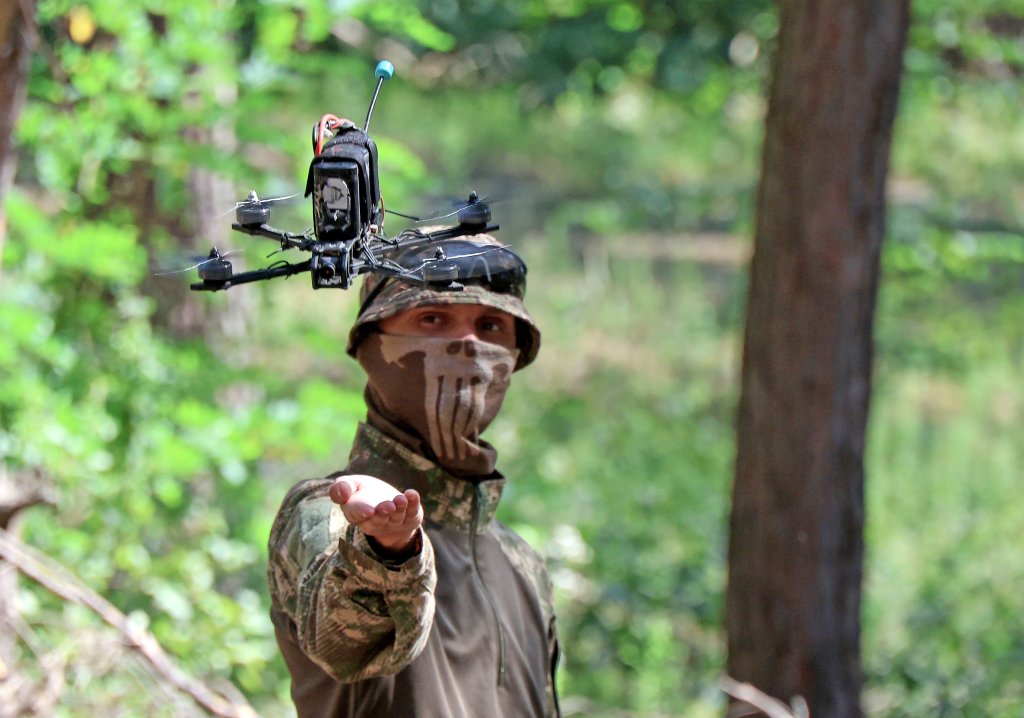
A soldier from the 13th Khartiia Brigade of Ukraine’s National Guard hones his FPV drone piloting skills during a training flight in the Kharkiv region, Ukraine. (Photo by Viacheslav Madiievskyi/Ukrinform/Future Publishing via Getty Images) Future Publishing
“Alternatively, I could fire 200 shells, but the cost would be astronomical,” he pointed out. “Plus, if we fired 100 shells from a gun in a single day, it likely wouldn’t survive until evening. The sky is full of drones; every shot gives away the position, leading to detection and an attempt to dismantle it using every available means. Nowadays, a typical mission involves a series of up to 10 shots. First, 3–5 shells for ranging, followed by fire on the target. That’s a minimum of five shells, with each costing at least $2,000.”
What Does The Drone-Artillery Brigade Do Differently?
“It is a concept of ours that was approved: combining artillery and drones within a single brigade,” Korniienko said. “Drones take out enemy artillery and logistics, while our guns provide cover for the infantry, destroy targets, and pin the enemy down in their dugouts. This way, we mitigate the limitations of both systems and boost overall effectiveness.”
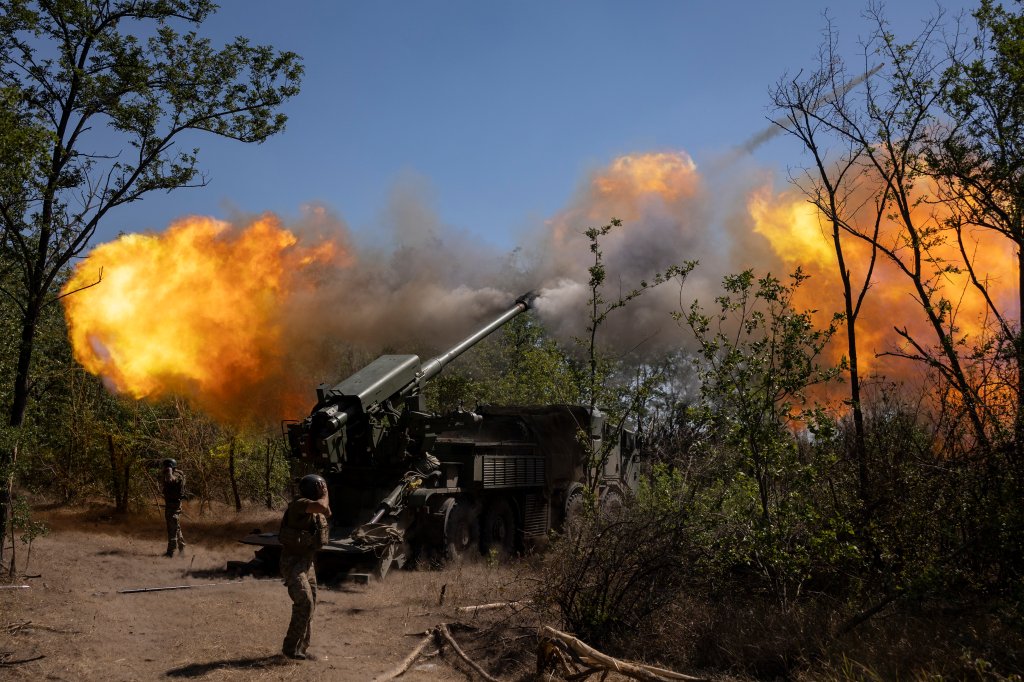
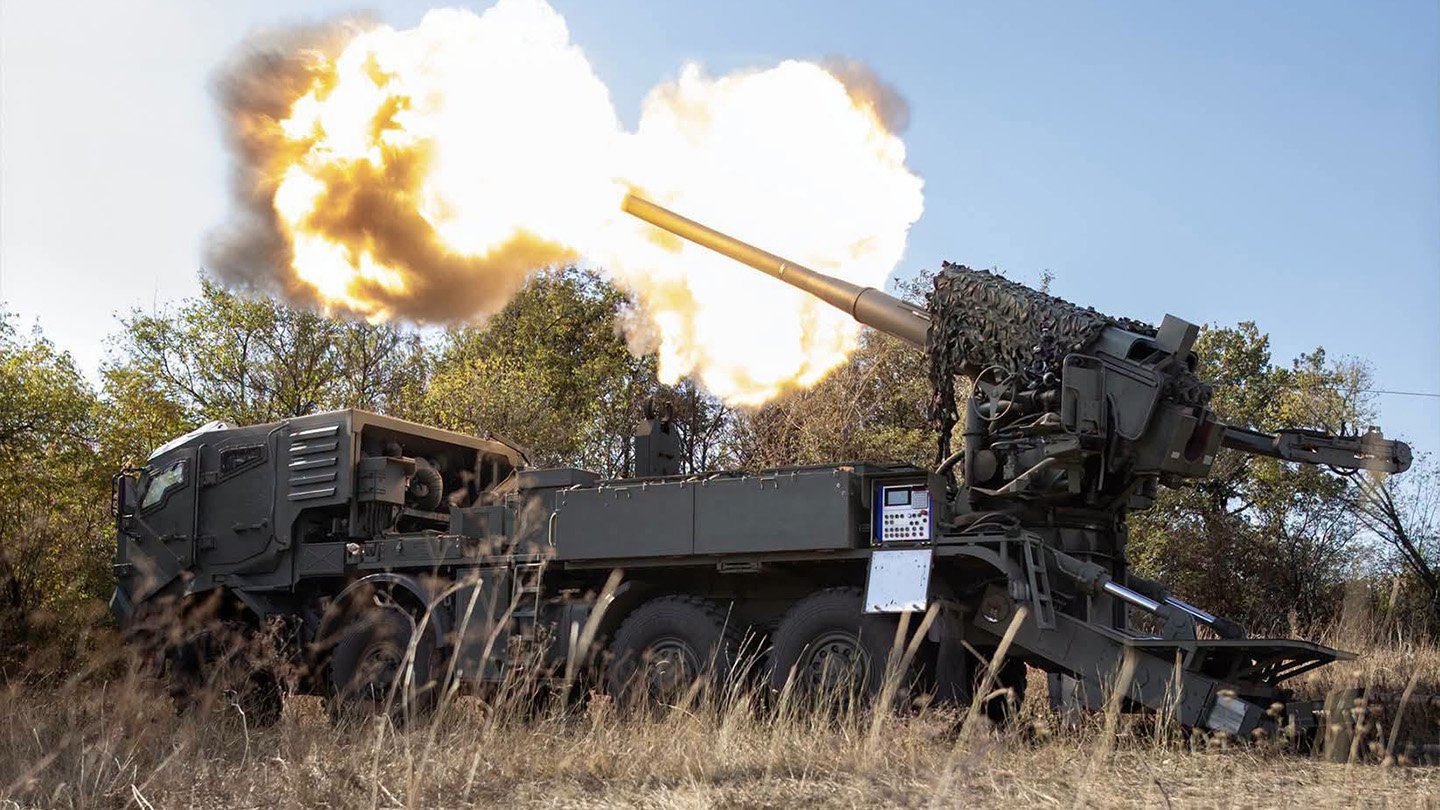
Ukrainian troops firing a domestically produced 2S22 “Bogdana” self-propelled howitzer against Russian forces near the front line in the Zaporizhia direction. (Photo by Maksym Kishka/Frontliner/Getty Images) Frontliner#VIDEO
“Our primary operations are focused within the corps’ area of responsibility—targeting positions 10 kilometers deep or farther behind enemy lines. Of course, we will also engage closer targets if requested by the brigade holding the defense. In addition, we are shifting logistics tasks from pickup trucks to ground-based robotic systems. They are already transporting ammunition to drone and artillery positions, as well as food and fuel for generators.”
What Artillery Can Do That Drones Can’t
“Let’s be honest: 95% of strikes right now are carried out by drones,” Korniienko explained. “Yet, we cannot simply abandon artillery. The focus of our operations has shifted from merely striking the enemy to destroying, suppressing, and halting the actions of assault groups and armored columns—and the need for that remains as critical as ever. There are tasks that only artillery can handle.”
The high art of war, as practiced by the warriors of the National Guard's Artillery Brigade.
“For instance, we currently have several enemy targets in the Kupyansk sector that drones cannot reach due to electronic warfare (EW) interference, while slow fiber-optic drones are simply shot down,” the officer noted. “What do we do? We call in artillery. Nothing affects its shells. Fog, strong winds, snow, or headwinds—it makes no difference to artillery; it will operate regardless.”
Preparing Artillery For The Modern Battlefield
“At the beginning, both we and the Russians might have had two or three guns at a single position,” Korniienko proffered. “The enemy was doing this as late as 2023. Then it tapered off, because if you deployed six guns, an hour later they’d be gone. No one drives out into an open field anymore. Today, a gun wouldn’t even make it to the position without being spotted.”
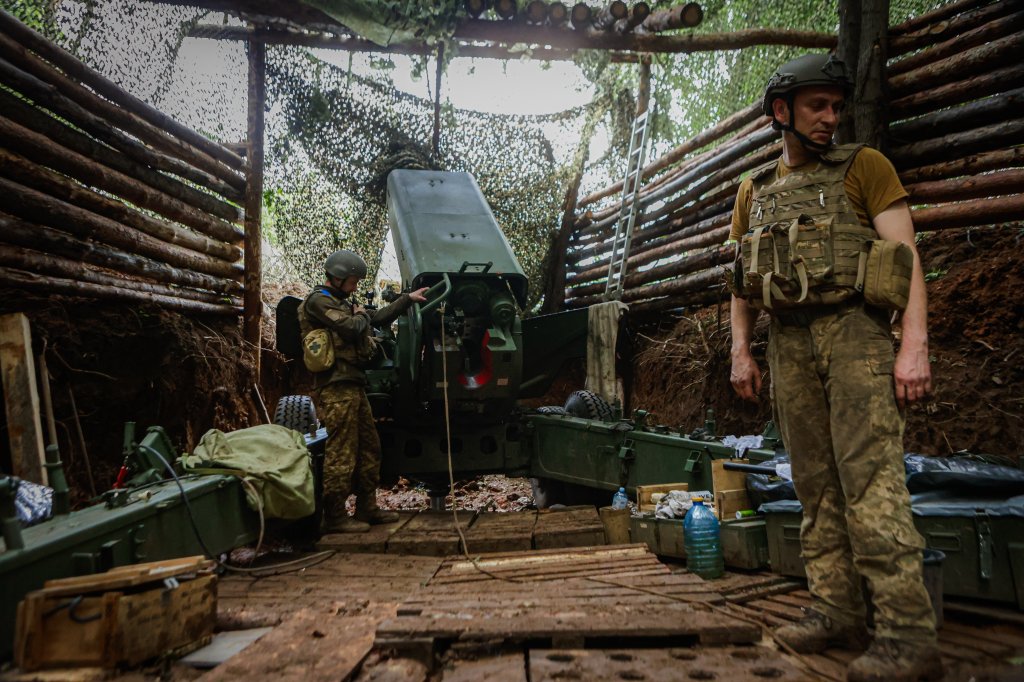
Ukrainian National Guard troops prepare a ‘Bogdana-BG’ artillery installation from a dugout position. (Photo by Sofiia Bobok/Anadolu via Getty Images) Anadolu
As a result, the artillery crew’s deployment “is prepared in advance,” the officer stated. “First, anti-aircraft drone teams ‘clear’ the sky above the site of enemy reconnaissance assets. The position itself is a fully underground-dugout caponier with well-camouflaged access routes. We put a lot of effort into ensuring the artillery doesn’t get destroyed. Losing a gun is a huge blow to us.”
Short Range Versus Long Range Shells
“There is currently an ongoing debate about phasing out ‘short’ shells and switching entirely to long-range variants,” the officer stated. “This is intended to protect artillery from drone strikes.”
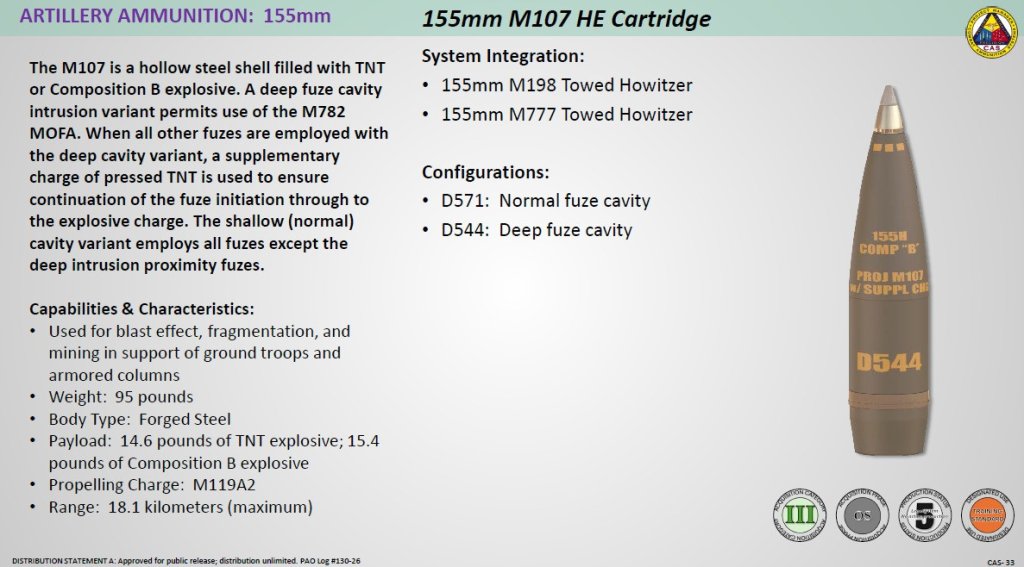
“What exactly is a ‘short’ shell, and should we stop using it?” he asked rhetorically. “The M107 155mm round is what is known as a ‘short’ shell. It is inexpensive and mass-produced; all our allies—and even our own country—manufacture it. We have sufficient stocks of them for combat operations. While accurate, its range is limited to 14–18 km, depending on the propellant used.”
Army
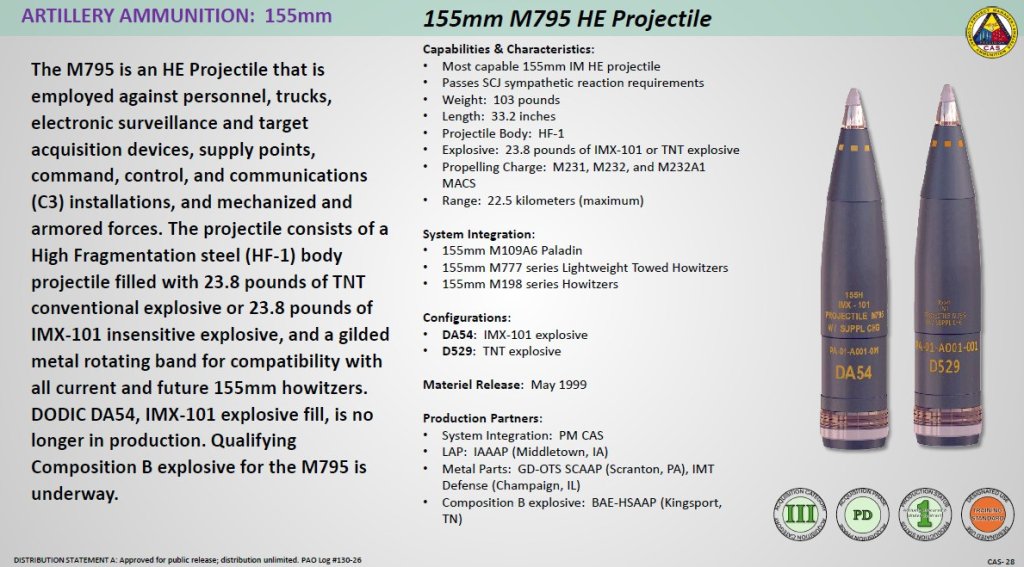
Long-range options “include the M795 and its foreign equivalents,” Korniienko explained. “These are longer, heavier, and significantly more expensive. With high-quality propellant, they can reach 30 km, or even further if equipped with a base-bleed unit. However, both these shells and the necessary propellants are in short supply.”
Army
“I do not believe abandoning the M107 is the right move,” the officer suggested. “Long-range shells cause faster barrel wear and compromise position concealment; firing a long-range charge produces a massive burst of flame from the muzzle—visible for kilometers at dusk or dawn.” “Besides,” he added, “18 km is a respectable range. If the gun is positioned 15 km back, it still has a 3-km margin to spare. That is sufficient for engaging frontline infantry. In my view, the ideal mix for most brigades would be 60% long-range shells and 40% standard M107 rounds.”
Big Versus Small Guns
“I operated 105mm guns in the Serebryanka area, on the Kharkiv axis,” Korniienko noted. “Based on intercepted communications, the enemy thought it was a mortar and searched for it within a five-to-six-kilometer range. But the howitzer was positioned eight or nine kilometers away and fired out to 10–12 kilometers.”
“There is almost no muzzle flash, just a bit of dust,” he added. “The shell arrives, and the enemy doesn’t even hear the sound of the shot. It’s compact and lightweight—you can transport it on a pickup truck. So yes, it would be useful.”
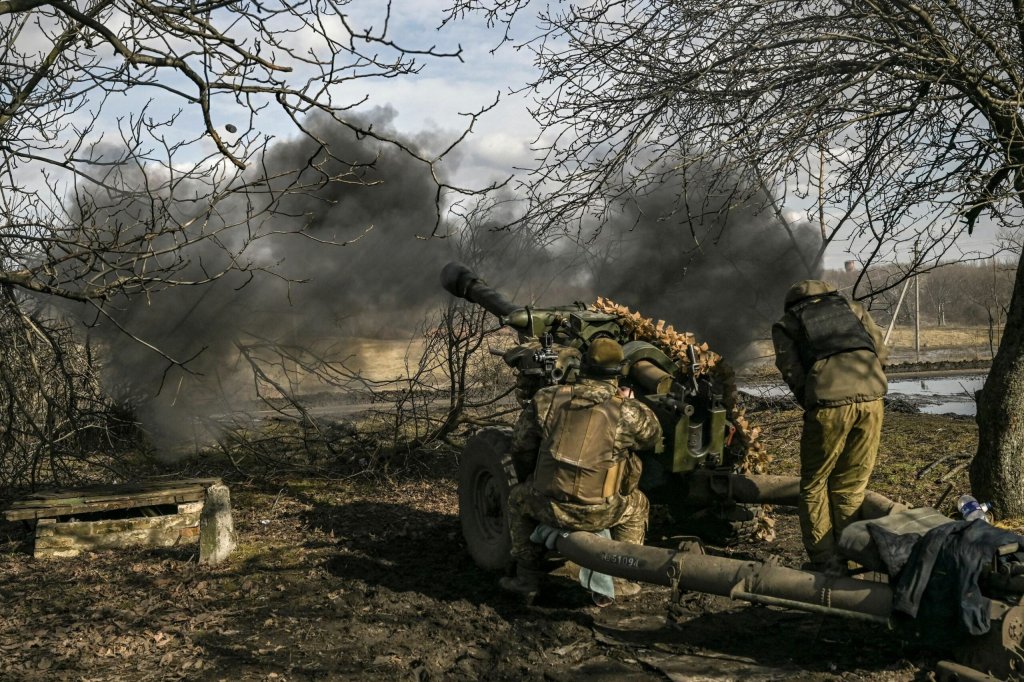
An L119 lightweight towed howitzer. (Via X)
“I’d also like to see the development of 203mm artillery; why move away from that caliber?” the officer wondered aloud. “Our ‘Pion’ systems fire a massive 100-kilogram shell capable of punching through at least two floors of a building or a bunker. And it’s reasonably accurate, too. You wouldn’t want to be on the receiving end when guns like that are firing at you. Overall, I believe we need competition. Right now, the ‘Bogdana’ is evolving under wartime conditions, which is good. But in a few years, momentum could stall. They might just keep producing the same system without significant upgrades because there’s no incentive to innovate. Yet, the nature of war doesn’t stand still.”
Wary Of Asian Shells
“We have a wide range of shells from different countries, and the ones coming from the West are fine,” Korniienko said. “However, their counterparts produced in certain Asian countries… the quality is frankly poor.”
“What is wrong with them?” queried Korniienko, who did not name the country in question. “On paper, the shell weight is listed as 46 kilograms, but when we weigh them, we find 46.9 or 45.4 kg. And that half-kilogram difference—give or take—has a huge impact on where the shell lands.”
As a result, “we no longer trust the standard firing tables provided with the shells; instead, we compile our own for each manufacturer. We weigh every batch and sort them by weight so that the difference between the ‘piles’ is minimal, ensuring a reasonably tight grouping. I can’t afford to make a mistake that causes a shell to land 2 kilometers off-target—right where our infantry guys are positioned. I should add that our artillerymen are actually wary of shells from one specific country. There have been instances where they tore off the muzzle brake or even caused the barrel to burst. A barrel burst is a disaster.”
Homegrown Is The Best
Korniienko said his unit was one of the first to test the Bogdana system, adding that he prefers it to other guns.
“We tested them and provided feedback to the manufacturer, which was then used to refine the design,” he explained. “It is a solid gun now, and it is my preferred choice. It might not be the absolute best, but I am very satisfied with the support and service.”
“If there’s a breakdown, the gun is back in position within a day or two,” he pointed out. “For instance, a gun broke down today, and we needed a repair team from the manufacturer. I know I’ll have it fixed by the day after tomorrow. They arrive in the morning, and by midday, the gun is ready. Then it takes another day or two to get it back to the position. That is very fast.”
That’s a very different experience than what he sees with donated weapons like the U.S.-made M777.
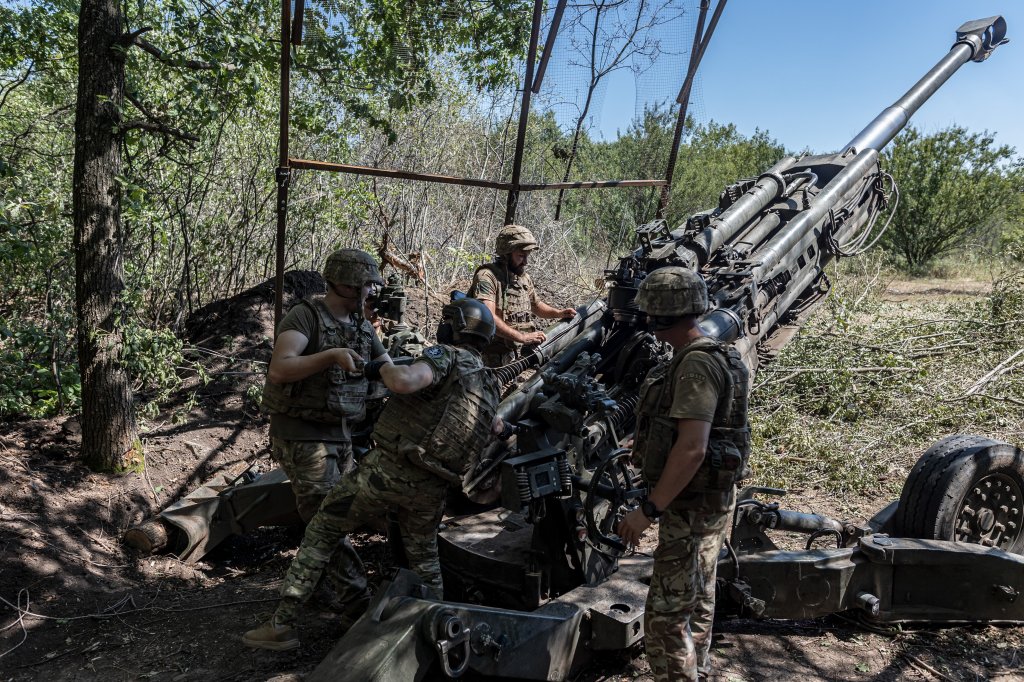
Ukrainian soldiers prepare to fire an M777 howitzer at Russian forces. (Photo by Diego Herrera Carcedo/Anadolu Agency via Getty Images) Anadolu
“As for the Western partners helping us—we are deeply grateful,” the officer avowed. “However, by the time you actually receive a part—say, a sensor—the gun might have been sitting idle for six months. And you can’t try to fix it yourself, because that would void the warranty.”
While artillery may no longer be the reigning weapon of war, as far as Ukraine is concerned, it has not been relegated to the dustbin of history yet either.
The View‘s Sunny Hostin left her co-hosts speechless this week when she bragged about keeping New York’s “Butcher of Tompkins Square Park” out of prison — a cannibal killer who butchered his victims and fed [...]
Vladimir Putin has released a cache of documents exposing a coordinated, decades-in-the-making plan to install a single global leader in Jerusalem. And he says the plan cannot be allowed to succeed. The Kremlin is calling [...]
Ansar Allah, commonly known as the Houthis, has issued a warning against the US directly intervening in Saudi Arabia’s war in Yemen, saying that US “interests” in the region would be targeted in response. The US and Ansar Allah agreed to a ceasefire in May 2025 after a heavy US bombing campaign that lasted about […]
Fourteen Israeli settlers crossed into Syrian territory from the occupied Golan Heights on Tuesday. The Israeli military detained them, condemned them, and sent them home. It was the ninth time they have been released without [...]
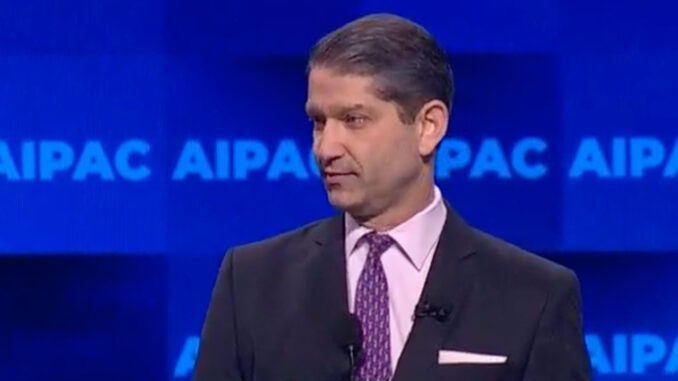
In a stunning leaked 2025 recording, AIPAC CEO Elliot Brandt openly bragged about how AIPAC manipulates key figures in Trump’s national security inner circle, pushing them toward another costly war on behalf of Israel – Marco Rubio, CIA head John Ratcliffe, and Congressman Mike Waltz
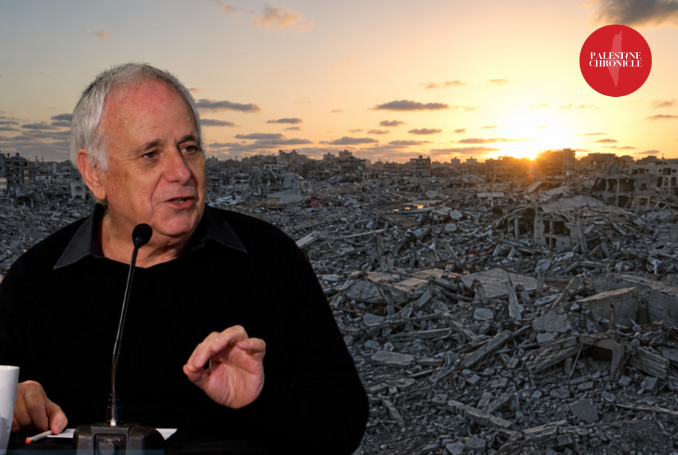
Hamas had negotiated with Israel for an end to the 17-year siege strangling Gaza, an increase in food entering Gaza, & release of Palestinian political prisoners. The Israeli army advised Netanyahu respond to these demands with an all-out attack on the Gaza. Al-Aqsa Flood was an attempt to preempt this attack.
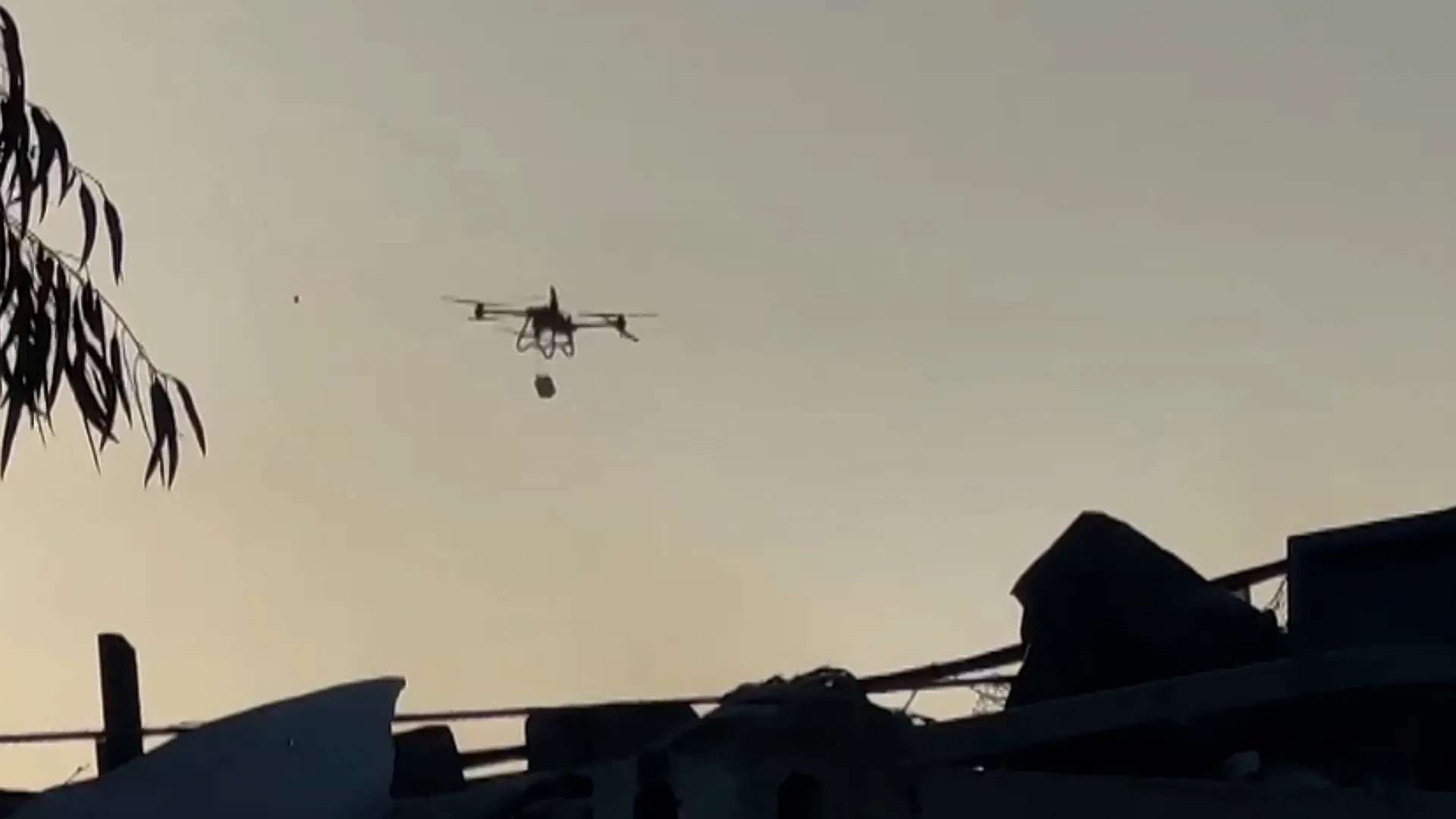
Israel employs military technology capable of identifying specific individuals, tracking their movements, and striking them with precision, despite the clear civilian status of those targeted and their non-participation in hostilities or posing of any imminent threat to Israeli forces or others.
A Levante questa sera, 23 settembre 2026, analizziamo una una settimana che rimescola le carte dell’ordine mondiale: Xi Jinping a Washington per la prima visita di Stato dopo undici anni, un’Assemblea Generale dell’ONU segnata dai visti negati e un Golfo Persico in piena trasformazione. Affrontiamo insieme: Xi alla Casa Bianca: dazi, dollaro, tecnologia e la partita a tre con Mosca BRICS di Nuova Delhi: la condanna delle sanzioni unilaterali e degli attacchi all’Iran ONU sotto ricatto: Abbas escluso, delegazione e stampa iraniane limitate Hormuz, Golfo Persico e la militarizzazione del Mediterraneo Duma russa, scossone in Germania, midterm americane in vista Fronte ucraino: attacchi incrociati, avanzata russa, ipotesi di un nuovo vertice Trump-Putin GLI OSPITI Alessandro Volpi, storico ed economista, Università di Pisa Antonio Mazzeo, giornalista d’inchiesta, esperto di basi militari e militarizzazione Stefano Orsi, analista militare del conflitto russo-ucraino Jeff Hoffman alla conduzione LIBRI DEGLI OSPITI Alessandro Volpi, La guerra della finanza. Trump e la fine del capitalismo globale, Laterza, 2025 Alessandro Volpi, I padroni del mondo. Come i fondi finanziari stanno distruggendo il mercato e la democrazia, Laterza, 2024 Alessandro Volpi, Prezzi alle stelle. Non è inflazione, è speculazione, Laterza, 2023 Antonio Mazzeo, La scuola va alla guerra. Inchiesta sulla militarizzazione dell’istruzione in Italia, Manifestolibri, 2024. Antonio Mazzeo, Il MUOStro di Niscemi, Editpress, 2013. Antonio Mazzeo, I padrini del ponte. Affari di mafia sullo Stretto di Messina, Edizioni Alegre, 2010. Mi chiamo Handalino Miranda editrice Milano 2026 SOSTIENI CASA DEL SOLE TV Casa del Sole TV è un progetto di giornalismo indipendente autofinanziato. Per donazioni: IBAN: IT63P0326822300052392596590 Intestato a: La Casa del Sole Edizioni Causale: Donazione Casa del Sole TV Membership YouTube: https://www.youtube.com/@CasadelSoleT… Analista Multipolare €5/mese Inviato della Verità €15/mese Architetto del Futuro €25/mese Iscriviti e attiva la campanella: Levante va in onda dal lunedì al venerdì alle 19.00 #Levante#CasadelSoleTV#JeffHoffman#Geopolitica#Multipolarismo#XiJinping#BRICS#ONU#Hormuz#Iran#Palestina#Ucraina#Russia#Germania#Midterm#AlessandroVolpi#AntonioMazzeo#StefanoOrsi
A Praça da República, em Loulé, abriu dia 22, as suas portas ao convívio, à animação e à promoção da mobilidade sustentável com a realização de mais uma edição do Park(ing) Day.
A iniciativa, inserida na Semana Europeia da Mobilidade de 2026, com o lema “Mobilidade para todos – Justiça entre gerações”e realizada no âmbito do Dia Europeu sem Carros, assinalado esta terça-feira (22 de setembro), desafiou a população a deixar o automóvel em casa e a usufruir do espaço público de uma forma ativa e inclusiva.
Sob o mote “Ocupa o teu lugar na cidade”, o evento transformou os habituais lugares de estacionamento automóvel em áreas vivas destinadas às pessoas. Com propostas pensadas para todas as idades, o programa integrou atividades desportivas, jogos tradicionais,stands informativos e de sensibilização ambiental, sessões de cinema imersivas e o projeto Mercado de Trocas. Mas a pista de segurança rodoviária da GNR foi uma das zonas que mais interesse despertou junto dos mais novos.
Em termos de balanço, a organização do Park(ing) Day’26 destaca o forte envolvimento comunitário e institucional. As empresas municipais (Infralobo, Inframoura, Infraquinta e Loulé Concelho Global) marcaram presença e promoveram diversos projetos focados na mobilidade e sustentabilidade urbana, na ação climática e na preservação ambiental. O associativismo local também esteve em grande destaque, com a participação ativa de vários parceiros, como a AMAL – Comunidade intermunicipal do Algarve, a Guarda Nacional Republicana, os Boardgamers de Loulé da Casa da Cultura, o Mercado de Trocas, o Clube BTT Loulé, o MOOV – Fitness Center, o Almancilense Cycling e o Banco Local de Voluntariado de Loulé, entre outras entidades que se associam a esta iniciativa. A diversidade dos parceiros envolvidos permitiu reunir, num mesmo espaço diferentes contributos nas áreas da mobilidade, segurança rodoviária, ambiente, ação climática, saúde, desporto, cultura, educação e participação comunitária, reforçando o carácter transversal do Park(ing) Day.
Outra das ações do evento foi a ativação da marca VELA, o novo sistema de bicicletas partilhadas de Loulé, que será implementado no próximo ano. Esta nova solução de transporte pretende revolucionar a mobilidade suave em Loulé, oferecendo uma alternativa ecológica, económica e eficiente para as deslocações diárias dos munícipes e visitantes.
Com a conclusão de mais uma edição do do Park(ing) Day, o Município de Loulé reforça o seu compromisso contínuo na transformação do ambiente urbano, demonstrando que as cidades podem ser desenhadas para as pessoas e o espaço público pode assumir múltiplas funções, garantindo maior qualidade de vida e para os cidadãos entre gerações. Para a Autarquia, a mobilidade suave é, cada vez mais, uma realidade que se pretende integrar no concelho, em especial nas suas zonas urbanas, sendo um contributo relevante para alcançar a neutralidade carbónica.
– Xi a Washington, Trump scende in pista di Jeff Hoffman
– Trump e Zelensky: pace annunciata, armi in cantiere di Jeff Hoffman e Ivan Bodyan
– Trump avverte il Canada e guarda a Lukashenko di Ivan Bodyan
– Kiev senza rete, a New York si firma di Jeff Hoffman
– Zelensky lancia l’”Otto dei Carpazi”, Magyar dice no di Ivan Bodyan
– L’ombra di Bruxelles sull’arresto di Georgescu di Gionata Chatillard
– Disarmo per gli altri, atomo negli abissi di Jeff Hoffman
– Londra promette un aiutino a Riyad di Jeff Hoffman
– Budapest chiede a Trump l’esenzione sull’energia russa di Ivan Bodyan
– Buon giro intorno al Sole
A cura di Margherita Furlan Con la collaborazione di Gionata Chatillard, Ivan Bodyan e Jeff Hoffman Editing di Mario Ferdinandi
CASA DEL SOLE TV — Informazione libera e indipendente Il nostro lavoro è possibile solo grazie al vostro sostegno. Casa del Sole TV non ha editori forti né finanziamenti pubblici: siamo sostenuti da voi, il nostro pubblico. Se credi nel valore di un’informazione che non tace, aiutaci a continuare.
Dona tramite bonifico bancario: IBAN: IT63P0326822300052392596590 Intestato a: LA CASA DEL SOLE EDIZIONI Causale: Donazione Casa del Sole TV
Iranian President Masoud Pezeshkian gave a defiant speech at the UN General Assembly in New York City on Wednesday, which he opened by holding up photos of children killed by US strikes in Iran. “I come from an Iran where, in truth, they bombed a school. You see these children? These children perished under bombs, […]

 Login






 :


 A Levante questa sera, 23 settembre 2026, analizziamo una una settimana che rimescola le carte dell’ordine mondiale: Xi Jinping a Washington per la prima visita di Stato dopo undici anni, un’Assemblea Generale dell’ONU segnata dai visti negati e un Golfo Persico in piena trasformazione. Affrontiamo insieme:

 Xi alla Casa Bianca: dazi, dollaro, tecnologia e la partita a tre con Mosca
 BRICS di Nuova Delhi: la condanna delle sanzioni unilaterali e degli attacchi all’Iran
 ONU sotto ricatto: Abbas escluso, delegazione e stampa iraniane limitate
 Hormuz, Golfo Persico e la militarizzazione del Mediterraneo
 Duma russa, scossone in Germania, midterm americane in vista
 Fronte ucraino: attacchi incrociati, avanzata russa, ipotesi di un nuovo vertice Trump-Putin
 GLI OSPITI Alessandro Volpi, storico ed economista, Università di Pisa Antonio Mazzeo, giornalista d’inchiesta, esperto di basi militari e militarizzazione Stefano Orsi, analista militare del conflitto russo-ucraino Jeff Hoffman alla conduzione
 LIBRI DEGLI OSPITI
 Alessandro Volpi, La guerra della finanza. Trump e la fine del capitalismo globale, Laterza, 2025
 Alessandro Volpi, Prezzi alle stelle. Non è inflazione, è speculazione, Laterza, 2023
 SOSTIENI CASA DEL SOLE TV Casa del Sole TV è un progetto di giornalismo indipendente autofinanziato.
 Per donazioni: IBAN: IT63P0326822300052392596590 Intestato a: La Casa del Sole Edizioni Causale: Donazione Casa del Sole TV
 Membership YouTube:

 Analista Multipolare €5/mese
 Iscriviti e attiva la campanella: Levante va in onda dal lunedì al venerdì alle 19.00
 CASA DEL SOLE TV — Informazione libera e indipendente Il nostro lavoro è possibile solo grazie al vostro sostegno. Casa del Sole TV non ha editori forti né finanziamenti pubblici: siamo sostenuti da voi, il nostro pubblico. Se credi nel valore di un’informazione che non tace, aiutaci a continuare.
 Dona tramite PayPal: paypal.me/casadelsoletv
 Sostegno ricorrente: casadelsole.tv/sostienici

