In his address to the UN General Assembly, US President Donald Trump said that the Cuban government is a failed state currently under enormous pressure: “My administration seeks a fundamental change in the situation in Cuba… It is an absolute failed state… and it will fall. Marco Rubio is leading the negotiations.”
In response, the Cuban delegation stood up and walked out of the plenary session in protest. Trump continued: “Cuba is a haven for foreign adversaries who threaten America right on our doorstep… The Cuban regime has also spent decades coordinating with left-wing radicals and communist networks here in the United States… They have cultivated ties with subversive and radical groups.”
The remarks did not go over well in Havana, where the government has categorically rejected the US right-wing leader’s statements. Leading the response is the country’s president, Miguel Díaz-Canel, who asserted that freedom in Cuba is non-negotiable.
“Freedom came to Cuba on January 1, 1959, [the date the Cuban Revolution began], and we are not going to lose it; we are going to defend it. Once again, we are seeing the true face of that empire and its contempt for the peoples of Latin America – and in particular for Cuba and the Cuban Revolution – because of what it represents.”
Díaz-Canel made the remarks on a program called Criterio Compartido on Radio Rebelde. In them, Díaz-Canel described Trump’s statements as “arrogant,” “high-handed,” and “interventionist.”
He also asserted that behind Trump’s thinking lies a justification for a certain view of US imperialism: “what most underpins that genocidal, criminal, and contemptuous mindset toward Cuba and the Cuban people.”
Regarding the label of “failed state,” the leader of the Communist Party of Cuba said: “They are always trying to label us a failed state to shift the blame for the genocide they are committing with that intensified and prolonged blockade.”
Díaz-Canel is referring not only to the long and sustained economic and commercial blockade that the United States unilaterally imposed on Cuba in an effort to defeat the revolution that began in 1959. In US President Donald Trump’s first term, he imposed an additional 243 sanctions on the Caribbean island and added Cuba to the State Sponsors of Terrorism (SSoT) list, which devastated the Cuban economy. In January 2026, Trump further tightened the grip by imposing an energy blockade on Cuba.
Since early 2026, following the US attack on Venezuela that resulted in the capture of President Maduro and his wife, Cilia Flores, and the deaths of more than 100 people – including several dozen Cubans – Cuba lost one of its main energy partners, which used to supply crude oil to the Cuban power grid.
Since then, only one Russian ship has managed to circumvent the US blockade; the United States is currently threatening to impose additional tariffs on any country that sells fuel to Cuba. This has triggered Cuba’s worst energy crisis, which is hindering the normal operation of hospitals, schools, and food production, among other essential activities.
Cuba has denounced the blockade as a form of “silent genocide,” specifically because of the direct humanitarian consequences it is having on the civilian population, which has seen a reduction not only in its electricity supply but also in access to surgeries, water, food, and so on.
In this regard, Díaz-Canel has once again emphasized on X that Cuba does not pose a threat to the United States; rather, it is the United States that is endangering Cuba’s civilian population: “Unable to justify the punishment against the people of Cuba and its genocidal economic war, the US president repeats at the UN that Cuba poses a threat. Lies are the weapon of those who refuse to accept the Cuban people’s right to self-determination.”
He concluded: “We will continue to fight for peace, defend our sovereignty, and work together to overcome the ruthless aggression imposed on us by the US government. Cuba is not a threat, the blockade is.”
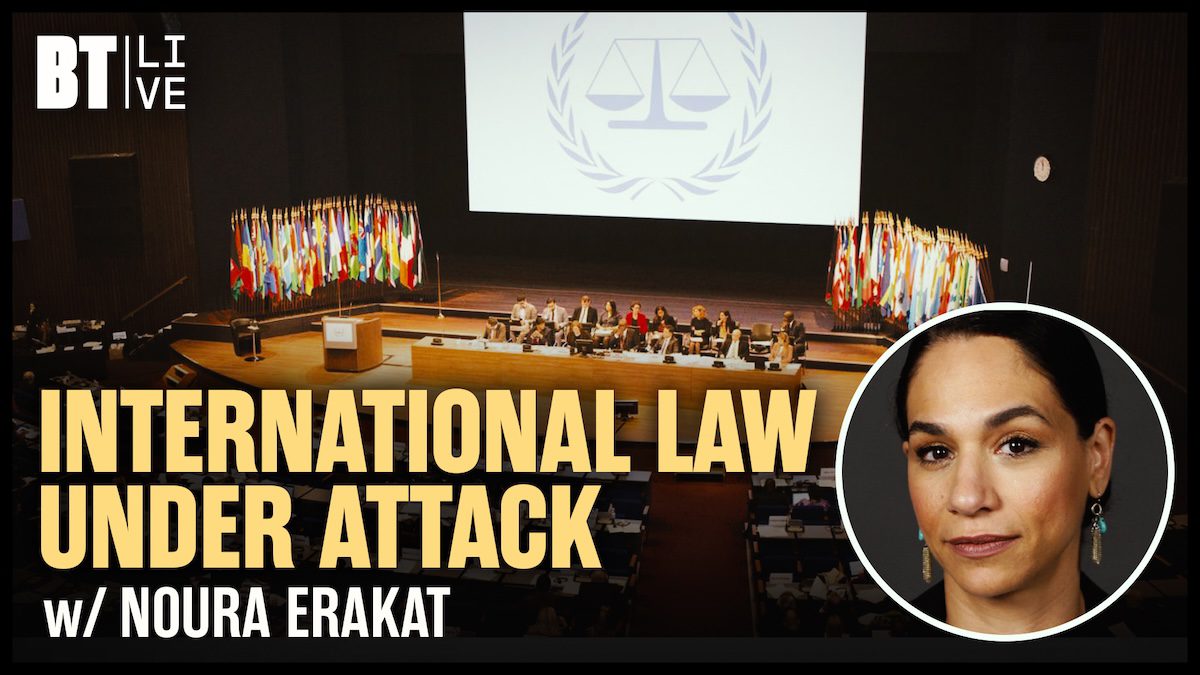
The Trump administration’s assault on the ICC isn’t just about protecting Netanyahu from war crimes prosecution. It’s about preserving “imperial impunity” – Israel’s just “the smokescreen,” says Noura Erakat, professor of criminal justice and Africana studies at Rutgers University and human rights attorney. She traces Washington’s bipartisan refusal to ratify the Rome Statute to explain why the International Criminal Court has spent two decades indicting mostly African and Arab leaders. The 2024 warrants for Netanyahu and former Israeli defense minister Yoav Gallant just show the court “between a rock and a hard place”: finally give up its legitimacy entirely, or face destruction by the US.
Now more than a dozen ICC judges, prosecutors, and the court’s president have been sanctioned, as Washington reportedly prepares sanctions against the entire institution, with Secretary of State Marco Rubio calling it an “intolerable threat” to US sovereignty. Can the court survive a war with Washington? Should it? And why do Global South states stay invested in a court that’s clearly stacked against them?
Plus: Erakat describes her arrest at a Palm Beach County budget hearing on their $1 billion-plus investment in Israel bonds; warns that Gaza’s Board of Peace could become a blueprint to replace the UN; and explains why she believes, even as public opinion on Palestine shifts, “there’s no way to be safe in this moment by hiding.”
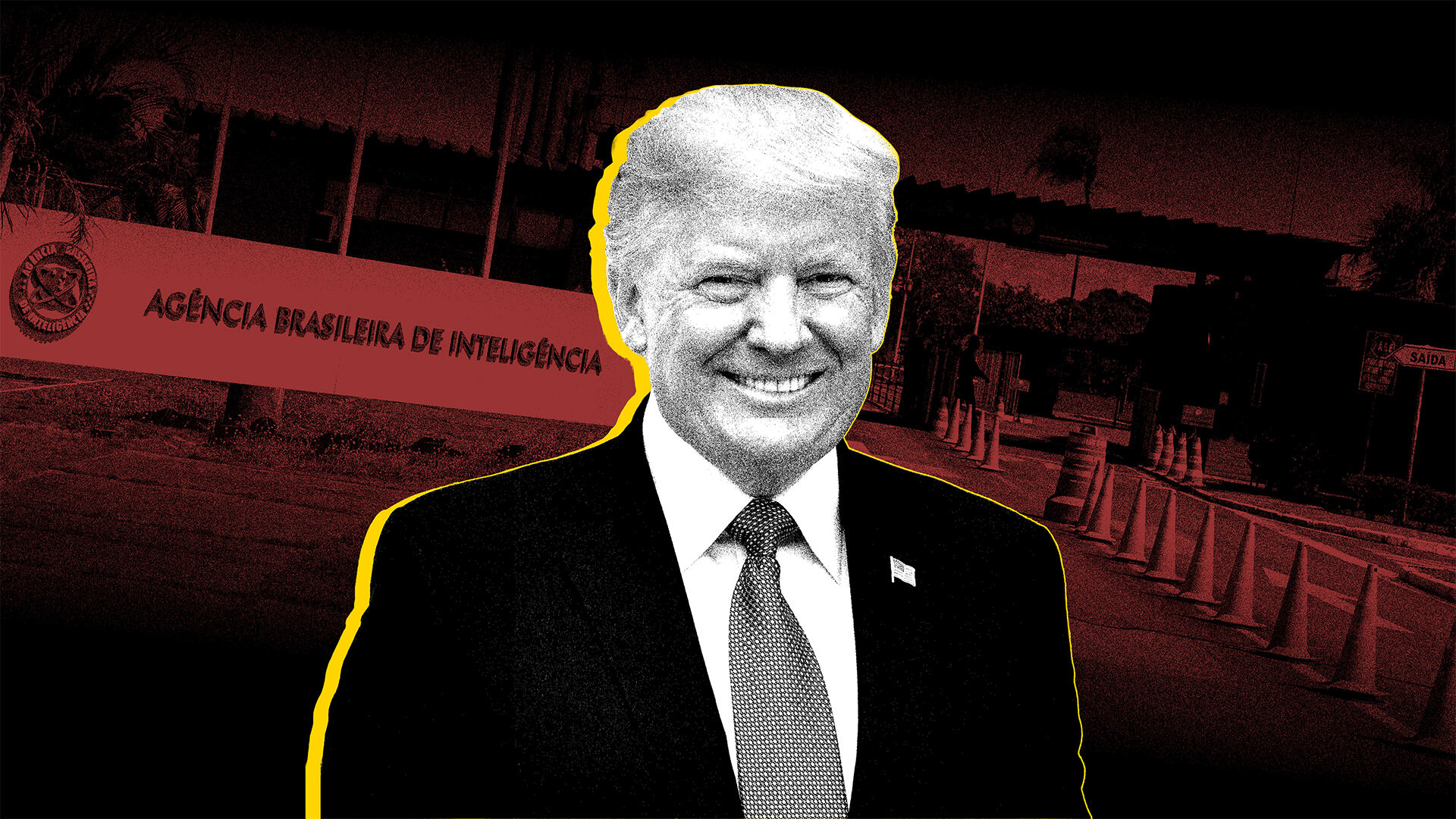
Sentado, de mãos cruzadas e com olhar sério para a câmera, o embaixador dos Estados Unidos no Panamá, Kevin Cabrera, anuncia, em vídeo publicado no canal do Departamento de Estado no YouTube em 13 de agosto de 2026: “Agora, a América tem a oportunidade de estabelecer uma nova ordem”. A frase ecoa a Doutrina Monroe, do princípio do século 19, que tratava o continente americano como área de influência dos EUA. O presidente Donald Trump a resgatou para justificar interferências políticas, militares e econômicas em outros países. Um dos alvos é o Brasil, em pleno ano eleitoral. A AgênciaPública apurou que a Agência Brasileira de Inteligência (Abin) tem monitorado a situação por meio de relatórios internos que classificam os discursos de figuras da extrema-direita no Brasil como “facilitadores” de ataques à soberania nacional.
Recentemente, num relatório entregue ao Tribunal Superior Eleitoral (TSE) e à Polícia Federal (PF), a Abin classificou como “crítico” o risco de interferência e influência dos EUA nas eleições brasileiras. O conteúdo do documento foi revelado pela jornalista Mônica Bergamo, da Folha de S.Paulo. A Pública apurou que relatórios semelhantes vêm sendo produzidos desde novembro de 2025, quando a gestão de Trump passou a ampliar o plano de hegemonia na América Latina.
Parte da extrema-direita no Brasil tem visões ideológicas alinhadas à gestão trumpista. Essa ala extremista é observada, nas análises da Abin, como colaboradora dos interesses americanos no país. Os países latino-americanos já foram definidos como “quintal” de Washington pelo Secretário de Defesa dos Estados Unidos, Peter Hegseth, em entrevista à Fox News no ano passado. A ascensão desta narrativa trumpista foi rebatida pelo presidente Lula em seu último discurso, na abertura da Assembleia Geral da ONU, na última terça-feira, 22 de setembro. “O Brasil não cabe no quintal de ninguém”, declarou o presidente, que também é candidato à reeleição.
Fontes da Abin contaram à reportagem, sob reserva, que o cerne do interesse dos EUA estaria na extração de terras raras — mais de 20% das reservas mundiais de terras raras estão no solo brasileiro. A Pública mostrou que, no início do mandato, Trump assinou um decreto para acelerar a produção de minerais críticos e reduzir a dependência do governo chinês. “(…) Minerais críticos são essenciais para a prontidão militar americana, já que eles são componentes-chave de jatos, satélites, submarinos, bombas e sistemas de mísseis guiados”, registra um trecho do decreto.
A Pública também apurou que a embaixada dos EUA no Brasil procurou o líder do PL na Câmara dos Deputados, Sóstenes Cavalcanti (RJ), para que ele recebesse dois enviados do Departamento de Estado. Segundo a apuração, a missão da dupla era lançar dúvidas sobre as urnas eletrônicas. O Itamaraty negou os vistos a Riley Bernes e Samuel Samson.
Em meio à tensão diplomática, o Ministério das Relações Exteriores ainda não deu aval à indicação de Donald Trump para a embaixada dos EUA no Brasil. O indicado foi o representante da Flórida — equivalente a um deputado estadual —, Daniel Perez, cujo nome foi aprovado pelo Senado americano em 7 de agosto. Contudo, ele não pode assumir o cargo sem o agrément — norma da Convenção de Viena sobre Relações Diplomáticas, de 1961. O agrément é a aceitação do país que vai receber o indicado e vem antes da indicação, o que não ocorreu no caso brasileiro.
O parlamentar é fiel ao movimento nacionalista Make America Great Again (MAGA), amigo pessoal e integrante do mesmo grupo político de Marco Rubio. A Públicamostrou que Perez é peça importante no projeto expansionista de Trump e que seria uma figura relevante na tentativa de interferência no Brasil, inclusive no auxílio à formulação de leis no Congresso Nacional.
Discursos intervencionistas no radar da Abin
O monitoramento da Abin abrange ainda discursos intervencionistas que possam “causar impacto nas instituições” e obter apoio popular e político para uma interferência americana. O acompanhamento dos agentes de inteligência é constante e poderia incluir políticos com mandatos e posicionamentos radicais, bem como pessoas com poder de mobilização, como influenciadores digitais de extrema-direita.
“As eleições brasileiras não têm, como há quatro anos, um cenário de abolição do Estado Democrático de Direito. Agora é um cenário de interferência externa em que o governo dos EUA tem preferência pelo campo opositor e vê nesse campo um facilitador de seus interesses unicamente americanos”, frisou uma fonte da Abin, sob condição de anonimato.
Ações para estimular o apoio à interferência americana foram intensificadas em 2026. Entre elas, a protagonizada por Marco Rubio em 16 de julho, quando convocou 66 países a se unirem a um projeto de combate ao que classificou como “terrorismo de extrema esquerda”. Sem provas, Rubio — filho de cubanos conservadores e integrante de uma elite econômica estabelecida na Flórida — acusou Cuba de espionagem e de infiltração no território americano.
Dois meses depois, em 22 de setembro, os 14 países da América Latina, membros do “Escudo das Américas” — aliança bélica criada por Donald Trump — assinaram um acordo para impor sanções às facções criminosas Primeiro Comando da Capital (PCC) e Comando Vermelho (CV), a exemplo do congelamento de bens e de restrições à imigração e a vistos.
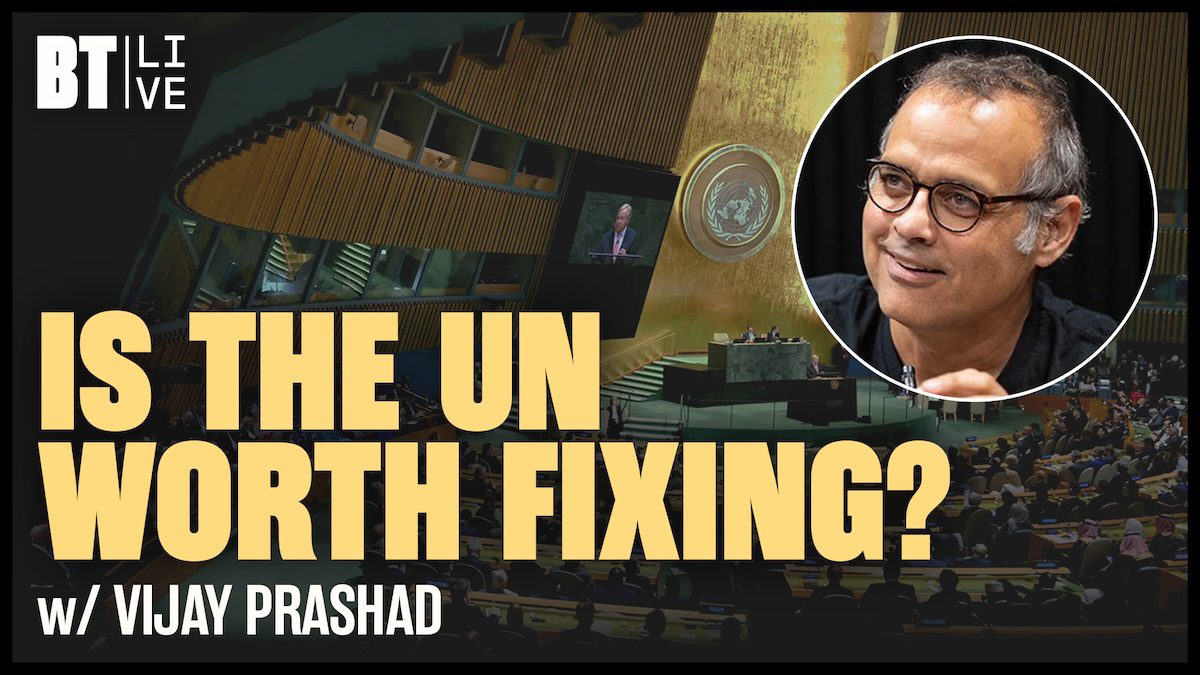
Can the United Nations be saved? Should it be? As world leaders and war criminals gather for the 81st session of the UN General Assembly in New York, Vijay Prashad, executive director of the Tricontinental Institute for Social Research, says that despite today’s gangster rule by the likes of Donald Trump and Benjamin Netanyahu, the UN Charter still sets the standard for judging powerful states, making it “the most important treaty document that the world has ever had” – even with the institution built on it in shambles.
Prashad slams Secretary-General António Guterres’s failure to get “creative” to end the genocide in Gaza or to stand up to Trump on Iran, instead opening a free lane for the US president who has “put a loaded gun on the table and has threatened the world.”
After the US denied visas to the Palestinians for a second year and heavily restricted Iran’s delegation, Prashad makes the case for moving the high-level UNGA out of the US: “New York doesn’t deserve it anymore,” he says, offering alternatives in Geneva or Nairobi. “Let’s move it to the Global South. Why not?”
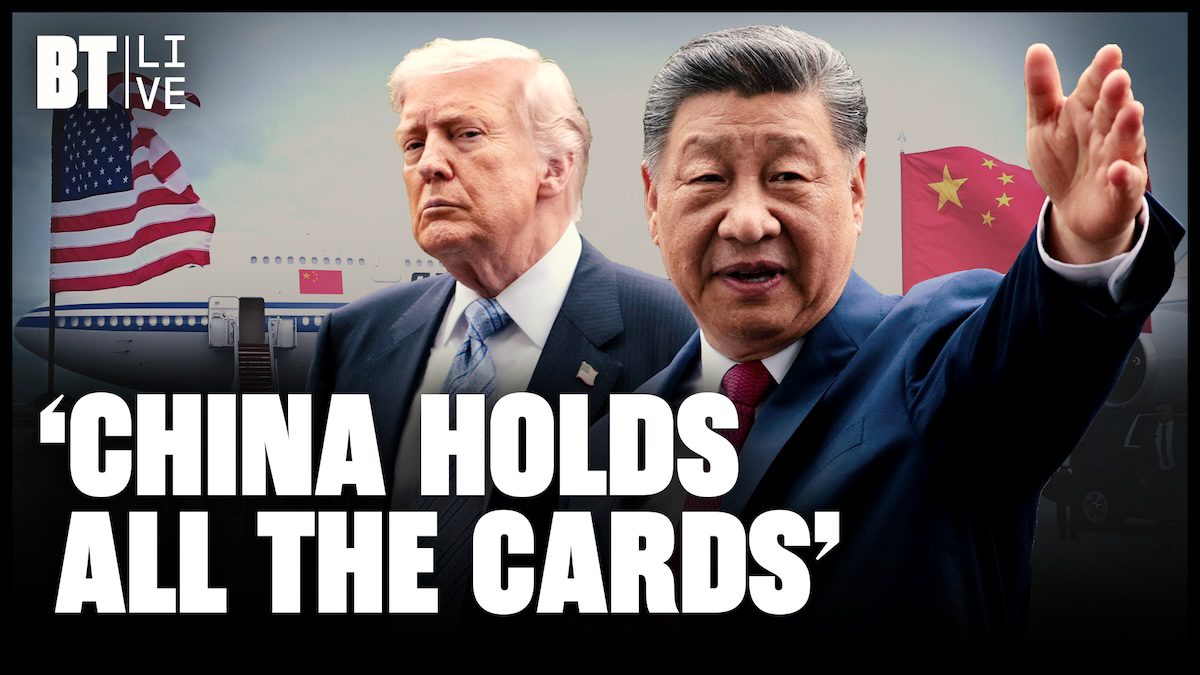
Chinese President Xi Jinping “holds all the cards” as he meets with Trump on Thursday, says Amanda Yee, host of BreakThrough News’ The China Report. She joins Zoe Alexandra and Rania Khalek to break down Xi’s first White House visit in 11 years.
With Trump facing a massively unpopular war on Iran, surging inflation, growing resistance to ICE terror – and with US midterms weeks away – Washington wants quick deals it can sell as big wins. But Yee says Beijing is playing a longer game, with massive implications for the global future. Take AI: Washington’s Pax Silica forces allies to pick sides, while Beijing’s open model is available to all and centered on the Global South. Two systems, representing “the choice that’s in front of the world right now.”
Despite a stated pivot away from China as a military priority, Yee points to Latin America and Iran as proxy fronts where the Trump administration continues to target Beijing. Meanwhile the military encirclement of China continues, from US bases in South Korea, Okinawa and the Philippines, to Japan’s remilitarization and expanding war games like RIMPAC and Freedom Shield.
But Yee says “the Cold War on China is a bipartisan affair.” From TikTok to Huawei to BYD, she traces the pattern of trumping up national security threats to mask efforts to protect US companies from competition. It’s all part of the same Red Scare targeting BT News, subpoenaed by the House Ways and Means Committee in an effort to paint anti-war voices as Chinese assets.
Far-right Argentine President Javier Milei addressed the 81st session of the United Nations General Assembly on September 23, giving a speech which provoked strong reactions. The South American head of state also participated in a series of high-level meetings.
One of his most quoted lines from his New York City trip has been: “Argentina is the new promised land.”
This is not the first time Milei has used religious concepts and ideas from the Judeo-Christian tradition to explain his political stance, but it is the first time the Argentine president has equated his country, in economic and political terms, with the land of Abraham and his descendants.
This is even more telling when one considers Milei’s extremely close relationship with Israel and ardent defense of its policies of war and genocide across West Asia, as well as the admiration he professes for the Jewish religion.
Milei also emphatically underscored this during his address to the UN General Assembly: “We also made a geopolitical choice: we have unambiguously aligned ourselves with the West … We condemn the Iranian regime’s attacks on the State of Israel.”
And this is an indisputable fact. Since the beginning of his term, Milei has not only aligned himself with the geopolitical interests that the Trump administration has vigorously pursued, but has also become one of Israel’s staunchest allies in the region.
This is quite impressive, considering that President Noboa in Ecuador, De la Espriella in Colombia, and others have also expressed a kind of unwavering alliance with Tel Aviv.
That is why Milei has not limited himself to diplomatic rhetoric, but has pulled the strings of power to designate Iran’s main military force (currently in conflict with Israel and the United States) as a terrorist organization.
“We declare the Iranian Revolutionary Guard a terrorist organization, just as we continue to seek justice for the two attacks we suffered on Argentine soil in 1992 and 1994,” Milei said at the UN, referring to two attacks in Argentina against the Israeli Embassy and the Argentine Israelite Mutual Association (AMIA). The Argentine justice system, advised by Israel and the United States, identified Hezbollah and Iranian citizens as the perpetrators.
Free-market capitalism and Artificial Intelligence
Another topic Milei addressed during his appearance was his staunch defense of free-market capitalism in which the state plays a minimal role: “We do not want to lose again; that is why we embrace free-market capitalism.”
In this regard, Milei once again highlighted his government’s strong support for artificial intelligence companies and the tycoons behind them. It should not be forgotten that the Argentine government signed a working and information-sharing agreement with Palantir, whose co-founder, Peter Thiel, purchased a property on Argentine soil.
This is clearly part of Milei’s neoliberal agenda to attract investment from major foreign capitalists, among whom the owners of technology companies (who are so interested in resources such as lithium, copper, and others that abound in South America) currently stand out.
However, recent statements by former employees of these companies regarding the danger that the development of AI poses to humanity have created some unease around the world. But Milei says that this is precisely the time to move forward: “Prudence does not mean fear, and what’s more, fear should under no circumstances automatically lead to obedience … where many see a threat, we see a frontier.”
Criticism of the UN
Probably one of the most important aspects highlighted in Milei’s speech was his harsh criticism of the UN and its role in current geopolitics: “Today, unfortunately, it is time to acknowledge that this sacred pact has, in fact, been broken.”
But not content with merely pointing out the shortcomings, Milei asserted (very much in line with Trump) that the UN has become a venue for certain people to amass wealth: “It has become a useless organization that serves only to feed a caste of fatally arrogant parasites disguised as well-meaning bureaucrats.”
Hence, he asserted that resolutions ultimately have no real effect on policy. He cited the example of the Malvinas Islands, a territory disputed with the United Kingdom: “What good is a resolution if, for decades, the other party can act contrary to it, and that resolution remains intact in the archives but is powerless in the face of reality?”
Criticism of Milei’s speech
Milei’s statements, while applauded by his supporters, have drawn widespread criticism in Argentina. Much of the criticism has focused on the fact that Milei now seems to staunchly defend Argentina’s right to control the Malvinas Islands, whereas in the past he was cautious and even reluctant to adopt a patriotic stance against the United Kingdom – something both the Argentine left and right have done. “We’re surprised that Milei now remembers when he used to talk about self-determination,” said Axel Kicillof, governor of the province of Buenos Aires.
Likewise, critics pointed out the apparent contradiction in Milei’s rhetoric between extolling the right to self-determination and aligning himself with the interests of Washington and Tel Aviv: “Milei’s stance doesn’t surprise me. The truth is that this line of subservience—and I say this very clearly—is directed at Trump and Netanyahu. Even the terminology is consistent with what Trump proposed and his ideas on the deregulation of artificial intelligence, as well as his view that Argentina’s natural resources are available to anyone who wants to take them,” said Kicillof.
Regarding Milei’s economic rhetoric, Patria Grande leader Juan Grabois said: “Besides being an ignorant imbecile, besides being a lobotomized parrot who parrots Trump, besides plagiarizing Gramsci without knowing he’s “a filthy communist,” what Milei is saying is that we’re basically going to hand over our territory, critical minerals, energy, and national sovereignty to the technocracy.”
 Login