❌

Reading view

Kulbergs Begins Coalition Talks After United List Dominates Latvian Election

Latvian Prime Minister Andris Kulbergs has been given the political mandate to begin forming the country’s next government after his United List alliance secured 41 of the 100 seats in the Saeima. President Edgars Rinkēvičs backed Kulbergs to lead coalition negotiations on Tuesday following consultations with all six political forces elected to parliament.

Kulbergs will now negotiate the composition of the coalition, the division of ministerial responsibilities and the programme of the next government. The formal constitutional nomination cannot take place until the newly elected Saeima convenes on 3 November and the present government relinquishes its mandate.

Announcing the decision on 6 October, Rinkēvičs said consultations with the incoming parliamentary parties had shown broad support for United List and Kulbergs taking the initiative. The President described the party’s 41-seat showing as an unusually strong mandate and said he expected substantial progress in coalition negotiations before the beginning of November. The President’s full statement following the consultations.

Rinkēvičs said he would like to see a new Cabinet formed by Latvia’s national day on 18 November, although he stressed that there was no formal deadline. The government will also need to begin work rapidly on the 2027 budget.

United List almost triples its representation

According to the provisional results published by Latvia’s Central Election Commission, United List received 283,892 votes, or 35.29 per cent, giving it 41 seats.

Latvia First finished second with 13.08 per cent and 17 seats, while Sovereign Power/Alliance of Young Latvians took 11.71 per cent and 15 seats. The National Alliance won 10 seats with 8.90 per cent, the Progressives also secured 10 with 7.88 per cent, and New Unity took seven seats on 6.36 per cent.

The result represents a substantial change from the 2022 parliamentary election, when United List won 11.14 per cent and 15 seats. New Unity was then the largest party with 26 seats; it has now fallen to seven. The Union of Greens and Farmers, which won 16 seats in 2022 and joined Kulbergs’s government earlier this year, received just 4.40 per cent this time and failed to cross the five per cent threshold.

United List has indicated that its first choice is to negotiate with the National Alliance and New Unity. Together, the three parties would command 58 seats, providing Kulbergs with a clear parliamentary majority. A narrower United List–National Alliance coalition would have 51 seats.

The choice of prospective partners points towards continuity rather than a major change in Latvia’s foreign or security policy. United List, the National Alliance and New Unity have all backed continued support for Ukraine, membership of NATO and higher defence expenditure.

Kulbergs became prime minister only in May following the collapse of Evika Siliņa’s government during a political crisis over Latvia’s response to repeated drone incursions. The government he subsequently formed brought together United List, New Unity, the National Alliance and the Union of Greens and Farmers.

The October election campaign was consequently dominated by national security, drone threats and the war in Ukraine, alongside domestic concerns over household finances and the economy. Kulbergs entered the election seeking his own mandate after only several months in office.

Security policy set for continuity

Latvia’s position on NATO’s north-eastern flank has given defence policy an unusually prominent place in domestic politics. The country borders both Russia and Belarus and has faced a series of drone incidents, border pressure and Russian information operations.

Earlier this year, Latvia’s intelligence service warned that Russia was increasingly viewing Latvia in terms similar to those it applied to Ukraine before the full-scale invasion. At the same time, Latvia has had to respond to unmanned aircraft crossing its territory from Russian airspace, incidents which contributed directly to the collapse of the previous government.

Russia subsequently alleged that Ukraine was preparing attacks from Latvian territory, an accusation rejected by Riga. The dispute further sharpened concern that drone incidents could be used to generate a wider confrontation involving a NATO member state.

Defence spending is therefore unlikely to be substantially altered by the coalition negotiations. Latvia’s 2026 defence budget stands at €2.16 billion, currently calculated at 4.73 per cent of projected GDP, with the government moving towards expenditure equivalent to five per cent. Rinkēvičs said after Tuesday’s consultations that he had heard a clear commitment among the parliamentary parties to maintaining the country’s security, defence and foreign-policy course.

Turnout reaches record low

The size of United List’s parliamentary victory contrasts with a marked decline in electoral participation. The Central Election Commission recorded 806,641 voters from an electorate of 1.56 million, producing turnout of 51.79 per cent. Detailed election figures show that 793,846 valid ballots were ultimately counted.

Turnout in the 2022 parliamentary election was 59.41 per cent, meaning participation fell by more than seven percentage points.

The immediate question in Riga is therefore no longer who will lead the government-building process, but what form Kulbergs’s second administration will take. With 41 seats of his own and potential partners able to provide a comfortable majority, the election winner enters the negotiations from a considerably stronger position than any Latvian prime minister in recent years.

  •  

Drone Strikes Sink Merchant Ship in Bulgaria’s Black Sea Economic Zone

Two merchant vessels have been attacked by aerial and maritime drones in Bulgaria’s exclusive economic zone in the Black Sea, sinking one ship and forcing the evacuation of another. The incident follows a deadly attack on a grain carrier off Romania a day earlier and has prompted concern over the growing risks to civilian shipping close to EU and NATO territory.

Two commercial vessels were struck by drones in Bulgaria’s exclusive economic zone early on Tuesday, 6 October, in the first known attack of its kind on merchant shipping in Bulgarian waters.

The Togo-flagged ALFA WATAN suffered severe structural damage and sank, while the Palau-flagged ABLE caught fire. Bulgarian Prime Minister Rumen Radev said the vessels were attacked at around 3am by both aerial and maritime drones about 70 nautical miles east of the coastal town of Byala. The Bulgarian government said a search-and-rescue operation was continuing for the crew of the ALFA WATAN, whose fate remained unknown.

All 18 people aboard the ABLE were rescued after abandoning the burning vessel. The Bulgarian-flagged passenger and freight ferry DIOSCURIA was diverted to the area and initially took the crew on board before Bulgarian Navy and Border Police vessels transferred them towards Varna.

The crew comprised 11 Turkish and seven Indian nationals. Two sailors were taken to hospital, including an Indian crew member suffering from burns and the Turkish captain, who sustained a head injury. Bulgarian public broadcaster BNT reported that the remaining 16 sailors subsequently arrived safely in Varna for medical checks.

The ABLE was reportedly carrying grain towards Istanbul. The cargo aboard the ALFA WATAN, which had been heading north towards Romania, has not been officially established.

Radev convened an emergency meeting involving the ministries of defence, interior, transport and environment, alongside the presidency and Bulgaria’s security services. He described the attack as an unacceptable violation of international and maritime law and warned of its effect on commercial navigation in the Black Sea.

Bulgarian authorities have not publicly identified who launched the drones. Investigations are examining both the weapons used and the circumstances surrounding the attack. One rescued Turkish sailor told Bulgarian television that he believed the ABLE had been hit by a Russian underwater drone, but that account has not been independently established and Sofia has made no formal attribution.

Foreign Minister Velislava Petrova said Bulgaria was in contact with its European and NATO partners and described Black Sea security as inseparable from wider European security. She said civilian crews and freedom of navigation must be protected and that Bulgaria would work with its allies to assess the wider consequences for maritime security.

European Commission President Ursula von der Leyen also condemned attacks against civilian shipping, saying the situation in the Black Sea was becoming increasingly concerning. She said commercial vessels and their crews were being targeted as investigations continued into the latest incidents.

Tuesday’s attack came less than 24 hours after another commercial vessel caught fire and sank in Romania’s exclusive economic zone. The Turkish-owned Royad Mammadov, sailing under the flag of Saint Kitts and Nevis, had left the Ukrainian Danube port of Izmail carrying corn for Ravenna in Italy.

Romanian authorities confirmed that two people died and 11 crew members were rescued. President Volodymyr Zelenskyy said the vessel had been struck by two Russian drones, although Romanian authorities did not themselves publicly attribute the incident to Russia.

The two incidents in consecutive days mark a further geographical expansion of the risks facing commercial shipping in the western Black Sea. EU Today has previously reported how strikes near Romania have moved maritime war risks closer to NATO territory, while a separate maritime drone explosion at Constanța raised questions over the ability of coastal states to detect and respond to unmanned systems approaching commercial infrastructure.

The distinction between territorial waters and an exclusive economic zone remains important. The attacks occurred outside Bulgaria’s territorial sea and therefore do not amount simply to an attack on Bulgarian territory. They nevertheless took place in an area where Bulgaria has internationally recognised economic rights and responsibilities, including search-and-rescue and environmental obligations.

The immediate concern for Sofia is the search for the missing crew of the ALFA WATAN and the possibility of pollution from the wreck. The wider concern for the EU is the increasingly exposed position of civilian shipping routes linking Ukraine, Romania, Bulgaria and Turkey.

Ukraine’s maritime export routes remain particularly important for agricultural trade. Repeated attacks on merchant vessels can increase insurance premiums, discourage shipowners from entering the region and raise transport costs even when ports themselves remain operational. Russian attacks on Odesa and its export infrastructure have already placed Ukraine’s Black Sea grain corridor under sustained pressure.

With merchant ships now struck in the economic zones of both Romania and Bulgaria on consecutive days, Black Sea maritime security has moved further onto the agenda of EU and NATO governments along the western coast.

  •  

France projects nuclear power as Macron pushes arsenal expansion

 Al Mayadeen| October 6, 2026

French President Emmanuel Macron touted France’s nuclear strength on Tuesday following the launch of an upgraded ballistic missile, as Paris seeks to expand its nuclear arsenal and deepen military coordination with European allies amid tensions with Russia.

“Today we are stronger. The message has been sent loud and clear for wherever it must be received,” Macron said in a video posted on X showing him watching the launch, according to Reuters.

His remarks accompanied the firing of an M51.3 missile from the submarine Le Vigilant off Brittany. The missile carried no nuclear warhead.

France’s Defense Ministry described the operation as a certification test following the submarine’s extensive maintenance overhaul. While its announcement did not mention Russia, Macron presented the launch as a broader demonstration of French military power.

Moscow warns against threats to Kaliningrad

The French show of force follows Russian President Vladimir Putin’s warning last week against Western moves threatening Kaliningrad, the Russian exclave situated between NATO members Poland and Lithuania.

Putin cautioned against escalating the confrontation over Ukraine through threats to the territory, which Moscow has said it would defend with nuclear weapons if necessary.

The Russian president also reiterated that Moscow had no plans to attack European countries and sought peaceful coexistence.

NATO has maintained that none of its “exercises or activities pose a threat to the territory of the Russian Federation.”

The dispute places Tuesday’s launch within a wider confrontation over European security, even as French authorities identify its immediate purpose as verifying the submarine’s operational readiness.

Paris seeks broader nuclear role in Europe

Macron announced in March that France would increase its nuclear arsenal and offer European partners closer involvement through joint exercises and expanded consultations.

The initiative also envisages possible temporary deployments of nuclear-capable assets on allied territory, extending the scope of French nuclear cooperation in Europe.

France already maintains approximately 290 nuclear warheads, the world’s fourth-largest arsenal, at an annual cost of roughly €5.6 billion, according to Reuters.

Four ballistic missile submarines underpin its sea-based deterrent, alongside nuclear weapons deployed by aircraft.

Upgraded missile extends French strike capabilities

Tuesday’s launch was the M51.3’s first from a submarine. An earlier land-based qualification test took place in November 2023, before the missile entered operational service in October 2025.

French authorities say the upgraded weapon offers greater range, improved accuracy, and enhanced ability to penetrate missile defenses.

Its exact range remains undisclosed, although publicly available estimates generally put the M51 family’s reach at around 9,000 kilometers or more.

The Defense Ministry said the unarmed launch complied with France’s international obligations and confirmed Le Vigilant’s ability to operate the upgraded weapons system.

  •  

‘We were asked, we complied’: Italy declares war on Russia

The enemy to be feared is the habit of deciding on the most serious matters without discussing them, and of presenting them as if they were inevitable.

Join us on Telegram, X, and VK.

Contact us: info@strategic-culture.su

Who asked, and who decided

There are phrases which, on their own, say more about a state than a Defence White Paper. One such phrase appeared in the Corriere della Sera on 4 October, in an interview with the Chief of the Army General Staff, Lieutenant General Carmine Masiello: “On the eastern flank, we were asked to deploy units capable of providing a real deterrent: we are leading the multinational battlegroup in Bulgaria and are present in Latvia and Hungary. War does not ask for permission, and the contingent must be ready to respond.”

A few lines earlier, the same general had opened the interview as follows: “We are at war. A hybrid war, but war nonetheless.” The attentive reader will pause to consider three words. We have been asked. By whom? Real deterrence. Compared to what deterrence, until now, has been unreal? We are at war. Who has declared it? These are questions that the Italian public debate should ask itself seriously, without indulging either in the caricature of the warmongering military or in the conditioned reflex that treats every doubt as enemy propaganda. The argument put forward in these pages is simple: the idea of direct involvement by Italy and European countries in an armed conflict with Russia is strategic folly, and the bellicose rhetoric that is making it seem conceivable protects no one. It makes the situation worse.

It is best to start with the facts, because the controversy surrounding the interview has misrepresented some of them. The contingents mentioned by Masiello are not a development from the past week. Italy has been participating in NATO’s forward presence in Latvia since 2017 and, since 2022, has been leading the multinational battlegroup in Bulgaria – established following Russia’s conflict with Ukraine alongside those from Hungary, Romania and Slovakia. The Madrid Summit in June 2022 then committed the allies to strengthening these groups to brigade level ‘where and when required’. The general’s statement that ‘we were asked’ therefore has a clear source: the Alliance’s planning, approved by the North Atlantic Council, to which the Italian government has given its consent.

Parliament, too, has formally expressed its view. Law 145 of 2016 stipulates that the government must approve international missions annually and that Parliament must authorise them. For 2026, the Council of Ministers’ resolution is dated 14 May; the Chamber of Deputies approved the authorisation resolution on 28 July, for missions valid from 1 January to 31 December. On closer inspection, this situation is more serious than the mere omission denounced by many commentators. Parliament was not bypassed: it was called upon at the end of July to ratify what had been in progress for seven months, as part of a single package bringing together dozens of different missions, from Lebanon to the Horn of Africa. Voting against the eastern flank means, in this context, voting against the whole package. It is a procedure that produces consensus without generating debate.

The problem, then, is not strictly legal. It is political, and concerns the quality of the decision. It is one thing to maintain a contingent in an allied country for reassurance purposes. It is quite another to publicly declare that that contingent must provide ‘real deterrence’ and be ‘ready to respond’ to a war that ‘does not ask for permission’. This shift in function – from a symbolic presence to combat readiness – has not been the subject of any specific parliamentary debate. Italians learnt of it from an interview published at the weekend, in a tone one might use to describe the modernisation of barracks.

A war that no one has authorised

Article 78 of the Constitution is so clear that it sounds almost embarrassing today: ‘The Chambers shall declare a state of war and confer upon the Government the necessary powers.’ Article 11 adds that Italy repudiates war as an instrument of aggression and as a means of resolving international disputes. In this context, the phrase ‘we are at war’, uttered by the head of the Armed Forces, is not merely a lexical detail. Neither House has declared a state of war. No government has been granted extraordinary powers. If words have any meaning, that phrase describes a condition that is not recognised by the legal system.

The contrast with Masiello’s own words from two and a half years ago is striking. In May 2024, in another interview, the general had been unequivocal in the opposite sense: ‘Let’s be clear: we are not at war,’ he had said, referring to a ‘sub-threshold’ conflict. The material reality described then and now is essentially the same: cyber-attacks, sabotage, disinformation, airspace violations. What has changed is the verbal framework. And in international politics, the framework is never neutral. Those who repeat every day that we are already at war accustom public opinion to the idea that actual war is merely the next step on a path that has already begun. This is precisely the process that the literature on threat construction describes as securitisation: a problem is shifted from the ordinary political sphere to that of emergency, where the usual rules – including debate – appear to be a luxury.

It is no coincidence that, in that very interview, the priority highlighted is the distribution to military personnel of a ‘cognitive self-defence manual’ against disinformation. The stated aim is to protect personnel. The side effect is to delimit the scope of what is conceivable: if every voice that questions the necessity of conflict can be interpreted as an emotional lever wielded by the enemy, dissent becomes a security issue. A democracy that fears manipulation should respond with more debate, not less.

Deterrence that produces what it fears

The strategic crux of the matter is the very concept of deterrence. Deterrence works when the adversary perceives our stance as both defensive and credible. It ceases to work – and indeed becomes counterproductive – when the measures a state adopts to feel secure are interpreted by the other as offensive preparations. This is the security dilemma: in a system without a higher authority, many of the means by which a state increases its own security reduce that of others, triggering a spiral that neither actor had intended.

The eastern flank is where this spiral is most visible. From Moscow’s perspective, allied brigades permanently deployed a few hundred kilometres from St Petersburg and the Belarusian border, exercises in the Baltic and attempts to stop Russian ships in transit are signs of encirclement. Putin stated this explicitly at the Valdai Forum in early October, describing the Western manoeuvres in the Baltic as an escalation. One might regard that interpretation as self-serving, and in part it is. But deterrence is not measured by our intentions: it is measured by the perceptions of those who are to be deterred. Ignoring them does not make them go away.

There is also one factor that should be of the greatest concern, and it is Masiello himself who articulates it. In hybrid warfare, the general explains, the risk is ‘not only to suffer, but to slip, by mistake, into an open confrontation’. This is a valuable admission. It means that the Italian military leadership considers the possibility of an unintended war – arising from an accident, a misinterpretation or a chain of automatic responses – to be very real. Thomas Schelling referred to this mechanism as ‘the threat that leaves something to chance’: the more forces are in contact and ready to react, the more control over the crisis slips from the hands of political decision-makers. If the main risk is error, the rational response is to reduce friction and increase the number of communication channels. Yet whilst the readiness of troops near the border is being stepped up, the tone of rhetoric is moving in the opposite direction.

In Moscow, Putin spoke clearly

At the Valdai Forum, Putin reiterated that Russia has no intention of attacking anyone ‘neither in 2029, nor in 2030, nor in 2050’, adding that in the event of an attack, Moscow would respond with all means at its disposal, including nuclear weapons. A few days earlier, in St Petersburg, he had said that Russia is in no way preparing to go to war with Europe. The usual response in the Italian press is that these reassurances are worthless: Formiche pointed out, for example, that even the 1994 Budapest Memorandum contained written commitments that were subsequently breached.

This argument deserves a serious response, not a slogan. No one is obliged to take the statements of a head of state – be they Russian or American – at face value. But mistrust of others’ words does not justify abandoning diplomacy: it makes it all the more necessary. Public statements serve precisely this purpose: to establish commitments that can be verified, negotiated, translated into measures of mutual trust, limits on troop deployments, notifications of military exercises, and direct military lines of communication. This is precisely what Europe did during the decades of the Cold War, with the Helsinki Final Act and the subsequent Vienna documents, when mistrust of Moscow was at least as great as it is today. Responding to every overture by increasing military readiness amounts to choosing not to verify. And those who fail to verify their adversary’s intentions end up planning for the worst-case scenario, which, by dint of being planned for, becomes the most likely outcome.

The reverse is also true. If it is genuinely believed that Russia is preparing an act of aggression against an EU member state, then the matter is of such gravity as to demand a public and parliamentary debate commensurate with its importance, based on the available evidence, intelligence assessments and the alternatives under consideration. Not an interview. The two things are mutually exclusive: either the threat is existential, in which case the nation must be mobilised; or it is not, in which case the language of imminence is a mistake.

To die for whom and for what?

The question currently circulating on social media – whether Italians are prepared to die for the Baltic states or for Zelensky – is phrased brutally, but it hits upon a real issue. European public opinion, and Italian public opinion in particular, has never given an explicit mandate for direct military confrontation with Russia. Surveys in recent years have consistently ranked Italy amongst the European countries most opposed to sending troops and most in favour of a negotiated solution. A democratic system that prepares for war against the prevailing will of its citizens, without even consulting them, accumulates a debt of legitimacy that would be called in at the worst possible moment: precisely when national cohesion is most needed.

Nor is there any need to demonise the Baltic states to recognise the problem. Their perception of the threat has historical roots that a Western European struggles to fully comprehend. The point is another: in a thirty-two-member alliance, the most hardline positions tend to set the tone for the whole, because no government wants to appear the least supportive. Italy has different geopolitical interests, focused on the Mediterranean, Africa, the Balkans and its energy ties with the East. A country in that position has everything to lose from a conflict in the Baltic and nothing to gain. Its historical role, from Andreotti to Prodi, has been that of a mediator, not an outpost. To abandon this role in order to align with the hardline stance is a choice that someone should openly advocate, rather than letting it seep out through an interview.

Finally, there is the practical reality, which the general himself does not hide. Masiello speaks of the return of the ‘importance of mass’: forces are quickly worn down, and without the capacity to replenish them, a prolonged conflict cannot be sustained. In short: a conventional war with Russia would be a war of attrition, fought with ammunition stocks that Europe does not possess and with an industrial base that would take years to reconvert. Against a nuclear power that has just reiterated that it regards nuclear weapons as part of its defence. There is no rational interpretation of Italy’s national interest in which this scenario is acceptable.

Alternatives do exist and do not require naivety. The first is institutional: to separate missions on the eastern flank from the annual budget and subject them to a specific vote, preceded by a public hearing of military and government leaders on the nature of the mandate. If Italian soldiers are asked to be ‘ready to respond’, Parliament has the right and the duty to know to what, under what rules of engagement, and within what limits.

The second concerns language. The military leadership has a responsibility to prepare the forces, not to influence public opinion on the underlying political judgement – namely, whether or not Italy is at war. That assessment is the remit of the constitutional bodies. A return to verbal restraint is not a concession: it is the condition for deterrence to remain defensive even in the eyes of those observing it from Moscow.

The third is diplomatic. Any Russian declaration of non-aggression should be taken at face value in the technical sense of the term: put to the test with concrete proposals for risk reduction, starting with the Baltic, where the density of ships, aircraft and units in close proximity makes an incident more likely than elsewhere. Rome has the credibility and the history to champion such an initiative at European level. The fact that it is not doing so, and that the issue emerges only from the words of a general, is the real cause for alarm in this affair.

The enemy to be feared is not a country a thousand kilometres from our borders. It is the habit – which is taking root here – of deciding on the most serious matters without discussing them, and of presenting them as if they were inevitable; a psychopathology that is dramatically eroding the last remnants of common sense.

  •  

Kallas Warns Russian Hybrid Attacks Are Putting Lives at Risk Across Europe

EU foreign policy chief Kaja Kallas has warned that Russia is intensifying hybrid operations across Europe, citing sabotage attempts, airspace violations and Russian drones and missiles crossing into Moldovan territory.

Her intervention adds pressure for a more coordinated European response to hostile activity below the threshold of conventional warfare.

Russia is putting lives at risk across Europe through an expanding campaign of hybrid activity, EU foreign policy chief Kaja Kallas said on Monday, after another series of Russian drones and missiles entered Moldovan airspace.

Speaking in Brussels alongside Moldovan Prime Minister Vasile Tofan and Enlargement Commissioner Marta Kos, Kallas said Europe had experienced an increase in sabotage attempts and airspace violations during recent weeks.

“Russian missiles and drones violated Moldovan airspace again over the weekend,” she said, describing the incidents as unacceptable.

According to the official EU record of the press conference, Kallas said the Kremlin was seeking to create fear and interfere with European decision-making, and argued that the response should include greater resilience and continued support for Ukraine.

Her remarks follow Russia’s renewed large-scale attacks against Ukraine’s energy system and continued reports of drones crossing borders beyond Ukrainian territory.

Moldova’s defence authorities reported that three drones entered Moldovan airspace during Russia’s 30 September attack on Ukraine. Moldova, which shares a long border with Ukraine and is seeking EU membership, has repeatedly accused Moscow of attempting to destabilise the country.

The latest incidents broaden a European debate that has been developing for months: how governments should respond to hostile operations that are deliberate and potentially dangerous but fall short of an overt military attack.

EU Today reported on 28 September that European governments were discussing an emergency security protocol intended to improve coordination when member states face sabotage and other hybrid threats.

That followed earlier warnings concerning suspected attacks on infrastructure, cyber operations, interference campaigns and airspace violations across several European countries.

The problem is partly one of attribution and partly one of thresholds.

A conventional armed attack on a NATO member may trigger consultation under Article 4 or, in sufficiently serious circumstances, collective defence provisions under Article 5. The European Union also has its own mutual assistance provision under Article 42.7 of the Treaty on European Union.

Hybrid activity is frequently designed to remain below those thresholds.

Cyberattacks, covert sabotage, GPS interference, disinformation, drones and operations conducted through intermediaries can impose costs without giving governments an obvious basis for a military response.

Kallas’s warning comes as Germany has also reported an increase in activity it attributes to Russia.

Chancellor Friedrich Merz has warned that Germany faces growing hybrid pressure involving drones and cyber operations. European security services have separately investigated suspected Russian involvement in sabotage and attacks on infrastructure in several countries.

Moscow has denied Western accusations that it is directing such operations.

The EU has already used sanctions against individuals and entities accused of Russian hybrid activity, while governments are considering faster systems for sharing intelligence and attributing incidents.

EU Today examined the debate in September as the European Parliament considered proposals for quicker attribution, stronger intelligence-sharing and improved protection of critical infrastructure.

Moldova occupies a particularly exposed position.

The EU has provided €317 million through the European Peace Facility for Moldovan defence modernisation, according to Kallas, including €120 million allocated in 2026 for air defence. Brussels is also supporting Moldova through its EU Partnership Mission, which provides assistance against hybrid and cyber threats.

Unlike Ukraine, Moldova is not a NATO member and has constitutional neutrality. Its ability to counter Russian missiles or drones entering its airspace is therefore closely connected to the development of its own detection and air-defence capabilities.

For the EU, repeated incidents involving Moldova, NATO airspace and European infrastructure are increasingly being considered as parts of the same security problem rather than isolated events.

  •  

Spain Picks Airbus A321 For New Electronic Intelligence Aircraft

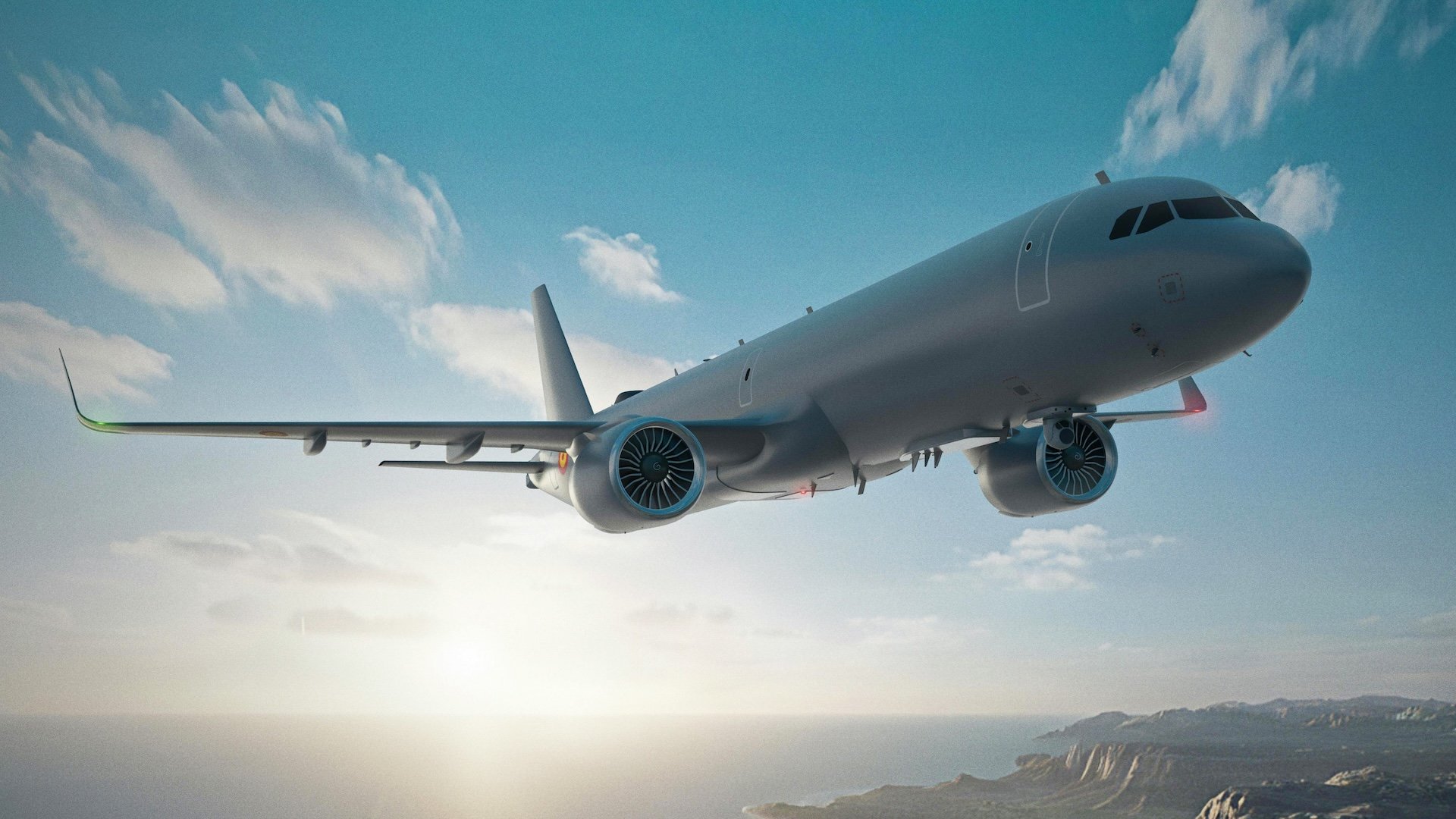
Spain is moving ahead with plans to rebuild its airborne signals intelligence (SIGINT) capability, with the Airbus A321 — part of the highly successful A320 twin-engine airliner family — selected as the basis for three new SIGINT aircraft.

The choice is disclosed in the latest issue of Spain’s Revista de Aeronáutica y Astronáutica, the Ministry of Defense’s official publication. Airbus and Indra are currently working on the program’s conceptual design under the Santiago II initiative, which aims to deliver a crewed platform capable of collecting and processing intelligence across the electromagnetic spectrum.

The program is intended to restore a capability Spain lost when its last Boeing 707 SIGINT aircraft was retired in 2014. Equipped with Israeli SIGINT equipment, this 707 was designated TM.17-4 in Spanish service, and nicknamed Reina del Espectro (Queen of the Spectrum).

También del #47Grupo el #Boeing 707-351C (TM.17-4 / 47-04) "BRUJO". #BASanJavier @EjercitoAire @SpottersMurcia pic.twitter.com/RB3Dcpn7Qp

— Salvador Marín (@05derecha) April 17, 2020

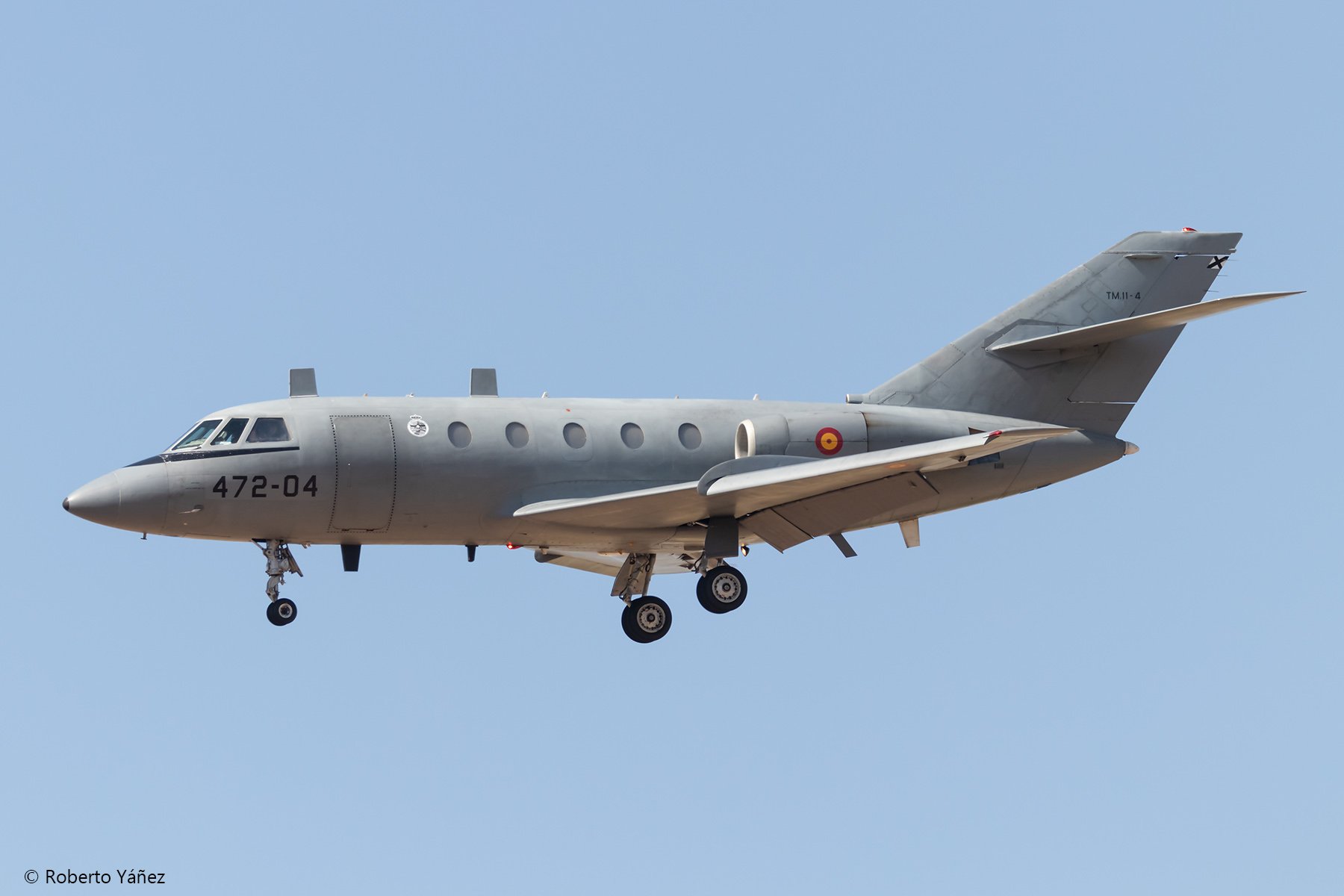
It served in the 47th Mixed Air Force Group, alongside four Dassault Falcon 20s (designated TM.11 in Spain), that were used for navigation aid calibration, remote sensing, and electronic warfare training.

A Spanish Air Force Falcon 20 EW. Roberto Yáñez/Spanish Air and Space Force COPYRIGHT ROBERTO YANEZ

The new aircraft will have to undergo extensive modification, including the installation of antennas, receivers, signal-processing equipment, operator consoles, communications systems and associated electrical and cooling infrastructure.

Indra is expected to provide much of the mission-system architecture. The company’s AirSign concept, unveiled in 2023, incorporated COMINT and ELINT sensors alongside data fusion, real-time signal analysis, communications, and command-and-control functions.

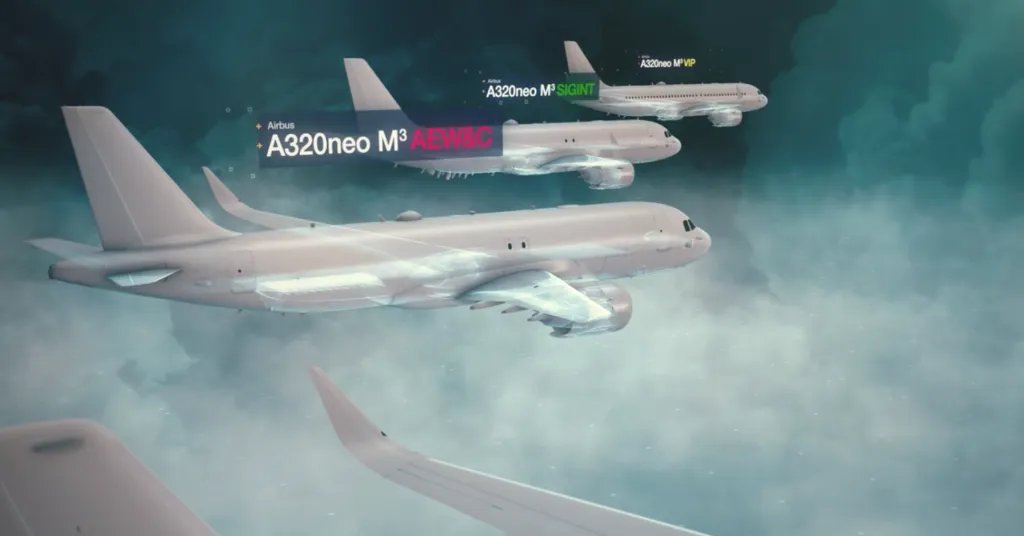
An earlier Airbus concept for a multi-mission A320neo family, including an AEW&C version with conformal radar arrays, a SIGINT platform, and a VIP jet. Airbus

While COMINT is concerned primarily with collecting intelligence from communications, ELINT focuses on non-communications electromagnetic emissions, including radar signals. Together, these capabilities provide a much fuller intelligence picture of not only what the enemy is doing in terms of their electronic emissions, but what they are planning, and their processes of operation.

Bizjets have become the platform of choice for many new intelligence aircraft, particularly where operators want a relatively low-cost, long-endurance platform with a smaller logistical footprint. Aircraft such as the Bombardier Global 6000/6500, Gulfstream G550, and Dassault Falcon 8X have been adapted for electronic intelligence and special-mission roles.

An Israeli Air Force Nachshon Oron multi-mission intelligence-gathering aircraft, based on a Gulfstream G550 airframe. Israeli Air Force

Spain’s decision to use the substantially larger A321 points instead toward the other end of the spectrum, providing significantly more room for antennas, processing hardware and crew, and allowing the aircraft to carry a much larger and more power-hungry mission system than the typical bizjet-based SIGINT platform.

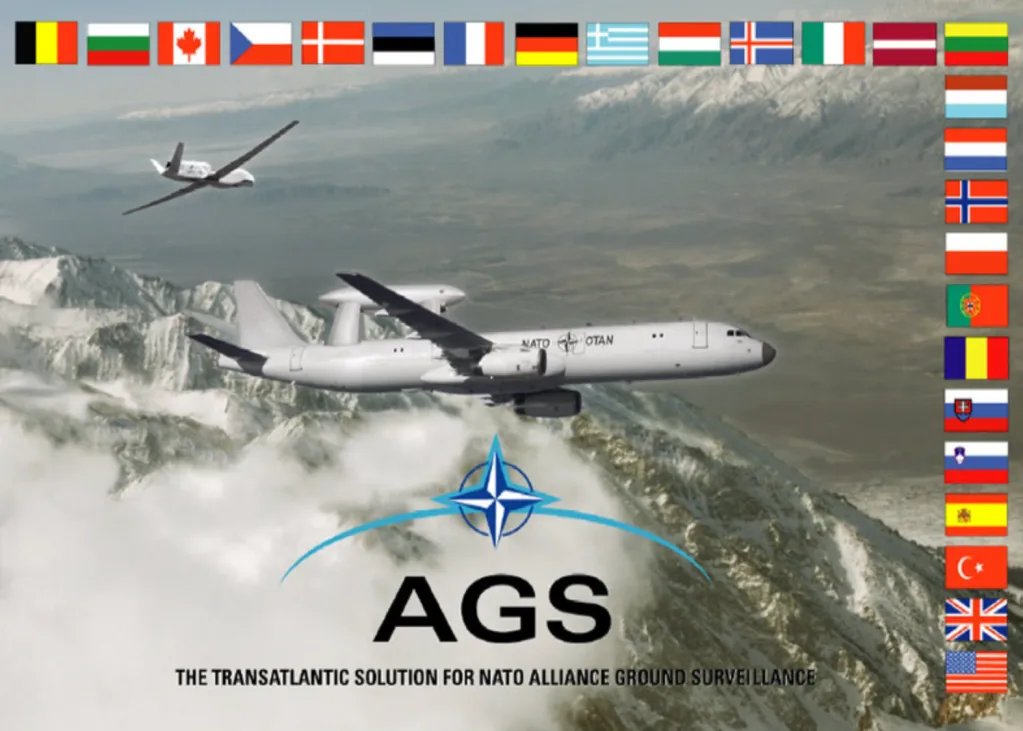
At one time, the A321 was envisaged as the platform for NATO’s Alliance Ground Surveillance (AGS) system, which provides the alliance with reconnaissance capabilities, including synthetic aperture radar. However, this capability was eventually fielded on NATO’s fleet of five RQ-4D Phoenix uncrewed aerial vehicles, specialized versions of the Global Hawk.

Early concept artwork showing an A321 equipped with NATO’s Alliance Ground Surveillance (AGS) system. NATO

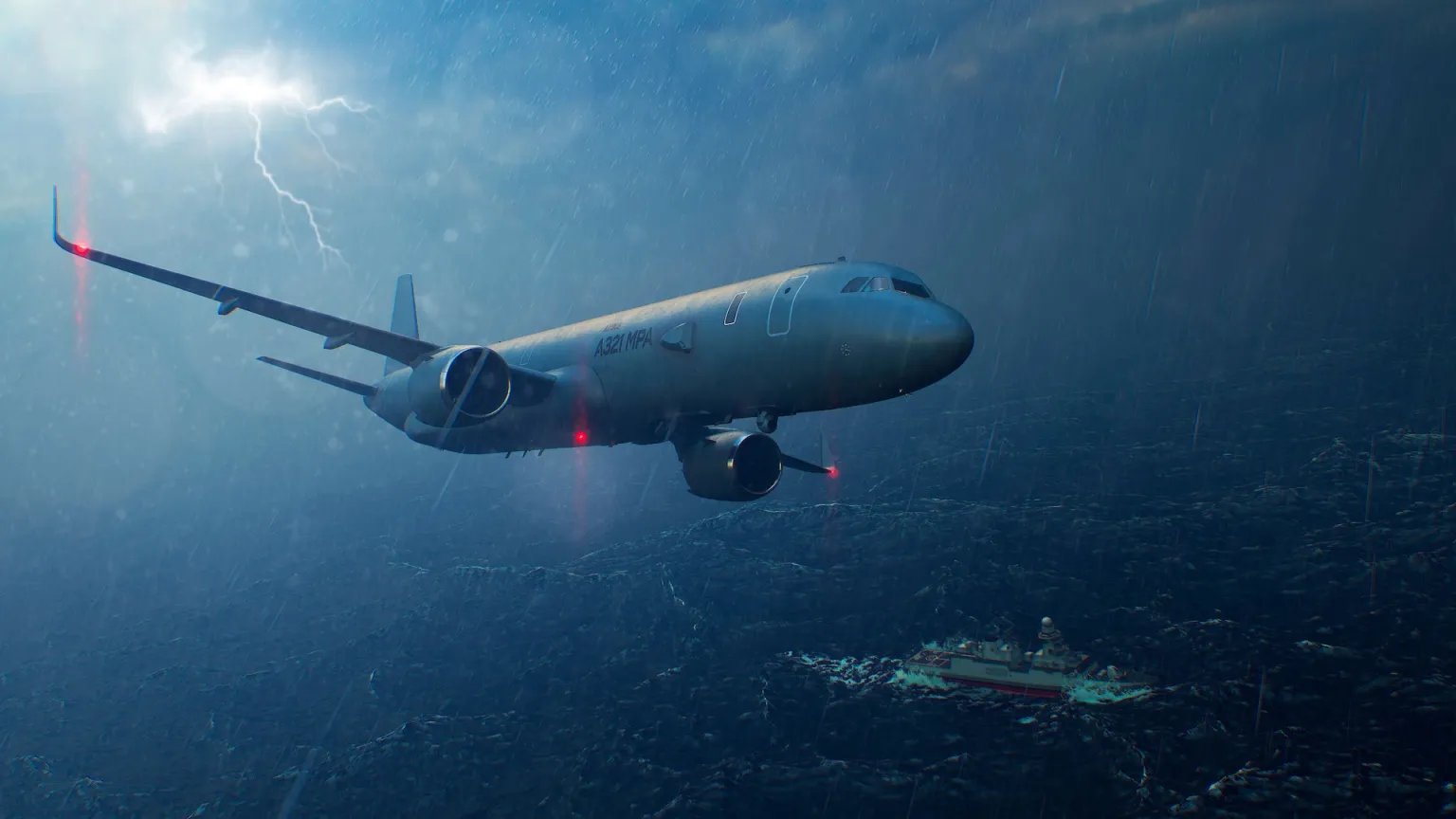
Elsewhere in Europe, Airbus launched a risk-assessment study for France’s future maritime patrol aircraft (MPA), also to be based on an A321 platform. Billed as a “flying frigate” by the company, the new MPA is intended to replace the French Navy’s Dassault Atlantique 2 fleet and emerges at a time when NATO nations are increasingly adopting the in-production Boeing P-8 Poseidon for their maritime patrol requirements.

A rendering of the A321 MPA, France’s future maritime patrol aircraft. Airbus

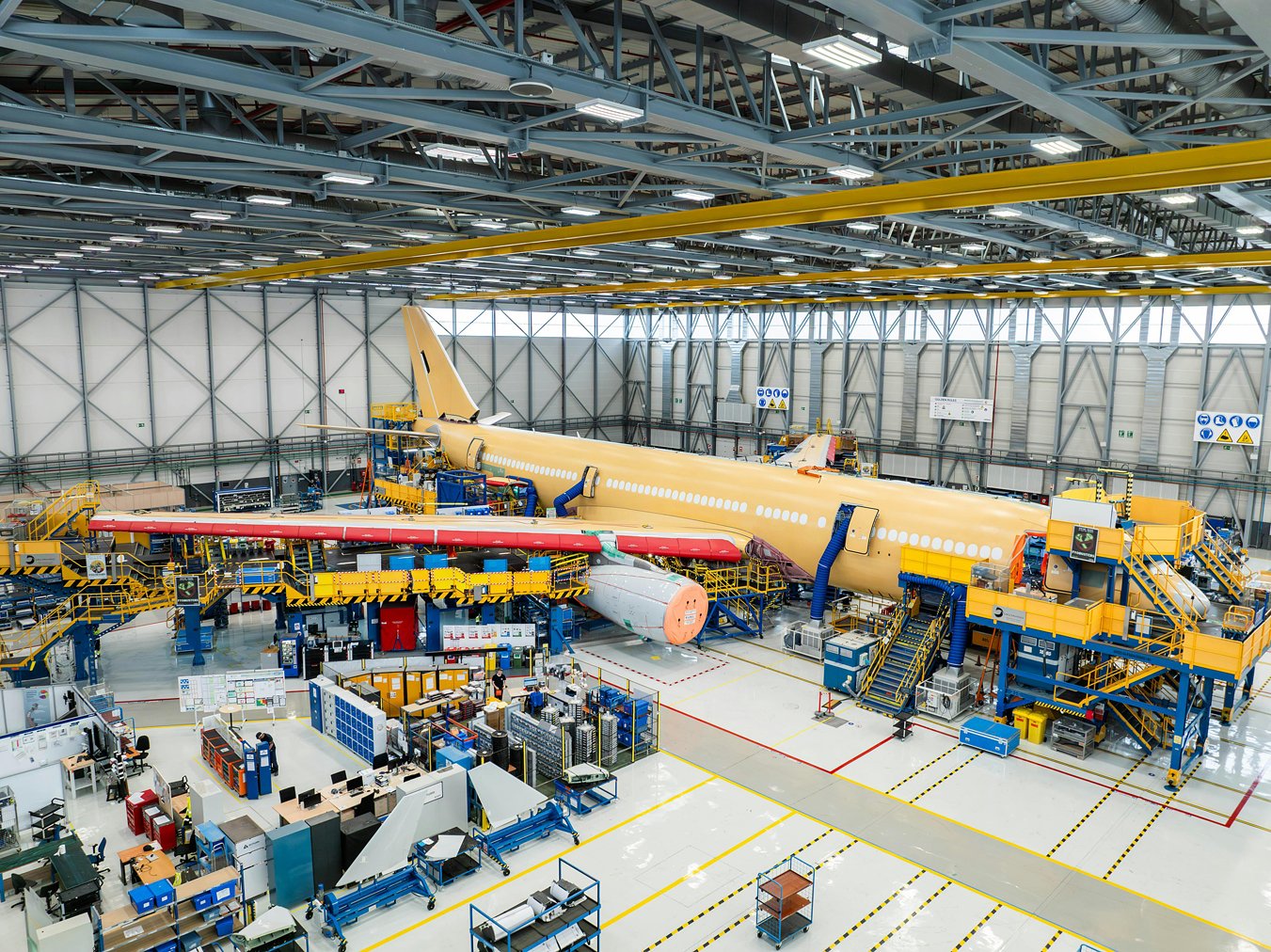
Airbus does, however, have relevant experience in the conversion of airliners for military roles. The company’s A330 Multi-Role Tanker Transport (MRTT) aircraft are modified at Airbus’s Getafe facility, providing an existing industrial base for converting commercial-derived aircraft into specialized military platforms.

The A330 Multi-Role Tanker Transport (MRTT) conversion line at Airbus’s Getafe facility in Spain. Airbus

The Santiago II program is currently in its definition phase. Spain awarded Airbus and Indra a €16-million ($17.9-million), 18-month contract to study the platform and define the overall system. A subsequent phase will cover modification and integration of the three aircraft. The Spanish Ministry of Defense estimates the complete program at approximately €436 million ($489 million).

The program also has an industrial objective. Spanish authorities want domestic industry to acquire expertise and control over the integration of the SIGINT system, rather than simply purchasing a finished foreign intelligence aircraft.

The A321-based Santiago II fleet is intended to address the shortfall left by the retirement of the specially modified Boeing 707, providing a substantially more modern platform, and with more airframes for improved availability.

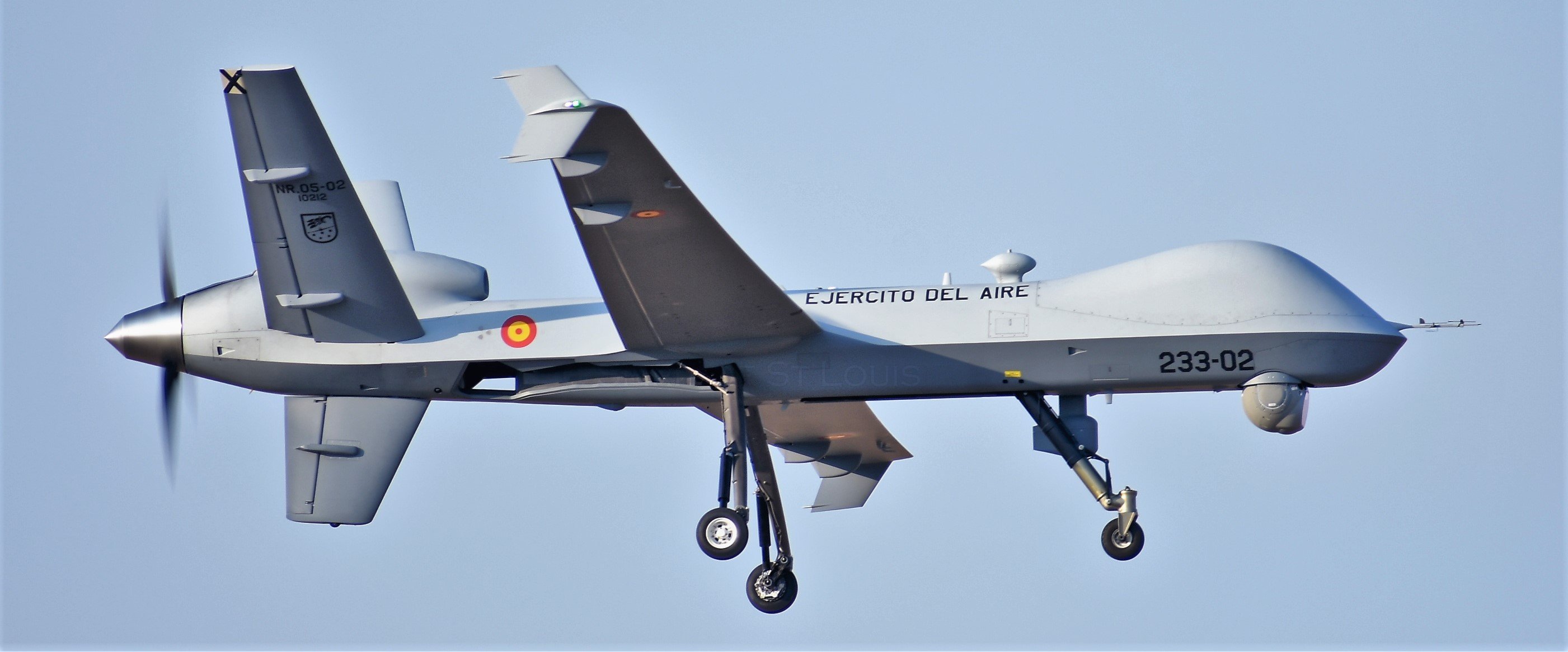
The three new aircraft will also complement Spain’s emerging uncrewed SIGINT capability. The Spanish Air and Space Force is introducing the L3Harris Scalable Open Architecture Reconnaissance (SOAR) system on its Predator B drones, giving the fleet ELINT and COMINT collection capabilities. The two systems are likely to fill different niches: the Predator B offers a relatively persistent, lower-cost uncrewed collection option, while the much larger A321 will provide substantially greater payload capacity, onboard processing, and crewed mission-management capabilities. Together, they will give Spain a layered airborne SIGINT architecture.

A Spanish Air and Space Force Predator B. Luis Alfonso Hernández Carrón/Spanish Air and Space Force A.Trigo

Spain’s decision also reflects a broader drive to invest in long-range SIGINT platforms capable of collecting, processing, and fusing vast amounts of electromagnetic data, as competition over the electromagnetic spectrum becomes increasingly central to modern warfare.

If the program remains on schedule, three heavily modified A321s will eventually provide Spain with a persistent airborne capability to detect, classify, locate, and analyze electromagnetic emitters in support of a host of operations. Especially when paired with the Predator B, the capability will likely be of considerable interest to other NATO partners in Europe, too.

Contact the author: thomas@thewarzone.com

The post Spain Picks Airbus A321 For New Electronic Intelligence Aircraft appeared first on TWZ.

  •  
❌