Há registo de dezenas de feridos e pelo menos cinco pessoas em estado grave. Ainda, Paulo Raimundo diz que o Orçamento do Estado para o próximo ano é uma "desgraça para o país".
A cidade de Manaus (AM) voltou a amanhecer sob fumaça gerada pelas queimadas no estado neste sábado (10). O Sistema Eletrônico de Vigilância Ambiental (Selva), da Universidade do Estado do Amazonas (UEA), registrou qualidade péssima do ar na capital.
Esse é o terceiro dia consecutivo que a capital é encoberta por fumaça.
Nesta sexta (9), a Prefeitura de Manaus suspendeu as atividades escolares e nos órgãos municipais devido à péssima qualidade do ar. Na data, o índice de qualidade do ar foi de 196,4 microgramas por metro cúbico (µg/m³) de material particulado, substância tóxica presente na fumaça.
Neste sábado, por volta das 6h, o índice foi ainda maior, alcançando 209 µg/m³. A qualidade do ar é considerada boa quando atinge até 25 µg/m³.
Nesta tarde, os pontos de monitoramento da capital registram a qualidade do ar entre moderada e ruim. No município de Careiro, na Região Metropolitana, entretanto, o nível ainda é péssimo, com 117,5 µg/m³.
Suspensão de atividades e alerta à população
A Defesa Civil do Amazonas disparou alerta aos celulares orientando a população que use máscara | Foto: Reprodução/Defesa Civil
Universidades também suspenderam as atividades devido à fumaça. A Defesa Civil do Amazonas disparou alerta aos celulares orientando a população a evitar exposição à fumaça e usar máscaras ao sair de casa.
Ainda na sexta-feira, o Ministério do Meio Ambiente e Mudança Climática disse em nota que realiza ações permanentes de prevenção, monitoramento e combate aos incêndios florestais na região, com mobilização de equipes, aeronaves e recursos.
“Desde o início da temporada de incêndios florestais, o Ibama extinguiu 229 incêndios no Amazonas e segue atuando no combate a outros 20 incêndios ativos no estado”, afirmou o ministério.
A pasta acrescentou que disponibilizará mais seis aeronaves, sendo quatro aviões para lançamento de água e dois helicópteros, além de 290 profissionais brigadistas.
Governo proibiu queimadas por 120 dias
Manaus também sofreu com fumaça no mês de setembro. No dia 23, o prefeito Renato Júnior (Avante) cobrou políticas contra queimadas no interior do estado.
“Falta política pública no interior do Amazonas. E agora Manaus está pagando a conta de todo dia amanhecer encoberto de fumaça por falta de política pública nacional, dos outros estados e também do estado do Amazonas”, disse ele em publicação nas redes sociais.
O Governo do Amazonas proibiu por decreto no mês passado o uso do fogo em todo o estado por 120 dias. A medida proíbe o emprego de queimadas em atividades de limpeza, manejo e renovação de áreas.
Também em 23 de setembro, o Centro Integrado Multiagência de Coordenação Operacional Federal (Ciman Federal), coordenado pelo Ibama, recebeu solicitação de apoio do Governo do Amazonas para combate a incêndios florestais, segundo o Ministério do Meio Ambiente e Mudança Climática.
“Em resposta ao pedido, foram acionados combatentes do Projeto de Resposta em Ações Integradas para Atuação em Situações de Desastres (Respad) e uma aeronave do Projeto de Gerenciamento de Aeronaves para Situações de Urgência e Socorro (Pegasus)”, declarou o ministério.
De acordo com o órgão, em 30 de setembro, após as chuvas contribuírem para o controle dos focos de incêndio, o Governo do Amazonas comunicou que não seria mais necessário o apoio do Respad, dispensando a atuação da equipe federal antes do deslocamento a campo.
“O MMA informa ainda que orientou o Governo do Amazonas a solicitar recursos por meio do Sistema Nacional de Proteção e Defesa Civil (SINPDEC) para ampliar sua capacidade de resposta aos incêndios florestais. Contudo, até o momento, o estado não formalizou o pedido”, disse o ministério.
Fumaça oferece riscos à saúde
O risco de inalação de material particulado é maior dependendo do tempo de exposição e da quantidade inalada. Os mais suscetíveis a apresentar reações são crianças e idosos, mas todos podem ter comprometimento pulmonar e respiratório.
As queimadas também geram uma série de poluentes que podem permanecer no ar por semanas, como monóxido de carbono e dióxido de nitrogênio.
Governo amplia estrutura de combate a incêndios
Na última sexta-feira, o Governo do Amazonas afirmou em nota que tem feito reuniões sobre o tema das queimadas para conter os impactos ambientais, proteger a população e intensificar a fiscalização no estado. Segundo o governo, foi ampliado de 11 para 25 em um ano o número de bases permanentes de bombeiros em cidades do interior, e que o efetivo passou de 692 para 1.651.
O governo acrescentou que recebeu a aeronave Thrush S2R-510, capaz de transportar quase 2.000 litros de água, e que possui cinco viaturas Auto Bomba Tanque Florestal (ABTF). (Jorge Cosme/FOLHAPRESS)
Eleição da Mesa Diretora para biênio 2027/2028 foi realizada neste sábado (10), com chapa única e votação unânime
O vereador Thialu Guiotti (Avante) foi eleito, neste sábado (10), o novo presidente da Câmara de Goiânia. A eleição da Mesa Diretora para o biênio 2027/2028 teve chapa única e votação unânime.
Além de Guiotti, foram eleitos: Anselmo Pereira (MDB) como 1° vice-presidente; Juarez Lopes (PDT) como 2° vice-presidente; Dr. Gustavo (Agir) como 3° vice-presidente; Sanches da Federal (PP) como 4° vice-presidente; Léo José (Solidariedade) como 1° secretário; Heyler Leão (PP) como 2° secretário; Pedro Azulão Jr. (MDB) como 3° secretário; Lucas Vergílio (MDB) como 4° secretário; Léia Klebia (Podemos) como 5ª secretária; Tião Peixoto (PSDB) como 1° vice-presidente corregedor; e Aava Santiago (PSB) como 2ª vice-presidente corregedora.
O vereador Sargento Novandir (Democrata) foi eleito presidente do Conselho de Ética. A vereadora Aava Santiago (PSB) ficará à frente da Ouvidoria Especial da Mulher, enquanto o vereador Fabrício Rosa (PT) ocupará a Ouvidoria Especial de Combate a Crimes Raciais. Também foram definidos os integrantes das 22 Comissões Permanentes da Casa (confira ao final do texto).
Conduzida pelos atuais 1º vice-presidente, Anselmo Pereira, e 1º secretário, Henrique Alves (MDB), a sessão teve votação aberta e nominal para cada cargo da Mesa Diretora, conforme determina o Regimento Interno da Casa.
Após a votação, o presidente eleito, que está em seu segundo mandato, relembrou, em discurso na Tribuna, que chegou à Câmara como estagiário. Guiotti também ressaltou o trabalho do atual presidente, Romário Policarpo (Cidadania), durante os oito anos em que esteve à frente do Legislativo. “Se tem um vereador que mudou a história da Câmara Municipal de Goiânia, que fez ressoar a Câmara para todo o Brasil, esse homem se chama Romário Policarpo”, afirmou.
Guiotti também agradeceu ao prefeito Sandro Mabel (União Brasil) pelo apoio recebido na disputa e ao vereador Ronilson Reis (Solidariedade), que abriu mão da candidatura em favor da chapa consensual. “A eleição acabou. Ficam aqui o meu agradecimento e o meu respeito. Aqui não existe mais adversário. Todos nós trabalharemos em prol da cidade de Goiânia”, declarou.
A nova Mesa Diretora assume o comando da Câmara em janeiro de 2027.
Confira os presidentes eleitos para as Comissões Permanentes:
Comissão de Constituição, Justiça e Redação: Willian Veloso (PL)
Comissão de Finanças, Orçamento e Economia: Welton Lemos (Novo)
Comissão de Obras e Patrimônio: Heyler Leão (PP)
Comissão de Educação, Ciência e Tecnologia: Professor Edward (PT)
Comissão de Saúde e Assistência Social: Doutora Rose Cruvinel (União Brasil)
Comissão de Lazer, Esporte e Turismo: Sanches da Federal (PP)
Comissão do Trabalho e Servidores Públicos: Kátia Maria (PT)
Comissão de Direitos da Criança e do Adolescente: Isaías Ribeiro (Republicanos)
Comissão de Direitos Humanos e Cidadania: Bruno Diniz (MDB)
Comissão de Habitação, Urbanismo e Ordenamento Urbano: Léo José (Solidariedade)
Comissão de Legislação Participativa: Markim Goyá (PRD)
Comissão de Direitos do Consumidor: Cabo Senna (Mobiliza)
Comissão de Empreendedorismo, Desenvolvimento Econômico e Social: Oséias Varão (PL)
Comissão de Meio Ambiente: Fabrício Rosa (PT)
Comissão de Direitos dos Idosos: Dr. Gustavo (Agir)
Comissão de Segurança Pública e Patrimonial: Sargento Novandir (Democrata)
Comissão da Pessoa com Deficiência: Willian Veloso (PL)
Comissão Mista: Henrique Alves (MDB)
Comissão de Fiscalização do Transporte Público Coletivo: Geverson Abel (Republicanos)
Comissão de Proteção, Direitos e Defesa dos Animais: Romário Policarpo (Cidadania)
Comissão de Defesa dos Direitos da Mulher: Léia Klebia (Podemos)
10 ottobre. La notizia che compare su quasi tutte le prime pagine dei giornali è quella, naturalmente, delle centinaia di migliaia di tonnellate di prodotti energetici russi che “inonderanno” il mercato americano, risollevando (forse) un po' i numeri del Partito repubblicano in vista delle elezioni di medio termine e del ritiro di alcune sanzioni USA contro la Russia. Una questione tutta interna agli Stati Uniti, si dice. E in parte è così. Ma c'è un passaggio che sembra ampliare “leggermente” la faccenda, legandola più direttamente al conflitto in Ucraina: Donald Trump avrebbe specificato che l'accordo con Moskva è legato anche al mantenimento delle capacità delle strutture energetiche russe. Vale a dire che Kiev dovrebbe smettere di attaccare raffinerie e depositi russi: lo chiede la Casa Bianca.
E quando una richiesta arriva sul Dnepr dal Potomac, forse per i nazigolpisti non è il caso di ignorarla completamente, fermi restando, ca va sans dire, i rapporti di forza UE-USA e i relativi “messaggi” che giungono all'Ucraina, per un verso da Bruxelles e, per un altro verso, da Washington. Dunque, secondo quanto riporta Axios, citata da La Stampa, non meglio precisati funzionari yankee avrebbero specificato che «Zelenskij sta valutando male la situazione. Continuando a colpire le raffinerie, sta compromettendo la fiducia e la disponibilità ottenuta da Trump negli ultimi sei mesi».
In un modo o in un altro, Zelenskij sembra aver completamente perso la capacità di valutare adeguatamente la situazione. La risposta data da Moskva alle sue «operazioni di pressione sulla Russia» ha privato l'Ucraina di interi settori industriali, delle sue principali fonti di reddito da esportazione, e ha messo a nudo la vulnerabilità dei ponti sul Dnepr e del settore energetico. Non pago, Zelenskij ha nuovamente minacciato la Russia, dicendo che potrebbe sconfiggerla in due o tre mesi, se solo Trump aumentasse le pressioni sul Cremlino, fornisse a Kiev missili antiaerei e balistici e allargasse l'accesso ucraino al sistema Starlink per attacchi a lungo raggio. «Aiutateci a proteggere i cieli e a dominarli. E poi Putin si siederà al tavolo delle trattative. Perché? Perché perderà tutto. Tre mesi, due mesi e perderà tutto», ha detto Zelenskij. Proprio di questo erano incaricati di parlare i suoi emissari in USA il 9 e 10 ottobre; il 9 sera è arrivato l'annuncio di Trump sul diesel russo, dopo che il nazigolpista-capo aveva proclamato i suoi “desiderata”.
Commentando il discorso di Zelenskij del 8 ottobre, in cui ha di fatto accusato Trump di non voler aiutare Kiev a sconfiggere la Russia, il corrispondente di guerra Evghenij Poddubnyj osserva che egli ha «raggiunto un nuovo livello di isteria... C'è una totale mancanza di istinto di autoconservazione, senza considerare le conseguenze».
Su Moskovskij Komsomolets, il colonnello Levon Arzanov dichiara che Zelenskij non ha bisogno di un cessate il fuoco, tanto meno di una pace duratura, che per lui significherebbero una rapida morte politica, se non fisica: «Zelenskij è chiaramente isterico. Ha paura della pace. Ma l'Occidente, o almeno i governanti di Gran Bretagna, Germania e Francia, non sono interessati a una soluzione pacifica del conflitto in Ucraina... L'Occidente non vuol porre fine alla guerra. Tutte le loro azioni mirano a una escalation, mentre continuano a inondare l'Ucraina di armi, trascinandola ostentatamente nella NATO». Nessuno è disposto a negoziare con la Russia, dice Poddubnyj; l'Occidente punta alla sconfitta militare o politica della Russia. Se non riusciranno a sconfiggere la Russia militarmente, contano sui disordini interni e fanno il possibile per fomentarli: le lamentele di Zelenskij sulla mancanza di missili e fondi sono finalizzate a prolungare il conflitto.
Le esternazioni dell'ex ministro degli esteri golpista Dmitrij Kuleba su Foreign Affairs del 30 settembre ne sono testimonianza più che eloquente. Zelenskij, scrive Mikhail Pavliv su Ukraina.ru, si è mostrato apertamente irritato dalle osservazioni del Segretario di stato USA Marco Rubio sul vicolo cieco diplomatico; il succo della critica del nazigolpista-capo è stato che gli USA possiedono tutti gli strumenti necessari per costringere Moskva alla capitolazione, ma per qualche ragione si rifiutano di usarli. È significativo, osserva Pavliv, che ciò sia stato detto alla presenza di un rappresentante della Gran Bretagna, da sempre favorevole a un massiccio supporto militare a Kiev; Zelenskij continua a parlare di colloqui di pace, ma non propone soluzioni diplomatiche, bensì una preliminare coercizione militare ed economica della Russia, perché accetti le condizioni ucraine.
L'intervento di Kuleba va proprio in questa direzione, tanto più che Kuleba non è affatto, semplicemente, un ex ministro degli esteri e anzi mantiene contatti negli ambienti dell'élite occidentale e partecipa alle riunioni del Gruppo Bilderberg. Kuleba, dunque, come già riportato nei giorni precedenti, cita un non meglio precisato Istituto norvegese, per sostenere che, per i paesi europei, il costo di una pace con la vittoria russa sarebbe più oneroso di quello per la continuazione della guerra: nei prossimi quattro anni gli europei dovrebbero sborsare da 1.300 a 1.800 miliardi, in caso di sconfitta dell'Ucraina, contro i 910 miliardi per aiutare Kiev a sconfiggere la Russia. È dunque vantaggioso investire nella guerra, lascia direttamente intendere Kuleba, tanto più che la somma citata non verrebbe solo dai bilanci europei, ma anche da beni russi congelati.
Ora, scrive Pavliv, l'aspetto più interessante di questi calcoli non sono tanto le somme che si chiede agli europei di sborsare, quanto l'orizzonte temporale ipotizzato dagli autori di tali calcoli: parlando di quattro anni, significa che la guerra si protrarrebbe di fatto fino al 2030, con una “curiosa” coincidenza temporale: la scadenza dell'attuale mandato presidenziale di Vladimir Putin; seguendo la logica di quelle «élite occidentali che considerano il conflitto ucraino non solo come una situazione di stallo per l'Ucraina, ma anche come uno strumento di pressione strategica sulla Russia, un simile orizzonte di pianificazione assume un ulteriore significato politico». In questa logica, una guerra di lunga durata può essere vista come un modo per accumulare costi economici, sociali e politici a carico della Russia, con l'obiettivo di creare i presupposti per un colpo di stato secondo lo scenario del “majdan” alle prossime elezioni presidenziali in Russia. Ed è possibile che, insieme all'orizzonte temporale della pianificazione, cambino anche gli obiettivi che i sostenitori occidentali della continuazione del conflitto si prefiggono per Kiev, o che la leadership ucraina è disposta a perseguire di propria iniziativa.
In questo quadro, assumono un'altra dimensione anche tutte le cantiche, quantomeno su buona parte della proclamata “opposizione pacifista” ucraina, così che, ancora su Ukraina.ru, Vladimir Skachko parla di Zelenskij e neonazisti che stanno approntando a proprio beneficio un surrogato di opposizione. Dunque, ecco che la deputata Anna Skorokhod ha presentato alla Rada un disegno di legge di modifica costituzionale per riportare il paese a uno status neutrale, abbandonando i piani di adesione alla NATO. Anche l'ormai “famoso” - alla maniera di Erostrato - Aleksej Goncharenko chiede di non precipitarsi nella NATO, di abbandonare il confronto con la Russia e avviare negoziati di pace con Moskva. Artëm Dmitruk, imprenditore riparato a Londra, parla della necessità di ristabilire buoni rapporti di vicinato con Moskva e Minsk. Aleksandr Dubinskij e Evghenij Ševcenko – entrambi agli arresti con accusa di tradimento - sostengono posizioni pressoché identiche. È così anche per Julija Mendel, ex addetta stampa di Zelenskij e Aleksej Arestovic, a lungo consigliere presidenziale: entrambi stanno riversando tonnellate di fango e materiali compromettenti su Zelenskij.
La particolarità della situazione è che, fatta eccezione per Goncharenko, i più critici sono proprio coloro che Zelenskij nel 2019 aveva promosso ad alti livelli politici nel partito “Servo del Popolo” o nello staff presidenziale. Ora, dice Skachko, Zelenskij è un perdente politico, terrorista e criminale di guerra; nel 2019 incarnava però le speranze di un popolo stremato dalla guerra e dalla povertà. E, promettendo pace e prosperità, era riuscito a far eleggere duecentocinquanta deputati alla Rada, reclutandoli tramite annunci pubblicitari, tra persone scelte a caso, prive di base ideologica. Persone che, per un certo periodo, sono rimaste unite in una monolitica frazione parlamentare di maggioranza, grazie a lauti compensi, cui si aggiungevano quelli per voti "appropriati". Quando la situazione ha iniziato a vacillare e i fondi dei finanziatori a diminuire, ecco che la coesione dei "Servi del Popolo" ha iniziato a traballare. Ormai da due anni, la frazione "Servo del Popolo" alla Rada non riesce ad assicurarsi i voti necessari "per il presidente", senza che una delle altre fazioni non l'appoggi dietro “piccoli compensi”, con un “listino prezzi” in continua evoluzione. È lecito supporre che finanziatori e supervisori dell'Ucraina abbiano deciso di utilizzare alcuni dei "Servi" nelle nuove circostanze, per salvare il regime e, almeno temporaneamente, rafforzarlo. Quindi, afferma Skachko, l'odierna opposizione, rumorosa, ostentata e fantasiosa, fatta di individui con o senza mandato parlamentare, non deve trarre in inganno: si tratta probabilmente di un gioco politico a scoppio ritardato. Qualcuno deve agire ora, facendo da apripista per sfogare il malcontento e la protesta popolare, distogliendo l'opinione pubblica dai fallimenti del regime, con una apparente opposizione e promettendo di rinnovarlo man mano che il processo si sviluppa.
In sostanza, tutti i cosiddetti oppositori sono direttamente responsabili sia dell'instaurazione del regime di Zelenskij, sia del fatto di aver ingannato il popolo per molti anni e sono diventati improvvisamente "audaci" quando hanno perso la loro comoda posizione accanto al nazigolpista-capo, o sono stati costretti a farsi da parte per perseguire nuovi interessi. Finora, tutti loro avevano servito fedelmente Zelenskij e il trionfo del suo cannibalismo politico; il regime stesso ha ora iniziato a preparare queste persone come suoi successori, sottoponendole in modo plateale a finta repressione e apparenti procedimenti penali, creando un'immagine di persecuzione in vista del futuro. Il messaggio è: cittadini, votate per loro; hanno sofferto sotto il regime di Zelenskij e, una volta al potere, saranno migliori degli attuali ferventi suoi sostenitori.
In realtà, afferma Skachko, cosa indica questa finta opposizione a Zelenskij e ai suoi burattinai? Innanzitutto, indica che qualcuno si sta preparando a preservare il potere degli attuali neonazisti in Ucraina; un potere che potrebbe rimanere sulla scena anche dopo la fine del conflitto, seppur leggermente modificato. In secondo luogo: alcuni degli attuali curatori neonazisti sperano ancora di preservare almeno una parte dell'Ucraina così com'è: un paese attanagliato da un'aggressiva russofobia e che si prepara a una nuova guerra con la Russia, persino dopo aver firmato un trattato di pace e aver soddisfatto tutte le richieste russe.
In altre parole: la sostanza è la continuazione della guerra, per cui si prodigano le cancellerie belliciste europee e che verrà decisa in parte dai rapporti di forza tra Bruxelles e Washington, ferma restando la determinazione delle “autocrazie euroasiatiche” a perseguire la propria legittima strategia di sviluppo, lontana dai “valori occidentali”.
India’s air force chief said on Saturday that the U.S. has made no formal offer to sell India F-35 stealth fighters, and added that American personnel have not even allowed Indian officers near the stealth aircraft.
Air Chief Marshal Amar Preet Singh made the comments at a press conference marking the end of the multinational Exercise Tarang Shakti-2026 in Jodhpur, while seated alongside U.S. Pacific Air Forces commander Gen. Kevin Schneider.
“Your people don’t even let us go near the aircraft, and you are talking about selling it to us,” Singh said.
Six U.S. Air Force F-35As, accompanied by more than 200 personnel, participated in Tarang Shakti. This was the first time the American stealth fighters had drilled against Indian jets on Indian soil.
Singh also said the Indian government has not yet decided whether the air force should evaluate Russia’s offer of the Su-57.
“Once the decision is conveyed to us (by the government), we will evaluate how well it meets our requirements,” he said.
Earlier in 2025, U.S. President Donald Trump said, during Indian Prime Minister Narendra Modi’s visit to Washington, that the United States would pave the way for India to acquire the F-35.
Later, Vice President J.D. Vance reiterated the offer during his visit to India in April 2025, saying, “We, of course, want to collaborate more. We want to work together more. And we want your nation to buy more of our military equipment, which we believe is best-in-class. American fifth-generation F-35s, for example, would give the Indian Air Force the ability to defend your airspace and protect your people like never before.”
Earlier, as EurAsian Times reported, Lockheed Martin CEO Jim Taiclet discussed selling the F-35 to India and raised the prospect of selling the F-21, a highly sophisticated F-16 derivative.
“I think the F-16 also has strong legs, if you will, and more and increasing interest as we go forward from several countries that aren’t quite ready for F-35,” Taiclet said. There are “some countries that could see F-21 or F-16, for India, for example, as a stepping stone to F-35.”
The sale of the F-35 is subject to rigorous U.S. export controls under the Arms Export Control Act, which requires approval from the State Department, the Pentagon, and often Congress. The White House maintains strict policies on technology transfers, regional stability, and the internal politics of the potential recipient state to safeguard its sensitive technology.
The U.S. hesitation is straightforward: sharing it with other countries could put sensitive technology in the hands of enemies, especially if the recipient country has ties to countries like China or Russia, which would try to exploit or reverse-engineer it.
Earlier, writing for EurAsian Times, Air Marshal Anil Chopra (retired) said: The F-35 soft pitch faced almost immediate limitations due to subsequent tariff frictions and India’s core push for technology transfer for domestic manufacturing of its AMCA fifth-gen warplanes and aero-engines.
GE Aerospace has faced immense delays on its 2021 contract to supply 99 F404-IN20 engines to Hindustan Aeronautics Limited (HAL) for the Tejas Mk1A fighter program. Only six out of the promised engines have been delivered instead of the targeted 12-plus a year, prompting HAL to invoke contractual penalty clauses.
Tariffs on “friend” India and delayed engines for AMCA have badly weakened Indo-US ties.
India also operates Russian-supplied S-400 systems, a factor that previously caused friction between the U.S. and Turkey.
India already operates the Russian-origin S-400 AD System. The U.S. fears these networks could compromise classified F-35 stealth data. The jet relies on the U.S.-controlled Operational Data Integrated Network for software and logistics.
The U.S. may already be accessing such data through many other American platforms on Indian soil.
Meanwhile, introducing a complex new Western platform adds severe maintenance challenges to an already diverse military fleet. Even in the U.S., very few airbases can service stealth coatings.
Buying foreign fifth-generation jets risks diverting funds from India’s indigenous AMCA project. Putting too many military aviation eggs in the unreliable U.S. basket is also a risk. Americans can be “very unreliable” when it comes to imposing sanctions and freezing spares and maintenance support.
Operationally, the F-35 could offer major strategic advantages for the IAF, but any deal involves deep geopolitical, logistical, and financial complexities. Acquisition costs range from $80 to $110 million per jet, plus very high hourly operating expenses, creating budgetary challenges for New Delhi.
F-35: Image via U.S. Embassy, New Delhi
After two decades of stable ties, the last two years have seen distrust between the world’s largest and oldest democracies.
While many hope this is a transitory phase, it is becoming clear that the U.S. is not interested in India’s rise as a global power. U.S. Deputy Secretary of State Christopher Landau stated at the last Raisina Dialogue in New Delhi that Washington will not repeat its past approach (read: mistake) with China by granting India unfettered market and tech access that could lead to strong commercial competition.
The U.S. wants India strong enough only to serve as a bulwark against China, not to become an independent power center or a technology and economic power.
The U.S. seems keen only to supply platforms to India through large contracts. Even for aero-structures and smaller components, it prefers make-in-India “Build to Print” over significant technology sharing.
Even the proposed India-USA deal to co-produce GE Aerospace F414 engines with HAL faces major hurdles. The main complications include a nearly threefold cost surge, intense disputes over sensitive hot-end technology transfer, and the risk of delays to India’s Tejas Mk2 and AMCA programs.
Many Indians wonder whether we have invested too much in a partner with a high trust deficit and a vacillating foreign policy. U.S. is known to have “dumped” friends and allies for immediate national interests. The Trump administration’s recent public threats and admonishments to its NATO allies further strengthen Indian concerns.
The U.S. has already deepened its ties with India’s airborne platforms, supplying transport aircraft (C-17, C-130), maritime patrol aircraft (P-8I), UAVs (MQ-9), and helicopters (Chinook, AH-64 Apache, and MH-60R).
For a long time, the U.S. was trying to sell the F-16 ‘Viper’ (renamed F-21) and the F-18 Super Hornet as part of India’s Multi-Role Fighter Aircraft (MRFA) proposal. Later, it offered the F-15EX. The U.S. never officially offered the F-35.
Despite being the oldest democracy, the U.S. finds it easier to deal with dependent military Generals, and West Asian Sheikhs, rather than growing democracies. The U.S. has a poor opinion of India’s “Non-Alignment” and “Strategic Autonomy.”
Washington continues to prefer Pakistan, which helps it connect with China, the West, and Central Asia, and is willing to toe the American line for a few bucks. This Pakistan connection further erodes India’s trust.
Most analysts feel that letting the USA into India’s fighter-aircraft ecosystem is not a great idea. Any F-35 deal, like other aircraft deals, will be only a supply-and-support contract. There will be no technology transfer and no “Make-in-India” element.
While India pushes its own AMCA program, the Su-57 may still be the better choice for an interim fighter.
Segundo presidente do PS, na Comissão Nacional do partido ninguém se manifestou contra a abstenção no Orçamento. César falou em momento de "responsabilidade".
Luís Fernandes explicou que esta verba é usada para medicamentos e desparasitação, mas também financiar a administração vacinação, embora a vacina para a Língua Azul seja comparticipada pelo Governo.
Ainda de acordo com o autarca, o apoio do município para a sanidade animal é atribuído consoante as necessidades apresentadas pela Organização dos Produtores Pecuários (OPP).
Tanto a doença da Língua Azul como a Doença Hemorrágica Epizoótica são transmitidas pela picada de um inseto, podendo levar à morte do animal. Contudo, não são transmissíveis aos humanos.
No ano passado, no concelho de Vinhais, das 227 explorações de pequenos ruminantes, 85% foram afetadas pela Língua Azul, serotipos S3-8. Já nos bovinos, animais de grande porte, a Língua Azul e a Doença Hemorrágica Epizoótica afetaram 80% das 220 explorações do concelho.
Este ano, segundo Luís Fernandes, o cenário é diferente. “Felizmente não tem pelo menos até agora afetado muito o concelho [a doença da Língua Azul] e também essas são medidas preventivas”, salientou.
O município já investiu 140 mil euros, este ano, em apoios para os agricultores, incluindo a disponibilização de um piquete veterinário 24 horas por dia.
O apoio à sanidade animal, frisou, “assume particular importância num concelho onde a atividade pecuária constitui uma componente relevante da economia rural e da sustentabilidade das explorações agrícolas e familiares”.
No ano passado, esse investimento ultrapassou os 180 mil euros, devido ao surto de Língua Azul e de Doença Hemorrágica Epizoótica no gado do concelho, que obrigou a medidas extra, como vacinação e desinfestação.
Pendant que certains LR se proclament gaullistes tout en défendant des valeurs proches de l'extrême droite, les descendants du Grand Charles bataillent contre le département de la Haute-Marne, dirigé par les Républicains, pour la vente de la maison de Mongénéral…
O processo, que visa apurar a eventual relevância disciplinar dos acontecimentos, foi declarado urgente. E ainda, José Luís Carneiro reforça que PS vai aprovar Orçamento do Estado do próximo ano.
Do your heroes weep? Do they swoon with lust? Are they really confused by their new magical powers? Then you’re already a fan of romantasy. For those still waiting to discover romantasy: It’s fantasy, with strong female protagonists and fewer boring bits—the long treks over major landforms in hard weather. Sex is plentiful, but sex is not the genre’s defining feature. You can go chapters before encountering a reference to someone’s toned body. Far more significant are feelings and friendships between the heroes: enchanted beings with relatable self-esteem issues who don’t just seek and fight but also yearn and banter as they face down enemies who aren’t only evil, but super bitchy too. Then the heroes cry and have orgasms (sometimes they orgasm first and cry after).
In the kingdom of romantasy, one writer reigns supreme: Sarah J. Maas, the author of ACOTAR. It sounds like a missile-defense system or an autoimmune condition, but it’s the acronym for one of the most popular series of novels for adults written in the 21st century. A Court of Thorns and Roses is the first of many books about Feyre Archeron, a young huntress spirited into the faerie realm. Humans hate the leaders of the faerie world, called the High Fae, who once enslaved them. But as soon as one bursts through Feyre’s door, having shape-shifted into the body of a green-eyed, bearlike beast, the reader thinks, I bet some of these guys are going to be hot.
Feyre falls in love and breaks a curse and brings down a depraved fae queen, and that’s just in the first book—eventually she’ll assemble a crew of beloved sidekicks and a heap of supernatural powers. On any given week, you can see every book in the series stacked in a column on the New York Times best-seller list. If you combine ACOTAR with Maas’s two other series, Throne of Glass and Crescent City, she has sold some 75 million copies. The Lord of the Rings has likely sold more than twice that, but J. R. R. Tolkien had a 60-year head start.
After A Court of Thorns and Roses come courts of: Mist and Fury, Wings and Ruin, Frost and Starlight, and Silver Flames. Fans waited five long years for the sixth book. Would the next court have one syllable and two syllables? Would the decent faeries stop the awful ones from slaughtering and re-enslaving the humans? Then Maas announced, in a rare interview on the podcast Call Her Daddy, that she would actually be releasing three new books—one in October, one in January, and one more after that—and people lost their minds. Right away a question shot into the inboxes of America’s bookstores: Are you having a midnight release party? Tickets sold out. For one “fantasy ball” at a bookstore in El Paso, Texas, they sold out in 12 hours. A second party was announced; it sold out too. Book clubs began rereading all of the courts in preparation.
On social media, bets were made about which of Feyre’s sisters or friends the new books would focus on, and what color the covers would be (Maas hadn’t done purple yet). In August, images of the next two jackets—for A Court of Splintered Harmony and A Court of Forgotten Melody—lit up Times Square. They were ombré!
But search The New York Review of Books or the London Review of Books for Maas, and you’ll find references to a German foreign minister, a river, the Pynchon character Oedipa Maas—and no trace of Sarah J. The New Yorker’s culture podcast summed up the low end of romantasy as “customer service wrapped in self-care wrapped in literature,” though one of the critics admitted that she’d loved A Court of Thorns and Roses. Hear enough writers lament that the only books that sell now are faerie or dragon or elfpunk porn, and you start to get the feeling that the literary establishment is committed to resenting this rare bright spot in the publishing industry.
Maas, now 40, was a teenager when she wrote an epic fairy tale about a young assassin who can slit throats as well as waltz at balls for a fiction site. That story was published by Bloomsbury, in 2012, as Throne of Glass. The novels that followed took off on #BookTok and then in real life thanks to a generation of former Harry Potter fans who now had jobs, babies, and stymied sex drives. These people (women) started reading (or listening). They started going to bookstores.
Fewer Americans are reading for pleasure every year, and yet people keep opening bookstores—romance bookstores in particular (more than 100 in the past year and a half alone, according to the American Booksellers Association). Zella Funkhouser, a high-school science teacher, runs three book clubs at the newly opened Bonfire Bookstore & Yarnery, in Shenandoah County, Virginia. She told me that she picked up A Court of Thorns and Roses in 2023, after having gone “years without really reading a whole lot.” Then back-to-back snowstorms hit, and her husband, who does road work for the state, spent days out plowing. Alone at home behind a wall of snow, Funkhouser devoured all five books. “We didn’t have internet; we didn’t have power,” she told me. “I was obsessed.”
On a Saturday night in June, her book club discussed Thorns and Roses. Erin was reading the series for the third time, Tiffani for the fourth, Abby for the fifth. “We’re not reading high literature, let’s be honest,” one of the women acknowledged. But they weren’t looking for formal innovation; they were looking to be inspired and turned on.
It’s true that you’re rarely transported by ACOTAR’s language. Characters say things like “I admire your balls, Feyre.” Sometimes they make me laugh. “Shall we assist you, or just flap here, talking?” a leader of winged reinforcements asks, when it seems the battle has been lost. Characteristic of the genre, the books remix familiar stories. The first meal in Beauty and the Beast, minus the dancing silverware. Pride and Prejudice, if the lovers started out on even worse terms. Hades and Persephone, if the king of the underworld just really got you.
But even if you don’t read romantasy (I don’t read romantasy), the books are well crafted and very entertaining. And for its hard-core fans, ACOTAR has achieved something like a vertical integration of the imagination: the raw fiber of old myths woven into new stories, processed through the internet, refined into audiobooks for intimate delivery straight down the ear canal, which drive fans back to bookstores, where they can buy a keepsake hardcover and even, if they’re lucky, drink themed cocktails in ACOTAR-inspired ball gowns at midnight.
With this kind of power, Maas doesn’t need the literary establishment. (Bloomsbury, her publisher, declined to share advance copies of the new novels with me.) At one point, Maas puts her toughest character alone in a library. She’s full of rage and a terrible power. And—take this, haters—she’s reading a smutty romance.
In the Call Her Daddy interview, with her high cheekbones and golden hair and bare feet tucked beneath her, Maas looked a bit like one of her own characters as she talked about her “useless” creative-writing degree and recalled telling a professor, “I will never fucking write a poem.” She couldn’t understand “the meter and the rhythm” and had to ask her math-major boyfriend (now husband) for help. But when you read about a battle ending with enchanted water bubbling from “the lips of all the Hybern soldiers as Tarquin drowned them on dry land,” you suspect she knows what meter is, even if she doesn’t care what it’s called. She’s got a line of nearly perfect iambs there.
Enough about language. We’ve gone too long without talking about sex, and Maas would not approve. Sometimes she makes you wait for it (faeries, who are basically immortal, can spend centuries edging) but then, before you know it, someone’s getting a blow job in the dining room.
The books get dirtier as they go. Reading on the subway about Feyre coming so hard that she “couldn’t tell where one climax ended and the second began,” I might have been less embarrassed to be caught watching actual porn. I really wished that one crucial sex scene hadn’t involved so much wet paint. Maas’s characters are often splattered with something: mud, blood, stardust, semen (but only by Book 5). Still, there’s this one scene: Feyre—degraded, but into it—and a throne room, and a thumb moving in lazy circles … I’ll say it. I’m just going to say it. I liked it.
Smut aside, what really matters is how the characters grow together. You keep reading to see if they track down the enchanted artifacts but also to find out if true romantic partnerships are possible, the kind where care is taken and respect given. In the real world, many women are profoundly disappointed by and mistrustful of men. You might assume that this is why so many women are suddenly so eager to fantasize about another species entirely. But, fundamentally, these books are stories of friendship and love. Why should the novels’ popularity suggest that women are giving up on men? It could mean they’re holding out hope.
Maybe, eventually, more than a handful of men will read these books. After all, I was raised on the paperback heroes of my father’s epics: The Lord of the Rings, The Wheel of Time. And Harry Potter, of course. Being a girl didn’t stop me from wanting the boy to save the world. I remember listening to The Sorcerer’s Stone in the car as a child, on road trips with my family, when things were not so good, when things were sometimes pretty bad, and seeing, not the tense edge of each parent’s opposing shoulder, but the night sky across the ensorcelled ceiling of the Hogwarts dining hall.
Romantasy readers know they’re not actually going to “go out and find dragons and magic,” Funkhouser said, but if they’re snowed in—or trapped by a pandemic, or up with a nursing newborn, or stuck in any of the ways humans tend to get stuck—it can help to imagine they could. Some books make you want to be a better writer or thinker, some books make you want to be a better person, and some books make you glad to be reading them. There may be a ceiling on what this literature can do. But it’s an enchanted one.
This article appears in the November 2026 print edition with the headline “Those Books of Smut and Wonder.”
KOAA News5 is the proud Southern Colorado home of the Colorado Springs Switchbacks!
KOAA will stream all non-nationally exclusive Switchbacks FC matches on our mobile app, connected TV apps, and website for Southern Coloradans to enjoy.
Saturday night, the Colorado Springs Switchbacks will be in California to take on the Sacramento Republic FC. Kickoff is set for 8:00 p.m.
More information about watching the games live can be found on our website.
___
_____
Watch KOAA News5 on your time, anytime with our free streaming app available for your Roku, FireTV, AppleTV and Android TV. Just search KOAA News5, download and start watching.
Ucraina, fede e ragione: quando la compassione prende il posto del giudizio Alcuni amici mi hanno segnalato una conferenza alla quale ho deciso volentieri di dedicare attenzione, perché affronta, forse ...
A proposta da presidência irlandesa fixa o novo Quadro Financeiro Plurianual em 1,62 biliões de euros, menos 8% face ao valor inicialmente proposto pela Comissão Europeia.
O líder do Chega sobe nas sondagens e ameaça obrigar os dois grandes a um Bloco Central. Já Miranda Sarmento brilha na gestão de caixa do Orçamento e Luís Montenegro atira milho aos pombos.
Sabato siamo partiti dal volo Flydubai e dall’«11 settembre sventato» evocato da Netanyahu: come si costruisce un racconto prima dei fatti. Stasera scendiamo un livello più in profondità: perché la nostra mente accetta anche ciò che non è vero, e che cosa accade quando la storia viene riscritta dal potere mentre accade. Ne parliamo con con Stefano Re, criminologo, saggista ed esperto di metacomunicazione, autore di «Mindfucking», e con Roberto Quaglia, scrittore e saggista, autore de «Il mito dell’11 settembre» e de «Il fondamentalismo hollywoodista». Affrontiamo insieme: Il volo Flydubai una settimana dopo: che cosa resta del racconto quando le conferme non arrivano Ripetere per convincere: l’effetto verità illusoria Perché le smentite non cancellano la prima versione Dissonanza cognitiva: quando i fatti contraddicono ciò in cui crediamo Credere per appartenere: conformismo e spirale del silenzio La storia riscritta: Il popolo palestinese che «non esiste» Il paradosso della memoria distorta Come difendersi, anche dalle contro-narrazioni I LIBRI DEGLI OSPITI Stefano Re LaScienzah. Quando la scienza si trasforma in fanatismo religioso, Arianna Editrice, 2025 Mindfucking. Dai manuali segreti della CIA al marketing, le tecniche di condizionamento mentale, Arianna Editrice, 2024 (edizione ampliata) Roberto Quaglia Guerra e pace e zombi. Democrazia totalitaria contro mondo multipolare, Youcanprint, 2025 Hollywoodism. The Invisible Ideology, Youcanprint, 2025 Il fondamentalismo hollywoodista. Viaggio in Iran alla scoperta dell’invisibile ideologia dell’Occidente, Youcanprint, 2020 Il mito dell’11 settembre. I versetti satanici della democrazia occidentale, Youcanprint, 2020 SOSTIENI CASA DEL SOLE TV Casa del Sole TV è un progetto di giornalismo indipendente autofinanziato. Nessun editore, nessun partito. Per donazioni: IBAN: IT63P0326822300052392596590 Intestato a: La Casa del Sole Edizioni Causale: Donazione Casa del Sole TV Membership YouTube: https://www.youtube.com/@CasadelSoleT… Analista Multipolare €5/mese Inviato della Verità €15/mese Architetto del Futuro €25/mese I LIBRI DI MARGHERITA FURLAN BRICS Scacco Matto (disponibile in italiano, inglese, russo) LA PRIMA PUNTATA Re e Quaglia: il volo Flydubai e l’11 settembre https://www.youtube.com/watch?v=SzUsh… PRECEDENTI CONVERSAZIONI Stefano Re: giornalismo, metacomunicazione e percezione della realtà https://casadelsole.tv/stefano-re-gio… Stefano Re, Federico Greco: codice Epstein, dal metalinguaggio all’analfabetismo indotto https://casadelsole.tv/stefano-re-fed… Iscrivetevi al canale e attivate la campanella: è grazie a voi che siamo qui ogni sera. #StefanoRe#RobertoQuaglia#Propaganda#Narrazioni#GuerraCognitiva#Flydubai#11Settembre#Netanyahu#Gaza#Palestina#Sionismo#Antisionismo#NetureiKarta#Satmar#Metacomunicazione#Psicologia#Disinformazione#CasaDelSoleTV#Multipolarismo
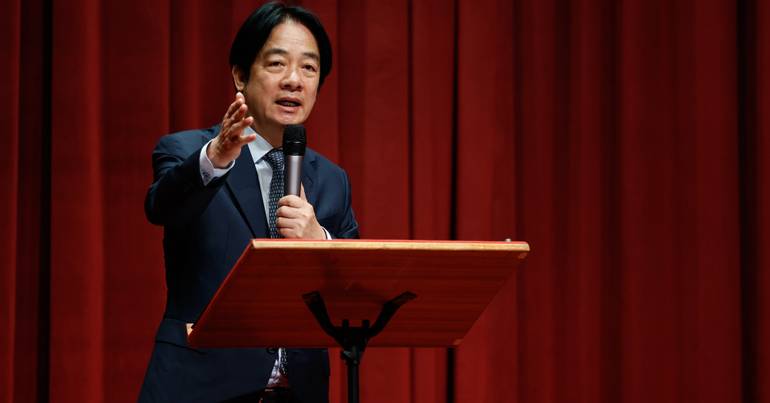
No 115.º aniversário da República da China, Lai Ching-te justificou o orçamento recorde de defesa para 2027 — mais de 3% do PIB — face à pressão militar de Pequim.
Chega fala em "ataque à soberania", BE critica "orçamento armamentista" e PSD, PS e CDS pedem mais verbas. Negociações entram em fase decisiva com cimeira na próxima semana.
The United States is one of the few developed Western democracies that still carries out the death penalty, with dozens of executions every year.
However, even by American standards, the execution planned for December is unusually severe.
Secretary of War Pete Hegseth has said that Major Nidal Malik Hasan, sentenced to death in 2013 by a general court-martial under the Uniform Code of Military Justice (UCMJ), will be executed by firing squad at Fort Hood, Texas, and that the execution will be public.
The Pentagon has since said it will livestream the execution.
It was here in Fort Hood, Texas, that Major Hasan opened fire inside a crowded medical readiness center at Fort Hood, killing 13 people and injuring 32 others in 2009.
Before opening fire on unarmed soldiers, Hasan shouted “Allahu Akbar.” He also shot at the backs of soldiers fleeing toward the parking lot.
Hasan later said it was an effort to stop them from going to Afghanistan and killing his fellow Muslims.
This will mark the first U.S. military execution in over 60 years, the first military execution by firing squad since World War II, and the world’s first-ever officially livestreamed execution.
This undated photo provided by the Bell County Sheriff’s Department shows former Army psychiatrist Maj. Nidal Hasan. Credit via X.
The last time the U.S. military carried out an execution was in 1961, when Army Pvt. John Bennett was executed by hanging.
The last time the U.S. military carried out a death sentence by firing squad was in 1945.
The best-known case is Private Eddie Slovik, shot by a 12-man firing squad in France in January 1945 for desertion, the only U.S. soldier executed for desertion during the Second World War and since the Civil War.
Nearly 10 months later, Dan J. Lee was executed by the U.S. military’s firing squad in the Philippines in November 1945 for murder and/or rape.
Hasan, therefore, could become the first U.S. servicemember to be executed by a firing squad in over eight decades.
His execution could also become the world’s first officially live-streamed death penalty.
Public executions were common in the medieval period.
In “Discipline and Punish,” French philosopher Michel Foucault writes that the death penalty was a “spectacle.”
“Public torture and execution of criminals provided one of the most popular spectacles of eighteenth-century France,” Foucault wrote in his book.
However, gradually, most countries outlawed public executions.
The UK abolished public executions in 1868 with the passing of the Capital Punishment Amendment Act 1868, which moved all executions behind prison walls.
France followed suit in 1939. In the U.S., the last public execution was carried out in 1936.
Amnesty International said in its report on executions in 2025 that it knew of at least 17 public executions – 11 in Iran and 6 in Afghanistan.
The U.S., therefore, joins a handful of countries like Iran and Afghanistan where public executions are still carried out.
Notably, the U.S. is currently at war with Iran and fought a 20-year-long war with Afghanistan from 2001 to 2021.
The question, then, is what precisely Washington hopes to achieve by joining the league of its adversaries?
Live Streaming of Death Penalty By Firing Squad
It is noteworthy that the general court-martial under the Uniform Code of Military Justice (UCMJ) only awarded the death sentence to Hasan in 2013.
Military appeals later affirmed that sentence. The Supreme Court declined review in 2025.
In October 2026, Defense Secretary Hegseth recommended death by firing squad, and President Trump approved the recommendation.
Hegseth later said that the execution will be public, with the Pentagon clarifying that it will be live-streamed.
Hegseth explained part of the reason himself.
“Execution by firing squad. Army major betrays his country. Radical Islamist kills a bunch of Americans at Fort Hood. Of course, we’re going to do it at Fort Hood and do it on a Thursday. We’re going to do it at 1 o’clock, which is when he did it, and it’s going to be soldiers with rifles executing the firing squad,” Hegseth said in an interview with Jack Posobiec on Real America’s Voice.
“It was a radical Islamist attack in uniform inside the ranks, and so he’s going to get a firing squad of soldiers, as it should be. And we’ll make sure that people can watch it, that it’s public, because people need to understand that there are serious consequences for these types of things.”
“Army firing squad for convicted terrorist Nidal Malik Hasan, the jihadist who opened fire on unarmed American soldiers at Fort Hood in 2009. He killed 13 people and wounded 32 others while shouting ‘Allahu Akbar’ during the attack,” Chief Pentagon spokesman Sean Parnell said.
The remarks make it clear that the Pentagon wants to send a strong message against internal threats and reassert the Uniform Code of Military Justice’s (UCMJ) ultimate authority.
It is notable that while, in theory, the UCMJ has the power to award the death penalty for criminal behavior in the armed forces, in practice, the awarding of the death penalty by the UCMJ, and its actual implementation, has had a chequered history.
The UCMJ and Death Penalty
UCMJ is the federal criminal code and procedural system that governs the U.S. armed forces.
The UCMJ was enacted in 1950 and took effect in 1951.
The code creates one uniform system of military justice for all branches. Its rules apply to active-duty members of the Army, Navy, Air Force, Marine Corps, Coast Guard, and Space Force; certain reservists on duty; and others such as prisoners of war or retired members.
Service members place US flags at Arlington National Cemetery during the Annual Flags-In Ceremony in Arlington, Virginia, on May 22, 2025, as part of the Memorial Day holiday on May 26. (Photo by Brendan Smialowski / AFP)
Its stated objective is to promote justice, maintain good order and discipline, support efficiency and effectiveness in the armed forces, and thereby strengthen national security. It balances the military’s need for discipline and readiness with procedural protections for the accused.
It contains punitive articles that define both uniquely military offenses, such as desertion, absence without leave, insubordination, and disrespect, and ordinary crimes, like murder, larceny, and sexual offenses.
The general courts-martial under the UCMJ have the authority to impose the death penalty.
From its founding in 1951 till 1961, the U.S. Army carried out 10 executions awarded by the UCMJ, all by hanging.
The last military execution in the U.S. was carried out in 1961, after President Eisenhower approved it.
However, in 1972, the U.S. Supreme Court, in a landmark judgment in the Furman v. Georgia case, effectively placed a temporary moratorium on the death penalty across the United States.
In 1984, President Ronald Reagan signed an order that set detailed rules for military death-penalty trials.
It established that the court-martial could not sentence someone to death just because the crime was serious. The prosecutors must also establish one more “aggravating” factor, such as the killing of more than one person, or killing someone during robbery.
Furthermore, the panel could impose the death sentence only if all members agreed on guilt and the sentence. Under these rules, the UCMJ authorized capital punishment again.
From 1984 till mid-2000s, the military sought the death sentence against the accused in 47 cases.
The panel, however, awarded the death penalty in only 15 out of those 47 cases. Even in these 15 cases, many were later reduced to life imprisonment on appeal or commuted.
For instance, former President Barack Obama commuted Dwight Loving’s 1989 sentence to life in 2017.
Currently, four men remain under a UCMJ death sentence: Ronald Gray (1988), Hasan Akbar (2005), Timothy Hennis (2010), and Nidal Hasan (2013).
Notably, former President George Bush approved Gray’s death sentence in 2008, becoming the first U.S. President since Eisenhower, after a gap of 47 years, to approve a death sentence awarded by the UCMJ.
However, a federal judge stayed that execution so Gray could challenge the sentence in court. His execution has still not been carried out.
Now Trump has become only the second President to approve the death sentence awarded by the UCMJ in 65 years.
Hasan’s death sentence is set for December 3.
Notably, President Trump has not only approved Hasan’s death sentence, but also approved his execution by a firing squad and its live-streaming.
Hasan’s execution, therefore, could mark the return of military executions in the U.S. after over six decades.
Sumit Ahlawat has over a decade of experience in news media. He has worked with Press Trust of India, Times Now, Zee News, Economic Times, and Microsoft News. He holds a Master’s Degree in International Media and Modern History from the University of Sheffield, UK.
He can be reached at ahlawat.sumit85 (at) gmail.com
Le 9 octobre au matin, le comité Nobel a donné le prix de la paix à Navi Pillay, ancienne juge de la Cour pénale internationale. L'après-midi, Marco Rubio a inscrit la Cour elle-même sur la liste des entités sanctionnées par le Trésor américain. Un juge français y siège. Depuis le 20 août 2025, il n'a plus de carte Visa, plus de compte PayPal, plus de compte Amazon. Paris a « condamné ». C'est tout.
LE COURRIER DES STRATÈGES
Restez libre !
LA NEWSLETTER · GRATUITE
Le Courrier, chaque matin.
L'essentiel de l'actualité, passé au crible par les cinq plumes du Courrier. Dans votre boîte, chaque jour ouvré.
Gratuit. Vous restez libre de partir quand vous voulez.
Le 9 octobre, à Oslo, vers onze heures, le comité Nobel a nommé Navi Pillay, juge sud-africaine qui siégea à la Cour pénale internationale de 2003 à 2008. Le même jour, à Washington, en fin d'après-midi, le secrétaire d'État a désigné la Cour comme entité sanctionnée. Les deux nouvelles ne se répondaient pas officiellement. Elles tiennent dans la même journée.
Marco Rubio a dit la phrase qui compte : « Ou bien la Cour cesse ses menaces, ou bien nous mettrons fin à la Cour. » Il a ajouté « tribunal voyou », et « brique par brique » s'il le faut.
Les États-Unis n'ont jamais adhéré à cette Cour. Ils entendent pourtant décider de sa fin.
LE COURRIER DES STRATÈGES
Restez libre !
ABONNEMENT
Allez au fond des choses.
Deux grands formats par jour. Les cinq plumes du Courrier. La série Sécession, le dimanche.
La Cour pénale internationale siège à La Haye. Elle est née d'un traité signé à Rome le 17 juillet 1998, par cent vingt États contre sept ; parmi les sept, les États-Unis, la Chine et Israël. La France l'a ratifié en juin 2000. Cent vingt-cinq États en sont aujourd'hui parties. Ni Washington ni Jérusalem.
Tout le différend tient dans une clause. La Cour se dit compétente pour les crimes commis sur le territoire d'un État partie, quelle que soit la nationalité de l'accusé. C'est ainsi qu'elle a pu enquêter sur des soldats américains en Afghanistan, et délivrer en novembre 2024 des mandats d'arrêt contre Benjamin Netanyahou et Yoav Gallant pour des faits commis à Gaza. Washington répond qu'un traité n'engage pas ceux qui ne l'ont pas signé. Les deux positions se défendent en droit. Elles ne se départagent pas en droit.
Elles se départagent par le dollar. Le 6 février 2025, Donald Trump a signé le décret 14203, fondé sur une loi d'urgence nationale conçue pour l'Iran, la Corée du Nord et Al-Qaïda. Un nom inscrit sur la liste voit ses avoirs gelés aux États-Unis ; toute personne ou entreprise américaine qui traite avec lui commet un délit ; tout étranger qui lui apporte un « soutien matériel » peut être inscrit à son tour. Dix-sept juges et procureurs y figuraient déjà. Depuis vendredi, la Cour entière. Le Trésor a accordé des licences de cent quatre-vingts jours pour que l'institution continue de fonctionner, « afin de laisser aux États parties le temps de présenter une solution ». La loi de 2002 qui autorise le président à employer « tous les moyens nécessaires » pour libérer un Américain détenu à La Haye s'appelle, au Congrès même, le Hague Invasion Act.
LE COURRIER DES STRATÈGES
Restez libre !
TELEGRAM · L'INFO EN CONTINU
Entre deux éditions, le fil.
La newsletter vous donne le matin. Le fil vous donne l'instant.
Nicolas Guillou est né à Vannes en 1975. Magistrat de l'ordre judiciaire, il a été élu juge à la Cour en 2023 sur présentation de la France. Il a siégé dans la chambre qui a délivré les mandats contre Benjamin Netanyahou. Le 20 août 2025, Marco Rubio l'a inscrit sur la liste, avec une Canadienne, une Fidjienne et un Sénégalais.
Cette bataille de l’Èbre peinte par Arturo Pérez-Reverte nous donne à voir et à sentir la chaleur « insupportable », les « courtes rafales qui tambourinent », le sang « inondant la terre » d'Espagne en 1938, la saloperie suprême… L'auteur nous prend au piège…
 Login












 Sabato siamo partiti dal volo Flydubai e dall’«11 settembre sventato» evocato da Netanyahu: come si costruisce un racconto prima dei fatti. Stasera scendiamo un livello più in profondità: perché la nostra mente accetta anche ciò che non è vero, e che cosa accade quando la storia viene riscritta dal potere mentre accade. Ne parliamo con con Stefano Re, criminologo, saggista ed esperto di metacomunicazione, autore di «Mindfucking», e con Roberto Quaglia, scrittore e saggista, autore de «Il mito dell’11 settembre» e de «Il fondamentalismo hollywoodista». Affrontiamo insieme:
 Il volo Flydubai una settimana dopo: che cosa resta del racconto quando le conferme non arrivano
 Ripetere per convincere: l’effetto verità illusoria
 Perché le smentite non cancellano la prima versione
 Dissonanza cognitiva: quando i fatti contraddicono ciò in cui crediamo
 Credere per appartenere: conformismo e spirale del silenzio
 La storia riscritta: Il popolo palestinese che «non esiste»
 Il paradosso della memoria distorta
 Come difendersi, anche dalle contro-narrazioni
 I LIBRI DEGLI OSPITI Stefano Re LaScienzah. Quando la scienza si trasforma in fanatismo religioso, Arianna Editrice, 2025 Mindfucking. Dai manuali segreti della CIA al marketing, le tecniche di condizionamento mentale, Arianna Editrice, 2024 (edizione ampliata) Roberto Quaglia Guerra e pace e zombi. Democrazia totalitaria contro mondo multipolare, Youcanprint, 2025 Hollywoodism. The Invisible Ideology, Youcanprint, 2025 Il fondamentalismo hollywoodista. Viaggio in Iran alla scoperta dell’invisibile ideologia dell’Occidente, Youcanprint, 2020 Il mito dell’11 settembre. I versetti satanici della democrazia occidentale, Youcanprint, 2020
 SOSTIENI CASA DEL SOLE TV Casa del Sole TV è un progetto di giornalismo indipendente autofinanziato. Nessun editore, nessun partito. Per donazioni: IBAN: IT63P0326822300052392596590 Intestato a: La Casa del Sole Edizioni Causale: Donazione Casa del Sole TV Membership YouTube:
 https://www.youtube.com/@CasadelSoleT…
 Analista Multipolare €5/mese
 I LIBRI DI MARGHERITA FURLAN BRICS Scacco Matto (disponibile in italiano, inglese, russo)
 LA PRIMA PUNTATA Re e Quaglia: il volo Flydubai e l’11 settembre https://www.youtube.com/watch?v=SzUsh…
 Iscrivetevi al canale e attivate la campanella: è grazie a voi che siamo qui ogni sera. #StefanoRe #RobertoQuaglia #Propaganda #Narrazioni #GuerraCognitiva #Flydubai #11Settembre #Netanyahu #Gaza #Palestina #Sionismo #Antisionismo #NetureiKarta #Satmar #Metacomunicazione #Psicologia #Disinformazione #CasaDelSoleTV #Multipolarismo