❌

Reading view

To Avoid Criticizing Trump's Tariffs and War, Vivek Ramaswamy Takes on Data Centers

Vivek Ramaswamy | Gage Skidmore/ZUMAPRESS/Newscom/Kenneth A Sponsler/Dreamstime

When Vivek Ramaswamy ran for president in 2024, he liked to describe himself as a "national libertarian" whose worldview included skepticism of new Middle Eastern wars and support for free trade (provided it wasn't with China). 

In a midterm election season in which voters are increasingly angry about higher prices born of protectionist tariffs and high gas prices caused by a new Middle Eastern war, that would seemingly give Ramaswamy, now running for governor of Ohio, a straightforward story to tell about how he'd bring costs down. 

Unfortunately for the Republican gubernatorial candidate, the person responsible for the tariffs and the war is President Donald Trump, whose support he's counting on to get him over the finish line in a surprisingly close race against Democrat Amy Acton. 

The latest polls show Ramaswamy slightly ahead of Acton, with many voters still undecided. 

Other Republican midterm candidates, most prominently Mike Rogers in Michigan, are escaping this bind by criticizing the tariffs and the war without explicitly naming the president who's responsible for both. 

Ramaswamy has chosen a different tactic: Shift the conversation to other sources of voters' cost-of-living anxiety that can't be directly laid at Trump's feet. 

In the last weeks of this election campaign, Ramaswamy has focused like a laser on two proposals he says will deliver cost relief to Ohio voters. The first is his proposed rollback of homeowners' property taxes. The second is a moratorium on new data center construction. 

Like many Midwestern and Western states, Ohioans' property tax bills have shot up in recent years, driven by a pandemic-era spike in home values. 

That's in turn sparked a full-blown property tax revolt in the state. The Republican-controlled Legislature passed a raft of property tax relief measures in 2025. Activists are also collecting signatures to place a full abolition of taxes on real property on the statewide ballot next year. 

Ramaswamy hasn't endorsed full property tax abolition, but he is promising voters that he will roll back property tax assessments for homeowners to pre-pandemic levels. 

On the data centers, he has staked out a very restrictionist position. 

Ohio is currently one of the leading states for data center development. Pew Research counts 57 projects currently in the pipeline there, attracted by cheap land and a robust power grid. 

The state's data center boom has caused a backlash in rural communities, where voters have objected to data centers' consumption of land and electricity and the special tax incentives some projects have received. 

On the ballot in 10 Ohio localities this November are initiatives that would impose additional restrictions on data center development. 

Ramaswamy has proposed to go further with a statewide moratorium that will remain in effect until the Legislature passes laws that not only require data centers to cover the full costs of the power infrastructure they need, but also provide property tax rebates and free electricity to nearby homeowners. 

Local property tax cuts paired with local reductions in spending would, of course, be well in line with a small government worldview. 

But the residential property tax rollback Ramaswamy has proposed doesn't directly do that. 

Instead, it would reduce property tax revenues and then leave it up to localities to make up for the lost revenue somehow. That could result in spending cuts. 

It could also result in localities shifting tax burdens onto commercial properties, raising non-property taxes (like sales taxes), or relying on the state government for more of their revenues. 

In the former two scenarios, local tax regimes would become more hostile to growth, given that property taxes are considered one of the most "efficient" taxes. In the latter scenario, the link between people who pay taxes and the people who consume taxpayer-funded local services would become more distant.  

Neither is ideal. 

While some data centers in Ohio have received tax subsidies, Ramaswamy's proposed solution is to block new data centers until they're legally required to subsidize their neighbors with free electricity and other community benefits. 

All of that is to say that it's a shame to see Ramaswamy adopt increasingly non-libertarian positions to avoid making critiques of Trump's cost-increasing tariffs and Iran war that would align with his erstwhile "national libertarian" worldview. 

It's ironic, too, that, in trying to avoid making those critiques, Ramaswamy has wound up being more restrictionist on data centers than Trump himself. 

In an August Truth Social post, the president famously urged local communities to "let Data Reign" and welcome data center development. Those that did would become "rich and successful," he predicted. Those that didn't would remain "poor and backward." 

At a rally in Vandalia, Ohio, over the weekend for Ramaswamy and Republican Senate candidate John Husted, Trump reiterated his support for data centers, saying, "We want them. Look, there's so much money to be made for Ohio. You can't just turn them off. They'll go to China."

Rather than criticize the president's statist interventions, Ramaswamy is talking up his own instead. Ohio will be poorer as a result.

The post To Avoid Criticizing Trump's Tariffs and War, Vivek Ramaswamy Takes on Data Centers appeared first on Reason Magazine.

  •  

Report: Pentagon Plans To Withhold Report on Minab School Massacre Past Midterms

Bloomberg reported on Thursday that top Pentagon officials have expressed that they will withhold the release of an internal report on the US bombing of the Shajareh Tayyebeh Elementary School in Minab, southern Iran, which massacred at least 120 children, through the midterm elections. According to an earlier Bloomberg investigation into the attack, within hours […]
  •  

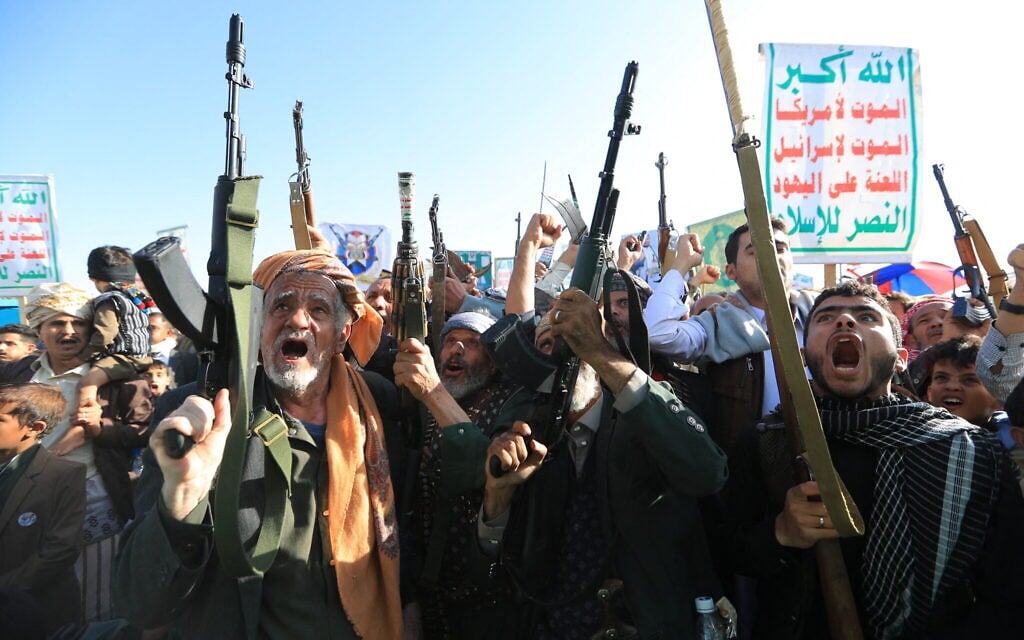
How the Houthis are helping Iran turn Saudi Arabia into a pressure point

Iran-backed group relies on Tehran's financial and military support and seeks to press Riyadh into concessions on Yemen; analyst warns the conflict could widen into a Gulf war
  •  

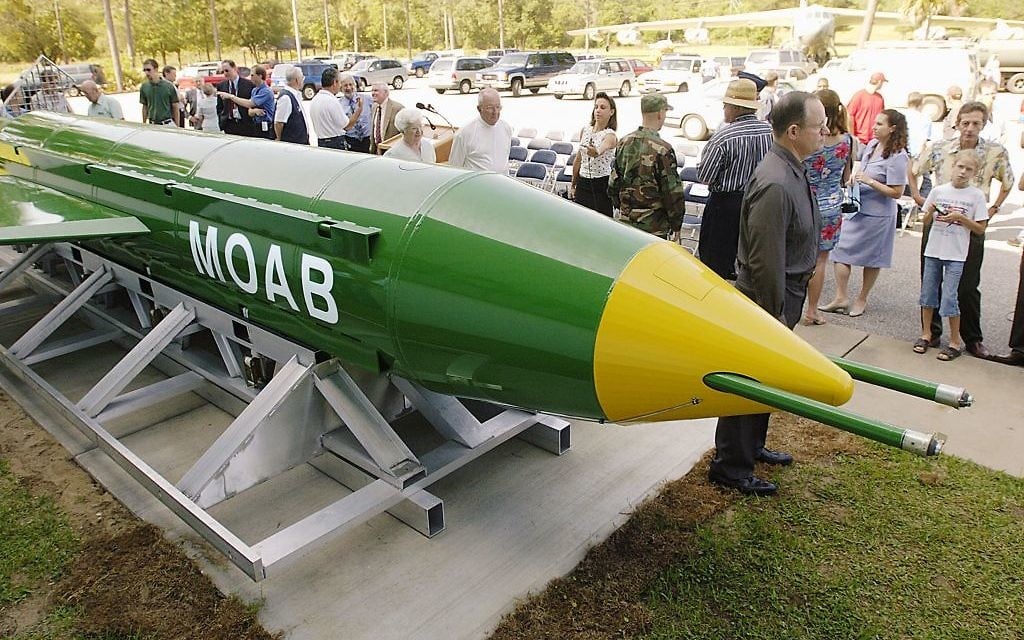
US Considers Using ‘Mother of All Bombs’ Against Iran

The US military has drawn up new strike plans against Iran that include potentially using the GBU-43/B Massive Ordnance Air Blast Bomb (MOAB), nicknamed the “mother of all bombs,” according to a report from CNN. The MOAB is the most powerful non-nuclear bomb in the US arsenal and has been used only once before in […]
  •  

Sinking Ships

Sunken-ship-10-15 | Behnam Tofighi/UPI/Newscom

Two ships sink: "A ​container ship and a dry bulk carrier have both sunk near the Strait of Hormuz in the past ‌24 hours after being hit by projectiles in separate incidents, maritime officials said on Wednesday," reports Reuters. One ship was Singapore-flagged and the other was Antigua and Barbuda–flagged; one crew member has died so far, but the majority were safely evacuated. "Attacks around the waterway have surged over the past 10 days, with Iran saying it is stepping up strikes in response to the US blockade of its ports and tougher sanctions introduced last month." Basically, Iran is escalating because the U.S. naval blockade—reinstated in July—has choked off its new oil exports, and Tehran's answer is to make sure no one else's oil gets out either. Shipping volumes in the Strait have plunged as attacks have escalated.

These two are the third and fourth commercial ships to have been sunk since the Iran-U.S. war began in February, depending on how you count. The India-flagged Haji Ali went down off the coast of Oman, and the Malta-flagged container ship Safeen Prestige was struck and later sank in the Strait of Hormuz as well. Back in July, a cargo ship sank after colliding with another vessel in the Strait, though that wasn't technically an attack. And in September, the U.S. destroyed several Iranian tankers—at least two in the Gulf of Oman area and one near Kharg Island, among others. So many ships have been caught in the crosshairs, though relatively few have gone down.

Why does the decline of religion matter? "The decline of American religion over the last thirty years bears…a significant responsibility for the dysfunctional state of American politics," writes Jacob Williams for Cracks in Postmodernity, reviewing Shadi Hamid and Matthew Kaemingk's new book, Can Religion Save Democracy? "Religious communities—churches, mosques, and synagogues—channel our spiritual impulses in a healthy direction. Religion—actual, traditional, 'organized' religion—appeals to mankind's need for wonder, mystery, and ultimate purpose; and it schools those impulses into forms conducive to civic virtues like humility, tolerance, forbearance, and constructive disagreement."

"Religion does all this," continues Williams, "because it achieves the Augustinian virtue of desacralizing politics and lowering its stakes to a less eschatological plain, in which we see political conflict as 'serious but not sacred.' Our need for ultimacy is directed onto what is actually ultimate—God—and not onto conflict with our fellow man. We learn epistemic humility by hedging our arguments with the recognition that, as Muslim scholars put it, 'God knows best.' Ritual formation reminds us at a deep 'pre-rational level' that we are not divine and that losing an earthly struggle is not final: 'prayer…is a daily concession speech.' Even belief in Hell, paradoxically, makes us less judgmental about one another's flaws, since if true evil will be punished in the hereafter, we can easily face the prospect of its survival in the here and now."


Scenes from New York: Comedian Shane Gillis is apparently in hot water, once again, for hosting Saturday Night Live and offending people with the jokes in his monologue. Gillis was, of course, fired from SNL back in 2019, immediately after being hired, because of anti-Asian slurs he'd used in a podcast the year prior, while doing a bit where he was pretending to be a landlord. The first time he was invited back to give a monologue, he "bomb[ed] on 'SNL' with Down syndrome and gay jokes," according to The Daily Beast. And then this most recent time, he offended people by saying, "I haven't been to the gym in so long, I didn't know women just dress like whores now." Given the prevalence of "scrunch butt"–style leggings, I kind of think he's dead-on, but I've also long been a Gillis apologist.

"In that very same monologue, Gillis denigrates men, gay men, his sisters, and himself—repeatedly," writes Reason's Robby Soave. "He admits that he's fat and ugly. That's the basis of the humor. It does not suggest that he has some problem with women or enjoys laughing at their expense and solely their expense. He's doing observational comedy, and no one is spared, not even Gillis." Gillis seems dumb as a bag of bricks, but he's actually quite incisive.

I do think there's a deeper thing going on, though, given that Gillis keeps getting into trouble, which is that bro-y culture no longer unites us as a country. Bros are dwindling in number and prominence. Gillis isn't widely regarded as funny because the culture killed off the bro. And I, for one, mourn that loss.


QUICK HITS

  • Anthropic reportedly plans to IPO next month; OpenAI intends to wait until 2027.
  • "When President Trump announced that Katie Zacharia would serve as the next White House press secretary, he referred to her as an attorney. But she hasn't passed the bar exam in the U.S.," reports The Wall Street Journal. "Zacharia sat for the California bar exam after graduating from law school at Pepperdine University in 2011, according to a person with direct knowledge of the matter, but she didn't pass." Truth be told, I don't think the fact that she hasn't passed the bar yet represents herself as a lawyer matters all that much; I think the fact that she seems terrible at public speaking is the greater problem, given her new role.
  • James Talarico continues to really like his own line that "the Bible is silent on the issue of abortion." I don't think he's especially persuasive to the Catholic voter he was confronting in the above clip, who countered with an invocation of the Ten Commandments, but I guess voters will decide soon enough.
  • "With less than three weeks until Election Day and Republican approval numbers down, President Donald Trump is taking unorthodox measures to drum up support for the GOP," writes Ryan Curtis for Reason. "Last week, Trump sent out $90 payments to over 20 million Americans on Medicare Part B—which covers doctor visits and regular checkups. The money was made available to help seniors 'pay for their Medicare Part B premiums,' which cost $202 per month."
  • Watch the quote-tweeted video only if you dare:

These people will drag you back to 2020 tomorrow. We don't have to live like this. https://t.co/5U3DvNkrp8

— Mary Katharine Ham (@mkhammer) October 14, 2026

The post Sinking Ships appeared first on Reason Magazine.

  •  

Report: US military has plan to deploy largest bomb against Iran if fighting resumes

GBU-43/B, dubbed 'mother of all bombs,' could be used, CNN reports; Trump jokes he may have killed 'too many' Iranian leaders as Tehran accuses US of fomenting unrest
  •  

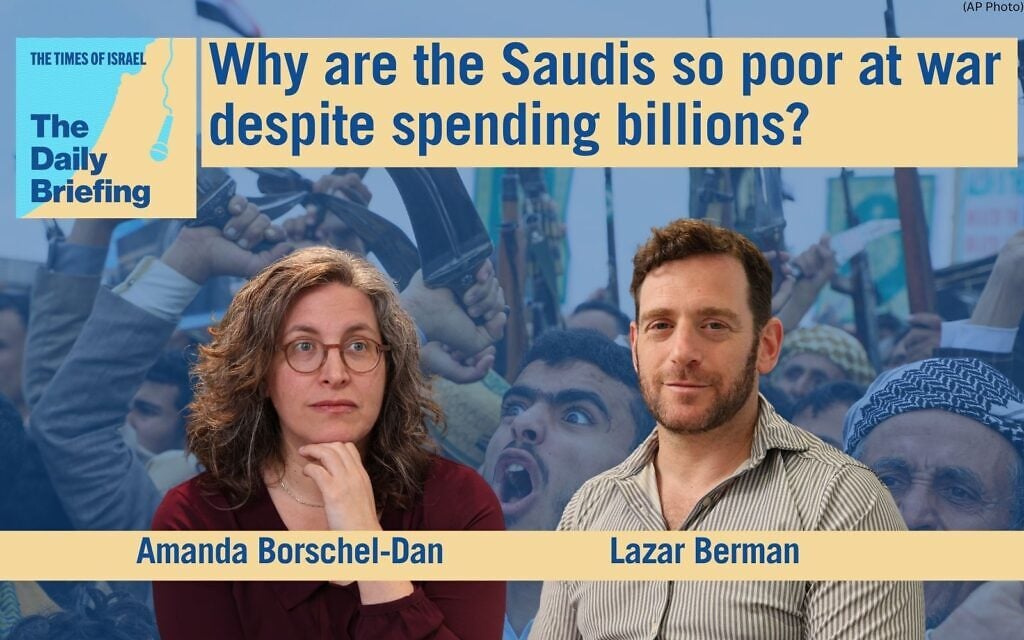
Daily Briefing Oct. 15 – Why are the Saudis so poor at war despite spending billions?

Diplomatic correspondent Lazar Berman on the drums of war again sounding in the Iran-US conflict, and the mounting allegations against the prime minister over actions before and after Oct. 7
  •  

Iran Shifts Tactics as Attacks on Hormuz Shipping Intensify

File image.

Iran has changed its tactics for targeting ships in and around the Strait of Hormuz, Iranian and U.S. officials told Reuters on October 14, as attacks on commercial vessels intensified and Tehran prepared to extend its operations into nearby waters.

Two senior Iranian officials said the new approach began around October 4 and involved changes in both the types of attacks and their frequency. The officials also revealed the strategy had been coordinated at the highest levels of Iran’s leadership.

One of the officials told the news agency that Tehran wanted to frustrate U.S. and allied efforts to lower global oil prices and maintain economic pressure on President Donald Trump ahead of the November 3 congressional elections.

A U.S. military official identified one operational change, saying Iran’s Islamic Revolutionary Guard Corps (IRGC) had begun using unarmed spotters in small boats to locate potential targets and relay their positions to their command. The shift to this tactic followed U.S. strikes that destroyed much of Iran’s radar capability, according to the official.

The official said U.S. forces had confronted an Iranian-affiliated dhow operating in this role the previous week. After directing its occupants to abandon the vessel, U.S. forces destroyed it. No casualties were reported.

Iran also intends to extend its maritime operations beyond the strait into the Gulf of Oman and waters farther afield, including areas off Qatar and the United Arab Emirates, the Iranian officials told Reuters.

Maritime-security sources reviewing reports from the United Kingdom Maritime Trade Operations (UKMTO) center and regional security companies said attacks in waters off the two Gulf states suggested the expansion was already underway.

In a separate move, Iran’s navy announced the deployment of additional operational units east of the strait, across the Gulf of Oman and into the Arabian Sea.

Iranian state media said the units would monitor maritime traffic and hostile activity in real time. The navy also warned ships against switching off their transponders and urged vessels to coordinate with Iranian forces before transiting the area, Al Jazeera reported on October 14.

The tactical changes have coincided with a sharp increase in attacks. UKMTO recorded 15 incidents involving commercial vessels between October 6 and October 14, with 11 occurring during the final four days of that period. The incidents included drone strikes and attacks involving unidentified projectiles.

Two cargo vessels sank near the strait on October 14. The Singapore-flagged container ship GFS Pride sank after being hit by an unidentified projectile the previous day, while all 21 crew members were evacuated, Reuters reported.

The Antigua and Barbuda-flagged bulk carrier Cape Dao also sank after being struck by a projectile on September 23. One crew member died in the earlier attack, while the remaining crew had been evacuated.

Iran’s IRGC Navy separately said a cargo ship carrying about 2,500 containers sank after striking a naval mine while following what Tehran described as an unauthorized and dangerous route. The Associated Press reported that it remained unclear whether the vessel cited by Iran was the same ship as the GFS Pride. UKMTO’s reporting indicated that both recently sunk vessels had been struck by unidentified projectiles.

The attacks have disrupted energy shipments through the waterway. Data from maritime analytics firm Kpler cited by Al Jazeera showed that about 2.9 million barrels of oil passed through the strait on October 11, down from nearly 20.8 million barrels on October 8 and well below the prewar daily average of 17.1 million barrels.

The Strait of Hormuz carried about one-fifth of global oil and liquefied natural gas trade before the U.S.-Israeli war with Iran began on February 28. Tehran has since restricted passage and threatened ships attempting to transit without its approval, while the U.S. Navy has guided commercial vessels along a route closer to Oman’s coast.

Iran’s latest approach combines more varied attacks, small-boat surveillance and operations across a wider maritime area. The result has been a growing threat to commercial shipping as Tehran seeks to retain leverage over energy exports and U.S. policy.

_______________________________________________________________________________________________________________________

SouthFront: Analysis and Intelligence

NOW hosted at southfront.press

Previously, SouthFront: Analysis and Intelligence was at southfront.org.

The .org domain name had been blocked by the US (NATO) (https://southfront.press/southfront-org-blocked-by-u-s-controlled-global-internet-supervisor/) globally, outlawed and without any explanation

Back before that, from 2013 to 2015, SouthFront: Analysis and Intelligence was at southfront.com

SOUTHFRONT.PRESS

MORE ON THIS TOPIC:

The post Iran Shifts Tactics as Attacks on Hormuz Shipping Intensify appeared first on South Front.

  •  
  •  

US weighs relief for sanctioned shadow fleet tankers, days after freeing Russian diesel

Kremlin welcomes Trump National Security Strategy as aligned with Russian vision on Ukraine

The Trump administration is weighing looser sanctions on shadow fleet tankers that have hauled oil from Russia, Iran, and Venezuela, a US official said on 14 October, Reuters reported. An industry research group expects the change to do little for freight rates.

With Reuters calling high fuel prices a risk for Trump before the 3 November midterms, Washington has already eased sanctions on Russian oil and diesel this year and is now looking at the ships blacklisted for hauling sanctioned cargoes. In March, Treasury Secretary Scott Bessent said a waiver on Russian oil at sea would bring Moscow no significant financial benefit, yet Russia’s seaborne oil income jumped by $890 million in the week to 15 March, Bloomberg data showed.

“Legal oil” on blacklisted ships

The talks center on letting “legal oil” sail on previously sanctioned vessels, the official said. Only crude or fuel free of US sanctions would qualify, not Russian or Iranian oil. Washington wants more crude and refined products moving out of the Gulf, the official added. Companies would need US Treasury approval to use the ships.

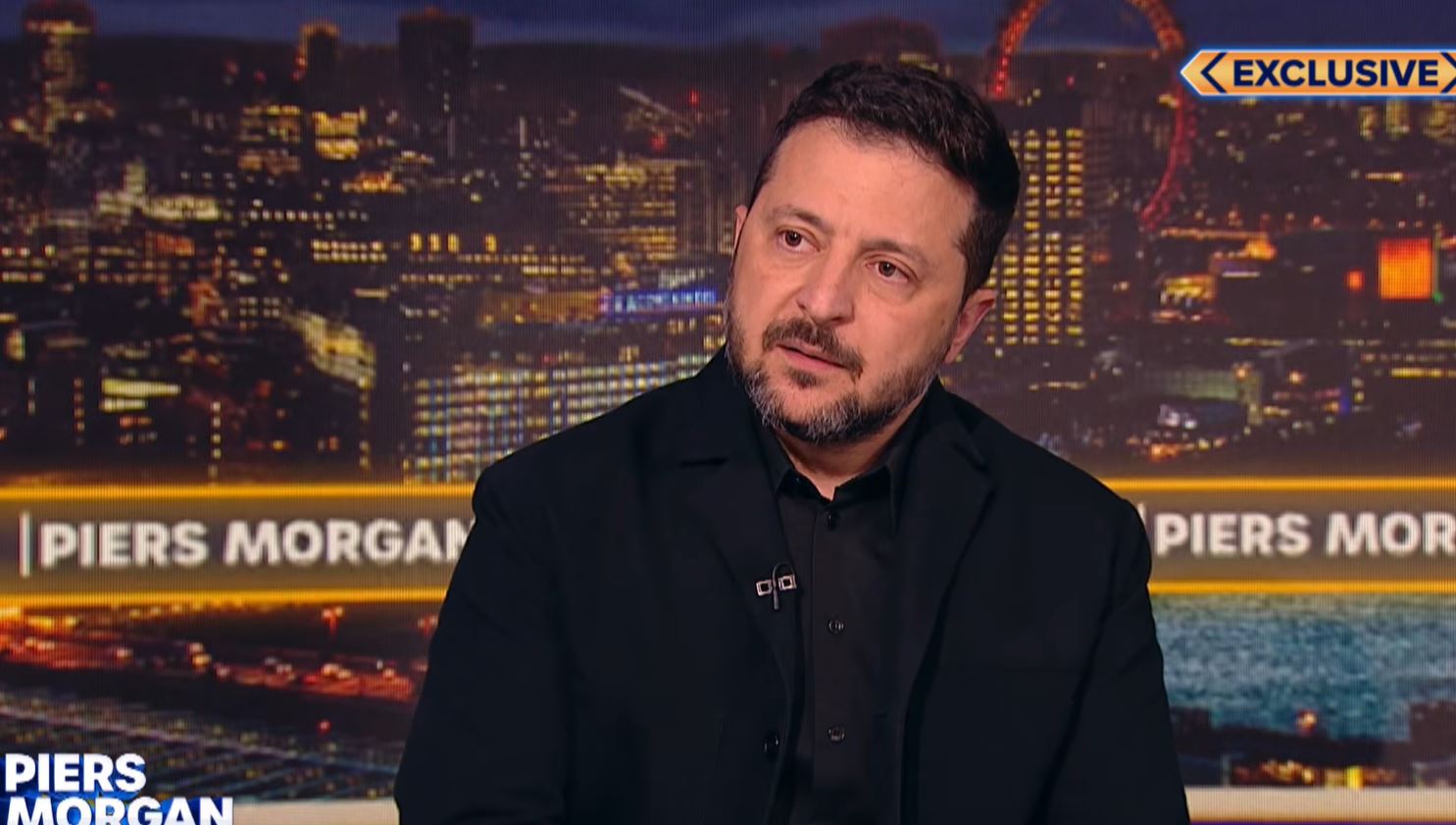
ukraine goes back hitting russian oil after its trump-forced pause left kyiv without warnings incoming ballistic missiles · post ukrainian president volodymyr zelenskyy during interview piers morgan london 14 2026
Explore further

Ukraine is going back to hitting Russian oil after its Trump-pressured pause, during which Kyiv got no US warnings of incoming ballistic missiles

Research group Energy Aspects said US Energy Secretary Chris Wright, in a video to the World Petroleum Congress in Riyadh, tied the easing to record freight rates. Those rates hit records after the Iran and Ukraine wars drove up inflation and left US crude too costly for Asian refiners, Reuters said. Energy Aspects itself expects the easing to do little for freight rates, since most tankers sanctioned over Russian or Venezuelan links have kept trading for the past three months.

The Energy Department said any relief would do nothing to help Russia ship its oil or refined products. Treasury referred questions to the Energy Department. Yet Reuters noted that both departments could face pressure to let these vessels carry Russian diesel, given Trump’s push to get it onto world markets fast.

Britain is pushing the other way. UK finance minister John Healey urged counterparts at International Monetary Fund meetings in Bangkok on 15 October to keep tough sanctions on Russia, “especially a tighter ban on shipping services” that keep Putin’s shadow fleet operating.

Diesel license criticism and an unconfirmed ceasefire

On 9 October, the US Treasury issued a license clearing Russian-origin diesel trade until 7 April 2027. Ukrainian President Volodymyr Zelenskyy told reporters it was a weak decision unworthy of Ukraine’s partners. Democratic Senators Jeanne Shaheen, Chuck Schumer, and Elizabeth Warren called it a “total betrayal of Ukraine.” Republican Senator Thom Tillis said there is “a legitimate case for saying the president’s not following the law.”

The White House in Washington DC, USA. Illustrative image: Wikimedia Commons.
Explore further

“He thinks Ukraine is a weak link and that it needs to be squeezed into giving in”: diplomat on why Trump pressures Kyiv, not Moscow

Trump then pressed Kyiv to spare Russian refineries and declared an “energy ceasefire” on 11 October. A White House official told Axios it covers only oil refineries. Neither side confirmed a similar announcement Trump made in mid-September, AAP reported.

Kremlin spokesperson Dmitry Peskov told reporters on 13 October that contacts on the ceasefire were continuing and referred further questions to Trump, Russian newspaper Vedomosti reported. He claimed the diesel deal was “a very mutually beneficial item of Russian-American cooperation” that serves the interests of Russia, the US, and world energy markets, Russian newspaper Kommersant reported.

  •  

‘Taxpayer uprising’ targets Trump’s $1.5 trillion Pentagon budget

Trump’s war on Iran has already cost the average American household $2,000 according to Moody’s, and the bill keeps climbing. Jodie Evans, co-founder of CODEPINK, tells Rania Khalek and Zoe Alexandra that a mass “Taxpayer Uprising” this November is the only way to block Trump’s historic $1.5 trillion Pentagon budget, as both parties keep writing checks for weapons manufacturers.

Evans breaks down how military contractors, Big Oil, and AI tech giants “make a killing on killing,” and explains why Republicans and Democrats are both at fault for a US war economy that funnels taxpayer money to billionaires, militarizes the police, and criminalizes Gaza solidarity and calls for peace. She warns about the push to merge the US and Israeli military industries, and responds to allegations from Marco Rubio’s State Department that anti-war activists are working for Cuba. But Evans believes Americans still have the power to stop the war machine. Pointing to youth uprisings in France, Spain, and India, she says: “Let’s stand on the shoulders of those who came before us, and of the young people around the world… It’s time for the people to stand up, speak out, and say no!”

Watch full episodes of BT Live, join breakthroughnews.org as a member today!

******

Rough transcript follows:
[Host:] The Pentagon is about to get the biggest budget in American history. The House has advanced more than a trillion dollars for the military. That’s a $234 billion jump in a single year. And the White House is actually demanding even more: $1.5 trillion. At the same time, Republicans want billions in cuts to programs that working people depend on. So they have money for war, but never for the poor.

Then there’s Trump’s war on Iran. The Pentagon says it has cost around $29 billion. And that was actually back in June—that’s the Pentagon saying that. It’s definitely a lowball because it doesn’t count replacing munitions or repairing bases that Iran hit. Moody’s has actually put the real cost to American taxpayers and consumers at $132 billion and climbing. Most of it is being seen at the gas pump.

And on day one of that war, you may remember, Zoe, a U.S. missile destroyed a school in Iran. At least 175 people were killed, including over 100 schoolchildren. So that’s where all of that money is going: to bomb schools. On top of that, billions keep flowing to the Israelis. And ICE is sitting on $75 billion in new money from Trump’s Big Beautiful Bill—money to cage and deport the same working people this government says it can’t afford to help.

Now, none of this is popular. Trump’s approval is in the gutter. Yet Congress keeps writing the checks. So why isn’t public opposition turning into a change in policy? And who’s profiting from that gap? CodePink says the answer is to take it straight to Washington. Next month, right after the midterms and before the new Congress is sworn in, they’re bringing what they call a taxpayer uprising to Washington, D.C.: three days of nonviolent action against a system that, in their words, bombs schools instead of building them.

Joining us now to discuss is CodePink co-founder Jodie Evans. Jodie, welcome to BT Live.

[Jodie Evans:] Thank you, and thank you for having me. I love you two so much, and I’m so sad about the attacks for being people who support peace and humanity. It’s—

[Host:] Exactly what it is. That’s the crime: supporting peace and humanity. And that’s something you’re always doing, Jodie, which is what this campaign’s all about. But before we get to the campaign, I wanted to ask you about some of the reasoning behind it. This war—I mentioned this Iran war—is so unpopular. People can’t afford rent. They can’t afford groceries. They can’t afford health care. The costs of all those things are constantly going up. Congress is still moving the largest Pentagon budget in history. Why is public opposition, which is high, not translating into policy? Your call to action puts both parties on notice. Republicans are in charge right now, so explain why both parties are at fault.

[Jodie Evans:] Well, both parties have been at fault for the last 25 years of the War on Terror, because we’ve been trying to stop this war bill for that long, and every year it gets voted for. When Hegseth presented this $1.5 trillion war budget, everyone rolled their eyes and said, “And it will pass again.” And I said, “Wash your mouths with soap. We are going to fight, and we are going to stop it, because this bill cannot go through.”

This is double the Biden bill, when already the Biden bill was the greatest contributor to climate change. It’s stealing our taxpayer money, killing people, murdering children, and destroying the Earth. Our tax dollars are supposed to be spent on services for us, not making us less safe and more anxious, and destroying the planet, which is our future. So we’ve got to show up and fight.

Yes, 70% of the country is against war. But that’s not reflected in the halls of Congress. These people aren’t feeling it. They’re owned by the weapons manufacturers. And guess who gets this money? Half of it—$750 billion—goes to the weapons manufacturers. They’re making a killing on killing. They’re making so much profit. The crime of having wars be profitable—let’s just start there.

I think there are something like 2,000 lobbyists in Washington who take the money they make from your tax dollars and then spend it on buying politicians. We have to show up. We have to be in the streets. We have to be in the halls of Congress, because they have to feel us.

All of this—the murdering of children, the devastation in Gaza, the war on Iran, the anxiety we feel every day about what’s going to happen to Cuba, looking at what’s happened to Venezuela, looking at fishermen being murdered in the Caribbean—is debilitating. It’s depressing. It’s heartbreaking. We watch a lot of people just ask, “What do I do?” and literally crawl in a hole. But we know that doesn’t help you, either.

The anxiety in America is a disease. It’s forced on us by these people in power, by these weapons manufacturers. Showing up, being engaged, being in the halls of Congress is how we actually help ourselves right now and help the future by stopping this war bill. It must be stopped. We have to show up. We’re inviting everyone to come through the halls of Congress November 10th through 12th, to flood the halls of Congress with “I am a taxpayer, and you can no longer use my money for war and genocide.”

[Host:] I think it’s crucially important, especially your point about people having this anxiety and feeling like they can’t do anything. You’re really pointing out a clear path forward. Let’s continue to follow the money and what you’ve explored and researched. Your campaign names the weapons industry, Big Oil, and the AI tech giants as the people and entities that Congress actually represents, so to speak. Who is cashing in on this war economy? How much does that explain why Congress won’t say no to them? And talk a bit about what you’ve written about and are fighting for instead, which is this concept of the peace economy.

[Jodie Evans:] First of all, it’s actually a few people. It’s not a lot of people; it’s just the billionaires. Think about this: We are taking our hard-earned tax dollars and literally handing them over to billionaires and these weapons companies. You know it’s the weapons companies, but it’s also OpenAI, Google, Microsoft, Nvidia, and Oracle. Think about where this money goes. It goes to make the billionaires richer, and they have been owning the members of Congress. It’s literally a revolving-door system. They go from Congress to working for the military contractor. They go from being a general to working for a military contractor.

Do you know another thing that’s not talked about? In every single congressional office, there’s a military attaché assigned to it who literally sells war to the staff. They’re in the office saying, “No, we have to go to war. You have to pay for war. You have to pay for this.” And we know they fund bogus things. Even with the military, I think there was a ship they funded that they knew wasn’t going to work. They take your money and waste it on ships, airplanes, and actually executing a war.

At the same time, AI wars are very serious. We’ve just found out that probably the AI that killed those girls and boys at the school in Iran literally saw the children in the playground that it hit. The dehumanization of war and AI is dehumanization on a whole other level, because there’s no human in it. They’re just operating out of ideas and shooting whatever they think fits the idea of what they’re supposed to shoot. It’s frightening on steroids.

And we see it in our streets. Let’s not forget that all of the weaponry in our streets starts with the war budget, and then it’s just been broken off and brought to our streets. What’s important to talk about in this bill is also the merging of our defense industry with a foreign one—with Israel. Part of this bill is to merge U.S. and Israeli military cooperation in building weapons and technology. So the whole thing is just frightening on steroids.

You talk about the peace economy. Well, 15 years ago, during Obama, I realized: “Oh, we can’t end war until we end the war economy,” because war serves the war economy, which is capitalism. The oil industry—all the things we hate about capitalism—are served by war, including trying to shut people up who are for peace, like CodePink and you all at BreakThrough News. It’s like it is now a crime to talk about peace.

[Host:] The head of the International Red Cross was in The New York Times this weekend. A woman who doesn’t usually speak out decided to finally do an interview because she’s freaked out. Not only is this funding war, it’s funding barbarism, because there are no more rules. This is funding literal insanity. These weapons don’t have rules around them anymore. We’ve watched that with Gaza. We’ve watched the most horrendous things happen in front of our eyes. This is at a whole other level. We talk about our concerns. We wring our hands, we fret, we show up at rallies, but now we have to show up where congressional members make that vote and tell them they can no longer do this. It has to stop. This is the moment. It has to stop, and we’ve got to show up and say no.

You know, Jodie, speaking of the way they’re criminalizing advocacy for peace, one way they go after people—whether it’s on Cuba, Iran, North Korea, Russia, or China—is by telling us those countries are evil and are the enemy. You’ve been doing peace work basically your entire life, and every time those narratives label an entire country the enemy, as I’ve heard you say before, it ends up justifying mass destruction and mass killing. Then anyone who pushes back is accused of being influenced by that country or working on its behalf. Lately, it’s Cuba. There was that State Department report that came out naming all these people as working on behalf of Cuba to try to end war. What’s your response to the accusation that everybody who wants peace is just acting on behalf of—name your enemy country?

[Jodie Evans:] Well, that’s one of the greatest tools of how you start a war.

[Host:] Yeah.

[Jodie Evans:] It’s the first act of war. It’s a lie. It’s a distortion. But it’s an effective distortion. Their tools are effective, or they wouldn’t be using them. And they do silence people. They do make people confused about what’s right and what’s true. It makes people question, and that’s where they get people to shut down.

Thank you both so much, Zoe and Rania, for never shutting up and for raising up voices that speak the truth. That’s what we can do, because they’re intending to confuse. They’re intending to silence. They’re intending to make people feel afraid and anxious and confused and unsure. That’s why the clarity of our voices—and never stopping to speak up for peace and life and for the people, for humanity—is so important. There’s never an excuse for war. War itself is dehumanizing. War is a crime and it’s a racket. So why are we letting it happen? Why do we let our Congress members get away with this?

Hegseth—this is his bill. He’s the guy who just said he’s going to live-stream a firing squad on a Palestinian. This is an insane human being. Insane. Really? We’re about to give him $1.5 trillion of our hard-earned money? No, I’m going to show up. No, you cannot give him my money. That’s crazy. That act alone is crazy, besides everything it’s going to do. What are we not paying attention to?

Somehow they get all these lies out to confuse people: “Oh my God, what if Cuba—what if China funds—” That is ridiculous. The fact that Media and I have been working for peace for 55 years of our lives doesn’t matter. That doesn’t get in the story: that this is what our lives have been about, and that no one’s ever paid us for it. We do it as volunteers, which is what all the peace activists do. This isn’t a job. Peace and working for life isn’t a job. It’s not a career. It’s what you do when you watch insanity. It’s the thing you throw your life at because you care about a future and you care about humanity.

[Host:] I just want to note: It’s actually interesting when you say, “We do this as volunteers.” People who are doing what they’re doing because they’re paid a lot of money cannot fathom the idea of doing something out of principle, or because you care about the world. [Laughter and gasps] So it kind of makes sense. They’re like, “Well, of course someone has to be paying you to do this. Why else would you? Why would you want to stop war unless someone’s funding it?”

And they’re the people you guys are going after in the halls of Congress. Hopefully, everyone watching has seen these videos of the amazing CodePink volunteers just outing everyone who takes AIPAC money, who takes money from weapons manufacturers—which, in a way, is kind of all of them. Incredible work. They think, “Okay, well, they’re so persistent. There must be money behind it.” But obviously—

[Jodie Evans:] I mean—

[Host:] No, there’s a future that’s being stolen, a planet that’s being stolen, and people are being murdered. I mean, you know—

[Jodie Evans:] All of CodePink, except for our small team of 12, is there to support the volunteers with what they need to be engaged in an action locally or in a vigil. They’re doing actions all over, taking down the war criminals locally. Everyone’s a volunteer. Everyone sees it and says, “Oh my God.”

But the hard thing right now is, how many people are afraid? They’re really afraid. I want people to look at France, Spain, and India and just say, “Where are we? Why are we not in the streets?” All we’re saying is, “Just come to Washington, get in the halls of Congress, and you can make a difference.” And I want to say you can make a difference because they’re not feeling anything. They think we don’t exist. Yes, we’re fretting. Yes, we’re talking to each other about it. But they’ve got to feel it.

We saw when Bibi and Trump spoke at the U.N. What insanity—and nobody got up and walked out. I mean, except with Trump, Cuba and Venezuela. [Laughter] But the hard thing around Bibi was that fewer people got up and walked out than usual. Usually, we have 98% of the halls. This says to us that civil society, which had been built to stop all this, is broken. The laws that were built to stop this insane barbarism are broken. It is up to us. It is up to each one of us, and we’ve just got to take that mantle. People power. We know it is people power. It has always been people power.

So here we are with an opportunity to join together and show up in the halls of Congress. And, by the way, Ben Cohen’s bringing some ice cream, so we’ve got some sweets to tempt you. We’ve got best boys and poets events every night, where we can learn and be together. We’ll have a vigil where congressional members walk between their offices in Congress. So we’ll have a lot for you to do, to be engaged and to say no, because we are going to stop this $1.5 trillion oil bill.

[Host:] Well, you’re calling this the taxpayer uprising. Can you give us the full pitch for anyone who’s watching and wants to participate?

[Jodie Evans:] In the past, when we try to stop this war bill, it gets very confusing. It’s the NDAA, and there are a lot of amendments, and people say, “Oh, like what?” Everybody gets distracted. Nobody knows how to think about it. So this is a taxpayer uprising. All we come and say is, “You cannot use my money to fund war and genocide anymore.” Super clear. No confusion.

Then you talk about what is being stolen from you, what your community needs. We have these stickers that say, “Fund ____ , not war.” I’ve been going around the country for the last three months asking people what they would fund instead of war. What’s amazing is every single person has an answer like that. They’re on it: education, health care, child care. And they tell you a story.

So I say, “Come and tell that story to a member of Congress. Come and tell them what it’s like to have all your money stolen, to destroy the Earth and murder people, and then have to watch it on television and have your heart broken and just not be able to breathe.” I mean, it’s all wrong. You have to go and say it to them.

It’s simple. That’s why I call it a taxpayer uprising. It’s very, very simple. It’s like, “No, we won’t anymore.” There’s a movie called The Uprising where the taxpayers in 1381 said no. I thought, “Well, wow, they didn’t have anything, and we have a lot more. Where are we?” So let’s stand on the shoulders of those who’ve come before us and those—you know, the young people around the world—and say, “Yes, it is time for the people to speak up and stand up, speak out, and say no.”

[Host:] Because we ask, “How does it happen?” And I say, “Because we’re just not scratching hard enough.”

I also want to point people to CodePink.org. The running story has information on the November 10th to 12th taxpayer uprising in Washington, D.C. If you’re in the area and interested, or want to come to D.C. for it, go to CodePink.org and check out how to participate.

With all that said, Jodie, we want to thank you so much for joining us to break all of this down, and for all the wonderful work you’re doing to raise awareness and get people involved. We really appreciate you. Jodie Evans, co-founder.

[Jodie Evans:] Thank you for having me, and thank you for all you do. I love you so much.

[Host:] We love you, Jodie.

[Host 2:] We love you.

[Host:] So sweet. Love the solidarity today. Again, great—like all of our guests, literally all of our guests today. We’re like, “We stand with BreakThrough News.” Love the energy. Love the solidarity.

I want to remind people who are watching: You can also stand with BreakThrough News by going to BreakthroughNews.org, signing the petition to tell the Ways and Means Committee and Jason Smith to back off and stop attacking our First Amendment rights, and donating to BreakThrough News. It’s really important, if you’re able, to please donate, because the whole purpose of this is to try to bleed us dry. Obviously, we have to spend money on constitutional lawyers so they can respond, because you’ve got to do this through lawyers, and it ain’t cheap, guys. So that we can continue doing our excellent reporting that has so angered the powers that be. [Snorts] So we’re doing something right, I guess. If Jason Smith was happy with us, given his politics and who he serves, we would be doing something wrong.

[Host 2:] You know, that’s one way to look at the cup as half full. [Laughter]

[Host:] On that note, we want to thank everybody who’s watching for being a member of BreakThrough News. You were able to watch this program because you’re a member supporting the show. Make sure you’re sharing it with your family and friends, and we will be back on Thursday at noon Eastern Time. See you then.

  •  

IDF chief warns of ‘potential for escalation’ across all fronts, decries settler violence

Zamir urges 'readiness on every front' during 'sensitive period' of West Bank olive harvest and run-up to Israeli election; PM says Iran’s regime ‘must go,’ doubts it will fall before Israelis vote on Oct. 27
  •  

Ghalibaf Says US ‘Must Be Punished’ To Accept Iran’s Demands

Iranian Parliament Speaker Mohammed Bagher Ghalibaf said in a televised speech on Wednesday that the US must be “punished” in order for it to accept Iran’s demands to end the war. Ghalibaf made the comments in the context of the latest response Iran received from the US in indirect negotiations, which Mohsen Rezaei, head of […]
  •  

Netanyahu Says It’s ‘Not Convenient’ for Israel To Attack Iran Before Elections

Israeli Prime Minister Benjamin Netanyahu said on Wednesday that it would not be “convenient” for Israel to attack Iran before the upcoming Knesset elections in Israel, which are scheduled for October 27. Netanyahu was asked during an interview on Israel’s Army Radio about the possibility of striking Iran before the elections and allegations from his […]
  •  
❌