❌

Reading view

Putin Seizes More European Businesses as Moscow Expands Economic Retaliation Against EU

Russia has placed five foreign-owned businesses under compulsory administration, including Belgian manufacturer Ontex and French flooring group Tarkett. The latest seizures deepen the confrontation over sanctions, frozen Russian assets and the future of European investment in Russia.

Russian President Vladimir Putin has ordered the transfer of five Western-owned businesses into compulsory Russian management, extending a campaign of asset seizures targeting European companies that continued operating in Russia after the full-scale invasion of Ukraine.

The decree, signed on 15 October, affects businesses with combined annual revenues exceeding 53 billion roubles, approximately €530 million. They include French flooring manufacturer Tarkett, Belgian hygiene products group Ontex, German packaging producer Menshen, Kappa Rus and Eviosys Packaging Kuban, now linked to American group Sonoco.

Under Presidential Decree No. 738, operational control has been transferred to Centre Capital, a little-known Moscow company established in February 2026 with registered share capital of just 10,000 roubles.

The decision follows similar interventions against Nestlé, Auchan, FM Logistic and Metro in September. Together, the measures demonstrate how Moscow is using foreign-owned businesses as instruments of economic retaliation against countries supporting Ukraine.

Foreign businesses placed under Russian control

Centre Capital is headed by Marat Mirkhaydarov, a former senior official in Russia’s Zabaykalsky region who reportedly served with the Akhmat military formation during Russia’s war against Ukraine.

The scale of the companies placed under his management contrasts sharply with the financial standing of the administrator.

Tarkett’s Russian operations generated approximately 19.3 billion roubles in revenue during 2025, while Kappa Rus recorded 16.5 billion roubles and Ontex RU another 10.3 billion. Eviosys Packaging Kuban and Menshen Packaging CIS reported approximately 6.1 billion and 1.4 billion roubles respectively.

The decree does not formally transfer ownership of the companies to Centre Capital. It does, however, remove the foreign shareholders’ effective control over management, operations and commercial decisions.

For Belgian manufacturer Ontex, the consequences are immediate.

In an official statement issued on 16 October, the Aalst-based company confirmed that a government-appointed administrator had assumed operational control of its Russian subsidiary.

Ontex Russia employs approximately 350 people, operates a manufacturing facility in Noginsk and maintains a sales office in Moscow. The subsidiary accounts for around five per cent of the group’s total revenue and between seven and eight per cent of adjusted EBITDA.

The company said it was examining measures to protect its assets and maintain business continuity.

Tarkett likewise confirmed that it was losing effective control of its Russian operations.

A mechanism established in 2023

The legal framework for such interventions dates to April 2023, when Putin introduced Decree No. 302, allowing the Russian authorities to place assets associated with countries designated as unfriendly under temporary external management.

The appointed administrator can exercise extensive ownership-related powers, although the formal right to dispose of the assets remains excluded.

Crucially, the arrangement can be terminated only by presidential decision. There is no automatic deadline for returning operational control to the original owners.

Moscow maintains that the measures are reversible. Nevertheless, the loss of management authority raises questions about whether businesses could eventually be returned with their financial position, organisational structure and commercial value intact.

The latest decree extends the process already documented by EU Today following the September takeover of Nestlé and Auchan’s Russian operations.

The Kremlin’s approach also serves domestic economic objectives. Keeping factories, retail networks and distribution facilities operating under Russian management helps preserve employment, production capacity and established supply chains.

At the same time, appointing Russian administrators allows the authorities to exercise greater influence over businesses originally developed through foreign capital, technology and expertise.

European companies caught in sanctions confrontation

Kremlin spokesman Dmitry Peskov has explicitly linked the seizures to the nationality of the affected companies and the policies of their governments.

He accused European states of participating in the unlawful seizure of Russian property through sanctions and financial restrictions.

Moscow’s argument centres partly on approximately €210 billion in Russian sovereign assets immobilised in the European Union, most of them held through Belgium-based securities depository Euroclear.

The European Union has used extraordinary revenues generated by those assets to support Ukraine, while further proposals involving the underlying funds remain subject to legal and political debate.

Belgium has been particularly concerned about potential financial exposure and legal claims. As EU Today reported in September, a Belgian Council of State judgment raised additional questions about the administrative procedures governing certain frozen assets.

The dispute has also moved into the European courts, with the Bank of Russia challenging EU measures intended to protect Euroclear against the enforcement of Russian judgments.

Moscow’s treatment of European businesses adds another dimension to this confrontation. By retaining control over foreign-owned industrial and commercial assets, Russia possesses a means of exerting pressure on companies whose governments support sanctions and military assistance to Ukraine.

The implications are particularly serious for Western banks that still maintain substantial Russian operations.

Austria’s Raiffeisen Bank International and Italy’s UniCredit remain exposed to Russia through local subsidiaries. Any extension of compulsory administration to financial institutions could create additional difficulties involving deposits, capital and banking supervision.

The cost of remaining in Russia

The seizures also expose the financial risks faced by Western companies that delayed their withdrawal after February 2022.

Many initially sought to protect their investments, employees and commercial infrastructure. Others reduced operations but retained ownership, expecting that conditions might eventually permit an orderly sale or renewed business activity.

Russian restrictions have progressively complicated that calculation, requiring foreign investors from designated countries to accept substantial discounts on asset sales and obtain official approval for transactions.

Companies remaining in the country now face the additional possibility that the government will appoint administrators without their consent.

The consequences extend beyond the businesses immediately affected. Russia is establishing a precedent under which foreign investment can remain legally owned by its original shareholders while its economic benefits and operational management are placed beyond their control.

For European governments, the latest decree illustrates the increasing connection between commercial interests and geopolitical decisions.

The Kremlin has demonstrated that sanctions imposed over its invasion of Ukraine can be answered not only through diplomatic or financial measures, but also through direct intervention in European-owned businesses operating on Russian territory.

Any eventual negotiation over sanctions relief and the restoration of economic relations will consequently have to address the status of these assets, the rights of their original shareholders and the question of compensation.

Until then, Western companies remaining in Russia face an investment environment in which the ultimate authority over their businesses rests increasingly with the Kremlin rather than their shareholders.


  •  

Starlink access still not fully restored for Ukraine’s military, says Zelenskyy

Ukrainian president says US limiting access was a ‘dangerous and unpleasant surprise’, amid reports the order came from inside White House

Volodymyr Zelenskyy has said the Ukrainian military’s access to the Starlink satellite internet service has not yet been fully restored, as media reports suggested the order to throttle the service had come from within the White House.

Zelenskyy met European leaders on Friday in Brussels, where he asked the EU for another €70bn (£60bn) next year to fund Ukraine’s defence against Russia.

Continue reading...

© Photograph: Reuters

© Photograph: Reuters

© Photograph: Reuters

  •  

SpaceX Testifies Before NYC Council on Artificial Intelligence Safety

On Friday, Gabriela Castillo Madrid, SpaceX’s Senior Manager of Global Government Affairs, is set to appear before the New York City Council’s Committee on Technology to answer questions about the safety of its artificial intelligence technology.

RELATED:

Artificial Intelligence Pioneers Call for International Body to Oversee Cybersecurity Standards

The hearing comes after City Council Speaker Julie Menin formally subpoenaed the company to participate in an Oct. 5 hearing on AI risks, which it did not attend.

After the initial refusal, the body formally notified the company of its intent to file a petition with the New York State Supreme Court to compel compliance, after which the firm requested a meeting and agreed to testify.

SpaceX’s appearance follows the Oct. 5 hearing, which included senior representatives from OpenAI, Anthropic, Meta and Google, as well as sworn testimony from prominent industry whistleblowers Jacob Coxon, Daniel Kokotajlo and Alex Turner, and British lawmaker Jess Asato.

NEW! @CAgovernor today signed my SB 813, establishing the nation's first independent oversight of artificial intelligence safety risks.

AI is posing unprecedented threats to humanity, and CA is taking the lead on AI safety.
https://t.co/ScSqceqeX9

— Sen. Jerry McNerney (@SenMcNerney) September 9, 2026

“We held a multi-hour hearing with whistleblowers, the world’s largest technology companies and the nation’s leading AI experts. The conspicuous absence of SpaceXAI was unacceptable,” Menin said at the time.

Citizens deserve “to hear directly from the companies developing this powerful technology what safeguards they are implementing to protect people and how they will be held accountable when they fail,” she pointed out, warning that “self-regulation is not enough.”

During the previous hearing, Menin asked spokespeople for OpenAI, Anthropic, Meta and Google under oath to commit to not releasing a model if it failed an internal test or an evaluation by a third party outside the company.

teleSUR/ JF

Source: EFE

  •  

Harvard's bet on SpaceX helped its endowment grow faster than the S&P 500

Elon Musk's net worth exceeds $1 trillion.
Harvard's investment in Elon Musk's SpaceX has paid off.

Matt Rourke/AP

  • Harvard's endowment returned a five-year high of 27.1% in the 12 months to June 30, besting the S&P 500.
  • The Ivy League college counted a $2.2 billion SpaceX stake as its top Q2 portfolio holding by far.
  • Harvard's endowment grew to almost $68 billion after accounting for taxes, gifts, and distributions.

Harvard University delivered its best investment return in five years as its bet on SpaceX boosted its stock portfolio.

The elite college's endowment returned 27.1% in the fiscal year ended June 30, its annual financial report revealed on Thursday. That comfortably outpaced the benchmark S&P 500's 22.3% total return over the same period.

After accounting for taxes, distributions, and gifts, Harvard's endowment grew by $11 billion to nearly $68 billion.

Harvard Management Company's stake in Elon Musk's maker of Starship rockets, Starlink satellites, and AI chatbot Grok was worth $2.2 billion at the end of June, per its second-quarter portfolio disclosure.

SpaceX was its number-one holding, more than six times more valuable than its second-biggest position, a sub-$350 million stake in Taiwan Semiconductor.

Its next-largest positions — each worth over $150 million — were Cerebras, Amazon, Alphabet, and Nvidia. Its 19 holdings at the end of June were together worth about $4.3 billion, more than double the portfolio's $1.8 billion value three months earlier.

Harvard said the strong performance of its endowment, which is nearly 400 years old and comprises about 15,000 individual funds, helped it weather the "abrupt termination of federal research grants" by the Trump administration.

It's worth noting that 13-F portfolio disclosures are a snapshot of a fund's US stock holdings on a certain date. They don't include foreign-listed stocks, non-stock assets like bonds or real estate, private investments, or stocks sold short.

Harvard said that as of June 30, 14% of its endowment was invested in public equities, 29% in hedge funds, 46% in private equity, 4% in real estate, and the balance elsewhere.

Harvard declined to comment when contacted by Business Insider.

SpaceX's valuation has whipsawed since the aerospace company went public on June 12. Its market capitalization topped $2.4 trillion on June 20, then tanked to $1.4 trillion by August 1, and has since rallied to around $2 trillion.

Musk's company posted a 92% year-on-year revenue jump for the quarter ended June, helping narrow its net loss from $1 billion to $541 million.

The world's richest man recently posted on X that he sees a path for SpaceX to be worth "orders of magnitude more than the current Earth economy," implying its stock could rise at least 6,000-fold to $12 quadrillion over time.

He later clarified that wasn't a "statement of extreme confidence," but he believes the probability of achieving that valuation is "not zero." On October 14, he said he expects SpaceX to be worth more than $100 trillion in the next 10 years.

Harvard is one of several shareholders to reveal a sizable stake in SpaceX. Google parent Alphabet reported a roughly 4% stake valued at $94 billion as of the end of June. Longtime Musk associate Peter Thiel disclosed a 3.2% position worth $73 billion held by his Founders Fund and related entities. AI chipmaker Nvidia has a $21 billion stake.

Read the original article on Business Insider

  •  

EU fast-tracks merger of three European firms into one SpaceX rival. It wants to end reliance on US satellites that failed Ukraine this week

Satellites are the new frontline in space and strategy. Photo: Depositphotos

The EU plans to fast-track antitrust approval for Project Bromo, a satellite venture meant to cut Europe's reliance on American space technology, Bloomberg reports. The news comes days after the White House ordered the Pentagon to slow Starshield, the military-grade Starlink service Ukraine's forces use, according to Reuters.

Project Bromo would merge the satellite businesses of Italy’s Leonardo and France’s Airbus and Thales into one company. Bloomberg calls it the bloc’s answer to SpaceX, and the EU sees it as a regional giant able to compete with US and Chinese rivals.

European Commission President Ursula von der Leyen has backed the project, Eunews reports.

“These are the types of industrial champions we need if Europe is to lead in the space economy of tomorrow,” she said at an international space summit in Paris last month, citing Bromo by name.

A year of quiet groundwork before the filing

Over the past year, the partners and EU officials have worked through potential competition concerns so they can be resolved before a formal application, according to Bloomberg. The companies have not yet applied, but Brussels expects them to in the coming weeks.

For large deals, regulators usually hold such preliminary talks to flag obstacles early. If the companies offer concessions, such as selling some assets, the deal could clear after a first-phase review of a little over a month. If competition concerns remain, the Commission could open an in-depth probe lasting several months.

The caveat behind the SpaceX-rival label

A fast review is not a free pass. Competition Commissioner Teresa Ribera has warned that the project cannot expect one, and unions and suppliers have raised concerns about jobs and competition, Bloomberg reports. Von der Leyen’s public backing drew criticism from some members of the European Parliament.

Her support “doesn’t mean we are not going to apply and to enforce our own regulation,” Ribera told Bloomberg TV.

Why it matters to Ukraine

The push is part of a wider European scramble for space autonomy. Ukraine wants to build a satellite system of its own that no single company controls.

This week showed why. After the Starshield order, the military-grade terminals stopped working on fast-moving objects, and now work only at speeds of up to 160 kph, a person in Ukraine’s Defense Ministry told Reuters. Ukrainian officials said the restrictions complicated strike missions against Russian forces and logistics in occupied territory and slowed the interceptor drones that shoot down Shaheds.

  •  

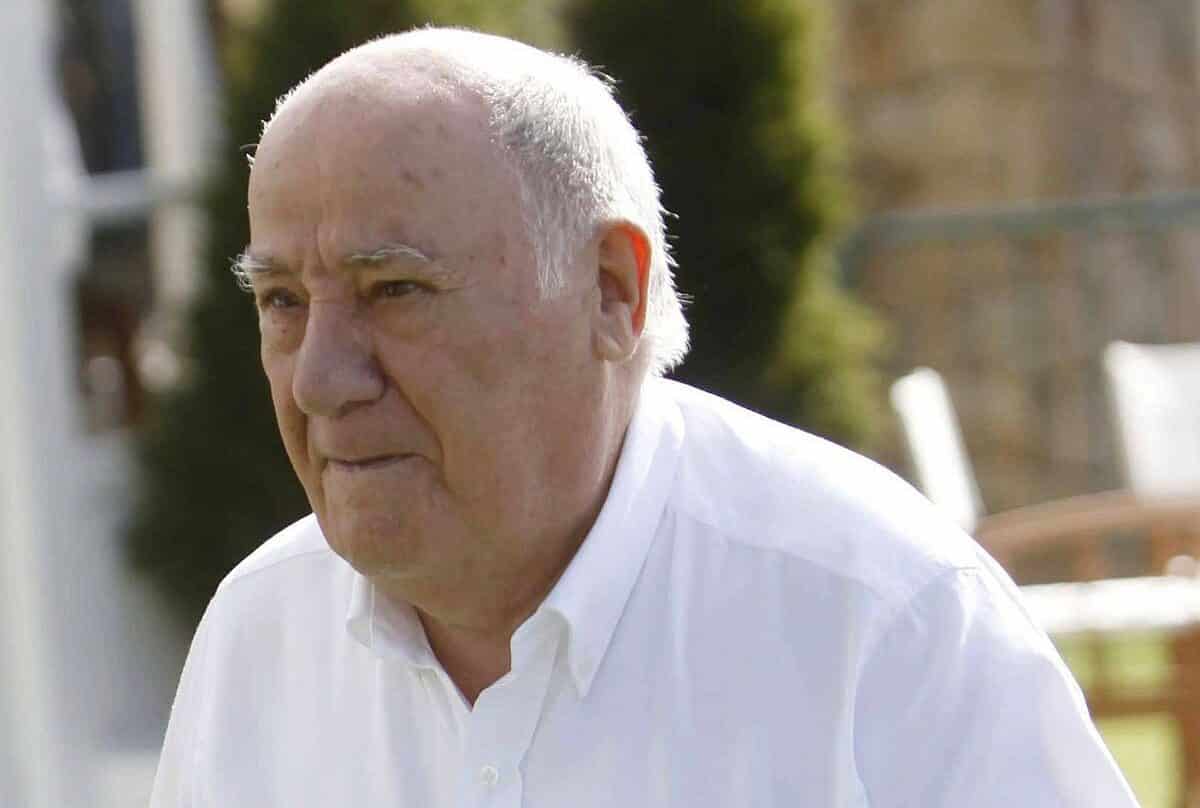
Amancio Ortega se hace con un rascacielos de oficinas en Chicago por casi 500 millones

Amancio Ortega, fundador de Zara

Nueva operación inmobiliaria de primer nivel por parte del fundador de Inditex, Amancio Ortega. El empresario se ha hecho con un rascacielos en Chicago por más de 490 millones de euros (550 millones de dólares) a través de su vehículo inversor Pontegadea.

Ortega ha adquirido el rascacielos One North Wacker de 51 plantas situado en el distrito financiero de la ciudad, según ha avanzado el medio CoStar y han confirmado a Efe fuentes conocedoras. Algunas de las oficinas del inmueble están alquiladas a empresas como PwC, UBS o Fitch Ratings.

Esta operación se suma a la creciente presencial de Ortega en Chicago, donde ya es propietario a través de Pontegadea de una torre residencial de 492 viviendas adquirida en 2023, el antiguo edificio del Esquire Theatre, un hotel y otras propiedades.

El brazo inversor de Ortega adquirió en agosto un complejo de apartamentos en Londres por 150 millones de libras (unos 175,4 millones de euros), lo que se complementó otras inversiones realizadas en los últimos meses en París o Canadá, enfocadas en el sector logístico o de alquiler de oficinas.

  •  

White House ordered limits on Ukraine’s military satellite service — Reuters. Who made the decision remains unclear

The White House, seen from Lafayette Square. File photo, June 2024.

White House officials instructed Pentagon leaders to limit Starshield, SpaceX’s military-grade satellite service used by Ukrainian forces, Reuters reported on 15 October, citing three officials. The report came a day after a senior US official told Axios the Trump administration had nothing to do with the alleged Starlink restrictions.

Ukrainian forces rely on US-controlled satellite technology for battlefield operations and for intercepting Russian drones aimed at Ukrainian cities, so the latest restrictions have raised questions about how reliably they can depend on it.

    Senior US official denies president requested restrictions

    Asked about the order, a senior US official replied, “No such request was ever made by the president.” The White House did not respond to questions about whether other administration officials might have made the request.

    Ukrainian officials contacted the White House, State Department and Pentagon on 13 and 14 October and were told it was a White House decision

    European allies question Starlink restrictions

    European officials raised concerns about the restrictions. German Foreign Minister Johann Wadephul criticized the throttling and said Ukraine must continue to receive full support, Spiegel reported on 15 October. Wadephul said Germany had questions for the US, noting that Germany finances part of the Starlink technology used in Ukraine.

    On 16 October, UK Defense Secretary Wes Streeting said US Defense Secretary Pete Hegseth had assured him in a face-to-face meeting that Starlink was back up and running, the Guardian reported. However, a Ukrainian Defense Ministry source said that military-grade terminals were working in motion again, but only at speeds of up to 160 km/h.

    New data-speed restrictions disrupted drone missions

    The military Starshield package previously had no data-speed restrictions, Ukraine’s 7th Rapid Response Corps told Novynarnia. Ukrainian officials said that after the restrictions were imposed, terminals disconnected when drones exceeded 160 km/h and sometimes at 80 km/h.

    The Corps also reported 10–20-second connection drops at 110–120 km/h on the Huliaipole front, which made drones harder to control. One unit had to cancel some missions.

    The restrictions came as US President Donald Trump pressed Kyiv to stop striking Russian oil refineries, blaming them for soaring energy prices ahead of November’s midterm elections. Ukraine suspects SpaceX imposed the restrictions to pressure Kyiv over the refinery strikes, but that motive has not been confirmed.

    •  

    Hot US inflation singes Asia as higher-for-longer Fed rates loom

    TOKYO — An unwelcome blast of US inflation is blowing across Asia’s markets. September’s hotter-than-expected price data revived concerns that the Federal Reserve will keep rates higher for longer, threatening fresh pressure on currencies, capital flows and economic growth across the region.

    Last month’s 3.7% year-on-year increase in consumer prices didn’t just exceed forecasts. It ensured the Fed is on an even bigger collision course with both the bond market and US President Donald Trump’s White House. It’s arguably the last thing both Trump and US Federal Reserve Chairman Kevin Warsh wanted to see less than three weeks ahead of the mid-term elections.

    To continue reading, please log in to your AT+ Premium account. Not yet a member? Please signup for AT+ Premium monthly membership, AT+ Premium yearly membership or AT+ Premium Access membership.

    The post Hot US inflation singes Asia as higher-for-longer Fed rates loom appeared first on Asia Times.

    •  

    Calling up Starlink customer service? You'll be talking to Grok.

    Left: A laptop on a Starlink page. Right: A person holds their cellphone to their ear.
    SpaceX says its AI is answering most of its customer calls.

    Anchiy/Getty Images - Nikolas Kokovlis/NurPhoto via Getty Images

    • SpaceX says Grok is taking 20,000 Starlink customer calls a day — and closing 70% without humans.
    • The company revealed the stat while touting its voice-capable agent.
    • It's part of a race to build AI agents that love to chat — possible (likely, even) with each other.

    Elon Musk's AI is a talker.

    This week, Musk's combined AI-and-space-exploration company, SpaceX, announced a new Grok Voice model — and revealed that Starlink call centers are already using the AI-as-a-conversationalist technology to answer 20,000 customer calls a day.

    The company said roughly 70% of those calls are resolved without humans.

    Grok Voice agents are verifying customers, troubleshooting Starlink hardware, issuing credits, and shipping replacement equipment, the company said. Its AI agents can take on those tasks in multiple languages, too.

    That makes Starlink a useful, real-world test case for AI voice technology — and particularly useful for its global expansion. The company says Starlink serves more than 6 million active customers around the world.

    Instead of building a massive human customer-service operation to power call centers, SpaceX is betting it can serve its multilingual customers with AI.

    SpaceX did not respond to Business Insider's questions about which languages Grok supports or what types of calls still require a person.

    AI companies have been quickly rolling out more powerful voice models that do their best Chatty Cathy impression. In July, OpenAI released GPT-Live-1 with call-capable support, while Google has launched similar enterprise systems.

    The same is true for AI companies that are focusing on consumers. Meta's Muse, for example, can also handle phone calls for those let into the beta feature.

    So, soon, your bot may dial one for English — while a company's bot answers the call.

    Read the original article on Business Insider

    •  

    Order limiting Starlink access for Ukraine's military came from within White House, Reuters reports

    Starlink, implemented speed restrictions on Oct. 14 without warning, limiting speed to 100 miles per hour (160 kilometers per hour). The unexpected restriction disrupted active military operations, including the use of mid-range strike and interceptor drones.

    •  

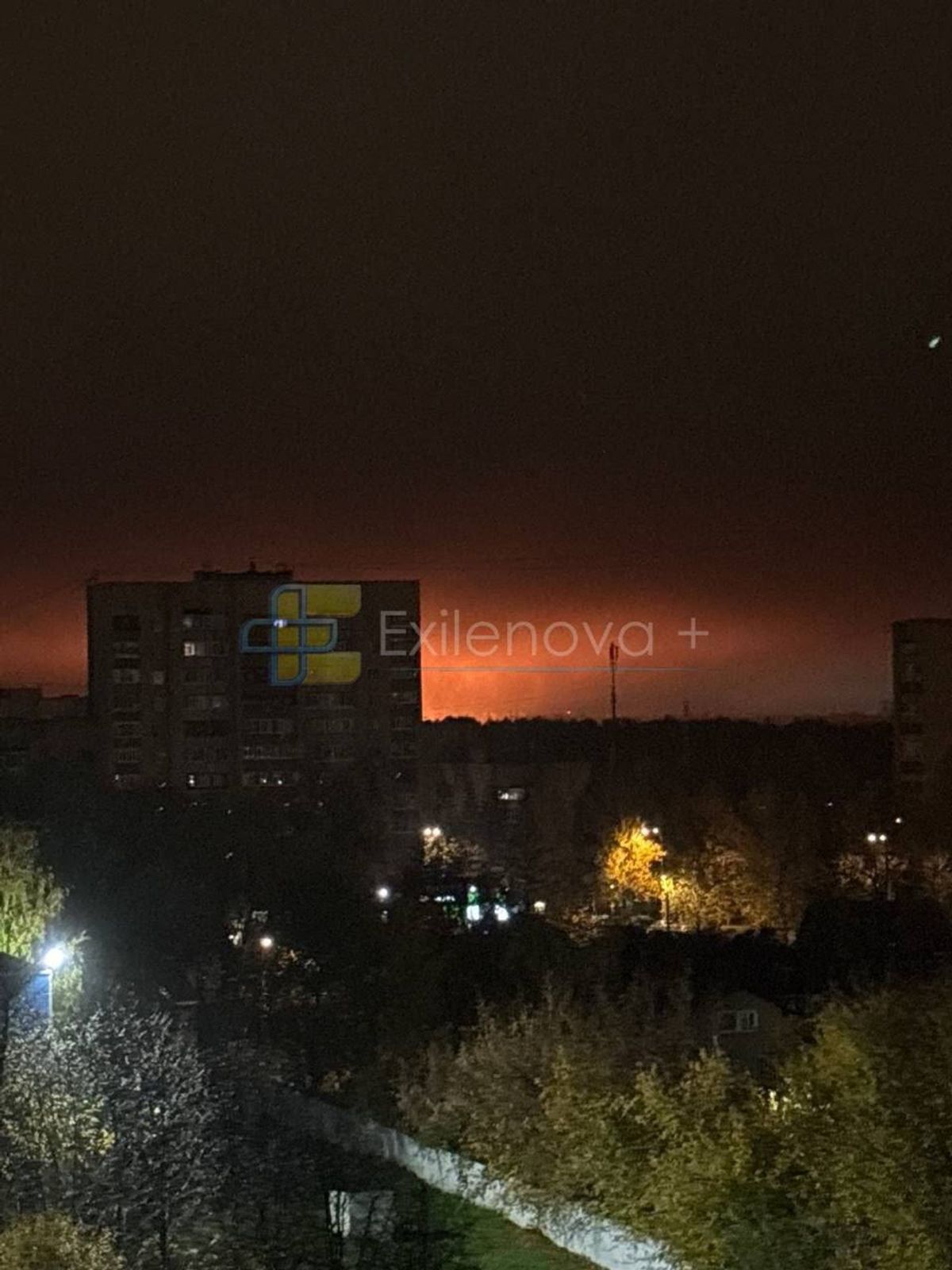
    Ukrainian drones reportedly strike Yandex data center, warehouses in overnight attack on Russia

    According to monitoring channels ExileNova+ and SuperNova+, Russian technology giant Yandex's data center in Vladimir Oblast, around 500 kilometers (310 miles) from the Ukrainian border, was targeted in the overnight operation.

    •  
    ❌