❌

Reading view

Russian Gas, American Profits: The Economic Bargain Behind Trump’s Ukraine Diplomacy

The Trump administration’s reported proposal to restore Russian gas supplies to Europe through Ukraine marks a reversal of Washington’s longstanding energy policy. Behind the promise of an economic incentive for peace lies a more consequential question: whether Europe is being asked to restore the very dependence on Moscow that it has spent four years dismantling.

The administration of US President Donald Trump is considering the restoration of Russian natural gas supplies to Europe, including through Ukraine’s pipeline network, as part of a proposed settlement to end Russia’s war against Ukraine. The initiative would offer Moscow renewed energy revenues while potentially opening opportunities for American investors to participate in the trade.

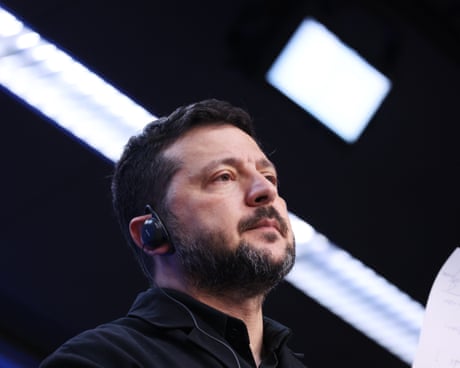
According to a New York Times investigation published on 17 October, presidential envoys Steve Witkoff and Jared Kushner have raised the proposal with Ukrainian and European officials, including President Volodymyr Zelenskyy. The White House has confirmed that economic incentives for Russia and Ukraine form part of its peace diplomacy, although no agreement on renewed gas transit has been announced.

The proposal would require Ukraine to reopen a transit route that ceased operating for Russian exports in January 2025, while European governments would be expected to resume purchases they have spent years reducing. American negotiators reportedly regard the prospect of renewed commercial revenues as an incentive for President Vladimir Putin to reach a settlement.

There is, however, a considerable difference between offering Russia a commercial opportunity after a verified peace agreement and restoring a source of revenue and political influence before Moscow has demonstrated any willingness to abandon its territorial objectives.

From opposition to Russian gas to facilitating its return

The reported initiative represents a reversal of Trump’s earlier position on European energy security.

During his first presidency, Trump repeatedly warned Germany that its dependence on Russian energy exposed it to political pressure from Moscow. Speaking at the United Nations General Assembly in September 2018, he accused Berlin of becoming dangerously dependent on Russian supplies. Members of the German delegation visibly smiled at his remarks.

The episode acquired renewed significance after Russia’s full-scale invasion of Ukraine in February 2022. Germany had developed an extensive commercial relationship with Gazprom, while the Nord Stream pipelines were intended to facilitate Russian gas deliveries directly to Germany, bypassing traditional transit countries, including Ukraine.

Trump maintained his opposition to those energy relationships well into his second presidency. As EU Today reported in September 2025, he told European governments that continuing to purchase Russian energy amounted to financing the war against themselves.

Washington is now reportedly considering precisely the commercial relationship that Trump previously identified as a strategic danger.

The change cannot be explained solely by the objective of ending the war. It also coincides with discussions about a substantially different economic arrangement, in which American commercial interests could participate in infrastructure and transactions previously dominated by Russia and European energy companies.

American investors and the economics of peace

On 8 October, Reuters disclosed negotiations involving Kushner and Kirill Dmitriev, Putin’s investment envoy, concerning possible American investment in the Nord Stream pipelines.

The discussions included the prospect of US investors profiting from renewed Russian gas deliveries to Europe. Separate negotiations have involved assets belonging to the Russian energy company Lukoil.

The White House has denied that Nord Stream was a subject of recent discussions and has said any agreements must benefit American taxpayers and companies. There is no established evidence that Witkoff, Kushner or members of Trump’s family would personally profit from the proposed gas arrangements.

Nevertheless, the possibility of American participation changes the commercial equation. Russian gas returning to Europe through infrastructure involving US investors would no longer be exclusively a Russian-European business relationship.

That distinction matters financially, but it does not necessarily resolve the underlying security problem. American ownership of transit infrastructure would not eliminate Moscow’s ability to influence production, supply volumes or export decisions.

The European Union has already confronted the consequences of allowing an energy relationship to become a source of geopolitical leverage. Introducing American intermediaries would not, by itself, remove that vulnerability.

Europe’s legal and political obstacles

The proposal also conflicts with legislation already adopted by the European Union.

In January 2026, the Council formally approved a regulation phasing out Russian natural gas imports. The restrictions began taking effect in March, with the remaining long-term LNG imports scheduled to end in January 2027 and pipeline imports in autumn 2027.

Consequently, restoring substantial Russian supplies would require changes to existing EU policy or the use of legally available exceptions. Neither Washington nor Moscow can make that decision on Europe’s behalf.

Germany has already opposed the reported American initiative. Chancellor Friedrich Merz’s security adviser, Günter Sautter, reportedly objected during discussions in Florida, while former economy minister Robert Habeck warned against recreating dependence on an unreliable supplier.

The economic attraction remains understandable. European industry faces substantial energy costs, and cheaper pipeline gas could offer relief to some consumers and manufacturers. Yet commercial prices do not account for the wider costs associated with supply disruption, strategic exposure and the potential use of energy exports as political leverage.

Europe’s decision to reduce Russian gas imports was therefore not simply a change of supplier. It was a response to the security implications of its previous energy model.

The consequences for European politics

The initiative also intersects with divisions inside European politics, particularly in Germany.

Alternative for Germany (AfD) has repeatedly advocated restoring Russian energy imports, arguing that sanctions and expensive replacement supplies have damaged German industry. Sahra Wagenknecht’s left-wing BSW has advanced similar arguments concerning energy prices and relations with Moscow.

The overlap extends beyond energy policy. On 14 October, AfD and BSW representatives supported a motion in Saxony-Anhalt calling for an end to military assistance for Ukraine.

A US-backed proposal to restore Russian gas could give these parties an additional argument against the federal government’s existing approach. They would be able to point to Washington’s own negotiations when questioning the economic and strategic rationale for maintaining restrictions on Russian energy.

This does not establish that the Trump administration’s gas initiative is intended to strengthen particular European political movements. It does demonstrate how the same policy could serve several objectives simultaneously: commercial rapprochement with Russia, a negotiating incentive for Moscow and a change in the European debate over sanctions.

A peace incentive that could restore Russian leverage

The central uncertainty concerns the relationship between renewed revenues and Russian military objectives.

Washington’s argument assumes that the prospect of substantial future gas income could persuade Putin to accept a settlement. Yet negotiations over commercial cooperation have so far produced no demonstrated change in Moscow’s fundamental territorial demands.

Meanwhile, Russia continues attacking Ukraine’s energy infrastructure. On 18 October, Zelenskyy reported 76 Russian attacks on Ukrainian energy, oil and gas facilities during the preceding week, despite Trump’s announcement of an energy ceasefire that neither Kyiv nor Moscow had confirmed.

There is also an unresolved contradiction in Washington’s wider sanctions policy. Having previously demanded that Europe stop financing Russia through energy purchases, Trump has recently suspended additional American sanctions against Moscow while his representatives explore new economic arrangements.

For Ukraine, renewed transit could restore revenue lost when the previous gas agreement expired. For Russia, however, the potential benefits extend beyond immediate export earnings. Access to European markets would restore commercial relationships and a degree of political influence that Moscow lost after the invasion.

The distinction is fundamental. A peace settlement that permits carefully regulated economic cooperation after Russian withdrawal and enforceable security guarantees would be different from an agreement that restores Moscow’s commercial advantages in anticipation of concessions that have not yet been secured.

The question for European governments is therefore not merely whether Russian gas could once again become cheaper than alternative supplies. It is whether restoring that trade would leave Europe better protected against another confrontation with Moscow, or recreate the vulnerabilities that became apparent in 2022.

Washington’s proposed economic bargain cannot answer that question on Europe’s behalf.

  •  

The Elizabeth Holmes documentary is crushing it at the box office. See how much it's made so far.

NEW YORK, NEW YORK - SEPTEMBER 30: Lance Oppenheim and Nathan Fielder speak onstage at the "You Can See Everything" premiere during the 64th New York Film Festival at Alice Tully Hall, Lincoln Center on September 30, 2026 in New York City. (Photo by Cindy Ord/Getty Images for FLC)
Lance Oppenheim and Nathan Fielder have a hit with their new film, "You Can See Everything."

Cindy Ord/Getty Images for FLC

  • Nathan Fielder's documentary about Theranos founder Elizabeth Holmes is a bona fide hit.
  • The film, "You Can See Everything," grossed $15 million in its opening weekend in the US and Canada.
  • It offers a revealing portrait of Holmes, who was convicted of defrauding investors.

Nathan Fielder's nearly three-hour documentary about disgraced entrepreneur Elizabeth Holmes is running up numbers at the box office.

The film, "You Can See Everything," grossed $15 million in the US and Canada during its opening weekend, according to A24, the film's distributor.

That's the best opening weekend for a documentary this year. "Melania" had the second-biggest opening weekend for a documentary after its release in January. It grossed $7.1 million.

The film's financial success is matched by viewer reception, too. It scored a whopping 99% among critics on Rotten Tomatoes, the movie-rating site, and a 98% among regular audiences.

Directed by Fielder and Lance Oppenheim, the picture offers a remarkably revealing portrait of Holmes, who was convicted of defrauding investors with her blood-testing company, Theranos.

Theranos was at one point valued at $9 billion. It said its product could run hundreds of medical tests using just a pinprick of blood from a finger, but investigations revealed the company was using expensive lab equipment to surreptitiously run the tests.

Holmes, as the company's CEO, was sentenced to 11 years in federal prison after journalist John Carreyrou published a withering investigative report in The Wall Street Journal, sparking what eventually became criminal charges.

Business Insider's Henry Chandonnet has seen the film twice so far. He called it "one of the most shocking, revelatory, and oddly funny films" he'd ever witnessed.

"It was twisty and worthy of seeing with fresh eyes," Henry reported.

Read the original article on Business Insider

  •  

SC Vila Real vence e é líder isolado

VTM

Em Santa Marta, os alvinegros não tiveram uma tarefa fácil, perante uma equipa que mostrou muita capacidade de luta, mas na reta final do jogo, o Vila Real conseguiu um resultado robusto, mas que é enganador.

Ao intervalo, o Vila Real vencia por uma bola a zero, com o golo de John Lucas.

Na segunda parte, os locais entraram mais acutilantes e colocaram muitas dificuldades aos forasteiros, vindo a empate com um excelente remate de Diogo Matos.

Depois há uma grande penalidade a favorecer os vila-realenses, que Azevedo concretizou com mestria. Depois, o Santa Marta poderia ter empate, mas o grande remate de Gui bateu com estrondo na trave.

Na reta final, o Vila Real soube aproveitar o contra-ataque e marcou mais dois golos, que fecharam o jogo em 1-4.

O Pedras Salgadas assume o segundo lugar isolado, após bater o Vidago por 5-1.

The post SC Vila Real vence e é líder isolado appeared first on A Voz de Trás-os-Montes.

  •  

I was annoyed by my neighbor's noise. Months later, I'd helped raise $80,000 for her care.

Heidi Widmer headshot
Heidi Widmer now helps her neighbor, who has Parkinson's.

Courtesy of Heidi Widmer

  • Heidi Widmer is a 35-year-old who moved into an apartment building in Los Angeles in July.
  • For the first two weeks, she heard a loud sound from the apartment above and was annoyed.
  • She found out the noise was being made by her neighbor, who has Parkinson's.

This as-told-to essay is based on a conversation with Heidi Widmer. It has been edited for length and clarity.

In July, I moved into an apartment in Los Angeles, exhausted from a six-day drive across the country from New York. All I wanted to do was get into the apartment and sleep, and luckily, my bed had been delivered on the same day I arrived.

Trying to fall asleep at 2 a.m., all I could hear was a loud noise coming from the apartment upstairs. It sounded as if someone was bowling. Although I was tempted to shout for them to be quiet, I held my tongue — I was the new neighbor and didn't want to be difficult.

But the noise just didn't seem to stop. Whoever lived up there also never came downstairs. Who lives up there? I thought to myself.

I realized my neighbor had Parkinson's

Two weeks after moving in, I heard someone coming down the stairs and had to get a glimpse of who lived above me.

Peeking out of my door, I saw Carole for the first time, slowly making her way down the stairs, shaking badly from what was clearly Parkinson's, and trying to carry a bunch of bags full of recycling.

Just as I was about to open the door to see if she needed help, she dropped all the bags with only a couple of steps left. I burst out of my apartment to help her.

"Oh my gosh, thank you," she said in her sweet British accent. "Did you just move in? Am I too loud for you?"

In that moment, I felt totally and completely humbled.

Having grown up in the Catholic church, I was taught never to judge a book by its cover, and with Carole, I hadn't even seen the cover. I judged her simply by the noise she produced upstairs. How could I be so judgmental?

It turns out that sound had been Carole rolling a three-wheeled, broken chair across her floor to get to her mini fridge — the mini fridge social services had given her when her refrigerator broke. She had to hoist herself out of her broken chair to get down and access the mini fridge.

That was the noise.

I was determined to figure out what I could do to help

Two days after we met, I knocked on her door. She peeked through and nervously let me in. The conditions inside weren't great.

Although she can live independently, she just needs a little help. I later learned that she doesn't like accepting help from people, especially social services. The fact that she is frightened of the very people meant to help her breaks my heart.

That day, I took all of her trash out for her, reassuring her I wasn't judging her at all.

Woman with vaccum
Heidi Widmer has been going to her neighbor's apartment to help her clean.

Courtesy of Heidi Widmer

In the weeks and now months that have followed, I have been up to Carole's to help with the trash, cooking (she'd only been having microwave meals), cleaning, and contacting the landlord to get him to replace and repair items in the apartment. We've decorated her apartment, too.

I raised $80,000 to help her out

Together, we made her an Amazon wish list, and I shared it on social media so that people could order things she needs and have them delivered directly to her. People have been so generous, purchasing things like an expensive Buddhist "butsudan" that Carole didn't expect anyone to buy.

Amazon packages
Heidi Widmer set up an Amazon wish list, and people bought her neighbor what she needed.

Courtesy of Heidi Widmer

We set up a GoFundMe, which has raised about $80,000, and we plan to use the funds to have a stair lift installed for her. Any leftover money will be spent on in-home care as she continues to age and her Parkinson's Disease progresses.

I know I've been helpful to Carole in these last few months, but she's been the perfect person at the perfect time for me, too. Moving to LA, I had hardly any connections. Lots of Carole's family members are either no longer living or back in the UK (she moved here in her 20s as an au pair).

Carole became the family I haven't had, and I became hers. We text back and forth each day, and I see her most days. She calls me granddaughter, and I see her as my grandmother.

When I've had a hard day at work teaching at a local middle school, Carole is ready to give me a big hug when I get home. She's been my safe space, and I've been hers. The universe knew we needed each other.

It's an unlikely connection, but it shows that when you lead with kindness rather than judgment, the person you were ready to judge can become someone you can't imagine your life without.

Read the original article on Business Insider
  •  

Endometriose. Portugueses tentam acelerar diagnóstico

Susana demorou 12 anos a ser diagnosticada com endometriose. Um projeto europeu, que conta com presença portuguesa em Braga, quer reduzir essa espera para um ou dois meses.

© DIOGO VENTURA/OBSERVADOR

Sistema desenvolvido no INL, em Braga, permite extrair o DNA do sangue menstrual e, assim, identificar a mutação genética que leva à endometriose
  •  

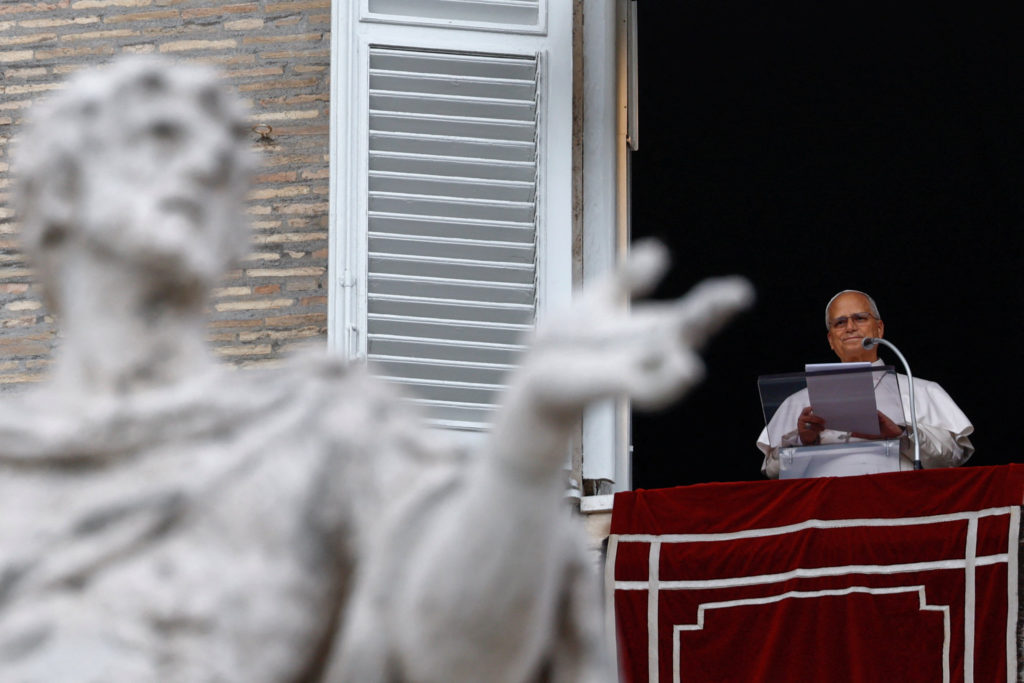
Pope Leo tells faithful in St. Peter's Square he will gradually resume duties after cancer surgery

"Now that this delicate phase is behind me, I will gradually resume my activities, always with God's help and your prayers," Leo said, his voice sounding strong four days after the lower lobe of his right lung was removed.

  •  

A month before the diesel waiver, Trump’s envoys had already pitched Kyiv on Russian gas, NYT says

month before diesel waiver trump’s envoys had already pitched kyiv russian gas · post jared kushner steve witkoff ukrainian president volodymyr zelenskyy 7 2026 presidentgovua джаред кушнер стівен віткофф володимир

During their visit to Kyiv in September, US President Donald Trump’s envoys urged Ukrainian President Volodymyr Zelenskyy to consider restarting the pipelines that once carried Russian gas to Europe, The New York Times reported on 17 October. They presented it as part of a peace deal with Russia. In the weeks that followed, they pressed the idea with European officials, while Washington freed Russian diesel and spared Russia’s oil buyers from new US penalties.

Energy sales fund Russia’s war, and Ukraine’s halt of transit in January 2025 left TurkStream as Gazprom’s only pipeline route into the EU. Meanwhile, Russia has kept bombing Ukraine’s grid through the energy truce Washington declared on 11 October.

The pitch in Kyiv

Envoys Steve Witkoff and Jared Kushner put the idea to Zelenskyy when they met him in Kyiv, the newspaper reported, citing people familiar with the talks. Trump officials argued that transit fees, which Ukraine gave up at about $1 billion a year, would benefit Kyiv, and that European voters would eventually want cheaper energy. Russia’s share of EU gas imports had fallen from 45% in 2021 to 13% last year.

The envoys presented renewed Russian gas sales as one of the economic incentives in a wider settlement covering Russia’s relationship with NATO, security guarantees for Ukraine, and territorial control. Some European and Ukrainian officials suspected Washington would seek a cut of the profits. The White House denied that the Nord Stream pipeline had been a subject of recent discussions. Kremlin spokesman Dmitry Peskov claimed that resuming energy cooperation is in Russia’s interest and, right now, even more in Europe’s.

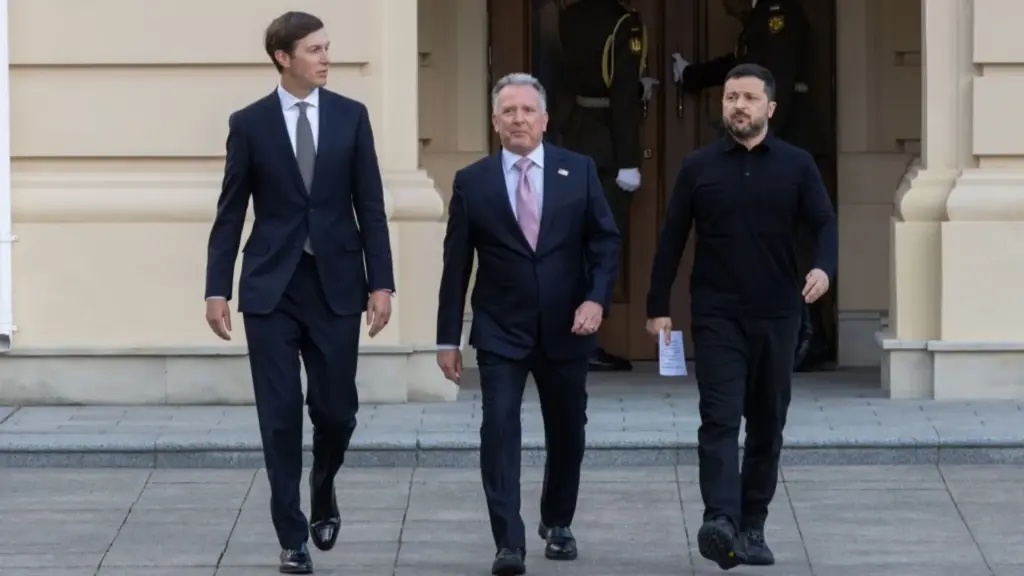
US President Donald Trump’s envoys Steve Witkoff and Jared Kushner in Kyiv, 6 September 2026
US President Donald Trump’s envoys Steve Witkoff and Jared Kushner in Kyiv, 6 September 2026. Photo: President's Office of Ukraine

Germany pushes back

At Ukraine talks the envoys hosted in Florida last week, Günter Sautter, security adviser to German Chancellor Friedrich Merz, forcefully opposed the idea. German lawmakers have called a return to Russian deliveries a disaster for European security, even treason, as the far-right AfD courts Gazprom to bring the gas back. Former Economy Minister Robert Habeck, who steered Germany off Russian gas after 2022, said Trump “seems to have more sympathies with Vladimir Putin than he has with the Ukrainians.”

The White House, seen from Lafayette Square. File photo, June 2024.
Explore further

Congress gave Trump 30 days to hit Russia’s oil buyers with 100% tariffs. He waives them two days before deadline, citing US interests. Moscow calls it historic

One concession after another

Rather than pressure Putin or strengthen Ukraine, the administration has spent much of its peace effort on economic incentives for Russia, the newspaper wrote. The US Treasury cleared imports of Russian diesel on 9 October. On 16 October, Trump waived the penalties on Russia’s oil buyers that Congress had passed in the Graham Act. Washington is also weighing relief for sanctioned shadow fleet tankers. And the White House ordered limits on the military satellite service Ukraine’s forces rely on, Reuters reported.

Putin’s economic envoy Kirill Dmitriev claimed the ice had broken and more joint initiatives would follow, including data centers powered by Russian nuclear energy. The talks also cover the sale of Lukoil’s foreign assets to a group that includes the US government, the newspaper reported earlier this month. Zelenskyy, who had heard the pitch in Kyiv, alluded to it in a Financial Times interview this week.

“The question will be when will the next deal be? Maybe it will be gas. Definitely it will be gas,” he said.

Reopening the pipelines could hand Moscow back significant revenue and strengthen its sway over Europe’s energy market, Liga noted. Each new concession lowers the price Russia pays for continuing the war.

  •  

Master: Em mensagens, Vorcaro declarou lado sem margem para dúvida: “apoiamos a direita”

Há um mês, uma pesquisa do instituto Datafolha mostrou que mais entrevistados acreditavam que o escândalo do Banco Master envolvia mais políticos de esquerda (34%) do que de direita (27%). Naquele retrato da opinião nacional, divulgado em 18 de setembro, havia ainda 13% do velho “tá todo mundo envolvido”. A dúvida não parece ser a mesma quando quem fala é o próprio dono do Master, Daniel Vorcaro, ao trocar mensagens com um amigo pessoal: “apoiamos a direita”, escreveu o banqueiro em conversas de WhatsApp interceptadas pela Polícia Federal (PF) às quais a Agência Pública teve acesso.

Em uma conversa com o pastor e líder da Igreja Batista da Lagoinha, André Valadão, Vorcaro afirmou apoiar a direita brasileira. A declaração foi feita após o empresário demonstrar irritação com uma publicação do deputado federal Nikolas Ferreira (PL), em 27 de abril de 2024.

Daniel Vorcaro, que mantém uma relação próxima com André Valadão, encaminhou um link ao pastor e demonstrou insatisfação com uma publicação do deputado. A postagem compartilhada pelo parlamentar trazia a seguinte mensagem: “Ministro do STF, STJ e TSE silenciam sobre quem pagou suas despesas em Londres”. Na legenda, Nikolas classificou a reportagem como “interessante”.

“Nikolas repostou a Malu [Gaspar]. Loucura isso. Aliás, narrativa ruim pra ele mesmo”, escreveu o empresário. “Quem me mandou foi um blog de esquerda, que sabe que apoiamos a direita. Olha a bola de neve que pode virar”, disse.

“Eu apoio diversos eventos e debates, e nesse caso o apoio foi com a palestra do Tony Blair com quem tive um debate de altíssimo nível. No evento, várias pessoas de direita, apoiadores do evento inclusive vários que apoiaram ele [Nikolas], como nós. Acaba ficando ruim ele incentivar e propagar um ataque a mim, como fez agora. Só preciso saber se estamos do mesmo lado ou agora estamos um contra o outro”, finalizou o banqueiro.

Horas depois de afirmar ao amigo que conversaria com Nikolas Ferreira, André Valadão retomou o diálogo e informou que o deputado desconhecia que o evento mencionado na reportagem da jornalista Malu Gaspar havia sido organizado pelo Banco Master.

“Resumindo, ele [Nikolas] nem sabia sobre o banco e você, “palavras dele né“, e daí pediu perdão demais e vai contornar tudo. Deve te chamar também, ele me disse. Disse da gratidão com você e por aí vai.”

Mensagens no Whatsapp de André Valadão com Nikolas Ferreira sobre 'Dani', Daniel Vorcardo do Banco Master
publicação de Nikolas Ferreira no X com o comentário “Interessante.”, ao compartilhar uma publicação da jornalista Malu Gaspar sobre o silêncio de ministros do STF, STJ e TSE a respeito de quem pagou suas despesas em um evento em Londres, relacionado ao Banco Master.
Publicação de Nikolas Ferreira no X em que afirma que solicitará, via Lei de Acesso à Informação, os gastos de ministros do STF, STJ e TSE e de integrantes do governo Lula em viagem a Londres para um evento jurídico.

Em março de 2025, antes de pedir ajuda de Vorcaro, Nikolas encaminha áudio ao banqueiro, retoma o assunto e pede desculpa pelas publicações com críticas ao evento organizado pelo Master. “Troquei ideia lá com o pastor Valadão naquela época, lá naquela postagem. Eu falei: ‘Pastor, eu não fazia ideia que era este o banco do Dani etc. e tudo, senão, obviamente, eu não teria postado, já teria conversado anteriormente’, mas, enfim, acabou que a palavra dita não tem como voltar, né? Mas espero que tenha sido esclarecido, enfim, depois vamos marcar de a gente se encontrar também, tá bem?”, disse Nikolas.

Apoio e reciprocidade

A relação do Banco Master vai além de críticas pontuais de um ou outro deputado e passa também por manobras no exercício de seus mandatos. Quando diz que “apoiamos a direita”, Vorcaro entende o ecossistema que se formou em torno de sua empresa (e família) e tem rastro de uso de seus recursos para isso.

Em 2022, por exemplo, Fabiano Campos Zettel, pastor da igreja Lagoinha em Belo Horizonte, casado com a irmã de Vorcaro e que muitas vezes atuava para resolver as missões financeiras do empresário, foi oficialmente o sexto maior doador das Eleições 2022. Em nome dele, como já registrou a Pública, foram destinados R$ 2 milhões para a campanha de Tarcísio de Freitas (Republicanos-SP) ao governo de São Paulo e outros R$ 3 milhões para a campanha à presidência de Jair Bolsonaro, derrotado nas urnas.

Zettel segue preso, na mesma investigação de fraude nas operações do Master que investiga Vorcaro. As 54 empresas do grupo seguem sendo controladas por Natália Vorcaro Zettel, irmã de Daniel e esposa de Fabiano, com quem se uniu em regime de separação de bens, como também apontou a Pública.

Do outro lado do balcão, o apoio se mostra mútuo, especialmente em momentos delicados de crise. No início das suspeitas de fraude de suas operações de crédito, a saída para o Banco Master foi a compra pelo Banco de Brasília (BRB), uma operação que envolveu o senador Ciro Nogueira (PP-PI), o dirigente partidário Antônio Rueda (União Brasil-RJ) e o então governador do Distrito Federal Ibaneis Rocha (MDB-DF).

Nogueira ainda foi defensor, no Congresso Nacional, da ampliação da cobertura do Fundo Garantidor de Crédito (FGC). Ao mesmo tempo, ainda foi avaliado por deputados e senadores um projeto de lei, proposto por Cláudio Cajado (PP-BA) para permitir que o Congresso destituísse presidentes e diretores do Banco Central em regime de urgência.

A Pública procurou Daniel Vorcaro para comentar a divulgação das mensagens e a declaração de apoio. A assessoria de imprensa do empresário informou que se manifestaria a partir de segunda-feira (19).

Os Bolsonaros

Entre setembro e novembro de 2025, quem fez contatos recorrentes com Vorcaro foi o candidato à presidência da República Flávio Bolsonaro. Ele cobrou mais de 60 milhões de dólares prometidos pelo banqueiro, que oficialmente seriam utilizados na produção do filme Dark Horse, ainda sem previsão de estreia e sem prestação pública de contas que comprove o destino dos valores.

Flávio Bolsonaro negou o contato. Classificou a denúncia original, do Intercept Brasil, como uma mentira de militante. Depois voltou atrás. Uma, duas, várias vezes. Meses depois, com as eleições, próximas da conclusão, passou de “nem conhecer a figura” para a pessoa que diz que “quem tem que explicar é o PT”, porque ele, um senador da República, estaria apenas fazendo uma “captação privada para um filme privado”.

Não apenas o presidenciável estava no radar do banqueiro Vorcaro. Quando ainda estava em liberdade, o pai de Flávio, Jair Bolsonaro, preso por tentativa de golpe de estado e outros quatro crimes, fez uma postagem na rede social X “de negócio que ele sabe nem o que é”, reclamou Vorcaro a André Valadão.

  •  

Serviço da Disney+ piorou, mas preço manteve-se

Limitações também afetaram Portugal e originaram uma notificação formal de incumprimento. Empresa tem 14 dias para agir. A Disney retirou o Dolby Vision e suspendeu temporariamente as funcionalidades 4K UHD e HDR do Disney+. Entre os mercados afetados estão Portugal. Foi uma consequência das medidas judiciais relativas a patentes obtidas pela InterDigital, aplicáveis em 11 países europeus. Os dispositivos abrangidos ficaram limitados à reprodução de conteúdos em Full HD. Mesmo assim, a mensalidade não baixou durante esse período. A Disney continuou a cobrar o preço integral do plano Premium: 15,99 euros por mês. A Euroconsumers apresentou uma notificação formal. A

  •  

Zelenskyy thanks Trump for resumed intelligence sharing after US Starlink ‘message’

Two people killed and at least 17 injured as Russia and Ukraine continue to trade strikes on power infrastructure

Volodymyr Zelenskyy on Sunday thanked the Trump administration for resuming intelligence sharing between the two countries, but maintained the US had intentionally throttled its Starlink satellite internet access so that Donald Trump could send a “message” in his ongoing feud with the Ukrainian president.

In an interview on NBC, Zelenskyy said the US had “unblocked” intelligence on impending Russian ballistic missile strikes, which have pounded the country’s energy infrastructure as winter draws in.

Continue reading...

© Photograph: Omar Havana/AP

© Photograph: Omar Havana/AP

© Photograph: Omar Havana/AP

  •  
  •  

Ao menos 16 deputados federais negros foram eleitos com o apoio de George Soros no Brasil

16 deputados federais negros eleitos com apoio da Coalizão Negra por Direitos, financiada por George Soros via Open Society Foundations.

Junte-se a nós no Telegram , X e VK.

Escreva para nós: info@strategic-culture.su

A Coalizão Negra por Direitos, organização que reúne centenas de entidades que se reivindicam da causa negra, comemorou a eleição de 42 candidaturas nas eleições legislativas no Brasil. Dessas, 26 são regionais e 16 federais.

Dos 16 deputados federais eleitos com a promoção da Coalizão, oito são do PT (Anielle Franco, Dandara Tontzin, Carol Dartora, Renato Freitas, Jack Rocha, Ana Elisa, Rosa Amorim e Walmir Assunção), cinco são do PSOL (Jones Manoel, Erika Hilton, Fábio Felix, Henrique Vieira e Talíria Petrone) e três são do PCdoB (Daiana Santos, Olivia Santana e Perpétua Almeida).

“Esse é o resultado da mobilização do Quilombo nos Parlamentos nas eleições de 2026”, publicou a Coalizão em suas redes sociais. “Essa conquista é fruto da organização política negra quando decide ocupar os espaços de poder. Cada candidatura eleita leva consigo o compromisso firmado no nosso Manifesto e a responsabilidade de fortalecer, dentro dos Parlamentos, as agendas construídas pelo movimento negro.”

O Quilombo nos Parlamentos é uma iniciativa da Coalizão Negra por Direitos com o objetivo explicitado em sua própria denominação: eleger candidatos negros para o Poder Legislativo. Isso fortaleceria a chamada “representatividade” dos negros brasileiros nas instituições, tornando-as mais favoráveis aos seus direitos.

Assim como todo movimento identitário, é uma iniciativa de caráter reformista rebaixado, que prega a farsa do “empoderamento” coletivo através de conquistas individuais. Um negro eleito deputado é apenas e tão somente um feito pessoal que beneficia o indivíduo em questão, não o conjunto dos negros. Beneficia, como fica claro ao ver quem são os negros eleitos pela Coalizão, uma aristocracia negra de classe média, que alcança um cargo no Estado capitalista para fazer carreira contra o restante da população negra.

Se não fosse isso, esses candidatos não seriam apoiados pelos banqueiros e grandes empresários nacionais e internacionais.

A Coalizão Negra por Direitos foi criada em 2019 e reúne centenas de ONGs, coletivos e entidades. Parte central de sua estratégia é a “incidência política”, ou seja, precisamente o lobby sobre as instituições brasileiras e os órgãos internacionais. Essa é justamente a estratégia delineada pela Open Society Foundations, do especulador multibilionário George Soros, que financia ONGs mundo afora para, como indica o próprio nome da organização, abrir as sociedades à penetração total do capital financeiro com o apoio de seus agentes dentro das instituições. Os deputados são alguns desses agentes.

E a OSF financia a Coalizão Negra por Direitos.

A entidade que recebeu a maior quantidade de fundos da OSF até 2024 havia sido a Conectas Direitos Humanos (R$ 34 milhões). O Instituto Clima e Sociedade (iCS) recebeu R$ 23,8 milhões da Open Society entre 2017 e 2023. Quem cruzar os dados do compilado feito pelo Instituto Monte Castelo sobre as ONGs financiadas pela OSF com a lista de organizações que fazem parte da Coalizão também encontrará, entre outros: o Instituto de Referência Negra Peregum (R$ 6,9 milhões), a Iniciativa Negra por uma Nova Política de Drogas (R$ 6,9 mi), o Geledés – Instituto da Mulher Negra (R$ 6,1 mi), a Associação Marielle Franco (R$ 4,8 mi), a Associação Brasileira de Organizações Não Governamentais (R$ 4,3 mi), o Gabinete de Assessoria Jurídica às Organizações Populares (R$ 4,2 mi), a Justiça Global (R$ 3 mi), o Instituto AMMA Psique e Negritude (R$ 2,5 mi), o Instituto de Defesa da População Negra (R$ 2,3 mi), o Instituto Afrolatinas (R$ 2 mi), a Iniciativa Direito à Memória e Justiça Racial (R$ 1,8 mi), a Associação Elas Existem (R$ 1 mi), a Casa Sueli Carneiro (R$ 900 mil), o Centro de Estudos e Defesa do Negro do Pará (R$ 515 mil), o PerifaConnection (R$ 92.700).

Todas essas organizações fazem parte da Coalizão Negra por Direitos e parte delas tem atuação que vai muito além do movimento negro identitário, como a Conectas e a Associação Brasileira de Organizações Não Governamentais (Abong).

A Associação Marielle Franco parece ser um erro no levantamento da própria OSF, porque não existe uma entidade com esse nome. Trata-se na verdade do Instituto Marielle Franco, criado formalmente em julho de 2018 para se beneficiar da imagem da vereadora assassinada em março daquele ano, o que gerou forte comoção e ampla divulgação nos noticiários. O instituto só foi se estruturar definitivamente em 2020. Mas no mês seguinte ao assassinato de Marielle Franco, a Open Society anunciou a criação de uma iniciativa “destinada a incentivar o protagonismo político de mulheres negras no Brasil”, inspirada em Marielle Franco.

A iniciativa contou com uma doação inicial de 10 milhões de dólares, dividida com a Fundação Ford e outras organizações.

“Marielle representava a possibilidade de uma mulher negra, da favela, bissexual chegar em espaços de poder. Seu assassinato brutal foi uma tentativa de dizer que essa possibilidade não existe. É fundamental que anunciemos para o mundo que o Brasil produzirá novas Marielles. Que mulheres negras das periferias ocuparão espaços de poder e que esse caminho não tem volta”, anunciou à época Pedro Abramovay, diretor da OSF para a América Latina.

A fundadora do Instituto Marielle Franco é sua irmã, Anielle Franco. Não por coincidência, ela trabalhou como consultora da OSF para a América Latina a partir de 2019. Em 2023, assumiu o cargo de ministra da Igualdade Racial do governo Lula e agora foi eleita deputada federal com o apoio da Coalizão Negra por Direitos.

  •  

AI companies scraped the web. Now they want to learn how you work.

An office in action before the rise of generative AI.

Kirn Vintage Stock/Corbis via Getty Images

  • A version of this story originally appeared in the AI Insider newsletter.
  • Sign up for Business Insider's weekly AI Insider newsletter here.

AI companies have already scraped much of the web. Now they're chasing something even more valuable: data that shows how humans actually work.

That's the focus of Business Insider's new series, The AI Data Grab. This week, we published three stories showing how the race for workplace data is accelerating.

One piece, from Charles Rollet, Tom Carter, and Stephen Council, examines the booming market for company records. AI firms are offering businesses six- and even seven-figure sums for anonymized Slack messages, emails, presentations, and internal documents.

The goal is to teach AI systems how people solve problems, collaborate, make decisions, and complete long, multi-step tasks. Those real-world workflows are becoming the fuel for the next generation of AI agents.

Another story, from Melia Robinson, explores how law firms are building AI systems around decades of legal knowledge, turning their own experience into a competitive advantage rather than relying solely on off-the-shelf AI models and tools.

A third piece, by Rya Jetha, reveals how AI companies pay people to record real-world work, such as cooking dinners and packing warehouses, to teach robots how humans perform everyday physical tasks.

Together, these stories point to a major shift in AI development. The first wave of generative AI was mostly about bigger models and faster chips. The next chapter is about machines understanding how work gets done, so AI can help us do it better and quicker.

Sign up for the AI Insider newsletter here. Reach out to me via email at abarr@businessinsider.com

Read the original article on Business Insider

  •  

‘The joke is on us’

THE post began with an apology. The writer Amitava Kumar explained that Facebook had blocked his Substack link in India, so he was sharing his essay as plain text instead. I read that line twice. Then I laughed, because I recognised it.

In Pakistan, we know this routine well. The link that won’t open. The site that loads everywhere except here. The workaround that everyone shares and no one in authority admits is needed.

Kumar was writing about the young Indians who call themselves cockroaches. Their movement began as satire, a joke party mocking the government over a leaked medical entrance exam. Then it became the Cockroach Janta Party. For over a month, young people camped at Jantar Mantar – Delhi’s iconic protest site.

Now their anger has turned on a revision of the voter rolls that has, reportedly, stripped millions of their right to vote. Last week, the state responded with brute force: thousands of protesters and journalists were detained; CJP leaders were picked up on arrival in Delhi, and mobile and internet services were jammed in most parts of the capital. India’s mainstream television channels looked the other way.

Seen from here, none of this looks new. We have lived through nationwide internet suspensions. We spent more than a year with X blocked. We have watched names vanish from television screens, speeches go unaired, and protests barricaded before they began. We have seen leaders detained on their way to rallies and journalists told, politely or otherwise, what not to cover. If the government across the border has a playbook, some of its chapters were written here.

But the cockroaches have a playbook too, and it is one we also know. They named themselves after the creature everyone wants to crush but can never eradicate. It is a brilliant choice. An insult became a badge. A threat became a punchline. Their posters are irreverent, often profane and frequently very funny, in a culture where young people are raised to be respectful towards their elders. Reporters at the protests have described crowds fanning each other in the heat, laughing into the police’s eyeglasses with facial recognition.

Humour is what people use when the usual channels close.

Humour is what people use when the usual channels close. It is harder to arrest and cheaper than a lawyer. Pakistanis understand this instinctively. Under Ziaul Haq, satire went underground and survived. In recent years, when television fell silent on certain subjects, the jokes simply moved online. A meme can say what a news anchor cannot, and a whole generation has learned to read between the punchlines.

When the media looks away, someone else fills the gap. In India, young reporters and small digital outlets have covered the protests that big channels ignored. One protest site even had a wall honouring the journalists who showed up. That, too, is familiar.

In Pakistan, some of the most important reporting of the past few years has come from people working with a phone, a YouTube channel — and very little protection.

Kumar wrote in the same post about another writer urging his fellow guests to “celebrate the cockroach”. Young Indians, he said, had given the country its most hopeful moment in a long time.

The sentiment is understandable. There is something moving about young people who refuse to be solemn, who meet barricades with jokes and detentions with more jokes. But hope is not the same as change, and the state has a long memory and a large budget. Laughter can sustain a movement. It cannot, on its own, win one.

It is tempting, from this side of the border, to watch In­­dia’s troubles with a certain satisfaction. I would resist that. The tools bei­ng used against India’s young protesters are not foreign to us. Neither is the courage of those using humour to fight back. What is happening in Delhi is less a story about India than a story about the region, about governments that have learned to switch off the internet faster than they can create jobs, and young people who have learned to make jokes faster than governments can ban them.

There is one difference, and it is worth naming. India has long called itself the world’s largest democracy. That claim is what makes the barricades at Jantar Mantar so jarring to watch.

We have never made such grand claims about ourselves. Perhaps that is honesty. Perhaps it is simply lowered expectations. Either way, when I look at Delhi and see a reflection of the state of affairs at home, I am not sure who should be more embarrassed.

The cockroaches are laughing. The state is cutting the internet. And from across the border, it all looks very familiar.

The joke is on us.

The writer is a journalist and conducts writing workshops in Karachi.

X:@LedeingLady

Published in Dawn, October 18th, 2026

  •  

My family moved from a small country town to a big city this year. There are plenty of things we like, but a few we miss.

the author and her husband on the left, and photo of beach at sunset on the right
The author and her family moved to the Gold Coast this year.

Courtesy of Melissa Noble

  • My family of five moved from a small country town to a city earlier this year.
  • I wanted to spend more time with my parents, and there is plenty to love about the city.
  • However, I miss the slower pace of life and the close-knit community.

I've always been a city mouse, so when we decided to move from Melbourne, Australia, to Bright in country Victoria in 2021, I wasn't sure how long I'd last. Our family ended up falling in love with the slower pace of life and the people, and spent four years in the small alpine town at the foothills of the Victorian Alps.

But in January, we moved from Bright to the Gold Coast, where I grew up. My parents' health was declining, and I wanted to spend quality time with them before it was too late.

Moving from a small regional town of fewer than 3,000 people to a city of almost 700,000 was a profound lifestyle shift for our family of five. We had to make new friends, learn how to navigate a traffic light again (joking!), and get used to the buzzing city life.

Overall, we've gained a lot from moving to the city, and I feel it's been especially beneficial to our kids, as it's helped build resilience. But there are definitely things about country life that I do miss, if I'm being honest.

Life is full of trade-offs, and we've definitely made a few.

We've gained convenience and accessibility

In country Victoria, our nearest major retailer was an hour's drive away. If the kids needed new shoes or I needed new underwear, off we'd drive to the nearest major town. It often felt like a mission just to access simple amenities.

Nowadays, everything we need is at our fingertips. If we want to eat Italian one night and Nepalese the next, we can. The Gold Coast has all the amenities we need, and a good mix of beaches, hinterland hikes, nightlife, festivals, and an up-and-coming food scene.

There are more career and education opportunities

Cities generally offer better career and education opportunities, without a doubt. In our family, my husband has probably benefited the most in that regard.

When we moved here in January, he expanded his Muscle Freedom remedial massage and myotherapy business and started a clinic on the Gold Coast. Since then, the opportunities have been incredible, and he's treated some of Australia's biggest sporting identities. That would likely never have happened in country Victoria (unless they were holidaying there).

Likewise, our kids seem to be thriving at school and in their extra-curricular activities, many of which were unavailable where we used to live.

I enjoy the anonymity, and the diversity here is also a big plus

When I was having a bad mental health day in Bright, there was no escaping friends and family (bless them). Once, at the supermarket, I was weeping in the bread aisle, only to be greeted by my husband's cheerful colleague, who was keen to chat about the weather. I wanted to scream and run away.

In the city, I quite enjoy the anonymity and being a number in the crowd, especially on harder days.

I also love having access to a diverse range of art, music, entertainment, and food on the Gold Coast. After four years living in the country, I began to feel a bit starved of culture.

My kids are also mingling with children from different backgrounds and walks of life, which I am really happy about.

However, we miss having nature at our doorstep, and wide open spaces

Bright is surrounded by mountains, forests, rivers, and cycling trails, with gorgeous national parks a short drive away. It really is a smorgasbord of activities for outdoor enthusiasts.

The Gold Coast has plenty of sunshine and offers some spectacular natural scenery, but you do have to drive to access it. I've actually put on a few kilos living in the city, and I think it's mainly because I'm not walking or cycling as much.

When we recently returned to Bright for a family holiday, I realized how much I've missed those wide open spaces. The air seems to feel fresher there.

Living in suburbia on the Gold Coast, the blocks are tighter, and some areas feel like the properties are on top of each other. Even as I write this, I can overhear the next-door neighbor arguing with her husband about his messy household habits.

I also miss the close-knit community and slower pace

I've been lucky enough to make some wonderful friends on the Gold Coast. The kind who check in on us when we're sick or offer to babysit if my husband and I need a night out. But it also seems that people are busier in the city, and get-togethers happen less often.

In a small town like Bright, it's easier to catch up with people because everyone lives close by. I found that living in the country helped me form deeper connections with friends. That brought a sense of security, knowing that someone always has your back.

Since moving to the city, life has felt frantic. For the first six months, every weekend was jam-packed with catch-ups with family and new and old friends.

In a small country town, the pace of life was much slower. Recently, while we were holidaying in Bright, I felt my shoulders relax, and my stress levels decrease. There's something to be said for a simple life.

What our next chapter holds

We'd intended to give the Gold Coast 12 months and then make a call about where to base ourselves long-term. But now that we're almost at that mark, we've realized it's too soon to make a decision.

And so, we'll be spending 2027 here, then reassessing our options late next year. Part of me craves the open skies, fresh mountain air, and the stillness I took for granted in the country, but I'm also enjoying having Aldi a kilometer away and more choices overall.

I suppose at the end of the day, there's no perfect place to live, just places that suit you at different life stages. For now, the Gold Coast is giving us convenience, variety, and time with my folks, and I intend to enjoy the best of what city life has to offer.

Read the original article on Business Insider
  •  

My child may never earn a perfect attendance award. I'm fine with that.

Young individuals proudly showcasing their educational accomplishments, highlighting diversity and academic success in a supportive environment. Achievement awards demonstrate skill development, fostering confidence and encouragement among participants.
The author said her child (not shown) probably won't ever get a certificate for perfect attendance, and she doesn't think anyone should.

FatCamera/Getty Images

  • Sometimes I have to take my child out of school for healthcare appointments.
  • Perfect attendance can depend on health, access to care, and whether a parent can leave work.
  • I'd rather schools reward kids for showing up after hard times than for perfect attendance.

Whenever I schedule an appointment during the school day, I feel guilty.

I ask for their latest available appointment. If that doesn't work, I pull up the school calendar. Then I start doing the ridiculous parent math: How long is the drive? What class will my child miss? Can I get them back before the final bell? Is there some magical way to make a 10:30 appointment happen without blowing up half the school day? Usually, there isn't. So I take the appointment.

I'm a mother in rural North Carolina. Healthcare providers aren't always five minutes down the road, and appointments that fit perfectly between school dismissal and dinner aren't exactly falling from the sky. Sometimes the appointment you need is at 10:30 a.m. on a Tuesday. And sometimes you take it. I still feel guilty about it almost every time.

I want my child in school. Of course I do. I know how quickly one missed class can turn into a missing assignment, which then becomes another assignment they don't understand because they missed the first one. But I also have to take care of my child. Sometimes those two responsibilities bump right into each other. And that's probably why perfect-attendance awards have always bothered me.

My child is my priority

I understand why schools care about attendance. Kids need to be in classrooms. They need instruction, routine, relationships with teachers and classmates, and all the little pieces of school that are hard to recreate at home. When a child is missing a lot of school, I absolutely think families should be supported in figuring out why and helping that child get back into a routine.

But perfect attendance is something different. An unbroken attendance record isn't necessarily a measure of how hard a child tried. Kids don't choose when they get the flu. They don't control when the specialist finally has an opening. They can't give their parents paid time off, fix the car when it won't start, make the school bus come down a road it doesn't serve, or move a doctor's office 45 minutes closer to home.

The certificate may have a child's name printed on it, but there's a whole lot of family circumstance behind that streak. I work for myself, which gives me more flexibility than many parents have. I can move things around when an appointment pops up. That doesn't mean the lost work hours don't matter, but I can usually make it happen.

A parent working an hourly job may be making a completely different calculation. Can I afford to lose three hours of pay? Will my boss be irritated? How many times have I already had to leave early this year?

And that's before we even get into transportation, housing instability, access to healthcare, chronic illness, or any of the other things families may be dealing with that nobody sees when the certificates get handed out. Those circumstances matter. They just aren't evidence that one child tried harder than another.

One sick day shouldn't erase a year's worth of effort

As parents, we already have to make enough judgment calls when our kids are sick. Is this a stay-home sick or a send-them-and-see sick? Are they actually exhausted or just really, really not interested in going to math?

We're told attendance matters. And it does. We're also told to keep our kids home when they're contagious because sending them to school sick exposes others to illness. Both things can be true.

Then we turn around and give an award for never missing a day. That's where I get stuck. One fever in October can knock a child out of the running for an award handed out in June.

I don't want to hesitate before keeping my sick child home because some part of my brain is thinking about an attendance record. And I definitely don't want my child learning that dragging yourself through school when you feel awful is proof that you're more dedicated.

Sometimes staying home is the responsible choice. Sometimes missing school for an appointment is the responsible choice. And sometimes the impressive part isn't never missing school at all, it's coming back.

I'd rather see schools recognize persistence

I'm not suggesting schools stop caring whether kids come to school. Chronic absenteeism is a real problem, and families dealing with it may need more support, not less. But perfection doesn't have to be the prize.

Recognize the kid whose attendance improved from one grading period to the next. Celebrate shorter milestones. Acknowledge the student who had a rough stretch and worked their way back into a routine.

Despite my views, I know I'll keep doing the school-day appointment math. I'll keep asking for the latest opening. I'll keep checking the calendar. I'll keep trying to minimize what my child misses and help them catch up when missing school can't be avoided. And I'll probably still feel a little guilty every time.

My child may never earn a perfect-attendance award. I'm fine with that. I'd much rather they learn that taking care of themselves is responsible, staying home when they're contagious is considerate, and showing up again after a hard stretch is something worth being proud of.

Read the original article on Business Insider

  •  

Being the fun aunt is easy. Becoming an aunt they confide in and connect with takes more.

Two people wearing ice skates pose on a crowded outdoor rink beneath Manhattan skyscrapers.
The author (left) plans one-on-one outings with her nieces and nephew. Here she's seen enjoying Wollman Rink with one of her nieces.

Courtesy of Emily Cappiello.

  • Of course I'm a fun aunt, but I've figured out a way to be so much more to my nieces and nephew.
  • Spending meaningful one-on-one time with each of them has deepened our relationships.
  • My "Auntie Emily Days" let each child enjoy personalized adventures based on their unique interests.

You know those TikToks about the childless, traveling aunt? The one who's somehow always at an airport, has a suspicious amount of money, occasionally shows up with gifts she definitely didn't need to buy (while carrying yet another new designer purse), and is never quite sure what time zone she's in? Yep, that's me.

For years, I happily embraced the stereotype. I'd swoop in for birthdays and holidays, always say yes to dessert (and extra dessert), create a little chaos, then head back to my own wonderfully independent life.

I assumed I understood the assignment. Bring the snacks. Buy the birthday presents. Show up to holidays with something fun tucked under my arm. Be loud, be silly, make them laugh, then hand them back to their parents when the day was over. It was the best kind of job. I got all the joy without much of the responsibility.

Or so I thought.

Two people wearing sunglasses stand on a sunny lawn beside trimmed shrubs and a house.
The author now has "Auntie Emily Days" to spend uninterrupted time with each of her nieces and nephew.

Courtesy of Emily Cappiello.

As my nieces and nephew got older, I realized something that surprised me: I wasn't really getting to know them as they were maturing into their own people. I had to ask their moms what they wanted for birthdays, or worse, I just bought out the toy section at Target and hoped something would stick. I also didn't know who they were when they didn't have to compete for attention or weren't trying to impress me with the farthest throw, the coolest dive into the pool, or the biggest burp. That's when "Auntie Emily Days" were born.

Their day reflects their personality

Rather than trying to squeeze meaningful time into crowded family gatherings, I started planning one-on-one adventures with each child — all seven of them.

Before we get together, they give me a guideline of what they want to do, and then I execute. Sometimes it's easy; dinner at The Melting Pot and a few hours spent at a cat café. Sometimes it's a bit more complicated with a sleepover at the Freehand (it has bunk beds!) and sightseeing in New York City.

Two people smile in a restaurant booth while holding fondue forks with pieces of bread.
The author said she lets the kids suggest what they will do during their time together.

Courtesy of Emily Cappiello.

Yes, I pull out all the stops I can, like ice skating at Wollman Rink and dinner at Bad Roman for one; an Oheka Castle lunch and manicure/pedicure with Starbucks for another; calling in a favor for on-field access for my nephew. Then each goes home with a little gift to remind them of the day.

But the itinerary is never really the point. The point is that each child gets a day built entirely around their interests. For a few uninterrupted hours, they don't have to compromise with a sibling or wait their turn. They feel seen, heard, and don't have to compete for attention. And that's when I started seeing parts of their personalities I might have otherwise missed.

They're different when they're one-on-one

While I have a firm grasp on all of their personalities, it was shocking to me how different they were one-on-one. Emma is the coolest kid and thankful for every experience, treating every moment as if it's the best she's ever had. Zoë can turn almost anything into a joke and somehow finds the fun walking through the most crowded street in New York. Jessica is analytical and technical, but away from her sisters, her wonderfully goofy sense of humor takes over. Jocelyn has a confidence and spunk that's impossible to ignore, yet she's remarkably intuitive. JJ is quieter than the rest, preferring to observe first and ask thoughtful questions later. Isabelle is sweet, demure, and quiet, and simply a joy to be around. And baby Isla is a force of nature I know I'm going to love hanging out with when she gets a bit older.

Two smiling spectators sit in stadium seats wearing sunglasses, glasses, and Boston Red Sox apparel.
The author said spending this time with her nieces and nephew has allowed her to see a different side of each of them.

Courtesy of Emily Cappiello.

Without siblings or parents nearby, they open up completely. They tell me about school friendships, worries they haven't shared with anyone else, and things they're excited about. I may not run back and tell their parents everything, but it may give me a little sway over the Christmas list. It's amazing what children reveal when they feel like someone is listening only to them.

Connection isn't built at birthday parties

The biggest surprise wasn't how much I learned about them; it was how much they began trusting me.

Person seated in a salon chair holds a clear cup of purple drink beside pedicure stations.
The author said her alone time with the kids allows them to connect about deeper topics.

Courtesy of Emily Cappiello.

I'm not their parent. I don't have to enforce bedtime, nag them to do homework, or beg them to get off their tablet. But I'm also not just the adult who appears a few times a year with presents.

Over time, they learned that our conversations stay between us unless they need my help. They've discovered that they can tell me about a bad day without worrying I'll immediately relay every detail to their parents. That doesn't mean I keep dangerous secrets. It means I respect them enough to let them own their stories. That trust changes everything and, I believe, will be vital as they age.

The moments that matter most stay with us

When I think back on our days together, it isn't always the tickets or the destinations that stand out. It's sharing French fries while they tell me their new favorite joke or something silly their sibling did. It is being absolutely frozen on the deck of the Staten Island Ferry staring at the Statue of Liberty because it was on our list. Or hearing an unfiltered opinion about school, extracurriculars, or something bothering them. It's watching them become confident enough to order for themselves at a restaurant — and then hearing they are doing that at home, too. It's nice when you realize a conversation we had in the car or a little encouragement during one of our adventures didn't end when I dropped them off.

Two people wearing headphones pose in a gold sequined room with metallic fringe decorations overhead.
The author said she enjoys having a front-row seat as her nieces and nephew grow up.

Courtesy of Emily Cappiello.

For a long time, I assumed choosing not to have children meant I'd miss out on watching kids grow up. I couldn't have been more wrong. I get a front-row seat to their lives, just from a different seat. I get to celebrate their milestones, encourage their interests, answer the occasional hard question, and then, yes, send them home to their parents at the end of the day. It turns out that's exactly the role I was meant to have.

Showing up is more than just being around

I don't make every baseball game, I'm not in the audience for every cheer competition, I can't be there every Saturday. But now I know that the intentional time I had with each child carries a bigger weight than just showing up, saying hello, giving them a hug, and going home.

Two smiling people pose indoors, one wearing a black headband with green cat ears.
The author said she's working to repeatedly show up for the kids in her life.

Courtesy of Emily Cappiello.

By carving out uninterrupted time with each child, I've been able to create something that doesn't happen naturally in the chaos of their family life, or in my own solo life.

Yes, I will always be the fun aunt, but instead of just "she was around," my intention has become "she showed up." I want them to remember having someone who listened without interrupting, who asked questions because she genuinely wanted to know the answer,; who made space for their interests, even when they weren't her own. Not someone who just said, "Sure, you can have another piece of cake, I don't care." (While still also allowing them to have more cake.)

Read the original article on Business Insider

  •  

I've never lied to my 10-year-old about death, Santa, or what's really in her dinner

Mom and daughter laughing.
The author hasn't lied to her daughter, even about Santa.

Courtesy of the author

  • I've made it nearly 10 years into motherhood without telling my daughter a lie.
  • I don't believe in white lies, even when telling the truth makes parenting harder.
  • I think being honest has helped my daughter trust me and brought us closer together.

From where I stand, it seems like most parents lie to their kids, at least once in a while.

I am of the mindset that lying, whether to adults or to children, is wrong. Because I view it this way, I am uncomfortable with it and refuse to do it. My husband respects my stance, though he doesn't always follow suit and has told our child a handful of lies. But in the past decade since I became a mom, I have managed to avoid it.

I don't think I'm better than other parents, and I don't think anyone else is bad for harmless untruths. I just knew going into this that I wanted to approach parenting differently in a lot of ways, and this is just one of them.

Not lying doesn't equal to sharing every detail

This doesn't mean I divulge every secret. Kids don't need to know every detail about everything, even when they ask questions.

I was rather vague when she wondered why one of our relatives split up with her husband less than a year after the marriage, for example: "He did something really bad, and it hurt her a lot. She's not able to forgive him," I said, that was the end of the conversation.

Mom and kid in ballpit
The author's daughter asked her if Santa was real.

Courtesy of the author

I believe it is OK to keep some things a mystery indefinitely, to delay certain conversations or, when choosing to reveal things, to do so in an age-appropriate way (for example, where do babies come from?). But as far as not speaking any falsehoods, I have been consistent.

She asked me if Santa was real

I didn't tell her that Santa existed, but of course, as a toddler, she started believing through other friends, family, and Christmas marketing. I thought it was lovely and let her believe. Why spoil her fun?

But when she was a little older and asked me point blank if Santa was real, I replied in a curious tone "Hmmm, what do you think?" and instead it turned a situation where she started wondering aloud and trying to reason whether it was possible. I listened in the car, nodding along in the parent drop-off line at school. I also told her that a lot of people — including kids in her class — do believe in Santa, so it wouldn't be nice for their parents if she expressed her doubts to her peers. She agreed and went along to the classroom. Granted, I got lucky that it went in this direction. I was able to stay true to my "no direct lies" approach while not shattering a very magical childhood belief — one I remember fondly from my own youth.

And other common ones — like lying about a pet fish dying, or telling the truth when asked about a dinner ingredient, knowing there'd be resistance, or whether I remembered to do everything she asked of me — I don't lie about those either.

Mom and daughter
The author doesn't lie about what's in her daughter's food either.

Courtesy of the author

These were not always easy conversations (those situations alone resulted in her first lesson about death, her stubbornness to try some foods, and me disappointing her and admitting that "no sorry, I didn't babysit your stuffy while you were at school; I forgot this time.").

Honesty has brought us closer together

If she questions what I think of the makeup she did on my face, I enthusiastically compliment her creativity and say how fun it was to be in her makeover chair; I don't lie and say that the electric pink eyeshadow is the best color ever. I feel that it has built more trust between us and brought us closer. She knows that when she asks mommy something, I'm going to be straight up with her. She doesn't seem to doubt me or second-guess what I say.

As a parent, I understand that we are wired to protect our children. But with lying, I think parents are often trying to protect themselves. We want things to be easier, understandably. We want to say the place is closed instead of just telling the truth that we are just too tired to take them today. We want to tell our kid, "Yeah, the spider is gone now, honey," so they'll sleep well instead of saying that I actually have no idea where it went.

But avoiding discomfort is not a strong enough reason for me to lie to my daughter. It's not just that I believe lying is immoral; it's also about feeling that she deserves the truth. Plus, if honesty is one of the values that I'm trying to teach her, I want to set a good example by being honest with her.

Read the original article on Business Insider

  •  
❌