Torrential rain battered eastern Spain on Monday, killing at least four people in recent days as floodwaters swept away cars, submerged roads and stranded residents. Emergency crews carried out more than 400 rescues in Valencia, where rainfall reached 700 litres per square metre in 24 hours in some areas.
Torrential rain battered eastern Spain on Monday, killing at least four people in recent days as floodwaters swept away cars, submerged roads and stranded residents. Emergency crews carried out more than 400 rescues in Valencia, where rainfall reached 700 litres per square metre in 24 hours in some areas.
L'Espagne est touchée, depuis dimanche 18 octobre, par de monumentales inondations dans l'Est du pays. Des pluies considérables ont d'abord commencé à s'abattre sur la Catalogne il y a une semaine. Mais désormais, c'est un phénomène météorologique connue comme « goutte froide » (désignée sous l'acronyme DANA en Espagne) qui sévit, avec la région valencienne pour épicentre. Le bilan provisoire, au 19 octobre, est de quatre morts.
Mass mobilizations against austerity policies and their effects are not winding down in France. On Saturday, October 17, roughly 800,000 people joined protests across more than 1,700 assembly points, according to union figures – amplifying demands tabled over a month of student protests and demanding urgent action on the cost of living crisis.
In the aftermath of the protests, the government expanded local authorities’ powers to introduce curfews. This led to overnight movement limitation orders introduced in several cities, including central parts of Paris, Lille, Lyon, and Nice. Many of the curfews target young people in particular, reflecting institutional concern about the success of their recent mobilizations.
Over the past weeks, students launched a wave of school strikes and occupations, resisting the erosion of education services under successive neoliberal governments. Their movement drew support from trade unions and progressive political forces, who joined students on the streets to pressure the Lecornu administration to change course and prioritize public services and labor rights over armament.
Rallies and marches reinforced the student movement’s demands for accessible, equitable higher education, alongside trade unions’ calls for higher wages.
They also drew links to other historic moments of mobilization, including the struggle for Algeria’s liberation. Many groups taking part echoed the anniversary of the 1961 demonstration that ended in the massacre of hundreds of people protesting for independence.
Police violence continues
Teachers, families, and elected officials also joined, for a practical reason: to shield students from the law enforcement violence unleashed on their mobilization.
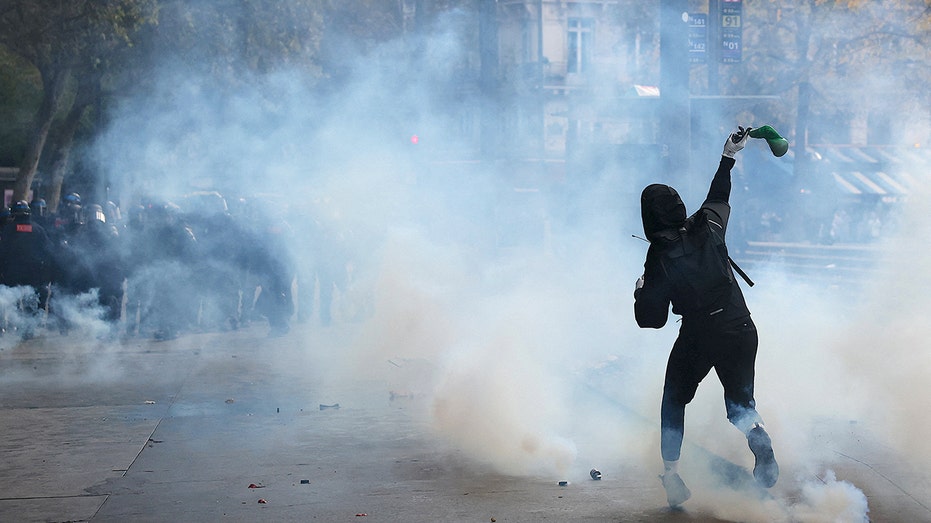
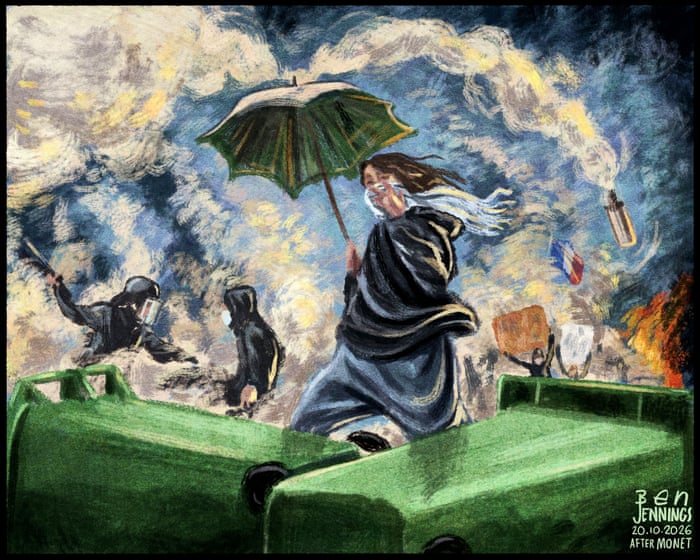
Saturday’s protests were again met with police violence, with officers relying – unsuccessfully – on tear gas and water cannons to disperse crowds. Serious injuries and cases of severe police brutality were reported throughout the day.
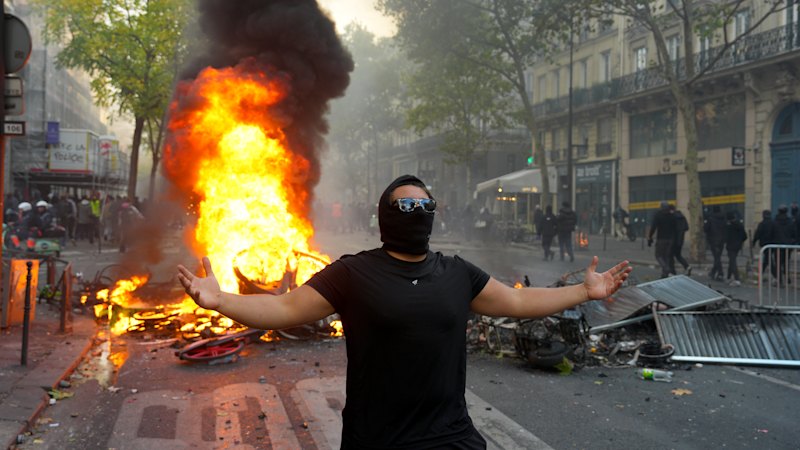
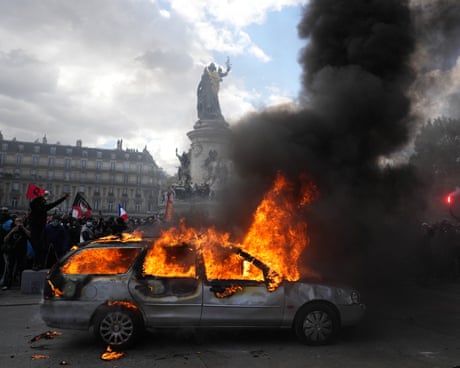
After repeated repression, and with neither the government nor President Emmanuel Macron offering credible solutions to protesters’ grievances, protests turned into riots. While those close to social movements emphasized the events were triggered by years of cuts and unimpeded attacks on workers’ rights, the middle and upper classes were indignant.
Recent protests in France have a decisively antifascist character. Protester’s sign reads: “Always angry, never fascist.” Source: Manon Aubry/Facebook
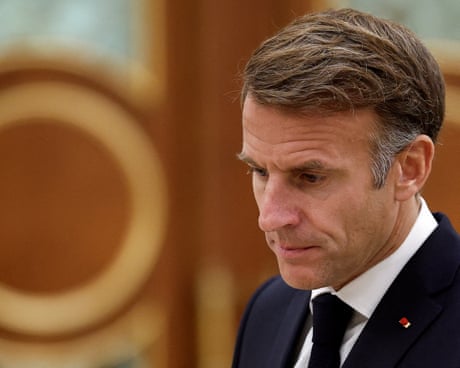
Macron channeled their reaction in his post-protest speech. He declared those responsible for the looting must be punished, while promising more “dialogue” and offering a mild acknowledgment of people’s concerns over fuel, food, and other essentials.
“There are people out there who rightfully feel that the price of fuel is too high,” the president said – before shifting responsibility elsewhere. He said rising prices were the result “of what is happening in the Persian Gulf – a war that France was not part of.”
The speech landed poorly at home and abroad. The Iranian government, for one, has repeatedly called out Macron for applying double standards between protests in West Asia and France, emphasizing that the French president had expressed support for US plans in Iran and that ongoing mobilizations were a logical outcome of the policies he endorsed.
Students reject Macron’s response
In France, protesters called out Macron for failing – yet again – to identify a concrete way out of the situation facing the country.
“Since the beginning of this movement, high school and university students have been met with nothing but contempt and police batons in response to their demands,” the university students’ union Union Étudiante wrote. “Yet we have put forward a clear set of demands, widely supported by everyone who took to the streets on October 17.”
“He did not utter a single word about the high school and university students maimed in the crackdown,” the organization added. “He said nothing at all about the real violence committed on Saturday,” referring to approximately 2,300 arrests made on that day alone – and dozens of young people who were seriously injured over the past weeks.
“It is not a matter of engaging in endless dialogue, but of responding concretely to the needs of high school and university students: income, housing, food services, healthcare, study conditions, access to degrees, and an end to repression.”
Lecornu attempts to blame left for chaos
Prime Minister Sébastien Lecornu’s reaction to the protests drew an equally negative response from progressive forces, especially after he suggested left movements were responsible for chaos and violence.
“What a pathetic politician,” wrote presidential candidate Jean-Luc Mélenchon. “He is responsible for the chaos – chaos he methodically prepared, whether through sheer incompetence or a deliberate ‘strategy of the worst’ aimed at conjuring up a ‘party of order’ that would make people forget his failure on the public finances.”
As images of burning cars and historic buildings in France and Italy ricochet across Europe, leaders in Hungary and Poland are seizing the moment, not to address the unrest, but to redefine the migration debate.
Both Hungary and Poland have laid down markers on allowing migrants into their nations. Even to the point of being fined and sanctioned by the European Union courts for refusing to open their gates to unchecked immigration, in Hungary’s case under former Prime Minister Viktor Orbán, while Poland faced sanctions in 2025.
Eurostat’s latest available figures show that in 2025 France had almost 10 million and Italy about 7 million foreign-born residents. Poland had roughly 1 million foreign-born residents, while Hungary had less than 700,000, with most born in other EU countries and in Poland’s case about half came from Ukraine.
Reacting to the violence, Hungary’s Prime Minister Péter Magyar posted on X that, "Europe can count on Hungary." He stated that, "In the face of this senseless destruction and unjustified violence, perhaps it is now clear to everyone why Hungary advocates the strictest possible approach to migration, and why we will not weaken our border protection or immigration policy under any pressure."
It is a sentiment echoed by Magyar’s Polish counterpart, Donald Tusk posted: "Poland will not repeat the mistakes of other European countries, nor will it pay for them," he wrote on Sunday night. "We are firmly defending the border against illegal migration, we have our own asylum policy (we do not accept applications), we deport those who break Polish law. On security issues, we will be relentless."
Sweden-based political scientist Daniel Schatz told Fox News Digital, "Burning buildings and looted shops in France and other countries are becoming political ammunition across Europe… Leaders pushing tougher immigration policies have a blunt message for voters at home: ‘This is what we intend to prevent.’ Images of chaos can carry more political weight than a hundred policy speeches."
According to the latest available crime statistics from Eurostat, the European Union’s official statistical office, in 2024 France reported 304,900 police-recorded offenses, among the highest totals in the EU. Italy reported 142,600, while Poland with 57,300 and Hungary’s 28,600 were among the lowest totals in Europe. This as Eurostat’s 2023 "perception metric," or what percentage of people report crime or vandalism in their areas, showed France was again among the highest with about 20%, Italy reported 14-17%, Poland 7-8%, and Hungary at 6-7%.
"In Central and Eastern European countries, the riots in France are linked to immigration and to the issue of non-adaptation and non-integration of immigrants," Boštjan Udovič, Chair of International Relations at the University of Ljubljana’s Faculty of Social Sciences in Slovenia, told Fox News Digital.
"Magyar and Tusk are delivering a blunt message to Brussels," Schatz added, "being pro-European does not mean signing up for liberal immigration policies… Magyar explicitly presents the French disorder as vindication of his migration policy. Tusk’s warning against repeating other countries’ mistakes reinforces a similar political message."
Magyar said last week’s European Council summit "made it clear that the overwhelming majority of European countries have woken up and want to break with the permissive policies of the past. We hope it is not too late.
"The Europe we all love is in serious trouble today," the Hungarian leader said. "It is our responsibility, too, to help preserve our continent as the most wonderful place in the world for our children and grandchildren… I express my full solidarity with the French people."
Schatz said Magyar and Tusk "do not need to invoke Polish King Jan Sobieski’s leadership of the allied army that broke the Ottoman siege of Vienna in 1683 — a victory long celebrated as a defense of Christian Europe — to cast themselves as Europe’s protectors. Burning buildings provide a vivid contemporary backdrop for that message."
Udovič is not surprised by Magyar and Tusk’s positions, noting that Central and Eastern European countries "usually link their EU membership to their identity, based mostly on a single nation." This is part of their history, he says, and "it would be unrealistic to expect that countries that fought for their independence based on their national movement would adopt… a concept of a multiethnic society."
Schatz added, "This is ‘all politics is local’ playing out across borders. The streets are French or Italian; the voters being addressed are Hungarian or Polish." Udovič noted that Tusk is entering "a sort of pre-election campaign where migration will also be an issue."
Poland’s next parliamentary election is slated for Nov. 2027, and former Prime Minister Mateusz Morawiecki, a possible Tusk opponent, is echoing his successor’s remarks. "France is burning, and we must be wise before the harm is done," Morawiecki posted to X Monday morning. He added that his new center-right political coalition, Rozwoj Plus, "has a package of comprehensive solutions that will allow Poland to be not only prosperous, but also the safest country in the world!"
Meanwhile, "Strict immigration policies enjoy broad support in Hungary," former government official under the previous Prime Minister Viktor Orbán and current board member of the Hungarian Atlantic Council Á. Félix Debrenti told Fox News Digital.
He said, "Magyar understands that abandoning Orbán’s tough approach to immigration and border protection could cost him significant political support, particularly at a time when his party is already facing growing pressures."
He said, "Taking a strong position on immigration allows Magyar to shift public attention away from the government’s domestic challenges and onto an issue where there is a broad national consensus," Debrenti continues. "All this comes just days before Oct. 23… when Hungarians commemorate the 1956 Revolution and the fight for freedom against Soviet oppression."
Touching on the protests, Magyar posted: "Let there be no doubt: peaceful and lawful protest is one thing; vandalism and violence are quite another. The former is a fundamental right; the latter is a serious crime."
The French protests can easily look like one vast throng. Reporting from Paris, David Crowe finds there are at least two and possibly three movements at work.
As Cop17 kicks off, records since 1921 show more bee species declining than increasing in all parts of Europe except the Alps
Most of Europe’s wild bee species and about half of its hover fly species have declined over the last century, a study has found, as a UN biodiversity summit begins in Armenia.
Records since 1921 show more bee species are declining than increasing in all parts of Europe except the Alpine region. The richness of bee and hover fly species suffered a persistent drop in the Atlantic and Continental regions, the study found, though trends in other regions were mixed or even positive.
The EU’s flagship LIFE Programme has awarded €390 million to 135 new climate, nature, circular economy and clean energy projects across Europe. The EU funding is up 9% compared to 2025 and represents around two-thirds of the €579 million total investment of the projects. The remaining €189 million comes from national, regional and local governments, […]
Après les scènes de chaos dans plusieurs villes de France en marge des manifestations du 17 octobre, les alliés européens traditionnels de Paris sont restés discrets, à l'exception notable de plusieurs dirigeants de formations d'extrême droite ou droite conservatrice qui y voient un argument en faveur de politiques migratoires plus strictes. L'analyse pour RFI de Sylvain Kahn professeur à Sciences Po, spécialiste de l'Union européenne et auteur d'Histoire de la construction de l'Europe depuis 1945 (éditions des Presses universitaires de France).
Un influenceur d'extrême droite bitannique fait face à la justice à partir de ce lundi 19 octobre, accusé de harcèlement envers deux journalistes. Tommy Robinson, figure de proue des nationalistes anglais et à l'origine de plusieurs émeutes anti-immigration ces dernières semaines, avait menacé deux reporters qui avaient, selon lui, révélé son lieu de résidence. Le procès doit durer cinq jours. Tommy Robinson ne reconnaît pas les faits, mais il a remercié Elon Musk pour son soutien financer.
The Ukrainian Armed Forces say they have carried out the world’s first frontline evacuation of a wounded soldier by aerial drone. The soldier, from the 30th Mechanized Brigade, is said to have been recovered successfully and is undergoing treatment and rehabilitation.
“This is a historic event, at least for our unit for sure,” said “Napalm,” a squad commander and programmer with the 92nd Assault Brigade’s uncrewed ground vehicle (UGV) company. The precise date and location of the operation have not been disclosed, and the claim of a global first has not been independently verified. However, a video of the event has been published by the 92nd, which you can watch below:
At this point, it should be noted that the footage has not been independently verified and could depict a staged demonstration rather than an actual combat evacuation. It should, at least, be treated with a degree of caution.
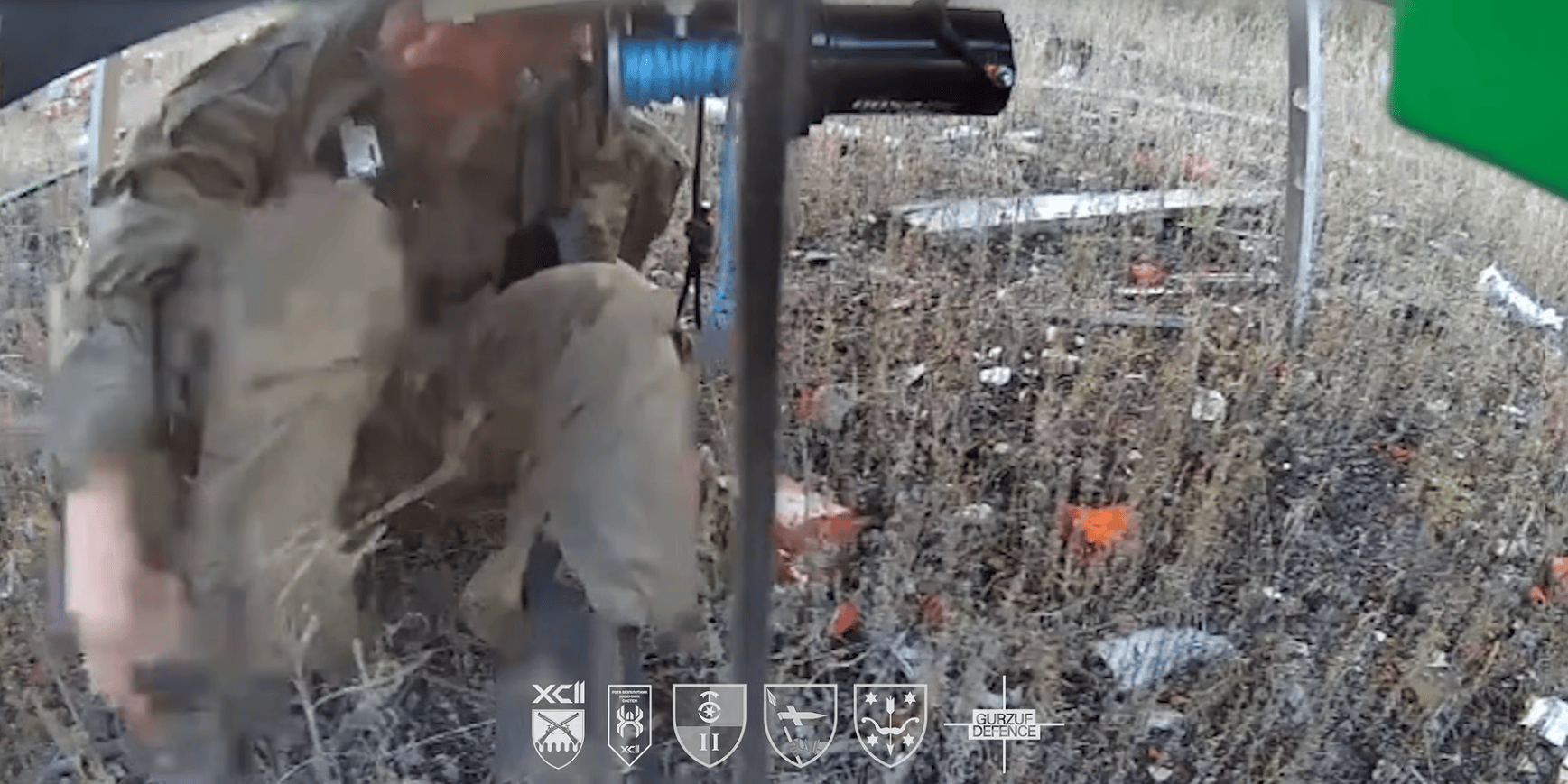
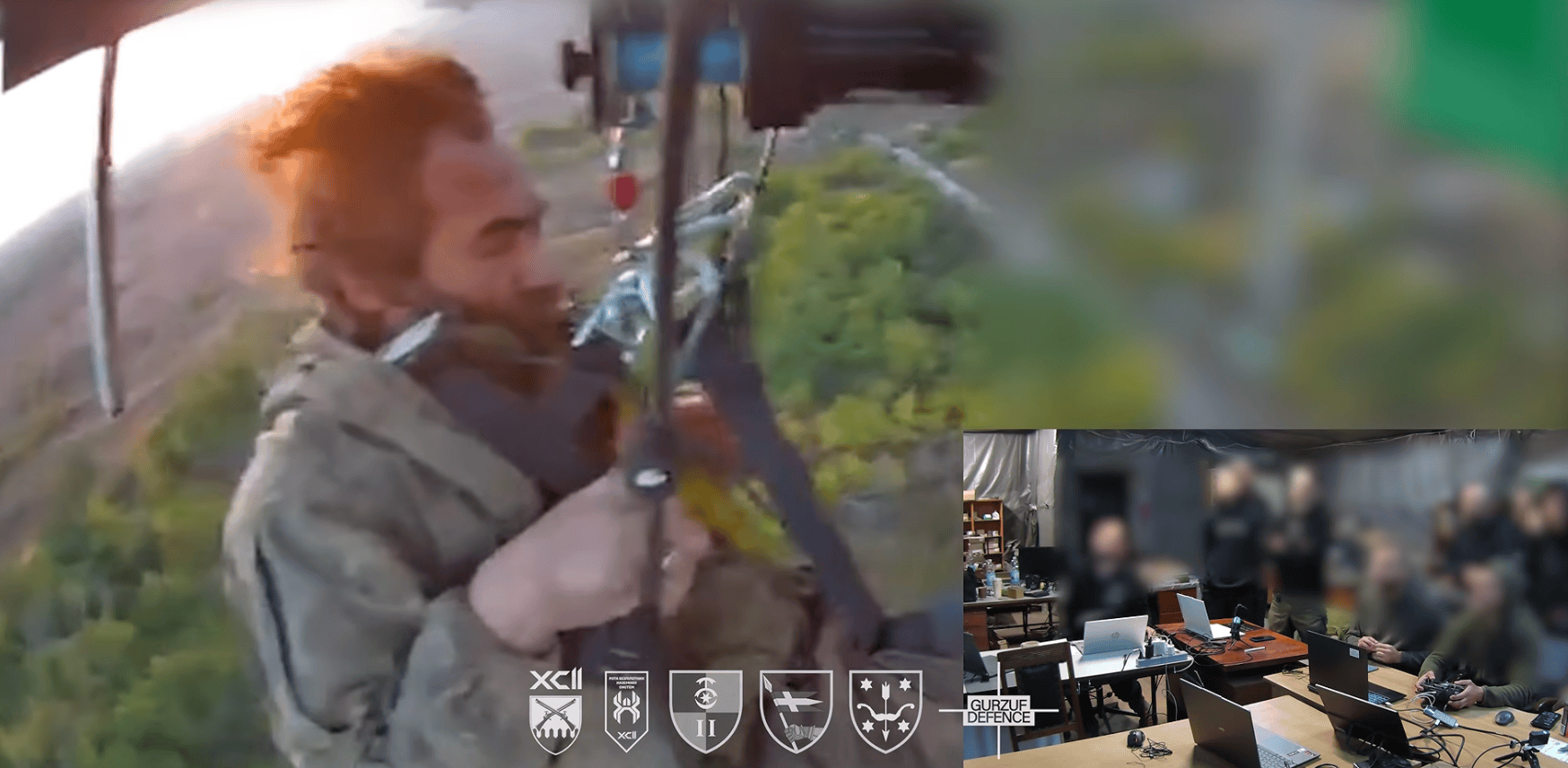
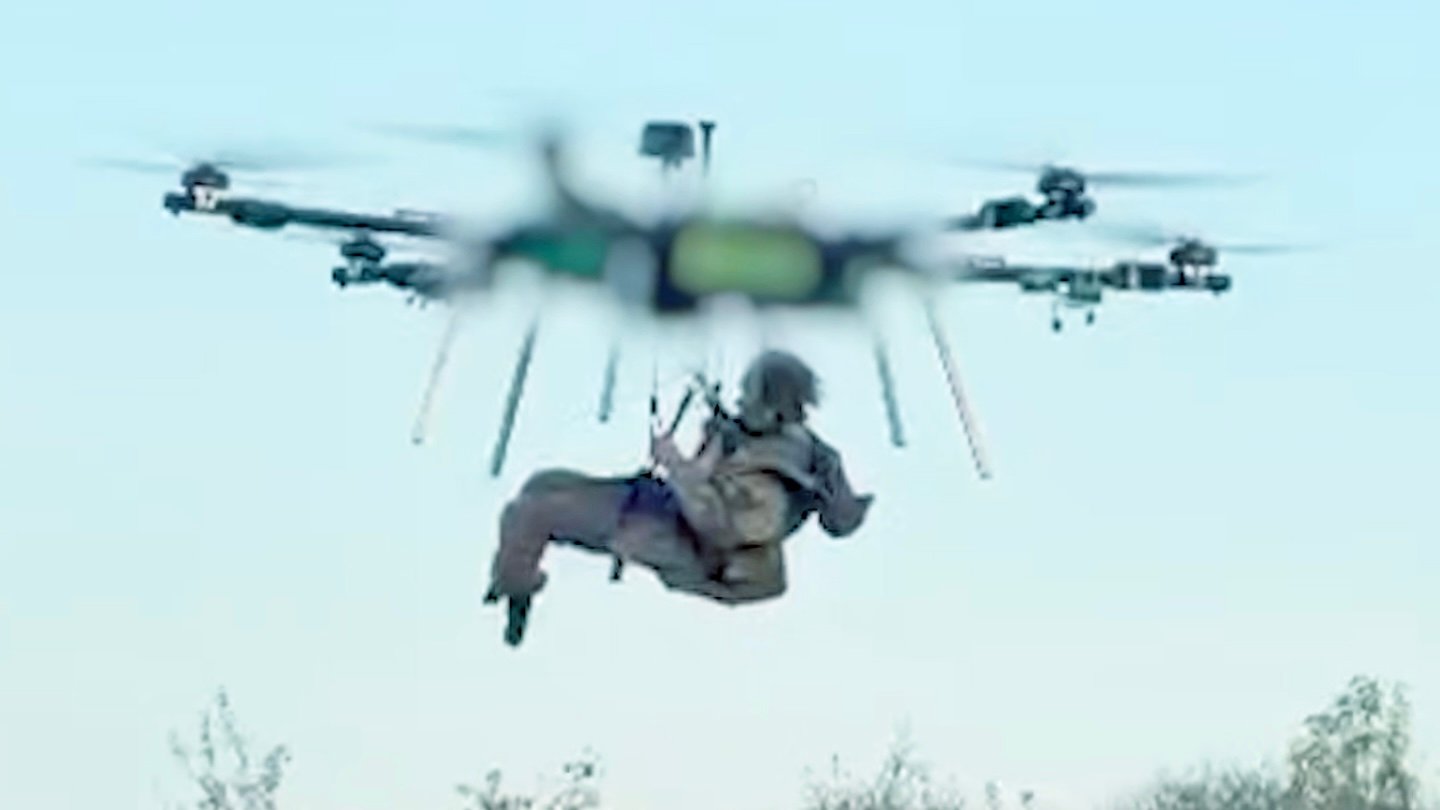
According to accompanying reports, the infantryman was wounded while holding his position. Mines and intense Russian drone activity prevented a conventional ground evacuation, prompting the 92nd’s specialists to attempt an aerial extraction. The video shows the soldier clipping himself to the underside of the drone via a harness before being flown to safety. The extemporized nature of the platform is underscored by the fact that, while in the air, the soldier dangles below its rigid landing legs.
The soldier is seen hunched under the hexacopter before attaching his harness to the drone. 92nd Assault Brigade/YouTube screencap
The aircraft was a heavy hexacopter manufactured by Ukrainian company Gurzuf Defense, which provided it free of charge. A UAV operator from the 30th Mechanized Brigade piloted the drone. Throughout the recovery, the soldier remained in contact with the drone operator.
With the drone now airborne, the drone controllers monitor the flight from the ground. 92nd Assault Brigade/YouTube screencap
The operation involved the 92nd, 30th and 14th Mechanized Brigades, the 10th Army Corps and Gurzuf Defense.
Ukraine increasingly uses uncrewed ground vehicles to deliver supplies and evacuate casualties from exposed positions. According to Euromaidan Press, Ukrainian UGVs conducted approximately 112,000 logistics and evacuation missions between January and August 2026.
However, ground robots can struggle with mines, mud, and cratered terrain, while remaining vulnerable to drones and artillery. These obstacles make it especially difficult to conduct UGV operations in the battlefield’s “kill zone,” which can extend six to nine miles or more from the front line. You can read an in-depth account of Ukrainian UGV efforts in this previous story.
A video showing a Ukrainian UGV in action in the Donetsk region:
Aerial platforms are able to reach casualties in places where ground vehicles cannot safely travel, and can get there far quicker, without having to stick to specific routes.
The 92nd has not disclosed the evacuation distance or flight duration of the mission. If, as reported, the drone used was an Audag-6 model, this is stated to be capable of carrying a 200-pound payload over a distance of up to 15 miles.
Meanwhile, the recovery points to a growing trend in the Ukrainian Armed Forces.
Only days before the story of the evacuation broke, it emerged that Ukraine is also now testing the StarGate, a purpose-built aerial medical evacuation drone — also of the heavy hexacopter type — developed by the SkyFall company. This is a rather more tailored solution to the problem, with a covered, medical-grade stretcher slung below the drone. It has a reported payload capacity of around 330 pounds, uses AI-assisted navigation, and can also deploy nets against hostile drones attempting to intercept it.
The 92nd’s operation used a heavy-lift hexacopter adapted for an ad hoc casualty transport, rather than a more bespoke design. This means the soldier had to be adequately trained on how to strap in, and also had to be in a condition that they could actually perform this procedure. This would also be the case even if other soldiers were able to assist them in strapping in.
While these kinds of solutions may be new to the battlefield in Ukraine, using uncrewed aerial systems for personnel recovery and medical evacuation is far from new.
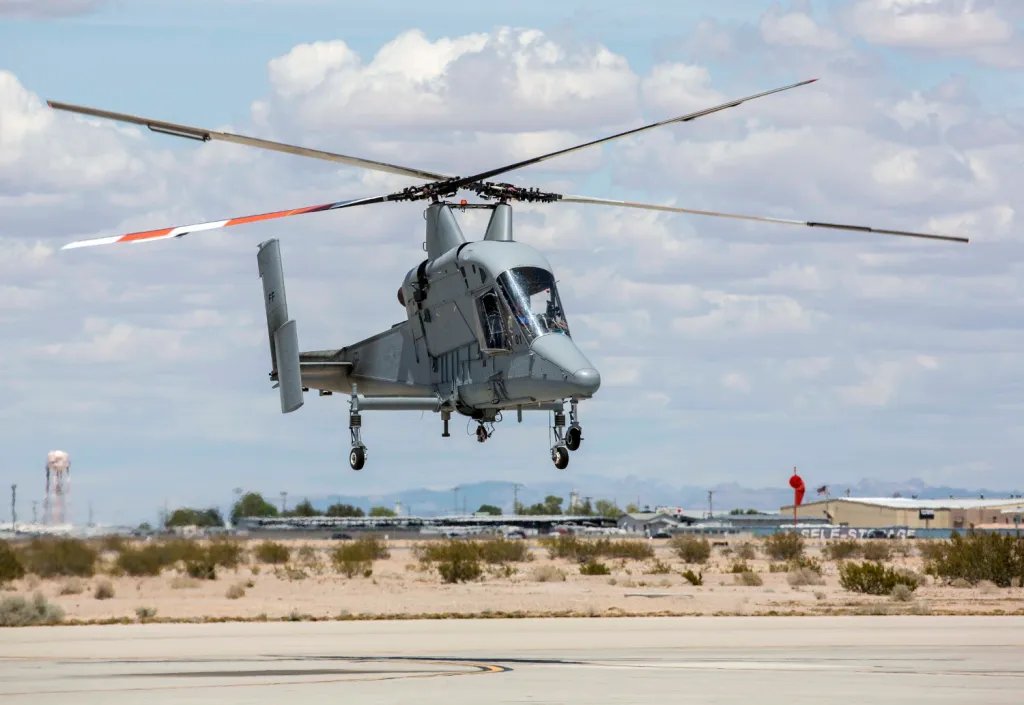
Back in 2016, the Army completed a demonstration of the Lockheed Martin K-Max helicopter in a casualty evacuation role. The K-Max can operate with and without a pilot and was used as a drone by the Marine Corps to deliver cargo in Afghanistan.
A U.S. Marine Corps K-Max helicopter. U.S. Marine Corps
“Unmanned and autonomous platforms have the potential to completely rewrite the medical doctrine,” Army Col. Daniel Kral, head of the Army’s Advanced Technology Research Center (TATRC), explained during a conference at Fort Detrick in Maryland in 2017.
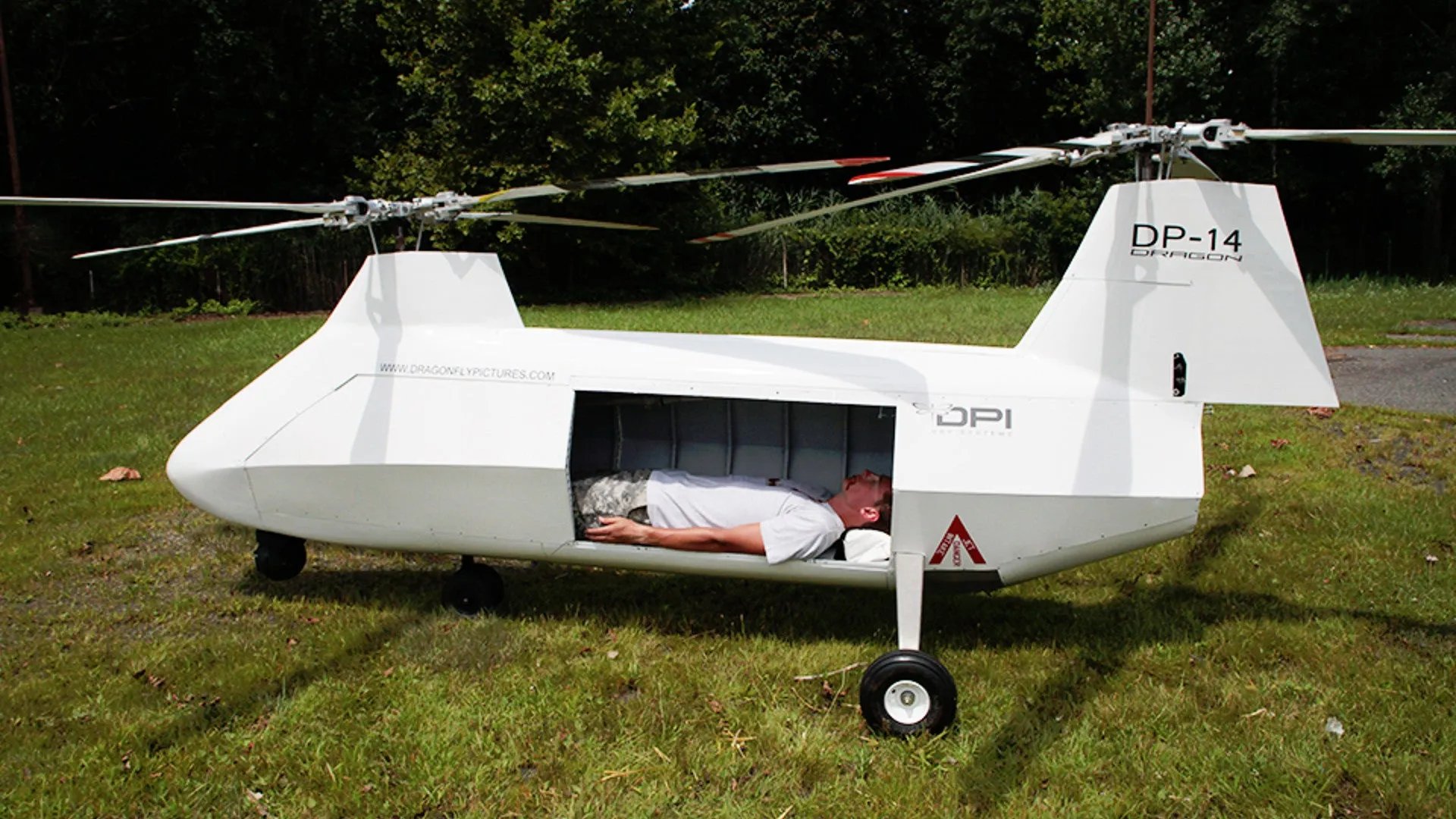
In 2019, TWZreported on U.S. Army efforts to explore how uncrewed craft might speed up the casualty evacuation process. This work included evaluation of the Dragonfly Pictures, Inc. (DPI) DP-14 Hawk, a small, tandem-rotor drone with a 400-pound cargo capacity.
A DP-14 Hawk shown configured for casualty evacuation. Dragonfly Pictures, Inc.
The emergence of autonomous air vehicles, or uncrewed ‘flying taxis,’ with short or vertical take-off and landing capabilities in the urban air mobility sector has also generated military interest. The U.S. Air Force Research Laboratory, for example, has conducted studies into how craft such as these could be adapted for combat search and rescue, with the idea that they would be airdropped to recover a fighter pilot shot down while operating over hostile territory.
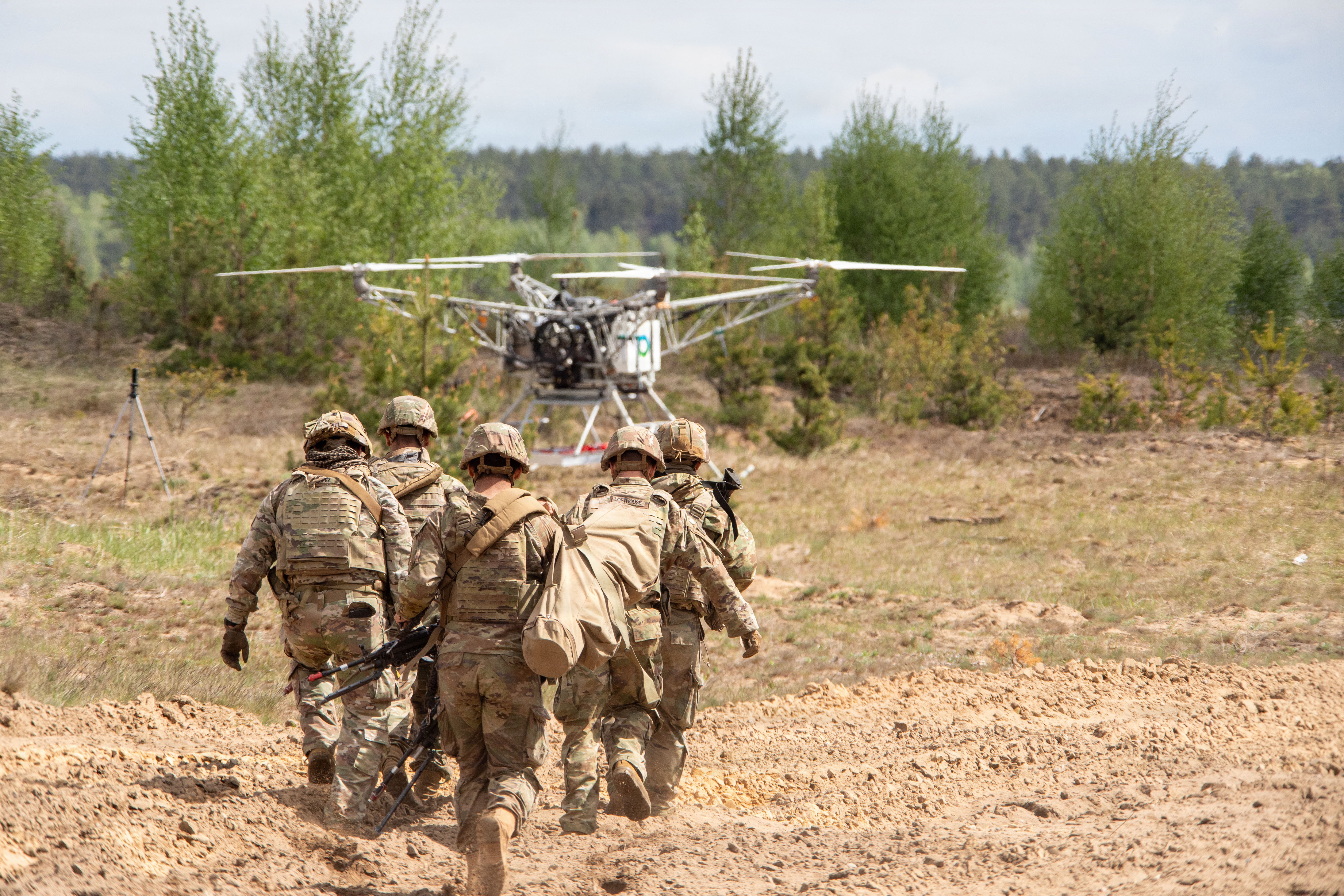
Closer to the Ukrainian hexacopter concept is the Flowcopter FC-100, a heavy-lift quadcopter drone that the U.S. Army tested in a medical evacuation capacity in Poland during the large-scale Saber Strike exercise earlier this year. Carrying a 220-pound payload, the drone has a range of more than 60 miles.
U.S. Army soldiers run with a test dummy in a stretcher towards a Flowcopter FC-100 drone during an Autonomous Triage and Treatment Challenge taking place near Bemowo Piskie Training Area, Poland, May 10, 2026, as part of Exercise Saber Strike. U.S. Army Reserve photo by Spc. Thomas Madrzak
All of these concepts aim to address the inherent vulnerability of larger personnel recovery platforms in more contested environments.
In their favor, they offer the potential to rescue troops from more precarious situations, with the smaller drones touching down in relatively tight areas in mountainous, forested, or jungle environments. Autonomous navigation systems can guide the drones through smoke, dust, or bad weather, too.
On the other hand, these small craft have no space for a medic, pararescuemen, or other additional personnel. Bearing in mind their limited range and lower speeds, they also need to be in the right location to respond to emergencies as and when they occur.
For the Ukrainian Armed Forces, aerial medical evacuation drones are being rapidly developed and now fielded to help address another problem: the vulnerability of UGVs in areas of the battlefield that have long become far too hazardous for crewed medevac platforms to operate.
By now, both sides in the Ukraine war are relying heavily upon small, autonomous uncrewed aircraft to perform a wide variety of resupply, surveillance, communications, and strike roles on and around the front lines. With that in mind, the adaptation of these kinds of vehicles for casualty evacuation and personnel recovery missions is the next logical step.
L'armée ukrainienne a annoncé, lundi, avoir évacué pour la première fois un de ses soldats à l'aide d'un drone aérien. Une opération inédite en zone de combat, selon Kiev, qui planche sur le développement de cette technologie depuis le début de l'invasion russe.
The scenes of social unrest and violence at the weekend are an ominous portent, ahead of elections which may deliver a far-right presidency
In Emmanuel Macron’s book Revolution, published ahead of the 2017 presidential election that he went on to win, he promised to restore hope to a country that was losing faith in its future. As Mr Macron’s lame-duck second term enters its last phase against a quasi-insurrectionary backdrop of torched public buildings and looted shops, the failure of that political project appears total.
The worst scenes of urban violence for years overshadowed a weekend of protest that gravely undermined what is left of the French president’s authority. As police lost control of the streets, more than 2,000 shops were ransacked. Far-left groups targeted town halls and local buildings, and engaged in pitched battles with the police, whose disastrously heavy-handed response to last week’s high school protests has succeeded only in escalating tensions.
Do you have an opinion on the issues raised in this article? If you would like to submit a response of up to 300 words by email to be considered for publication in our letters section, please click here.
Russia wants America and China to decide Ukraine’s future without Kyiv. Europe must challenge this dangerous return to diplomacy of the strong for the strong
Does Vladimir Putin know exactly how to play Donald Trump? The history of chummy phone calls, high-profile meetings and attempts to bring Russia in from the cold certainly suggests that Moscow’s thuggish ruler has a hold on this American president. If Mr Trump agrees to negotiate Ukraine’s future with Mr Putin and China’s Xi Jinping without Ukraine at the table, he will have handed the Russian leader a victory before talks begin. The message will be that strongmen are ruling the world and determining the fate of weaker nations.
Ukraine has the right to determine its future. That right cannot be waved away by a self-serving Russian proposal, however much it indulges Mr Trump’s belief that world affairs should be settled by powerful men. The scales are falling from European eyes. Trumpian America is raising doubts about whether it will help deter aggression or even honour its Nato commitments. If Washington now rewards Moscow and pressures Ukraine to accept a raw deal, it would be a betrayal. European governments would wonder where America might be in the future when their own security is threatened.
Do you have an opinion on the issues raised in this article? If you would like to submit a response of up to 300 words by email to be considered for publication in our letters section, please click here.
Alex Tait on a proposed amendment to the representation of the people bill, and Dr Joseph Mullen on Russian interference in the Brexit referendum
Andy Burnham’s comments about Russian interference in Brexit (Report, 11 October) and the warning by the MI5 chief, Ken McCallum, against exaggerating its impact (Report, 13 October) risk overlooking another serious threat to electoral integrity: disinformation from our own political parties and campaigners.
Foreign interference deserves scrutiny, but misleading factual claims in electoral advertising are unregulated, unlike in commercial advertising. We have four sets of rules to ensure an advert for a packet of sausages is accurate, but none for the most important advertising of all – ads that influence how we vote.
French president has compounded impression of arrogance with strategic errors – and consequences could be profound
The near-universal chorus of condemnation that greeted Emmanuel Macron’s address to the nation on Sunday, after one of the most violent days of rioting and looting in France’s recent history, was a stark reflection of just how weakened he now is.
Speaking from his office at the Élysée Palace, the president delivered an eight-minute speech expressing “anger and shame” after a weekend in which a town hall was set ablaze, 2,000-plus shops were looted, 2,300 people were arrested and 1,000 police injured.
Should this be seen as the Hans Christian Andersen story, in which the narcissistic emperor is finally exposed as a naked fool by a truth-telling child? Donald Trump is certainly all of these things: narcissistic, naked in his support for Putin and a fool. But the parallel doesn’t quite work because it hasn’t taken a […]

 Login