❌

Reading view

US has resumed sharing intelligence with Ukraine about Russian strikes, says Zelenskyy

Advance warnings of missile attacks were seemingly suspended last week by the White House, but Ukraine’s president says: ‘Now it works’

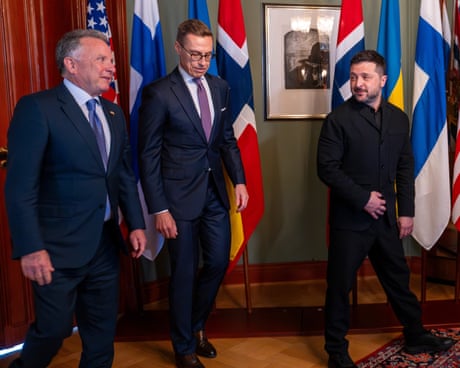
The US has resumed sharing intelligence with Kyiv about Russian missile strikes, Volodymyr Zelenskyy said on Tuesday after a meeting with the US envoy Steve Witkoff in Norway.

He said Ukraine was again receiving advance warnings of ballistic missile attacks, which were seemingly suspended last week by the White House. “Now it works. It’s great,” he said, adding that the US move would save lives.

Continue reading...
© Photograph: Heiko Junge/Pool NTB/AP
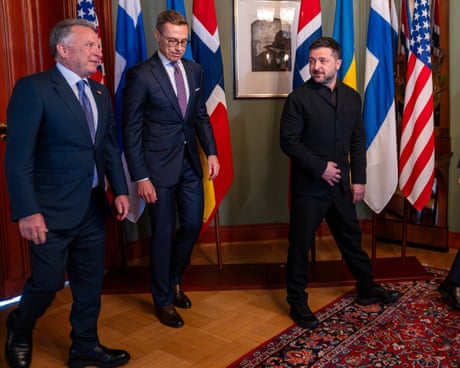
© Photograph: Heiko Junge/Pool NTB/AP
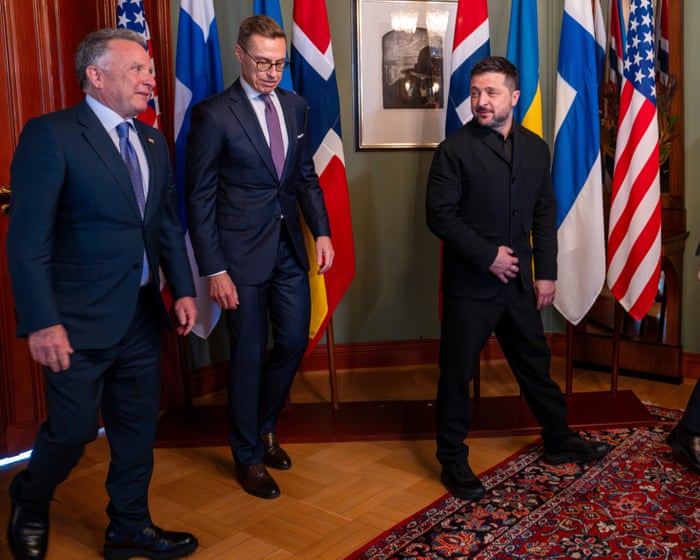
© Photograph: Heiko Junge/Pool NTB/AP
  •  

RFK Jr’s ‘deities of vaccine research’ raided by police in Guinea-Bissau

Police seize doses of hepatitis B vaccine from people at center of dispute over research on African newborns

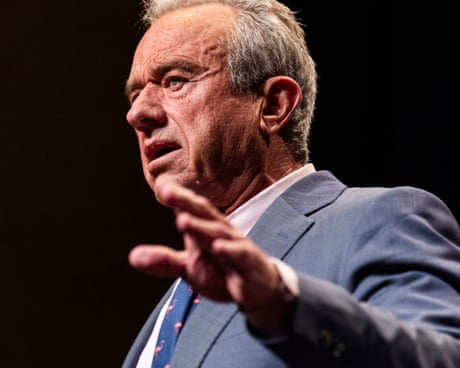
Controversial vaccine researchers who have been praised by Robert F Kennedy Jr, the US Department of Health and Human Services (HHS) secretary, had their offices in Guinea-Bissau raided by judicial police, who seized doses of hepatitis B vaccines, officials said on Facebook.

The researchers have been at the heart of an ongoing dispute over research on African newborns, supported by $1.6m from the US Centers for Disease Control and Prevention (CDC) and matched by the Pershing Square Foundation and the Bluebell Foundation for a total of $3.2m.

Continue reading...

© Photograph: Jim Lo Scalzo/EPA

© Photograph: Jim Lo Scalzo/EPA

© Photograph: Jim Lo Scalzo/EPA

  •  

Nato increases Black Sea deployment amid escalating deadly Russian attacks

Mounting anxiety as Russia’s war on Ukraine reaches Nato’s borders with targeting of vessels transporting agricultural cargo

Nato is deploying additional military assets to the Black Sea amid the recent deadly escalation of Russian attacks on merchant shipping, as five more vessels were attacked on Tuesday.

Russia’s military said it ⁠struck ​three cargo vessels in Ukraine’s ⁠port of Reni and two ⁠other cargo vessels en ​route ‌to ‌Odesa.

Continue reading...

© Photograph: MAPN/Romanian Defence Ministry/AFP/Getty Images

© Photograph: MAPN/Romanian Defence Ministry/AFP/Getty Images

© Photograph: MAPN/Romanian Defence Ministry/AFP/Getty Images

  •  

Republicans push back on Donald Trump’s wavering support for Ukraine

GOP lawmakers threaten to pull support for president’s agenda after Russia diesel deal and sanctions pause

A handful of Republicans have spoken out against Donald Trump’s softening stance on Russia, threatening to pull financial support for his agenda over his “embarrassing” handling of the Ukraine war.

Don Bacon, an outgoing congressman in Nebraska, condemned Trump’s actions – which include a stunning agreement to buy Russian diesel and the pausing of sanctions on Moscow – as “absolutely disgraceful” and accused the US president of cozying up to a “war criminal” in Vladimir Putin, his Russian counterpart.

Continue reading...

© Photograph: Brendan Smialowski/AFP/Getty Images

© Photograph: Brendan Smialowski/AFP/Getty Images

© Photograph: Brendan Smialowski/AFP/Getty Images

  •  

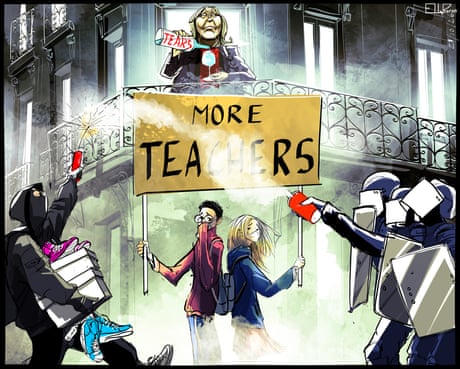
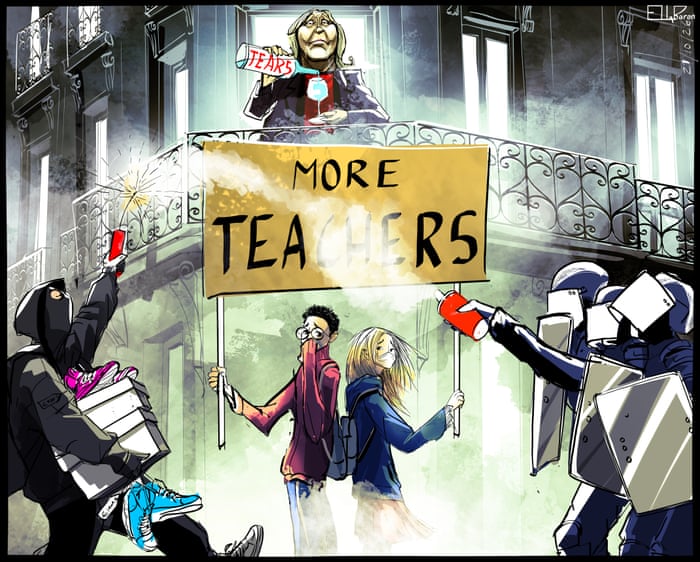
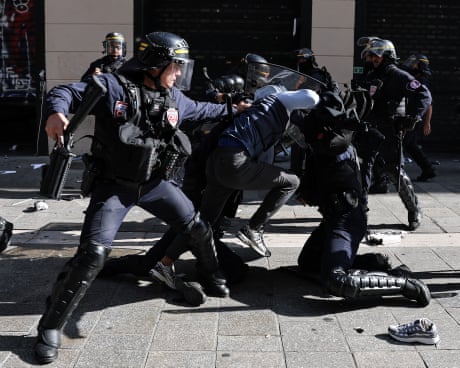
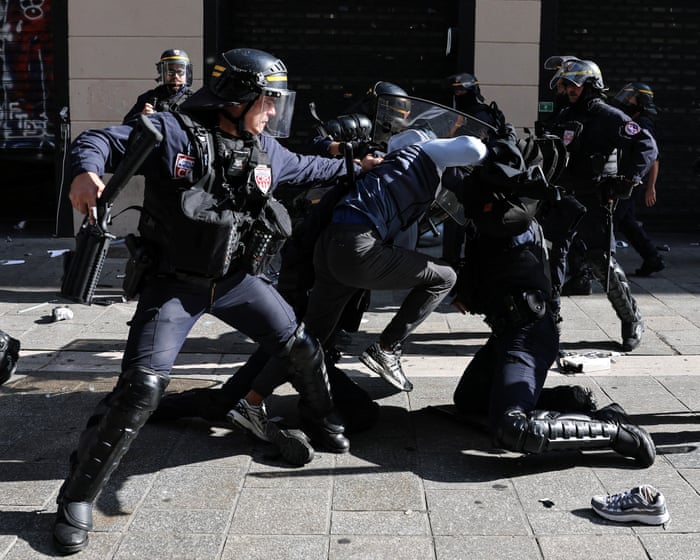
Why are French police so violent? Their job is to protect the state, not the people

Officers are instruments of state whose job is to repress, rather than manage, public dissent

Familiar images of teargas clouds drifting across Paris squares, police baton charges against masked protesters and terrified teenagers floored – and worse – by stun grenades have once again focused the world’s attention on France’s policing methods.

While most of its western European neighbours generally favour police tactics that prioritise crowd containment and de-escalation, France has long responded to social movements that take to the streets with, at times, shocking physical force.

Continue reading...

© Photograph: Thibaud Moritz/AFP/Getty Images

© Photograph: Thibaud Moritz/AFP/Getty Images

© Photograph: Thibaud Moritz/AFP/Getty Images

  •  

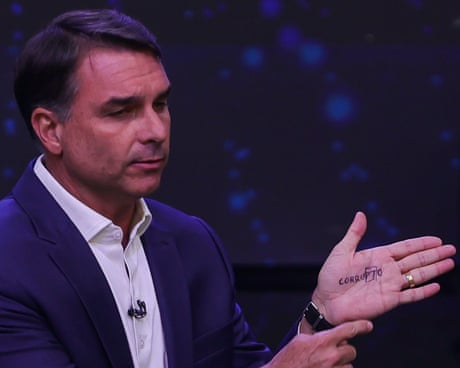
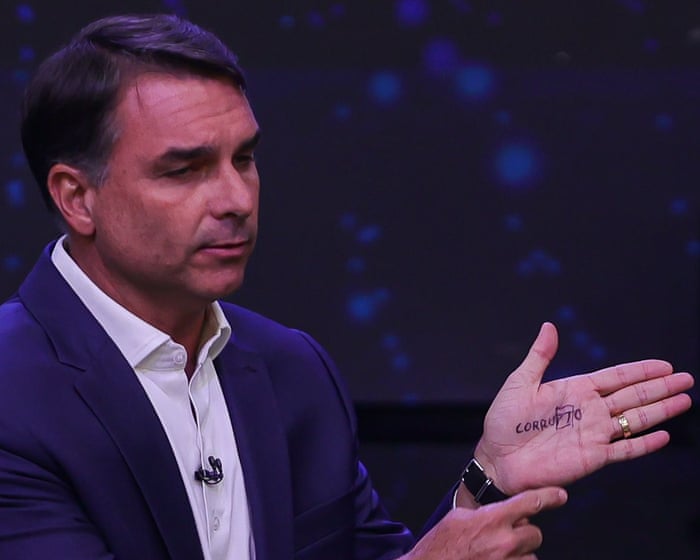
Flavio Bolsonaro’s ‘corrupto’ stunt sparks viral meme before Brazil election runoff

Far-right presidential candidate’s TV debate swipe at rival backfires as people take to social media to parody it

To Flávio Bolsonaro and his publicists, it must have seemed an ingenious idea that would expose his rival’s supposed crookedness on the eve of Brazil’s presidential election.

But the far-right politician’s decision to attend a primetime television debate against his leftwing opponent, Luiz Inácio Lula da Silva, with the word “corrupto” (corrupt) written on the palm of his hand has backfired.

Continue reading...

© Photograph: Allison Sales/NurPhoto/Shutterstock

© Photograph: Allison Sales/NurPhoto/Shutterstock

© Photograph: Allison Sales/NurPhoto/Shutterstock

  •  

The dangers of letting tech billionaires shape our world

As SpaceX impacts Ukraine and AI-generated music divides artists and fans, critics are asking what happens when technology has too much control over our lives

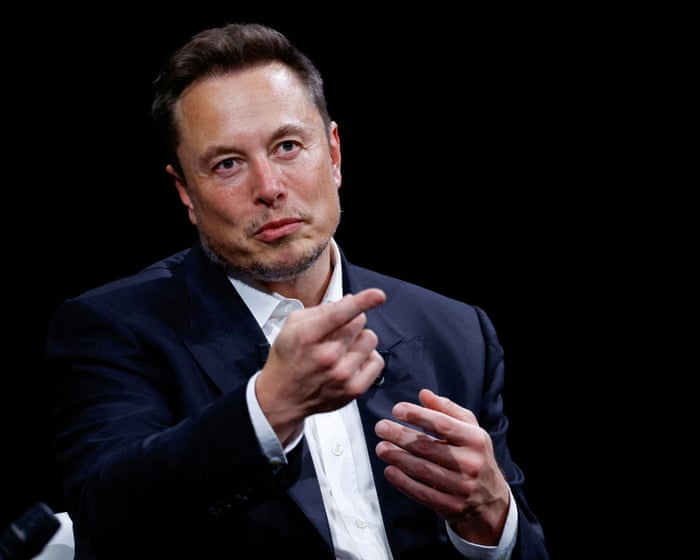
Hello, and welcome to TechScape. I’m Blake Montgomery, US tech editor at the Guardian, writing to you while sitting in front of Roy Lichtenstein’s monumental Drowning Girl, on view in New York City. Today in tech, we’re discussing the perils of Elon Musk’s one-man global infrastructure, AI-generated music and a Guardian AI conference in Paris.

Continue reading...

© Photograph: Gonzalo Fuentes/Reuters

© Photograph: Gonzalo Fuentes/Reuters

© Photograph: Gonzalo Fuentes/Reuters

  •  

European air fares could rise by as much as 20% in 2027, Ryanair boss predicts

Conflict in Middle East is pushing jet fuel costs higher and many carriers are not hedged against such increases, Michael O’Leary says

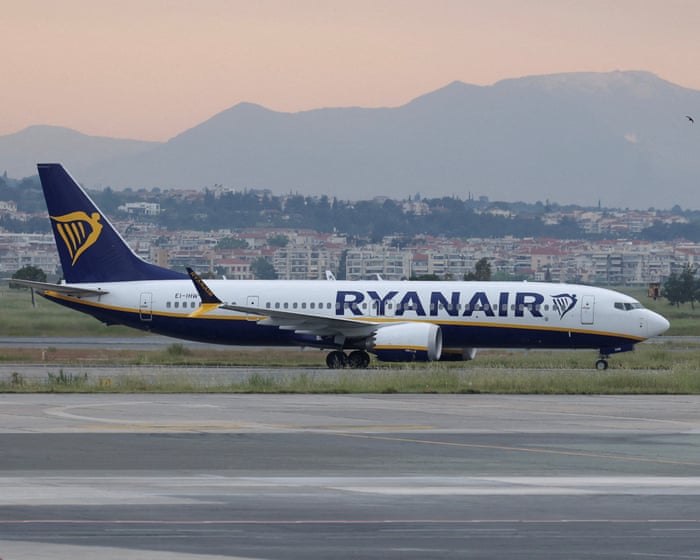
Ryanair’s chief executive has predicted a record increase in European air fares next year, as airlines grapple with fuel bills pushed higher by the Middle East conflict.

Many carriers are not hedged against rising jet fuel costs, Michael O’Leary said, which he predicted would lead to airline bankruptcies and takeovers. He forecast these pressures would result in the price of plane tickets rising by as much as 20%.

Continue reading...

© Photograph: Alexandros Avramidis/Reuters

© Photograph: Alexandros Avramidis/Reuters

© Photograph: Alexandros Avramidis/Reuters

  •  

Explosive births, talking foxes and the devil in a trenchcoat – the Sitges fantastic film festival in all its creepy glory

Olivia Colman goes vulpine, Rupert Grint’s newborn is a monster and Joko Anwar makes a warmhearted violent ghost story set in an Indonesian prison

If I’d ever wanted children, the films showing at the 59th edition of the International Fantastic film festival of Catalonia in the coastal town of Sitges, south of Barcelona, would have soon set me straight. This year’s recurring themes were explosive parturition, chewed-up nipples and the fruit of the womb turning out to be at best sociopathic, at worst inhuman.

The theme was celebrated in an evil-kiddy exhibition at the Miramar Cultural Centre, marking the 50th anniversary of Narciso Ibáñez Serrador’s “fantaterror” classic Who Can Kill a Child?, some of which was filmed in Sitges itself. The expo traced the subgenre from 1956’s The Bad Seed, via Rosemary’s Baby and The Exorcist, to this year’s Nightborn, in which poor Rupert Grint, as the hapless husband, is no match for the developing folk-horror bond between his depressed wife, their newborn “child”, and the spooky forest surrounding their house. Finnish director Hanna Bergholm, in her introduction, confessed it was inspired by her experiences of motherhood. Only up to a point, one hopes.

Continue reading...

© Photograph: Andrea Miconi

© Photograph: Andrea Miconi

© Photograph: Andrea Miconi

  •  

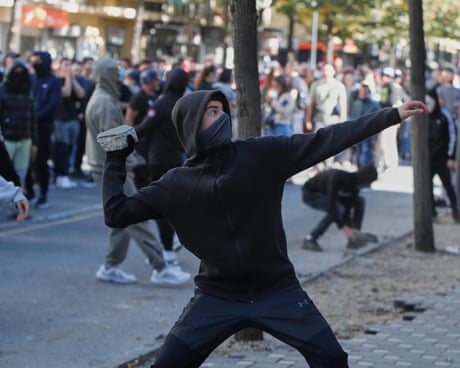
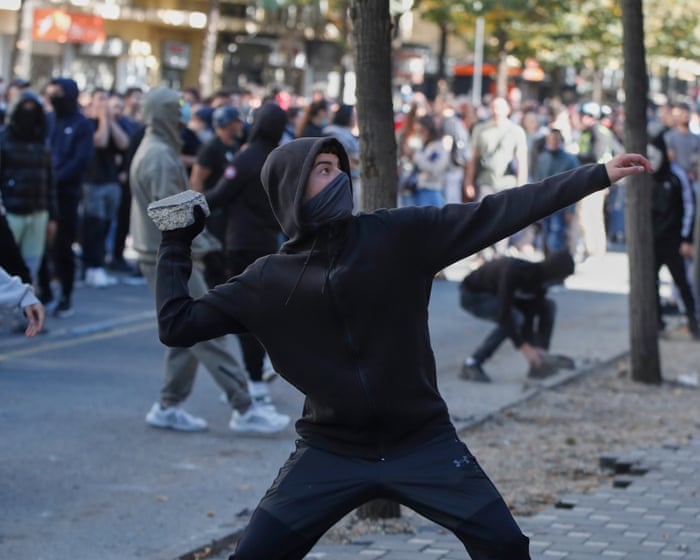
From Paris to Porto, from Tirana to Milan: protests across Europe – in pictures

Violent demonstrations have rocked Europe as protesters call for action over poor university conditions, high tuition fees, corruption, housing costs and the high cost of living

Continue reading...

© Photograph: Boris Grdanoski/AP

© Photograph: Boris Grdanoski/AP

© Photograph: Boris Grdanoski/AP

  •  

Giving £2 a day to people in the Amazon helps protect rainforest, pilot project finds

Researchers say almost 90% of participants in unconditional basic income scheme in Peru adopted environmentally beneficial practices

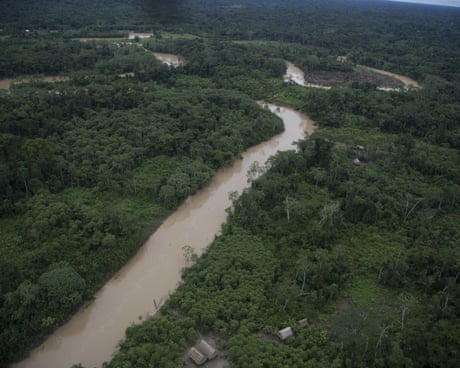
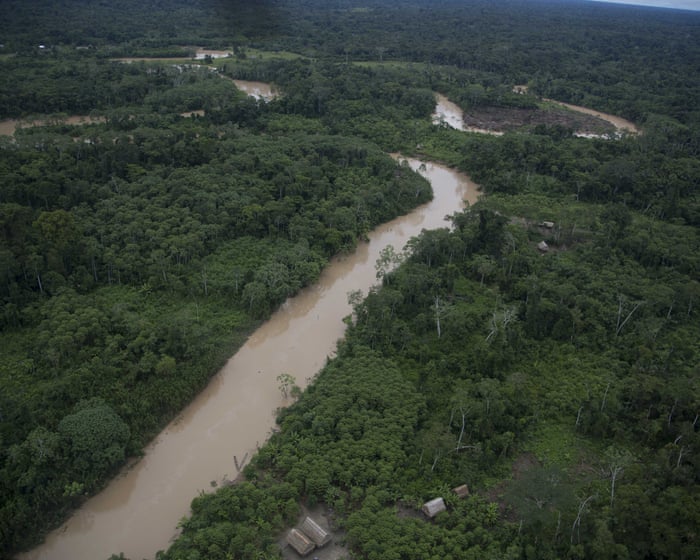
A pioneering project to provide Indigenous people in the Peruvian Amazon with an unconditional basic income has contributed to the protection of the rainforest, according to a study.

The analysis from the University of Bath is expected to contribute to a growing debate about the role of direct payments to communities that maintain globally important ecosystems.

Continue reading...

© Photograph: Martín Mejía/AP

© Photograph: Martín Mejía/AP

© Photograph: Martín Mejía/AP

  •  

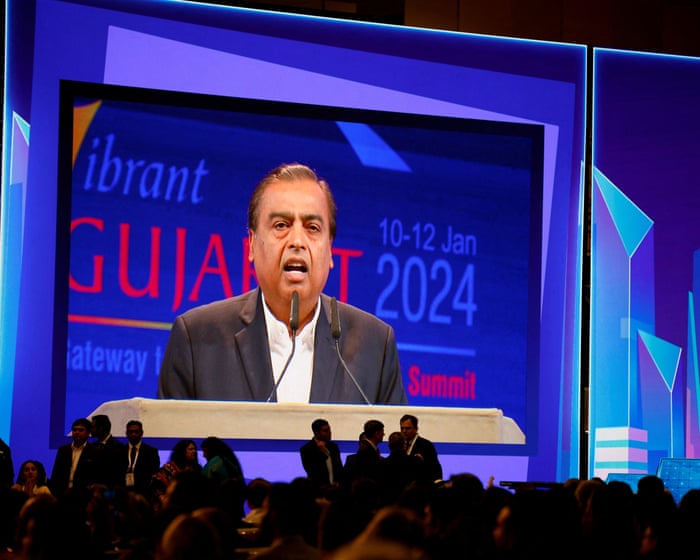
Billionaire Mukesh Ambani launches India’s biggest-ever IPO

Low-cost broadband provider Jio Platforms aims for £81bn valuation when it floats on the stock market on Wednesday

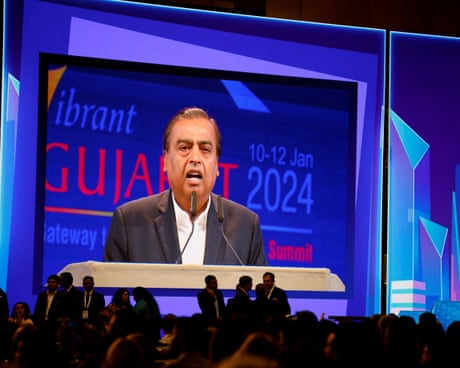
India’s second-richest man, Mukesh Ambani, is launching what could be the country’s biggest-ever initial public offering (IPO), despite a stock market downturn.

Mumbai-based Jio Platforms, a telecoms company backed by Meta Platforms and Google, is hoping to raise up to 302bn rupees (£2.4bn) and is targeting a 10.3tn rupees valuation when it floats on the stock market from Wednesday.

Continue reading...

© Photograph: Amit Dave/Reuters

© Photograph: Amit Dave/Reuters

© Photograph: Amit Dave/Reuters

  •  

Ukraine thankful that intelligence on missile strikes ‘works now’, says Zelenskyy – as it happened

The Ukrainian leader says talks with US envoys covered security guarantees and he hopes to hear Russia’s response tomorrow

Nordic correspondent

As well as Steve Witkoff, Ukrainian president Volodymyr Zelenskyy will also meet the Norwegian prime minister, Jonas Gahr Støre and the Finnish president Alexander Stubb and Norway’s new King Haakon during his visit to Oslo.

Continue reading...

© Photograph: Heiko Junge/Pool NTB/AP

© Photograph: Heiko Junge/Pool NTB/AP

© Photograph: Heiko Junge/Pool NTB/AP
  •  

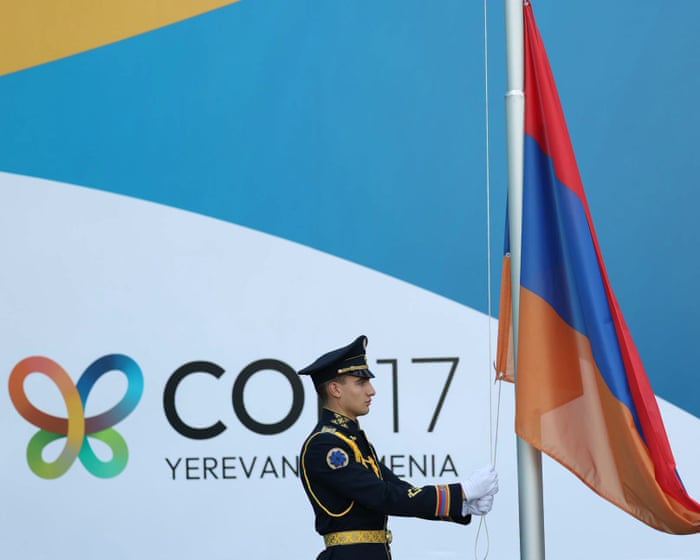
Do not be distracted by global crises. Nature cannot wait for a better year – we must act now | Steven Guilbeault

In 2022, I helped push through the international agreement to protect biodiversity. Wars and economic pressures can make nature seem like a ‘nice-to-have’. But it is a critical asset, and Cop17 must deliver real action

When I was five, property developers came to cut down the woods behind my home in La Tuque, Quebec. My mother encouraged me to climb one of the trees in protest, then told the developers, straight-faced, that there was nothing she could do when they asked her to get me down. A few days later, the tree was cut down anyway.

I thought about that tree in the early hours of a freezing Montreal morning in December 2022, as the gavel came down on a global agreement between nearly 200 countries to halt and reverse the loss of nature by 2030. I thought about how important nature is for our health, our food security and our economies, but also how much passion there is around protecting it, and how it has the power to inspire people all around the world.

Continue reading...

© Photograph: COP17

© Photograph: COP17

© Photograph: COP17

  •  

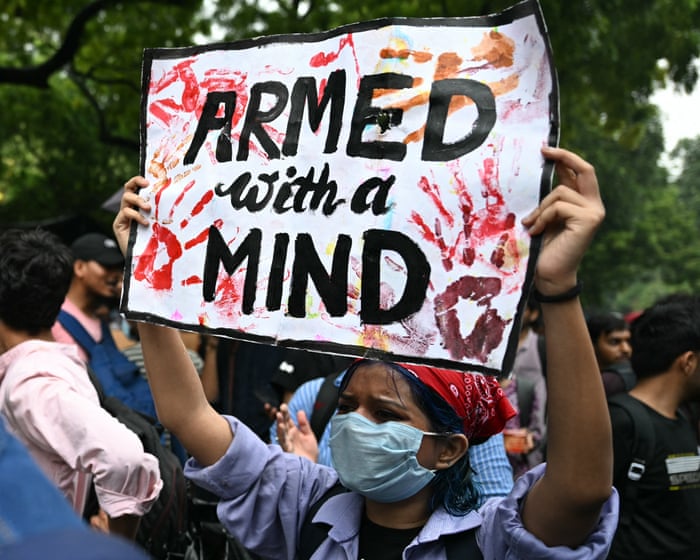
She was harassed for crude remarks about Modi at a Cockroach protest. Now she can’t leave home

​After a protest clip went viral, a teenager’s life was torn apart by threats that sent her and her family into hiding. Plus, a book on citizen journalism

• Don’t get This is India delivered to your inbox? Sign up here

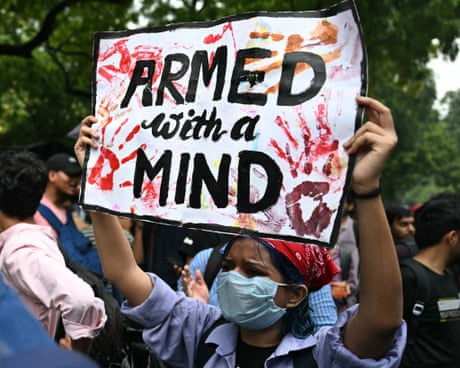
Before 24 July, a person I will call R was preoccupied with the ordinary routines of teenage life: experimenting with makeup, grumbling over mathematics homework and hanging out with friends at a tea stall.

That month, as the fever of student protests spread across the country, the 15-year-old watched on her phone as young people poured into Jantar Mantar, the designated protest site in Delhi, demanding education reform. She went too. But an 11-second video clip from the protest site, in which she made crude and profane remarks about the prime minister, Narendra Modi, upended her life.

Continue reading...

© Photograph: Sajjad Hussain/AFP/Getty Images

© Photograph: Sajjad Hussain/AFP/Getty Images

© Photograph: Sajjad Hussain/AFP/Getty Images

  •  

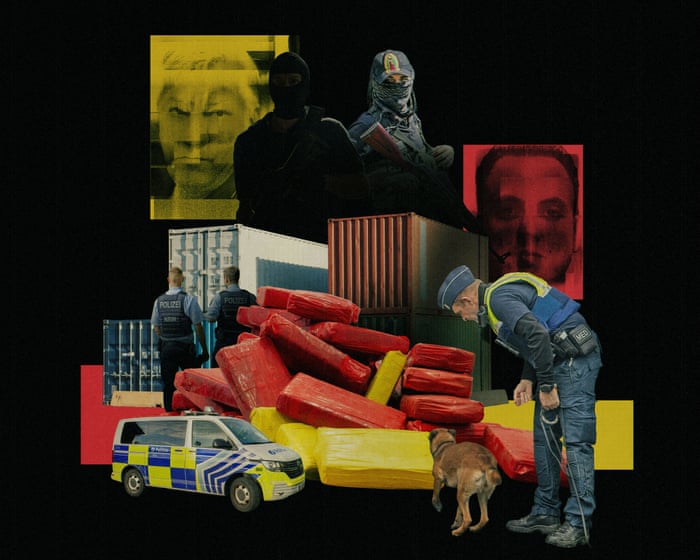
The ‘Finger cutter’ and the ‘Brazilian Escobar’: the men accused of bringing cocaine cartels to Europe

A Belgian criminal organisation’s links with a Brazilian cocaine gang have been the focus of a major trial in Brussels, where smuggling links have been alleged between European players and the drug cartels of Latin America

In the early hours of 7 September, a convoy of heavily armed police swept through the sleeping streets of central Brussels towards the Haren district, on the city’s north-eastern outskirts. They made their way to 22 Avenue du Bourget, a militarised bunker-like complex that was the former headquarters of Nato.

The modernist complex, with its austere and functional architecture, was hastily built in 1967 and houses the Justitia courtroom, where Belgium’s federal trials are now held. It was here that the perpetrators and accomplices of the 2015 Paris terrorist attacks and the 2016 Brussels attacks were tried in 2022.

Continue reading...

© Composite: Guardian Design/Belga/AFP/Getty Images/AP/Europol

© Composite: Guardian Design/Belga/AFP/Getty Images/AP/Europol

© Composite: Guardian Design/Belga/AFP/Getty Images/AP/Europol

  •  

Alberta voters overwhelmingly reject plan to leave Canada in referendum

Result is a victory for prime minister Mark Carney and supporters of Canadian unity

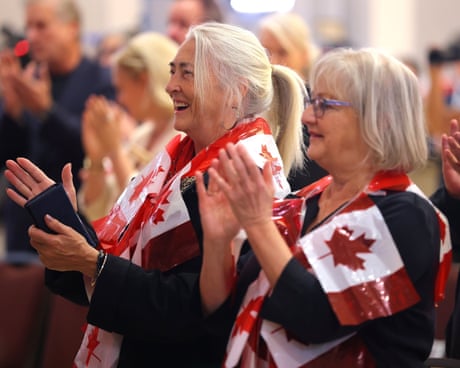
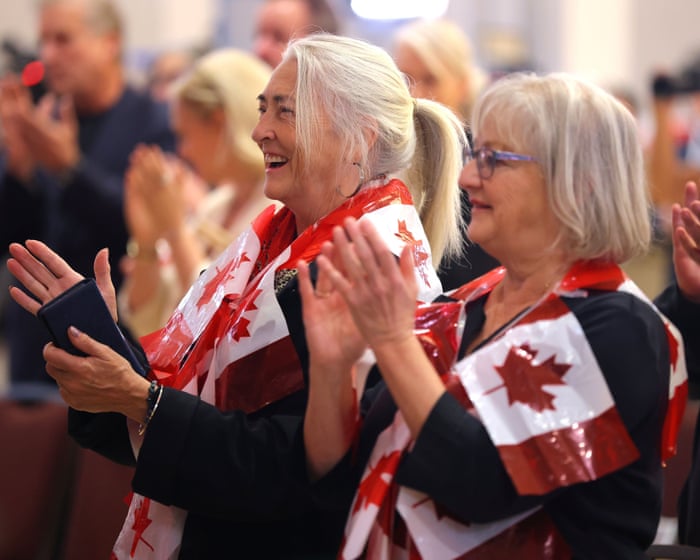
Voters in Canada’s Alberta have overwhelmingly rejected a proposal to begin the process of independence, delivering a decisive victory for supporters of Canadian unity and deepening divisions within the separatist movement.

With nearly 1.9m votes counted, roughly 76% people supported remaining in Canada, while 24% backed beginning a process toward separation, according to unofficial results from Elections Alberta.

Continue reading...

© Photograph: Canadian Press/Shutterstock

© Photograph: Canadian Press/Shutterstock

© Photograph: Canadian Press/Shutterstock

  •  

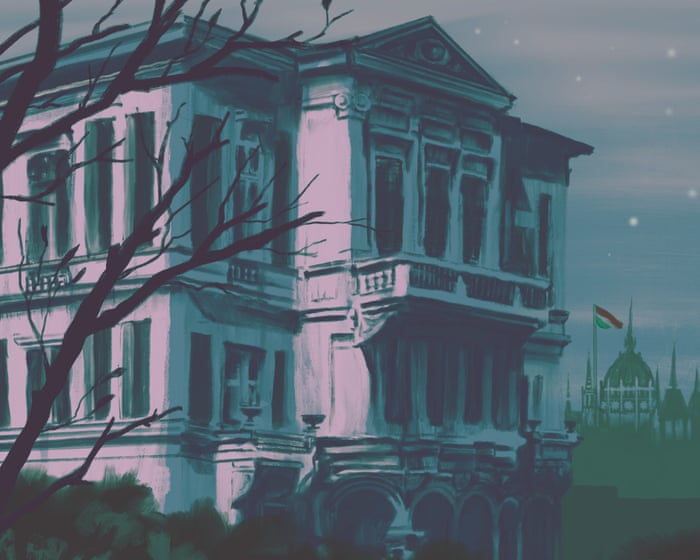
‘The last bastion is gone’: the US right idolised Orbán’s Hungary. Can they recover now he has fallen?

Over the past decade, Hungary has been a beacon for the ‘postliberal’ right, with pro-Trump thinkers making regular pilgrimages to Budapest. Now Orbán is gone, how will the movement adapt?

  • A longer version of this article first appeared in The Drift

Espresso Embassy, a third-wave coffee shop in Budapest’s diplomatic and governmental quarter, is where visiting reporters and academics come to talk politics. On the way in for my morning coffee on 18 March, I passed a poster for Viktor Orbán’s Fidesz party that had been vandalised with a marker pen: “the safe choice” had become “the certain way to get fucked”. From across the cafe, I spotted the American journalist and historian Anne Applebaum locked in conversation, possibly with a source. I heard someone exclaim: “Just like Mussolini!” It was election season in Hungary.

It was also a couple of days before Cpac Hungary, a satellite event of the US-based conservative conference. As members of the international right arrived in town, the notorious Orbánist thinktank known as the Danube Institute was hosting an event called On Censorship, Tolerance, the Left and God. The official line would be: bad, good, bad, good.

Continue reading...

© Illustration: John Kazior

© Illustration: John Kazior

© Illustration: John Kazior

  •  
❌