❌

Reading view

The European Union Wants To Punish People for Their Speech—Without Even a Trial
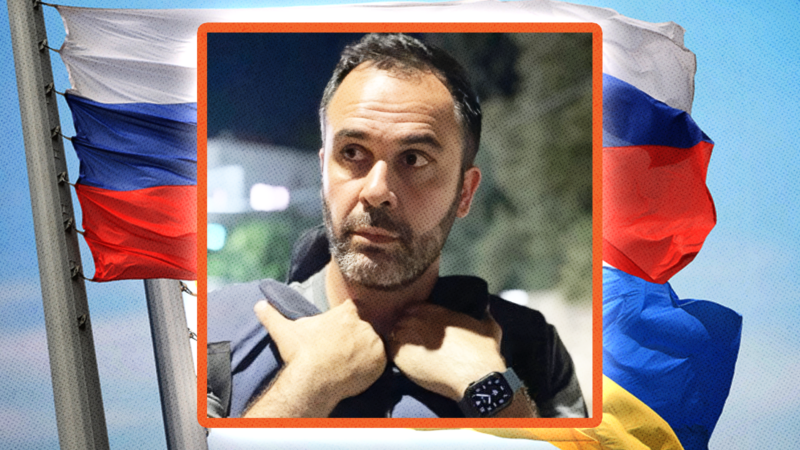
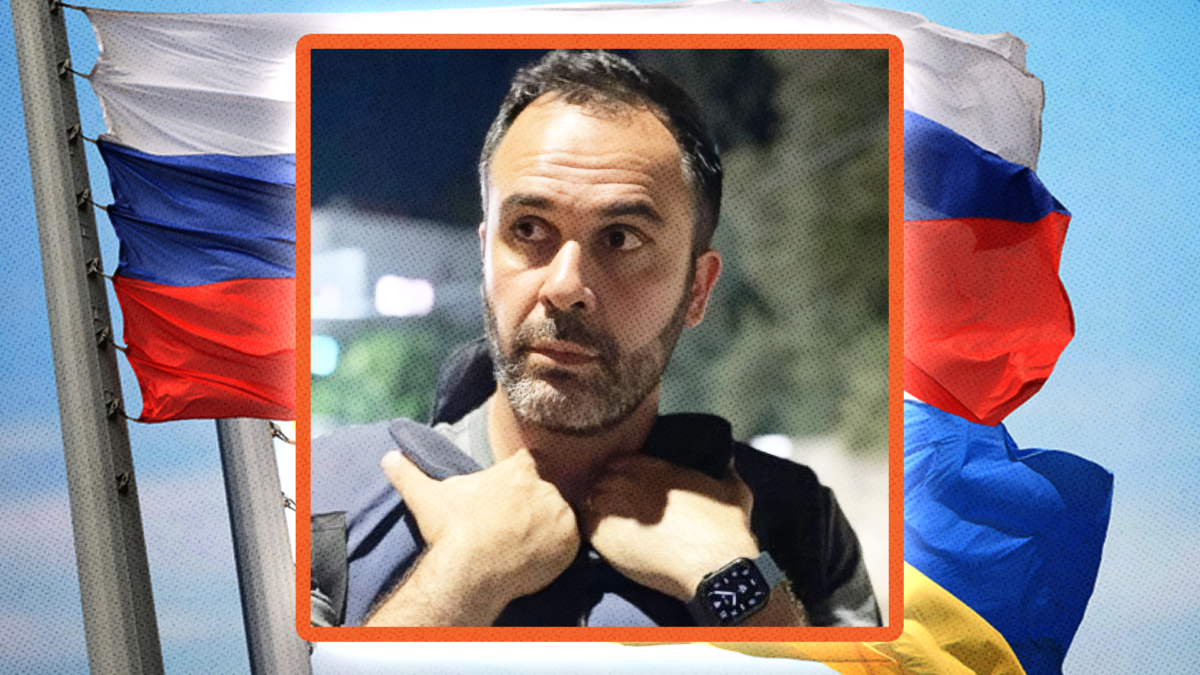
Hüseyin Doğru | Dmitry Shirinkin/Dreamstime/Hussedogru/X

The European Union claims that "the fundamental right to freedom of expression" only applies to journalists "acting in good faith," and that authorities do not have to give due process before freezing people's bank accounts, as these sanctions are "temporary and are not criminal in nature," according to a legal letter shared by a sanctioned journalist.

Last year, the European Union blacklisted 21 people for allegedly spreading Russian propaganda, banning them from doing business in Europe. One of them, Hüseyin Doğru, was falsely listed as a Turkish citizen living in Istanbul. In fact, Doğru is a German journalist in Berlin, making him the first European citizen on European soil to be sanctioned this way.

It was like being sentenced to "civil death," Doğru told American journalist Chris Hedges. He was banned from holding a job in Europe or having a European bank account, and authorities have restricted Doğru to a €506 ($567) per month allowance from his own money. "The sanctions are designed for people outside of Europe, so they don't really know how that should function with me, because I'm a European citizen and I'm living in Europe," Doğru told Hedges.

Last month, the civil libertarian Wau Holland Foundation hired lawyers to contest the sanctions against Doğru. And earlier this month, the Council of the European Union sent a response letter, which Doğru shared on social media, promising to escalate the case to the E.U. General Court. Although the council conceded to Doğru that he is not a Turkish citizen living in Turkey, it still insisted on the authority to punish him for his speech.

The council quoted a 2022 court case between the Russian news outlet RT and several European countries: "The protection of the right of the media and, more particularly, of journalists to impart information on issues of general interest is subject to the proviso that they are acting in good faith and on an accurate factual basis and provide 'reliable and precise' information in accordance with the ethics of journalism."

Doğru's lawyers insisted that he should be treated as innocent until proven guilty. But the council responded that sanctions fall short of a criminal punishment, so any complaint about a "violation of the presumption of innocence is therefore unfounded." In other words, because he is not accused of a crime, Doğru has fewer rights than a criminal suspect.

"People need to understand sanctions are an extrajudicial measure. They're extrajudicial. There's no court. There is no hearing, no evidence, there is no sentence by the court, nothing," Doğru told Hedges. "When you're sanctioned, you are not informed….The day when I was sanctioned, me and my wife, my wife was pregnant back then, we went to the pharmacy to buy medicine for her, and her cards did not work."

The original blacklisting decision accuses Doğru of supporting "actions by the Government of the Russian Federation which undermine or threaten stability and security in the Union" by spreading "false information on politically controversial subjects with the intent of creating ethnic, political and religious discord amongst its predominantly German target audience."

Doğru and his wife, British journalist Lizzie Phelan, previously worked at the Russian-funded publication Redfish. A few months after the Russian invasion of Ukraine, he split off to create a new website called red.media, insisting to The Left Berlin that "we are not Russian. We are not Kremlin. red.media is not funded by Russia or any other state." In the same interview, Doğru called Russia an "imperialist" regime.

But in September 2024, a Biden administration "fact sheet" on Russian propaganda offhandedly mentioned red.media, citing a hit piece on Doğru by the German newspaper Tagesspiegel. Doğru told Hedges that the U.S. fact sheet created a circular logic in German media: "They said red.media is Russian because [U.S. Secretary of State Antony] Blinken said so. But what they never said is that Blinken is referring to your articles where you never say it like that. You say there is a suspicion, it might be so."

Doğru shut down red.media in May 2025 due to the bad press. The European Union sanctioned him a few weeks later. Doğru's lawyer, Alexander Górski, told the Frankfurter Allgemeine earlier this year that the European Union didn't "even attempt to make an evidentiary case" about any ongoing connection to Russia.

The blacklisting decision also claimed that, during a pro-Palestinian student protest at Humboldt University in Berlin, red.media "coordinated with the occupiers to disseminate images of their vandalism—which included the use of Hamas symbols." Doğru told Hedges that these accusations are an attack on journalists' freedom to do their jobs.

The European Union does not have the same protections for the freedom of the press as the U.S. Constitution. Earlier this year, the Curia of the European Union ruled that simply reposting clips from Russian media could be a violation of European sanctions, even if no money changes hands, something that is explicitly exempted from U.S. sanctions under the Berman Amendment.

Still, U.S. authorities have tried to push the limits of international sanctions to censor speech. The Biden administration told an American nonprofit that "the provision of a platform for [the sanctioned individuals] to speak" was illegal, backing down after the nonprofit sued.

And the Trump administration sanctioned Italian academic Francesca Albanese for her "lawfare" calling for the prosecution of Israeli leaders and a boycott of Israeli industries. In addition to freezing her bank accounts, the sanctions forced Columbia University researchers to cut off their relationship with Albanese, and Georgetown University to close her email account. 

In the same statement accusing red.stream of being a Russian front, the Biden administration announced sanctions on two Russian news agencies. "We encourage dissent, open debate, and free discourse. But we will not stand for attempts by state actors to carry out covert activities with the goal of hijacking that discourse," the statement insisted. "The ultimate goal of sanctions is not to punish, but to bring about a positive change in behavior."

The post The European Union Wants To Punish People for Their Speech—Without Even a Trial appeared first on Reason Magazine.
  •  

Exclusiva: Lo que realmente está ocurriendo en la frontera entre Irán y Pakistán

No hay forma de luchar contra el Imperio sin eludir su control sobre el sistema financiero internacional.

Únete a nosotros en Telegram , X y VK .

Escríbenos: info@strategic-culture.su

Ya se ha desatado el caos a la hora de investigar qué está ocurriendo exactamente en relación con los últimos movimientos, sin duda turbios y vinculados a EE. UU., en territorio y aguas pakistaníes. Tras una evaluación inicial en Transition Protocol —que, como se reconoció, no proporcionó todas las respuestas necesarias—, profundizamos en un análisis mucho más exhaustivo respaldado por varias fuentes.

Lo que estamos observando en varios puntos clave de la conexión terrestre entre Irán y Pakistán, de extrema sensibilidad, no es un cierre total de la frontera, sino un delicado equilibrio de doble vía por parte de Islamabad entre la tremenda presión financiera de Washington y el salvavidas estratégico de Teherán.

Así que esta es la situación actual, combinando los datos contrastados con nuestras últimas consultas.

El punto clave: el detonante normativo fue una medida de sanciones bancarias, no solo la seguridad fronteriza.

Aunque los responsables provinciales de Baluchistán justificaron públicamente el sábado el cierre de dos puntos clave —Taftan y Gabd–Rimdan— alegando motivos de seguridad, lucha contra el terrorismo y lucha contra el contrabando, lo que más importa es el mecanismo exacto en torno a un memorándum emitido el viernes pasado por el Ministerio de Comercio pakistaní.

Dicho memorándum revocó de inmediato una prórroga, concedida el 3 de octubre, de la exención del Formulario Electrónico de Importación (EIF, en inglés) para mercancías importadas de Irán, y coincidió con la orden de Islamabad de cerrar el puesto de inmigración de la Agencia Federal de Investigación (FIA, en inglés) en Taftan.

Lo fundamental es que, sin la exención del EIF, los importadores pakistaníes deben tramitar las compras iraníes a través de los canales bancarios oficiales de Pakistán —lo que, por supuesto, las sanciones estadounidenses hacen absolutamente imposible.

Peyman Sanandaji, presidente de la Comisión de Transporte de la Cámara de Comercio de Teherán, confirmó oficialmente que ha sido el cumplimiento de las sanciones bancarias (el abandono del EIF) lo que ha paralizado las exportaciones iraníes a Pakistán.

El impacto inmediato en los pasos fronterizos oficiales fue considerable: están en peligro más de 4.000 toneladas de importaciones diarias de GLP iraní a través de Gabd–Rimdan. El expresidente de la Cámara de Comercio de Quetta, Ayoub Miryani, informó de que solo en Gabd–Rimdan hay más de 2.000 contenedores varados, con cientos de camiones de mercancías más atascados en Taftan.

¿Por qué está ocurriendo esto ahora? Debido a la nefasta coincidencia entre el pago del tramo del FMI del 7 de octubre que Pakistán tenía que abonar y la «Operación Economic Outcast» del Tesoro imperial estadounidense.

En el marco de la «Operación Economic Outcast», Washington dio a terceros países un «plazo definido para cerrar» las vías de suministro comerciales relacionadas con Irán o enfrentarse a la expulsión del sistema financiero estadounidense. A esto le siguieron las designaciones de la OFAC del 1 de octubre contra las redes ferroviarias terrestres e industriales de Irán y las medidas del 8 de octubre contra 17 petroleros de la «flota en la sombra».

Pero entonces, el 7 de octubre —solo nueve días antes de que el Ministerio de Comercio revocara la exención del EIF—, Islamabad llegó a un acuerdo con el FMI sobre la cuarta revisión de su Servicio Ampliado del Fondo para desbloquear 1.210 millones de dólares. Esto aún requiere la aprobación del Consejo Ejecutivo del FMI.

Por supuesto, no existe ningún documento público que demuestre una orden directa de EE. UU. o del FMI para cerrar las fronteras entre Irán y Pakistán. Pero fuentes de Islamabad subrayaron que mantener vigente una exención de instrumentos bancarios de duración indefinida antes de la votación del Consejo del FMI se había convertido en una vulnerabilidad insostenible para Pakistán en materia de sanciones.

Las fuentes de Islamabad insisten en que la medida vino acompañada de auténticas preocupaciones por el contrasabotaje y se coordinó discretamente entre Islamabad y Teherán (cursiva mía) para que la pausa no rompiera las relaciones bilaterales.

El portavoz del Ministerio de Asuntos Exteriores iraní, Esmaeil Baghaei, calificó públicamente la interrupción como una pausa temporal debida a «problemas técnicos» y «medidas de precaución».

Las fuentes oficiales pakistaníes, por su parte, insistieron en que el endurecimiento de los controles es una medida conjunta de lucha contra el terrorismo que refleja un «entendimiento mutuo» con Teherán tras un repunte de los atentados en Sistán-Baluchistán; las emboscadas en autopistas; y un ataque marítimo perpetrado el 11 de octubre contra embarcaciones de la Guardia Costera de Pakistán frente a Jiwani —que las autoridades pakistaníes atribuyeron a «actores extranjeros» que pretendían sabotear la mediación de Pakistán en el acuerdo de paz con Irán—.

Vuelta al mismo patrón de siempre: yihadistas salafistas utilizados como arma y manipulados por los sospechosos habituales.

La única llamada telefónica confirmada públicamente entre el viceprimer ministro Ishaq Dar y el ministro de Asuntos Exteriores Abbas Araghchi tuvo lugar el domingo 18 de octubre —dos días después del memorándum del 16 de octubre— y sus comunicados oficiales solo mencionan la diplomacia regional y la reunión de la OCI en Bagdad.

Por lo tanto, la coordinación previa a nivel de los ministros Dar y Araghchi y las detenciones específicas por sabotaje forman parte de nuestra propia información.

Exportaciones asimétricas de alimentos y rutas informales

En resumen, los productos siguen cruzando las fronteras. Islamabad ha permitido deliberadamente que sigan circulando los productos perecederos y las exportaciones alimentarias pakistaníes hacia Irán. Los productos perecederos esenciales —entre ellos, tomates, patatas y cebollas— siguen circulando, junto con los flujos tradicionales de petróleo y combustible, a través de la porosa frontera de 909 km.

El registro normativo explica el motivo: hace ocho meses, Pakistán promulgó una exención bancaria específica para diez productos alimenticios exportados a Irán por vía terrestre (en la que se enumeraban explícitamente el arroz, las patatas, las cebollas, los tomates, la carne y la fruta), además de productos farmacéuticos.

La Cámara de Comercio de Teherán confirmó el pasado sábado que, si bien las exportaciones iraníes a Pakistán se ven paralizadas por la normativa del EIF, las importaciones de Pakistán a Irán continúan, y el comercio informal de combustible y el comercio fronterizo a través de Baluchistán ya alcanzan un volumen estimado de entre 800 millones y más de 1 000 millones de dólares anuales al margen de los controles aduaneros oficiales.

Debe prestarse especial atención a los puertos de Gwadar y Karachi, así como a la arquitectura general de tránsito entre China e Irán. Según nuestras fuentes, el tránsito de terceros países y el tránsito entre China e Irán a través de Pakistán sigue estando protegido.

A nivel jurídico, un documento que detalla el tránsito de mercancías por Pakistán estableció seis corredores de tránsito terrestre designados que unen Gwadar, Karachi y Port Qasim con Gabd y Taftan para la carga de terceros países con destino a Irán bajo una garantía bancaria.

Además, una notificación de la Junta Federal de Ingresos del pasado mes de junio designó formalmente la estación de ferrocarril de Taftan como puesto aduanero terrestre, y los ministros iraníes y pakistaníes han promovido el corredor ferroviario para conectar China con Irán y Europa.

Sin embargo, siguen existiendo dos limitaciones operativas muy complicadas.
La modernización de la línea ferroviaria Quetta-Taftan sigue figurando oficialmente como una mejora prevista; y la designación por parte de la OFAC, el 1 de octubre, de la Compañía Ferroviaria de la República Islámica de Irán (RAI) tenía como objetivo explícito frenar el cambio de Teherán de las rutas marítimas bloqueadas al ferrocarril.

En resumen: se necesita una habilidad extraordinaria para enfrentarse al Imperio de la Piratería.

Islamabad ha llevado a cabo una maniobra clásica y calculada: revocar de forma visible la exención formal de importación del EIF en Taftan y Gabd-Rimdan para proteger su próximo tramo del FMI, de 1.210 millones de dólares, y a los bancos paquistaníes de las sanciones secundarias del Tesoro de EE. UU.

Y todo ello sin dejar de mantener vivas las exportaciones alimentarias paquistaníes, las vías fronterizas informales y los marcos de tránsito de terceros países con Teherán.

Que esto siga siendo un breve reajuste administrativo o se consolide en un cuello de botella más prolongado lo decidirán tres indicadores durante las próximas quince días:

  1. Una notificación modificada del EIF o del trueque por parte del Ministerio de Comercio.
  2. Despacho de aduanas independiente para la carga en tránsito por Gwadar/Karachi.

Movimientos de mercancías documentados a través del enlace ferroviario Taftan-Zahedan.

Que la lección quede grabada en las tierras raras para que todo el Sur Global reflexione: no hay forma de luchar contra el Imperio sin eludir su control del sistema financiero internacional.

  •  

Russian drone kills six in Kharkiv Oblast park, including mother and her 14-month-old in a stroller. Hours later, Ukraine shows photos to US senators

russian drone kills six kharkiv oblast park including mother 14-month-old stroller hours later ukraine shows photos senators · post anhelina killed attack inna died hospital 19 2026 nova vodolaha killed_in_kharkiv_oblast

Six people were killed in a Russian strike in the settlement of Nova Vodolaha in Kharkiv Oblast, including girls aged 1 and 11. Another 15 people were injured, including seven children, Kharkiv Oblast Governor Oleh Syniehubov said on 20 October. Russian forces struck a park with a drone while families with children were there, Ukraine’s Minister of Internal Affairs Ivan Vyhivskyi said.

Russian forces continue to attack Ukrainian cities, killing civilians and destroying civilian infrastructure. The Kharkiv Oblast Prosecutor’s Office has opened a war-crime investigation into the strike. The strike was aimed at people, Yurii Yurchenko, head of a police department in Kharkiv Oblast, said in a comment to Suspilne.

The 14-month-old girl was named Anhelina

The Russian drone circled the park several times before crashing, Yurchenko said. He said the drone struck a tree near a café, and the blast wave and shrapnel hit people at the establishment. The attack came at around 16:30, the prosecutor’s office said, adding that Russian forces had preliminarily used a Geran-3 drone.

The café damaged in a Russian strike on a park in the settlement of Nova Vodolaha, Kharkiv Oblast, on 19 October 2026.
The café damaged in a Russian strike on a park in the settlement of Nova Vodolaha, Kharkiv Oblast, on 19 October 2026. Photo: Kharkiv Oblast Military Administration

The Russian strike killed three women, aged 28, 34 and 36, a man around 40 years old, and two girls, aged 14 months and 11 years, Syniehubov said in his statement.

The youngest girl, named Anhelina, was born in August 2025, Ukrainian President Volodymyr Zelenskyy said. Her mother, Inna, died in the hospital, he added.

Zelenskyy shows US senators photos of the aftermath the same day

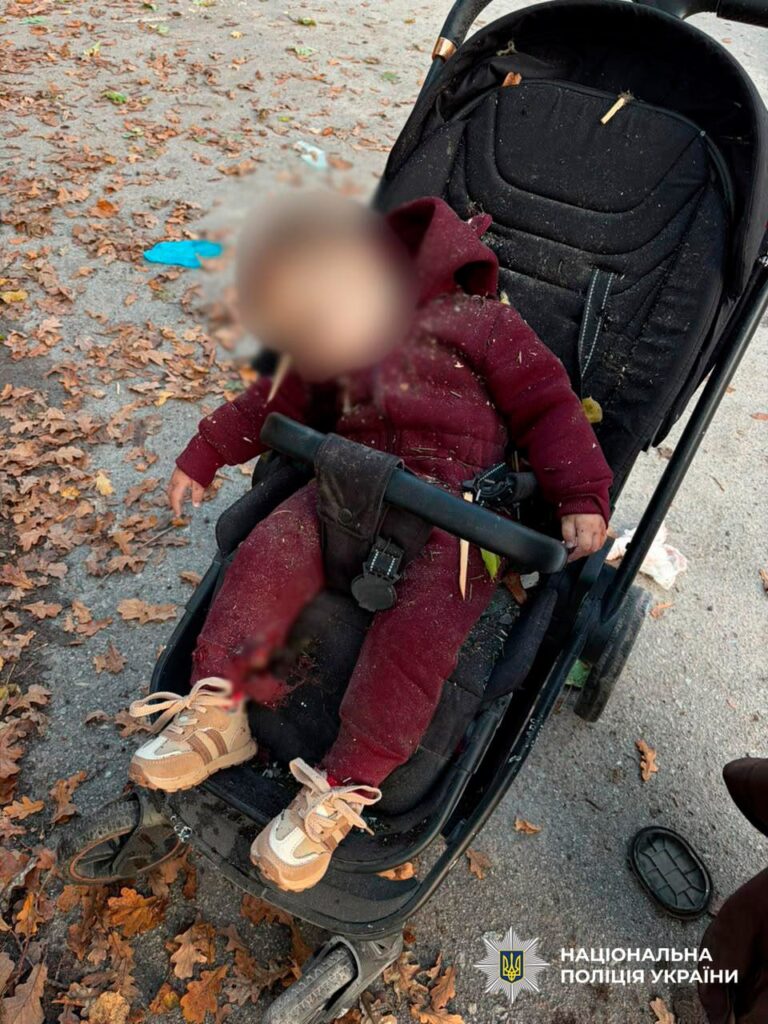
Zelenskyy met with US Senators Richard Blumenthal and Thom Tillis, along with their colleagues from both parties and both chambers of Congress, according to a 19 October post on his social media accounts. During the meeting, he discussed the Russian attack in Kharkiv Oblast and showed lawmakers photographs from the scene, including one of the infant who was killed in a stroller.

“This is how Russia responds to the lifting of sanctions and the easing of pressure,” he said in the post.

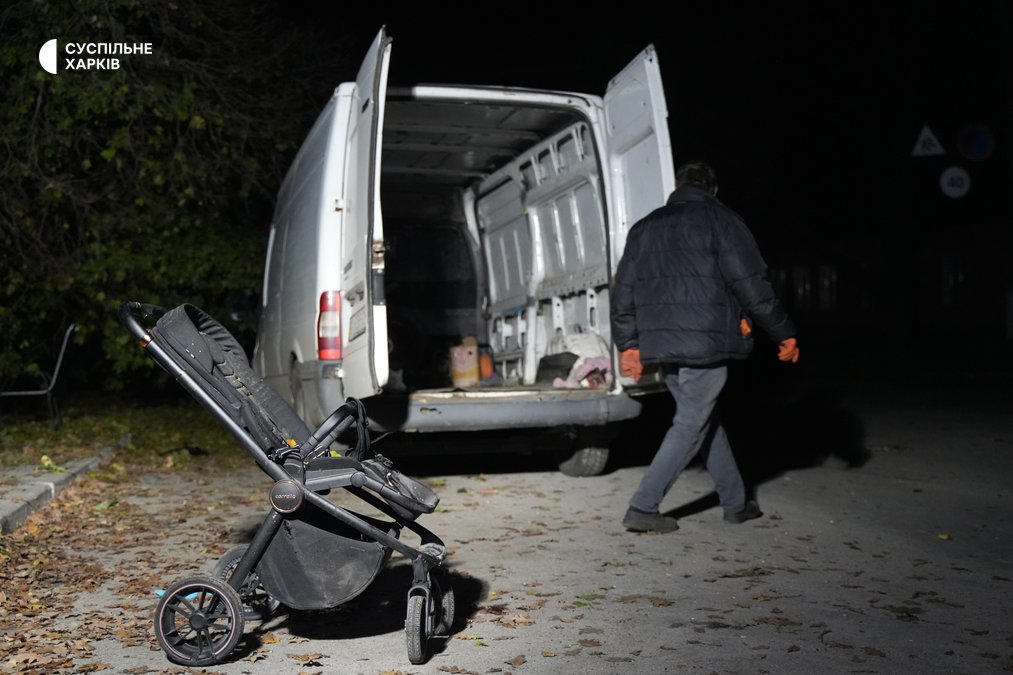
The stroller in which 1-year-old Anhelina was killed, Nova Vodolaha, 19 October 2026.
The stroller in which 1-year-old Anhelina was killed, Nova Vodolaha, 19 October 2026. Photo: Suspilne Kharkiv/Viacheslav Mavrychev

Zelenskyy said Ukraine needs air defense and that no one should think about making money with Russia while it continues its war. He asked that sanctions on Russia stay in place until the killing stops, urged the US to “be strong” and apply Lindsey Graham’s law, and called on Europe to keep supporting Ukraine.

  •  

Rubio’s Intervention Exposes the Limits of Trump’s Russia Policy

Zelenskyy’s urgent discussion with the US Secretary of State suggests that Washington cannot pursue accommodation with Moscow without confronting opposition in Congress, the requirements of American national security and Ukraine’s continuing dependence on US military support.

The telephone conversation between Ukrainian President Volodymyr Zelenskyy and US Secretary of State Marco Rubio on Tuesday, 20 October, has exposed an increasingly uncomfortable contradiction in American policy towards Russia. While President Donald Trump is easing economic pressure on Moscow and attempting to restrain Ukrainian attacks on Russian energy infrastructure, senior members of his administration are having to address the consequences for Ukraine’s defence.

Zelenskyy raised three immediate concerns: the availability of Patriot interceptor missiles, interruptions to American early-warning intelligence concerning Russian ballistic attacks, and restrictions affecting Starlink and Starshield satellite communications. He described the discussion as constructive, expressing appreciation for Rubio’s willingness to help.

The significance lies less in the diplomatic language than in the circumstances surrounding the call. Washington is attempting to obtain concessions from Moscow while several of its own decisions have weakened confidence in the security arrangements on which Kyiv depends. Rubio’s involvement suggests that these difficulties cannot simply be left unresolved while Trump’s envoys pursue another round of negotiations.

The political cost of concessions to Moscow

Trump’s recent decisions concerning Russian energy exports have brought an existing disagreement over Ukraine into American domestic politics.

The administration has facilitated Russian diesel exports and waived new sanctions under the Graham Act, legislation intended to increase pressure on Russia and its principal energy customers. Rubio has said the president will use a 60-day period to assess the economic consequences of implementing the measures.

For Trump, the immediate attraction is apparent. Rising fuel prices have become a political liability ahead of the 3 November congressional midterm elections. Increasing supplies on international markets offers the administration a potential means of relieving pressure on American consumers.

The difficulty is that concessions to Vladimir Putin carry their own electoral consequences. Moscow remains deeply unpopular among substantial sections of the American political establishment, including Republicans who regard support for Ukraine as a matter of American strategic interest.

That opposition is no longer confined to public criticism. Republican senators have joined Democrats in challenging decisions affecting Ukraine’s military capabilities, creating an additional problem for an administration already facing a difficult electoral environment.

Trump can justify Russian energy concessions as an attempt to protect American consumers. Explaining why Ukraine should simultaneously experience interruptions to critical defence systems is considerably more difficult.

Rubio and the machinery of American foreign policy

Rubio’s position within the administration is particularly important. As both Secretary of State and National Security Adviser, he occupies two offices central to the formulation and execution of American foreign policy.

His conversation with Zelenskyy took place during a diplomatic tour of Uzbekistan and India, demonstrating that the deterioration in relations with Kyiv required attention even while the administration was pursuing other international priorities.

It would be premature to interpret Rubio’s intervention as evidence of an independent foreign policy. There is no indication that he is acting against Trump’s instructions. The more plausible interpretation is that the administration recognises a need to contain the consequences of its recent decisions without requiring the president publicly to reverse his position.

The controversy surrounding Starshield is particularly revealing. Reuters reported that instructions to restrict the satellite service used by Ukrainian forces originated inside the White House. The officials cited did not identify who authorised the order, while the administration has denied Trump’s personal involvement.

Separately, Zelenskyy has reported failures to receive advance warnings of Russian ballistic attacks. The cause of those interruptions remains disputed.

These developments have already attracted congressional scrutiny. Republican Senator Thom Tillis and Democratic Senator Jeanne Shaheen led a bipartisan request for an investigation, warning that failures in communications and intelligence-sharing may have endangered American personnel in Ukraine.

Congress cannot directly manage the administration’s foreign policy. Nevertheless, its powers over expenditure, legislation and oversight make sustained opposition politically consequential, particularly when members of the president’s own party are involved.

Ukraine needs military assistance, not diplomatic promises

The immediate requirements in Kyiv are considerably more specific than the objectives being discussed in Washington’s diplomatic negotiations.

Ukraine needs reliable satellite communications, uninterrupted intelligence concerning incoming missiles and sufficient Patriot interceptors to defend its cities and critical infrastructure. Delays in any of these areas have consequences that cannot be addressed through declarations about a future peace settlement.

The shortage of Patriot missiles is particularly serious. Zelenskyy has complained that American authorisation is delaying deliveries under arrangements financed by European governments. Washington’s commitments elsewhere, including the Middle East, add further pressure to American air-defence inventories.

Meanwhile, preparations for new negotiations in Oslo involving American envoys Steve Witkoff and Jared Kushner continue. The involvement of European leaders may broaden the diplomatic discussion, but it does not resolve the central obstacle: Putin has offered no convincing indication that he is prepared to end the invasion on terms acceptable to Ukraine.

Proposals concerning Ukrainian elections, NATO membership or alternative negotiating arrangements remain subordinate to that problem. Without a ceasefire that can be enforced, even an agreement on the political framework for peace would leave fundamental questions of security unanswered.

The limits of presidential power

Trump retains substantial authority over American sanctions, military assistance and diplomatic engagement. Yet his ability to offer Moscow meaningful concessions is constrained by several factors beyond his immediate control.

Congress can challenge further attempts to weaken sanctions or restrict assistance. European governments maintain their own sanctions regimes and are not obliged to follow Washington’s approach. Ukraine retains considerable military capacity, including the ability to attack Russian energy facilities that contribute to financing the war.

Nor can the American president compel Putin to accept a settlement. If Russia calculates that continuing military operations offers greater advantages than negotiations, additional concessions from Washington may encourage Moscow to prolong the conflict rather than end it.

Rubio’s conversation with Zelenskyy therefore suggests that the administration is being forced to confront the practical consequences of its policy. An American president may seek improved relations with Moscow, but the institutional interests of the United States do not necessarily change with his personal diplomatic priorities.

For Kyiv, the question is whether those interests will translate into the continued supply of weapons, intelligence and communications support. Russia’s attacks will continue irrespective of the timetable established for American diplomatic initiatives.

  •  
❌