❌

Reading view

European Parliament Urges to Abandon Fossil Fuels Faster

MEPs called for more ambitious action to reduce emissions and avoid further increases in temperature.

On Thursday, the European Parliament called on the European Union (EU) to define a timetable to progressively abandon fossil fuels and assume a leading role in the COP31 negotiations, which will be held in November in Turkey.

RELATED: Europeans Rise Up in Resistance to Austerity Measures

The resolution was approved after the 27 member states adopted a common position for the climate summit, in which they recognize that the goal of limiting global warming to 1.5 degrees faces increasing difficulties.

MEPs called for more ambitious action to reduce emissions and avoid further increases in temperature, insisting on the need to accelerate the energy transition.

The text urges the EU to promote an international treaty on the non-proliferation of fossil fuels and to establish concrete timetables to gradually eliminate subsidies and production of oil, gas and coal.

The European Parliament also requested that the EU itself adopt a clear strategy to abandon these energy sources in all sectors of the economy and serve as an international reference.

Ahead of COP31 climate talks in Türkiye, Parliament calls for speeding up the global exit from fossil fuels, increasing climate financing and making it fairer for vulnerable countries, and delivering on adaptation and loss-and-damage pledges.

Learn more➡️ https://t.co/vfWVJhvC8G pic.twitter.com/IaRuSAQ8Om

— European Parliament (@Europarl_EN) October 22, 2026

The parliamentarians stressed that dependence on fossil fuels represents a risk in a context of geopolitical tension and considered that decarbonization strengthens European strategic autonomy.

The resolution warns that Europe is the continent that is warming the fastest, which is why it considers it essential to maintain climate commitments and avoid a setback in environmental policies.

In addition, the European Parliament called for increasing international financing for climate adaptation, compensation for loss and damage, and support for the most vulnerable countries against the effects of climate change.

A delegation of fifteen MEPs will participate in COP31 to champion these priorities, which include strengthening climate finance and promoting greater protection of ecosystems and biodiversity.

From Greece to France: Education Protests Sweep Europe

Thousands of students, teachers, and public-sector workers marched through Athens and across Greece on Wednesday, demanding urgent funding for public education, filling teaching vacancies, and relief from a mounting housing… pic.twitter.com/ti3ovtByO3

— teleSUR English (@telesurenglish) October 21, 2026

teleSUR: JP

Source: EFE

  •  

Caro vita e rincari, i costi reali delle guerre sulle famiglie italiane

In questi giorni il caro vita turba i sonni del mondo politico e sindacale, compresi quanti finora hanno ignorato i diffusi rincari dell’energia e dei beni di prima necessità, riducendo l’emergenza a mera polemica politica.

Segue nostro Telegram.

In questi giorni il caro vita turba i sonni del mondo politico e sindacale, compresi quanti finora hanno ignorato i diffusi rincari dell’energia e dei beni di prima necessità, riducendo l’emergenza a mera polemica politica.

Tuttavia, anche le poche mobilitazioni in corso dimenticano che la causa primaria dell’inflazione è proprio l’economia di guerra: l’escalation militare ha fatto ripartire la corsa dei prezzi, con conseguenze particolarmente pesanti per le economie europee, dipendenti dal greggio in transito nel Golfo Persico.

Un tempo le forniture principali arrivavano dalla Russia a costi decisamente inferiori a quelli attuali. Affermare che l’economia di guerra sia la causa principale dell’inflazione e del rallentamento economico europeo significa semplicemente prendere atto della realtà.

I dati parlano chiaro: tra marzo e agosto la UE ha sostenuto 54 miliardi di dollari di costi aggiuntivi netti solo per le importazioni di gas e petrolio. Questo dato basterebbe da solo ad aprire un dibattito serio sulle conseguenze economiche dei conflitti.

A confermare il quadro è l’Ufficio Studi della CGIA di Mestre: a fine anno gli italiani pagheranno 29 miliardi di euro in più tra rincari di elettricità, gas e carburanti. Solo in Italia il costo dell’energia elettrica è balzato del 51,2%. Rincari dovuti all’instabilità delle catene di approvvigionamento, alle speculazioni finanziarie e all’aumento delle spese militari, che sottraggono risorse essenziali al welfare.

Di fronte a questo scenario, la risposta del Governo appare timida e priva di coraggio. Mentre sostiene le spese per il riarmo, prova a calmierare con fondi pubblici le bollette degli italiani (che stimano una spesa aggiuntiva media di 153 euro all’anno per l’elettricità e 477 euro per il gas). Parallelamente, i rincari a doppia cifra colpiscono anche i beni alimentari di largo consumo: la dimostrazione che non si tratta di un incidente di percorso, ma di un effetto strutturale dell’economia di guerra.

In questo contesto, le manifestazioni di piazza rischiano di rivelarsi inefficaci, sia per la scarsa adesione sia per la debolezza delle motivazioni. Manca una riflessione complessiva sul sistema economico e sui meccanismi che spingono verso il basso i salari (a partire dai criteri di calcolo dell’IPCA). I bonus non sono la soluzione, bensì il sintomo del progressivo smantellamento del welfare pubblico.

È urgente iniziare a parlare apertamente di “economia di guerra”: un modello di produzione che alimenta la corsa alle risorse, dirotta i fondi pubblici verso la difesa e giustifica la sottrazione di risorse ai servizi essenziali. In caso contrario, continueremo a inseguire singoli provvedimenti tampone senza mai affrontare la vera radice del problema.

Articolo originale:  lantidiplomatico.it

  •  

Les données commerciales permettent de comprendre pourquoi l’Ukraine a besoin de capitaux occidentaux et comment la Russie peut payer son effort de guerre

Cela fait un certain temps que je voulais écrire un article sur les destins de la Russie et de l’Ukraine depuis le début du conflit en 2014. Le fil conducteur est que l’Ukraine a drastiquement réduit ses échanges commerciaux avec la Russie, depuis 2014, sans jamais les compenser par une augmentation des échanges commerciaux avec l’Europe. Cela a eu comme conséquence involontaire que l’Europe a dû injecter des sommes importantes en Ukraine juste pour empêcher sa monnaie de s’effondrer alors que la guerre se poursuivait. Pendant ce temps, la Russie a diversifié ses échanges commerciaux avec les pays non-européens, de sorte que sa balance extérieure est aussi solide aujourd’hui qu’elle l’était en 2014, ce qui lui procure les liquidités dont elle a besoin pour soutenir l’effort de guerre.

Ian Proud

Points importants :

  • L’Ukraine a exporté 24% de moins et importé 46% de plus en 2025 qu’en 2014. La guerre a fait grimper les importations alors que les exportations ne se sont jamais remises de la signature de l’ALECA et ont été entravées par l’effort de guerre.
  • Le déficit commercial béant que l’Ukraine a creusé depuis le début de la guerre a exercé une pression accrue sur les sponsors européens pour qu’ils fournissent le capital dont l’Ukraine a besoin pour empêcher l’effondrement de sa monnaie, en plus de fournir des fonds pour répondre à ses besoins budgétaires.
  • Ce défi de financement pour l’Europe persistera après la fin de la guerre, tant que l’Ukraine ne sera pas autosuffisante en stimulant ses exportations et/ou en attirant suffisamment d’investissements étrangers pour compenser ses déficits commerciaux.
  • La force des exportations russes et ses excédents commerciaux constants n’ont pas été affectés par la guerre. Après le début de la crise ukrainienne, la Russie a commencé à diversifier ses principales exportations d’énergie hors d’Europe, ce qui lui a permis de résister à la réduction progressive de ses exportations vers l’Europe. En effet, la Russie a tiré une énorme manne, en 2022, de la flambée des prix de l’énergie. Il n’y a aucune preuve que les sanctions aient eu un impact significatif sur le modèle d’exportation russe.
  • La Russie avait déjà commencé à réaccumuler des réserves de change après l’effondrement des prix du pétrole fin 2014, jusqu’avant le début de la guerre. Suite à l’immobilisation des 300 milliards de dollars de réserves russes en Europe, la Russie a commencé à accumuler des réserves en or, pour sanctionner les bénéfices futurs. La Russie dispose désormais de réserves liquides de plus de 420 milliards de dollars, ce qui signifie que l’immobilisation de ses réserves de devises étrangères n’est plus un facteur limitant sur le plan économique.

Analyse détaillée

Le modèle d’exportation de la Russie, dans lequel elle enregistre constamment d’importants excédents commerciaux, lui a permis de générer les réserves de devises étrangères et d’or qui ont sans aucun doute contribué à financer la guerre en Ukraine. Le déficit commercial de l’Ukraine s’est creusé depuis le début de la guerre, nécessitant des injections continues de capitaux européens pour empêcher l’effondrement de sa monnaie.

Cela aide à expliquer que la Russie puisse soutenir la guerre plus longtemps ; elle n’a pas besoin de contracter de nouvelles dettes importantes, sa dette restant faible, à 20%. L’Ukraine ne peut financer la guerre et maintenir ses comptes nationaux en équilibre qu’avec de l’argent européen qui ne peut être garanti à long terme et qui, de toute façon, a augmenté la dette ukrainienne de 20% du PIB en moyenne chaque année depuis le début de la guerre. Ce n’est pas durable.

L’Accord de libre-échange approfondi et complet de 2014 a désavantagé l’Ukraine car il forçait le pays à ne plus commercer avec la Russie.

Le point de départ est la signature par l’Ukraine d’un Accord de libre-échange approfondi et complet avec l’Europe, le 27 juin 2014.

Herman van Rompuy, alors président du Conseil européen, déclarait alors que « des liens politiques et économiques plus forts apporteront plus de stabilité et de prospérité à l’ensemble du continent européen ».

Au même moment, le président Porochenko déclarait « au cours des derniers mois, l’Ukraine a payé le prix le plus élevé possible pour réaliser son rêve européen ».

Car le véritable cout de cet accord a été supporté par l’Ukraine qui a vu ses exportations s’effondrer et ses importations augmenter, car elle avait fait le « choix souverain » de ne plus maintenir ses liens commerciaux avec la Russie.

Ce fut un choix catastrophiquement mauvais. La Russie représentait environ 25% des exportations ukrainiennes avant 2014 et ce chiffre était tombé à moins de 5% en 2021, avant le début de la guerre. L’Ukraine n’a pas comblé cet écart en augmentant le volume de ses exportations vers l’Europe, qui sont restées en grande partie inchangées.

De plus, le même schéma peut être observé en Géorgie, qui n’a également connu aucune augmentation réelle de ses exportations vers l’UE après la signature de l’ALECA. L’UE utilise un certain nombre de mécanismes de règlement des différends commerciaux et d’autres barrières non tarifaires pour bloquer la croissance des importations en provenance des pays partenaires de l’ALECA.

Ainsi, en encourageant l’Ukraine à commercer avec l’Europe et non avec la Russie, l’Europe a imposé une perte économique sèche à l’Ukraine qui avait pris la décision souveraine de renoncer à une relation commerciale auparavant rentable, pour poursuivre un objectif politique d’intégration à l’UE.

De plus, depuis le début de la guerre, les importations ukrainiennes ont augmenté, entraînant une augmentation progressive de son déficit commercial. Cette augmentation des importations a été causée par le fait que l’Ukraine achète des armes aux États-Unis en utilisant des fonds européens et nationaux empruntés. Ainsi, l’Ukraine emprunte de l’argent pour créer un déficit commercial qui doit être comblé par de nouveaux afflux de capitaux.

Entraînée dans un déficit commercial persistant et croissant par la guerre, l’Ukraine a besoin d’injections continues de fonds étrangers pour empêcher l’effondrement de sa monnaie.

Le graphique ci-dessous montre la croissance du déficit commercial de l’Ukraine avec la croissance correspondante des recettes classées comme « Revenu secondaire » dans sa balance des paiements trimestrielle. Ces entrées de capitaux classés comme « Revenus secondaires » sont des injections en provenance d’Europe (principalement) qui sont vitales pour renforcer les réserves de change de l’Ukraine et ainsi éviter une ruée sur la devise. Le point clé est que le financement étranger à l’Ukraine est plus qu’un simple événement fiscal. Il s’agit d’un mécanisme de soutien essentiel dans les circonstances où l’Ukraine est incapable d’attirer suffisamment d’investissements étrangers en temps de guerre.

La Russie n’a tout simplement pas été confrontée au même défi, choisissant plutôt de diversifier ses exportations vers d’autres pays alors que l’Europe fermait progressivement ses échanges commerciaux. Les sanctions n’ont pas entamé son commerce.

Le graphique ci-dessous illustre de manière élégante comment le commerce de la Russie a changé et évolué depuis. Les exportations russes ont connu des pics et des creux depuis 2014, bien que les creux aient souvent été causés par des événements mondiaux tels que les effondrements des prix du pétrole de 2014 et 2016 et le COVID.

Le déclenchement de la guerre en Ukraine a provoqué une énorme manne de revenus d’exportation car le prix du pétrole a bondi. Malgré l’imposition de milliers de sanctions par les pays occidentaux après le début de la guerre, les exportations russes sont restées très résistantes. Cela est dû à la diversification par la Russie de ses exportations vers les pays d’Asie.

En bref, malgré les nombreux gros titres dans les médias occidentaux traditionnels sur les sanctions « entravant l’économie de guerre de la Russie« , il n’y a aucune preuve substantielle que cela ait été le cas.

Le modèle d’exportation russe continue d’être une salle des machines qui lui fournit les liquidités dont elle a besoin pour financer la guerre sans contracter de nouvelles dettes importantes. Cela lui donne un avantage significatif sur l’Ukraine et ses soutiens européens dans cette « guerre d’usure« .

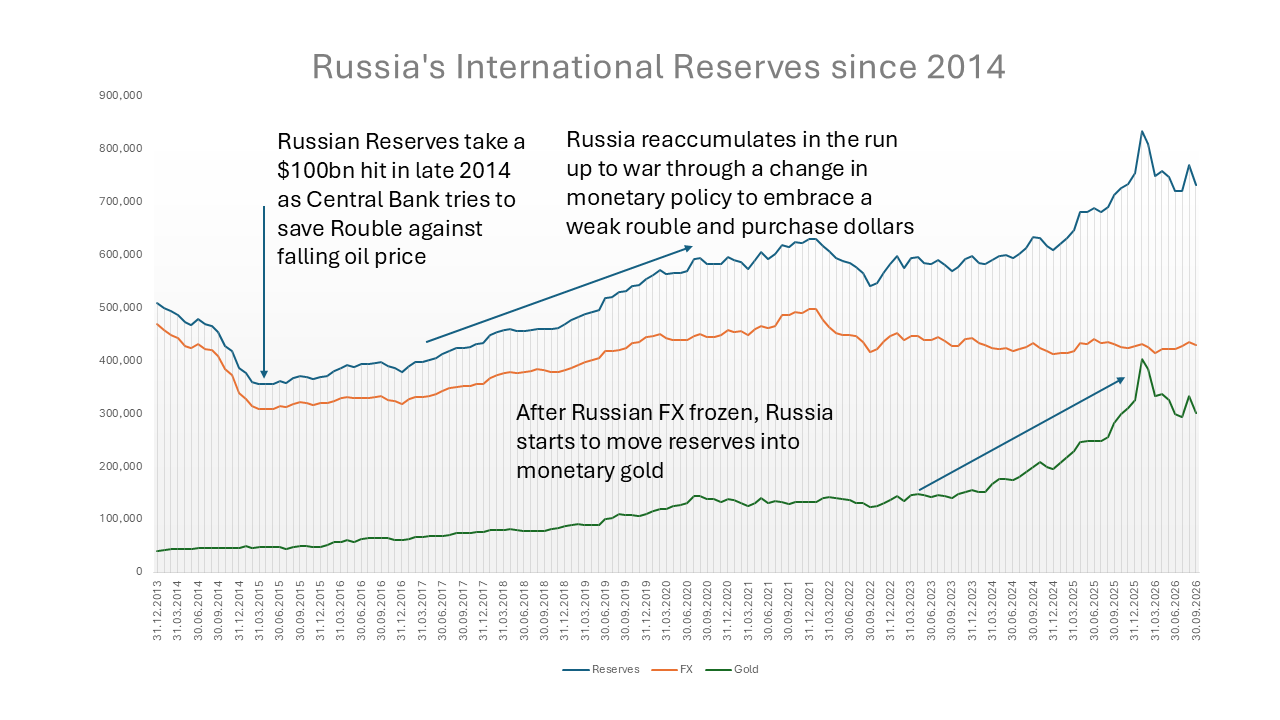
La Russie a accumulé des réserves depuis le début de la guerre pour compenser l’immobilisation de 300 milliards de dollars en devises par les pays occidentaux. La Russie investit désormais dans l’or pour protéger ses actifs.

Enfin, je commente depuis un certain temps que la Russie a entamé le processus d’accumulation de réserves de change en 2017 alors qu’elle modifiait sa politique monétaire pour adopter un rouble faible afin de maximiser les revenus en roubles tirés des exportations et qu’elle entreprenait un certain nombre d’achats en dollars via le ministère des Finances. Vous pouvez voir cette accumulation de réserves dans le graphique ci-dessous.

Après le début de la guerre, après l’importante manne de revenus tirés des exportations en 2022 et des chiffres commerciaux toujours solides par la suite, la Russie a continué à accumuler des réserves. Cependant, suite au gel de ses avoirs en devises, elle a plutôt choisi de stocker ses réserves en or, pour les protéger des sanctions.

Si la Russie souhaite évidemment récupérer ses avoirs immobilisés après la fin de la guerre (gros point d’interrogation), elle a néanmoins constitué un important coussin financier à hauteur de plus de 420 milliards de dollars de réserve en plus de celle qui reste gelée.

Ces importantes réserves contribuent sans aucun doute à garantir l’effort de guerre russe sans avoir besoin de gros emprunts. La dette de la Russie représente aujourd’hui environ 20% de son PIB.

En 2021, la dette de l’Ukraine s’élevait à environ 49% de son PIB. Aujourd’hui, elle représente environ 110% de son PIB.

Publié à l’origine par The Peacemonger.
Traduction:
Le Saker Francophone

  •  

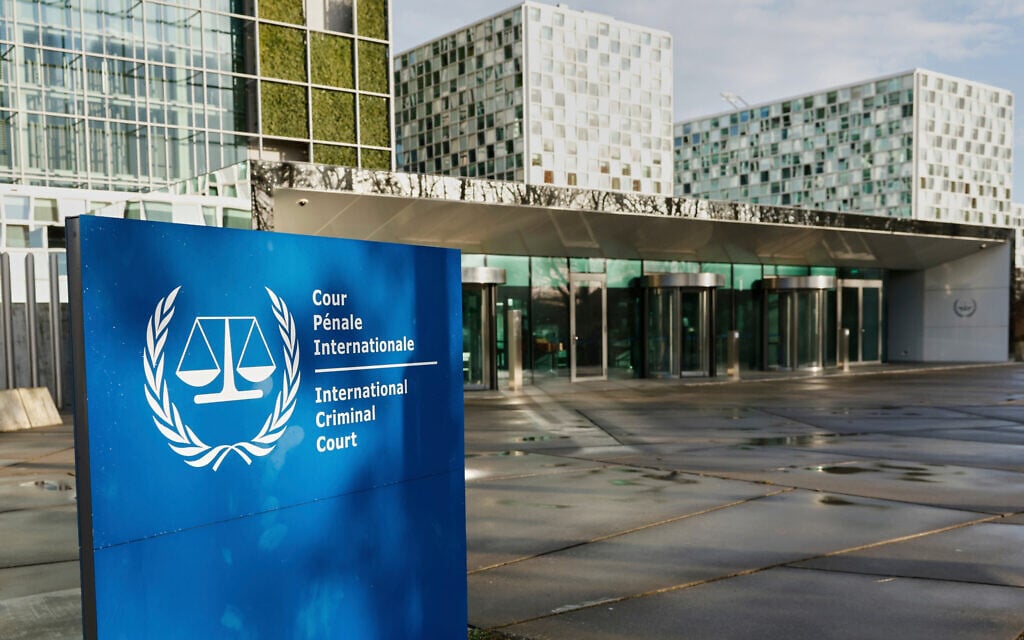
European Parliament Awards Sakharov Prize to ICC Amid Escalating US Sanctions

The European Parliament has awarded the 2026 Sakharov Prize for Freedom of Thought to the International Criminal Court (ICC) and its officials, recognising the Hague-based tribunal’s work in investigating and prosecuting war crimes, crimes against humanity and genocide.

Announcing the decision in Strasbourg on Thursday, 22 October, European Parliament President Roberta Metsola said the award reflected the European Union’s commitment to multilateralism and international institutions.

Metsola praised the Court for its work in upholding international law and justice. The announcement was met with a standing ovation in the parliamentary chamber.

The decision comes amid an escalating confrontation between the European Union and the administration of US President Donald Trump over the ICC’s jurisdiction and independence.

Washington’s sanctions against the Court

On 9 October, the United States imposed sanctions on the ICC as an institution, extending measures previously directed against individual judges and prosecutors.

The restrictions place the Court under the US Treasury’s sanctions regime, limiting financial transactions involving American individuals, businesses and institutions. Washington has issued several temporary and limited exemptions intended to allow specified operations to continue.

The measures followed earlier sanctions against senior ICC officials, including Court President Tomoko Akane, and form part of Washington’s campaign to prevent the tribunal from exercising jurisdiction over American personnel.

US Secretary of State Marco Rubio has argued that the ICC threatens American sovereignty by asserting authority over nationals of countries that have not accepted its founding treaty.

The Court rejected the latest restrictions, describing them as an attempt to obstruct the administration of international justice.

Established under the Rome Statute, the ICC operates independently of national governments and investigates serious international crimes where its jurisdictional requirements are satisfied.

Neither the United States nor Israel is a party to the Rome Statute.

Arrest warrants involving Russia and Israel

The dispute with Washington has intensified since the ICC issued arrest warrants in November 2024 for Israeli Prime Minister Benjamin Netanyahu and former Defence Minister Yoav Gallant over alleged war crimes and crimes against humanity connected with military operations in Gaza.

Israel rejects the Court’s jurisdiction and disputes the allegations. Washington has similarly opposed the proceedings against Israeli officials.

The ICC has also pursued investigations into Russia’s invasion of Ukraine. In March 2023, its judges issued arrest warrants for Russian President Vladimir Putin and Maria Lvova-Belova, Russia’s commissioner for children’s rights, over the alleged unlawful deportation and transfer of Ukrainian children.

Further warrants followed in 2024 against senior Russian military commanders and officials in connection with attacks on Ukraine’s civilian infrastructure.

The proceedings demonstrate the geographical scope of the Court’s investigations, although its ability to secure arrests depends heavily on cooperation from individual states.

The ICC has no independent police force and relies on national authorities to execute its warrants.

European Parliament backs international justice

The ICC’s nomination for the Sakharov Prize was submitted by the Socialists and Democrats group in the European Parliament.

Its selection comes as European lawmakers examine how the EU should respond to American sanctions affecting the Court and organisations supporting its activities.

The October restrictions have raised practical questions about access to banking, technology services and other infrastructure required by the tribunal.

European governments must also consider how to support an institution established through an international treaty while maintaining relations with Washington.

The Sakharov Prize carries no legal authority to reverse American sanctions or compel governments to cooperate with ICC investigations. Nevertheless, the award represents an explicit institutional endorsement of the tribunal at a time when its operations face increasing external pressure.

Other nominees and award ceremony

The ICC was selected from three finalists announced earlier this month.

The other nominees were Tanzanian opposition leader Tundu Lissu and Iranian sisters Taraneh and Romina Rahimi, whose cases have attracted international attention over political persecution and judicial proceedings.

The Sakharov Prize, established by the European Parliament in 1988, is named after Soviet physicist, dissident and Nobel Peace Prize laureate Andrei Sakharov.

It recognises individuals and organisations defending human rights, freedom of expression and fundamental liberties. The award includes €50,000.

Previous recipients include Nelson Mandela, Malala Yousafzai and imprisoned journalists.

In 2025, the prize was awarded jointly to Belarusian journalist Andrzej Poczobut and Georgian journalist Mzia Amaglobeli.

The formal presentation of the 2026 prize is scheduled for 16 December at the European Parliament in Strasbourg.

The award places the ICC alongside previous Sakharov laureates while drawing further attention to the unresolved dispute between Washington and European governments over international criminal jurisdiction.

  •  

Cómo se manipula a la «generación Z»

Una docena de Estados ya han vivido –a veces con éxito– manifestaciones de la “generación Z”, y las que acaban de producirse en Francia abren la puerta a que la población sea manipulada. Los actos destrucción programados que se vieron en Francia el 17 de octubre tienen el aspecto de un montaje con vista a la proclamación de una especie de estado de emergencia que permita suspender la próxima elección presidencial, como viene sucediendo en Ucrania desde hace 2 años.

Thierry Meyssan

Únete a nosotros en Telegram , X y VK .

Escríbenos: info@strategic-culture.su

En este artículo analizaré una docena de movimientos de protesta, más o menos organizados, de la llamada “generación Z”, o sea de la población de entre 14 y 29 años. Muchas de esas protestas han tenido lugar en otros países, pero la generación Z siempre ha denunciado la corrupción, el nepotismo y los abusos de poder, por encima de cualquier otra injusticia.

En todo momento tendré en mente el hecho que, aunque no se puede provocar la colera de una multitud, sí es muy fácil desviarla de su objetivo inicial. Esas manifestaciones siempre comienzan invocando un interés general pero pueden confundir sus objetivos una vez en marcha.

Una característica inicial de esos movimientos es que todos han estallado después de escándalos de corrupción y de represión. Los manifestantes no han enarbolado una ideología política en particular pero todos han expresado, ante todo, su exigencia de justicia.

• Mongolia, 11 de enero de 2025: Jóvenes se congregan en Ulan Bator para denunciar la vida de lujos de la familia del primer ministro Luvsannamsrai Oyun-Erdene. Rápidamente, el movimiento de protesta denuncia también la corrupción generalizada de la clase política y exige la renuncia de 33 diputados. El primer ministro dimite el 3 de junio.

• Indonesia, febrero de 2025: La isla Java es teatro de manifestaciones contra la corrupción. Un sindicato estudiantil se suma a las manifestaciones cuando el gobierno implica las universidades en varios proyectos de minería a cambio de comidas gratis para los estudiantes. Cesan las manifestaciones pero el descontento se extiende por todo el país mientras que el gobierno otorga privilegios a los militares y apoya públicamente el “traslado” de la población de la franja de Gaza, anunciando la posibilidad de que sea enviada al «Estado musulmán más grande del mundo».
Las manifestaciones se reanudan en agosto de 2025, respondiendo a un llamado de los camioneros y en protesta contra importantes alzas de los impuestos.
Es entonces cuando aparece en las manifestaciones la bandera de la “Banda Pirata del Sombrero de Paja”, que se convierte en símbolo de la lucha contra la corrupción. Portar esa bandera, que proviene originalmente de la serie manga One Piece, se convierte en motivo suficiente para ser enviado a los tribunales bajo la acusación de traición.
Finalmente, el presidente Prabowo Subianto reconoce que los jóvenes tienen derecho a manifestar su descontento y hace levantar las sanciones y la prohibición de portar la bandera pirata.

• Togo, 26 de junio de 2025: Estallan protestas contra el arresto del rapero Aamron, quien es además es torturado por la policía. Las protestas toman rápidamente un giro político ante el hecho que los policías habían filmado las torturas infligidas a Aamron, en momentos en que el presidente Faure Gnassingbé había iniciado un cambio de régimen con reformas a la Constitución. El movimiento dura hasta diciembre y acaba disolviéndose ante la represión, particularmente violenta, que deja saldo de muertos y heridos.

• Nepal, del 8 al 14 de septiembre de 2025: Se desarrollan en Katmandú grandes manifestaciones de jóvenes contra los hijos y las familias de los responsables políticos que exhiben sus lujos y privilegios en las redes sociales. El poder bloquea las redes sociales, pero esa medida exacerba las protestas. El primer ministro Khadga Prasad Sharma Oli dimite.

• Timor Oriental, del 15 al 17 de septiembre: Una organización estudiantil realiza en Dili, la capital, una serie de protestas contra las ventajas económicas de los miembros del parlamento. En definitiva, estos últimos acaban renunciando a los automóviles de lujo que estaban a punto de comprar.

• Filipinas, 21 de septiembre de 2025: Unos 100 000 jóvenes desfilan por las calles de Manila protestando contra la corrupción de los dos clanes que ostentan el poder en el país, la familia Marcos y la familia Duterte. El 70% de los fondos destinados a la lucha contra las inundaciones parece haber “desaparecido” de las cajas del Estado.

• Madagascar, septiembre de 2025: Un discurso desafortunado del presidente Andry Rajoelina sobre un progreso económico que la población no percibe en la vida diaria da lugar al inicio de protestas contra la repartición desigual del crecimiento económico. Las manifestaciones se generalizan y desembocan en un golpe de Estado militar y la huida del presidente Rajoelina.

• Marruecos, 27 de septiembre de 2025: Unos 200 000 jóvenes se lanzan a las calles en las principales ciudades del país para protestar contra la corrupción y el nepotismo. El movimiento de protesta comienza en momentos en que el reino dedica sumas importantes a la preparación de la Copa del Mundo de futbol… mientras que los hospitales se caen a pedazos. La represión pone fin al movimiento.

• Paraguay, 28 de septiembre de 2025: Se inician manifestaciones en las que los jóvenes protestan contra la corrupción y rechazan un intento de modificar la Constitución que daría al ex presidente Horacio Cartes la posibilidad de regresar al poder. La población amerindia se incorpora a las protestas al enterarse de que la sede del Instituto Paraguayo del Indígena (INDI) se traslada a una base militar. El movimiento de protesta se extingue el 3 de octubre, cuando el presidente Santiago Peña anula el traslado de la sede del INDI.

• México, 15 de noviembre de 2025: Después del asesinato de un alcalde a manos de un cártel de la droga, decenas de miles de jóvenes salen a las calles para protestar contra la inseguridad y la corrupción. Las manifestaciones cesan a mediados de diciembre, sin adopción de nuevas medidas.

• Bulgaria, 26 de noviembre de 2025: Se registran protestas masivas de jóvenes contra la corrupción y contra un proyecto de presupuesto que transfiere el financiamiento de las jubilaciones y de la seguridad social en las empresas al sistema fiscal. Las protestas cesan al cabo de un mes, después de la retirada del proyecto de reforma y la dimisión del gobierno Zheliazkov.

• Japón, 3 de mayo de 2025: Alrededor de 50 000 jóvenes inician protestas contra la remilitarización del país. Como en los conciertos de K-Pop y durante las protestas contra la proclamación de la ley marcial en Corea del Sur, los manifestantes esgrimen objetos lumínicos. Las protestas se extienden rápidamente por todo el país, pero el movimiento se disuelve por agotamiento.

• India, 15 de mayo: El presidente del Tribunal Supremo compara a los jóvenes desempleados con cucarachas. Un estudiante indio de comunicación de la universidad de Boston crea entonces, en la India, el “Partido de las Cucarachas” y organiza manifestaciones hasta forzar la renuncia del ministro de Educación. El Partido de las Cucarachas reaparece en octubre con un movimiento de protesta contra la revisión de las listas de electores, de las que se están viendo excluidas las personas más pobres. El movimiento se mantiene en este momento [1].

La manifestación del 17 de noviembre en Francia

En Francia, a partir del 18 de septiembre pasado comienzan a verse manifestaciones de los alumnos de la enseñanza media. Comienzan por Creteil, una comuna de los alrededores de París, rápidamente se extienden por la capital y después por todo el país. Pronto se unen a ellas los estudiantes universitarios. Los sindicatos del sector público no tardan en sumarse a las protestas.

Las primeras manifestaciones son pacíficas –los adolescentes denuncian inicialmente las malas condiciones de sus centros de estudio y la escasez de profesores– pero los desórdenes comienzan cuando algunos dirigentes de izquierda legitiman la violencia. Elementos violentos no vinculados a los manifestantes, pero bien organizados, se hacen presentes en las protestas causando daños materiales en los centros de estudios de los manifestantes. Mientras tanto, los policías en el terreno se interrogan sobre sus superiores al darse cuenta de que están recibiendo órdenes contradictorias que les impiden proteger a los verdaderos manifestantes y que los ponen a ellos en peligro ante los grupos violentos.

Las manifestaciones adquieren una envergadura nacional el 17 de octubre. Los “chalecos amarillos”, el movimiento informal surgido en 2018-2019 contra el alza de precios de los combustibles y en defensa de la Francia que vive en los barrios periféricos, en los suburbios de las grandes ciudades, se unen al movimiento, retomando su lucha contra el alza del costo de la vida.

La seguridad territorial de Francia, que habitualmente se caracteriza por la gran precisión de sus previsiones, esta vez subestima la cantidad de potenciales manifestantes situándola en unos 150 000 –en realidad, la cifra de personas que finalmente salió a las calles de Francia el 17 de octubre se sitúa entre 550 000 y 800 000. La dirección de los cuerpos policiales se asegura de que la cantidad de agentes en las calles corresponda al estimado extrañamente conservador de la inteligencia territorial.

Mientras tanto, los black blocs europeos envían a Francia miles de individuos, principalmente desde Italia, Suiza, Alemania y Bélgica.

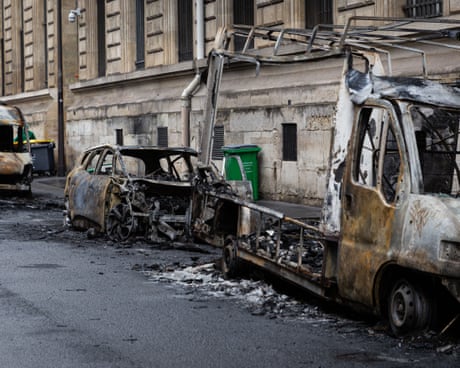
El 17 de octubre las acciones violentas comienzan antes del mediodía, o sea antes de que se abra el cortejo de manifestantes aprobado por las autoridades, y se prolongan durante la madrugada del día 18. Se reportan más de 600 policías y gendarmes heridos –pero sólo 26 personas serán enviadas a los tribunales–, 1 500 establecimientos comerciales saqueados y destruidos y varios edificios históricos incendiados. Los daños estimados se elevant a cientos de millones de euros.

Análisis

En Francia, las protestas de los alumnos de la enseñanza media no fueron motivadas por un hecho en particular. Se trata de un malestar generalizado exacerbado por la sensación de abandono de toda una generación a la que se le explica que debe conformarse con estudiar en instalaciones mal preparadas, en las que se sufre por el calor o por el frio, según la época del año; que nadie enviará profesores sustitutos si sus profesores se enferman; que, a fin de cuentas nunca tendrá un empleo porque para los patrones la inteligencia artificial es más rentable… pero que, a pesar de todo, tendrá pagar la deuda que sus padres han acumulado y hasta los intereses de esa deuda.

Inicialmente, un partido político de izquierda trató de captar a los jóvenes manifestantes viniendo hasta las puertas de sus centros de enseñanza. Pero todo cambió el 17 de octubre.

Es evidente que ciertos responsables, en el seno de los mandos policiales, hicieron todo lo posible para que la gran movilización del 17 de octubre acabará cayendo en la violencia, a pesar de los manifestantes y de los policías. El 14 de octubre, un sindicato de los policías, Alliance, presentó una denuncia contra X por poner en peligro las vidas de otros. Ese sindicato está recogiendo testimonios por todo el país para identificar a los oficiales que propiciaron el caos.

Como lo hacen esos policías, tenemos que preguntarnos qué objetivo perseguían los instigadores ocultos de los actos de violencia. Es probable que se esté preparando una operación encubierta para perturbar la próxima elección presidencial, prevista para el 18 de abril y el 2 de mayo de 2027.

Es posible que esos instigadores ocultos estén en Francia, pero es igualmente posible que hayan actuado desde el extranjero, una hipótesis que se refuerza cuando se comprueba la participación de los black blocs europeos.

¿Es posible que hayamos olvidado que, en 2011, el candidato a la presidencia de Francia que aparecía a la cabeza en todos los sondeos, Dominique Strauss-Kahn, fue arrestado en Nueva York por la policía estadounidense, pero con ayuda del Pentágono, y acusado de “violación”, lo cual hizo posible la elección de Francois Hollande? [2]

¿Cómo es posible olvidar que, en 2017, otro candidato a la presidencia de Francia que también lidereaba los sondeos, Francois Fillon, fue objeto de un linchamiento mediático por haber contratado a su esposa como asistente parlamentaria? Lo cual abrió el camino a otro candidato salido prácticamente de la nada… el actual presidente Emmanuel Macron.

¿Cómo podemos entonces evitar pensar en la posibilidad de que, en 2027, el aspirante a la presidencia mejor posicionado en los sondeos, que no es otra que Marine Le Pen, pueda verse condenada por la justicia y despojada de sus derechos cívicos? ¿O que se cree una coyuntura bajo la cual se decida proclamar un “estado de emergencia” en el país? ¿O que, utilizando la nueva disposición incluida en la ley aprobada el 16 de agosto de 2026, se proclame un “estado de alerta de seguridad nacional”?

Al dirigirse a la Nación, menos de 24 horas después de las concentraciones del 17 de octubre, el presidente Emmanuel Macron hizo un rápido balance de las destrucciones registradas [3]. Y concluyó que los franceses son incapaces de enfrentar esos actos de violencia, antes de terminar diciendo que espera que se restablezca el orden… para poder realizar la elección presidencial.

[1] «Le “Parti du Peuple des Cafards” sonne la révolte des démunis à Bahrat», Red Voltaire, 15 de octubre de 2026.

[2] «Obama, la guerra financiera y la eliminación de DSK », por Thierry Meyssan, Komsomolskaïa Pravda (Rusia), Red Voltaire , 26 de mayo de 2011.

[3] «Allocution du Président de la République», Emmanuel Macron, Palais de l’Élysée, 18 de octubre de 2026.

  •  

Why trade is vital to understanding how Ukraine needs western capital to stay afloat and how Russia can pay for its war effort without new debt

Four graphs that tell a bigger story

By Ian PROUD

Join us on Telegram, X, and VK.

Contact us: info@strategic-culture.su

I have wanted to write an article for sometime about the differing fates of Russia and Ukraine since the onset of the conflict in 2014. The headline is that Ukraine has never made up the difference in increased trade with Europe having cut its trade with Russia to the bone since 2014. This has inadvertently meant that Europe has had to inject significant sums of capital into Ukraine just to prevent its currency from collapsing as the war has gone on. Russia has diversified its trade away from Europe such that its export model is as strong today as it was in 2014, giving it the liquidity it needs to underwrite the war effort.

Key finding:

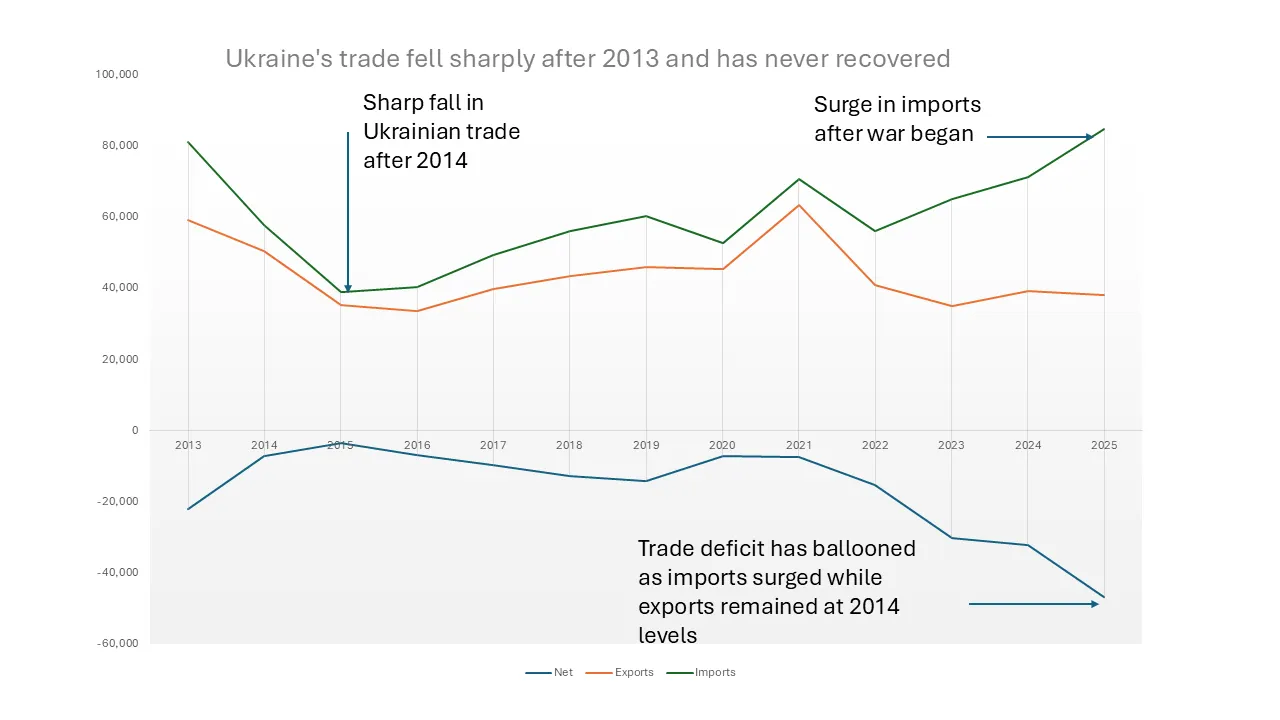
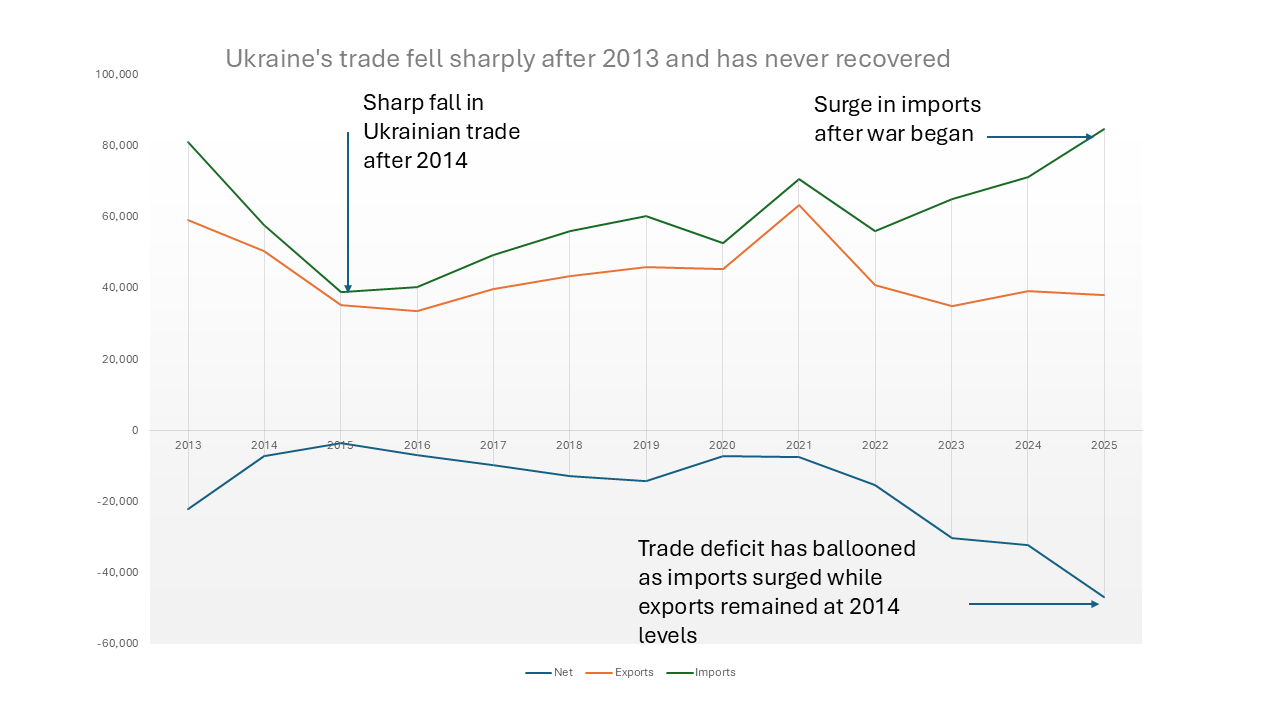
  • Ukraine exported 24% less and imported 46% more in 2025 than in 2014. The war has driven up imports while exports never recovered from the signing of the DCFTA and have been hampered by the war effort.
  • The yawning trade deficit Ukraine has built since the war started has placed greater strain on European sponsors to provide the capital Ukraine needs to prevent its currency collapsing, in addition to providing funding to meet its fiscal requirements.
  • This funding challenge for Europe will persist after the war ends until Ukraine can become self-sufficient in boosting exports and/or attracting sufficient foreign investment to offset its trade deficits.
  • Russia’s export strength and consistent surpluses have been unaffected by war. After the Ukraine crisis started, Russia started to diversify its major energy exports away from Europe, allowing it to weather the progressive reduction of exports to Europe. Indeed, Russia gained a huge windfall in 2022 from surging energy prices. There is no evidence that sanctions have impacted Russia’s export model in a significant way.
  • Russia has already started to reaccumulate FX reserves after the oil price collapse of late 2014, until before the war started. Following the immobilisation of $300bn in Russian FX reserves, Russia started to accumulate reserves in monetary gold, to sanction-proof future earnings. Russia now has liquid reserves of over $420bn meaning the immobilisation of its foreign currency reserves is no longer an economically limiting factor.

Detailed analysis

Russia’s export model in which it runs consistently large trade surpluses has ensured it can generate the reserves of foreign currency and gold which have undoubtedly helped to bankroll the war in Ukraine. Ukraine’s trade deficit has yawned since the war started, requiring continual injections of European capital to prevent its currency from collapsing.

This helps to explain by Russia can sustain the war for longer; it doesn’t need to take on significant new debt, its debt remaining low at 20%. Ukraine can only fund the war and keep its national accounts in balance with European money that cannot be guaranteed long-term and which, in any case, has increased Ukrainian debt by an average of 20% of GDP each year since the war started. This is not sustainable.

The Deep and Comprehensive Free Trade Agreement of 2014 has disadvantaged Ukraine because it forced a choice away from trading with Russia.

The starting point for this is the signature by Ukraine of a Deep and Comprehensive Free Trade Agreement with Europe on 27 June 2014.

Herman van Rompuy, then President of the European Council said that “stronger political and economic ties will bring greater stability and prosperity to the entire European continent.”

President Poroshenko said “over the last months, Ukraine paid the highest possible price to make her European dreams come true.”

Yet, the true price of this agreement has borne by Ukraine which saw its exports collapse and its imports increase, as it make a “sovereign choice” not to maintain trade links with Russia.

That was a catastrophically bad choice. Russia had accounted for around 25% of Ukrainian exports prior to 2014 and that figure fell to less than 5% in 2021 before the war started. Ukraine did not make up that gap by increasing the volume of exports to Europe, which have remained largely unchanged.

Indeed, this same pattern can be seen in Georgia which has also seen no real increase in exports to the EU after it signed the DCFTA. The EU uses a number of trade dispute mechanism and other non-tariff barriers to put blockages in the way of import growth from DCFTA partner countries.

So, by encouraging Ukraine to trade with Europe and not with Russia, Europe has imposed a deadweight economic loss on Ukraine which took a sovereign decision to forgo a previously profitable trade relationship, to pursue a political goal of EU integration.

Moreover, since the war started, imports into Ukraine have surged leading to a progressive ballooning of its trade deficit. This surge in imports has been caused by Ukraine purchasing weapons from the US using borrowed European and domestic funds. So, Ukraine is borrowing money to create a trade deficit that needs to be filled with further inflows of capital.

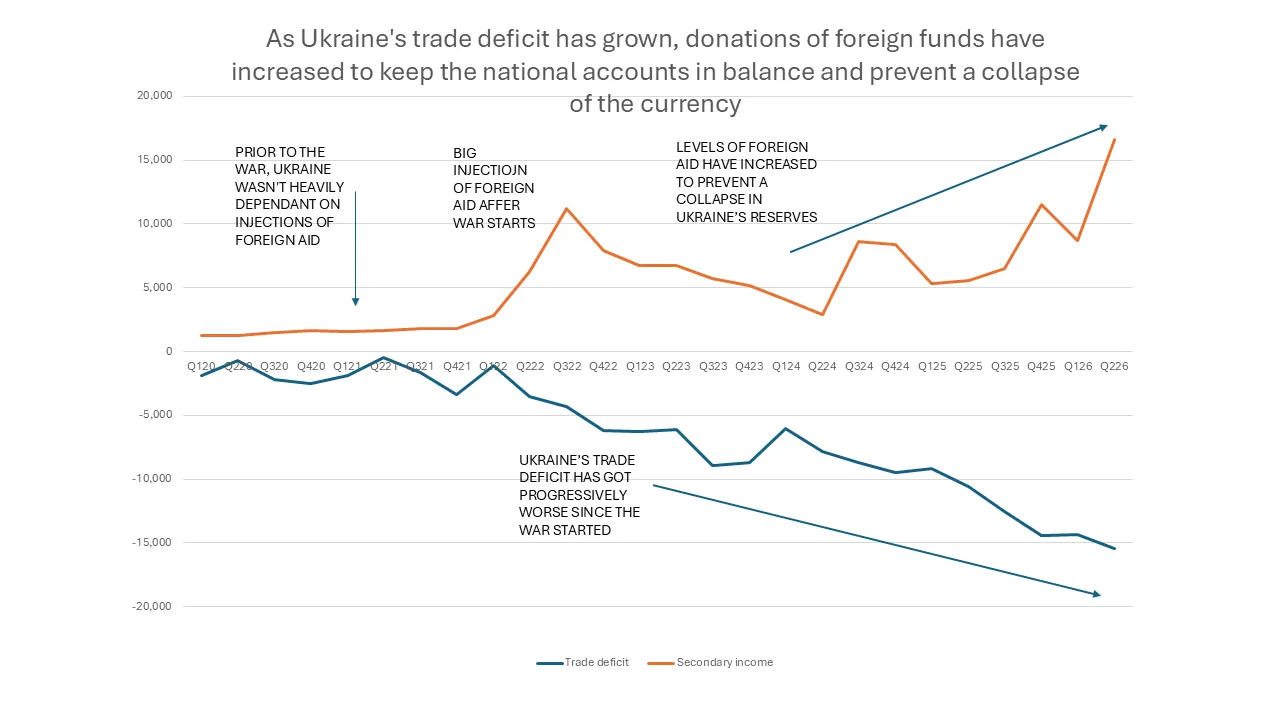
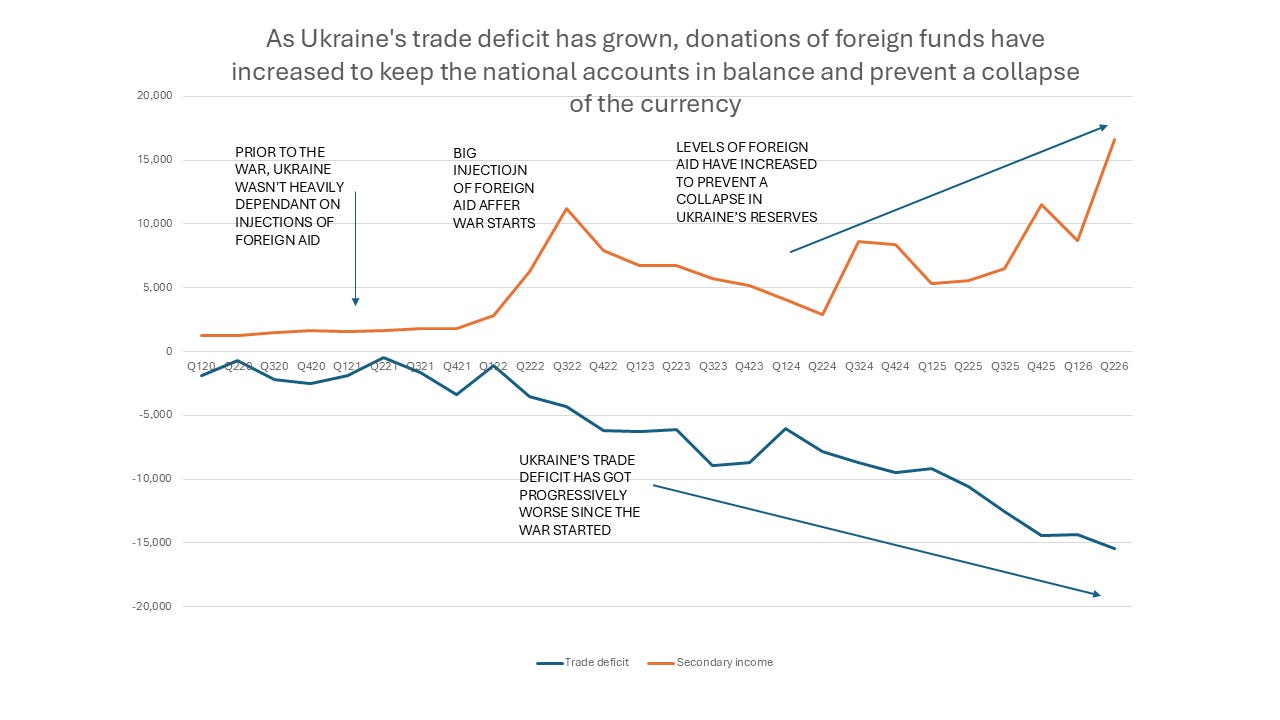
Dragged into a persistent and growth trade deficit by war, Ukraine needs continued injections of foreign funds to prevent its currency collapsing.

The graph below maps the growth in Ukraine’s trade deficit with the corresponding growth in receipts classified as Secondary Income within its quarterly balance of payments. These inflows of capital as Secondary Income are injections from Europe (principally) that are vital to shore up Ukraine’s FX reserves and so prevent a run on the currency. The key point is that foreign funding to Ukraine is more than just a fiscal event and top it. It is a vital support mechanism in circumstances where Ukraine is unable to attract sufficient inflows of foreign investment during a time of war.

Russia simply hasn’t faced the same challenge, choosing instead to diversify its exports to other countries as Europe progressively shut down trade. Sanctions haven’t dented trade.

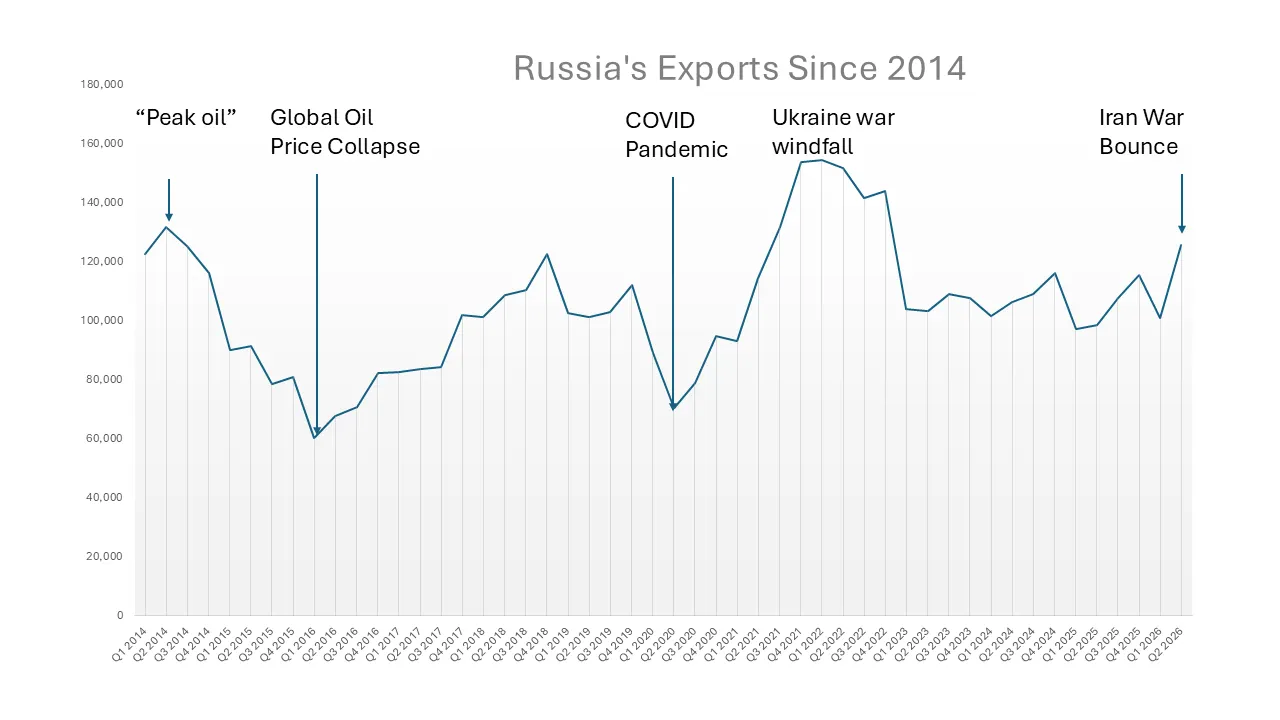
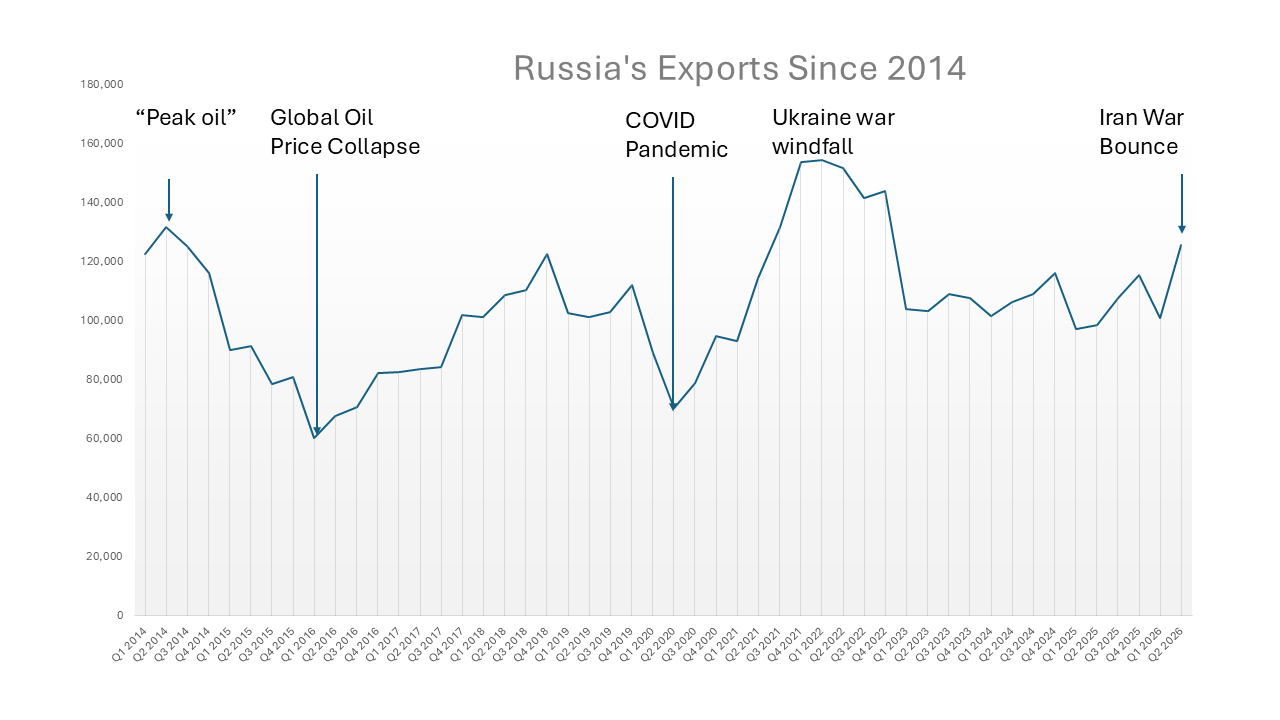
The graph below illustrates in an elegant way how Russia’s trade has changed and evolved since. Russia’s exports have gone through peaks and troughs since 2014, although the troughs have often been caused by global events such as the 2014 and 2016 oil price collapses and COVID,

The onset of the war in Ukraine caused a huge windfall in income from exports as oil prices surged. Despite the imposition of thousands of sanctions by western nations after the war commenced, Russia’s exports have remained highly resilient. This is down to Russia’s diversification of its exports towards countries in Asia.

In short, despite many headlines in western mainstream media of sanctions ‘denting Russia’s war economy’ there is no substantive evidence that this has been the case.

Russia’s export model continues to be an engine room that provides the liquidity it needs to fund the war without taking on significant new debt. This gives it a significant advantage over Ukraine and its European backers in the ‘war of attrition’.

Russia has accumulated reserves since the war started to make up for the immobilisation of $300bn in FX by western nations. Russia now invests in monetary gold to sanction-proof its assets.

Finally, I have been commenting for some time that Russia started the process of accumulating Foreign Exchange Reserves in 2017 as it shifted its monetary policy to embrace a weak rouble to maximise rouble income from exports and as it undertook a number of dollar purchases via the Finance Ministry. You can see this reserve accumulation in the graph below.

After the war started, following the large windfall in earning from exports in 2022 and still solid trade figures after that, Russia continued to accumulate reserves. However, following the freezing of its foreign currency assets, it has chosen instead to store its reserves in monetary gold, to sanction proof them.

While Russia would undoubtedly like to see the return of its immobilised assets after the war ends (big question mark) it has nevertheless built up a significant financial buffer to the tune of over $420bn in reserve assets in addition to those assets that remain frozen.

This deep well of reserves undoubtedly helps to underwrite Russia’s war effort without the need for significant borrowing. Russia’s debt today sits at around 20% of GDP.

In 2021 Ukraine’s debt sat at around 49% of GDP. Today it sits at around 110% of GDP.

Original article: thepeacemonger.substack.com

  •  

What is at stake in Serbia’s election? The key players, main issues and potential fallout

A grassroots student-led coalition threatens to upend Serbia’s political landscape as the EU-candidate country heads to the polls on Sunday

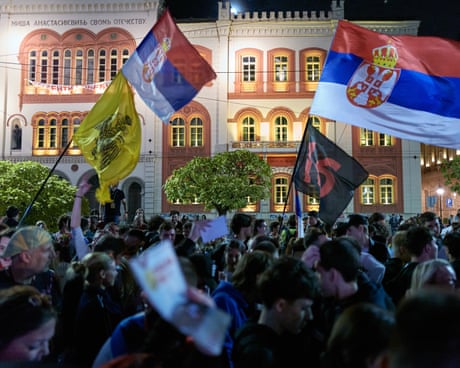
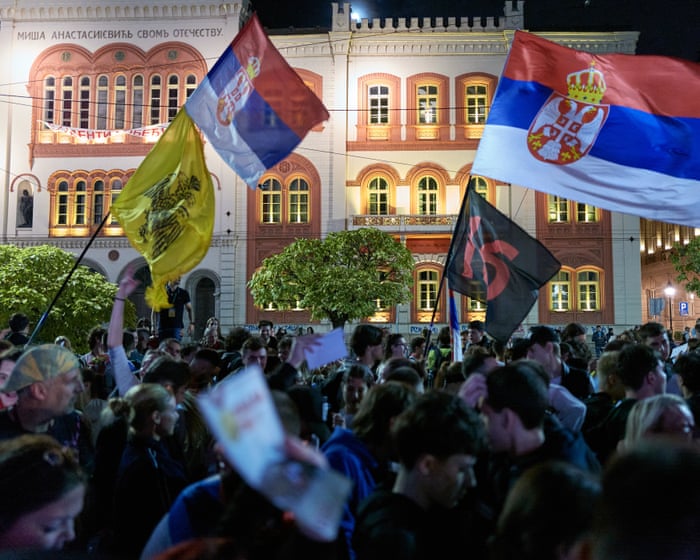
Serbia’s 6.5 million voters go to the polls on 25 October in a watershed parliamentary election characterised by civil unrest, a new political landscape, allegations of irregularities, an uncertain outcome and the potential of far-reaching consequences.

Here is a brief guide to the key issues.

Continue reading...

© Photograph: Pierre Crom/Getty Images

© Photograph: Pierre Crom/Getty Images

© Photograph: Pierre Crom/Getty Images

  •  

The truth about Burnham’s Russia meddling claims in Brexit vote

Burnham’s Russia interference claim is a hoax to justify re-joining the EU and war prep.

Join us on Telegram, X, and VK.

Contact us: info@strategic-culture.su

Still the preposterous “Russians are coming” narrative is being pushed in the UK. And yet this time it’s not from top military figures or those in the intelligence community, but the PM himself – albeit in a subtle way, days ahead of a first-ever UK-EU Summit. Andy Burnham, a man who you might think would be more at home on a used car lot than in the political arena, dropped a bombshell recently when he announced that he was told by the security services that Russia had in fact “sought to interfere” with the UK’s Brexit referendum of 2016. Remarkably, 10 years after the event, Britain’s own secret service have come up with such a conclusion when almost every single year previous to this announcement they have said the opposite. So what is really going on?

Burnham has a major challenge ahead. How does he stay in power and succeed at the polls against the Conservatives, who are growing, and Reform UK, which still holds an impressive support base, when he doesn’t actually have any policies himself to fix anything in broken Britain? His answer is to look backwards at the past and try to win voters’ hearts and minds by fixing it. Even if it doesn’t need fixing. One of the policy areas is Britain’s relationship with the EU and the possibility of another referendum to rejoin it, despite his promises to the contrary – which is, in part, where the statement about Russia is coming from. There is actually no evidence at all to suggest Russia interfered with the Brexit referendum, and even opposition MPs have asked him in recent days to provide it, to back up his sensational claims. Burnham is building a case to move the UK back to Brussels, and the lie about Russian interference is one component of that case. But it’s an important one.

On another parallel, he is aligned completely with the EU idea that all European member states should be spending much more on defence in preparation for a war with Russia. Like Merz and Macron, though, he too doesn’t mention to the British public that the impending war with Russia is one which is going to be manufactured entirely by him, Merz and Macron as part of a political renaissance to keep them and their support bases in power. The rationale isn’t very complicated. Successive governments have done terrible jobs on the economy, energy and investing in longer-term projects to create jobs. They have sold off everything that was worth selling and are now running their countries on an impossibly high borrowing model which even the most stupid know cannot continue. They also cannot afford the fallout of NATO collapsing and a scandal of Western officials exposed at skimming off billions from the Ukraine war racket when it ends – and so the Ukraine war must go on at all costs. They have, more or less, boxed themselves into the ‘Russia war’ plan.

Rather than wait for the economic meltdown and tyranny to take over most towns in the UK, in particular in the north, the elites like Burnham believe that a war – or as close to the imminent threat of one – will serve its purpose from distracting the angry crowds away from burning and looting and focus them on supposedly fighting for their own country. It’s a scam. And sadly, it’s one which seems to be working, as it is supported by the billionaires who own the media in the UK, so, broadly speaking, the working classes have swallowed the ‘war with Russia’ ruse.

Furthermore, the industrial military complex also gets a massively needed shot in the arm of public money which under normal circumstances would not be possible. Most of this is U.S. money, of course, but the UK has also a defence industry of its own which is in need of new cash. And as we have seen with Boris Johnson, it also works on the same ‘gratuity’ basis for paying off politicians huge amounts for helping with their orders. Part of the sweetener of getting the country to prepare for war with Russia is that the huge contracts that have to be given to the defence business also come with the same brown envelopes for those who presided over them. It beggars belief how our politicians in the UK have resisted so far not to bang on the Russian war drum more when the rewards are considerable.

There is nothing remarkable about our leaders any more – only that they are no longer leaders. Burnham has the on-screen charisma of a provincial school teacher whom you meet in a train compartment and instantly regret engaging in conversation, as he really has nothing to say. No new ideas. No new plans. He is stuck in the past and has no choice but to remain there while apparently fixing Britain. His problem is that the country and the world have changed and are rapidly changing. The EU that Britain left is not the same EU today. The economies of France and Germany are in tatters due to years of poor governance, atrocious foreign policy stunts like Ukraine, and too many poor domestic policy decisions that have backfired, like energy. The EU itself under von der Leyen has turned into an Orwellian superstate, corrupt to the core, which also has exactly the same scam to save their own political necks: war with Russia. The U.S. is in rapid decline, BRICS nations are emerging as the new global economic powerhouse to balance the old world order. All Burnham has is old ideas which belong in the past. And lies. Even his own ministers have admitted that there is no truth whatsoever in the Russian interference hoax, and yet he is peddling it, like an old comedian recycling someone else’s old jokes. The truth is that while Burnham is under some pressure from, in particular, Germany’s leader Merz, to push this narrative that the far right is funded by Russia (which of course works for Burnham in the UK as well), in reality the only ‘foreign interference’ is the dark power of the Israeli lobby and its cash in Westminster. And why doesn’t even one single UK journalist or commentator point out the patent hypocrisy of this election meddling accusation which all superpowers indulge in anyway? In 2014, the Americans boasted that they had spent $5bn USD on social media influencing in Ukraine to install a Westernised leader in power. Was that not “meddling”?

  •  

Should Russia save Europe?

Build a physical border—widen rivers from the Baltic to the Black Sea. Sell resources to those who keep their word. Not one ruble for Europe’s rebuild, Tim Kirby writes.

Join us on Telegram, X, and VK.

Contact us: info@strategic-culture.su

This is the type of question that in 2022 would have sounded insane both within Russia and even more so in the West. How could ‘Nigeria with snow’ possibly save the Europe that it supposedly ‘attacked’ spontaneously? But now we are at a certain nexus of events that allows one to ask such a question. Trump has started to pull back, or has been forced to pull back, support for Project Ukraine which looks to be winding down. Every locomotive, gas station, sea port, Amazon-like warehouse, and data center has been blown to bits in retaliation for Zelensky’s 40 days of terror during the summer of 2026. The President of the United States has called for a three-way meeting with Xi and Putin which some think could be a call to finally and ultimately divide up the world into zones of influence among great powers. The riots in France have potentially put a final nail in the coffin of the globalist vision for the future, not because the riots are ugly or wrong, but because ultimately the Frankfurt School concept of destroying all forms of identity to maybe achieve something utopian has only taken hold in the West. That is to say, cultural masochism is only destroying the West and has provided strong evidence to Russia, China and others that national sovereignty and cohesion is the way to go. The project to create a world with no form of collective identity has backfired.

To be clear, the defining issue around this nexus is by far is the ‘death of Europe’. Obviously the continent remains physically on the map, but geopolitically it has become a black hole. Trump has wanted to get the U.S. out of NATO since his first presidential campaign, or at least make it profitable. The forces in the States that are ‘America First’ want nothing to do with the continent anymore. Trump may be failing to get the job done, but officially the Monroe Doctrine is back in place, one that leaves European problems for Europe to deal with. This potential global carve up conference, or Yalta 2.0 between Xi, Putin and Trump probably has to do with the Cold War’s Arrakis no longer has any spice left to it. Europe has become a toxic asset after generations of vassalage to Washington/London and rule by Epstein Elites. On the geopolitical game board there is an ever growing dark pit filled by the abyssal legacy of the Monopolar Moment located where Western Europe used to be.

What’s in it for Russia to save Europe?

But as things change and the ‘paper tiger’ of Europe shows its lack of stripes, what is Russia to do about this? Surprisingly, from within Russia and especially from Pro-Russian Westerners (who love to argue with me about this online) there are plenty of calls for mama bear to ‘save Europe’. I must say that I find any such demands to be a true reflection of Western arrogance and over-inflated self-importance. Moscow is the 3rd Rome, it does not need to save your Holy Land to achieve a state of grace.

Pro-Russian Westerners should be well aware of the fact that all of the problems Russia has suffered over the last 300 years, some of them very dire with millions of men lost, all came from the West: Napoleon’s invasion, subversion during the late 1800s mostly by the British, Lenin’s arrival in St. Petersburg from Europe, Marxism as a whole, WWI, WWII, 90s Liberalism, and now Project Ukraine. Truman gets the blame by Russian historians for starting the Cold War, FDR was much nicer bloke for Russia but his health didn’t hold out, so perhaps the American side did cause one major set of problems for the Russians, but the rest all comes from Europe and especially that accursed island, and at this point for Russian society the Cold War is in the past, but WWII is in the present thanks to the Maidan.

Perhaps Putin’s greatest yet quietest triumph is the restoration of Christianity in Russia, and with the Christian spirit comes an obligation to forgive others. However, when one ‘turns the other cheek’ and has the other slapped over-and-over again this duty to our Lord in heaven has been fulfilled and the Motherland is under no moral obligation to do anything for the West. Many, both within and without Russia, put serious blame on the USSR’s ‘geopolitical altruism’ as a cause for its loss in the Cold War. Moscow may have bought all the boots in Czechoslovakia, but it gave away unfathomable resources to all sorts of fickle socialist cousin-nations and got nothing in return by 1991, when they all jumped on the Western bandwagon. Countless billions of Soviet Rubles in oil, coal and anything else the USSR had for export, were just given a way or sold for symbolic prices in Eastern Europe, Cuba, North Korea and beyond. We have become used to the ‘West’ being the source of insane self-destructive policies in our world, but it was not always the king in that department.

I bring up Soviet geopolitical altruism, plus the ‘betrayal’ by the ‘socialist camp’ as the Russians call them, is a very strong argument against Russia doing anything to save Europe. They have tried to be nice to Europe and failed. No matter how many bloggers may be ‘begmanding’ Zelensky-style that Moscow ‘must’ save the West from itself that someone must ‘do something about the protests in France’ or at least protect Christianity in the former Roman Empire, this does not provide a counter argument to the opinion of Marshall Zhukov “We have liberated Europe from Fascism and they will never forgive us.” If Russia saves the EU from its Postmodernist death cult behavior it will never be forgiven for it either, especially from Starbucks socialist intellectuals.

Doing nothing is a fantastic option

If Russia were to ‘do something’ about Europe as it collapses these efforts will only be instantly forgotten and the Western elites (not the people, they have a far better historical memory than their leaders, but sadly they decide virtually nothing) will one day rise up to punish Moscow for all of its efforts. When Alice Weidel speaks about Germany restoring relations with Russia the locals in land of black gold roar with naïve applause. However, as a Westerner I hear something different in her words as they are auto-translated before my eyes. Ms. Weidel does not express some sort of guilt or remorse or a deep desire to live in brotherhood, but something more like an attitude of “we are losing badly, so let’s allow the snow negroes to go back to sending us liquid cotton”. There is no mutual respect or friendship in her voice, just the pragmatism of not fighting the subhuman barbarians to the east because it is ineffective at present for the German economy. Let’s look at it this way, should Russia, even for payment, send resources to rebuild those who have desired its demise for centuries, or sell those resources to countries that only want peace and mostly keep their word? Russia should sell absolutely nothing to the West for the next few generations, no matter how much posh Muscovites like Gucci and Porsche. The rebirth of Europe is the deaths of future millions of Russians.

The last 300 years of history since Peter I became infatuated with the West have never yielded anything for his nation but misery, revolution, exported resources that were needed at home, and piles of humiliation with a cherry on top. Russia is under no obligation to do anything in Europe and the all signs point to the need to take absolutely no action over there whatsoever and let the Postmodernist nightmare run its course.

The irony of Russian history is that somehow it can always make deals with the Muslims, even the Turks who have had a lot of geopolitical tension with them, can still keep their word on deals and common ground can be found across the potentially dangerous Black Sea region. Protestants are as loyal to the Russians as they were to the Native Americans that they wiped off the continent. The biolab network in Ukraine was a 21st century ‘diseased blanket’ but for the primitive aboriginal Slavs. So it is hard to say whether an Islamic France would actually be more hostile to Moscow, perhaps they would want peace and shish kebabs with a rival they could actually respect?

A true border wall would be a better option

There is an old geopolitical folk belief that the border of Russia starts somewhere in the Baltic Sea and ends somewhere in the Black Sea and that its shape throughout history is constantly changing between these two endpoints. There seems to be some truth to this, and when Project Ukraine is finally settled the Russians need to not just establish some border, but change the actual physical landscape of Europe to suit their security needs.

I would propose that the Union State between Russia and Belarus, at the end of the conflict draw up a plan to unite rivers and canals that somehow connect to the Baltic Sea and go down towards the Black Sea. Supposedly the oceans are rising and thus there should be plenty of water to fill this passageway. Furthermore, all of these natural and unnatural bodies of water must be widened to something like at least a kilometer. The steppes between Russia and Germany have been nothing but a nightmare zone of conflict since WWI and that is due to its geography, since the West will probably never change its attitude towards Russia, it is vastly easier for Moscow to alter the landscape than the minds of the Epstein Elite. Will the Baltic states object to this? Yes, but who knows what their fate will be after the Special Military Operation ends and America abandons them.

Having a final definitive, although expensive to produce, line on every map in the world with only a tiny number of bridges, that is too wide to cross easily, would finally define a concrete dividing point between the ‘barbaric’ East and ‘civilized’ West. That is to say, Russia must achieve some sort of physical separation, or possibly segregation from a mentally diseased Europe for centuries to come. Putting up a massive border wall would also be a boon, but that would be quite costly to the Russian taxpayer. The important thing is that there must be a potent form of division that is felt by both sides. The term Zaporozhia, means something like “along the threshold” and the threshold to Russia is eternally open, someone needs to close the damn door already and flick the lock.

In Summation Russia does not need to save Europe, it needs to fully and completely divide itself from it:

    • Geopolitical altruism is a methodology of failure, the more Russia spends on itself the more powerful and wealthy it becomes. Today’s Russia flourishes under the challenges that crushed the all too generous USSR from within.
    • The Western elites (not the people) will always hate Russia and they should not be allowed to rebuild via Russian resources, even if they are willing to pay for them. There are other better customers. Let them rot in the Postmodern grave they’ve dug for themselves.
    • There needs to be a permanent physical border between Russia and Europe, the easiest way would be by uniting and widening preexisting rivers and canals.
    • Supposedly Christian Europe has wished death upon Russia for generations, maybe a Caliphate won’t be so bad for Moscow? How many Russians died to Islamic extremism as opposed to the Third Reich?
    • Russia cannot and must not spend one ruble to rebuild Europe let alone a single soldier’s life.
    • Russia is under no obligation to save your country of origin, it never was, and never will be.

  •  

French borrowing costs overtake US amid budget turmoil

France’s bond market hit by another bout of selling as country recovers from weekend protests

French borrowing costs continued to rise on Thursday, as investors fret that France’s government is struggling to pass a federal budget after public protests gripped the country.

France’s bond market was hit with another bout of selling, with the difference between French and German 10-year borrowing costs – a metric for the risk premium attached to French debt – rising to its highest level in almost 15 years.

Continue reading...

© Photograph: Telmo Pinto/NurPhoto/Shutterstock

© Photograph: Telmo Pinto/NurPhoto/Shutterstock

© Photograph: Telmo Pinto/NurPhoto/Shutterstock

  •  
❌