❌

Reading view

24 octobre : Macron serre la vis sur les manifestations, interdites à Marseille et à Lyon

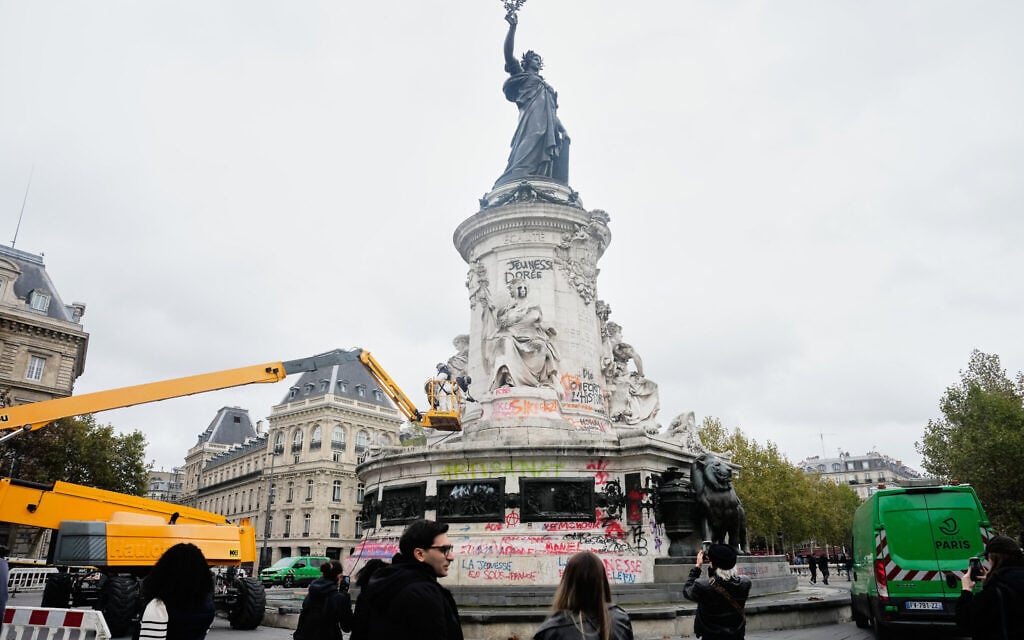
Emmanuel Macron a annoncé jeudi que seules les manifestations organisées par des syndicats seront autorisées le 24 octobre, lors d'une nouvelle journée de mobilisation pour le pouvoir d'achat. Les préfets du Rhône et des Bouches-du-Rhône ont interdit les manifestations à Lyon et à Marseille. La préfecture du Nord a, elle, interdit "toutes manifestations" et rassemblements samedi dans le centre de Lille.

  •  

Europe’s Student Protests Spark Debate Over the Muslim Brotherhood’s Influence 


A wave of student protests has spread across several European countries in recent weeks, with France at its centre, where demonstrations over staff shortages, underfunded schools and run-down facilities have continued since mid-September.

The French protests began on September 17th, when teachers at a high school in south-eastern Paris protested over staff shortages and students joined them, Australia’s ABC News reported. Demonstrations followed in Spain, Belgium, Italy, Portugal and Albania, and smaller protests took place in Greece, Austria, Ireland and Germany, according to the same report. What began over education has since widened to include the cost of living and public-sector cuts.

In this context, the Forum of European Muslim Youth and Student Organisations (FEMYSO) has come under the spotlight following its announcement of support for student protests in France and Belgium, and subsequently in Albania.

Several European reports have drawn links between FEMYSO and the Muslim Brotherhood, describing the student forum as the organisation’s youth wing. Among the most notable is a report by a French National Assembly investigative committee, published in December 2025, which points to close ties between the forum and networks linked to the Muslim Brotherhood and characterises its role as contributing to the spread of the movement’s ideas across Europe.

In a parliamentary question submitted in 2025, Germany’s Baden-Württemberg State Office for the Protection of the Constitution was cited as viewing FEMYSO as an umbrella organisation for youth groups with links to the Muslim Brotherhood.

FEMYSO, however, rejects these allegations. In a previous statement, the organisation affirmed that it has no ties to the Muslim Brotherhood.

Statements of Support for Protests Across Europe

On October 9th, the forum announced its solidarity with student demonstrations in France and Belgium. On October 18, it declared its support for student and youth protests in Albania, while also referring to ongoing demonstrations in Spain and Greece in the same context.

On October 15th, 2026, the French Muslim Students Association (Étudiants Musulmans de France, EMF), a member organisation of FEMYSO, went beyond expressing solidarity. It called on students, education workers and the broader social movement to join a nationwide mobilisation scheduled for October 17th, reaffirming its support for demonstrations stretching from Paris to Marseille and from Bordeaux to Strasbourg.

In a statement, EMF stressed the need to build a balance of power through protests. The statement came just two days before large-scale demonstrations took place across France, attracting hundreds of thousands of participants in largely peaceful gatherings before separate groups became involved in acts of violence, looting, arson and attacks on police officers and public buildings. These incidents reportedly resulted in more than 1,000 arrests and injuries to dozens of security personnel.

Such initiatives and calls for participation in demonstrations have raised concerns that political Islamist networks may seek to capitalise on public discontent, particularly when protests are accompanied by public disorder or acts of vandalism. This, critics fear, could turn student and social demands into instruments for expanding organisational influence and securing political leverage.

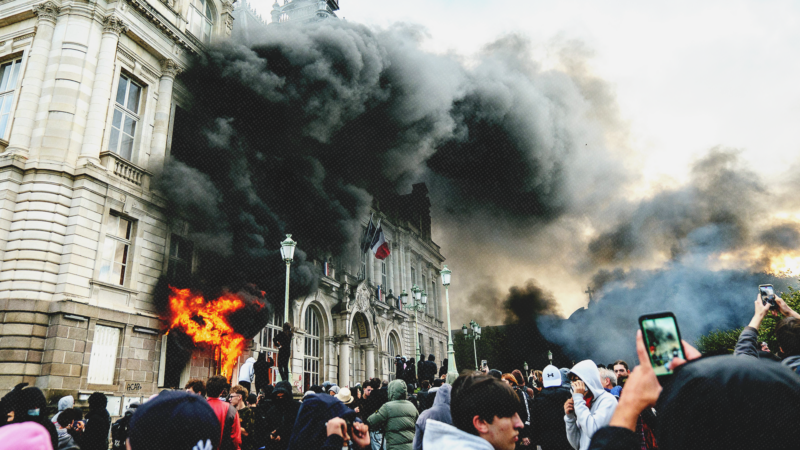
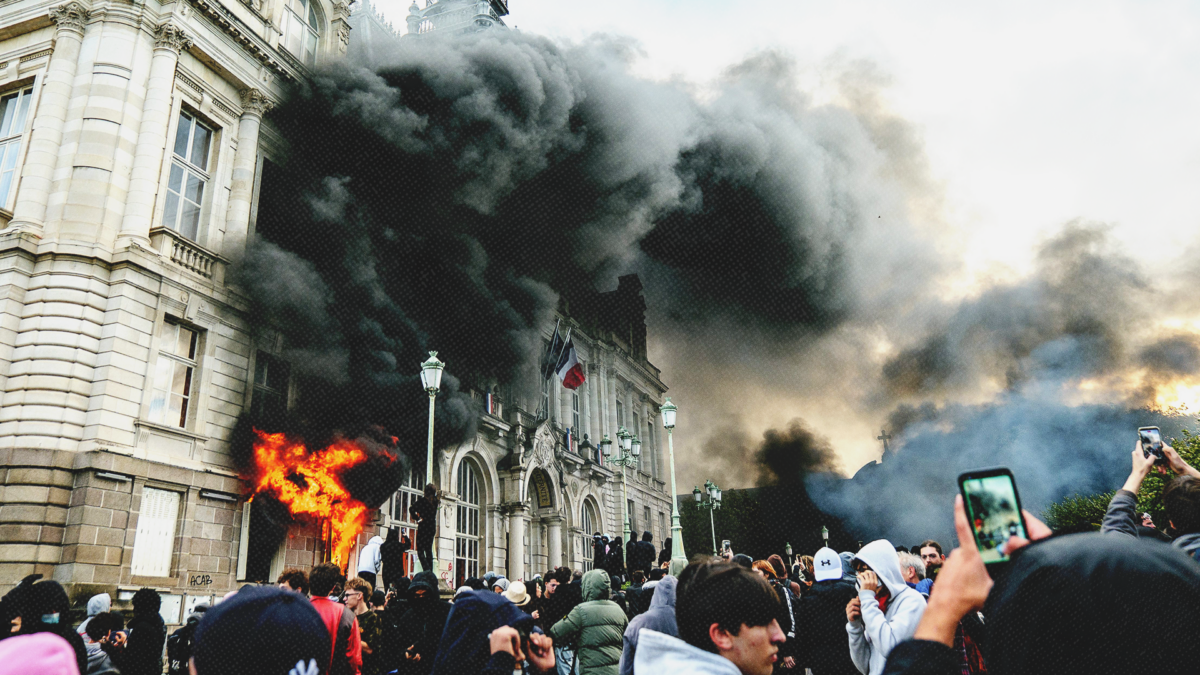
According to official French data, masked and violent individuals were present at the demonstrations. In several cities, shops were looted, while cars and rubbish bins were set on fire. In the city of Limoges, flames engulfed the historic town hall, a building dating back to 1883.

The same data indicated that 1,800 people had been arrested and more than 500 police officers and firefighters had been injured. In response to the violence and rioting, the French government announced the imposition of curfews in several cities.

Concerns Reach the Heart of European Institutions

These developments come at a time when the activities of organisations suspected of having links to the Muslim Brotherhood are facing increasing political scrutiny.

On September 15th, 2026, French MP Constance Le Grip submitted a written question to the government concerning European funding for projects involving FEMYSO, calling for clarification of funding mechanisms and oversight procedures governing grants.

The question followed recent reports and studies that raised concerns over the continued involvement of FEMYSO in projects benefiting from European funding, despite an earlier announcement by the European Commission that the organisation was no longer receiving direct funding.

FEMYSO has consequently become one of the most contentious issues in the wider European debate.

A recent study published by CERIF and AK Polis in September examined the organisation’s participation in the EmpowerAction project, which forms part of the TACKLE initiative funded by the European Union through its DEAR programme.

According to the study, the funding does not necessarily take the form of a direct EU operating grant to FEMYSO. Instead, it may be channelled through partner organisations, projects and sub-granting mechanisms.

This has raised concerns that European funds could reach an organisation through a project led by another partner or through a consortium and its sub-granting arrangements.

Against the backdrop of FEMYSO’s visibility in the protests, some of which were subsequently accompanied by violence and looting, as well as allegations of links to the Muslim Brotherhood, concerns have emerged over the possibility that the organisation could gain a foothold in current social unrest and convert it into political influence by winning the sympathy of European communities and left-wing parties.

FEMYSO: Background, Membership and European Footprint 

The Forum of European Muslim Youth and Student Organisations (FEMYSO) describes itself as a European umbrella organisation bringing together Muslim youth and student associations.

FEMYSO currently comprises 32 member organisations across 22 European countries. Its roots date back to 1995, when the first meeting of Muslim youth organisations was held in Sweden.

The following year, FEMYSO was formally established at a meeting in Leicester, United Kingdom, which brought together 19 organisations from 11 countries. In 2000, the forum established its headquarters in Brussels.

  •  

Violences du 17 octobre : le profil type des personnes incarcérées dévoilé

La Chancellerie a dévoilé un document qui dresse le profil type des personnes interpellées lors des manifestations marquées par des violences et des pillages ces dernières semaines en France. Le portrait type correspond à un homme âgé entre 18 et 25 ans, de nationalité française, inconnu de la justice, incarcéré pour pillages ou violences envers la police. 

  •  

France Is a Warning to California's Tax-the-Rich Crowd

Protest in France | Elise Cabane/ZUMAPRESS/Newscom

French economist Gabriel Zucman has come to California bearing a familiar French solution to a fiscal problem: another tax.

Once based at the University of California, Berkeley, Zucman is back and campaigning for Proposition 40, which would impose an allegedly one-time 5 percent tax on the net worth of Californians worth more than $1 billion. Zucman, who coauthored the proposition, estimates that the tax could raise about $100 billion and claims that 90 percent of the proceeds would go to health care.

The California Legislative Analyst's office is far more cautious, saying it would raise only "tens of billions" and could cause a long-term loss of income-tax revenue as wealthy people leave the state with the companies they created.

I've written plenty about why wealth taxes are economically destructive, administratively nightmarish, and unlikely to achieve anything close to what their advocates promise. But Zucman's prescription is wrong for a more fundamental reason, as his (and my) native country shows: Raising taxes to fuel ever-larger demands for government spending is a recipe for disaster.

Unless you've been living in a remote cave recently, you've likely seen all the protests and destruction in France. But do you know why it's happening?

As another economist, Paul Krugman, rightly noted back in 2017, "France offers a social safety net beyond the wildest dreams of U.S. progressives: guaranteed high-quality health care for all, generous paid leave for new parents, universal pre-K, and much more."

For decades, France has answered any perceived desire with government spending, then responded to the resulting fiscal problem by seeking new revenue sources. Today, French government spending consumes roughly 58 percent of gross domestic product (GDP).

Krugman gloated that France wasn't suffering social collapse and speculated that it was due to all the spending. He certainly can't say that anymore. In fact, he is now worried that France may be on the precipice of a debt crisis. The truth is that France hasn't done well for some time, even when Krugman cheered its spending.

One of the groups in the street today, young people, has faced widespread unemployment for a long time. The youth unemployment rate in France (ages 15-24) has hovered between 17 percent and 27 percent since 2000. In the second quarter of 2026, it was 21.6 percent, against 14.8 percent in the Eurozone and 9.9 percent in the U.S.

French people also pay some of the highest taxes in the developed world, and they're not happy with the return. The government already takes more than 52 percent of the country's output in revenue, runs deficits exceeding 5 percent of GDP, and has accumulated debt approaching 120 percent of GDP. Nonetheless, French students complain that the government is shortchanging schools, while everyone sees that it is shortchanging its army and police.

The students aren't wrong to feel left out. At The Two Cents Substack, Hoover Institution scholar Hanno Lustig calculates that, between 1995 and 2024, spending on social protection and health (most of which benefits older people) rose from 53.1 percent to 58.7 percent of all French government spending. The share devoted to education, defense, and public order fell from 15.2 percent to 13.7 percent. Transportation fell from 5.3 percent to 3.8 percent.

In other words, France has built an enormous welfare state, much of it devoted to older citizens, while letting other state capacities and basic services fall apart. As transfers of wealth swallow a larger share of the budget, everything else gets squeezed.

That is the fiscal ratchet Californians should worry about when Zucman tells them Proposition 40 is necessary to "save" health care. Proponents claim Washington "cut" Medicaid, but that language is misleading. California's deficit started long before any Washington spending reductions. Besides, federal Medicaid spending isn't falling—not even close. The Congressional Budget Office estimates it will reach $708 billion in 2026, 8 percent more than in 2025. What Washington did in the 2025 budget reconciliation law was reduce Medicaid's future growth relative to previous projections, partly by changing eligibility and enrollment rules and financing arrangements.

This is how the ratchet works. Once the government projects a spending increase, anything less becomes a cut. And once Washington fails to finance the entire projected increase, Californians are told that Sacramento must backfill the missing money. And how should it do that? Conveniently, by creating an entirely new tax.

France has run this experiment for decades. It has an incredibly generous welfare state paid for with very high taxes; it's even tried a wealth tax and has a value-added tax, yet somehow it's never enough. Its welfare state has not eliminated scarcity. It has merely transferred the job of rationing scarce resources to politicians.

Zucman looks at California and sees hundreds of billions of dollars of private wealth waiting to solve a public finance problem. Californians should look across the Atlantic and ask a different question: What happens after politicians decide that every spending adjustment can be delayed until tomorrow by finding another pot of private wealth?

France should not be sending California tax advice. It should be sending a warning.

COPYRIGHT 2026 CREATORS.COM

The post France Is a Warning to California's Tax-the-Rich Crowd appeared first on Reason Magazine.

  •  

Riots in France Are an Attack on Western Civilisation

The riots in France and across Europe are a direct assault on Western civilisation, fuelled by decades of 'progressive' denigration of our cultural inheritance and the sowing of division, says Kevin Donnelly.

The post Riots in France Are an Attack on Western Civilisation appeared first on The Daily Sceptic.

  •  

France's Macron blames protests on 'ultra-left groups whose aim is to bring down the Republic'

French President Emmanuel Macron vowed Thursday to ban protests by "individuals or groups with no legitimate authority" as he blamed "ultra-left groups" for riots and looting that spread across his country.

Macron made the remarks as thousands of protesters took to the streets of Paris on Thursday, according to The Associated Press, ahead of larger demonstrations set for this weekend.

"Last Saturday we had political and seditious acts by ultra-left groups whose aim is to bring down the Republic," Macron was quoted by Reuters as saying following a meeting with intelligence officials.

The news agency reported that businesses in central Paris have started boarding up their windows over concerns of violence on Saturday. Local authorities also told Reuters that protests planned for Saturday in Lyon have been banned.

FRANCE COULD FACE EVEN WORSE DESTRUCTION WITH SECOND WEEKEND OF PLANNED RIOTS, STATE DEPT WARNS

Macron said the strategy adopted for the coming days is to ban protests requested by "individuals or groups with no legitimate authority."

"Where trade unions submit requests to hold demonstrations, prefects will examine them in accordance with the law, but alternative routes will be proposed" to protect city centers, businesses and public buildings, Macron said.

"The rules are simple, and I think they're just common sense. The general recommendation is that there should be no demonstrations in the coming days," he said. "For those who still want to protest, if they are trade unions, prefects will propose alternative routes."

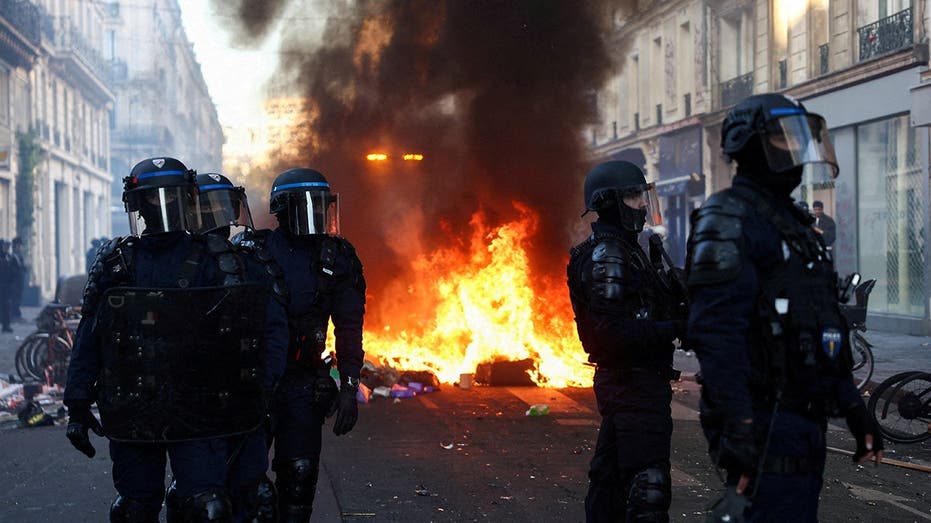
Organizers of the Paris protest on Thursday said an administrative court in the city overturned a ban issued by police after they challenged it. The Paris police prefecture previously said the ban was necessary, given the risk of street violence after groups of masked youth clashed with police forces, looted shops and torched cars over the weekend.

AMERICANS WARNED ABOUT PARIS TRAVEL AFTER VIOLENCE, LOOTING AND TEAR GAS-FILLED STREETS

The protests began in France in September with calls for education reform, before expanding into larger anti-government demonstrations that French officials say are being fueled by far-left groups.

Protesters gathered peacefully and chanted in the southeastern part of Paris on Thursday while they were watched by a heavy police presence, the AP reported.

CLICK HERE TO DOWNLOAD THE FOX NEWS APP

Thursday's planned protests were seen as a prelude to Saturday's big demonstration, when activists from the "yellow vest" movement, whose demonstrations over fuel prices shook France in 2018 and 2019, and the CGT labor union, are expected to join.

The Associated Press contributed to this report.

  •  

Le virus Shamonda détecté pour la première fois chez l'être humain en France, un patient immunodéprimé décède

Un homme immunodéprimé est mort en France de complications cérébrales « très probablement liées » au virus Shamonda, au début du mois d'octobre. Il s'agit d'une première mondiale. Jusqu’ici, ce virus transmis aux animaux par des moucherons n’avait jamais été documenté chez l’être humain. Les autorités assurent ce jeudi 22 octobre 2026 qu’aucun risque sanitaire n’est identifié pour la population générale.

  •  

France bans or curbs protests in bid to prevent new weekend unrest

French authorities have banned or curbed protests across the country ahead of the weekend in a bid to prevent another wave of the violence and looting that plagued last week’s demonstrations. In Paris alone, hundreds of shops and other small businesses were destroyed on the sidelines of the protests over the cost of living and education funding shortfalls. 

  •  

Macron bans ‘illegitimate’ protests in France as he tries to get a grip on unrest

French president also says he will decide on concrete ‘next steps’ for the next nationwide demonstrations

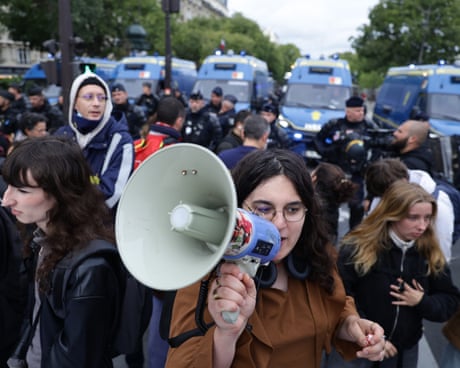
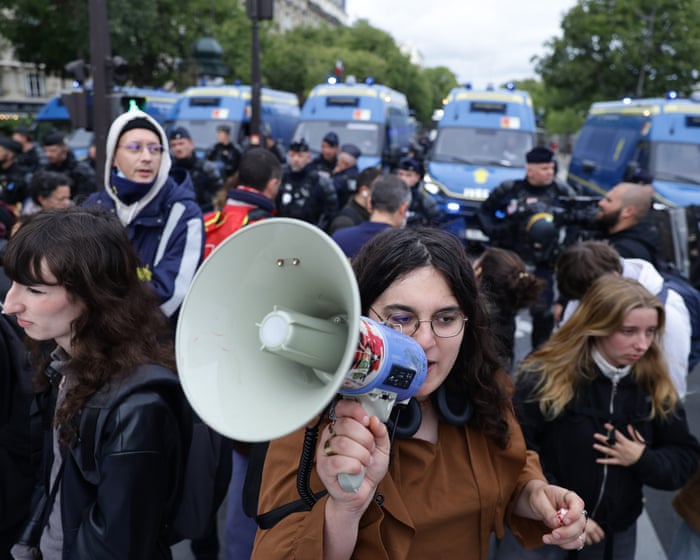
Emmanuel Macron has said “illegitimate” demonstrations will be banned over the coming days as France seeks to get a grip on civil unrest after some of its worst street violence in years erupted on the fringes of cost of living protests at the weekend.

Speaking after a ​meeting with intelligence officials and senior ministers, the French president said on Thursday that demonstrations organised by recognised groups would be allowed to go ahead, although their routes could be changed.

Continue reading...

© Photograph: Ibrahim Ezzat/Anadolu/Getty Images

© Photograph: Ibrahim Ezzat/Anadolu/Getty Images

© Photograph: Ibrahim Ezzat/Anadolu/Getty Images

  •  

Shamonda virus detected in human for first time in France

Investigations under way to determine whether virus normally found in livestock contributed to man’s death

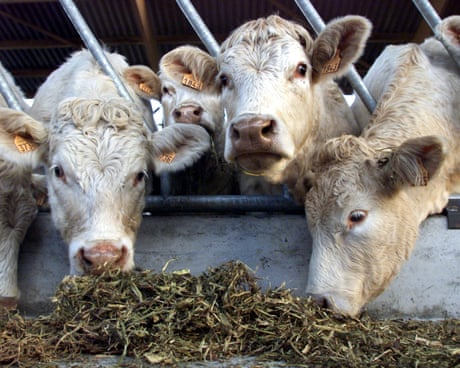
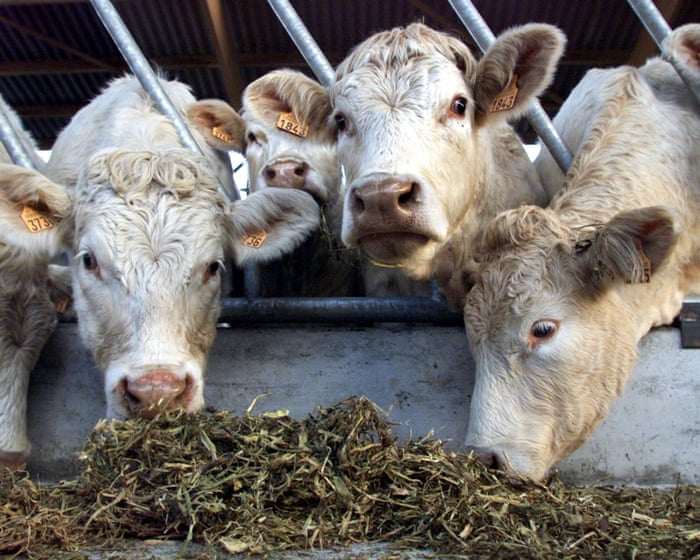
A man in France has become the first human known to have contracted Shamonda virus, with investigations under way to explore whether it contributed to his death.

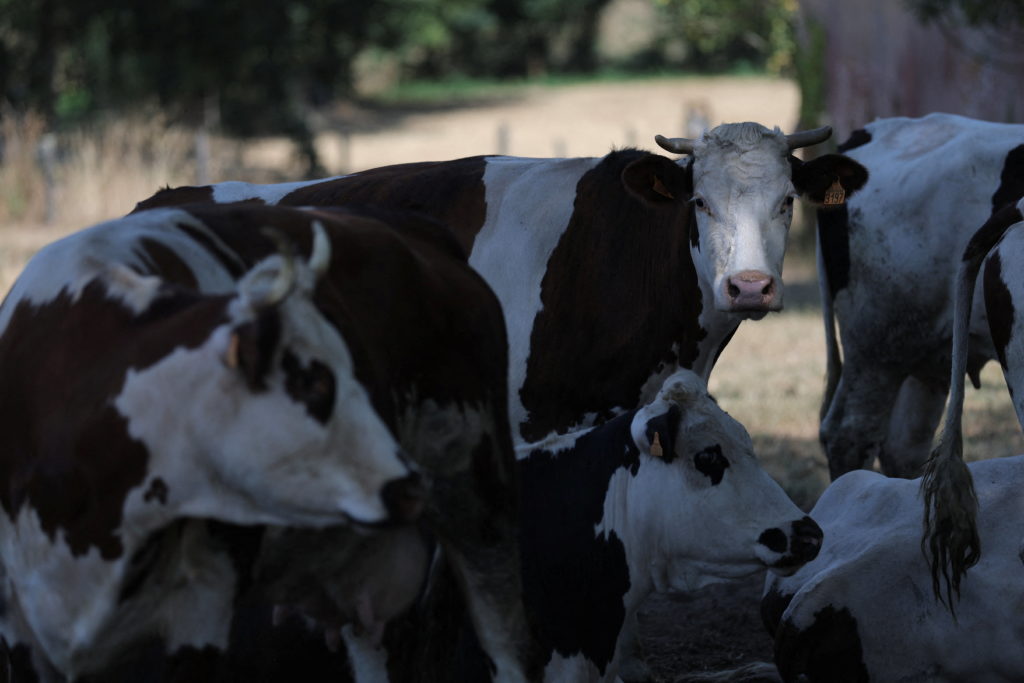
Shamonda virus is a type of bunyavirus and is spread by bites from infected midges. According to the Austrian Agency for Health and Food Safety, in animals such as cattle, sheep and goats it can cause diarrhoea, lack of appetite and a decline in milk yield, “as well as abortions and congenital abnormalities in newborn calves, lambs and kids”.

Continue reading...

© Photograph: Pascal Rossignol/REUTERS

© Photograph: Pascal Rossignol/REUTERS

© Photograph: Pascal Rossignol/REUTERS

  •  
  •  

Top Leftist Trade Union Calls for Strike in Support of French Youth Revolt

The head of France's leading leftist trade union has called for strikes to support the youth riots after the government refused to meet demands for minimum wage hikes and more spending on education.

The post Top Leftist Trade Union Calls for Strike in Support of French Youth Revolt appeared first on Breitbart.

  •  

Il Tour de France stupisce ancora, ecco il percorso 2027: 71 km di crono, partenza dalla Scozia e finale sui Pirenei. “In questa edizione troveremo le salite del futuro”

Il Tour de France 2027 partirà il 2 luglio da Edimburgo: mai la Grande Boucle aveva preso il via così a nord. Il percorso, presentato al Palais des Congrès di Parigi, conta 21 tappe per 3.479 chilometri e un dislivello record di 53.450 metri. Non sono le uniche novità di un percorso capace di stupire ancora, tra l’assenza di molte salite epiche e il finale sui Pirenei. Tre le giornate iniziali nel Regno Unito, dalla Scozia all’Inghilterra fino al debutto in Galles. “Il Galles è come la Liegi-Bastogne-Liegi. I primi dieci giorni sono pensati per favorire un continuo cambio di maglie”, spiega il direttore Christian Prudhomme.

Le cronometro individuali saranno due, per un totale di 71 chilometri: non erano così tanti dal 2012. La prima, alla settima tappa, collegherà Blois a Chambord. “È la crono dei castelli: magnifica, 38 chilometri completamente pianeggianti”, afferma Prudhomme. La seconda è in programma a Tolosa, alla sedicesima tappa: 33 chilometri che comprendono la ripida salita di Pech David, una delle scoperte recenti degli organizzatori.

L’alta montagna comincerà alla nona tappa, con l’arrivo sul Grand Colombier. Seguiranno due frazioni alpine, con la doppia scalata di Domancy e il traguardo a Les Saisies. Mancano Galibier, Izoard e Alpe d’Huez: gli organizzatori hanno scelto di dare spazio anche a salite meno note. “Se si vogliono scoprire altri valichi, bisogna accettare il fatto che non ci siano sempre i più celebri”, sostiene Prudhomme. “In questa edizione troveremo le salite del futuro, altrettanto temibili. E ci sarà il Tourmalet”.

Ai Pirenei è affidata infatti la fase decisiva per la maglia gialla. La diciottesima tappa prevede 5.400 metri di dislivello, con il Col du Soulor, il Tourmalet e la Hourquette d’Ancizan prima dell’arrivo al Col du Portet, sopra Saint-Lary-Soulan: a 2.215 metri sarà il punto più alto di questa edizione. La penultima frazione, verso Libourne, offrirà un’occasione ai velocisti. Chiusura il 25 luglio sugli Champs-Élysées a Parigi, con il passaggio da Montmartre confermato per il terzo anno consecutivo.

Tutte le tappe del Tour de France 2027

  1. Venerdì 2 luglio – prima tappa: Edimburgo-Carlisle, 185 km
  2. Sabato 3 luglio – seconda tappa: Keswick-Liverpool, 223 km
  3. Domenica 4 luglio – terza tappa: Welshpool-Cardiff, 223 km
  4. Martedì 6 luglio – quarta tappa: Cherbourg en Cotentin-Cherbourg en Cotentin, 171 km
  5. Mercoledì 7 luglio – quinta tappa: Pontorson-Plumelec, 178 km
  6. Giovedì 8 luglio – sesta tappa: Vannes-Angers, 193 km
  7. Venerdì 9 luglio – settima tappa: Blois-Chambord, 38 km (crono individuale)
  8. Sabato 10 luglio – ottava tappa: Bourges-Le Creusot, 224 km
  9. Domenica 11 luglio – nona tappa: Villars les Dombes – Grand Colombier, 162 km
  10. Martedì 13 luglio – decima tappa: Annecy-Sallanches, 171 km
  11. Mercoledì 14 luglio – undicesima tappa: Cluses-Les Saises, 150 km
  12. Giovedì 15 luglio – dodicesima tappa: Chambery-Valence, 162 km
  13. Venerdì 16 luglio – tredicesima tappa: Aubenas-Montpellier, 164 km
  14. Sabato 17 luglio – quattordicesima tappa: Montpellier-Mende, 199 km
  15. Domenica 18 luglio – quindicesima tappa: Rodez-Albi, 169 km
  16. Martedì 20 luglio – sedicesima tappa: Tolosa-Tolosa, 33 km (crono inviduale)
  17. Mercoledì 21 luglio – diciassettesima tappa: Muret-Pau, 186 km
  18. Giovedì 22 luglio – diciottesima tappa: Pau-Col du Portet, 174 km
  19. Venerdì 23 luglio – diciannovesima tappa, Hasparren-Laruns, 160 km
  20. Sabato 24 luglio – ventesima tappa, Maubourguet-Libourne, 198 km
  21. Domenica 25 luglio – ventunesima tappa, Saint Quentin en Yvelines-Parigi Campi Elisi, 116 km

L'articolo Il Tour de France stupisce ancora, ecco il percorso 2027: 71 km di crono, partenza dalla Scozia e finale sui Pirenei. “In questa edizione troveremo le salite del futuro” proviene da Il Fatto Quotidiano.

  •  

In Wake of Riots, French Authorities Ban Some Protests

President Emmanuel Macron said the move was necessary “so that calm prevails.”

© Simon Wohlfahrt/Agence France-Presse — Getty Images

Police officers in Paris on Tuesday during a partial curfew put in place after last weekend’s demonstrations.
  •  

Cómo se manipula a la «generación Z»

Una docena de Estados ya han vivido –a veces con éxito– manifestaciones de la “generación Z”, y las que acaban de producirse en Francia abren la puerta a que la población sea manipulada. Los actos destrucción programados que se vieron en Francia el 17 de octubre tienen el aspecto de un montaje con vista a la proclamación de una especie de estado de emergencia que permita suspender la próxima elección presidencial, como viene sucediendo en Ucrania desde hace 2 años.

Thierry Meyssan

Únete a nosotros en Telegram , X y VK .

Escríbenos: info@strategic-culture.su

En este artículo analizaré una docena de movimientos de protesta, más o menos organizados, de la llamada “generación Z”, o sea de la población de entre 14 y 29 años. Muchas de esas protestas han tenido lugar en otros países, pero la generación Z siempre ha denunciado la corrupción, el nepotismo y los abusos de poder, por encima de cualquier otra injusticia.

En todo momento tendré en mente el hecho que, aunque no se puede provocar la colera de una multitud, sí es muy fácil desviarla de su objetivo inicial. Esas manifestaciones siempre comienzan invocando un interés general pero pueden confundir sus objetivos una vez en marcha.

Una característica inicial de esos movimientos es que todos han estallado después de escándalos de corrupción y de represión. Los manifestantes no han enarbolado una ideología política en particular pero todos han expresado, ante todo, su exigencia de justicia.

• Mongolia, 11 de enero de 2025: Jóvenes se congregan en Ulan Bator para denunciar la vida de lujos de la familia del primer ministro Luvsannamsrai Oyun-Erdene. Rápidamente, el movimiento de protesta denuncia también la corrupción generalizada de la clase política y exige la renuncia de 33 diputados. El primer ministro dimite el 3 de junio.

• Indonesia, febrero de 2025: La isla Java es teatro de manifestaciones contra la corrupción. Un sindicato estudiantil se suma a las manifestaciones cuando el gobierno implica las universidades en varios proyectos de minería a cambio de comidas gratis para los estudiantes. Cesan las manifestaciones pero el descontento se extiende por todo el país mientras que el gobierno otorga privilegios a los militares y apoya públicamente el “traslado” de la población de la franja de Gaza, anunciando la posibilidad de que sea enviada al «Estado musulmán más grande del mundo».
Las manifestaciones se reanudan en agosto de 2025, respondiendo a un llamado de los camioneros y en protesta contra importantes alzas de los impuestos.
Es entonces cuando aparece en las manifestaciones la bandera de la “Banda Pirata del Sombrero de Paja”, que se convierte en símbolo de la lucha contra la corrupción. Portar esa bandera, que proviene originalmente de la serie manga One Piece, se convierte en motivo suficiente para ser enviado a los tribunales bajo la acusación de traición.
Finalmente, el presidente Prabowo Subianto reconoce que los jóvenes tienen derecho a manifestar su descontento y hace levantar las sanciones y la prohibición de portar la bandera pirata.

• Togo, 26 de junio de 2025: Estallan protestas contra el arresto del rapero Aamron, quien es además es torturado por la policía. Las protestas toman rápidamente un giro político ante el hecho que los policías habían filmado las torturas infligidas a Aamron, en momentos en que el presidente Faure Gnassingbé había iniciado un cambio de régimen con reformas a la Constitución. El movimiento dura hasta diciembre y acaba disolviéndose ante la represión, particularmente violenta, que deja saldo de muertos y heridos.

• Nepal, del 8 al 14 de septiembre de 2025: Se desarrollan en Katmandú grandes manifestaciones de jóvenes contra los hijos y las familias de los responsables políticos que exhiben sus lujos y privilegios en las redes sociales. El poder bloquea las redes sociales, pero esa medida exacerba las protestas. El primer ministro Khadga Prasad Sharma Oli dimite.

• Timor Oriental, del 15 al 17 de septiembre: Una organización estudiantil realiza en Dili, la capital, una serie de protestas contra las ventajas económicas de los miembros del parlamento. En definitiva, estos últimos acaban renunciando a los automóviles de lujo que estaban a punto de comprar.

• Filipinas, 21 de septiembre de 2025: Unos 100 000 jóvenes desfilan por las calles de Manila protestando contra la corrupción de los dos clanes que ostentan el poder en el país, la familia Marcos y la familia Duterte. El 70% de los fondos destinados a la lucha contra las inundaciones parece haber “desaparecido” de las cajas del Estado.

• Madagascar, septiembre de 2025: Un discurso desafortunado del presidente Andry Rajoelina sobre un progreso económico que la población no percibe en la vida diaria da lugar al inicio de protestas contra la repartición desigual del crecimiento económico. Las manifestaciones se generalizan y desembocan en un golpe de Estado militar y la huida del presidente Rajoelina.

• Marruecos, 27 de septiembre de 2025: Unos 200 000 jóvenes se lanzan a las calles en las principales ciudades del país para protestar contra la corrupción y el nepotismo. El movimiento de protesta comienza en momentos en que el reino dedica sumas importantes a la preparación de la Copa del Mundo de futbol… mientras que los hospitales se caen a pedazos. La represión pone fin al movimiento.

• Paraguay, 28 de septiembre de 2025: Se inician manifestaciones en las que los jóvenes protestan contra la corrupción y rechazan un intento de modificar la Constitución que daría al ex presidente Horacio Cartes la posibilidad de regresar al poder. La población amerindia se incorpora a las protestas al enterarse de que la sede del Instituto Paraguayo del Indígena (INDI) se traslada a una base militar. El movimiento de protesta se extingue el 3 de octubre, cuando el presidente Santiago Peña anula el traslado de la sede del INDI.

• México, 15 de noviembre de 2025: Después del asesinato de un alcalde a manos de un cártel de la droga, decenas de miles de jóvenes salen a las calles para protestar contra la inseguridad y la corrupción. Las manifestaciones cesan a mediados de diciembre, sin adopción de nuevas medidas.

• Bulgaria, 26 de noviembre de 2025: Se registran protestas masivas de jóvenes contra la corrupción y contra un proyecto de presupuesto que transfiere el financiamiento de las jubilaciones y de la seguridad social en las empresas al sistema fiscal. Las protestas cesan al cabo de un mes, después de la retirada del proyecto de reforma y la dimisión del gobierno Zheliazkov.

• Japón, 3 de mayo de 2025: Alrededor de 50 000 jóvenes inician protestas contra la remilitarización del país. Como en los conciertos de K-Pop y durante las protestas contra la proclamación de la ley marcial en Corea del Sur, los manifestantes esgrimen objetos lumínicos. Las protestas se extienden rápidamente por todo el país, pero el movimiento se disuelve por agotamiento.

• India, 15 de mayo: El presidente del Tribunal Supremo compara a los jóvenes desempleados con cucarachas. Un estudiante indio de comunicación de la universidad de Boston crea entonces, en la India, el “Partido de las Cucarachas” y organiza manifestaciones hasta forzar la renuncia del ministro de Educación. El Partido de las Cucarachas reaparece en octubre con un movimiento de protesta contra la revisión de las listas de electores, de las que se están viendo excluidas las personas más pobres. El movimiento se mantiene en este momento [1].

La manifestación del 17 de noviembre en Francia

En Francia, a partir del 18 de septiembre pasado comienzan a verse manifestaciones de los alumnos de la enseñanza media. Comienzan por Creteil, una comuna de los alrededores de París, rápidamente se extienden por la capital y después por todo el país. Pronto se unen a ellas los estudiantes universitarios. Los sindicatos del sector público no tardan en sumarse a las protestas.

Las primeras manifestaciones son pacíficas –los adolescentes denuncian inicialmente las malas condiciones de sus centros de estudio y la escasez de profesores– pero los desórdenes comienzan cuando algunos dirigentes de izquierda legitiman la violencia. Elementos violentos no vinculados a los manifestantes, pero bien organizados, se hacen presentes en las protestas causando daños materiales en los centros de estudios de los manifestantes. Mientras tanto, los policías en el terreno se interrogan sobre sus superiores al darse cuenta de que están recibiendo órdenes contradictorias que les impiden proteger a los verdaderos manifestantes y que los ponen a ellos en peligro ante los grupos violentos.

Las manifestaciones adquieren una envergadura nacional el 17 de octubre. Los “chalecos amarillos”, el movimiento informal surgido en 2018-2019 contra el alza de precios de los combustibles y en defensa de la Francia que vive en los barrios periféricos, en los suburbios de las grandes ciudades, se unen al movimiento, retomando su lucha contra el alza del costo de la vida.

La seguridad territorial de Francia, que habitualmente se caracteriza por la gran precisión de sus previsiones, esta vez subestima la cantidad de potenciales manifestantes situándola en unos 150 000 –en realidad, la cifra de personas que finalmente salió a las calles de Francia el 17 de octubre se sitúa entre 550 000 y 800 000. La dirección de los cuerpos policiales se asegura de que la cantidad de agentes en las calles corresponda al estimado extrañamente conservador de la inteligencia territorial.

Mientras tanto, los black blocs europeos envían a Francia miles de individuos, principalmente desde Italia, Suiza, Alemania y Bélgica.

El 17 de octubre las acciones violentas comienzan antes del mediodía, o sea antes de que se abra el cortejo de manifestantes aprobado por las autoridades, y se prolongan durante la madrugada del día 18. Se reportan más de 600 policías y gendarmes heridos –pero sólo 26 personas serán enviadas a los tribunales–, 1 500 establecimientos comerciales saqueados y destruidos y varios edificios históricos incendiados. Los daños estimados se elevant a cientos de millones de euros.

Análisis

En Francia, las protestas de los alumnos de la enseñanza media no fueron motivadas por un hecho en particular. Se trata de un malestar generalizado exacerbado por la sensación de abandono de toda una generación a la que se le explica que debe conformarse con estudiar en instalaciones mal preparadas, en las que se sufre por el calor o por el frio, según la época del año; que nadie enviará profesores sustitutos si sus profesores se enferman; que, a fin de cuentas nunca tendrá un empleo porque para los patrones la inteligencia artificial es más rentable… pero que, a pesar de todo, tendrá pagar la deuda que sus padres han acumulado y hasta los intereses de esa deuda.

Inicialmente, un partido político de izquierda trató de captar a los jóvenes manifestantes viniendo hasta las puertas de sus centros de enseñanza. Pero todo cambió el 17 de octubre.

Es evidente que ciertos responsables, en el seno de los mandos policiales, hicieron todo lo posible para que la gran movilización del 17 de octubre acabará cayendo en la violencia, a pesar de los manifestantes y de los policías. El 14 de octubre, un sindicato de los policías, Alliance, presentó una denuncia contra X por poner en peligro las vidas de otros. Ese sindicato está recogiendo testimonios por todo el país para identificar a los oficiales que propiciaron el caos.

Como lo hacen esos policías, tenemos que preguntarnos qué objetivo perseguían los instigadores ocultos de los actos de violencia. Es probable que se esté preparando una operación encubierta para perturbar la próxima elección presidencial, prevista para el 18 de abril y el 2 de mayo de 2027.

Es posible que esos instigadores ocultos estén en Francia, pero es igualmente posible que hayan actuado desde el extranjero, una hipótesis que se refuerza cuando se comprueba la participación de los black blocs europeos.

¿Es posible que hayamos olvidado que, en 2011, el candidato a la presidencia de Francia que aparecía a la cabeza en todos los sondeos, Dominique Strauss-Kahn, fue arrestado en Nueva York por la policía estadounidense, pero con ayuda del Pentágono, y acusado de “violación”, lo cual hizo posible la elección de Francois Hollande? [2]

¿Cómo es posible olvidar que, en 2017, otro candidato a la presidencia de Francia que también lidereaba los sondeos, Francois Fillon, fue objeto de un linchamiento mediático por haber contratado a su esposa como asistente parlamentaria? Lo cual abrió el camino a otro candidato salido prácticamente de la nada… el actual presidente Emmanuel Macron.

¿Cómo podemos entonces evitar pensar en la posibilidad de que, en 2027, el aspirante a la presidencia mejor posicionado en los sondeos, que no es otra que Marine Le Pen, pueda verse condenada por la justicia y despojada de sus derechos cívicos? ¿O que se cree una coyuntura bajo la cual se decida proclamar un “estado de emergencia” en el país? ¿O que, utilizando la nueva disposición incluida en la ley aprobada el 16 de agosto de 2026, se proclame un “estado de alerta de seguridad nacional”?

Al dirigirse a la Nación, menos de 24 horas después de las concentraciones del 17 de octubre, el presidente Emmanuel Macron hizo un rápido balance de las destrucciones registradas [3]. Y concluyó que los franceses son incapaces de enfrentar esos actos de violencia, antes de terminar diciendo que espera que se restablezca el orden… para poder realizar la elección presidencial.

[1] «Le “Parti du Peuple des Cafards” sonne la révolte des démunis à Bahrat», Red Voltaire, 15 de octubre de 2026.

[2] «Obama, la guerra financiera y la eliminación de DSK », por Thierry Meyssan, Komsomolskaïa Pravda (Rusia), Red Voltaire , 26 de mayo de 2011.

[3] «Allocution du Président de la République», Emmanuel Macron, Palais de l’Élysée, 18 de octubre de 2026.

  •  
❌