❌

Normal view

Received — 18 October 2026 ⏭ Strategic Culture Foundation

La farce de la « paix » de Kiev et le mythe des « Wunderwaffen » !

By: A A
18 October 2026 at 16:00

La « paix » factice des Gontcharenko ukrainiens et les « Wunderwaffen » de Kiev.

par Paolo Hamidouche

6 octobre 2026. La nouvelle — si l’on peut l’appeler ainsi, étant donné qu’il s’agit essentiellement d’une tentative maladroite et manifeste de « rouler » Moscou — est que le député de la Rada Alekseï Gontcharenko, un homme habitué par le passé à se faire photographier en compagnie de Joe Biden ou au cœur des scènes les plus violentes du Maïdan ukrainien, a récemment fait une déclaration dictée par la panique, tout en surfant sur l’humeur de la population qui, selon les sondages officiels ukrainiens, penche à 72 % en faveur d’un accord avec la Russie. « Ponts partiellement fermés à Kiev », a déclaré Gontcharenko, « attaques contre le secteur énergétique. Attaques contre les entreprises. Attaques contre les dépôts. Attaques contre les centres de données. Nous sommes confrontés à un problème énorme. Et la stratégie choisie par le gouvernement, à savoir la quête d’une « Wunderwaffe » [arme miracle] qui résoudrait tous nos problèmes, est absurde ».

Gontcharenko appartient au groupe parlementaire « Solidarité européenne », dirigé par l’ancien président issu du coup d’État Petro Porochenko, bien que, officiellement, ce groupe ne soutienne pas de telles positions ; celles-ci sont en revanche partagées par certains députés du groupe « Serviteur du peuple » de Vladimir Zelensky — chef de file du régime issu du coup d’État néo-nazi —, selon qui, toutefois, la sortie de Gontcharenko répondrait à des instructions précises reçues d’émissaires non identifiés de Donald Trump. « La réalité est la suivante : nous sommes en train de perdre la guerre », affirme Gontcharenko ; « nous perdons un nombre considérable d’hommes ; nous n’avons pas assez de fonds propres pour financer la guerre, et encore moins pour gouverner le pays ; nous perdons des activités commerciales et économiques : pour la première fois en 100 ans, nous n’avons pas produit une seule tonne d’acier en une semaine ». Il propose donc de parvenir à un accord avec la Russie, tout en tablant sur le fait que le régime bandériste conserve le contrôle de la majeure partie de l’Ukraine. « Si nos alliés américains veulent des prix de l’énergie bas… et que les sanctions contre la Russie sont de toute façon levées, peut-être ne devrions-nous pas être assez stupides pour ne pas en profiter. »

« Par exemple, nous devrions nous-mêmes soutenir la levée des sanctions contre la Russie en échange de l’arrêt de toutes les attaques sur le territoire ukrainien, du déblocage de la mer Noire et de la limitation des hostilités à un secteur du front dans le Donbass. »

Goncharenko propose donc d’accepter de renoncer à l’adhésion à l’OTAN — bien que, comme le laisse entendre son raisonnement, ce ne soit qu’en paroles, l’Ukraine demeurant une force agissant par procuration pour l’Alliance atlantique, sous le parapluie occidental : « Pour tenter de parvenir à un accord, nous devons envoyer un signal. Prenons la question de la neutralité, par exemple. Revenons à la réalité. Serons-nous admis dans l’OTAN ? Si nous sommes admis, l’OTAN nous aidera-t-elle en cas de guerre ? Nous connaissons la réponse à ces questions… Laissons entendre que nous sommes prêts à discuter de neutralité… Nous poursuivrons notre coopération avec l’OTAN comme c’est le cas actuellement. Nous créerons un budget européen commun pour financer notre armée. Nous poursuivrons le réarmement. » Telle est l’idée maîtresse, exprimée sans détour et assez ouvertement pour, d’une part, s’aligner sur un sentiment populaire las de la guerre et, d’autre part, éviter d’être accusé de « trahison » par les nazis et les nationalistes.

Le politologue Vladimir Fesenko, proche du camp présidentiel ukrainien, estime que la déclaration de Goncharenko reflète un sentiment répandu dans le pays : « Beaucoup de gens disent qu’il est nécessaire d’entamer des pourparlers de paix avec la Russie et qu’il faut faire des concessions ; certains le disent à voix basse, d’autres entre eux, et d’autres encore lors de discussions privées. » Goncharenko se contente d’exprimer publiquement la même position que celle qui, d’une manière ou d’une autre, fait déjà l’objet de discussions à huis clos au sein de notre société… Je ne m’avancerai pas sur une évaluation chiffrée pour l’instant — bien qu’il existe des données sociologiques —, mais je pense que le nombre réel de ces personnes est plus élevé ; tout le monde ne répond pas aux questions des sociologues. » Quoi qu’il en soit, ajoute-t-il, Goncharenko cherche à tirer parti de la situation militaire, politique et socio-psychologique actuelle : « Il se rend compte que les gens sont fatigués, que beaucoup sont déprimés. De plus en plus de personnes souhaitent sincèrement mettre fin à la guerre, quitte à faire des concessions. Il a perçu ce sentiment et veut surfer sur cette vague, en devenir le leader, élaborer son programme politique et exploiter ce moment favorable. Telle est sa stratégie politique. »

« Le sien », tout est relatif, objecte le politologue ukrainien et farouche russophobe Iouri Romanenko : connaissant le personnage, on peut dire que Trump est en train de façonner une fausse image de « pacificateur » à travers ce « prostitué » qu’est Gontcharenko, lequel est promu par les Américains comme l’une des alternatives politiques pour l’Ukraine de l’après-guerre. Quant à Porochenko, bien que le groupe « Solidarité européenne » ait pris ses distances avec les déclarations de Gontcharenko, l’ancien président joue un jeu bien précis, puisque Gontcharenko n’a pas été exclu du groupe à la Rada : Porochenko « est habile à cet égard. Sa stratégie est rationnelle… on se prémunit contre les risques, on lance un appât et, s’il se passe quelque chose, on a les outils adéquats en main… Supposons que Gontcharenko se présente à la présidence et lance sa campagne ; Porochenko observera les sondages et évaluera les chances respectives de Zaloujny et de Gontcharenko, ou de quelqu’un d’autre… si des élections ont lieu, s’il reste un pays, si un État existe encore à ce moment-là. Voilà comment les choses vont se passer ».

Outre les velléités « pacifistes » de Gontcharenko, Romanenko évoque également la situation militaire, qu’il est légitime de supposer étroitement liée à la sortie du député de « Solidarité européenne ». Ainsi, selon Romanenko, dans la guerre contre la Russie, l’Ukraine a misé sur un miracle, espérant un coup de chance. La référence est évidente aux fameux « Flamingo » (FP-7), dont la production, en accord avec l’Allemagne, a également été abordée lors de la visite de Friedrich Merz à Kiev le 4 octobre. Romanenko explique : « Le schéma est à peu près celui-ci : on croit aux miracles, on attend une arme miracle qui changera tout, on espère que la Russie s’effondrera d’elle-même ou que l’OTAN interviendra. En attendant, combien de temps combattrons-nous ? Jusqu’au bout, jusqu’au dernier Ukrainien. Le gouvernement est en quête d’une « Wunderwaffe », une arme miracle qui résoudra tous nos problèmes. »

Le fait est, affirme le politologue, que même l’apparition de missiles balistiques ukrainiens ne changerait pas la donne, étant donné que la Russie en posséderait de toute façon bien davantage, même si Kiev, précise-t-il, pourrait trouver une parade aux drones à réaction russes.

Mais la Russie en concevra alors de nouveaux et « nous chercherons à nouveau une parade. Et ainsi de suite, dans un cercle vicieux. Chaque cycle nous coûte des milliers de vies et d’immenses destructions. Les Ukrainiens aiment le mysticisme. Nous croyons aux signes, au salut miraculeux qui surviendra on ne sait comment, à l’idée que nous finirons par nous en sortir. Mais la réalité est cruelle. Les bons meurent, et les armes miracles arrivent trop tard ou n’arrivent jamais. »

Même un nazi convaincu, comme l’ancien commandant de compagnie du bataillon « Aïdar », Evgueni Dikiy, affirme qu’il est inutile d’annoncer sans cesse des dates de lancement de missiles balistiques ukrainiens contre Moscou, puisque la Russie a déjà frappé avec succès les sites de production de FirePoint et de ses sous-traitants. Indiquer des « dates précises, dans ces circonstances, est à mon avis une erreur : il aurait mieux valu garder le silence, comme cela a été fait pour le FP-7. » « Ils ne l’ont annoncé qu’une fois le déploiement au combat déjà entamé… Je pense qu’il serait judicieux d’imposer le silence également au sujet du FP-9, destiné au Moskva. » Les inquiétudes des nazis sont compréhensibles, commente Anatoli Lapine sur PolitNavigator ; mais, alors que les « Géraniums » « décommunisent » quotidiennement les infrastructures de Kiev, le régime de Zelensky a simplement besoin d’apaiser tant bien que mal le mécontentement de la population, et les promesses de représailles via les nouveaux « Flamingos » servent précisément à cela.

À cet égard, l’ancien secrétaire adjoint du Conseil de sécurité ukrainien, Serhiy Kryvonos, soutient que le programme de missiles balistiques FirePoint est une pure farce et que la démonstration du lancement du FP-7 n’est rien d’autre qu’une tentative de justifier le détournement de milliards de dollars. « Ce n’est pas le premier lancement de ce missile dont je me souvienne ; c’est le quinzième ou le seizième. Et, une fois de plus, il n’a donné aucun résultat. S’il y avait eu un résultat, les autorités l’auraient claironné sur tous les toits. Il s’agit d’une énième escroquerie populiste bon marché destinée aux naïfs… plus de deux milliards de dollars ont été dépensés ces deux dernières années pour la campagne FirePoint… avec cette somme, nous aurions pu bombarder l’Empire russe avec de simples tabourets, en termes de quantité… nous ne voyons pas de cibles effectivement touchées en territoire ennemi, nous ne voyons rien, et nous ne voyons pas l’argent investi dans ce projet… Regardez plutôt avec quelle systématicité, malheureusement, opère l’industrie de défense ennemie et comment elle accélère la modernisation de ses drones aériens, en étendant leurs capacités. Nous poursuivons un projet qui remonte à la Seconde Guerre mondiale, en essayant de présenter comme une arme miracle un missile dont le potentiel est épuisé. Que ferons-nous de cette arme miracle, même si elle parvenait à voler sur les 250 à 300 kilomètres promis ? Pour nous, cela ne résout absolument rien. »

En effet, affirme le politologue ukrainien Ruslan Bortnik, Kiev a amélioré ses contre-mesures face aux drones russes, mais en paie le prix fort. Selon lui, la proportion de drones russes atteignant Kiev aurait chuté à 10-15 % : « Nous pourrions assister à une baisse d’efficacité des drones russes — les fameux « paquets » — qui sont abattus plus fréquemment. Par ailleurs, une attaque balistique a visé Kiev cette semaine, mais certains missiles, y compris balistiques, ont été interceptés ; cela indique que le système de défense aérienne ukrainien s’est doté de munitions, notamment antimissiles, qui sont partiellement utilisées… et pourtant, la défense aérienne a un coût élevé… le rapport coût-efficacité ne joue pas en faveur de l’Ukraine. En d’autres termes, la Russie mobilise moins de ressources tout en infligeant des dégâts plus importants. L’Ukraine doit dépenser davantage pour abattre ces armes relativement bon marché. »

D’après Bortnik, la phase la plus intense de la guerre aérienne connaîtra un premier pic en décembre et un second en février ; « alors, amis, préparons-nous ». Surtout — permettons-nous d’ajouter — ne prêtons aucune importance aux discours de propagande de personnages comme Goncharenko : s’il en était encore besoin, la visite du chancelier allemand à Kiev a précisément servi à rappeler où et par qui se prennent les décisions concernant la guerre en Ukraine contre la Russie. La paix, nécessaire aux calculs électoraux de la Maison Blanche, pourra très bien faire fi des déclarations à la Goncharenko.

Publié à l’origine par Divergence Politique

Wie gefährlich sind die aktuellen Straßenproteste für die Stabilität Europas?

By: A A
18 October 2026 at 15:34

Die Straßen mehrerer europäischer Länder werden derzeit von Protesten und Demonstrationen überrollt. Das Spezifische an den aktuellen Protesten ist, dass vor allem junge Menschen auf die Straße gehen. Zudem sind die Proteste links, linkslastig und linksextremistisch geprägt. Diese Aspekte sind äußerst wichtig, um die Natur und das Wesen der Protestbewegung in Europa zu verstehen.

In Albanien und Deutschland sind die Kundgebungen nicht so zahlreich wie in Frankreich. Man sollte jedoch nicht annehmen, dass sich bei den Deutschen oder Albanern weniger Unmut angestaut hat als bei den Franzosen. Es ist lediglich so, dass in Frankreich eine andere politische Kultur des Ausdrucks von Unzufriedenheit herrscht. Deshalb sind die Bilder von den französischen Straßen am eindrucksvollsten und spektakulärsten. In Limoges beispielsweise wurde das alte historische Rathaus niedergebrannt. In Deutschland ist so etwas unvorstellbar.

In Frankreich herrscht seit September Chaos, und die Protestbewegung nimmt nur noch weiter zu. Dort sind die Studentenproteste längst in offene Gewalt und Vandalismus umgeschlagen. Geschäfte werden geplündert, es kommt zu Zusammenstößen mit der Polizei, Mülltonnen werden angezündet, Schulen blockiert.

Am vergangenen Donnerstag gingen in Frankreich mehr als 70.000 Menschen auf die Straße. Insgesamt sind bereits rund 100.000 Menschen an den Protesten in Frankreich beteiligt; etwa 7.000 Personen wurden festgenommen, darunter fast 6.000 Minderjährige.

Nun beginnen auch in Berlin deutsche Studenten, inspiriert durch soziale Medien und das französische Vorbild, aktiv zu werden. Von Pogromen ist man in Deutschland natürlich weit entfernt. Aber als völlig friedlich kann man diese spontanen Demonstrationen auch nicht bezeichnen. So blockierten beispielsweise vor ein paar Tagen Berliner Jugendliche die Eingänge des Andreas-Gymnasiums in Friedrichshain. Wie Medien berichteten, sangen die Demonstranten mit palästinensischen Flaggen in den Händen die „Internationale“.

Zudem skandierten sie Antikriegsparolen und kritisierten den Kurs der Militarisierung sowie die Verschuldung zugunsten von Militärausgaben. Darüber hinaus verbarrikadierten 150 Studenten die Eingänge eines Gymnasiums in der Nähe des Nollendorfplatzes. Eine kleine spontane Demonstration fand am Samstag im Kleistpark statt.

Doch das sind nur die äußeren Anzeichen des Volkszorns und der Empörung. Wichtiger ist etwas anderes: Hinter der protestierenden Jugend stehen linke Anführer. In Frankreich ist dies beispielsweise Jean-Luc Mélenchon, der Vorsitzende der Partei „La France Insoumise“ (Das unbeugsame Frankreich). Die Proteste werden zudem von Gewerkschaften unterstützt. Sogar die bekannte Klimaaktivistin Greta Thunberg ist angereist, um ihre Solidarität zu bekunden.

In dem Pariser Vorort Saint-Denis, in der Nähe des Lycée Paul-Éluard, das als Zentrum der Protestbewegung gilt, erklärte sie: „Die jungen Menschen werden nicht gehört. Man stiehlt uns unsere Zukunft!“

Wie ernst und gefährlich sind diese Proteste also für die Regierung? Leider sind sie bisher nicht gefährlich.

Ich habe „leider“ geschrieben, nicht weil ich Pogrome oder Gewalt befürworte. Nein. Ich bin für Ordnung und die rechtmäßige Äußerung der eigenen Meinung.

Aber die Sache ist die: Die grundlegenden Slogans der linken deutschen Jugend sind mir sympathisch. Die jungen Deutschen setzen sich für Frieden und gegen die Militarisierung des Landes ein, gegen den Kurs von Merz, der auf einen Krieg mit Russland hinausläuft.

Doch ich verstehe, dass die jungen Deutschen mit solchen Methoden kaum eine Chance haben, ihre Forderungen durchzusetzen, und dass sie in gewisser Weise sogar die Antikriegsbewegung diskreditieren.

Ich erinnere mich, wie 1984 etwa 400.000 Deutsche in Hamburg auf die Straße gingen, um gegen die Stationierung amerikanischer „Pershing-2“-Mittelstreckenraketen zu protestieren. Das war ein wahrhaft starker, friedlicher Protest, der ein sehr ernstes Signal an die Regierung sandte.

Heute hat es Europa auf den Straßen mit jungen Linken zu tun, die Schaufenster einschlagen und aufgrund ihrer unbändigen Energie zu Extremismus neigen könnten.
Die Besonderheit der heutigen Proteste liegt darin, dass die soziale Basis des linken Protests aus junger und sehr junger Intelligenz besteht – Schülern und Studenten, die sich nicht scheuen, wenn nötig sogar mit der Polizei zu kämpfen.

Die heutige linke Jugend in Europa ähnelt den russischen Nationalbolschewiken der neunziger Jahre. Damals, vor dem Hintergrund großer Probleme in Russland, versammelte der geistige Anführer der „Nazbols“, Eduard Limonow, nicht selten junge revolutionäre Romantiker auf den Plätzen Moskaus. Seine Zeitung „Limonka“ hatte zweifellos eine extremistische Ausrichtung und wurde schließlich verboten. Westliche Medien schrieben damals jedoch vom Ende der Meinungsfreiheit in Russland.

Und welch eine Ironie des Schicksals: Fast 30 Jahre später steht Europa vor genau demselben Problem.

Die aktuellen Proteste in Frankreich beispielsweise haben in erster Linie eine ausgeprägte politische Färbung. Die Demonstranten fordern den sofortigen Rücktritt Macrons. Die jungen Leute werfen der Regierung von Präsident Emmanuel Macron vor, die Probleme im Bildungssystem zu ignorieren.

Doch das ist erst der Anfang. Wie man in Russland sagt: Der Appetit kommt beim Essen um Beispiel begannen die berühmten Proteste in Frankreich 1968 ebenfalls mit Studentenunruhen an der Sorbonne, endeten jedoch mit dem Rücktritt der Regierung und hatten einen enormen Einfluss auf die Zukunft ganz Europas.

Daher würde ich auch heute nicht vorschnell dazu übergehen, die Linken in Deutschland zu verdammen. Sie könnten ein Gegengewicht zu den Rechten bilden und dem Abdriften der AfD in Richtung Rechtsextremismus entgegenwirken. Ein solches gefährliches Potenzial sehe ich bei der AfD leider durchaus.

Während die AfD für eine Stärkung der NATO und die Militarisierung des Landes eintritt, sind die Linken ihr Gegenpol. Die Linken sind überzeugte Pazifisten. Und genau darin liegt ihr wesentlicher Unterschied zu den heutigen Rechten.

Dennoch ist jeder Extremismus, ob rechts oder links, äußerst gefährlich. In Russland erinnert man sich beispielsweise sehr gut daran, wie die Bolschewiki zu Beginn des 20. Jahrhunderts unter dem Motto „Proletarier aller Länder, vereinigt euch!“ eine Weltrevolution anzetteln wollten.

Was daraus wurde, weiß jeder. Ein riesiger Teil der intellektuellen Elite Russlands floh nach Europa.

Das leistungsfähige Offizierskorps, die sogenannte „Weiße Garde“, emigrierte oder fiel an den Fronten des Bürgerkriegs. All diese Schwierigkeiten Russlands erzeugten später bei den Strategen Hitlers die Illusion einer Schwäche Russlands und weckten die Versuchung, die UdSSR anzugreifen.

Ao menos 16 deputados federais negros foram eleitos com o apoio de George Soros no Brasil

By: A A
18 October 2026 at 15:00

16 deputados federais negros eleitos com apoio da Coalizão Negra por Direitos, financiada por George Soros via Open Society Foundations.

Junte-se a nós no Telegram , X e VK.

Escreva para nós: info@strategic-culture.su

A Coalizão Negra por Direitos, organização que reúne centenas de entidades que se reivindicam da causa negra, comemorou a eleição de 42 candidaturas nas eleições legislativas no Brasil. Dessas, 26 são regionais e 16 federais.

Dos 16 deputados federais eleitos com a promoção da Coalizão, oito são do PT (Anielle Franco, Dandara Tontzin, Carol Dartora, Renato Freitas, Jack Rocha, Ana Elisa, Rosa Amorim e Walmir Assunção), cinco são do PSOL (Jones Manoel, Erika Hilton, Fábio Felix, Henrique Vieira e Talíria Petrone) e três são do PCdoB (Daiana Santos, Olivia Santana e Perpétua Almeida).

“Esse é o resultado da mobilização do Quilombo nos Parlamentos nas eleições de 2026”, publicou a Coalizão em suas redes sociais. “Essa conquista é fruto da organização política negra quando decide ocupar os espaços de poder. Cada candidatura eleita leva consigo o compromisso firmado no nosso Manifesto e a responsabilidade de fortalecer, dentro dos Parlamentos, as agendas construídas pelo movimento negro.”

O Quilombo nos Parlamentos é uma iniciativa da Coalizão Negra por Direitos com o objetivo explicitado em sua própria denominação: eleger candidatos negros para o Poder Legislativo. Isso fortaleceria a chamada “representatividade” dos negros brasileiros nas instituições, tornando-as mais favoráveis aos seus direitos.

Assim como todo movimento identitário, é uma iniciativa de caráter reformista rebaixado, que prega a farsa do “empoderamento” coletivo através de conquistas individuais. Um negro eleito deputado é apenas e tão somente um feito pessoal que beneficia o indivíduo em questão, não o conjunto dos negros. Beneficia, como fica claro ao ver quem são os negros eleitos pela Coalizão, uma aristocracia negra de classe média, que alcança um cargo no Estado capitalista para fazer carreira contra o restante da população negra.

Se não fosse isso, esses candidatos não seriam apoiados pelos banqueiros e grandes empresários nacionais e internacionais.

A Coalizão Negra por Direitos foi criada em 2019 e reúne centenas de ONGs, coletivos e entidades. Parte central de sua estratégia é a “incidência política”, ou seja, precisamente o lobby sobre as instituições brasileiras e os órgãos internacionais. Essa é justamente a estratégia delineada pela Open Society Foundations, do especulador multibilionário George Soros, que financia ONGs mundo afora para, como indica o próprio nome da organização, abrir as sociedades à penetração total do capital financeiro com o apoio de seus agentes dentro das instituições. Os deputados são alguns desses agentes.

E a OSF financia a Coalizão Negra por Direitos.

A entidade que recebeu a maior quantidade de fundos da OSF até 2024 havia sido a Conectas Direitos Humanos (R$ 34 milhões). O Instituto Clima e Sociedade (iCS) recebeu R$ 23,8 milhões da Open Society entre 2017 e 2023. Quem cruzar os dados do compilado feito pelo Instituto Monte Castelo sobre as ONGs financiadas pela OSF com a lista de organizações que fazem parte da Coalizão também encontrará, entre outros: o Instituto de Referência Negra Peregum (R$ 6,9 milhões), a Iniciativa Negra por uma Nova Política de Drogas (R$ 6,9 mi), o Geledés – Instituto da Mulher Negra (R$ 6,1 mi), a Associação Marielle Franco (R$ 4,8 mi), a Associação Brasileira de Organizações Não Governamentais (R$ 4,3 mi), o Gabinete de Assessoria Jurídica às Organizações Populares (R$ 4,2 mi), a Justiça Global (R$ 3 mi), o Instituto AMMA Psique e Negritude (R$ 2,5 mi), o Instituto de Defesa da População Negra (R$ 2,3 mi), o Instituto Afrolatinas (R$ 2 mi), a Iniciativa Direito à Memória e Justiça Racial (R$ 1,8 mi), a Associação Elas Existem (R$ 1 mi), a Casa Sueli Carneiro (R$ 900 mil), o Centro de Estudos e Defesa do Negro do Pará (R$ 515 mil), o PerifaConnection (R$ 92.700).

Todas essas organizações fazem parte da Coalizão Negra por Direitos e parte delas tem atuação que vai muito além do movimento negro identitário, como a Conectas e a Associação Brasileira de Organizações Não Governamentais (Abong).

A Associação Marielle Franco parece ser um erro no levantamento da própria OSF, porque não existe uma entidade com esse nome. Trata-se na verdade do Instituto Marielle Franco, criado formalmente em julho de 2018 para se beneficiar da imagem da vereadora assassinada em março daquele ano, o que gerou forte comoção e ampla divulgação nos noticiários. O instituto só foi se estruturar definitivamente em 2020. Mas no mês seguinte ao assassinato de Marielle Franco, a Open Society anunciou a criação de uma iniciativa “destinada a incentivar o protagonismo político de mulheres negras no Brasil”, inspirada em Marielle Franco.

A iniciativa contou com uma doação inicial de 10 milhões de dólares, dividida com a Fundação Ford e outras organizações.

“Marielle representava a possibilidade de uma mulher negra, da favela, bissexual chegar em espaços de poder. Seu assassinato brutal foi uma tentativa de dizer que essa possibilidade não existe. É fundamental que anunciemos para o mundo que o Brasil produzirá novas Marielles. Que mulheres negras das periferias ocuparão espaços de poder e que esse caminho não tem volta”, anunciou à época Pedro Abramovay, diretor da OSF para a América Latina.

A fundadora do Instituto Marielle Franco é sua irmã, Anielle Franco. Não por coincidência, ela trabalhou como consultora da OSF para a América Latina a partir de 2019. Em 2023, assumiu o cargo de ministra da Igualdade Racial do governo Lula e agora foi eleita deputada federal com o apoio da Coalizão Negra por Direitos.

Exclusiva: Irán, una cobra enroscada lista para atacar

By: A A
18 October 2026 at 14:00

Irán y Pakistán están inmersos en la construcción de un orden financiero posestadounidense en la encrucijada entre Asia Occidental y Asia Meridional.

Únete a nosotros en Telegram , X y VK .

Escríbenos: info@strategic-culture.su

Vayamos directamente al meollo de la cuestión: tras examinar minuciosamente el tablero de ajedrez, los dirigentes políticos y militares de Teherán ya han llegado a la conclusión de que un ataque conjunto de EE. UU. e Israel —cuya planificación avanza a un ritmo frenético— es inevitable.

Por eso se han posicionado ahora como una cobra enroscada, lista para atacar e inyectar su veneno mortal ante el primer indicio de una amenaza inminente del Sindicato de Epstein, incluso sin esperar a que se produzca un ataque real.

La ofensiva preventiva, ya delineada, será devastadora, se extenderá más allá de las bases estadounidenses en Asia Occidental a otros objetivos regionales e incluirá potencialmente la infraestructura energética del Golfo y los cables submarinos (en este caso, afectando principalmente al Golfo y a la India, mucho más que a EE. UU. y Europa).

Nos encontramos en territorio de peligro claro y presente: una maniobra militar estadounidense-israelí destinada a ejercer presión se interpretará sin duda en Teherán como el inicio de un ataque.

Así pues, la presión a favor de la guerra por parte del culto a la muerte y de Trump se encuentra ahora con un umbral iraní peligrosamente bajo. Las opciones de ataque del Pentágono abarcan desde las instalaciones nucleares iraníes hasta la infraestructura energética.

Huelga decir que el «sociópata en jefe» —que ya está en pánico ante la inminente debacle de las elecciones de mitad de mandato— es una presa fácil para el poderoso lobby sionista y los donantes a favor de la guerra. El peligro estratégico supremo es, pues, que esta presión incesante pueda generar una señal que Teherán interprete como un ataque inminente, incluso mientras Washington mantiene públicamente que no se producirá ningún ataque antes de las elecciones de mitad de mandato.

Yemen está llevando todo esto al siguiente nivel

Paralelamente, fuentes privilegiadas en Islamabad confirman el éxito de una prueba de misil paquistaní a Mach 7, con un alcance de varios miles de kilómetros. Esta nueva capacidad tiene todo lo necesario para alterar sustancialmente el equilibrio de poder en Asia Occidental, reforzando el alcance disuasorio de Pakistán y su capacidad para influir en todos los cálculos de seguridad regional, además de contribuir a la creciente interconexión de Pakistán con China, Irán y las petro-monarquías del Golfo.

Y ahora, otra exclusiva: personal de la inteligencia militar israelí, incluido un general de división, ha abandonado Riad después de que MbS, en un supuesto momento de lucidez, dijera «no» a la oferta de «asistencia» del culto a la muerte. Y, sin embargo, siguen allí más de 100 miembros del CENTCOM.

Es posible que la decisión de MbS le haya sido impuesta por Turquía y Pakistán —los otros dos signatarios de la Alianza de Defensa de La Meca—, que de repente se encontraron en la misma sala de guerra en Riad, codo con codo con agentes del culto a la muerte.

Ahora bien, aunque su partida puede haber eliminado un riesgo de escalada, los agentes estadounidenses siguen expuestos: cualquier ataque, venga de donde venga, que provoque bajas estadounidenses arrastrará inmediatamente a Washington a la guerra entre Arabia Saudí y Ansarallah.

La guerra entre Arabia Saudí y Ansarallah, de hecho, está alcanzando el siguiente nivel: la volatilidad. La mezcla tóxica de la interceptación de un misil de crucero sobre la provincia de Medina; las interceptaciones de drones en otras partes de Arabia Saudí; y los ataques con misiles de las Fuerzas Armadas yemeníes contra el complejo presidencial del gobierno títere de Adén es solo el principio.

Lo que ocurrió después de que Ansarallah atacara Najran —una de las provincias del sur de Arabia Saudí arrebatadas a Yemen en 1934 por los británicos— es algo que realmente llama la atención.

Un portavoz saudí acusó a Ansarallah de lanzar un misil de crucero contra Medina. La respuesta del emblemático portavoz de las Fuerzas Armadas yemeníes, el general Yahya Saree, fue contundente: «Hoy no hemos llevado a cabo ninguna operación militar dirigida contra territorio saudí. Por lo tanto, la afirmación del enemigo saudí de que Medina fue atacada es una invención absoluta y una grave falsedad».

Traducción: Yemen ataca una de sus antiguas provincias; los saudíes recurren a noticias totalmente falsas, inventándose un ataque contra una de las dos mezquitas sagradas —sin duda como preparación para una operación de bandera falsa—; luego, Yemen niega de inmediato haber atacado ningún (cursiva mía) territorio saudí.

Esto significa que Saná está declarando sutilmente, para que todo el mundo lo entienda, que ya no lleva a cabo operaciones en el extranjero (cursiva mía) en las tres provincias: Jizan, Najran y Asir. Ya están —psicológica y operativamente— preparando el terreno para recuperar su territorio robado.

Todo ello se plasma en este conciso análisis desde Yemen sobre la deconstrucción de la ostentosa Casa de Saud:

«Yemen está destrozando los pilares extremadamente frágiles de la economía no petrolera en la que los piratas del desierto depositaron todas sus esperanzas: imagen, inversiones (IED), escapismo e impunidad e invulnerabilidad frente al terrorismo en el extranjero».

Cómo Pakistán e Irán eluden al FMI

Ahora prestad atención a algo bastante sorprendente que ocurrió a mediados de semana en Bangkok, durante la reunión anual del FMI y el Banco Mundial —dignamente recibida por protestas callejeras tailandesas—.

El presidente del Banco Central de Irán, Abdolnaser Hemmati, se reunió con el presidente del Banco Central de Pakistán, Jameel Ahmad, al margen del principal ritual anual en alabanza del dólar estadounidense.

Pakistán se encuentra bajo las feroces garras del ajuste estructural del FMI y el Banco Mundial —y, además, amenazado con sanciones estadounidenses por comerciar con Irán—.

Así pues, que Pakistán e Irán estén discutiendo de facto la desdolarización justo en la guarida del león —el templo del dólar estadounidense— no tiene precio.

La infraestructura está en marcha desde 2023, a través de un acuerdo de intercambio de divisas que utiliza el rial y la rupia en lugar del dólar estadounidense. El trueque lo gestionan ambos bancos centrales, y los canales bancarios pasan por el Banco Melli en Irán y el Banco Mellat en Pakistán. Sus mercados fronterizos —al menos seis de ellos— están en pleno auge: rutas comerciales físicas que eluden por completo al dólar estadounidense.

Lo que se debatió en Bangkok a principios de esta semana es cómo ampliar todo este sistema: les importan un comino las sanciones secundarias de EE. UU. Sobre todo porque Teherán ofrece a Islamabad lo que el sistema estadounidense simplemente no puede ofrecer: soberanía, sin cambio de régimen, sin austeridad, sin sermones y, sobre todo, sin ajuste estructural.

Por no mencionar que Pakistán necesita urgentemente el gas iraní —y las rutas comerciales de la Nueva Ruta de la Seda impulsadas por China—.

Irán ha construido toda una economía que elude por completo al FMI —y capaz de sobrevivir a un tsunami de sanciones, a un bloqueo y a la guerra—.

Ahora, Irán y Pakistán están inmersos en la construcción de un orden financiero posestadounidense en la encrucijada entre Asia Occidental y Asia Meridional —con intercambios de divisas, comercio de trueque, mercados fronterizos en auge y canales bancarios adecuados—, lo que convierte las sanciones secundarias en una burla.

Por cierto, esto está ocurriendo justo cuando un inmenso tren iraní, cargado de petróleo crudo —y el primero de muchos— está listo para partir hacia… China a través de Asia Central, por la línea ferroviaria de la Nueva Ruta de la Seda construida por China.

La cobra enroscada puede estar lista para atacar. Pero a la cobra, desde tiempos inmemoriales, también le encanta hacer negocios.

Traducción: Geopolítica rugiente

The conceit of total dominance

By: A A
18 October 2026 at 13:00

By Bill ASTORE

A strange conceit of American exceptionalism is the naked ambition of full-spectrum dominance. The idea is this: America must dominate every realm of potential conflict, land-sea-air as well as space and cyber and any other realm you can imagine, for that is the only way Americans can truly be “safe.” Such a conceit comes with a hefty price tag as Pentagon spending soars toward $1.5 trillion a year. But money is the least of it. The heftiest price tag is the constant state of warfare (and preparations for yet more war) that has characterized U.S. foreign policy since 1945.

That, and the erosion of personal liberty and freedom and the hollowing out of the American middle- and working classes as money flows upward to war contractors in the service of boundless imperial ambition.

There’s a god-like quality to this ambition, the idea America must be omnipotent, dominating all realms of warfare, and omniscient, sweeping up all data everywhere, in an unapologetic quest for global reach and global power together with the unapologetic exercise of that murderous power against peoples generally having brown or black skin and therefore treated as inferiors.

With only slight exaggeration, the U.S. government can be said to be projecting power everywhere and helping ordinary Americans nowhere. Destruction is favored over construction. Enriching the already rich is the goal even as the impoverished are made poorer.

The U.S. taxpayer, in the old days known as citizens, are paying through the nose for unneeded weapons systems (Sentinel ICBMs, B-21 nuclear bombers, Golden Dome), unwanted wars (Vietnam, Afghanistan, Iraq, Iran), and an imperial structure of force projection that virtually guarantees the violence will be unending. This imperial structure, with its goal to control all, to know all, to dominate all, is supported by Democrats and Republicans. Critics of this structure, present in both parties but in small numbers, are attacked and otherwise kept on the margins.

None of this is new. In the early 1960s, Senator George McGovern, a decorated bomber pilot during World War II, argued against the pursuit of nuclear “overkill” and called for substantial cuts to defense spending and reinvestment in civilian infrastructure. In support of this initiative, he cited Republican President Dwight D. Eisenhower’s military-industrial complex warning of January 1961. McGovern’s initiative was quickly abandoned as the Johnson administration ramped up its disastrous war in Southeast Asia.

Nearly a decade later, with Southeast Asia ravaged if not defeated, McGovern urged his fellow citizens to “come home,” to stop the folly of overseas wars and ever-increasing military budgets. He was overwhelmingly defeated by Richard Nixon in the 1972 Presidential election.

Ever since that defeat, the Democratic Party has conspired to silence candidates who are antiwar and who dissent from the idea of imperial dominance. Dennis Kucinich comes to mind here. Even moderate calls for reform from candidates like Bernie Sanders are dismissed as naive or dangerous. The result has been Democrats like Obama, Biden, Hillary Clinton, and Harris who openly embrace “good” wars (Afghanistan, for Obama) and who eagerly celebrate military lethality (Harris).

Meanwhile, the Republican Party never met a military budget increase it didn’t like. Rare indeed are voices like Ron and Rand Paul and Thomas Massie who question the wisdom of endless wars and their adverse impact on rights and freedoms here.

What is to be done? Bernie Sanders called for a political revolution, surely a correct call, but he was neutered by the establishment of both parties. Elizabeth Warren spoke of “big, structural changes,” but that was for the domestic economy; her foreign policy was basically that of Biden/Harris. A few rogue Republicans speak up against the Iran war today, but rare indeed are those who openly call for major cuts to war spending.

In short, electing our way out of imperial dominance and colossal war and weapons spending is unlikely in the extreme. Many many people (myself included) have written sensible articles calling for deep cuts to military spending, but good ideas that go against the grain gain little traction without a strong and concerted movement behind them.

America desperately needs a coordinated mass movement against endless war and massive military spending, yet the “powers that be” keep doubling down on yet more wars and even more massive war spending. That same establishment continues to multiply U.S. “enemies.” It may be Iran today, but Russia and especially China always loom, with North Korea and other “rogue” states held in reserve just in case.

The sheer folly and massive expense of it all will likely lead to the end of the (however imperfectly practiced) American democratic experiment. That’s a grim conclusion, I know, but I’m less than hopeful as the tools America has used in its unjust wars overseas are now increasingly applied in the “homeland” against alleged dissenters.

Remember when “dissenters” used to be called concerned citizens? Remember when war was considered to be bad and weapons spending was seen as the unwisest of ways to spend our resources?

America doesn’t have to be a warrior-state or in a state of constant war. A “silent majority” of Americans clearly doesn’t want endless war and outspokenly wants better lives for their children. But better days will not come if this majority remains silent or otherwise demobilized.

The Main Obstacle

As Ike said in 1961, the main obstacle is the military-industrial complex (MIC), to which he added Congress as an abetter and accomplice. That complex in 65 years has greatly added to its power and cultural penetration. The term MICIMATT adds the intelligence “community,” the media, academe, and think tanks. To that we might add the sporting world, Hollywood, video games, and now wildcard tech billionaires. All these interests conspire to absorb trillions of dollars from U.S. taxpayers, ostensibly in the name of national security, while waging or supporting endless war.

Ike said only alert and knowledgeable citizens, actively participating in democracy, could compel the MIC to curb its worst and most grandiose ambitions. Sadly, this is precisely why the American people are constantly lied to, especially about wars, why so much is kept hidden or “classified,” and why people are encouraged to salute smartly and let the military experts handle everything.

Even worse, the very idea of active citizenship is now degraded; the only “duty” apparently left is voting, where you’re encouraged to vote Democrat or Republican and otherwise to reject any third-party candidate who may be antiwar as irrelevant if not invalid (and possibly un-American).

Our ultimate security doesn’t reside in guns or other weapons or in boundless violence. It resides in strong institutions committed to the rule of law in which individuals of character stand up and speak out against abuses of power. Come home, America, to a land of generosity and hope and peace.

Be an alert and knowledgeable citizen. And act.

Original article:  bracingviews.com

Honoring Frances Stonor Saunders

By: A A
18 October 2026 at 12:00

By Patrick LAWRENCE

Join us on Telegram, X, and VK.

Contact us: info@strategic-culture.su

In her revelatory work The Cultural Cold War, the late British author was the first to shine so unblinking a light on the sprawl of the C.I.A.’s cultural interventions.

Frances Stonor Saunders was fond of epigraphs (as am I). At the front of The Cultural Cold War: The C.I.A. and the World of Arts and Letters (The New Press, 1999), the British journalist, documentarian and author quotes some lines from Dante’s Inferno, the last of which is, “Before my age was full, I went astray.”

I had not lived half my life when I succumbed to complacency and moral blindness: This is my reading of the line from Canto XV. And how fitting it is at the start of Saunders’ exhaustively researched account of how the Central Intelligence Agency, its tentacles reaching into every corner of American culture, did so much to lead our republic into what the Italian poet would call its selva oscura, its dark wood —the state of lostness America has never since escaped.

Frances Stonor Saunders died on the last day of August, having suffered from a virulent strain of brain cancer. She was a mere 60. We had a few acquaintances in common, but I never met her. It was nonetheless something like losing a friend when, just this past week, I heard of her death. And so this brief appreciation.

The Cultural Cold War made Stonor Saunders’ reputation. It took a prominent place on my shelf of Cold War books as soon as it was published. At last the curtain parted on the insidious use the C.I.A. made, or attempted to make, of painters, poets, playwrights, novelists, editors, jazz musicians, singers, dancers, actors, scholars and other cultural figures in its long-running operation to promote the appeal of American life as against the Soviet Union and altogether the postwar socialist alternative.

This was an immense “soft power” operation avant la lettre — before we had the term. One could also call it an early variant of the “cognitive warfare” to which we are now incessantly subjected, the primary object of which was to keep postwar Europe from swinging leftward, as the French, the Italians and others were poised to do.

From Saunders’s Introduction:

“Drawing on an extensive, highly influential network of intelligence personnel, political strategists, the corporate establishment, and the old school Ivy League universities, the incipient CIA started, from 1947, to build a ‘consortium’ whose double task was to inoculate the world against the contagion of Communism and to ease the passage of American foreign policy abroad. The result was a remarkably tight network of people who worked alongside the Agency… Whether they liked it or not, whether they knew it or not, there were few writers, poets, artists, historians, scientists, or critics in postwar Europe whose names were not in some way linked to this covert enterprise.”

Who Was Who & Who Stood Where

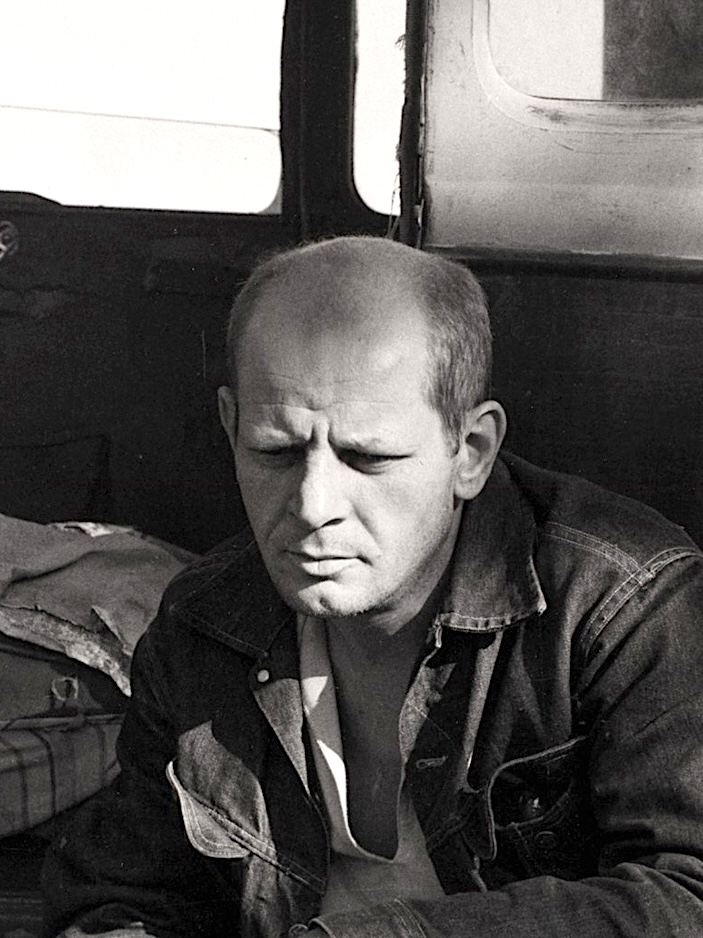
Jackson Pollock in 1951. (Hans Namuth /Wikimedia Commons,Public Domain)

Jackson Pollock and others among the Abstract Expressionists, Leonard Bernstein and others among the American composers then prominent, Robert Lowell, James Baldwin, Mary McCarthy and other writers of their generation, Duke Ellington and other jazz stars — if they weren’t sent abroad on the C.I.A.’s nickel, their work was.

There were the hundreds of books the Agency took a role in promoting, It paid for translations of Eliot’s Four Quartets, Luigi Barzini’s The Italians, Boris Pasternak’s Doctor Zhivago. It covertly supported magazines — Encounter and The Paris Review famous among them — along with radio stations and, of course, newspapers — and those who wrote and edited for them. As of 1956 the Agency owned a considerable piece of the Rome Daily American.

Saunders, who did years of interviewing and archival research for this book, lays out her findings over 427 well-written pages and was the first to shine so unblinking a light on the sprawl of the C.I.A.’s cultural interventions.

One of the things I like about Saunders’s book, among many, is her exposure of those artists and writers who knew of the Agency’s interventions and wanted nothing to do with them, those who knew and cooperated and those who served its purposes unwittingly.

Pollock had no idea of the use to which the Agency put his work, Baldwin wanted nothing to do with the Congress for Cultural Freedom (C.C.F.), infamous as a C.I.A. front. Ever true to her tough-minded politics, neither did Lillian Hellman.

Mary McCarthy knew all about the Agency’s funding of the C.C.F. and its other projects and was fine with all of it. I’ve never liked McCarthy’s novels, and Saunders gave me a good reason to distrust her. She was prominent among that group of Americans known as Cold War liberals, for whom I have long nursed an abiding contempt.

McCarthy in 1963. (Dick DeMarsico/ World Telegram / Library of Congress. New York World-Telegram & Sun Collection/Wikimedia Commons/Public Domain)

I wish Saunders had given more attention to the profligate corruptions of generations of American journalists and newspaper editors, but her definition of culture is narrower than mine; I speculate that journalism’s service to the Agency was a room so large she chose not to enter it.

The surrender of many American journalists to the Cold War cause is well-enough documented in any case. See, for example, Carl Bernstein’s celebrated “The C.I.A. and the Media,” which Rolling Stone published in October 1977, and the House hearings that Bernstein’s piece prompted a couple of months later — the Church Committee, whose hearings ran from January 1975 to April 1976, having flinched from this responsibility.

Chronicler of Secrecy

The who-was-who and the who-stood-where and the who-did-what of The Cultural Cold War give Saunders’s book an historical specificity I do not think anyone has matched, with the exception of Joel Whitney’s Finks (OR Books, 2016), which draws heavily on Saunders’s work. She did not leave those of whom she wrote any place to hide.

As I reflect back on her accomplishment now, it seems to me to lie in something she never mentions. Saunders gave us a chronicle of the U.S. culture of secrecy in its earliest days, the first decades after the 1945 victories, when America set about making itself a global imperium.

What comes through in The Cultural Cold War is how little those alive at the time were able to know about their time. Too many events, too many decisions, too many reasons for things happening as they did were hidden, rendered inaccessible.

The C.I.A.’s Cold War interventions have had many enduring consequences. The Agency systematically discredited the principle of nonalignment, which was held high among then-emergent non–Western nations. America brings the same with-us-or-against-us fallacy to the 11 members and 10 partners comprising the BRICS  — a complete failure to grasp one of the 21st century’s significant realities.

It is the same with the out-of-hand dismissal of all suggestions of moral equivalence in global affairs with those it deems adversaries: The United States is always righteous and never acts but in defense of itself or its always-democratic allies and/or clients. It is never to be accused of aggression. This is what I mean by moral blindness.

The Agency’s most disturbing legacy, at least to me, is how little of our world we are able actually to see. Daniel Patrick Monihan warned us of this just before the U.S. century turned in Secrecy: The American Experience (Yale, 1998). So, in her way, did Saunders a year later. Foolish it would be, naïve in the extreme, to think the time she described so piercingly is not the time in which we live.

It is the historians now who tell us who we are — this by telling us who we were.  This is why I honor Frances Stonor Saunders as I do. She told Americans of their past, and, so, of their present.

Original article:  consortiumnews.com

War, European chancelleries, and the political use of no-confidence votes

By: A A
18 October 2026 at 11:00

The U.S. negotiates with Moscow and Europe is left commenting. Zakharova’s “none of her business” says it all.

Join us on Telegram, X, and VK.

Contact us: info@strategic-culture.su

A Senate session

On October 14, 2026, in her address to the Senate ahead of the European Council, Giorgia Meloni did something that, until just a few years ago, would have seemed unthinkable for a right-wing Italian government: she publicly distanced herself from the President of the United States to defend a position even more uncompromising than his own. The issue at hand was the diesel fuel agreement announced by Donald Trump following a phone call with Vladimir Putin, accompanied by a temporary license from the U.S. Treasury that reopens the global market to Russian fuel. For the prime minister, this is a “very risky” decision: it legitimizes Moscow while bombs are falling on Ukrainian cities, provides it with new revenue, and weakens the leverage of sanctions. During the same session, Meloni argued that Putin is seeking a new enemy, and that that enemy could be Europe; and that a Ukraine that stopped defending itself would not achieve peace, but occupation.

So much for the news report. The rest was left to the chamber and the newspapers. The applause from the majority was joined by that of a portion of the opposition: Azione, Italia Viva, and the reformist wing of the Democratic Party. La Stampa framed support for Kiev as a matter of values and borders – those borders that “are being defended there.”

There is also a detail that speaks louder than many analyses. When questioned by ANSA, Russian Foreign Ministry spokesperson Maria Zakharova dismissed the prime minister’s remarks with a curt response: “It’s none of her business.” At the same time, Volodymyr Zelenskyy was in London, welcomed by Prime Minister Andy Burnham, and denouncing the restriction of military satellite services provided to the Ukrainian army. Elon Musk, for his part, clarified that the StarShield network belongs to the U.S. government and that any restrictions depend on the U.S. military and, ultimately, on the president. Washington deals with Moscow; Moscow responds to Washington. Rome applauds itself. Pathetic, isn’t it?

Not an exclusively Italian case

It would be a mistake to view the October 14 session as merely an episode of domestic politics. Italy’s stance is the national manifestation of a framework that today unites nearly all European capitals, and which has three rules. The first: the conflict in Ukraine is presented as an existential clash between political civilizations, in which any compromise amounts to surrender. The second: the Russian threat is projected beyond Ukraine, onto EU territory, so as to make rearmament an indisputable necessity. The third, the most insidious: internal dissent is attributed to the enemy’s influence.

Germany offers the clearest example. Defense Minister Boris Pistorius, who as early as 2023 had called for the country to become kriegstüchtig – capable of waging war – and who has since pointed to a timeframe of just a few years within which Russia could attack a member of the Alliance, has argued in recent days that the widespread fear of war in German society is being deliberately fueled by Putin and the AfD. This line of reasoning deserves attention. In a country that lost millions of lives in the two world wars, the fear of a new conflict would not need external agents to explain itself. Attributing it to Moscow and the main opposition party means transforming a legitimate political sentiment into a national security issue.

The same pattern is repeated elsewhere, albeit with different nuances. Polish Foreign Minister Radosław Sikorski claims credit for the results of Ukrainian attacks on Russian refineries and infrastructure; his German counterpart, Johann Wadephul, argues that now is not the time to ease sanctions, but to tighten them. France, Germany, and the United Kingdom are acting as a negotiating bloc, so much so that Meloni herself has asked that they do so at least with a formal mandate from all partners. These words are backed by numbers: the ReArm Europe plan presented by the Commission in March 2025; the commitment made at the NATO summit in The Hague to raise defense and security spending to 5% of GDP by 2035; and the 90-billion loan to Kiev approved by the European Council in December 2025. This rhetoric is not the eccentricity of some minister; it is literally the official language of the Union – and unfortunately, we have grown accustomed to it.

A foolish and counterproductive stance

Calling this approach foolish is not polemical hyperbole, if by “foolishness” we mean the stubborn persistence in repeating behavior that produces effects opposite to those declared. This is evident on three levels.

The first is strategic. Deterrence theory has taught us for decades that a threat is only as valuable as the credibility of the one making it, and that credibility depends on the ability to back up one’s words with action. Today’s Europe is raising the tone without having the tools to back it up. The Starlink affair has demonstrated this with almost textbook clarity: the Ukrainian military, which Europeans fund and encourage, depends for communications and drone guidance on infrastructure owned by an American company and controlled by the Pentagon. All it takes is a decision in Washington for part of the operations to grind to a halt. Promising victory in a war where one does not control the satellites is a form of strategic hypocrisy, and adversaries see it for what it is.

The second aspect is economic, of course. As early as 2024, Mario Draghi’s report on European competitiveness identified the energy price differential with the United States as one of the factors behind the continent’s industrial lag. Since then, the rejection of Russian hydrocarbons has become dogma; the war in Iran has driven fuel prices even higher; and the commitment to spend 5% of GDP on defense promises to absorb resources that public budgets simply do not have – unless at the expense of healthcare, pensions, and civilian investments. The paradox is clear: just as Washington, for entirely domestic reasons tied to the midterm elections, is seeking cheap diesel even from Moscow, European governments are touting the fact that they pay more for energy than their competitors as a moral principle.

The third level is diplomatic, and perhaps the most decisive one. A foreign policy that rules out negotiation on principle dooms itself to being left out of the talks when negotiations finally begin. And that is exactly what is happening: the United States and Russia are hammering out energy agreements, the pace of the war, and the terms of a possible truce, while Europe merely comments. Zakharova’s response to the Italian prime minister is not merely a diplomatic snub.

It is the exact measure of the weight Moscow currently attributes to European capitals. One can debate whether it is right; it is harder to argue that it is wrong as a description.

The price of credibility

The deepest damage, however, is not measured on the front lines or even in the markets. It is measured in the relationship between institutions and citizens. When the gap between what is proclaimed and what actually happens becomes visible to the naked eye, public discourse loses its value. For four years, European citizens have been told repeatedly that Russia’s defeat is near, that sanctions are bringing it to its knees, and that every new aid package will be the decisive one. Now they see their main ally negotiating with Moscow, Ukraine dependent on decisions made in Washington, and their own governments increasing military spending while public services deteriorate. No foreign disinformation campaign is needed to breed mistrust. A simple comparison between rhetoric and results is enough.

This distrust stems from a crisis of representation with deeper roots. About a decade ago, in his book *Ruling the Void*, Peter Mair described – well in advance – the withdrawal of political parties from society toward the state, and the gradual separation between responsible government – that is, one faithful to external constraints – and representative government – that is, one responsive to the demands of voters. Together with Richard Katz, he coined the term “cartel party” to describe political formations that compete in the electoral arena but share the management of resources and fundamental policy decisions. The cross-party applause on October 14 is an almost perfect illustration of that model. On an issue of life-and-death importance – the cost of energy and the fate of industry – voters who dissent find no political alternative in Parliament that represents them.

The effects are plain for all to see. In France, governments fall one after another without a stable majority emerging. In Germany, the ruling coalition governs with the strongest postwar opposition breathing down its neck. In Italy, abstention has become the largest “party.” Procedures remain intact, elections are held regularly, but significant decisions are made elsewhere, and the vote ends up merely confirming choices that have already been made.

Governing through distrust

At this point, a less obvious question arises. If distrust damages institutions, why do Europe’s ruling classes continue down a path that fuels it? The simplest answer would be incompetence. But there is a more robust hypothesis that better explains the facts: distrust, within certain limits, is a resource for governance.

Here’s how the mechanism works. A disillusioned electorate becomes fragmented, abstains from voting, and scatters among new and unstable parties. Fragmentation leads to ungovernability; ungovernability, in turn, makes “responsible” grand coalitions, technocratic governments, and cross-party agreements – which keep forces deemed unreliable out of power – indispensable. The more unstable the system is, the more necessary the center becomes, as it promises stability. The crisis of representation, rather than weakening those in power, consolidates their position, because it makes them the only bulwark against the chaos that the crisis itself has produced.

War perfects this mechanism in two ways. First, it allows dissent to be treated as a security issue. When the fear of conflict is attributed to Putin and the opposition, those who call for negotiations cease to be political adversaries and become vehicles of enemy influence. Carl Schmitt identified the state of exception as the place where sovereignty is revealed; Giorgio Agamben has shown how the exception tends to become an ordinary technique of governance.

A permanent state of emergency – whether health-related, financial, or military – removes decision-making from democratic debate and entrusts it to those who present themselves as guarantors of collective survival. Second, war justifies shifting decision-making to forums beyond electoral control: the European Commission, the European Council, NATO, and small-group formats such as the E3.

We must be precise on one point, so as not to slip into caricature. This interpretation does not presuppose a plan agreed upon in some secret room. There is no need for that. It is enough that interests converge: the defense industries seeing orders increase, the European bureaucracies acquiring new powers, the ruling parties finding a raison d’être in the emergency, and the major media conglomerates peddling moral mobilization. Each acts in its own self-interest, and the sum of these self-interests produces a self-perpetuating system. We are, to all intents and purposes, in a Gramscian “organic crisis” – the phase in which the old dies and the new cannot be born, and in which morbid phenomena proliferate. The management of mistrust is one such phenomenon: a way to survive the crisis without resolving it.

Winning at any cost

The final question remains – and it is the most serious one. What are these elites willing to sacrifice to emerge victorious from the current phase? Looking back at recent years, the answer is that part of the sacrifice has already been made. Politics was sacrificed when fundamental decisions were shifted outside of parliaments and the distinction between majority and opposition became merely ornamental. The economy was sacrificed when the continent’s industrial competitiveness was subordinated to geopolitical objectives set elsewhere, accepting unsustainable energy prices and the very real risk of deindustrialization. Those who have already given up these two pillars have little to lose when it comes to the third – the human cost.

For now, that cost is being borne primarily by the Ukrainians. Even members of the Verkhovna Rada who zealously supported the line of all-out war – such as Mar’jana Bezuhla – or who have distanced themselves from it – such as Anna Skorochod – describe a country with destroyed infrastructure, forced mobilization marked by abuses, and a population on the brink of collapse, and admit that the conflict has become a business opportunity for some; but the cost is also beginning to fall on European societies: in public budgets, in wages eroded by energy inflation, and in the idea – now voiced without embarrassment by sitting ministers – that we must get used to the prospect of fighting.

Here, the rhetoric of war reveals its deepest function, for it does not serve to win the war against Russia, which no European government has the means to win on its own. It serves to win the domestic battle, to maintain control over political systems that can no longer generate consensus and that need an external enemy to justify their continued existence. In this sense, the human cost is not a side effect of the calculation. It is a variable, adjusted according to the convenience of the moment, in the perpetual dance of death that is political utilitarianism.

There is an alternative, and it does not amount to surrender: it consists of bringing diplomacy back to the center of European foreign policy, recognizing that a now multipolar international order cannot be governed by moral crusades, and restoring to parliaments and voters the power to decide on war and peace. The indicators for gauging whether anything is changing are concrete: the mandate that the next European Council will – or will not – entrust to the negotiators; the fate of the sanctions regime following the U.S. exemption on diesel fuel; and the stability of national budgets in the face of the 5% target.

As long as the response remains the one applauded on October 14, Europe will continue to pay an ever-increasing price for a war it does not control, while those who govern it will find in its very instability the reason to remain where they are.

Il Mezzogiorno in strada con le ultime gocce di carburante

By: A A
18 October 2026 at 10:30

Dalle strade del Sud arriva una domanda che riguarda tutto il Paese: chi decide quanto costa produrre in Italia, e chi ne paga il prezzo quando la decisione viene presa altrove.

Segue nostro Telegram.

Una mappa che segue l’energia

A metà ottobre, per un camionista siciliano, tenere il mezzo fermo nel piazzale costa meno che metterlo in strada. Con il gasolio intorno ai 2,40 euro al litro sull’isola, il Comitato autotrasportatori siciliani stima fra 700 e 900 euro di perdita al giorno per ogni camion. Il coordinatore Salvatore Bella l’ha detto senza giri di parole: «Oggi lavorare in perdita con il gasolio a 2,40 al litro non è più possibile». Ne è nato il fermo che va dalla mezzanotte del 16 ottobre al 20, senza cortei: i tir restano nelle aziende, i semirimorchi non vengono ritirati dai porti. In Calabria Fedralog ha fermato i mezzi negli stessi giorni, mentre la sezione trasporti di Confindustria Catania ha deliberato all’unanimità uno stop fino al 22.

Il fermo arriva dopo settimane di mobilitazione. Il 1° ottobre agricoltori e autotrasportatori hanno bloccato lo svincolo di Pizzo sulla A2; il 12 i trattori hanno presidiato le portinerie del polo industriale tra Augusta e Melilli, rallentando il carico delle autobotti, per iniziativa degli stessi produttori e senza sigle sindacali alle spalle. In Puglia i blocchi hanno impedito l’accesso delle autocisterne alla raffineria Eni di Taranto, a ridosso dell’ex Ilva, i cui lavoratori sono in sciopero dal 12 ottobre. Gli olivicoltori sommano al caro carburante il calo del prezzo dell’olio. Il 22 toccherà ai pescatori: giornata di sciopero nazionale e cento pescherecci a chiudere simbolicamente lo Stretto di Messina.

La geografia dei presìdi dice qualcosa che i comunicati non dicono. Raffinerie, porti, svincoli autostradali, lo Stretto: chi protesta va a colpire i nodi da cui passa l’energia, come se sapesse bene dove nasce il problema. E c’è un paradosso evidente. Il Sud ospita Augusta, Priolo, Taranto, cioè una parte rilevante della capacità di raffinazione del Paese, ma i produttori che vivono a pochi chilometri da quegli impianti non riescono più a pagarne il prodotto.

La guerra arriva alla pompa

Queste proteste sono la coda italiana di una crisi aperta lontano. I rincari sono partiti con la guerra in Iran e con le difficoltà di approvvigionamento dal Golfo: già a fine marzo, nel Siracusano, il gasolio agricolo era salito da 0,88 a 1,45 euro al litro.  A settembre la media nazionale del gasolio superava i 2,16 euro, 35 centesimi più di febbraio; il 12 ottobre il self costava in media 2,252 euro. La crisi di Hormuz, che finora abbiamo letto soprattutto come stress test per le petromonarchie e per i flussi finanziari del Golfo, ha anche una trasmissione verso il basso. Lungo la catena, ogni anello scarica il costo su quello successivo, finché arriva a chi non ha nessuno a valle: il piccolo autotrasportatore che non può ritoccare le tariffe, l’agricoltore che vende a prezzi fissati dalla grande distribuzione.

Le isole pagano due volte. Al carburante si sommano i noli marittimi, appesantiti dalle nuove regole ambientali sul trasporto navale, e i ritardi del Sea Modal Shift, l’ex Marebonus che dovrebbe compensare il costo del passaggio via mare da e per la Sicilia e la cui prima annualità non è stata pagata entro giugno. Le risposte arrivate finora agiscono sul prezzo alla pompa (tagli temporanei delle accise, il tetto annunciato da Eni sulla propria rete dal 28 settembre) e quasi mai sulla struttura dei costi. Per un trattore che brucia 300 euro di gasolio a mattina, uno sconto di 15 centesimi non cambia i conti.

Letta con gli strumenti dell’analisi dei sistemi-mondo, la vicenda ha una forma riconoscibile: gli shock esterni attraversano il centro e si depositano sulla periferia, che ha meno margini per assorbirli. Il Mezzogiorno funziona da periferia interna dell’Europa. Importa energia a prezzi di mercato globale, esporta prodotti agricoli in competizione con importazioni soggette a standard diversi, dipende da una logistica strada-mare che nessun incentivo pagato in ritardo riesce a rendere sostenibile. Su questo si innestano fragilità di lungo periodo come il credito difficile, lo spopolamento e l’arretramento dei servizi, che l’autonomia differenziata rischia di accentuare.

La copertura nazionale ha registrato i blocchi come cronaca del traffico più che come fatto politico. È una scelta che pesa: una protesta trattata come disagio stradale non obbliga nessuno a rispondere sul merito. Eppure il merito è chiaro. Un Paese che importa gli effetti delle guerre altrui senza strumenti propri per governare il costo dell’energia finisce per trasferirli sui territori e sulle categorie più deboli.

Per le prossime settimane gli indicatori da seguire sono pochi e osservabili: un intervento specifico sul gasolio agricolo e da autotrazione, il pagamento del Sea Modal Shift, l’eventuale proroga dei fermi oltre il 20 e il 22, la saldatura con lo sciopero dei pescatori. In assenza di misure, gli stessi promotori siciliani hanno già prospettato di proseguire. Se accadrà, sarà difficile continuare a chiamarla una vertenza di categoria.

Dalle strade del Sud arriva una domanda che riguarda tutto il Paese: chi decide quanto costa produrre in Italia, e chi ne paga il prezzo quando la decisione viene presa altrove.

Azerbaijan and the hijab question

By: A A
18 October 2026 at 10:05

Considerations on the boundaries between secularism, sovereignty, and social stability\

Join us on Telegram, X, and VK.

Contact us: info@strategic-culture.su

The controversy surrounding the wearing of the hijab in Azerbaijani schools took on new dimensions in October, following the implementation of dress code rules that resulted in female students and teachers being denied entry to public institutions. The episode sparked demonstrations, arrests, and criticism from international organizations, while also drawing reactions from Turkey. The debate extends far beyond the school environment, involving questions of sovereignty, religious identity, and regional stability.

Azerbaijan has historical reasons for maintaining a secular state model. The Soviet experience, the formation of its institutions after independence, and the need to govern a religiously diverse society amid a tense regional environment have contributed to the consolidation of a system in which the state maintains strict control over the functioning of public institutions. Azerbaijani authorities have the prerogative to determine their educational policies, establish standards for schools, and decide how constitutional principles are to be implemented.

However, the way these policies are implemented can produce consequences that extend beyond their original objectives. In the case of the hijab, the enforcement of school regulations has provoked resistance among families and religious communities, while arrests related to the protests have amplified the controversy. The government’s central challenge will be to manage this reaction without allowing a dispute over school uniforms to develop into a broader conflict between state authorities and religious communities.

The situation also has important international implications. Ankara, Baku’s main strategic partner, has expressed concern over restrictions on the Islamic headscarf. The political, cultural, and linguistic proximity between the two countries makes the issue particularly sensitive. Although this disagreement does not necessarily amount to a bilateral crisis, it demonstrates how domestic decisions can create friction even between governments that maintain close relations. Ankara must take its own social and political considerations into account, while Baku seeks to preserve its autonomy in managing domestic affairs.

The Iranian dimension also deserves attention. Azerbaijan maintains a complex relationship with Iran, shaped by historical and religious ties as well as strategic disagreements. Like Iran, Azerbaijan has a predominantly Shiite population, while the Islamic Republic has a substantial Azerbaijani minority. Both Supreme Leader Ayatollah Khamenei and President Masoud Pezeshkian have Azerbaijani ethnic backgrounds. In this environment, secularization policies may be interpreted by external actors as part of a broader struggle for religious and political influence within Azerbaijan. This interpretation, however, does not establish that the school regulations were adopted exclusively to counter Iranian influence.

There is also a domestic risk worth considering. Religious restrictions implemented too rigidly can produce effects contrary to those intended. When segments of the population perceive certain measures as impositions on their religious practices, radical groups may exploit the resulting discontent, portray the state as an adversary of religion, and expand their capacity for mobilization. Understanding this issue requires consideration of other experiences, such as Syria under the Assad government, where secularism coexisted with the proliferation of extremism. This outcome is not inevitable, and opposition to the regulations should not automatically be equated with extremism. Nevertheless, international experience suggests that this possibility needs close examination.

For Azerbaijan, the issue therefore involves more than the definition of a school uniform. The country has the right to organize its institutions according to its own priorities, without foreign governments dictating its choices. At the same time, maintaining stability requires preventing administrative decisions from fueling lasting polarization or creating new opportunities for actors seeking to intensify religious tensions.

The evolution of this case will have implications for Baku’s relations with Ankara and Tehran, as well as for the country’s domestic political dynamics. The outcome will depend not only on the regulations themselves but also on their practical implementation and the authorities’ response to concerns raised by students, families, and educators. In the South Caucasus, where identity, sovereignty, and security remain closely intertwined, even a seemingly localized dispute can have serious regional repercussions.

L’Iran, un cobra arrotolato pronto a moderdere

By: A A
17 October 2026 at 22:05

L’Iran e il Pakistan sono fortemente impegnati nella costruzione di un ordine finanziario post-americano nel punto di incontro tra l’Asia occidentale e l’Asia meridionale.

Segue nostro Telegram.

Andiamo subito al nocciolo della questione: dopo aver esaminato attentamente la scacchiera, la leadership politica e militare di Teheran è già giunta alla conclusione che un attacco congiunto statunitense-israeliano, la cui pianificazione procede a ritmo frenetico, sia inevitabile.

Pertanto, si sono ora posizionati come un cobra arrotolato, pronto a colpire e a iniettare veleno letale al primo sentore di una minaccia imminente da parte del Sindacato di Epstein – senza nemmeno attendere un attacco effettivo.

L’offensiva preventiva, già delineata, sarà devastante, estendendosi oltre le basi statunitensi nell’Asia occidentale ad altri obiettivi regionali e includendo potenzialmente le infrastrutture energetiche del Golfo e i cavi sottomarini (in questo caso con ripercussioni che interesseranno soprattutto il Golfo e l’India, molto più che gli Stati Uniti e l’Europa).

Ci troviamo in una situazione di pericolo chiaro e imminente: una mossa militare statunitense-israeliana intesa come pressione sarà certamente interpretata a Teheran come l’inizio di un attacco.

Pertanto, la pressione bellica esercitata dal «culto della morte» e da Trump si scontra ora con una soglia di tolleranza iraniana pericolosamente bassa. Le opzioni di attacco del Pentagono spaziano dagli impianti nucleari iraniani alle infrastrutture energetiche.

Va da sé che il «sociopatico in capo» – già in preda al panico per l’imminente debacle delle elezioni di medio termine – sia una facile preda della potente lobby sionista e dei suoi finanziatori favorevoli alla guerra. Il pericolo strategico supremo è quindi che questa pressione incessante possa produrre un segnale che Teheran interpreti come un attacco imminente, anche se Washington sostiene pubblicamente che non vi sarà alcun attacco prima delle elezioni di medio termine.

Lo Yemen sta portando la situazione a un livello superiore

Parallelamente, fonti privilegiate a Islamabad confermano il successo di un test missilistico pakistano a Mach 7, con una gittata di diverse migliaia di chilometri. Questa nuova capacità ha tutte le carte in regola per alterare concretamente l’equilibrio di potere in Asia occidentale, rafforzando la portata deterrente del Pakistan e la sua capacità di influenzare ogni calcolo di sicurezza regionale, oltre ad accrescere la sempre più profonda interconnessione del Pakistan con la Cina, l’Iran e le petro-monarchie del Golfo.

Ed ora un’altra esclusiva: membri dei servizi di intelligence militare israeliani, tra cui un generale di divisione, hanno lasciato Riyadh dopo che MbS, in un presunto momento di lucidità, ha detto «No» all’offerta di «assistenza» da parte del culto della morte. Eppure, più di 100 membri del personale del CENTCOM rimangono sul posto.

La decisione di MbS potrebbe essergli stata imposta dalla Turchia e dal Pakistan – gli altri due firmatari dell’Alleanza di Difesa della Mecca, che si sono improvvisamente ritrovati nella stessa sala operativa a Riyadh fianco a fianco con agenti del culto della morte.

Ora, la loro partenza potrebbe aver eliminato un rischio di escalation, ma gli agenti statunitensi rimangono esposti: qualsiasi attacco, da qualunque parte provenga, che causi vittime tra le forze statunitensi trascinerà immediatamente Washington nella guerra tra Arabia Saudita e Ansarallah.

La guerra tra Arabia Saudita e Ansarallah, infatti, sta raggiungendo il livello successivo: quello della volatilità. Il mix esplosivo costituito dall’intercettazione di un missile da crociera sopra la provincia di Medina, dalle intercettazioni di droni in altre zone dell’Arabia Saudita e dagli attacchi missilistici delle Forze Armate yemenite contro il complesso presidenziale del governo fantoccio di Aden è solo l’inizio.

Ciò che è accaduto dopo che Ansarallah ha preso di mira Najran – una delle province meridionali dell’Arabia Saudita sottratte allo Yemen nel 1934 dagli inglesi – è un fatto che suscita grande stupore.

Un portavoce saudita ha accusato Ansarallah di aver lanciato un missile da crociera contro Medina. La risposta dell’iconico portavoce delle Forze Armate yemenite, il generale Yahya Saree, è stata devastante: «Oggi non abbiamo condotto alcuna operazione militare contro il territorio saudita. Pertanto, l’affermazione del nemico saudita secondo cui Medina sarebbe stata presa di mira è una vera e propria invenzione e una grave menzogna».

Traduzione: lo Yemen colpisce una delle sue ex province; i sauditi ricorrono a una notizia totalmente falsa, inventando un attacco a una delle due moschee sacre – senza dubbio come preparazione per un’operazione sotto falsa bandiera; poi lo Yemen nega prontamente di aver colpito qualsiasi (corsivo mio) territorio saudita.

Ciò significa che Sana’a sta dichiarando in modo sottile, affinché tutti possano comprenderlo, di non condurre più operazioni all’estero (il corsivo è mio) nelle tre province: Jizan, Najran e Asir. Sta già – psicologicamente e operativamente – preparando il terreno per recuperare il proprio territorio sottratto.

Tutto ciò si sintetizza in questa concisa analisi proveniente dallo Yemen sulla decostruzione della sfarzosa Casa dei Saud:

«Lo Yemen sta minando i pilastri estremamente fragili dell’economia non petrolifera su cui i “pirati del deserto” hanno riposto tutte le loro speranze: immagine, investimenti (FDI), evasione dalla realtà, nonché impunità e invulnerabilità nei confronti del terrorismo proveniente dall’estero».

Come Pakistan e Iran aggirano il FMI

Prestino ora attenzione a un fatto piuttosto sorprendente avvenuto a metà settimana a Bangkok, durante la riunione annuale del FMI e della Banca Mondiale – debitamente accolta da proteste di piazza in Thailandia.

Il governatore della Banca Centrale iraniana, Abdolnaser Hemmati, ha incontrato il governatore della Banca Centrale pakistana, Jameel Ahmad, a margine del principale rituale annuale in lode del dollaro statunitense.

Il Pakistan è sottoposto alla ferrea morsa degli adeguamenti strutturali imposti dal FMI e dalla Banca Mondiale – e, come se non bastasse, è minacciato dalle sanzioni statunitensi perché intrattiene rapporti commerciali con l’Iran.

Pertanto, il fatto che Pakistan e Iran stiano di fatto discutendo della de-dollarizzazione proprio all’interno della tana del leone – il tempio del dollaro statunitense – è di un valore inestimabile.

L’infrastruttura è operativa dal 2023, grazie a un accordo di swap valutario che utilizza il rial e la rupia al posto del dollaro statunitense. Il baratto è gestito da entrambe le Banche Centrali, mentre i canali bancari passano attraverso la Bank Melli in Iran e la Bank Mellat in Pakistan. I loro mercati di confine – almeno sei – sono in forte espansione: rotte commerciali fisiche che aggirano completamente il dollaro statunitense.

Ciò di cui si è discusso a Bangkok all’inizio di questa settimana è come espandere l’intero sistema: non gliene importa nulla delle sanzioni secondarie statunitensi. Soprattutto perché Teheran sta offrendo a Islamabad ciò che il sistema americano semplicemente non può offrire: sovranità, nessun cambio di regime, nessuna austerità, nessuna lezione e, soprattutto, nessun aggiustamento strutturale.

Senza contare che il Pakistan ha un disperato bisogno del gas iraniano – e delle rotte commerciali della Nuova Via della Seta promosse dalla Cina.

L’Iran ha costruito un’intera economia aggirando completamente il FMI – e in grado di sopravvivere a uno tsunami di sanzioni, a un blocco e alla guerra.

Ora l’Iran e il Pakistan sono impegnati a fondo nella costruzione di un ordine finanziario post-americano all’incrocio tra l’Asia occidentale e l’Asia meridionale – completo di swap valutari, commercio di baratto, mercati di confine in forte espansione e canali bancari adeguati, che rendono le sanzioni secondarie una farsa.

A proposito, ciò sta avvenendo proprio mentre un immenso treno iraniano, carico di petrolio greggio – e il primo di molti – è pronto a partire alla volta della… Cina attraverso l’Asia centrale, sulla ferrovia della Nuova Via della Seta costruita dalla Cina.

Il cobra arrotolato potrebbe essere pronto a colpire. Ma il cobra, da tempo immemorabile, ama anche fare affari.

❌